In a culture overwhelmed with ridiculous beliefs, an unlikely hero of rationality has emerged: reality star Kim Kardashian. Kim raised a healthy amount of skepticism of psychics in a recent TikTok video: In case you don’t follow the ins-and-outs of reality stars, Kim K.’s recent life cycle/plot development sees her trying to become a lawyer. She’s been taking an apprenticeship in the industry and presumably studying hard. She also consulted psychics, who read tea leaves or whatever and concluded that she would pass the California bar exam. Except, sadly, she did not.
“Psychics are full pathological liars” —Kim Kardashian
“All of the fucking psychics that we have met with, and that we’re obsessed with, are all fucking full of shit,” Kardashian said to her 10 million TikTok followers. “They all collectively, maybe four of them, told me I’m going to pass the bar. So they’re all full pathological liars. Don’t believe anything they say.”
According to a 2024 survey, about 20% of Americans love The Kardashians, and about 26% of Americans believe in clairvoyance. I have nothing but vibes to back this up, but I bet the circles for “Kardashian fan” and “believer in psychics” in the American Venn diagram have a lot of overlap. Kardashian isn’t preaching to the skeptics; she’s talking to the true believers, as she once was.
Kardashian has personal credibility here, given her long history of talking to mediums and psychics, and there’s something extra convincing about someone with skin in the game. This wasn’t some meaningless test for Kim Kardashian; she was asking about something that was important to her, and she wasn’t doing it from a skeptical point of view.
Where Kim Kardashian’s psychics went wrong
A savvy psychic tries to avoid making predictions that can be proven true or false. A medium might say, “Your Dad is up in heaven, and he’s super proud of you,” but if they want to stay in business, they won’t say, “Your Dad says the stock certificates are in the attic in the green trunk,” because when you check the trunk—if there even is a trunk or an attic—the jig is up.
Without knowing it, Kardashian put her psychics in a bind. By asking point blank whether she was going to pass the bar or not, Kardashian forced a binary decision. It’s understandable they unanimously landed on “you’ll pass,” because that’s what she wanted hear. “The fates are unclear at this time!” is too wishy-washy, and “You’re going to fail, girl,” would likely get you disinvited to the mansion. But I am surprised no one went with, “I can’t tell the time frame, specifically, but you will become a lawyer in the future.” That’s what I would have said. (I’m available for psychic readings.)
Now if you’ll excuse me, I’m going back to being unaware of anything Kim Kardashian does.
This is a video of a honey buzzard eating the larvae out of a beehive while all the bees panic and attack. The birds have specialized shield feathers around their faces to help prevent stings. This video reminds me a lot of myself while I’m eating the entire pumpkin pie at Thanksgiving. I’m just in the zone, you know? My brother and cousins might be stabbing me with forks, bu I don’t feel it. Also, I’m sorry if you’re a bee watching this, I know this has to be hard.
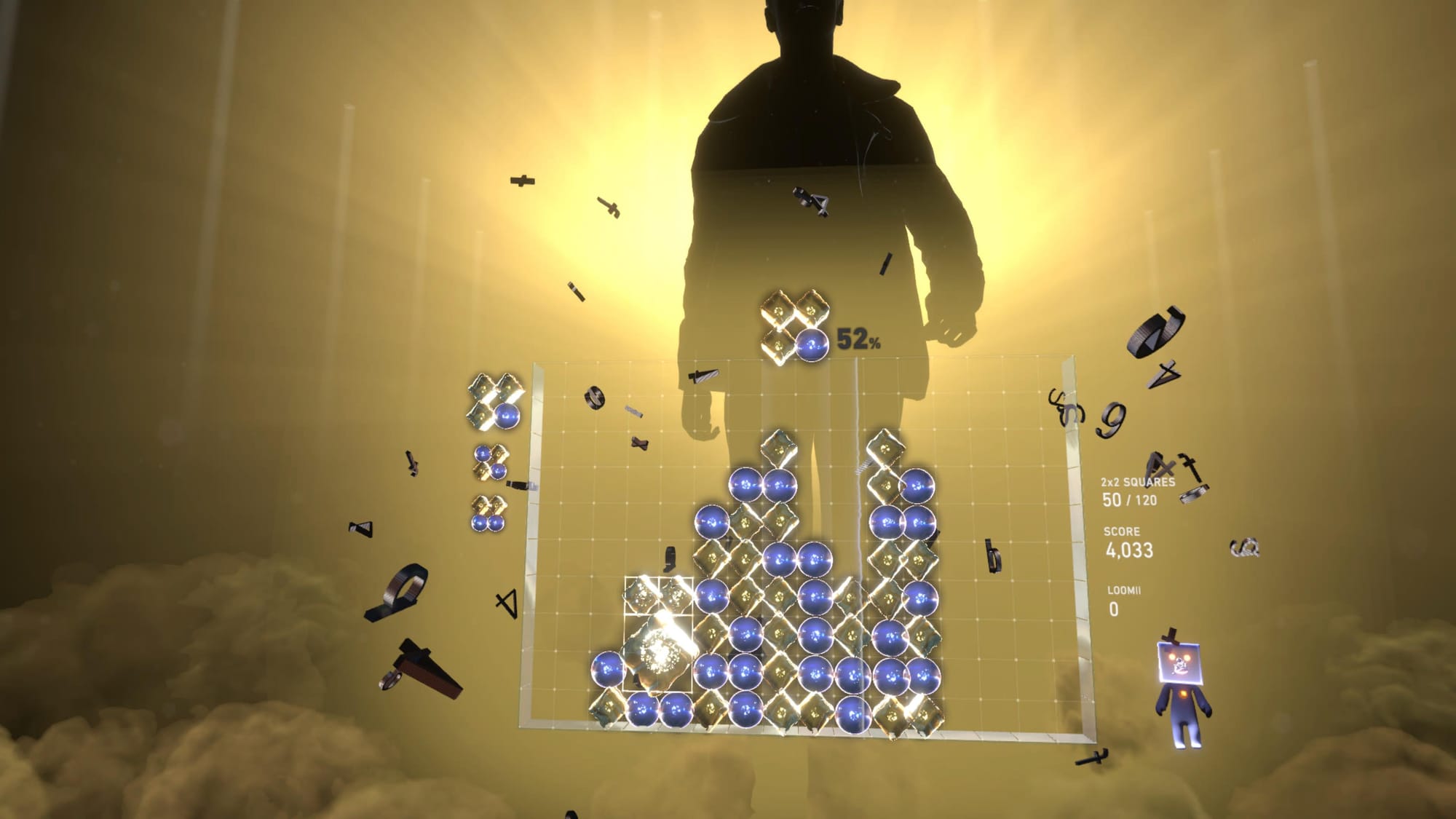
Lumines Arise is the puzzle series’ best entry since the original PSP game, channeling Tetris Effect with a stunning presentation. Here’s our full review.
For all the incredible things VR developers have achieved across the years chasing immersion and embodiment, it’s a testament to Enhance’s design that Tetris Effect remains a regular fixture in my VR library. This transcendent transformation of the classic 2D puzzler blew me away years ago with a wonderful audiovisual experience. Now, Lumines Arise walks a similar path.
The Facts
What is it?: A rhythmic puzzle game where you match 2×2 blocks to clear the grid, featuring optional VR support. Platforms: PS VR2, PC VR (Reviewed on PS VR2 via PS5 Pro) Release Date: Out now Developer: Enhance, Monstars Inc. Publisher: Enhance Price: $39.99
Lumines has always been its own series ever since the 2004 PSP game, which ironically owes its existence to series creator Tetsuya Mizuguchi being unable to secure Tetris’ licensing rights. Calling Lumines Arise a spiritual successor to Tetris Effect feels strange in that regard, yet it’s very difficult to avoid directly comparing them. The parallels are screaming, especially in its slick presentation.
0:00
/0:29
Gameplay captured by UploadVR on PlayStation VR2.
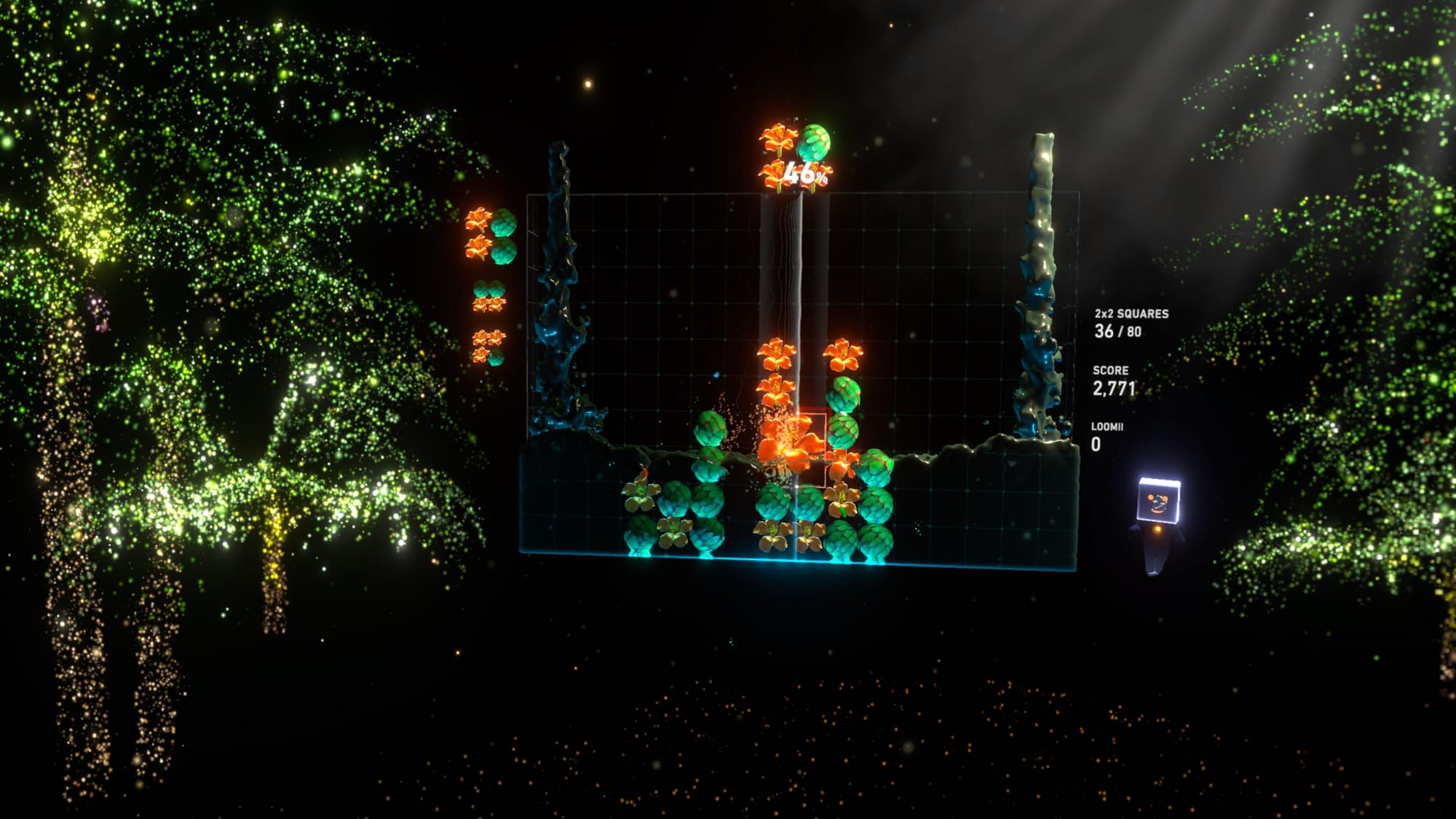
Make no mistake, VR is the definitive way to experience Lumines Arise. VR lets these stages truly come alive, providing a stronger sense of depth and presence in a way flatscreen platforms can’t achieve. Each stage packs unique animated effects that show clear VR focused design, delivering memorable visuals ranging from rhythmic geckos to the giant man in shadow as its arresting soundtrack goes on.
Journey Mode is the heart of this adventure, normally offering four or five levels per area that play in a continuous sequence. Arise delivers a great range of unique stage designs, though stage transitions don’t always feel like a natural continuation of each other. Game Over means you can retry from the beginning or continue from your current stage; the former is preferable for high score chasers, since continuing resets your score.
Beating Lumines involves forming 2×2 squares of matching colors, dropping blocks of the same size with different patterns onto your grid. Matching patterns then disappear as a line goes across the screen, the speed of which matches the soundtrack’s tempo. Easy to learn, difficult to master, and so satisfying when it lines up perfectly, earning extra points with larger squares.
Every block placement is crucial since being careless is a fast track to failure, which is easier said than done to avoid. You can’t switch out squares, so you’re stuck placing whatever comes your way. Fortunately, there’s a helpful new Burst mechanic you can activate at 50% charge to temporarily slow time. Useful for clearing out the grid quickly with its focus on one specific color, though I faced some very infrequent framerate drops during this on PS VR2.
Another handy tool here is a connecting block symbolized by a crosshair, which clears all blocks of the same color directly touching each other. These infrequent appearances can be a major lifesaver if grids start stacking up high, and watching dozens of squares immediately disappear brings an immediate sense of relief.
Impressive DualSense integration benefits Arise’s gameplay well on PS5, with haptic feedback feeling like a crucial part of experiencing each song as you get into the rhythm. I do wish the Burst move had adaptive trigger support for that little bit of extra feedback, though it’s a minor issue when the rest feels this good.
I’d recommend using DualSense (or a gamepad on Steam) since gameplay really doesn’t need motion controllers. Having a D-pad is a massive help for precision when the speed increases, something the Sense controllers lack. On a related note, it’s great to see Lumines Arise lets you adjust the sensitivity for the left and right analog sticks. More on that in the comfort section below.
Comfort
Lumines Arise is one of the more comfortable VR experiences for newcomers that you’ll find, since gameplay doesn’t use artificial locomotion.
DualSense and VR headset vibration can be turned off from the options menu, also supporting adjustable strengths for each. Some UI elements like the time limit display can also be switched off, though this doesn’t apply to every mode. VR camera distance from your physical position and the playfield is customizable, and background motion can be turned off.
The accessibility tab lets you turn off spiders and snakes from appearing. Text size is adjustable, a color filter is available, and various visual effects can also be changed. Brightness and audio levels can be changed on a slider, too. Sensitivity sliders are available for both the left and right analog sticks. Lumines Arise also supports remappable controls.
There’s a welcome strategic challenge that rarely overwhelms even when quick decisions are needed, yet its inherent gameplay design leaves Lumines Arise feeling slightly trickier than Tetris Effect. It’s a captivating experience in its own right; both are great games, and Arise boasts an even stronger presentation that’s more expressive than its predecessor in chasing synesthesia.
Perhaps it’s unfair to overly compare the two despite the obvious similarities. However, Lumines’ core mechanics fall slightly short of those same highs for me that Tetris Effect provides. If we’re purely talking gameplay, the older title remains slightly more compelling. What’s here is still highly enjoyable though, and this is very much a “your mileage may vary” situation.
Completing Journey Mode unlocks an endless Survival mode, which tasks you with beating the entire campaign in a single run. It’s more challenging given that stages don’t reset the blocks each time. If anything, it’s a fine excuse to go back through Hydelic’s incredible songs again – Arise, Serpent Clash, Autumn Fall, and Sunset Beach are some personal highlights. This electronic soundtrack has a wonderful range, and it’s hard not to feel captivated in these moments. You can feel the emotion poured into this.
Clearing stages and other tasks earns currency that unlocks customization items for your character, Loomii, who represents you in the multiplayer hub. That same hub also features a 1v1 ranked mode called Burst Battle with crossplay support, and its only major difference from solo modes is that clearing squares sends additional blocks to your opponent. It’s a great inclusion for playing online publicly or with friends alike, and creating custom rooms with adjustable rule sets provides a suitable unranked option, too.
There are a few additional options around the Hub, the most notable being the Leaderboard League with two modes. One is your standard ‘Time Attack’ mode that’s simply clearing as many squares as possible in a time limit, while ‘Dig Down’ slowly increases gameplay speed as more blocks emerge from the bottom for some frantic fun.
Lumines Arise: How Does It Compare On PC VR?
This review is based on the PlayStation VR2 version via PS5 Pro, though I received Steam access not long before launch. Testing this with a Meta Quest 3 via the Virtual Desktop and Steam Link apps, I encountered no performance issues on the highest settings.
My desktop exceeds the recommended requirements, which you can find with the minimum specs on the Steam page. It uses an Intel i9 16-Core Processor i9-12900 (Up to 5.1GHz), 32GB RAM – Corsair VENGEANCE DDR5 5200MHz, and a 16GB Nvidia GeForce RTX 4070 Ti Super.
Other available choices include the missions area, which helpfully teaches you more advanced techniques in Lumines through tutorials, and clearing these also earns more currency. Challenges add some decent variety to the mix too, tasking you with goals like activating burst as many times as possible to keep this varied.
If you’d rather sit back and enjoy the shows, a ‘Theatre’ option lets you do that as the game automatically plays. That’s easy to miss though as it’s only in the Playlist section, which lets you create dedicated sets of unlocked songs after clearing them in Journey. Annoyingly, playlists are also the only way you can jump into individual songs by just selecting one track, so I hope Enhance adds a quick play mode in a future update.
Lumines Arise – Final Verdict
Lumines Arise is the best entry yet in this long-running puzzle series, building upon Enhance’s work in Tetris Effect to create a mesmerizing audiovisual spectacle that shines even brighter in a VR headset. It’s not as transformative as the older title and the core gameplay doesn’t quite hit those same high notes, but that hasn’t stopped Enhance from delivering a highly memorable journey. If you enjoy puzzle games, you won’t want to miss this.
UploadVR uses a 5-Star rating system for our game reviews – you can read a breakdown of each star rating in our review guidelines.
A Munich court ruled that OpenAI violated German copyright law by training its models on lyrics from nine songs and allowing ChatGPT to reproduce them. OpenAI now faces damages as it considers an appeal. Reuters reports: The regional court in Munich found that the company trained its AI on protected content from nine German songs, including Groenemeyer’s hits “Maenner” and “Bochum.” The case was brought by German music rights society GEMA, whose members include composers, lyricists and publishers, in another sign of artists around the world fighting back against data scraping by AI.
Presiding judge Elke Schwager ordered OpenAI to pay damages for the use of copyrighted material, without disclosing a figure.
GEMA legal advisor Kai Welp said GEMA hoped discussions could now take place with OpenAI on how copyright holders can be remunerated. OpenAI had argued that its language models did not store or copy specific training data but, rather, reflected what they had learned based on the entire training data set.
Since the output would only be generated as a result of user inputs known as prompts, it was not the defendants, but the respective user who would be liable for it, OpenAI had argued. However, the court found that both the memorization in the language models and the reproduction of the song lyrics in the chatbot’s outputs constitute infringements of copyright exploitation rights, according to a statement on the ruling.
There are many reasons your smartphone’s battery might drain fast, but some of the likeliest culprits are poorly-designed apps. Some of these programs use too much processing power when you’re actively using them, while others needlessly run in the background. You can always check your device’s battery stats to see which apps are the worst offenders, but what if you know know an app was a battery anchor before downloading it in the first place?
The Play Store’s new battery warnings
As of March 1, 2026, that will be the new reality. In just a few months, when you tap on an app in the Play Store, you might see a new alert that wasn’t there before. Underneath the usual details, like the app’s name, developer, reviews, and rating, you’ll see a red warning, stating something to the effect of, “This app may use more battery than expected due to high background activity.” I don’t know about you, but that would get me thinking twice about downloading it.
According to the Android Developer Blog, this has been in the works for some time. In partnership with Samsung, the company rolled out a new metric in beta earlier this year called “excessive partial wake locks,” which aimed to reveal to developers when their apps “excessively” wake the display. Following this beta program, Google says it refined the algorithm it uses to calculate this rating, and has now rolled out the metric to all developers.
Going forward, if an app wakes the screen for a total of two hours in any given 24 hour period, Google will note it as excessive. If 5% of an app’s user sessions are excessive over a 28 day period, it crosses the “bad behavior threshold.” This can result in a number of different consequences for the app: Google may first pull it from discovery surfaces in the Play Store. That could seriously impact an app’s total installs, as users won’t find it without searching for the app directly. Of course, Google may also affix the app’s Play Store page with the aforementioned battery alert, which will also discourage users from downloading it.
The onus is now on app developers to correct this “bad behavior” in their apps by March of next year. Hopefully, any battery hogs on your smartphone will be fixed in the next few months, but if not, keep an eye on their Play Store pages. If you see this alert, you might want to uninstall the app entirely.
This isn’t the first time the Play Store rolled out a feature to root out bad apps. Last year, the marketplace launched live threat detection to highlight apps that might be spreading malware. The Play Store has also tested alerts that would warn you about apps that are frequently uninstalled, or that have a significantly lower active user count than competitor apps.
Android apps will soon be facing penalties for excess battery drain on the Play Store, but developers will be made aware of these issues and have time to fix them before they are penalized, per Google’s latest Android Developers Blog post. This effort follows last year’s addition of a beta metric to Android vitals dubbed “excessive partial
Threads is working on new features that could make the text-based social network a bit more audio-friendly. Starting today, Threads is rolling out some new features for sharing podcasts and podcast episodes. Creators have the option to add the link to their show to their bio page; after that, their posts with show and episode links will appear with an audio preview. Non-hosts will also start to see the new previews when they post links to their favorite shows.
For starters, the rollout is only supporting Spotify shows. Connor Hayes, who heads up Threads and also posted about the new feature, said in a reply to another user that Apple Podcasts will also eventually receive support. The previews are going live today and will become available to all users over the coming weeks.
In theory, this feature could help attract new listeners. However, Threads doesn’t have a strong success rate when it comes to its users clicking on links. It should be interesting to see if the audiovisual addition makes it any more appealing for people to visit podcast pages.
This article originally appeared on Engadget at https://www.engadget.com/threads-is-adding-features-for-creators-to-promote-their-podcasts-215711793.html?src=rss
Google’s current mission is to weave generative AI into as many products as it can, getting everyone accustomed to, and maybe even dependent on, working with confabulatory robots. That means it needs to feed the bots a lot of your data, and that’s getting easier with the company’s new Private AI Compute. Google claims its new secure cloud environment will power better AI experiences without sacrificing your privacy.
The pitch sounds a lot like Apple’s Private Cloud Compute. Google’s Private AI Compute runs on “one seamless Google stack” powered by the company’s custom Tensor Processing Units (TPUs). These chips have integrated secure elements, and the new system allows devices to connect directly to the protected space via an encrypted link.
Google’s TPUs rely on an AMD-based Trusted Execution Environment (TEE) that encrypts and isolates memory from the host. Theoretically, that means no one else—not even Google itself—can access your data. Google says independent analysis by NCC Group shows that Private AI Compute meets its strict privacy guidelines.
Russian cybersecurity firm Kaspersky Lab announced that it’s bringing its flagship Kaspersky anti-virus software for home users over to Linux. Kaspersky software was previously available for Linux just for business/enterprise deployments…
If you’re a Windows user, this is your monthly reminder to ensure you install all available security updates. Microsoft’s November Patch Tuesday release fixes one zero-day vulnerability that has been actively exploited in the wild, with 63 flaws patched in total.
As reported by Bleeping Computer, the November Patch Tuesday update addresses 29 elevation of privilege vulnerabilities, 2 security feature bypass vulnerabilities, 16 remote code execution vulnerabilities, 11 information disclosure vulnerabilities, 2 denial of service vulnerabilities, and 3 spoofing vulnerabilities. (Note that these figures do not include patches for Microsoft Edge and Mariner.)
In addition to the zero-day, four of the vulnerabilities being addressed—two remote code execution bugs and one each of the elevation of privilege and information disclosure flaws—are labeled “critical.”
Patch fixes one zero-day threat
All security updates are important to install as soon as possible, but especially those that patch zero-days, which are vulnerabilities that are actively exploited or publicly exposed before the developer makes an official fix available.
Without this month’s patch, Windows users are vulnerable to CVE-2025-62215, an elevation of privilege flaw in the Windows Kernel. The bug allows threat actors to gain system privileges upon winning a “race condition,” or improper synchronization in Windows Kernel.
The vulnerability was identified by the Microsoft Threat Intelligence Center (MSTIC) and the Microsoft Security Response Center (MSRC), though no additional details about exploitation have been made public.
Other updates for Windows users
Windows 11 users will also see the rollout of the upgraded Start menu alongside Patch Tuesday updates—the new interface is scrollable with app categories and adapts to the size of your screen. Other changes include an redesigned battery icon and improved features for File Explorer, Voice Access, and Click to Do.
Ryanair is trying to force users to download its mobile app by eliminating paper boarding passes, starting on November 12.
As announced in February and subsequently delayed from earlier start dates, Europe’s biggest airline is moving to digital-only boarding passes, meaning customers will no longer be able to print physical ones. In order to access their boarding passes, Ryanair flyers will have to download Ryanair’s app.
“Almost 100 percent of passengers have smartphones, and we want to move everybody onto that smartphone technology,” Ryanair CEO Michael O’Leary said recently on The Independent’s daily travel podcast.
I have bittersweet news that is mostly sweet: Soon, I will have a Tonal, one of those ultra-modern tablets that attaches to your wall and uses magnets to create resistance that mimics the use of a cable machine at the gym. I’m getting it so I can review it for you, which is good news for us all, but it’s going to render a lot of my other at-home workout equipment useless for a while, so I want to take some time to memorialize the inexpensive tools I have accumulated that make even the most basic yoga on my living room floor a better experience.
While I am pumped to have the Tonal, which costs about $4,000 depending on which sales may or may not be running, the truth is I got a lot accomplished with personal workout equipment that all cost less than $25. Here’s what I think you should get if you’re trying to level up at your exercise from home, like I’ve been trying to.
Pilates tools have been most useful
It’s no secret that I am a diehard Peloton fan and use my Bike and the company’s app every single day. It just has so much to do, from walking to running to stretching to yoga. I’ve thoroughly enjoyed working my way through every class category, but in the end, we are all creatures of habit and inevitably return to what we like best. For me, that’s Pilates. I go to fancy reformer studios around Manhattan, take mat Pilates class at my gym, and, naturally, follow guided Pilates classes through my Peloton app and even on platforms like YouTube. It is entirely possible to find and complete classes that don’t involve any equipment, but I find those boring.
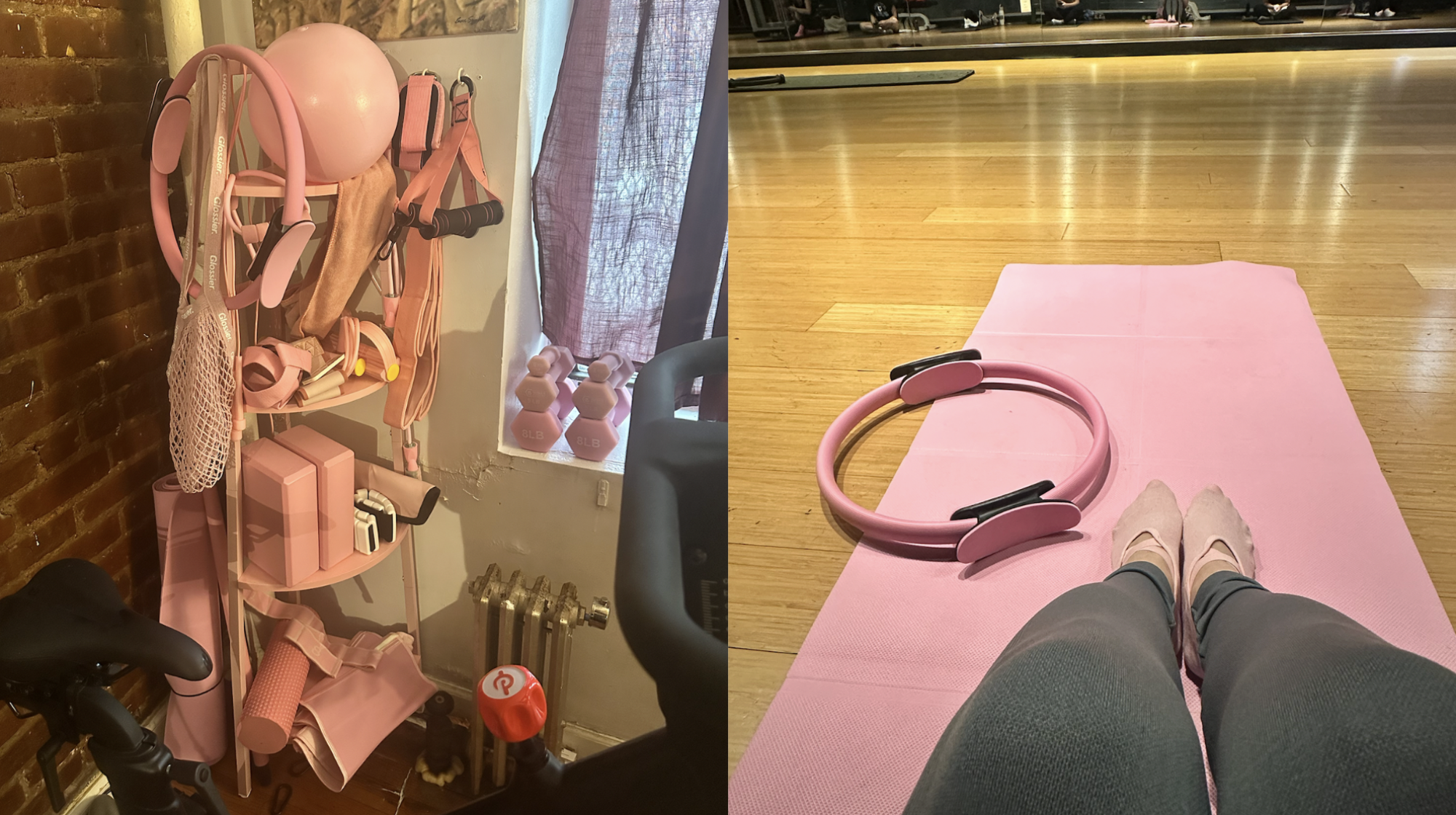
Thus, the best purchases I’ve made toward my little at-home exercise station have been my Pilates accessories. First up, I got a cushy mat. If you are into yoga or Pilates, you know that there are pros and cons to a squishier, thicker mat. The main pro—that it doesn’t hurt my butt or knees to do exercises on the floor—outweighs the cons, like the fact that I have to be slightly more careful and brace myself just a bit more to stay stable on the less sturdy surface. If stability is an issue for you, you might want a thinner mat, but I got this thick one, which is about $16.
The real success came when I got a Pilates hoop and ball.
These were not entirely necessary, of course; you can do a perfectly adequate workout without them. Moreover, I went cheap—like really cheap—so I ended up having to blow up the ball with a straw and attach the grip pads to the hoop myself. Not the end of the world, but not as luxurious as I like my Pilates-related activities to be, either. That said, these did make my non-home Pilates activities better. I have brought them with me to mat Pilates in addition to using them along with Peloton and YouTube workouts, meaning I don’t have to use the balls, hoops, or mats anyone else has sweated on.
The mat is multi-purpose, too. I use it when I do strength training and when I do at-home yoga. I also picked up some yoga blocks, which have helped me when I’m on my own in addition to when I take classes in a studio or the gym. Here, I hesitate to recommend my cheapies fully, though. Unlike some blocks I’ve used at the studio, mine aren’t very dense or textured. They’re a bit flat, light, and almost slippery. I did, in fact, fall off one during a hot yoga session at a new studio a few weeks back. I chalk this up mostly to operator error because I’m simply not a graceful person and that goes double when I’m covered in sweat, but I do think if I had some higher-quality blocks, it might not have happened. Keep that in mind when going cheap, though I’ll say I haven’t had any other issues with my inexpensive goods.
The secret home gym holy grail
I have gotten a lot of other weird, single-use, and niche home workout products and I won’t lie: I don’t really touch them. I got this resistance band/squat bar combo, for instance, and it’s sat idle for months because it just could never replicate what I’m able to access in the gym or even by using dumbbells at home.
On the other hand, dumbbells seemed inaccessible to me for home use for a while because, as you can see, I am a cheap person and the higher the weight gets, the higher the price goes with it—at least at Target or on Amazon. Unwilling to pay more than $25, I assumed I’d be capped out at five-pound weights forever and only ever use dumbbells at the gym. But then, by pure chance, I found myself in a Five Below last week.
Reader, they have dumbbells. Do they ever have dumbbells. There are dumbbells and kettlebells up to 10 pounds and each is $10 or less. They also have resistance bands, lifting gloves, wrist weights, an ill-advised “thigh trainer,” and more, all at that same price point or below. If you’re looking to add a bit of spice to your home workout setup, get to Five Below because nothing there will break the bank.
Why this works
I try to get to the gym or a boutique studio at least four times per week, but that requires a lot of motivation and planning—which working out at home requires even more of, in my opinion, so when I do that, I need to buckle down and force myself. You’d think it would be easier, since I don’t have to go anywhere, but it’s harder because I can simply choose to stay on my couch. Having access to equipment that can enhance my time working out at home motivates me and makes the process of setting up, finding a video to follow, and actually completing some exercises feel more worth it. It wasn’t expensive to build my arsenal, but if it had been, it still would have been worth it.
Covered at home or at the gym. Credit: Lindsey Ellefson
And, yes, all my exercise equipment is pink. I’ll do me; you do you.
Sent out today and already merged for the in-development Linux 6.18 kernel is the latest batch of 64-bit ARM “ARM64” architecture fixes. Most notable is a fix for addressing a “catastrophic performance issue” that was uncovered…
Lego has a long history of geek and gaming crossovers. We’ve seen recent sets for Star Wars and Star Trek, while past collaborations include everything from Super Mario Bros. to Minecraft. The latest blocky tie-in is a classic: The Legend of Zelda: Ocarina of Time, as teased on social network X by Nintendo of America with the caption “Do you realize who you’re dealing with?”
The short video clip recreates a scene from the game, with a minifig of Link armed with his Hylian shield and Master Sword beside a tiny floating Navi fairy. (Presumably Lego Navi will not interrupt you with “Hey! Listen!” every five minutes, but maybe the company is striving for total accuracy.) A blurry Zelda minifig stands behind them, and the heroes stare upward at the looming shadow of what must be a Ganon character. Whether the villain is a minifig of his own or a larger-than-life constructed model remains to be seen. The set won’t be released until 2026, but most likely either Lego or Nintendo will reveal more details ahead of the launch date.
This isn’t the first time Hyrule is getting the Lego treatment. The brands’ debut Legend of Zelda collab was a set of the Great Deku Tree that came out last year, and it could be built as either the wise arboreal being from Ocarina of Time or from Breath of the Wild.
This article originally appeared on Engadget at https://www.engadget.com/entertainment/nintendo-and-lego-tease-a-legend-of-zelda-ocarina-of-time-set-201500150.html?src=rss
Democratic U.S. Senator Elizabeth Warren is escalating pressure on the defense industry to stop opposing military right-to-repair legislation, as House and Senate negotiators work to finalize the fiscal 2026 National Defense Authorization Act. From a report: In a sharply-worded November 5 letter to the National Defense Industrial Association (NDIA) obtained by Reuters, Warren accused the industry group of attempting to undermine bipartisan efforts to give the Pentagon greater ability to repair weapons and equipment it owns.
She called the group’s opposition “a dangerous and misguided attempt to protect an unacceptable status quo of giant contractor profiteering.” Currently, the government is often required to pay contractors like NDIA members Lockheed Martin, Boeing and RTX to use expensive original equipment and installers to service broken parts, versus having trained military maintainers 3D print spares in the field and install them faster and more cheaply.
Sony is not happy with the performance of Destiny 2, the company confirmed in its latest Q2 earnings announcement. “Regarding Destiny 2, partially due to changes in the competitive environment, the level of sales and user engagement have not reached the expectations we had at the time of the acquisition of Bungie, Inc.” Sony Chief Financial Officer Tao Lin said. In response, the company is recording around a $204 million impairment on the developer’s intangible assets.
The impairment isn’t equivalent to money lost, but rather a representation of Destiny 2 not meeting the sales and engagement models Sony made when it acquired Bungie. The “intangible assets” Bungie brought to the deal, like the Destiny IP and the developer’s existing customer relationships, are worth less right now than expected. However, that doesn’t extend to the “goodwill” created when both companies agreed to the acquisition, Sonys says, because it’s “supported by the whole game segment.”
When it completed its acquisition of Bungie for $3.6 billion in 2022, Sony believed the developer could use its expertise in running online games to help expand PlayStation’s live service offerings. While the strategy has led to successes, like Helldivers 2, which has proven to be a popular multiplayer game on PC, PlayStation and Xbox, it’s also created catastrophic failures like Concord, which was pulled from digital stores less than two weeks after it launched.
Sony’s announcement doesn’t suggest the company believes it was wrong to purchase Bungie, but it does put even more pressure on the developer to perform, and justifies Sony taking firmer control of what happens at the studio. Renegades, a planned Star Wars-themed expansion, could bring the mass appeal Bungie is hoping for, but the developer has a whole other game to contend with, too.
Bungie delayed its take on an extraction shooter, Marathon, in June, after it was revealed that a significant portion of the game used stolen assets. The developer hasn’t announced a new release date since then, but assuming interest in Destiny 2 never fully returns, a lot could ride on Bungie’s next game.
This article originally appeared on Engadget at https://www.engadget.com/gaming/playstation/sony-says-destiny-2-has-not-met-expectations-200000610.html?src=rss