Red Dead Redemption is coming to mobile for Netflix subscribers

Red Dead Redemption will finally be available on mobile devices, but only for Netflix subscribers. This was discovered by prolific news source and deals curator Wario64, who also revealed a release date of December 4. The game will be free to play on both iOS and Android devices and will include the zombie-centric DLC Undead Nightmare.

Red Dead Redemption coming to Netflix on Dec 4th
iOS https://t.co/gXKy5edObR
Android https://t.co/eg6RhKhsAt https://t.co/7JJPR7nx6W pic.twitter.com/W07ZrVhXhl

— Wario64 (@Wario64) November 13, 2025

That same leaker has also discovered an ESRB website with ratings for the PS5, Xbox Series X/S and the Switch 2, so it’s likely that Rockstar’s open world western is heading to current-gen platforms. We don’t have a release date for these ports. It’s already available for the PS4 and the original Switch.

It’s worth reiterating that this is the first Red Dead Redemption from 2010, and not the sequel. It’s still a great game, despite not quite reaching the highs of Red Dead Redemption 2.

This is just the latest team-up between Netflix and Rockstar. Grand Theft Auto: The Trilogy – The Definitive Edition became available on Android and iOS for Netflix subscribers back in 2023.

This article originally appeared on Engadget at https://www.engadget.com/gaming/red-dead-redemption-is-coming-to-mobile-for-netflix-subscribers-180557451.html?src=rss

Espire: MR Missions Turns Your Living Room Into A Stealth Training Ground

Espire: MR Missions builds upon Espire 2’s mixed reality stealth missions, and it’s launching on Quest next month.

Starting life as an add-on mixed reality mode to Espire 2: Stealth Operatives in 2023, Espire: MR Missions builds on those foundations by utilizing the boundaries of the player’s home as the backdrop for its perilous, militant levels. Announced at today’s VR Games Showcase, this standalone release contains new missions and systems, and it launches on December 16 for Quest. You can check out gameplay below:

0:00

/1:30

Announcement trailer

Espire: MR Missions features 29 different challenges, offering 21 small-scale single-room missions and eight large-scale multi-room missions. It integrates your furniture and home decor into the game world, adding new details like roller doors and lighting effects on top. So while the overarching objectives remain the same throughout, your tactics and gameplay can vary depending on your playspace.

Throughout missions, you’ll take on gun-toting OPHIS Guards and navigate cleverly placed laser traps, all while evading the enemy’s eyeline. Across the launch trailer, we can see the player disarm and knock out enemy soldiers, as well as grab them and use their retinas to unlock doors and loot them of their firearms.

Espire: MR Missions arrives on December 16 for Quest. Players who already own Espire 2 on Quest before the launch date will receive Espire: MR Missions at no additional cost.

Google’s AI Mode Can Now Work Like a Virtual Sales Associate

Google really wants you to use its AI to help you do your holiday shopping, and to that end, it’s finally letting AI Mode and Gemini directly link you to products. The new feature is powered by Google’s “Shopping Graph,” a list of 50 billion products that also informs Google’s Shopping tab, and it’s available to everyone on both desktop and mobile starting today.

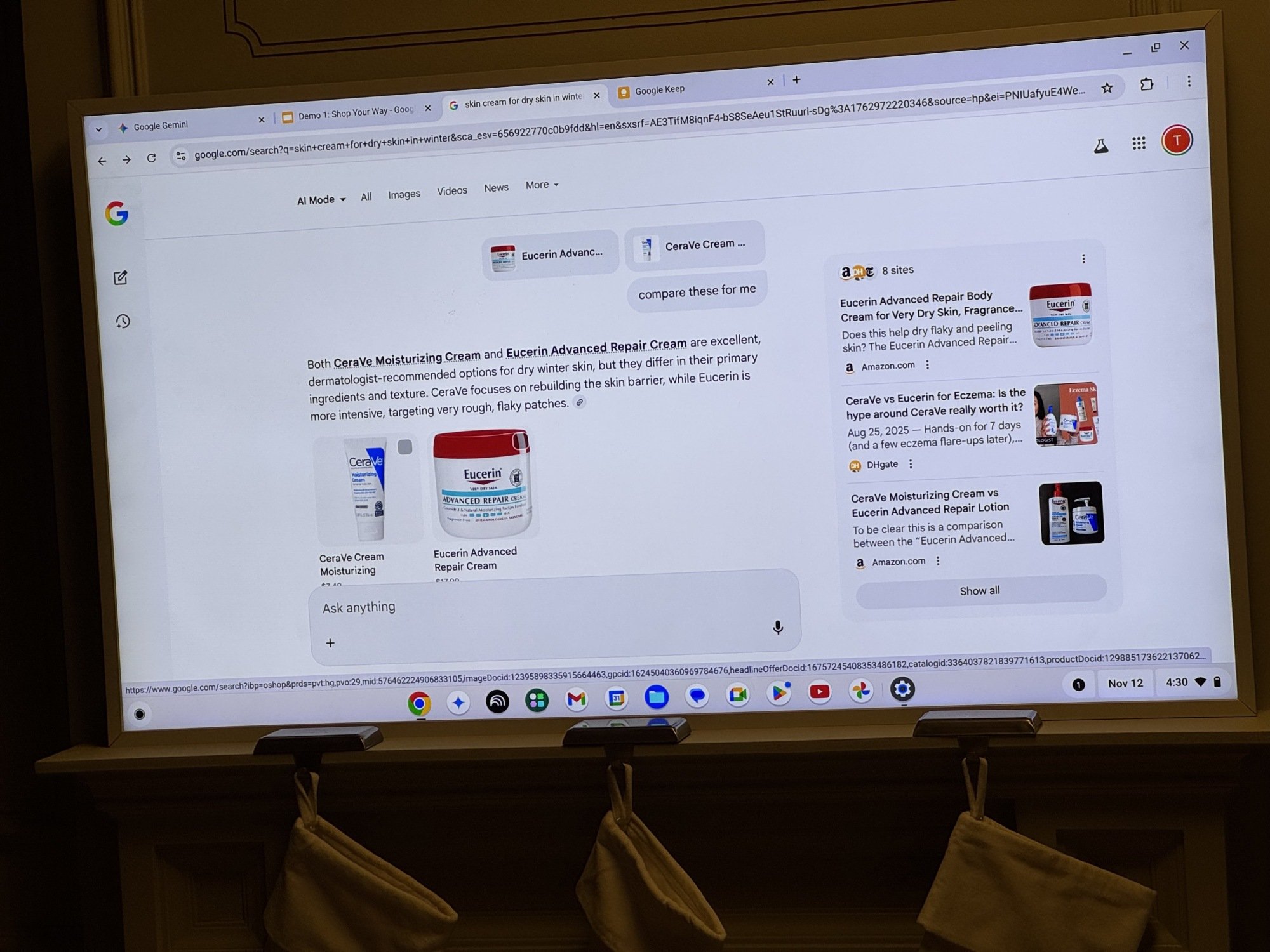
Here’s how it works: In Google search’s AI Mode or the Gemini app/website, you can ask a question or send a prompt about a physical product, like “Help me find an espresso maker that has a steam wand, is affordable, and is good for beginners.” If the AI can find relevant product information in the Shopping Graph, it’ll then give you a short writeup and pop up a few product suggestions along with shopping information, like pricing and user reviews. Clicking on any of these tiles will then open a sidebar with sites where you can purchase the item.

Google Shopping information in AI Mode on desktop

Credit: Michelle Ehrhardt

Essentially, it’s like using Google’s Shopping tab, but with a virtual shopping assistant (or, let’s be real, a salesperson) you can turn to for more context about what you’re seeing. Some queries will even let you click a checkbox on their product tiles so you can mark off to ask follow-up questions. For instance, you could check off two product tiles and ask the AI to compare them, or ask which is cheaper or has better reviews.

According to Google representatives at a press event, the company is hoping this will make it easier for shoppers to buy gifts for friends or relatives that are traditionally hard to shop for, and that it will make shopping easier by letting people search using natural language.

My hands-on experience

When I tested out this new tool, it generally worked out, but I did encounter a few hiccups. The biggest was that it was hard to get the AI to recognize certain products as topics it could surface tiles for. For instance, asking for “Popular Nintendo Switch games under $60” just gave me a list of games, but no links to purchase them. I assume this is because the AI thought I was simply asking for general advice about what to play instead of shopping, but no amount of rewording would prompt the tool to show me product tiles, even when I explicitly asked for them.

I also ran into problems when it came to natural language searches. At the aforementioned press event, Google gave journalists example questions to ask the AI in order to try the new feature, but I found only the questions that called out specific types of products would give me tiles to click on.

For instance, a question like “Give me Christmas gift ideas for my sister who loves knitting and reading” wouldn’t trigger the new feature, but “show me ottomans that can be used as coffee tables” would. Even the example Google used in its blog announcing the feature wouldn’t work for me—asking for Christmas gift ideas for a college student who likes to run gave me generic answers like “running shoes” and “moisture-wicking socks,” but didn’t show any specific examples that I could buy.

That shouldn’t stop you from getting gift ideas from the AI, but it does mean that when you’re ready to buy, you’ll want to ask a fresh question that asks for a specific type of product, rather than ideas for a specific person. It’s a bit of an extra step for something that’s supposed to take the guesswork out of the buying process.

With those caveats in place, I still see most users still sticking to the regular shopping tab, where they can be sure they’ll get product links every time. But Google’s hoping that integrating shopping into AI Mode will eventually give users the best of both worlds, allowing them to make more specific searches than they could without AI, and also allowing the AI to call on training data the shopping tab doesn’t have access to, like Reddit posts and website reviews.

Now I just need to find a way to convince my family that all my thoughtful gift ideas didn’t just come from a robot.

The Lightkeepers Promises Nautical, Supernatural Co-op Action On Quest

The Lightkeepers promises a supernatural tale of nautical solitude with a new co-op action game on Quest.

Developed by Spectral Games, likely best known for its work on Medieval Dynasty New Settlement, The Lightkeepers takes place in the 1920s in a world “where daylight unveils discoveries and nightfall demands survival.” Though it’s unclear exactly how many players this supports, you’re tasked with exploring mysterious islands and solving puzzles to prepare for the imminent threat.

0:00

/0:34

Revealed during today’s VR Games Showcase, The Lightkeepers promises “new challenges, different enemies, and unpredictable places” across each expedition, featuring weapons ranging from muddy rifles to hand-crafted grenades. The studio states light comes at a price, while fending off the dark involves exploring, crafting, and directly fighting these nocturnal terrors as a team.

Strangely, this isn’t the only VR game we’ve recently seen that’s set in the 1920s. Last month saw Curvature Games share more about The Amusement, an Art Deco-style roomscale adventure that’s inspired both aesthetically and in its setting by Luna Parks during the 1920s post-war period.

The Lightkeepers launches next year on Quest 3 and 3S.

Narrative Adventure Syberia VR Launches On Quest 3 Today

Syberia VR is an immersive reimagining of the narrative adventure game of the same name, and it’s now available on Quest 3 and 3S.

Developed by Virtuallyz Gaming and Microids Studio Paris, Syberia VR puts players in the shoes of Kate Walker, a New York lawyer who’s thrust into an enigma-filled adventure across Eastern Europe when a job to settle an estate goes awry. Initially starting life in 2002, this VR version revisits the events of the first game in the series, asking you to solve the mysteries of its steampunk-inspired setting up close.

0:00

/1:11

Kate isn’t alone in her journey and is joined by an informed automaton companion called Oscar, who assists the accomplished lawyer with her investigation. Together, the two chase an elusive inventor called Hans Voralberg, who’s seeking to find the last remaining mammoths on the titular island.

From a gameplay perspective, this means exploring dioramic spaces, interacting with residents, and solving puzzles across 3D recreations of the original game world. Across the trailer, we can see a handful of the locations Kate visits, including spiderweb-ridden crypts, mechanized factories, and medieval castles, to name a few.

Syberia VR is now available on Quest 3 and 3S. While we didn’t receive pre-release access, we’ll aim to bring you our full review soon.

Full Steam Undead Promises Comedic Action In A Victorian Open World

Full Steam Undead promises comedic zombie-killing action in an occult Victorian world on Quest and Steam.

Marking the latest game from By Grit Alone developer Crooks Peak, Full Steam Undead takes an action-over-horror approach in a Victorian-inspired open world “with zero loading screens.” Serving at Queen Victoria’s behest on Necropolis Island, this lighthearted single-player shooter also gives you a drivable steam engine to assist in your battles.

0:00

/0:57

Announcement trailer

Crooks Peak states this comes with various minigame-style ‘Crypts’ that range from mine cart riding to boss battles. Should rage overcome this island, zombie swarms will quickly overwhelm you, and the studio advises this campaign will likely last for around 4 hours.

Various optional gameplay modifiers will be available such as difficulty settings, instant reloads, zombie damage immunity, and a self-explanatory “Zombies explode when they get close” mode. Accessibility options include snap and smooth turning, a swappable gun hand, vignettes, and more. Crooks Peak also says it included a “very forgiving” autosave system.

While Crooks Peak advised these plans are speculative, it’s considering additional features that are currently “out of scope before release.” Targeted post-launch updates presently include adding one-handed play support, a realistic steam engine controls mode, additional localizations, a global zombie kill counter, support for both LIV and bHaptics, and more.

Full Steam Undead launches in spring 2026 on Quest and Steam for $12.99.

Orcs Must Die! By The Blade Is Coming To Quest Next Year

Orcs Must Die! By The Blade is a VR reimagining of Robot Entertainment’s action-tower defense series, and it’s launching on Quest next year.

Developed by Teravision Games, who previously released Captain Toonhead vs. The Punks from Outer Space, Orcs Must Die! By The Blade expands on the franchise’s monster-slaying lore, rebuilding the core gameplay loop for VR. Alongside setting up traps and surviving a wave of baddies, you also wield various destructive tools in first person to defend your home. You can check out gameplay below:

0:00

/1:26

This campaign features 12 missions across three main chapters, which involve placing intricate traps on a map before taking out Orcs with weapons like axes and swords. By The Blade opts for free locomotion for its combat, letting you move defensively by blocking and countering Orcs, or offensively by swiping and slashing at them.

As you progress through the campaign, you can upgrade your pool of weapons and traps with elemental effects to diversify your destructive portfolio. Those who prefer not to scheme solo can also jump into By The Blade’s co-op mode with an additional player.

“My favorite thing to do is hitting orcs with the head of their fallen brothers (or any other limb for that matter, haha),” explained Teravision Games Design Director, Cesar Solis Galindo in a prepared statement. “Building complex combinations of traps and experiencing the explosion of limbs and blood has a familiar but unique feeling, since the orcs in this game will HUNT YOU instead of going straight to the rift.”

Orcs Must Die! By The Blade will launch on January 22, 2026, exclusively on Quest.

Google will let Android power users bypass upcoming sideloading restrictions

Google recently decided that the freedom afforded by Android was a bit too much and announced developer verification, a system that will require developers outside the Google Play platform to register with Google. Users and developers didn’t accept Google’s rationale and have been complaining loudly. As Google begins early access testing, it has conceded that “experienced users” should have an escape hatch.

According to Google, online scam and malware campaigns are getting more aggressive, and there’s real harm being done in spite of the platform’s sideloading scare screens. Google says it’s common for scammers to use social engineering to create a false sense of urgency, prompting users to bypass Android’s built-in protections to install malicious apps.

Google’s solution to this problem, as announced several months ago, is to force everyone making apps to verify their identities. Unverified apps won’t install on any Google-certified device once verification rolls out. Without this, the company claims malware creators can endlessly create new apps to scam people. However, the centralized nature of verification threatened to introduce numerous headaches into a process that used to be straightforward for power users.

Read full article

Comments

Six of the Best YouTube Channels for Running Workouts

Approximately every five to seven months, I am possessed by a desire to “see if I like running.” I suit up in activewear and my best shoes, jury-rig my apartment keys into the hair tie holding up my ponytail, and optimistically set off down Manhattan’s FDR Drive. After some time, the results of my experiment are clear: I still hate running and remain convinced anyone who says it’s “euphoric” or “relaxing” is a Nike-sponsored liar.

Some things do impact the enjoyability of running, however, like listening to guided runs. Peloton’s guided runs have increased my likelihood to get (and stay) on the treadmill in the gym, for instance, and I have been choosing running over cycling as my cardio far more often than I did before discovering that section on the Peloton app. Baby steps—or, rather, baby strides.

If you feel like I do about running, guided runs are the way to go. Peloton and other running apps can be pricy, so I found some great guided run channels for free on YouTube. The only thing better than a little help is a little free help.

Get Fit Done: for straightforward motivation

Get Fit Done is a small but mighty channel with 12,000 subscribers that, unlike a lot of others I used, requires almost no fiddling around to find the guided runs. GFD has compiled a bunch into a playlist.

They’re about 30 minutes, use popular songs, and guide you through the entire half hour clearly. A narrator tells you when to speed up and slow down, gives you a few tips here and there, but also shuts up so you can hear the music, which I appreciate. The audio quality on the narration isn’t incredible, but you can hear it just fine. This is my favorite one because it’s straightforward and no-nonsense while still being fun and motivational. Bonus: The channel also includes other kinds of videos, like guided cycling workouts. I love a good YouTube spin class and these are up there with my other favorites in terms of quality.

müüv: for getting technical

When you follow along with müüv, which has just under 4,000 subscribers, you’ll notice there’s no music or anything. It’s just pure instruction, which is great if you want to focus only on your running or listen to your own music (though you’d need two devices for that, so this is best for when you’re on a treadmill).

Certified trainers take you through interval walks and runs of varying lengths, plus there are also cycling and other kinds of exercises available. With these, the goal isn’t getting lost in music; rather, you’re following an expert-led plan that keeps you on track with your progressive running goals.

The Run Experience: for scenery and guidance

Everyone responds differently to different motivators, so even though I’m not someone who enjoys virtual scenic cardio sessions, I know plenty of people do; the scenic rides on Peloton are massively popular. You can replicate that experience with running by following along with The Run Experience, where coaches take you on a jog through beautiful scenery, giving guidance, tips, and motivation along the way.

With nearly 700,000 subscribers, this is one of the more popular ones I found. Generally speaking, the videos are probably better suited to be played on your iPad while you jog on a treadmill, so you can focus on the footage, but even if you’re running it on your phone while you hit the pavement, you still get the benefit of being guided through your intervals by a running coach.

EatMoveRest: for great production

Does a video need amazing production and top audio quality to deliver useful fitness information? No, but it’s nice, which is why I like EatMoveRest. The guided runs are designed for treadmill use but can be taken outside and the video and audio are crisp, so you can hear and see precisely what you need to be doing. With 174,000 subscribers, this channel is well-rounded. You get a variety of workouts, recipes and food tips, and even some family vlogs, if you’re into that kind of thing.

Virtual Running Videos: for pure scenery

Maybe you don’t want any guidance, any words, or any music. Maybe, you just want to zone out and pretend you’re on a mountainside or jogging by the river when you’re actually in your crowded gym. If that’s you, I recommend Virtual Running Videos, the aptly named channel with a little under 100,000 subscribers.

They are typically about 45 minutes to an hour long, but you can go as long as you want because there’s no guidance on intervals or anything like that. You get to go at your own pace, which might be best for you if you’re just starting out or having an active rest day.

IBX Running: for quick hits

Many of the channels above are full of 30- or 45-minute runs, but what about when you only have a few minutes or you just want a running warmup before you get to other exercises? IBX Running, with about 60,000 subscribers, can help you out.

With videos for beginners, HIIT routines, endurance runs, and more, this channel has it all, but it also offers these up in varying degrees of time. Why not hop on the treadmill for a 10-minute HIIT run? If you want or need, there are longer ones, too, making this a solid one-stop shop.

Proton Might Recycle Abandoned Email Addresses

BrianFagioli writes: Popular privacy firm Proton is floating a plan on Reddit that should unsettle anyone who values privacy, writes Nerds.xyz. The company is considering recycling abandoned email addresses that were originally created by bots a decade ago. These addresses were never used, yet many of them are extremely common names that have silently collected misdirected emails, password reset attempts, and even entries in breach datasets. Handing those addresses to new owners today would mean that sensitive messages intended for completely different people could start landing in a stranger’s inbox overnight.

Proton says it’s just gathering feedback, but the fact that this made it far enough to ask the community is troubling. Releasing these long-abandoned addresses would create confusion, risk exposure of personal data, and undermine the trust users place in a privacy focused provider. It’s hard to see how Proton could justify taking a gamble with other people’s digital identities like this.


Read more of this story at Slashdot.

How YouTube TV subscribers can get their $20 credit while Disney’s ESPN and ABC remain off the air

The YouTube TV logo appears on the screen of a smartphone placed on a laptop keyboard illuminated by red light. YouTube TV loses all Disney channels on October 31 after negotiations over pricing break down. 10 million users are currently affected in Creteil, France, on November 7, 2025. (Photo Illustration by Samuel Boivin/NurPhoto via Getty Images)
Don’t forget to claim your $20 credit from YouTube. (Getty Images)
NurPhoto via Getty Images

If you’re a YouTube TV subscriber who relies on ESPN for football games, or maybe you never miss an episode of Dancing with the Stars (which airs on ABC), you’re probably getting frustrated with the ongoing Disney feud. The two channels, along with other Disney-owned channels like Freeform and FX, have been off air since October 30, which is just over two weeks.

While no resolution has been reached yet, the two large streaming companies are still negotiating the new pricing terms. One analyst has estimated that Disney is losing upwards of $4 million per day while the holdout continues. “We’re ready to go as long as they want to,” said Disney’s CFO Hugh Johnston on CNBC while discussing the company’s quarterly earnings. Disney, of course, is trying to maximize the fees it gets for its channels, while YouTube claims Disney is “proposing costly economic terms,” which could result in higher subscription prices.

But there’s good news: YouTube has made good on its promise to offer a $20 credit to subscribers — you should’ve received an email from YouTube about it. However, it’s not automatic so you’ll need to claim it first — here’s how to do it.

How to get your $20 credit from YouTube TV

YouTube TV already costs you at least $83 a month, so take advantage of the $20 credit while you can. Here’s what you need to do.

  1. Open YouTube TV in a web browser and go to your Membership Settings in the upper-right corner.

  2. Go to the bottom of the menu and click Updates.

  3. Click “Claim credit” on the Updates screen.

  4. You should see a confirmation screen showing you’ve claimed the credit. It will be applied to your next bill, likely in December.

Here’s what your screen should look like when claiming the $20 credit. (Screenshots by Engadget)

How to pause or cancel YouTube TV

If the two can’t reach an agreement, you may be looking to cancel your YouTube TV subscription (or at least pause it until there’s a resolution). Here’s how to do it.

  1. Open YouTube TV in a web browser and go to your Membership Settings.

  2. Click Membership.

  3. Click Manage.

  4. Click Cancel Membership, and then click Cancel to confirm.

In the same settings, you can also pause your subscription until YouTube cuts a deal with Disney. Go to Settings > Membership > select the number of weeks you want to pause your subscription, and then click Pause.

That’ll at least give you more time to decide whether it’s worth keeping your account or closing it out.

What are my alternatives to YouTube TV?

Your $20 credit just goes to your next YouTube TV bill. But if you view that as “$20 more to spend on streaming this month,” you can put that budget towards some fairly straightforward workarounds, including ESPN’s new standalone service, Fubo (a YouTube TV competitor) and several more. Check out the best ways to watch ESPN and ABC during the YouTube TV blackout for more.

This article originally appeared on Engadget at https://www.engadget.com/entertainment/streaming/how-youtube-tv-subscribers-can-get-their-20-credit-while-disneys-espn-and-abc-remain-off-the-air-172824463.html?src=rss

Knights Of Fiona Is A Large-Scale VR RPG Adventure Launching Next Year

CharacterBank revealed its latest project is Knights of Fiona, a full-scale RPG adventure for SteamVR and Meta Quest.

Closing out today’s VR Games Showcase, Knights of Fiona is the studio’s latest game following 2022’s Ruinsmagus, and it’s described by the team as a “hand-crafted narrative experience designed from the ground up for VR.” Set in the world of Gallia, you assume the role of Fiona, leading her team of knights against the threat of evil engulfing the realm.

0:00

/0:51

Reveal trailer

Knights of Fiona incorporates a fully immersive first-person action-RPG battle system as you undergo numerous quests and challenges on your trek to save the world, fighting hordes of enemies and participating in large-scale boss fights against dragons and other creatures. You also explore the city of Gallia from its train station to seaside ports.

The game also promises that players can interact with an array of NPC characters, expanding the depth of the setting beyond the company’s previous titles. According to its director, HOI, Knights of Fiona seeks to build on the experience players had with Ruinsmagus while promising more to the world beyond the missions themselves.

“Knights of Fiona is the result of us closely evaluating everything we heard from players from the release of [that title] and amplifies every area they enjoyed.”

Knights of Fiona is scheduled for release in 2026 on the Meta Horizon Store and SteamVR. 

Tactical Roguelite Banners & Bastions Gets Full Release This December

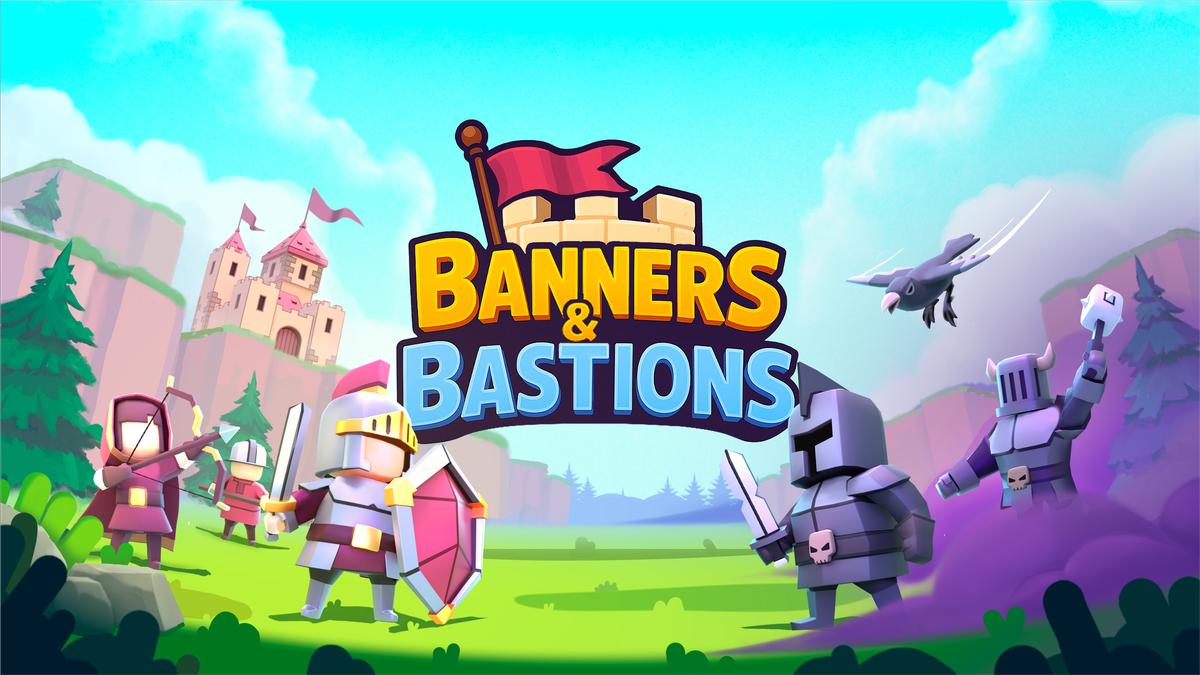
Banners & Bastions adds new enemies to the mixed reality tactical tabletop roguelite with today’s update, and it enters full release next month.

Created by Not Suspicious (Airspace Defender), Banners & Bastions is an MR tabletop roguelite with hand-tracking controls that’s currently available in early access. Following last month’s addition of controller support, a further update is now live that introduces a dragon boss battle. Two new enemy types are also available – Witch (ranged) and the Elite Swordsman (melee) – alongside a new playable Minefield card.

0:00

/0:56

New trailer

For the unfamiliar, Banners & Bastions sees every battle occur across procedurally generated maps as you defend your kingdom, with tougher foes emerging across each wave. You can keep investing in your local economy or fortifications, while your troops range from spearmen, knights, archers, and more. More features are on the way next month in a further content update.

Banners & Bastions is out now in early access on the Meta Quest platform, with the full release arriving this December. You can check out our previous early access hands-on to learn more.

Banners & Bastions Hands-On: Satisfying Strategy In Mixed Reality
Banners & Bastions, the mixed reality tower defense game from Not Suspicious, is available now in early access on Quest.
UploadVRDon Hopper

Pocket Lands Looks Like Mixed Reality Minecraft On Quest

Pocket Lands lets you create miniature worlds in mixed reality before exploring them in VR, and it’s out next month in early access.

Marking the latest game from Thomas van den Berge, creator of VR painting app Vermillion, Pocket Lands sees you building miniature worlds in your home using MR. Letting you resize this diorama to fit your entire living room, hand tracking controls allow you to grab building material with your hands before jumping in at any moment to explore in first person through fully immersive VR.

0:00

/1:04

Today’s reveal at the VR Games Showcase follows a series of pre-announcement teases, showing a concept reminiscent of Microsoft’s famous Minecraft HoloLens demo during E3 2015. Pocket Lands will release in early access this December with various biomes you can discover, while the VR mode promises multiple locomotion options.

With the full release, Thomas van den Berge is currently targeting “the second half of 2026.” This aims to include cave systems and underground biomes, additional surface biomes, creatures roaming the lands, and multiplayer build battles with leaderboards. Co-located and remote creative multiplayer are also planned.

Pocket Lands enters early access on December 11 on the Meta Quest platform.

Vampire Survivors VR Shadowdrops On Quest Today

Vampire Survivors VR is now available in a surprise shadowdrop on Quest, taking a 3D diorama approach.

Announced during the latest VR Games Showcase, developer poncle has teamed up with Radical Forge and Meta to bring the BAFTA award-winning roguelike to Quest. As with the flatscreen version, the Vampire Survivors VR port lets you choose a character based on stats like damage and armor before letting them loose on voxel environments as wave after wave of enemies arrive.

0:00

/0:55

Launch trailer

The difference here is that while trying to keep your health bar above zero, you’re immersed in iconic game locations, including the Mad Forest, Inlaid Library, and Dairy Plant. Vampire Survivors VR can be played either standing or sitting, with a resizable game board that you can adjust to your liking. This also includes the Tides of the Foscari and Legacy of the Moonspell expansions.

Between bouts of survival combat, you’ll open spin-to-win chests and use your hard-earned gold on new characters, permanent upgrades, power-ups, and weapon varieties to enhance your runs. The gothic gameplay is, of course, backed up by Vampire Survivors’ signature synth-heavy soundtrack, and we’ll bring you dedicated impressions soon.

Vampire Survivors VR is available on Quest now for $9.99.

Valve’s trio of hardware announcements revived my Half-Life 3 fever dream

Yesterday, Valve announced three (3) hardware products: a Steam Machine console, an accompanying Steam Controller and the long-rumored Steam Frame VR headset. This hardware, along with the excellent Steam Deck, gives Valve a pretty comprehensive way to get people playing games wherever they want, on any sort of screen. And, of course, the games are what this is all about. Steam’s catalog is impossibly vast, encompassing every genre you can imagine — but there’s still one crucial title missing from the thousands of games available.

I am, of course, talking about Half-Life 3.

I swore back in 2017 that I’d stop beating this dead horse, but Valve sucked me back in with the utterly unexpected, excellent, VR-only Half-Life: Alyx prequel. At the very least, it was a sign that the Half-Life universe wasn’t dead and buried in Valve’s mind, despite the fact that it had lain dormant with an unresolved cliffhanger for more than a dozen years.

At the time, Valve indicated it was interested in moving forward with more games in the series, though I wouldn’t have been surprised if the company just dropped things again. But, a big push into hardware that is significantly more powerful than the Steam Deck feels like another perfect opportunity to make Half-Life 3 happen.

And there have actually been a few more concrete bread crumbs to follow over the last year or so indicating Valve might finally be returning to the Half-Life story. It started with the 20th anniversary of Half-Life 2, when Valve dropped a major update for the game. “Every map in Half-Life 2 has been looked over by Valve level designers to fix longstanding bugs, restore content and features lost to time, and improve the quality of a few things like lightmap resolution and fog,” the developer wrote. Along with some developer commentary, a documentary and the inclusion of the two episodic follow-up games, this was a pretty substantial update for such an old game.

At the end of last year, YouTuber Gabe Follower dropped some details on a potential Half-Life 3 coming soon. Follower had previously called the release of Counter-Strike 2, lending some credibility to his findings. To make a long story short, Follower claimed a Valve project internally titled “HLX” had reached the play-testing stage. That didn’t necessarily mean a launch was imminent, but at the very least the game was advancing in development.

Another less consequential but fun tidbit dropped around the same time: actor Michael Shapiro (who voiced the infamous G-Man in the Half-Life series) posted a New Years’ message where he spoke in the G-Man’s strange accent and said he’d see viewers in the year to come. Not coincidentally, he also did this in 2020 prior to the Half-Life: Alyx launch. The game had already been announced when he posted that message, but it’s still an intriguing tease. 

The timing couldn’t be better, either. The Game Awards are less than a month away, and that extravaganza is about the biggest platform you could ask for if you’re announcing a big new title. Not that Valve really needs the stage — they could just drop a trailer on YouTube and the gaming world would take care of the rest.

But as a companion piece to the company’s renewed hardware ambitions? The synergy would be too good to pass up. After all, the Valve Index VR headset launched just a short time before Half-Life: Alyx was announced, and anyone who had purchased it got the game for free. A theoretical Half-Life 3 isn’t quite the same, as there’s no chance the game will require the official Steam Machine. But it would still make a heck of a launch title to help drive interest in the company’s new devices. 

As for me, I’m not letting myself get too excited here. I remember in 2013, when Valve introduced the first Steam Machines initiative and its first attempt at a controller, I assumed it would be a perfect time to announce Half-Life 3. That clearly did not happen. But I’d be lying if I said I wasn’t a little bit hopeful this time around. There’s enough smoke to make me think that the fire is real; it’s hopefully time to wake up and smell the ashes. 

This article originally appeared on Engadget at https://www.engadget.com/gaming/pc/valves-trio-of-hardware-announcements-revived-my-half-life-3-fever-dream-170000561.html?src=rss