‘Metroid Prime 4: Beyond’ thrillingly brings the series into the modern era

Earlier this year, I played Metroid Prime for the first time in at least a decade. Back in 2023, Nintendo released a remastered version of the 2002 classic for the Switch, and I felt like dusting it off once we finally knew Metroid Prime 4: Beyond would arrive this year after about a decade in development. The original Metroid Prime holds up surprisingly well for a 23-year-old game, but there were plenty of times where it showed its age. The platforming often felt overly clunky, as precise control over Samus Aran is not the game’s strong suit. Similarly, dealing with larger hordes of energy-sucking Metroids could get pretty frustrating, again due to a lack of precision. 

But the main feeling I came away from the game with was excitement over a fully modernized Metroid Prime experience. I’ve been interested in seeing how the lush alien worlds, monstrous enemies and first-person combat would feel on a current console, built with today’s technology and the many improvements that have come to game design since 2002. I finally got a chance to play about 90 minutes of Metroid Prime 4: Beyond last week and nothing I saw diminished my excitement for the series being brought into the current decade — even if the game felt almost too familiar at times.

I played two segments of Metroid Prime 4: Beyond. The first is an opening sequence that Nintendo made available for people to try at the Switch 2 demo experiences earlier this year before the console launched, while the second is a longer slice that takes place on a gorgeous alien planet where it seems the bulk of the game will likely take place. That first segment is the classic “get the player acquainted with the controls” level where Samus flies in to help defend a base under attack. Since I had played the Switch version of Metroid Prime recently, I felt right at home with the controls even though a few buttons were remapped. All of the classic Metroid moves, including charge blasts, the morph ball, the missile cannon, the scanning visor and more are intact here, and I quickly slipped back into the routine of scanning enemies for weak points and blasting away. 

Right from the jump, the game looks fantastic. There’s an extensive cutscene (at least for a Metroid game) that shows Samus flying in to save the day through a battle-torn base, and everything from the flash of fireball explosions to small details on Samus’s ship give off a level of detail that we simply haven’t seen in a Metroid game before. 

I was playing the game on the Switch 2, in both handheld mode and hooked up to a TV and it looked great either way. The aforementioned explosions popped nicely in HDR and the frame rate never stuttered in a way that I picked up on. As usual, Nintendo’s art direction is top-notch, but this is the first Metroid Prime game made on a console with some power behind it (remember, Metroid Prime 3: Corruption came out on the original Wii). The game isn’t quite aiming for photorealistic graphics, but it’s closer than almost any other Nintendo game I can think of. The combo of impeccable style and a modern resolution that finally lets the Metroid world shine is thrilling, and I can’t wait to see more variety in the worlds that Samus explores.

There’s also a lot more voice chatter than in the original Metroid Prime. As you get dropped into defending the base under attack, plenty of other soldiers recognize Samus, ask for help, tell her where to go and generally praise her for being a badass. It’s a lot more voice work than I’m used to in a Metroid game, and it goes a long way towards making the journey feel less isolated. 
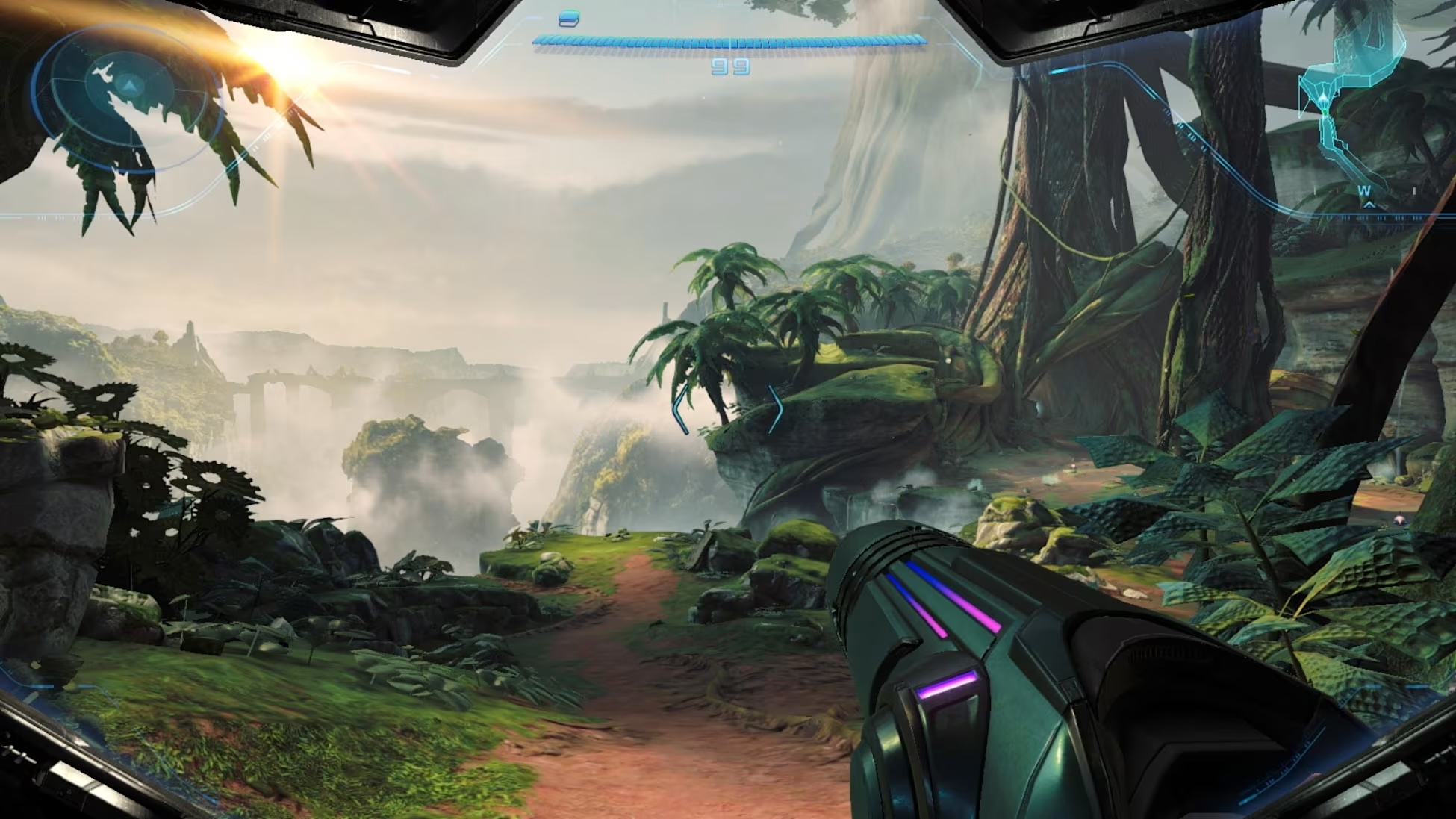
A screenshot showing the jungle world of Metroid Prime 4: Beyond.
Nintendo

The second area I got to explore looks even better than the somewhat generic base where the game kicks off. It’s a classic Metroid world that mixes natural beauty with a mysterious, alien culture. And, of course, a lot of the nature wants to kill you for invading its territory (or possibly because it is being controlled by outside forces). The big boss of the demo was cut from this cloth: a giant tentacled plant flinging its giant spiked arms at you and firing off poisonous flowers. A classic Metroid battle if ever there was one, albeit one that felt not wildly different from some of the boss battles from Metroid Prime. That said, the scope of the battle felt bigger, due to the size of the arena and how the plant’s tentacles made maneuvering and getting off clear shots a challenge. While the boss clearly had a central body right in the middle of the room, the tentacles made it feel like it was all around me, at all times

This boss felt like an upscaled but familiar version of ones from past games, and it was far from the only thing that felt familiar. For example, the game still uses save stations scattered throughout the map to save your progress rather than just autosaving at significant points. That’s a throwback I didn’t exactly miss and didn’t expect to see in 2025. Plenty of the music cues and sound effects felt like they could have been lifted straight from other Metroid Prime games, and the basic move set and weapons Samus has early in the game is nearly identical to how you start Metroid Prime. Naturally, something happens where she loses most of those abilities and has to regain them to progress — in the demo, I had to find the Morph Ball power up to move on, just as you do in nearly every Metroid game before. 
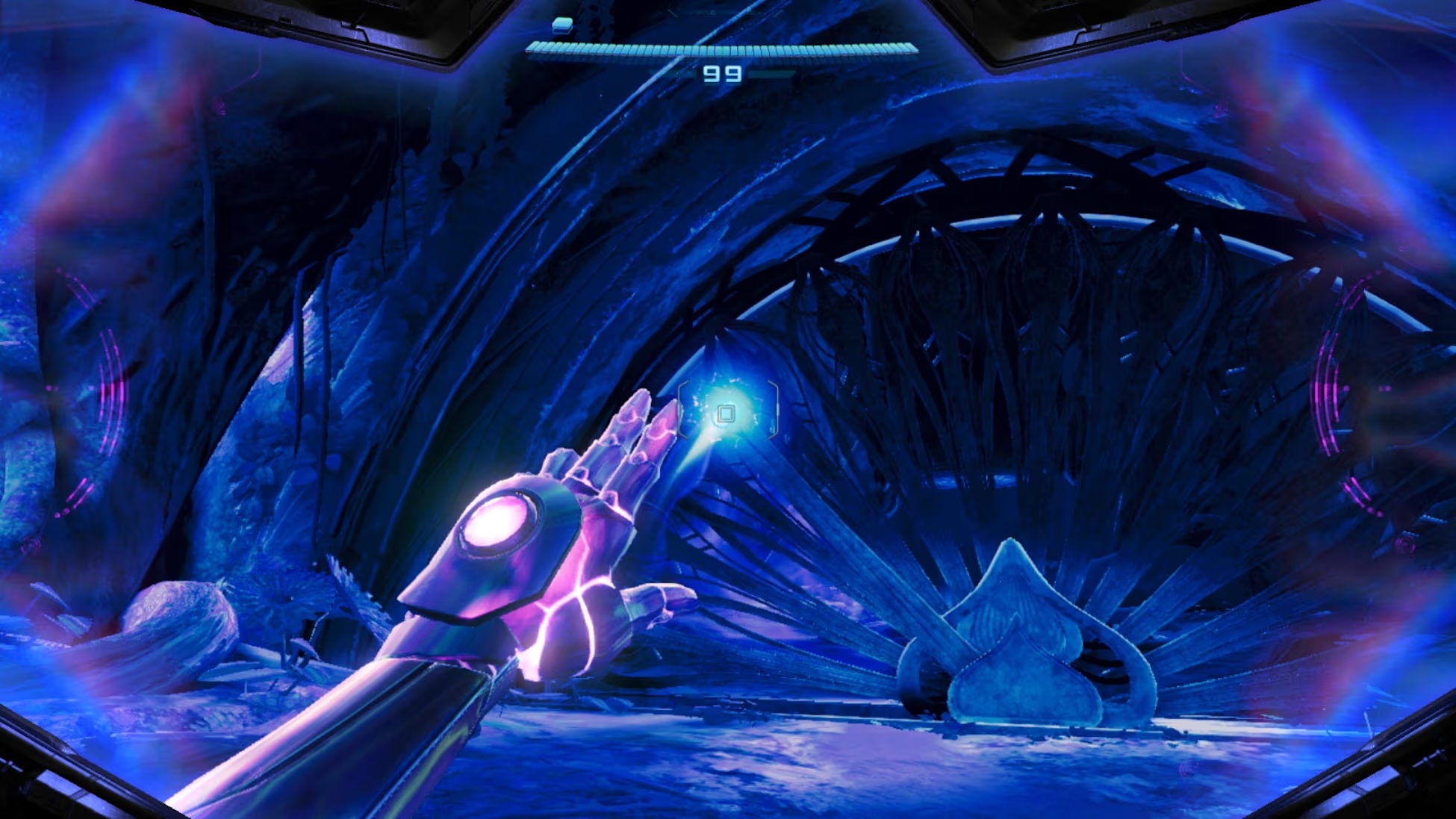
Samus Aran uses her new abilities to unlock a way forward.
Nintendo

At times, it felt like the game was leaning a bit too heavily on the already-established framework rather than trying something new. But given that I was early in the game, I’m allowing for there to be a lot of unexpected changes to come. And I did get a chance to try out the biggest gameplay change Nintendo has teased thus far (no, not the motorcycle): new psychic abilities. 

These powers, at least in the demo, are primarily used for solving environmental puzzles, as they provide a new way to interact with various objects and structures. But there’s also a combat component that I needed to use to beat the aforementioned boss. You can charge and fire off a sort of psychic beam — once it leaves your blaster, time slows to nearly a crawl and you can take control of its direction with the analog stick. While fighting the boss, I had to guide the beam around a host of obstacles to hit each of the three tentacles; once I did that, the monster was vulnerable and I could then charge in and blast it with my conventional weapons. You can see some examples of this power in action in the video below.

I wish I got a chance to see how these powers would evolve throughout the game, and I’m definitely intrigued to see how they manage to separate the gameplay in Metroid Prime 4: Beyond from the aspects of it that feel merely like an updated version of what came before. And to be honest, I’m not sad the game feels familiar. Plenty of people haven’t experienced the Metroid Prime series before or haven’t played it in more than a decade, and many of the familiar aspects felt like a perfect example of “if it’s not broke, don’t fix it.” And it won’t be long before we can all find out if Metroid Prime 4: Beyond finds a way to really stand out from its predecessors after all this time. The game arrives on December 5 for Switch and Switch 2.

This article originally appeared on Engadget at https://www.engadget.com/gaming/nintendo/metroid-prime-4-beyond-thrillingly-brings-the-series-into-the-modern-era-140000932.html?src=rss

The Economic Impact of Brexit

Abstract of a working paper [PDF] published by NBER: This paper examines the impact of the UK’s decision to leave the European Union (Brexit) in 2016. Using almost a decade of data since the referendum, we combine simulations based on macro data with estimates derived from micro data collected through our Decision Maker Panel survey. These estimates suggest that by 2025, Brexit had reduced UK GDP by 6% to 8%, with the impact accumulating gradually over time.

We estimate that investment was reduced by between 12% and 18%, employment by 3% to 4% and productivity by 3% to 4%. These large negative impacts reflect a combination of elevated uncertainty, reduced demand, diverted management time, and increased misallocation of resources from a protracted Brexit process. Comparing these with contemporary forecasts — providing a rare macro example to complement the burgeoning micro-literature of social science predictions — shows that these forecasts were accurate over a 5-year horizon, but they underestimated the impact over a decade.


Read more of this story at Slashdot.

Smash Drums Celebrates Four Years On Quest With Free Campaign Update

Smash Drums is introducing a new single-player campaign in early access today with missions, RPG-like progression, and fresh in-game rewards.

Hot on the heels of Smash Drums’ Halloween event, developer PotamWorks is releasing an update in time for U.S. National Drummer Day, also celebrating the game’s fourth anniversary on the Quest store on December 2. Called the God of Drums update, this gives you the chance to scale your skills through a solo game mode with RPG-like leveling mechanics and challenging missions.

0:00

/1:15

This campaign centers around scaling the ranks from a spry instrumentalist to the aptly named God of Drums. To achieve this, percussive players must complete missions where you choose between two base game songs or one DLC track.

Those who successfully rank up will also earn in-game rewards through an RPG-style progression system, which starts at Level 1 and goes up to Level 20. PotamWorks states there will be over 100 missions to tackle on the journey, which can be completed in around 3 to 6 hours.

The Smash Drums ‘God of Drums’ update is available today in early access on Quest, and the final release is “coming soon” to PS VR2.

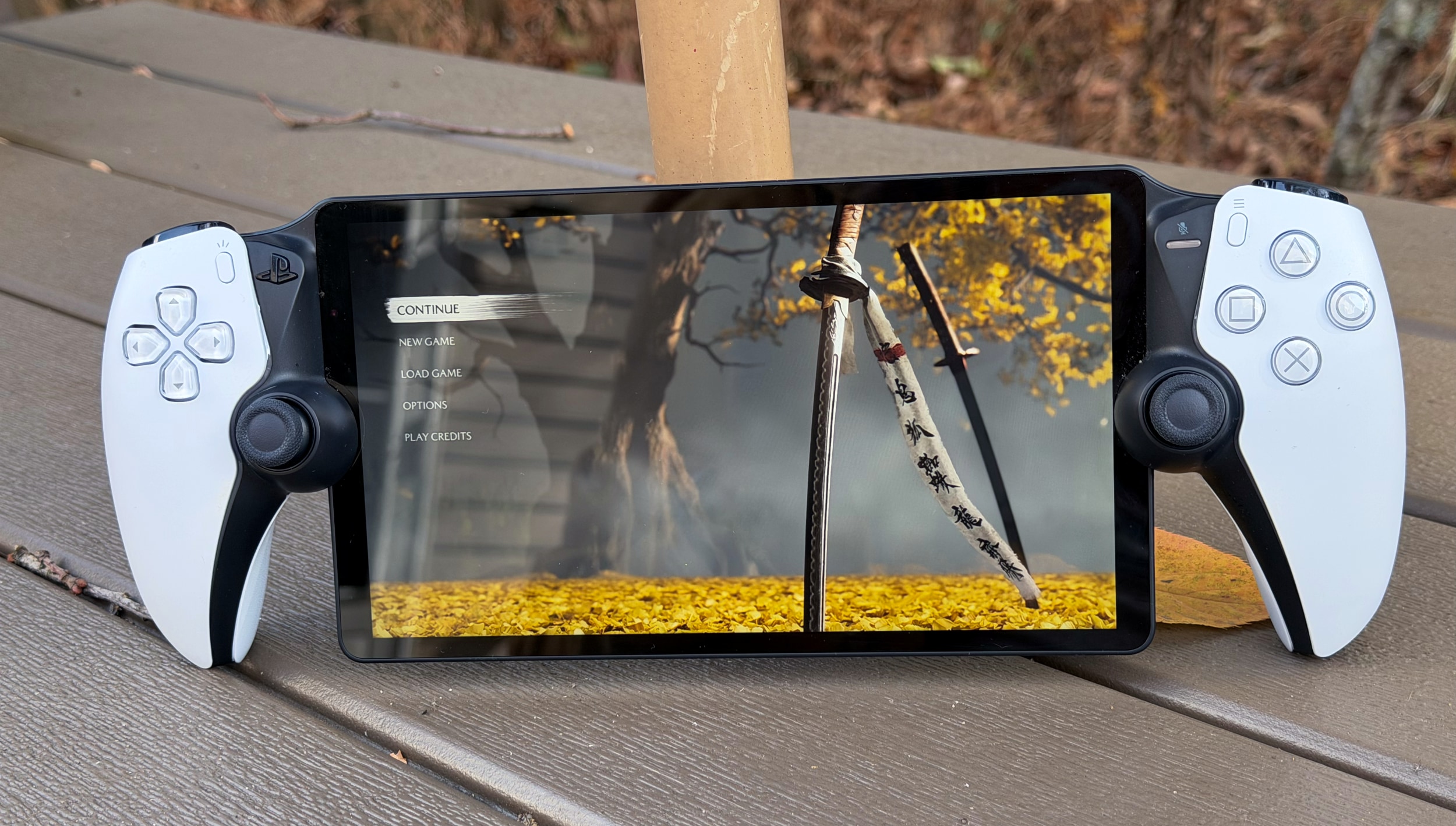
PlayStation Portal in 2025: From home streaming dud to cloud streaming star

The PlayStation Portal is the rare product that launched as a truly baffling device, but has evolved into something genuinely useful. At first, it could only stream games from your PlayStation 5, it lacked core features for a handheld like Bluetooth audio and it felt a bit overpriced at $200 for such a limited product. Add on the fact that home streaming can be notoriously unreliable, since it depends entirely on your ISP and home networking setup, and the Portal simply didn’t make much sense. But in 2024 Sony finally added limited cloud streaming for PS Plus titles, and last week it went even further by letting you stream games you own directly from the cloud. All of a sudden, the PlayStation Portal doesn’t seem so crazy after all. 

It also helps that the Portal is still $200 (or less at Gamestop and other retailers), while the cheapest Digital Edition PlayStation 5 has jumped to $500 (up from $400 at launch). Sure, it’s still far from a perfect device, but at least it’s more functional and significantly less than the PS5 today. Just be aware you’ll need to subscribe to the $18 a month (or $160 a year) PlayStation Plus Premium plan to access the cloud streaming features.

While my hardware frustrations with the PlayStation Portal remain (more on those later), I can’t deny that it’s a genuinely great handheld for streaming games from the cloud. Jumping into Ghost of Yotei typically takes between 15 to 30 seconds, and it often loads directly into the game world if I’m continuing from a recent session. The game also plays smoothly, with no noticeable stuttering or lag, and I can still choose between the graphics-heavy 30 fps modes or the smoother 60 fps performance option. It’s far from the ideal way to play Ghost of Yotei, which demands an enormous screen and capable speakers, but it’s fine in a pinch.

In comparison, using Remote Play to access my PlayStation 5 Pro remains as headache-inducing as it did when the PS Portal launched. The handheld can’t consistently wake up the PS5 Pro from standby mode, so I’m forced to turn on the console manually if I ever plan to use the Portal. If my PS5 Pro is on, the Portal can typically connect in around five seconds, and it takes another five to ten seconds to launch Ghost of Yotei. Gameplay is typically smooth via Remote Play, but there’s occasional stuttering that can interfere with intense combat sequences. 

PlayStation Portal playing Ghost of Yotei.
Devindra Hardawar for Engadget

My main issue with the PlayStation Portal at launch was that I simply couldn’t trust it. Sometimes it would let me remotely connect to my console with no problems, and sometimes it would simply refuse. I’ve got a fairly robust Wi-Fi 6 networking setup and AT&T gigabit fiber, so my connectivity shouldn’t be much of an issue. But clearly something about my networking configuration doesn’t play well with the Portal for Remote Play, even if I connect my PS5 Pro via Ethernet. 

Strangely enough, the PlayStation Portal is far more reliable at streaming games from servers thousands of miles away than it is remotely connecting to the console a few dozen feet away from me. That just goes to show how far cloud streaming has come — it practically feels like local gameplay now. I suppose that shouldn’t be too surprising for Sony, since it’s only pumping out 1080p streams. NVIDIA’s GeForce Now has proven it’s possible to stream PC games in 4K, so long as you have gobs of bandwidth to support it.

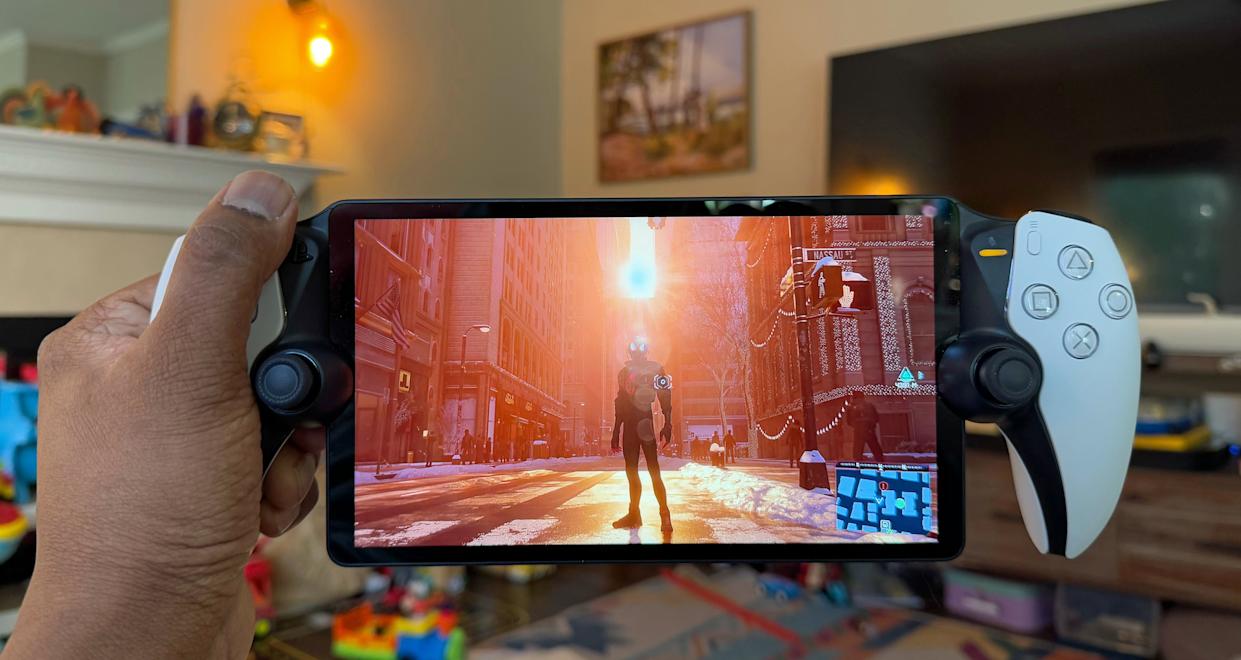
The best thing I can say about the PlayStation Portal now is that I can finally trust it — up to a point, anyway. I had no trouble signing onto its streaming servers to play Ghost of Yotei and Spider-Man 2 on my home network, and I was also able to stream games while tethering on my phone. But the Portal remains a useless device if you’re stuck somewhere without decent internet access. You can forget about using it on a plane, even with fast in-flight Wi-Fi, or at hotels with crummy internet and no cellular reception.

Spider-Man 2 on the PlayStation Portal
Devindra Hardawar for Engadget

Given its need for decent connectivity and its clunky design, the PlayStation Portal also remains a terrible gaming option on the go. You’ll need to find a large case to fit the Portal’s huge controller and delicate display, a combination that really does look like a tablet shoved between Sony’s DualSense gamepads. It’s simply smarter to travel with the slimmer Switch 2, and I’d argue even the massive Steam Deck is easier to stuff into a backpack. And it’s worth noting you can also use apps on the Steam Deck to Remote Play from your console, and you can install the PlayStation Plus Windows app to stream games from the cloud.

I’m also still annoyed that Sony didn’t include Bluetooth connectivity in the Portal. If you want wireless audio, you’ll either have to use Sony’s Pulse Explore earbuds or Pulse Elite headphones. You’ll have to plug in a separate Bluetooth receiver if you want to use AirPods or any other wireless headphones. You’ll definitely want to invest in some sort of audio solution if you plan to game on the Portal for long sessions, since its tinny speakers simply can’t do justice to Ghost of Yotei’s immersive soundscape.

Not surprisingly, cloud gaming didn’t change the Portal’s battery life much. I still saw between four and five hours of play time (broken into dad-friendly chunks, of course). And if you’re on some sort of marathon session, you can always plug in to charge. Since the Portal isn’t using any local hardware to power games — it’s really just decoding video and pushing data over its network connection — you can also expect more reliable battery life than other handhelds. The Switch 2, for example, could last between two to six hours, depending on what you’re playing.

While I still can’t wholeheartedly recommend the PlayStation Portal to every gamer, its latest updates make it a more viable option for PlayStation diehards. Maybe you’ll have better luck with Remote Play than me. And if you’re already a PS Plus subscriber, it’s the easiest way to access Sony’s cloud infrastructure. Or, like Engadget’s Jeff Dunn, it could also be the ideal way to game while you juggle the struggles of being a new parent. At the very least, the Portal is no longer truly baffling, but it’s also still not a Vita 2.

This article originally appeared on Engadget at https://www.engadget.com/gaming/playstation/playstation-portal-in-2025-from-home-streaming-dud-to-cloud-streaming-star-130000144.html?src=rss

Singapore To Trial Tokenized Bills, Bring In Stablecoin Laws

An anonymous reader quotes a report from Reuters: Singapore’s central bank will hold trials to issue tokenized MAS bills next year and bring in laws to regulate stablecoins as it presses forward with plans to build a scalable and secure tokenised financial ecosystem, the bank’s top official said on Thursday. “Tokenization has lifted off the ground. But have asset-backed tokens achieved escape velocity? Not yet,” said Chia Der Jiun, Managing Director of the Monetary Authority of Singapore (MAS), a keynote address at the Singapore FinTech Festival.

He said MAS has been working on the details of its stablecoin regulatory regime and will prepare draft legislation, with the emphasis on “sound reserve backing and redemption reliability.”
MAS is also supporting trials under the BLOOM initiative, which explores the use of tokenized bank liabilities and regulated stablecoins for settlement, he added. “In the CBDC space, I am pleased to announce that the three Singapore banks, DBS, OCBC, and UOB, have successfully conducted interbank overnight lending transactions using the first live trial issuance of Singapore dollar wholesale CBDC,” he said. MAS will expand trials to include tokenized MAS bills settled with CBDC, he added.


Read more of this story at Slashdot.

Notable Zwift Events for the Weekend of November 15-16

We’re featuring an eclectic mix of community events this weekend: a wildly popular new TT series, a fat-oxidizing group ERG session, a new long race series, an endurance ride, and a popular new race league. See all the details below!

�CTT Winter Series on Zwift

✅ Popular  ✅ Race of Truth

This week, Cycling Time Trials (CTT) – the national governing body for time trials in England, Scotland, and Wales – launched their Winter Time Trial Series on Zwift. And it’s proving hugely popular, with several hundred finishers in the kickoff event!

Learn all about the Cycling Time Trials Winter Series >

Saturday is your last chance to complete the kickoff event on Watopia’s Tempus Fugit (19.6km, 16m), and we see over 350 riders already signed up, making this the most popular event of the weekend.

Saturday, November 15 @ 9am UTC/4am ET/1am PT
Sign up at zwift.com/events/view/5188742

�OUTLYR.CC x CANYON TURBO SESSION #3: FATMAX PYRAMIDE

✅ Popular  ✅ Structured Workout

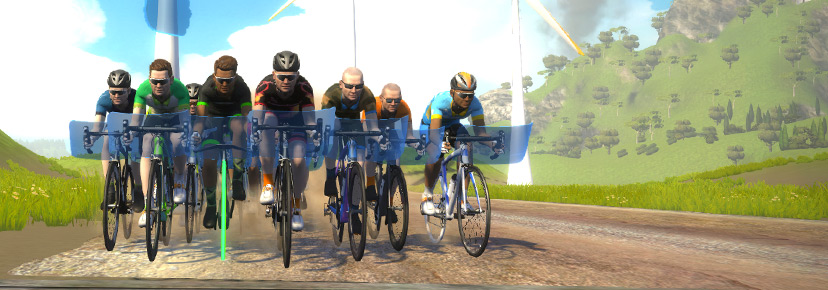
This popular ERG workout series is structured like a small local training camp, with 6 sessions spread over 2 weeks. Session #3 is 80 minutes long, and the description says, “In the third session, things are a bit more relaxed: we’re training in the FatMax zone, right at the point of maximal fat oxidation.”

Saturday, November 15 @ 9am UTC/4am ET/1am PT
Sign up at zwift.com/events/view/5175138

� DBR Wahoo League

✅ Long Race  ✅ Series Kickoff

This weekend, DBR launches a new 6-week race series featuring events on longer routes. DBR says, “It’s not a SufferDay League, but maybe a light version of it.”

The kickoff race is on 5 laps of Coastal Crown Loop for a total length of 84km with 1006m of elevation.

Saturday, November 15 @ 9:30am UTC/4:30am EST/1:30am PST
Sign up at zwift.com/events/view/5200094

�RAD RACE VO2 max Booster Plan – Week 2 – Group Ride
✅ Popular  ✅ Endurance Effort

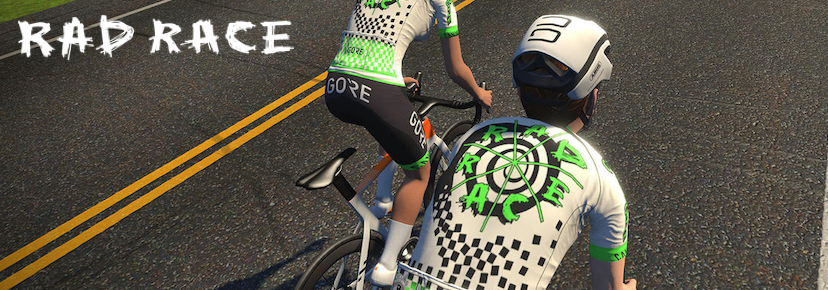
The folks at Rad Race have organized a 12-week structured workout series on Zwift. Goal: To improve maximum oxygen uptake (VO₂max) – the basis for sustainable performance development on the bike.

See the series homepage and details >

Saturday’s group ride isn’t a structured workout, but rather an endurance group ride: 3 hours at 2-3 W/kg on France’s flat R.G.V. route. Rad Race says the goal of the ride is to “Build your aerobic base – the foundation for all training zones. Perfect for active recovery and balancing out your VO₂max week.”

Sunday, November 16 @ 9:30am UTC/4:30am EST/1:30am PST
Sign up at zwift.com/events/view/5164019

�VirtuSlo 4Endurance League 2025, Stage 2

✅ Popular  ✅ Stage Race  ✅ Mass Start

VirtuSlo’s popular 4Endurance League began last weekend, and this weekend’s stage 2 has a lot of signups! Riders will be racing two laps of Greater London Loop Reverse (41.4km, 511m).

The 4Endurance League is a 6-race series held over a 6-week period. You can find out about the other races and more league info in the event description.

Sunday, November 16 in two different timeslots
Sign up at zwift.com/events/tag/virtuslo

How We Make Our Picks

We choose each weekend’s Notable Events based on a variety of factors including:

  • Is the event unique/innovative in some way?
  • Are celebrities (pro riders, etc) attending/leading?
  • Are signup counts already high, meaning the event is extra-popular?
  • Does the ride include desirable unlocks or prizes?
  • Does the event appeal to ladies on Zwift? (We like to support this under-represented group!)
  • Is it for a good cause?
  • Is it just plain crazy (extra long races, world record attempts, etc)?
  • Is it a long-running, popular weekly event with a dedicated leader who deserves a shout out?

In the end, we want to call attention to events that are extra-special and therefore extra-appealing to Zwifters. If you think your event qualifies, comment below with a link/details and we may just include it in an upcoming post!

Researchers question Anthropic claim that AI-assisted attack was 90% autonomous

Researchers from Anthropic said they recently observed the “first reported AI-orchestrated cyber espionage campaign” after detecting China-state hackers using the company’s Claude AI tool in a campaign targeting dozens of targets. Outside researchers are much more measured in describing the significance of the discovery.

Anthropic published the reports on Thursday here and here. In September, the reports said, Anthropic discovered a “highly sophisticated espionage campaign,” carried out by a Chinese state-sponsored group, that used Claude Code to automate up to 90 percent of the work. Human intervention was required “only sporadically (perhaps 4-6 critical decision points per hacking campaign).” Anthropic said the hackers had employed AI agentic capabilities to an “unprecedented” extent.

“This campaign has substantial implications for cybersecurity in the age of AI ‘agents’—systems that can be run autonomously for long periods of time and that complete complex tasks largely independent of human intervention,” Anthropic said. “Agents are valuable for everyday work and productivity—but in the wrong hands, they can substantially increase the viability of large-scale cyberattacks.”

Read full article

Comments

The Morning After: Valve revives the Steam Machine

Valve has announced a raft of new hardware, including a new VR headset, Steam Machine and Controller. The devices are all designed to usher in a new era of PC gaming, with Valve’s usual focus on the player. Steam Frame is a slender VR headset that connects wirelessly to your PC and has a built-in battery to rid you of those pesky cables. That focus on freedom extends to the Frame operating as a standalone device, like the Meta Quest.

At the same time, the company has revived its long-loved (but not massively successful) Steam Machine. This new model has semi-custom AMD silicon capable of running 4K games at 60 frames per second. Valve says it’s roughly six times as powerful as its portable unit, the Steam Deck. Rounding out the list is the controller, which looks like a Steam Deck with the screen cut out. But it’s not as if that’s a bad thing, especially as it’s got TMR sensors which, while using a different underlying technology, promise the same benefits as a Hall Effect stick.

As someone on the not particularly game-y end of the spectrum, I use announcements like this as an exercise to see how excited I would be. To that end, I’m curious how much Valve will charge for this gear when it makes its debut early next year. On one hand, the performance promises laid out here are fairly substantial but, on the other, this is also a company that sells the base model Steam Deck for less than a Switch 2.

That said, I would certainly get off the couch if there was a new Half-Life game in the works, and that seems plausible here. Nathan Ingraham is certainly getting his little hopes up that the revival of the Steam Machine might see Valve revive something else too.

— Dan Cooper

Get Engadget’s newsletter delivered direct to your inbox. Subscribe right here!

The news you might have missed

Even Realities G2 first look: This year’s best-looking new smart glasses still need work

The new innovations aren’t hitting the spot.

Image of the Even Realities G2 on a desk.
Sam Rutherford for Engadget

I was a massive fan of Even Realities’ original smart glasses and was excited to see what Sam Rutherford thought of their successor. Sadly, he was testing the specs with a beta version of the new software and found them lacking in several important ways. He’s urging folks to hold off buying these until the gaps in the software have all been filled in.

Continue Reading.

Framework Laptop 16 (2025 upgrade) review: The RTX 5070 is the star

What a shame the fan noise is so bad.

Image of the Framework 16 with its two new GPU and CPU modules.
Daniel Cooper for Engadget

For years, the world has clamored for a modular, upgradeable gaming laptop offering the same longevity as a desktop. Now, Framework has achieved where so many have failed, selling an NVIDIA GeForce RTX 5070 for its two-year-old Laptop 16. I reviewed the new GPU (and CPU), and I’m blown away by it — quite literally, thanks to the cooling issues that mean the fans are running at full speed whenever you put it under heavy load.

Continue Reading.

Apple introduces a new Digital ID feature to make boarding flights easier

But don’t leave your passport at home just yet.

AppleID
Apple

Apple is rolling out a Digital ID to its wallet that will, at some point in the near future, be legally accepted at TSA checkpoints. It’s coming to more than 250 US airports and can eventually be used as your ID for domestic flights. But, you know, probably worth reading all of the details before you declare your paper passport a thing of the past.

Continue Reading.

DJI Neo 2 review: The best budget drone is now even better

$250 gets you a lot of gear, including LiDAR.

Image of the DJI Neo 2 floating in mid air
 
Steve Dent for Engadget

DJI’s Neo was good but not great — short battery life, noisy propellers and a lack of object avoidance all dulled its shine. Now, the company’s successor has addressed all of those issues, leading our Steve Dent to call it “the best personal drone on the market.”

Continue Reading.

This article originally appeared on Engadget at https://www.engadget.com/general/the-morning-after-engadget-newsletter-121512665.html?src=rss

Rocket Report: Blue Origin’s stunning success; vive le Baguette One!

Welcome to Edition 8.19 of the Rocket Report! Thursday was a monumental day in launch history with Blue Origin’s New Glenn rocket not just taking off successfully, but with the first stage masterfully returning to the surface of the ocean, hovering near the Jacklyn drone ship, and then making a landing in the center of the barge. It was fantastic to watch, and cements our new reality of reusable rockets. The future of space access is very bright indeed.

As always, we welcome reader submissions, and if you don’t want to miss an issue, please subscribe using the box below (the form will not appear on AMP-enabled versions of the site). Each report will include information on small-, medium-, and heavy-lift rockets as well as a quick look ahead at the next three launches on the calendar.

Private Chinese rocket fails. Galactic Energy’s solid-fuel Ceres-1 rocket lifted off from Jiuquan Satellite Launch Center in northwest China on Sunday, carrying three satellites toward low Earth orbit. The rocket’s first three stages performed well, according to media reports, but its fourth and final stage shut down too early, leading to the loss of all three payloads, Space.com reports.

Read full article

Comments

US spy satellites built by SpaceX send signals in the “wrong direction”

About 170 Starshield satellites built by SpaceX for the US government’s National Reconnaissance Office (NRO) have been sending signals in the wrong direction, a satellite researcher found.

The SpaceX-built spy satellites are helping the NRO greatly expand its satellite surveillance capabilities, but the purpose of these signals is unknown. The signals are sent from space to Earth in a frequency band that’s allocated internationally for Earth-to-space and space-to-space transmissions.

There have been no public complaints of interference caused by the surprising Starshield emissions. But the researcher who found them says they highlight a troubling lack of transparency in how the US government manages the use of spectrum and a failure to coordinate spectrum usage with other countries.

Read full article

Comments

New Cannondale SuperSix Evo leaked? Fifth-generation bike suggests race bike design could be reaching its zenith

The 2026 Cannondale SuperSix Evo has leaked via a WeightWeenies forum, and it might be the final proof that race bike design is running out of room for meaningful change.

First reported by road.cc, the unreleased SuperSix Evo features a deeper headtube – a common trick employed by many brands to improve aerodynamics, while the top tube appears to be slightly remodelled.

This sees it curve downwards at a slightly steeper radius than the current model, which might be in an effort to expose more seatpost.

The lower portion of the seat tube also looks to be inspired by the latest Synapse endurance bike, with a thinner, flattened profile as it hugs the rear wheel space.

Synapse Lab71
The latest Synapse features a more pronounced thin and curved seat tube design, but the resemblance is clear. Scott Windsor / Ourmedia

In theory, this could be present to improve compliance, while the design also lends itself to wider tyre clearances (and lower weight) without negatively impacting handling geometry, given the potential material saving behind the bottom bracket. 

On the Synapse, this helps yield tyre clearance for up to 42mm tyres – we don’t expect the SuperSix to feature this much, but it’s not unreasonable to think that it might improve on the current bike’s space for 34mm rubber.

At the rear, in a move reflective of almost every recent bike launch, the frame looks to feature a SRAM UDH (universal derailleur hanger) dropout. This is said to offer improved shifting, while also rendering the frame natively compatible with direct-mount derailleurs. 

WeightWeenies forum contributors hint towards a modified geometry – a 1cm lower stack is purported, in contrast to some beliefs that race bikes might shift towards a taller stack to improve fit and aerodynamics without the need to fit spacers. 

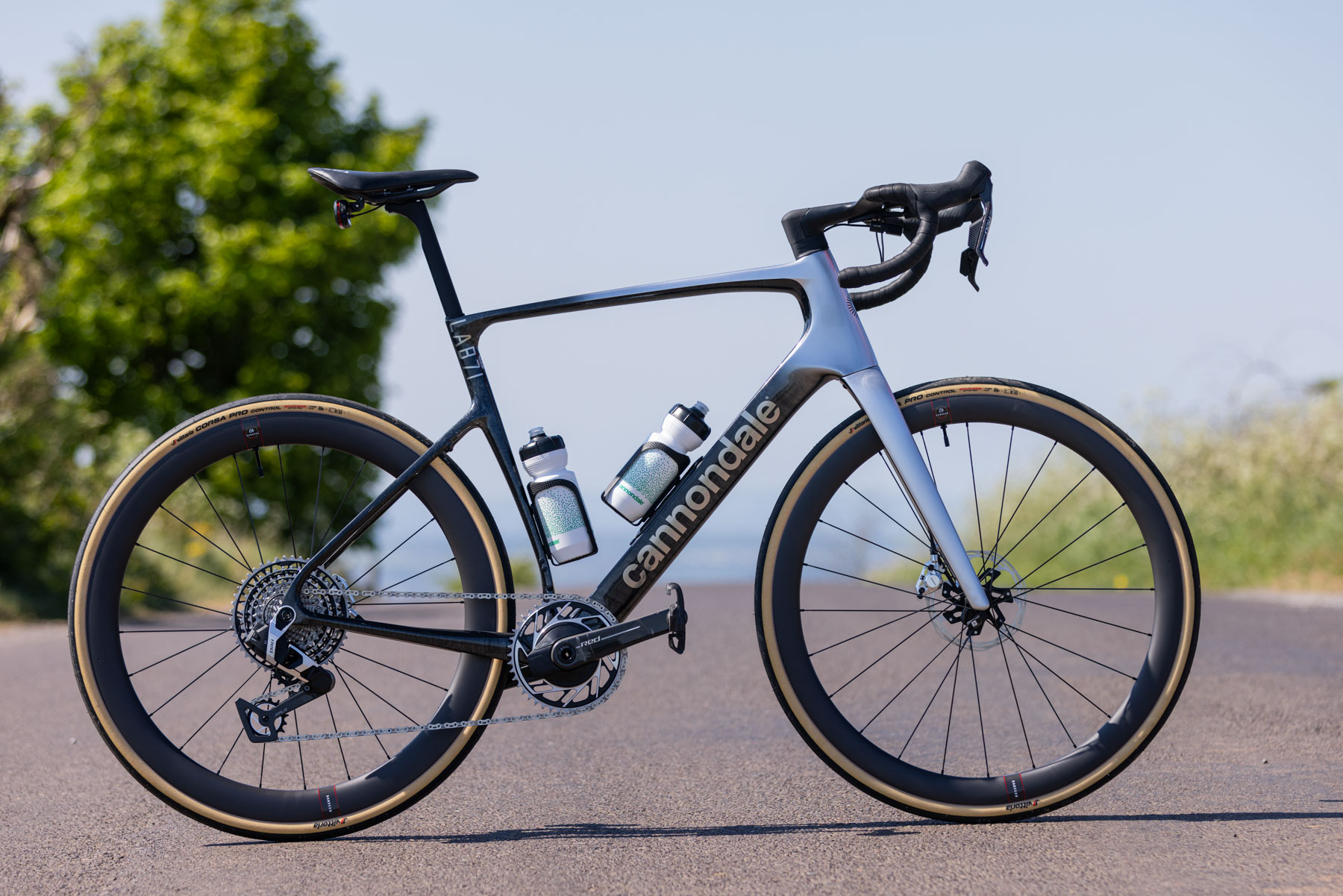
It’s also likely that Cannondale will have tweaked the carbon recipe under the skin, with the aim of saving some weight. The image leaked shows a Lab71 variant of the frame, while Hi-Mod and ‘standard’ Carbon models are also likely.

Opinion | Race bike design is becoming a box-ticking exercise

Male cyclist in green top riding the Cannondale Supersix Evo Lab71 EF Replica
I find it difficult to believe that the current SuperSix will suddenly feel outdated. Andy Lloyd / Our Media

At the moment, it’s impossible to say for certain how ‘improved’ (or not) the fifth-generation SuperSix Evo will be from the current model, but the leaked changes appear far from revolutionary.

It’s an old trope, but ‘if it ain’t broke, don’t fix it’ appears to be the modus operandi of most bike brands right now (and one I trotted out as far back as 2022) – it’s rare to come across a bike that is truly different from any other.

Ostensibly this is because the current combination demand of weight, stiffness, handling and compliance (and so on) is generally met by existing bikes. The law of diminishing returns also applies, especially when the design boxes laid out by the UCI are as prescriptive as they are, and it costs vast amounts of money to develop ever-smaller improvements in design.

On a business level, brands need to be confident that the investment they are making in developing their latest bikes needs to resonate with us, its customers, and ultimately, drive sales. It becomes harder to justify innovative thinking and development if it won’t drive a return on investment.

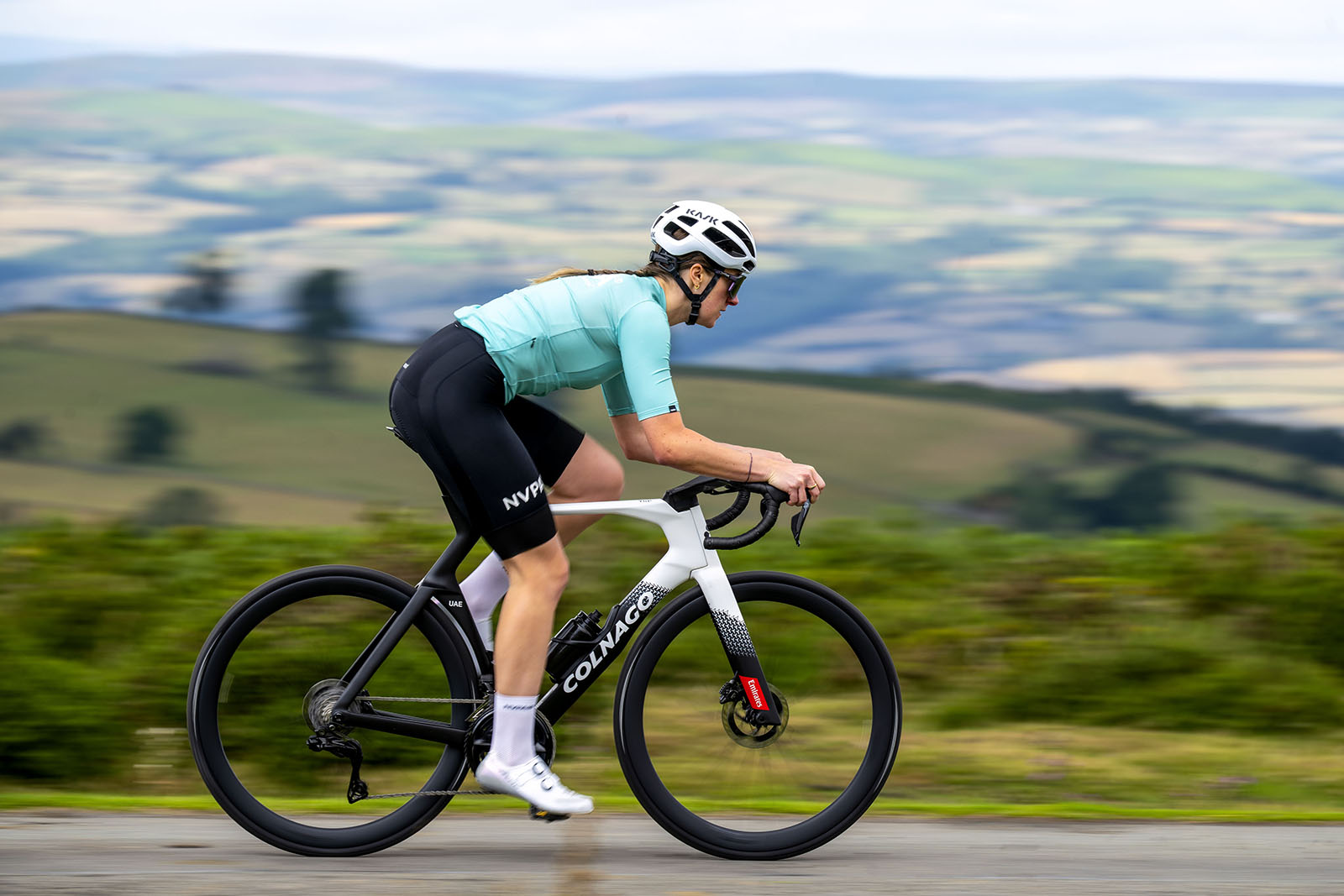
Female cyclist riding the Colnago Y1Rs aero road bike
Aero-focussed bikes like the Colnago Y1Rs (and Cervélo S5) are becoming the exception to the rule. Andy Lloyd / Our Media

It’s also worth recognising that brands are probably designing their latest bikes around consumer demand – it’s no coincidence that brands such as Specialized, Trek and Pinarello have put their race bike eggs in one basket, while Cannondale (with its lack of development of the SystemSix aero bike) appears to have done the same here.

There are exceptions, of course. Colnago and Cervélo have recently launched distinct aero and lightweight/all-rounder bikes, but it’s fair to say that both brands are smaller than the likes of Trek, Specialized and PON Group-owned Cannondale, with a tighter focus on the ‘premium’ end of the market.

This is why we’re generally seeing bike design coalesce around the same small developments – it becomes more of a box-ticking exercise to meet a critical mass of sales.

Of course, wider tyre clearances and improvements in frame manufacturing, plus standards like UDH, arguably continue to drive a tangible improvement in how bikes perform under racers and everyday riders alike. But what’s next?

At first glance, the fifth-generation SuperSix Evo, in appearing to imitate bikes like the Colnago V5Rs, Specialized Tarmac SL8, and plenty of other all-rounders, looks yet another example of necessary modesty over ambition.

I hope to be proved wrong.

Mainline Linux Patches For The VisionFive 2 Lite: RISC-V For As Little As $19.9 USD

Following the mainline Linux kernel support for the VisionFive 2 RISC-V single board computer from StarFive, Linux kernel patches are on the way for their new VisionFive 2 Lite low-cost offering. With the StarFive VisionFive 2 Lite this RISC-V board can be procured for as little as $19.9 USD as one of the cheapest yet fairly capable RISC-V SBCs…

Hyundai Data Breach May Have Leaked Drivers’ Personal Information

According to Car and Driver, Hyundai has suffered a data breach that leaked the personal data of up to 2.7 million customers. The leak reportedly took place in February from Hyundai AutoEver, the company’s IT affiliate. It includes customer names, driver’s license numbers, and social security numbers. Longtime Slashdot reader sinij writes: Thanks to tracking modules plaguing most modern cars, that data likely includes the times and locations of customers’ vehicles. These repeated breaches make it clear that, unlike smartphone manufacturers that are inherently tech companies, car manufacturers collecting your data are going to keep getting breached and leaking it.


Read more of this story at Slashdot.

The best bike lock we’ve ever tested now has a bigger version

Litelok’s incredibly tough, angle-grinder-resistant X1 is the best all-round lock we’ve tested here at BikeRadar. It’s my go-to lock whenever I have to leave my bike out in a public space.

The X1’s results in our rigorous tests were very impressive – cutting the armoured shackle destroyed my portable angle grinder when I first reviewed it.

In our most recent lab test of the latest bike locks, the X1 triumphed over some very stiff competition.

Even though it’s our best-rated lock, there’s a small issue with the X1 – and that’s the size. While the lock area of 101x297mm is ample for slender-tubed road and gravel bikes, it may be too small for some applications.

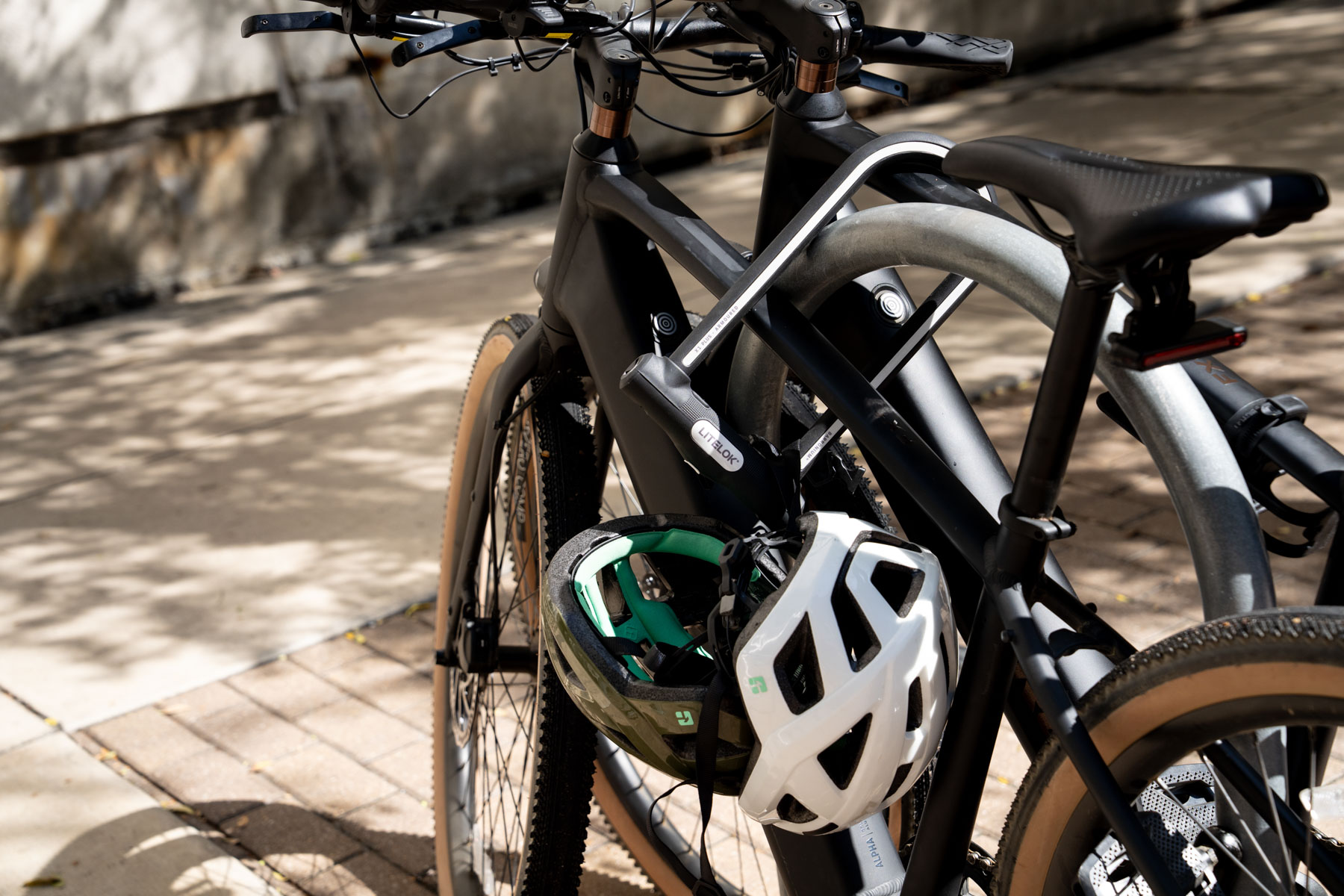
It’s not big enough to wrap around oversized down tubes on some ebikes and electric mountain bikes. Thankfully, Litelok now has an answer to that criticism with the new X1 Plus.

litelok x1 plus
The new X1 Plus is large enough to lock two bikes together. Litelok

The X1 Plus shares the same construction and patented Barronium welded surface coating as the standard X1 and meets the same Sold Secure Diamond cycle and motorcycle standard.

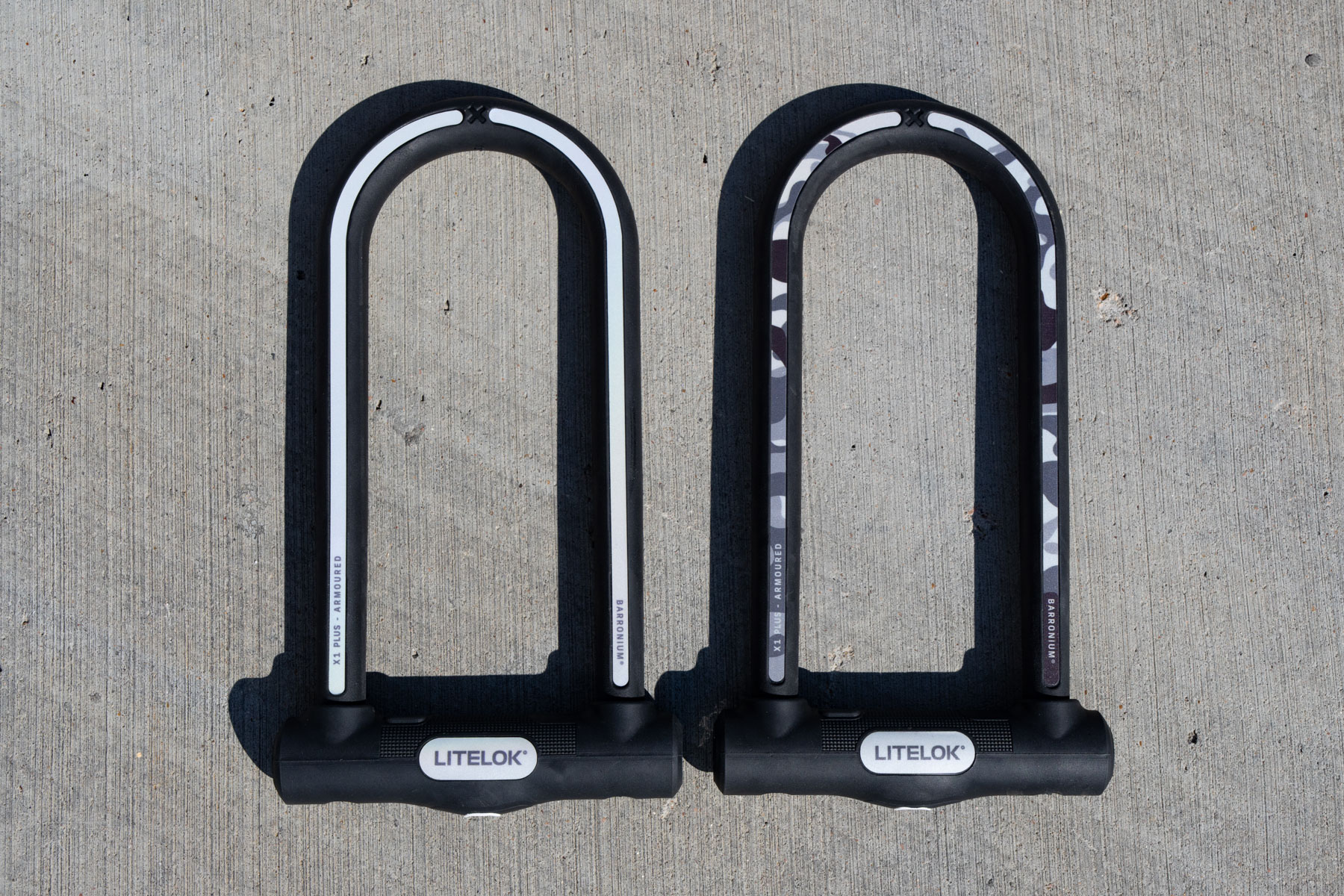
The big difference is the size, with the locking area upped to 101x255mm. It’s big enough for ebikes and cargo bikes, and you can even lock two bikes together with room to spare.

Litelok X1 Plus
The Litelok X1 Plus is available in reflective camo or its original reflective finish. Litelok

The new Plus model weighs in at 1.9kg / 4.3lb, and is compatible with Litelok’s Restrap holster and the tactical frame/rack mount.

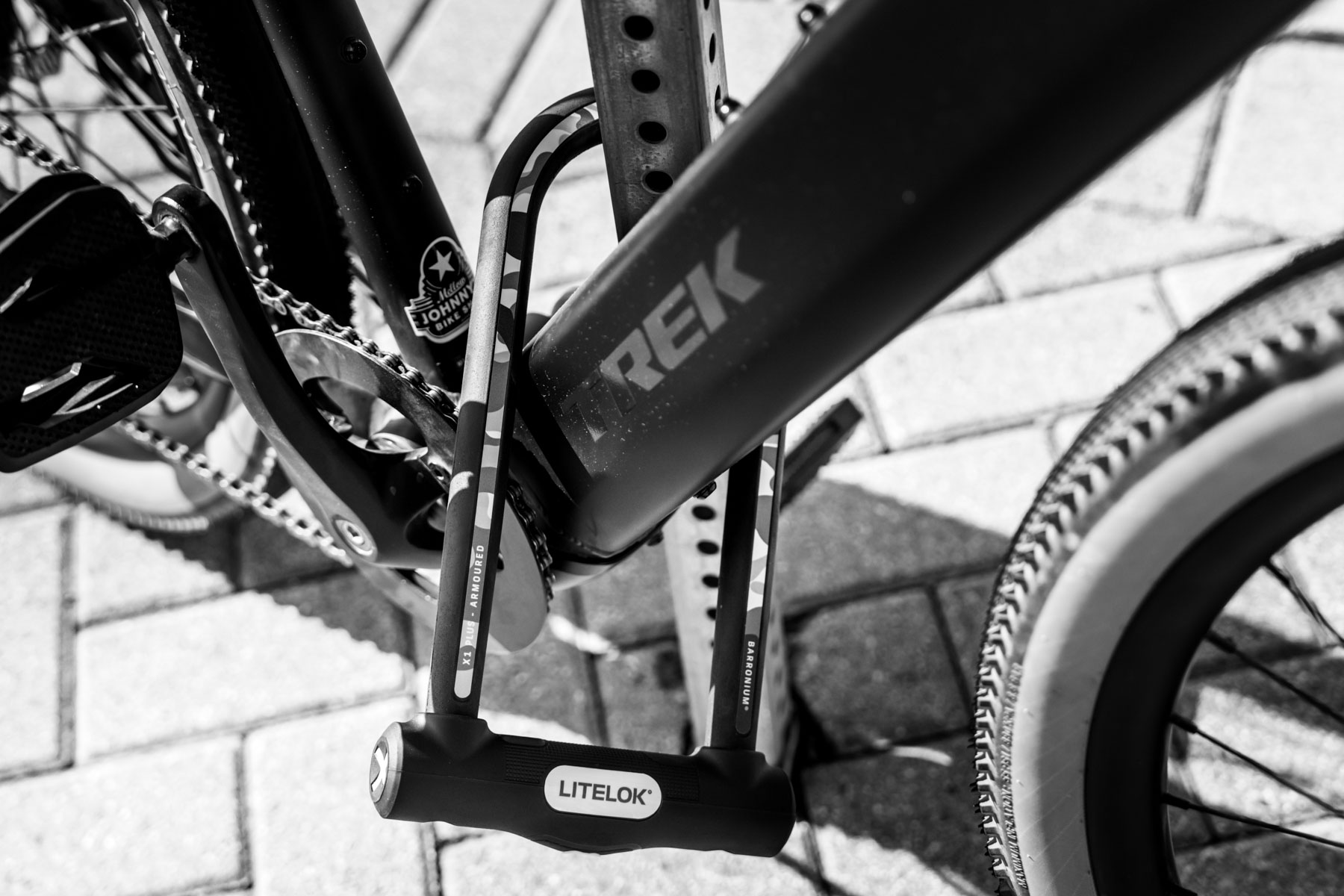
litelok x1 plus locked around a downtube
The X1 Plus can now cope with larger ebike down tubes. Litelok

The new X1 Plus is available from today and priced at £199.99 / $259.99 / €249.

Litelok X1 Plus spec and pricing

  • Price: £199.99 / $259.99 / €249
  • Security: Sold Secure Bicycle Diamond, Sold Secure Motorcycle Diamond, ART4 insurance-rated standard
  • Weight: 1.9kg / 4.2lb
  • Internal dimensions: 101x255mm
  • Lock: ART 4 accredited cylinder
  • Mount: X1 Tactical Mount & Restrap lock holster available

Amazon Renames ‘Project Kuiper’ Satellite Internet Venture To ‘Leo’

Amazon announced that its satellite broadband project called Project Kuiper will now be known as Amazon Leo. GeekWire reports: Leo is a nod to “low Earth orbit,” where Amazon has so far launched more than 150 satellites as part of a constellation that will eventually include more than 3,200. In a blog post, Amazon said the 7-year-old Project Kuiper began “with a handful of engineers and a few designs on paper” and like most early Amazon projects “the program needed a code name.” The team was inspired by the Kuiper Belt, a ring of asteroids in the outer solar system.

A new website for Amazon Leo proclaims “a new era of internet is coming,” as Amazon says its satellites can help serve “billions of people on the planet who lack high-speed internet access, and millions of businesses, governments, and other organizations operating in places without reliable connectivity.” Amazon said it will begin rolling out service once it’s added more coverage and capacity to the network. Details about pricing and availability haven’t been announced.


Read more of this story at Slashdot.