Bianchi refreshes its gravel range with new alloy Arcadex and a nod to its very first workshop

Bianchi has expaned its gravel bikes line-up with an alloy version of the Arcadex and a new all-road reimagining of its classic Via Nirone 7.

Bianchi’s gravel offerings to date have consisted of the rough-stuff-ready carbon Arcadex and the racy aero-optimised Impulso, as ridden to victory in the Masters 40 race at the UCI World Gravel Championships by Nico Roche.

The new Arcadex AL is priced at £2,050 / €2,350 / $TBC, while the Via Nirone 7 comes in two models: a 1×11-speed Shimano GRX-equipped model at £1,590 / €1,890 / $TBC and a 1×12-speed GRX model for £1,690 / €1,950 / $TBC.

New Arcadex AL

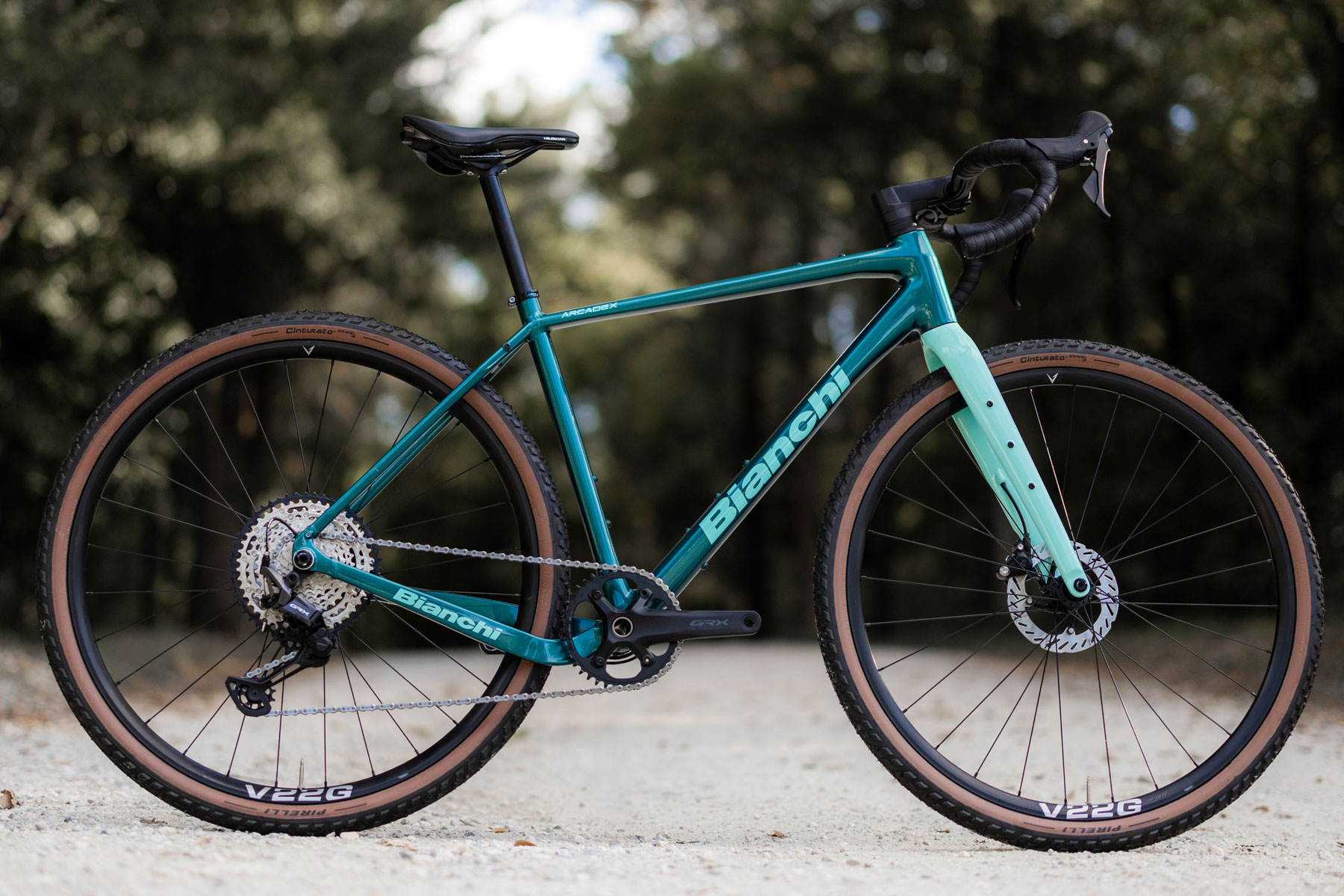
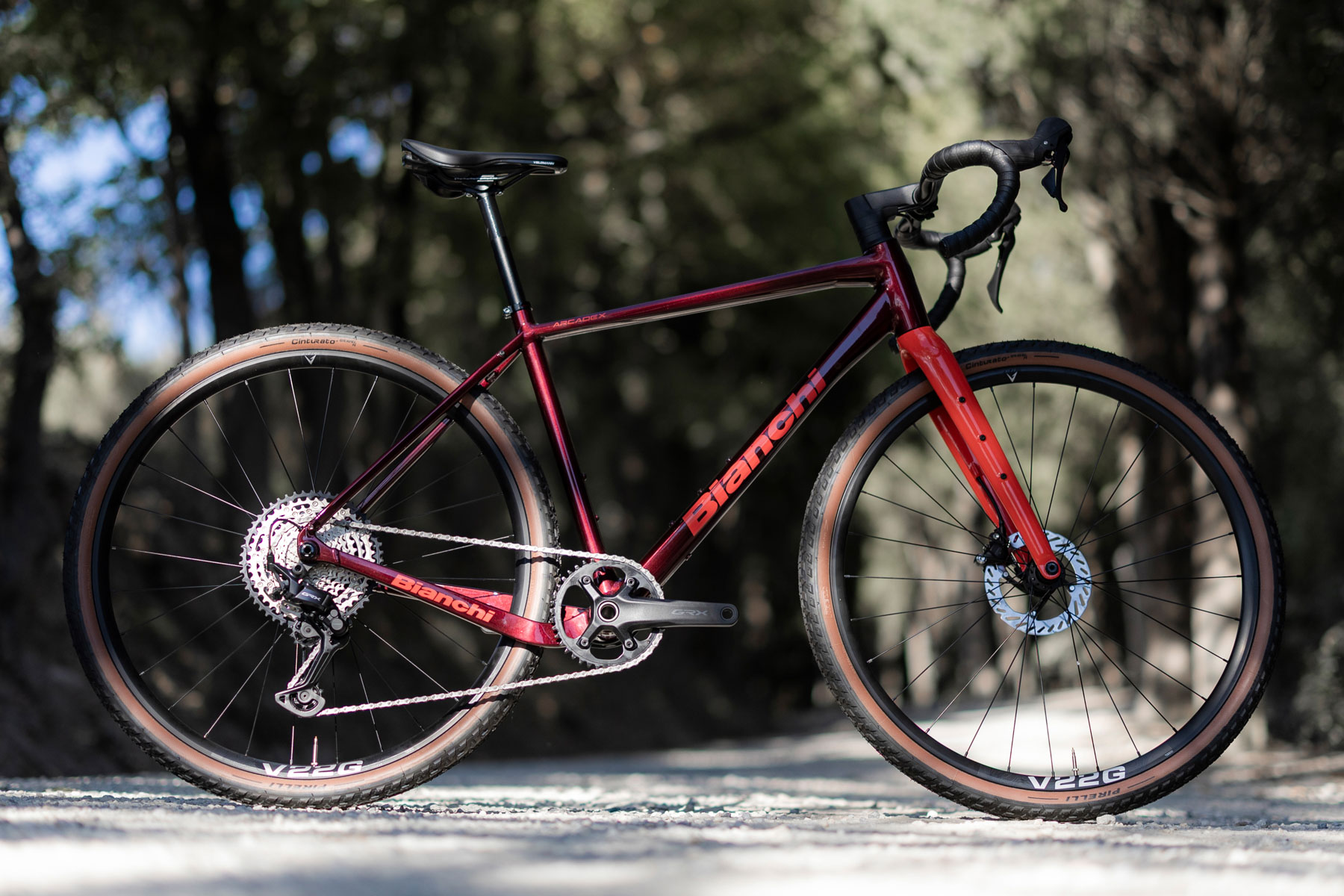
Bianchi Arcadex AL
The Arcadex AL is also available in this special limited-edition launch colour. Bianchi

The aluminium Arcadex frameset comes with 50mm tyre clearances and a UDH-compatible rear dropout.

The bike’s hydroformed tubing gives it a similar aero aesthetic to its premium carbon cousin, with smooth welds adding to the carbon-like finish.

The slick look continues with full internal cable routing.

Bianchi
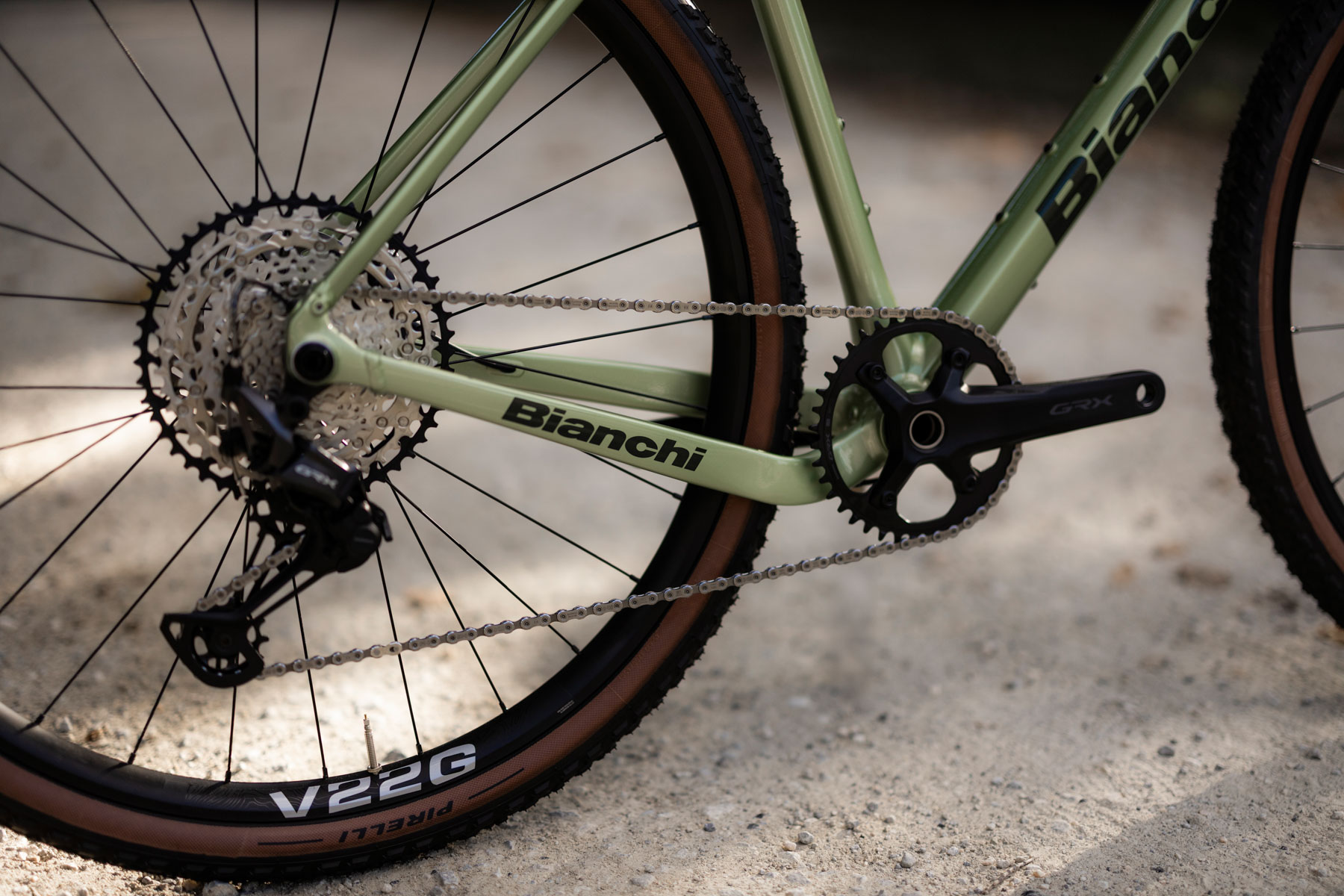
The Arcadex AL’s dropped chainstays help push the tyre clearance up to 50mm. Bianchi

The front end uses a longer carbon fork, meaning it’s corrected for use with a gravel suspension fork.

With a 71-degree head angle and large tyre clearances, the Arcadex AL should appeal to roadies wanting to get way off-road and mountain bikers looking to get into gravel riding.

Arcadex AL
New Bianchi Arcadex AL. Bianchi

The Arcadex AL is a single model equipped with Shimano’s 1×12 GRX  mechanical drivetrain, combined with an SLX 10-51 cassette.

Velomann alloy wheels wrapped with Pirelli Cinturato 45mm tyres, a Velomann bar, stem and seatpost, and a Selle Royal SRX saddle complete the build.

Bianchi Arcadex AL geometry

SIZE Seat tube Top tube Chainstay Bottom bracket drop Headtube Front centre Seat angle Head angle Fork oiffset Fork length Reach Stack Wheelbase
XS 410 537 430 75 100 608 74.5° 70.5° 48 406 389 537 1027
SM 450 554 430 75 120 622 75 70.5° 48 406 396 556 1041
MD 490 573 435 75 140 632 73.5° 71° 48 406 404 576 1056
LG 520 584 435 75 160 643 73.5° 71.5° 48 406 413 597 1067
XL 550 610 435 75 180 659 73° 71.5 48 406 423 616 1083


Edit Table

Via Nirone 7 reimagined

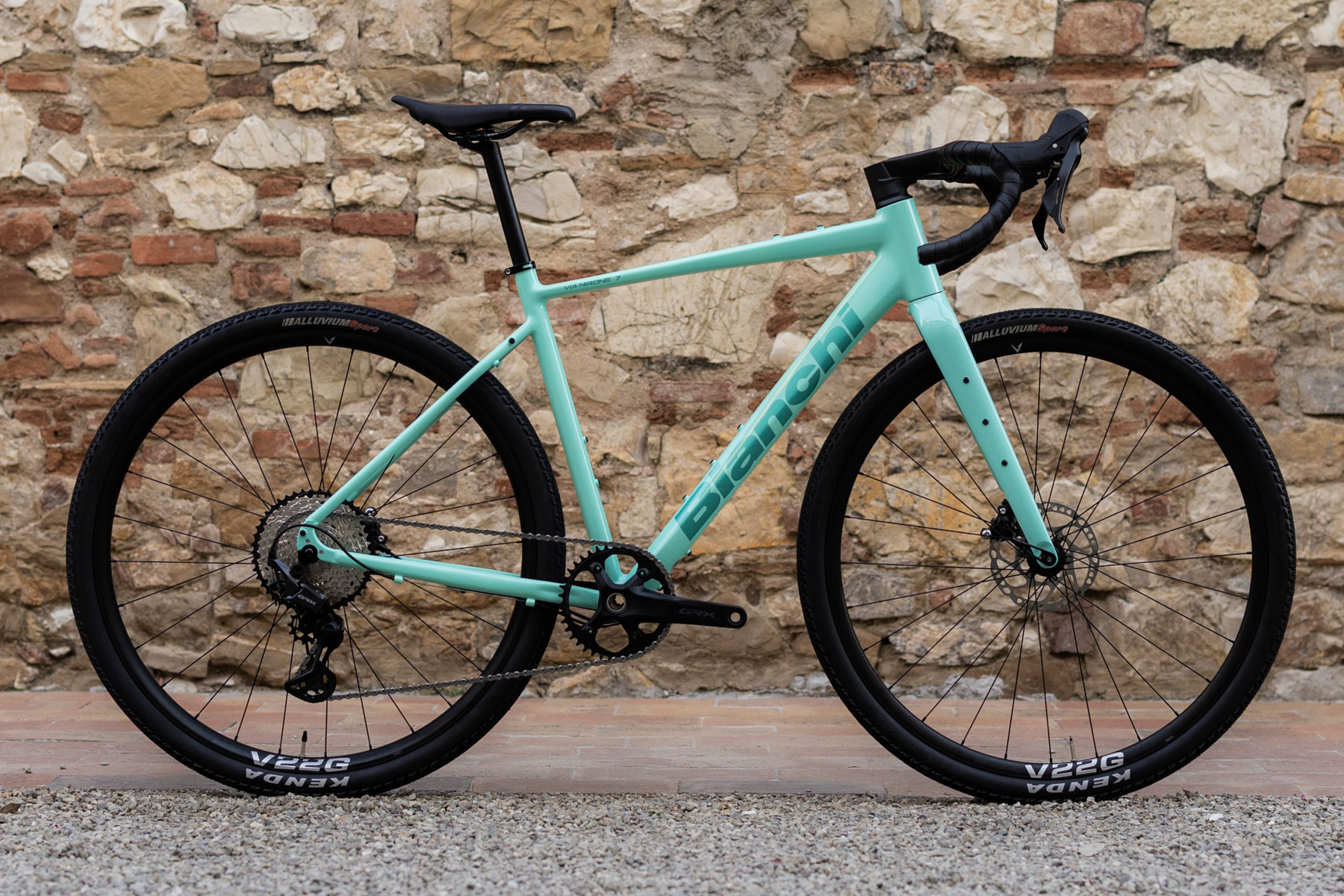
Bianchi Via Nirone 7
The Via Nirone 7 looks great in Celeste. Bianchi

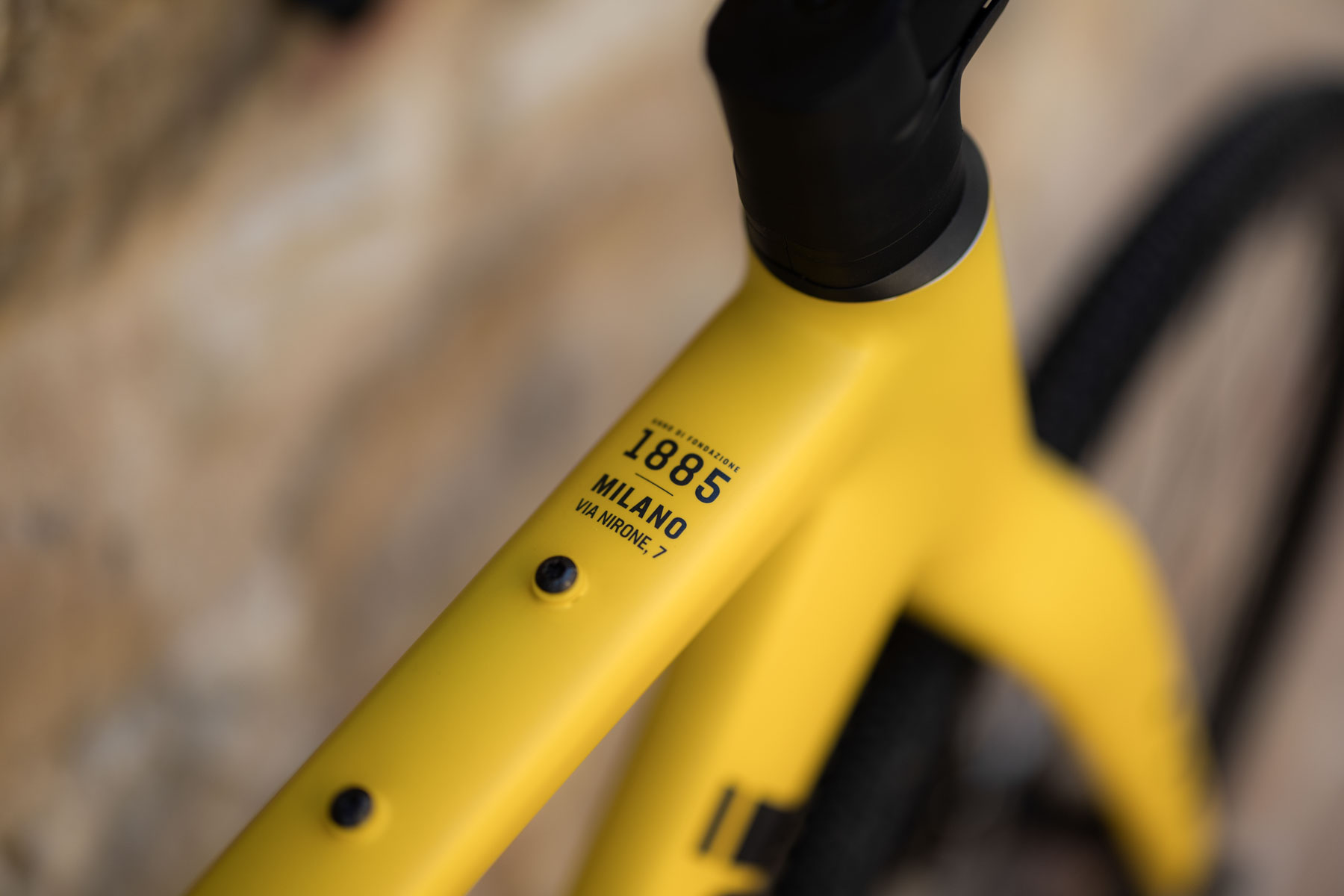
The Via Nirone 7 is named after the original address of Eduardo Bianchi’s first workshop. The bike has historically been Bianchi’s point of entry into its road bike range.

For 2026, it has been reimagined as a multi-surface machine that, in Bianchi’s words, is “designed for riders entering the world of all-road gravel and bikepacking”.

The new aluminium frame is, like the Arcadex AL, made from hydroformed tubing. However, unlike the Arcadex AL, it can be built around both 1x and 2x drivetrains.

Up front, a full carbon fork, replete with triple anything mounts, complements the frame, which features a bikepacking-ready three sets of bottle bosses, top tube bag mounts, and both mudguard and rack mounts.

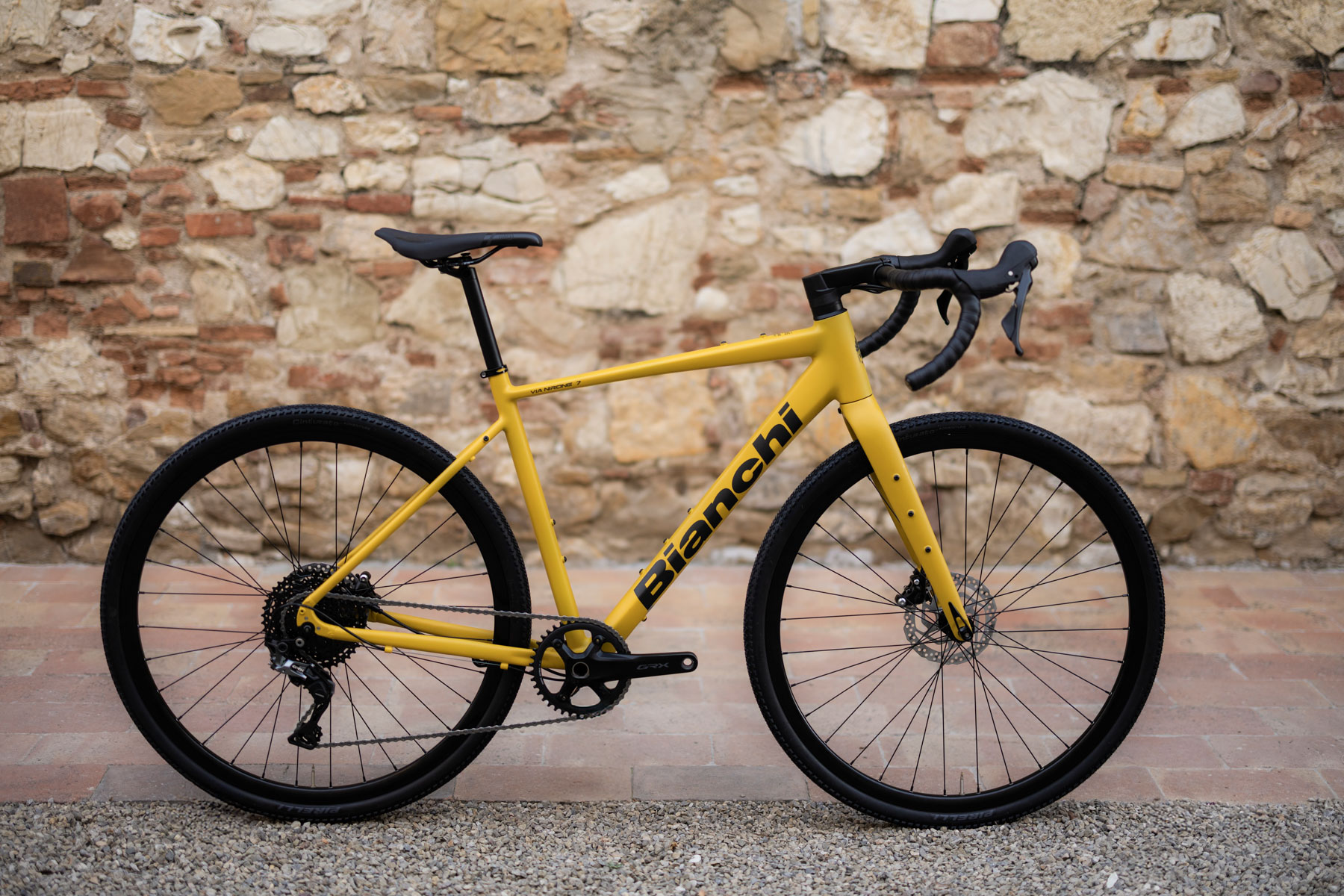
Bianchi Via Nirone 7
The Bianchi Via Nirone 7 is a slick-looking bike that belies its £1,590 price tag. Bianchi

The Via Nirone 7’s geometry is a degree steeper up front, and the stack is lower, making it more of an all-road endurance ride. However, it has very generous tyre clearances and comes as stock with 40mm tyres.

Bianchi Via Nirone 7 top tube
The Via Nirone 7 has top tube bag mounts. Bianchi

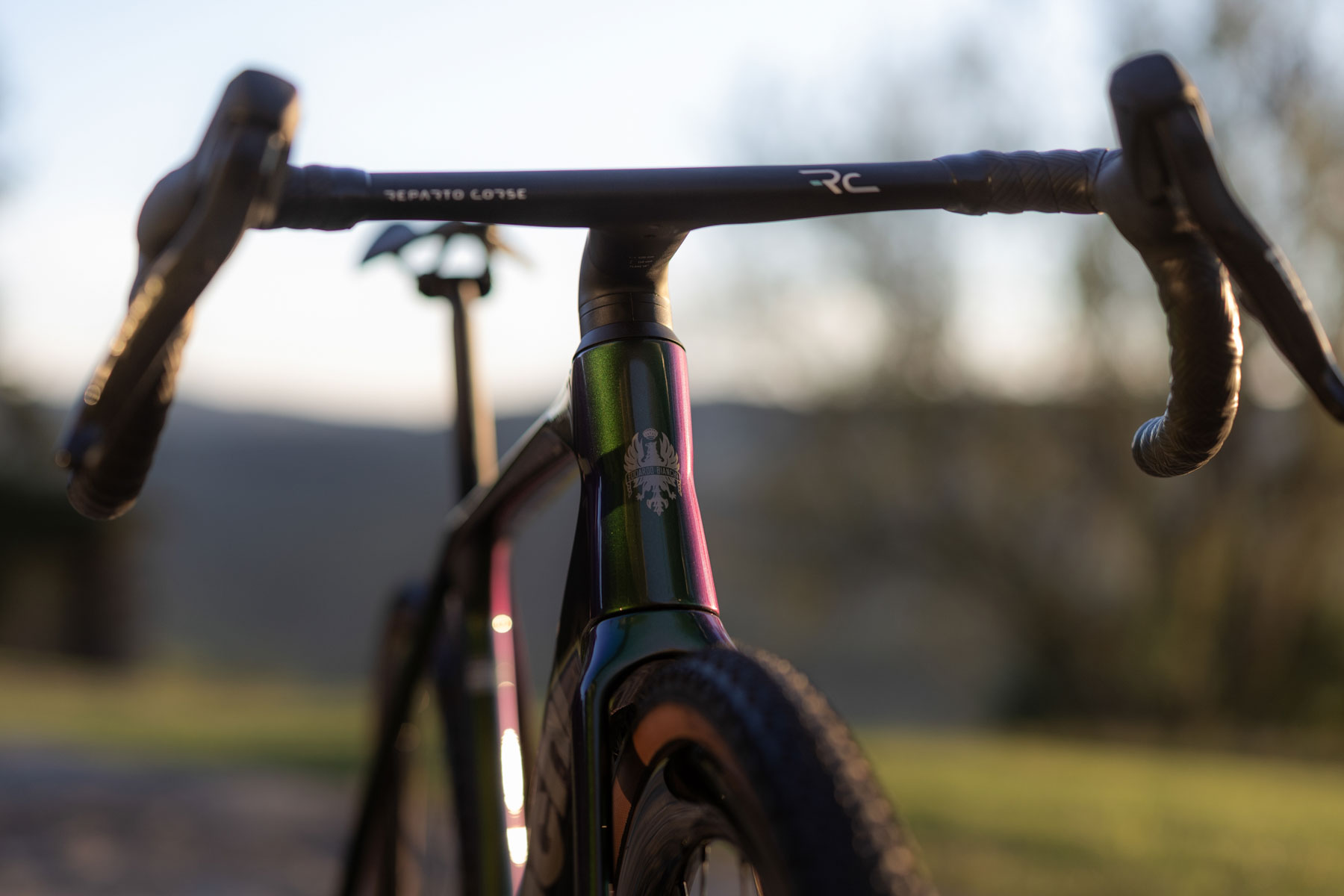
Like the Arcadex AL, it has full internal cable routing, making it also compatible with Bianchi’s new one-piece carbon bar, as found on the premium Impulso and carbon Arcadex.

bianchi gravel bar
Bianchi’s Reparto Corse RC one-piece gravel bar will fit both the Arcadex AL and Via Nirone 7. Bianchi

Bianchi Via Nirone 7 geometry

SIZE Seat tube Top tube Chainstay Bottom bracket drop Headtube Front centre Seat angle Head angle Fork oiffset Fork length Reach Stack Wheelbase
470 420 531 437 68 100 597 73.5° 70° 48 406 375 527 1025
500 450 540 437 68 113 602 73.5° 70.5° 48 406 380 541 1030
530 480 551 437 68 127 609 73.5° 71° 48 406 386 556 1037
550 500 561 437 68 140 615 73.5° 71.5° 48 406 392 570 1042
570 520 575 437 68 160 624 73.5° 72° 48 406 400 591 1052
590 540 590 437 68 180 634 73.5° 72.5° 48 406 409 612 1062
610 560 604 437 68 203 649 73.5° 72.5° 48 406 416 634 1077


Edit Table

Intel Introducing Microcode Staging Feature For Linux 6.19 To Cope With Bigger Blobs

Due to Intel CPU microcode sizes continuing to get larger and late-loading new CPU microcode onto a running system can lead to (brief) disruptions/downtime while the update is applied, future Intel CPUs are introducing a microcode “staging” feature to reduce that microcode updating downtime. The Linux 6.19 kernel in the new year is set to support the Intel microcode staging feature with capable processors…

Samsung To Showcase Its First Ever Trifold Phone Later This Month

An anonymous reader shares a report: Samsung Electronics will unveil its highly-anticipated trifold smartphone when world leaders and global dignitaries gather at the Asia-Pacific Economic Cooperation summit in South Korea later this month. It will be the company’s first device with two hinges — allowing it to work as either a conventional smartphone or a significantly larger tablet when fully unfurled — and will be displayed at an exhibition of cutting-edge Korean technology on the sidelines of the multilateral summit, according to a person familiar with the matter.

For Samsung, the Gyeongju-hosted APEC event will provide a global spotlight for a product it hopes will burnish its reputation as an engineering pioneer. Alongside Huawei, Samsung has led the move to develop foldable phones, and Huawei introduced the world’s first trifold device in China last year. The Korean company now has the opportunity to take the form factor global.


Read more of this story at Slashdot.

The Best Marathon Training Plans, Based on Your Fitness Level

We may earn a commission from links on this page.

Did you know you can customize Google to filter out garbage? Take these steps for better search results, including adding my work at Lifehacker as a preferred source.


After crossing six marathon finish lines—and with NYC coming up in just two weeks—I’ve learned that the right training plan can make or break your 26.2-mile journey. The difference between hitting the wall at mile 20 and finishing strong often comes down to matching your plan to your current fitness level (and all the brutal honesty that entails). I’ve tried several of the most popular programs out there, and here’s what actually works, based on my experience and countless miles logged.

For beginners: The foundation builder (16-20 weeks)

Who this is for: You can comfortably run 3-4 miles and want to finish your first marathon without injury.

My first marathon was a humbling experience, but I’m grateful I didn’t rush the process. Beginner plans should prioritize building endurance gradually, with most runs at an easy, conversational pace.

My top advice for beginners is to focus on the long run progression. Increase your longest run by just one mile every 1-2 weeks. This slow build prevents injury and teaches your body to process fuel efficiently. I recommend the run-walk method popularized by Jeff Galloway—there’s zero shame in walking breaks, and they actually helped me finish my first marathon feeling stronger than friends who pushed through without them.

Hal Higdon’s Novice 1 & 2 (18 weeks)

This is where I started, and I recommend it to every first-timer who asks. Higdon’s plans are beautifully simple and forgiving. Novice 1 has you running just 3-4 days per week with optional cross-training, peaking at 40 miles weekly. The progression is gentle, and the instructions are crystal clear—no confusing pace calculations or complicated workouts.

What I love: The plan includes walking breaks and doesn’t overwhelm you with jargon. It’s free online and has a massive community following it, so you’ll find plenty of support.

Best for: True beginners or anyone returning from a long break who wants a straightforward, proven approach.

Runner’s World Run Less, Run Faster (16 weeks)

This three-runs-per-week plan surprised me with how effective it could be with lower volume. Each run has a specific purpose: track repeats, tempo run, and long run, supplemented with mandatory cross-training.

What I love: It’s perfect for busy people or those worried about injury from high mileage. The structure is rigid but efficient.

Best for: Beginners who can only commit to three running days a week but want to still see progress, or those cross-training heavily in other sports.

For intermediate runners: The performance enhancer (16-18 weeks)

Who this is for: You’ve completed at least one marathon or regularly run 25+ miles per week and want to improve your time.

This is where training gets interesting. You’re no longer just trying to finish, but actually chasing a PR or a specific time goal. Tempo runs changed everything for my third marathon. Running at or slightly above your goal marathon pace for sustained periods teaches your body what that pace feels like and builds the mental toughness to maintain it when you’re tired. I do these midweek: Warm up for 10-15 minutes, run 5-8 miles at tempo pace, then cool down.

Hal Higdon’s Intermediate 1 & 2 (18 weeks)

I used Intermediate 1 for my last marathon and knocked 22 minutes off my previous time. The plan bumps you up to 5 days of running per week, peaking around 50 miles, and introduces pace runs and tempo work without being overwhelming.

What I love: It maintains Higdon’s accessible approach while adding the speed work you need to improve. The balance between hard efforts and recovery is well-calibrated for someone still building their base.

Best for: Runners who had success with a beginner plan and want to level up gradually with a familiar structure.

Hanson’s Marathon Method: Beginner/Just Finish (18 weeks)

Don’t let the “beginner” label fool you—Hanson’s approach is unconventional and challenging. Unlike other plans, your longest run caps at just 16 miles, but you’re running higher weekly mileage (peaking around 57 miles) with less recovery between hard efforts. The philosophy is “cumulative fatigue,” where you learn to run on tired legs.

What I love: The plan forces you to respect your easy pace and teaches you to run marathon pace when you’re already fatigued, which is exactly what race day feels like.

Best for: Runners ready to commit to six days per week of running who want to break through a plateau. Not ideal for injury-prone runners due to the accumulated fatigue.

For advanced runners: The time trialer (16-20 weeks)

Who this is for: You’ve run multiple marathons, consistently train 40+ miles per week, and are chasing ambitious time goals or Boston qualification.

At this level, the margins are smaller and the training is more sophisticated. You’re fine-tuning an already efficient engine. Marathon pace long runs are your secret weapon. Rather than running all long runs easy, incorporate marathon pace segments into your longest runs. For example, run 18 miles with miles 10-16 at goal marathon pace. This teaches your body to run fast on tired legs—exactly what you’ll face on race day. My last two marathons improved dramatically after I started doing this, particularly with Pfitzinger’s approach.

Pfitzinger’s Advanced Marathoning: 18/55 or 18/70 (18 weeks)

Pete Pfitzinger’s plans are the gold standard for serious marathoners. The plan features medium-long runs, marathon pace segments within long runs, lactate threshold workouts, and VO2 max intervals. Everything is purposeful and periodized.

What I love: The variety keeps training interesting. A medium-long run (12-15 miles) on tired legs taught me more about marathon pacing than anything else. Pfitzinger respects recovery while still pushing you hard.

Best for: Experienced runners chasing specific time goals who can commit to 6-7 days per week. The 18/70 plan is for those targeting sub-3:00 or are already comfortable with high mileage.

Hanson’s Marathon Method: Advanced (18 weeks)

The advanced version of Hanson’s method maintains the 16-mile long run cap but pushes weekly mileage to 63+ miles with more intense tempo work and speed sessions. Three “something of substance” (SOS) workouts per week make this plan demanding.

What I love: If cumulative fatigue works for your body, this plan delivers results. You’ll run marathon pace so often in training that race day feels familiar rather than daunting.

Best for: High-mileage runners who recover quickly and aren’t injury-prone. The frequent hard efforts can break down runners who need more recovery between quality sessions.

Jack Daniels’ Elite Marathon Plan (24 weeks)

This plan is out of my league, but it’s well-known and highly trusted among runners. It includes four phases: base, quality, speed, and taper. Peak mileage can exceed 80 miles per week with multiple quality sessions. The plan uses precise training zones and includes marathon pace runs within long runs.

What I love: If you’re chasing an aggressive goal and have the time to commit, this plan leaves no stone unturned. The 24-week timeline allows for gradual, sustainable building.

Best for: Runners targeting Boston qualification or personal bests who have successfully completed multiple high-mileage training cycles. This isn’t a plan to jump into lightly.

Runner’s World Run Less, Run Faster: Advanced (16 weeks)

Even at the advanced level, this plan keeps you at just three hard running days per week, but the intensity is dramatically higher. Track workouts, tempo runs, and long runs with pace work are all challenging, with mandatory cross-training filling other days.

What I love: For anyone balancing high training stress from other areas of life, this proves you don’t need massive mileage to run fast.

Best for: Advanced runners who can handle high intensity but need lower running volume due to injury history, age, or life constraints.

How to choose the right plan for you

Mileage comfort: Be honest about what your body can handle. If you’ve never run 50 miles in a week, don’t start with a plan that peaks at 70.

Time commitment: A six-day-per-week plan requires different life logistics than a three-day plan. Consider your work schedule, family obligations, and other commitments.

Coaching style: Higdon is encouraging and simple. Pfitzinger is detailed and scientific. Hanson’s is contrarian and tough-love. Pick a voice that motivates you.

Track access: Some plans require a track for specific workouts. If you don’t have access, choose plans with more flexible tempo runs and hill work.

Injury history: Higher mileage and frequent intensity increase injury risk. If you’re injury-prone, consider Hanson’s approach (lower long run), Runner’s World (lower volume), or building slowly with Higdon.

Universal advice across all levels

Listen to your body over your plan. Every plan I’ve followed required adjustments. Illness, work stress, unusual fatigue—these happen. Missing one workout won’t derail your marathon, but running through injury absolutely will.

The taper is sacred. Regardless of your level, reduce mileage by 20-30% three weeks out, then another 40-50% two weeks out, with race week at minimal mileage. You might feel antsy or even sluggish initially—that’s normal. Trust every plan’s taper—they all agree on this.

Race day strategy matters as much as training. Start conservatively—the first half should feel easy. I’ve watched countless runners blow up after going out too fast. Negative splitting (running the second half faster than the first) is the most satisfying way to finish.

Find your community. Whether it’s a running club, online forum, or training partners, having support makes the long training cycle infinitely more bearable. Some of my best friendships started on early morning long runs. Most of these plans have dedicated online communities where you can find others following the same schedule.

The marathon is a humbling, rewarding distance that teaches you as much about mental strength as physical endurance. Choose the plan that matches where you are now, not where you wish you were. I’ve had success with Higdon’s approachable structure, Pfitzinger’s scientific periodization, and learned valuable lessons from Hanson’s cumulative fatigue philosophy. Trust your training, respect the distance, and enjoy the journey. Every marathon I’ve run has been different, but the feeling of crossing that finish line never gets old.

Me, You And Kaiju Is A 4v1 Party Game Where You Fight PC Players In VR

Me, You and Kaiju is a 4v1 asymmetric party game where four flatscreen players fight a kaiju controlled through VR on Steam Early Access.

Developed by Sleepy Coast Games, Me, You and Kaiju sees the VR player wreaking havoc across a city through special attacks and using your surroundings as ammunition, all while dodging and blocking projectiles. Your four opponents use more traditional gamepads, and will attempt to stop you by controlling different vehicles like helicopters. That takes place in splitscreen multiplayer.

In its current early access build, Me, You and Kaiju includes two playable Kaiju called Bloodshot and Squizzard, while flatscreen players can choose to control either a helicopter or a drone. This comes with a city-themed level, which you can play across in the Team Death Match mode.

The full release promises expanded options such as more playable kaiju and additional vehicles to pick from. While the Steam FAQ doesn’t elaborate on what specifically we can expect regarding new gameplay modes, more are planned alongside further accessibility features and additional localizations.

Me, You and Kaiju is out now on Steam, and the early access period is expected to last “for around 12-24 months.”

Samsung’s 2025 Frame Pro QLED TV is on sale for a record low price

Samsung’s 2025 The Frame Pro QLED Mini LED Smart TV is on sale for a record-low price. The 65-inch model that normally retails for $2,200 is on sale for $1,760, which is the lowest we’ve ever seen it.

The 1-inch-thick “art” TV uses Samsung’s impressive 4K Neo QLED panel, which is a quantum dot LCD panel with a Mini LED backlight array. The Frame Pro can display lifelike art pieces when the TV isn’t in use, while its sleek design means it also looks great when turned off.

The Frame Pro comes with Samsung’s new Wireless One Connect Box, which is supposed to help with cable management by putting the TV’s inputs in a separate box that then wirelessly transmits the feed from your external device to the TV. It does require its own power supply, though, so that’s one more plug needed if you are connecting a console or a streaming device.

The TV also carries the NQ4 AI Gen3 Processor, which imbues the Frame Pro with AI-enhanced picture and sound. This model also comes with Samsung Vision AI, which works to upscale the image on screen, create personalized experiences and more.

This 2025 model was just made available to order earlier this year, and the current sale price is surprisingly lower than it was during last week’s Prime Day event, proving sometimes good things come to those who wait.

This article originally appeared on Engadget at https://www.engadget.com/deals/samsungs-2025-frame-pro-qled-tv-is-on-sale-for-a-record-low-price-155913911.html?src=rss

Lead poisoning has been a feature of our evolution

Our hominid ancestors faced a Pleistocene world full of dangers—and apparently one of those dangers was lead poisoning.

Lead exposure sounds like a modern problem, at least if you define “modern” the way a paleoanthropologist might: a time that started a few thousand years ago with ancient Roman silver smelting and lead pipes. According to a recent study, however, lead is a much more ancient nemesis, one that predates not just the Romans but the existence of our genus Homo. Paleoanthropologist Renaud Joannes-Boyau of Australia’s Southern Cross University and his colleagues found evidence of exposure to dangerous amounts of lead in the teeth of fossil apes and hominins dating back almost 2 million years. And somewhat controversially, they suggest that the toxic element’s pervasiveness may have helped shape our evolutionary history.

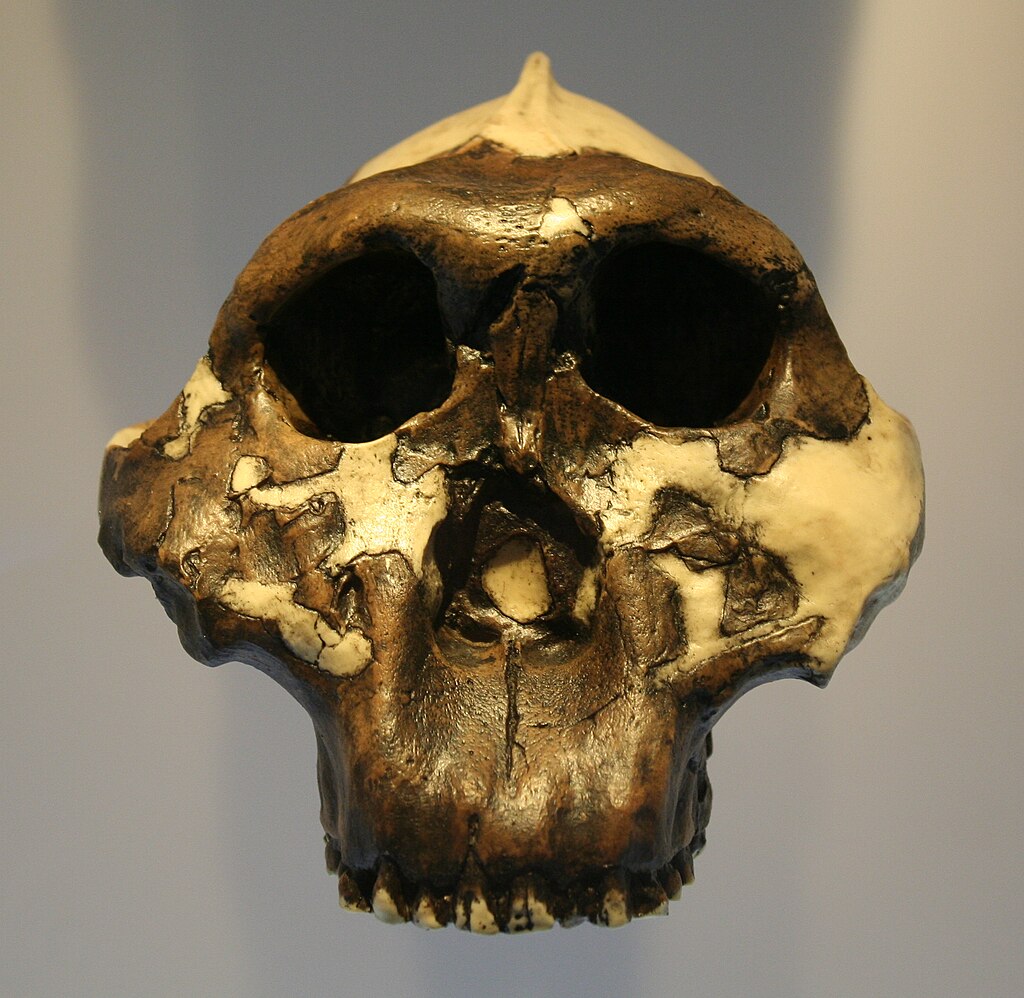
The skull of an early hominid, aged to a dark brown color. The skull is fragmentary, but the fragments are held in the appropriate locations by an underlying beige material.
The skull of an early hominid.
Credit:
Einsamer Schütze / Wikimedia

The Romans didn’t invent lead poisoning

Joannes-Boyau and his colleagues took tiny samples of preserved enamel and dentin from the teeth of 51 fossils. In most of those teeth, the paleoanthropologists found evidence that these apes and hominins had been exposed to lead—sometimes in dangerous quantities—fairly often during their early years.

Read full article

Comments

Beat Saber Confirms OST 8 Launch This November

Beat Saber will receive OST 8 next month, marking the first OST release in over a year.

Announced today in a blog post, Meta confirmed that the latest major Beat Saber update is on its way this November. Much like last year’s initial tease for OST 7, little else is known about this upcoming update, and the video doesn’t offer any real hints. Unlike the paid DLC packs, OSTs have always been free updates, so we’d assume this will be a similar deal.

OST 7 launched in June 2024, offering five songs from artists like Lindsey Stirling and Camellia to celebrate the game’s sixth anniversary. Since then, we’ve seen numerous paid DLCs like the Monstercat Mixtape 2 and Metallica pack. There’s also been individual “Shock Drops” like viral TikTok song Gabriela, Espresso, Billie Eilish’s Birds of a Feather, Kendrick Lamar’s Not Like Us, and more.

As a reminder, these Beat Saber tracks won’t be available on either PlayStation VR or PlayStation VR2. Meta announced in June that it’s no longer releasing new content for Sony’s platform, though September’s PS VR2 download charts show that it remains a strong performer. Multiplayer support will end for both headsets on January 21, 2026.

Beat Saber is out now on Quest, Steam, and PlayStation VR2.

Geraint Thomas has just completed his first Parkrun – how fast does a former Tour de France winner run 5km?

Geraint Thomas has wasted little time spreading his wings in retirement. 

The 2018 Tour de France champion, who called time on a glittering 19-year professional career after the Tour of Britain in September, revealed on Friday’s Watts Occurring podcast that he took part in his first Parkrun last weekend, ahead of his brother’s wedding in South Wales.

Parkrun, established in 2004, has become a global sensation, with more than 2,300 weekly, community-led 5km running events, and more than nine million registered participants.

“It was weird going to it,” said Thomas. “I was like, ‘Oh yeah, it’s just a 5k run’. Then I turned up and obviously there’s a mix [of people] there.

“There’s a few that look quite good, then it’s just families and a few people keeping fit, but I was like, ‘This is a whole new world now, isn’t it?’”

Thomas swapped his cycling shoes for running trainers at the Severn Bridge event, which crosses the border between South Wales and England. The event is one of the most iconic Parkrun events in the country, seeing runners cross the suspension bridge over the River Severn into England, before doing a U-turn and returning to Wales.

Thomas’ ex-team-mate and podcast co-host, Luke Rowe, asked the question we were all thinking: what time did he do it in?

Read more: Tadej Pogačar beaten by 40-year-old lawyer in Pogi Challenge charity ride

Geraint Thomas received a hero's welcome when the Tour of Britain passed through South Wales in September.
Geraint Thomas received a hero’s welcome when the Tour of Britain passed through South Wales in September. Huw Fairclough / Getty Images

“Well, I didn’t have my QR code, so I couldn’t get an official time, but the guy I was with did 19:50 minutes and I was a bit behind him,” said Thomas. “He dropped me on the downhill.

“I reckon I was just under 20 [minutes].”

Will Thomas catch the Parkrun bug and return to better his time? Turns out it didn’t take long for that to happen…

“As [my brother’s] wedding was going on though, my time was getting better,” joked Thomas. “By midnight, I was doing 16-something.”

The average Parkrun finishing time is 29:32 minutes. The men’s record of 13:44 minutes was set by Nick Griggs in November 2024, while the women’s Parkrun record of 15:13 minutes was set by Ciara Mageean in December 2023.

The 5,000m world record on the track is faster still, with the current mark of 12:35.36 minutes established by Joshua Cheptegei in Monaco in 2020.

Cheptegei went on to win 5,000m gold at the Covid-delayed Tokyo Olympics Games in 2021, before winning the 10,000m event at the Paris Games in 2024.

Milky Way’s Mysterious Glow Reveals A Dark Secret About Our Galaxy

Milky Way's Mysterious Glow Reveals A Dark Secret About Our Galaxy
New research from Johns Hopkins University and an international team of scientists suggests that two competing theories for the diffuse glow near the center of the Milky Way—colliding dark matter particles or rapidly spinning neutron stars—are, for the first time, equally viable.

Researchers believe the glow coming from inside our own galaxy

Acer Predator X34 OLED FreeSync 240Hz Gaming Monitor Is A Killer Deal At $240 Off

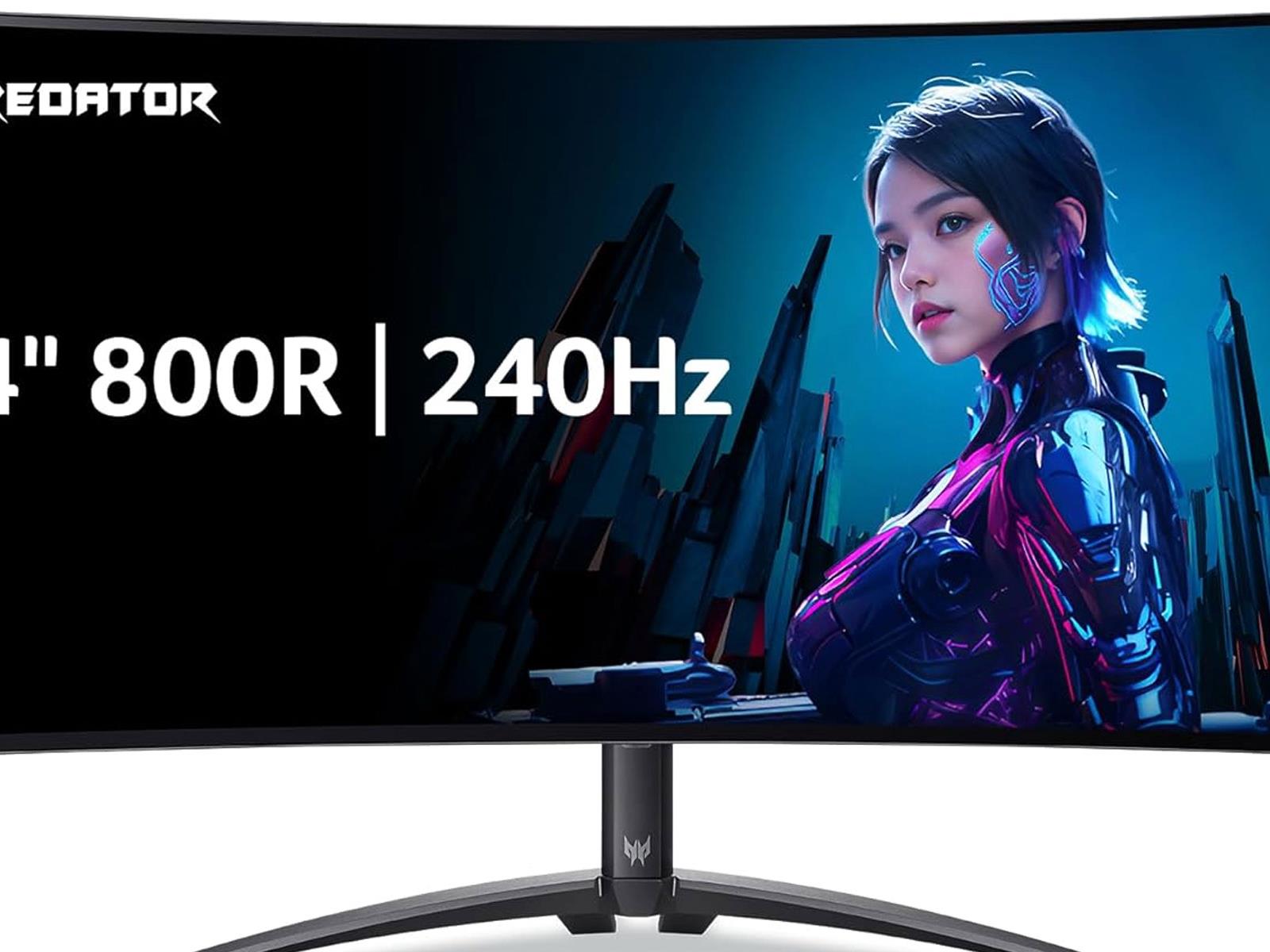
Acer Predator X34 OLED FreeSync 240Hz Gaming Monitor Is A Killer Deal At $240 Off
Are you ready to take your gaming to another level of image quality with an OLED display? There are a lot more options now than just a relatively short time ago, and also a steady stream of deals. As such, you can score Acer’s Predator X34 OLED monitor with a fast refresh and AMD FreeSync Premium Pro certification for a great price right now.

How

Bose QuietComfort Ultra Headphones (2nd gen) review: Impactful upgrades to a familiar formula

Bose took a different approach with its new products in 2025. Instead of entirely redesigning  its QuietComfort Ultra lineup, the company unveiled upgraded second-generation models of the flagship-level earbuds and headphones. Like the QuietComfort Ultra Earbuds that debuted earlier this year, the new Quiet Comfort Ultra headphones ($449) don’t offer a comprehensive overhaul. However, the changes provide enough performance improvements to further cement these as the best noise-canceling headphones that you can buy right now. Trust me, we’re much better off with this revamped version than we would be with a year (or longer) wait for something brand new with the 2023 model.

What’s new on the QuietComfort Ultra Headphones?

Bose debuted a few new features on the second-gen QuietComfort Ultra Earbuds in August that it carried over to these new headphones. First, the company improved its already stellar active noise cancelation (ANC) with tweaks to its ActiveSense technology. Specifically, the system can respond to sudden spikes in environmental noise by adapting more precisely. It’s not something you’ll notice all the time, but when you need it, you’ll be glad it’s there. Otherwise, the excellent ANC performance here is just as effective as it was on the previous model. More on that in a bit.

The immersive Cinema Mode that Bose added to the QC Ultra Earbuds is also available on these headphones. It’s a sound profile that enhances dialogue clarity while keeping the rest of the soundstage as wide and enveloping as possible. I like it best for movies and TV, as the name suggests, but per Bose’s suggestion I also tried it with podcasts and audiobooks. Cinema Mode is probably overkill for those types of content, unless you’re listening to shows or titles with lots of background effects. 

One of the biggest changes on the second-gen QC Ultra Headphones is how Bose decided to handle power management. Most importantly, the company extended battery life in all use cases. With ANC on (and Immersive Audio off), you’ll get up to 30 hours of listening time. Turn off ANC and that jumps to 45 hours. When you decide to enable both ANC and Bose’s spatial Immersive Audio, you can expect up to 23 hours on a charge. Compared to those on the first-generation model, all of these numbers are up by at least five hours, which is a significant boost. 

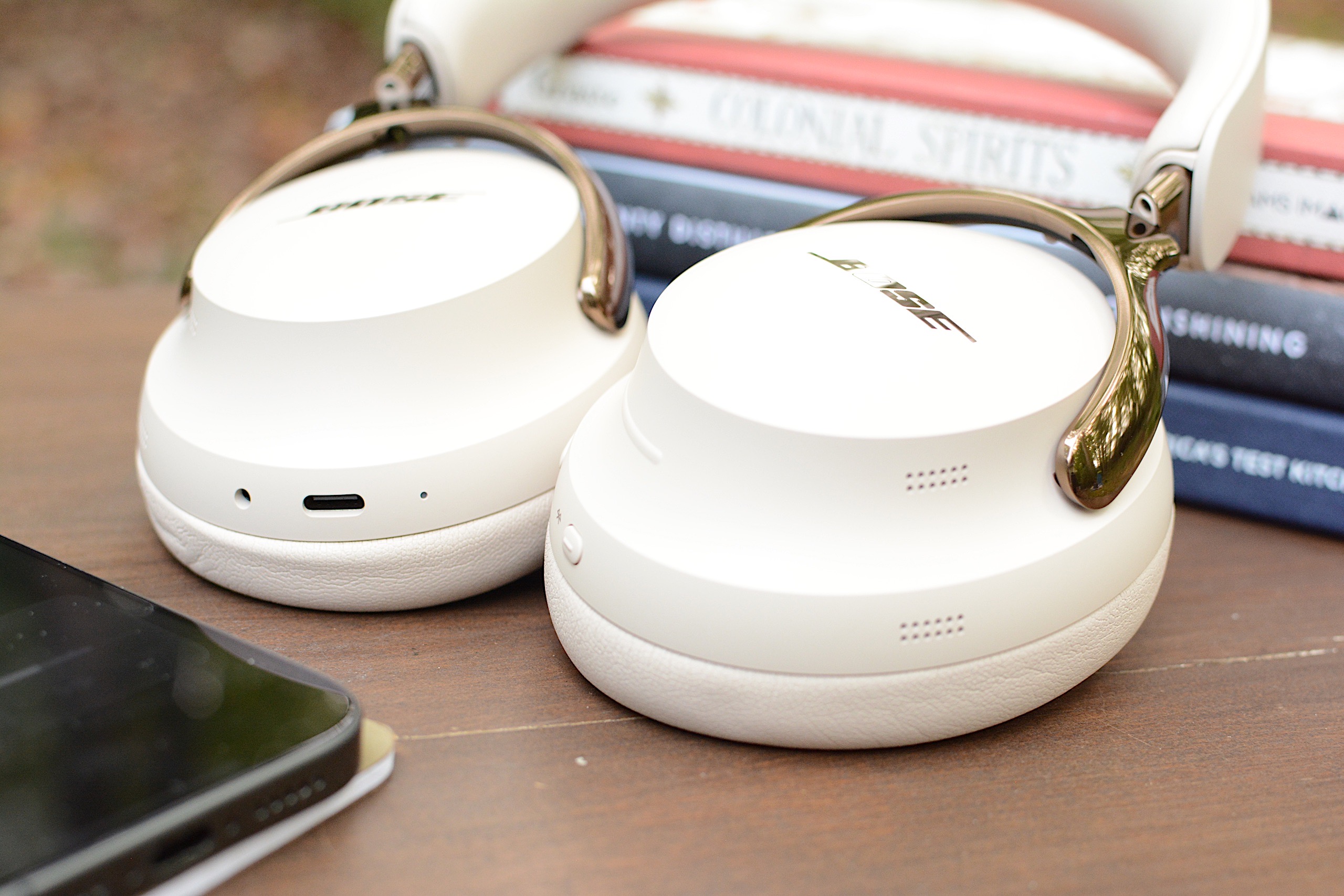
These headphones rotate flat and fold in for compact transport.
Billy Steele for Engadget

Like the previous QC Ultra Headphones, this model has an automatic disconnection feature after 10 minutes of standby . But the company went a step further on this version by adding a low-power mode that the headphones enter after 30 minutes of idle time. And if you want to disconnect them quickly, you can rotate the earcups and lay them on a flat surface. That’ll make them go into a deeper standby mode that Bose says can run “for months.” All of this means you can effectively turn the new QuietComfort Ultra Headphones on and off by putting them on and taking them off. If you’re using them regularly, you’ll never have to press the power button. 

Sound-wise, the big upgrade on these headphones is the addition of lossless audio over USB-C. Like the AirPods Max, this model can be connected with a cable to your phone, tablet, laptop or desktop to stream or play higher-quality tunes from compatible services or your library. Bose says you can expect 16-bit 44.1kHz or 48kHz audio depending on your source. It’s yet another nice-to-have feature that’s becoming standard fare on premium wireless headphones. 

What else is good about the QuietComfort Ultra Headphones?

Like most Bose over-ear headphones, the second-gen QuietComfort Ultra Headphones are supremely comfortable. Even for long periods of time, they never become a burden, and that’s thanks in large part to the soft, pillowy ear pads. I could easily wear these for an entire trans-Atlantic flight with minimal discomfort and I’ve been wearing them for entire workdays at home. 

As I already mentioned, the ANC performance here is still top-tier. In fact, these QC Ultra Headphones will soon replace the first-gen model on our best noise-canceling headphones list. Both the Immersion (ANC + spatial audio) and Quiet (just ANC) modes provide robust noise blocking that surpasses those by Sony, Sennheiser and others. If you’re making your buying decision based solely on ANC performance, this is the best option. You’ll enjoy relief from constant ambient noise sources like fans and sound machines, plus the QC Ultra Headphones do a respectable job with human voices. Heck, I couldn’t even hear my dog barking at the imminent threat from falling leaves outside. 

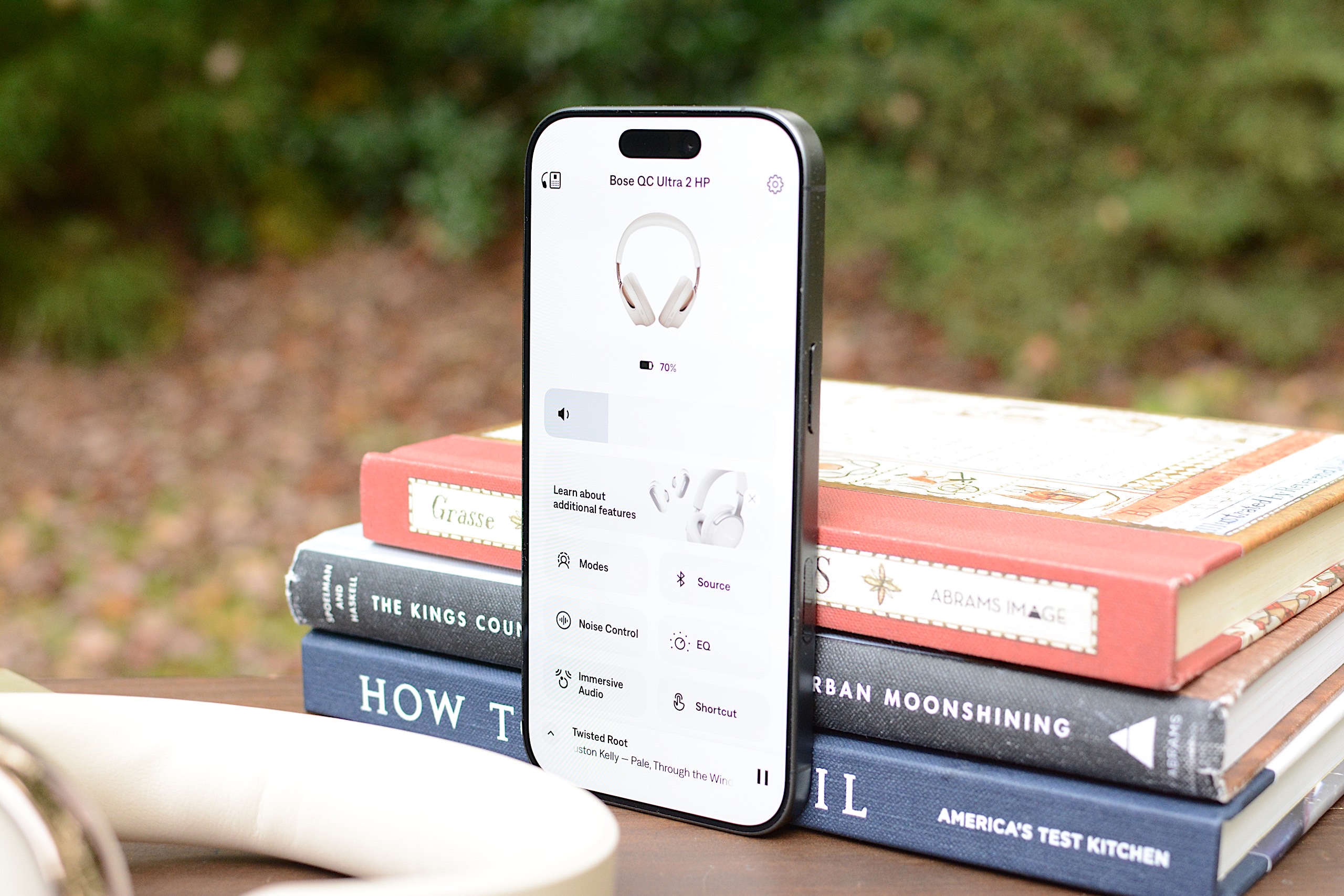
Lastly, Bose’s take on spatial audio is still quite good. The company calls it Immersive Audio and the feature doesn’t rely on specialized content like other headphones. Music sounds obviously fuller and slightly louder when the sound profile is active thanks to Bose’s method for upscaling stereo content. There’s also enhanced vocal clarity and elements like percussion and synths are less compressed than usual. The headphones lend a particularly airy feel to the tracks of Ruston Kelly’s Pale, Through the Window, an acoustic-driven collection of soulful, country-tinged tunes. His vocals float atop enveloping acoustic guitars and tight, punchy drums.

What’s not so good about the QC Ultra Headphones?

The Bose app gives you access to controls and customization.
Billy Steele for Engadget

The biggest issue with the second-gen QuietComfort Ultra Headphones is the price. To be clear, the likes of Sony, Apple and others charge around the same amount for their top-of-the-line models, but $449 is still a significant investment. If that’s too steep for you, Bose has the highly capable QuietComfort Headphones in its arsenal for a slightly more palatable $359.

My other gripe is that the only real design change Bose made for the updated QC Ultra Headphones is that the metal headband yokes now have a gloss finish. Depending on your personal preference, this might be a dealbreaker for you. It’s least noticeable on the black and violet colorways, since these have a tone-on-tone look. After a few weeks with the bronze and tan Driftwood Sand hue, I’m not a fan of the more stylized aesthetic. It’s flashy, for sure, but it’s a tweak I could’ve done without. 

Wrap-up

Similar to the second-gen QC Ultra Earbuds over the summer, Bose didn’t make huge upgrades for the updated version of the QC Ultra Headphones. But what you do get here is a decent improvement over its predecessor. The company devised an intuitive setup for power management and even addressed one of my main gripes with the original by adding support for lossless audio over USB-C. Plus, the extended battery life is significant in all sound modes, and not just by an hour or two here or there. To top it all off, the QuietComfort Ultra Headphones remain the best option for pure noise-blocking ability, and that’s not likely to change any time soon.

This article originally appeared on Engadget at https://www.engadget.com/audio/headphones/bose-quietcomfort-ultra-headphones-2nd-gen-review-impactful-upgrades-to-a-familiar-formula-150000709.html?src=rss