Readers in 2025 “may struggle to remember the optimism of the aughts, when the internet seemed to offer endless possibilities for virtual art and writing that was free…” argues a new review at Bookforum. “The content we do create online, if we still create, often feels unreflectively automatic: predictable quote-tweet dunks, prefabricated poses on Instagram, TikTok dances that hit their beats like clockwork, to say nothing of what’s literally thoughtlessly churned out by LLM-powered bots.”
They write that author Joanna Walsh “wants us to remember how truly creative, and human, the internet once was,” in the golden age of user-generated content — and funny cat picture sites like I Can Has Cheezburger:
I Can Has Cheezburger… was an amateur project, an outlet for tech professionals who wanted an easier way to exchange cute cat pics after a hard day at work. In Amateurs!: How We Built Internet Culture and Why It Matters, Walsh documents how unpaid creative labor is the basis for almost everything that’s good (and much that’s bad) online, including the open-source code Linux, developed by Linus Torvalds when he was still in school (“just as a hobby, won’t be big and professional”), and even, in Walsh’s account, the World Wide Web itself. The platforms that emerged in the 2000s as “Web 2.0,” including Facebook, YouTube, Reddit, and Twitter, allowed anyone to experiment in a space that had been reserved for coders and hackers, making the internet interactive even for the inexpert and virtually unlimited in potential audience. The explosion in amateur creativity that followed took many forms, from memes to tweeted one-liners to diaristic blogs to durational digital performances to sloppy Photoshops to the formal and informal taxonomic structures — wikis, neologisms, digitally native dialects…
[U]ser-generated content was also, at bottom, about the bottom line, a business model sold to us under the guise of artistic empowerment. Even referring to an anonymous amateur as a “user,” Walsh argues, cedes ground: these platforms are populated by producers, but their owners see us as, and turn us into, “helpless addicts.” For some, online amateurism translated to professional success, a viral post earning an author a book deal, or a reputation as a top commenter leading to a staff writing job on a web publication… But for most, these days, participation in the online attention economy feels like a tax, or maybe a trickle of revenue, rather than free fun or a ticket to fame. The few remaining professionals in the arts and letters have felt pressured to supplement their full-time jobs with social media self-promotion, subscription newsletters, podcasts, and short-form video. On what was once called Twitter, users can pay, and sometimes get paid, to post with greater reach…
The chapters are bookended by an introduction on the early promise of 2004 and a coda on the defeat of 2025 and supplemented by an appendix with a straightforward timeline of the major events and publications that serve as the book’s touchstones… The online spaces where amateur content creators once “created and steered online culture” have been hollowed out and replaced by slop, but what really hurts is that the slop is being produced by bots trained on precisely that amateur content.
End result: rc2 is on the bigger side, and we still have some of
the remaining regressions outstanding, but we should be making slow
progress. It’s fairly early days yet, so I’m not very
worried. Things on the whole look fairly normal.
Snap OS now has Synth Riders, Star Wars, and Avatar: The Last Airbender minigames, which will be available on the consumer Snap Specs at launch.
What Are Snap OS, Snap Spectacles, And Snap Specs?
If you’re unfamiliar, the current Snap Spectacles are $99/month AR glasses for developers ($50/month if they’re students), intended to let them develop apps for the Specs consumer product the company behind Snapchat intends to ship in 2026.
Spectacles have a 46° diagonal field of view, angular resolution comparable to Apple Vision Pro, relatively limited computing power, and a built-in battery life of just 45 minutes. They’re also the bulkiest AR device in “glasses” form factor we’ve seen yet, weighing 226 grams. That’s almost 5 times as heavy as Ray-Ban Meta glasses, for an admittedly entirely unfair comparison.
But Snap CEO Evan Spiegel claims that the consumer Specs will have “a much smaller form factor, at a fraction of the weight, with a ton more capability”, while running all the same apps developed so far.
As such, what’s arguably more important to keep track of here is Snap OS, not the developer kit hardware.
Snap OS is relatively unique. While on an underlying level it’s Android-based, you can’t install APKs on it, and thus developers can’t run native code or use third-party engines like Unity. Instead, they build sandboxed “Lenses”, the company’s name for apps, using the Lens Studio software for Windows and macOS.
In Lens Studio, developers use JavaScript or TypeScript to interact with high-level APIs, while the operating system itself handles the low-level core tech like rendering and core interactions. This has many of the same advantages as the Shared Space of Apple’s visionOS: near-instant app launches, interaction consistency, and easy implementation of shared multi-user experiences without friction. It even allows the Spectacles mobile app to be used as a spectator view for almost any Lens.
Snap OS doesn’t support multitasking, but this is more likely a limitation of the current hardware than the operating system itself.
So far, Snap’s focus with its AR glasses platform has mostly been on adding new developer capabilities, and at Lens Fest 2025 this week released a range of new APIs. These tools have been used by dozens of enthusiastic AR developers to build AR Lenses.
With the release of Snap OS 2.0 the company has also started building out consumer-focused features, like a Travel Mode, improved Browser with WebXR support, and Gallery app.
And at Lens Fest, Snap also announced the launch of Lenses from major developers and brands, including Star Wars and Avatar: The Last Airbender.
Snap has repeatedly confirmed that all current Lenses will run on the consumer Specs AR glasses coming in 2026, so all this content should be available at launch.
Synth Riders
Synth Riders from Kluge Interactive is a popular XR rhythm game available on Meta Quest, Apple Vision Pro, PlayStation VR2 and PC VR headsets.
Last month Snap announced that a ported version was coming to Snap OS, and it’s out now.
0:00
/0:28
Footage recorded by UploadVR at Snap London. NOTE: Spectacles records a much wider field of view than it can display. In reality, you can essentially only see virtual content when looking directly at it.
I went hands-on with Synth Riders on Snap Spectacles last month. Unfortunately, Spectacles can only record for 30 seconds, but you can still get an idea of how the game transfers from VR/MR headsets to AR glasses.
(As an aside, note how the virtual object emits light onto the furniture below it. That’s because Snap OS provides a continuous scene mesh to Lenses, letting them naturally fit in with real world geometry.)
Star Wars: Holocron Histories
Star Wars: Holocron Histories is the latest project from ILM Immersive, the XR development wing of Industrial Light & Magic.
0:00
/0:08
The extremely brief clip shown at Lens Fest 2025 when announcing Star Wars: Holocron Histories.
Snap says the Lens sees you “guided by a former student of the Force”, and has three experiences: an encounter between Jedi and Sith, a cautionary tale from the Nightsisters, and an inspirational tale about the Guardians of the Whills.
It’s the latest in a long catalog of ILM Immersive Star Wars content that includes Vader Immortal on Quest and PlayStation VR, Tales from the Galaxy’s Edge on Quest and PlayStation VR2, and the new Star Wars: Beyond Victory mixed reality game for Quest 3.
Avatar: The Last Airbender
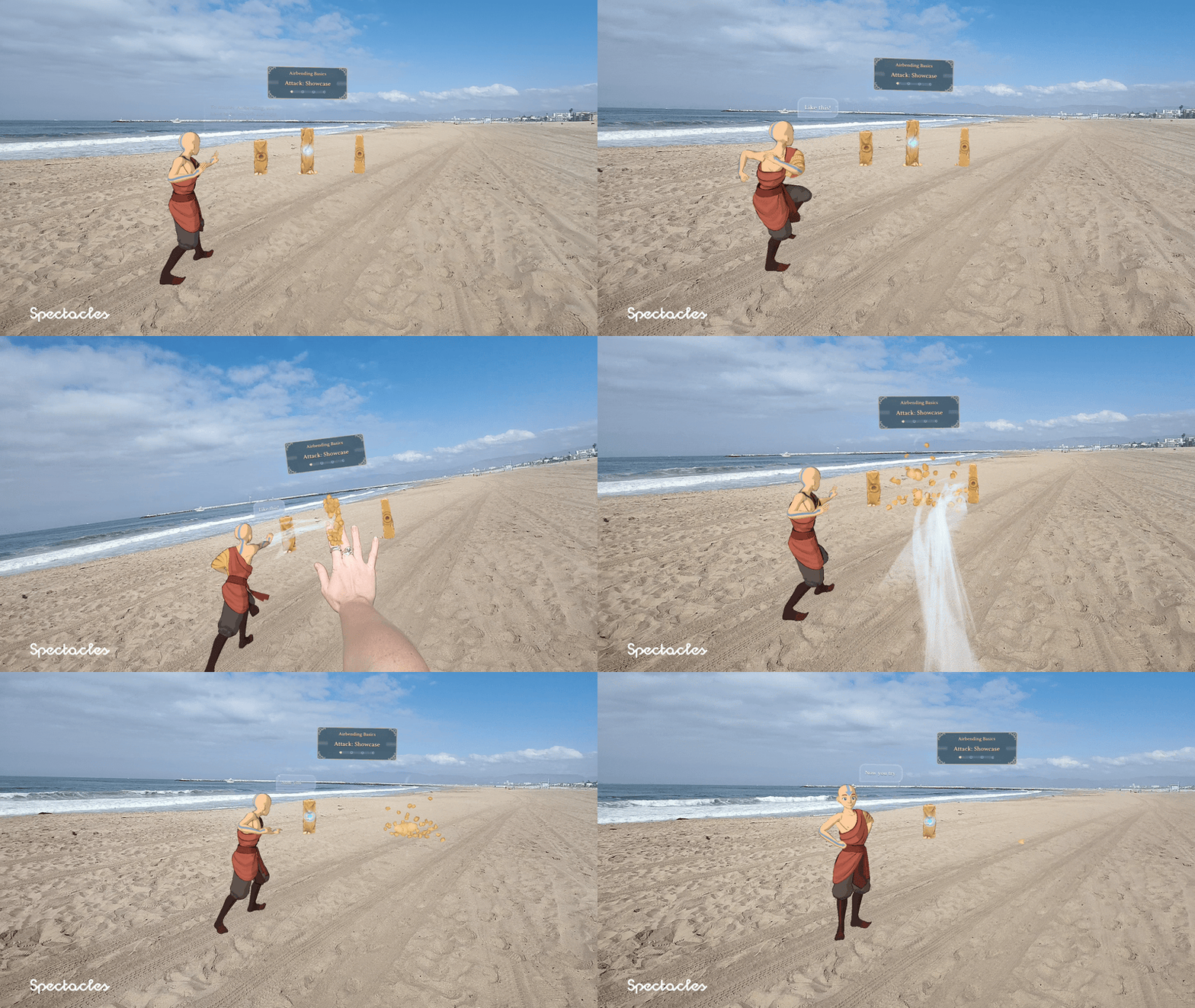
Snap says the Avatar: The Last Airbender Lens lets you train alongside Aang, using head movement and hand gestures to propel air forward and knock down targets.
Figma & Tripadvisor “Coming Soon”
Snap says Lenses from Figma and Tripadvisor are “coming soon”.
There are no specific details yet on what exactly these Lenses will be.
A Building Content Library
With promised true AR, like the Spectacles developer kit, but in “a much smaller form factor, at a fraction of the weight, with a ton more capability”, as CEO Evan Spiegel claims, Snap Specs are likely to be priced in the thousands of dollars, and the company will have to convince potential buyers that the content available justifies the price.
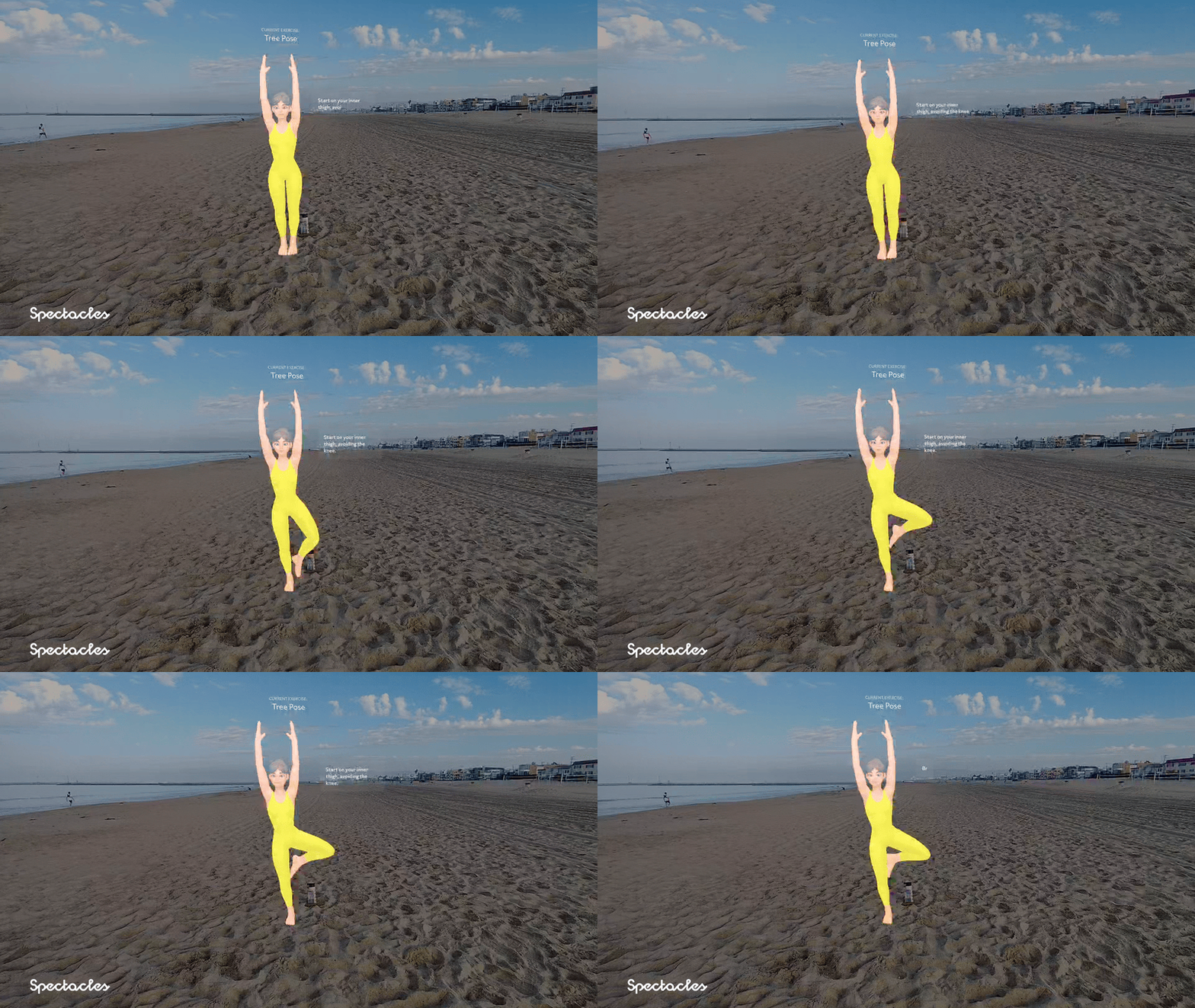
Yoga (left) and Translation (right)
With the Star Wars, Avatar: The Last Airbender, and Synth Riders minigames joining existing third-party titles like Lego Bricktacular, and new and updated first-party ones like Yoga and Translation, Snap seems to be steadily building out the Snap OS content library ahead of the launch next year.
Linux 6.18-rc2 is now available with another week’s worth of fixes for Linux 6.18, which is anticipated to be this year’s Long Term Support (LTS) kernel version…
Radxa has introduced the Orion O6N, a Nano ITX single board computer designed as a smaller and more power-efficient alternative to the earlier Orion O6. Both models share the same Cix P1 SoC and overall platform architecture, but the O6N adopts a more compact 120 x 120 mm form factor compared to the 170 x […]
On Cloudflare’s blog, a senior research engineer shares a plan for “improving the trustworthiness of JavaScript on the web.”
“It is as true today as it was in 2011 that Javascript cryptography is Considered Harmful.”
The main problem is code distribution. Consider an end-to-end-encrypted messaging web application. The application generates cryptographic keys in the client’s browser that lets users view and send end-to-end encrypted messages to each other. If the application is compromised, what would stop the malicious actor from simply modifying their Javascript to exfiltrate messages? It is interesting to note that smartphone apps don’t have this issue. This is because app stores do a lot of heavy lifting to provide security for the app ecosystem. Specifically, they provide integrity, ensuring that apps being delivered are not tampered with, consistency, ensuring all users get the same app, and transparency, ensuring that the record of versions of an app is truthful and publicly visible.
It would be nice if we could get these properties for our end-to-end encrypted web application, and the web as a whole, without requiring a single central authority like an app store.
Further, such a system would benefit all in-browser uses of cryptography, not just end-to-end-encrypted apps. For example, many web-based confidential LLMs, cryptocurrency wallets, and voting systems use in-browser Javascript cryptography for the last step of their verification chains. In this post, we will provide an early look at such a system, called Web Application Integrity, Consistency, and Transparency (WAICT) that we have helped author. WAICT is a W3C-backed effort among browser vendors, cloud providers, and encrypted communication developers to bring stronger security guarantees to the entire web… We hope to build even wider consensus on the solution design in the near future….
We would like to have a way of enforcing integrity on an entire site, i.e., every asset under a domain. For this, WAICT defines an integrity manifest, a configuration file that websites can provide to clients. One important item in the manifest is the asset hashes dictionary, mapping a hash belonging to an asset that the browser might load from that domain, to the path of that asset.
The blog post points out that the WEBCAT protocol (created by the Freedom of Press Foundation) “allows site owners to announce the identities of the developers that have signed the site’s integrity manifest, i.e., have signed all the code and other assets that the site is serving to the user… We’ve made WAICT extensible enough to fit WEBCAT inside and benefit from the transparency components.” The proposal also envisions a service storing metadata for transparency-enabled sites on the web (along with “witnesses” who verify the prefix tree holding the hashes for domain manifests).
“We are still very early in the standardization process,” with hopes to soon “begin standardizing the integrity manifest format. And then after that we can start standardizing all the other features. We intend to work on this specification hand-in-hand with browsers and the IETF, and we hope to have some exciting betas soon. In the meantime, you can follow along with our transparency specification draft,/A>, check out the open problems, and share your ideas.”
“My boss thinks AI will solve every problem and is wildly enthusiastic about it,” complains a mid-level worker at a Fortune 500 company, who considers the technology “unproven and wildly erratic.”
So how should they navigate the next 10 years until retirement, they ask the Washington Post’s “Work Advice” columnist. The columnist first notes that “Despite promises that AI will eliminate tedious, ‘low-value’ tasks from our workload, many consumers and companies seem to be using it primarily as a cheap shortcut to avoid hiring professional actors, writers or artists — whose work, in some cases, was stolen to train the tools usurping them…”
Kevin Cantera, a reader from Las Cruces, New Mexico [a writer for an education-tech compay], willingly embraced AI for work. But as it turns out, he was training his replacement… Even without the “AI will take our jobs” specter, there’s much to be wary of in the AI hype. Faster isn’t always better. Parroting and predicting linguistic patterns isn’t the same as creativity and innovation… There are concerns about hallucinations, faulty data models, and intentional misuse for purposes of deception. And that’s not even addressing the environmental impact of all the power- and water-hogging data centers needed to support this innovation.
And yet, it seems, resistance may be futile. The AI genie is out of the bottle and granting wishes. And at the rate it’s evolving, you won’t have 10 years to weigh the merits and get comfortable with it. Even if you move on to another workplace, odds are AI will show up there before long. Speaking as one grumpy old Luddite to another, it might be time to get a little curious about this technology just so you can separate helpfulness from hype.
It might help to think of AI as just another software tool that you have to get familiar with to do your job. Learn what it’s good for — and what it’s bad at — so you can recommend guidelines for ethical and beneficial use. Learn how to word your wishes to get accurate results. Become the “human in the loop” managing the virtual intern. You can test the bathwater without drinking it. Focus on the little ways AI can accommodate and support you and your colleagues. Maybe it could handle small tasks in your workflow that you wish you could hand off to an assistant. Automated transcriptions and meeting notes could be a life-changer for a colleague with auditory processing issues.
I can’t guarantee that dabbling in AI will protect your job. But refusing to engage definitely won’t help. And if you decide it’s time to change jobs, having some extra AI knowledge and experience under your belt will make you a more attractive candidate, even if you never end up having to use it.
Cory Doctorow has always warned that companies “enshittify” their services — shifting “as much as they can from users, workers, suppliers, and business customers to themselves.” But this week Doctorow writes in Communications of the ACM that enshittification “would be much, much worse if not for tech workers,” who have “the power to tell their bosses to go to hell…”
When your skills are in such high demand that you can quit your job, walk across the street, and get a better one later that same day, your boss has a real incentive to make you feel like you are their social equal, empowered to say and do whatever feels technically right… The per-worker revenue for successful tech companies is unfathomable — tens or even hundreds of times their wages and stock compensation packages.
“No wonder tech bosses are so excited about AI coding tools,” Doctorow adds, “which promise to turn skilled programmers from creative problem-solvers to mere code reviewers for AI as it produces tech debt at scale. Code reviewers never tell their bosses to go to hell, and they are a lot easier to replace.”
So how should tech workers respond in a world where tech workers are now “as disposable as Amazon warehouse workers and drivers…?”
Throughout the entire history of human civilization, there has only ever been one way to guarantee fair wages and decent conditions for workers: unions. Even non-union workers benefit from unions, because strong unions are the force that causes labor protection laws to be passed, which protect all workers. Tech workers have historically been monumentally uninterested in unionization, and it’s not hard to see why. Why go to all those meetings and pay those dues when you could tell your boss to go to hell on Tuesday and have a new job by Wednesday? That’s not the case anymore. It will likely never be the case again.
Interest in tech unions is at an all-time high. Groups such as Tech Solidarity and the Tech Workers Coalition are doing a land-office business, and copies of Ethan Marcotte’s You Deserve a Tech Union are flying off the shelves. Now is the time to get organized. Your boss has made it clear how you’d be treated if they had their way. They’re about to get it.
Thanks to long-time Slashdot reader theodp for sharing the article.
Taps Ruby core to oversee RubyGems, BundlerRuby Central, the non-profit that recently seized some Ruby open source tools from maintainers, is transferring the repository ownership of RubyGems and Bundler to the Ruby core team. The move appears to be an attempt to mollify the Ruby community following a divisive power grab, but it does not restore the control of those tools to the maintainers who previously oversaw them.…
Links have proven to be a tricky thing when it comes to social media engagement. On platforms like Threads, data suggests that people often don’t click the links in posts, and creators on X have complained that posts including links don’t get as much visibility. X is now trying to solve that. Head of product Nikita Bier shared that the platform is “testing a new link experience” that lets people open a link without leaving the original post entirely, so they can still view the Like, Repost and other buttons. The test is rolling out to iOS users first.
We’re testing a new link experience, starting on iOS — to make it easier for your followers to engage with your post while browsing links.
For creators, a common complaint is that posts with links tend to get lower reach. This is because the web browser covers the post and… pic.twitter.com/oWraLpPwji
“To help get better signal, posts will now collapse to the bottom of the page so people can react while you’re reading,” Bier wrote alongside a screen recording of how it will work. As to why posts with links typically don’t perform as well, Bier said, “This is because the web browser covers the post and people forget to Like or Reply. So X doesn’t get a clear signal whether the content is any good.”
Of course, X has been accused of throttling links tospecific sites, and Elon Musk has said in the past that links “don’t get as much attention” on the platform, so tweaking the popups will only go so far in addressing the reach issue. Bier added that posts should always “stand alone as great content so write a solid caption.”
This article originally appeared on Engadget at https://www.engadget.com/x-is-testing-a-new-way-of-opening-links-in-posts-to-improve-engagement-211210520.html?src=rss
Snap OS now has in-app payments, a UI Kit, a permissions system for raw camera access, EyeConnect automatic colocation, and more.
What Are Snap OS, Snap Spectacles, And Snap Specs?
If you’re unfamiliar, the current Snap Spectacles are $99/month AR glasses for developers ($50/month if they’re students), intended to let them develop apps for the Specs consumer product the company behind Snapchat intends to ship in 2026.
Spectacles have a 46° diagonal field of view, angular resolution comparable to Apple Vision Pro, relatively limited computing power, and a built-in battery life of just 45 minutes. They’re also the bulkiest AR device in “glasses” form factor we’ve seen yet, weighing 226 grams. That’s almost 5 times as heavy as Ray-Ban Meta glasses, for an admittedly entirely unfair comparison.
But Snap CEO Evan Spiegel claims that the consumer Specs will have “a much smaller form factor, at a fraction of the weight, with a ton more capability”, while running all the same apps developed so far.
As such, what’s arguably more important to keep track of here is Snap OS, not the developer kit hardware.
Snap OS is relatively unique. While on an underlying level it’s Android-based, you can’t install APKs on it, and thus developers can’t run native code or use third-party engines like Unity. Instead, they build sandboxed “Lenses”, the company’s name for apps, using the Lens Studio software for Windows and macOS.
In Lens Studio, developers use JavaScript or TypeScript to interact with high-level APIs, while the operating system itself handles the low-level core tech like rendering and core interactions. This has many of the same advantages as the Shared Space of Apple’s visionOS: near-instant app launches, interaction consistency, and easy implementation of shared multi-user experiences without friction. It even allows the Spectacles mobile app to be used as a spectator view for almost any Lens.
Snap OS doesn’t support multitasking, but this is more likely a limitation of the current hardware than the operating system itself.
Since releasing Snap OS in the latest Spectacles kit last year, Snap has repeatedly added new capabilities for developers building Lenses.
In March the company added the ability to use the GPS and compass heading to build experiences for outdoor navigation, detect when the user is holding a phone, and spawn a system-level floating keyboard for text entry.
In June, it added a suite of AI features, including AI speech to text for 40+ languages, the ability to generate 3D models on the fly, and advanced integrations with the visual multimodal capabilities of Google’s Gemini and OpenAI’s ChatGPT.
And last month, we went hands-on with Snap OS 2.0, which rather than just focusing on the developer experience, also rounds out Snap’s first-party software offering as a step towards next year’s consumer Specs launch. The new OS version adds and improves first-party apps like Browser, Gallery, and Spotlight, and adds a Travel Mode, to bring the AR platform closer to being ready for consumers.
At Lens Fest this week, Snap detailed the new developer capabilities of Snap OS 2.0, including the ability for developers to monetize their Lenses.
Commerce Kit
Snap has repeatedly confirmed that all Lenses built for the current Spectacles developer kit will run on its consumer Specs next year. But until now it hasn’t really told developers why they’d want to build Lenses in the first place.
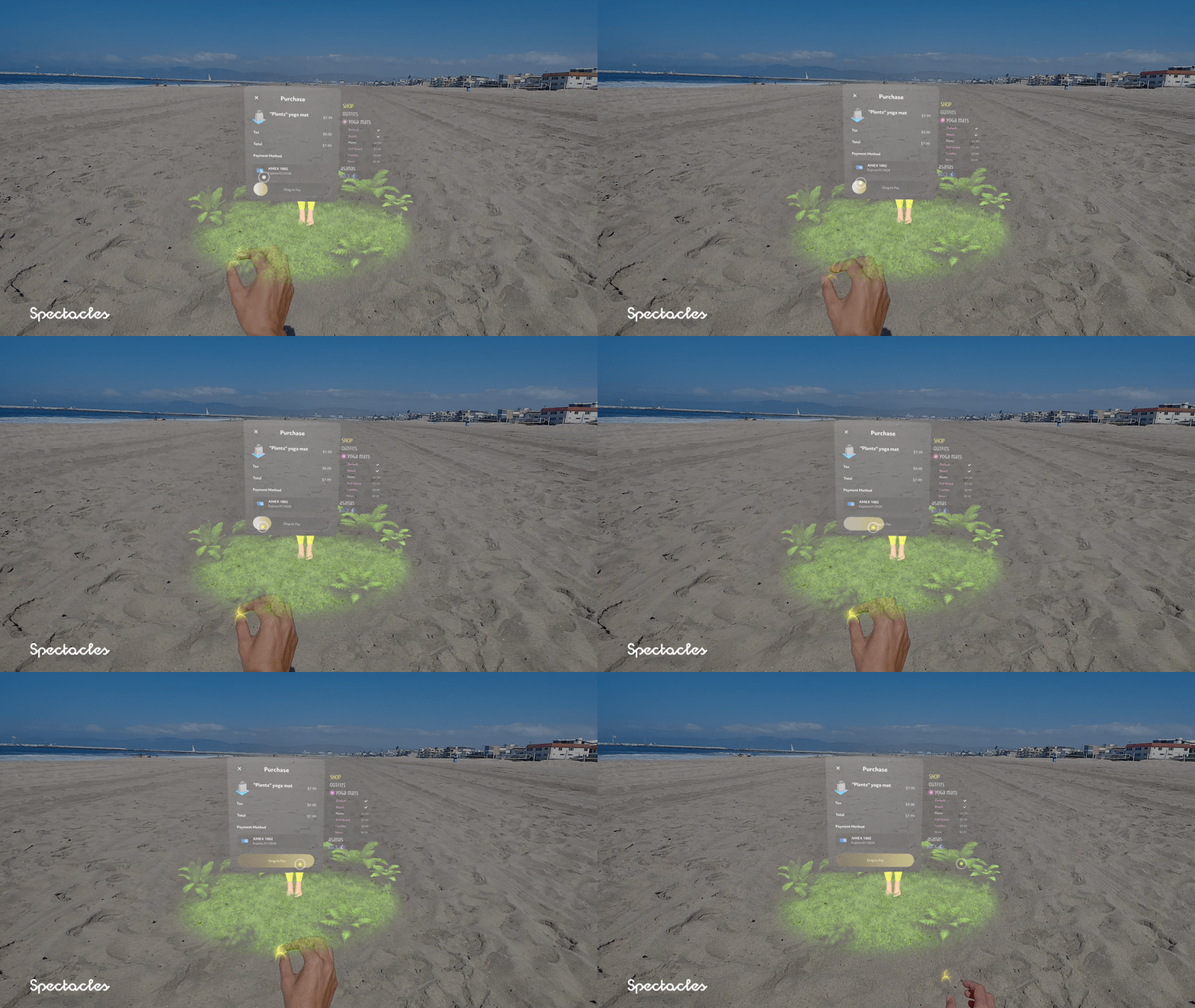
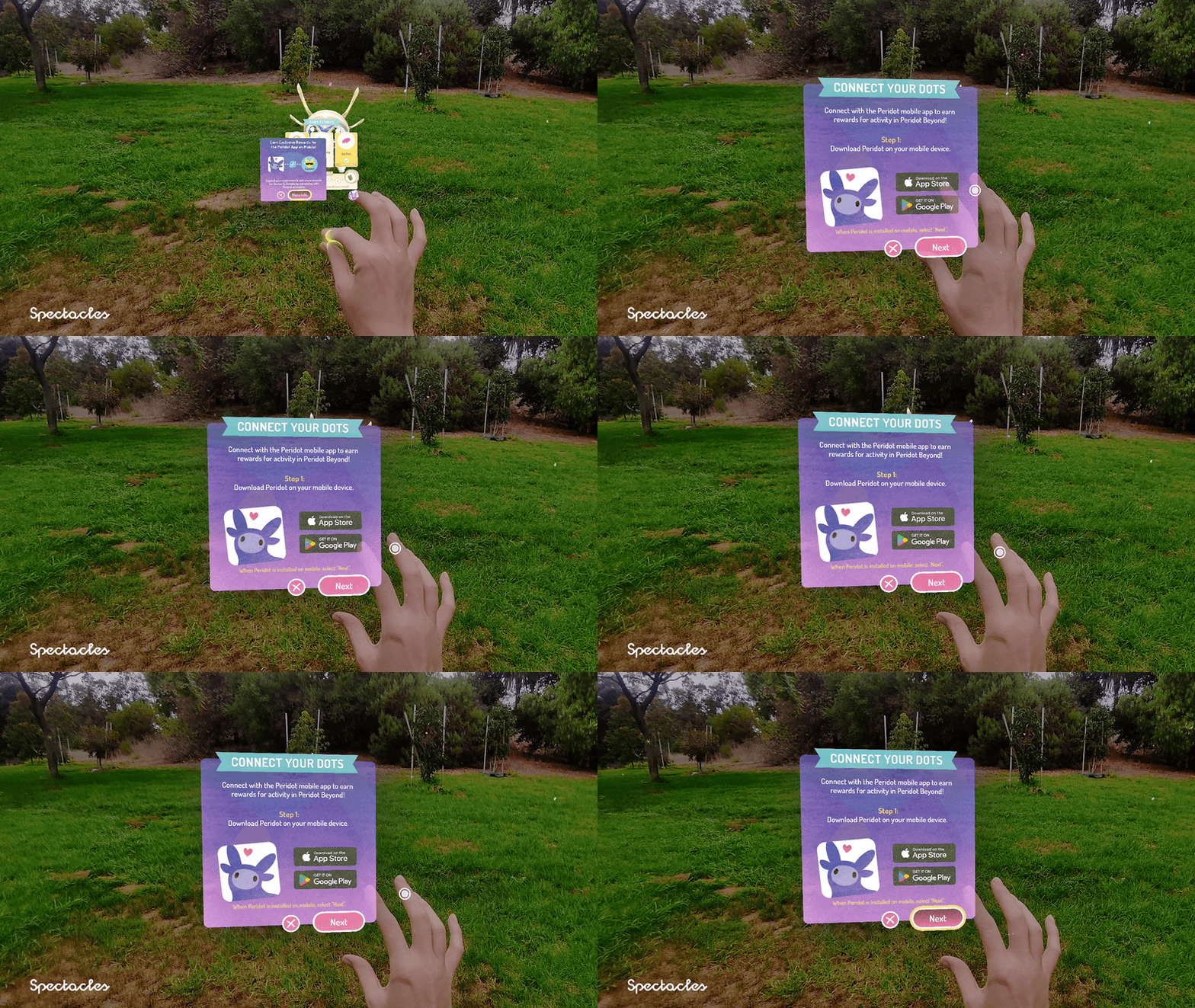
Commerce Kit is an API and payment system for Snap OS devices. Users set up a payment method and 4-digit pin in the Spectacles smartphone app, and developers can implement microtransactions in their Lenses. It’s very similar to what you’d find on standalone VR headsets and traditional consoles.
‘Drag to Pay’ on Snap OS.
Given that Lenses themselves can only be free, this is the first way for Lens developers to directly monetize their work.
Commerce Kit is currently a closed beta available for US-based developers to apply to join.
Permission Alerts
Snap OS Lenses cannot simultaneously access the internet and raw sensor data – camera frames, microphone audio, or GPS coordinates. It’s been a fundamental part of Snap’s software design.
There are higher-level Snap APIs for computer vision, speech to text, and colocation, to be clear, but if developers want to run fully custom code on raw sensor data they lose access to the internet.
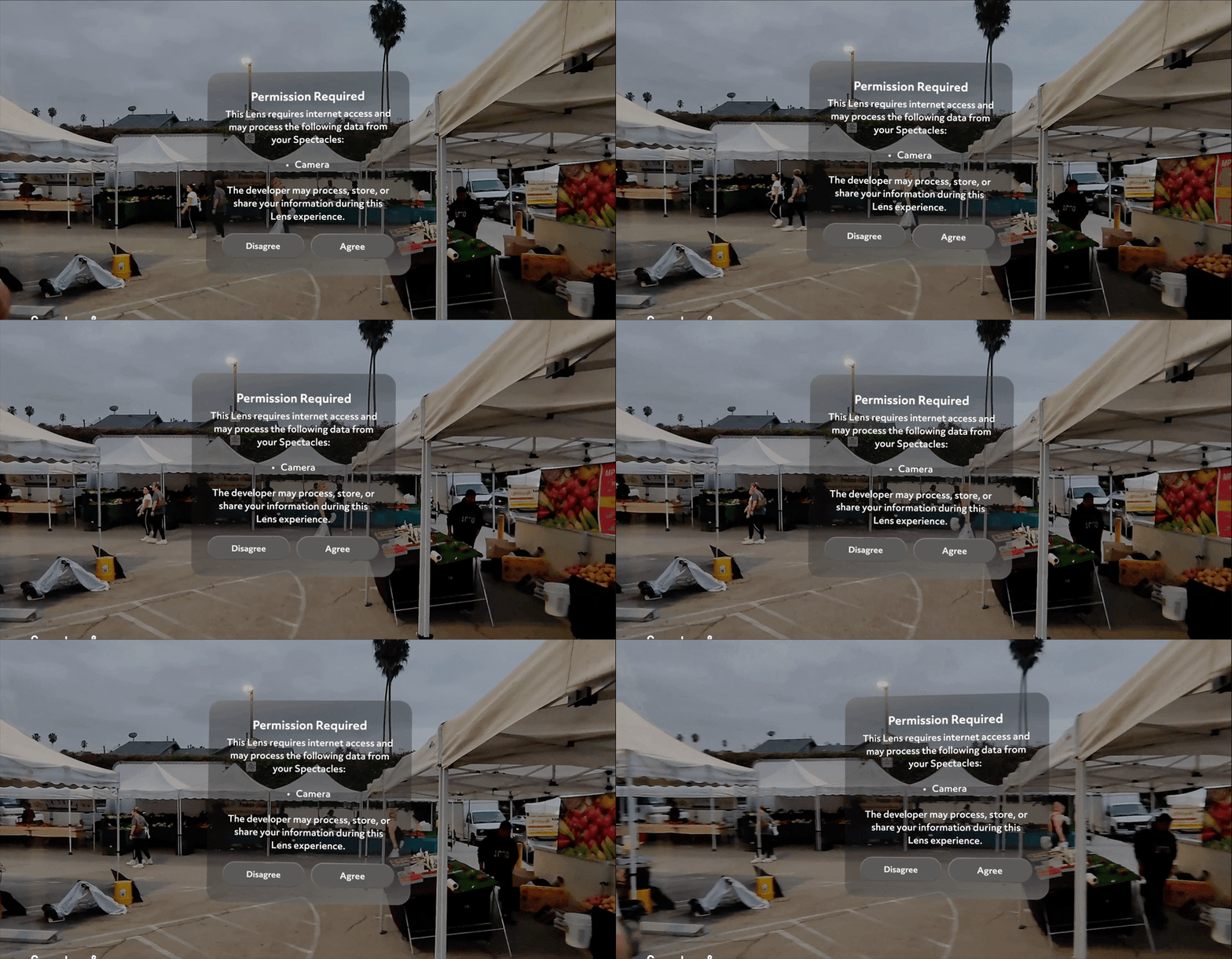
The prompt (left) and what bystanders see (right).
Now, Snap has added the ability for experimental Lenses to get both raw sensor access and internet access. The catch is that a permissions prompt will appear every time the Lens is launched, and the forward-facing LED on the glasses will pulse while the app is in use.
Snap says this Bystander Indicator is crucial to let people nearby know that they might be being recorded.
UI Kit
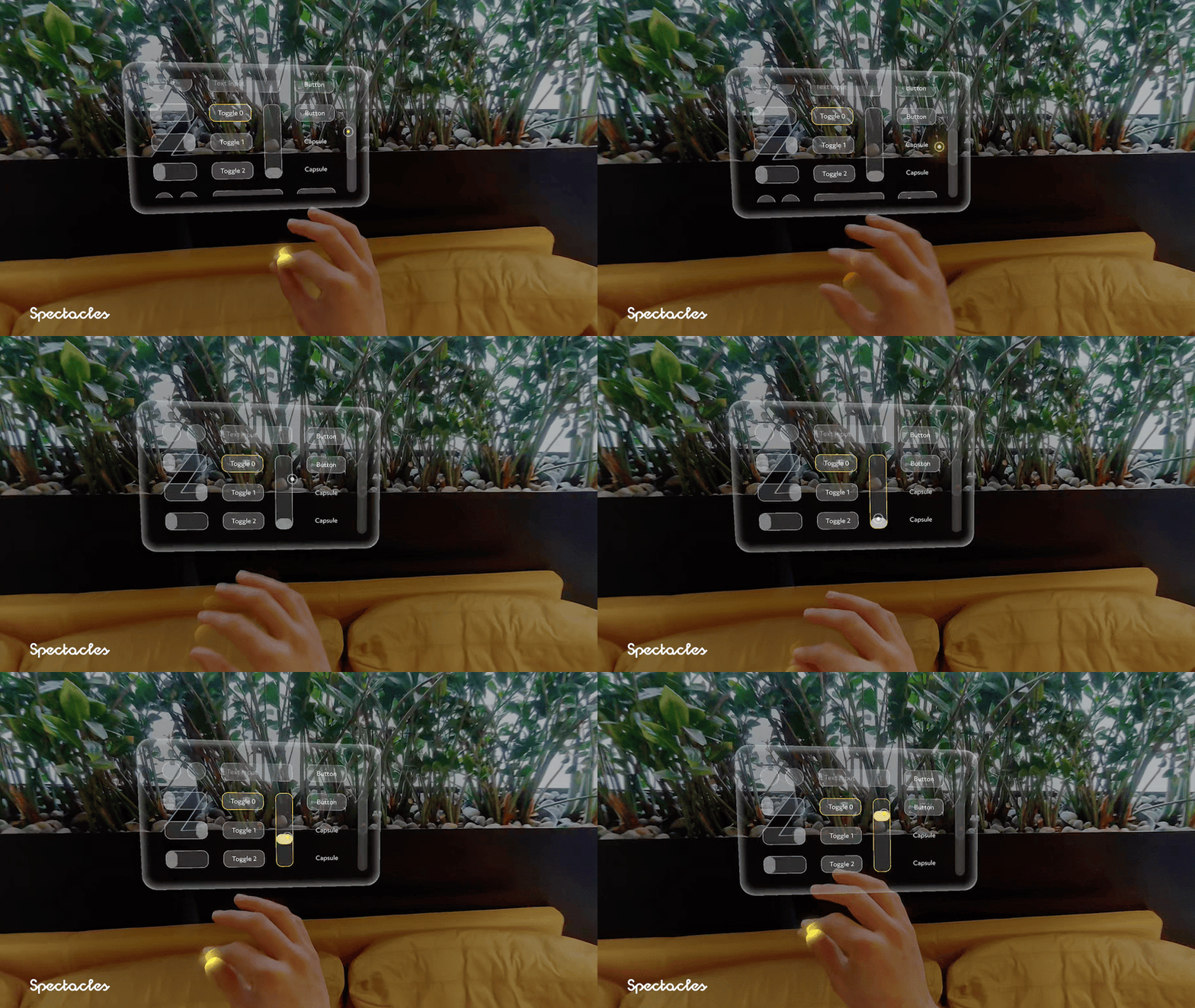
The Spectacles UI Kit (SUIK) lets developers easily add the same UI components as the Snap OS system.
Mobile Kit
The new Spectacles Mobile Kit lets iOS and Android smartphone apps communicate with Spectacles Lenses via Bluetooth.
Snap OS already lets developers easily use your iPhone as a 6DoF tracked controller via the Spectacles phone app, but the new Mobile Kit allows developers to build custom companion phone apps, or add this as a feature to their existing smartphone app.
“Send data from mobile applications such as health tracking, navigation, and gaming apps, and create extended augmented reality experiences that are hands free and don’t require Wi-Fi.”
Semantic Hit Testing
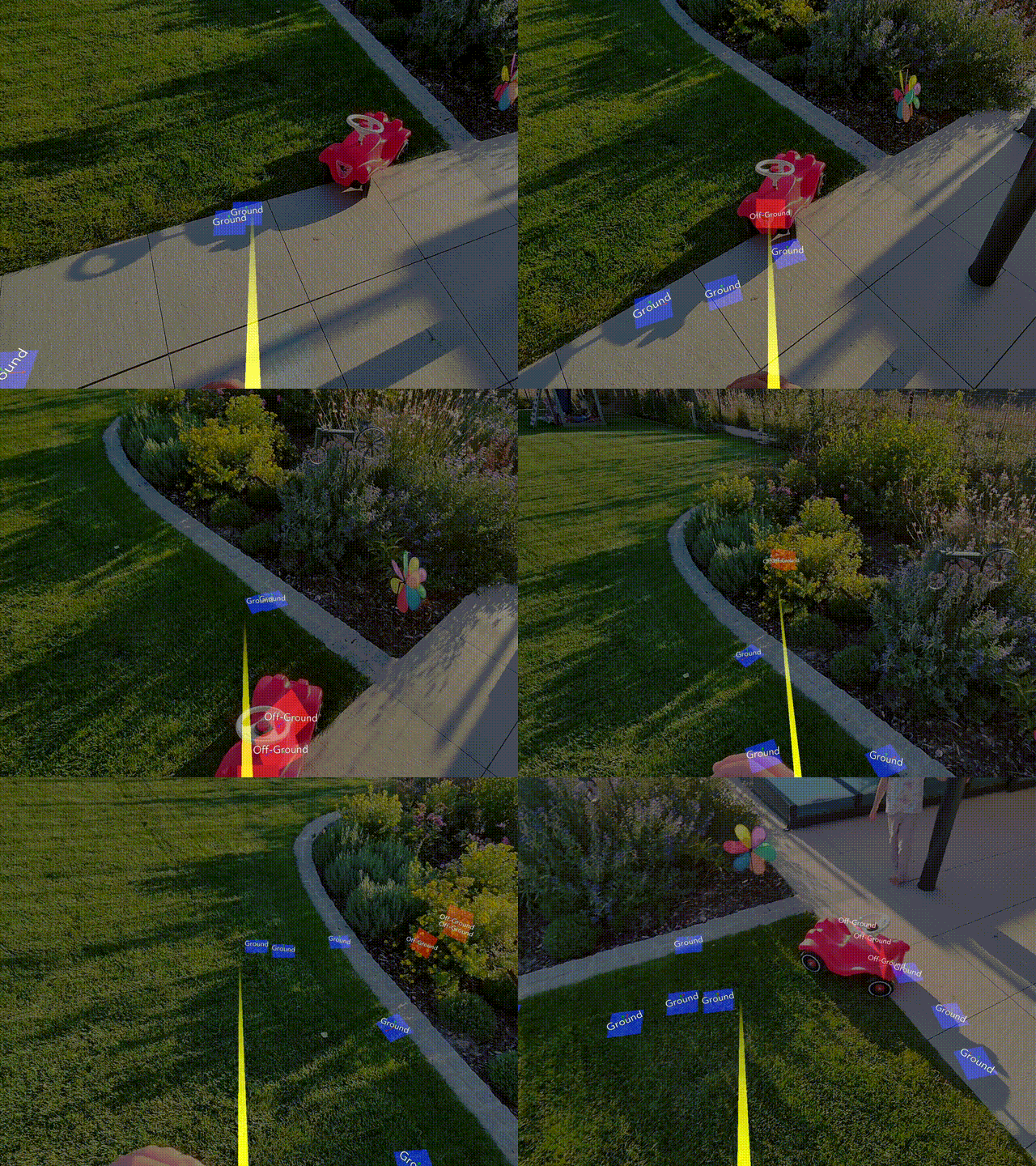
Semantic Hit Testing is a new API that lets Snap OS Lenses cast a ray, for example from the user’s hand, and figure out whether it hits a valid ground surface.
This can be used for instant placement of virtual objects, and is a developer feature we’ve seen arrive on multiple XR platforms now.
EyeConnect
Snap OS already has the best system-level colocation support we’ve seen yet, letting you easily join a local multiplayer session with very little friction. When someone nearby is in a Lens that supports multiplayer, you’ll see their session listed in the main OS menu to join, and after a short calibration step you’re colocated.
With the new EyeConnect feature, Snap seems to be pushing even harder on the idea of low-friction colocated multiplayer.
According to Snap, EyeConnect directs Spectacles wearers to simply look at each other, and uses device and face tracking to automatically co-locate all users in a session without any mapping step.
For Lenses that place virtual elements at real world coordinates, a Custom Locations system is used that doesn’t support EyeConnect.
Slashdot reader BrianFagioli writes: GIMP has officially launched its own Snap package for Linux, finally taking over from the community-maintained Snapcrafters project. The move means all future GIMP releases will now be built directly from the team’s CI pipeline, ensuring faster, more consistent updates across distributions. The developers also introduced a new “gimp-plugins” interface to support external plugins while maintaining Snap’s security confinement, with GMIC and OpenVINO already supported. This marks another major step in GIMP’s cross-platform packaging efforts, joining Flatpak and MSIX distribution options. The first officially maintained version, Version 3.0.6GIMP 3.0.6, is available now on the “latest/stable” Snap channel, with preview builds rolling out for testers.
As political tensions between the two global superpowers grow, China’s State Security Ministry accused the US’ National Security Agency of a cyberattack operation that took place between 2023 and 2024. As first reported by Reuters, the Chinese agency posted on WeChat that the NSA targeted the country’s National Time Service Center. As part of the Chinese Academy of Sciences, the center is tasked with generating, maintaining and transmitting its national standard of time, which is provided to important sectors across the country, including communications, defense and finance.
The state ministry said the operation used around 42 types of “special cyberattack weapons” to infiltrate the National Time Service Center which could have led to the disruption of network communications, financial systems and power supply. The WeChat post also claimed that the NSA exploited vulnerabilities in a foreign mobile phone brand’s messaging system to steal sensitive info from staff devices, without naming the brand.
The NSA has yet to respond to the accusation. On the other hand, the US Treasury Department said it was targeted by a “China state-sponsored actor” in a December cyberattack.
This article originally appeared on Engadget at https://www.engadget.com/cybersecurity/china-claims-the-nsa-conducted-cyberattacks-on-its-national-time-center-201852066.html?src=rss
We still have a few months to wait before the next Cult of the Lamb DLC, Woolhaven, arrives, but the Massive Monster team just shared a closer look at one of the new experiences the expansion will bring and, oh boy, I cannot wait to play this. In addition to adding a new mountain area with two new dungeons, Woolhaven will introduce ranching, so you can raise animals — the regular, non-anthropomorphic kind — to keep as pets, shear for wool or slaughter for meat (you know, if you have no heart).
Based on the overview video, we’ll get to raise cows(ish), goats and sheep as well as some more unexpected critters like crabs, snails, spiders and turtles. I, personally, am very excited about the snails. You’ll be able to form bonds with and name the animals, and you’ll have to tend to their wellbeing, feeding them healthy foods and cleaning them. Followers will also be able to bond with the animals and have their own pets. As wholesome as that all sounds, this is Cult of the Lamb we’re talking about, so I’m already bracing myself for the inevitable heartbreak of when some unruly follower kills my favorite animals at some point. The video notes that you’ll have to keep them safe from predators.
Woolhaven will be a paid expansion, but we don’t know yet how much it will cost or when exactly it drops. The team has so far only said early 2026.
This article originally appeared on Engadget at https://www.engadget.com/this-is-how-the-new-ranching-system-will-work-in-cult-of-the-lamb-woolhaven-194324041.html?src=rss
“This is an attempt to stop Waymo cars from driving into the dead end,” complains a home-made sign in San Francisco, “where they are forced to reverse and adversely affect the lives of the residents.”
On an orange traffic post, the home-made sign declares “NO WAYMO – 8:00 p.m. to 8:00 a.m,” with an explanation for the rest of the neighborhood. âoeWaymo comes at all hours of the night and up to 7 times per hour with flashing lights and screaming reverse sounds, waking people up and destroying the quality of life.â
SFGate reports that 1,400 people on Reddit upvoted a photo of the sign’s text:
It delves into the bureaucratic mess â” multiple requests to Waymo, conversations with engineers, and 311 [municipal services] tickets, which had all apparently gone ignored â” before finally providing instructions for human drivers. âoePlease move [the cones] back after you have entered so we can continue to try to block the Waymo cars from entering and disrupting the lives of residents.â
This isnâ(TM)t the first time Waymoâ(TM)s autonomous vehicles have disrupted San Francisco residentsâ(TM) peace. Last year, a fleet of the robotaxis created another sleepless fiasco in the cityâ(TM)s SoMa neighborhood, honking at each other for hours throughout the night for two and a half weeks.
Other on Reddit shared the concern. “I live at an dead end street in Noe Valley, and these Waymos always stuck there,” another commenter posted. “It’s been bad for more than a year,” agreed another comment. “People on the Internet think you’re just a hater but it’s a real issue with Waymos.”
On Thursday “the sign remained at the corner of Lake Street and Second Avenue,” notes SFGate. And yet “something appeared to have shifted. “Waymo vehicles werenâ(TM)t allowing drop-offs or pickups on the street, though whether this was due to the home-printed plea, the cone blockage, or simply updating routes remains unclear.”
The National Transportation Safety Board confirmed Sunday that it is investigating an airliner that was struck by an object in its windscreen, mid-flight, over Utah.
“NTSB gathering radar, weather, flight recorder data,” the federal agency said on the social media site X. “Windscreen being sent to NTSB laboratories for examination.”
The strike occurred Thursday, during a United Airlines flight from Denver to Los Angeles. Images shared on social media showed that one of the two large windows at the front of a 737 MAX aircraft was significantly cracked. Related images also reveal a pilot’s arm that has been cut multiple times by what appear to be small shards of glass.