Zwift version 1.100 begins its phased rollout today. Some Zwifters were wondering if v100 was going to include something big and cool, and it does. Well, sort of. There are new NYC roads (which you can’t ride quite yet) but also a serendipitous Streak count and 13 event-only routes that are now free rideable! Read on for details…
New New York Roads Incoming
This latest Zwift update includes what should be the final version of Zwift’s New York map expansion, which we wrote about in TSOZ Closer Look: New York Expansion and Power Segments. This includes 31km of new pavement, which is a big expansion by Zwift standards!
We’ve seen an early release of the new roads, and while we can’t share details of all the new routes just yet (that comes on Monday, October 27) we can share the basics (length and elevation) of the new routes which will be used for Zwift Unlocked:
Stage 4, October 27-November 3
Long Ride – The Greenway (1 lap: 36.8km, 292m)
Short Ride and Race – Spinfinity (1 lap: 19.5km, 155m)
Run – Prospect Park Loop Run (1 lap: 5.5km, 37m)
Stage 5, November 3-10
Long Ride – Stay Puft Pursuit (1 lap: 31.4km, 409m)
Short Ride and Race – The Double Borough (1 lap: 17.9km, 144m)
Run – Times Square Circuit Run (2 laps: 7.2km, 40m)
Watch this space for route details next week!
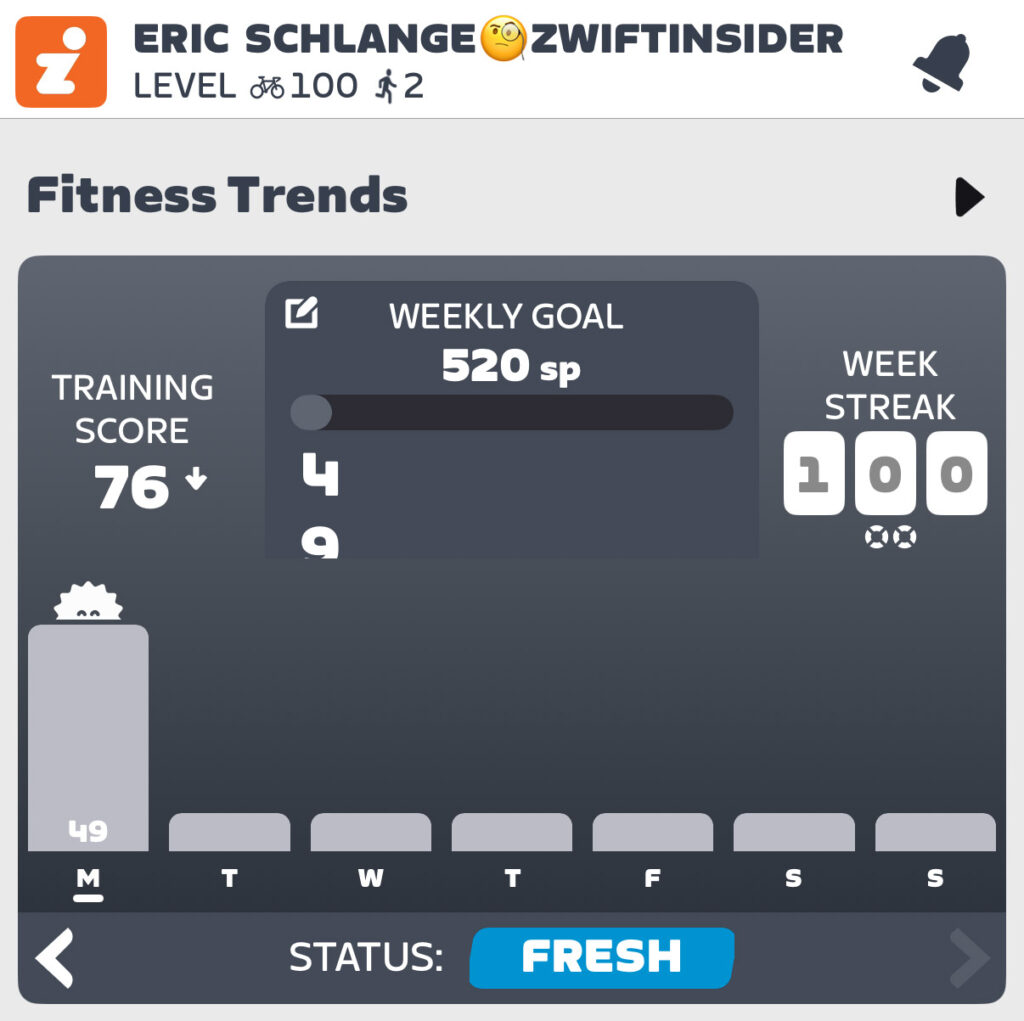
Week Streak #100
In a bit of serendipity, some Zwifters will be extending their Week Streak to 100 this week, as Zwift hits version 1.100. (Most riders who have kept their streak going since Week Streaks were released will hit 100 next week.)
Companion has a bit of a display bug in the weekly goal section due to the Week Streak shifting over to three digits, but we expect this to be fixed soon:
Routes Available for Free Riding
The following 10 routes, originally released as event-only, are now available for free riding/running:
If you haven’t earned these route badges yet, the unearned badges are now visible on your Achievements page.
Release Notes
Zwift provided notes on additional tweaks and bug fixes in this update:
We’ve improved the route preview shown below the mini-map when Zwifters ride off-route: The route preview now shows the next 3 km / 1.86 mi of roadway so you have a better idea of what’s ahead of you, and if you turn at an intersection, the route preview will update accordingly. The name of the next intersection is also now displayed, along with the distance to it.
President Trump’s $100,000 H-1B visa fee will apply only to new visa applicants outside the country, the government confirmed in new guidance on Monday. From a report: That means that under the new policy, employers won’t need to pay the fee for anyone already living in the U.S., such as international students. The new guidance: Under the new guidance published on Monday, U.S. Citizenship and Immigration Services said the $100,000 fee will apply only to new applicants living outside the country. Employers will need to pay the fee after their prospective employee’s visa is approved, allowing them to move to the U.S.
Previously, the White House had said the fee would apply to all new visa applicants, except those who work for companies or industries that have secured a special waiver. In 2024, roughly 54% of the 141,000 new H-1B visas issued went to immigrants who were already in the U.S. on a different visa type, according to government statistics. If that trend holds, the new fee wouldn’t apply to over half of the applicants.
If you’re shopping for a new TV and set a budget for around $1,000 (or less), you might be inclined to think that you can either go monstrously big or opt for mini LED backlighting, but not both. You’d also be wrong. Generally speaking, you do have to choose between one or the other, but we found at least two exceptions in our hunt for the
This year’s version of iOS brought big changes to the user interface, and people either love it or hate it. Thankfully, Apple hasn’t tuned out the criticism and will include an option to give users more control over the look and feel of the OS. These optional settings have already appeared in iOS 26.1 Beta 4, which means it should be in the
The company also says the stream will be a full hour, which is a heck of a long time to spend on just one game a few weeks before launch. It’s worth noting, however, that Kirby Air Riders is a Masahiro Sakurai title.
Join us on Oct. 23 at 6 a.m. PT for a second #KirbyAirRiders Direct with director Mr. Sakurai. The livestreamed presentation will last roughly 60 minutes and feature more info on the upcoming #NintendoSwitch2 game.
This is the guy that made the Super Smash Bros. franchise. He loves making long videos about minutiae in his games. Just about every character on the Super Smash Bros. Ultimate roster got a fairly substantial reveal video and he has made all kinds of content about the various mechanics on that game.
To that end, the previous Kirby Air Riderslivestream from August was 45 minutes long and included a fairly deep dive into game mechanics. We don’t know what this stream will spotlight but we can’t wait to find out.
For the uninitiated, Kirby Air Riders is a Switch 2 exclusive that stars the lovable and eternally-hungry puffball Kirby. It’s a racing game and a follow-up to the Gamecube original, Kirby Air Ride. It’ll be available on November 20.
This article originally appeared on Engadget at https://www.engadget.com/gaming/nintendo/theres-another-kirby-air-riders-direct-livestream-on-october-23-at-9am-et-150344862.html?src=rss
Unabashedly lighting the fire under SpaceX, acting NASA Administrator Sean Duffy announced on Monday that the agency is opening its high-profile Artemis III human lunar landing contract to new bidders. The $4.4 billion contract, initially awarded exclusively to Elon Musk’s SpaceX in 2021, will now be open to rivals, such as Jeff Bezos’ Blue
Last year following the launch of the Intel Xeon 6900P Granite Rapids processors I ran some benchmarks looking at the SNC3 vs. HEX clustering mode performance. With having an Intel Xeon 6980P server back up and running on a Giga Computing R284-A92-AAL server after my AvenueCity reference server failed nearly one year ago, I revisited the SNC3 vs. HEX clustering performance for those curious how it’s looking on a modern software stack and with new/updated benchmarks.
To the disappointment of Judgment Day fans, The Rapture did not happen as predicted at the end of September, but keep your fingers crossed for November, when aliens are expected to invade. This one’s a way more concrete prediction than the Rapture. Unlike Jesus, we can actually see the alien starship in our telescopes, cleverly disguised as an interstellar comet. And it’s not just conspiracy theorists or Joe Rogan Podcast guests sounding the alarm—a Harvard astrophysicist kicked off the whole thing. So hold on to your butt!
The ballad of 3I/ATLAS
Back in July, NASA spotted 3I/ATLAS, an interstellar comet about the size of Manhattan, passing through our solar system on its journey from God knows where. This is only the third interstellar comet we’ve ever spotted, so it’s a big deal.
In September, Harvard astrophysicist Avi Loeb (who had a long, legit career until recently) published “News on 3I/ATLAS: Lack of Non-Gravitational Acceleration Implies an Anomalously Massive Object” which posits that the comet could be a giant spaceship that is going to fly behind the Sun on Oct. 21 (hey, that’s the day I’m posting this!), and while it’s shielded from our view, the “potentially hostile” comet/spaceship could do all kinds of aerial maneuvers, release a squadron of X-wings, or really anything. Then he appeared on a bunch of podcasts and news shows to talk about his “it could be aliens!” idea and it spread in mainstream press.
Oh, it could be on mission? It might do something? I could be about to grow 17 heads, and I might release mini probes too. Loeb is not wrong, technically, nor is he lying, but he’s not being entirely honest either, because he doesn’t follow up his statements with “…but it’s so unlikely, it’s barely worth considering.”
And this isn’t the first time he’s done this.
What’s the deal with Avi Loeb?
Remember 1I/ʻOumuamua? That cigar-shaped interstellar object people thought was an extraterrestrial probe in 2017? Loeb started that, too. He co-authored a paper suggesting it could be a lightsail—a thin, artificial sheet propelled by starlight—sent by an alien civilization. A possibility, but surprise! it turned out to be a comet.
Then there was the meteor. In 2022, Loeb claimed that a meteor that crashed into the Pacific Ocean in 2014 was interstellar in origin and possibly technological. He dredged up fragments from the ocean floor, and held press conferences about the “spherules” that might be alien technology. After sighing heavily, other scientists responded with: “Sure, it might be alien technology, but it isn’t,” and I hope they added, “why don’t we put some money on the next ‘space probe?'”
It’s a pattern: Loeb makes a qualified outrageous claim, gets the headlines (“Harvard Scientist: Comet Could Be Alien Spaceship!”) while hedging enough to say “I never said it was aliens” when the prediction fizzles. He seems to be trying to raise awareness about how we think about extraterrestrial life and push against the knee-jerk scientific dismissal of the subject, but the way he’s doing it is questionable.
Science isn’t sexy enough
In 2025, “We should carefully study this unusual object” doesn’t land you a book contract and media blitz like “Could this be an alien invasion fleet?” does, but it also doesn’t corrode public trust in science, and legitimate scientists studying interstellar objects, searching for biosignatures, and working on SETI get drowned out by the noise.
And what happens in November? Our Venusian Sky Brothers might descend upon Earth with cake and ice cream for all, but I’m putting my money on the cranks moving on to flat-Earth theories or weather machines, while Loeb generates headlines in a few months with another “this time, it really might be aliens!” object.
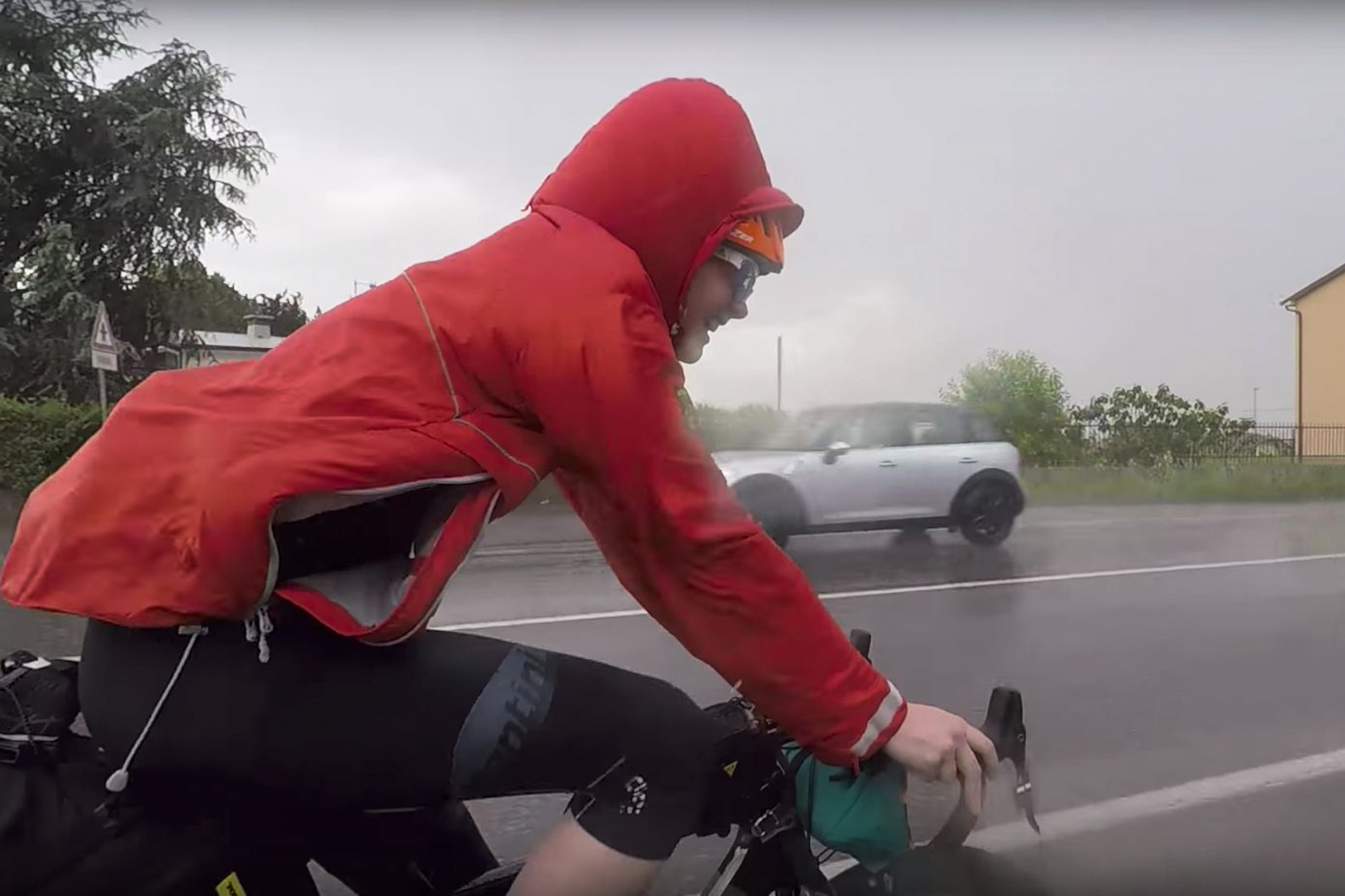
Once the weather turns wet, cycling in the rain can quickly become cold and uncomfortable if you’re not well-prepared.
But there’s a lot you can do to get yourself and your bike ready for wet-weather riding, and to make it more pleasant and safe once you do strike out in the rain.
From choosing the right clothing to fitting mudguards and avoiding riding through puddles, here are 15 tips to make wet-weather cycling more comfortable – and maybe even enjoyable.
1. Invest in the right clothing
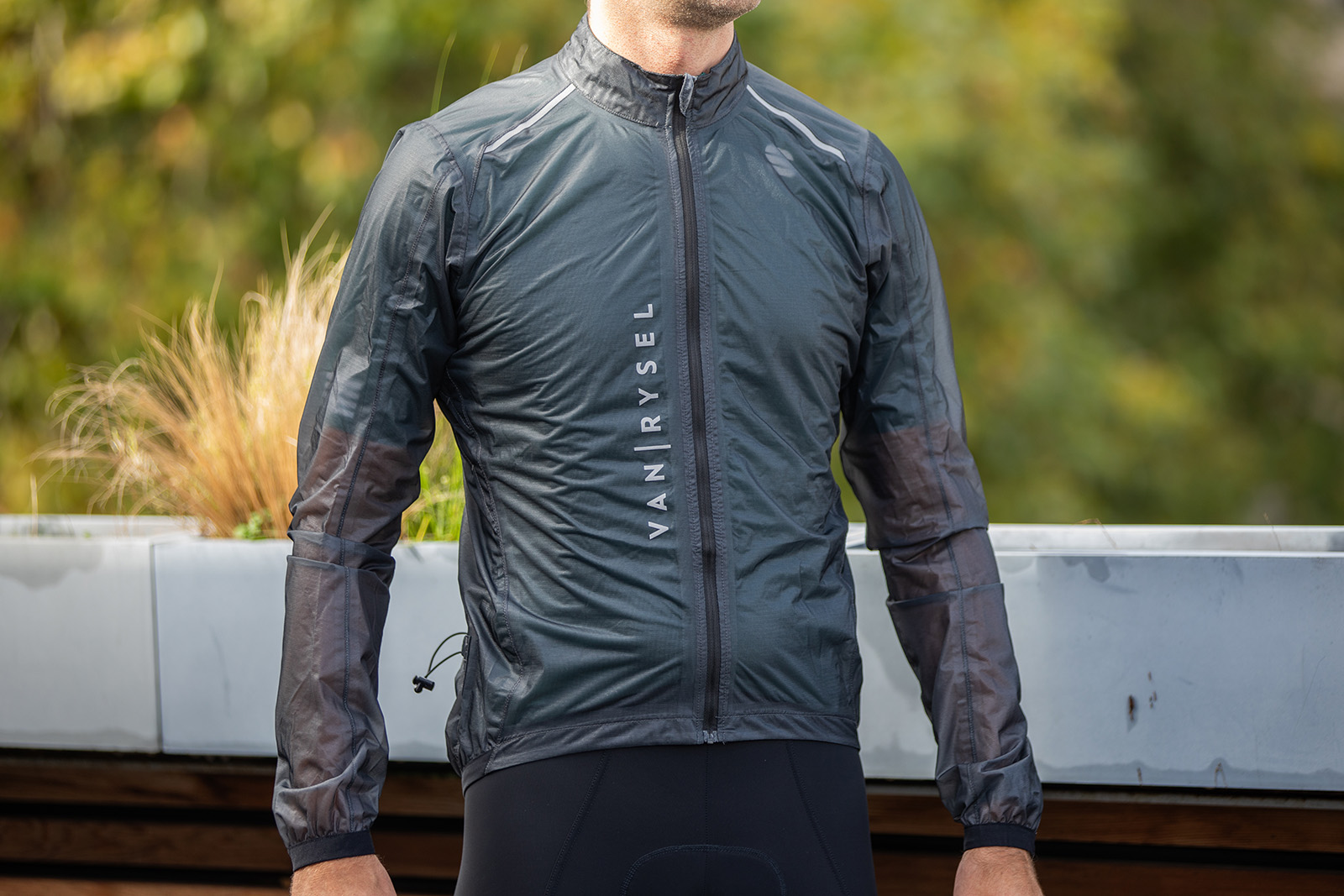
A quality rain jacket is your first line of defence on wet rides. Reuben Bakker-Dyos / Our Media
It’s made tricky by your work rate as you ride, which can result in uncomfortable ‘boil in the bag’ riding in some options, as you build up a sweat, which condenses on the inside of your kit.
It’s particularly a problem for top-half clothing, so it’s worth investing in a cycling rain jacket.
Although the best waterproof jackets made from fabrics such as Gore-Tex and eVent are expensive, they use the most advanced fabrics and have the highest breathability ratings. Less advanced, less expensive options exist that can work almost as well though.
To ensure that water stays out, look for garments that have taped seams.
A jacket that will keep off the rain doesn’t have to cost a fortune – this one is only £40. Scott Windsor / Our Media
A technical baselayer will stay warm even if you get wet. Avoid cotton, which gets cold when wet.
If it’s warm and wet, layering is less of an issue. You may be more comfortable just wearing a jersey and getting wet, rather than getting sweaty in a rain jacket.
Wet-weather jerseys, of which the Castelli Gabba was the archetype, provide less water resistance than rain jackets but are more comfortable if you’re riding hard.
Bottom-half clothing may include waterproof overtrousers, although many cyclists prefer water-resistant bib tights. Although they’ll keep the rain off less well, bib tights are more comfortable to ride in.
For really foul weather, a waterproof onesie may be the business, particularly if you’re mountain biking.
2. Get some overshoes
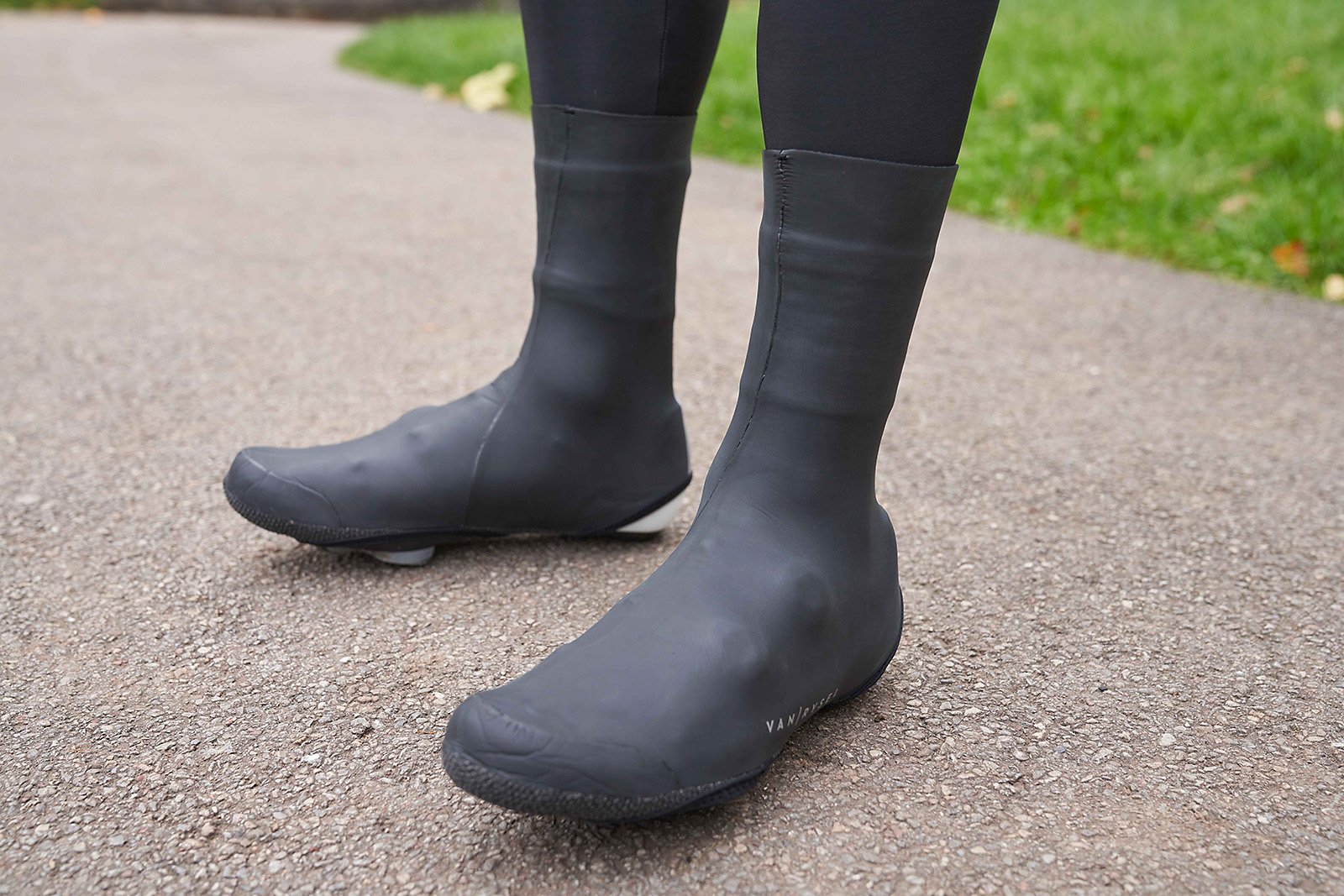
Overshoes will keep your feet dry for longer. Kaden Gardener / Our Media
Waterproof overshoes will help keep your feet dry for longer when cycling in the rain.
Even when wet does get in, overshoes should help keep your feet warmer. They’ll hold the warm water next to your feet and provide a windproof outlet layer. Plastic bags over your socks will help keep your feet drier for longer as a last resort.
Overshoes tend to wear out quite quickly, so if you want a more robust footwear solution, consider investing in a pair of winter cycling shoes or boots. These will have a fully enclosed sole unit and a waterproof upper, so the only way for your feet to get wet is for water to trickle down through the ankle cuff.
3. Wear gloves
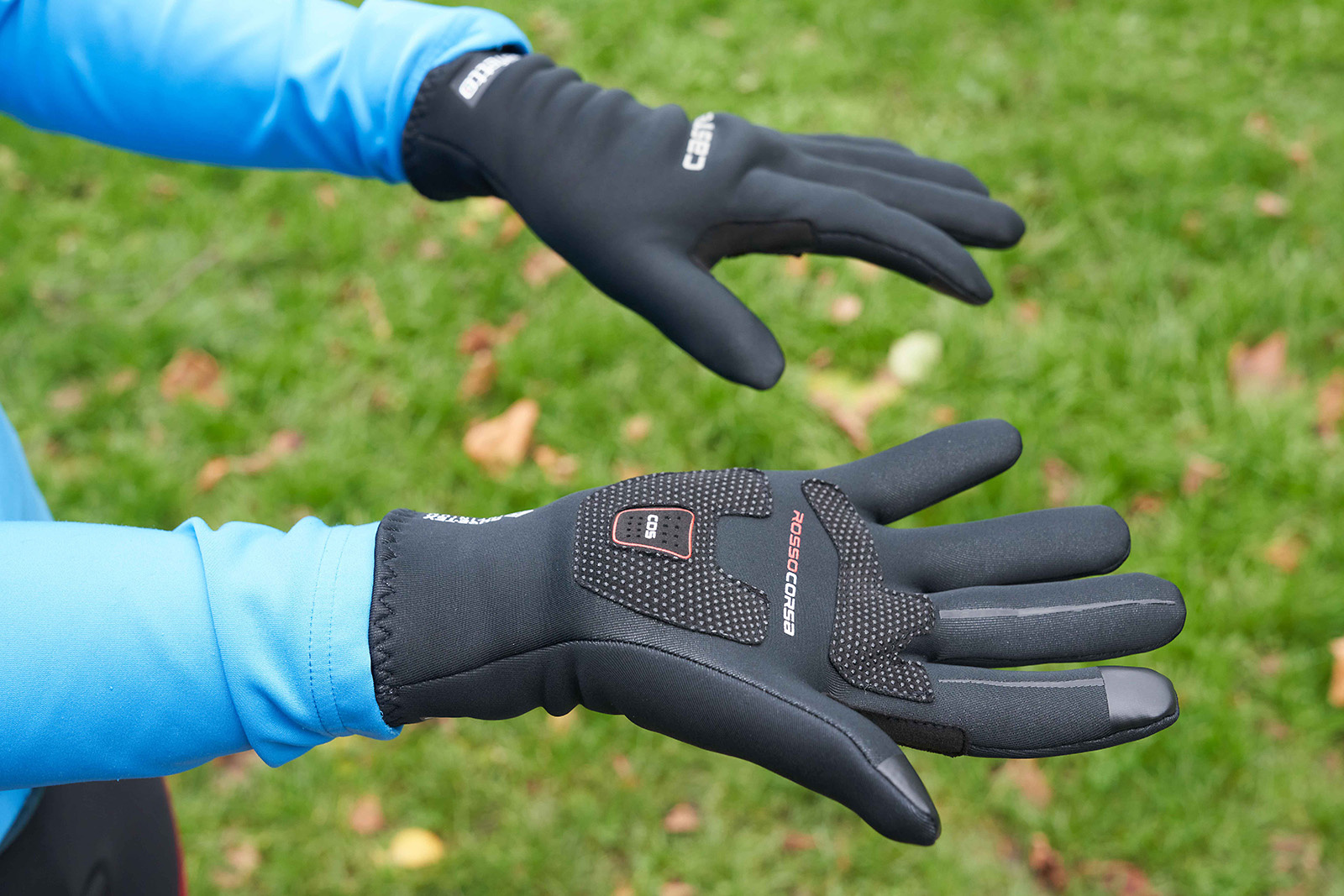
Gloves will help you grip the handlebar and prevent your hands from going numb if it’s cold. Kaden Gardener / Our Media
It’s a good idea to wear full-finger gloves in the rain.
Gloves will help you grip a wet handlebar and stop your hands from getting numb if it’s cold and wet.
As with other clothing, modern winter cycling gloves employ a range of technical fabrics.
They usually have a palm with silicone grippers for a sturdier grip on the handlebars, a breathable waterproof upper surface and well-placed insulation to keep your hands warm without impacting your grip.
4. Put on your glasses
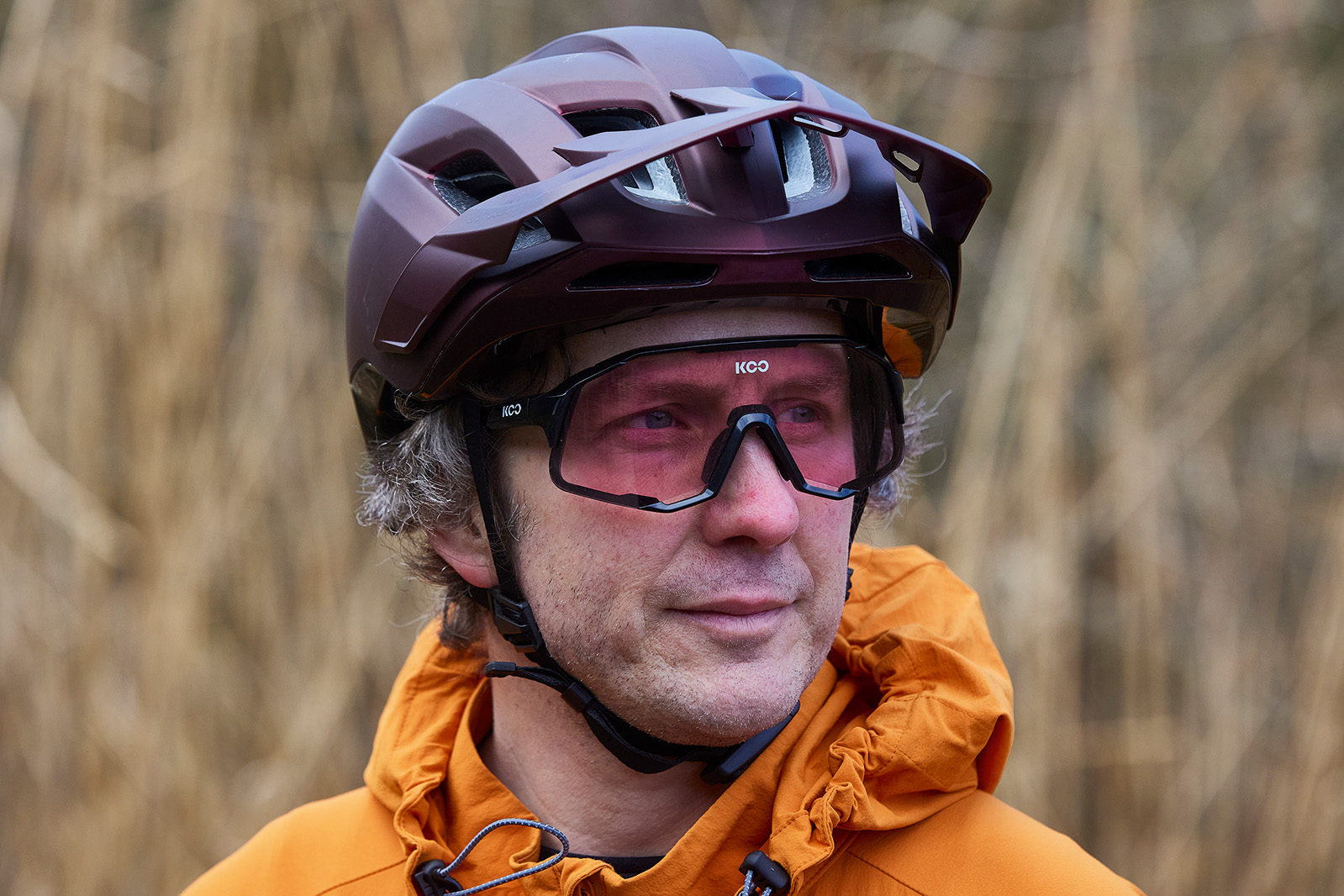
Glasses will protect your eyes from spray. Steve Behr / Our Media
Rain spraying on your face is uncomfortable and may reduce your vision. Spray from the road can wash grit into your eyes as well. So, wearing a pair of cycling glasses can help protect your eyes.
Many of the best cycling glasses enable you to select a clear lens, either as an optional extra or as part of a multi-lens set. Photochromic glasses are also handy when riding in wet conditions because they will adapt to the light level.
Most cycling glasses have a hydrophobic coating on the outside of the lens to help repel water and keep them clear.
5. Wear a cap
Cycling caps will help keep rain off your face. Felix Smith / Our Media
You’ll stay more comfortable in the rain if you wear a cycling cap. Most have a peak, which will help keep water out of your eyes.
A standard cotton cap will do the job, although it will soak up water, get wet and may feel cold and clammy. There are more sophisticated options that will be more comfortable though, made either from thin fleece-type material or a breathable waterproof fabric.
6. Fit mudguards to your bike
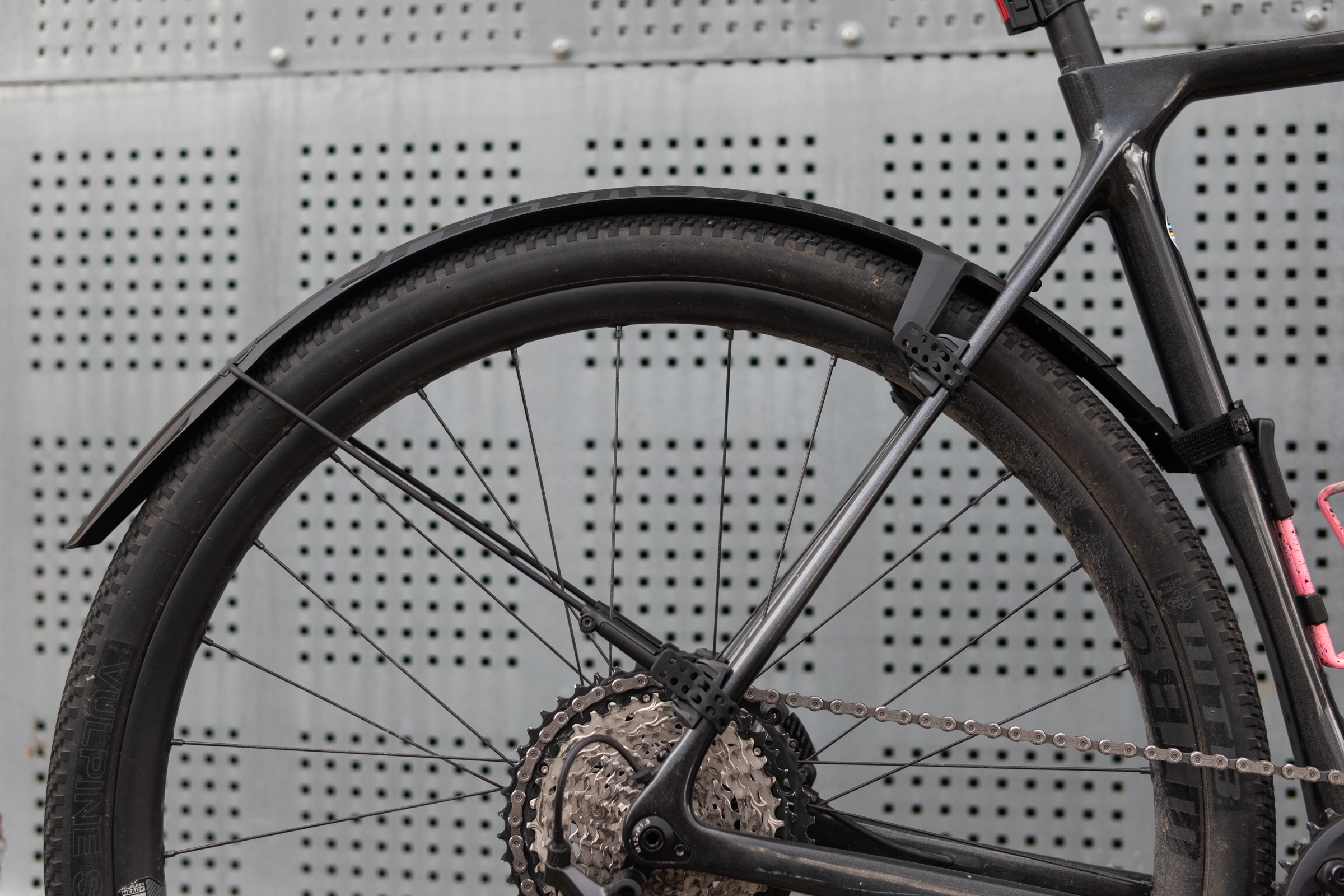
There’s a mudguard solution to fit almost all bikes. Jack Luke / Our Media
The number one item that will make riding in the rain more comfortable is a set of mudguards.
Full-cover mudguards are the ideal solution, keeping road spray off most of you and your bike.
Many modern road bikes and gravel bikes have the bolt bosses necessary to fit mudguards, but clip-on mudguards are a reasonable alternative.
There are specific mountain bike mudguards and gravel bike mudguards, which tend to provide less coverage than full-length fenders but will still do a good job of protecting you from rain and mud.
7. Use lights
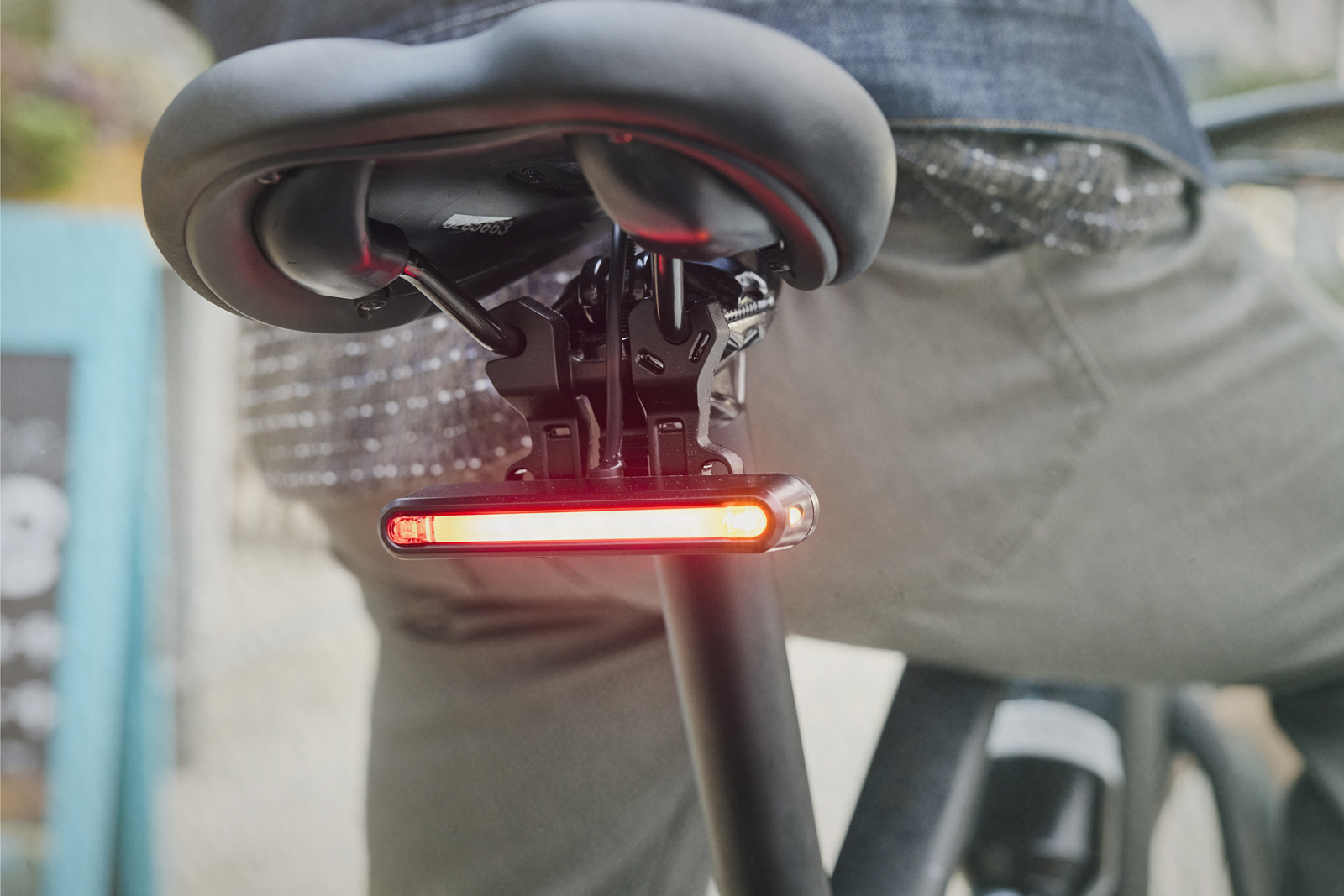
If it’s raining, you should use lights, even in the daytime. Trek
Wet weather can reduce your visibility to other road users, not just because of cloud cover and lower ambient light, but also because visibility out of vehicle windows may be impaired by the rain.
It’s important to use bike lights, even during the day, to increase your road presence. Use a flashing mode at the front and rear if you don’t need your front light to see by, because this should increase other road users’ awareness.
Rearview radar lights can be particularly good during wet weather because they will notify you of traffic approaching from behind.
8. Check your tyres and tyre pressures
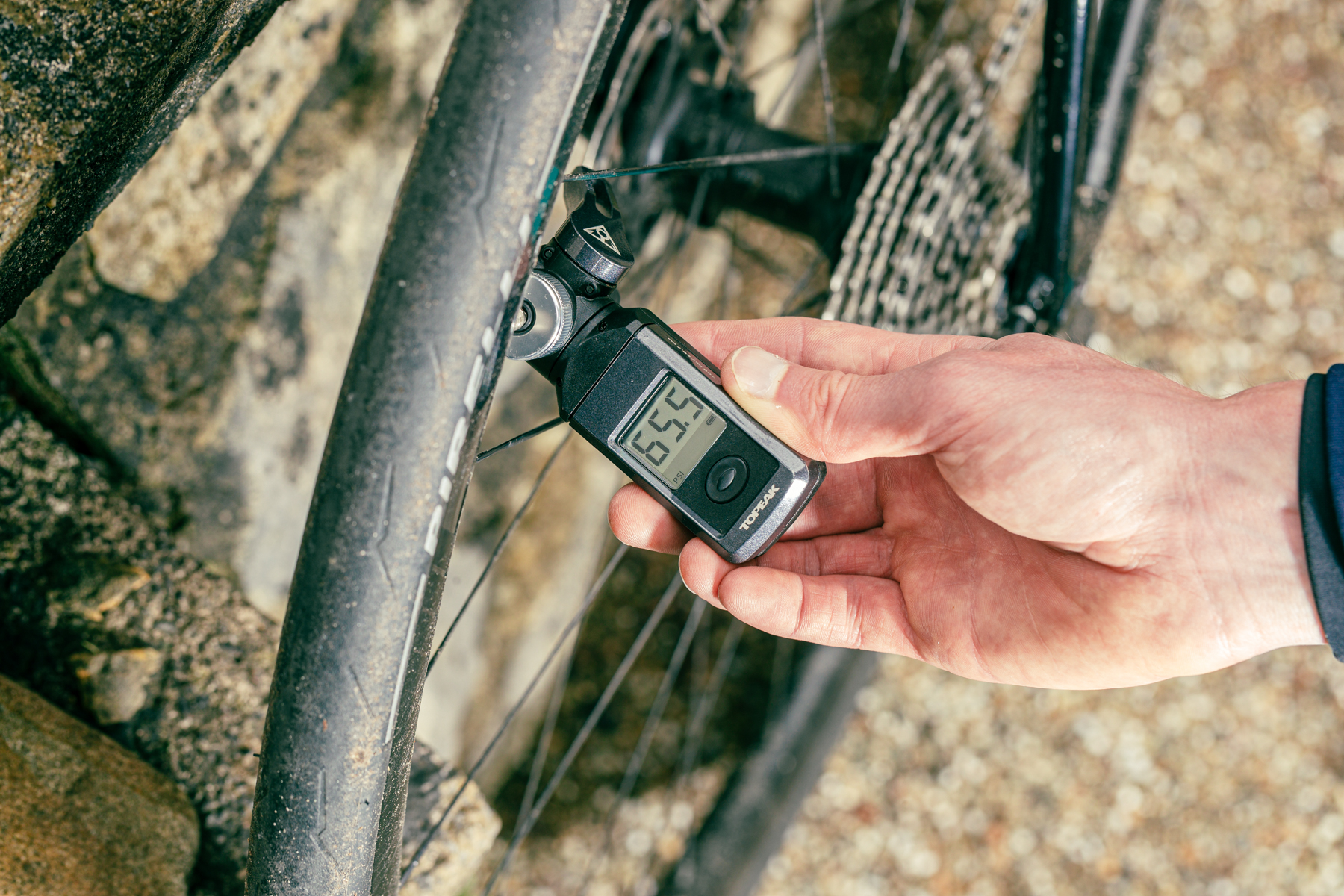
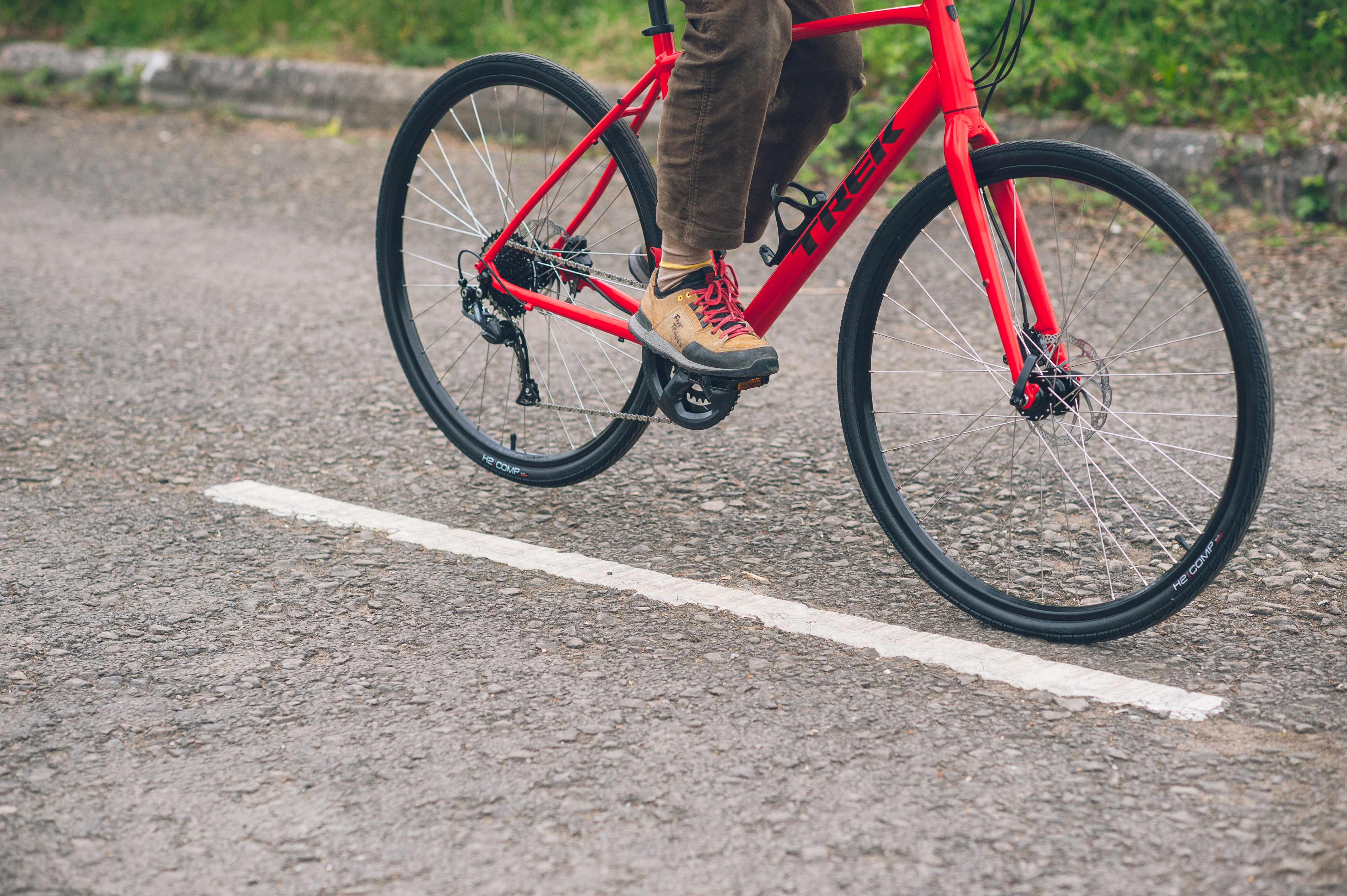
Reduced tyre pressure will create a bigger contact patch with the road for more grip. Russell Burton / Immediate Media
Unlike car tyres, cycle tyres are not prone to aquaplaning because of their narrower widths, so it’s not necessary to have a tread on your tyre when riding on tarmac.
You will need a tread for grip if you’re riding on loose, muddy surfaces in the wet though.
It’s a good idea to reduce your tyre pressure a little when riding wet roads because this will increase the size of the contact patch and the grip on offer.
Make sure your tyres aren’t worn down, because the extra debris on the road when it rains means you’re more likely to get a puncture.
9. Use the right chain lube
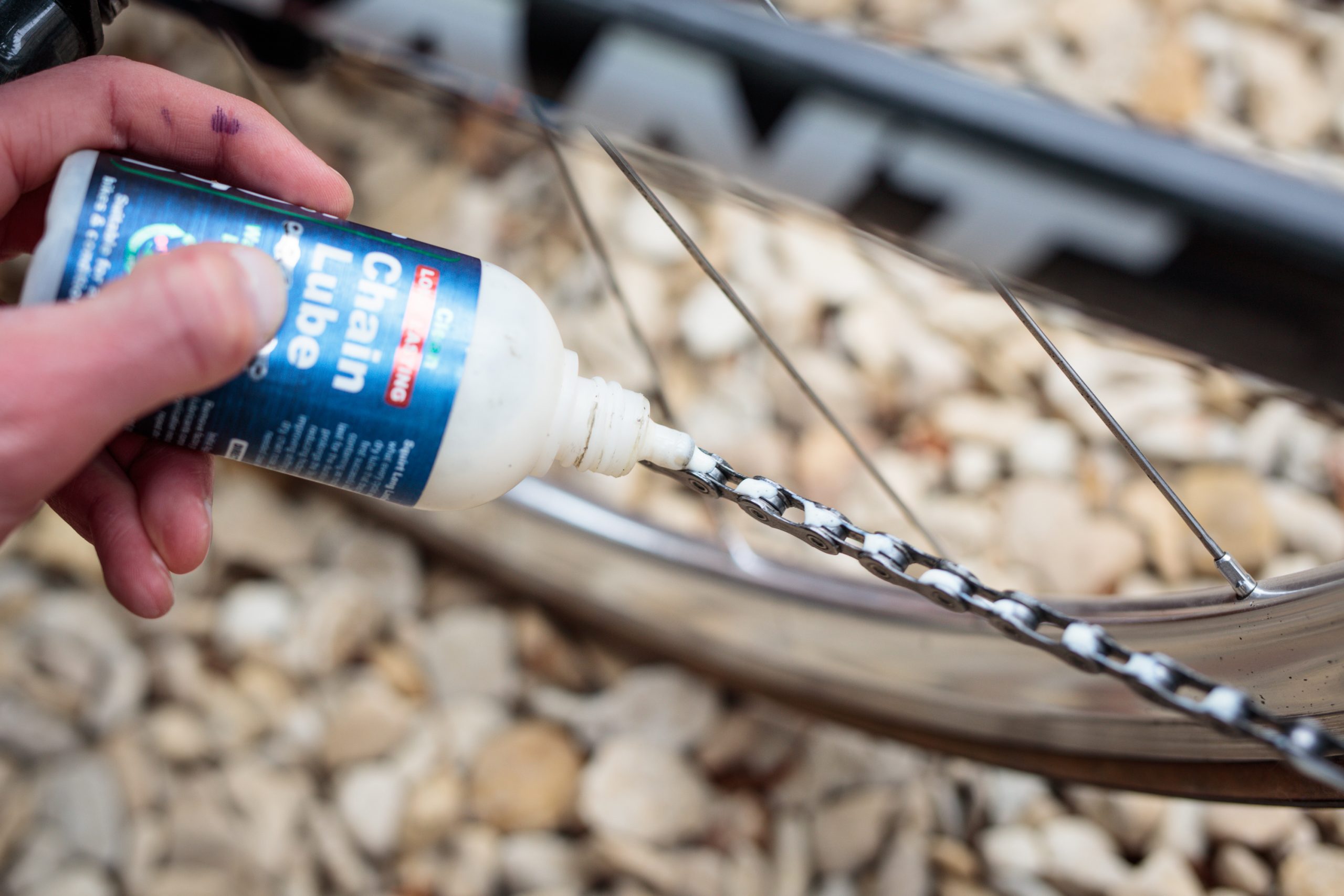
In the rain, wet lube will stay on your chain longer than dry lube. Simon von Bromley / Immediate Media
Use the right chain lube to avoid your drivetrain becoming exposed.
Your chain will be jet-washed by wheel spray as you ride in wet conditions. This can rapidly remove a dry lube.
A suitable wet lube will stay on your chain and protect it better if you are riding in the rain.
The downside is wet lubes tend to attract dirt, so you may need to clean your chain more often than if using a dry lube.
10. Keep your bike clean
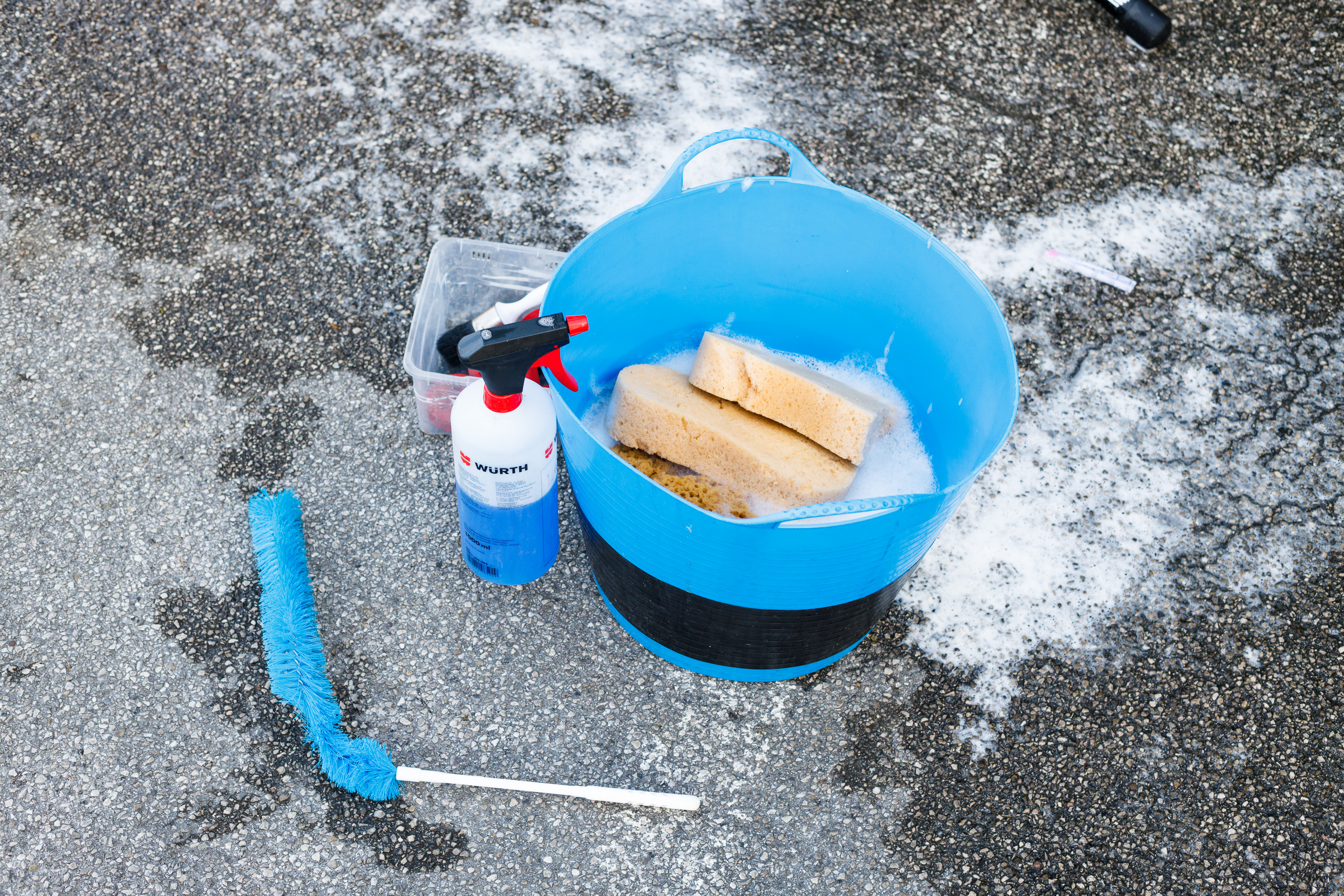
Cleaning your bike will keep it running better and for longer. Simon von Bromley / Our Media
Just like your chain, your whole bike will work more effectively if it’s kept clean, so give it a good wash when you’re back from a wet or muddy ride.
Bearings don’t like wet weather, so dry them and spray them with a water-displacing product such as WD40. The main areas to pay attention to are hubs, headsets and bottom brackets.
Any steel or chromed parts on your bike are also prone to rusting, so dry them off.
11. Keep your clothing clean as well
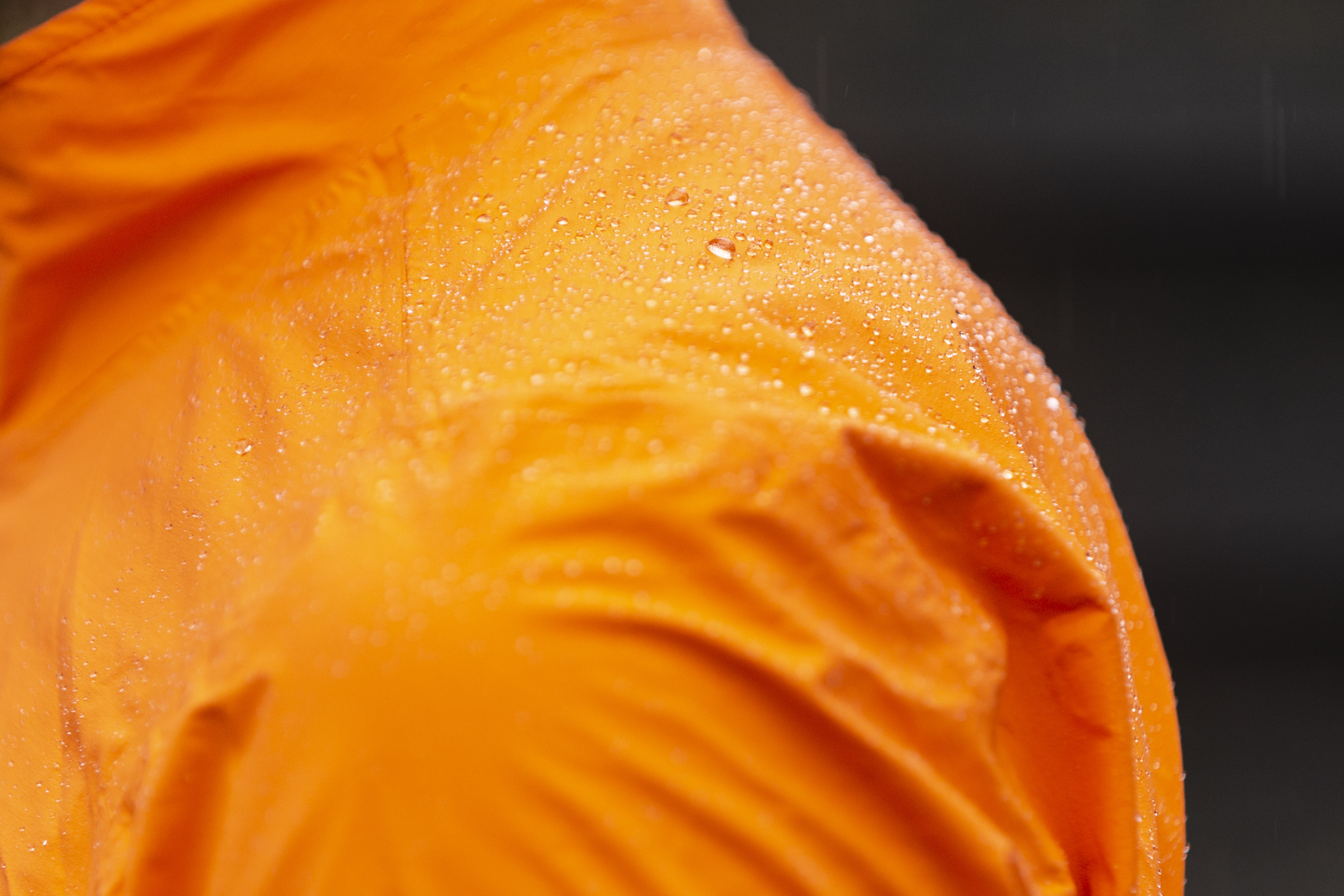
Durable water-repellent coatings should mean rain beads off your jacket. Paige O’Sullivan / Immediate Media
As well as your bike, it’s important to keep your clothing clean for it to be effective in the rain.
The breathable membrane in fabrics such as Gore-Tex needs to be kept free of oils, which you produce as you sweat, as well as picking up from the road, for it to be effective.
The surface of rainwear is typically treated with a durable water-repellent (DWR) product to repel water.
You should wash rain gear using specialist products to preserve the DWR coating and periodically reproof your waterproof cycling gear to keep it feeling as good as new.
12. Avoid riding through puddles
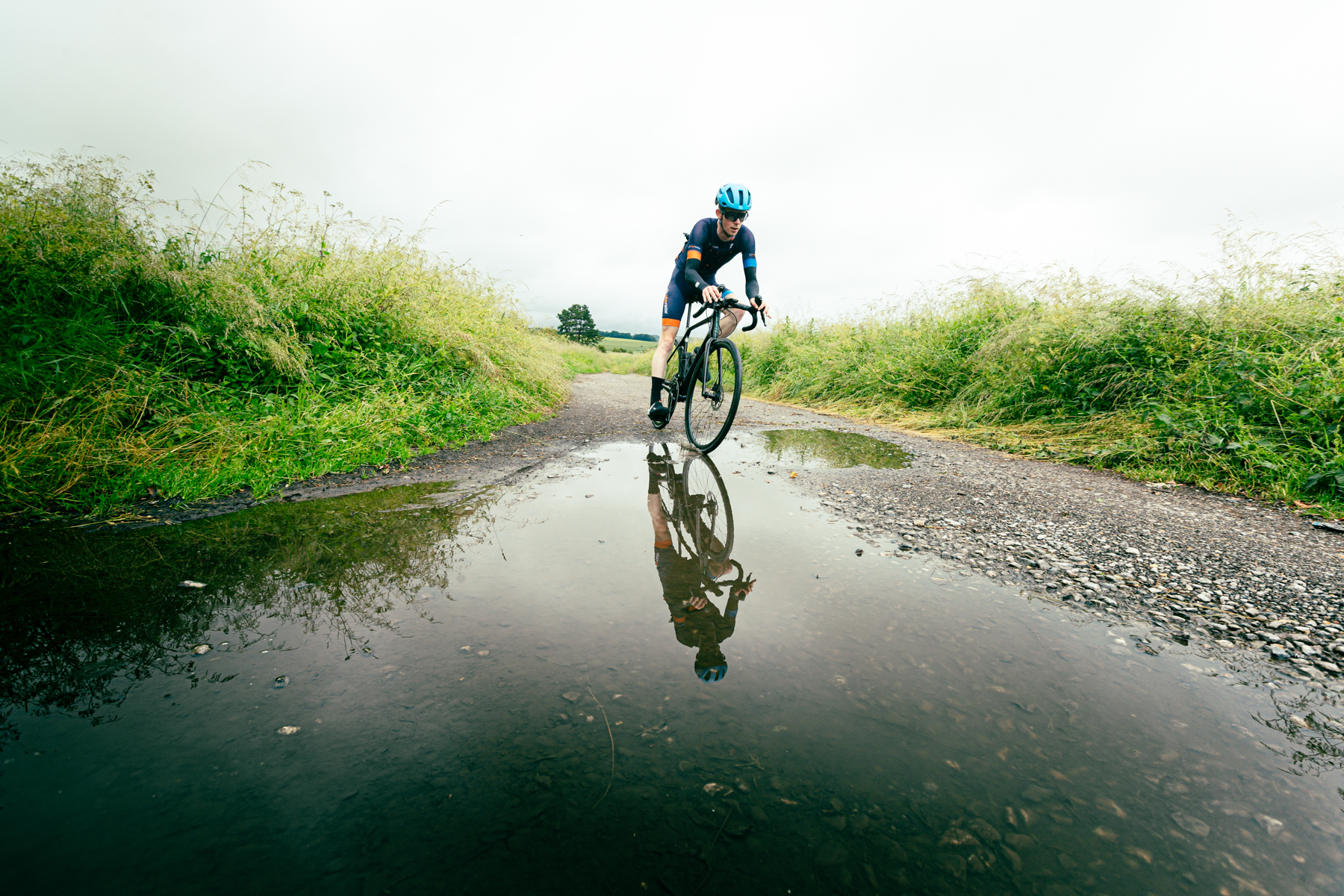
Avoid puddles, small and large. Russell Burton / Immediate Media
It goes without saying that you’ll stay drier if you try to avoid riding through standing water. Don’t be intimidated into riding right at the side of the road.
As a cyclist, under the Highway Code you have the right to use the whole of your lane, so if there’s a large puddle ahead, signal and move towards the centre of the lane to avoid it as much as possible.
It’s not just water in puddles that’s a danger. Often, they’ll accumulate mud and grit, so you risk skidding or a puncture.
A puddle may hide a pothole with an abrupt edge. Hit this and you may get a pinch flat, damage your wheels or even be thrown from your bike.
13. Steer clear of ironware
Manhole covers are a mean obstacle in the wet. iStock / Getty Images
It’s important to avoid ironware on the road.
Tyre grip on metal surfaces is significantly lower than on tarmac. Manhole covers are the main obstacle, but drains too can be slippery. Cattle grids are another obstacle to be taken carefully when wet.
If you do have to ride over a metal road feature, control your speed beforehand and don’t try to brake or turn as you pass over it to lower your risk of skidding.
14. Brake carefully
Braking distances will be longer in the wet than the dry. Wayne Reid / Our Media
Use your brakes judiciously in the rain. Stopping distances increase in wet conditions, so anticipate when you’ll need to brake and start braking earlier than you would in the dry.
This is particularly true of rim brake bikes, but it applies to bikes with disc brakes too.
In the wet, rim brakes have to cut through the film of water on your wheel rim before they start to bite, which can lead to a worrying delay before any braking happens. Disc brakes are better in this respect, but not immune to the problem.
Once your brakes start to work, they can lock up your wheel. Since adhesion between your tyre and the road surface is less in the wet, this can cause a skid.
Be particularly careful when cornering. Try to get all your braking done before you begin to turn, enabling your bike to freewheel through the corner.
When you get home, check your brakes for wear, because riding in the rain can increase the rate at which brake pads wear down. Also check wheel rims on rim brake bikes, because they can wear quickly in wet conditions.
15. Protect items you’re carrying
Choose a waterproof cycling bag to keep your belongings safe. Russell Burton / Immediate Media
If you’re carrying any items with you, whether on a commute or a leisure ride, they need to be kept dry too.
Many bike bags and cycling backpacks are made with waterproof materials, and include taped seams and a roll top to keep out water. Nevertheless, you may want to pack anything sensitive in a dry bag or sleeve inside.
Some saddle packs are not as well protected though and their contents may get wet. Multi-tools can rust, so if they’ve been on a wet ride, take them out of a saddle bag and dry them out.
Finally, don’t sit around in wet clothing. Get changed into something dry as soon as you can and sit back, pleased at having conquered the rain.
In Broken Spectre, you play as Casey Brewer, a headstrong woman who lost her father in mysterious circumstances when she was just nine years old. Now, decades later and with a child of her own, she returns to the mountain that supposedly claimed the life of the renowned biologist after receiving a cryptic call from him.
It’s a cosmic horror set-up that shares similar notes to games such as Night in the Woods, reminding us of how the mundane can hide truly unnerving and ethereal concerns. Marketed as being from one of the creators of The Blair Witch Project, it’s certainly got good genre pedigree. As someone initially unfamiliar with Broken Spectre’s original release, which launched in 2023 for last-gen headsets, I wasn’t sure what to expect.
Despite being confronted with a screen suggesting that the game is best played with hand tracking, I defaulted to my usual approach of being seated with controllers due to the low light in my home environment. This was a mistake. With regular, immersion-breaking pop-ups from controller inactivity telling me to play hands-free and the absence of smooth turning, I had a decidedly better time playing this when I stopped fighting the game’s design and did what the developer recommended.
The mountain is littered with relics from your past.
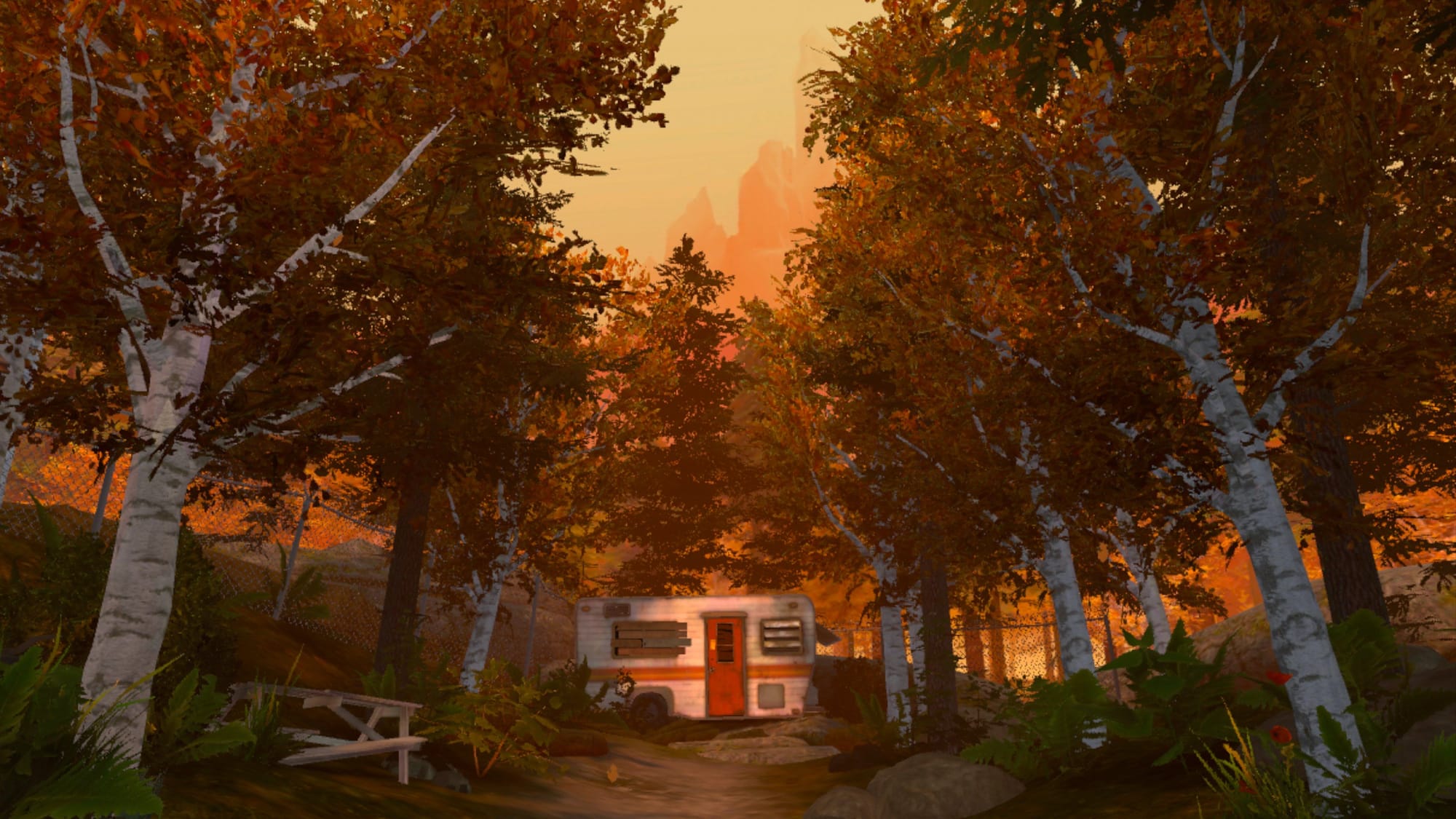
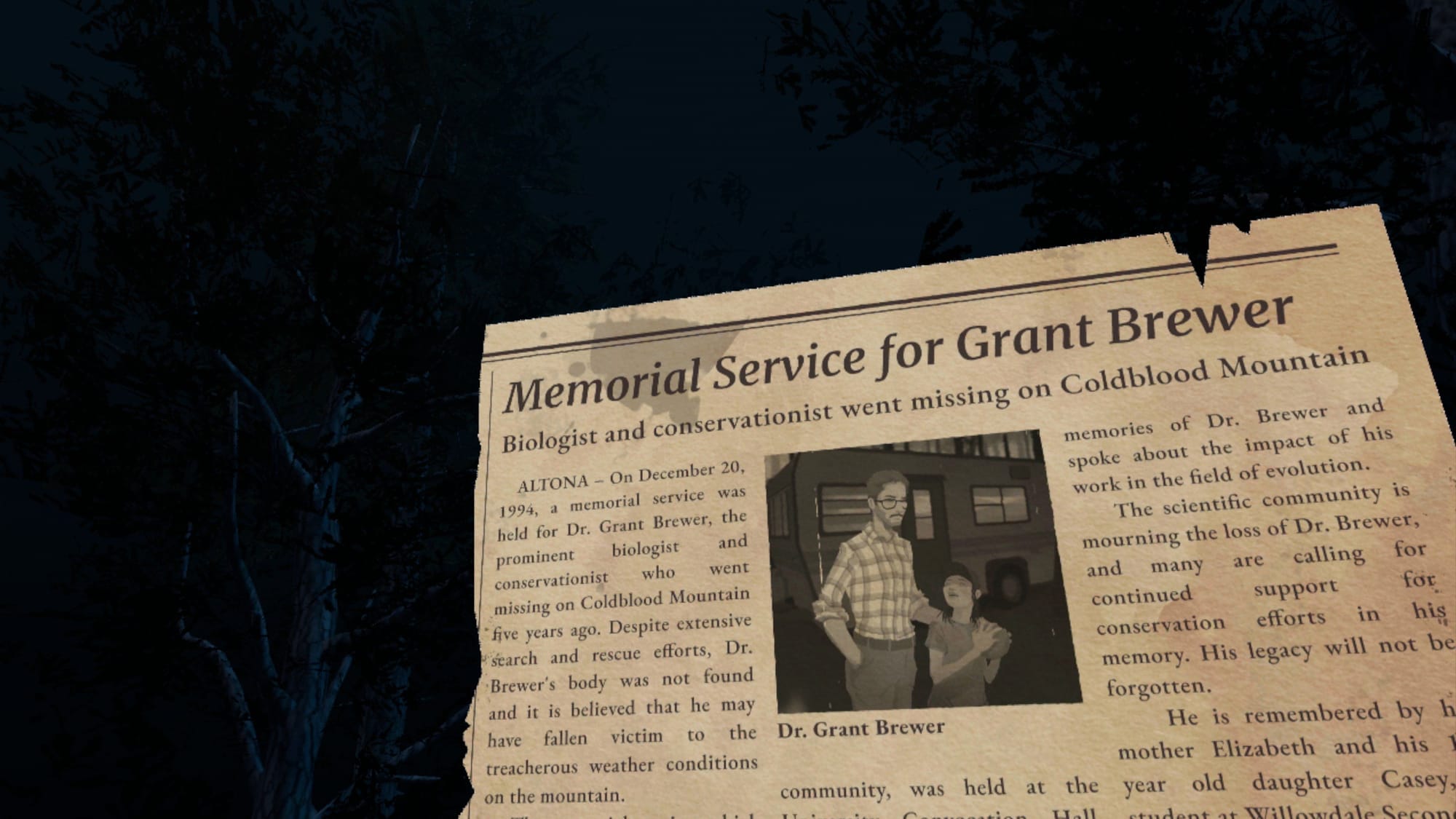
After an otherworldly introduction, moving through a dreamlike wood at night as story exposition is provided through an internal monologue and giant, superimposed newspaper clippings, you quickly find yourself on a crisp mountain trail during fall. From there, you move through the game using a point-to-point system – no free locomotion here.
Despite the remaster providing additional visual polish and better visual fidelity overall, the continued focus on snap turning and node-based movement is off-putting to someone who typically avoids these accessibility options, especially when moving through open environments. I would have personally hoped to see improvements in these areas in a remastered version.
Where Broken Spectre comes alive is in its more intimate scenes. Moving through an RV or log cabin, opening drawers to find keys to unlock a toolbox, or sifting through pieces of environmental storytelling that allude to the broader, shapeless threat beyond the confines of the room is genuinely enjoyable (even when photographs or evidence are placed just out of reach of the closest node). There’s some additional color to these environments, with a handful of appropriate jump scares thrown in for good measure.
Something has been influencing the mountain for generations.
Broken Spectre feels like a visual novel or point-and-click adventure adapted for VR, but I’m not sure if it gains much from the shift in medium in the time I’ve had with it so far. It falls within a strange participation middle ground where it’s not as passive as a flat-screen visual novel, but doesn’t allow you the freedom or level of interactivity I’ve come to expect from VR games in 2025. Despite the primary control method being hand tracking, it feels a little dated in its overall approach.
Just like its genre and flatscreen inspirations, the star of the show is the story. I’m intrigued enough to want to keep playing to learn more, despite some abrasion with the game’s design and how it continues to feed you the overall narrative. As a first impression to new players, the large newspaper clippings aren’t particularly fun to stand and read through when they could have been better served as something to find and pick up in the environment.
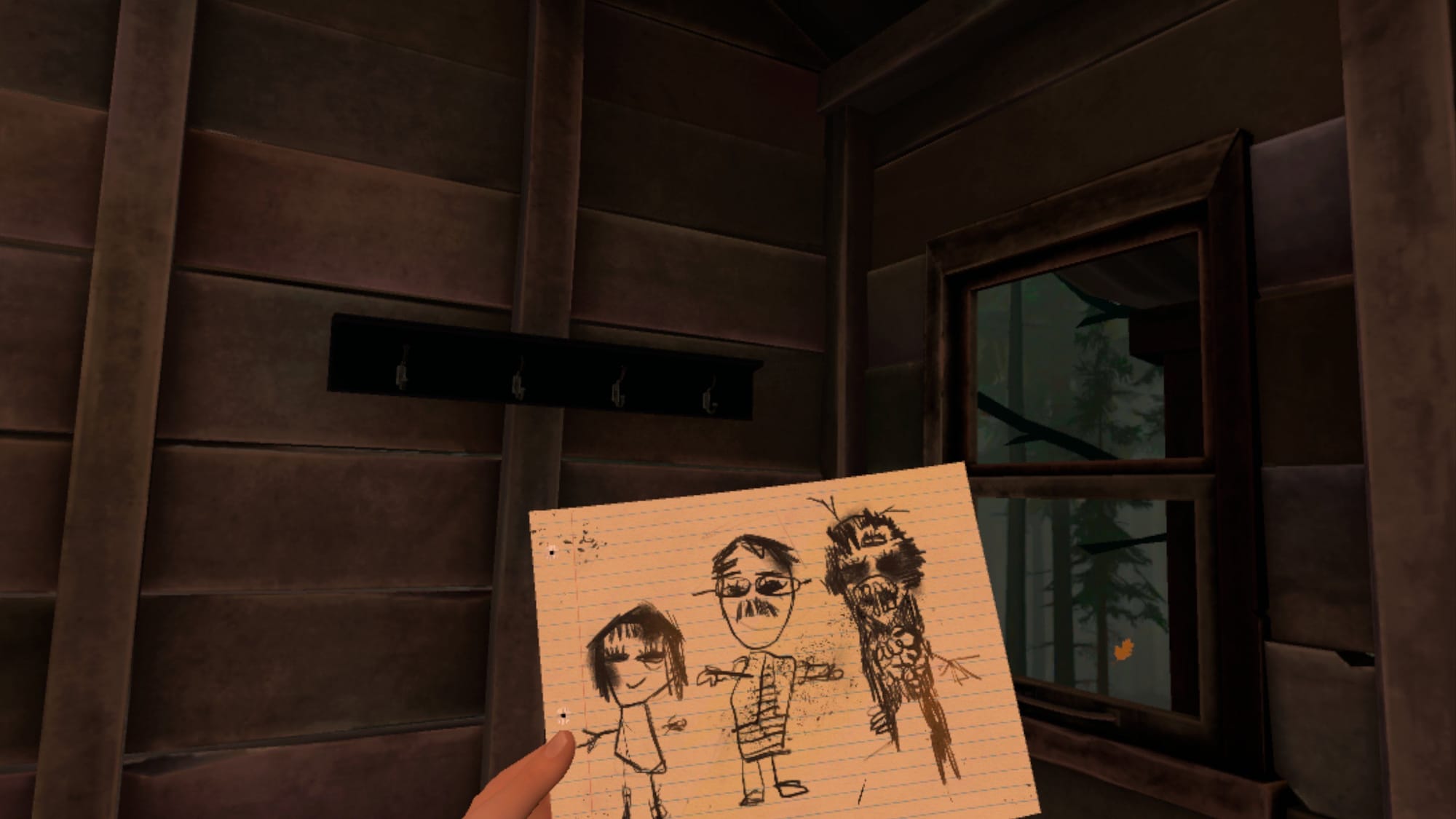
Mobile phones and the field guide hang in front of your face rather than being something you retrieve from your backpack and hold with any tactility. I much prefer the level of interaction and reward when Casey’s internal monologue adds color to an old photograph or children’s drawing that I’d found. Although being told rather than shown a story is commonplace for this genre outside of VR, I feel there’s an expectation around the level of active participation when a title is brought into VR. Broken Spectre just doesn’t quite reach me.
The initial, on-rails story exposition is mercifully short.
You can expect clear and welcome visual improvements if you’ve played it before, though Broken Spectre: Director’s Cut doesn’t include new playable content. With the story being the strongest aspect of this title, it would have been a very welcome addition. I’m intrigued to learn more about Casey and what mysteries the mountain holds beyond the early mention of wildlife mutations and the otherworldly overtone, that’s for sure.
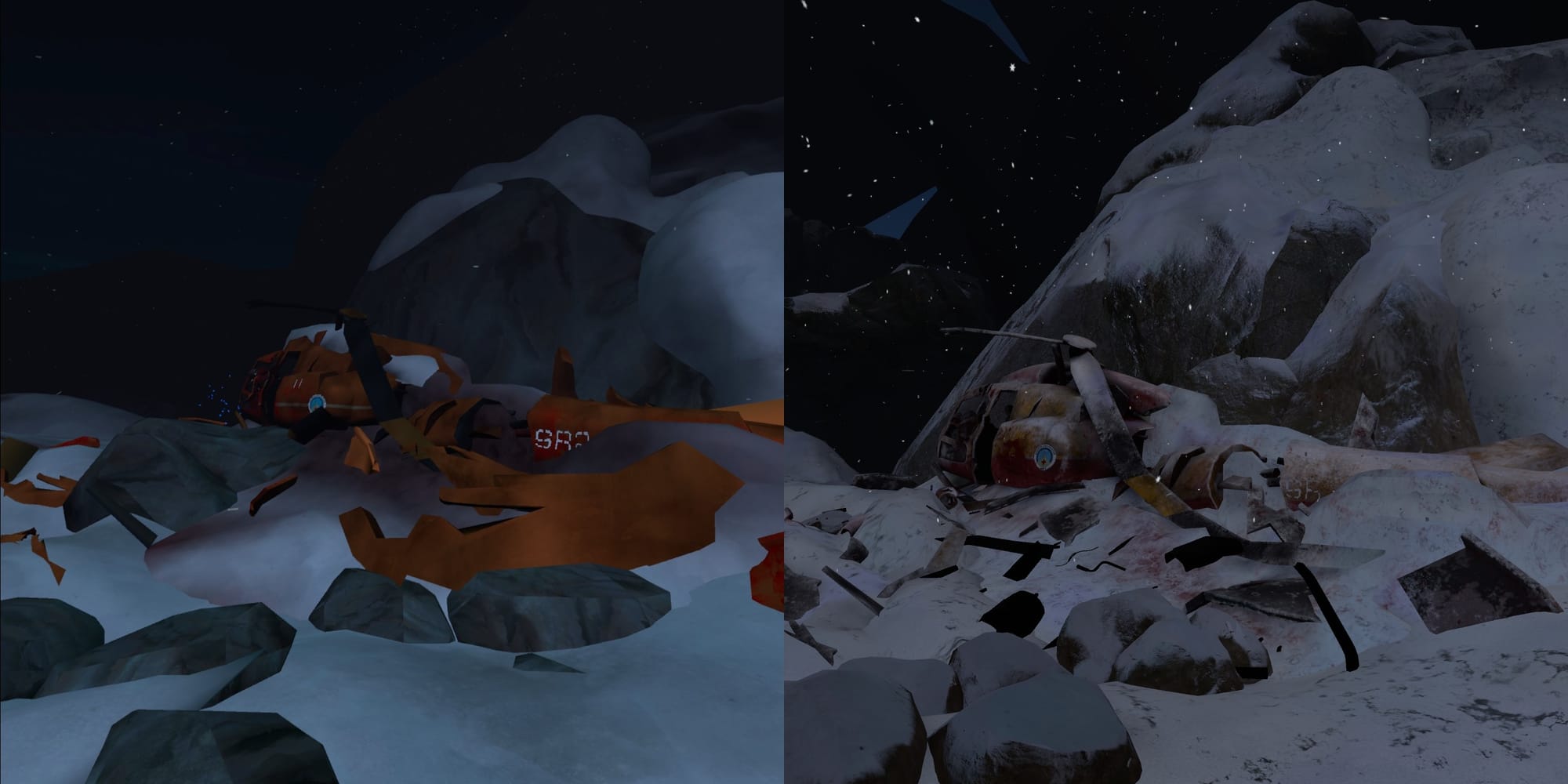
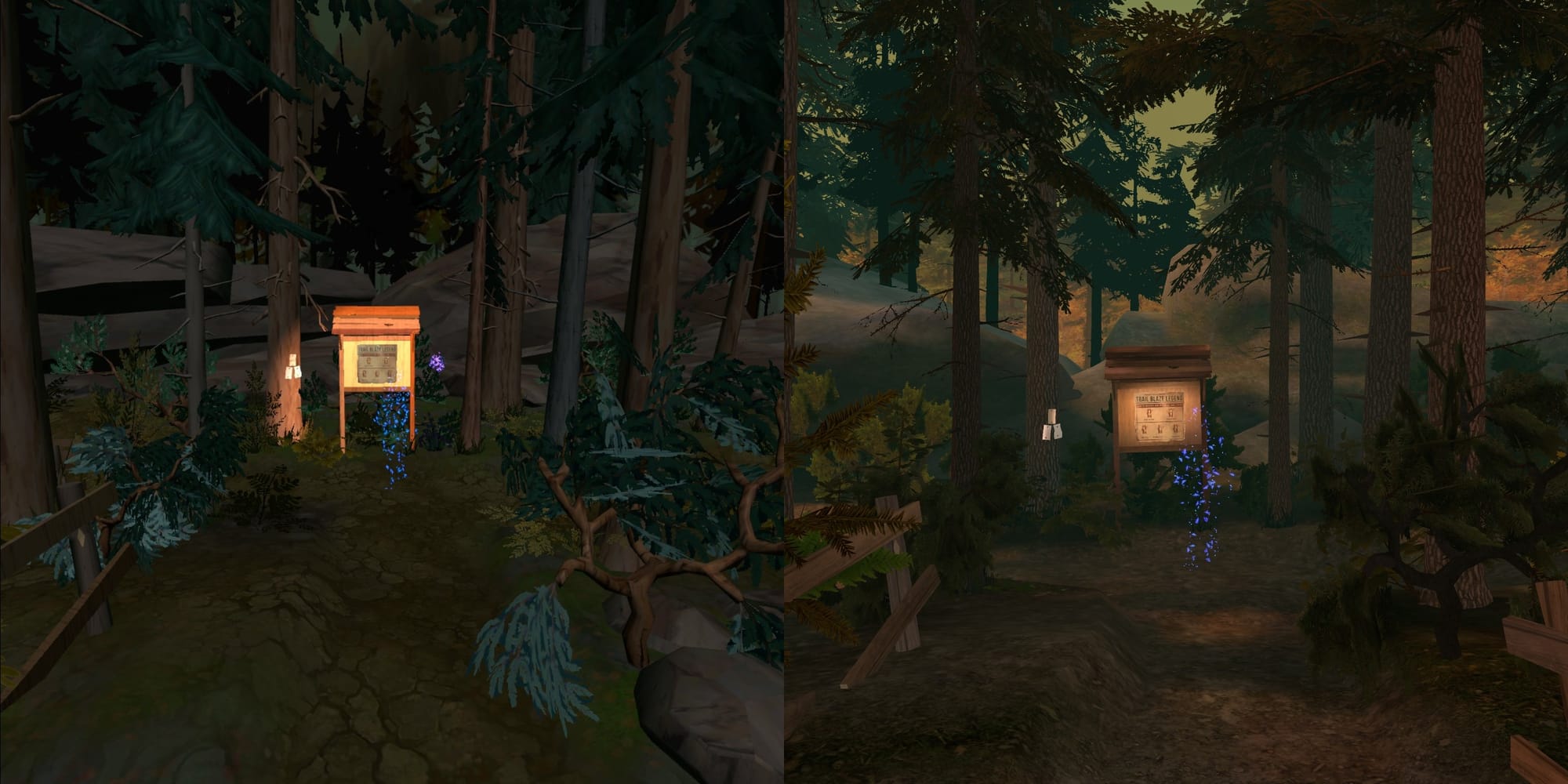
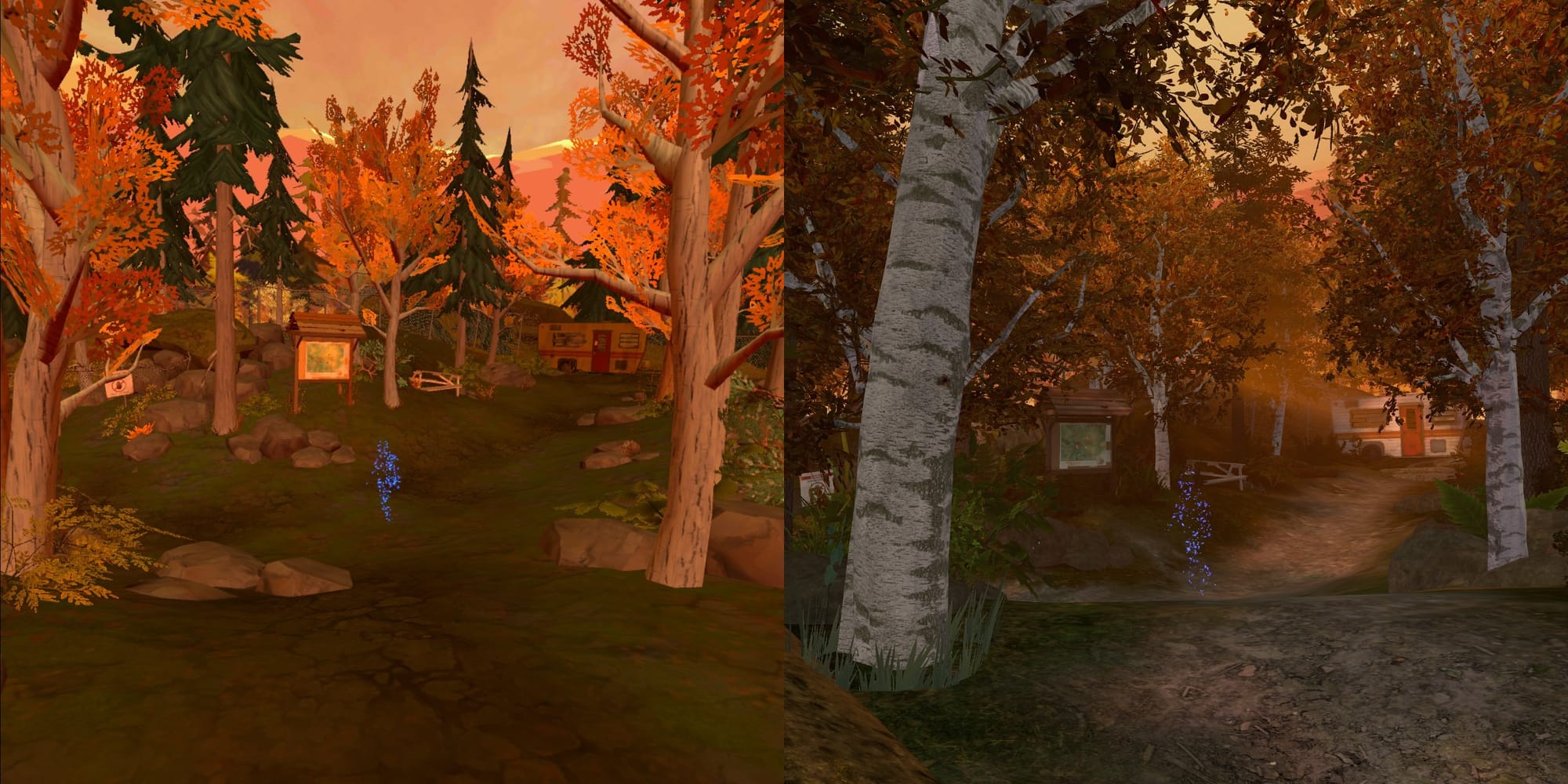
Broken Spectre: Director’s Cut is out now on Quest and Steam, and anyone who owns the game already can upgrade for free. You can see graphical comparison screenshots between the Director’s Cut and the original version below.
Portable chargers are great and all but, between a hefty weight and a tangle of cords, many are more of an annoyance than anything else. Anker’s Nano Power Bank has served as the solution to all that for me, with a charger built-in to a device that’s barely bigger than a lipstick.
Now our choice for best portable charger for Android is even more tempting, thanks to a 36 percent markdown. The Anker Nano Power Bank is down to $19 from $30 in the USB-C model. The discount is available in the classic Black or White and the more fun colors Ice Lake Blue, Lilac Purple and Sprout Green.
You can use Anker’s Nano Power Bank with devices such as the iPhone 15 and newer, Samsung S22 and S23 series, AirPods and the iPad Pro or Air. It’s good for a quick boost: we found that its 5,000mAh battery can charge a depleted Galaxy S23 Ultra to 65 percent in about an hour. It also has four indcator lights on it that show how much it’s charged.
This article originally appeared on Engadget at https://www.engadget.com/deals/one-of-our-favorite-anker-5k-power-banks-is-on-sale-for-less-than-20-145408130.html?src=rss
Amazon is reportedly moving towards an era of unprecedented automation that would put half a million jobs in the US at risk. According to a series of interviews and internal documents referenced in an extensive report from The New York Times, Amazon executives expect to sell twice as many products by 2033. But by scaling up its robotics operations believe it could avoid the 600,000 hires it would otherwise have to make to keep up with the demand.
According to the report, documents show that the ultimate aim of Amazon’s in-house robotics department is to automate 75 percent of all operations, and if it is successful in making 160,000 fewer hires by 2027, the company would reportedly save 30 cents on each item it packs and delivers to customers in the US. Amazon recently celebrated deploying its 1 millionth robot, a fleet it has been adding to since unveiling its first fully autonomous mobile robot in 2022.
Despite already pushing ahead with building warehouses that employ few humans, the NYT report claims that Amazon is planning for the eventual impact on affected communities and the potential backlash by participating in local events to establish a reputation as a “good corporate citizen.” The internal documents also discuss the avoidance of terms such as “automation” and “AI” in relation to robotics, suggesting instead that executives use terms like “advanced technology” instead. They even consider replacing using “cobot” instead of “robot” as the former implies a collaborative relationship with humans.
In a statement to the NYT, Amazon called the plans it cited incomplete and not reflective of its overall hiring strategy. It denied that its community efforts were related to its automation plans and said it’s not insisting that its executives refrain from using certain terms. The company added that it planned to hire 250,000 people for the imminent holiday season, but wouldn’t say how many of these would be permanent hires.
This article originally appeared on Engadget at https://www.engadget.com/big-tech/new-report-leaks-amazons-proposed-mass-automation-plans-144822790.html?src=rss
Back in May 2025, the European Parliament changed the status of wolves in the EU from “strictly protected” to “protected,” which opened the way for its member states to allow hunting under certain conditions, such as protecting livestock. One of the arguments behind this change was that the “tolerance of modern society towards wolves” led to the emergence of “fearless wolves” that are no longer afraid of people.
“Regulators made it clear though that there is no scientific evidence to back this up,” says Michael Clinchy, a zoologist at the Western University London, Canada. “So we did the first-of-its-kind study to find out if wolves have really lost their fear of humans. We proved there is no such thing as a fearless wolf.”
Red riding hood
The big bad wolf trope is found in plenty of our myths and fables, with Little Red Riding Hood being probably the most famous example. This mythical fear of wolves, combined with real damage to livestock, led to extensive hunting. By the mid-20th century, we’d pushed wolves to the verge of extinction in Western and Central Europe. Human-wolf encounters became very rare, and the big bad wolf myth faded away. But starting in the 1970s wolves became a protected species across Europe and North America, which caused wolf populations to bounce back and reoccupy some of their old habitats.