Apple dumps dating apps Tea and TeaOnHer from the App Store over privacy and moderation issues

Apple has removed dating apps Tea and TeaOnHer from the App Store for violating rules related to content moderation and user privacy. The company told TechCrunch that it pulled the apps as they broke several of its rules, including one mandating that apps can’t share or otherwise use an individual’s personal info without getting their permission first. 

Apple said they also violated a rule concerning user-generated content, which stipulates that apps need to allow for reporting offensive or concerning material, an option to block abusive users and the ability to filter “objectionable material from being posted.” In addition, Apple claimed the apps broke rules related to user reviews. It told TechCrunch they had an “excessive” volume of negative reviews and complaints from users, including ones related to minors’ personal details being shared. The company noted that it raised these issues’ with the apps’ developers, but they were not resolved.

As it stands, both apps are still available on Android through the Google Play Store. Tea (which is formally called Tea Dating Advice) enables women to post details about men they’ve met or dated. It allows them to post and comment on photos, look up public records on individuals, carry out reverse image searches, share their experiences and rate or review men. Users can, for instance, say whether they’d give a man a “green flag” or a “red flag.”

TeaOnHer flips that format on its head, with men sharing info about women. Both are pitched as dating safety apps, with Tea telling users they can “ask our anonymous community of women to make sure your date is safe, not a catfish and not in a relationship.”

Tea first emerged in 2023 and it went viral this year. In July, hackers breached the app and leaked tens of thousands of images, including around 3,000 selfies and photo IDs that users submitted to verify their accounts. The other images included posts, comments and private messages. A second hack exposed more than a million private messages.

Days after TeaOnHer went live in August (ripping off text from Tea’s App Store description in the process), it emerged that app had its own security issues. It was possible to view photo IDs and selfies that users had submitted for account verification, as well as their email addresses. 

This article originally appeared on Engadget at https://www.engadget.com/apps/apple-dumps-dating-apps-tea-and-teaonher-from-the-app-store-over-privacy-and-moderation-issues-191305457.html?src=rss

Is the iPhone 17 Pro’s ‘Colorgate’ Worth Worrying About?

If you’re looking to buy a new iPhone 17 this year, not only do you have a number of models to consider, you also have a number of colors to choose from. But some users who opted for the iPhone 17 Pro and 17 Pro Max are claiming that the color they picked isn’t the color they see today. According to these users, their iPhones have changed color over the short period of time they’ve owned them.

Obviously, the internet has dubbed the issue “colorgate.” Apple is no stranger to “gates,” of course, especially when it comes to the iPhone: There was “antennagate,” when the iPhone 4’s redesigned antennas reported caused cellular connection issues; “bendgate,” when the iPhone 6 Plus was prone to physically bending; and most recently, “scratchgate,” where the aluminum on the iPhone 17 Pro Max appeared susceptible to scratching easily.

Now, colorgate is here to further draw criticism to the 17 Pro and 17 Pro Max. Customers such as DakAttack316 on Reddit are claiming their Cosmic Orange iPhone 17 Pros are turning pink—or, if you want to give it an “Apple label,” rose gold. It’s tough not to see the reason this would bother people: Apple’s advertisements for the Cosmic Orange iPhones highlight a vibrant and striking orange. The iPhone in the photos from DakAttack316 looks more sunburnt than anything else. The wireless charging pad remains a somewhat bright orange, but the aluminum has taken on a salmon hue. The orange accents throughout the phone also seem to have been affected, with some looking faded or dirty. Maybe if the entire iPhone was all one pinkish hue, it wouldn’t look so bad, but the variety of colors visible in the photo make it look damaged.

DakAttack316’s might be among the most viral accounts of the issue, but they aren’t alone. Take this post for instance: The issue isn’t quite as pronounced, but you can clearly see how faded the orange metal is, especially when directly compared to another Cosmic Orange iPhone 17 Pro Max. Meanwhile, this viral TikTok shows some more selective discoloration on different elements of an iPhone 17 Pro.

It’s not clear what is causing these issues, or how many Cosmic Orange iPhone 17 Pros are affected. Some theories suggest that using the wrong type of solvent to clean your iPhone, such as bleach or hydrogen peroxide, could be causing or contributing to the discoloration, since Apple says these chemicals shouldn’t be used on iPhones. (Even if that isn’t the case, it’s always good practice to abstain from treating your devices with cleaning solutions unless the manufacturer has officially approved those chemicals.)

Should people stop buying the iPhone 17 Pro in Cosmic Orange?

No. We don’t know why this is happening yet, or how widespread the issue is, but if a statistically significant number of Cosmic Orange iPhones were having this issue, you’d likely be seeing a lot more complaints than you are at the moment—especially considering the iPhone 17 Pro and iPhone 17 Pro Max are selling better than expected.

Maybe these users were treating their iPhones with harsh chemical cleaners; perhaps a small number of Cosmic Orange iPhones have a manufacturing defect. Whatever the cause turns out to be, it doesn’t appear to be something afflicting the majority of the devices. Compare these two Reddit posts showing off pink Cosmic Orange iPhones, with this thread of users who are happy with their color choice. It’s all anecdotal evidence, of course, but for the moment, I’m just not seeing very many users complaining about sunburnt iPhones.

If you do buy a Cosmic Orange iPhone 17 Pro, and it does turn pink, take it to Apple or your carrier. So long as you didn’t clean it with bleach, the company will almost assuredly swap it out for you—hopefully for a device that won’t fade with age.

Google Fi Wireless Just Leveled-Up With AI Noise Filters, Faster Connectivity & More

Google Fi Wireless Just Leveled-Up With AI Noise Filters, Faster Connectivity & More
This week, Google is rolling out new features for its Google Fi wireless service—and while one has been requested for years, others are a surprise. The most surprising highlight of the Google Fi Wireless Feature Reveal for October 2025 (apparently the first in a series of Feature Reveals to come) is the addition of AI noise filtering for phone

M5 Apple Vision Pro Out Now, But M2 Model Can’t Be Traded In

The M5 Vision Pro is now shipping and available in Apple Stores, but the company confirmed that the M2 model can’t be traded in.

Apple announced and opened preorders for the headset last week. The company describes the chipset’s improved CPU as delivering “faster load times for apps and widgets and more responsive web browsing”, while the GPU renders at 10% higher resolution by default, supports 120Hz refresh rate “for reduced motion blur when users look at their physical surroundings”, and brings hardware-accelerated ray tracing and mesh shading.

Meanwhile, M5’s improved Neural Engine makes AI features like setting up your Persona or generating Spatial Scenes 50% faster, Apple says, and AI tasks in third-party apps up to 2x faster.

The new Vision Pro has a stated battery life of up to 2.5 hours of general use or 3 hours of video playback, 30 minutes longer than what Apple rated the original. Given that the battery is the same, this suggests Apple has configured the M5 chip for balanced efficiency, rather than maximum performance.

0:00

/0:20

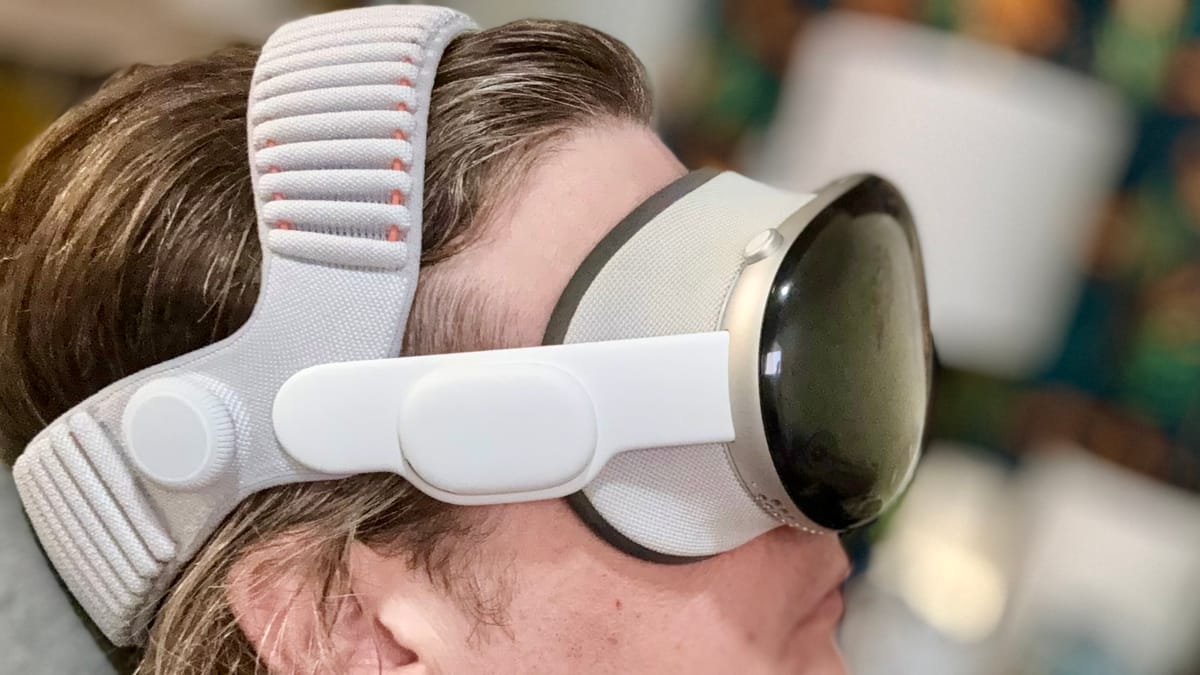
While the original Apple Vision Pro came with two straps in the box, the pre-attached stretchable 3D-knitted Solo Knit Band, without top support, and the optional more traditional Dual Loop Band with top support, the M5 Vision Pro comes with a single Dual Knit Band, combining the benefits of both.

The Dual Knit Band’s upper and lower strap sections are 3D-knitted as a single piece and are separately adjusted with the single dial, which pops out. It comes in small, medium, and large sizes, like the previous bands.

Apple Vision Pro Dual Knit Band First Impressions: Better Balance
Hands-on first impressions with the Dual Knit Band for Apple Vision Pro.
UploadVRIan Hamilton

The rear part of the band has embedded tungsten inserts, a material more than twice as dense as the stainless steel, providing a greater counterbalance to the weight of the headset itself. In fact, the Dual Knit Band is 150 grams heavier than the Solo Knit Band, Apple’s specs suggest.

The Dual Knit Band is also compatible with the original Apple Vision Pro as a $99 accessory, available now but currently backordered.

0:00

/0:10

Apple’s Dual Knit Band for Vision Pro headsets.

The M5 Apple Vision Pro is available now in the US, UK, Canada, Australia, Germany, France, Japan, Hong Kong, the UAE, Singapore, and China. It will be available in South Korea and Taiwan “later”.

The original Vision Pro was discontinued last week, and the new model is priced identically: $3500 for the 256GB storage option, $3700 for 512GB, or $3900 for 1TB.

As with the original Vision Pro, prescription inserts from ZEISS are priced at $150, and the official travel case is $200. It’s also compatible with the same accessories as the original, as it has the same physical design.

Today, Apple confirmed that the M2 Vision Pro is not eligible for trade-in, so existing owners hoping to upgrade will have to pay the full price, which they might offset by selling their headset on a marketplace like eBay.

Samsung Galaxy XR With Android XR Out Now For $1800, Controllers $250
Samsung Galaxy XR with Google’s Android XR is available now in the US & South Korea for $1800, and its controllers are $250 extra. Read the full specs and details here.
UploadVRDavid Heaney

The launch comes just hours after Samsung launched Galaxy XR, the first headset with Google’s new Android XR platform, at around half the price.

YouTube is adding a timer to Shorts so you don’t scroll the day away

YouTube is adding a timer to Shorts to help curb all of that incessant doomscrolling, according to a report by TechCrunch. This feature is rolling out to all users after being spotted in an Android APK file earlier this year, which was originally reported on by Android Authority.

Here’s how it works. Users set a daily time limit for Shorts via the app’s settings. Once reached, they’ll see a pop-up reminding them to take a break. This pop-up is easily dismissed with a tap, but it’s the thought that counts. At the very least, it’ll remind people of just how long they’ve been laying in bed and watching random Curb Your Enthusiasm clips.

This doesn’t currently integrate with parental controls, but that’s coming next year. At that point, parents or guardians will be able to set specific time limits on how long kids can scroll the Shorts feed. That pop-up will not be dismissible by children.

This isn’t the first move by YouTube to help improve digital well-being. There’s a way to set “take a break” reminders at various increments, and the same goes for a pop-up at bedtime.

Why the renewed focus on limiting user engagement? Well, there are nearly 2,000 lawsuits floating around right now directed toward social media companies, according to a report by Bloomberg Law. Many of these suits accuse the companies of intentionally designing their platforms to be addictive.

This article originally appeared on Engadget at https://www.engadget.com/apps/youtube-is-adding-a-timer-to-shorts-so-you-dont-scroll-the-day-away-185204383.html?src=rss

Apple’s Giant Folding iPad Suffers A Setback And May Top $3,000 At Retail

Apple's Giant Folding iPad Suffers A Setback And May Top $3,000 At Retail
Apple brought some excitement to this year’s lineup of iPhones with the introduction of the ultra slim iPhone Air. The company is reportedly hoping to do the same for its iPads with a foldable version of the device. However, Bloomberg’s Mark Gurman claims that the project is now delayed after hitting several stumbling blocks.

The project,

Apple and Google Face Enforced Changes Over UK Smartphone Dominance

Google and Apple face enforced changes to how they operate their mobile phone platforms, after the UK’s competition watchdog ruled the companies require tougher regulatory oversight. From a report: The Competition and Markets Authority has conferred “strategic market status” (SMS) on the tech firms after investigating their mobile operating systems, app stores and browsers. It means Apple and Google will be subjected to tailormade guidelines to regulate their behaviour in the mobile market.

The CMA said the two companies have “substantial, entrenched” market power, with UK mobile phone owners using either Google or Apple’s platforms and unlikely to switch between them. The regulator flagged the importance of their platforms to the UK economy and said they could be a bottleneck for businesses.

[…] Changes under consideration by the CMA include allowing users to be “steered” out of app stores to make purchases elsewhere, like on a company’s own website. App developers have long taken issue with Apple and Google taking a cut from purchases made via apps. The CMA also wants both companies to ensure users have a “genuine choice” over the services they use on their devices, like digital wallets on Apple.


Read more of this story at Slashdot.

Google says it made a breakthrough toward practical quantum computing

Enabled by the introduction of its Willow quantum chip last year, Google today claims it’s conducted breakthrough research that confirms it can create real-world applications for quantum computers. The company’s Quantum Echoes algorithm, detailed in a paper published in Nature, is a demonstration of “the first-ever verifiable quantum advantage running the out-of-order time correlator (OTOC) algorithm.”

A core belief in quantum computing is that developing computer systems with qubits — which can represent multiple states at once, as opposed to binary ones and zeroes — could lead to greater understanding of the quantum systems surrounding us. Google believes its new algorithm is further proof of that assumption. The Quantum Echoes algorithm is able to illustrate how different parts of a quantum system interact with each other, in a way that’s repeatable by other quantum computers and that “runs 13,000 times faster on Willow than the best classical algorithm on one of the world’s fastest supercomputers.”

The “echo” in Quantum Echoes comes from how Google’s algorithm interacts with a quantum system, in this case the Willow chip. “We send a carefully crafted signal into our quantum system (qubits on Willow chip), perturb one qubit, then precisely reverse the signal’s evolution to listen for the ‘echo’ that comes back,” the company explained in its announcement blog. That echo is magnified by the “constructive interference” of quantum waves, making the measurement Google is able to take extremely sensitive.

That sensitivity suggests quantum computers could be an important tool in modeling things like the interaction of particles or the structure of molecules. In a separate experiment with the University of California, Berkeley, Google tried to prove that by running the Quantum Echoes algorithm to study two different molecules, and comparing it to the Nuclear Magnetic Resonance (NMR) method currently used by scientists to understand chemical structure. The results from both systems matched, and Google says Quantum Echoes even “revealed information not usually available from NMR.”

In the longterm, a full-scale quantum computer could be used for everything from drug discovery to the development of new battery components. For now though, Google believes its Quantum Echoes research means real-world quantum computer applications could arrive within the next five years.

This article originally appeared on Engadget at https://www.engadget.com/science/google-says-it-made-a-breakthrough-toward-practical-quantum-computing-183502245.html?src=rss

The Beats Studio3 Are Just $89 Right Now

We may earn a commission from links on this page. Deal pricing and availability subject to change after time of publication.

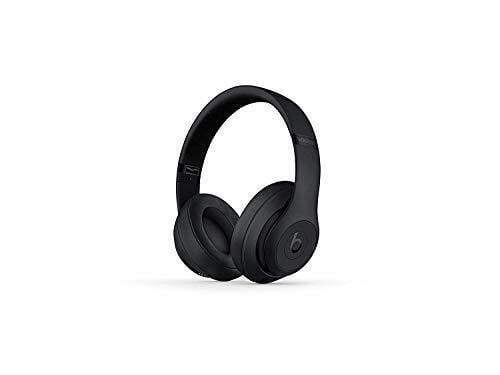
Beats’ Studio series has been around for years—their over-the-ear design, ANC, and more premium build and features set them apart from other Beats earphones. The Beats Studio3 are not the newest model (they came out in 2017) but they are still plenty good headphones in 2025, especially at their current price of $89 (originally $349.99).

I’ve had these headphones for a couple of years and I love them. The fit is snug, so you can wear them at the gym without worrying that they’ll slip off. They have active noise cancellation that you can turn on and off from the Beats companion app. They’re not going to be as good as the ANC you can find from the best headphones that came out this year, but for $89, they’re great. Like all Beats headphones, you’re going to get a rich, crisp sound signature with a focus on high-mid definition, according to PCMag’s review. Of course, you can adjust the playback in the EQ settings, too.

You get about 22 hours of audio playback with ANC on and 40 hours with it off, but you also have an AUX port (included in the box) in case you want to listen to music without Bluetooth and not depend on the battery. The Apple W1 chip means iOS users can connect to the headphones seamlessly. Keep in mind that since these are older headphones, they use a microUSB connection to charge, but a cord is included.

SpaceX disables 2,500 Starlink terminals allegedly used by Asian scam centers

SpaceX said it disabled over 2,500 Starlink terminals suspected of being used by scammers in Myanmar. Lauren Dreyer, vice president of Starlink business operations, described the action in an X post last night after reports that Myanmar’s military shut down a major scam operation.

“SpaceX complies with local laws in all 150+ markets where Starlink is licensed to operate,” Dreyer wrote. “SpaceX continually works to identify violations of our Acceptable Use Policy and applicable law… On the rare occasion we identify a violation, we take appropriate action, including working with law enforcement agencies around the world. In Myanmar, for example, SpaceX proactively identified and disabled over 2,500 Starlink Kits in the vicinity of suspected ‘scam centers.’”

Starlink is not licensed to operate in Myanmar. While Dreyer didn’t say how the terminals were disabled, it’s known that Starlink can disable individual terminals based on their ID numbers or use geofencing to block areas from receiving signals.

Read full article

Comments

Samsung Galaxy XR is the first Android XR headset, now on sale for $1,800

The era of Android virtual reality is here… again. Google’s first two attempts at making Android fit for your face didn’t work out, but the AI era and a partnership with Samsung have enabled a third attempt, and maybe the third time’s the charm. Samsung has unveiled the Galaxy XR headset, the first and currently only device running Google’s new Android XR platform. It’s available for pre-order today, but it will not come cheap. The headset, which doesn’t come with controllers, retails for $1,800.

Galaxy XR is a fully enclosed headset with passthrough video. It looks similar to the Apple Vision Pro, right down to the battery pack at the end of a cable. It packs solid hardware, including 16GB of RAM, 256GB of storage, and a Snapdragon XR2+ Gen 2 processor. That’s a slightly newer version of the chip powering Meta’s Quest 3 headset, featuring six CPU cores and an Adreno GPU that supports up to dual 4.3K displays.

The new headset has a pair of 3,552 x 3,840 Micro-OLED displays with a 109-degree field of view. That’s marginally more pixels than the Vision Pro and almost three times as many as the Quest 3. The displays can refresh at up to 90Hz, but the default is 72Hz to save power.

Read full article

Comments

Google Gemini will arrive in GM cars starting next year

Google Gemini is coming to GM vehicles in 2026. The company will be integrating a conversational AI assistant powered by Google’s platform into many of its cars, trucks and SUVs.

GM says this assistant will be able to access vehicle data to suss out maintenance concerns, alerting the driver when necessary. The company also promises it’ll be able to help plan routes and explain various features of the car. It should also be able to do stuff like turn on the heat or air conditioning, even before entering the vehicle.

This will replace the “Google built-in” operating system that already exists in many GM vehicles. This OS already offers access to stuff like Google Maps, Google Assistant and related apps. The upcoming Gemini-based chat assistant will do the same type of things, but it should perform better.

“One of the challenges with current voice assistants is that, if you’ve used the, you’ve probably also been frustrated by them because they’re trained on certain code words or they don’t understand accents very well or if you don’t say it quite right, you don’t get the right response,” GM VP Dave Richardson told TechCrunch. “What’s great about large language models is they don’t seem to be affected by that.”

One brand-new feature that Gemini will bring to the table is web integration. This will let drivers ask the chatbot questions pertaining to geographic location and the like. GM gives an example of someone asking about the history of a bridge they are passing over.

The Gemini assistant will be available via the Play Store after launch as an over-the-air upgrade to Onstar-equipped vehicles. It won’t be limited to newer releases, as GM says it’ll work with vehicles from the model year 2015 and above. The company also says it’s working on its own AI chatbot that has been “custom-built for your vehicle.” There’s no timetable on that one. 

GM ran into hot water recently when it was found that it had been selling some customer information sourced from its OnStar Smart Driver program to insurance companies without user consent. This led to the FTC banning the company from selling any driver data for five years. Richardson says the Gemini integration will be privacy-focused and the software will let drivers control what information it can access and use.

The tech in action... sort of.
GM

The company made these announcements at the GM Forward media event, where it also discussed other forthcoming initiatives. It has scheduled a rollout of its self-driving platform for 2028. It’s also developing its own computing platform, also launching in 2028. This does mean that GM will be sunsetting integration with Apple CarPlay and Android Auto. This software will be phased out over the next few years. 

This article originally appeared on Engadget at https://www.engadget.com/transportation/google-gemini-will-arrive-in-gm-cars-starting-next-year-181249237.html?src=rss

Reddit Sues Perplexity For Scraping Data To Train AI System

An anonymous reader shares a report: Social media platform Reddit sued AI startup Perplexity in New York federal court on Wednesday, accusing it and three other companies of unlawfully scraping its data to train Perplexity’s AI-based search engine. Reddit said in the complaint that the data-scraping companies circumvented its data protection measures in order to steal data that Perplexity “desperately needs” to power its “answer engine” system.


Read more of this story at Slashdot.

If You Hate Running, Try ‘Rucking’

We may earn a commission from links on this page.

Do you love the idea of running—getting outdoors, burning calories, building cardio fitness—but you wish you could do it without, you know, running? Try walking with a weighted pack instead, an activity that’s become known as “rucking.” Some fitness watches even support tracking your pack weight alongside your mileage.

What is rucking?

Rucking means walking or hiking with a weighted pack. It’s the fitness version of what they do in the military: marching long distances while carrying supplies in a rucksack. (Rucksack, rucking, get it?) 

When you ruck as part of a fitness routine, you probably won’t carry hiking or military supplies—especially if you’re just going for a short ruck around your neighborhood. Instead, your pack will hold weights, or you might just use a weighted vest. 

What are the benefits of rucking? 

Like running or other cardio, rucking is a form of steady-state cardio. It gets your heart rate up for an extended period of time, so it’s great for your cardio fitness. It also burns plenty of calories, so it can be useful in maintaining or managing your weight. 

 Why not just walk, without the weight? Once you’ve achieved a basic level of fitness, walking is a very low-intensity exercise. If you already walk, and you’re ready for more of a challenge, your next best options are walking faster, walking uphill, or walking with added weight. Rucking is that last one—but you can combine all of these factors when you ruck. 

Can I use a regular backpack for rucking? 

Yes, but people who really get into rucking will often buy special packs or use a weighted vest. If you already have a backpack you can use, do your first few rucks with that, just to see if you actually like rucking. 

You’ll notice pretty quickly that a loose dumbbell in a backpack is uncomfortable. The quickest way to get started is to buy a bag of play sand (typically under $10 for 50 pounds) and use a portion of that, in a bag that’s taped shut, as your first rucking weight. It won’t have any hard edges to poke you, and you can add more sand to the pack as you get stronger. 

If you do choose to use weights from your home gym, consider wrapping them in a towel for cushioning. Weight plates are likely to be easier to work with than dumbbells or kettlebells. Whatever you use, try to keep it as high as possible on your back, and snugged up against your body. Straps or bungee cords can help to keep your pack from flopping around.

What equipment should I get for rucking? 

First, before we talk about packs or vests, make sure you’re wearing appropriate shoes. You may want sturdy boots, like hiking boots, instead of running shoes. The exact model and fit are up to you. 

When it comes to the pack, consider whether you want a pack that can carry useful items (great if you are hiking or backpacking, or going on very long rucks) or if you just want to add some weight in the simplest way possible. 

If you’ll mainly be rucking with light to medium weights for short distances, consider a weighted vest. (These are also great if you like to do weighted pushups or other exercises. Your CrossFit friends all have one for Murph.) There are fitness-focused weighted vests that have pockets for small pouches of weight. This one from CAP is available in a 20-pound version, but there are also options that go up to 80 pounds. You can add or remove weights as needed, so buy the heaviest vest you think you’ll actually use.

Another option for weighted vests is the type that loads with a thin rectangular(ish) plate, like this from Wolf Tactical. These are more expensive, but tend to be more customizable for heavy weights, and they bill themselves as being higher quality. 

If you’ll be rucking long distances and carrying supplies, go for an actual pack. There’s an older style of military pack called the ALICE, which you can sometimes find sold cheaply as surplus. They’re not particularly comfortable, or so I’ve heard. Molle style packs are the more modern equivalent. There’s no need to stick to the military aesthetic, though. If you plan to do a lot of backpacking and camping, head to your local outdoors store and try on hikers’ packs.

When you’re carrying a real pack, you can fill it with snacks and water, plus your first aid kit and survival essentials. Just about every good pack is set up to take a hydration bladder, which lets you keep several liters of water on your back and sip from it through a flexible straw without having to stop and unzip your pack. 

When it comes to tracking your rucking sessions, any watch that can track walking or hiking will do the basics. (You also don’t need to track anything digitally—this is purely optional.) That said, these watches have some features that are handy. Something like the Garmin Instinct 3 Solar is pretty much a rucker’s dream. Not only can it log your pack weight in addition to distance and speed, it also has a flashlight and solar charging. Those will come in handy on the hiking and camping trips you’ll probably do once you realize how much fun you have walking around with a pack on your back.

How much weight should I use for rucking? 

As a beginner, 10 pounds may be plenty. See if you can keep up a strong pace with that weight, and if so, consider adding weight. Most people will use between 10 and 50 pounds for rucking, depending on body size and fitness. 

There is a rule of thumb in the military that soldiers shouldn’t be asked to routinely carry more than about ⅓ of their bodyweight. This isn’t a hard-and-fast rule, and you certainly don’t have to follow military rules in your personal fitness journey, but it may be helpful as a guideline for knowing how much is too much. 

As with anything else in exercise, you’ll want to start easy, make sure your body can handle what you’re asking of it, and increase gradually. Every couple of weeks, consider whether your rucking weight is still appropriate and adjust it if not. This may mean going heavier as you get stronger, but it could also mean lowering the weight if you had a hard time keeping up when carrying heavier loads.

How fast should I walk when I’m rucking?

In the military, a 15-minute mile is considered a good pace. Most people walk at about a 20-minute mile pace, so a 15-minute mile is a good bit faster. And you’re doing it with a weighted pack! Again, see this as a goal, and work up to it over time if you aren’t ready to work at this pace just yet. 

How often and how far should I ruck? 

You can approach this like any cardio exercise, starting with whatever amount you can comfortably do right now, and increasing as long as you feel good and have the time to do it. 

If you don’t currently do any cardio, two to three times per week for 20 to 30 minutes is a good place to start (or to work up to, if that is more than you’re ready for at first). If you already run, bike, or use the cardio machines at the gym, swap one or two of your weekly sessions for a ruck. 

Once you’re in the habit of it, you can ruck pretty much any amount you want. Rucking counts as vigorous cardio, meaning 75 minutes per week meets the bare minimum exercise guidelines, 150 minutes is a good amount for an active person, and more is great if you’re up for it. Consider rucking three to five times per week, for 30 minutes or more each time, with one of those sessions being a longer one, an hour or more. That last one is perhaps best done as a weekend hike with friends. Tell them you’ll bring the snacks—you have plenty of room in your pack.


AWS outage reminds us why $2,449 Internet-dependent beds are a bad idea

This week’s Amazon Web Services outage had some people waking up on the wrong side of the bed.

A Domain Name System (DNS) resolution problem affected AWS cloud hosting, resulting in an outage that impacted more than 1,000 web-based products and services and millions of people.

Perhaps one of the most avoidable breakdowns came via people’s beds. The reliance on the Internet for smart bed products from Eight Sleep resulted in people being awoken by beds locked into inclined positions and sweltering temperatures.

Read full article

Comments

ASUS Launches Black Ops 7 Themed Radeon RX 9070 XT For Diehard Call Of Duty Fans

ASUS Launches Black Ops 7 Themed Radeon RX 9070 XT For Diehard Call Of Duty Fans
Black Ops 7 is just around the corner, and PC fans looking to upgrade their GPU in time for the game may be interested to know that ASUS will be offering a limited edition run of 1000 Call of Duty-branded AMD Radeon RX 9070 XTs. The AMD Radeon RX 9070 XT is the company’s current flagship consumer GPU that contends with the likes of NVIDIA

Quest 3S Is On Sale For $250 Again From Meta

Quest 3S is on sale today on Meta’s online store.

The 128GB base model is available for $250, a $50 saving, while the 256GB storage model is down to $330, a larger $70 discount.

Meta confirmed that both offerings include Batman: Arkham Shadow and 3 months of the Horizon+ games subscription, the content normally bundled with Quest 3S.

Quest 3 or Quest 3S?

Wondering whether you should opt for a Quest 3 or a Quest 3S?

Quest 3S is Meta’s budget headset option. It has all the same VR and mixed reality capabilities of Quest 3, and has the same chipset and RAM inside, but it uses older, lower-quality fresnel lenses that aren’t fully adjustable, so may not be suitable for everyone’s eyes.

Quest 3, on the other hand, uses Meta’s advanced pancake lenses. They’re clearer, sharper, wider, and fully horizontally adjustable, suitable for everyone’s eyes. These pancake lenses also enable Quest 3 to be thinner, which makes the headset feel less heavy.

Quest 3 also has 512GB storage, whereas Quest 3S is only available in 128GB or 256GB.

If you have the funds, you should always pick Quest 3. But if you don’t, Quest 3S can still run all the same content.

This marks the fourth time we’ve seen the headset so heavily discounted since it launched one year ago.

Technically, the deepest value offer we’ve seen yet for Quest 3S was on Black Friday, when Amazon and Target offered $75 gift cards with the headset, effectively pricing it at $225.

But $250 remains the lowest outright price, and while we always recommend grabbing the higher-end Quest 3 if you can afford it, due to its much clearer and sharper pancake lenses, $250 is an incredible price for a fully standalone headset with included tracked controllers, hand tracking, color mixed reality, and upper body tracking. After all, Apple and Samsung charge $250 for just the controllers for their headsets.

And as a reminder, Quest 3S can run all the same content as Quest 3.

You can grab the Quest 3S discount on the online Meta Store.

My Favorite Amazon Deal of the Day: These Soundcore Sleep A30 Earbuds

We may earn a commission from links on this page. Deal pricing and availability subject to change after time of publication.

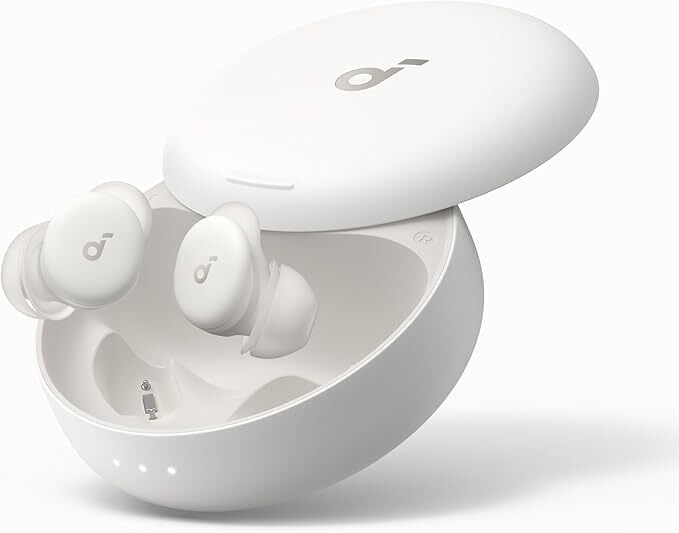
I’ve been a fan of Soundcore’s Sleep A20 earbuds since I first put them on to go to sleep over a year ago. I’ve never experienced earbuds that feel so comfortable when sleeping on your side. But that model was missing one crucial feature: ANC. The new Sleep A30 earbuds have taken care of that, and more—and despite their recent release this past August, they’re already discounted. Right now, you can get them for $193.99 (originally $229.99), the lowest price ever, according to price tracking tools.

The Sleep A30 are the most popular and arguably the best sleeping earbuds you can buy right now, as noted in Mashable’s review. They’re designed for sleep in every way: Side sleepers can doze off without feeling pressure in their ears, since the earbuds sit comfortably inside, and with the addition of ANC, you can now actively block more outside noise than before.

The battery life isn’t the best, but it will get you through the night: You get 9 hours of playback when listening to white noise, 6.5 hours listening to music via Bluetooth, and 45 hours of extra juice from the case. The companion app lets you set a timer for your music, so you don’t use up all your battery after you’ve fallen asleep. There’s also a feature that blocks snoring sounds using microphones in the case, which is a lifesaver if you sleep in the same room as a noisy partner. And if you’re worried about not hearing your alarm, you can set one in the app, which also includes a handful of features that measure your sleep quality. All in all, I really can’t recommend these earbuds enough to anyone who values quality sleep and likes to wear earbuds to bed.


Our Best Editor-Vetted Tech Deals Right Now


Apple AirPods 4 Wireless Earbuds


—
$114.80

(List Price $129.00)


Amazon Fire TV Stick 4K (2nd Gen, 2023)


—
$29.99

(List Price $49.99)

Deals are selected by our commerce team