Dropbox is integrating some of Dash’s AI features into its main app, giving its users access to a smarter search function, summaries and contextual answers from the files they’ve uploaded to the app. The company launched Dash back in 2023 as an “AI-powered universal search bar” that people can use to find information in their work-related apps like Slack, Canva, Google Workspace and Microsoft Outlook. However, it’s primarily a tool for larger businesses that use Dropbox. This time, though, the company is bringing its search capabilities into the main app for everyone to use.
For now, the Dash AI-powered capabilities in the Dropbox app are only available to a small group of users, but they will be widely available in the coming months. Like most other AI chatbots, the AI in the app will allow users to use natural language to describe what they’re looking for, whether it’s a PDF or a photo. They can also ask the AI to summarize or find what’s new in specific files already in their account. Dropbox is working with a startup called Mobius Labs, as well, to give Dash AI the capabilities to search within videos, audio and images “soon.”
Those who’d like to give Dash’s AI features in the Dropbox app a try can sign up for the waitlist if they haven’t been invited to test them out yet. Meanwhile, the Dash app itself is now available to teams of all sizes even if they don’t have a Dropbox plan.
Dropbox
This article originally appeared on Engadget at https://www.engadget.com/ai/dropbox-is-bringing-its-dash-ai-features-into-the-main-app-130013854.html?src=rss
We may earn a commission from links on this page. Deal pricing and availability subject to change after time of publication.
If you’ve been eyeing a big-screen upgrade without blowing past your budget, the Vizio 65-inch 4K UHD LED Smart TV (V4K65M-08) might just be the solution you need. It’s currently $348 at Walmart (down from $428)—a solid deal for a name-brand 65-inch TV that supports 4K, Dolby Vision, and HDR10.
The design is simple but modern, with slim bezels and a brushed-metal look at the bottom that keeps it from feeling like a “budget TV.” At this price, though, expectations need to be realistic: You’re getting a solid, serviceable panel for movies, shows, and casual gaming, not OLED-level brilliance.
Picture quality is respectable for a set this cheap. The contrast ratio of 5,036:1 gives decent depth to darker scenes, though overall brightness (around 282 nits) can feel dim in well-lit rooms. It handles standard dynamic range content well and offers accurate colors when viewed head-on, but move too far off to the side, and saturation drops noticeably. It’s not ideal for wide living rooms, but if your couch faces the TV directly, you’ll get a consistent image, notes this PCMag review. Motion handling is decent for everyday use, though the 60Hz refresh rate means it won’t match higher-end models for fast-paced sports or gaming fluidity. That said, input lag is impressively low (around 3ms), which helps keep gameplay responsive even without fancy gaming features like VRR or FreeSync.
Vizio’s SmartCast platform runs the show, offering access to popular apps like Netflix, Disney+, Prime Video, and YouTube. It’s simple and no-frills, with built-in AirPlay and Chromecast support for streaming from your phone or iPad. The included remote gets the job done with dedicated buttons for major services and a microphone for voice search (though it can’t control smart home devices). Connectivity is basic—three HDMI ports, one USB, and no Ethernet—but that’s par for the price. Still, for under $350, the Vizio 4K 65-inch offers a balanced mix of size, streaming, and 4K sharpness that makes it a solid pick for bedrooms, spare rooms, or anyone just looking to go big on a budget.
After detailing its plans to revamp its game streaming service at the beginning of October, Amazon is finally ready to relaunch Luna. The new Amazon Luna is available at no additional cost for Prime subscribers, and now includes new beginner-friendly multiplayer games.
If you’ve tried Luna in the past — or most other game streaming services for that matter — the biggest change Amazon is making is the addition of GameNight. It’s a collection of multiplayer games reworked so they can be controlled with a smartphone, to make it as easy as possible for friends and family to play. GameNight includes titles likeThe Jackbox Party Pack 9, and reimagined versions of Tetris Effect: Connected and Angry Birds, among other options. GameNight also adds at least one original game, Courtroom Chaos: Starring Snoop Dogg , which places players in faux-courtroom battles judged by an AI-powered facsimile of Snoop Dogg.
As before, Luna also gives you access to games that need to be played with a controller (either connected over Bluetooth or over Wi-Fi in the case of Amazon’s Luna Controller). To pair with the update, Amazon is adding Indiana Jones and the Great Circle, Kingdom Come: Deliverance II and Hogwarts Legacy to the Luna library. For an additional $10 a month for Luna Premium (formerly known as Luna+) you can also unlock an even larger library.
If you already have a Prime subscription, these changes make Luna an easy sell. You might have to deal with some buffering, but in exchange, you get access to free entertainment for your next party, and a premium Xbox game without a Game Pass subscription.
This article originally appeared on Engadget at https://www.engadget.com/gaming/amazons-revamped-luna-streaming-service-is-available-now-130000613.html?src=rss
SRAM has joined industry group PeopleForBikes in opposing proposed US tariffs that could see an additional 50 per cent duty placed on imported aluminium and steel used in bicycles, frames and electric bikes. Independent retailers warn the move could devastate already fragile margins, but one bike brand supports it.
In a message sent to US retailers on 16 October, SRAM said the proposed Section 232 tariff increases “could have serious consequences for our industry”, warning they would mean “higher costs for you and your customers, reduced product availability, [and] disruption to innovation and supply chains”.
SRAM’s letter urged retailers to join PeopleForBikes in submitting public comments before the 21 October deadline, calling on them to “ensure our voices are heard” and resist measures that could “impact nearly every part of the bicycle supply chain – from raw materials to finished goods”.
In a statement sent to retailers, SRAM said the tariffs will harm customer choice. Scott Windsor / Our Media
SRAM’s letter, signed by vice president of global sales John Nedeau and America aftermarket sales director Dragana Pajovic, warned retailers that the new duties would “impact nearly every part of the bicycle supply chain – from raw materials to finished goods”.
“For retailers like you,” the letter continues, “this means margin pressure, delayed product timelines, and fewer choices on the sales floor, and most importantly, a very difficult economic model for all our businesses.”
While acknowledging that the intent of the tariffs is to support domestic manufacturing, SRAM argued “the reality is more complex”.
Industry infighting
Guardian Bikes supports the tariffs.
The period for public comment on the proposed aluminium and steel tariff saw 95 requests for the inclusion of derivative products. Two of those requests came from Guardian Bikes and the Aluminium Extruders Council, who asked for bicycles, frames and electric bikes to be included.
Guardian Bikes’ filing cites its upcoming US manufacturing facility as part of its rationale to apply tariffs to bicycles, frames and electric bikes.
“Earlier this year, Guardian Bikes announced a $19 million financing with JP Morgan Chase to launch the first large-scale bicycle frame manufacturing operation in the United States,” the company wrote.
“The new facility… represents a pivotal step in reshoring a critical industry that was once a cornerstone of American manufacturing but has been nearly entirely offshored for decades,” it added.
PeopleForBikes disagrees. The trade body has already argued that Trump’s tariffs will be “devastating” for the US bicycle industry, warning that Guardian Bikes’ proposal “would dramatically increase prices, reduce product availability, and threaten jobs across the U.S. bicycle industry”.
SRAM’s letter also urged its retail partners to submit a comment to the US Trade Representative before the 21 October deadline on both the Guardian Bikes and Aluminium Extruders Council’s requests, directing people to the PeopleForBikes’ tariffs web page, which provided a letter template.
What do bike shops think?
Independent retailers have also voiced concern over the impact of the tariffs. Allan McKenzie / SWPix.com
SRAM’s letter read: “Voices of small, independent businesses matter and might be stronger than you realise.”
Independent bike shops share SRAM’s concerns over the tariffs on imported aluminium and steel.
“With the proposed 50 per cent increase in tariffs, we’ll see many companies no longer able to continue doing business,” said Kevin Purcell of Golden Pliers in Portland, Oregon.
“The ripple effect will hit every player in the supply chain, ending with the customers paying substantially more than they had previously,” he added.
Tommy Barse, of Cutlass Velo in Baltimore, said the new duties would compound price hikes that have already forced him to cut back on stock. “All of my product wholesale prices have increased at least 10 per cent,” he said. “When you impose massive increases in costs to US-based companies that use overseas manufacturing, you’re eliminating their ability to invest in US manufacturing.”
Purcell says the industry has “limped along for years, constantly looking for new ways to give bicycle commerce a boost amongst consistent decline,” adding that profit margins “have also continued to decline, dipping to new lows of 25 per cent and less for some items.
“We have had to pivot repeatedly in the last five years. At times it’s like screaming into the void, but here we are.”
Barse said the proposed tariffs would further strain small businesses’ ability to operate sustainably, and doubts the effectiveness of the tariffs: “While I… purchase goods made in the US when I am able, the reality is: we sold all those jobs to the lowest bidders at the expense of American workers for investors and CEOs to gain a higher yield.
“I don’t have faith in our market reclaiming the manufacturing throne.”
In the dynamic arena of enterprise technology, a familiar giant, Lenovo, is making a formidable statement in the artificial intelligence (AI) landscape. Its latest announcement, an expansion of the Lenovo Hybrid AI Advantage, offers a comprehensive framework of new advisory services, industry-specific solutions and robust hybrid AI platforms. This move isn’t just about offering more products; it’s a testament to Lenovo’s unique heritage and its methodical execution, qualities that are allowing it to outmaneuver competitors like Dell in the complex race to bring AI’s promised return on investment (ROI) to fruition.
A Legacy of Execution: The IBM Blueprint in the AI Era
Lenovo’s approach to AI is deeply rooted in its corporate DNA, a lineage that traces back to its strategic acquisition of IBM’s PC business. This wasn’t merely a purchase of assets; it was an absorption of a culture of engineering excellence and enterprise focus. While many recall IBM’s struggles in the PC market, Lenovo demonstrated a remarkable ability to not just sustain but to revitalize businesses that even Big Blue had seen as waning. This history of successfully integrating complex acquisitions and executing enterprise-grade solutions provides Lenovo with a distinct advantage in the AI era. They understand the intricacies of large-scale deployments, the need for trusted partnerships (such as with IBM watsonx), and the importance of delivering tangible value in a way that goes beyond just selling hardware. This deep institutional knowledge, honed through years of serving global enterprises, is evident in Lenovo’s current AI strategy.
Out-Executing in AI: Beyond the Hype to Real ROI
The current AI landscape is brimming with promises, but many organizations are struggling to translate AI investments into measurable returns. Lenovo’s own Global CIO Playbook reveals that two-thirds of organizations have yet to see ROI from AI investments (Lenovo Finds 65% of IT Leaders Admit Their Defenses Can’t Withstand AI Cybercrime), highlighting critical training, adoption and technical gaps. While some companies focus on selling the raw AI components, Lenovo’s expanded Hybrid AI Advantage offers a holistic framework designed to close these very gaps.
This isn’t just about hardware; it’s about a complete solution. Lenovo is deploying new AI Adoption & Change Management Services to ensure workforces confidently embrace AI, thereby speeding enterprise deployment and actually achieving ROI at scale. This focus on “people readiness” and “cultural readiness” is a critical differentiator, acknowledging that successful AI transformation is as much about human integration as it is about technical prowess. It’s about ensuring AI doesn’t just sit there looking smart, but actually makes employees smarter and more productive, leading to a 31% increase in time saved per week with generative AI tools. This comprehensive, execution-focused approach allows Lenovo to distinguish itself from competitors who might offer powerful AI building blocks but lack the integrated services and vertical solutions necessary to unlock real business value.
Leadership in Liquid Cooling: The Unseen AI Powerhouse
For the most demanding AI workloads, heat is the enemy of performance. This is where Lenovo’s long-standing leadership in liquid cooling becomes a significant and often unseen advantage. While others might be scrambling to adopt advanced thermal management, Lenovo has been integrating liquid cooling into its data center offerings for years. This expertise is crucial for the high-performance servers with accelerated computing necessary for “AI factories.” Liquid cooling allows for denser deployments, more consistent performance under heavy loads, and significantly improved energy efficiency – a key consideration as AI budgets reportedly triple to nearly 20% of IT budgets in 2025. Lenovo’s new ThinkSystem SR680a V4 system, an air-cooled variant, features powerful NVIDIA Blackwell GPUs, but Lenovo’s broader push includes predominantly water-cooled AI solutions, leveraging a unique advantage in this specialized area (New 6th Gen Neptune® Liquid Cooling for AI Tasks – Lenovo). This allows customers to reduce the total cost of ownership by optimizing energy consumption and extending hardware lifespan.
Driving Industry Transformation with Validated Solutions
Lenovo’s expanded portfolio includes validated vertical AI solutions tailored for specific industries, moving businesses beyond experimentation to measurable outcomes. This includes AI infrastructure solutions for:
Hospitality (with Centific AI Data Foundry and NVIDIA) to boost guest loyalty and optimize efficiency.
Workplace Safety & PPE Compliance (with Avathon Visual AI and NVIDIA) for real-time hazard detection and automated corrective actions.
Retail and Smart Spaces (with WaitTime and Intel) delivering real-time crowd analytics and driving revenue growth.
Quality Inspection (with Trifork and NVIDIA) for automated defect detection and on-device model retraining on the factory floor.
These purpose-built solutions, tested and proven, demonstrate Lenovo’s commitment to activating AI across entire workforces and operations.
Expanded Ecosystem: The Hybrid AI Factory of Modern Business
The expansion of Lenovo Hybrid AI Advantage is built on strengthened partnerships with industry leaders like Cisco, IBM and NVIDIA. These collaborations deliver new integrated solutions and platforms designed to help enterprises build, scale and operate hybrid AI factories anywhere. For example, the new ThinkSystem SR680a V4 unleashes massive computational performance, offering up to 11x faster AI inferencing on large language models (LLMs) compared to previous generations. The Lenovo hybrid AI platform with IBM watsonx provides ready-to-deploy, high-performance AI infrastructure with Red Hat OpenShift and NVIDIA, accelerating generative AI model development and governance. The enhanced platform with Cisco Nexus switches and NVIDIA Spectrum-X technology boosts enterprise AI factory deployments, enabling 1.6x faster AI network performance (Lenovo Boosts Enterprise AI Factory Deployments with NVIDIA RTX PRO Servers and Lenovo Hybrid AI 285 Platform). These integrated solutions underscore Lenovo’s comprehensive approach, ensuring that enterprises, regardless of where they are on their AI journey, can achieve real business outcomes with trusted and proven AI infrastructure deployed on devices at the edge and in the cloud.
Wrapping Up: Lenovo’s Strategic Ascent in Enterprise AI
Lenovo’s expanded Hybrid AI Advantage solidifies its position as a global IT powerhouse adept at navigating the complexities of enterprise AI transformation. By blending its deep IBM-inherited execution capabilities, leadership in critical areas like liquid cooling, and a holistic suite of AI adoption services, validated vertical solutions, and robust hybrid platforms, Lenovo is outmaneuvering rivals in delivering tangible AI ROI. This comprehensive strategy, built on strong partnerships and a focus on measurable outcomes, positions Lenovo not just as a provider of AI components, but as a trusted architect of the enterprise AI future, heralding a more democratized and personalized turning point for AI from device to cloud.
Ubisoft’s Massive Entertainment, the developer of The Division series, Star Wars Outlaws and Avatar: Frontiers of Pandora is offering some employees volunteer buyouts as it attempts to “realign” its teams, the company said in a post on X. The move is designed to “strengthen our roadmap,” Massive wrote, as it focuses on The Division series along with its Snowdrop engine and Ubisoft Connect. Ubisoft notably didn’t mention Star Wars and Avatar in that statement, an omission that may effectively spell the demise of those franchises.
Massive framed the layoffs as a “voluntary career transition program… supported by a comprehensive package that includes financial and career assistance.” Workers at the Massive studio in Malm, Sweden can volunteer until December 13 for the package, which primarily targets people between projects waiting for new assignments, according to the French news site Le Figaro.
Another Ubisoft studio, Helsinki-based RedLynx, also announced that it was restructuring “as part of Ubisoft’s global efforts to simplify, reduce costs and ensure a stronger prioritization and efficiency.” If implemented, the proposal would result in a maximum of 60 workers being let go, RedLynx said.
Following the underperformance of key titles like Star Wars Outlaws and Avatar: Frontiers of Pandora, Ubisoft has shuttered offices and laid off workers at offices in San Francisco, London and Leamington. Last year, the company’s headcount dropped from 20,279 to 18,666 at the end of September. Earlier this month, Ubisoft partnered with Tencent to launch Vantage Studios, which now houses the company’s tentpole franchises: Assassin’s Creed, Far Cry and Rainbow Six.
This article originally appeared on Engadget at https://www.engadget.com/gaming/ubisoft-is-laying-off-more-workers-and-offering-voluntary-buyouts-120030931.html?src=rss
Zwift is a virtual cycling playground with nearly infinite possibilities. What new things could the platform support, if Zwift invested the resources to make it happen?
That’s what I’m exploring in this series of articles. Each post focuses on a particularly compelling idea for a new Zwift feature or event type that doesn’t yet exist. I dig into how it could work, why Zwifters might love it, and what Zwift may need to change in the game to make it happen.
Today, we’ll focus on a race format that is already used on Zwift and also seen regularly in outdoor competition. Let’s dive in!
Points Race Basics
In very generic terms, points races are events where riders earn points based on their ranked performance against other riders. Instead of the winner being determined by who crosses the finish line first (a classic scratch race) or who survives the longest (an elimination race), you win by amassing more points than everyone else.
This opens up a world of possibilities for race organizers and racers:
Organizers can designate which “segments” they’d like riders to compete on, decide what sort of competition is being held (typically first across the line and/or fastest through segment), and decide how to allocate points to the finishers.
Racers must then strategize how to maximize points based on the race’s setup, their individual abilities, and competing riders.
The Now and Not Yet
Unlike some of the race concepts I’ve written about in this series, such as elimination and relay races, points races are already happening on Zwift. In fact, they are arguably some of the most popular races on the platform, showing up in Zwift Racing League, the Tiny Races, and other community-organized leagues!
But the current state of points racing on Zwift is best described as shoehorned into the platform. Nothing in the HUD or course design elements indicates that a particular section is a points segment, or how those points work. And instead of being natively supported and displayed in game, points are tabulated and displayed on third-party websites like ZwiftPower or WTRL.racing. You don’t see points in real time on Zwift’s HUD as you race. You only see them after the entire race is over, and then only if you know where to look.
This, of course, hampers riders’ ability to race strategically. Without native points support, it’s hard to know when to push and when to conserve, to know how well you’re doing, and to identify who your real competitors are.
Points Racing Possibilities on Zwift
What would it look like to upgrade the current Zwift Points Racing experience? From the riders’ point of view, upgrades fall broadly into two categories:
Real-Time HUD: the first and most obvious experience upgrade would be a HUD that shows race points in an intuitive, useful, and immediate way as each unique race unfolds.
Custom Segments: the second, less obvious experience upgrade would happen when race organizers have the ability to designate custom start and end points for points segments. Can you imagine the variety of courses and strategies that would unfold as a result? I don’t think anyone can! And that’s the fun of it.
With a real-time HUD in place and custom segments at organizers’ fingertips, points race possibilities become endless. Of course, you could do “standard” points races like we see in ZRL today, where riders compete for FAL (first across the line) and FTS (fastest through segment) on sprint and KOM segments. The real-time HUD would just take those races to the next level, especially if team functionality is also supported. You could also level up simple events like the Tiny Races, assuming Zwift builds a structure so multiple events can be scored.
But beyond upgrading existing races, the ability to designate custom points segments on any route would lead to a wide variety of new race experiences. Maybe it’s a new timed climb where no in-game KOM has ever existed, or a downhill sprint where we’ve never seen an arch before. Maybe it’s an extra-long segment that allows more strategic riding to unfold compared to the typical “sprint the segment” approach.
Perhaps some segments are FAL, while others are FTS. And perhaps the points awarded vary in such a way as to cause riders to truly think strategically about the best approach on the given course.
As you can see, the possibilities are virtually endless.
Fun For All
How can points racing on Zwift be made more fun for everyone? This is an important question to answer when it comes to any ride format in Zwift, because Zwift needs to remain an inclusive platform where everyone can find motivation and fun, regardless of fitness level.
There are two aspects of points racing which support Zwift’s inclusive ethos: segment variety and strategic complexity.
With a variety of segments possible in points races, organizers can ensure their event (or series of events) is a balanced competition that attracts all types of riders. Mixing up flat/downhill segments with climbs would make the race attractive to lighter riders with strong w/kg as well as heavier riders with strong pure watts. Longer and shorter segments could also be used to appeal to riders with strong short-term power as well as those whose strength lies in the longer efforts.
Organizers could make their points races as strategically complex as they’d like. A higher level of strategic complexity may prove extra attractive to “thinking racers” who can use their mental acuity to get a leg up on the competition.
Why Points Races?
Upgrading the Points Race experience on Zwift is important for several reasons:
A fresh approach: given the right tools, creative organizers could create a variety of points racing experiences never before seen on Zwift
Improving popular existing races: as mentioned above, some of the biggest races on the platform today are points races. Making improvements to support points races natively would level up these events.
Uniquely indoor: while points racing already happens outdoors, indoor training platforms can improve on that experience with intuitive HUDs and in-game elements, so riders are better informed and thus able to race more strategically.
The competition is already doing it: both MyWhoosh and TrainingPeaks Virtual already support points racing natively, as shown from these livestream grabs:
Required Game Changes
What would Zwift need to implement in order to make points races work well as a native race format? With the disclaimer that I’m not a game developer or platform engineer, here are a few things I can think of:
Must Haves
Points HUD: races would have to display a real-time points tracker in the HUD.
Segment Visibility: it must be crystal-clear which segments in the race are being contested for points. Right now, this sort of information is (at best) buried in the event description text.
Results Screens: the standard race results screens in game, Companion, and at Zwift.com would need to be modified to rank results by points and display those points clearly.
Segment Designator: even if Zwift doesn’t let organizers define custom points segments, they’ll need to let them define which segments on a given course are assigned which points and based on which results (FTS and/or FAL).
Possible Extras
Team Builder UI: I’ve called this out in some other race format posts, but if points races are going to be contested by teams, ideally Zwift would build the menus and functionality to create teams so points can be tabulated on a team-by-team basis during and after a race.
Cross-Event Tracking: many points races are actually a series of events. Being able to view series points in the HUD, and not just points from the current event, would enhance competition and lead to more creative race series.
Custom Segment Creator: if Zwift wants to let organizers get truly creative and define their own points segments on course, they’ll need to create the tools to do so. A simple point-and-click web-based interface similar to ZwiftMap.com is exactly what race organizers like myself would love to see!
Your Thoughts
What did you think – should the points race experience be upgraded on Zwift? Did I miss any great ideas above? Share your thoughts below!
Have you heard the news that Texas’ senators want to chop up NASA’s retired space shuttle Discovery in order to move it from the Smithsonian to Houston? The lawmakers in question have and are now crying foul to the Department of Justice.
Sens. John Cornyn (R-Texas) and Ted Cruz (R-Texas), together with Rep. Randy Weber (R-Texas), on Wednesday sent a letter to the DOJ urging the Smithsonian be investigated for allegedly violating the Anti-Lobbying Act. They claim that the institution—Discovery‘s home for the past 13 years—improperly used appropriated funds to influence Congress regarding the relocation of the winged orbiter.
“Public reporting suggests the Smithsonian Institution has taken affirmative steps to oppose the passage and implementation of the shuttle’s relocation, as part of President Trump’s One Big Beautiful Bill Act,” wrote Cornyn and Cruz to Attorney General Pamela Bondi and Assistant Attorney General Brett Shumate. “These steps include lobbying the staff of the Senate Appropriations and Rules Committees to express disapproval, coordinating with members of the press to generate public opposition to the law’s passage and disseminating misinformation about the cost and logistics of the move.”
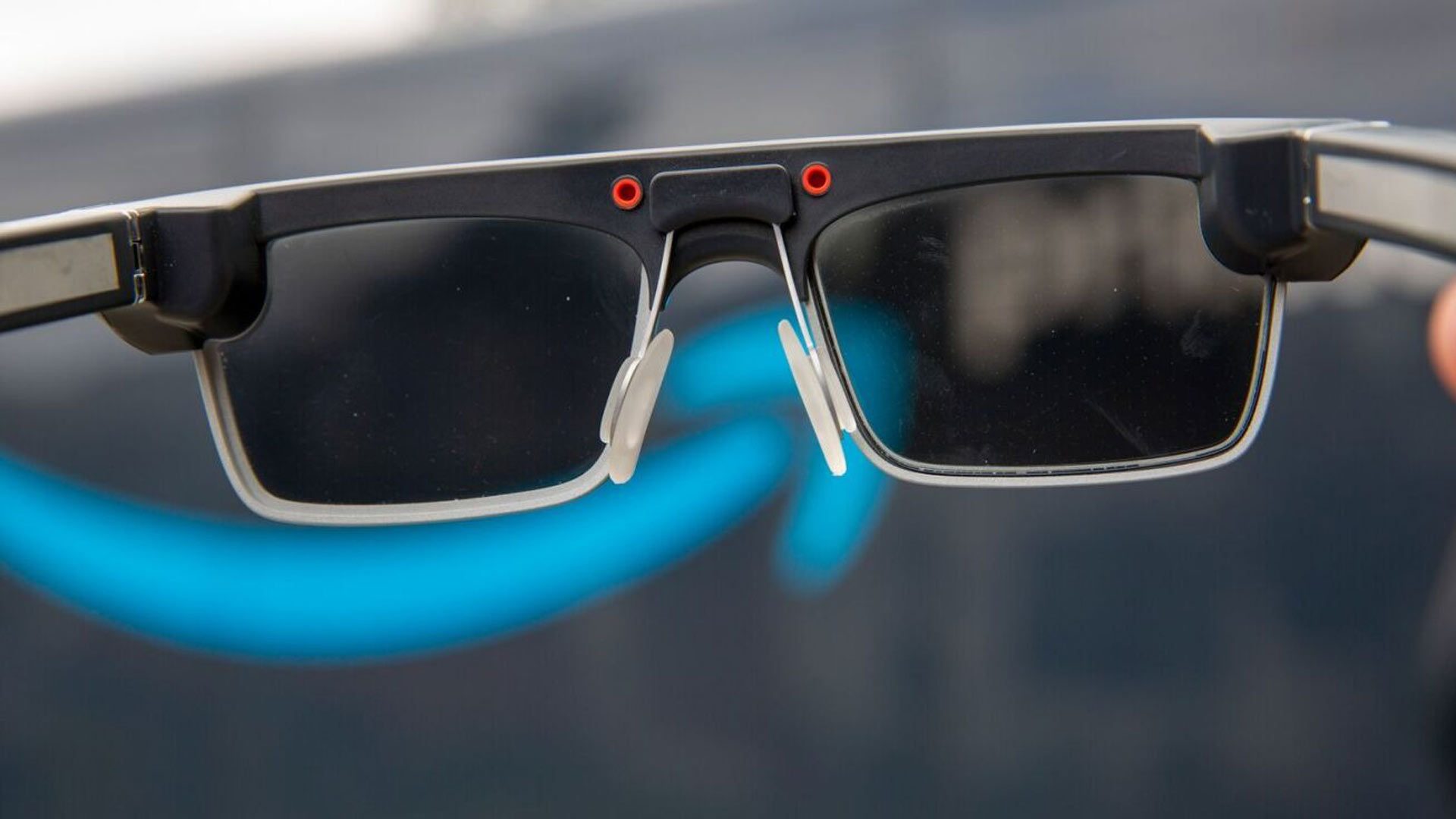
Amazon announced it’s developing smart glasses for its delivery drivers, which include a display for real-time navigation and delivery instructions.
The News
Amazon announced the news in a blog post, which partially confirms a recent report from The Information, which alleged that Amazon is developing smart glasses both for its delivery drivers and consumers.
The report, released in September, maintained that Amazon’s smart glasses for delivery drivers will be bulkier and less sleek than the consumer model. Codenamed ‘Jayhawk’, the delivery-focused smart glasses are expected to rollout as soon as Q2 2026, and include an initial production run of 100,000 units.
Image courtesy Amazon
Amazon says the smart glasses were designed and optimized with input from hundreds of delivery drivers, and include the ability to identify hazards, scan packages, capture proof of delivery, and navigate by serving up turn-by-turn walking directions.
The company hasn’t confirmed whether the glasses’ green monotone heads-up display is monoscopic or stereoscopic, however images suggest it indeed features a single waveguide in the right lens.
Moreover, the glasses aren’t meant to be used while driving, as Amazon says that the glasses “automatically activate” when the driver parks their vehicle. Only afterwards does the driver receive instructions, ostensibly done to reduce the risk of driver distraction.
In addition to the glasses, the system also features what Amazon calls “a small controller worn in the delivery vest that contains operational controls, a swappable battery ensuring all-day use, and a dedicated emergency button to reach emergency services along their routes if needed.”
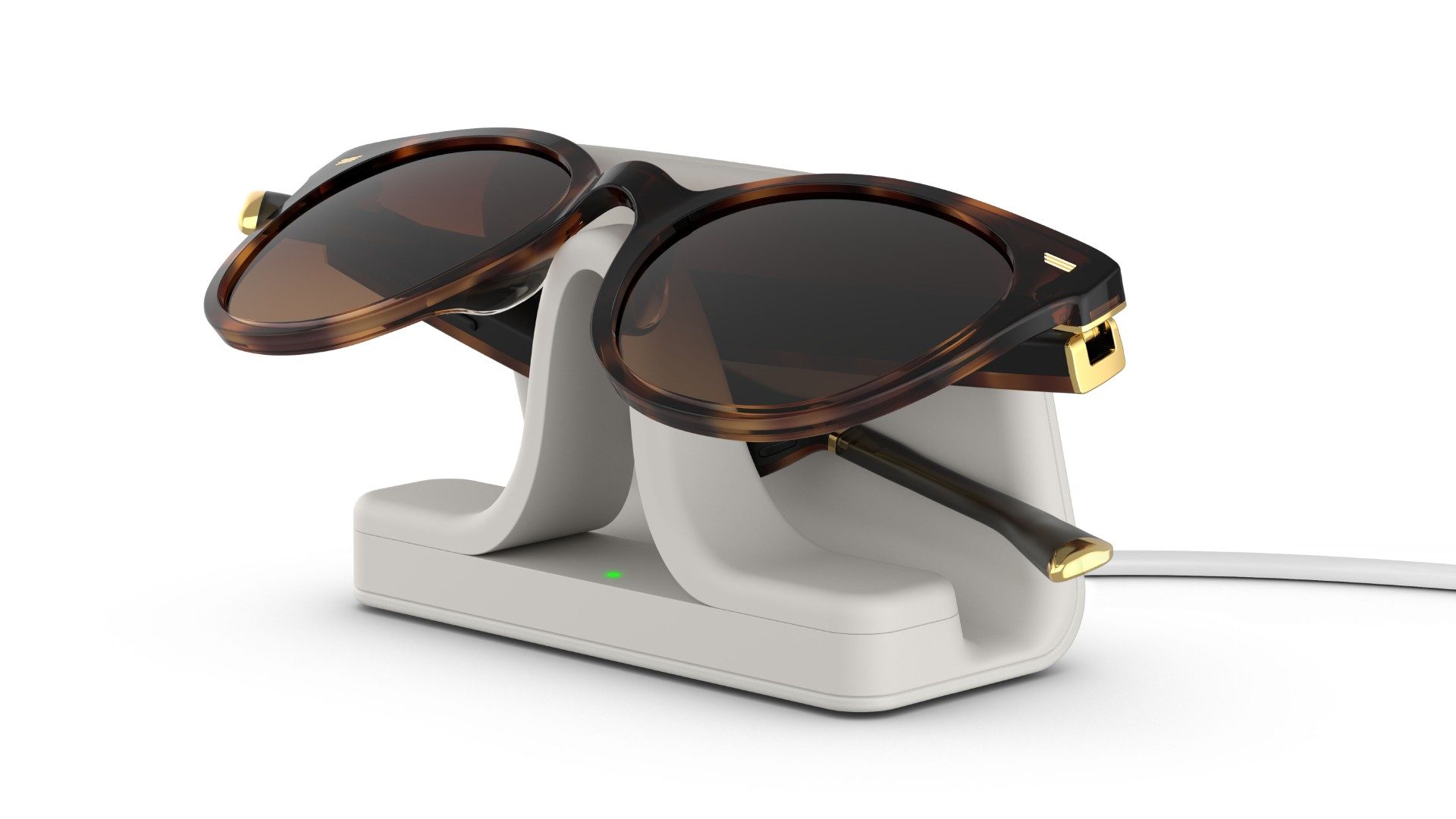
Additionally, Amazon says the glasses support prescription lenses along with transitional lenses that automatically adjust to light.
As for the reported consumer version, it’s possible Amazon may be looking to evolve its current line of ‘Echo Frames’ glasses. First introduced in 2019, Echo Frames support AI voice control, music playback, calls, and Alexa smart home control, although they notably lack any sort of camera or display.
My Take
I think Amazon has a good opportunity to dogfood (aka, use its own technology) here on a pretty large scale—probably much larger than Meta or Google could initially with their first generation of smart glasses with displays.
That said, gains made in enterprise smart glasses can be difficult to translate to consumer products, which will necessarily include more functions and apps, and likely require more articulated input—all of the things that can make or break any consumer product.
Third-gen Echo Frames | Image courtesy Amazon
Amazon’s core strength though is generally less focused on high-end innovation, and more about creating cheap, reliable hardware that feeds into recurring revenue streams: Kindle, Fire TV, Alexa products, etc. Essentially, if Amazon can’t immediately figure out a way to make consumer smart glasses feed into its existing ecosystems, I wouldn’t expect to see the company put its full weight behind the device, at least not initially.
After the 2014 failure of Fire Phone, Amazon may still be gun-shy from going head-first into a segment it has near-zero experience entering. And I really don’t count Echo Frames, because they’re primarily just Bluetooth headphones with Alexa support baked in. Still, real smart glasses with cameras and displays represent a treasure trove of data that the company may not be so keen to pass up.
Using object recognition to peep into your home or otherwise follow you around could allow Amazon to better target personalized suggestions, figure out brand preferences, and even track users as they shop at physical stores. Whatever the case, I bet the company will give it a go, if only to occupy the top slot when you search “smart glasses” on Amazon.
Defense contractors are in full sales mode to win a piece of a potentially trillion-dollar pie for development of the Trump administration’s proposed Golden Dome missile shield.
CEOs are touting their companies’ ability to rapidly spool up satellite, sensor, and rocket production. Publicly, they all agree with the assertion of Pentagon officials that US industry already possesses the technologies required to make a homeland missile defense system work.
The challenge, they say, is tying all of it together under the umbrella of a sophisticated command and control network. Sensors must be able to detect and track missile threats, and that information must rapidly get to weapons that can shoot them down. Gen. Chance Saltzman, the Space Force’s top commander, likes to call Golden Dome a “systems of systems.”
On Tuesday, OpenAI announced Atlas, a new web browser with ChatGPT integration, to let you “chat with a page,” as the company puts it. But Atlas also goes beyond the usual LLM back-and-forth with Agent Mode, a “preview mode” feature the company says can “get work done for you” by clicking, scrolling, and reading through various tabs.
I wanted to put Atlas’ Agent Mode through its paces to see if it could really save me time in doing the kinds of tedious online tasks I plod through every day. In each case, I’ll outline a web-based problem, lay out the Agent Mode prompt I devised to try to solve it, and describe the results. My final evaluation will rank each task on a 10-point scale, with 10 being “did exactly what I wanted with no problems” and one being “complete failure.”
So Samsung made a “Vision Pro Lite.” That was my immediate takeaway after this week’s debut of the Galaxy XR, the first Android XR device to hit the market. While Samsung deserves credit for offering something close to the Vision Pro for nearly half the price, an $1,800 headset still won’t get mainstream consumers rushing out the door to experience the wonders of mixed reality. And with the limited amount of content in Android XR at the moment, the Galaxy XR is in the same position as the Vision Pro: It’s just a well-polished developer kit.
The only logical reason to buy a Galaxy XR would be to test out apps for Android XR. If you just want to experience VR and dabble in a bit of augmented reality, you’re better off spending that money on a gaming laptop and the excellent $500 Meta Quest 3. (The Meta Quest Pro, the company’s first high-end mixed reality device, was unceremoniously killed after launching at an eye-watering $1,500.)
But even for developers, the Galaxy XR feels like it’s lacking, well, vision. Samsung has done an admirable job of copying almost every aspect of the Vision Pro: The sleek ski goggle design, dual micro-OLED displays and hand gesture interaction powered by a slew of cameras and sensors. But while Apple positioned the Vision Pro as its first stab at spatial computing, an exciting new platform where we can use interactive apps in virtual space, Samsung and Google are basically just gunning to put Android on your face.
There aren’t many custom-built XR apps, aside from Google’s offerings like Maps and Photos. (Something that also reminds me of the dearth of real tablet apps on Android.) And the ability to view 360-degree videos on YouTube has been a staple of every VR headset for the last decade — it’s not exactly notable on something that costs $1,800. Samsung and Google also haven’t said much about how they plan to elevate XR content. At least Apple is attempting to push the industry forward with its 8K Immersive Videos, which look sharper and more realistic than low-res 360-degree content.
For the most part, it seems as if Google is treating Android XR as another way to force its Gemini AI on users. In its press release for the Galaxy XR, Samsung notes that it’s “introducing a new category of AI-native devices designed to deliver immersive experiences in a form factor optimized for multimodal AI.”
…What?
In addition to being a crime against the English language, what the company is actually pitching is fairly simple: It’s just launching a headset that can access AI features via camera and voice inputs.
Who knows, maybe Gemini will make Android XR devices more capable down the line. But at the moment, all I’m seeing in the Galaxy XR is another Samsung device that’s shamelessly aping Apple, from the virtual avatars to specific pinch gestures. And Google’s history in VR and interactive content doesn’t inspire much hope about Android XR. Don’t forget how it completely abandoned Google Cardboard, the short-lived Daydream project and its hyped up Stadia cloud service. Stadia’s death was particularly galling, since Google initially pitched it as a way to revolutionize the very world of gaming, only to let it fall on its face.
There’s no doubt that Samsung, Apple and Meta have a ton of work left ahead in the world of XR. Samsung is at least closer to delivering something under $1,000, and Meta also recently launched the $800 Ray-Ban Display. But price is only one part of the problem. Purpose is another issue entirely. After living with the Vision Pro since its debut, I can tell that Apple is at least thinking a bit more deeply about what it’s like to wear a computer on your face. Just look at the upgrades its made around ultra-wide Mac mirroring, or the way Spatial Personas make it feel as if you’re working alongside other people. With Android XR, Google seems to just be making a more open Vision Pro.
Honestly, it’s unclear if normal users will ever want to use any sort of XR headset regularly, no matter how cheap they get. The experience making these headsets could help Google, Apple and Meta develop future AR glasses, or eyewear that offer some sort of XR experience (Samsung already has something in the works with Warby Parker and Gentle Monster). But while Apple and Meta have broken new ground in XR, Google and Samsung just seem to be following in their footsteps.
This article originally appeared on Engadget at https://www.engadget.com/ar-vr/samsungs-galaxy-xr-doesnt-give-me-much-hope-for-android-xr-110000129.html?src=rss
As of today, October 18th, 2025, Canonical has published the first daily build ISO images of the upcoming Ubuntu 26.04 LTS (codename Resolute Raccoon) for early adopters, application developers, and general public testing.
An anonymous reader quotes a report from 9to5Mac: Apple has been working on a new framework called AppMigrationKit, which will be compatible with devices running iOS 26.1 and later, as well as iPadOS 26.1 and later. Like iOS and iPadOS 26.1, the framework is currently in beta and will allow developers to include their app’s data during the migration process between Apple and non-Apple devices (which, for now, essentially means Android). Interestingly, Apple notes that this framework is not intended for data migration between iOS and iPadOS, but rather exclusively to and from non-Apple devices: “AppMigrationKit only supports migration to and from non-Apple platforms, such as Android. The system doesn’t use the framework for migration between iOS or iPadOS devices. The framework also has no functionality in iOS apps running in visionOS or in macOS on Apple silicon. The framework ignores calls from Mac apps built with Mac Catalyst.” The AppMigrationKit documentation can be found here.
It’s been over 25 years since the UK Cycle to Work scheme was introduced, enabling employees to use salary sacrifice to purchase bicycles and latterly ebikes, as well as cycling equipment for their commute.
Now the Cycle to Work Alliance, a consortium that includes Halfords, Evans Cycles, Vivup, Cycle Solutions and Cyclescheme, has commissioned independent research to quantify the benefits of the scheme.
The total annual financial benefit is assessed at £573m, in addition to the reductions in congestion and transport emissions it enables, which were not quantified.
The numbers break down into cost savings for commuters, increased workforce productivity, retail income from new bike purchases and the accompanying tax revenue.
Commenting on the research, local transport minister Lilian Greenwood said: “The Cycle to Work Scheme has been a real success story, helping millions of people choose a healthier, greener way to travel while boosting local economies and supporting jobs.”
Commuting by bike is estimated to save £1,262 versus using a car. Scott Windsor / Our Media
The research evaluated the saving to employees who switched from commuting by car to using a bike at £1,262. Separately, the Cycle to Work Alliance says it’s found around 80% of participants claim to cycle every week, up from 40% before joining the scheme.
Productivity increases
There’s an estimated economic benefit of £37m across the UK economy. This comes from reduced absence through sickness, evaluated at £63 per person per year, and improved attendance, estimated at £115 per person per year.
Retail income
Bikes, accessories and cycle clothing worth £219m were purchased via the Cycle to Work Scheme in 2023/24, which is credited with helping the cycling retail sector during its post-Covid downturn.
HM Treasury also benefits, with £43.8m of VAT collected on those purchases.
200,000 participants per year
The Cycle to Work Scheme is used by around 200,000 employees a year. urbancow
In 2023/24, the Cycle to Work Alliance says 199,000 employees made use of the scheme, a number that rose by 10,000 in 2024/25. Over the period since its launch, it says the scheme has been used by more than 2 million riders. It points out that of those, 38% are new cycle commuters.
While for many years limited to a £1,000 total spend, the Cycle to Work Scheme is now available for larger purchases, putting performance bikes and electric commuter bikes within scope. The Cycle to Work Alliance is campaigning to increase eligibility to self-employed and lower-paid workers to widen its benefit.
In what’s becoming quite the trend, Kona has joined the number of brands making aluminium gravel bikes with high-performance gravel geometry and features at more affordable prices.
The new Libre G2 follows in the wake of great bikes such as Specialized’s Crux DSW, Trek’s impressive new Checkpoint ALR, the Boardman ADV and Kinesis’ very capable Tripster AT+.
The new Libre shares the same race-proven geometry as the second-generation carbon CR model.
Kona’s new aluminium version of the Libre gravel race bike has the same geometry as the pricier carbon incarnation. Kona
That means a more performance-oriented geometry than ever before. Kona describes the G2 Libre as being fast, but with relaxed geometry that’s composed enough to “eat all that gravel without a twitch”. It also claims the bike is sharp enough to carve fast turns on the road.
The stack and head tube height are both reduced. The Libre now has shorter chainstays to make the handling nimbler, with a steeper seat tube angle for power transfer and a longer reach for a more aggressive ride position.
The Libre G2 has plenty of mount points for racks, guards, bags and bottles. Kona
Up front is a new lightweight all-carbon G2 fork. The aluminium frame features plenty of mounts for fenders (mudguards), a rear rack and a multitude of bottle mounts.
Tyre clearance is 50mm, and the frame also gains a UDH rear dropout. The seat-tube diameter has been slimmed on the alloy bike for a more compliant 27.2mm post.
Kona has also decided on using large 180mm rotors front and rear. With its tongue, I hope, firmly in cheek, Kona says the Libre is too fast for anything smaller.
The aluminium Libre G2 comes in a single version built around 2x 9-speed Shimano CUES. Kona
The Libre G2 alloy comes in a single build, based around Shimano CUES 2x 10-speed. We haven’t seen as much of CUES as we would have expected until now. However, it seems to be gaining traction as an affordable 2x option for gravel.
Wheels are supplied by Easton and paired with WTB Lupine tyres in a 45mm width (the Libre has clearance for 50mm).
With bikes like the Libre G2 Alloy becoming more common, it’s further proof that you don’t need to spend a fortune to have fun on gravel.
No pricing has been announced as yet, but it’s expected to be in line with the outgoing previous-generation aluminium Libre, so expect prices around $1,800.
Kona Libre G2 spec highlights
Kona supplies its own 16-degree flare Gravel bar. Kona
Discover the Radxa ROCK 4D single board computer running Linux. Explore its efficient power consumption and performance capabilities for your projects.






 , offers a comprehensive framework of new advisory services, industry-specific solutions and robust hybrid AI platforms. This move isn’t just about offering more products; it’s a testament to Lenovo’s unique heritage and its methodical execution, qualities that are allowing it to outmaneuver competitors like Dell in the complex race to bring AI’s promised return on investment (ROI) to fruition.