Amazon’s New Echo And Fire TV Devices Debut Alexa+ And Go All-In On AI

Amazon's New Echo And Fire TV Devices Debut Alexa+ And Go All-In On AI
Amazon just announced a slew of new devices designed to tap into the company’s Alexa+ AI subscription service, thanks to the power of the company’s AZ3 and AZ3 Pro processors. This new hardware includes fresh entries into the Echo lineup, new Fire TV television sets, and an addition to the Fire Stick series of devices that continues the tradition

Indian Court Tells Doctors To Fix Their Handwriting

A high court in India has ruled that legible medical prescriptions are a fundamental right after a judge found a government doctor’s report completely incomprehensible. Justice Jasgurpreet Singh Puri of the Punjab and Haryana High Court issued the order while reviewing a bail petition in an unrelated criminal case. The medico-legal report examining an alleged assault victim was written in handwriting that the judge said left not even a single word or letter legible.

The court directed India’s government to add handwriting instruction to medical school curriculum and mandated a two-year timeline for rolling out digital prescriptions nationwide. Until electronic systems are implemented, all doctors must write prescriptions in capital letters. The Indian Medical Association, representing over 330,000 physicians, told BBC it would help address the issue. Association president Dr Dilip Bhanushali said doctors in Indian cities have largely adopted digital prescriptions but practitioners in rural areas and small towns continue using handwritten notes.


Read more of this story at Slashdot.

FCC chairman leads “cruel” vote to take Wi-Fi access away from school kids

The Federal Communications Commission yesterday voted to end funding for two programs designed to help schoolchildren and library patrons access the Internet.

FCC Chairman Brendan Carr claims that Biden-era orders to establish the programs exceeded the FCC’s authority. The FCC voted 2-1 to kill the programs, with Republican Olivia Trusty voting with Carr and Democrat Anna Gomez dissenting.

In the previous administration, the FCC expanded the Universal Service Fund’s E-Rate program in 2024 to let schools and libraries lend out Wi-Fi hotspots and services that could be used off-premises. The FCC separately decided in 2023 to let the E-Rate program pay for Wi-Fi service on school buses.

Read full article

Comments

A ‘Godfather of AI’ Remains Concerned as Ever About Human Extinction

Yoshua Bengio called for a pause on AI model development two years ago to focus on safety standards. Companies instead invested hundreds of billions of dollars into building more advanced models capable of executing long chains of reasoning and taking autonomous action. The A.M. Turing Award winner and Universite de Montreal professor told the Wall Street Journal that his concerns about existential risk have not diminished.

Bengio founded the nonprofit research organization LawZero earlier this year to explore how to build truly safe AI models. Recent experiments demonstrate AI systems in some circumstances choose actions that cause human death over abandoning their assigned goals. OpenAI recently insisted that current frontier model frameworks will not eliminate hallucinations. Bengio, however, said even a 1% chance of catastrophic events like extinction or the destruction of democracies is unacceptable. He estimates advanced AI capable of posing such risks could arrive in five to ten years but urged treating three years as the relevant timeframe. The race condition between competing AI companies focused on weekly version releases remains the biggest barrier to adequate safety work, he said.


Read more of this story at Slashdot.

When Buying an Expensive Back Massager Is Actually Worth It, and Why It’s Usually Not

We may earn a commission from links on this page.

Did you know you can customize Google to filter out garbage? Take these steps for better search results, including adding Lifehacker as a preferred source for tech news.


Can you remember the last time you had a totally pain-free back? I know I’m on a never-ending search for relief. Percussive massage guns, non-percussive massage guns, regular foam rollers, even percussive foam rollers—I’m determined to try it all. Now, my search has brought me to decompression devices.

These devices promise personalized, premium massages and decompression right in your own home. It’s the closest thing you can get to replicating an actual masseuse. You lay on your back and let the rollers in the device do the work for you. And from personal experience, I can share that they do provide immediate comfort and relief.

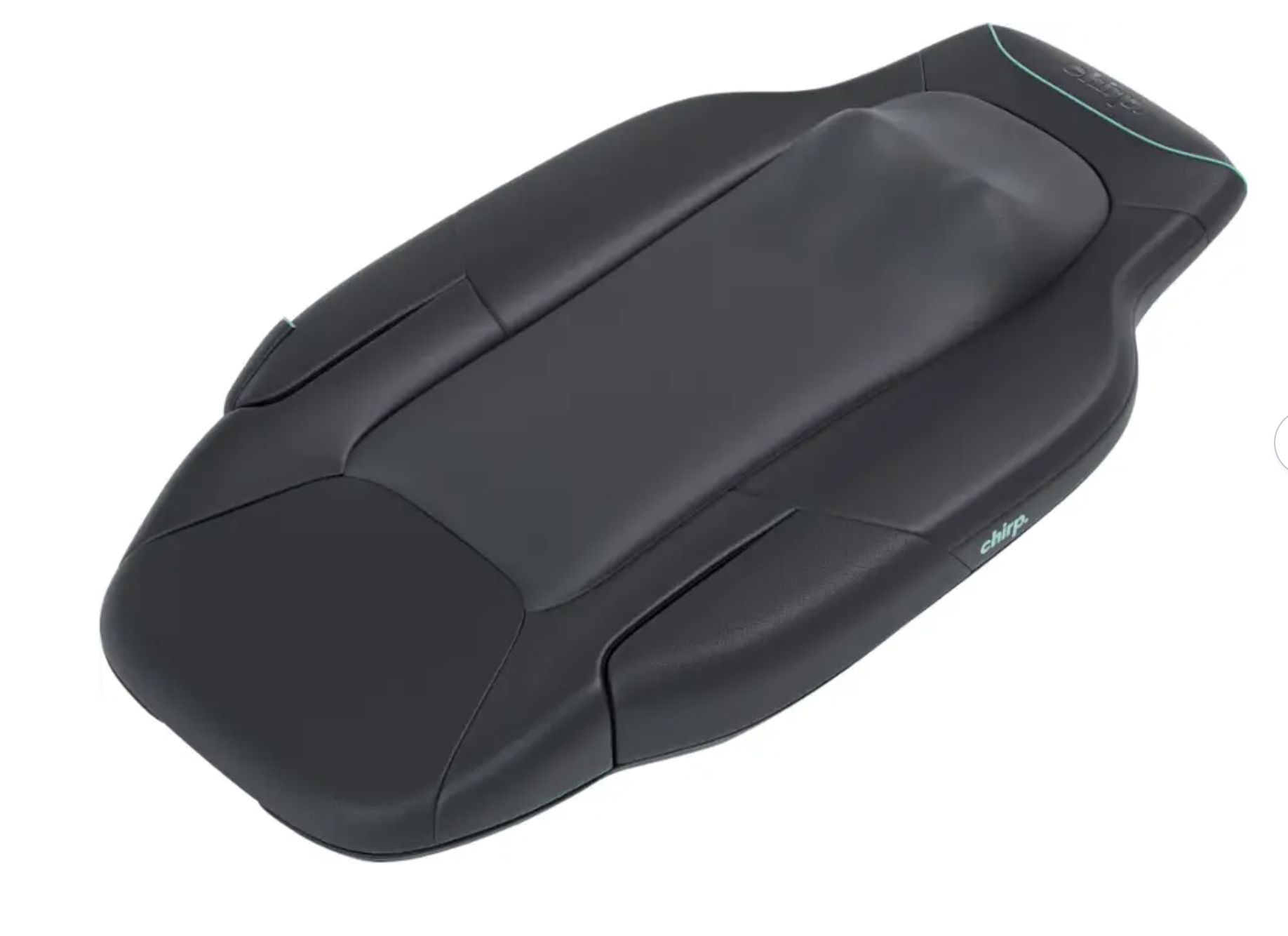
The thing is, compared to a standard massage gun, a full decompression massage table is pretty expensive. Products like the Chirp Contour might feel amazing, but with a price tag of $600, I have to wonder if they’re truly worth every penny. Do these devices deliver real results or just Instagram-worthy self-care moments?

The massage professionals I spoke with shared a consistent perspective: These devices aren’t worthless, but they’re far from essential for most people. Here’s what you need to know before you drop hundreds of dollars in your righteous pursuit of muscle relief. 

What these devices actually do

To be clear, these tables do provide real sensations of relief. “Of course this device is going to feel good. It’s going to provide massage and heat, which is going to help to relax the muscle tension,” explains W. Zach Smith, founder and doctor of physical therapy at HIDEF Physical Therapy. Plus, “devices like this are getting better and better, and if you have the disposable income, it can be of some benefit to you.” I know I adore my Chirp Contour, which specifically offers considerable customization. But Smith quickly adds an important caveat: “For most people, what I see with these types of devices is they purchase some, use them for a few weeks and then they end up just sitting at their home not getting used.” 

That pattern—initial enthusiasm followed by the device becoming expensive furniture—is perhaps the most damning criticism. Smith notes he personally hasn’t “found one of these devices that is just an absolute game changer” for his patients that leads to consistent long-term use.

Amanda Grimm, a sports and remedial massage therapist at Knead Massage, points out another often-overlooked benefit: “At-home massage/decompression tables can help with relaxation, if nothing else, for the fact that they make the person stop rushing around and take some time for themselves.” That forced pause can help relieve tension, though it “may not be the targeted muscle relief that the individual requires.”

Addressing the root cause of back pain

Here’s where things get sobering for anyone hoping a $600 purchase will solve their chronic pain. Smith is blunt: “At the end of the day, massage and heat is not going to resolve 90% of low back pain. You need the additional mobility, stretching, and the most important, a re-strengthening program in order to truly solve low back pain.”

Jennifer Brandon, rehabilitation manager at HOAG Orthopedic Institute, echoes this concern: “I think that at home decompression tables can be helpful in finding some relief, even to loosen your tight muscles. I would just note that at home gadgets should never replace structured rehabilitation, nor should they really be substituted for strength training to build up weak muscles.”

From a sports recovery perspective, Grimm notes these devices “may aid general self-care, but without the assessment, additional full movement and personalized treatment provided by a professional therapist, they are more superficial than impactful.”

Running the numbers

Still, I get a lot of relief with my Chirp Contour, so let’s do the math to see when these devices are worth their cost. If you typically pay $100 for an hour-long professional massage, a $600 device would theoretically pay for itself after just six uses. Sounds great, right?

But here’s the reality check: These aren’t equivalent experiences. A professional massage involves assessment, targeted technique, adjustment based on your body’s response, and often addresses issues you didn’t even know you had. Your at-home device delivers the same experience every time—no expert eyes evaluating your problem, no hands adapting pressure to what your muscles need.

If you were getting weekly massages at $100 each, you’d spend $5,200 annually. In that scenario, a $600 device seems like a no-brainer investment. But most people aren’t getting weekly professional massages. They’re considering whether to buy this device instead of occasional professional treatment—and that’s where the comparison falls apart.

Brandon sums it up well: “These items can be more of a wellness nice-to-have, than a must-have. Especially with such a steep price range. If you find yourself dealing with an ongoing issue, you might be better off investing that money into a professional that can help you get to the actual root of your problem.”

Grimm offers a practical middle ground: “For $600, it may be more beneficial to invest that in a series of remedial sports massages for injury relief—but that said, if you have the disposable cash to spend, then it can work as a cool-down tool after a workout or just a bit of pampering!”

The bottom line 

Expensive decompression and massage tables aren’t scams—they do provide relaxation and temporary relief. But they’re not the miracle solution their marketing suggests. I would tell you if I thought something was worth every penny, but $600 is a whole lot of pennies. If you’re dealing with chronic pain or sports injuries, that $600 is almost certainly better spent on professional assessment and treatment that addresses the underlying problem.

However, if you already have a solid strength and mobility routine, see professionals when needed, and simply want a luxurious recovery tool for your home gym? And crucially, if you’re the type of person who’ll actually use it consistently rather than letting it collect dust? Then it might be worth considering. Just go in with realistic expectations about what it can and cannot do.

Think of it like buying a fancy espresso machine. It’s not going to replace your favorite coffee shop’s expertise, but it’s a nice convenience if you’ll genuinely use it regularly and can comfortably afford it. The key question isn’t whether it works; it’s whether you’ll still be using it six months from now.


Zwift Racing League Week 4 Guide: Jarvis Seaside Sprint (Points Race)

The fourth and final race of Zwift Racing League 2025/26 Round 1 happens Tuesday, October 7, and we’ll be in Watopia for a points race on the brand-new Jarvis Seaside Sprint route.

This course presents particular challenges as a points race, which we’ll unpack below. As always, there’s much to discuss, so let’s dive in!

Looking at the Route

Each lap of Watopia’s Jarvis Seaside Sprint route is 12.5km long with 95m of elevation gain, and we begin with a 2.8km lead-in with 36m of climbing. So for this, the final race of Round 1, the A and B categories will race 40.3km (3 laps), while the C and D categories will race 27.8km (2 laps).

Here are the key sections of the route from a points race perspective:

Aero Boost (helmet) at Downtown Watopia Start/Finish arch: makes you more aerodynamic (reduces your CdA by 25%) for 15 seconds. Use at higher speeds (flats and descents), especially when no draft is available (although it is still useful when drafting.) Use your first aero to nab sprint points on the JWB Sprint Reverse.

Lead-In (0-2.6km): the start will always be a bit spicy, but this lead-in, in particular, will tax the legs with its short climb up from downtown Watopia, then the undulating road of The Esses, and finally the kicker climb taking you into the descent that launches the JWB Sprint Reverse.

JWB Sprint Reverse @2.6km (200 meters, 0%) (FAL+FTS): our first points segment of the day may also prove to be the fastest, since the pack will be at its largest and aero powerups will be burning holes in our jersey pockets. The JWB Sprint is fast and rather technical. If you need pointers on maximizing your performance on this segment, read this post.

(The JWB Sprint Reverse arch is the start/finish banner for the Jarvis Seaside Sprint course, so A and B riders will contest this segment a total of four times: once at the end of your lead-in, then three more times at the end of each lap.)

Draft Boost (van) at JWB Sprint arch: increases the draft effect you are experiencing for 40 seconds. Use at higher speeds (flats and descents) when you are already drafting off another rider (since this powerup only helps when you are drafting.) Use this to boost your speed when contesting the Jarvis Sprint Reverse.

Jarvis Sprint Reverse @5.7km (200 meters, 0.2%) (FAL+FTS): our next points segment of the day is the same length as the JWB Sprint, but it will feel much longer since we aren’t entering it off of a descent! On top of that, the pack may be cagey, since every has to decide just how hard they’re willing to go, given that the Jarvis KOM Reverse starts just a few hundred meters up the road. (Is it worth grabbing big sprint points if you get dropped from the front group?)

Lightweight (feather) at Jarvis Sprint arch: reduces your weight by 10% for 30 seconds.
Use on climbs, when weight matters the most. Ideally you’d use it on the second, steeper section of the KOM so you’re as light as possible when weight matters most.

Jarvis KOM Reverse @7.5km (1.3km, 3.1%) (FAL+FTS): the only true climb of the race, the Jarvis KOM Reverse is really two steep, short punches, separated by flat bits at the start and in the middle. This will be the key inflection point of the race, as strong puncheurs will be pushing hard because 1) intermediate points and 2) this is their best chance of dropping other riders. Save your feather for this section!

Burrito at the Jarvis KOM arch: turns off the draft effect for riders in a cone-shaped window behind you for 20 seconds. Use when attacking off the front so opponents have to work harder to follow you, or in the peloton to make others work harder. Use this wherever you’d like, but try not to burrito your teammates.

Aero Boost (helmet) at Jarvis Lap arch: makes you more aerodynamic (reduces your CdA by 25%) for 15 seconds. Use at higher speeds (flats and descents), especially when no draft is available (although it is still useful when drafting.) Save this for use on the JWB Sprint up the road. You simply won’t be able to finish near the front without it, unless you manage to stick a breakaway off the front!

Climb into the Volcano @11.1km: riders always push hard up this short climb (200-300 meters long), so don’t get caught out. The aero boost you just picked up can be helpful for chasing back onto the wheels here as you near the Volcano Lap arch, but you’ll really want to save it for the sprint up the road.

Cloaking (ghost) at Volcano Lap arch: makes you invisible to other riders for 15 seconds. Use when you want to get away from one or more riders. Deploy then hammer, in hopes that you will create enough of a gap that your opponents can’t grab your wheel. Important: the ghost is disabled within 400m of the finish line, so don’t plan to hold this until the final sprint! Many riders will just throw this powerup away or not even get it because they’re still holding an aero powerup. But you can use it to help you get away off the front if you’re going for a long breakaway.

Finish: after completing the lead-in plus 3 full laps (2 laps for C & D categories), it will be time for the final sprint to the line. Again, the JWB Sprint is fast and rather technical. If you need pointers on maximizing your performance on this segment, read this post.

Read more about the Jarvis Seaside Sprint route >

Bike Recommendations

This route features two flat sprint segments (including the finish), and one short KOM segment that is more like two short uphill sprints.

So do you optimize for climbing (lightweight) or speed (aero)? With so many points up for grabs on the sprints, you’ll want to be careful about sacrificing aero for weight. But with the KOM being the key selection point in the race, you don’t want your heavier aero setup to send you out the back of the pack when the going gets steep.

We ran tests up the Jarvis KOM Reverse at 5 w/kg using the S-Works Tarmac SL8 and a variety of top-performing wheels: the DT Swiss 85 Disc, the DT Swiss 65, ENVE 4.5 Pro, and ENVE 8.9. We ran the same test using the Tron bike. In the end, the DT Swiss 65s turned in the best time (2:25.17), but every setup was within a half-second of that time.

So if you’re confident in your ability to hang onto the pack over the KOM with disc wheels, use ’em. Because they’ll give you an advantage in the sprints. If you want to hedge your bets a bit, go with the lighter DT Swiss 65s, which will be just a bit slower on the sprints but may be the difference between hanging with the front and getting dropped.

Specialized S-Works Tarmac SL8 with DT Swiss 65 wheels

See Speed Tests: Tron Bike vs Top Performers (Scatter Plot) for more nerd-level detail on frame and wheel performance, and check out Fastest Bike Frames and Wheels at Each Zwift Level to determine the fastest setup available to you.

More Route Recons

Lots of recon events are scheduled on upcoming ZRL routes, led by various teams. See upcoming ZRL recons for this race at zwift.com/events/tag/zrlrecon.

John Rice

(more recons coming soon)

Strategic Options

Points Distributions, Jarvis Seaside Sprint

3 Laps (A/B)

2 Laps (C/D)

These charts show the maximum points a team of 6 could earn in a race with 60 participants. In the charts above, we’ve added the FAL points for the final JWB Sprint Reverse to the FIN points, since that’s effectively how they will operate. To learn how ZRL points races work, see this post.

Here are some predictions of strategies we’ll see on Tuesday:

  • Sprint, Rest, Sprint, Survive, Rest, Repeat: this will be the most common strategy. With ~75% of points tied up in sprints and the finish, strong sprinters will try to contest as many sprints as possible and survive the KOM in the front pack with as little effort as possible, so they can fight hard on the finishing sprint.
  • Burrito KOM Breakaway: clearly, the powerups in this race are structured to encourage riders to break away over the top of the KOM. Watch for strong climbers to go hard up the KOM, then push on the descent with a burrito powerup.
  • Ghost Breakaway: we get a ghost powerup at the Volcano Circuit lap arch, and this will prove tantalizing to riders who want to go long on the final lap (there’s always someone). The 200IQ play may be using your aero powerup to attack as you ride through the Volcano lap arch, then using the ghost to disappear for a bit longer. The question for everyone else is, do you chase those wheels, or gamble and hope the pack drags them back?

Your Thoughts

Any insights or further thoughts on this race? Share below!

Saturn’s ocean moon looks more hospitable to subsurface life than we thought

Mars isn’t our only neighbor that may harbor life. The odds have risen that Saturn’s moon Enceladus may, too. On Wednesday, scientists published a paper outlining the increasing complexity of molecules emitted from beneath the moon’s surface. “We now have all elements required for Enceladus to harbour life,” the ESA’s Dr Jörn Helbert told The Guardian.

Enceladus gives researchers a unique window into its subsurface world. The Cassini mission already taught us that plumes of water ice shoot 6,000 miles into space from Enceladus. The source of those icy jets is believed to be a subsurface saltwater ocean, around 30 miles deep, that envelops the entire moon. The space geysers shoot out from its South Pole.

Previous analysis of the moon’s icy particles already revealed the chemical building blocks for life as we know it. But before, the organics were inferred from studying Saturn’s E ring, which is composed mostly of material from the icy jet. In contrast, this study looked at data from the Cassini mission’s flyby of the plumes themselves. What’s different today is the variety of organic signatures and the freshness of the samples. “These grains were just minutes old,” lead author Dr. Nozair Khawaja told The Guardian.

Artist's depiction of the plumes of ice water emitting from Saturn's moon Enceladus.
NASA / JPL / Space Science Institute

“The detection of organics directly in the plume rules out space weathering as the sole production pathway,” the paper’s authors wrote. Space weathering refers to radiation and other processes that potentially alter or spoil the samples. “The grains are fresh, unaltered and proof of survival through ocean transit and plume emission” for the compounds.

“These grains were just minutes old,” Khawaja said. “It means that what we are capturing here is actually the pure sample from the subsurface.” He said the results also increased the known complexity of Enceladus’ sub-surface organic chemistry. “When there is complexity happening, that means that the habitable potential of Enceladus is increasing right now,” he said.

The results still don’t prove that there’s life on Saturn’s moon. However, they do suggest a chemically rich subsurface ocean that could seed the building blocks of life. Your move, Mars.

This article originally appeared on Engadget at https://www.engadget.com/science/space/saturns-ocean-moon-looks-more-hospitable-to-subsurface-life-than-we-thought-174149814.html?src=rss

Britain is Slowly Going Bust

Britain’s net public debt has climbed from 35% of GDP in 2005 to 95% today. The government is borrowing over 4% of GDP annually despite no emergency comparable to the financial crisis or pandemic that drove much of the earlier increase. The belt-tightening needed to stabilize debt levels amounts to about 2% of GDP. The Labour government holds a 157-seat majority in Parliament and has four years until the next election.

Britain spends about 6% of GDP supporting pensioners, an increase of over a third this century. Some 15% of the working-age population now claims jobless allowances following a surge in disability claims since the pandemic. Labour attempted to reduce spending on pensioners and welfare this year but reversed both reform plans after political outcry from within the party.

Tax revenue is already on course to reach 38% of GDP, a historical high for Britain. Labour promised before the election not to raise broad-based taxes on income and consumption. Four in five Britons say the government is mismanaging the economy. Yields on long-term government debt exceed those in any other major rich economy. The economy grew faster than any other G7 country in the first half of 2025, but the fiscal adjustment that would bring Britain to a primary surplus of less than 0.5% remains politically elusive.


Read more of this story at Slashdot.

Ghost Town & Vampire: The Masquerade – Justice Are Quest’s Horizon+ Monthly Games For October

Ghost Town and Vampire: The Masquerade – Justice are the Horizon+ monthly redeemable games for October.

What Is Meta Horizon+?

The $8/month Horizon+ subscription lets you redeem two Meta-selected Quest games each month as well as access the dozens of titles in its Games Catalog. The service was formerly called Quest+.

Redeeming the monthly games lets you play them while your subscription remains active. Should you cancel the subscription, previously redeemed games won’t be playable until you resubscribe.

Meanwhile, you get access to all Games Catalog games upon subscribing, until your subscription ends.

Horizon+ is available on Quest 2, Quest Pro, Quest 3, and Quest 3S.

Last month’s monthly redeemable games were Hubris & MLB Home Run Derby. If you grabbed them, they’ll stay in your library while you’re subscribed. If you didn’t, make sure you grab this month’s instead.

Ghost Town

Ghost Town is a singleplayer supernatural puzzle adventure set in the 1980s where you play as an Irish witch turned exorcist and ghost hunter in the search for your missing brother.

Ghost Town Review: An Utterly Engrossing Supernatural VR Adventure
Ghost Town is a brilliant supernatural puzzle adventure from The Room VR studio that you won’t want to miss.
UploadVRHenry Stockdale

Released back in April, we consider Ghost Town to not just be one of the best VR games out this year, but among the best of all time.

Vampire: The Masquerade – Justice

Vampire: The Masquerade – Justice is a singleplayer RPG where you play Justice, a vampire from the Banu Haqim clan. When your mentor (or sire) is mysteriously murdered and a valuable relic stolen, you journey to Venice in pursuit of answers.

Vampire: The Masquerade – Justice Review – Quest & PSVR 2
Vampire: The Masquerade – Justice arrives later this week on Quest and PSVR 2. Read our review here:
UploadVRTony Mowbray

We gave Vampire: The Masquerade – Justice 4 stars in our review when it released just under two years ago, describing it as having a solid story and gameplay crafted with care, though we also noted occasional clunky design elements, a lack of enemy diversity and issues with the AI.

New Games Catalog Games

Horizon+ also offers a Games Catalog of Quest titles that any subscriber can play, featuring some of the most iconic games in VR.

Here’s the full Horizon+ Games Catalog as it currently stands in the US:

  • Angry Birds VR: Isle of Pigs
  • Asgard’s Wrath 2
  • BAM
  • Broken Edge
  • Cook-Out
  • Cosmonious High
  • Cubism
  • Deisim
  • Demeo
  • Drop Dead: The Cabin
  • Dumb Ways Free For All
  • Dungeons Of Eternity
  • Eleven Table Tennis
  • Elven Assassin
  • Espire 2: Stealth Operatives
  • Exploding Kittens VR
  • Fruit Ninja 2
  • Garden of the Sea
  • Ghosts of Tabor
  • Guardians Frontline
  • Human Fall Flat VR
  • In Death: Unchained
  • Job Simulator
  • Medieval Dynasty New Settlement
  • Mini Motor Racing X
  • Onward
  • Pistol Whip
  • Pixel Ripped 1995
  • Premium Bowling
  • Puzzling Places
  • Red Matter
  • Swarm
  • Sweet Surrender
  • Synth Riders
  • Tetris Effect: Connected
  • The Climb 2
  • Thief Simulator VR: Greenview Street
  • Titans Clinic
  • Walkabout Mini Golf

Note that Meta can remove games from the catalog at any time, or add new ones.

Here are all the games Microsoft added to Game Pass today, including a whole lot of Assassin’s Creed

Xbox owners got a bit of a nasty surprise thanks to Microsoft’s sudden announcement today that the monthly cost of a Game Pass Ultimate subscription is getting a 50 percent increase. The new $30 monthly price, up from $20, is going to really sting for a lot of people, especially with no cheaper annual or quarterly options offered.

Fortunately, the rough price hike isn’t all that Microsoft talked about today — there are a lot of games being added to the service, particularly for the two most expensive plans. In case you aren’t up to date, Game Pass is now split into three slightly revamped tiers: Essential, Premium and Ultimate, two of which are confusingly also names Sony uses for its cheapest and most expensive PS Plus offerings. You can read a full breakdown of each tier and what they cost here.

More than 45 new games have joined the Ultimate library, with certain Ultimate games trickling down into the Premium and Essential tiers. If that sounds confusing, that’s probably because it is, but the main headlines are that Hogwarts Legacy is now part of Game Pass Ultimate and Premium, while the priciest Ultimate lineup has ballooned in size thanks to the introduction of Ubisoft Classics+. This curated catalogue of Ubisoft’s extensive back catalogue joins EA Play, which was already part of Ultimate, and is a pretty significant addition to the service. Especially if you like old-school Assassin’s Creed. 

Here is the full list of games joining each Game Pass tier today.

Ultimate

  • Hogwarts Legacy (Cloud, PC, and Console)

  • Assassin’s Creed II (PC)

  • Assassin’s Creed III Remastered (Cloud, PC, and Console)

  • Assassin’s Creed IV Black Flag (Cloud, PC, and Console)

  • Assassin’s Creed IV Black Flag: Freedom Cry (PC)

  • Assassin’s Creed Brotherhood (PC)

  • Assassin’s Creed Chronicles: China (Cloud, PC, and Console)

  • Assassin’s Creed Chronicles: India (Cloud, PC, and Console)

  • Assassin’s Creed Chronicles: Russia (Cloud, PC, and Console)

  • Assassin’s Creed Liberation HD (PC)

  • Assassin’s Creed Revelations (PC)

  • Assassin’s Creed Rogue Remastered (Cloud, PC, and Console)

  • Assassin’s Creed Syndicate (Cloud, PC, and Console)

  • Assassin’s Creed The Ezio Collection (Cloud and Console)

  • Assassin’s Creed Unity (Cloud, PC, and Console)

  • Child of Light (Cloud, PC, and Console)

  • Far Cry 3 (Cloud, PC, and Console)

  • Far Cry 3 Blood Dragon (Cloud, PC, and Console)

  • Far Cry Primal (Cloud, PC, and Console)

  • Hogwarts Legacy (Cloud, PC, and Console)

  • Hungry Shark World (Cloud, PC, and Console)

  • Monopoly Madness (Cloud, PC, and Console)

  • Monopoly 2024 (Cloud, PC, and Console)

  • OddBallers (Cloud, PC, and Console)

  • Prince of Persia The Lost Crown (Cloud, PC, and Console)

  • Rabbids Invasion: The Interactive TV Show (Cloud and Console)

  • Rabbids: Party of Legends (Cloud, PC, and Console)

  • Rayman Legends (Cloud, PC, and Console)

  • Risk Urban Assault (Cloud and Console)

  • Scott Pilgrim vs. The World: The Game (Cloud, PC, and Console)

  • Skull and Bones (Cloud, PC, and Xbox Series X/S)

  • South Park: The Stick of Truth (Cloud, PC, and Console)

  • Starlink: Battle for Atlas (Cloud, PC, and Console)

  • Steep (Cloud, PC, and Console)

  • The Crew 2 (Cloud, PC, and Console)

  • The Settlers: New Allies (Cloud, PC, and Console)

  • Tom Clancy’s Ghost Recon Breakpoint (Cloud, PC, and Console)

  • Tom Clancy’s Rainbow Six Extraction (Cloud, PC, and Console)

  • Tom Clancy’s The Division (Cloud, PC, and Console)

  • Trackmania Turbo (Cloud, PC, and Console)

  • Transference (Cloud and Console)

  • Trials Fusion (Cloud, PC, and Console)

  • Trials of the Blood Dragon (Cloud, PC, and Console)

  • Trials Rising (Cloud, PC, and Console)

  • Uno (Cloud, PC, and Console)

  • Valiant Hearts: The Great War (Cloud, PC, and Console)

  • Watch Dogs (Cloud, PC, and Console)

  • Wheel of Fortune (Cloud and Console)

  • Zombi (Cloud, PC, and Console)

Premium (all games also in Ultimate)

  • 9 Kings (Game Preview) (PC)

  • Abiotic Factor (Cloud, PC, and Xbox Series X/|S)

  • Against the Storm (Cloud, PC, and Console)

  • Age of Empires: Definitive Edition (PC)

  • Age of Empires III: Definitive Edition (PC)

  • Age of Mythology: Retold (Cloud, PC, and Xbox Series X/|S)

  • Ara: History Untold (PC)

  • Arx Fatalis (PC)

  • Back to the Dawn (Cloud, PC, and Console)

  • Battletech (PC)

  • Blacksmith Master (Game Preview) (PC)

  • Cataclismo (PC)

  • Cities: Skylines II (PC)

  • Crime Scene Cleaner (Cloud, PC, and Xbox Series X/|S)

  • Deep Rock Galactic: Survivor (Cloud, PC, and Xbox Series X/|S)

  • Diablo (PC)

  • Diablo IV (PC and Console)

  • An Elder Scrolls Legends: Battlespire (PC)

  • The Elder Scrolls Adventures: Redguard (PC)

  • Fallout (PC)

  • Fallout 2 (PC)

  • Fallout: Tactics (PC)

  • Football Manager 2024 (PC)

  • Frostpunk 2 (Cloud, PC, and Xbox Series X/|S)

  • Halo: Spartan Strike (PC)

  • Hogwarts Legacy (Cloud, PC, and Console)

  • Manor Lords (Game Preview) (PC)

  • Minami Lane (Cloud, PC, and Console)

  • Minecraft: Java Edition (PC)

  • Mullet Madjack (Cloud, PC, and Xbox Series X/|S)

  • My Friendly Neighborhood (Cloud, PC, and Console)

  • One Lonely Outpost (Cloud, PC, and Console)

  • Quake 4 (PC)

  • Quake III Arena (PC)

  • Return to Castle Wolfenstein (PC)

  • Rise of Nations: Extended Edition (PC)

  • Senua’s Saga: Hellblade 2 (Cloud, PC, and Xbox Series X/|S)

  • Sworn (Cloud, PC, and Xbox Series X/|S)

  • Terra Invicta (Game Preview) (PC)

  • Volcano Princess (Cloud, PC, and Console)

  • Warcraft I: Remastered (PC)

  • Warcraft II: Remastered (PC)

  • Warcraft III: Reforged (PC)

  • Wolfenstein 3D (PC)

Essential (all games also in Premium and Ultimate)

  • Cities: Skylines Remastered (Cloud and Xbox Series X/|S)

  • Disney Dreamlight Valley (Cloud, PC, and Console)

  • Hades (Cloud, PC, and Console)

  • Warhammer 40,000 Darktide (Cloud, PC, and Console)

This article originally appeared on Engadget at https://www.engadget.com/gaming/xbox/here-are-all-the-games-microsoft-added-to-game-pass-today-including-a-whole-lot-of-assassins-creed-171525929.html?src=rss

Best October Prime Day SSD deals: Discounts on gear from Crucial, Samsung and more

A portable storage device can make a world of difference to intensive processing tasks, from running massive video games — which feels like all of them these days — to core operating system functions. A solid-state drive (SSD) gives your hard drive more bandwidth than it comes with by default, making huge chunks of data easier to digest and keeping your device from running too hot. This October Prime Day, we’ve rounded up the best deals on SSDs, portable SSDs and microSD cards. Not only are these some of the best products in the field, but their prices are lower than they’re likely to be for some time thanks to Amazon Prime Day.

Best October Prime Day SSD deals

Crucial T500 1TB for $89 (38 percent off): We named the Crucial T500 one of the best SSDs for PS5 and still stand by that rating. This 1TB model can hit read speeds of 7,300MB/s, more than enough for optimal performance per Sony’s specs. You can even install it at home with no tools more complicated than a screwdriver.

Crucial X10 4TB Portable SSD for $240 (39 percent off): The Crucial X9 is our current favorite portable SSD, but the X10 is a step beyond. Based on USB 3.2, it’s compatible with a wide range of devices, and reaches reading speeds of 2,100MB/s — all in an extremely portable pocket-sized case.

Samsung 990 Evo Plus 1TB for $70 (33 percent off): This is an incredible deal on an internal SSD from a reliable brand. All capacities of the Samsung 990 Evo Plus are currently on sale, but even the 1TB option can visibly boost your performance with top read speeds of 7,250MB/s. There’s no heatsink, but nickel plating on the controller reduces both heat output and energy use.

Samsung Fit Plus 256GB for $23 (30 percent off): The Samsung Fit Plus isn’t just the best thumb drive on the market right now — it’s one of the best SSDs, period. This deal gets you 256GB of storage and read speeds of 400MB/s for almost unfathomably cheap. It’s also built to resist water, extreme temperatures, magnets and even radiation.

Kingston SX1000 1TB High Performance for $89 (23 percent off): If you can’t swing a Crucial X9 or X10 right now, Kingston offers a much more affordable alternative. The SX1000 can handle both PC backups and gaming storage with ease, nearly matching the X9 in our speed tests. It’s also easy to carry around, though keep a tight grip as it’s not officially rated for any drop height.

SanDisk 2TB Extreme Portable SSD for $148 (29 percent off): The SanDisk Extreme line of portable SSDs provides a great middle ground in both price and performance. Read speeds of 1,050MB/s are enough for transferring most files you’ll encounter day-to-day. Its external design holds up too, with a large carabiner loop, IP65 waterproofing and dustproofing and drop protection as high as three meters.

Seagate Storage Expansion Card 2TB for $220 (39 percent off): This SeaGate SSD is specifically for expanding storage on the Xbox Series X and S, and it’s designed to meet Xbox specs exactly. You’ll get exactly the same performance booting a game from this card as you would from internal Xbox storage, which makes data management infinitely easier.

This article originally appeared on Engadget at https://www.engadget.com/deals/best-october-prime-day-ssd-deals-discounts-on-gear-from-crucial-samsung-and-more-170039440.html?src=rss

Project Freefall Brings Competitive Skydiving Tag To Quest With A Demo Soon

Project Freefall, a new competitive skydiving tag game from Schell Games, is getting a demo later this month.

Developed by VR veterans Schell Games, arguably best known for the I Expect You To Die trilogy and Among Us 3D, Project Freefall is a free-to-play game that’s launching in early access first. Supporting four to eight-player online matches, you’ll fight over the last remaining parachute while gradually plummeting and use various tools to knock out the competition.

0:00

/0:45

Reveal trailer

The demo’s launch coincides with this month’s Steam Next Fest on October 13, and a Quest demo will also launch simultaneously. However, the PC version is flatscreen-only with a third-person camera, while the Quest edition uses first-person gameplay. Cross-platform multiplayer between PC and VR players is also supported.

When the early access version launches, it will also feature the game’s store and additional skins alongside the core tag mode and selectable divers. A Steam FAQ confirms the full release will bring more obstacles, new game modes, expanded customization, a progression system, and more. A full release window isn’t mentioned, though early access is planned “at least through 2026.”

A further disclaimer on the store pages confirms Schell Games is using generative AI in Project Freefall’s development, calling AI “a partner in our creative process” used to explore new ideas for music, art, store page assets, and code. The studio states that “every single element you see, hear, and experience” was chosen, edited, and finalized by human developers.

Project Freefall will launch in early access as a free-to-play game on Quest, Steam, and the Epic Games Store later this month, while the demo goes live on October 13.

T-Mobile’s Starlink satellite service now works with a handful of apps

T-Mobile just announced that its T-Satellite with Starlink service now integrates with several apps. These include AllTrails, AccuWeather, X, WhatsApp and several others. Certain native apps also now integrate with the service, like Google Messages, Apple Music and Samsung’s weather app.

It’s important to note that users won’t always have access to the full app experience here, as satellite connectivity is limited. Some features may be limited and everything is likely to be noticeably slower. Still, being able to look at a map on AllTrails while actually on a trail in the middle of nowhere will be incredibly useful. It’ll be less useful to read some random screed on X while sitting next to the campfire, but whatever gets you through the night.

Some specs.
T-Mobile

T-Mobile promises that WhatsApp will allow for “sending voice notes, sharing photos or even calling your entire group chat.” This is a potential game-changer but it really depends on how slow everything is, which we won’t know until some explorers get out there to put the app through its paces.

The company has also integrated a number of business-focused apps into T-Satellite for those subscribed to the SuperMobile or T-Priority plans. These apps include the communications platform MultiLine and the AI-powered messaging service Dialpad.

T-Satellite uses Starlink satellites to provide coverage in remote parts of the world. It became broadly available back in July after months of testing. The service is available for both Android and iOS devices. It’s free for T-Mobile customers but everyone else can sign up for $10 a month.

This article originally appeared on Engadget at https://www.engadget.com/mobile/smartphones/t-mobiles-starlink-satellite-service-now-works-with-a-handful-of-apps-165732659.html?src=rss

Can today’s AI video models accurately model how the real world works?

Over the last few months, many AI boosters have been increasingly interested in generative video models and their seeming ability to show at least limited emergent knowledge of the physical properties of the real world. That kind of learning could underpin a robust version of a so-called “world model” that would represent a major breakthrough in generative AI’s actual operant real-world capabilities.

Recently, Google’s DeepMind Research tried to add some scientific rigor to how well video models can actually learn about the real world from their training data. In the bluntly titled paper “Video Models are Zero-shot Learners and Reasoners,” the researchers used Google’s Veo 3 model to generate thousands of videos designed to test its abilities across dozens of tasks related to perceiving, modeling, manipulating, and reasoning about the real world.


In the paper, the researchers boldly claim that Veo 3 “can solve a broad variety of tasks it wasn’t explicitly trained for” (that’s the “zero-shot” part of the title) and that video models “are on a path to becoming unified, generalist vision foundation models.” But digging into the actual results of those experiments, the researchers seem to be grading today’s video models on a bit of a curve and assuming future progress will smooth out many of today’s highly inconsistent results.

Read full article

Comments

Microsoft Raises Xbox Game Pass Top Subscription 50% To $30 Monthly

Microsoft has announced that Xbox Game Pass Ultimate will cost $29.99 per month, up from $19.99. The company restructured its subscription service into three tiers ahead of the October 16 launch of two Xbox ROG Ally handheld consoles. The new Essential tier offers 50-plus games for $9.99 monthly. Premium includes 200-plus games for $14.99. Ultimate subscribers gain access to more than 400 games, day-one releases, improved cloud streaming quality, and services including EA Play, Ubisoft+ Classics, and Fortnite Crew.

Game Pass generated nearly $5 billion in fiscal 2025 revenue with 34 million subscribers in 2024. Console hardware prices are also increasing, with the Xbox Series X rising $50 to $649.99 starting October 3.


Read more of this story at Slashdot.