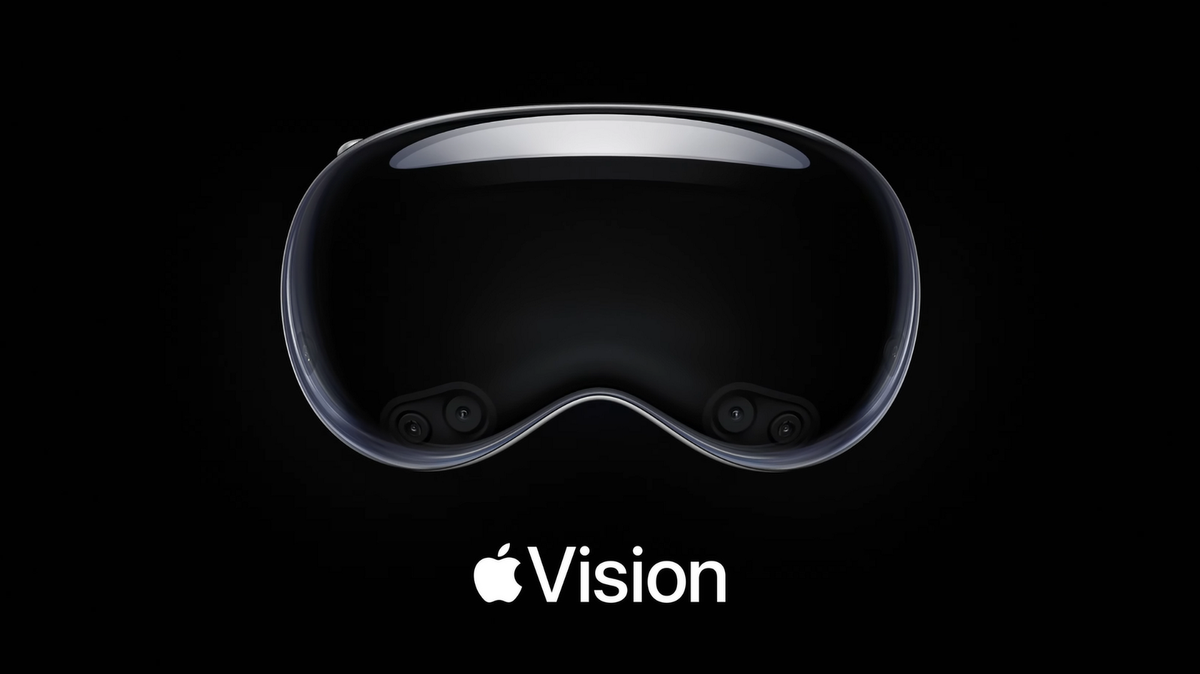
Apple has paused development of a cheaper, lighter Vision Pro headset to shift resources toward AI-powered smart glasses aimed at competing with Meta. Bloomberg’s Mark Gurman reports: The company had been preparing a cheaper, lighter variant of its headset — code-named N100 — for release in 2027. But Apple announced internally last week that it’s moving staff from that project to accelerate work on glasses, according to people with knowledge of the matter. The company is working on at least two types of smart glasses. The first one, dubbed N50, will pair with an iPhone and lack its own display. Apple aims to unveil this model as soon as next year, ahead of a release in 2027, said the people, who asked not to be identified discussing internal matters.
Apple is also working on a version with a display — something that could challenge the just-released Meta Ray-Ban Display. The Apple version had been planned for 2028, but the company is now looking to accelerate development, the people said. […] Apple’s glasses will rely heavily on voice interaction and artificial intelligence — two areas where it hasn’t always excelled. It was slow to introduce the Apple Intelligence platform and had to delay upgrades to its Siri voice assistant.
The Apple glasses are expected to come in a variety of styles and run a new chip. They’ll include speakers for music playback, cameras for media recording, and voice-control features that will work with a connected phone. Apple has also been exploring a suite of health-tracking capabilities for the device. The priority shift to glasses is just the latest change to the company’s headset strategy following an underwhelming debut by the Vision Pro. The $3,499 product, which melds virtual and augmented reality, is seen as too heavy and expensive to be a mainstream hit. It’s also short on both video content and apps. Apple executives have acknowledged the product’s shortcomings in private, viewing it as an overengineered piece of technology.
An anonymous reader quotes a report from MacRumors: iFixit today disassembled the AirPods Pro 3, giving us a look at what’s inside and how the AirPods Pro 3 have changed in comparison to the AirPods Pro 2. […] To get a look at other components inside the AirPods Pro 3, iFixit essentially had to destroy them because Apple didn’t design them to be repaired. Since the first version of the AirPods launched, they’ve included a battery that is sealed shut with glue, and that hasn’t changed with the AirPods Pro 3. iFixit says battery replacements are so difficult that many repair shops won’t even attempt to do it. The AirPods Pro Charging Case has the same glued-in battery.
There’s no way to attempt a battery repair without causing blemishes on the plastic of the earbuds and the casing, because they have to be pried open. Heat needs to be used to melt the adhesive, and there’s no easy way to disconnect the flex cable that’s inside each earbud. With the need for specialized equipment and the inability to repair the earbuds and the case without causing damage, the AirPods Pro 3 earned a 0 out of 10 repairability score from iFixit.
Meta will begin using data from AI chatbot conversations and other AI-powered products to fuel targeted advertising across Facebook and Instagram, with no way to opt out. The policy change, effective December 16, excludes users in South Korea, the UK, and the EU due to stricter privacy laws. TechCrunch reports: If a user chats with Meta AI about hiking, for example, the company may show ads for hiking gear. However, Meta spokesperson Emil Vazquez tells TechCrunch that the privacy update is broader than just Meta AI and applies to the company’s other AI offerings. That means Meta may use data from AI features in its Ray-Ban Meta smart glasses — including voice recordings, pictures, and videos analyzed with AI — to further target its ad products.
Meta may also use data from its new AI-video feed, Vibes, and its AI image generation product, Imagine. Conversations with Meta AI will only influence ads on Facebook and Instagram if a user is logged into the same account across products. […] Meta says the company has “no plans imminently” to put ads in its AI products, though CEO Mark Zuckerberg has suggested they may be coming in the future.
This is a video following LEGO builder Grant Davis’s quest to construct a working mechanical version of the bouncing DVD logo screensaver using LEGO. And what a quest it is! If somebody asked me if you could make a working DVD logo screensaver out of LEGO I would have told them they’ve lost their mind. But Grant over here — he did it. Hands down one of the greatest human achievements of the last century, and if there was ever a video to convince the aliens to unzip their human costumes and reveal their true form, this is it. Show yourselves!
TrueNAS 25.10-RC1 is out today as the newest test release of this OpenZFS+Linux-based operating system for network attached storage (NAS) hardware and other storage devices…
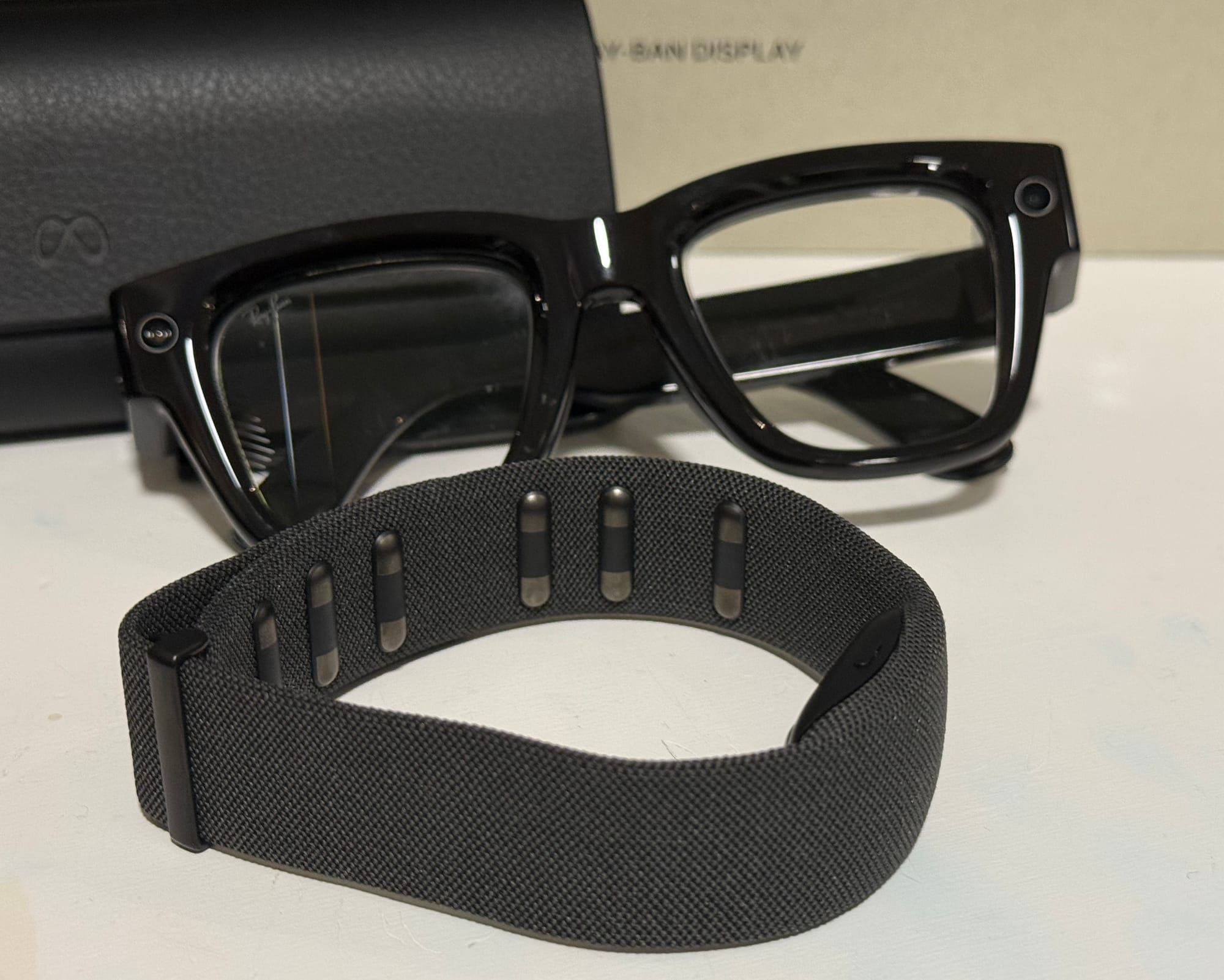
As I was e-biking to the Ray-Ban Store in SoHo, I realized I wouldn’t have to keep checking my phone for directions if I wore the Meta Ray-Ban Display glasses. When I got there, they were already sold out. So I made my way to Sunglass Hut on 5th Avenue and acquired one of the last sets available in the city on launch day.
The sun was setting behind the trees as I unboxed the band and glasses in the basket of a Citi Bike at 79th Street on the east side of Central Park. I paid $10 to my cellular provider for 1 gigabyte of extra data to download updates for the Meta AI app on iPhone, as well as the latest firmware to the wearables. The box housing the Meta Neural Band fell out first, with text in the packaging telling me to start with the glasses instead. While the hardware updated, I walked the e-bike into the park.
I put on the glasses and band, skipped my way through the tutorial, and began testing with a photo.
Below is my first video shot on the glasses the first time I tried the navigation features.
0:00
/1:00
There’s a long way to go toward Meta supporting the wide range of ways one can get around a city like New York, one of the 28 cities Meta’s pedestrian navigation currently works in. The Neural Band’s twist gesture – index finger to thumb and turn your hand – works to zoom in and out of maps really well, and I can find my way around pretty effectively just using that feature.
It was just a few minutes into my active testing when I started to notice distracting reflections in the corner of my vision. While David Heaney is right that I wouldn’t watch a movie with the monocular display, I did grow comfortable very quickly with using it for a couple seconds at a time for all the tasks I outline in this article. What I was more bothered by were these reflections. By my rough estimate about 20 percent of the right side of the right lens catches reflections of my surroundings in extremely distracting ways. It’s as if there’s a mirror, even with the display off, reflecting surroundings to the periphery of one eye. The reflection is fairly clear — I could make out lights or trees flying by. For me, it is quite startling to catch glimpses of something in the corner rushing past in a direction that doesn’t make logical sense. And at the same time trying to keep an eye on the road ahead or on the monocular display? I actually jerked my body once I was so startled by something in my periphery while riding the bike.
Those who wear many types of simple glasses and even those familiar with head-worn see-through optics on earlier types of smart glasses may be familiar with this reflectivity issue. How much it bothers you is likely to vary from person to person. David, for instance, didn’t see the reflections in his demo, which took place in an environment without strong lighting. I confirmed at the store I still see the reflections on two other sets of the Meta Ray-Ban Display glasses. I’ve never noticed them before on four pairs of display-free Meta glasses.
Moving past this distraction, I made my way slowly toward the middle of the park, sometimes walking the bike, when I heard a man playing saxophone.
0:00
/0:13
After capturing that short video from a distance, I asked him if I could film him with my glasses for $20. I handed him the cash and he asked me what I wanted him to play. I asked for his favorite song.
0:00
/1:00
I recorded two videos from that angle, one minute each, and went along my way again.
0:00
/1:00
I parked the bike on the west side of Central Park and got out on foot to head to the Museum of Natural History. My initial interactions with the glasses focused around the physical button on top for activating the camera. But now, back on foot, it was time to learn the Neural Band.
0:00
/1:00
My family and I spent about an hour and a half at the museum and in that time I became proficient with the Meta Neural Band’s easy-to-learn gestures.
I learned how to navigate the menu system swiping or pressing my thumb to my index finger. A single middle finger pinch to thumb goes back in the menu and a double pinch turns the display on or off.
0:00
/0:34
“Hey Meta, how old is this baby?” I asked.
I was holding my child close to me as we waited for the elevator. He was facing away and Meta’s answer was fairly imprecise. I held my kiddo out a bit further, still facing away, and asked again. Meta answered with both greater precision and accuracy.
0:00
/0:10
Exiting the museum, I started exploring advanced interactions and settings with the Neural Band. I could alter the brightness of the display with that twist gesture. I also used the Neural Band while walking to navigate to the camera and start a video recording. This is when I fell in love with the Neural Band.
0:00
/0:45
These wearables capture a video more naturally than pressing the button on the glasses or asking Meta AI. The display enables framing for photography and videography for the first time in Meta glasses. The Neural Band enables zoom with that twist gesture too. Pointing an eye at the display provides immediate and ongoing guidance about the precise edges of the frame.
Meta Ray-Ban Display glasses might as well be a LIV camera for the real world. The Neural Band with a display is the difference between wearing a GoPro and making a movie. It helps that starting a video recording with this feedback is the same in both Apple Vision Pro and these Meta glasses — a single index to thumb pinch “pressing” a record button only viewable in a face computer.
0:00
/1:00
I connected the glasses to Apple Music on my way into the museum, and on the way out I explored the calling features. Meta requests access to contacts over Bluetooth and in the Meta AI app. The dialog for these permissions didn’t seem to indicate I could be more selective than just turning over my entire address book, so I deleted the contacts of my family members from the phone I dedicate to work and agreed to the permissions. After agreeing, the user interface on iPhone made clear I could grant Meta access to exactly one contact instead of all of them. I gave the phone number and name of UploadVR reader and fellow New Yorker James O’Loughlin to Meta, and then I called him from the glasses as we crossed in front of the Central Park Great Lawn. A few hours earlier, on the other side of that same grassy expanse, I filmed a saxophone player during golden hour. Now, in the dark, I’m telling James over my glasses and through my iPhone that he might have trouble buying his own pair after he demos them at the Ray-Ban store. They told me they were sold out and turned away 70 people seeking demos on launch day.
The glasses were down to about 15 percent battery and I asked James if he wanted to try WhatsApp for view sharing. He asked me to text him my WhatsApp number. I pulled out my iPhone and sent it. A few seconds later, I had a text in WhatsApp from James on my glasses display.
We started a call on WhatsApp as I was exiting the east side of Central Park and then I turned on view sharing. As the battery ticked down, James said hi to my spouse walking in front of us. I reached out and pinch-twisted to change call volume, showing James I wielded total control over the voices in my head.
A few blocks from home I said goodbye to James and, satisfied with this first real world test of these glasses and Neural Band, I began playing with the display using the last bit of power. I kept double pinching my middle finger to my thumb turning the display on and off again and again, just to confirm it works reliably. It worked every time.
I finally took off the glasses and unflattened their case from my pocket. Placing the glasses inside, I found myself pinching again just to see if I could make the Neural Band vibrate with the glasses not in use. Nope, the band didn’t do anything for me anymore, and that made me sad within seconds of the glasses leaving my head. I was reluctant to even pull the band off to charge it overnight even though that makes no logical sense.
On my second day with the glasses I downloaded the English language to test out live captions while talking with James after his own demo at the store. I listened to music on the train home, turning the volume up and down with a twist in the air. I also captured videos while riding an e-bike with the glasses trying to give me pedestrian routing at the same time.
0:00
/0:19
Meta’s Golden Handcuffs
The thick and heavy display glasses my colleague tried under more controlled conditions appear to be more than flawed, at least for me, due to those distracting peripheral reflections.
And yet, that display breathes new life into the prospect of photography with glasses now that Meta added a camera viewfinder and zoom controls. I strongly believe headsets like Apple Vision Pro and glasses like Meta’s with a display can revolutionize photography, videography and media production in deeply profound ways.
Imagine a future iteration of the Meta Neural Band including 1 terabyte of storage. Imagine the glasses offloading their captures to the band instead of a phone. Imagine a VR headset pulling those videos and photos out of the band for you to edit in VR or hang on your walls. Imagine getting objects or worlds from the band too. Imagine pulling any file you want out from your wrist, like an ace up the sleeve, to hand a copy to a friend.
The Meta Neural Band is the most important technology ever developed by Mark Zuckerberg’s team. It’s his key to unlocking his vision of the metaverse.
The term “golden handcuffs” refers to financial incentives designed to encourage employees to stick around with a particular company. A company like Meta or Apple might grant workers Restricted Stock, for example, giving ownership in pieces of the company that can only be sold when conditions are met, like performance milestones or a minimum number of years of work.
Meta, like Facebook before it, has a habit of making it effortless to put your personal information into places they can control and analyze, while also making it exceedingly hard to get that information out again. With the Neural Band, Meta made a way to put golden handcuffs on everyone. All they have to do is make it effortless to use and nearly impossible to stop. I felt that future after one night with a Meta Neural Band on my wrist.
Two Amazon delivery drones reportedly collided with a crane this morning in Tolleson, AZ. The incident occurred about two miles from a fulfillment center run by the tech company and involved two of its Prime Air drones. No injuries have been reported. Law enforcement were called to the scene, however Sgt. Erik Mendez of the Tolleson police told local radio station KTAR that the Federal Aviation Administration would be taking over the investigation.
“We’re aware of an incident involving two Prime Air drones in Tolleson, Arizona,” Amazon representative Terrence Clark said. “We’re currently working with the relevant authorities to investigate.”
Amazon began offering a drone delivery option in the Phoenix area last year. The drones only fly during the day and if weather conditions are favorable. The company received FAA approval to ship several more products by drone in May.
This article originally appeared on Engadget at https://www.engadget.com/big-tech/two-amazon-prime-air-drones-crashed-in-arizona-224857013.html?src=rss
alternative_right writes: Last week, thousands of people in North and Central Texas were suddenly knocked offline. The cause? A bullet. The outage hit cities all across the state, including Dallas, Irving, Plano, Arlington, Austin, and San Antonio. The outage affected Spectrum customers and took down their phone lines and TV services as well as the internet.
“The outage stemmed from a fiber optic cable that was damaged by a stray bullet,” Spectrum told 404 Media. “Our teams worked quickly to make the necessary repairs and get customers back online. We apologize for the inconvenience.”
Spectrum told 404 Media that it didn’t have any further details to share about the incident so we have no idea how the company learned a bullet hit its equipment, where the bullet was found, and if the police are involved.
Sent out today was the x86/mm pull request of the x86/x86_64 memory management changes destined for this next version of the Linux kernel. This pull has just one new patch but is worth mentioning…
Bloomberg’s Mark Gurman claims Apple has moved staff off the cheaper and lighter Vision headset project to prioritize shipping smart glasses with a display sooner.
Before Apple Vision Pro was even revealed, Gurman reported that Apple was working on a cheaper model with an A-series chip, and he later said that it was “likely” to not have the front lenticular display which Vision Pro uses to show a rendered version of your eyes to people nearby.
A few months ago, supply-chain analyst Ming-Chi Kuo claimed that mass production of the cheaper headset would begin in the second half of 2027. He described it as being over 40% lighter than today’s Vision Pro and having a 50% lower price, dubbing it “Apple Vision Air”.
Now, Gurman says that Apple has “hit pause” on the project, and has moved staff off it to “accelerate” work on smart glasses with a display.
Gurman and Kuo have both previously reported on Apple’s plans to release a Ray-Ban Meta competitor without a display within the next two years. Gurman has described Apple’s work on a new chip for the glasses, based on the S-series chips used in Apple Watch.
Gurman says that Apple aims to reveal the displayless smart glasses “as soon as next year” ahead of a release in 2027.
He also says that the company’s first smart glasses with a display were set for 2028, and that the former Vision Air staff have been tasked with accelerating this timeline to take on Meta Ray-Ban Display. Reading between the lines, Apple may be hoping to ship both kinds of glasses in 2027.
Meta won’t be resting on its laurels though. According to Gurman, Mark Zuckerberg’s company plans to launch an upgraded version of Meta Ray-Ban Display with a display in both eyes in 2027, providing a binocular image. This should eliminate the eye strain issue I encountered in my time with the first generation glasses, and make the device suitable for extended use cases like watching videos.
As always, we remind you that Apple and Meta have not announced any new headsets or glasses beyond the ones they sell today, that not all reports that purport to reveal their internal plans are accurate, and that even when they are accurate, the plans of both companies could change at any time.
Scammers have been abusing unsecured cellular routers used in industrial settings to blast SMS-based phishing messages in campaigns that have been ongoing since 2023, researchers said.
The routers, manufactured by China-based Milesight IoT Co., Ltd., are rugged Internet of Things devices that use cellular networks to connect traffic lights, electric power meters, and other sorts of remote industrial devices to central hubs. They come equipped with SIM cards that work with 3G/4G/5G cellular networks and can be controlled by text message, Python scripts, and web interfaces.
An unsophisticated, yet effective, delivery vector
Security company Sekoia on Tuesday said that an analysis of “suspicious network traces” detected in its honeypots led to the discovery of a cellular router being abused to send SMS messages with phishing URLs. As company researchers investigated further, they identified more than 18,000 such routers accessible on the Internet, with at least 572 of them allowing free access to programming interfaces to anyone who took the time to look for them. The vast majority of the routers were running firmware versions that were more than three years out of date and had known vulnerabilities.
The extinction of the Pleistocene megafauna may be people’s fault after all, according to a recent study.
A team of archaeologists recently examined animal bones at sites dating to the waning years of the last Ice Age. Their results suggest that extinct megafauna like giant sloths, giant armadillos, and elephant-like creatures were on the menu for Pleistocene hunters in South America. And that means human hunters may have played a nontrivial role in killing off the continent’s last great Ice Age megafauna.
Giant ground sloth: It’s what’s for dinner
Archaeologist Luciano Prates of Mexico’s National University of La Plata and his colleagues counted the animal bones left behind by ancient people at 20 archaeological sites in modern-day Argentina, Chile, and Uruguay. They compared the number of bones from extinct megafauna (technically, “megafauna” describes any animal over 44 kilograms) to the number of bones from smaller prey. They also tallied the remains of still-living species of megafauna like vicuñas. The archaeologists hoped to learn whether giant sloths, giant armadillos, and now-extinct species of horses were staples in the diets of Ice Age South Americans.
In the year and a half since, these AI-generated videos haven’t only become more realistic; they’ve also become more accessible, as companies like Google make their tools readily available to anyone willing to pay. That’s the situation we find ourselves in with OpenAI’s latest announcements: Sora 2, a new AI model for generating video with audio, as well as a new Sora app for creating and sharing your AI-generated products.
Sora 2
OpenAI is marketing Sora 2 as a massive upgrade over Sora—comparing the two to GPT-3.5 and GPT-1, respectively. The company says the new model can generate complex videos that earlier models could not. That includes, specifically, an Olympic gymnastic routine; a man performing a backflip on a paddleboard that “accurately” models water physics; as well as a skater performing a triple axel with a cat on their shoulder.
One common flaw with AI video models is their lack of understanding of real-world physics. The visual might look realistic, but elements may morph together randomly, while others may disappear and reappear without rhyme or reason. OpenAI says Sora 2 doesn’t make these mistakes as often. A basketball that misses the hoop won’t magically reappear there; it will, instead, bounce off the backboard as you’d expect it to. The company warns the model is still imperfect, but is improved. Building on this, the model is better at continuity across different shots: Taking OpenAI at their word, your videos should maintain consistency between takes, and you should be able to dictate different types of styles, including “realistic,” “cinematic,” and “anime.”
Perhaps the biggest leap with Sora 2 is the ability to add real world elements into the model, a feature OpenAI calls “Cameo.” You can put real people into the Sora 2 model, and ask the AI to generate them into any video you want. OpenAI shows a number of examples of their staff adding themselves to various videos, and while the quality is inconsistent, it’s a gargantuan leap from the days of JibJab.
Like Google’s Veo 3 model, Sora 2 can generate video with realistic audio. The announcement video shows this off: An elephant roars; a skater swooshes on the ice; water splashes on the ground. But, more impressively (and concerningly), people speak. An AI-generated Sam Altman explains the new model and app in this video, and while it’s rather obvious to those of us in the know that this is AI, I can imagine many people would have no idea this isn’t the real Altman in the clip.
Sora app
OpenAI says the Sora app came about as a “natural evolution of communication.” The company sees this as a way for people to create and remix other users’ AI generations, especially with the ability to upload your own face and likeness to the model.
At the moment, the app is invite-only, though you can download it for free from the App Store today. You can get a sense for the experience, however, from both the demo video OpenAI dropped on Tuesday, as well as posts from the people who already have access.
This first example OpenAI demos is of a dual Cameo of OpenAI research scientist Bill Peebles and Sam Altman. The video contains an establishing shot of the two men having a conversation, which cuts to a close up of Peebles speaking rapidly about the app’s revenue, then to a close up of Altman taking in the rant, before closing on the original establishing shot. On the surface, it’s the type of video you might expect to scroll past on a TikTok or Reels binge—but this video is entirely AI-generated.
The OpenAI staff show off a series of other pre-generated examples, including a Cameo that turns into a cartoon, another that switches the effect to anime, and another that generates a “news” report of one of the staff member’s addiction to ketchup. (That last one is quite gross, I might add.) They also demonstrate remixing videos you find in the feed, as you’re able to prompt Sora to adjust the video however you want. One video shows Peebles in an “ad” for a Sora 2 cologne, but others have remixed it to be of toothpaste instead, or entirely in Korean.
These videos are quite realistic: In one, you think you’re simply watching a clip of a tennis match, but it turns out to be a Cameo with OpenAI’s Rohan Sahai. After “Sahai” wins the match, the video cuts to his “interview,” in which he thanks the haters. Others are more obviously AI—though, again, not enough so that most people scrolling by may notice.
Safety and security, according to OpenAI
Cameos sound like a privacy and security nightmare, though OpenAI has some protections in place. You can’t simply use anyone’s face for any videos, and you’re only able to upload your own face to the platform. Setting up the Cameo feature on the app is straightforward, if not extremely off-putting. The app will scan your face, sort of like setting up Face ID on an iPhone, and will then send the data to OpenAI’s “systems,” for “tons of validation” to block impersonators, or users who might want to create Cameos of you without your consent. Once approved, you choose who can create Cameos of yourself, including all users, friends, users you specifically approve, or just you.
As for videos themselves, the Sora app applies a visible watermark to any clip exported out of the app. If you’ve seen any of these videos on the internet already, you’ll notice a small “Sora” stamp on each, similar to the watermark you see on TikTok clips exported to other platforms. There are also reasoning models under the hood to block users from generating “harmful” content, especially with respect to Cameos.
If you’re a teen using the Sora app, you won’t be able to scroll forever. After scrolling for a while, there will be a cooldown period to keep you from spending hours scrolling through these AI videos. While adult accounts won’t have this restriction, the app will “nudge” you to take a break.
Who asked for this?
With all due respect to OpenAI and its safety team, this app sounds like it’s going to be a disaster, for so many reasons.
For one, OpenAI has made it as easy to generate hyper-realistic short-form videos as it is to ask Siri about the weather. I appreciate that these videos all come with watermarks, but it won’t take much skill to edit those out—at least in a way that most people won’t notice. As soon as this is widely available, all of our social media feeds will be plagued with this content. And, seeing as much of it comes with video and audio that are quite realistic, a lot of people are going to be fooled by a lot of content.
It’s bad enough when that involves silly videos, like bunnies jumping on a trampoline. But what happens when it’s “politicians” saying something egregious, or a “celebrity” stealing something from a store? One viral Sora video shows Sam Altman trying to run off with a GPU at Target, before being stopped by a security guard. How many more Sora videos will show Sam Altman, and anyone else who approves of their Cameos being remixed, committing crimes, or simply doing something embarrassing? Those with enough power or fame may be able to debunk the videos, but by then, it’ll be too late: Most people who saw it will take it as fact.
To that point, it’s great that there are security measures in place to stop people from remixing other users’ Cameos without permission, but the risk here for abuse is supreme: What happens if someone figures out how to “scan” someone’s face from a video, or crack the settings that block others from using their original face scan? If they can bypass OpenAI’s security measures, they can then remix that person’s face into any video approved by the platform. At that point, the cat’s out of the bag.
Look, I’m chronically online. I’m not going to pretend like I don’t enjoy a good AI-generated meme when it comes across my feed. But I’m not about to spend my free time scrolling through nothing but AI-generated brain rot. I’m sure people will find creative ways to make funny videos using Sora, or have a good time making Cameos with their friends, but that’s the point: Beyond the sheer novelty of the tech, there’s nothing good to come from this.
It’s time to stop believing in anything you see online: Someone might’ve just cooked it up in an app.
Jane Goodall, world-renowned primatologist, anthropologist, and conservationist, has died at the age of 91 while on a speaking tour in California. The British primatologist’s “discoveries as an ethologist revolutionized science, and she was a tireless advocate for the protection and restoration of our natural world,” according to the institute she founded. From a report: Goodall was only 26 years old when she first traveled to Tanzania and began her important research on chimpanzees in the wild. Throughout her study of the species, Goodall proved that primates display an array of similar behaviors to humans, such as the ability to develop individual personalities and make and use their own tools. Among the most surprising discoveries Goodall made was “how like us” the chimpanzees are, she told ABC News in 2020.
“Their behavior, with their gestures, kissing, embracing, holding hands and patting on the back,” she said. “… The fact that they can actually be violent and brutal and have a kind of war, but also loving an altruistic.” That discovery is considered one of the great achievements of 20th-century scholarship, according to the Jane Goodall Institute. […] Goodall’s research garnered both scientific honors and mainstream fame, and she was credited with paving the way for a rise in women pursuing careers in STEM (science, technology, engineering and math) over the years. The number of women in STEM has increased from 7% to 26% in the six last decades, according to The Jane Goodall Institute, which cited census information from 1970 to 2011.
In 1991, she also founded Roots & Shoots, a global humanitarian and environmental program for young people. She was named a United Nations Messenger of Peace in April 2002. The anthropologist continued to lend her voice to environmental causes well into her 80s and 90s. In 2019, Goodall acknowledged the climate crisis and the importance of mitigating further warming, telling ABC News that the planet is “imperiled.” “We are definitely at a point where we need to make something happen,” she said.
“We are imperiled. We have a window of time. I’m fairly sure we do. But, we’ve got to take action.” Goodall even partnered with Apple in 2022 to encourage customers to recycle their devices to reduce individual carbon footprint and cut down on unnecessary mineral mining around the world. “Yes, people need to make money, but it is possible to make money without destroying the planet,” Goodall told ABC News at the time. “We’ve gone so far in destroying the planet that it’s shocking.”
OpenAI and Apple have moved to dismiss a lawsuit by Elon Musk’s xAI alleging that ChatGPT’s integration into a “handful” of iPhone features violated antitrust laws by giving OpenAI a monopoly on prompts and Apple a new path to block rivals in the smartphone industry.
The lawsuit was filed in August after Musk raged on X about Apple never listing Grok on its editorially curated “Must Have” apps list, which ChatGPT frequently appeared on.
According to Musk, Apple linking ChatGPT to Siri and other native iPhone features gave OpenAI exclusive access to billions of prompts that only OpenAI can use as valuable training data to maintain its dominance in the chatbot market. However, OpenAI and Apple are now mocking Musk’s math in court filings, urging the court to agree that xAI’s lawsuit is doomed.
First we setup F43 Server KVM Guest and issue `sudo dnf5 update` then reboot instance and run $ sudo dnf install @cosmic-desktop-environment . Then disable cosmic-greeter.service and enable sddm :- $ sudo systemctl disable cosmic-greeter.service ; $ sudo systemctl enable sddm. Reboot and log into Cosmic Beta DE on top of Fedora 43 Server . . . .