Microsoft Says AI Can Create ‘Zero Day’ Threats In Biology

An anonymous reader quotes a report from MIT Technology Review: A team at Microsoft says it used artificial intelligence to discover a “zero day” vulnerability in the biosecurity systems used to prevent the misuse of DNA. These screening systems are designed to stop people from purchasing genetic sequences that could be used to create deadly toxins or pathogens. But now researchers led by Microsoft’s chief scientist, Eric Horvitz, says they have figured out how to bypass the protections in a way previously unknown to defenders.The team described its work today in the journalScience.

Horvitz and his team focused on generative AI algorithms that propose new protein shapes. These types of programs are already fueling the hunt for new drugs at well-funded startups like Generate Biomedicines and Isomorphic Labs, a spinout of Google. The problem is that such systems are potentially “dual use.” They can use their training sets to generate both beneficial molecules and harmful ones. Microsoft says it began a “red-teaming” test of AI’s dual-use potential in 2023 in order to determine whether “adversarial AI protein design” could help bioterrorists manufacture harmful proteins.

The safeguard that Microsoft attacked is what’s known as biosecurity screening software. To manufacture a protein, researchers typically need to order a corresponding DNA sequence from a commercial vendor, which they can then install in a cell. Those vendors use screening software to compare incoming orders with known toxins or pathogens. A close match will set off an alert. To design its attack, Microsoft used several generative protein models (including its own, called EvoDiff) to redesign toxins — changing their structure in a way that let them slip past screening software but was predicted to keep their deadly function intact. “This finding, combined with rapid advances in AI-enabled biological modeling, demonstrates the clear and urgent need for enhanced nucleic acid synthesis screening procedures coupled with a reliable enforcement and verification mechanism,” says Dean Ball, a fellow at the Foundation for American Innovation, a think tank in San Francisco.


Read more of this story at Slashdot.
Save Big on Zwift Ride + KICKR CORE 2 This Weekend!

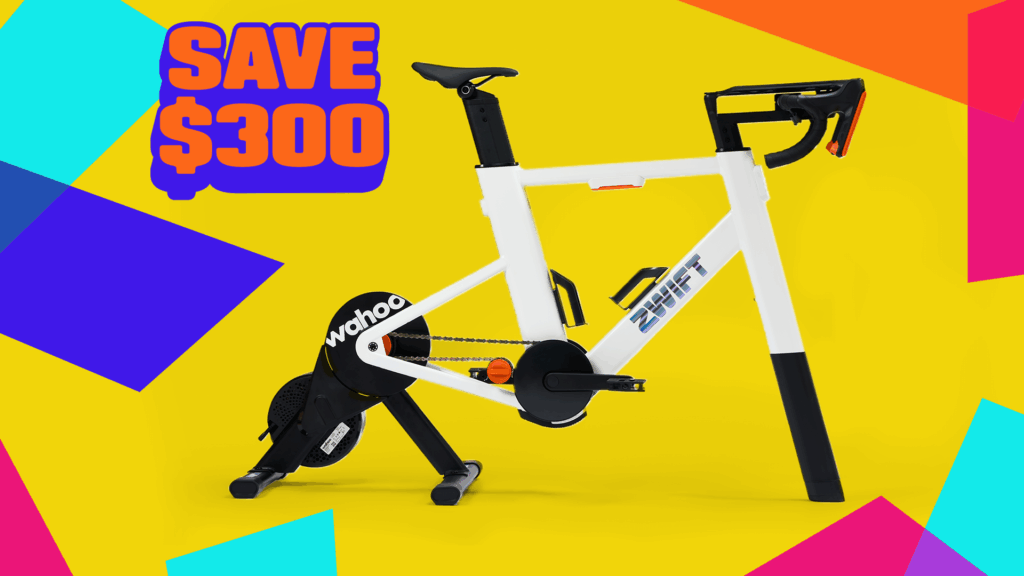
Zwift just launched the second piece of their Zwift’s Big Weekend event: an unprecedented hardware sale! This is the biggest discount we’ve ever seen on the full Zwift Ride setup, which now includes Wahoo’s latest trainer, the feature-packed KICKR CORE 2.

With a price well below other smart bikes, the Zwift Ride is already the best deal around for anyone looking for a turnkey Zwift setup. But this weekend, riders can pick up the Zwift Ride + Wahoo KICKR CORE 2 package for just $999.99/€999.99/£999.99. That’s a huge discount off the regular price, especially for Zwifters in the US:

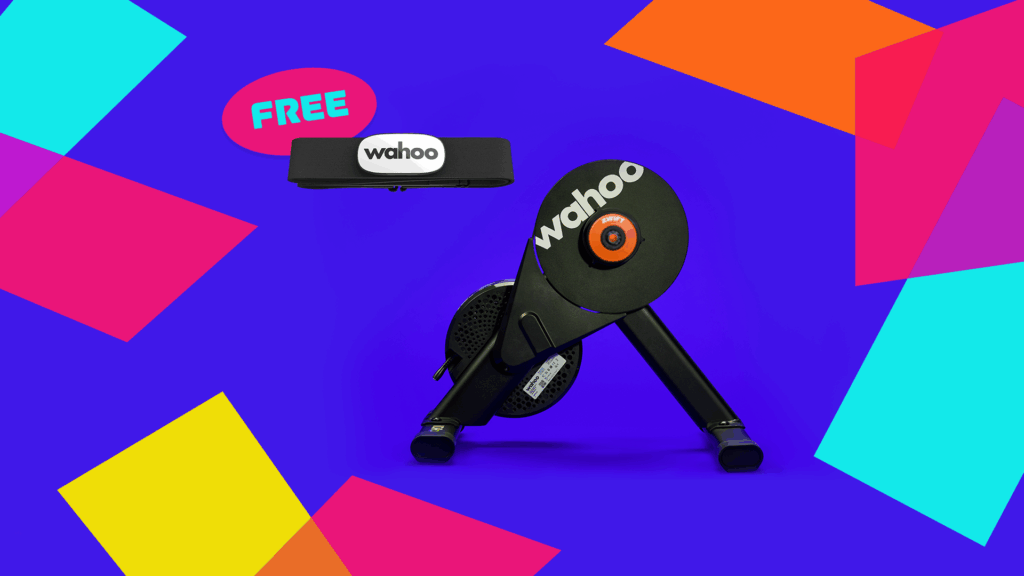
If you aren’t looking for a full Zwift Ride setup, but would love a trainer upgrade, Zwift is running a second promo on the new Wahoo KICKR CORE 2. This trainer, released less than a month ago, improves on the highly popular KICKR CORE by adding Wi-Fi connectivity, race mode, Bluetooth bridging, and more.

Purchase the CORE 2 from Zwift and you’ll get a free Wahoo TRACKR Heart Rate Monitor ($99.99/€89.99/£79.99 retail) thrown in!

Note: Zwift says, “During checkout the TRACKR will appear as a free add-on option,” so be sure to add it to your cart during the checkout process.

A final note: Zwift links in this post (and throughout this site) are affiliate links, so when you shop through these links, Zwift Insider is paid a small affiliate commission from Zwift. Thanks in advance for your support!

Fedora 43 Beta Released: A Preview of What’s Ahead

Fedora’s beta releases offer one of the earliest glimpses into the next major version of the distribution — letting users and developers poke, test, and report issues before the final version ships… This beta is largely feature-complete: developers hope it will closely match what the final release looks like (barring last-minute fixes). The goal is to surface regression bugs, UX issues, and compatibility problems before Fedora 43 is broadly adopted.

Exposure’s new Zenith MK4 light is cheaper, brighter and charges 66% faster than before

SQUIRREL_13377057

Exposure’s Zenith is the brand’s most powerful helmet-mounted light, and this new MK4 version incorporates many features fans have been demanding for years.

The Zenith MK4 now features USB-C charging, which came to Exposure’s whole range last month when it was released.

Exposure says this has reduced charging time by 66 per cent, meaning you can charge the light to full in a claimed 2 hours and 45 minutes.

The mountain bike light is also brighter than ever before, with the brand bumping the maximum lumen output to 2,360.

In a world of ever-more-expensive kit, Exposure has managed to add all of these features while reducing the retail price of the light from the previous generation to £280 / $305 from £295 / $345.

While that’s not cheap, Exposure products have a good reputation for quality and often score well in our group tests.

I’ve had the opportunity to use the light a little since receiving it, so I’ll include some impressions throughout this first look.

Finally USB-C

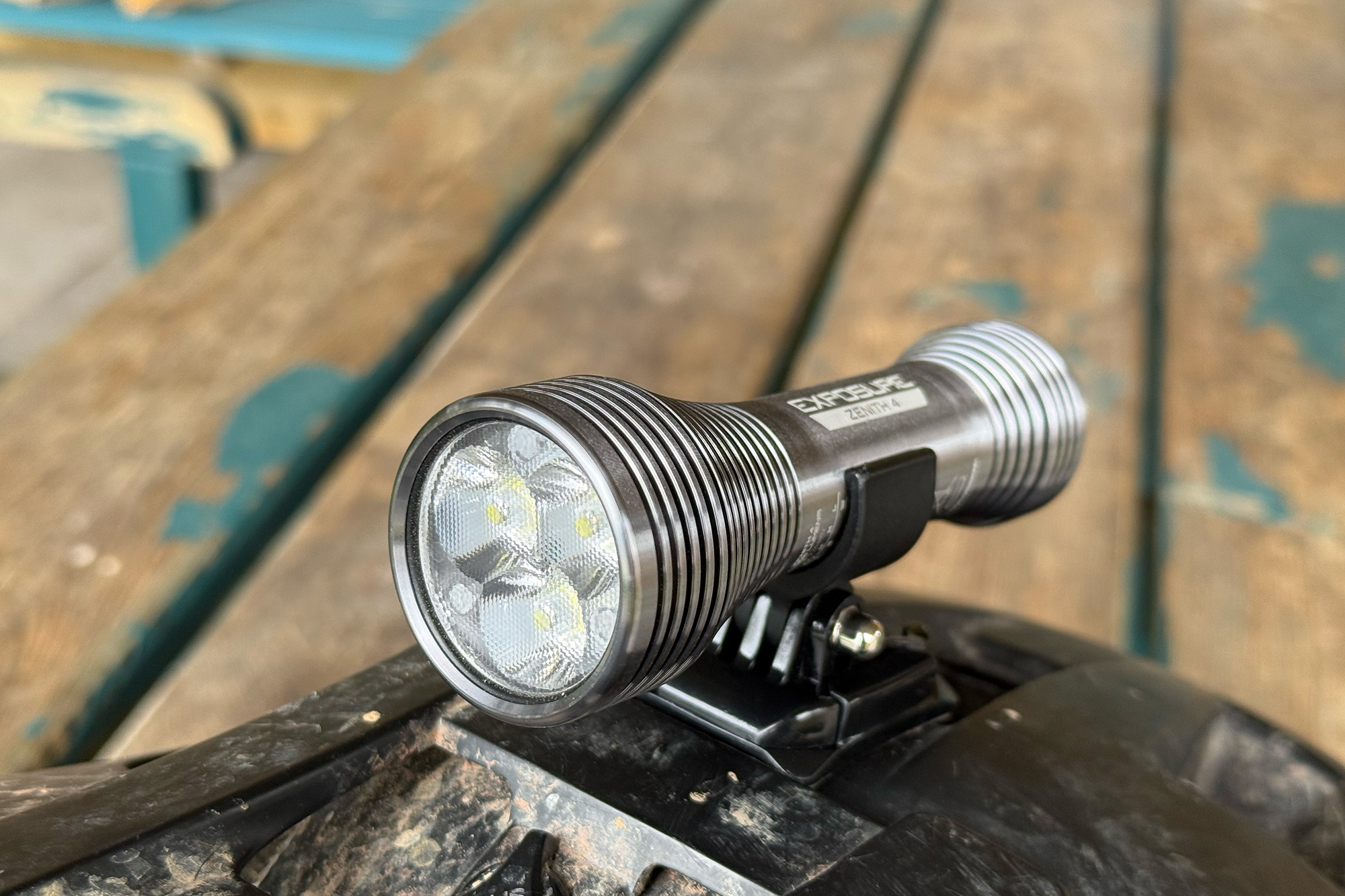
Exposure Zenith 4 in hand
The light measures 120mm in length. Nick Clark / Our Media

The British brand has finally updated the charge port for its lights, with the DC port being substituted for a USB-C.

Not only does this improve charging speed, but it also means scrambling around for a charging cable should be easier when an impromptu after-work ride is mentioned in the group chat.

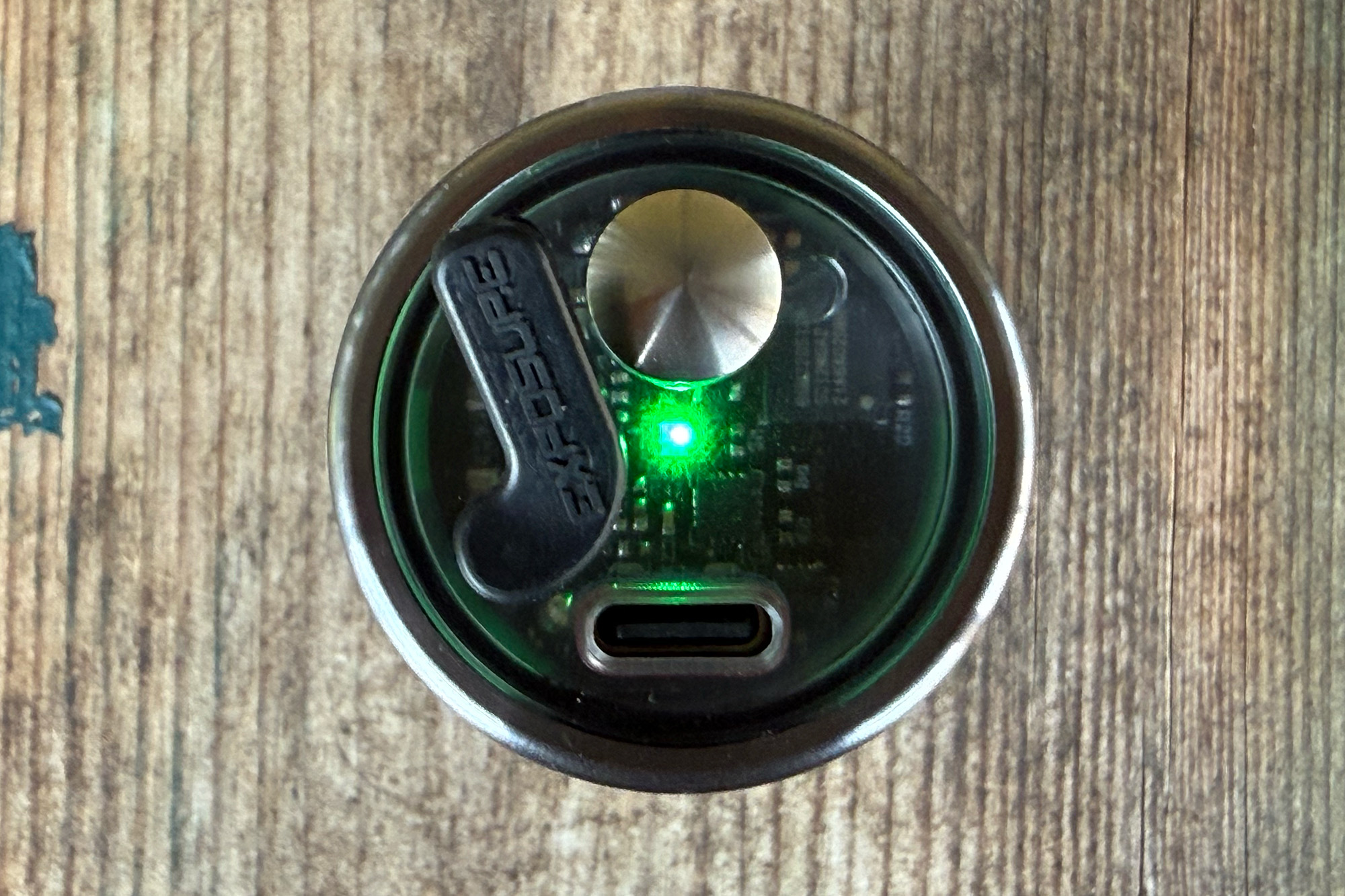
Exposure Zenith 4 USB-C port
While the plastic port feels flimsy, it does do its job. Nick Clark / Our Media

The port is covered by a small plastic tab, which, while it works to keep dust out, doesn’t feel like the most robust solution.

Despite this, Exposure says the Zenith MK4 is IP67-rated, meaning those nighttime showers shouldn’t have you riding home in the dark.

Exposure has given the Zenith MK4 a 6,000mAh Li-Ion battery, which it says will last up to 36 hours.

The Zenith MK4 also gets Exposure’s Tap technology, which enables you to switch between power levels by tapping the entire device rather than searching for a button on the rear.

Exposure Zenith 4 on helmet
The light attaches to the helmet and bar mount via a clip. Nick Clark / Our Media

While this makes it easier to switch the light between modes and makes you more conservative with your power, I’m not sure it’s much more intuitive than clicking the button on the back of the light. If you thud your head on an overhanging tree, you can quickly be riding in less light than you expected.

There are three sensitivity modes to limit this, but I’m yet to be convinced of this feature.

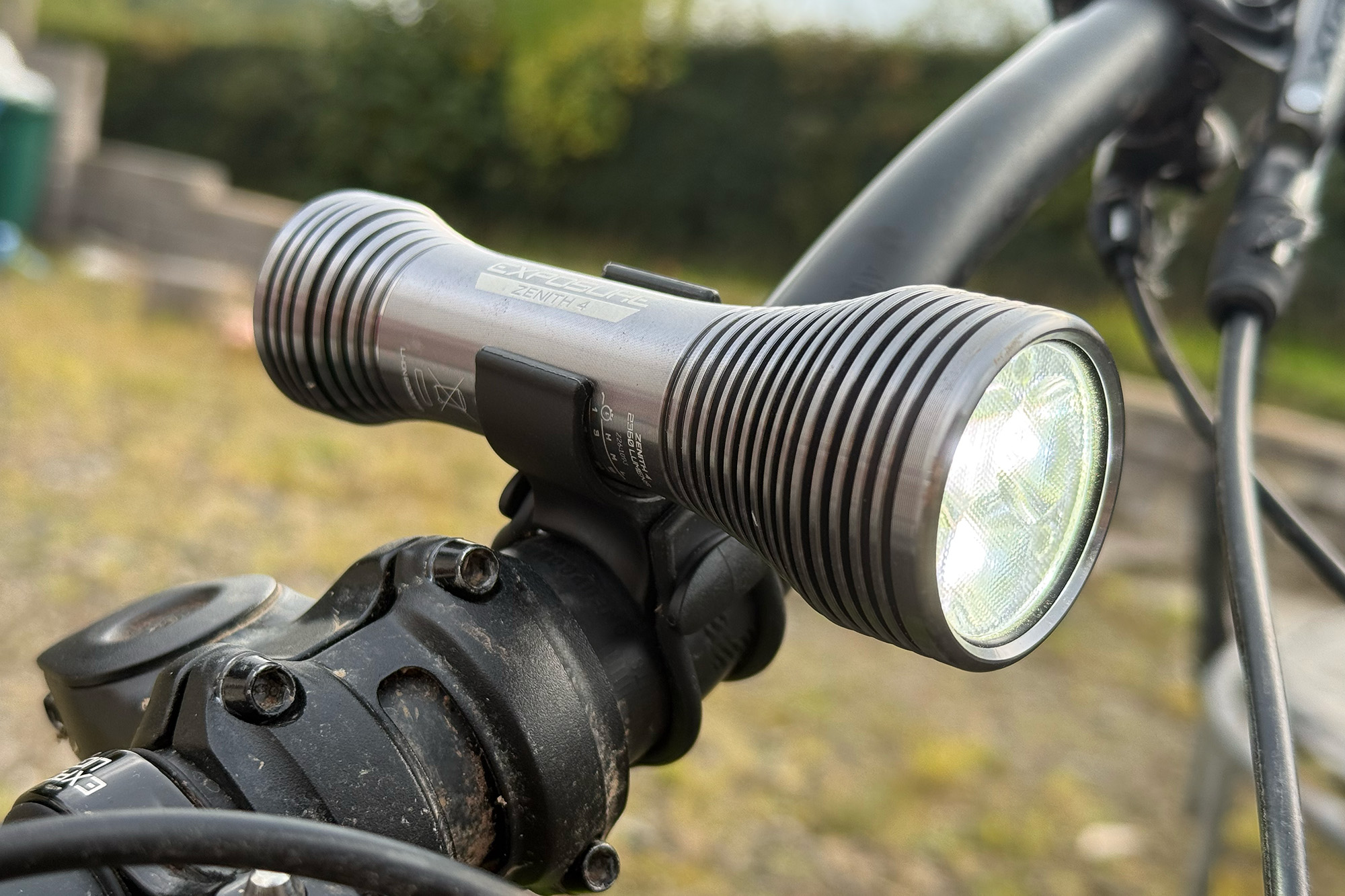
The light has three White XPL2 LEDs in the front, which shine up to 2,360 lumens down the trail.

I’ve mostly been using the Zenith MK4 in this setting, and it provides a good spread of light, with decent contrast for obstacles.

Exposure Zenith 4 on bars
With 2,360 lumens, the Zenith MK4 should be bright enough to navigate by. Nick Clark / Our Media

Having used lights with a more focused beam in the past, this feels better for spotlighting features such as the lips of jumps and drops.

The Zenith’s white light feels less taxing on the eyes than others and helps with depth perception.

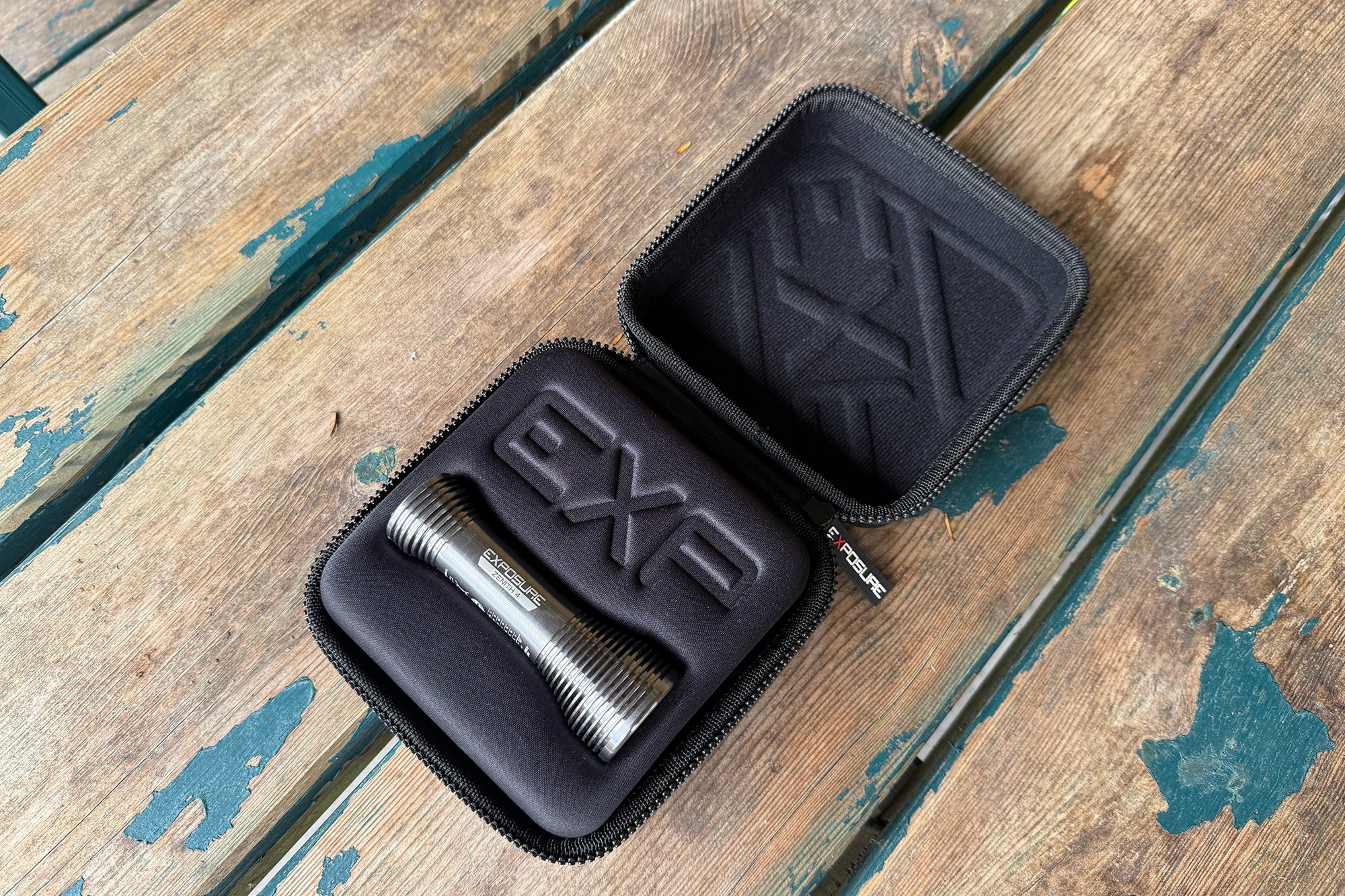
Exposure Zenith 4 in box
The plush case keeps the light safe and easy to store. Nick Clark / Our Media

In the box, Exposure supplies a helmet mount and bar mount for the light, meaning it could have a dual purpose in your life. I’d consider using it for road riding in a lower-brightness mode.

Having smashed my face up too many times on a mountain bike, I’ve opted for the GoPro-style adhesive sticker mount on my helmet, which has performed really well for my nighttime enduro rides.

Exposure also provides a lanyard for the light, which keeps it attached to your helmet should you knock it out of the mount.

SQUIRREL_13377057

Ian Kelling is the new FSF president

The Free Software Foundation has announced
the selection of Ian Kelling as the organization’s president.

Kelling, age forty-three, has held the role of a board member and a
voting member since March 2021. The board said of Kelling’s
confirmation: “His hands-on technical experience resulting from his
position as the organization’s senior systems administrator proved
invaluable for his work on the board of directors. The board is
confident Kelling is the right person to help the organization
achieve its long-term goals. His commitment to free software comes
from a life of exploring ways to exert user control. He has the
technical knowledge to speak with authority on most free software
issues, and he has a strong connection with the community as an
active speaker and blogger.”

Cops: Accused Vandal Confessed To ChatGPT

alternative_right shares a report from the Smoking Gun: Minutes after vandalizing 17 cars in a Missouri college parking lot, a 19-year-old sophomore had a lengthy ChatGPT conversation during which he confessed to the crime, asked about the possibility of getting caught, and wondered, “is there any way they could know it was me,” according to a police probable cause statement. Ryan Schaefer was arrested yesterday and charged with felony property damage for a rampage early Sunday at a Missouri State University parking lot. Investigators allege that Schaefer shattered car windows, ripped off side mirrors, dented hoods, and broke windshield wipers during the 3 AM spree.

When confronted with surveillance footage and other evidence, Schaefer said that he could see the resemblance between the suspect and himself. At that point, Schaefer reportedly consented to a search of his iPhone. A subsequent review of the device revealed location data placing Schaefer “at or near the scene of the crime,” as well as a “troubling dialogue exchange this defendant seems to have had with artificial intelligence software installed on his phone,” prosecutors reported. The incriminating ChatGPT conversation can be found here.


Read more of this story at Slashdot.

Apple removes ICEBlock from the App Store after Trump administration’s demand

Apple has removed ICEBlock, the app which allowed users to put a pin on a map to show where ICE agents have recently been spotted, from the App Store. It has also pulled other apps that served a similar purpose. According to Fox Business, Attorney General Pam Bondi demanded their takedown, telling Apple that the apps were “designed to put ICE agents at risk just for doing their jobs.” Bondi added that “violence against law enforcement is an intolerable red line that cannot be crossed.” She also said that the “Department of Justice will continue making every effort to protect [its] brave federal law enforcement officers, who risk their lives every day to keep Americans safe.”

“We created the App Store to be a safe and trusted place to discover apps,” Apple told the publication in a statement. “Based on information we’ve received from law enforcement about the safety risks associated with ICEBlock, we have removed it and similar apps from the App Store.” 

Bondi demanded the apps’ removal after the FBI and the administration reported that the gunman who attacked an ICE facility in Dallas used tracking apps, including ICEBlock, to open fire from a rooftop. The gunman killed two immigrants and injured a third, but he was allegedly targeting ICE agents. Joshua Aaron, the app’s developer, told Fox Business that he was “incredibly disappointed” by Apple’s actions. “Capitulating to an authoritarian regime is never the right move,” he said. “Apple has claimed they received information from law enforcement that ICEBlock served to harm law enforcement officers. This is patently false.” Aaron added: “We are determined to fight this with everything we have. Our mission has always been to protect our neighbors from the terror this administration continues to reign down on the people of this nation.”

ICEBlock climbed to the top of the App Store charts in July after administration officials slammed it, making more people aware of its existence. At the time, officials warned Aaron that they were “looking at him, and he better watch out” because the app threatens the lives of law enforcement agents. NBC News reports that it was downloaded more than 1 million times since it was introduced. Tom Homan, the administration’s “border czar,” recently told Fox News that the government will investigate the “people who put these apps up” because they put “law enforcement at great risk.”

This article originally appeared on Engadget at https://www.engadget.com/apps/apple-removes-iceblock-from-the-app-store-after-trump-administrations-demand-031659651.html?src=rss

Autism Should Not Be Seen As Single Condition With One Cause, Say Scientists

Bruce66423 shares a report from The Guardian: Those diagnosed as small children typically have distinct genetic profile from those diagnosed later, [finds an international study based on genetic data from more than 45,000 autistic people in Europe and the U.S]. So, there’s more than one condition out there that’s being diagnosed as “autism.” This, of course, messes with the debate about causes; one version of autism may be caused by something for which the evidence is very weak overall. “The term ‘autism’ likely describes multiple conditions,” said Dr Varun Warrier, from Cambridge’s department of psychiatry, senior author of the research. “For the first time, we have found that earlier and later diagnosed autism have different underlying biological and developmental profiles.”

“It is a gradient,” added Warrier. “There are also many other factors that contribute to age of diagnosis, so the moment you go from averages to anything that is applicable to an individual, it’s false equivalency.”

The analysis has been published in the journal Nature.


Read more of this story at Slashdot.
Ford IT Systems Tampered With To Display Vulgar Anti-RTO Message Across Office Screens

Ford’s push for a four-day in-office workweek hit turbulence when someone hijacked meeting room screens to display an anti-RTO protest image targeting CEO Jim Farley. The company quickly removed it and is investigating. The Detroit Free Press reports: According to photos employees took of the image, which were posted on social media and sent to the Detroit Free Press, it contained an image of CEO Jim Farley along with a big red circle with a slash through it over his face and the words “(Expletive) RTO.”

“We’re aware of an inappropriate use of Ford’s IT technology and we’re investigating it,” Dave Tovar, Ford spokesman, told the Detroit Free Press. Tovar said the image was up for “a short amount of time” and Ford was able to quickly remove it. He said the company is investigating whether the image appeared only in Dearborn offices or globally.

Farley mandated that employees return to the office four days a week earlier this year and it has been in place since Sept. 1, with no fallout such as people quitting over it, Tovar said. Therefore, Tovar said, “I wouldn’t be able to speculate on it, as to why someone would do this.”


Read more of this story at Slashdot.
Colorado Deploys Self-Driving Crash Trucks To Protect Highway Workers

Colorado unveiled an autonomous crash-protection truck designed to absorb highway work zone collisions, removing human drivers from one of the most dangerous road maintenance roles. The Denver Gazette reports: At a press event in Falcon on Monday, the Colorado Department of Transportation demonstrated an autonomous truck-mounted attenuator — a driverless crash-protection vehicle designed to absorb impacts in roadside work areas. These trucks are already in the state’s fleet, but previously required a worker in the cab, leaving them exposed during crashes. “These vehicles are designed to get hit so people don’t have to,” said Kay Kelly, CDOT’s chief of innovative mobility. “We want to remove the human from that truck whenever possible.”

[…] Colorado pioneered this technology in 2017, becoming the first state to test it. Developed by San Diego-based defense contractor Kratos Defense, the company started on autonomous follower systems in 2012 and installed its initial version in Colorado in 2013, according to Maynard Factor, Kratos’ vice president of business development. The system uses sensors, actuators, and video links, allowing the unmanned crash truck to trail directly behind a paint-striping or maintenance vehicle. The lead vehicle records its route and transmits navigation data to the follower. Both are equipped with global positioning system and communication tools, with the lead driver monitoring via video feed.

“It’s a convoy system,” Factor said. “The leader does the work, while the driverless vehicle mirrors its path. This protects the operator with the crash truck instead of sitting inside it.” Sensors detect objects darting into the lane, triggering an automatic stop. Operators can pause or override via a user interface featuring forward-facing cameras on the autonomous truck and rear-facing ones on the work vehicle. The trucks, existing state assets, are driven to sites and then switched to autonomous mode. Outfitting each with the technology costs about $1 million, excluding the base vehicle and crash absorber.


Read more of this story at Slashdot.
New Zealand’s Institute of IT Professionals Collapses

An anonymous reader quotes a report from The Register: New Zealand’s Institute of IT Professionals has discovered it is insolvent and advised members it has no alternative but to enter liquidation. The Institute (ITP) wrote to members on Thursday and posted a document titled “Important Update on ITP’s Future” that reveals it has “reached a point where the organization cannot continue. After a full review of our finances, the Board has confirmed that ITP is insolvent.”

Insolvency seems to have come as something of a surprise. “These debts are historic. They go back over many years. While some of the issues were worked on in more recent times, the full scale of the problem only became visible during the leadership change in 2025,” the Update states. “Once the Board understood the full picture, it was clear that there was no responsible way forward other than liquidation.” […]

ITP’s constitution requires its members to formally resolve to wind up the organization, so as one of its final acts the group has called a Special General Meeting (SGM) for 23 October 2025 to confirm liquidation and appoint a liquidator. This situation impacts more than ITP’s ~10,000 members, because the organization offers assessment services that assess whether IT professionals’ skills and qualifications make them eligible to move to New Zealand for work. ITP also certifies IT degrees at New Zealand universities, and oversees the NZ Cloud Computing Code of Practice. ITP also conducted educational and advocacy activities aimed at growing New Zealand’s tech workforce.


Read more of this story at Slashdot.
Meta Reveals The First Technical Details Of Its Horizon Engine

Meta has revealed the first technical details of its new Horizon Engine.

Announced at Connect 2025 two weeks ago, Meta Horizon Engine is a new engine for Horizon Worlds and Quest’s new Immersive Home, where in both cases it replaces Unity.

The new Immersive Home is available as part of Horizon OS v81, currently only on the Public Test Channel (PTC), while in Horizon Worlds it’s available in worlds made using the upcoming Horizon Studio, which right now means only a few first-party worlds from Meta.

At Connect, Mark Zuckerberg said that Meta has spent “the last couple of years” building the new engine “from scratch”, and claimed that it brings 4x faster world loading and support for 100+ users in the same instance.

“This engine is fully optimized for bringing the metaverse to life. It is much faster performance and to load things, much better graphics, much easier to create with”, Zuckerberg said. But there wasn’t much in the way of specific technical details.

Now, Meta has published a blog post describing some details of Horizon Engine.

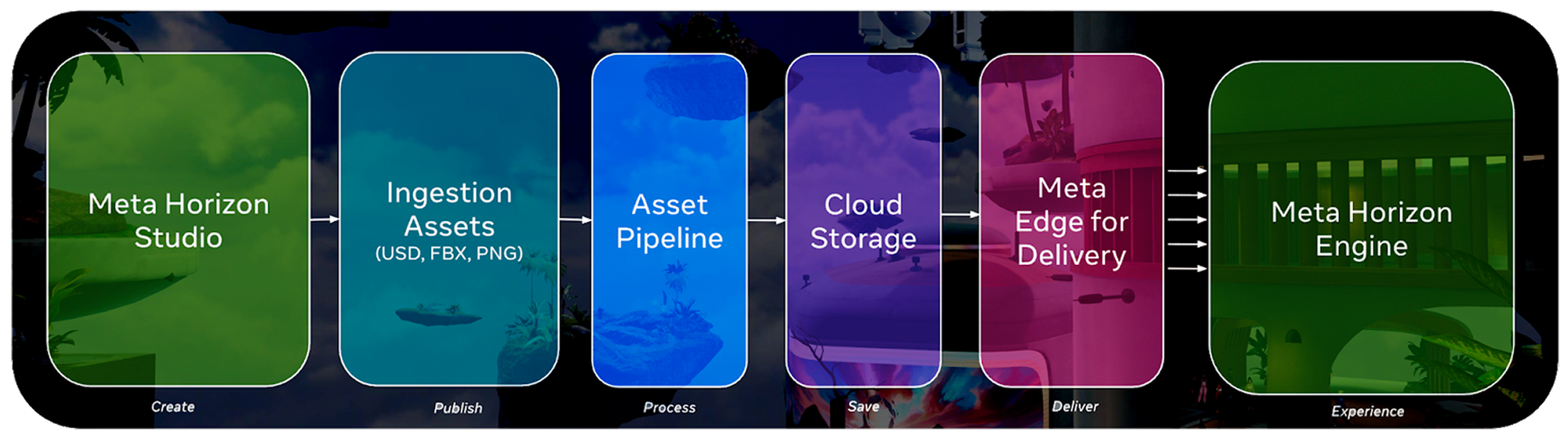
Horizon Engine “automatically scales from high-end cloud rendering to running on mobile phones”, Meta says, and can support “crowds of live avatars in a single shared space, expansive environments that can be streamed as sub-levels”, with “automatic management of object quality through automatically generated LODs”.

Here’s what Meta says about the core systems of Horizon Engine:

• Assets: A robust, data-driven, and creator-controlled asset pipeline that supports modern local workflows with standard tools and familiar middleware like PopcornFX for effects, FMOD for sound, Noesis for UI, and PhysX for physics.

• Audio: A spatialized audio system that stitches together experience sound, immersive media formats, and hybrid-mixed VoIP into a single immersive experience.

• Avatar: First-class integration of Meta Avatars, providing consistent embodiment and interaction behavior across the platform, and networked cross-instance crowd systems.

• Networking: A secure and scalable actor-based network topology that allows for low latency player-predicted interactions with server validation and creator-defined networked components.

• Rendering: A mobile and VR-first forward renderer, with a physically based shading model, built-in light baker, probe-defined lighting for dynamic objects, and a creator-defined material framework through a powerful, extensible, and stackable surface shader system.

• Resource Management: A resource manager, streaming system, and multi-threaded task scheduling framework to maintain the user experience by balancing quality and cost within the variable performance envelope of Quest and other platforms.

• Scripting: An extensible Typescript authoring environment to unify logic and control flow in worlds, with creator-defined components and clear entity lifecycles.

• Simulation: A data oriented ECS-based simulation system capable of efficiently simulating millions of networked entities.

It’s notable that Meta describes the engine as “running on mobile phones”. Horizon Worlds on smartphones is currently cloud streamed (poorly, in my experience), meaning each mobile session has a non-trivial cost to Meta, and requires a strong and consistent internet connection from the user. If the company moves to native rendering on phones, it could result in a more responsive and reliable experience, bolstering its ambitions of competing with the likes of Fortnite and Roblox.

Trump admin defiles even the “out of office” email auto-reply

At this point, you sort of expect Donald Trump’s big-picture assaults on free speech, foreigners, and the rule of law. (Sometimes, as in the case of the new outright assault on US higher ed, all three are packaged in one convenient wrapper.) Although troubling and dangerous, these kinds of attacks are all at least predictably unhinged; most are drawn from the standard authoritarian playbook or its more recent “illiberal democracies” update.

It’s when you look into the details, though, that one is constantly reminded: Nothing is too petty to be corrupted in Trumpworld.

Not even “out of office” auto-replies.

Read full article

Comments

AMD In Early Talks To Make Chips At Intel Foundry

“Your AMD chips may have Intel Inside soon,” writes longtime Slashdot reader DesScorp. “Discussions are underway between the two companies to move an undisclosed amount of AMD’s chip business to Intel foundries. (AMD currently does their production through TSMC.) The talks come hot on the heels of a flurry of other Intel investments.” Tom’s Hardware reports: In the past several weeks, Intel has seen a flurry of activity and investments. The United States announced a 9.9% ownership stake in Intel, while Softbank bought $2 billion worth of shares. Alongside Nvidia, Intel announced new x86 chips using Nvidia graphics technology, with the graphics giant also purchasing $5 billion in Intel shares. There have also been reports that Intel and Apple have been exploring ways to work together. The article notes that there is a trade/political dimension to an AMD-Intel deal as well: It makes sense for Intel’s former rivals — especially American companies — to consider coming to the table. The White House is pushing for 50% of chips bound for America to be built domestically, and tariffs on chips aren’t off the table. Additionally, doing business with Intel could make the US government, Intel’s largest shareholder, happy, which can be good for business. AMD faced export restrictions on its GPUs earlier this year as the US attempted to throttle China’s AI business.


Read more of this story at Slashdot.

Rayhunter Tutorial: Convert a Verizon Orbic Speed RC400L into a Stingray Detector

In this tutorial, we will show you how to install Rayhunter on a Verizon Orbic Speed RC400L mobile hotspot using Kali GNU/Linux on a x86_64 architecture computer. This article will also detail accessing the Rayhunter web interface, maintaining your Rayhunter, and [optionally] reporting Cell Site Simulator (also known as IMSI-catcher or “Stingray”) detection data to the Electronic Frontier Foundation (EFF) for further analyzation. Rayhunter setup is cheap (~$20) and user-friendly – a project for technical and less-technical users alike!