Is Instagram Eavesdropping Your Phone’s Mic? CEO Speaks Out

Is Instagram Eavesdropping Your Phone’s Mic? CEO Speaks Out
Instagram CEO Adam Mosseri took to his platform to “myth bust” claims that the Meta-owned app is listening to user’s microphones for the purpose of pushing targeted advertisements and related content. It has been a prominent theory across several social networking apps for many years that this is happening, but hard evidence actually proving

California regulators threaten to revoke Tesla’s insurance license for mishandling claims

Tesla launched its own auto insurance options for California customers back in 2019, but it may soon lose its authorization to do just that. The California Department of Insurance (CDI) issued enforcement actions against Tesla Insurance, which acts as an agent for State National Insurance Company and is also named in the legal notice. The issued warning claims that Tesla Insurance and State National saw “repeated failures to comply with long-standing claims handling laws.” The agency also accused Tesla Insurance of “egregious delays” when responding to its customers’ claims and not conducting “thorough, fair and objective investigations of claims.”

According to the filing, the CDI received 97 complaints about State National in 2022 and determined that 21 were justified, while also noting that the insurance provider committed 40 violations of the state’s insurance regulations. The numbers skyrocketed over the years, eventually hitting 1,095 received complaints about State National, which were boiled down to 415 justified complaints between January 1, 2025 and September 22, 2025. Within this year’s complaints so far, the CDI said that State National committed 1,498 violations of the state’s insurance code. 

As for Tesla Insurance, the CDI received 842 complaints and said that 166 of which were justified in the same time period. The agency also accused Tesla of committing 532 violations. On top of the violations, the state agency claimed that Tesla Insurance’s Head of Claims position was left vacant for several months, and when eventually filled, saw frequent turnover between April 2023 and May 2025.

After the filing on Friday, Tesla Insurance and State National have 15 days to respond to the CDI. If the two insurance providers don’t resolve the issues laid out in the complaint, they will be put in front of a judge who will determine if they can continue offering insurance in the state. Along with the potential regulatory consequences, Tesla Insurance and State National will face “monetary penalties up to $5,000 for each unlawful, unfair, or deceptive act, or up to $10,000 for each such act determined to be willful.”

This article originally appeared on Engadget at https://www.engadget.com/transportation/evs/california-regulators-threaten-to-revoke-teslas-insurance-license-for-mishandling-claims-180942929.html?src=rss

The School That Replaces Teachers With AI

Long-time Slashdot reader theodp writes: CBS News has a TL;DR video report, but Jeremy Stern’s earlier epic Class Dismissed [at Collosus.com] offers a deep dive into Alpha School, “the teacherless, homeworkless, K-12 private school in Austin, Texas, where students have been testing in the top 0.1% nationally by self-directing coursework with AI tutoring apps for two hours a day.

Alpha students are incentivized to complete coursework to “mastery-level” (i.e., scoring over 90%) in only two hours via a mix of various material and immaterial rewards, including the right to spend the other four hours of the school day in ‘workshops,’ learning things like how to run an Airbnb or food truck, manage a brokerage account or Broadway production, or build a business or drone.” Founder MacKenzie Larson’s dream that “kids must love school so much they don’t want to go on vacation” drew the attention of — and investments of money and time from — mysterious tech billionaire Joe Liemandt, who sent his own kids to Larson’s school and now aims to bring the experience to rest of the world. “When GenAI hit in 2022,” Liemandt said, “I took a billion dollars out of my software company. I said, ‘Okay, we’re going to be able to take MacKenzie’s 2x in 2 hours groundwork and get it out to a billion kids.’ It’s going to cost more than that, but I could start to figure it out. It’s going to happen. There’s going to be a tablet that costs less than $1,000 that is going to teach every kid on this planet everything they need to know in two hours a day and they’re going to love it.

“I really do think we can transform education for everybody in the world. So that’s my next 20 years. I literally wake up now and I’m like, I’m the luckiest guy in the world. I will work 7 by 24 for the next 20 years to fricking do this. The greatest 20 years of my life are right ahead of me. I don’t think I’m going to lose. We’re going to win.”

Of course, Stern writes at Collosus.com, there will be questions about this model of schooling, but asks: “Suppose that from kindergarten through 12th grade, your child’s teachers were, in essence, stacks of machines. Suppose those machines unlocked more of your child’s academic potential than you knew was possible, and made them love school. Suppose the schooling they loved involved vision monitoring and personal data capture. Suppose that surveillance architecture enabled them to outperform your wildest expectations on standardized tests, and in turn gave them self-confidence and self-esteem, and made their own innate potential seem limitless…. Suppose poor kids had a reason to believe and a way to show they’re just as academically capable as rich kids, and that every student on Earth could test in what we now consider the top 10%. Suppose it allowed them to spend two-thirds of their school day on their own interests and passions. Suppose your child’s deep love of school minted a new class of education billionaires.

“If you shrink from such a future, by which principle would you justify stifling it?”


Read more of this story at Slashdot.

Windows 11 25H2 Installs Can Be A Breeze With This Rufus Tool Tip

Windows 11 25H2 Installs Can Be A Breeze With This Rufus Tool Tip
For years now, folks have been using Rufus to bypass Windows 11’s onerous installation requirements. Got a system without Secure Boot or a functional TPM? No problem! Some buzz was going around that this was no longer possible with Windows 11 25H2, but we’re happy to report that it still works the same as before—thanks to a bugfix patch by

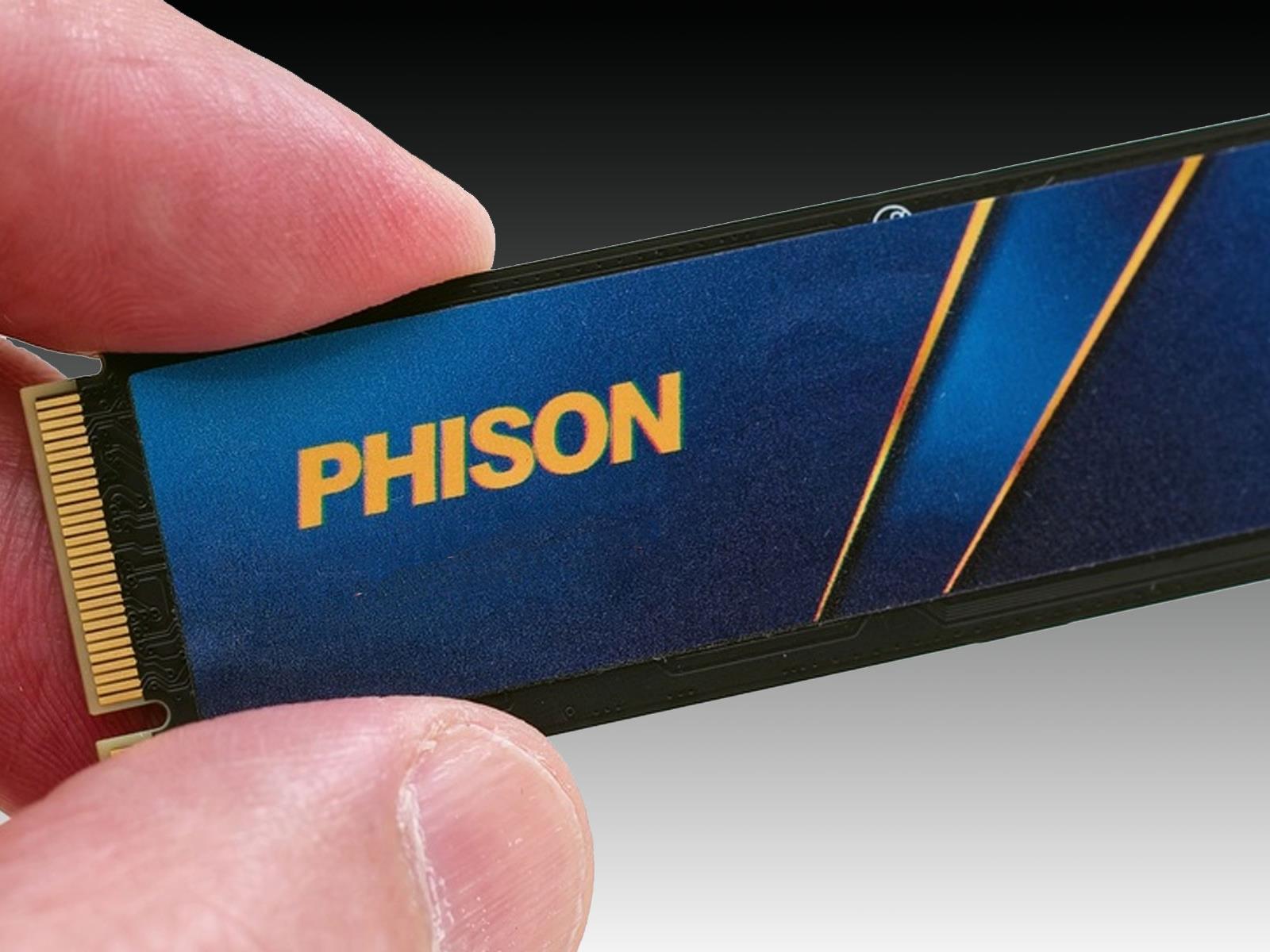
Phison CEO Predicts Severe NAND Memory Shortage Through 2035 As AI Surges

Phison CEO Predicts Severe NAND Memory Shortage Through 2035 As AI Surges
The rise of artificial intelligence (AI) has pushed unprecedented demand for data center hardware, both in terms of graphics chips capable of powering large language models and large-scale data analytics (among many other tasks) , and high-speed, low-latency storage. As such, Phison CEO Pua Khein-Seng claims a severe NAND storage looms. He

CNN Warns Food Delivery Robots ‘Are Not Our Friends’

The food delivery robots that arrived in Atlanta in June “are not our friends,” argues a headline at CNN.
The four-wheeled Serve Robotics machines “get confused at crosswalks. They move with the speed and caution of a first-time driver, stilted and shy, until they suddenly speed up without warning. Their four wheels look like they were made for off-roading, but they still get stuck in the cracks of craggy sidewalks. Most times I see the bots, they aren’t moving at all… ”

Cyclists swerve to avoid them like any other obstacle in the road. Patrons of Shake Shack (a national partner of Serve) weave around the mess of robots parked in front of the restaurant to make their way inside and place orders on iPads… The dawn of everyday, “friendly” robots may be here, but they haven’t proven themselves useful — or trustworthy — yet. “People think they are your friends, but they’re actually cameras and microphones of corporations,” said Joanna Bryson, a longtime AI scholar and professor of ethics and technology at the Hertie School in Berlin. “You’re right to be nervous…”

When robots show up in a city, it’s often not because the residents of said city actively wanted them there or had a say in their arrival said Edward Ongweso Jr. [a researcher at the Security in Context initiative, a tech journalist and self-proclaimed “decelerationist” urging a slower rollout for Silicon Valley tech pioneers and civic leaders embracing untested and unregulated technology]… “They’re being rolled out without any sort of input from people, and as a result, in ways that are annoying and inconvenient,” Ongweso Jr. said. “I suspect that people would feel a lot differently if they had a choice … ‘what kind of robots are we interested in rolling out in our homes, in our workplaces, on our college campuses or in our communities?'”

Delivery robots aren’t unique to Atlanta. AI-driven companies including Avride and Coco Robotics have sent fleets of delivery robots to big cities like Chicago, Dallas and Jersey City, as well as sleepy college towns… “They’re popping up everywhere,” Ongweso Jr. continued, “because there’s sort of a realization that you have to convince people to view them as inevitable. The way to do that is to just push it into as many places as possible, and have these spectacle demonstrations, get some friendly coverage, try to figure out the ways in which you’re selling this as the only alternative…. If you humanize it, you’re more willing to entertain it and rationalize it being in your area — ‘That’s just Jeffrey,’ or whatever they name it — instead of seeing it for what it is, which is a bunch of investors privately encroaching on a community or workplace,” Ongweso Jr. said. “It’s not the future. It’s a business model.”
Serve Robotics CEO Ali Kashani told CNN their goal in Atlanta was reducing traffic — and that the robots’ average delivery distance there was under a mile, taking about 18 minutes per delivery.

Serve Robotics has also launched their robots in Chicago, Los Angeles, Miami, Dallas-Fort Worth and Atlanta, according to the site Robotics 247, as part of an ongoing collaboration with Uber Eats. (Although after the robots launched in Los Angeles, a man in a mobility scooter complained the slow-moving robot swerved in front of him.) And “residents of other cities have had to rescue them when they’ve been felled by weather,” reports CNN.
CNN also spoke to Dylan Losey, an assistant professor of mechanical engineering at Virginia Tech who studies human-robot interaction, who notes that the robots’ AI algorithms are “completely unregulated… We don’t know if a third party has checked the hardware and software and deemed the system ‘safe’ — in part because what it means for these systems to be ‘safe’ is not fully understood or standardized.” (CNN’s reporter adds that “the last time I got close to a bot, to peer down at a flier someone left on top of it, it revved at me loudly. Perhaps they can sense a hater.”)

But Serve’s CEO says there’s one crucial way robot delivery will be cheaper than humans. “You don’t have to tip the robots.”


Read more of this story at Slashdot.

Microsoft sneakily drops DLC discounts that come with Xbox Game Pass

After Microsoft decided to jack up the price of its Xbox Game Pass subscriptions to up to $30 a month, it has another unwelcome surprise for members. In a statement provided to multiple outlets like Insider Gaming, a spokesperson for Microsoft confirmed it has removed the discounts for DLC that come with a Game Pass subscription, replacing them by offering points for its Rewards program.

While initial reports discovered the change with the Call of Duty franchise, the Microsoft statement later clarified that this major shift isn’t “specific to any one game and reflects all games and DLC purchases.” To replace the discount, Ultimate subscribers will get 10 percent of their purchase back in Rewards points, while Premium members get five percent, when buying qualifying games from the Game Pass library.

Earlier this month, Microsoft detailed in a post that its goal with Game Pass was to “deliver unmatched value” along with an expansive offering of included games. In the same post, Microsoft announced that it would add 45 more games, along with introducing the $10 price hike. With this latest move, Game Pass subscribers even lose out on the immediate 10 percent discount from their purchases and are forced to accept Game Pass store credit instead. This barrage of news has some members questioning their Xbox Game Pass subscription, but there are still ways to secure the previous rate with pre-paid codes.

This article originally appeared on Engadget at https://www.engadget.com/gaming/xbox/microsoft-sneakily-drops-dlc-discounts-that-come-with-xbox-game-pass-160512977.html?src=rss

Scientists Grow Mini Human Brains To Power Computers

“A small number of researchers are making real progress trying to create computers out of living cells,” reports the BBC:

Among those leading the way are a group of scientists in Switzerland, who I went to meet. One day, they hope we could see data centres full of “living” servers which replicate aspects of how artificial intelligence (AI) learns — and could use a fraction of the energy of current methods.

That is the vision of Dr Fred Jordan, co-founder of the FinalSpark lab I visited. We are all used to the ideas of hardware and software in the computers we currently use. The somewhat eyebrow-raising term Dr Jordan and others in the field use to refer to what they are creating is “wetware”. In simple terms, it involves creating neurons which are developed into clusters called organoids, which in turn can be attached to electrodes — at which point the process of trying to use them like mini-computers can begin…

For FinalSpark, the process begins with stem cells derived from human skin cells, which they buy from a clinic in Japan. The actual donors are anonymous… In the lab, FinalSpark’s cellular biologist Dr Flora Brozzi handed me a dish containing several small white orbs. Each little sphere is essentially a tiny, lab-grown mini-brain, made out of living stem cells which have been cultured to become clusters of neurons and supporting cells — these are the “organoids”… After undergoing a process which can last several months, the organoids are ready to be attached to an electrode and then prompted to respond to simple keyboard commands… Electrical stimulations are important first steps towards the team’s bigger goal of triggering learning in the biocomputer’s neurons so they can eventually adapt to perform tasks…

FinalSpark are not the only scientists working in the biocomputing space. Australian firm Cortical Labs announced in 2022 that it had managed to get artificial neurons to play the early computer game Pong. In the US, researchers at Johns Hopkins University are also building “mini-brains” to study how they process information — but in the context of drug development for neurological conditions like Alzheimer’s and autism.
Thanks to long-time Slashdot reader fjo3 for sharing the news.


Read more of this story at Slashdot.

Amazon’s Ring Plans to Scan Everyone’s Face at the Door

Amazon will be adding facial recognition to its camera-equipped Ring doorbells for the first time in December, according to the Washington Post.

“While the feature will be optional for Ring device owners, privacy advocates say it’s unfair that wherever the technology is in use, anyone within sight will have their faces scanned to determine who’s a friend or stranger.”
The Ring feature is “invasive for anyone who walks within range of your Ring doorbell,” said Calli Schroeder, senior counsel at the consumer advocacy and policy group Electronic Privacy Information Center. “They are not consenting to this.” Ring spokeswoman Emma Daniels said that Ring’s features empower device owners to be responsible users of facial recognition and to comply with relevant laws that “may require obtaining consent prior to identifying people…”

Other companies, including Google, already offer facial recognition for connected doorbells and cameras. You might use similar technology to unlock your iPhone or tag relatives in digital photo albums. But privacy watchdogs said that Ring’s use of facial recognition poses added risks, because the company’s products are embedded in our neighborhoods and have a history of raising social, privacy and legal questions… It’s typically legal to film in public places, including your doorway. And in most of the United States, your permission is not legally required to collect or use your faceprint. Privacy experts said that Ring’s use of the technology risks crossing ethical boundaries because of its potential for widespread use in residential areas without people’s knowledge or consent.

You choose to unlock your iPhone by scanning your face. A food delivery courier, a child selling candy or someone walking by on the sidewalk is not consenting to have their face captured, stored and compared against Ring’s database, said Adam Schwartz, privacy litigation director for the consumer advocacy group Electronic Frontier Foundation. “It’s troubling that companies are making a product that by design is taking biometric information from people who are doing the innocent act of walking onto a porch,” he said.
Ring’s spokesperson said facial recognition won’t be available some locations, according to the article, including Texas and Illinois, which passed laws fining companies for collecting face information without permission. But the Washington Post heard another possible worst-case scenario from Calli Schroeder, senior counsel at the consumer advocacy and policy group Electronic Privacy Information Center: databases of identified faces being stolen by cyberthieves, misused by Ring employees, or shared with outsiders such as law enforcement.

Amazon says they’re “reuniting lost dogs through the power of AI,” in their announcement this week, thanks to “an AI-powered community feature that enables your outdoor Ring cameras to help reunite lost dogs with their families… When a neighbor reports a lost dog in the Ring app, nearby outdoor Ring cameras automatically begin scanning for potential matches.”
Amazon calls it an example of their vision for “tools that make it easier for neighbors to look out for each other, and create safer, more connected communities.” They’re also 10x zoom, enhanced low-light performance, 2K and 4K resolutions, and “advanced AI tuning” for video…


Read more of this story at Slashdot.

Many Debian/Ubuntu Packages For Intel Accelerators & Other Intel Software Have Been Orphaned

In addition to some Intel Linux kernel drivers being “orphaned” following the corporate restructuring at Intel between developers being laid off and others deciding to pursue opportunities elsewhere, these changes have also led to a number of Intel-related software packages within Debian being orphaned. In turn these Intel packages are also relied on by Ubuntu and other downstream Debian Linux distributions…

Amazon Prime Day Premium Laptop Deals From HP, Apple, Dell And More

Amazon Prime Day Premium Laptop Deals From HP, Apple, Dell And More
Starting on Tuesday, Amazon will kick off its Prime Big Deal Days event and you can bet we will be tracking the better bargains. In the meantime, there are discounts to be right this moment. We went hunting for laptop deals and found a whole bunch of models on sale from the likes of Apple, Dell, Lenovo, and other major brands. Let’s have a

Discord users’ IDs and data compromised in customer service provider hack

One of Discord’s third-party customer service providers has been infiltrated by an unauthorized party who was able to gain access to users’ information. Discord said it recently discovered the incident, which took place on September 20. The compromised data includes a “small number” of government IDs like driver’s licenses and passports, which some users may have submitted to verify their ages. To be clear, Discord itself wasn’t hacked, and you would only be affected by the data breach if you’ve ever communicated with the messaging service’s Customer Support or Trust & Safety teams. That also means the bad actors didn’t get access to your messages within the service, just whatever you may have communicated with customer support. 

Discord has been sending out emails to people affected by the breach, even those who have no accounts but have contacted their support teams for any reason. In the email, the service said that the compromised information may include your real name, your username if you have one, your email and other contact details, the last four digits of any credit card associated with your account and your IP addresses. The service will also specify in the email it sends you if any ID you’d submitted has been compromised, which puts you at higher risk of identity theft than other users. Discord clarified that the breach would not have compromised your full credit card number, your physical address and your password. 

The service said it quickly revoked the provider’s access to its system after learning about the breach and notified law enforcement of the incident. It also said that it will “frequently audit [its] third-party systems” to ensure they meet Discord’s standards.

This article originally appeared on Engadget at https://www.engadget.com/apps/discord-users-ids-and-data-compromised-in-customer-service-provider-hack-140053655.html?src=rss

ICE wants to build a 24/7 social media surveillance team

United States immigration authorities are moving to dramatically expand their social media surveillance, with plans to hire nearly 30 contractors to sift through posts, photos, and messages—raw material to be transformed into intelligence for deportation raids and arrests.

Federal contracting records reviewed by WIRED show that the agency is seeking private vendors to run a multiyear surveillance program out of two of its little-known targeting centers. The program envisions stationing nearly 30 private analysts at Immigration and Customs Enforcement (ICE) facilities in Vermont and Southern California. Their job: Scour Facebook, TikTok, Instagram, YouTube, and other platforms, converting posts and profiles into fresh leads for enforcement raids.

The initiative is still at the request-for-information stage, a step agencies use to gauge interest from contractors before an official bidding process. But draft planning documents show the scheme is ambitious: ICE wants a contractor capable of staffing the centers around the clock, constantly processing cases on tight deadlines, and supplying the agency with the latest and greatest subscription-based surveillance software.

Read full article

Comments

wafer.space Launches GF180MCU Run 1 for Custom Silicon Fabrication

wafer.space has launched its first pooled silicon fabrication run on Crowd Supply, known as GF180MCU Run 1. The campaign offers designers the opportunity to fabricate 1,000 chips of their own design using GlobalFoundries’ 180 nm mixed-signal process. The initiative is aimed at providing accessible, structured access to custom silicon, with dies expected to ship in […]