The US Immigration and Customs Enforcement (ICE) has plans to build out a 24/7/365 surveillance team that focuses on scouring social media for case leads, as revealed in documents first discovered by Wired. According to public records, ICE has put out a request for information — which allows the agency to detail its preliminary scope of work to gauge any interest from contractors — that details using social media platforms like Facebook, X, Instagram, TikTok, Reddit and YouTube to develop leads on wanted individuals.
For “urgent cases,” the team is expected to work on leads with ICE’s Top 10 Most Wanted within a 30-minute timeframe. However, the breadth of work ranges all the way to low-priority cases, like those involving someone convicted of a non-violent misdemeanor or “has no convictions but has a significant arrest history,” with a more generous eight-hour window to generate leads.
According to the documents, ICE wants at least 12 full-time staff to work at its National Criminal Analysis and Targeting Center in Williston, Vermont, which will require three staffers on duty at all times. On the other side of the country, ICE is looking for a minimum staff of 16 full-time contractors for its Pacific Enforcement Response Center in Santa Ana, California, that will also have a duty rotation of at least two staffers on for “after-hour requirements and emergency situations.”
While the plans are in the very early stages, ICE’s plans are aggressive and even ask how prospective contractors would use artificial intelligence to achieve its goals. The federal agency is no stranger to controversial tech though, as it has previously been accused of using facial recognition.
This article originally appeared on Engadget at https://www.engadget.com/social-media/ice-is-planning-to-create-a-surveillance-team-that-hunts-for-leads-on-social-media-163743143.html?src=rss
There’s an 85-second ad (starring a humanoid robot) that argues “Technology promised to save us time. Instead it stole our focus. Opera Neon gives you both back.”
Or, as BleepingComputer describes it, Opera Neon “is a new browser that puts AI in control of your tabs and browsing activities, but it’ll cost $19.90 per month.”
It’ll do tasks for you, open websites for you, manage tabs for you, and listen to you. The idea behind these agentic browsers is to put AI in control. “Neon acts at your command, opening tabs, conducting research, finding the best prices, assessing security, whatever you need. It delivers outcomes you can use, share, and build on,” Opera noted…
As spotted on X, Opera Neon, the premium AI browser for Windows & macOS, costs $59.90 for nine months. Opera neon invite. This is an early bird offer, but when the offer expires, Opera Neon will cost $19.90 per month.
The browser’s web page says Opera Neon “can handle everyday tasks for you, like filling in forms, placing orders, replying to emails, or tidying up files. Reusable cards turn repeated chores into single-step tasks, letting you focus on the work that matters most to you.”
Opera describes itself as “the company that gave you tabs…”
Most of the attention on PC and console gaming controllers gets centered on Microsoft’s Xbox and Sony’s DualSense wireless gamepads, but those are not the only options. One that flies under the radar is Amazon’s Luna wireless controller. While designed specifically for Amazon’s Luna cloud gaming service, it’s compatible with other platforms,
The Washington Post notes AI’s “increasingly outsize role” in propping up America’s economic fortunes.
“Last week, the United States reported that the economy expanded at a rate of 1.6 percent in the first half of the year, with most of that growth driven by AI spending. Without AI investment, growth would have been at about a third of that rate, according to data from the Bureau of Economic Analysis.”
The huge economic influence of AI spending illustrates how Silicon Valley is placing a bet of unprecedented scale that the technology will revolutionize every aspect of life and work. Its sway suggests there will be economic damage far beyond Silicon Valley if that bet doesn’t work out or companies pull back. Google, Meta, Microsoft and Amazon are on track to spend nearly $400 billion this year on data centers…
Concern about a potential bubble in AI investment has recently grown in technology and financial circles. ChatGPT and other AI tools are hugely popular with companies and consumers, and hundreds of billions of dollars has been sunk into AI ventures over the past three years. But few of the new initiatives are profitable, and huge profits will be needed for the immense investments to pay off… “I’m getting more and more skeptical and more and more concerned with what’s happening” with artificial intelligence, said Andrew Odlyzko, an economic historian and University of Minnesota emeritus professor who has studied financial bubbles closely, including the telecom bubble that collapsed in 2001 as part of the dot-com crash. Some industry insiders have expressed concern that the latest AI releases have fallen short of expectations, suggesting the technology may not advance enough to pay back the huge investments being made, he said. “AI is a craze,” Odlyzko said…
[The Federal Reserve’s August “beige book” summarizes interviews with business owners across the country, according to the article — and it found surging investments in AI data centers, which could tie their fortunes to other sectors.] That’s boosting demand for electricity and trucking in the Atlanta region, a hot spot for the facilities, and creating new projects for commercial real estate developers in the Philadelphia region. Because tech companies now dominate public markets, any change in their fortunes and share prices can also have a powerful influence on stock indexes, 401(k)s and the wider economy… Stock market slumps can have knock-on effects by undercutting the confidence of American businesses and consumers, leading them to spend less, said Gregory Daco [chief economist at strategy consulting firm EY-Parthenon]… “That directly affects economic activity,” he said, potentially widening the economic fallout…
Goldman Sachs analysts wrote in a Sept. 4 note to clients that even if AI investment works out for companies like Google, there will be an “inevitable slowdown” in data center construction. That will cut revenue to companies providing the projects with chips and electricity, the note said. In a more extreme scenario where Big Tech pulls back spending to 2022 levels, the entire S&P 500 would lose 30 percent of the revenue growth Wall Street currently expects next year, the analysts wrote.
The AI bubble is 17 times the size of the dot-com frenzy — and four times the subprime bubble, according to estimates in a recent note from independent research firm the MacroStrategy Partnership (as reported by MarketWatch).
And “never before has so much money been spent so rapidly on a technology that, for all its potential, remains somewhat unproven as a profit-making business model,” writes Bloomberg, adding that OpenAI and other large tech companies are “relying increasingly on debt to support their unprecedented spending.” (Although Bloomberg also notes that ChatGPT alone has roughly 700 million weekly users, and that last month Anthropic reported roughly three quarters of companies are using Claude to automate work.)
The Direct Rendering Manager “DRM” pull request ended up leading to Linus Torvalds complaining over text and Rust code formatting but in the end he pulled all of these kernel graphics driver updates and also the associated “accel” accelerator subsystem drivers too…
If you prefer open-ear AirPods but still have an older model, this deal could be worth noting. Amazon’s October Prime Day has the AirPods 4 on sale for $90, or 30 percent off their usual price. That’s also the lowest we’ve seen them.
When Apple updated its standard AirPods in 2024, it released two models: one with active noise cancellation (ANC) and one without. We consider the non-ANC models to be the best budget AirPods you can get, so they’re an even better buy at this sale price. The ANC versions are also discounted at the moment, so you can pick them up for $140 instead of the usual $180.
The AirPods’ H2 chip brings a bunch of Pro-adjacent features to the standard model. That list includes Adaptive Audio, Conversation Awareness, Transparency, Personalized Spatial Audio and wireless charging. For calls, it supports Voice Isolation, which helps filter out background noise and make it easier for you to be heard. And if that call is via FaceTime, it supports Apple’s 48kHz “cinema-quality” audio.
Sound is improved over the AirPods 3. “There’s more low-end tone than the previous model right out of the gate, and the punchier treble opens the sound stage so it’s wider and more immersive,” Engadget’s Billy Steele wrote. “The improved frequency response is on full display with Dolby Atmos content (movies, music, and TV), but the AirPods 4 are also more sonically adept with non-spatial tunes and video.”
You can expect around five hours of battery life on a single charge. With the ANC model, that estimate drops to around four hours with the marquee feature activated. With either version, you can drop them in the charging case to extend their total time to around 30 hours. And hey, it’s good to give your ears a rest now and then anyway.
This article originally appeared on Engadget at https://www.engadget.com/deals/apples-airpods-4-drop-to-90-for-prime-day-130033169.html?src=rss
Your Apple Account is the key to everything you do on your iPhone, iPad, MacBook, Apple Watch and Apple Vision Pro. It keeps your purchases, subscriptions and personal data secure. If you think your account has been hacked, if you’ve logged in on a shared device or if you haven’t updated your password in a while, it’s a good idea to update it. Apple officially rebranded Apple ID as Apple Account in 2024, but your login details work the same way. We’ll walk you through how to reset or change your Apple Account password on your iPhone, iPad, Mac or the web.
How to change your Apple Account password on your iPhone or iPad
The fastest way to update your password is through your device’s settings. This method works for iPhone, iPad and Vision Pro devices, and can also be started on Apple Watches if you have Stolen Device Protection enabled.
Navigate to Settings > Your Name > Sign-In & Security.
Tap Change Password.
You’ll need to enter your current password or device passcode.
Enter your new password and confirm the new password.
Tap Change.
If you want to change your child’s Apple Account password, you can do so if you have an iPhone, iPad or Apple Vision Pro running the latest version of iOS, iPadOS or visionOS with two-factor authentication turned on.
Navigate to Settings > Family > Your child’s account.
Tap Apple Account & Password.
Tap Change Child’s Name Password.
You’ll be prompted to enter your device passcode and follow the onscreen instructions.
How to change your Apple Account password on your Mac
If you’re on macOS Sequoia or later, the process is just as simple. Although the general process is the same as in previous macOS versions, specific menu names may be different.
Navigate to the Apple menu > System Settings > Your Name.
Select Sign-In & Security.
Select Change Password.
You’ll need to enter your current password that you use to unlock your Mac.
Follow the prompts to enter and verify your new Apple Account password.
How to change your Apple Account password on the web
If you don’t have access to your devices, you can still change your password online. However, you will initially be prompted to access a trusted device to manage your Apple Account (where possible).
Go to account.apple.com and sign in to your Apple Account.
Navigate to Sign-In and Security > Password.
Follow the prompts to enter and verify your new Apple Account password.
How to reset your Apple Account password
If you don’t remember your password, Apple gives you a couple of ways to reset it. The easiest way to reset your password is by using your iPhone or other trusted Apple device (one that’s already signed in to your Apple Account).
Using your iPhone, iPad or Apple Vision Pro:
Navigate to Settings > Your Name > Sign-In & Security > Change Password.
Follow the onscreen instructions to reset your password.
Using your Mac:
Navigate to the Apple menu > System Settings > Your Name > Sign-In & Security > Change Password.
Follow the onscreen instructions to reset your password.
If you don’t have access to a trusted device, there are a few things you can do:
Borrow an Apple device from a friend or family member or use one at an Apple Store to access the Apple Support app. You’ll be able to choose the option to “Help Someone Else” if you have access to your Apple Account email address or phone number.
Reset your password on the web at iforgot.apple.com and follow the instructions.
Tips for a strong Apple Account password
When setting up your new password, keep these things in mind:
Use at least eight characters
Include a mix of uppercase, lowercase, numbers and symbols
Avoid common words, birthdates or anything that’s easy to guess
Apple won’t let you reuse a recent password, so be ready to come up with something fresh. iOS devices and password apps can generate strong passwords for you, but these are not going to be easy to remember. A password manager is a smart way to keep track of it if you’re juggling multiple logins.
This article originally appeared on Engadget at https://www.engadget.com/computing/how-to-change-your-apple-account-password-120010992.html?src=rss
The book Life 3.0 remembers a 2017 conversation where Alphabet CEO Larry Page “made a ‘passionate’ argument for the idea that ‘digital life is the natural and desirable next step’ in ‘cosmic evolution’,” remembers an essay in the Wall Street Journal. “Restraining the rise of digital minds would be wrong, Page contended. Leave them off the leash and let the best minds win…”
“As it turns out, Larry Page isn’t the only top industry figure untroubled by the possibility that AIs might eventually push humanity aside. It is a niche position in the AI world but includes influential believers. Call them the Cheerful Apocalyptics… ”
I first encountered such views a couple of years ago through my X feed, when I saw a retweet of a post from Richard Sutton. He’s an eminent AI researcher at the University of Alberta who in March received the Turing Award, the highest award in computer science… [Sutton had said if AI becomes smarter than people — and then can be more powerful — why shouldn’t it be?] Sutton told me AIs are different from other human inventions in that they’re analogous to children. “When you have a child,” Sutton said, “would you want a button that if they do the wrong thing, you can turn them off? That’s much of the discussion about AI. It’s just assumed we want to be able to control them.” But suppose a time came when they didn’t like having humans around? If the AIs decided to wipe out humanity, would he be at peace with that? “I don’t think there’s anything sacred about human DNA,” Sutton said. “There are many species — most of them go extinct eventually. We are the most interesting part of the universe right now. But might there come a time when we’re no longer the most interesting part? I can imagine that…. If it was really true that we were holding the universe back from being the best universe that it could, I think it would be OK…”
I wondered, how common is this idea among AI people? I caught up with Jaron Lanier, a polymathic musician, computer scientist and pioneer of virtual reality. In an essay in the New Yorker in March, he mentioned in passing that he had been hearing a “crazy” idea at AI conferences: that people who have children become excessively committed to the human species. He told me that in his experience, such sentiments were staples of conversation among AI researchers at dinners, parties and anyplace else they might get together. (Lanier is a senior interdisciplinary researcher at Microsoft but does not speak for the company.)”There’s a feeling that people can’t be trusted on this topic because they are infested with a reprehensible mind virus, which causes them to favor people over AI when clearly what we should do is get out of the way.” We should get out of the way, that is, because it’s unjust to favor humans — and because consciousness in the universe will be superior if AIs supplant us. “The number of people who hold that belief is small,” Lanier said, “but they happen to be positioned in stations of great influence. So it’s not something one can ignore….”
You may be thinking to yourself: If killing someone is bad, and if mass murder is very bad, then the extinction of humanity must be very, very bad — right? What this fails to understand, according to the Cheerful Apocalyptics, is that when it comes to consciousness, silicon and biology are merely different substrates. Biological consciousness is of no greater worth than the future digital variety, their theory goes… While the Cheerful Apocalyptics sometimes write and talk in purely descriptive terms about humankind’s future doom, two value judgments in their doctrines are unmissable.The first is a distaste, at least in the abstract, for the human body. Rather than seeing its workings as awesome, in the original sense of inspiring awe, they view it as a slow, fragile vessel, ripe for obsolescence… The Cheerful Apocalyptics’ larger judgment is a version of the age-old maxim that “might makes right”…
Cairo-Dock is back after a decade hiatus! From the early 2010’s you may remember Cairo-Dock / GLX-Dock as a complementary dock for your Linux desktop. The last time writing about it was the Cairo-Dock 3.4 release in 2014 when it was working toward EGL/Wayland support. Since then it was rather inactive the past decade besides a small 3.5 update one year ago with a few fixes. But out this week is now Cairo-Dock 3.6 with the long-awaited port to Wayland, HiDPI display handling, and other improvements…
Next year’s GCC 16 compiler release is continuing the trend of enhancing the compiler diagnostics support, including new features like optionally outputting compiler error/warning diagnostics to HTML format for better analysis…
AI and new wave of offshoring mean graduates can’t get gigsFeature Shubh Kumar graduated from IIT Patna, one of India’s famed Institutes of Technology – universities that attract millions of applicants but admit only 18,000 undergraduates.…
Dreams of Another intrigues with its creative journey, though it’s frustrated by slow pacing and uneven PlayStation VR2 support. Here’s our full review.
Having jumped across the PixelJunk series over the years, Q-Games’ latest project has held my interest ever since its original announcement. The studio stood out across the decades for its artistically thoughtful flatscreen experiences, so its return to VR after 2016’s Dead Hungry caught my eye. Dreams of Another delivers another unique experience, though its flaws are soon apparent.
The Facts
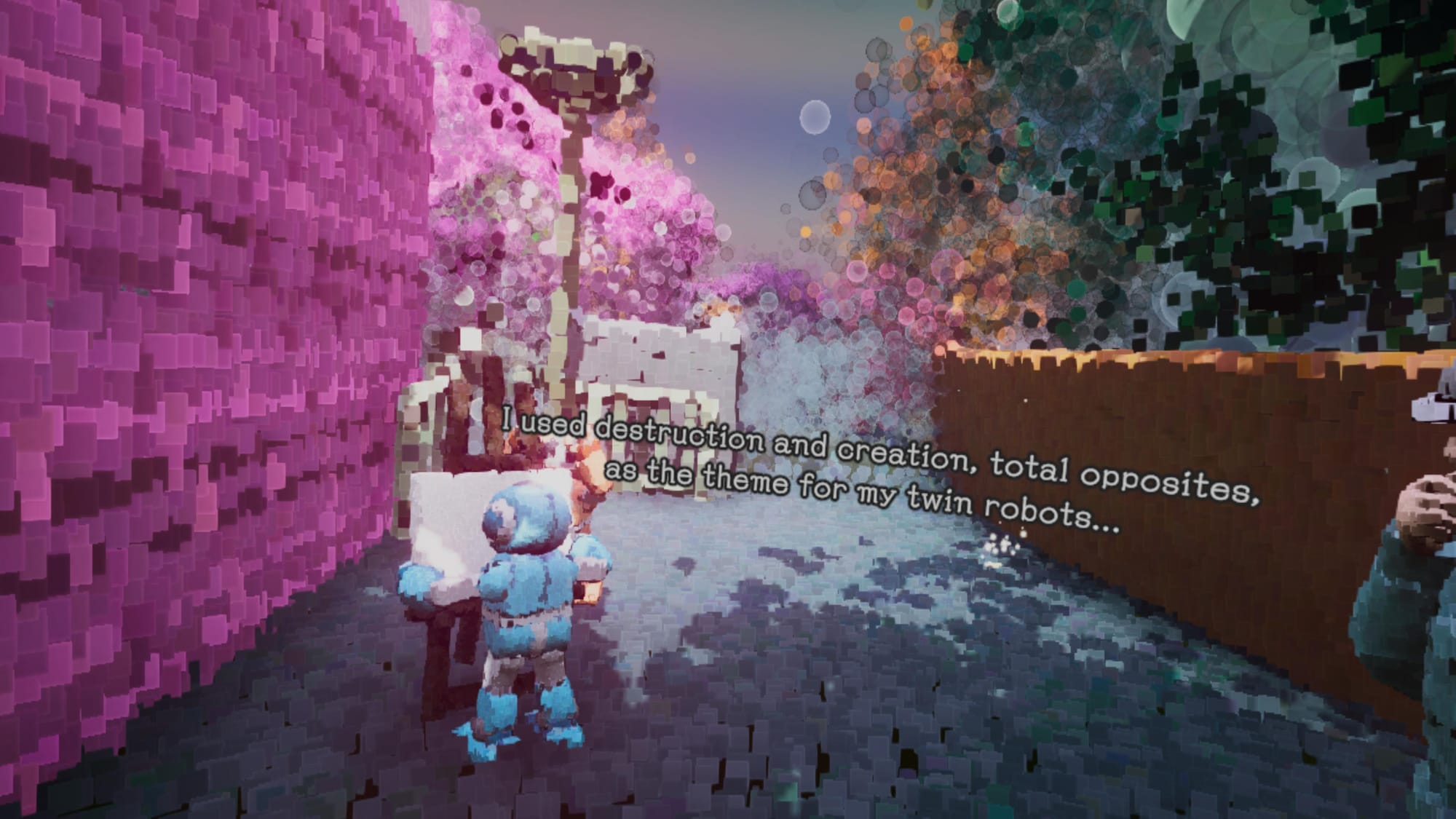
What is it?: A philosophical adventure based on the theme of “no creation without destruction.” It’s also on Steam but without PC VR support. Platforms: PlayStation VR2 (Reviewed on PS VR2 with PS5 Pro) Release Date: October 10, 2025 Developer/Publisher: Q-Games Price: $34.99
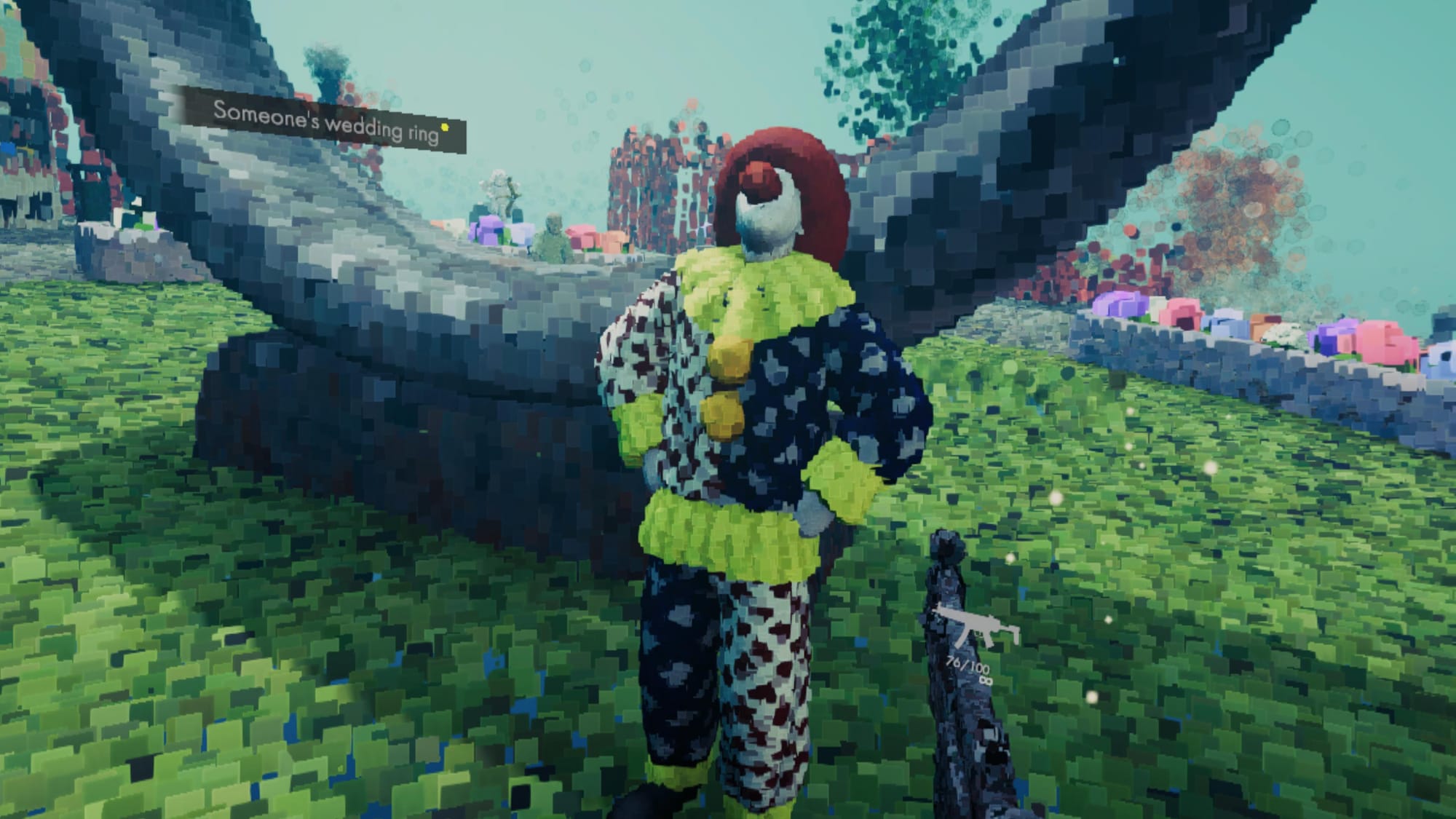
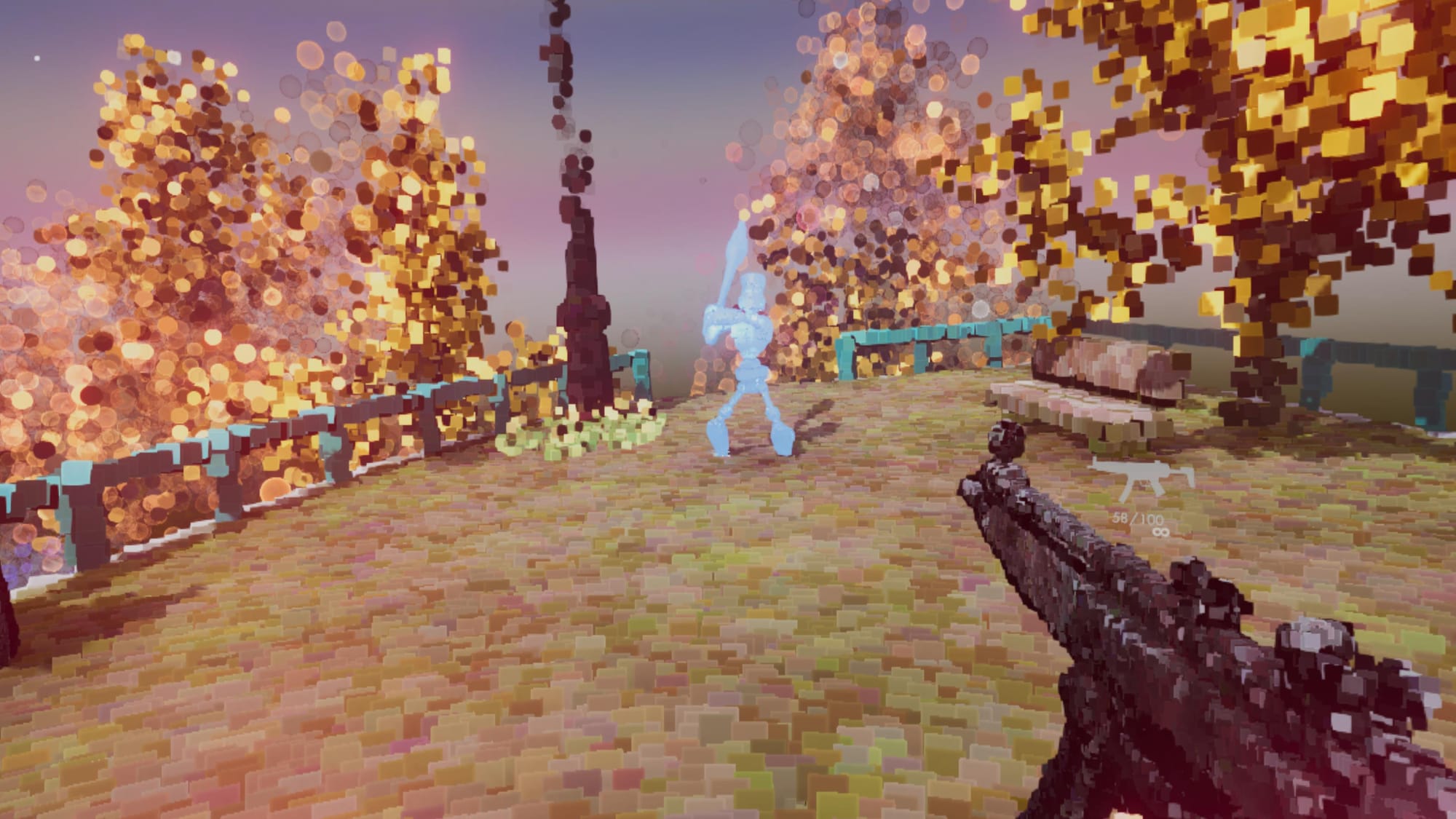
Dreams of Another closely follows the theme of “no creation without destruction,” and your surroundings are brought to life through pleasingly memorable visuals that almost feel like walking into a retro game. Everything’s represented through bubbles, and Q-Games uses an extremely literal approach where you actualize this dreamlike world by shooting them. Subtlety is not the game’s strong point, but that isn’t a bad thing.
0:00
/0:13
Gameplay footage captured by UploadVR on PS VR2 with a PS5 Pro.
This surrealist narrative starts on an intriguing note, navigating four curious tales at once as the Man in Pajamas, who’s always accompanied by the Wandering Soldier. Dreams of Another is sometimes compelling at its best, symbolizing themes like coming of age or taking action before it’s too late, which can feel sadly nostalgic. Though each story unfolds across different locations, these tales bring us closer to understanding our memories.
Some stories feel overly drawn out even with a 6-7 hour campaign, with a new game plus option unlocking upon completion that carries over your items. You swap between these stories regularly, and some segments last much longer than others. This often leaves Dreams of Another suffering from slow, inconsistent pacing and a disjointed approach. One segment involves snapping crayons by holding both Sense Controller triggers, which gets really tedious when you have to repeat that a dozen times.
PS5 Pro Support
On all PS5 consoles, Dreams of Another uses reprojection from 60Hz to 120Hz. Playing on a standard PS5 uses 1080p resolution, while Q-Games previously confirmed to UploadVR that playing on PS5 Pro increases this to 1440p resolution. You can’t choose between prioritizing higher performance or higher fidelity like some games provide.
Performance is generally smooth on the PS5 Pro and the stylized visuals mean reprojection isn’t majorly noticeable beyond the “cinema mode” cutscenes. However, I had consistent framerate drops almost every time you finish sections where you shoot disembodied spirits. I’m unsure if this is an intentional effect, but the brief slowdown is slightly jarring.
Progressing through this campaign doesn’t require shooting absolutely everything, but you must spray your path ahead with bullets to actualize them. Certain objects remain permanently affixed once in place, giving you the peculiar perspectives of everything from trash cans to doors commenting on human nature. If anything, it’s symbolic in its suggestion of considering other perspectives.
Your arsenal isn’t massive, not that it needs to be, and gradually unlocks across the game, starting with the soldier’s gun with unlimited ammo. You’ll eventually obtain grenades and a rocket launcher, useful for clearing through areas more quickly with the trade-off of limited ammo. Giving the Wandering Soldier found items scattered across each level replenishes your stock while giving him a moment to get philosophical, too.
Some sequences also involve shooting down “enemies” as their spirits, often following the formulaic rule of three before they return to their… well, not bodies as such, but designs. Have you ever tried shooting a Ferris wheel’s rogue spirit to return each carriage back into its position? For all of our sakes, I sincerely hope not. It’s memorable, though repeating this process across different stories soon gets repetitive. Your mileage may vary here depending on how much you engage with the wider stories.
Comfort
Dreams of Another has very few comfort settings. Your only movement option is artificial stick-based locomotion, while the camera settings have snap rotation at adjustable settings with a fade you can’t turn off. Smooth camera turning is available without adjustable speeds. Aside from a few audio sliders, that’s it. Subtitles can’t be turned off, either.
Haptic and headset feedback can’t be switched off in-game, though you can turn this off from the PS5 settings menu. Adaptive triggers are also supported.
My bigger issue is that Dreams of Another evidently wasn’t originally designed with VR in mind, which is particularly noticeable when the game continuously swaps your camera perspective. You’re frequently shifted from first-person view into a “cinema mode” for cutscenes, an understandable choice when it’s highlighting an event you wouldn’t be able to see. However, this occurs all too regularly even when having a brief chat with someone standing in front of you.
This happens a lot, which isn’t helped by some gameplay sections using a mandatory third-person camera. Numerous scene transitions leave you in complete darkness for several seconds or suddenly switch to a bright white screen with nothing else happening. You also keep getting sent back to the main menu, which sometimes is fine because the overarching narrative unfolds here after clearing a story. But Dreams of Another frequently sends you back even without continuing that part of the story, and I don’t understand why.
This all significantly impacts your immersion, meaning it’s arguably a better flatscreen game than in VR despite the latter’s better gunplay, if only for greater consistency. Physicality is also disappointingly minimal. Weapons are swapped using a button press rather than an on-body inventory system, and the same applies to reloading. I’m not saying this needs manual reloading or anything that in-depth, but with gameplay I want more than to simply look around and point a gun.
Dreams of Another VR – Final Verdict
If you intend to play exclusively on PlayStation VR2, Dreams of Another has its benefits and drawbacks compared to flatscreen. Shooting feels more natural with motion controls than an analog stick, first-person mode is preferable, but you can tell this wasn’t initially designed for VR. Physicality is lacking, and continuously being taken out of the first-person perspective gets annoying.
Dreams of Another is a creative, thoughtful effort that’s given me plenty to think about, and I’m glad to see more experimental titles like this still being made by Q-Games. But when the VR support feels this lacking combined with the game’s slow pacing and repetitive elements, I can’t fully recommend it on PlayStation VR2.
UploadVR uses a 5-Star rating system for our game reviews – you can read a breakdown of each star rating in our review guidelines.
Currently DNA synthesis companies “deploy biosecurity software designed to guard against nefarious activity,” reports the Washington Post, “by flagging proteins of concern — for example, known toxins or components of pathogens.” But Microsoft researchers discovered “up to 100 percent” of AI-generated ricin-like proteins evaded detection — and worked with a group of leading industry scientists and biosecurity experts to design a patch. Microsoft’s chief science officer called it “a Windows update model for the planet.
“We will continue to stay on it and send out patches as needed, and also define the research processes and best practices moving forward to stay ahead of the curve as best we can.”
But is that enough?
Outside biosecurity experts applauded the study and the patch, but said that this is not an area where one single approach to biosecurity is sufficient. “What’s happening with AI-related science is that the front edge of the technology is accelerating much faster than the back end … in managing the risks,” said David Relman, a microbiologist at Stanford University School of Medicine. “It’s not just that we have a gap — we have a rapidly widening gap, as we speak. Every minute we sit here talking about what we need to do about the things that were just released, we’re already getting further behind.”
The Washington Post notes not every company deploys biosecurity software. But “A different approach, biosecurity experts say, is to ensure AI software itself is imbued with safeguards before digital ideas are at the cusp of being brought into labs for research and experimentation.”
“The only surefire way to avoid problems is to log all DNA synthesis, so if there is a worrisome new virus or other biological agent, the sequence can be cross-referenced with the logged DNA database to see where it came from,” David Baker, who shared the Nobel Prize in chemistry for his work on proteins, said in an email.
The R1 Neo from Muzi Works is a compact, water-resistant Meshtastic device designed for long-range communication and GPS-based location tracking. Developed and assembled in Atlanta, it is the company’s first model built on a custom PCB featuring a dedicated I/O controller and integrated power management. The unit is powered by a Nordic nRF52840 microcontroller paired […]