The FCC is trying to make it easier for internet providers to charge hidden fees

The FCC has submitted a proposal that would make it harder for consumers to receive itemized bills with accurate information from their ISPs, as spotted by The Verge. The draft would revise previous “unnecessary” requirements on the grounds that a fact-based list of charges “may confuse customers.”

This comes as a response to complaints by ISPs over a Biden-era transparency rule that went into effect back in 2024. Compliance with this rule mandates that ISPs make it easier for consumers to compare prices and avoid hidden fees. This typically comes in the form or something called a “nutrition label”, which shows speeds, fees and data allowances for internet plans.

The FCC is planning on examining ways to eliminate “any other label requirements that are unduly burdensome and provide minimal benefit to consumers.” Getting an actual list of what we are paying $100 for each month doesn’t seem like a minimal benefit to me.

The regulatory agency isn’t looking to ditch these nutrition labels entirely, at least not yet, but is seeking to eliminate the requirements to itemize location-based fees. “We propose to eliminate the requirement that providers itemize discretionary, recurring monthly fees that represent costs they choose to pass through to consumers and which vary by consumer location,” the draft proposal said.

It also targets requirements to make this data readily available to all consumers. The proposal has language that would stop forcing ISPs to make this information multi-lingual and to make it available both online and to customers on the phone. It also seeks to decouple these labels from customer account portals. We aren’t sure where these nutrition labels would continue to live.

FCC head Brendan Carr wrote a cheeky blog about the proposal that seemed more interested in discussing pumpkin spice lattes over ISP regulation. He said that the proposal seeks to “separate the wheat from the chaff” so that consumers can “get quick and easy access to the information they want and need to compare broadband plans.” The language of the proposal seems to indicate the exact opposite of that sentiment, but that’s politics for ya.

A vote on the proposal is scheduled for October 28. This is all part of Carr’s “Delete, Delete, Delete” initiative, which seeks to appease President Trump by removing as many government regulations as possible.

This article originally appeared on Engadget at https://www.engadget.com/big-tech/the-fcc-is-trying-to-make-it-easier-for-internet-providers-to-charge-hidden-fees-155305720.html?src=rss

Microsoft Warns US Universities Of Alarming Payroll Pirate Attack Security Threat

Microsoft Warns US Universities Of Alarming Payroll Pirate Attack Security Threat
A financially-motivated hacking group, tracked by Microsoft as Storm-2657, has so far successfully compromised employee accounts at three U.S. universities to steal their salaries in what campaign experts are deeming “payroll pirate” attacks. The sophisticated scheme targets human resource (HR) platforms, such as Workday, to redirect direct

Garmin’s Run Coach Can Help You Train for a Marathon

We may earn a commission from links on this page.

Did you know you can customize Google to filter out garbage? Take these steps for better search results, including adding my work at Lifehacker as a preferred source.


As someone who’s completed six marathons over six years, I approached Garmin’s marathon training plans with cautious optimism. After all, Garmin dominates the running tech space, and their watches are virtually ubiquitous among serious runners. Surely their training plans would reflect the same attention to detail and runner-focused design? Plus, I’m already a huge fan of racing with my no-nonsense Garmin Forerunner 165. After months of following the program (and eventually customizing it), here’s what I learned about the reality of trusting your watch to get you to the finish line.

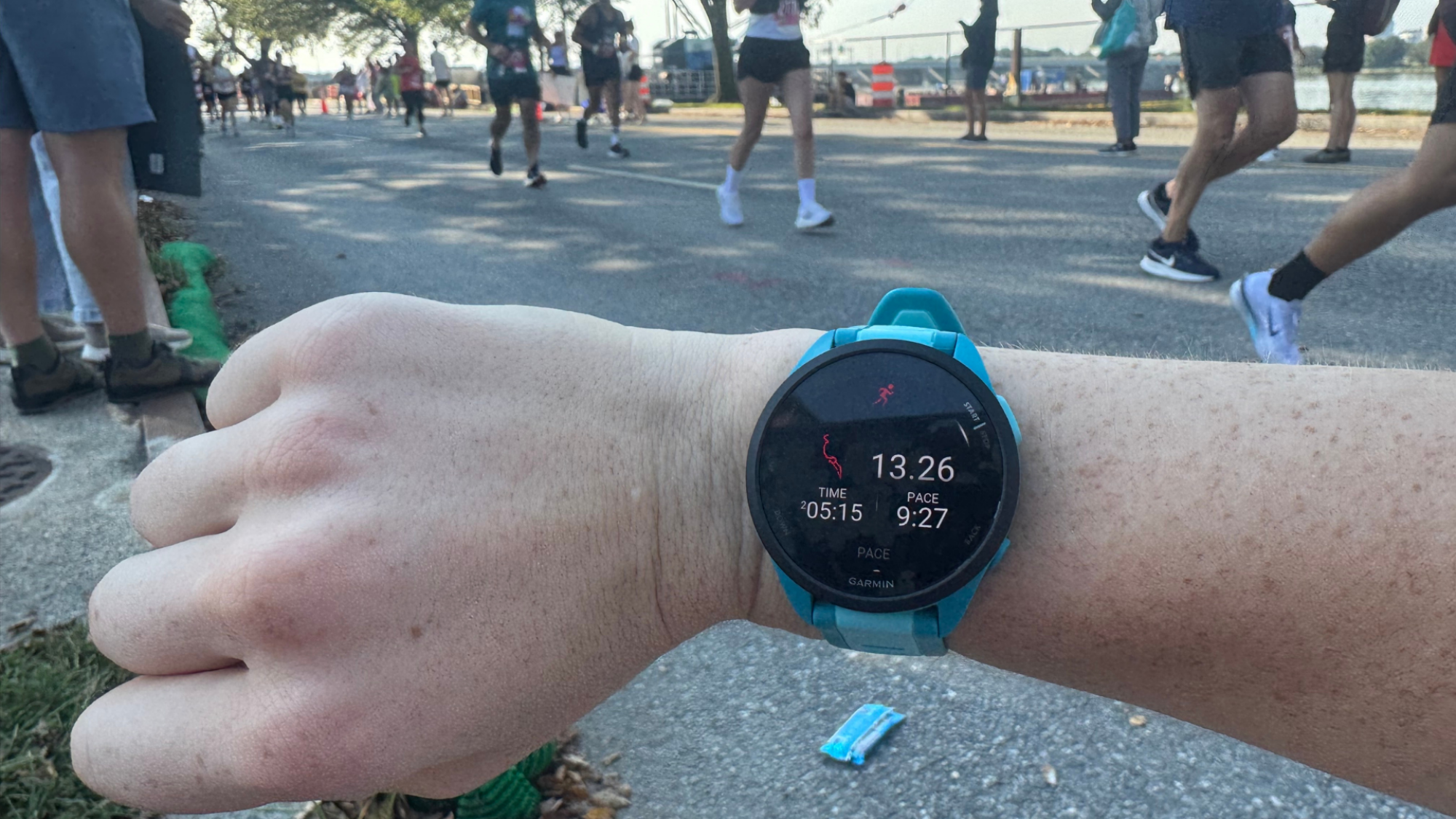
Racing a half-marathon with the Garmin Forerunner 165.
Credit: Meredith Dietz

How Garmin’s run coach works

Garmin’s run coach offers personalized, adaptive marathon training programs that adjust based on your performance metrics and recovery data. Your watch data drives your training, with workouts that evolve based on how you’re actually responding rather than blindly following a static plan pulled from a book.

The system analyzes metrics like your VO2 max, training load, recovery time, and recent workout performance to tailor each session. When you crush a tempo run, the plan might push you a bit harder next time. If your recovery metrics suggest you’ve overtrained, it dials things back. It’s smart, responsive training that theoretically removes the guesswork. However, I wouldn’t recommend blindly trusting whatever shows up on your wrist. 

What Garmin gets right

The speedwork, tempo runs, and interval sessions were genuinely helpful. Having these structured workouts automatically adjusted to my current pace meant I wasn’t second-guessing whether I was running too hard or too easy. The watch would beep when I drifted out of my target zone, keeping me honest during those tough threshold efforts.

The adaptive nature of the program also shines during the day-to-day grind. Recovery runs automatically adjust based on how your body is responding. If you’re showing signs of fatigue, the plan gives you easier days. This attention to recovery is rare in cookie-cutter training plans, and I both appreciate and depend on it.

Where Garmin falls short

The most glaring issue with Garmin’s marathon training plans is its overly conservative approach to long runs. As any experienced marathoner knows, the long run is the cornerstone of marathon preparation—it’s where you build the aerobic base, practice race-day fueling, and develop the mental fortitude to push through mile 20 and beyond.

Some specific examples from my experience:

  • A 34-minute recovery run recommended on a day when my own intermediate plan called for five miles.

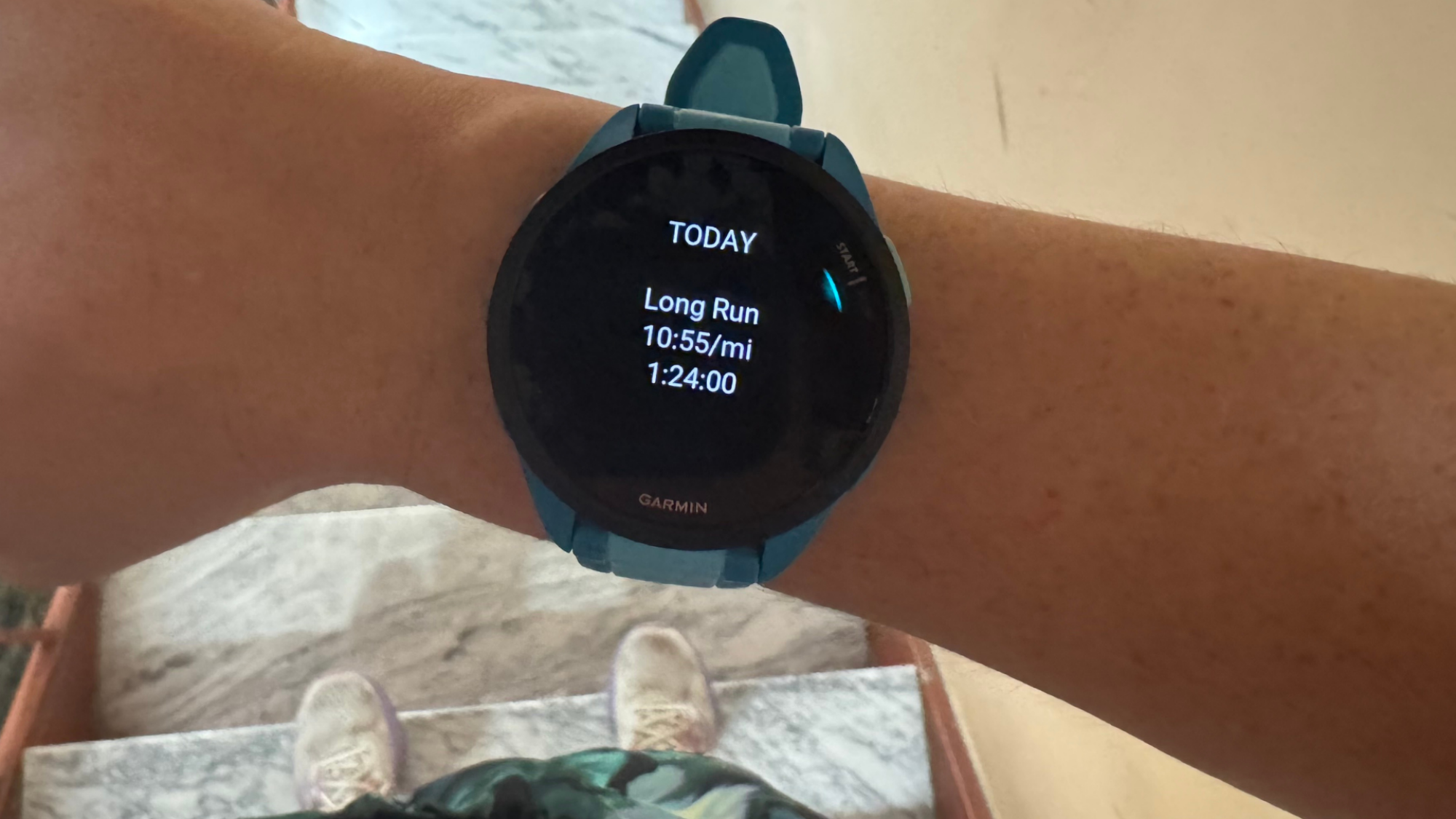
  • A 90-minute long run when I was planning an 18-miler (which actually takes me closer to three hours).

Garmin's training plan.

Credit: Meredith Dietz

Garmin clearly has safety and recovery in mind, which is admirable. But here’s the reality: if you’re crazy enough to be training for a marathon, you’ve already committed to pushing beyond normal comfort levels. The long runs that feel “inherently crazy” are simply necessary. If I’d relied solely on Garmin’s workouts, I wouldn’t have gotten those crucial 20-milers that prepare you for race day.

Yes, the three-hour run isn’t a rigid rule—it’s a guideline to cap training runs since injury risk increases beyond that point. Some coaches advocate for shorter long runs with a focus on quality over quantity. But for many runners, especially those new to the marathon distance, getting one or two 20-milers under your belt builds irreplaceable mental toughness. Personally, I always risk a little more time on my feet to ensure I’m truly prepared, and it’s never hurt me.

Perhaps equally frustrating is Garmin Connect’s “stay tuned for more” approach to future workouts. The platform often won’t show you upcoming long runs or key sessions until just days before, making it difficult to plan your training calendar effectively. As runners, we need to see the big picture. We need to know when that crucial 20-miler is scheduled so we can plan our weekend, arrange childcare, or adjust work commitments. While you can move workouts around once they appear, long runs are major time commitments that ideally should be mapped out from day one of training until race day.

Strong foundation, but customization is key

Garmin’s marathon training plans are solid and convenient, but they’re better used as a starting point rather than gospel. By most training standards, Garmin sits on the lower end for long run distance and overall weekly mileage. Following their plan strictly would be survivable, but not ideal or practical for many runners looking to truly prepare for 26.2 miles.

Setting up your Garmin training plan

Getting started is straightforward:

  1. Open the Garmin Connect app or website.

  2. Navigate to Training > Training Plans,

  3. Select your goal race (marathon) and target date,

  4. Answer questions about your current fitness level and running experience,

  5. Choose your goal (finish, set a PR, or hit a specific time).

  6. The plan syncs automatically to your watch, and workouts appear in your daily training calendar.

Once set up, your watch will prompt you to start the scheduled workout when it’s time to run. The workouts include detailed instructions, target paces or heart rate zones, and real-time feedback during your run.

How to customize your Garmin training for success

Use Garmin’s adaptive features for your daily runs and speedwork, but take control of your long runs and overall mileage progression.

1. Reference an established plan

Look at free, time-tested programs—like those from Hal Higdon—to understand what your training should look like at different phases. Between one and two months out from race day, you should have several runs in the 16- to 20-mile range. Use this as your benchmark to evaluate whether Garmin’s recommendations are on track.

2. Know what to prioritize

When customizing your plan, focus on:

  • Long run progression: Your longest runs should gradually build to 18-20 miles (or around three hours, for slower runners).

  • Peak weekly mileage: Know what total weekly mileage you should hit during your peak training weeks.

  • Consistency over perfection: It’s better to complete 90% of a slightly ambitious plan than 100% of an overly conservative one.

3. Use Garmin’s “Create Workout” feature

This is where the magic happens. Garmin allows you to create custom workouts and load them into your training calendar:

  1. In Garmin Connect, go to Training > Workouts > Create a Workout.

  2. Build your custom long run: Set distance goals, add fueling reminders, or program pace ranges.

  3. Schedule it to replace Garmin’s recommended workout.

  4. The workout syncs to your watch, giving you the same guided experience with your custom parameters.

You can create workout templates for your key long runs, tempo sessions, or any other workout you want to follow. This way, you still get the benefit of your watch guiding you through the workout with real-time feedback, but you’re following a training progression that actually prepares you for marathon day.

4. Let Garmin handle the details

While you override the long runs, let Garmin’s adaptive system manage your recovery runs and easy days, and fine-tune your speedwork intensities. This gives you the best of both worlds: proven long-run progression from established marathon programs, plus data-driven daily adjustments from your Garmin.

The bottom line

I still consider myself a loyal Garmin user—but a strategic one. The interface is excellent, the adaptive features are genuinely helpful for day-to-day training, and having structured workouts pushed to your watch eliminates decision fatigue. However, blindly following the marathon plan would have left me underprepared for race day.

With a little customization and the willingness to push beyond Garmin’s conservative recommendations, you can create a training experience that combines the best of data-driven coaching with the proven principles that have gotten millions of runners to the finish line. Your watch is a powerful training tool—just don’t let it hold you back from the big miles that make marathoners.


Meta Tells Workers Building Metaverse To Use AI to ‘Go 5x Faster’

A Meta executive in charge of building the company’s metaverse products told employees that they should be using AI to “go 5X faster,” according to an internal message obtained by 404 Media. From the report: “Metaverse AI4P: Think 5X, not 5%,” the message, posted by Vishal Shah, Meta’s VP of Metaverse, said (AI4P is AI for Productivity). The idea is that programmers should be using AI to work five times more efficiently than they are currently working — not just using it to go 5 percent more efficiently.

“Our goal is simple yet audacious: make Al a habit, not a novelty. This means prioritizing training and adoption for everyone, so that using Al becomes second nature — just like any other tool we rely on,” the message read. “It also means integrating Al into every major codebase and workflow.” Shah added that this doesn’t just apply to engineers. I want to see PMs, designers, and [cross functional] partners rolling up their sleeves and building prototypes, fixing bugs, and pushing the boundaries of what’s possible,” he wrote.

“I want to see us go 5X faster by eliminating the frictions that slow us down. And 5X faster to get to how our products feel much more quickly. Imagine a world where anyone can rapidly prototype an idea, and feedback loops are measured in hours — not weeks. That’s the future we’re building.”


Read more of this story at Slashdot.

You Can Now Play Netflix Games on Your TV

Did you know you can customize Google to filter out garbage? Take these steps for better search results, including adding my work at Lifehacker as a preferred source.


You might not think of Netflix as a gaming company, but games are most certainly a part of their business. While the vast majority of us Netflix subscribers simply stream TV shows and movies on the app, the company also offers access to games, free of charge as part of a Netflix plan. These aren’t all throwaway titles, either: Netflix has licensed some notable names here, including Grand Theft Auto: San Andreas, Oxenfree, and Heads Up!

But while Netflix’s games have largely been mobile-only for the past few years, the company is trying something new. This week, Netflix is rolling out games you can play on your TV, all without having to leave the Netflix app. You don’t need a dedicated gaming controller, or to rely on something like a TV remote, to play. Instead, players control the game from their smartphones. What a time to be alive.

At launch, you can’t simply play any of Netflix’s existing mobile titles on your TV. Instead, the company has licensed five party games that weren’t yet part of its games library, designed to be played with others around the TV. These titles include:

  • LEGO Party!: This is Mario Party but with LEGOs, complete with mini-games, maps, and LEGO characters.

  • Boggle Party: Up to eight players can try to find words in a jumbled letter grid.

  • Pictionary: Game Night: Guess what the other person is drawing before the time runs out.

  • Tetris Time Warp: Play different versions of Tetris, including the 1984 original and the classic Gameboy version.

  • Party Crashers: Fool Your Friends: One person in the group is the odd one out, and doesn’t know what anyone else is talking about. The group needs to figure out who that person is.

LEGO Party! and Tetris Time Warp are both preexisting games you can play on other platforms, but it seems the other three are making their debut on Netflix.

How to play Netflix games on your TV

To try out any of these fives games when they’re available in your market, open the Netflix app on your smart TV, then scroll to the “Games” tab. Choose a game, then use your smartphone as the controller.

OpenAI will stop saving most ChatGPT users’ deleted chats

OpenAI will finally stop saving most ChatGPT users’ deleted and temporary chats after a court fight compelled the AI firm to retain the logs “indefinitely.”

The preservation order came in a lawsuit filed by The New York Times and other news plaintiffs, who alleged that user attempts to skirt paywalls with ChatGPT would most likely set their chats as temporary or delete the logs.

OpenAI vowed to fight the order, defending its policies and users’ privacy, but it lost. By July, news plaintiffs started digging through the logs—which only preserved ChatGPT’s outputs—while a few ChatGPT users’ efforts to intervene were consistently denied, as they were deemed non-parties to the lawsuit.

Read full article

Comments

Samsung Galaxy XR Headset Leak Reveals A Direct Rival To Apple Vision Pro

Samsung Galaxy XR Headset Leak Reveals A Direct Rival To Apple Vision Pro
We’ve uncovered bits and pieces of Samsung’s long-anticipated extended reality Galaxy XR headset so far, but a massive leak dump, including final renders, key specs, as well as a look at the software, has left little to the imagination. Based on the numbers alone, Samsung appears to have engineered the headset to outperform the likes of the

Corsair’s Elgato Embrace Studio Chair Looks Ready To Challenge Herman Miller

Corsair's Elgato Embrace Studio Chair Looks Ready To Challenge Herman Miller
Corsair’s newest desk chair has high unstated hopes of unseating Herman Miller (and its BFF Logitech) as the go-to option for creators and professionals who need more comfort that what is usually found on racing-themed gaming chairs. That’s because the Elgato Embrace, as it’s called, was built from the ground-up for “anyone who spends serious

Ford is cutting the price of the 2026 F-150 Lightning by up to $4,000

Ford is cutting the price of the 2026 F-150 Lightning by up to $4,000, as confirmed by the automaker to CarsDirect. The price cuts vary by trim, however, and will only apply to more expensive packages for the electric pickup truck. This comes as the $7,500 EV tax credit expired at the end of September.

The 2026 model has a starting price of $63,345 for the STX trim, which is the same price as the previous year’s entry-level XLT. The STX replaces the XLT and delivers 536 horsepower, up from the XLT’s 452, and 290 miles of range, up from 240.

The Flash edition will receive the full $4,000 price cut, giving it a new price of $65,995. The Lariat, originally priced at $76,995, will get just a $2,000 haircut and will sell for $74,995. The Platinum edition will be priced at $84,995 and will not cost less.

This summer, Ford announced that it would release an affordable midsize all-electric pickup with a starting price of around $30,000 in 2027. The truck would be built on the company’s upcoming Ford Universal EV Platform that will be shared by a new family of products. These models would use Ford’s upcoming prismatic LFP batteries.

As EV-related tax incentives continue to expire, manufacturers will need to reach into their own pockets to deliver value to consumers. This week Tesla announced the Model 3 and Model Y ‘Standard’ editions, which give up some luxury touches in exchange for price, with both starting at under $40,000. Inflation has also played a large role in car pricing over the last five years, as $40,000 has roughly the same purchasing power as $32,000 in 2020.

This article originally appeared on Engadget at https://www.engadget.com/transportation/evs/ford-is-cutting-the-price-of-the-2026-f-150-lightning-by-up-to-4000-144241504.html?src=rss

Ubisoft Cancelled a Post-Civil War Assassin’s Creed Last Year

Stephen Totilo, reporting at Game File: In July of last year, word began to trickle through Ubisoft that an ambitious new installment of the company’s top franchise, Assassin’s Creed, had been cancelled.

The new game would have brought the history-spanning series to one of its most modern settings: The American Civil War and, moreso, the Reconstruction period that followed in the 1860s and 1870s.

In this Reconstruction-era Assassin’s Creed, gamers would play as a Black man who had been formerly enslaved in the South and moved west to start a new life. Recruited by the series’ Assassins, he would return to the South to fight for justice in a conflict that would, among other things, see him confront the emergence of the Ku Klux Klan.

That’s according to interviews with five current and former Ubisoft employees who spoke to Game File on the condition of anonymity because they were not authorized to speak about the project. The people were enthusiastic about the game but were also frustrated by its cancellation, which they perceived as Ubisoft bowing to controversy.


Read more of this story at Slashdot.

[$] Enhancing FineIBT

At the Linux
Security Summit Europe
(LSS EU), Scott Constable and Sebastian
Österlund gave a talk on an enhancement to a control-flow integrity (CFI)
protection that was added to the kernel several years ago. The “FineIBT: Fine-grain Control-flow
Enforcement with Indirect Branch Tracking
” mechanism was merged for
Linux 6.2 in early 2023 to harden the kernel against CFI attacks of various
sorts, but needed some fixes and
enhancements
more recently. The talk looked at the CFI vulnerability
problem, FineIBT, and an enhanced version that is hoped to be able to unify
all of the disparate hardware and software mitigations to address both
regular and speculative CFI vulnerabilities.

Sonos Ace headphones are $100 off right now

Sonos’ Ace headphones didn’t get off to the best start, but the brand’s first headphones have come a long way since launch, and for $100 off when purchased directly from Sonos or Amazon, they’re well worth considering. The Ace are down to $299 from both retailers, and for that price you’re getting one of the most feature-packed pairs of noise-canceling headphones on the market right now.

When the Ace arrived in the summer of 2024, we praised them for their sound quality, premium design and comfy fit, but had no choice but to ding the headphones for not launching with some of their flashiest features. But that’s no longer an issue if you pick up a pair today, as Sonos’ TrueCinema spatial audio tech now works as advertised. 

As a reminder, TrueCinema takes into account the dynamics of your living space when you’re using TV Audio Swap to create a virtual 3D audio system in your headphones. The idea is that you feel like you aren’t wearing them at all, which is a big claim to make, but there’s no denying that True Cinema enhances the experience of watching movies and TV shows while wearing the Ace.

Sonos has also improved the Ace’s adaptive noise cancellation in updates made available since launch, while phone calls are now clearer than they were when we first reviewed the headphones. They’re still expensive at full price, but if you use other Sonos products in your home and think you’ll appreciate the Ace’s ability to swap audio output with a compatible Sonos soundbar (ideal for late-night movies when the kids are in bed), then it’s a very easy recommendation at $299.

Follow @EngadgetDeals on X for the latest tech deals and buying advice.

This article originally appeared on Engadget at https://www.engadget.com/deals/sonos-ace-headphones-are-100-off-right-now-142323913.html?src=rss

Norse Afterlife Roguelike Crossings Gets Demo Ahead Of Steam Next Fest

Crossings, an upcoming action-adventure roguelike set in the Norse afterlife, released a PC VR and Quest 3 demo ahead of Steam Next Fest.

Previously revealed during May’s Creature Feature presentation, Crossings is the latest title from developer Neat Corporation (Budget Cuts, Garden of the Sea). It promises a quest for vengeance across “an ever-changing world” against trolls, Draugr, and more while searching for the Nornir, supporting seamless co-op with friends and others.

0:00

/1:07

Demo trailer

While a release date is unconfirmed beyond a 2025 release window, a Crossings demo is now available on Steam following last month’s open alpha testing. This includes “a slice” of the full game that showcases combat, spellcasting, and early progression. Future closed beta tests will also become available via the official Discord server. A Quest 3 demo is also available, though as a pre-release channel and not a separate store page. As such, this would be limited to 100 people.

It focuses heavily on combat, requiring you to successfully block, dodge, strike, and power through foes. Equipped with various melee weapons and spells cast through a gesture-based control system, you can gradually upgrade your character and weapons over time to defeat the bosses. Three environments are featured in the full game, and you’ll slowly rebuild your memories of your lost village.

It’s the second game we’ve seen so far from co-publisher Creature to release a PC VR demo before next week’s Steam Next Fest. Yesterday also brought news that Deadly Delivery, a comedic horror co-op courier game, has also released a Steam demo alongside an open beta on Quest. We’ll bring you more Next Fest coverage once the week-long event officially begins on October 13.

Crossings will launch later this year on Steam and Quest.

Boring Company cited for almost 800 environmental violations in Las Vegas

Nevada state regulators have accused Elon Musk’s Boring Co. of violating environmental regulations nearly 800 times in the last two years as it digs a sprawling tunnel network beneath Las Vegas for its Tesla-powered “people mover.” The company’s alleged violations include starting to dig without approval, releasing untreated water onto city streets and spilling muck from its trucks, according to a new document obtained by City Cast Las Vegas and ProPublica.

The September 22 cease-and-desist letter from the state Bureau of Water Pollution Control alleged repeated violations of a settlement agreement that the company had entered into after being fined five years ago for discharging groundwater into storm drains without a permit. That agreement, signed by a Boring executive in 2022, was intended to compel the company to comply with state water pollution laws.

Instead, state inspectors documented nearly 100 alleged new violations of the agreement. The letter also accuses the company of failing to hire an independent environmental manager to regularly inspect its construction sites. State regulators counted 689 missed inspections.

Read full article

Comments

Dark Cosmic Object Found By Astronomers Raises Questions About Universe

Dark Cosmic Object Found By Astronomers Raises Questions About Universe
With the aid of a multinational network of radio telescopes, scientists have been able to detect the lowest-mass dark object ever found in the universe. The mysterious object, roughly one million times the mass of our Sun (approximately 10 billion light-years from Earth) was discovered using gravitational imaging to spot a subtle warp of spacetime.

Published

Apple Will Make You A Multi-Millionaire If You Find Just One Of These Security Flaws

Apple Will Make You A Multi-Millionaire If You Find Just One Of These Security Flaws
Listen here, Mac. If you want to be wealthy, you can work hard, grind your whole life, and make wise investments that you hope will pay off in time for retirement, or get lucky and pick a set of winning lottery numbers. Barring those avenues, legal options that won’t land you in prison start to dwindle, though there is another avenue to raking