
The long-anticipated LMDE (Linux Mint Debian Edition) 7 release is now available for download based on the Debian GNU/Linux 13 “Trixie” operating system series.
Monthly Archives: October 2025
Ferrari Announces Its First Electric Sports Car, Promising Real Engine Noises – Sort Of
Ferrari’s first electric car arrives next summer, reports Carscoops, with a top speed of 193 mph (310 km/h) and accelerating from 0 to 62 mph (0 to 100 km/h) in just 2.5 seconds.
“The Elettrica” will also have a large high-density battery for over 329 miles (530 km) of range, ultra-fast DC charging up to 350 kW, and a 122 kWh capacity and an energy density of 195 Wh/kg that Ferrari “claims is the highest among production EVs.”
But what’s really interesting is its engine noises:
Ferrari’s approach to the Elettrica’s sound moves away from artificial engine simulation. Instead, a sensor mounted on the inverter detects the powertrain’s real mechanical vibrations, which are then amplified to create what the company describes as a natural, evolving tone that reflects how the car is being driven… a reactive soundtrack. Antonio Palermo [Ferrari’s head of sound and vibration] calls it “language and connection,” a way to keep drivers emotionally engaged with the car without resorting to synthetic gimmicks…
Needless to say, how convincing this synthesized feedback will feel in practice remains to be seen, as much of Ferrari’s allure has traditionally rested on the emotional impact of its combustion engines.
“The Torque Shift Engagement system offers five selectable levels of power and torque using the right paddle, while the left paddle adjusts braking intensity,” the article points out.
But if the engine noises are well-executed, argues the EV news site Electrek, “I even think it might convince some petrolheads to give EVs a try,” .
Whether you like them or not, engine sounds are essential, especially in performance vehicles. They are part of the identity of certain cars — a sort of signature. They can be emotional. They can give a sense of power. But beyond that, they are information. The pitch, volume, and texture of the engine sound provide critical, real-time feedback to the driver about RPM, load, and the car’s health.
Some electric automakers are using curated soundscapes (like BMW with Hans Zimmer) or trying to mimic V8s (like Dodge with its “Fratzonic Chambered Exhaust”)… Other automakers are simply letting the natural sounds of the electric motors exist. There’s nothing wrong with that. However, considering that electric motors produce minimal sounds, which are then trapped inside a metal casing, you rarely hear anything significant, especially in modern vehicles with quiet cabins and even active noise cancellation. For most EVs, this is not a problem, but for a performance electric vehicle, it does feel like something is missing…
Ferrari insists the sound will only be used when “functionally useful” to provide feedback to the driver and will be directly tied to torque requests… The entire system was reportedly developed in-house, giving Ferrari complete control over the vehicle’s final acoustic signature… [T]hey are embracing the new technology rather than hiding it. They are making a confident statement that an electric powertrain can be emotionally engaging on its own terms, without having to pretend to be something it’s not…
If you prefer a completely silent drive, you can disable it.
Electrek’s conclusion? “The purists who were worried that Ferrari would lose its soul in the EV transition should be encouraged by this.”


Read more of this story at Slashdot.
In Copilot In Excel Demo, AI Told Teacher a 27% Exam Score Is of No Concern
A demo of educational AI-powered tools by a Microsoft product manager (in March of 2024) showed “how AI has the possibility to transform various job sectors and the education system,” according to one report.
But that demo “includes a segment on Copilot in Excel that is likely to resonate with AI-wary software developers,” writes long-time Slashdot theodp:
The Copilot in Excel segment purports to show how even teachers who were too “afraid of” or “intimidated” to use Excel in the past can now just use natural language prompts to conduct Excel analysis. But Copilot advises the teacher there are no ‘outliers’ in the exam scores for their 17 students, whose test scores range from 27%-100%. (This is apparently due to Copilot’s choice of an inappropriate outlier detection method for this size population and score range). Fittingly, the student whose 27% score is confidently-but-incorrectly deemed to be of no concern by Copilot is named after Michael Scott, the largely incompetent and unprofessional boss of The Office. (Microsoft also named the other exam takers after characters from The Office).
The additional Copilot student score “analysis” touted by Microsoft in the demo is also less than impressive. It includes: 1. A vertical bar chart that fails to convey the test score distribution that a histogram would have (a rookie chart choice mistake), 2. A horizontal bar chart of student scores that only displays every other student’s name and shows no score values (a rookie formatting error)… So, will teachers — like programmers — be spending a significant amount of time in the future reviewing, editing, and refining the outputs of their AI agent helpers?
“Not only does it illustrate how the realities of AI assistants sometimes fall maddeningly short of the promises,” argues the original submission. “The demo also shows how AI vendors and customers alike sometimes forget to review promotional AI content closely in all the AI excitement!”


Read more of this story at Slashdot.
Quest v81 Rolling Out With New Immersive Home, Window Anchoring & QuickPlay
Quest’s Horizon OS v81 is rolling out now, bringing the Horizon Engine Immersive Home, persistent window anchoring, QuickPlay, and more.
A test version of v81 started rolling out to the Horizon OS Public Test Channel (PTC) in late August, and now six weeks later it’s rolling out for all supported Quest headsets.
Quest v81 PTC Completely Overhauls Your VR Home
Meta Horizon OS v81 PTC overhauls Quest’s VR home system, replacing all previous environments with a high-quality loft with free locomotion.
 UploadVRDavid Heaney
Meta’s rollouts happen gradually, so it may take a few days or even weeks for your headset to get the v81 update. Further, Meta rolls out some features separately from the main update itself, so even having the v81 update doesn’t guarantee having everything listed here yet.
Read on for a rundown of the key changes Horizon OS v81 brings compared to v79, the previous stable release.
Immersive Home
Horizon OS v81 replaces every legacy VR home environment with a new Immersive Home, powered by Meta’s new Horizon Engine.
Quest 3’s legacy home environments had been criticized for having significantly lower visual quality than Apple Vision Pro’s, and even Pico 4 Ultra’s, giving new headset owners a poor impression of the quality of VR that even mobile chipsets are capable of. Horizon OS v81 gets rid of them all.
The new Immersive Home is a singular core environment with four background scenery options: Horizon Central, Midnight, Valley, and Oceanarium. You can bring up the scenery settings by pressing the left Touch controller’s menu button.
0:00
/1:16
Footage by UploadVR showing Immersive Home.
The new home is visually higher quality than the legacy homes, and its lighting changes based on the background scenery you select.
Whereas you could only teleport to pre-determined positions in legacy homes, you can freely either teleport or slide around the new home. And you can teleport into a seated position on the virtual seats.
0:00
/0:10
Footage by UploadVR showing World Movement settings.
Further, Meta has unified the home and Horizon Worlds locomotion settings into a system-level World Movement tab in Settings.
Some Quest developers and enthusiasts have been requesting a system-level locomotion settings system for years now, which they had hoped third-party apps would be able to read via an API. But currently it’s not possible for third-party apps to read the new Horizon OS World Movement settings.
0:00
/0:33
Footage by UploadVR showing Instagram object.
Immersive Home also has a new Instagram Window home ‘object’ that you can enable, a large virtual photo frame on the new home’s wall, which displays images and videos from Instagram, in the same synthetic 3D as the main Horizon OS app.
This is the third ‘object’ available, after the Avatar Mirror and Horizon Central Portal, which have been ported from the legacy homes to Immersive Home.
2D Window Anchoring
Horizon OS v81 lets you persistently pin 2D windows in your home space, both in passthrough and Immersive Home, by selecting a new ‘Anchor’ option on a window’s toolbar.
Anchored windows are visible while you’re not in a VR/MR app or world, and when you return from being in one, or even reboot your headset, your anchored windows should be where you left them.
0:00
/0:50
Footage captured by UploadVR, showing how anchored windows persist.
Your anchored passthrough home windows are separate from your anchored Immersive Home windows. You can anchor three in each modality, for a total of six. But you’ll only ever see three anchored windows at a time.
An interesting polishing touch: in Immersive Home, when positioning anchored windows they’ll collide with virtual geometry, making it easy to attach a window to the wall of your home.
QuickPlay For Store Apps
Starting with v81, Meta says it’s gradually rolling out a new feature called QuickPlay, which lets Quest 3 and 3S users launch Horizon Store apps before they’re fully downloaded.
This general concept is widely available on many app stores, including PlayStation, Xbox, Apple’s App Store, Google Play, and Battle.net. But in all these cases it requires developer implementation, while Meta says its solution is fully automatic, with assets prioritized “through crowdsourced profiling”.
According to Meta, QuickPlay can reduce the time from buying a VR game to playing it by up to 50%.
‘Navigator’ System UI Now PTC-Only?
The Horizon OS UI overhaul, called Navigator, started its “gradual” rollout with Horizon OS v77 in late May, replacing the old system called Universal Menu.
After One Key Change, Meta’s Quest UI Overhaul Has Gone From Bad To Great
The Quest system UI overhaul launched to testers in May, with key improvements but an ugly semi-opaque grey “cloud” background. Now, Meta has gotten rid of it.
 UploadVRDavid Heaney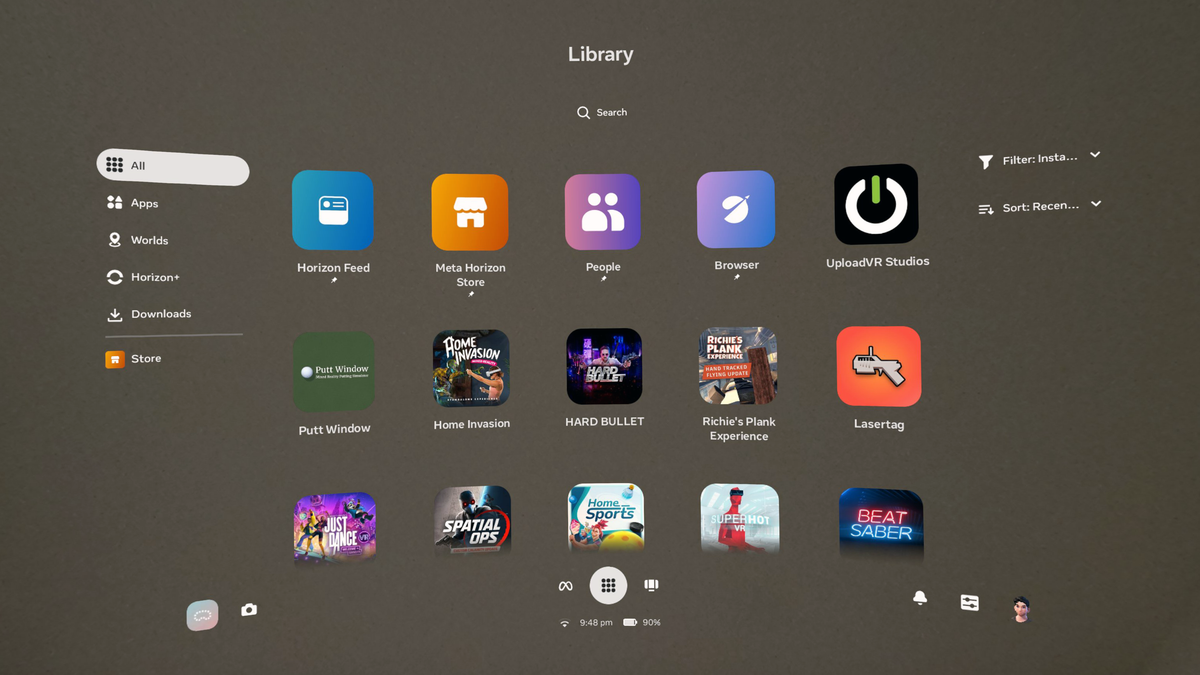
But in the release notes for v81 PTC, Meta said it’s reverting to making Universal Menu the default Horizon OS UI for “most people”, in order to “keep things simple and familiar”.
“As part of our ongoing efforts to improve the experience, starting with v81, we’re making the Universal Menu the default navigation for most people to keep things simple and familiar. While we continue to experiment and improve Navigator, it’s still available! You can turn it on anytime in the advanced settings.”
While in the PTC release notes Meta said Quest owners would still be able to enable Navigator in the Advanced settings, on an UploadVR Quest 3S not enrolled in the PTC the setting is now gone. The headset had Navigator in v79 stable, but no longer has it after automatically updating to v81 stable.
In contrast, on an UploadVR Quest 3 enrolled in the PTC, Navigator remains enabled after updating to v81 stable.
Meta Teases The Next Evolution Of Quest’s System Interface
During the Connect 2025 Developer Keynote, Meta teased a short clip of the next evolution of Quest’s Horizon OS system interface.
 UploadVRDavid Heaney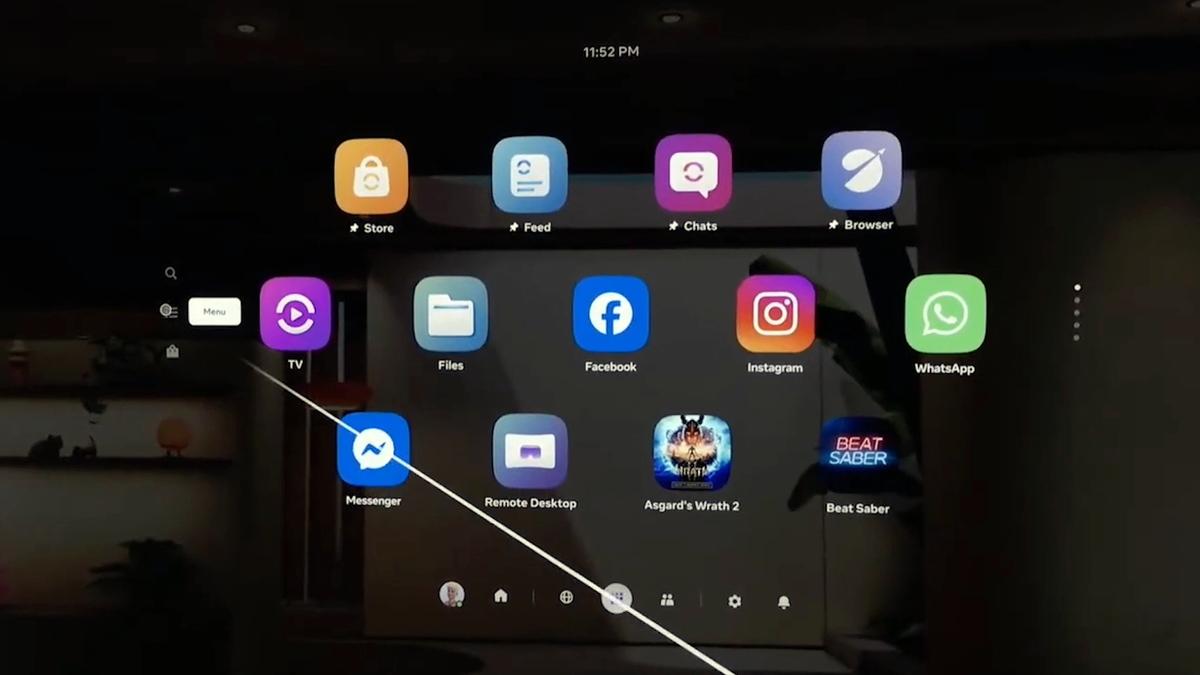
This suggests that Meta feels that the current Navigator isn’t yet ready to replace the traditional Quest UI. At Connect 2025, Meta teased a new Horizon OS UI that looks to be an evolved version of Navigator, describing it as “a work in progress”.
Worlds Safety System
Meta says that v81 includes a “Worlds Safety System” that “prompts users to use an existing nearby boundary or create a new one that is appropriate for their experience”.
Quest’s New Boundary System Is A Dangerous Safety Regression
Over the past 9 months, Meta rolled out an overhauled Quest boundary system with reduced friction. But the new approach has also turned out to be a dangerous safety regression.
 UploadVRDavid Heaney
The new feature might be a reaction to the safety issues introduced by the changes to Quest’s boundary system in the past few years, which have aimed to reduce friction but have also made the headset less safe to use.
Improved Horizon Feed
Meta changed the design of Horizon Feed, the first app that launches when Horizon OS boots.
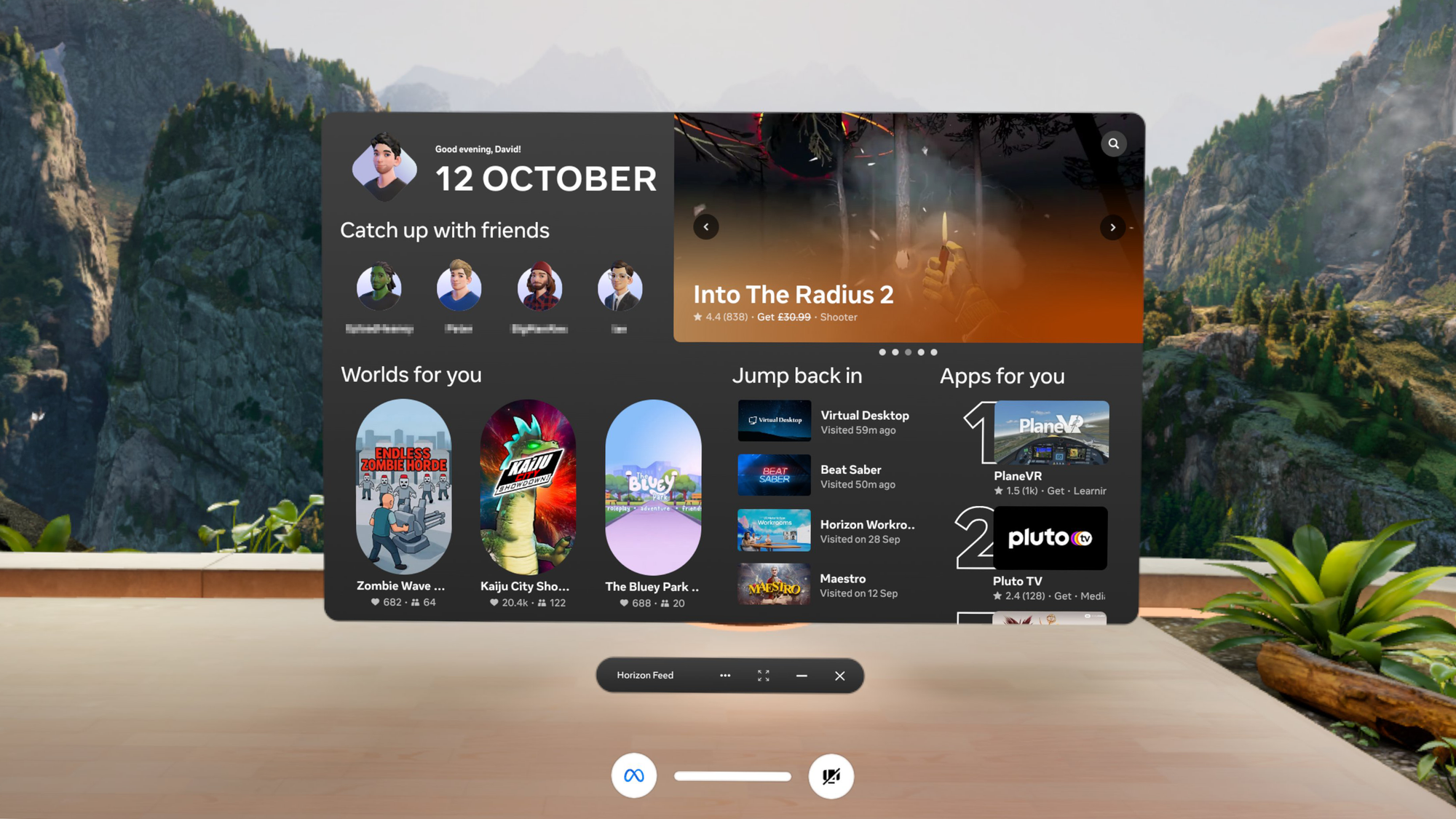
It now shows links to 4 friends you’ve been recently active with, 3 recommended Horizon Worlds, 3 recommended apps you have installed, and a carousel of recommendations at the top right. You can scroll down to see more recommendations – or just do what most Quest owners do and close Horizon Feed after each boot.
Windows 11 Remote Desktop No Longer Experimental?
Meta says v81 makes the seamless Windows 11 remote desktop system that launched at the end of last year as an experimental feature “available by default”.
Quest 3’s Windows 11 Integration Arrives As Experimental Feature
Quest 3’s seamless Windows 11 integration is now available as an experimental feature in Horizon OS v72.
 UploadVRDavid Heaney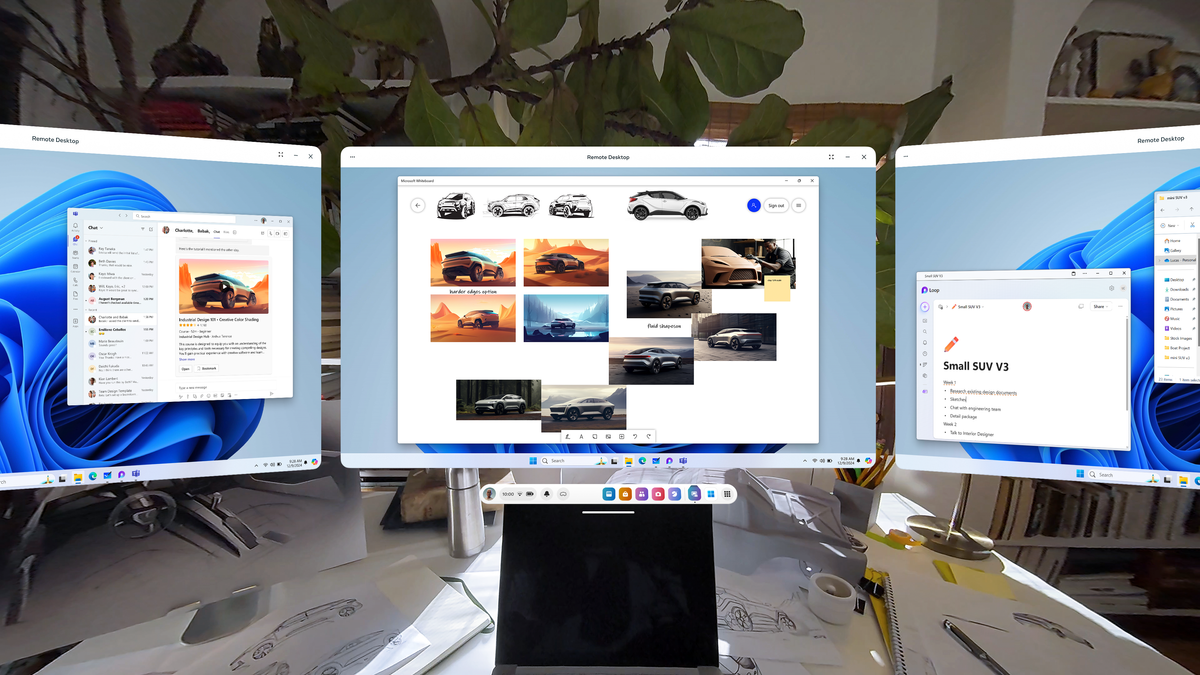
However, on an UploadVR Quest 3S with v81 stable, the option is still listed as an experimental feature, and not enabled by default, even after several reboots. It’s possible that this is a separate rollout to the main v81 release.
Improved Meta AI?
In the release notes for v81 PTC, Meta said it also improved Meta AI on Quest, making it “more accurate and better able to guess what you want it to do”:
For example, when you say “It’s too loud”, Meta AI will turn down the volume, and you can ask it to “go back” if you prefer the previous volume.
Meta AI is also better at constructing browser URLs, so you can ask it to open specific pages on websites, like “search for AA batteries on Amazon”, or “open the imdb page for Chris Hemsworth”.
It’s unclear whether this improvement carries over to v81 stable. While Meta AI is available on Ray-Ban Meta in all 18 countries where the glasses are sold, on Quest it still appears to be only available in the US & Canada.
New User Switcher UI?
For Quest headsets with multiple accounts, Meta says it’s rolling out a new user switcher UI with “a refreshed look and feel”.
Oculus Quest 2 Gets Multi-User Support And Local App Sharing
Facebook is rolling out the ability to log into multiple accounts on an Oculus Quest 2, and for those additional accounts to access the headset owner’s apps. The features should give each account separate game progress & achievements alongside independent friend lists, browser history, and privacy settings. You can “lock
 UploadVRIan Hamilton
Meta says the new UI will let you add new accounts directly from it, avoiding the need to sign into an existing account and navigate to settings.
On two separate UploadVR headsets with v81, we do not yet see a new user switcher UI. It may be rolling out separately to the main update.
Up To 12 Windows?
Since Horizon OS v67 as an experimental option and v69 by default, Quest headsets have let you pull out up to three 2D windows and position them freely in space, in addition to the three windows you can attach to your menu dock, for a total of six active windows.
Quest v67 Finally Lets You Freely Position Windows
The Quest v67 update lets you freely position 2D windows, improves Quest Pro’s eye tracking, lets Quest 3 scan Wi-Fi QR Codes, and more.
 UploadVRDavid Heaney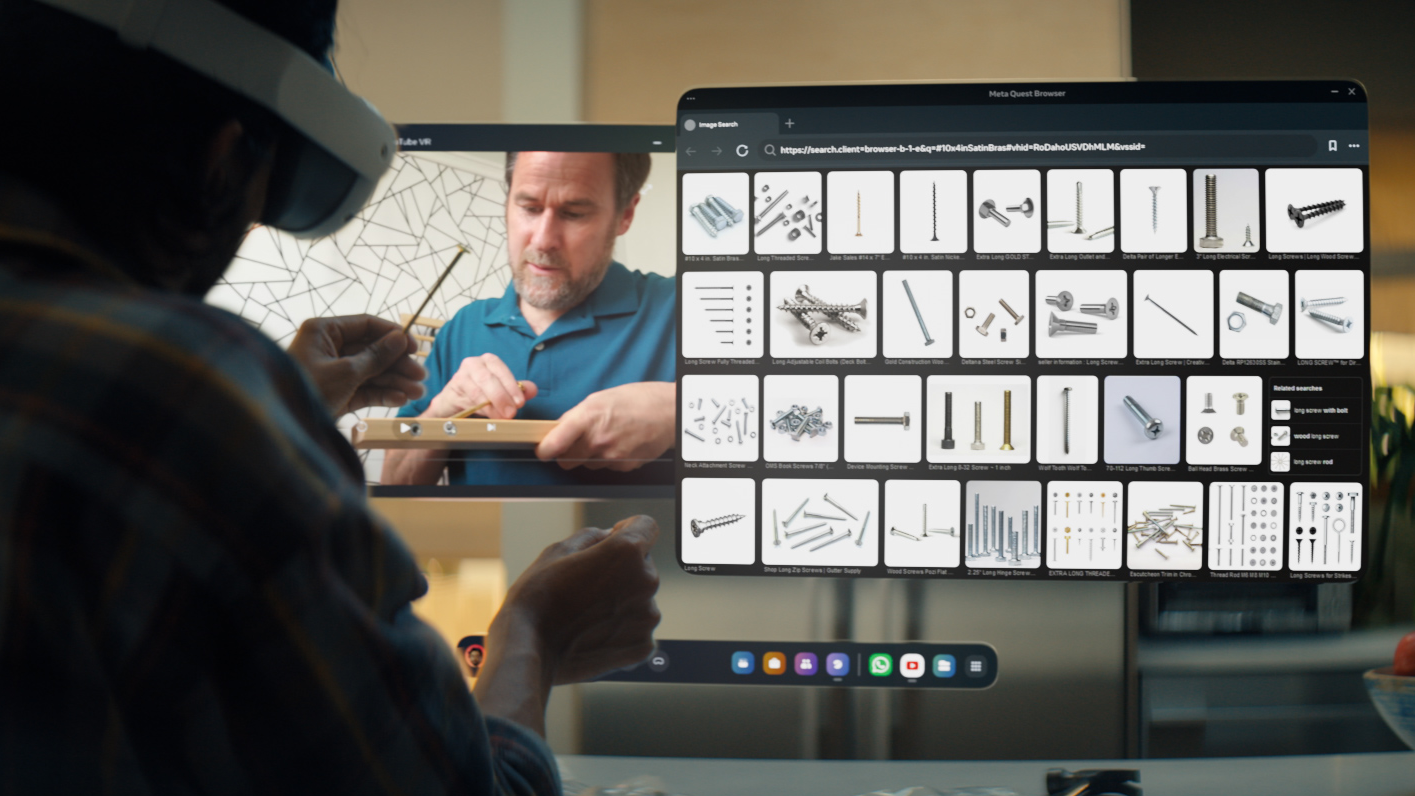
With v81, Meta says the 2D active window limit has been increased to 12. However, on two separate UploadVR headsets with v81, we were unable to drag out more than 3, meaning the limit remains at 6. The increased window limit may be rolling out separately to the main update.
New Large Coral Reef Discovered Off Naples Containing Rare Ancient Corals
Off the southwest cost of Italy, a remotely operated submarine made “a significant and rare discovery,” reports the Independent — a vast white coral reef that was 80 metres tall (262 feet) and 2 metres wide (6.56 feet) “containing important species and fossil traces.”
Often dubbed the “rainforests of the sea”, coral reefs are of immense scientific interest due to their status as some of the planet’s richest marine ecosystems, harbouring millions of species. They play a crucial role in sustaining marine life but are currently under considerable threat…
hese impressive formations are composed of deep-water hard corals, commonly referred to as “white corals” because of their lack of colour, specifically identified as Lophelia pertusa and Madrepora oculata species. The reef also contains black corals, solitary corals, sponges, and other ecologically important species, as well as fossil traces of oysters and ancient corals, the Italian Research Council said. It called them “true geological testimonies of a distant past.”
Mission leader Giorgio Castellan said the finding was “exceptional for Italian seas: bioconstructions of this kind, and of such magnitude, had never been observed in the Dohrn Canyon, and are rarely seen elsewhere in our Mediterranean”. The discovery will help scientists understand the ecological role of deep coral habitats and their distribution, especially in the context of conservation and restoration efforts, he added.
The undersea research was funded by the EU.
Thanks to davidone (Slashdot reader #12,252) for sharing the article.


Read more of this story at Slashdot.
‘Tron: Ares’ Mode Turns Teslas Into Glowing Light Cycles — Despite Bad Box Office
An anonymous reader shared this report from The Wrap
Tesla this weekend introduced a new “Tron: Ares” mode, giving drivers an opportunity to turn their on-screen vehicles into the glowing Light Cycles that have been a big part of the Disney franchise since 1982.
The optional update started rolling out on Friday, as Tron: Ares debuted in theaters. Tesla announced the update on X: “The grid has expanded to your Tesla — Tron: Ares update rolling out now.” The feature is activated in Tesla’s Toybox “infotainment” system, and turns the driver’s vehicle avatar into a red Light Cycle. For drivers who have the “ambient lighting” feature, the mode will also expand the theme throughout the cabin.
There was also a sleek black Tesla Optimus robot at the premier of Tron: Ares
Ironically, the Hollywood Reporter writes that by box office figures, “Tron is in big trouble,” selling fewer tickets than expected (despite the movie’s $180 million pre-marketing budget). While Tron’s audience reviews gave it an 86% score on Rotten Tomatoes, its score with critics is just 57%.
The Los Angeles Times says the movie “has glowing style, but its storytelling doesn’t compute.” (Or, as the New York Times puts it, “Who needs logic when you have neon?”)


Read more of this story at Slashdot.
Imagination PowerVR Mesa Vulkan Driver Enables Unofficial Support For More GPUs
Merged today for the Mesa 25.3 graphics driver code is enabling support for more PowerVR Imagination GPUs within the “PVR” Vulkan driver albeit not officially supported nor in active development. Your mileage may vary but for some users with certain GPUs may work out well enough…
German State of Schlesiwg-Holstein Migrates To FOSS Groupware. Next Up: Linux OS
Long-time Slashdot reader Qbertino writes: German IT news outlet Heise reports [German-language article] that the northern most state Schleswig-Holstein has, after half a year of frantic data migration work, successfully migrated their MS Outlook mail and groupware setups to a FOSS solution using Open-Xchange and Thunderbird.
Stakeholders consider the move a major success and milestone to digital sovereignty and saving costs. This move makes the state a pioneer in Germany. As a next major step Schleswig-Holstein plans to migrate their authorities and administrations desktop PCs to Linux.


Read more of this story at Slashdot.
Fire TV Soundbar Is Selling for Pennies Post Prime Day, Now 5x Less Than Sony or Bose Rivals

This Amazon soundbar is one of the cheapest on the market, and its performance more than delivers.
The post Fire TV Soundbar Is Selling for Pennies Post Prime Day, Now 5x Less Than Sony or Bose Rivals appeared first on Kotaku.
Xbox Controllers Are Now Selling for Pennies, Microsoft Is Offloading Prime Day Leftovers

This 2025 Xbox controller has never been more affordable.
The post Xbox Controllers Are Now Selling for Pennies, Microsoft Is Offloading Prime Day Leftovers appeared first on Kotaku.
Apple is winding down Clips, its forgotten video-editing app
It seems to be the end of the road for Apple’s Clips app. The company said on a support page that it has stopped updating the video-editing app, and new users can no longer download it from the App Store. Existing users on iOS and iPadOS will continue to have access for the time being, but the company hasn’t said how long that will last. “If you previously downloaded the Clips app, you can still redownload it from your Apple account in the App Store,” the support page notes.
Clips was introduced in 2017 and offers a host of editing tools geared toward creating videos for social media. But Clips never really caught on, and many of the features it boasts are pretty much standard fare on the social apps now. Apple has recommended that Clips users save their videos to their photo libraries or elsewhere, so if you are one of the few users hanging on, you should probably go ahead and do that before it’s too late.
This article originally appeared on Engadget at https://www.engadget.com/apple-is-winding-down-clips-its-forgotten-video-editing-app-210907085.html?src=rss
New California Privacy Law Will Require Chrome/Edge/Safari to Offer Easy Opt-Outs for Data Sharing
“California Governor Gavin Newsom signed the ‘California Opt Me Out Act’, which will require web browsers to include an easy, universal way for users to opt out of data collection and sales,” reports the blog 9to5Mac:
[The law] requires browsers to provide a clear, one-click mechanism for Californians to opt out of data sharing across websites. The bill reads: “A business shall not develop or maintain a browser that does not include functionality configurable by a consumer that enables the browser to send an opt-out preference signal to businesses with which the consumer interacts through the browser….”
Californians will need patience, though, as the law doesn’t take effect until January 1, 2027.
Americans in some states — including California, Texas, Colorado, New Jersey and Maryland — “have the option to make those opt-out demands automatic whenever they surf the web,” reports the Washington Post. “But they can only do so if they use small browsers that voluntarily offer that option, such as DuckDuckGo, Firefox and Brave. What’s new in California’s law is that all browsers must give people the same option.”
That means soon in California, just using Google’s Chrome, Apple’s Safari and Microsoft’s Edge can command companies not to sell your data or pass it along for ad targeting… It’s an imperfect but potent and simple way to flex privacy rights — and becomes even more powerful with another simple privacy measure in California. Starting on January 1, California residents can fill out an online form once to completely and repeatedly wipe their data from hundreds of data brokers that package your personal information for sale.
But their article also suggests other ways readers can “try a one-click privacy option now.”
“[S]ome national companies respect one-click privacy opt-out requests from everyone… This happens automatically if you use DuckDuckGo and Brave. You need to change a setting with Firefox.”
“Download Privacy Badger: The software from the Electronic Frontier Foundation, a consumer privacy advocacy group, works in the background to order websites not to sell information they’re collecting about you.”
“Use Permission Slip from Consumer Reports. Give the app basic information, and it will help you do much of the legwork to tell companies not to sell your information or to delete it, if you have the right to do so.”


Read more of this story at Slashdot.
Linux 6.18 Lands Retpoline Optimization To Help With Intel E Cores
The Linux 6.18 merge window is winding down this weekend ahead of Linux 6.18-rc1 expected on Sunday. Merged today were some remaining x86 core updates, which includes a Retpoline optimization patch intended to help out Intel E core CPUs…
Bitcoin and Other Cryptocurrencies Had Double-Digit Drops Friday, Largest Liquidation Event Ever
An anonymous reader shared this report from the Independent:
Bitcoin and Ethereum both saw record liquidations as investors reacted to fears over a trade war, which saw many crypto investors move their money to stablecoins or safer assets… Bitcoin fell by more than 10 per cent to below $110,000, before recovering to $113,096 on Saturday morning. The value of Ethereum slumped by 11.2 per cent to $3,878. Other cryptocurrencies, including XRP, Doge and Ada, fell around 19 per cent, 27 per cent, and 25 per cent in the last 24 hours, respectively.
LiveMint shares some statistics from Bloomberg:
Citing 24-hour data from Coinglass, the report noted that more than $19 billion has been wiped out in the “largest liquidation event in crypto history”, which impacted more than 1.6 million traders. It added that more than $7 billion of those positions were sold in less than one hour of trading on October 10. According to data on CoinMarketCap, the cryptocurrency market cap has dived to $3.74 trillion from the record-high $4.30 trillion level, the previous day. Trading volumes as of the market close were recorded at $490.23 billion.
Bitcoin retreated on Friday, as US-China trade tensions reignited, after racing to record highs earlier in the week as persistent rate-cut bets and signs of some cooling in geopolitical tensions helped boost risk. Bitcoin was trading at $105,505.4 on Friday, down 13.15% on the day.


Read more of this story at Slashdot.
Solus Linux Preparing To Remove Python 2, Big systemd Upgrade & Finish /usr Merge
The Solus Linus project is preparing for an “epoch bump” so they can make breaking / high-impact changes to in effect bump the binary version of their package repository…
OpenAI no longer has to preserve all of its ChatGPT data, with some exceptions
The controversial preservation order requiring OpenAI to indefinitely keep records of its ChatGPT data has been terminated. Federal judge Ona T. Wang filed a new order on October 9 that frees OpenAI of an obligation to “preserve and segregate all output log data that would otherwise be deleted on a going forward basis.”
The case kicked off in late 2023, with the New York Times suing OpenAI for copyright infringement, alleging that the AI giant trained its models with the news outlet’s intellectual property without proper compensation. In May of this year, OpenAI was ordered to retain all of its chat logs so that the NYT could investigate claims of copyright violation. In response, OpenAI appealed the court order, arguing that the preservation order was an “overreach” and risks its users’ privacy.
However, this latest decision means the AI giant no longer has to preserve chat logs as of September 26, except for some. The judge in the case said that any chat logs already saved under the previous order would still be accessible and that OpenAI is required to hold on to any data related to ChatGPT accounts that have been flagged by the NYT. Moving forward, the NYT is allowed to expand the number of flagged users, as it continues to comb through OpenAI’s preserved records.
This article originally appeared on Engadget at https://www.engadget.com/ai/openai-no-longer-has-to-preserve-all-of-its-chatgpt-data-with-some-exceptions-192422093.html?src=rss
Quest 3 Stormtrooper Makes New York Comic Con Debut
A cosplayer at the New York Comic Con integrated Quest 3 into their Stormtrooper outfit.
A voice changer inside the helmet connects to a Bluetooth speaker at the hip for communications. I interviewed creator NovaHeadware as their VR Trooper in the drizzly air outside the conference on Saturday.
If you find it hard to hear the Trooper in the video below, I tend to think that might be part of the problem of dealing with the Empire when their minions bark orders through masks at citizens in a universe far, far away. (I argue they shoot so poorly because of misaligned passthrough VR)
0:00
/0:38
NovaHeadware caught my eye online with their Iron Man-like designs for helmets to go around VR headsets. You can check out some of those Cyber Helmet designs online.
Why Battlefield 6 Is Getting Rave Reviews And Is A Huge Hit On Steam

Battlefield 6 has made an explosive entrance onto the gaming scene, quickly becoming EA’s most-played title on Steam and becoming the #4 most-played game on the platform overall. Battlefield performing this well after such a long dormant period is impressive, but especially when one considers how even Free To Play titles like EA’s own Apex
‘Circular’ AI Mega-Deals by AI and Hardware Giants are Raising Eyebrows
“Nvidia is investing billions in and selling chips to OpenAI, which is also buying chips from and earning stock in AMD,” writes SFGate. “AMD sells processors to Oracle, which is building data centers with OpenAI — which also gets data center work from CoreWeave. And that company is partially owned by, yes, Nvidia.
“Taken together, it’s a doozy.”
There are other collaborations and rivalries and many other factors at play, but OpenAI is the many-tentacled octopus in the middle, spinning its achievement of ChatGPT into a blitz of speculative investments. “We are in a phase of the build-out where the entire industry’s got to come together and everybody’s going to do super well,” OpenAI CEO Sam Altman told the Wall Street Journal on Monday. “You’ll see this on chips. You’ll see this on data centers. You’ll see this lower down the supply chain….”
Some worry that the more closely companies intertwine, the more susceptible they are to creating a bubble, or a market not actually supported by real consumer demand. “You don’t have to be a skeptic about AI technology’s promise in general to see this announcement as a troubling signal about how self-referential the entire space has become,” Bespoke Investment Group wrote in a note to clients, per CNBC. “If NVDA has to provide the capital that becomes its revenues in order to maintain growth, the whole ecosystem may be unsustainable…”
Also, even with Nvidia’s investment, AMD’s shares and OpenAI’s repeated fundraises, the ChatGPT-maker doesn’t have the cash to meet all of these vast commitments. And if OpenAI’s soaring projections about demand for AI computing don’t bear out, there will be a lot of committed money — and a large share of the stock market — that would see its foundations topple.
Thanks to long-time Slashdot reader mspohr for sharing the news.


Read more of this story at Slashdot.
Anbernic’s modern-day Nintendo DS dupe is cheaper than the original
After remaking every Game Boy model imaginable, Anbernic is ready to take on the next frontier of classic gaming handhelds: the Nintendo DS. In its usual drip-feed fashion, the handheld maker released a teaser video revealing the Anbernic RG DS. The company didn’t offer many details for its Nintendo DS clone, but announced that it would cost less than $100.
That price tag isn’t surprising for anyone who’s been following Anbernic’s recipe of recreating iconic handhelds at an affordable price point. However, it’s still an attractive price point that’s even cheaper than the Nintendo DS’ original MSRP of $149.99. Beyond price, Anbernic hinted at a possible new chip and showed off four colorways, including black/red, teal, white and transparent.
Anbernic
Anbernic hasn’t announced a release date yet, but the company often starts selling its devices shortly after the first reveal video. Once available, the Anbernic RG DS will compete against the more premium Ayn Thor that starts at $250. It’s important to note that Anbernic paused shipments from its Chinese warehouses to US customers in April following the tariff changes, meaning American buyers were limited to Anbernic’s US stock. The previous notice has since been removed, but the Trump administration recently announced another retaliatory tariff on all Chinese goods.
This article originally appeared on Engadget at https://www.engadget.com/gaming/anbernics-modern-day-nintendo-ds-dupe-is-cheaper-than-the-original-174405199.html?src=rss