An anonymous reader shared this report from the Guardian:
This month, indie musicians in San Francisco gathered for a series of talks called Death to Spotify, where attenders explored “what it means to decentralize music discovery, production and listening from capitalist economies”. The events, held at Bathers library, featured speakers from indie station KEXP, labels Cherub Dream Records and Dandy Boy Records, and DJ collectives No Bias and Amor Digital. What began as a small run of talks quickly sold out and drew international interest. People as far away as Barcelona and Bengaluru emailed the organizers asking how to host similar events.
The talks come as the global movement against Spotify edges into the mainstream. In January, music journalist Liz Pelly released Mood Machine, a critical history arguing the streaming company has ruined the industry and turned listeners into “passive, uninspired consumers”. Spotify’s model, she writes, depends on paying artists a pittance — less still if they agree to be “playlisted” on its Discovery mode, which rewards the kind of bland, coffee-shop muzak that fades neatly into the background… The Death to Spotify organizers say their goal is not necessarily to shut the app down. “We just want everyone to think a little bit harder about the ways they listen to music,” says [event co-founder] Manasa Karthikeyan. “It just flattens culture at its core if we only stick to this algorithmically built comfort zone.”
So the goal was “down with algorithmic listening, down with royalty theft, down with AI-generated music,” according to the event’s other co-founder, Stephanie Dukich.
Basically some artists “are questioning whether it’s doing much for them,” says a professor of music at the University of Texas at Austin. The article cites performers who are trying Spotify alternatives, like pop-rock songwriter Caroline Rose, who released her new album only on vinyl and Bandcamp. “I find it pretty lame that we put our heart and soul into something and then just put it online for free,” Rose says.
Just about a month after being accused of using pirated books to train its AI, Apple is facing another similar proposed class action lawsuit. As first reported by Bloomberg Law, two neuroscience professors from SUNY Downstate Health Sciences University in Brooklyn, NY, claimed that Apple used their “registered works without authorization.” The neuroscientists, Susana Martinez-Conde and Stephen Macknik, said Apple trained its AI models using “shadow libraries” and “web-crawling software” that provide access to pirated, copyrighted books, including two of their own.
In the previous class action lawsuit, a separate pair of authors also alleged that Apple committed copyright infringement when using published works to train Apple Intelligence models without consent. Apple isn’t the only tech giant facing copyright lawsuits related to its AI, as OpenAI is in a similar situation after being sued by The New York Times for similar accusations. While these AI models are relatively new, there’s already a case that may have set some precedent. Earlier this year, Anthropic settled a class action lawsuit by agreeing to pay $1.5 billion to 500,000 authors involved in the case, which revolved around copyright claims.
This article originally appeared on Engadget at https://www.engadget.com/ai/apple-hit-with-another-class-action-lawsuit-for-alleged-copyright-infringement-175242922.html?src=rss
In this tutorial, I’ll show you how to add a live wallpaper on KDE Plasma 6 using a video from the internet. We’ll turn a regular video into a dynamic desktop wallpaper, making your Plasma desktop look more lively and interesting.
Last November Aptera successfully tested its first production-intent three-wheel solar-powered EV — and said it already had over 50,000 reservations. The vehicles had a solar charge range of 40 miles per day, reported Digital Trends, noting the crowdfunded company’s cars also had an NCAS charging port. (“Solar-powered electric vehicles are also being developed by the likes of Germany’s Sono Motors and the Netherlands’ Lightyear, and by big automakers such as Hyundai and Mercedes-Benz.”)
But this week the EV site Electrek pointed out that “There have been a handful of ‘solar car’ projects and they all have failed so far.”
Aptera is one of the rare survivors, thanks to a couple of relatively successful crowdfunding efforts. The company has been inching closer to bringing its vehicle to production, but it still appears to need some investments to make it happen. Now, Aptera is going public.
Generally, that’s good news. An initial public offering (IPO) means that a company is going to raise capital for its operations and give more people the opportunity to invest in the company. However, Aptera is not doing a traditional IPO. It’s not even doing a SPAC deal. It’s doing a direct listing, which means that if approved by NASDAQ, it will allow shareholders to trade their shares on the public market. This is usually an exit strategy for existing shareholders. Aptera won’t receive any proceeds from going public… The company needs to be infused with capital soon, and this direct listing is not it.
The top-rated comment on the site suggests “Open market trading will establish a fair price for exchanges among the holders. I don’t think this necessarily indicates they are trying to wind down the company.”
And the article does also acknowledge the possibility of “public demand for the stock amid this crazy bubble we are in — resulting in a price increase, which Aptera takes advantage of with a public offering…”
“Aptera has now confirmed that it has received NASDAQ approval and the stock will start trading on October 16.”
We may only be a few days away from the big reveal of Apple’s latest chips. According to Bloomberg‘s Mark Gurman, Apple is getting ready to release its October lineup of new products powered by the M5 chip as soon as this week. In the latest Power On newsletter, Gurman expects announcements for an upgraded iPad Pro, a refreshed Vision Pro with a revamped strap, and the new base model MacBook Pro, all of which will come with the latest Apple silicon.
Previously, the expected launch for the M5 MacBook Pro flip-flopped between early next year and its typical fall release. Gurman previously reported that Apple was targeting an early 2026 release for the upgraded MacBook Pro, but more recently revealed that the company was “nearing mass production” for its laptops.
Gurman referenced another hint that the entry-level M5 MacBook Pro is on the way, since Apple stores are running low on their M4 MacBook Pro stock, but still have enough inventory with the M4 Pro or M4 Max options. Gurman also noted in a previous edition of his newsletter that the M5 Pro and M5 Max chips wouldn’t be “ready in volume” until early next year. As for the October releases, we’re not expecting another event like Apple did with its iPhone 17 reveal. Instead, Apple will likely reveal its remaining fall lineup with online announcements, like it did with the current MacBook Pro in October of last year.
This article originally appeared on Engadget at https://www.engadget.com/big-tech/the-first-products-with-apples-m5-chip-could-make-their-debut-this-week-163149688.html?src=rss
The Register reports:
Over the past two years, the open source curl project has been flooded with bogus bug reports generated by AI models. The deluge prompted project maintainer Daniel Stenberg to publish several blog posts about the issue in an effort to convince bug bounty hunters to show some restraint and not waste contributors’ time with invalid issues. Shoddy AI-generated bug reports have been a problem not just for curl, but also for the Python community, Open Collective, and the Mesa Project.
It turns out the problem is people rather than technology. Last month, the curl project received dozens of potential issues from Joshua Rogers, a security researcher based in Poland. Rogers identified assorted bugs and vulnerabilities with the help of various AI scanning tools. And his reports were not only valid but appreciated. Stenberg in a Mastodon post last month remarked, “Actually truly awesome findings.” In his mailing list update last week, Stenberg said, “most of them were tiny mistakes and nits in ordinary static code analyzer style, but they were still mistakes that we are better off having addressed. Several of the found issues were quite impressive findings….”
Stenberg told The Register that about 50 bugfixes based on Rogers’ reports have been merged. “In my view, this list of issues achieved with the help of AI tooling shows that AI can be used for good,” he said in an email. “Powerful tools in the hand of a clever human is certainly a good combination. It always was…!” Rogers wrote up a summary of the AI vulnerability scanning tools he tested. He concluded that these tools — Almanax, Corgea, ZeroPath, Gecko, and Amplify — are capable of finding real vulnerabilities in complex code.
The Register’s conclusion? AI tools “when applied with human intelligence by someone with meaningful domain experience, can be quite helpful.”
jantangring (Slashdot reader #79,804) has published an article on Stenberg’s new position, including recently published comments from Stenberg that “It really looks like these new tools are finding problems that none of the old, established tools detect.”
California’s Privacy Protection Agency “issued a record fine earlier this month to Tractor Supply,” according to an EFF Deeplinks blog post — for “apparently ducking its responsibilities under the California Consumer Privacy Act.”
Under that law, companies are required to respect California customers’ and job applicants’ rights to know, delete, and correct information that businesses collect about them, and to opt-out of some types of sharing and use. The law also requires companies to give notice of these rights, along with other information, to customers, job applicants, and others. The CPPA said that Tractor Supply failed several of these requirements. This is the first time the agency has enforced this data privacy law to protect job applicants…
Tractor Supply, which has 2,500 stores in 49 states, will pay for their actions to the tune of $1,350,000 — the largest fine the agency has issued to date. Specifically, the agency said, Tractor Supply violated the law by:
– Failing to maintain a privacy policy that notified consumers of their rights;
– Failing to notify California job applicants of their privacy rights and how to exercise them;
– Failing to provide consumers with an effective mechanism to opt-out of the selling and sharing of their personal information, including through opt-out preference signals such as Global Privacy Control; and
– Disclosing personal information to other companies without entering into contracts that contain privacy protections.
In addition to the fine, the company also must take an inventory of its digital properties and tracking technologies and will have to certify its compliance with the California privacy law for the next four years.
The agency’s web site says it “continues to actively enforce California’s cutting-edge privacy laws.” It’s recently issued decisions (and fines) against American Honda Motor Company and clothing retailer Todd Snyder. Other recent actions include:
Securing a settlement agreement requiring data broker Background Alert — which promoted its ability to dig up “scary” amounts of information about people — to shut down or pay a steep fine.
Launching the bipartisan Consortium of Privacy Regulators to collaborate with states across the country to implement and enforce privacy laws nationwide.
Partnering with the data protection authorities in Korea, France, and the United Kingdom to share information and advance privacy protections for Californians.
The agency has secured more than half a dozen successful enforcement actions against unregistered data brokers following an investigative sweep launched late last year to assess compliance with the Delete Act.
Cryptologist/CS professor Daniel J. Bernstein is alleging that America’s National Security Agency is attempting to influence NIST post-quantum cryptography standards.
Bernstein first emphasizes that it’s normal for post-quantum cryptography (or “PQ”) to be part of “hybrid” security that also includes traditional pre-quantum cryptography. (Bernstein says this is important because since 2016, “We’ve seen many breaks of post-quantum proposals…”)
“The problem in a nutshell. Surveillance agency NSA and its [UK counterpart] GCHQ are trying to have standards-development organizations endorse weakening [pre-quantum] ECC+PQ down to just PQ.”
Part of this is that NSA and GCHQ have been endlessly repeating arguments that this weakening is a good thing… I’m instead looking at how easy it is for NSA to simply spend money to corrupt the standardization process…. The massive U.S. military budget now publicly requires cryptographic “components” to have NSA approval… In June 2024, NSA’s William Layton wrote that “we do not anticipate supporting hybrid in national security systems”…
[Later a Cisco employee wrote of selling non-hybrid cryptography to a significant customer, “that’s what they’re willing to buy. Hence, Cisco will implement it”.]
What do you do with your control over the U.S. military budget? That’s another opportunity to “shape the worldwide commercial cryptography marketplace”. You can tell people that you won’t authorize purchasing double encryption. You can even follow through on having the military publicly purchase single encryption. Meanwhile you quietly spend a negligible amount of money on an independent encryption layer to protect the data that you care about, so you’re actually using double encryption.
This seems to be a speculative scenario. But Bernstein is also concerned about how the Internet Engineering Task Force handled two drafts specifying post-quantum encryption mechanisms for TLS (“the security layer inside HTTPS and inside various other protocols”). For a draft suggesting “non-hybrid” encryption, there were 20 statements of support (plus 2 more only conditionally supporting it), but 7 more statements unequivocally opposing adoption, including one from Bernstein. The IETF has at times said they aim for “rough consensus” — or for “broad consensus” — but Bernstein insists 7 opposers in a field of 29 (24.13%) can’t be said to match the legal definition of consensus (which is “general agreement”). “I’ve filed a formal complaint regarding the claim of consensus to adopt.”
He’s also written a second blog post analyzing the IETF’s decision-making process in detail. “It’s already bad that the IETF TLS working group adopted non-hybrid post-quantum encryption without official answers to the objections that were raised. It’s much worse if the objections can’t be raised in the first place.”
Thanks to alanw (Slashdot reader #1,822) for spotting the blog posts.
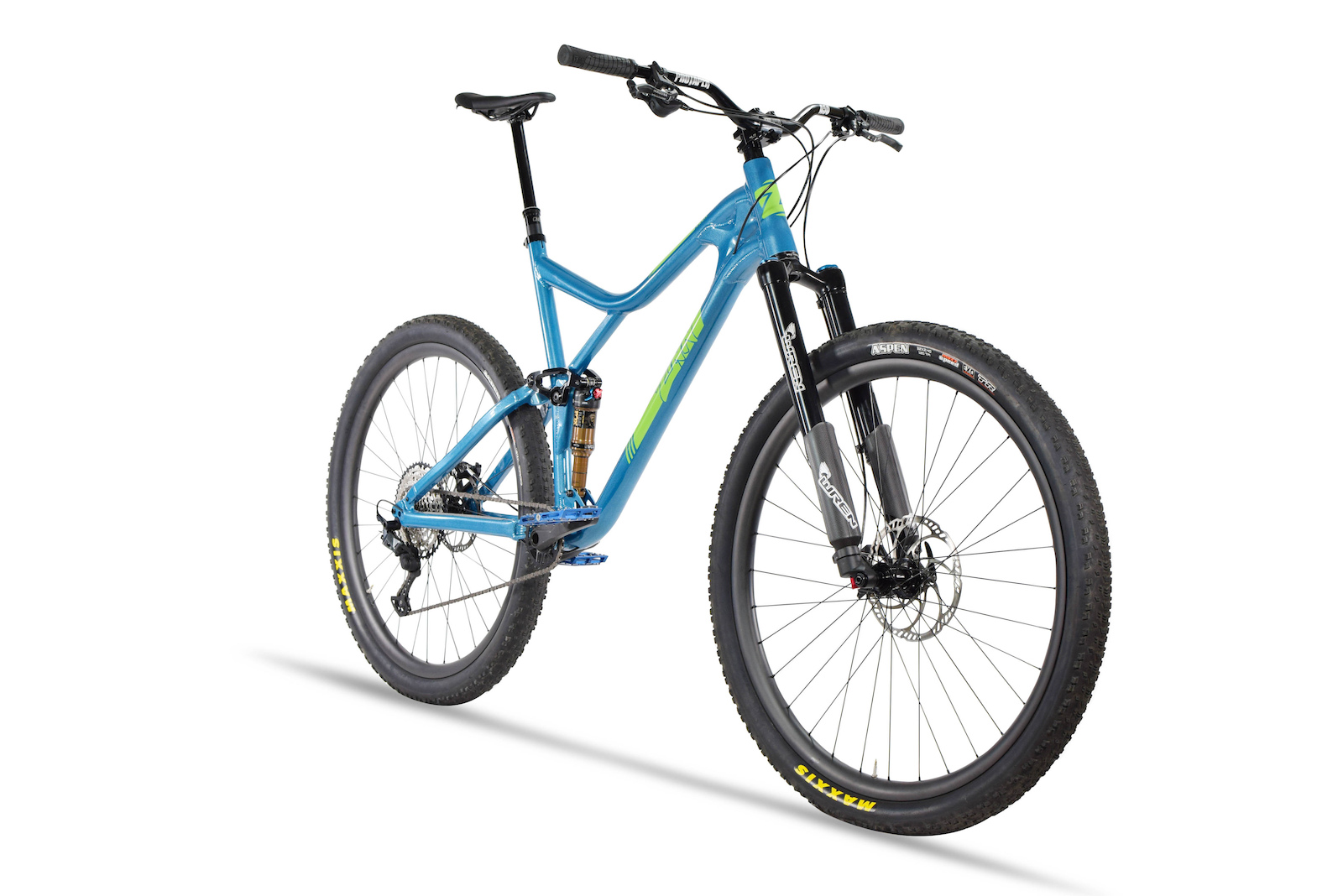
Zinn Cycles’ B.I.G. 32er is one of the first production full-suspension mountain bikes to be fitted with 32in wheels; a diameter starting to gather momentum in the industry.
Specifically, however, the B.I.G. is designed for riders 193cm tall and above, rather than any-sized rider looking for the largest-diameter wheels available.
However, catering for tall riders is a niche that’s Zinn’s bread and butter, and has been for a long time.
The specific components needed to make 32in-wheel bikes a viable product are now more available –such as Maxxis’ Aspen 32in tyres, wheels, spokes and forks. So Zinn decided it was time to bring such a bike to market, but it’s left me wondering whether brands have learnt from some of the mistakes of early 29ers.
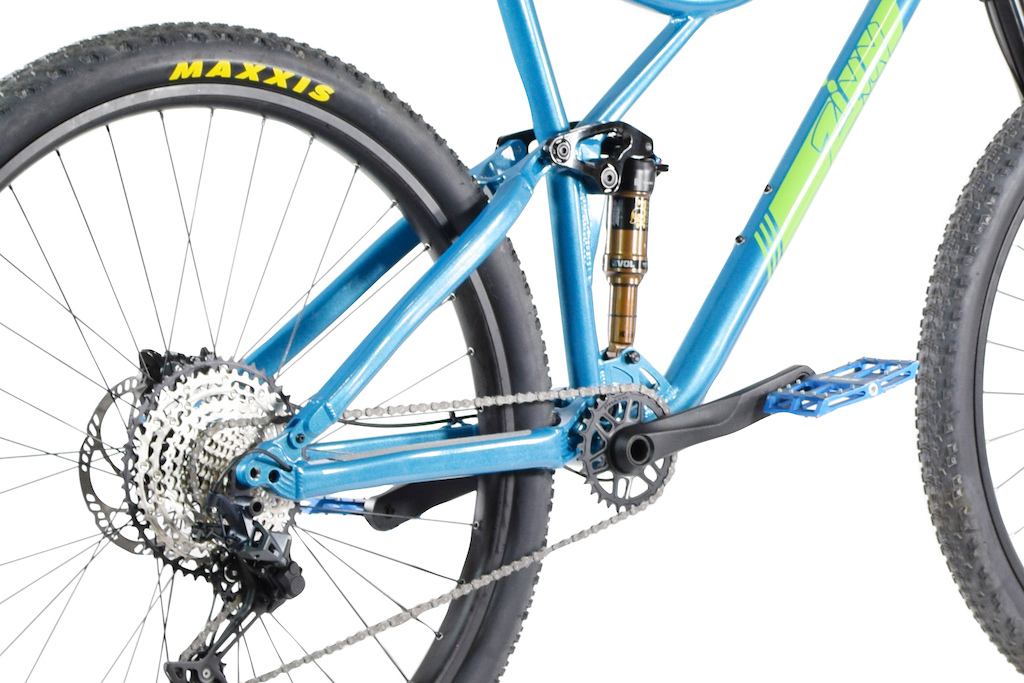
Long chainstays accommodate the 32in rear wheel. Zinn Cycles
The B.I.G. 32er builds on Zinn’s 29in-wheel full-suspension MTB, adapting its tubes slightly to accommodate the bigger wheels.
Most importantly, the chainstays have grown from 460mm on the 29er to 473mm for the 32er. This gives the space required to fit that massive rear hoop.
Stack heights are also up, by 12mm for the biggest 4XL and 5XL B.I.G. to a whopping 682mm.
But there are some figures that seem anomalous to Zinn’s intentions, even given the B.I.G.’s XC focus.
Reach figures start at 475mm for the 2XL and 3XL and lift to 500mm for the 4XL and 5XL.
Modern bike geometry has progressed to a point where neither of these numbers would look out of place on a large-sized 27.5in or 29in bike, even if it’s designed for cross-country.
Conversely, however, effective top tube lengths dwarf most normal bikes’ XL sizes, coming in at 680mm and 704mm for the two smallest and biggest sizes respectively.
Lessons from the past
The B.I.G.’s geometry is reminiscent of the first full-sus 29ers. Zinn Cycles
Some of those numbers will raise a few eyebrows – especially for those seeking a more aggressive, trail-focused ride.
It’s hard to imagine how traditional reach figures found on size-large frames – usually for folk who are 180cm tall – will transpose onto a bike designed for people who top out at 218cm without negatively impacting the ride.
Those who have been around long enough have seen it all before.
When 29in wheels first launched, the bikes they were fitted to had perilously short and tall geometry, riding with the uncertainty of a galloping newborn foal.
But the industry learnt, albeit slowly.
29in-wheeled platforms have developed into some of the best full-suspension mountain bikes you can buy, regardless of discipline.
Maybe that’s a clue about where 32ers are heading.
Being fair to Zinn for one second, it states it “can make 32ers in smaller sizes as well, like M, L, XL upon request”.
But working backwards from its 2XL to 5XL reach figures, I’m concerned those bikes would just be too small.
Proportionality
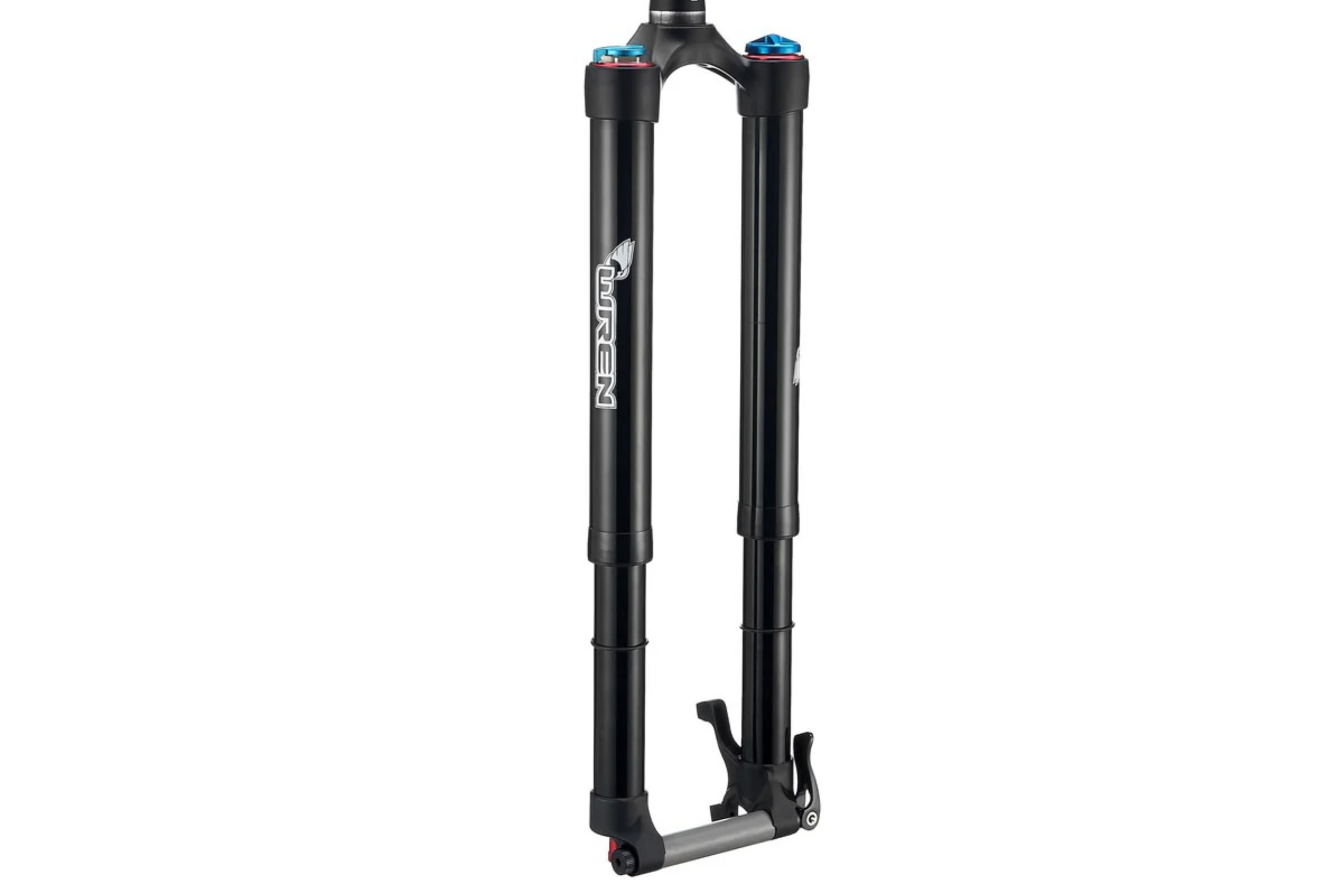
Wren Sports’ Inverted fork can handle a 32in front wheel by reducing travel without shortening the axle-to-crown length. Wren Sports
Maybe there’s more to it than reach and frame figures alone, though.
Zinn has specced an upside-down Wren Sports Inverted fork that’ll fit a 32er front wheel while still having up to 120mm of travel. Currently, offerings from other manufacturers are limited to one-off prototypes not ready for commercial sale.
Wren Sports claims that the added benefits of improved bump roll over from the big wheels more than make up for the reduction in travel, compared to a 29er fork with 150mm of squish.
It’s unsurprising that the B.I.G’s rear axle uses the 12x157mm Super Boost standard – shared with bikes from Pivot among others – to boost frame and rear-wheel stiffness.
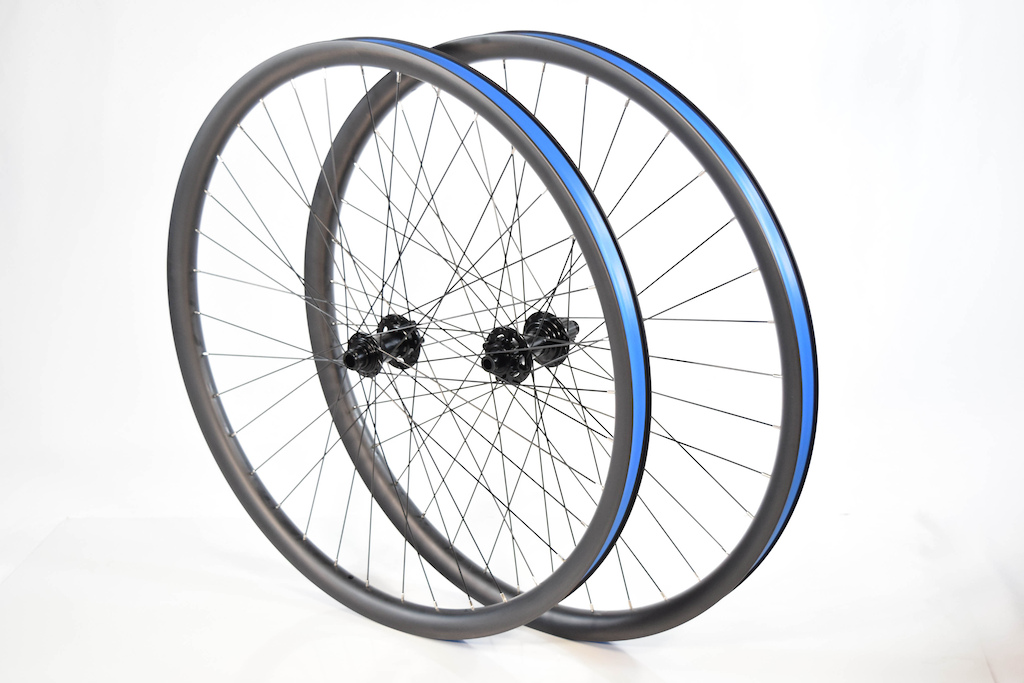
The bigger the wheels, the stronger they need to be. Zinn’s custom spokes should help with that. Zinn Cycles
Zinn ordered custom-length spokes to build its 32in wheels, stating they need to be immensely strong.
Nextie – a carbon specialist based in China – supplies Zinn with its Unicorn 32in carbon rim.
Leaving no stone unturned, the B.I.G. runs custom-length cranks, designed with taller riders in mind.
Starting at 180mm (175mm is a traditional crank’s longest option) and rising to 210mm, for optimum rider pedalling efficiency and comfort, the cranks should be between 1.95 per cent and 2 per cent of a rider’s inseam, according to Zinn.
How much does Zinn’s 32er cost?
Zinn’s B.I.G. 32er has four models in its range.
Prices start at $7,250 for the most-affordable M1 decked out with Shimano’s SLX kit. A Shimano XT model retails for $7,550, and there’s a SRAM GX Eagle AXS-equipped model for $7,950.
The range-topper is fitted with Shimano’s latest XT M8200 Di2 electronic, wireless gearing, and retails for $8,350.
Well, here is a weekend surprise… Red Hat engineer and Rusticl lead developer Karol Herbst has opened a Mesa merge request for “CLUDA” as a compute-only driver that implements the Gallium3D API atop the NVIDIA CUDA driver API. Wow…
Intel engineers continue working on SR-IOV support for the Xe open-source kernel driver as part of Project Battlematrix for ensuring good virtualization support for the latest Intel GPUs on Linux…
Patches were posted this week for implementing Microsoft’s extensions around the ACPI fan device for allowing the operating system to set fan speed trip points. In turn this should help some HP systems and likely other OEMs too in getting fan information working under Linux…
Git developers have been talking in recent weeks around release plans for Git 3.0. If all goes well we could potentially see Git 3.0 released before the end of 2026…