Britain Issues First Online Safety Fine To US Website 4chan

An anonymous reader quotes a report from Reuters: Britain said on Monday it had issued U.S. internet forum site 4chan with a $26,644 fine for failing to provide information about the risk of illegal content on its service, marking the first penalty under the new online safety regime. Media regulator Ofcom said 4chan had not responded to its request for a copy of its illegal harms risk assessment nor a second request relating to its qualifying worldwide. Ofcom said it would take action against any service which “flagrantly fails to engage with Ofcom and their duties under the Online Safety Act” and they should expect to face penalties.

The act, which is designed to protect children and vulnerable users from illegal content online, has caused tension between U.S. tech companies and Britain. Critics of the law have said it threatens free speech and targets U.S. companies. Technology minister Liz Kendall said the government “fully backed” Ofcom in taking action. “This fine is a clear warning to those who fail to remove illegal content or protect children from harmful material,” she said. 4chan and Kiwi Farms filed a lawsuit in the United States against Ofcom in August, arguing that the threats and fines issued by the regulator “constitute foreign judgements that would restrict speech under U.S. law.” The lawsuit claims that both entities are entirely based in the U.S., have no operations in the U.K., and therefore are not subject to its local laws.


Read more of this story at Slashdot.

Microsoft debuts its first in-house AI image generator

Microsoft is continuing to roll out in-house AI models, further decreasing its reliance on long-standing partnership with OpenAI. Today, the company introduced MAI-Image-1, its first internally-developed image-generating AI model. According to the blog post, MAI-Image-1 is particularly good for creating photorealistic results, and can generate natural lighting and landscapes. For now, the model is being tested on LMArena, and Microsoft said it plans to roll out MAI-Image-1 to Copilot and its Bing Image Creator “very soon.” 

Over the summer, Microsoft made its first break from collaborating with OpenAI when it unveiled its first two in-house trained models, MAI-Voice-1 and MAI-1-preview. At that time, Microsoft AI division leader Mustafa Suleyman said in an interview that the company had “an enormous five-year roadmap that we’re investing in quarter after quarter.” So far, it’s at least setting a solid clip of releases.

This article originally appeared on Engadget at https://www.engadget.com/microsoft-debuts-its-first-in-house-ai-image-generator-224153867.html?src=rss

Google’s Nano Banana AI-Image Editing Is Coming to Search, NotebookLM and Photos

Google’s viral Nano Banana AI image editor is being woven into Search, NotebookLM, and Photos. Engadget reports: Perhaps the most notable integration here is with NotebookLM. Nano Banana is being used to drastically change up Video Overviews, offering up six new styles like watercolor and anime. It also now generates contextual illustrations based on sources and there’s a new option for micro-videos called Briefs. For the uninitiated, Video Overviews is a neat little tool available to NotebookLM users that automatically generates explainer videos from documents. It can even whip up a narrated slideshow with visuals. The AI-heavy update starts rolling out to Pro users this week and to all users in “the upcoming weeks.”

Search integration offers new ways to make and edit images while using the official Google app. The company says folks can use a chat prompt to, say, ask the bot to create a stylized version of a pre-existing image. Additionally, photos can be snapped directly from the Lens tool and then edited via the AI. This is rolling out right now in English for US customers, with more countries and languages coming in the near future. We don’t have any actual information as to what the Photos integration will look like, with Google simply saying it’s bringing Nano Banana to the platform in “the weeks ahead.”


Read more of this story at Slashdot.

Dutch Government Takes Control of China-Owned Chipmaker Nexperia

“Dutch authorities have temporarily nationalized Nexperia, owned by Chinese company Wingtech, over fears of critical product unavailability,” writes longtime Slashdot reader evil_aaronm. Reuters reports: The Hague invoked never-before-used powers under a Dutch law known as the “Availability of Goods Act.” The decision led to a 10% fall in Wingtech’s shares in Shanghai on Monday. The Dutch government will not take ownership of Nexperia, but it will now have the power to reverse or block management decisions it considers harmful. The company’s regular production is continuing. […] Wingtech called the Dutch government’s intervention in Nexperia, once part of Dutch electronics group Philips, “excessive interference driven by geopolitical bias.” Wingtech also alleged that non-Chinese Nexperia executives had tried to forcibly alter the company’s equity structure through legal proceedings in a “cloaked power grab” on the company.

A copy of an Amsterdam commercial court ruling dated October 7 and seen by Reuters showed that the court decided on October 1 to suspend Wingtech CEO Zhang Xuezheng from his position as executive director at Nexperia after finding “well founded reasons to doubt” the company was pursuing correct management policy or actions under Dutch civil law. It appointed Dutch businessman Guido Dierick to take Zhang’s position with a “deciding vote”, and transferred control of almost all of Nexperia’s shares to a Dutch lawyer for management. The Dutch state and the company’s labour council had supported the moves, the document showed. […]

In its statement, the Dutch government said that administrative problems at Nexperia posed a threat to the company’s “crucial technological knowledge” without elaborating.
“The loss of these capabilities could pose a risk to Dutch and European economic security,” it said. Nexperia is one of the world’s largest makers of simple computer chips such as diodes and transistors, though it also develops more advanced technologies such as “wide gap” semiconductors used in electrical settings and useful for electric cars, chargers and AI data centres. Wingtech said in a filing to the Shanghai stock exchange on Monday that its control over Nexperia would be temporarily restricted due to the Dutch order and court rulings, affecting decision making and operational efficiency.


Read more of this story at Slashdot.

Google is making search ads more and less avoidable

Google is tweaking how sponsored results will appear in Search. Going forward, it will group any text ads on the Search page into a “Sponsored results” section that will appear at the top of the screen. The size of the ads is unchanged and Google says there will never be more than four ads in a grouping. Once you scroll past the section with ads, you can click a button to hide all sponsored results. 

According to Google, “the new design helps people navigate the top of the page more easily.” Maybe that’s because people have gotten used to automatically looking farther down the search results to skip the AI Overviews. Google’s announcement even noted that the sponsored tab might appear either above or below its AI-generated summary. What’s another second of scrolling to actually reach information? But lest you scroll too far, Google will also have a “Sponsored results” section at the very bottom of the page that can only be hidden after you’ve seen those hits. 

The new approach is currently rolling out globally on mobile and desktop platforms.

This article originally appeared on Engadget at https://www.engadget.com/google-is-making-search-ads-more-and-less-avoidable-215658127.html?src=rss

Hackers can steal 2FA codes and private messages from Android phones

Android devices are vulnerable to a new attack that can covertly steal 2FA codes, location timelines, and other private data in less than 30 seconds.

The new attack, named Pixnapping by the team of academic researchers who devised it, requires a victim to first install a malicious app on an Android phone or tablet. The app, which requires no system permissions, can then effectively read data that any other installed app displays on the screen. Pixnapping has been demonstrated on Google Pixel phones and the Samsung Galaxy S25 phone and likely could be modified to work on other models with additional work. Google released mitigations last month, but the researchers said a modified version of the attack works even when the update is installed.

Like taking a screenshot

Pixnapping attacks begin with the malicious app invoking Android programming interfaces that cause the authenticator or other targeted apps to send sensitive information to the device screen. The malicious app then runs graphical operations on individual pixels of interest to the attacker. Pixnapping then exploits a side channel that allows the malicious app to map the pixels at those coordinates to letters, numbers, or shapes.

Read full article

Comments

You Can Now Hide Sponsored Ads in Google Search

Did you know you can customize Google to filter out garbage? Take these steps for better search results, including adding my work at Lifehacker as a preferred source.


Google’s sponsored ads are generally a pain. Not only are they often not relevant to what you’re searching for, they can occasionally be malicious: You might think you’re clicking on a legitimate link for something you’ve searched for, but you’re actually heading somewhere else entirely. Together with all the new AI components Google has introduced in recent years, it’s increasingly tough to get the search results you’re actually looking for.

But there’s some small good news on this front: As initially reported by The Verge, Google’s sponsored ads are getting a little less annoying. Previously, these ads would appear one after another, each within its own “Sponsored” header. Going forward, you’ll only see one “Sponsored” header, with all sponsored links listed below. And the best part? Once you scroll to the end of that content block, you’ll have the option to collapse all those sponsored links, hiding all the ads from your search view.

It’s a small but helpful change for anyone who is tired of dealing with Google’s often frustrating sponsored ads on each and every search they conduct. Google makes much of its money from search ads, so the company will never get rid of them completely. But to give you the option to hide them from view—even if you only see that option after scrolling past all sponsored ads—is a step in the right direction.

Of course, if you elect to use an ad blocker, you never need to worry about sponsored ads appearing in search to begin with. Heck, iif you’re already using one, you might never have known about this change in the first place. But ad blockers aren’t for everyone, and they can hurt smaller sites that rely on ad revenue to run, even as they protect you from malicious (and annoying) ads.

If you choose not to use an ad blocker, thanks to these changes, perusing your Google search results can be a little bit better, at least.

Measles outbreak in SC sends 150 unvaccinated kids into 21-day quarantine

Health officials in South Carolina are warning that the highly infectious measles virus is spreading undetected in communities in the northern part of the state, specifically Spartanburg and Greenville counties.

Last week, officials in Greenville identified an eighth measles case that is potentially linked to the outbreak. Seven outbreak cases had been confirmed since September 25 in neighboring Spartanburg, where transmission was identified in two schools: Fairforest Elementary and Global Academy, a public charter school.

Across those two schools, at least 153 unvaccinated children were exposed to the virus and have been put in a 21-day quarantine, during which they are barred from attending school, state officials said in a press conference. Twenty-one days is the maximum incubation period, spanning from when a person is exposed to when they would develop a rash if infected.

Read full article

Comments

Apple TV+ is now just Apple TV

It’s been an interesting few months in the realm of streaming service branding. Warner Bros. Discovery reverted Max back to HBO Max after a baffling decision to trim the name in the first place. Disney made Hulu the “global general entertainment brand” on Disney+ when it rebranded the Star hub on the service. Now Apple would like you to know that it’s changing the name of its streaming service too. Going forward, Apple TV+ is now just Apple TV.

The company revealed the news in very lowkey fashion, at the end of a press release about when its F1 movie will land on Apple TV, the streaming service with a monthly subscription (December 12, FYI). “Apple TV+ is now simply Apple TV, with a vibrant new identity,” the company said without elaborating.

Apple does like to keep things clean, and shearing off the plus sign is one way of doing that. But oversimplification can cause greater confusion.

As Apple states in its own press release, “Apple TV is available on the Apple TV app” and “For a limited time, customers who purchase and activate a new iPhone, iPad, Apple TV or Mac can enjoy three months of Apple TV for free.” Did no one at Apple’s (generally very effective) marketing team spot the problem with this? Buying Apple TV to get free Apple TV sounds like a recursive capitalist fever dream that will never end.

As it stands, you can turn on your Apple TV device to open the Apple TV app to watch Apple TV. There are lots of things in the Apple TV app that aren’t actually Apple TV shows or movies and you may have to pay for those separately. The press release also states that you can watch F1 right now if you buy it on Apple TV through the Apple TV app, so you don’t have to wait for the film to make its “global streaming debut” on Apple TV. What a mess.

Apple hasn’t fully rolled out the change yet, as there are still plenty of references to “Apple TV+” on the streaming service’s website. It’s still referred to as Apple TV+ on the TV app’s listing on the App Store too. I’m interested to see how confusing things really get if, in the coming months, Apple reveals a refreshed Apple TV. You know, that device you can use to watch Apple TV.

This article originally appeared on Engadget at https://www.engadget.com/entertainment/streaming/apple-tv-is-now-just-apple-tv-200644609.html?src=rss

Why You Should Only Use Google’s NotebookLM in a Browser

Did you know you can customize Google to filter out garbage? Take these steps for better search results, including adding Lifehacker as a preferred source for tech news.


I am the biggest booster of Google’s NotebookLM, an AI tool that functions like a personal ChatGPT. I have recommended it for studying, used it for my own work loads of times, and generally found it to be one of the best bits of software available right now. But recently, I tried using it on my phone, not just on my computer browser—and it fell surprisingly flat. Here’s how I’ve been managing to use it via mobile, anyway, and why you should stick to the computer version for now.

What is NotebookLM?

NotebookLM is a language model that only uses resources you provide. Like ChatGPT, it can offer summaries, outlines, and studying or organizational help, but unlike ChatGPT, it’s not pulling from the World Wide Web to do that. Instead, you upload PDFs, links, plain text, and documents and, when you ask it a question, it relies only on those to give you an answer.

Here’s a practical example.: I use it a lot when I’m writing an article that features a load of interviews. I copy and paste my interview transcripts into NotebookLM, then prompt it, to, say, “Find me three quotes about the value of good sleep.” If three of my sources mentioned how important it is to get a good night’s rest, I’ll get three quotes right away, plus a hyperlink to where they each appear in their respective interview, so I can go back and read the context around them. It makes being organized so much easier and I don’t waste time searching, word by word, through every transcript for what I need.

For studying, it’s even better. You can upload all the slide decks, e-texts, and notes you have from a class, then ask it to generate practice quizzes, flashcards, summaries, or essay outlines. One of its coolest features is that it will even create a fake podcast, complete with two hosts who have vocal ticks and even vocal fry. The two AI hosts discuss the material from your sources in an informational, conversational way, like a real podcaster might, and you can listen to it and learn wherever you are.

It’s been incredibly helpful for me, and it doesn’t feel unethical to use, like other AI chatbots, because it’s synthesizing information I already found, compiled, and put the work in on. It doesn’t feel like I’m cheating when I use it; instead, it feels like I’m getting a little boost in my organization, but still doing most of the work. Plus, there’s never a risk that it will make up a fake fact or pull in information that is irrelevant or faulty, like there is with ChatGPT. It relies only on what you give it.

The mobile app problem

All of that said, I became and stayed obsessed with this after only using it on my desktop browser for the last six months or so. Last weekend, though, I was studying for an upcoming certification exam and was, as usual, using NotebookLM to generate flashcards, quizzes, and fake podcasts. But I was also cleaning my apartment and doing the laundry, which involved a lot of running to and from the laundromat. I decided to use the NotebookLM iPhone app so I could study on the go; I assumed that since the product is so stellar on the computer, it would be great on the app, too. It was not.

On the app, all you can do is review your sources, talk to the chatbot, and listen to your generated podcasts. Here’s what you can’t do:

  • Generate flashcards

  • Review existing flashcards

  • Generate a quiz

  • Take existing quizzes

  • Select the sources from which you make a podcast, quiz, flashcards, or chat topic

One of the best things about the browser version is you can toggle sources on and off. So, if you upload a separate PDF for five different book chapters, you can select only Chapter 1 and Chapter 2 before generating a quiz or flashcards, for instance. If you keep them all selected, your quizzes, flashcards, podcasts, or chats will pull from all of them. By narrowing the scope, you can study more specifically.

You can’t do that on the app, but it doesn’t actually matter because you can’t generate (or use) anything on the app, anyway. You can generate a podcast, but only one that pulls from all your sources. The other features—quizzes and flashcards—aren’t available at all.

Workarounds for NotebookLM

The first workaround I found was a little annoying: I generated a podcast for every chapter using my computer, then listened to them through the mobile app on my phone while I ran my errands. I had to stay on top of my schedule, bouncing from cleaning to laundromat to computer and back again, so I wouldn’t find myself without a study podcast to review, but all in all, I got the hang of it. You can’t do this for flashcards, quizzes, or mind maps, but if you’re after the podcasts, this works with some pre-planning.

The second workaround is not to use the app at all. Most websites and companies want to push you toward app use, presumably for data-collection purposes, but never forget there is a browser on your phone, too. I navigated to the NotebookLM website on my mobile browser and, though it’s smaller and harder to navigate than the computer, have been able to use it to generate flashcards, quizzes, mind maps, and more. You can check and uncheck sources on the mobile browser version, which is ideal.

I’m hopeful the app will improve. NotebookLM is such a great resource that has helped me a ton, but it would be much better if it were more usable in its app format. I can’t always be attached to my laptop; the real value of studying with flashcards, especially, is that they should be accessible and reviewable anywhere via my phone.

Intel Lands Big Linux GPU Driver Fix: Fixing Rendering Issues & Game Hangs/Crashes

Problematic code dating back to 2017 has now been reverted within the Intel open-source Mesa driver code that led to various games having rendering/corruption issues as well as various hangs and crashes in other games. This affected a variety of Intel graphics hardware and software while now has finally been tracked down with the problematic code removed. This is a big improvement for Linux gamers on Intel graphics…

Google’s Photoshop-killer AI model is coming to search, Photos, and NotebookLM

Google began experimenting with conversational image editing earlier this year in the dev-focused AI studio, but the feature didn’t remain experimental for long. Over the summer, Google rolled out the “Nano Banana” image-editing model in Gemini 2.5 Flash. You can use this feature to modify images with just a prompt, and now you don’t even need to go to Gemini to use it. Google says Nano Banana is now coming to search, Google Photos, and NotebookLM.

The AI image editor is coming to search via Lens and AI Mode. For Lens, you can simply open the app (iOS and Android) and snap a photo to get started. When the rollout is complete, you’ll see a “Create” button at the bottom, with a banana icon. Tap that to enter a prompt, telling the AI how you’d like the photo changed.


When you begin an edit in Lens, the Google app will display the results and offer the chance for follow-up edits in the AI Mode interface. Google is always looking for more ways to get people plugged into its conversational search bot, so there’s also a separate way to access Nano Banana there. Simply select the “Create image” tool and enter your prompt to create an image. You can then continue the conversation to have Nano Banana change the image.

Read full article

Comments

GM ends development of hydrogen fuel cells

In a bulletin on Friday, GM announced that it will end its HYDROTEC brand’s work on hydrogen fuel cell development. Instead, GM will focus its R&D efforts on batteries, charging technologies and electric vehicles. The company said it will continue its Fuel Cell System Manufacturing joint venture with Honda, which creates cells for data centers and power generation. 

The post from GM said that due to limited infrastructure and high costs, hydrogen cells simply haven’t taken off for consumer vehicles. Lately, the automotive industry seems to agree. GM’s shift follows a similar move in February from Toyota, which isn’t completely giving up the ghost but instead pivoted its hydrogen cell projects to focus on industrial applications rather than consumer ones.

This article originally appeared on Engadget at https://www.engadget.com/gm-ends-development-of-hydrogen-fuel-cells-195212217.html?src=rss

Starship’s elementary era ends today with mega-rocket’s 11th test flight

SpaceX is set to launch the 11th full-scale test flight of the company’s Starship rocket Monday evening, with hopes of capping a tumultuous year with a successful one-hour voyage from South Texas to the Indian Ocean.

Liftoff of the Super Heavy booster with the Starship upper stage is scheduled for 6:15 pm CDT (7:15 pm EDT; 23:15 UTC). SpaceX has a 75-minute window to launch Monday. You can watch a livestream of the flight here.

SpaceX’s control team, positioned a couple of miles away from the launch pad at Starbase, Texas, will oversee the loading of more than 10.5 million pounds of super-cold methane and liquid oxygen into the two-stage rocket beginning about an hour before liftoff. In the final minutes of the countdown, the world’s largest rocket will undergo a steering check, and the launch director will give a final “go” for launch.

Read full article

Comments

AMD Dev Proposes Dynamic Mitigations For Linux: Run-Time Toggling Of CPU Mitigations

A big patch series was posted today for the Linux kernel that would allow enabling/disabling CPU security mitigations at run-time rather than the current handling that can only be managed at boot-time via various Linux kernel command-line arguments. Thus due to changing security needs, differing workloads mandating different CPU security concerns and the like, this proposed feature would allow Spectre, Meltdown, and other CPU security mitigations to all be toggled at run-time…

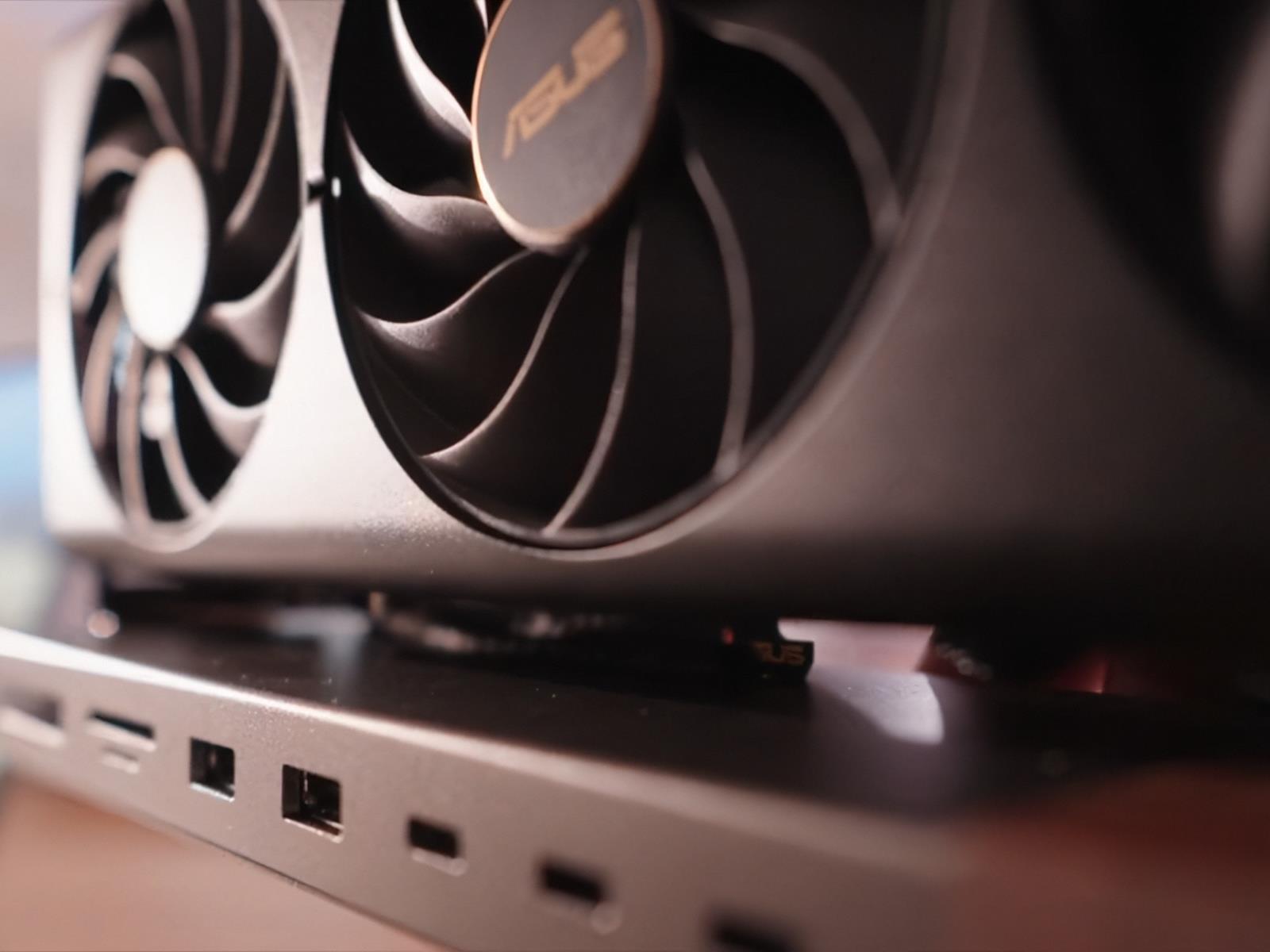
Humbird 3 Thunderbolt 5 eGPU Dock With Wireless Charging & Built-In Display Crushes Crowdfunding Goal

Humbird 3 Thunderbolt 5 eGPU Dock With Wireless Charging & Built-In Display Crushes Crowdfunding Goal
The external GPU market is rife with clunky solutions, with questionable expansion possibilities and exorbitant pricing, but there may be a new device coming that address all of those concerns. The Humbird 3 Thunderbolt 5 docking station is one of the most promising eGPU docks we’ve seen yet.

The Humbird 3 is a Thunderbolt 5-powered docking

TP-Link Claims Big Breakthrough With First Successful Wi-Fi 8 Connection Test

TP-Link Claims Big Breakthrough With First Successful Wi-Fi 8 Connection Test
Wi-Fi 7 is still relatively new, but that hasn’t stopped industry players such as TP-Link from working on the next generation of wireless connectivity. The company has announced a “critical milestone” in the development of Wi-Fi 8 (802.11bn) and successfully demonstrated connectivity between devices using the new technology.

TP-Link didn’t