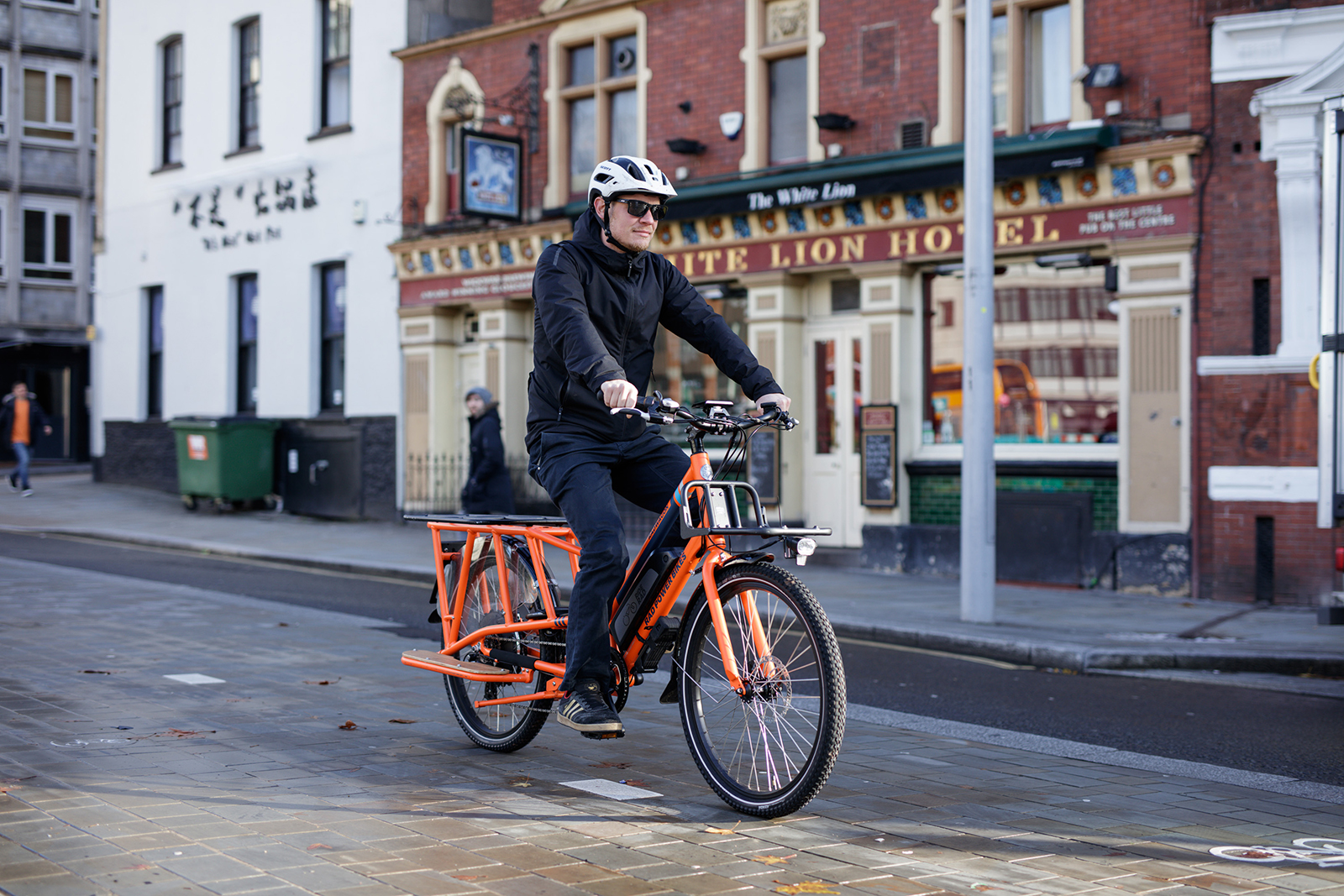
Electric cargo bikes could change people’s perception of cycling and replace cars for many tasks, including school runs, shopping, family outings and commuting, a new study suggests.
The study, published in the journal Geoforum and supported by the UK’s Engineering and Physical Sciences Research Council, was led by Clara Glachant of the University of Eindhoven.
Commenting on the study’s findings, Glachant said: “Our findings suggest that e-cargo cycling may help cultivate a cycling culture both at the household level and the community level.
“They may reshape ideas of who belongs on the road, who is entitled to space. This could help to reduce anti-cyclist sentiment which would help active travel contribute more to sustainable transport.”
The study also found that e-cargo bikes lead to a change in users’ view of cycling, seeing it as a practical activity, not just a pastime for leisure or fitness.
59% of the main users of the bikes were found to be women riders. Bosch eBike Systems
49 UK families living in Brighton, Leeds and Oxford were loaned an electric cargo bike for one month each during the summer of 2023, with 11 families additionally loaned an e-cargo bike for winter riding from October 2023 to March 2024. The bikes were a mix of longtail and front-loading designs, and 51% of the households taking part already owned one car, with 47% owning two or more.
While Oxford has a high rate of cycle use, the figure in Leeds is low, with a previous survey finding it to be one of the UK cities least friendly to cyclists; Brighton sits between the two. The families were recruited via local publicity and follow-on surveys, so were found to have had a predisposition to trial cycling rather than driving and be more keen to reduce car use than the national average.
67% of participants were between the ages of 35 and 49, and 67% already cycled weekly.
Findings on use of the bikes suggested 59% of their main users were female, in comparison to cycle use in general, with only 20% of British Cycling members being women.
Different perceptions
Riders reported being given more road space by drivers than when riding recreationally. Simon Bromley / Our Media
Among the study‘s findings was that there were benefits for the perception of cycling in the community, helping to normalise it, and also changing study participants’ views of cycling.
“It’s also about culture: people’s habits, identities and perceptions of transport. Our research shows e-cargo bikes can help reshape these, challenging what psychologist Ian Walker has coined ‘motonormativity’,” Glachant says.
Several study participants commented on the different perception of car drivers of riders of cargo bikes compared to recreational riders, feeling they were given more road space and that drivers were more patient.
On the other hand, some participants reported feeling out of place and unconventional, as well as having concerns over child safety.
The researchers suggested that e-cargo bikes could also shift the balance of cycle commuting and utility cycling in the UK away from its current male domination, encouraging more women and children to travel by bike.
A shift away from car use?
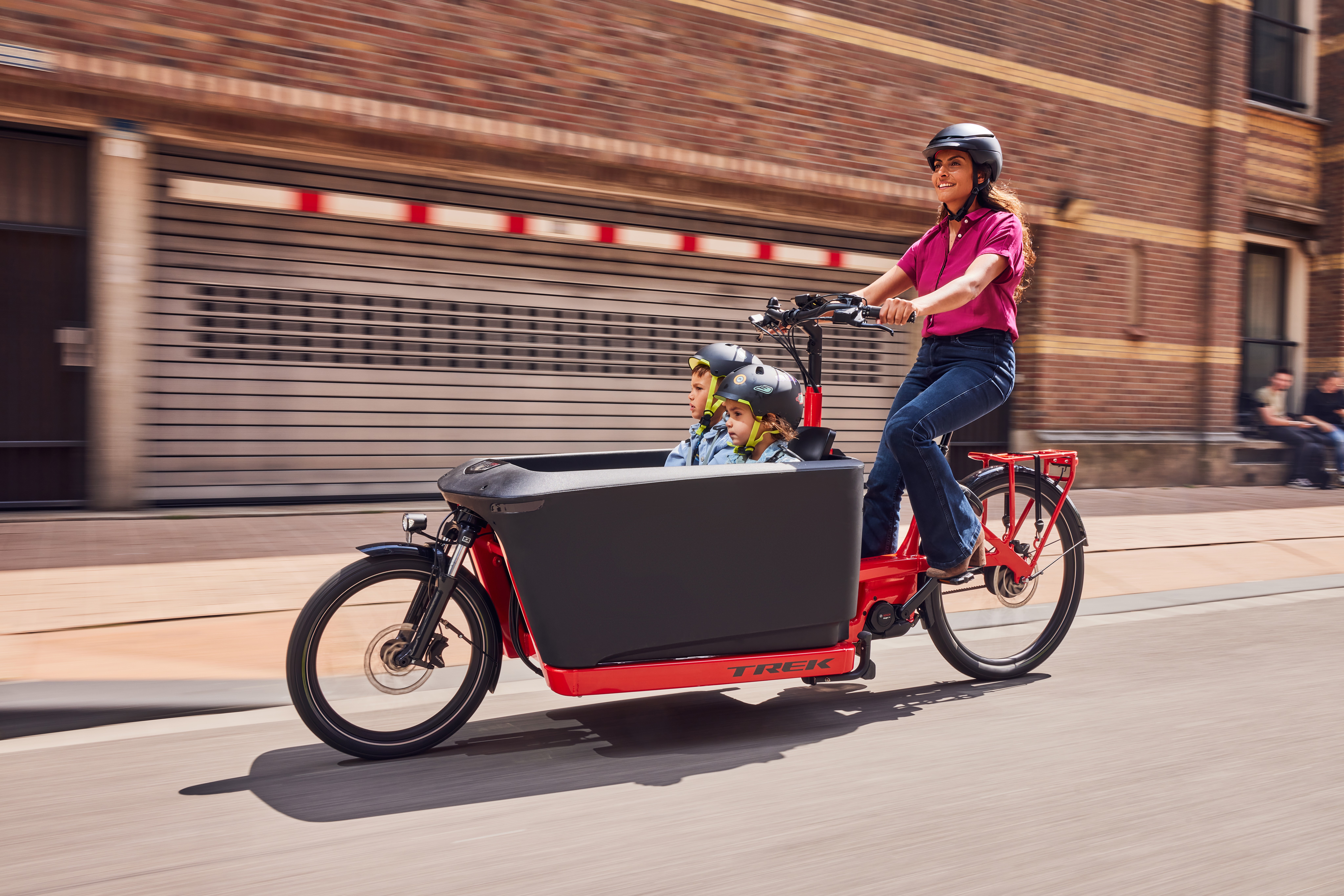
This was one of the first studies to look at family use, rather than for deliveries. Trek
While previous studies had concentrated on the use of e-cargo bikes to replace motor vehicles for last-mile deliveries, the study was one of the first to look at their potential to replace motor vehicles for family mobility.
Many of the families’ trips included carrying passengers and, unlike riding a single-person bike, they reported that an e-cargo bike enabled riders and their passengers to interact with each other, more like riding in a car, although how effectively depended on the design of the bike.
The participants found it also enabled them to connect more with their surroundings and local communities than sitting in a car, which previous studies have characterised as ‘private-in-public’ spaces, limiting social interactions in comparison to cycling. They felt they were given more road space by drivers than on solo leisure rides, too.
The study points to surveys that show that in the UK in 2021, 75% of mileage was by car or van and only 1.7% by bicycle.
The 2024 National Transport Survey found that 17% of journeys under one mile were made in a car or van, with 81% on foot. That tipped to 69% by car or van for trips of one to five miles and 83% for five to 10-mile journeys, excursions for which e-cargo bikes could often substitute.
But the study points out that, while 90,000 cargo bikes were sold in Germany and 70,000 in France in 2022, only 4,000 were sold in the UK.
Last month Arm announced the Lumex CSS platform with C1 CPUs and Mali G1 GPUs. One month later, Arm is already beginning to open-source graphics driver patches for enabling the new Mali-G1 graphics processor…
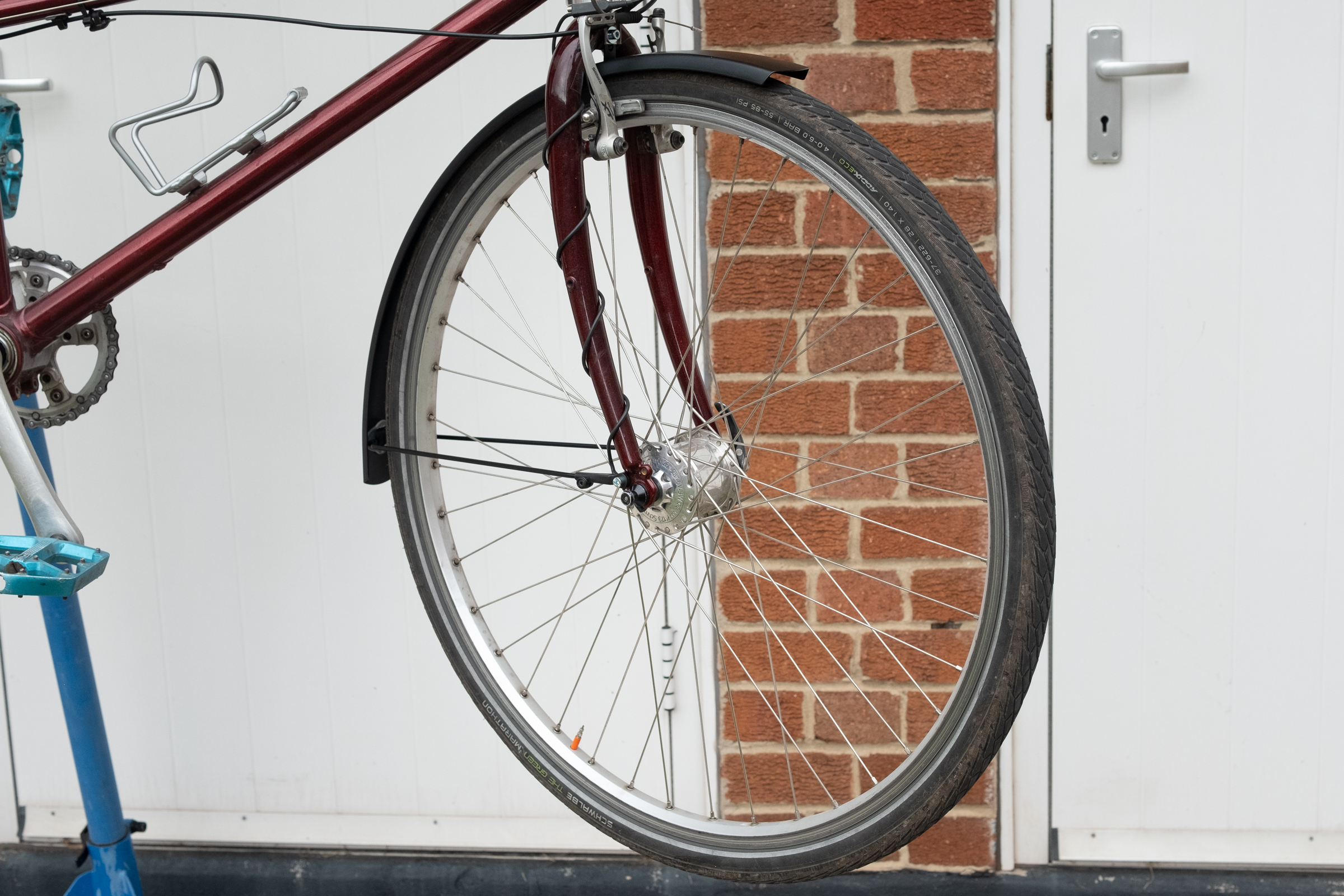
I have fitted quite literally hundreds of mudguards during my time as a cyclist. That might sound like exaggeration, but I swear it’s true.
Some of that’s down to my own bikes – most of which have mudguards – but it’s largely thanks to my time spent preaching the good word of the mudguard evangelists while working as a mechanic in a perpetually damp Edinburgh bike shop.
Our poor customers left the shop having spoken to me, feeling mudguards weren’t optional – they were practically compulsory.
And with good reason – we all know mudguards keep you drier, protect your drivetrain and generally make riding in bad weather tolerable. I’m sure they thanked me when splish-splashing along a cobbled vennel.
But my commitment to the way of the fender is lifelong. My dad’s dad taught him that no meal is complete without chips – along with that nugget of culinary wisdom, my father passed on to me the equally valuable belief that no bike is complete without mudguards.
Over the years, I’ve learned what makes the difference between a noisy, half-baked setup and mudguards that disappear into the background – quietly doing their job, rattle-free, for years.
Here are my hard-earned tips for fitting mudguards properly, so you too can enjoy dry-bum bliss.
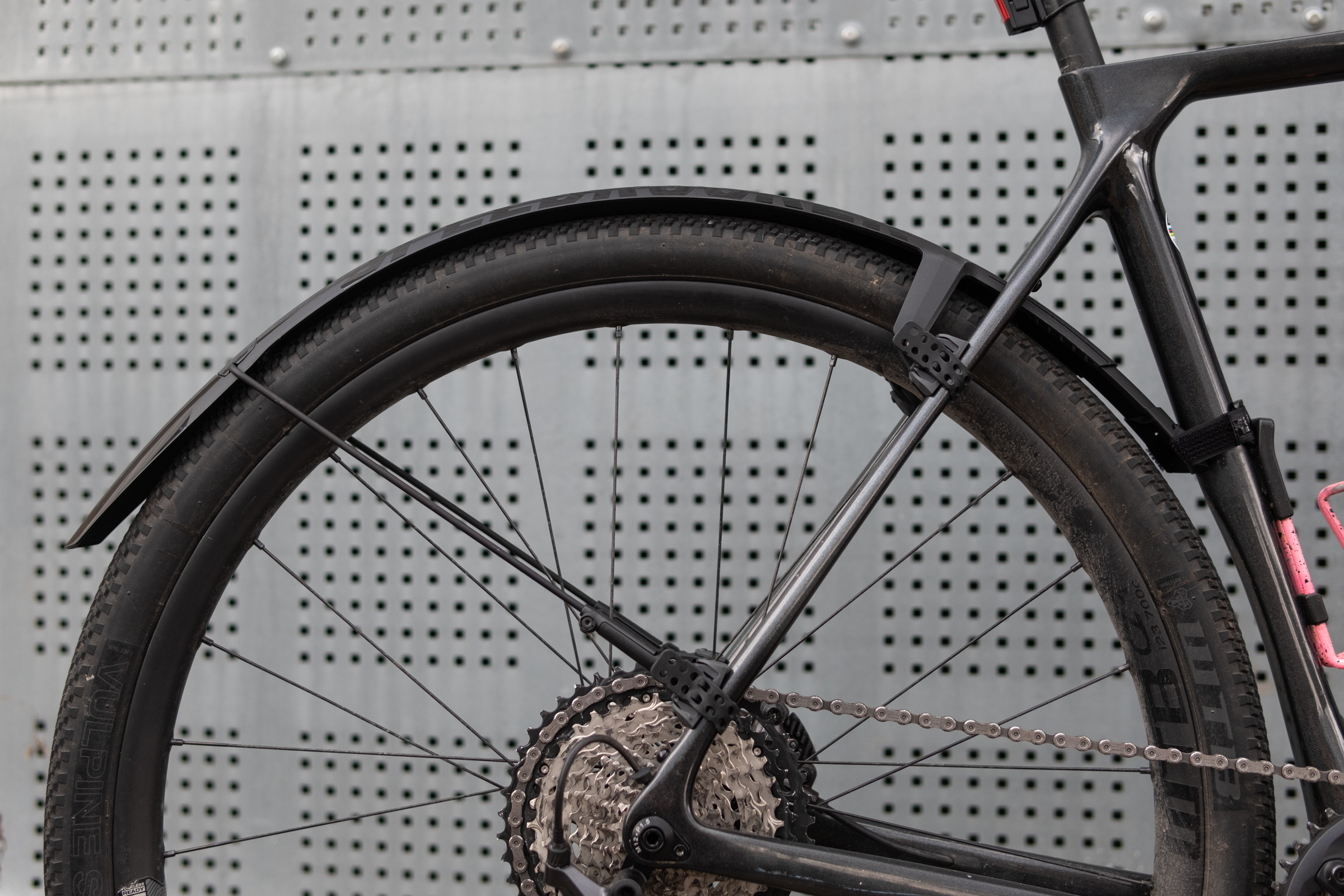
Set up correctly, mudguards will provide full coverage, and can even complement the look of a bike. Jack Luke / Our Media
Even the best-designed mudguards are fiddly to fit – don’t rush it. A slapdash job means wobbly stays, uneven tyre lines and countless rattles.
For alloy mudguards, especially, set aside a couple of hours the first time around. Once you’ve got the hang of it, or you’re refitting after summer, it’s much quicker – but patience is your friend here.
Take pride in a job well done. Jack Luke / Our Media
I advise changing your mindset before committing to the temple of dry bum. Treat the job as a pre-winter afternoon project, and indulge in the pleasure of a job well done.
2. Do your research
One mudguard may better suit the shape of a bike than another. Jack Luke / Our Media
Patience must also be employed before you fit anything – mudguards aren’t one-size-fits-all.
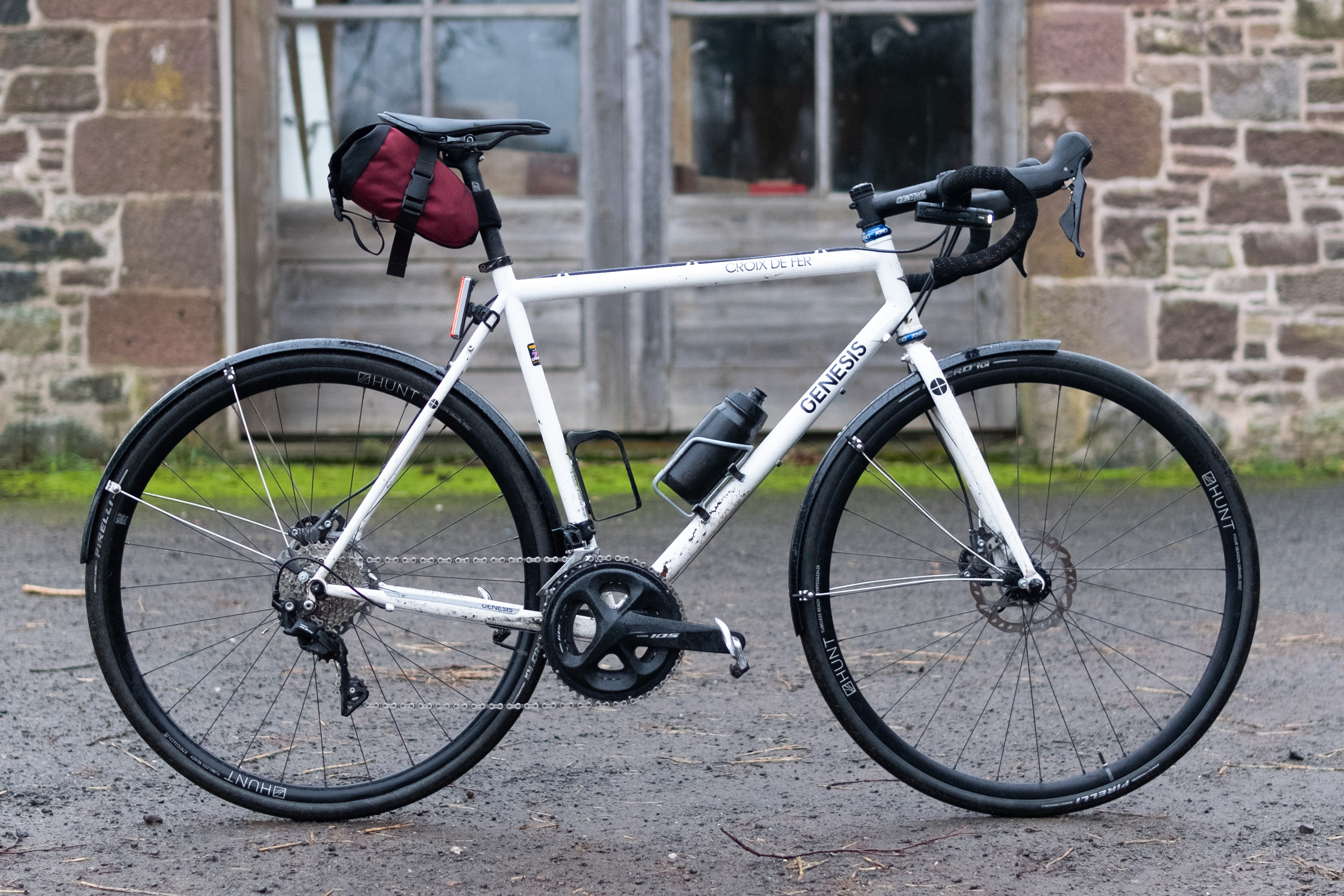
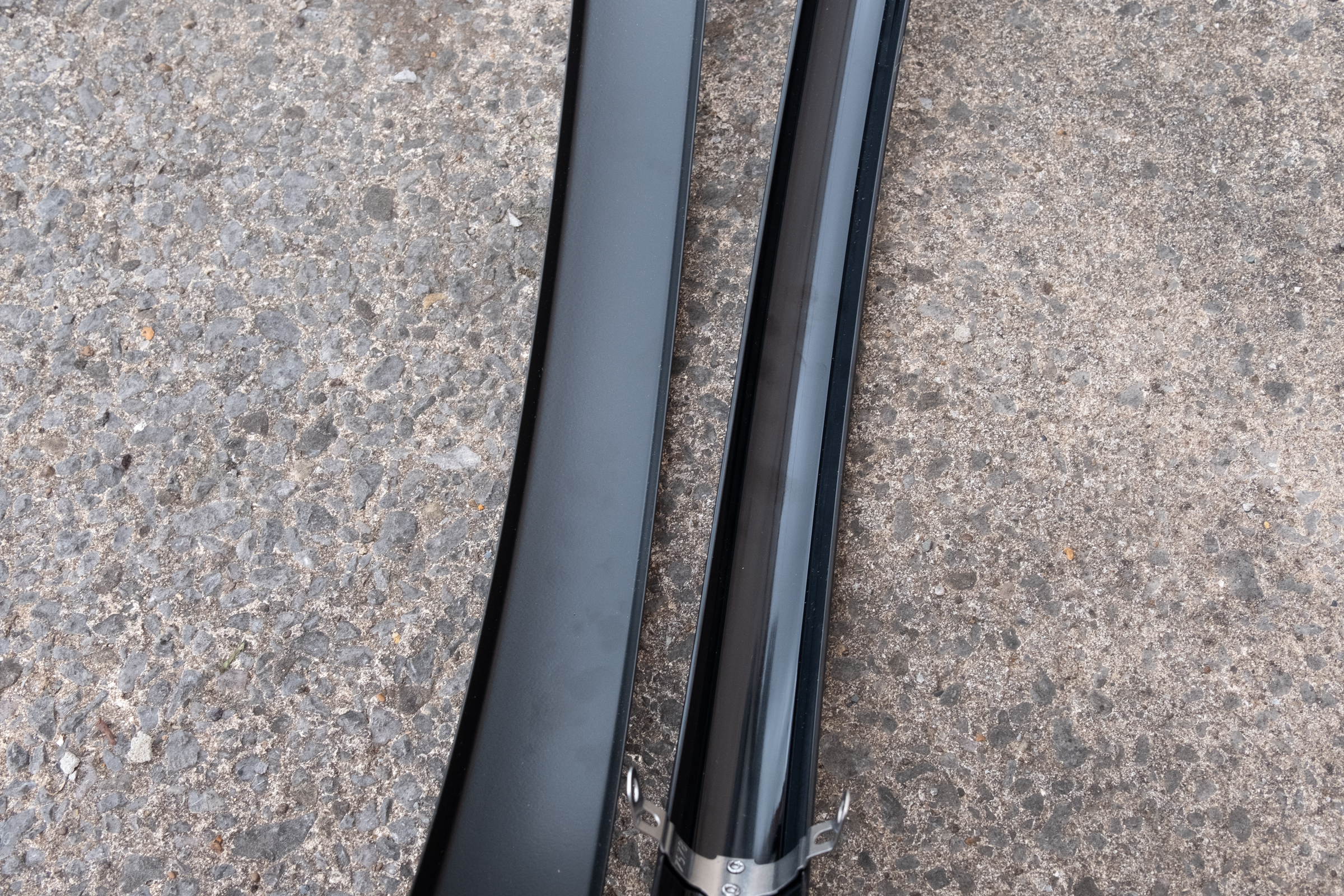
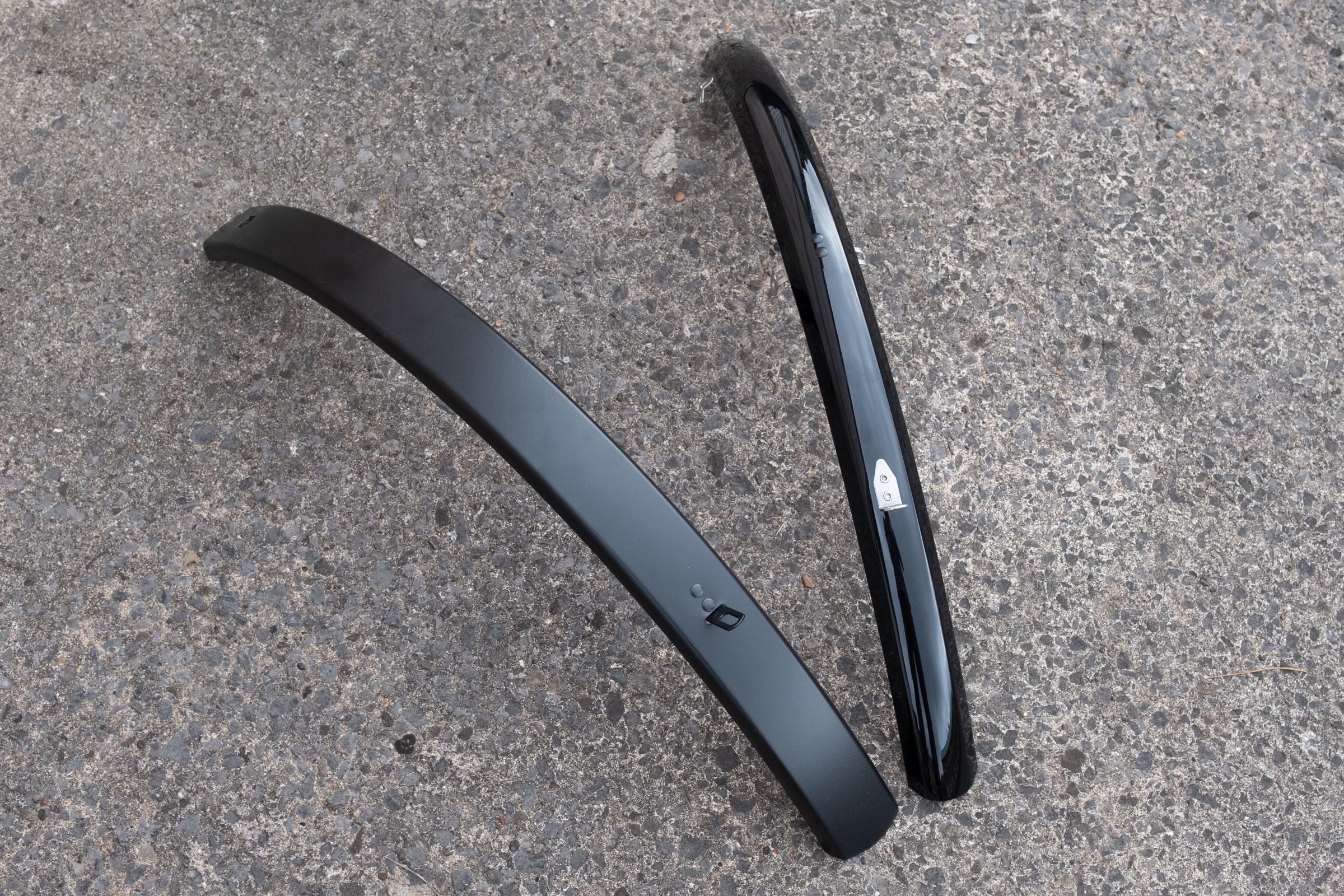
To start, profiles vary. A round guard might hug a road tyre beautifully, but look awkward or rub on a gravel bike. Conversely, fenders with a flat profile often suit chunkier tyres better.
The shape also really matters. Round guards tend to channel water down and away, but in muddy conditions, they can clog more easily.
Although this flat guard still left enough clearance for chunky tyres, a mudguard with a rounder profile would enable you to squeeze a slightly wider tyre in there. Jack Luke / Our Media
Equally, some mudguards will simply suit some bikes better than others.
We sold dozens of entry-level Trek Domane road bikes in the aforementioned bike shop. This was in the rim-brake era, and we found the slightly narrower, rounder profile of SKS guards suited the bike far better than Trek’s own-brand fenders.
Clip-on mudguards can be a good choice for some bikes. Jack Luke / Our Media
On the other hand, a bike with flat seatstay and chainstay bridges might suit flat-profile mudguards and enable you to eke out a few extra millimetres of clearance.
Good mudguard manufacturers will provide detailed measurements that you can cross-reference with your bike. Consult these closely and don’t rush the buying decision. You might also find your local bike shop has advice for your specific bike.
3. Pick the right material
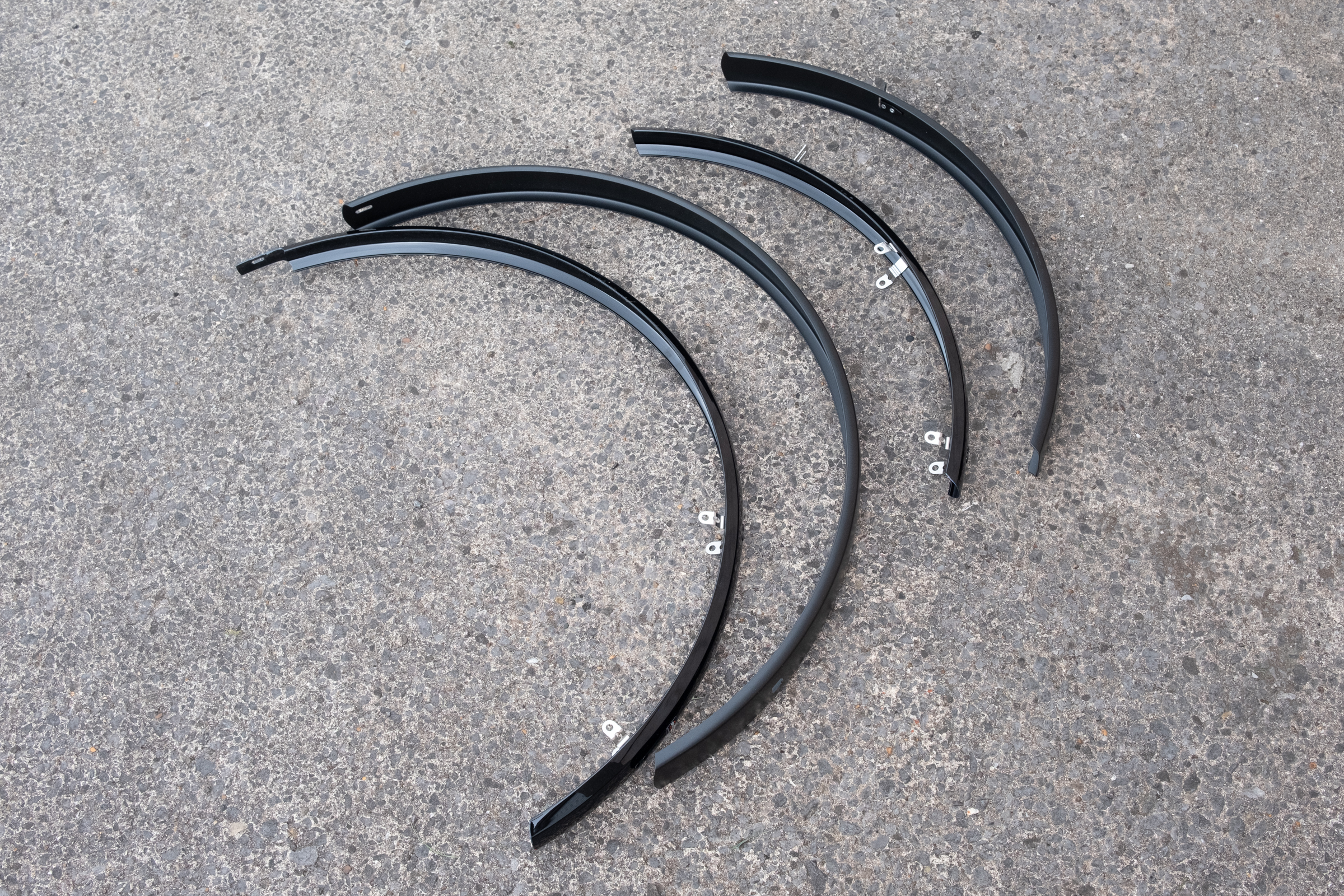
Mudguards come in two broad flavours – alloy or plastic. Jack Luke / Our Media
Mudguards broadly come in two flavours: alloy and plastic.
Each has pros and cons, and choosing the right one depends on how you’ll use your bike.
Alloy guards look fantastic, last for years and can be more easily repaired if damaged. They also tend to be available with higher-quality hardware and spares, which means you can keep them running almost indefinitely.
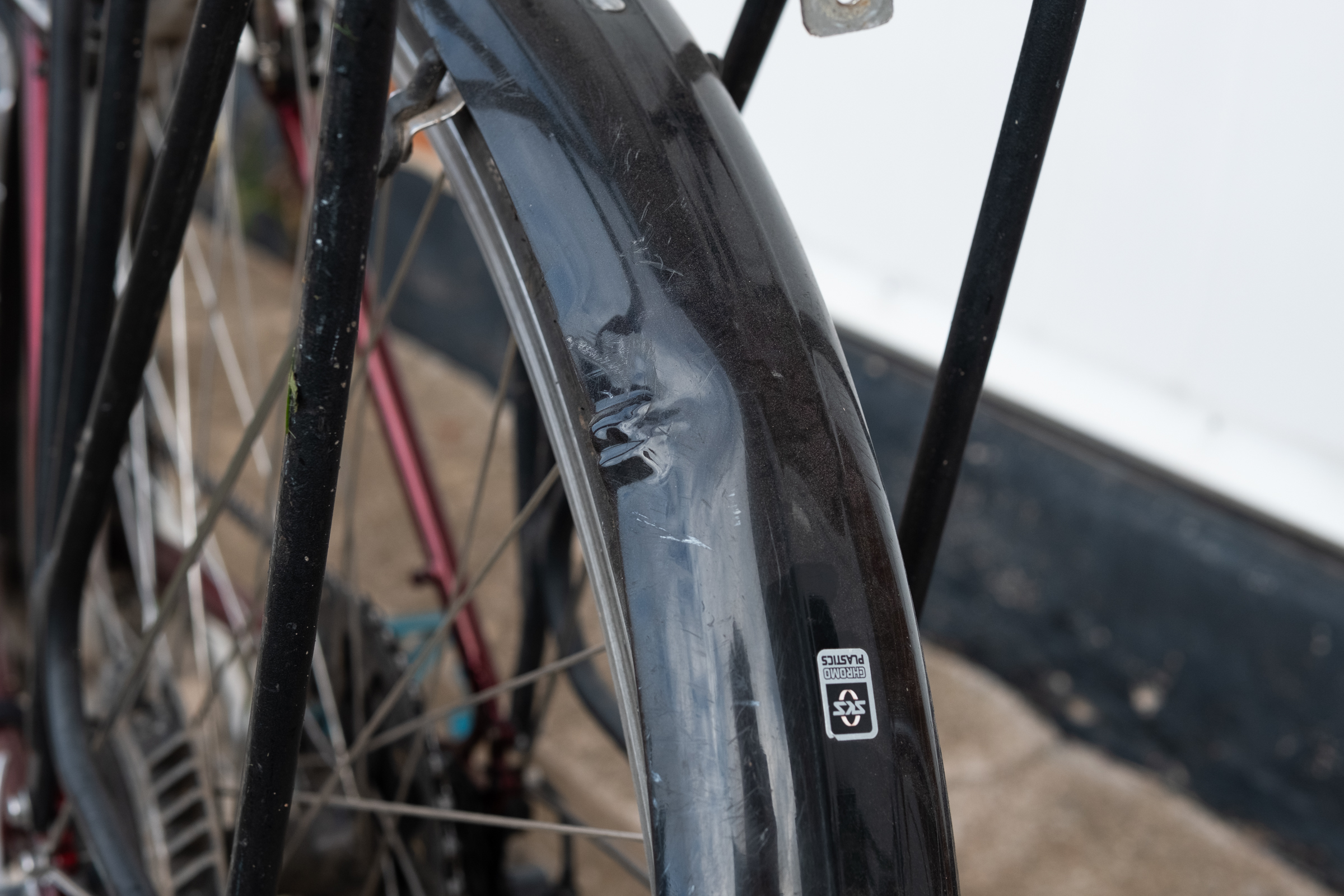
This poor plastic mudguard survived a trip to Scotland, squashed into the too-small bike compartment of a train. I’m not sure an alloy guard would have fared so well. Jack Luke / Our Media
They aren’t always the best solution, however. If you park your bike in a crowded rack, an alloy guard will not appreciate being bent or squashed. Plastic guards, by contrast, will more easily shrug off knocks, flex rather than bend, and are generally easier to swap between bikes.
If you want longevity and don’t mind them being a little fussier, go alloy. If you’re rougher on your bike, or want something more forgiving, plastic might be the smarter choice.
4. Go as wide as possible
A wider mudguard gives you more tyre options, and reduces the chance of clogging up with mud or debris. Jack Luke / Our Media
Your frameset will dictate the maximum size of mudguard you can fit, but my rule of thumb is simple: go as wide as you can.
Even if your tyres are narrower than the guard, a wider mudguard gives you more clearance for mud, a margin for error in setup and the freedom to fit bigger tyres later.
Done neatly, it rarely looks odd, and the pay-off in coverage and practicality is worth it.
There’s really no good case for going narrow, unless you’re utterly obsessed with the perfect fender line, but even that’s possible provided the difference between tyre and mudguard width isn’t cavernous.
5. Prep your threads
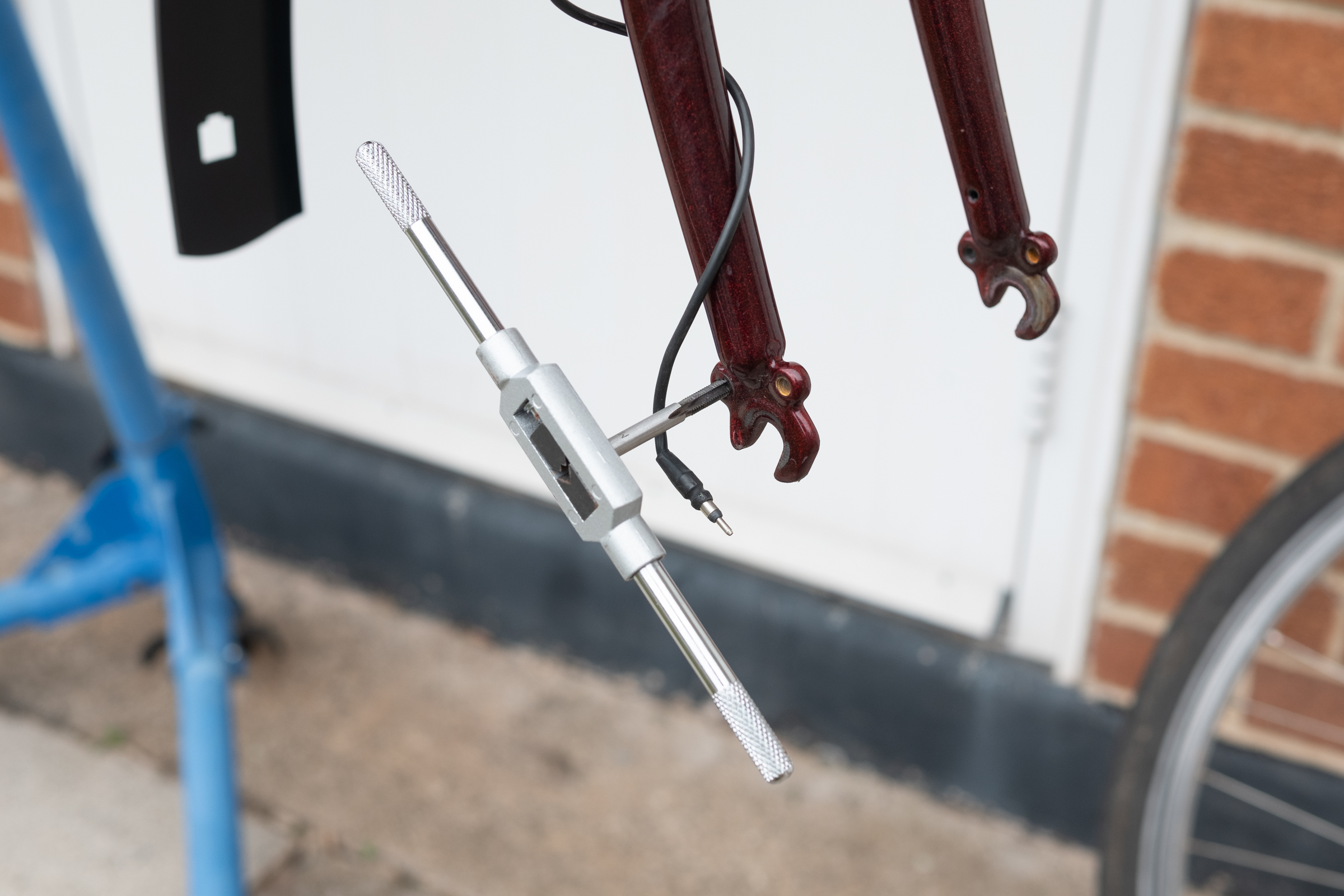
I always recommend chasing threads before fitting mudguards or racks. It’ll save headaches down the line. Jack Luke / Our Media
Mudguard eyelets live a hard life. They’re continually blasted by spray, salt and grit. If you don’t look after them, they’ll seize solid and turn removal into a nightmare.
Before fitting, chase the threads with a tap if you can. This ensures the bolts go in cleanly. Then, when you fit them, absolutely smother the threads in grease or antiseize.
Wipe away the excess once it’s tightened, and you’ll have peace of mind knowing the bolts won’t seize and the guards will still be removable come summer.
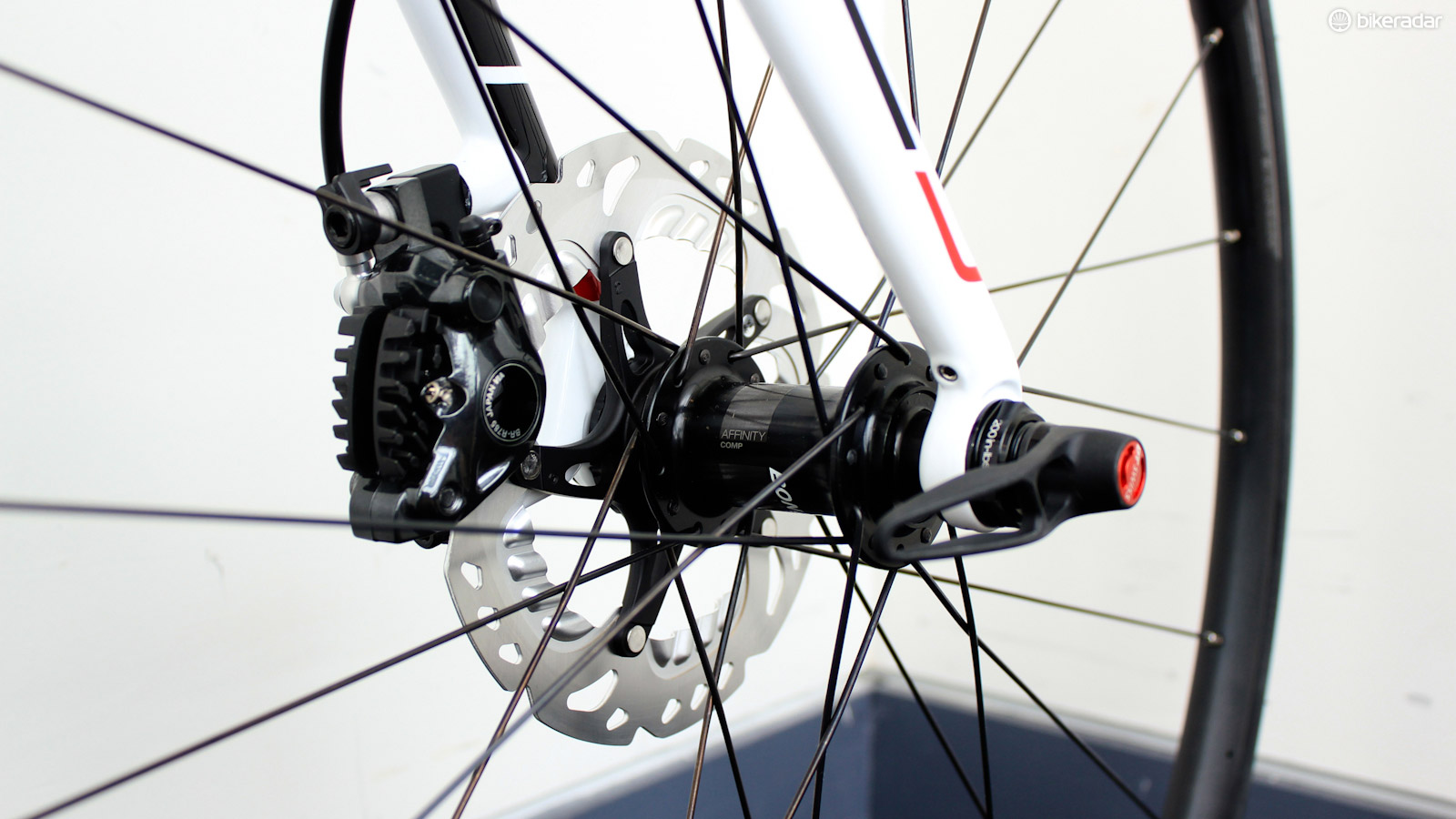
Hidden eyelets look cool, but can be a real pain. Matthew Allen / Bikeradar
Prep is even more important when fitting guards to a bike with hidden eyelets.
Referring back to the Domane, Trek’s neat banjo-bolt style mudguard mounts made for clean lines in the summer, but the grub screws used to cap these eyelets seized with alarming ease.
In summary, ‘clean those threads and grease liberally’ is a good rule to live your life by.
Stainless steel fasteners are not optional – do not waste your time with anything else! Jack Luke / Our Media
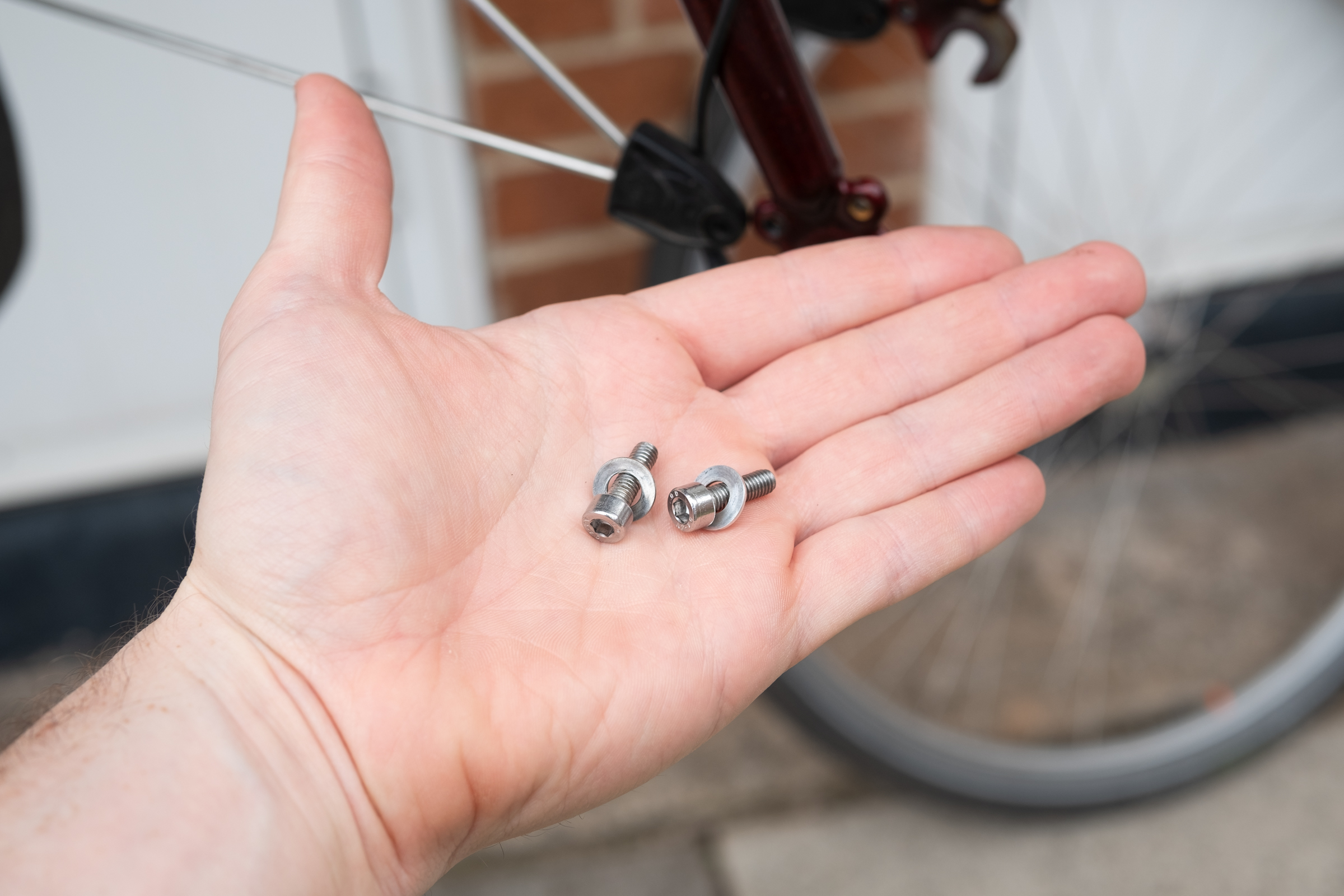
High-quality fasteners are also essential. As with bottle-cage bolts, I recommend stainless steel cap head bolts with a good, deep 4mm socket for most applications.
I refer back to my previous point on being patient and encourage you not to skip this boring, five-minute step – it will save hours of swearing in the long run.
6. Kill the rattles
A wee dab of bar tape can make all the difference in the world – although this bridge comes with the foam installed as stock. Jack Luke / Our Media
Mudguard rattles put off many from enjoying a life less soggy. Once they start, they’re all you’ll hear, and they make people conclude wrongly that mudguards are inherently awful.
The truth is, rattles almost always come down to setup. Stays too long? Bolts not tight enough? Clearances slightly off? Those are your usual culprits. Take the time to adjust and readjust until everything lines up neatly – again, patience.
If you’ve done all that and there’s still a buzz, damping contact points can work wonders.
I like to use greenhouse tape to protect my paint and reduce the chance of rattles. Jack Luke / Our Media
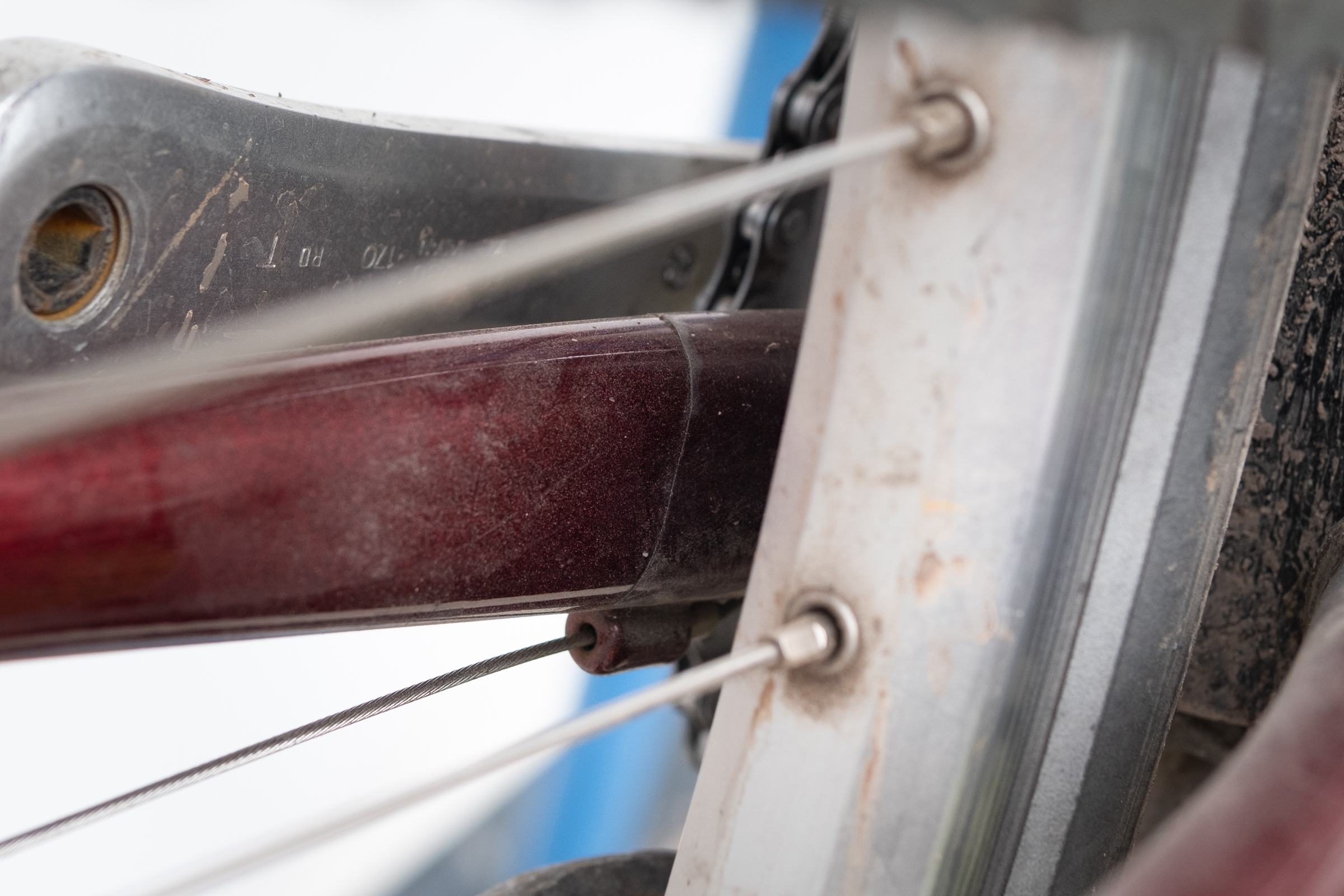
I like to stick on a bit of thick, rubbery, transparent greenhouse repair tape where the mudguard touches the chainstays or fork crown. It’s a simple hack that silences most niggles and helps protect paint.
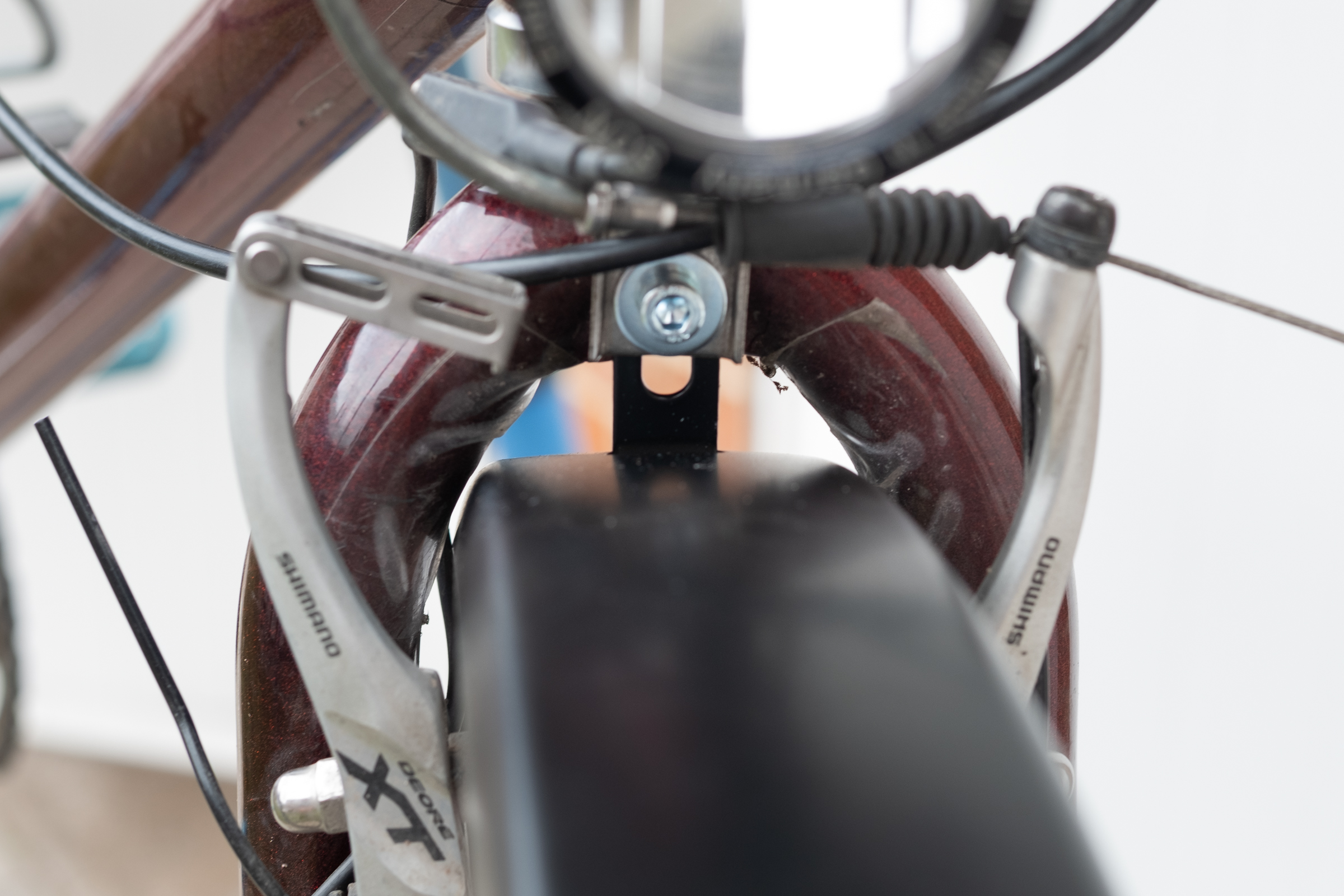
Small off-cuts of bar tape can also be used where there’s a larger gap to bridge. This is most useful to fill the gap between the mudguard and the underside of the fork bridge.
But don’t ignore persistent wobbles or clattering – that almost always means the fit isn’t right. Keep tweaking until they’re silent. A properly fitted set should be fit and forget.
7. Buy guards with spares available
Stuff breaks – that can’t be helped. So make sure you buy mudguards with spares available. Jack Luke / Our Media
Cheap guards are a false economy because once a stay bolt, flap or clip breaks, you’re usually out of luck. No spares, no fixing and straight to landfill they go – very depressing stuff.
Better brands, though, sell spares for everything – from bolts to stays to mudflaps. This means you can keep a single set of guards alive for years.
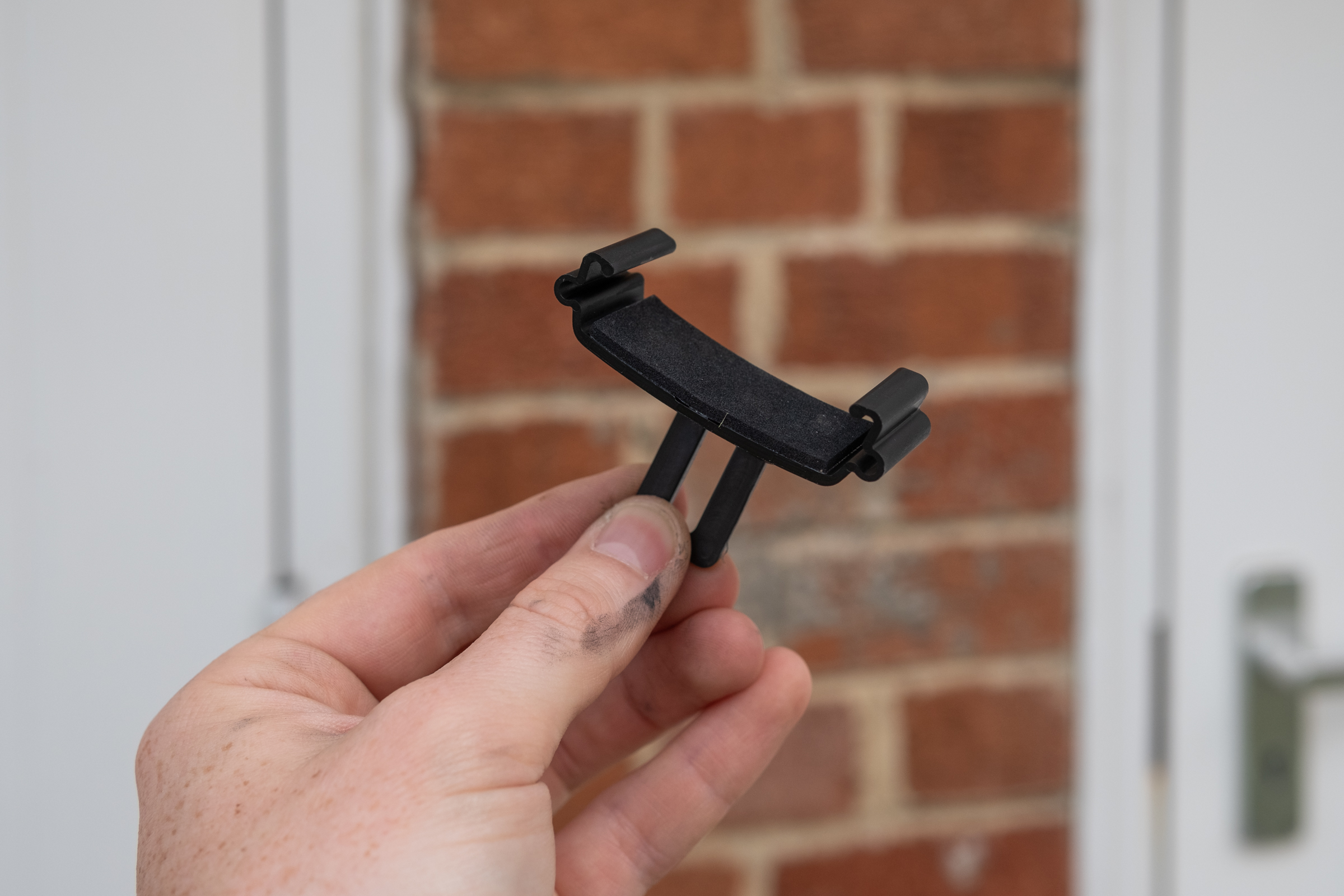
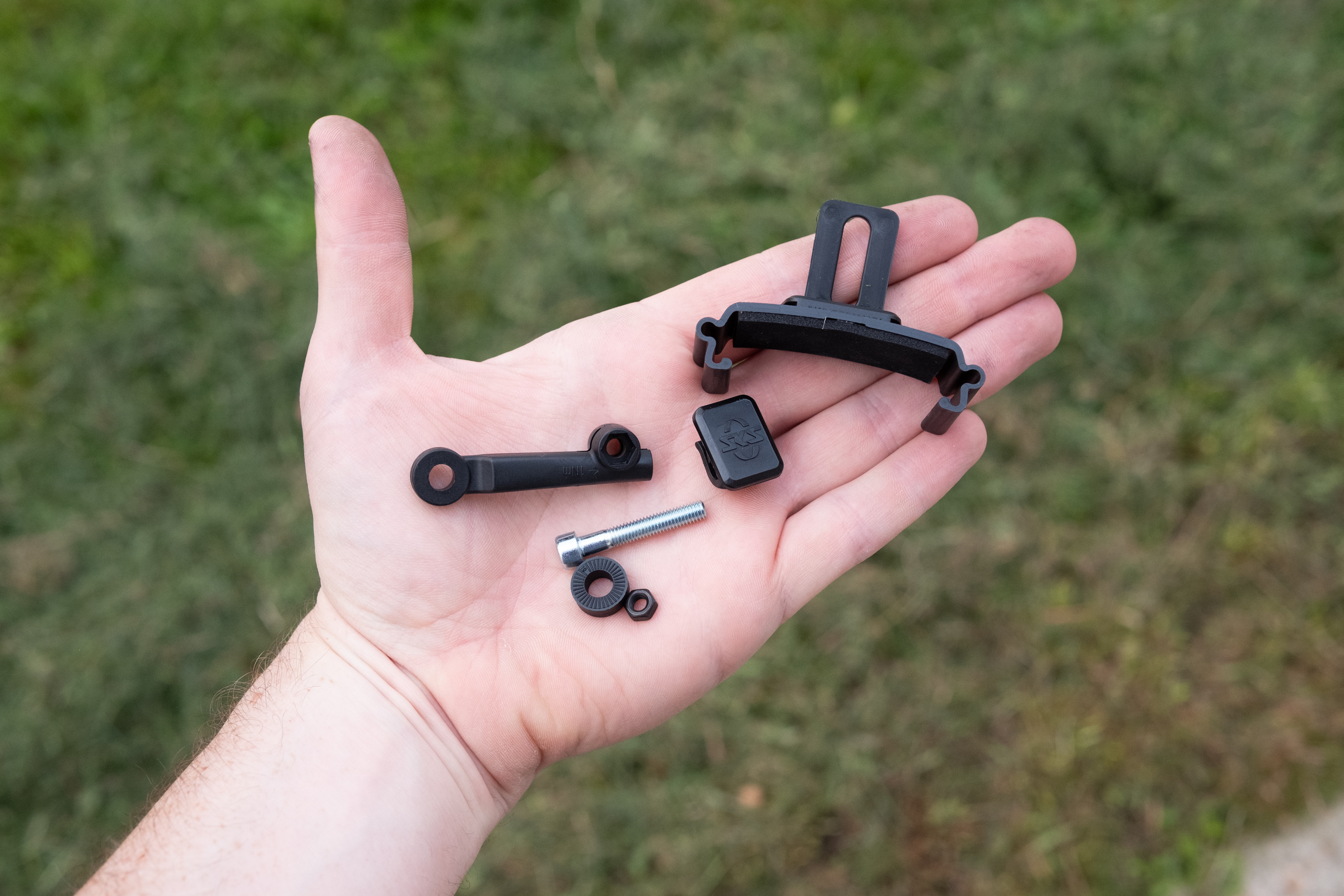
Most mudguards will use some degree of proprietary components. Losing or breaking these can render them useless, but high-quality brands will offer them as spares. Jack Luke / Our Media
At the time of writing, I have a set of alloy guards that have survived eight years and three bikes of riding, simply because I could replace a stay or a bolt when needed.
If you want your guards to last longer than a season, choose a brand that makes spares readily available.
8. Don’t be afraid to modify
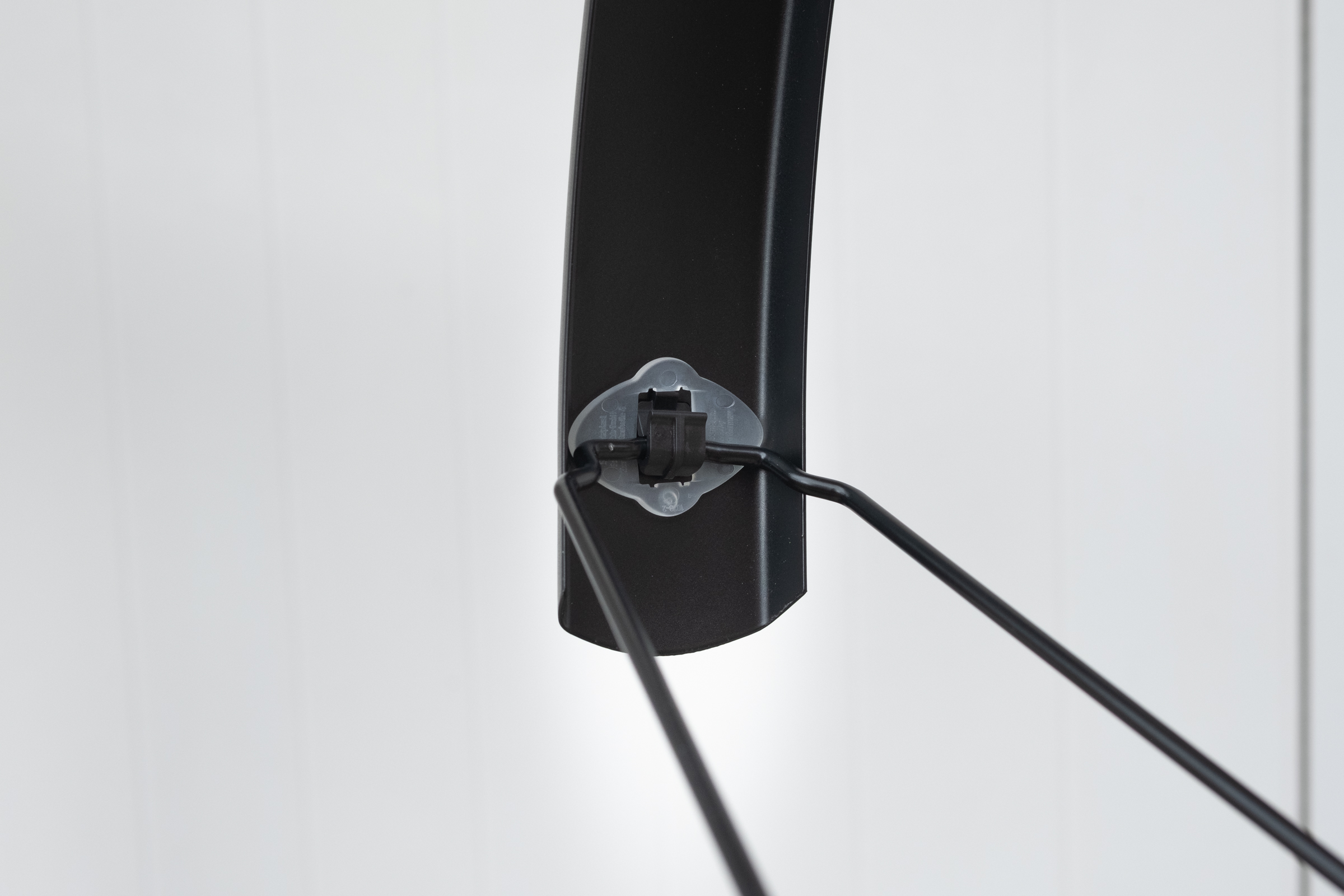
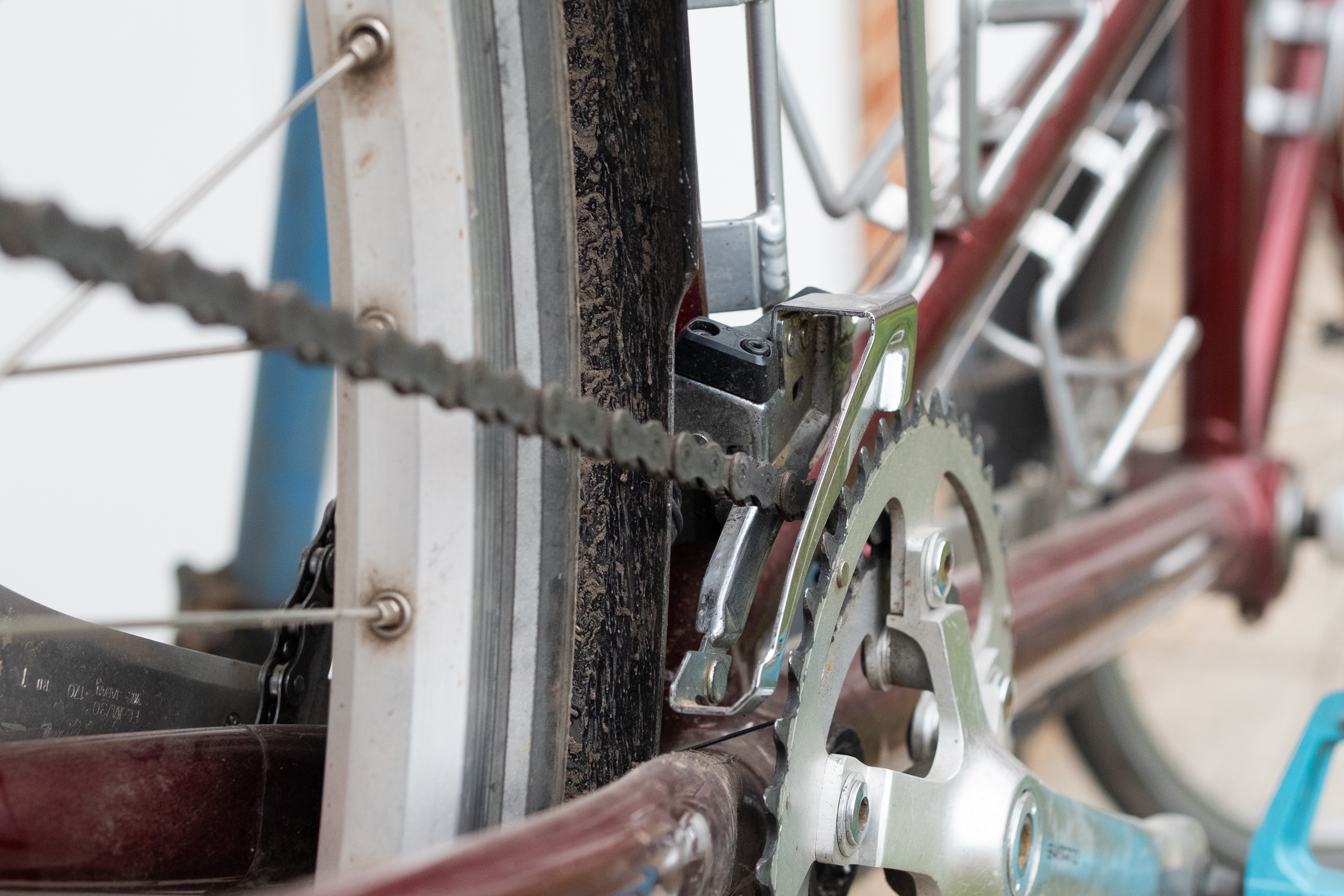
This mudguard came pre-cut to fit around a front derailleur, but don’t be afraid to lightly modify to ensure the best fit possible. Jack Luke / Our Media
Sometimes, a mudguard will fit almost perfectly, but not quite – that’s where a little modification comes in.
Small tweaks – a wee cut here, a reprofile there – can make the difference between endless frustration and a neat, silent fit.
Common mods include trimming a slot to clear a front derailleur, gently reshaping a guard to clear tight chainstays and adding a supplementary stay to stiffen up a long front guard.
Manufacturers might officially discourage this, but if you do a neat job with the right tools, there’s rarely any downside. A rotary tool such as a Dremel, in particular, is worth its weight in gold for this sort of fettling if you need to make a neat cut.
9. Mud flaps are not a crime
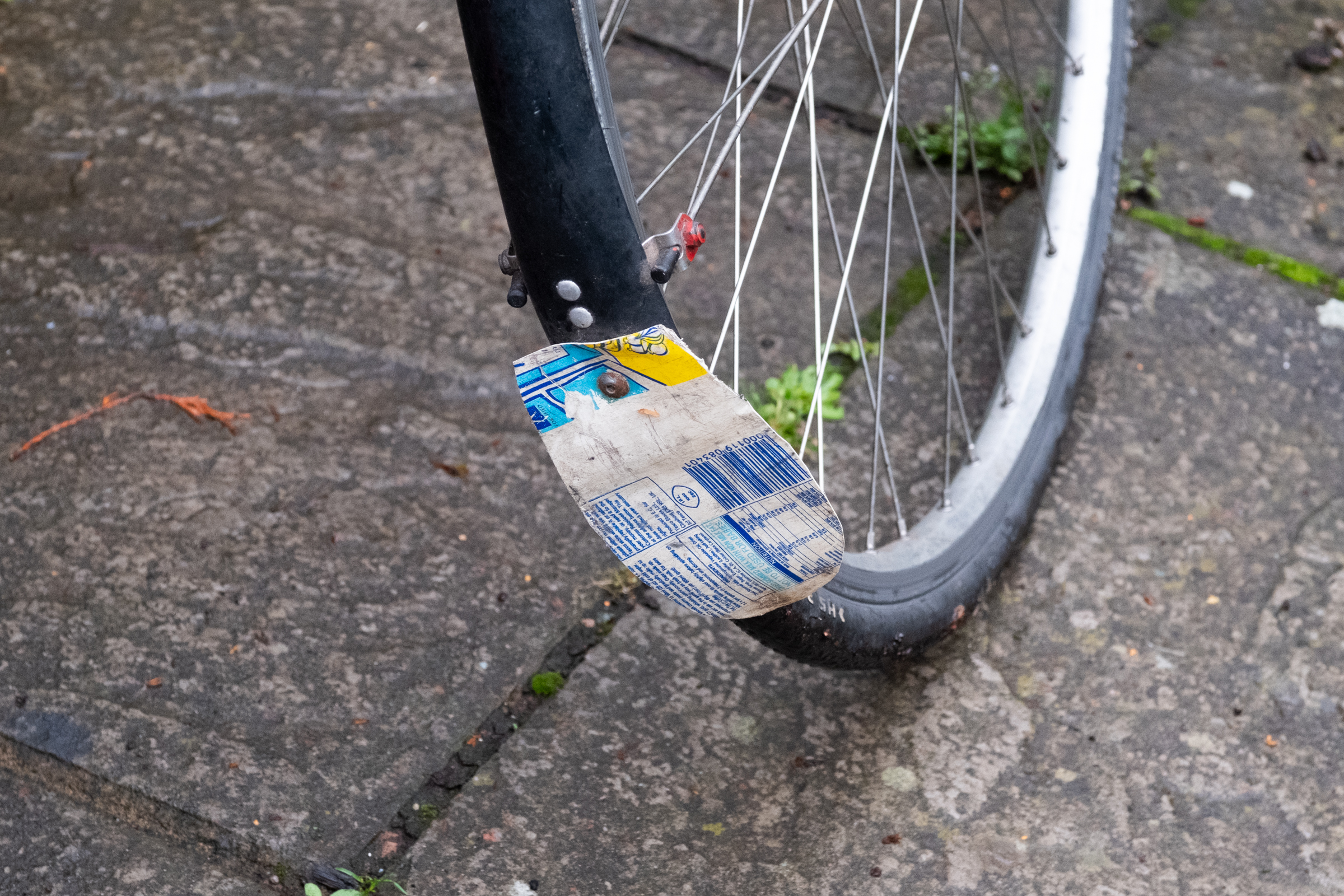
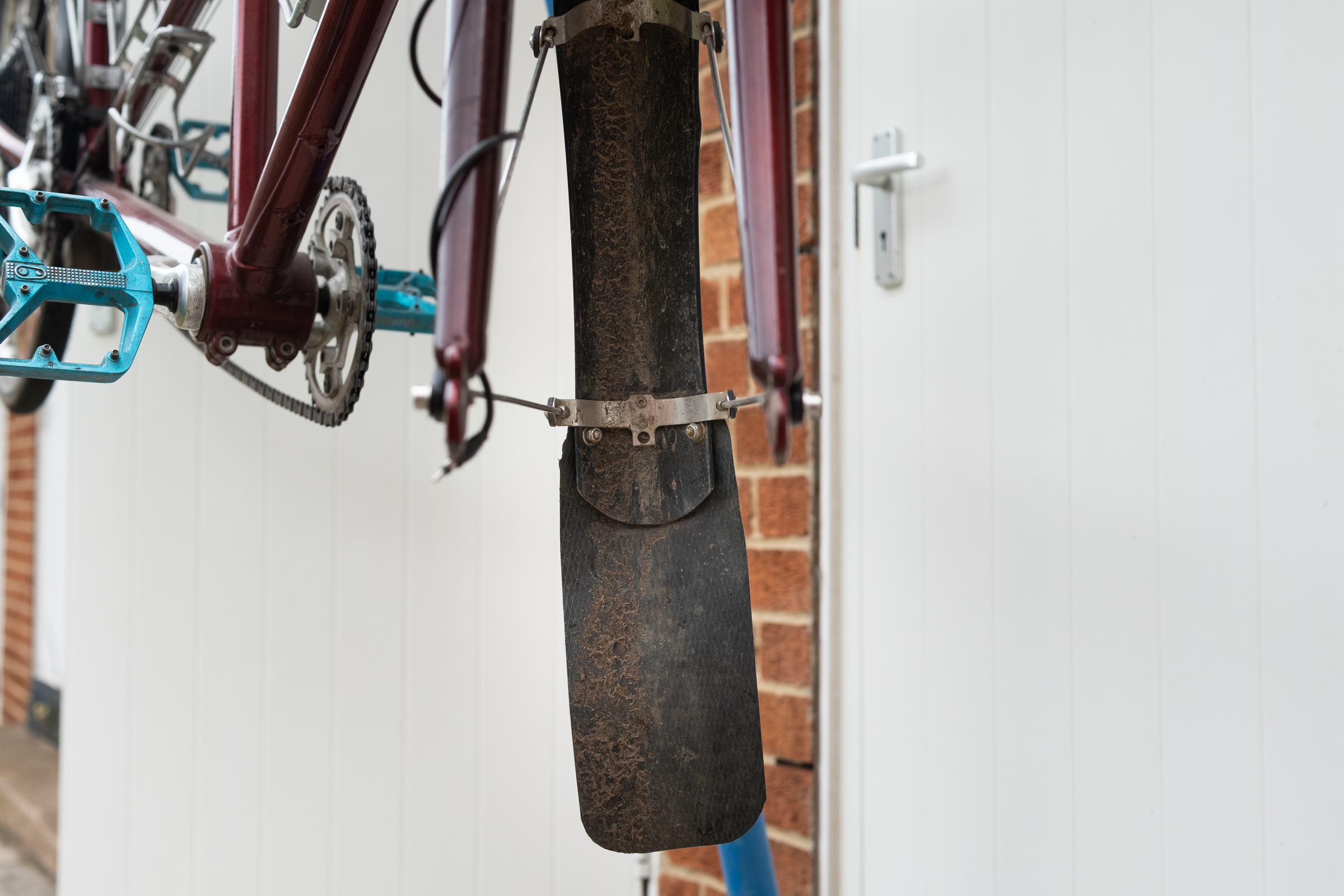
A mudguard flap made out of an old plastic bottle is a mark of pride for the dedicated winter rider, although you may wish to… Jack Luke / Our Media …make a slightly neater one out of lightweight, flexible plastic. I like to use damp-proof coursing. Jack Luke / Our Media
Yes, they look dorky, but mud flaps are the quiet mark of a deeply committed winter rider likely to gather admiring nods from those in the know.
They extend the coverage of your mudguards, stop spray from soaking your shoes and prevent your riding chums from cursing your existence when they sit on your wheel in January. Some more traditional cycling clubs even insist on them, and with good reason.
You can buy aftermarket ones, or go classic and cut up a washing-up bottle. Either way, wear them with pride. They’re not dorky – they’re practical, effective and charming in an old-school way.
SpaceX closed a troubled but instructive chapter in its Starship rocket program Monday with a near-perfect test flight that carried the stainless steel spacecraft halfway around the world from South Texas to the Indian Ocean.
The rocket’s 33 methane-fueled Raptor engines roared to life at 6:23 pm CDT (7:23 pm EDT; 23:23 UTC), throttling up to generate some 16.7 million pounds of thrust, by large measure more powerful than any rocket before Starship. Moments later, the 404-foot-tall (123.1-meter) rocket began a vertical climb away from SpaceX’s test site in Starbase, Texas, near the US-Mexico border.
From then on, the rocket executed its flight plan like clockwork. This was arguably SpaceX’s most successful Starship test flight to date. The only flight with a similar claim occurred one year ago Monday, when the company caught the rocket’s Super Heavy booster back at the launch pad after soaring to the uppermost fringes of the atmosphere. But that flight didn’t accomplish as much in space.
NASA’s Jet Propulsion Laboratory is laying off around 550 employees, or roughly 11% of its workforce, as part of an effort to “restructure and establish an appropriate size to ensure future success.” According to JPL Director Dave Gallagher, the job cuts “are not related to the current government shutdown.” CNBC reports: JPL is a research and development lab funded by NASA — the federal space agency — and managed by the California Institute of Technology. “While not easy, I believe that taking these actions now will help the Lab transform at the scale and pace necessary to help achieve humanity’s boldest ambitions in space,” Gallagher wrote in a separate mekor to JPL employees and contractors. Gallagher, in the public announcement, noted that the reorganization of JPL began in July, and “over the past few months, we have communicated openly with employees about the challenges and hard choices ahead.”
“This week’s action, while not easy, is essential to securing JPL’s future by creating a leaner infrastructure, focusing on our core technical capabilities, maintaining fiscal discipline, and positioning us to compete in the evolving space ecosystem — all while continuing to deliver on our vital work for NASA and the nation,” Gallagher wrote. Gallagher said that JPL employees will be notified of their status on Tuesday, and the “new Lab structure … will become effective Wednesday.”
Blender 5.0 has entered public beta testing today for this free and open source 3D creation suite designed for modeling, rigging, animation, simulation, rendering, compositing, motion tracking, and video editing.
Ofcom has slapped 4chan with a £20,000 ($26,700) fine for failing to comply with the internet and telecommunications regulator’s request for information under the UK’s Online Safety Act of 2023. The regulator has released an update for 11 of the investigations it opened after the first of its online safety codes became enforceable in March this year. Apparently, 4chan has ignored its requests for a copy of its illegal harms risk assessment and to provide information about its qualifying worldwide revenue. This is the first fine Ofcom has handed down under the new law, which was designed to prevent children from accessing harmful content online and which has prompted websites like Reddit and X to put up age verification measures.
When the regulator launch its probe into 4chan in June, it said it received complaints about illegal content on the anonymous online board. It doesn’t exactly come as a surprise that 4chan refuses to give the regulator information about the risks of illegal content on its website: Back in August, the service filed a lawsuit against Ofcom, arguing that the enforcement of the UK’s Online Safety Act violates Americans’ freedom of speech. “This fine is a clear warning to those who fail to remove illegal content or protect children from harmful material,” said Liz Kendall, the UK Secretary of State for Science, Innovation and Technology. The regulator is also imposing an additional penalty of £100 ($133) per day on 4chan until it complies with its requests for information.
Ofcom has announced the results of other investigations, as well, such as finding “serious compliance concerns” with two file-sharing services that have now deployed an automated tool that can detect and quickly remove uploads with child sexual abuse material (CSAM). Four other file-sharing services that were also under investigation for CSAM chose to geoblock access from UK IP addresses instead, so the regulator closed their cases.
This article originally appeared on Engadget at https://www.engadget.com/cybersecurity/uk-regulator-fines-4chan-for-ignoring-online-safety-act-demands-045026169.html?src=rss
PyTorch is an open-source machine learning framework that enables developers to build and train neural networks for AI applications. When combined with NVIDIA CUDA, PyTorch can leverage GPU acceleration to perform computations up to and even over 100 times faster than CPU-only processing. In this tutorial, you will learn how to install PyTorch with CUDA support on Ubuntu Linux, enabling you to harness the full power of your NVIDIA GPU for machine learning and deep learning tasks.
An anonymous reader quotes a report from The Register: Security researchers have resurrected a 12-year-old data-stealing attack on web browsers to pilfer sensitive info from Android devices. The attack, dubbed Pixnapping, has yet to be mitigated. Conceptually, it’s the equivalent of a malicious Android app being able to screenshot other apps or websites. It allows a malicious Android application to access and leak information displayed in other Android apps or on websites. It can, for example, steal data displayed in apps like Google Maps, Signal, and Venmo, as well as from websites like Gmail (mail.google.com). It can even steal 2FA codes from Google Authenticator.
“First, the malicious app opens the target app (e.g., Google Authenticator), submitting its pixels for rendering,” explained [Alan Wang, a PhD candidate at UC Berkeley]. “Second, the malicious app picks the coordinates of a target pixel whose color it wants to steal. Suppose for example it wants to steal a pixel that is part of the screen region where a 2FA character is known to be rendered by Google Authenticator, and that this pixel is either white (if nothing was rendered there) or non-white (if part of a 2FA digit was rendered there). Third, the malicious app causes some graphical operations whose rendering time is long if the target pixel is non-white and short if it is white. The malicious app does this by opening some malicious activities (i.e., windows) in front of the target app. Finally, the malicious app measures the rendering time per frame of the above graphical operations to determine whether the target pixel was white or non-white. These last few steps are repeated for as many pixels as needed to run OCR over the recovered pixels and guess the original content.”
The researchers have demonstrated Pixnapping on five devices running Android versions 13 to 16 (up until build id BP3A.250905.014): Google Pixel 6, Google Pixel 7, Google Pixel 8, Google Pixel 9, and Samsung Galaxy S25. Android 16 is the latest operating system version. Other Android devices have not been tested, but the mechanism that allows the attack to work is typically available. A malicious Android app implementing Pixnapping would not require any special permissions in its manifest file, the authors say. The researchers detail the attack in a paper (PDF) titled “Pixnapping: Bringing Pixel Stealing out of the Stone Age.”
SpaceX’s Starship megarocket successfully completed its 11th test flight, achieving major milestones like engine relight, satellite deployment, and a controlled splashdown in the Indian Ocean. From a report: This mission marks the second clean test run for Version 2, following a successful showing during its last test mission in August. Earlier this year, however, Starship Version 2 suffered three in-flight failures and an explosive accident during ground testing. Today’s test mission is expected to be the last for the current iteration of Starship prototypes. The company has said it will debut a scaled up Version 3 for the next flight. You can watch a recording of the launch on YouTube.
Systems from Nvidia, Dell, and others available starting Oct. 15Nvidia’s tiniest Grace-Blackwell workstation is finally making its way to store shelves this week, the better part of a year after the GPU giant first teased the AI mini PC, then called Project Digits, at CES.…
The FCC has forced major U.S. online retailers to remove millions of listings for prohibited Chinese-made electronics, including products from Huawei, ZTE, Hikvision, and Dahua, citing national security risks. Reuters reports: FCC Chair Brendan Carr said in an interview [on Friday] that the items removed are either on a U.S. list of barred equipment or were not authorized by the agency, including items like home security cameras and smart watches from companies including Huawei, Hangzhou Hikvision, ZTE, and Dahua Technology Company. Carr said companies are putting new processes in place to prevent future prohibited items as a result of FCC oversight. “We’re going to keep our efforts up,” Carr said. The FCC issued a new national security notice reminding companies of prohibited items including video surveillance equipment. Carr said the items could allow China to “surveil Americans, disrupt communications networks and otherwise threaten U.S. national security.”
It’s been one year already since Intel and AMD formed the x86 Ecosystem Advisory Group in cooperation with other industry stakeholders. Today both companies are marking the first anniversary while reaffirming their commitment to the group…
Palmer Luckey’s Anduril revealed the design of its EagleEye military XR headset and showed clips depicting the interface soldiers see.
Anduril is the defense company that Palmer Luckey founded after being fired from Oculus by Facebook back in 2017. In February this year it emerged that Anduril had taken over the US Army AR headset program, called IVAS, from Microsoft, and four months ago Anduril announced that it was partnering with Meta on the evolution of IVAS called SBMC.
The goal of SBMC is to equip all company-level soldiers with an XR display system that vastly improves their situational awareness and ability to leverage autonomous platforms.
Luckey first announced EagleEye in February, a few days after the announcement of replacing Microsoft’s custom HoloLens solution, describing it as an “integrated ballistic shell” which entirely replaces a soldier’s helmet. He explained that EagleEye is powered by Lattice, Anduril’s networked software that autonomously integrates the data from all available sensors to build a unified view of the entire battlespace, while bringing attention to the most salient targets.
In May, while announcing the Meta partnership, Luckey also clarified that EagleEye is a modular helmet that can support “many different types” of display systems, not a singular design.
But we hadn’t seen a real image of EagleEye, nor a depiction of what its interface will look like to the wearer – until now.
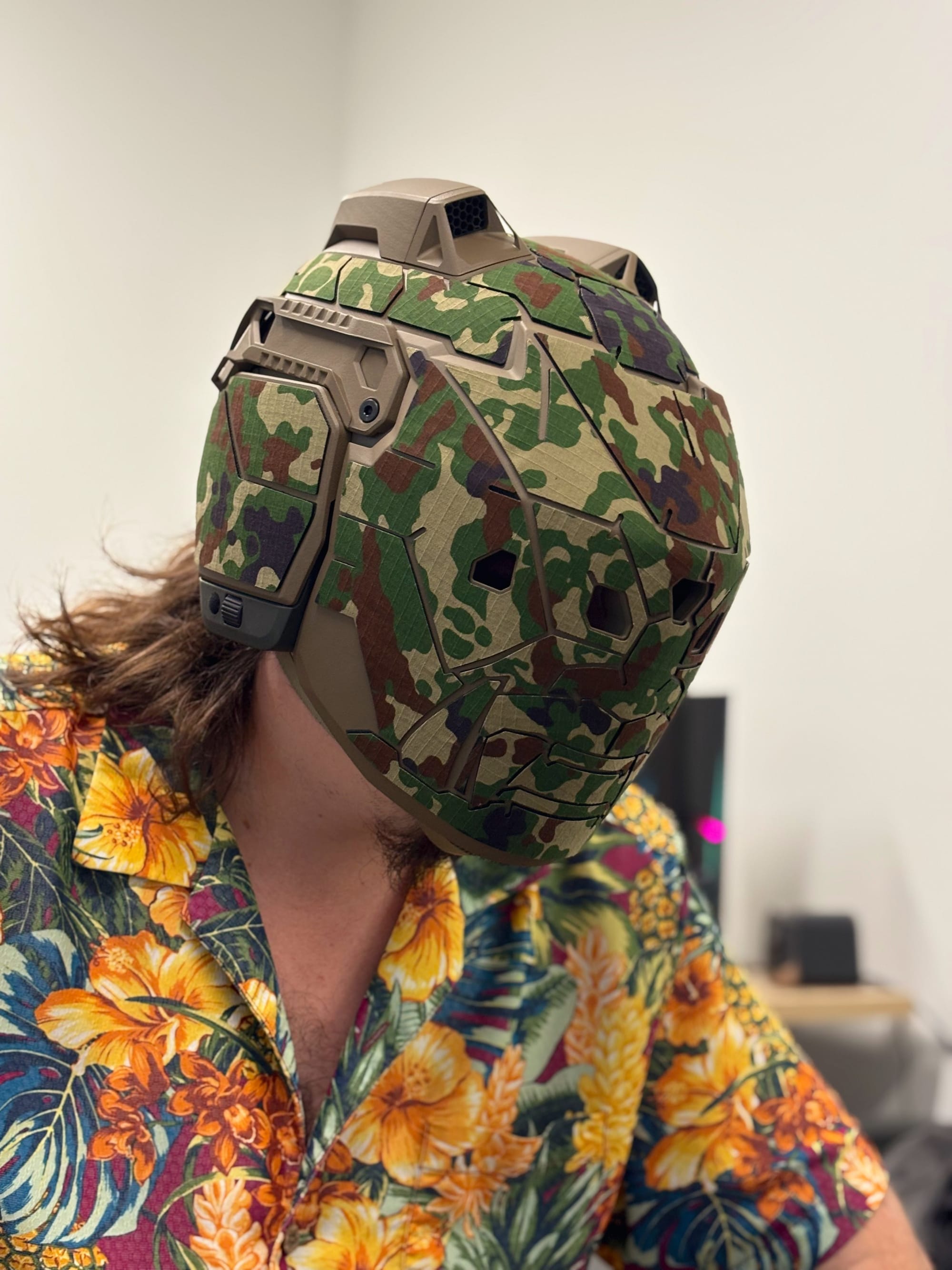
Transparent AR module (left), and passthrough MR display module in Japan’s camouflage (right).
Today, Anduril described and showed images of EagleEye with two of its possible display modules, transparent AR for daytime operations and VR-style passthrough mixed reality for nighttime, and showed mockups of the software experience.
Both embodiments of EagleEye have “beyond-full-cut ballistic protection and blast wave mitigation” as well as spatial audio and radio frequency detection, Anduril says, with at least an open-face helmet that covers the top, sides, and back of the head. They differ in what’s on the face, the display module.
The transparent AR module resembles thick sunglasses, while the passthrough MR module is a visually cohesive extension of the protective shell, resulting in a full-face headset that somewhat resembles a motorbike helmet.
0:00
/0:48
Mockup of the view from EagleEye’s passthrough mixed reality display module.
Anduril depicts EagleEye’s software in a 48-second mockup video and two mockup screenshots.
The mockups show EagleEye giving soldiers a persistent compass and minimap in their field of view, with tracked friendly assets marked in blue and detected enemy assets in red. It also goes much further than just a fixed HUD, placing blue and red bounding boxes around people within the wearer’s view. When occluded by real-world geometry, these boxes contain skeletal representations of the person’s pose.
The source of these tracks is not simply the headset itself, which would be subject to significant occlusion and range limitations. The tracking is sourced from Anduril’s Lattice network, the unified sum of every sensor on the battlefield, including other headsets.
0:00
/0:33
Mockup of marking a target in EagleEye.
As well as using a drone as a sensor data source for Lattice, Anduril also depicts EagleEye showing the soldier a live picture-in-picture feed from the asset, alongside details such as its heading and altitude.
The nighttime video shows the software letting the soldier toggle between various sensor views of the world, such as low light and thermal, and the daytime clips depict soldiers marking an objective and calling in a drone strike.
0:00
/0:39
Mockup of calling a drone strike in EagleEye.
In addition to its partnership with Meta on core XR and AI technology, Anduril says it’s also partnering with Qualcomm for chips, as well as Oakley and Gentex for rugged eyewear and ballistic protection expertise.
“We don’t want to give service members a new tool—we’re giving them a new teammate,” Palmer Luckey said in a prepared statement. “The idea of an AI partner embedded in your display has been imagined for decades. EagleEye is the first time it’s real.”
Last month, the US Army awarded Anduril $159 million, and the Palantir-backed startup Rivet $195 million, to build and deliver hundreds of SBMC prototypes for field testing. With hundreds of units set to be tested, we should know whether Anduril’s EagleEye and Rivet’s Hard Spec fare any better in the field than Microsoft’s failed HoloLens IVAS.
At the time of the contract award, Luckey told DefenseScoop that the first “scaled delivery” of Anduril’s SBMC system should happen in 2027.
This is a delightful video of Germany’s WDR Funkhausorchester conducted by Enrico Delamboye performing the Super Mario Retro Suite, a medley of the original Super Mario Bros music composed by Japanese composer Koji Kondo. Now that’s an orchestra performance I would pay to see! Normally I just sneak inside the concert hall inside a tuba case. Then the tuba player is all, “Where’s my tuba?!” but by that time I’m already in the mezzanine eating the candy I bought with the tuba I just pawned.
Palmer Luckey’s defense tech firm Anduril has unveiled EagleEye, an AI-powered mixed-reality combat helmet built in partnership with Meta. The system integrates AR displays, spatial audio, and drone control to create what Luckey calls “a new teammate” for soldiers. “The idea of an AI partner embedded in your display has been imagined for decades. EagleEye is the first time it’s real,” said Luckey. The Verge reports: Anduril, which also manufactures border control tech, lethal drones, and military aircraft, has been developing EagleEye since its inception, and already provides software for the Army’s existing MR goggles, based on Microsoft’s HoloLens hardware. Its partnership with Meta was announced this May, and the company told TechCrunch at the time that the collaboration was to develop EagleEye. It’s a reunion of sorts for Luckey and Mark Zuckerberg, after Meta purchased Luckey’s then-start-up Oculus in 2014 and fired the founder three years later.