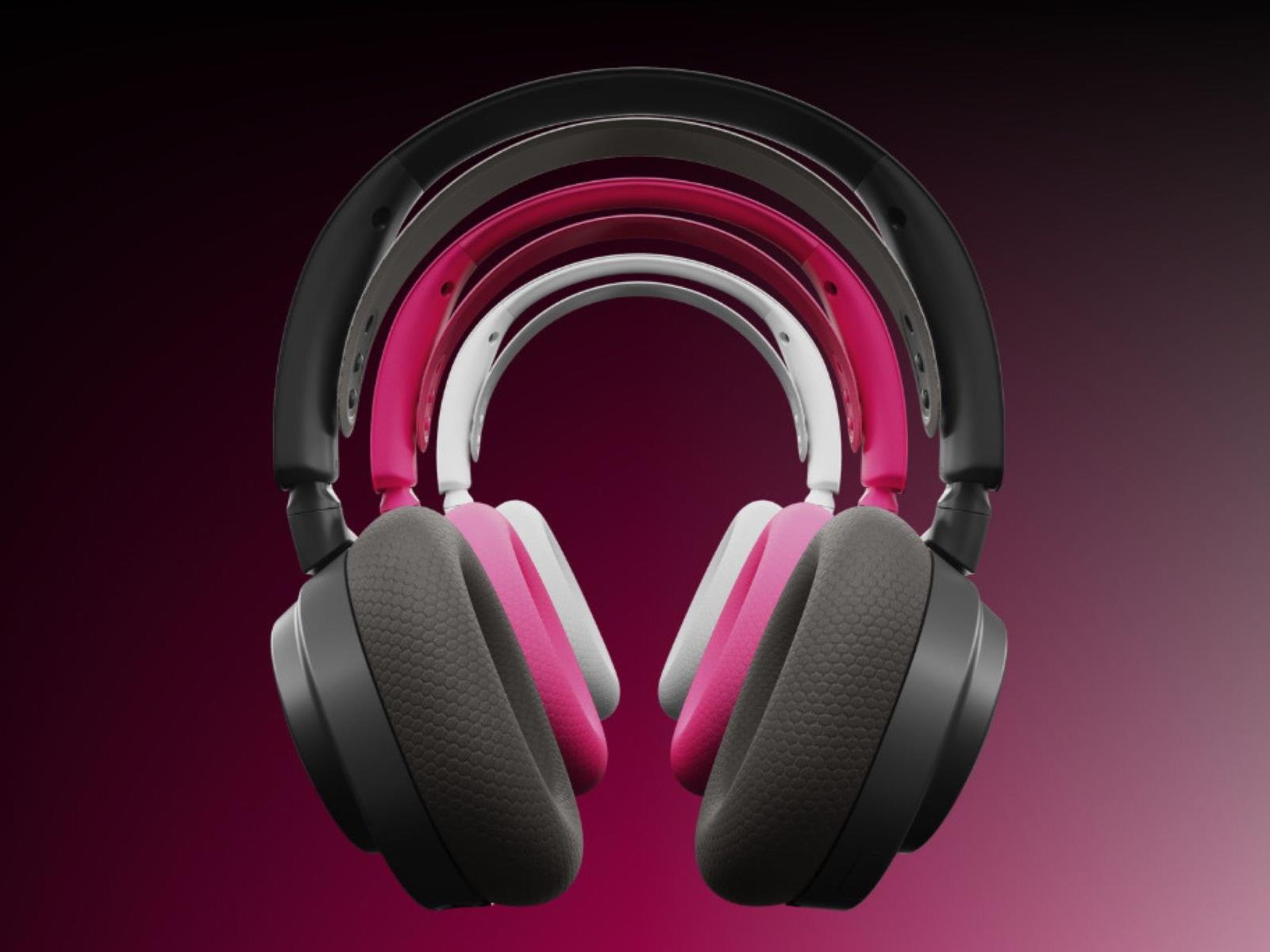
SteelSeries has unveiled the follow-up to its popular Arctis Nova 7 wireless headset, offering up to a 40% increase in battery life and greater audio customization. Also good news is that SteelSeries retained the same mid-range $200 price tag, despite inflation and tariffs.
So yeah, the biggest upgrade to the Gen 2 model is the major boost
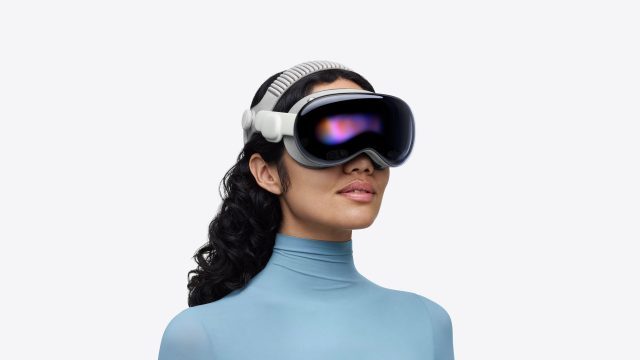
Apple today unveiled its hardware refresh of Vision Pro, which includes its latest M5 chip and a new Dual Knit Band.
The News
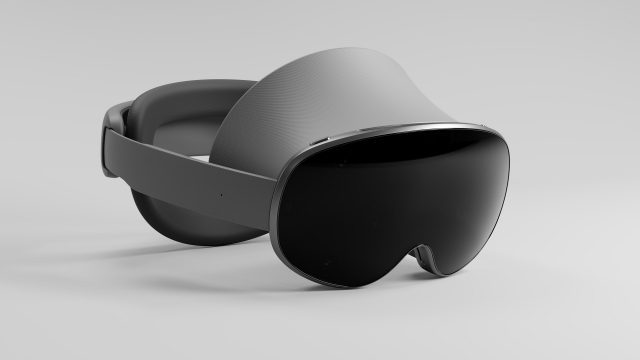
Apple has unveiled the new Vision Pro featuring the M5 chip, which is said to deliver major improvements in performance, display quality, AI capabilities, and battery life.
Apple details some of these features in its official announcement, noting that the new M5 chip is built on a 3-nanometer process, including a 10-core CPU and GPU with hardware-accelerated ray tracing and mesh shading for richer lighting and reflections in games. Specifically, Apple says the new Vision Pro renders 10% more pixels, supports up to 120Hz refresh rates.
Apple Vision Pro (M5) | Image courtesy Apple
M5 is also bringing some modest battery optimizations, which Apple says now allows users up to 2.5 hours of use or 3 hours of video playback, while the 16-core Neural Engine delivers AI functions up to 50% faster.
The headset is launching with visionOS 26, adding widgets, improved Personas, spatial photo scenes, and expanded Apple Intelligence features, Apple says. Gamers can also use controllers like PSVR 2’s Sense Controllers and PS5’s DualSense gamepad.
Coming October 22nd across major markets, Apple is pitching the usual range of storage capacities: 256GB, 512GB, and 1TB. Like the original 2023 Vision Pro, the new M5 Vision Pro will start at $3,500, which includes the Dual Knit Band in the box. The Dual Knit Band will also be available for separate purchase at $100 among other accessories.
Apple is selling both the Logitech Muse stylus for Vision Pro, available for pre-order for $130 and shipping on October 22nd, and PSVR 2 controllers for Vision Pro, which will be sold in a standalone package with included charging station for $250. The controllers will be available in Apple stores starting on November 11th.
My Take
Apple is being pretty tactical with the release of its new M5 Vision Pro, coming right on the heels of Samsung’s big Project Moohan launch announcement, scheduled to take place on October 21st—just one day ahead of Vision Pro’s launch.
Although Moohan is rumored to be around half the price of Vision Pro, that’s not stopping Apple from taking the opportunity to protect its market share of the premium XR headset segment. And I know what you’re thinking. Who would the hell would pay another $3,500 just to upgrade to a headset that’s not drastically different? Or even half that?
I’ve seen countless comments online decrying Vision Pro as a flop because it’s simply too expensive for what it offers—and that may be true among regular consumers used to console prices—but Vision Pro has managed to find a solid foothold in the enterprise sector. Maybe not what it was hoping for, but that’s the reality. And I think Samsung can only really hope for that too.
I suspect the new M5 version of Vision Pro will essentially deepen that enterprise appeal. Apple is, for the second time, releasing the most powerful standalone headset on the market, which will allow enterprise app developers to make even more impressive in-house apps. The minor difference now is that Vision Pro also support PSVR 2 motion controllers, which positions it even closer to being the best all-around XR platform for business. And maybe a few deep-pocketed Apple acolytes too.
Apple often releases a smaller second wave of new products in October after the dust settles from its September iPhone announcement, and this year that wave revolves around its brand-new M5 chip. The first Mac to get the new processor will be the new 14-inch MacBook Pro, which the company announced today on its press site alongside a new M5 iPad Pro and an updated version of the Vision Pro headset.
But unlike the last couple MacBook Pro refreshes, Apple isn’t ready with Pro and Max versions of the M5 for higher-end 14-inch MacBook Pros and 16-inch MacBook Pros. Those models will continue to use the M4 Pro and M4 Max for now, and we probably shouldn’t expect an update for them until sometime next year.
Aside from the M5, the 14-inch M5 MacBook Pro has essentially identical specs to the outgoing M4 version. It has a notched 14-inch screen with ProMotion support and a 3024×1964 resolution, three USB-C/Thunderbolt 4 ports, an HDMI port, an SD card slot, and a 12 MP Center Stage webcam. It still weighs 3.4 pounds, and Apple still estimates the battery should last for “up to 16 hours” of wireless web browsing and up to 24 hours of video streaming. The main internal difference is an option for a 4TB storage upgrade, which will run you $1,200 if you’re upgrading from the base 512GB SSD.
Apple has officially announced and opened preorders for the new M5 Apple Vision Pro and its included Dual Knit Band.
The original Apple Vision Pro was powered by the 5nm M2 chip from 2022, and the brand new M5 chip is built on a 3nm process.
Apple describes the chipset’s improved CPU as delivering “faster load times for apps and widgets and more responsive web browsing”, while the GPU renders at 10% higher resolution by default, supports 120Hz refresh rate, and brings hardware-accelerated ray tracing and mesh shading.
The new Vision Pro’s 120Hz mode will be supported in Mac Virtual Display, the company confirms, for “an even smoother experience”.
Meanwhile, M5’s improved Neural Engine makes AI features like setting up your Persona or generating Spatial Scenes 50% faster, Apple says, and AI tasks in third-party apps up to 2x faster.
Apple says the new Vision Pro has a battery life of up to 2.5 hours of general use or 3 hours of video playback, 30 minutes longer than what the company said for the original. Given that the battery is the same, this suggests Apple has configured the M5 chip for balanced efficiency, rather than maximum performance.
0:00
/0:20
Mac Virtual Display supports the new Vision Pro’s 120Hz refresh rate mode.
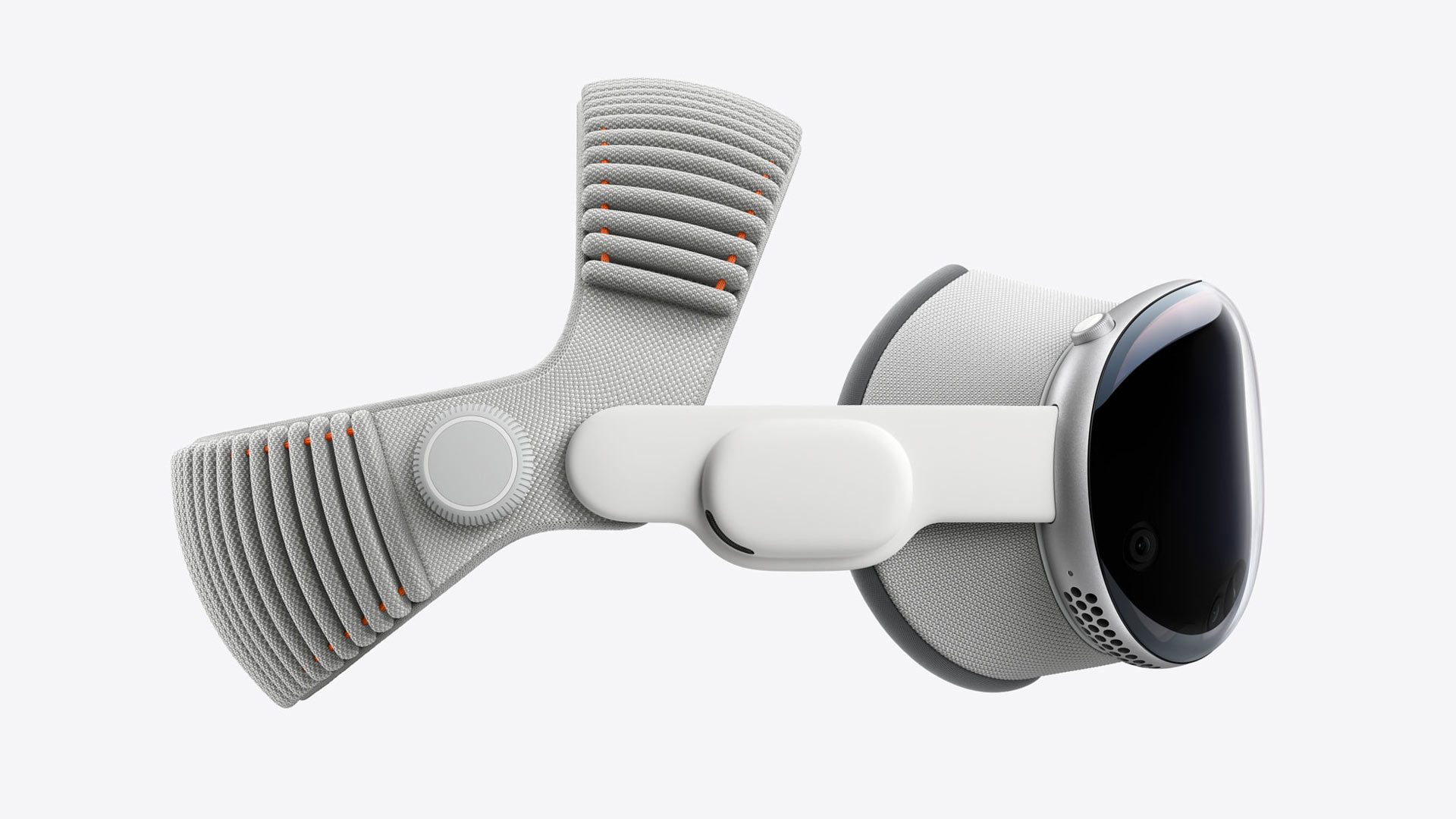
While the original Apple Vision Pro came with two straps in the box, the pre-attached stretchable 3D-knitted Solo Knit Band, without top support, and the optional more traditional Dual Loop Band with top support, the M5 Vision Pro comes with a single Dual Knit Band, combining the benefits of both.
The Dual Knit Band’s upper and lower strap sections are 3D-knitted as a single piece and are separately adjusted with the single dial, which pops out. It comes in small, medium, and large sizes, like the previous bands.
The band’s embedded inserts are tungsten, which is more than twice as dense as the stainless steel of the Solo Knit Band, providing a greater counterbalance to the weight of the headset itself. In fact, the Dual Loop Band is 150 grams heavier than the Solo Knit Band, Apple’s specs suggest.
The Dual Knit Band is also compatible with the original Apple Vision Pro as a $99 accessory, which you can preorder now for shipping next week.
0:00
/0:10
Apple’s Dual Knit Band for Vision Pro headsets.
The M5 Apple Vision Pro is available to preorder now in the US, UK, Canada, Australia, Germany, France, Japan, Hong Kong, and the UAE. It will be available to preorder in Singapore and China from Friday, and available in South Korea and Taiwan “later”.
The original Vision Pro is no longer available, and the new model is priced identically: $3500 for the 256GB storage option, $3700 for 512GB, or $3900 for 1TB. There is no trade-in offer for the original.
Preorders should arrive from next Wednesday, October 22, when the new headset will also be available in Apple Stores.
As with the original Vision Pro, prescription inserts from ZEISS are priced at $150, and the official travel case is $200. It’s also compatible with the same accessories as the original, as it has the same physical design.
If you’ve been looking to upgrade your portable speaker game before the next beach day or house party, the JBL Flip 6 deal on Woot might catch your eye. It’s currently down to $79.95, a solid $50 off its usual price of $129.95. The sale runs for ten days or until supplies last, with free shipping available to Prime members (others pay $6). That said, Woot does not ship to Alaska, Hawaii, or PO box addresses, and the warranty on this is a modest 90 days. Still, for what’s easily its lowest price ever (according to price-tracking tools), it’s worth a look.
It weighs just over a pound and measures about seven inches long, with the same cylindrical design that’s made the Flip series so recognizable. A woven grille wraps around its body, flanked by passive radiators on both ends that thump out low-end sound with surprising confidence. Inside, you’re getting a 20-watt woofer and a 10-watt tweeter, which together deliver a frequency range of 63Hz to 20kHz. The result is a deep, balanced sound with a punchy midrange and enough bass to feel satisfying without muddying vocals, notes this PCMag review. It connects via Bluetooth 5.1 and supports AAC and SBC codecs, though there’s no AptX, aux input, or speakerphone feature—something to keep in mind if you prefer wired flexibility or take calls through your speaker.
For outdoor use, though, the Flip 6 hits its stride. With its IP67 rating, it’s fully dust-proof and waterproof (drop it in a pool or rinse off the sand, and it’ll keep playing). Battery life runs around 12 hours, depending on your volume levels, and the USB-C charging port supports modern charging speeds. It’s also compatible with the JBL Portable app, where you can tweak the EQ if you like tailoring your sound, manage PartyBoost (to link other JBL speakers), and update firmware. It’s not a mini subwoofer, but for its size and price, the Flip 6 punches above its weight.
Little Critters is a light-hearted mixed reality action-strategy game launching this fall on Quest 3 and 3S.
Created by Purple Yonder, who formerly worked on Little Cities, this upcoming game takes a new approach despite its similar name. Promising a mixed reality twist on more traditional tower defense games, Little Critters sees you fortifying your real-world space by strategically placing traps to stop mischievous critters from attacking from every direction.
0:00
/0:30
Purple Yonder states Little Critters was “built from the ground up” for mixed reality with a focus on blending tactile interactions and physical comedy. Hand tracking support lets you manipulate the game’s world, where you can also grab, slap, squash, and throw enemies. Tougher difficulty waves gradually come into play, and you’ll unlock new traps and weapons as you progress.
“We wanted to make something that anyone could pick up, enjoy, and instantly understand,” said James Howard, co-founder of Purple Yonder, in a prepared statement.
We’ll be keeping an eye out on Little Critters after praising Little Cities in 2022 on Quest, calling it “an impressive effort” that delivered an “accomplished” city simulator. It’s since received numerous post-launch updates like Attractions, Little Citizens, and the Snowy Islands DLC, eventually reaching PlayStation VR2 and getting a re-imagined Apple Vision Pro edition.
Little Critters launches this fall on the Meta Quest platform.
Apple unveiled a new 14-inch MacBook Pro on Wednesday that features the company’s M5 chip and represents what Apple describes as the next major advancement in AI performance for its Mac lineup. The laptop delivers up to 3.5 times faster AI performance than the M4 chip and up to six times faster performance than the M1 chip through a redesigned 10-core GPU architecture that incorporates a Neural Accelerator in each core.
The improvements extend beyond AI processing to include graphics performance that runs up to 1.6 times faster than the previous generation and battery life that reaches up to 24 hours on a single charge. Apple also integrated faster storage technology that performs up to twice as fast as the prior generation and allows configurations up to 4TB. The 10-core CPU delivers up to 20% faster multithreaded performance compared to the M4.
The laptop runs macOS Tahoe and includes a Liquid Retina XDR display available in a nano-texture option, a 12MP Center Stage camera, and a six-speaker sound system. The 14-inch MacBook Pro is available for pre-order starting Wednesday in space black and silver finishes and begins shipping October 22. The base model costs $1,599.
Several leading news organizations with access to Pentagon briefings have formally said they will not agree to a new defense department policy that requires them to pledge they will not obtain unauthorized material and restricts access to certain areas unless accompanied by an official. The Guardian: The policy, presented last month by the defense secretary, Pete Hegseth, has been widely criticized by media organizations asked to sign the pledge by Tuesday at 5pm or have 24 hours to turn in their press credentials.
The move follows a shake-up in February in which long-credentialed media outlets were required to vacate assigned workspaces which was cast as an “annual media rotation program.” A similar plan was presented at the White House where some briefing room spots were given to podcasters and other representatives of non-traditional media.
On Monday, the Washington Post joined the New York Times, CNN, the Atlantic, the Guardian, Reuters, the Associated Press, NPR, HuffPost and trade publication Breaking Defense in saying it would not sign on to the agreement.
The GoPro HERO13 Black Ultra Wide Edition just hit a record low of $329 on Amazon. It delivers pro-level 5.3K video and a massive 177-degree field of view that captures 36% more of the scene than standard action cameras.
Samsung announced it’s holding a Galaxy Event on October 21st, which will feature Project Moohan, the company’s long-awaited Apple Vision Pro competitor.
The News
The livestream event is slated to take place on October 21st at 10PM ET (local time here), which is said to focus on “the future of AI” and Project Moohan.
“Come meet the first official device on Android XR—Project Moohan,” the video’s description reads.
There’s no official indication yet on what the headset will be priced, or even officially named at this point. A previous report from South Korea’s Newsworks suggests it could cost somewhere between ₩2.5 and ₩4 million South Korean won, or between $1,800 and $2,900 USD.
The company’s event site does however allow users to register for a $100 credit, valid when purchasing qualifying Galaxy products.
We’re hoping to learn more about the headset’s specs and promised VR motion controllers, which Samsung has yet to reveal.
Since our previous hands-on from last year, we’ve learned Project Moohan includes a Qualcomm Snapdragon XR2 + Gen 2, dual micro‑OLED panels, pancake lenses, automatic interpupillary distance (IPD) adjustment, support for eye and hand-tracking, optional magnetically-attached light shield, and a removable external battery pack.
My Take
Personally, the teaser doesn’t really serve up the sort of “wow” factor I was hoping for, as it highlights some fairly basic stuff seen in XR over the past decade. Yes, it’s actually has been that long.
While I don’t expect Moohan to stop at a Google EarthVR-style map and immersive video—neat as those things are—it’s interesting to me the company thought those two things were worthy additions to a launch day teaser for its first XR headset since the release of Samsung Odyssey+ in 2018.
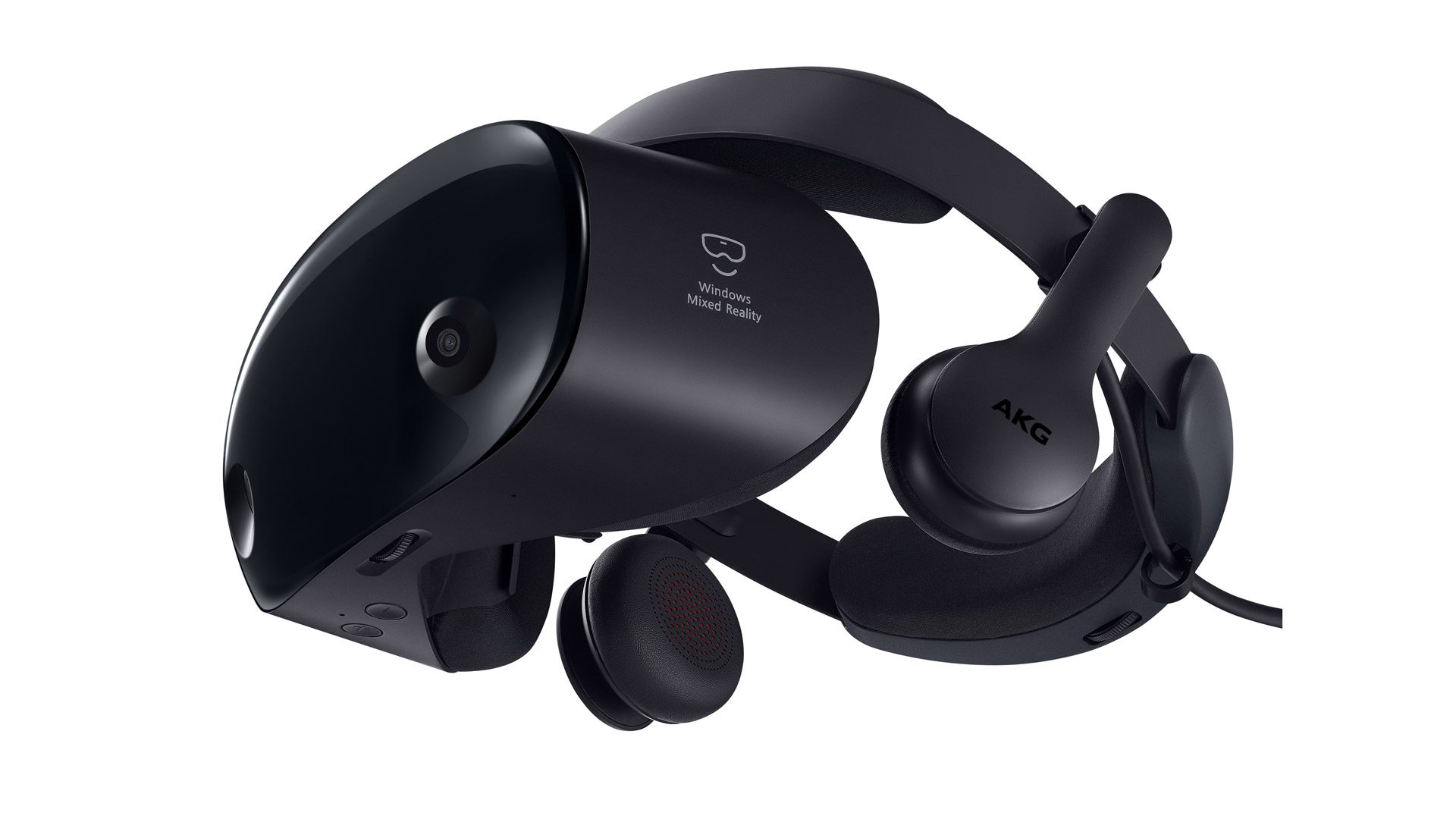
Smasung Odyssey+ | Image courtesy Samsung
As the first official headset supporting Google’s Android XR operating system though, I expect the event will also focus on Moohan’s ability to not only use the standard library of Android apps and native XR stuff, but also XR productivity—provided Samsung really wants to go toe-to-toe with Vision Pro.
By all accounts, Moohan is a capable XR headset, but I wonder how much gas Samsung will throw at it now that Apple is reportedly shifting priorities to focus on Meta-style smart glasses instead of developing a cheaper and lighter Vision Pro. While Apple is launching Vision Pro’s M5 hardware refresh on October 22nd, that could leave Samsung to navigate a potentially awkward middle ground between Meta and Apple.
Moohan’s market performance may also dictate how other manufacturers adopt Android XR. And there’s worrying precedent. Google did the same thing with Lenovo Mirage Solo in 2018, which was supposed to be the first headset to support its Android-based Daydream platform before Google pulled the plug due to poor engagement. Here’s to hoping history doesn’t repeat itself.
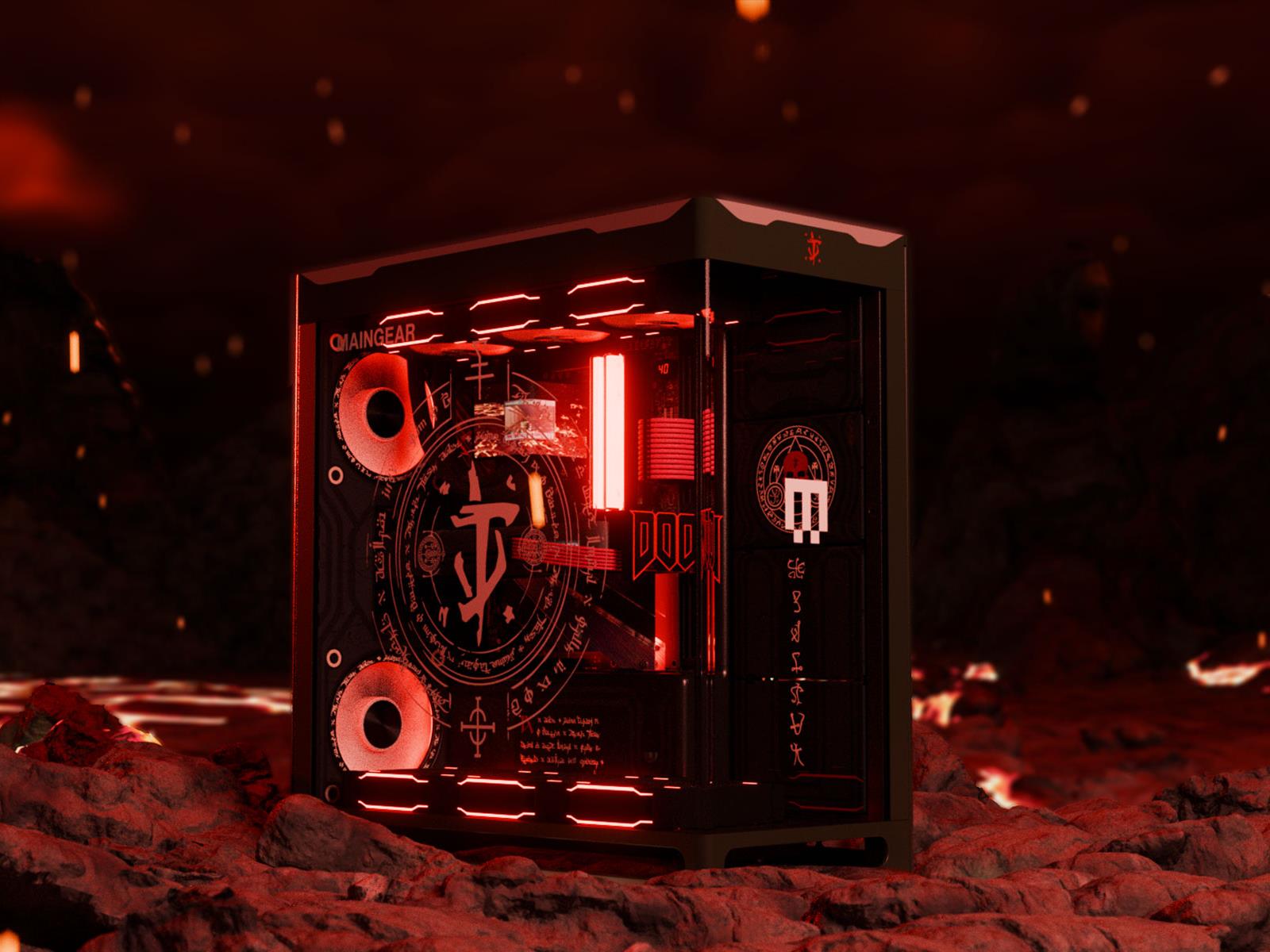
Maingear teamed up with HAVN on its newest custom PC drop, a limited edition gaming system themed after Doom: The Dark Ages with several configurations available. Each config is meticulously crafted by Maingear inside HAVN’s HS 420 Doom: The Dark Ages chassis with precision-cut steel, tempered glass, and a whole lot of custom bits that will
In the past, Apple has favored launching its entire MacBook Pro lineup at once, as it did in 2024 with the M4, M4 Pro and M4 Max models. However, it may have decided to release the M5 model now so it could get a jump start on sales, since the M5 Pro and M5 Max versions are reportedly still several months away. Apple may have also opted for a low-key release since the M5 MacBook Pro is largely unchanged from the previous model.
With that, the emphasis is squarely on the M5 chip and its extra performance. Reportedly due to cost reasons, Apple decided to use the same 3-nanometer fabrication process for the M5 as it did for the M4. The new chip has 10 GPU cores and 10 CPU cores, along with a 16-core Neural Engine.
Apple claims the M5 has the “world’s fastest CPU core” with up to 20 percent faster multithreaded performance compared with the M4 chip. As for the GPU, the company says that offers “up to 1.6x faster graphics performance in pro apps and enables up to 1.6x higher frame rates in games compared to the M4 model.” That should make the M5 MacBook Pro a better option than the M4 model for things like gaming and video editing.
To that end, compared with the M4 MacBook Pro, Apple says the latest model delivers up to 1.8x faster “AI video-enhancing performance” in Topaz Video, up to 1.7x faster 3D rendering in Blender and up to 1.2x faster build performance during code compiling in Xcode. The company is promising 3.5x faster AI performance than with the M4 model, and up to 6x faster performance than M1. It also claims SSD performance is up to twice as fast as the previous generation.
The M5 MacBook Pro comes with the same 14.2-inch, 3,024 x 1,964 Liquid Retina XDR display that can hit 1,000 nits in SDR mode and up to 1,600 nits peak brightness for HDR content. It has adaptive refresh rates at up to 120Hz and offers a wide P3 color gamut with up to 1 billion colors, ideal for video editors and Lightroom users.
Other key features include an SDXC card slot, HDMI port and 3.5mm headphone jack. There are three USB-C ports as before, but they’re still the Thunderbolt 4 type with speeds up to 40 Gbps, and not the 80 Gbps Thunderbolt 5 ports found on M4 Pro and Max models. It also comes with a six-speaker system with support for Dolby Atmos and Spatial Audio as before, along with Wi-Fi 6E, Bluetooth 5.3 and a 12MP Center Stage 1080p webcam. As you might imagine, it comes with macOS Tahoe ready to go.
The 14-inch M5 MacBook Pro is now available for pre-order starting at $1,599 with 16GB memory and 512GB storage. It maxes out at 32GB of RAM and 4TB of storage. Shipping will start October 22.
This article originally appeared on Engadget at https://www.engadget.com/computing/laptops/apples-first-m5-laptop-is-the-14-inch-macbook-pro-131314446.html?src=rss
Why do some people endorse claims that can easily be disproved? It’s one thing to believe false information, but another to actively stick with something that’s obviously wrong.
We aresocial psychologists who study political psychology and how people reason about reality. During the pandemic, we surveyed 5,535 people across eight countries to investigate why people believed COVID-19 misinformation, like false claims that 5G networks cause the virus.
This week, California governor Gavin Newsom signed a handful of new laws that regulate artificial intelligence and social media. Among them is SB 243, which requires that chatbots provide “clear and conspicuous” notice that they are not a real person. The law goes into effect on Jan. 1, 2027.
SB 243 also requires chatbots interacting with children to provide a reminder every three hours to take a break and prohibits chatbots used by minors from generating sexually explicit content. The law mandates that companion AIs have safeguards for people in mental distress, and requires companies to report how they handle situations involving suicidal ideation and self-harm.
“Emerging technology like chatbots and social media can inspire, educate and connect — but without real guardrails, technology can also exploit, mislead, and endanger our kids,” the Democratic governor said in a statement.
The rest of California’s new AI and tech laws
SB 243 is just one piece of a broader package of tech-focused legislation Newsom approved this week. The AI transparency act (AB 853), requires large platforms to disclose when AI is used to generate content. It also requires that recording devices sold in California, such as cameras and video cameras, include the option to embed verifying information.
Another bill signed by Newsom, AB 56, requires social media platforms to add regularly timed warnings to minors of the potential mental health risks associated with the use of the apps. AB 621 strengthens penalties for companies whose platforms distribute “deepfake” pornography. And finally, AB 1043 requires that device makers (mostly Apple and Google) implement tools to verify user ages in their app stores.
As California goes, so go the rest of the states
While the laws governor Newsom signed only apply to California residents, big tech companies are expected to voluntarily implement the guidelines for the rest of the nation; the population of California is so large that state laws regulating technology there tend to be adopted everywhere.
This is assuming, of course, that legal challenges don’t scuttle or significantly change the laws: like most legislation aimed at “protecting the children,” there is a potential conflict between the protection of children and the protections of adults’ rights.
Apple’s announcement of the Vision Pro headset in 2023 was pretty hyperbolic about the device’s potential, even by Apple’s standards. CEO Tim Cook called it “the beginning of a new era for computing,” placing the Vision Pro in the same industry-shifting echelon as the Mac and the iPhone.
The Vision Pro could still eventually lead to a product that ushers in a new age of “spatial computing.” But it does seem like Apple is a bit less optimistic about the headset’s current form—at least, that’s one possible way to read the fact that the second-generation Vision Pro is being announced via press release, rather than as the centerpiece of a product event.
The new Vision Pro is available for the same $3,499 as the first model, which will likely continue to limit the headset’s appeal outside of a die-hard community of early adopters and curious developers. It’s available for pre-order today and ships on October 22.