Did you know your Garmin routes might be public? 7 ways you could be compromising your privacy

Everyone’s life has moved increasingly online, and for cyclists, that creates unique problems.

Sharing rides and photos can be motivating and fun, but it risks revealing far more than you intend – from the exact location of your garage to details thieves could use, not to mention often highly personal data. 

With so many connected apps, it’s not always clear who can see what.

Here are seven common ways you might be compromising your cycling privacy online, and what you can do to stay safe.

1. Think about your Strava settings
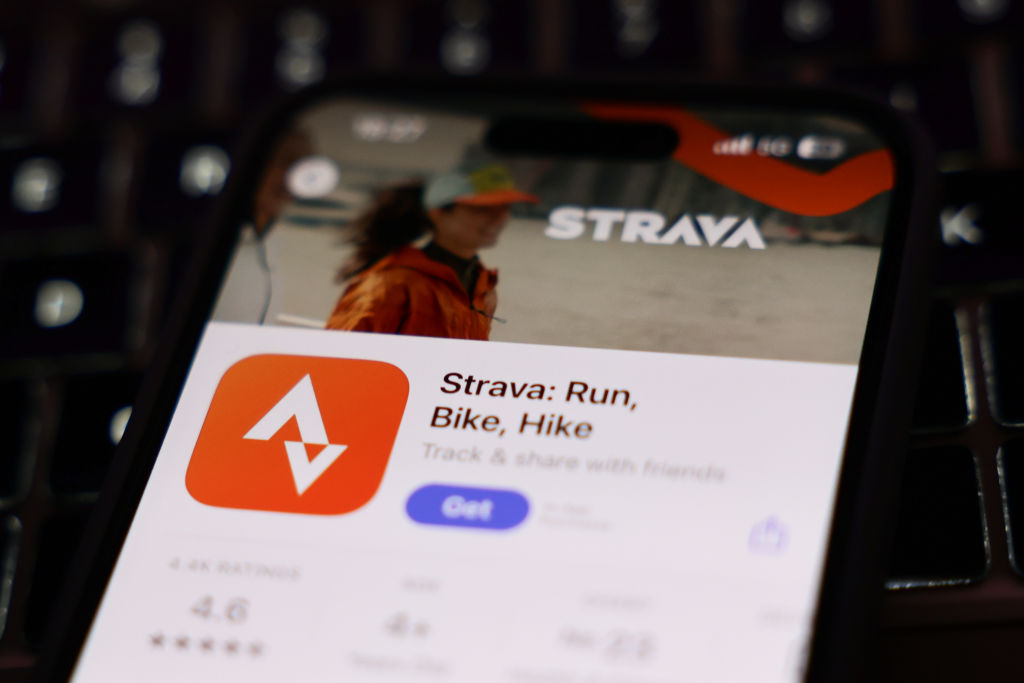
A laptop keyboard and Strava on App Store displayed on a phone screen are seen in this illustration photo taken in Krakow, Poland on January 15, 2025. (Photo by Jakub Porzycki/NurPhoto via Getty Images)
Strava’s all about sharing – just don’t share too much. Jakub Porzycki/NurPhoto via Getty Images

Strava calls itself “the social network for athletes”, and much of its appeal comes from sharing rides, cheering friends on, and posting photos or videos. But by default, that also means your activities reveal where you’ve been, when, and potentially even where you live.

The most important step is setting up privacy zones around your home, work or any other sensitive location.

Be strategic here – a small circle drawn just a couple of hundred metres from your house can still make it obvious which property is yours, especially if you live in a rural area. A zone set further away gives you more protection.

Even then, be cautious about what you post. An image taken outside your front door or garage can be just as revealing as a GPS trace.

From there, Strava’s layered privacy tools enable you to control who sees what: you can share with everyone, with followers only or lock rides down completely. 

Another setting to check is Flyby, which enables other riders to see when and where you crossed paths. 

It’s disabled by default, but if you switch it on, your rides must be publicly visible. Make sure you’re comfortable with that before enabling it.

Finally, consider the global heatmap, which aggregates millions of rides to show popular routes. 

Strava does apply your privacy settings here, but if your rides are public, others could zoom in close to your start and end points. You can opt out entirely if you’d prefer not to appear.

It’s not only your location you need to consider. If your ride starts with a run over to your mate’s house to meet up, it’s another frequently visited place that’s likely to contain bikes. 

Your Strava trace – or trace on any other app, for that matter – will most likely flag it up with a wiggly GPS trace and a speed drop to zero as you wait around for them to get ready.

Set privacy zones for friends’ houses and other locations you visit frequently, that snoopers may want to know about.  

2. Watch where your Garmin courses start
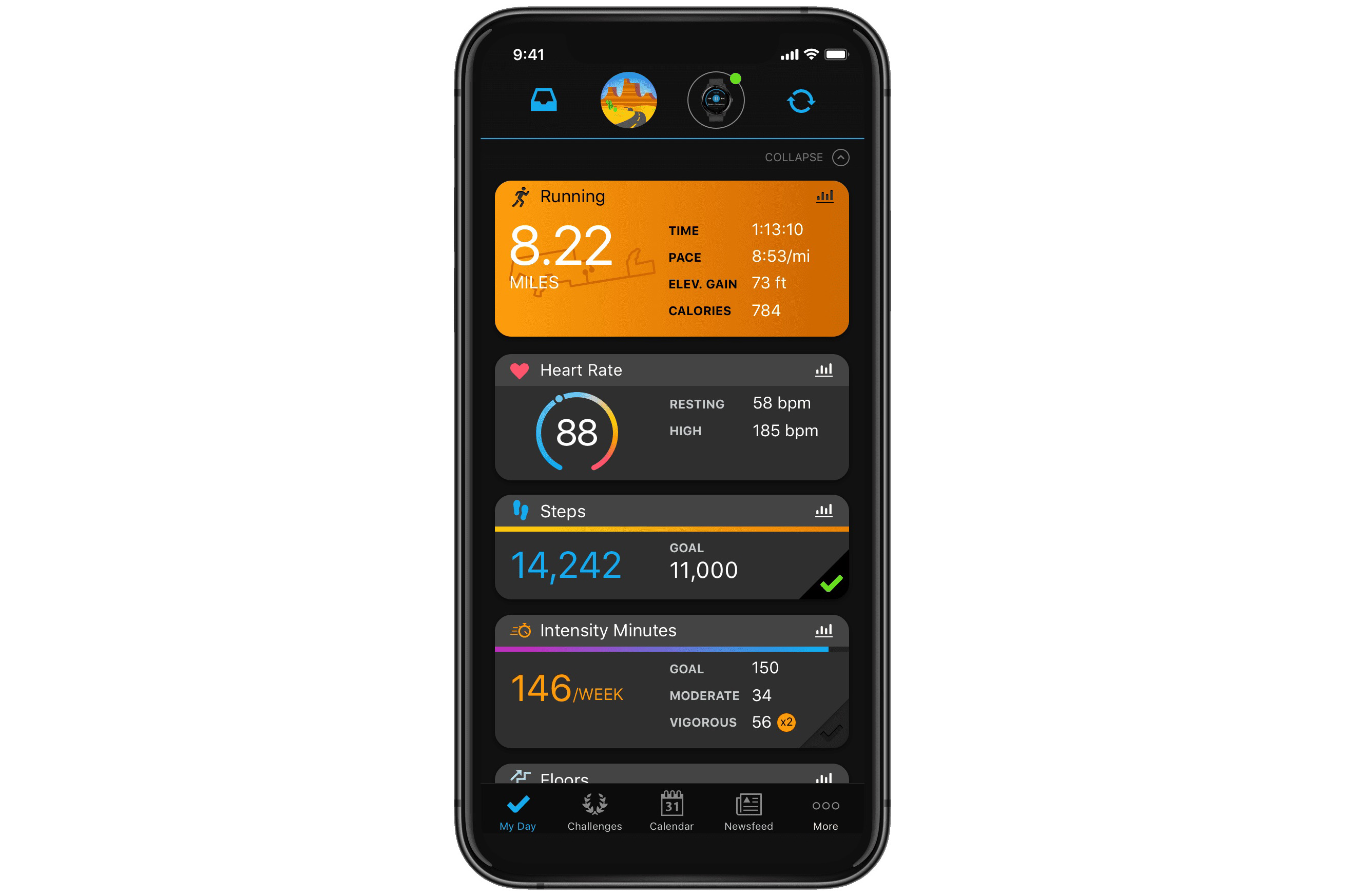
Garmin Connect App home screen.
Routes planned in OpenStreetMap in Garmin Connect are set to public by default. Garmin

Garmin Connect provides a great tool for ride planning. 

You can map out a route (or Course in Garmin speak) and Garmin will use its own popularity routing to send you via routes most used by cyclists. 

It’s similar to the route planning offered by Strava, but unlike Strava, it’s free to use.

You can choose your basemap to plot your route. The most detailed basemap is OpenStreetMap – but there’s a privacy catch if you use it.

While routes plotted in Garmin’s base map, Google Maps or Here Maps can be kept private, those plotted on OpenStreetMap are always public. 

This opens up the same issues of identifiable start and end locations as with rides on Strava. 

Either start your planned route a couple of kilometres down the road, when Garmin will direct you to the start, or delete your course once you’ve ridden it.

It won’t always be this way – speaking to BikeRadar, a Garmin spokesperson said it is “in the process of making courses created with OSM private by default”, adding “we expect that update to take place later this year”.

3. Don’t be too social

Social media can be a lot of fun, but it can be high-risk for cyclists. Jack Luke / Our Media

Social media sites are another source of info on where you are and where you ride. 

Instagram has recently introduced optional location sharing, which provides your location to contacts in near real-time.

Snapchat, too, has a location heatmap, which could show where you and your bikes are located.

If you want to be really safe, it’s probably not a good idea to boast online about that new Pinarello you’ve just bought, either. 

There’ve been cases of riders being followed and their bikes hijacked.

4. Make sure your photo sharing doesn’t share more than you thought

Be sure the metadata on your photos doesn’t reveal more than you want. Liam Cahill / Our Media

Another opportunity to reveal your location is provided by sharing photos. 

Be mindful of the background of your shots. Does it show your house, garage or other distinctive features that could reveal where you live? 

It’s relatively easy to use Google Street View and satellite images to establish where a particular shot was taken if you know the rough area. 

Some photo-sharing apps will retain the metadata for posted shots, too. This might include the GPS coordinates showing where they were taken. 

Check that your preferred photo-sharing app strips your metadata, or remove it yourself before posting a shot.

5. Check who you share your real-time location with
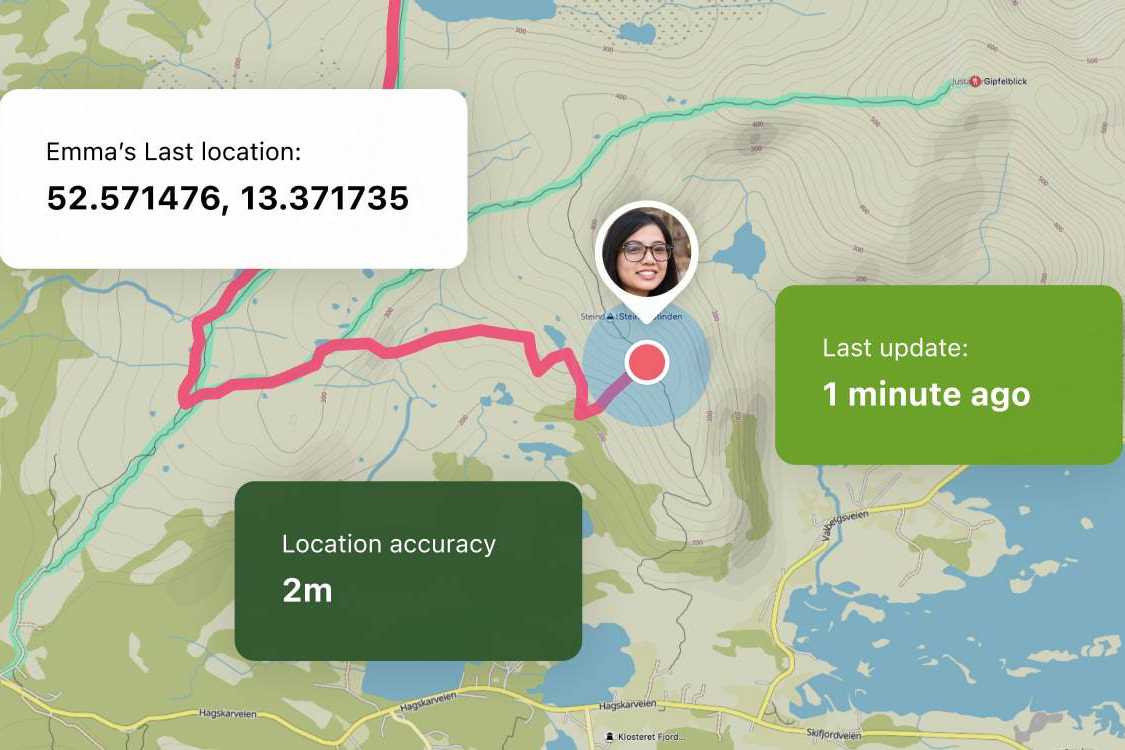
Komoot Live tracking screen example
Live tracking can be a great thing, but be careful. Komoot

Most GPS cycling computers offer real-time location sharing via their apps if you carry your phone with you. 

It’s another potentially leaky source of location info, although by default your ride is shared with named contacts only. 

But Garmin Connect, for example, enables you to share to other apps too, so you could potentially leak your location into apps where you haven’t set such tight privacy. 

6. Consider your indoor rides

Wahoo Kickr Core set up
Indoor training might reveal unwanted details. Steve Sayers / Our Media

Indoor cycling apps enable you to ride your outdoor routes on your trainer. It’s yet another potential source of data leakage if you share your indoor workouts, particularly if you upload video footage to accompany your ride’s GPS file.

Again, consider who can see what in Rouvy, Bkool or your other preferred indoor training app. 

7. Check your shared apps

There’s a whole network of cycling apps that you can link together. 

Your ride might be logged in Garmin Connect, uploaded to Strava, pushed out to Komoot and fed through to training apps, brands’ sites and more. 

Before you know it, you could have a web of a dozen linked accounts, all seeing some or all of your data and potentially sharing it. 

Most apps will have robust privacy policies, but those policies can change, and lesser-known apps may take a more lax approach.

Proceed cautiously and check that any historical links are disabled if you stop using an app.
[$] Creating a healthy kernel subsystem community

Creating welcoming communities within open-source projects is a recurring
topic at conferences; those projects rely on contributions from others, so
making them welcome is important. The kernel has, rather infamously
over the years, been an oft-cited example of an unwelcoming project, though
there have been (and are) multiple efforts to change that with varying
degrees of success. Hans de Goede talked about such efforts within his
corner of the kernel project in a talk (YouTube video) at
Open
Source Summit Europe
.

Over three decades later, Nintendo remembers the Virtual Boy exists

Even as Nintendo has endlessly mined its classic consoles for nostalgic re-releases in recent decades, the company has seemed to completely ignore the existence of the Virtual Boy—its abortive 1990s dip into the world of early virtual reality. That’s finally set to change next February with Nintendo’s first-ever official re-release of Virtual Boy games—at least for players who invest $100 in a required Virtual Boy-shaped Switch dock (or a cheaper cardboard holder) to make them work.

Virtual Boy – Nintendo Classics will be available for Nintendo Switch Online + Expansion Pack members on #NintendoSwitch and #NintendoSwitch2 starting Feb 17, 2026! #NintendoDirect pic.twitter.com/VnCO0DiX3S

— Nintendo of America (@NintendoAmerica) September 12, 2025

Subscribers to Nintendo Switch Online in the US and Canada will soon be able to purchase that $100 dock, which Nintendo says “recreates the form of the original Virtual Boy hardware,” or a slender $25 cardboard alternative. Then, starting on February 17, those players will be able to play downloaded Virtual Boy games (included with an Expansion Pack subscription) by inserting a Switch or Switch 2 into one of those retro replicas. The system will presumably display those games in a split-screen mode that can be viewed through special lenses to replicate the Virtual Boy’s original 384×224 resolution, four-shades-of-red stereoscopic display.

Nintendo’s announcement says you’ll “need this dedicated accessory” to play Virtual Boy titles through a Switch, suggesting that flat-screen play on a console without one of the custom docks won’t be possible. And while “purchase limits apply” to the plastic Virtual Boy replica (which seems likely to be a collectible available only in limited supplies), the cheaper cardboard model seems designed for wider availability.

Read full article

Comments

Google Has Finally Set Usage Limits for Gemini AI (Based on How Much You Pay)

Did you know you can customize Google to filter out garbage? Take these steps for better search results, including adding Lifehacker as a preferred source for tech news.


Before now, Google has been somewhat vague about just how many prompts, pictures, and videos you can get through with its Gemini AI, and the level of quality and AI model you can expect: The end results can vary depending on the Google AI plan you’re on, and the tool you’re using, with imprecise phrasing like “higher limits” and “highest limits” used in the official documentation.

Thankfully, Google has finally gotten around to giving us some clarity, as spotted by the team at 9to5Google. The new figures should give you a better idea of whether or not it’s worth upgrading the plan you’re currently on, and it means you won’t be caught by surprise quite so much when you reach your daily limits.

The limits of Gemini

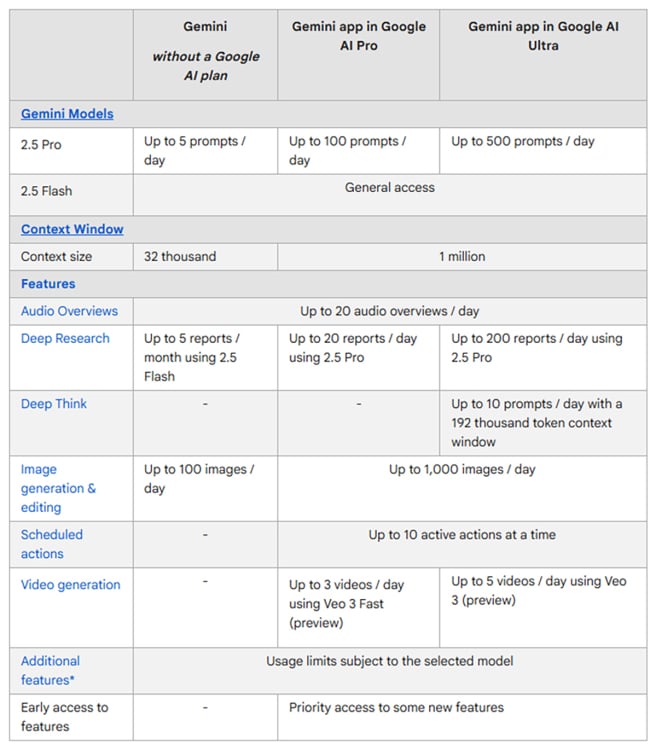
You can get the official lowdown on the limits of Google AI by heading to the Gemini support page. There are three plans to know about: The free tier (you don’t pay anything), the Google AI Pro tier ($20 a month), and the Google AI Ultra tier ($250 a month). The basics are as follows, though it doesn’t quite cover everything.

If you’re a free user, you get five prompts a day using the best 2.5 Pro model, after which the 2.5 Flash model kicks in. You also get a context window (reading capacity) of 32 thousand tokens, up to five Deep Research reports a month (using 2.5 Flash), up to 20 audio overviews a day, and up to 100 images a day. There are no Deep Think or AI video generation options.

If you’re on the Google AI Pro plan, you get pushed up to 100 prompts per day using 2.5 Pro. The context window grows to 1 million tokens, and you can run up to 20 Deep Research reports a day (using 2.5 Pro). The other limits are up to 20 audio overviews a day, up to 1,000 images a day, and up to three videos a day using the slightly inferior Veo 3 Fast. You can schedule up to 10 active actions, but there’s no access to Deep Think.

Finally, there’s the top Google AI Ultra tier. This gives you up to 500 prompts per day with 2.5 Pro, the same 1 million token context window as the AI Pro plan, and the same 20 audio overviews per day. You can run up to 200 Deep Research reports a day (with 2.5 Pro), and up to 10 Deep Think prompts per day. The 1,000 images-per-day limit is the same as the AI Pro plan, but you can also generate up to five videos per day with the slightly superior Veo 3 model.

Comparison chart

Credit: Google

What to consider

You might think all those figures are complicated enough, but they don’t quite cover everything. If you use other tools besides the Gemini app, other limits apply. The Flow movie-making web app, for example, works differently: It’s exclusively for Google AI Pro and Google AI Ultra subscribers, who get 1,000 monthly AI credits and 25,000 monthly AI credits respectively, to put towards their creations.

Another tool that’s affected is NotebookLM, because if you’re subscribed to one of the Google AI plans, you get higher usage limits and access to more features here as well. You can create more notebooks, add more sources, and work with longer documents if you upgrade from the free plan.

Then you’ve got the new features that are added over time, which are sometimes paywalled. The Canvas feature (a more expansive working area) was rolled out to everyone at the same time, for example, whereas the Gems feature (custom chatbots) was originally only for paying subscribers.

Eventually, most features trickle down to become available to everyone, but it’s something else to bear in mind if you’re wondering whether a Google AI Pro or Google AI Ultra plan is worth the investment. Google is obviously going to want to push users towards subscribing with a number of exclusives, but many will be able to get by on the free plan.

Soaring Over Jurassic World In Orbx’s Flight Simulator 2024 Archipelago DLC

Orbx released its Jurassic World: Archipelago DLC for Microsoft Flight Simulator 2024, so I climbed into my motion simulator to explore the ultimate pack’s detailed islands from high above and walked among the dinosaurs up close. Read on for my first impressions.

0:00

/1:00

Who here as a kid wasn’t fascinated by dinosaurs? I couldn’t get enough of them when I was growing up, especially the gentle giants most people refer to simply as long-necks. Back in the 80s, we unfortunately didn’t have the kind of CGI in our films that we see in the modern marvels of today, immersive technology, or even home PCs that could run the simplest games in most of our libraries now. When Jurassic Park first hit theaters in 1993, many of us sat in our local theater with our jaws gaping, getting our first look at those dinos, and it was exhilarating.

Flash forward to 2025, and those iconic landscapes, film sets, and even some dinosaurs are making their way into Flight Simulator 2024 through a new DLC pack developed by Orbx. This takes us back to the more memorable islands and structures made famous in the film franchise.

This pack isn’t something you can get through Steam; for this add-on, you must download and set up Orbx Central or purchase it directly in the game’s marketplace. After an hour of battling some server issues on launch day, I painfully watched bars slowly fill in as the files were downloading and installing to my PC. Once the wait was over, I jumped into the cockpit. As I dropped into the sky above that first island in my new Jurassic World-branded virtual CubCrafters XCub, I knew this adventure would be something special.

0:00

/0:30

I found myself mesmerized by what’s being presented beyond the small windows in my little starter plane—the sun near the horizon in the distance. A flock of pterodactyls caught my attention to the left, and I sat there in awe.

After finishing my initial lap around the island and not finding many dinosaurs to gawk at, I kept thinking to myself, “I was told there were going to be dinos on this island?” Then I decided to try one of the guided interactive sessions. The tour offered in the Archipelago DLC is actually active, unlike some others in Flight Simulator 24, and you fly to each pre-marked destination yourself. I was hoping for a more passive ride where I could just sit in the passenger seat and soak it all in while listening to the tour guide’s narrative.

0:00

/1:58

A few locations that are shown on the guided Isla Nublar tour

You receive a brief backstory explaining why the site is notable upon arriving at each new location, and then you return to free flight until you choose to head to the next area of interest. This specific tour is broken down into 8 distinct areas from the films, each with a chance at a dino sighting as well as on-foot exploration of the iconic sites and structures. But this is where things get a bit rough.

One intriguing thing about Microsoft Flight Simulator 2024 is that, just like in real life, each new aircraft handles and flies a bit differently. There really isn’t any relying on muscle memory to get you through until you take a minute to learn each new plane you’re piloting’s quirks. The Archipelago DLC has you flying the CubCrafters XCub personal aircraft, and it’s not the easiest plane in the hangar to handle. One of the DLC’s best features is the ability to land, walk around with the dinosaurs on the islands, and explore some of the film’s more iconic locales. However, landing the XCub, even on a stable surface, is challenging enough, let alone attempting to land on small patches of flat earth, which is nearly impossible for me as a novice virtual pilot.

I eventually realized you can access all the new content through the regular “Free Flight” setting in the main game’s menu. Exploring the DLC content this way gives you access to all of your owned aircraft. Discovering this option let me finally choose a more manageable and slower-moving plane, one where I can start taking in the sights and sounds of the island without crashing.

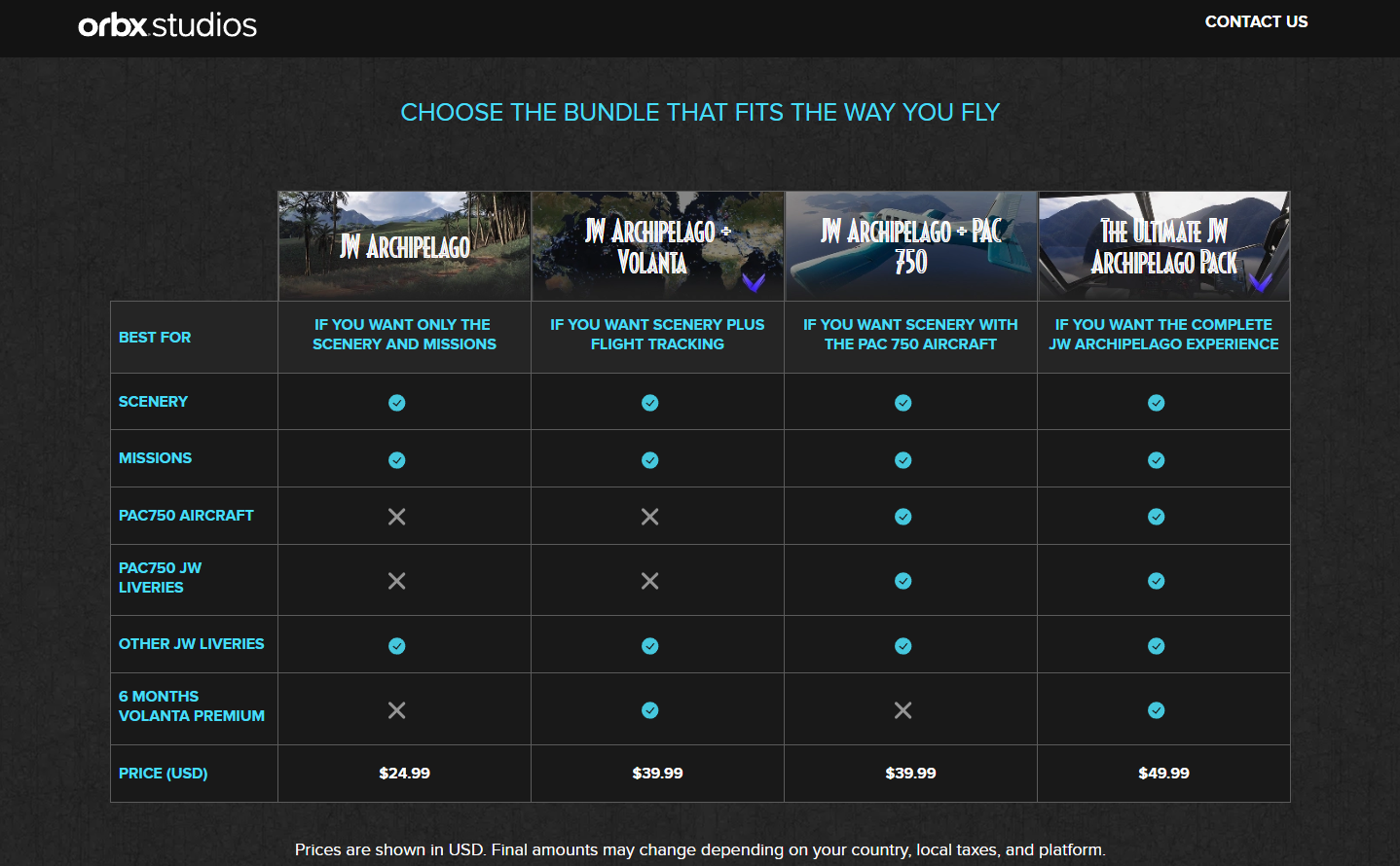
Pricing of various DLC configurations

Orbx has four options for you to explore Isla Nublar and Isla Sorna. Pick the one that suits you, and then be sure to join us for VR Sideload, where we’ll explore more of the iconic islands and discuss our findings live.

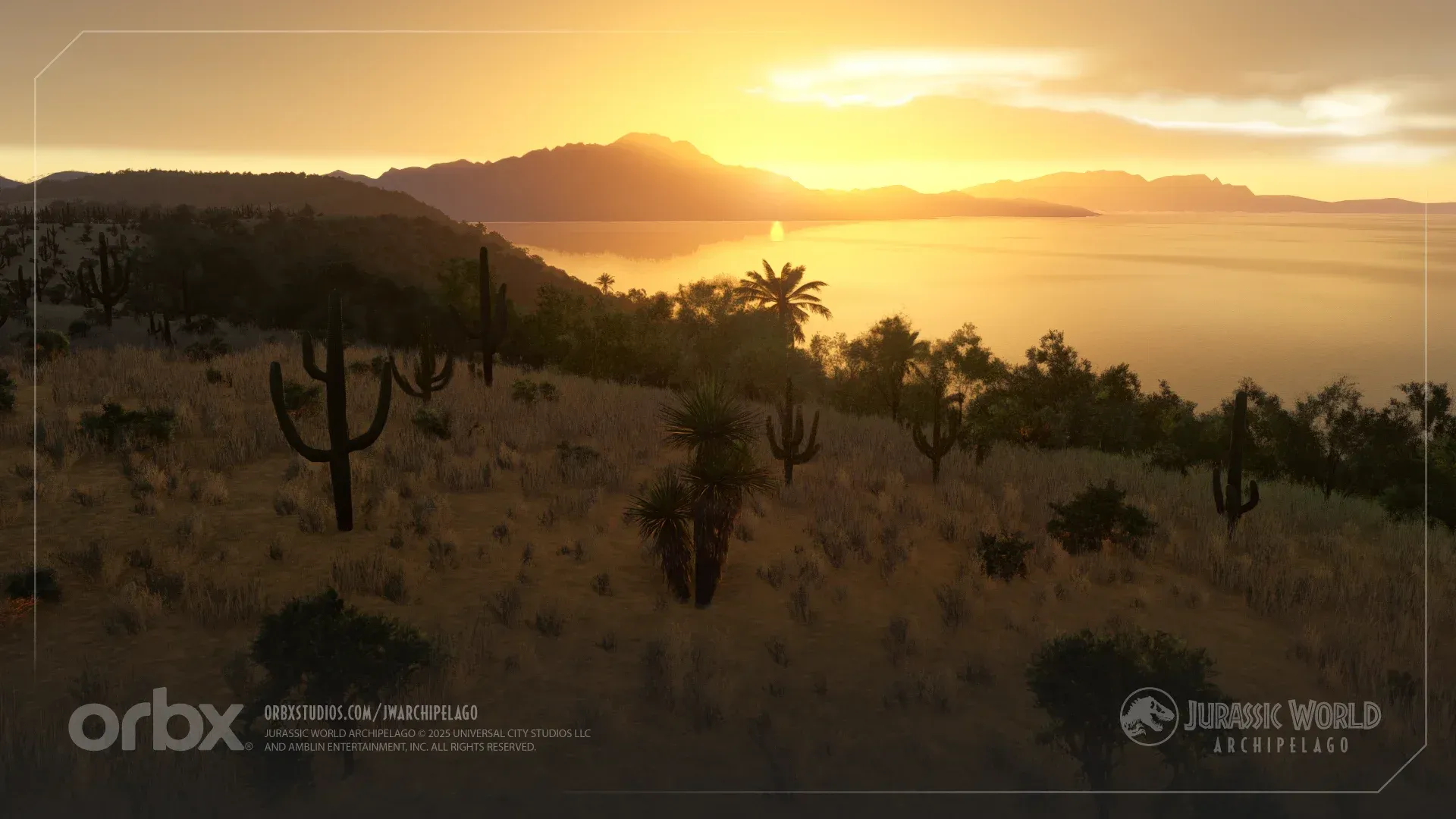
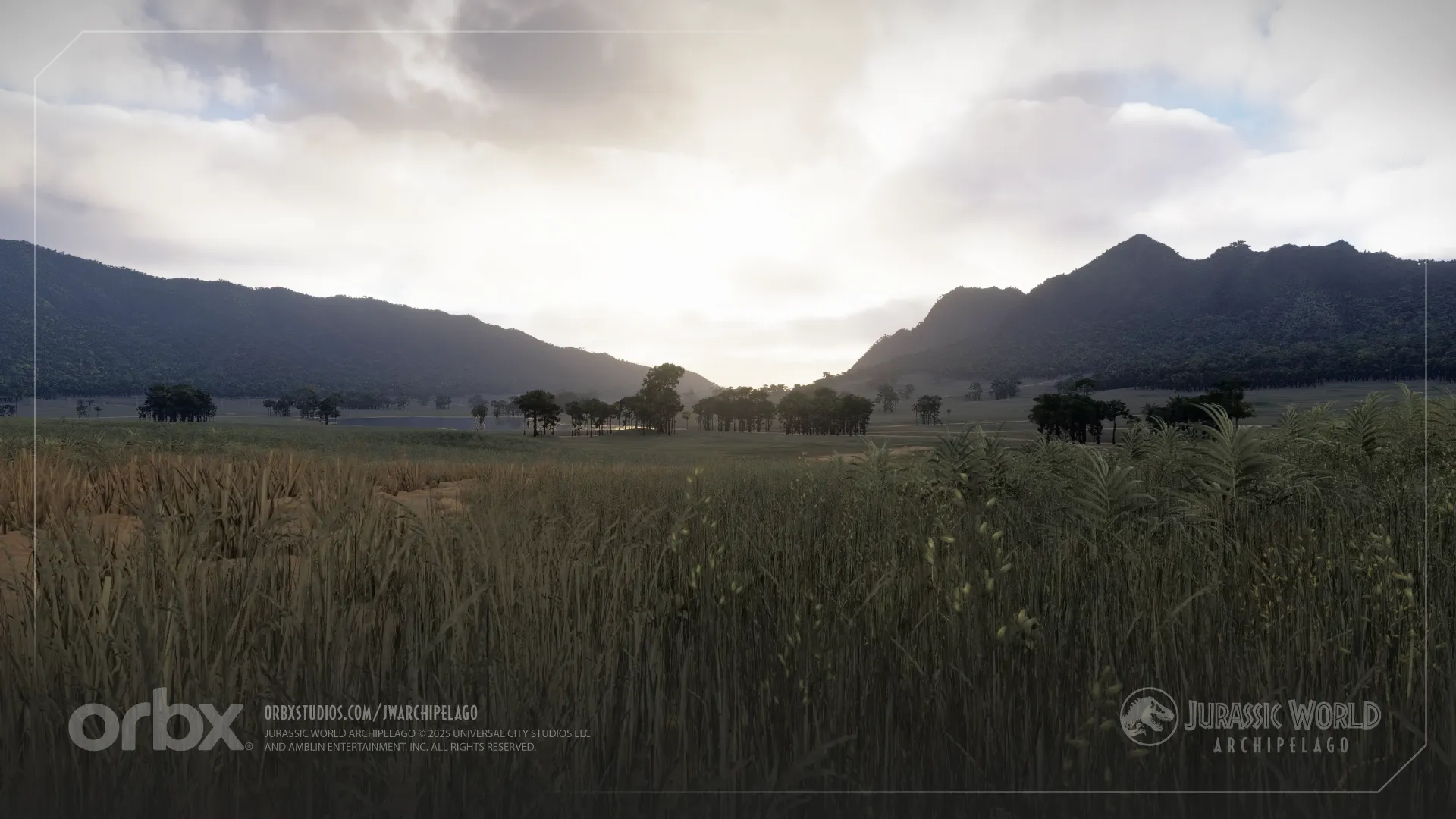
Overall, Orbx has produced another visual stunner with the Jurassic World: Archipelago DLC. While the dinosaurs could be more plentiful and easier to find in free flight mode, discovering them scattered across the island chain through exploration does feel amazing when you finally find a herd that you can land and walk among.

If you are a fan of the Jurassic World franchise, this DLC pack is a must-buy, and I highly recommend it, particularly if you have a high-end PC VR setup. Exploring these islands offers a visual experience that evokes a childlike sense of wonder and is not to be missed.

The Jurassic World: Archipelago for Microsoft Flight Simulator 2024 is out now on PC VR.

If you want to see more of the islands and the dinosaurs that inhabit them by air and on foot, be sure to join us for this week’s VR Sideload, where we’ll further explore the DLC as we take your questions and requests live on air.

Nintendo Is Bringing Back Its Most Infamous Console As a Switch Accessory

We may earn a commission from links on this page.

Did you know you can customize Google to filter out garbage? Take these steps for better search results, including adding Lifehacker as a preferred source for tech news.


Nintendo is bringing virtual reality to the Switch 2 (and more VR to the Switch 1), but not in the way you probably expected. During the company’s hour long Nintendo Direct this morning, the Mario makers announced that 14 Virtual Boy games will be coming to the Nintendo Switch Online + Expansion Pack service, complete with stereoscopic 3D and a replica Virtual Boy accessory to make it all possible.

If you’re anything like one of my editors, you might be asking yourself “what’s a Virtual Boy?” Well, for all you gamers that weren’t around during the ’90s, it turns out the Oculus Rift wasn’t the first 3D headset to try courting gamers.

In 1995, five years after the release of the original Game Boy, Nintendo dipped its toes into VR, launching the Virtual Boy “portable” console. This 32-bit system had a decent amount of power and promise at the time—the original PlayStation was also 32-bit—but was held back from greatness by two major flaws. First, unlike VR headsets today, it didn’t strap around your head, and instead rested on a stand that needed you to lean into it, kind of like Han Solo getting dunked into the torture machine in The Empire Strikes Back. Second, it only displayed games in an eye-searing red-and-black graphics.

Though the reasons behind its eventual failure are bit more complicated than just that, suffice it to say, it didn’t sell well. Only 14 Virtual Boy games were ever released in the U.S., and Nintendo was quick to encourage us to forget about its flop—until now.

While unofficial emulators have tried to recreate the Virtual Boy experience for 3DS and Meta Quest, Nintendo is now throwing its own hat into the ring. Starting on Feb. 17, 2025, the company will begin releasing Virtual Boy games as part of its Nintendo Switch Online + Expansion Pack subscription service—with an adorable catch.

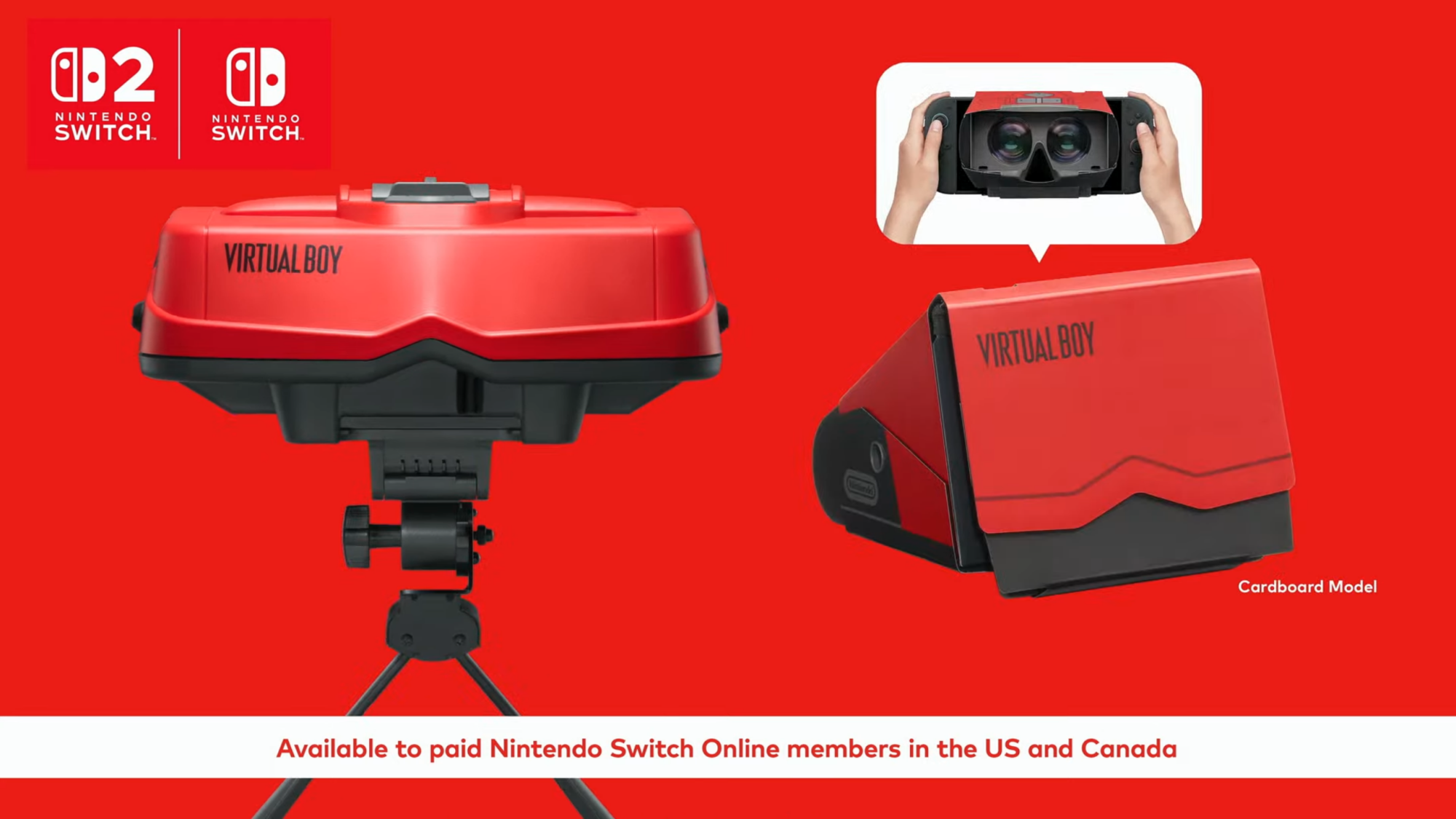
Virtual Boy as Switch accessory

Virtual Boy accessories Switch Online

Credit: Nintendo

Like many 3DS games, most of the Virtual Boy library technically doesn’t rely on 3D for gameplay too much, and some unofficial emulators have settled on displaying them in 2D without much issue to players. But Nintendo is, as it is wont to do, going all-in on the gimmick. In order to play Virtual Boy on Nintendo Switch Online, you’ll need an official Virtual Boy accessory that enables stereoscopic 3D for your system. It’s available for pre-order later today (the order links aren’t live as of this writing), and the actual release date remains unannounced

You’ve got two choices: First, you can get a full-blown replica of the Virtual Boy, stand and all. Personally, I’d be tempted to buy it even if it were just a hunk of nonfunctional plastic—it’s just that cute. But if you’re not with me there, or you want to save some money, you’ll also be able to buy a cardboard version, similar to the Nintendo Labo VR headset for Switch 1.

Regardless of which Virtual Boy accessory you get, you’ll slot your Switch or Switch 2 into it (Virtual Boy games will be available on both consoles), and the headset will divide the console’s screen into two halves to create a 3D image when you look at them through its lenses. It’s a similar approach to the Nintendo Labo, which allowed the Switch 1 to play Super Mario Odyssey, The Legend of Zelda: Breath of the Wild, and a few other choice games in VR. (You might be more familiar with using your phone to achieve this technique via Google Cardboard.)

Nintendo said that all 14 Virtual Boy games released in North America will be coming to Nintendo Switch Online this way, although the eight additional Virtual Boy games that were only released in Japan appear to be MIA for now.

Virtual Boy NSO Game Catalog

Credit: Nintendo

And that’s about all we know currently. Like Nintendo’s other retro replica devices, the Virtual Boy accessories needed to play these games with Nintendo Switch Online will only by available for purchase by paying Nintendo Switch Online subscribers. That’s a bit of a bummer if you just want one as a desk toy, but unlike the Gamecube controller also released for Switch 2, it’ll probably sting a bit less—that device can be used to play all sorts of games, but the Virtual Boy accessory will be limited to Virtual Boy games.

That is, unless Nintendo has plans to follow up on Labo and bring VR modes to existing Switch 2 titles like Donkey Kong Bananza. That’s just speculation at the moment, but hey, the Switch 2 is plenty more powerful than the Switch 1, and you could play Mario Odyssey in VR on that. A girl can dream.

Final Fantasy VII Remake Intergrade hits the Switch 2 on January 22

Final Fantasy VII Remake Intergrade comes out for the Switch 2 on January 22, 2026, which was revealed at today’s lengthy Nintendo Direct livestream. This is the first entry in the remake trilogy and primarily takes place in the opening city of Midgar. You’ll have to wait until Final Fantasy VII Rebirth to explore the overworld map, and there’s no Switch 2 release date for that one yet.

This release does include the Episode Intermission DLC, which involves the ninja Yuffie on a mission to steal powerful items from the evil Shinra corporation. That story takes place after the main campaign.

There’s a trailer and it looks gorgeous, so the Switch 2 should be able to handle this one. Final Fantasy VII Remake Intergrade originally came out back in 2021. The long-awaited title was more of a reimagining than a straight remake of the iconic JRPG. The game still managed to garner critical acclaim, despite drastic changes from the original.

It was followed by Final Fantasy VII Rebirth in 2024, with a third game on the way to close out the trilogy. There’s no name for this final entry and we don’t have a release date, as it’s still in active development.

This article originally appeared on Engadget at https://www.engadget.com/gaming/nintendo/final-fantasy-vii-remake-intergrade-hits-the-switch-2-on-january-22-152559995.html?src=rss

Google is Shutting Down Tables, Its Airtable Rival

Google Tables, a work-tracking tool and competitor to the popular spreadsheet-database hybrid Airtable, is shutting down. TechCrunch: In an email sent to Tables users this week, Google said the app will not be supported after December 16, 2025, and advised that users export or migrate their data to either Google Sheets or AppSheet instead, depending on their needs.

Launched in 2020, Tables focused on making project tracking more efficient with automation. It was one of the many projects to emerge from Google’s in-house app incubator, Area 120, which at the time was devoted to cranking out a number of experimental projects. Some of these projects later graduated to become a part of Google’s core offerings across Cloud, Search, Shopping, and more. Tables was one of those early successes: Google said in 2021 that the service was moving from a beta test to become an official Google Cloud product. At the time, the company said it saw Tables as a potential solution for a variety of use cases, including project management, IT operations, customer service tracking, CRM, recruiting, product development and more.


Read more of this story at Slashdot.

The iPhone 17 square selfie camera is a bigger deal than you think

A square camera sensor may sound like one of those things only nerds would appreciate, but as part of the new front-facing 18-megapixel “Center Stage” camera on the iPhone 17 lineup, it could have massive implications for Apple’s users. They’ll no longer need to turn their phones to take a landscape selfie, especially if they need to fit a large group of people, as that’s all handled automatically by Center Stage. It’s the sort of “Why didn’t I think of that?” feature that other phone makers will likely copy, simply because it’s immensely practical. Those square camera sensors could help make Apple a selfie pioneer, once again.

We’ve come a long way from when the iPhone 4 and HTC Evo 4G introduced the idea of modern front-facing cameras in 2010. Earlier cellphones in Japan and Europe had low quality selfie cameras, and you could argue that the Game Boy Camera also toyed with the idea when it arrived in 1998. But in 2010, we finally had powerful phones on relatively speedy mobile connections that could easily share photos and let users hop on video chats on a whim. (It still stings that it took Apple two more years to release the LTE-capable iPhone 5, which made FaceTime much more useful.)

iPhone Air selfie camera
Sam Rutherford for Engadget

During the iPhone 17 launch event, Apple revealed that its customers took 500 billion selfies last year, a massive figure that shows just how normalized the practice has become. Selfies were often mocked when they were deemed the purview of Instagram-obsessed teenage girls, but these days it’s not unusual to see everyone from seniors to a gaggle of sports bros gathering around a single phone like an object of worship. And, on a personal note, they’re really the only way to get decent photos of your entire family, especially when you’re juggling two rambunctious young kids.

We take photos to preserve memories, but selfies feel distinctive for their intimacy. You’re not just capturing where you were, but you’re also documenting yourself in the moment, along with the people around you. By making it easier to take selfies, it follows that you’ll start to take even more of them, ultimately tying yourself into Apple’s ecosystem even further. That leads to needing an iPhone with more storage and potentially more iCloud backup space down the line. You’re also not going to jump over to an Android phone if you have to turn your phone sideways for a landscape selfie, or if you lose access to all of the cherished memories in your Apple Photos library.

The square camera sensor keeps you loyal. 

It’ll also change the way iPhone users take front-facing videos. Center Stage automatically keeps you in the center of FaceTime calls, so you don’t have to worry so much about framing yourself up. And while I haven’t seen this particular feature in action, it should also help alleviate the headache of turning your phone during a FaceTime call to match the recipient’s device. (Or maybe I’m just tired of telling my parents to flip their phones when their FaceTime chats have huge black borders.)

This may be a stretch, but I could see the Center Stage front camera making it more common to record video with your front and rear cameras at the same time. While it’s new to iPhone as “Dual Capture,” we’ve seen variants of it from Samsung and Nokia (remember #bothie?) Android devices, but they’ve never really taken off. TikTok’s dual-camera live streaming mode has been more successful, and there are also vlogging apps like MixCam built around dual recording. With Dual Capture on iPhone 17, Center Stage’s ability to keep you in the middle of the action with the front camera should let you focus more on getting the best shot with the rear lenses.

While I’d love to see Apple cram more pixels into the 18MP Center Stage camera, moving to a square sensor will honestly be more impactful for all of the reasons above. It’s easy to throw in a higher resolution sensor, it’s tougher to fundamentally rethink how you can improve upon something as simple as taking a selfie.

This article originally appeared on Engadget at https://www.engadget.com/mobile/smartphones/the-iphone-17-square-selfie-camera-is-a-bigger-deal-than-you-think-151517041.html?src=rss

New pathway engineered into plants lets them suck up more CO₂

Lots of people are excited about the idea of using plants to help us draw down some of the excess carbon dioxide we’ve been pumping into the atmosphere. It would be nice to think that we could reforest our way out of the mess we’re creating, but recent studies have indicated there’s simply not enough productive land for this to work out.

One alternative might be to get plants to take up carbon dioxide more efficiently. Unfortunately, the enzyme that incorporates carbon dioxide into photosynthesis, called RUBISCO, is remarkably inefficient. So, a team of researchers in Taiwan decided to try something new—literally. They put together a set of enzymes that added a new-to-nature biochemical cycle to plants that let it incorporate carbon far more efficiently. The resulting plants grew larger and incorporated more carbon.

Cycles and recycles

In the abstract, incorporating carbon dioxide from the atmosphere into the biochemistry of the cell seems simple—you just link up a few of the carbon atoms and you’re off. But in reality, it’s fiendishly complicated. Carbon dioxide is an extremely stable molecule, so incorporating it requires a very energetically favorable reaction. In the Calvin cycle of photosynthesis, that reaction involves linking the carbon dioxide as part of a reaction that breaks apart a modified five-carbon sugar, creating two three-carbon molecules. Some of those molecules get fed into the cell’s metabolism, while others get built up into a five-carbon sugar again, restarting the cycle.

Read full article

Comments

Amazon Sets Sights On Challenging Meta Ray-Bans With Jayhawk Smart Glasses

Amazon Sets Sights On Challenging Meta Ray-Bans With Jayhawk Smart Glasses
The latest word on the street is that Amazon is secretly developing its own line of augmented reality (AR) glasses, with Meta’s market-leading Ray-Ban smart glasses as the main target. The project could move the company past its audio-only Echo Frames to a device with a full color display, a full suite of AI capabilities, and integrated Amazon

Small, affordable, efficient: A lot to like about the 2026 Nissan Leaf

SAN DIEGO—The original Nissan Leaf was a car with a mission. Long before Elon Musk set his sights on Tesla selling vast numbers of electric vehicles to the masses, then-Nissan CEO Carlos Ghosn wanted Nissan to shift half a million Leafs a year in the early 2010s. That didn’t quite come to pass, but by 2020, it had sold its 500,000th EV, which went from its factory in Sunderland, England, to a customer in Norway.

Pioneering though they were, both first- and second-generation Leafs were compromised. They were adapted from existing internal combustion engine platforms, with the electric powertrains shoehorned inside. The cars’ real handicaps were a lack of liquid cooling for the battery packs. Like an older Porsche 911, the Leaf was air-cooled, albeit with none of the collector value. That’s all changed for generation three.

The new Leaf is built on a dedicated EV platform shared with Nissan’s alliance partners Renault and Mitsubishi, and which we have previously seen used to good effect in the Nissan Ariya. The benefits of using a platform purpose-designed for electric propulsion are obvious from the space efficiency. The new car is 3 inches (75 mm) shorter from the outside, but offers nearly 9 inches (221 mm) more rear leg room (yes, really), making it a much more suitable place to put adults.

Read full article

Comments

This Ring Indoor/Outdoor Camera Is $70 Right Now

We may earn a commission from links on this page. Deal pricing and availability subject to change after time of publication.

Did you know you can customize Google to filter out garbage? Take these steps for better search results, including adding my work at Lifehacker as a preferred source.


The Ring Outdoor Cam Plus is a versatile indoor and outdoor security camera that offers up to 2K video and is powered via a quick-release battery pack (though a wired version is also available at the same discount). Right now, it’s 30% off on Amazon in both black and white for Prime members, bringing its price down to $70 and marking its lowest price ever, according to price-tracking tools.

Its high-res 2K video is a major upgrade compared to 1080p cameras on the market (including older Ring cams) with basic black-and-white night vision. Per this PCMag review, the camera features Low-Light Sight, which provides more visibility and color detail in near-dark settings. Its 160° diagonal field of view also covers a decent area, leading to fewer blind spots on porches, yards, or other outdoor areas than older models with an approximately 143° diagonal FOV, and many reviewers cite the improved view as a standout feature. Unlike older models, which only supported 2.5GHz, this one has dual-band wifi.

Compared to wired outdoor security cameras, the battery-powered quick-release pack offers more flexibility, letting you recharge the device without removing the whole camera or keeping it attached to a constant power source. That said, frequent motion, high-traffic area placement, or continuous live view may drain the battery quickly, and some users do say it uses more power than other Ring models. Like most outdoor cameras, it can handle a wide range of conditions and has a durable build that can be mounted on surfaces, walls, or a ceiling. However, it is slightly larger than their Indoor Cams and Stick Up Cams, making it less discreet. 

Features like motion detection (with customizable zones), live view, two-way talk, and Alexa integration are standard for Ring devices, but users report that this model has improved night vision and motion detection compared to predecessors. And as with most Ring devices, certain features like long-term storage or advanced analytics will require a paid Ring Home Plan subscription. If you’re looking for stronger image quality and a wider field of view than older Ring cams or Stick Up Cam models, the Ring Outdoor Cam Plus is worth considering, especially at its current price. 

Our Best Editor-Vetted Tech Deals Right Now

Deals are selected by our commerce team

Gmail’s New Feature Is A Game-Changer For The Holiday Shopping Season

Gmail's New Feature Is A Game-Changer For The Holiday Shopping Season
Starting yesterday, Google began rolling out a new feature to Gmail users across mobile and desktop alike— an overhaul to Gmail’s purchase and delivery tracking functionality. Previously, Gmail would highlight deliveries set to arrive within 24 hours at the top of your Primary inbox, but now that feature has been further expanded to a dedicated

Ex-DVD company employee gets 4 years for leaking Spider-Man Blu-ray

A former employee of a multinational DVD company was sentenced to four years in prison for stealing hundreds of pre-release DVDs and Blu-rays and leaking blockbuster movies online, the Department of Justice confirmed Thursday.

Back in May, Steven Hale pleaded guilty to spending about a year between 2021 and 2022 stealing discs from his employer and selling them online through e-commerce sites. Among movies that Hale uploaded for illegal download were highly anticipated titles like Dune, as well as sequels to popular films like F9: The Fast Saga and Venom: Let There Be Carnage.

But according to the DOJ, Hale did the most damage by leaking advance copies of Spider-Man: No Way Home. That particular movie, released exclusively in theaters in 2021, became the first movie after the COVID pandemic started to gross $1 billion at the box office. Likely DVD sales were expected to be just as explosive, but for many fans too cautious to return to movie theaters at the time, DVD leaks became too enticing to pass up. Hale wasn’t the only one to recognize the high demand online, with illegal downloads of the movie becoming so widespread that ReasonLabs reported that scammers started planting malware in illegal copies of the movie to “lure in as many victims as possible.”

Read full article

Comments