Buyers of RadioShack Accused of Running $112 Million Ponzi Scheme

An anonymous reader quotes a report from CBS News: A pair of e-commerce entrepreneurs who bought a number of well-known retail brands — including RadioShack, Modell’s Sporting Goods and Pier 1 Imports — out of bankruptcy are accused of running a Ponzi scheme. The Securities and Exchange Commission on Monday accused Alex Mehr and Tai Lopez, founders of the Miami-based Retail Ecommerce Ventures (REV), of defrauding investors out of approximately $112 million. Through their holding company, Mehr and Lopez acquired distressed brick-and-mortar companies in order to turn them into successful, online-only brands. Dress Barn and Linens ‘n Things were also among their acquisitions. […]

The SEC’s suit alleges that between 2020 and 2022, Mehr and Lopez, “made material misrepresentations” to hundreds of investors about the bankrupt retailers they had acquired. For example, to entice individuals to invest in their acquisitions, they said their portfolio companies were “on fire” and that “cash flow is strong.” They also told prospective backers that money raised for a company would only be invested in that specific firm. That proved not to be the case, according to the SEC’s lawsuit, which was filed Monday in the U.S. District Court for the Southern District of Florida.

“Contrary to these representations, while some of the REV Retailer Brands generated revenue, none generated any profits,” the suit states. “Consequently, in order to pay interest, dividends and maturing note payments, Defendants resorted to using a combination of loans from outside lenders, merchant cash advances, money raised from new and existing investors, and transfers from other portfolio companies to cover obligations.” The SEC alleges that at least $5.9 million of returns paid to investors were actually Ponzi-like payments funded by other investors, as opposed to companies’ profits. Additionally, the federal regulatory agency claims that Mehr and Lopez allocated $16 million worth of investments for their own use, according to the filing.


Read more of this story at Slashdot.

Linus Torvalds Removes The Bcachefs Code From The Linux Kernel

With Linux 6.17 was the decision by Linus Torvalds to mark Bcachefs as “externally maintained” and not accept any new Bcachefs code into the mainline kernel but keeping the existing code within the tree. That was useful for those relying on Bcachefs to still boot a mainline kernel at least. Now for Linux 6.18, the Bcachefs code was removed from the mainline kernel…

Alphabet will pay $22 million to settle President Trump’s YouTube lawsuit

Alphabet will pay President Donald Trump $22 million as part of a settlement in a class action lawsuit brought against the company over the suspension of various YouTube accounts following the January 6 riot at the US capital, as first reported by the Wall Street Journal. The suit includes other plaintiffs whose YouTube channels were banned that will split an additional $2.5 million in settlement payouts.

Trump filed the suit in 2021, alongside lawsuits against Twitter and Facebook over similar suspensions, claiming they infringed on his first amendment rights. Twitter, now known as X since its acquisition and rebrand by Elon Musk, paid President Trump roughly $10 million to settle that suit. Meta also settled its suit with the president over his suspension from the platform for $25 million earlier this year.

This settlement comes shortly after Alphabet wrote a letter to the House Judiciary Committee lambasting government pressure to moderate content on its platforms. The company also shared that YouTube would be offering a path to reinstatement for accounts previously banned for COVID-19 or election integrity related misinformation.

The settlement from Alphabet will be paid to the Trust for the National Mall, a nonprofit partner of the National Park Service, and will be earmarked for construction of the ballroom that President Trump is building at The White House. The monies from the Meta settlement were similarly earmarked.

This summer Paramount, parent company of CBS, settled a lawsuit brought by the president over claims that the network intended to “confuse, deceive and mislead the public” by editing an interview with Kamala Harris. The media company paid $16 million to settle the president’s suit. Three weeks later the FCC approved the $8 billion acquisition of Paramount by Skydance.

This article originally appeared on Engadget at https://www.engadget.com/big-tech/alphabet-will-pay-22-million-to-settle-president-trumps-youtube-lawsuit-234611643.html?src=rss

FCC Mistakenly Leaks Confidential iPhone 16e Schematics

The FCC mistakenly published a 163-page PDF containing detailed schematics for Apple’s upcoming iPhone 16e, despite Apple explicitly requesting indefinite confidentiality to protect trade secrets. AppleInsider reports: A cover letter is also distributed alongside the schematics, addressed to the FCC and dated September 16, 2024. The letter from Apple is a request for the confidential treatment of documents that are filed with the FCC. […] The letter from Apple requests a series of documents are withheld from public viewing “indefinitely.” The justification is that they contain “confidential and proprietary trade secrets” that are not disclosed to the public post-release, due to giving competitors an “unfair advantage.”

The list of documents, Apple states, includes: Block Diagrams, Electrical Schematic Diagrams, Technical Descriptions, Product Specifications, Antenna Locations, Tune-Up Procedure, and Software Security Description. Other documents, such as external and internal photographs, shots of the test setup, and the user manual, are deemed to be less damaging and have “short-term confidentiality” requirements. In those cases, Apple asks for short-term confidentiality for 180 days after the equipment authorization is granted by the FCC.


Read more of this story at Slashdot.

Man Builds Wearable Electric Motorcycle Suit

This is a video documenting Youtuber Jake Carlini’s quest to build a wearable electric motorcycle. The finished product, which is only seen in the last 30-seconds of the 22-minute video (hint hint), actually appears more functional than I expected. It does involve the rider having to hold a plank pose for as long as they want to ride somewhere though, and I haven’t held a plank since the one time I went to a hot yoga class with a girlfriend. Somebody farted and three people puked, including the instructor. “Was it you?” The instructor? Nooooo, I don’t teach yoga. “You know what I meant.” Who else do you know who would eat four hot dogs before a yoga class?

Trump obtains another settlement as YouTube agrees to pay $24.5 million

Google owner Alphabet today agreed to pay $24.5 million to settle a lawsuit that President Trump filed against YouTube in 2021. Trump sued YouTube over his account being suspended after Trump supporters’ January 6 attack on the US Capitol.

Alphabet agreed to pay $22 million “to settle and resolve with Plaintiff Donald J. Trump… which he has directed to be contributed, on his behalf, to the Trust for the National Mall, a 501(c)(3) tax-exempt entity dedicated to restoring, preserving, and elevating the National Mall, to support the construction of the White House State Ballroom,” a court filing said. Trump recently announced plans for the 90,000-square-foot ballroom.

The settlement notice, filed today in US District Court for the Northern District of California, said Alphabet will also pay $2.5 million to settle claims with plaintiffs the American Conservative Union, Andrew Baggiani, Austen Fletcher, Maryse Veronica Jean-Louis, Frank Valentine, Kelly Victory, and Naomi Wolf. Under the settlement, Alphabet admits no wrongdoing and the parties agreed to dismiss the case.

Read full article

Comments

Afghanistan Hit By Nationwide Internet Blackout As Taliban Cuts Fiber Optic Cables

The Taliban have imposed a nationwide telecommunications shutdown in Afghanistan, severing fibre-optic connections and cutting off internet, mobile, and satellite services as part of “morality” measures. Netblock is currently tracking the outages. The BBC reports: Since seizing power in 2021, the Taliban have imposed numerous restrictions in accordance with their interpretation of Islamic Sharia law. Flights from Kabul airport have also been disrupted, according to reports. Several people in Kabul have told the BBC that their fibre-optic internet stopped working towards the end of the working day, around17:00 local time (12:30 GMT). Because of this, it is understood many people will not notice the impact until Tuesday morning, when banking services and other businesses are due to resume. […]

The Taliban earlier said an alternative route for internet access would be created, without giving any details. Business leaders at the time warned that if the internet ban continued their activities would be seriously hit. Hamid Haidari, former editor-in-chief of Afghan news channel 1TV, said after the shutdown that “loneliness enveloped the entire country.” “Afghanistan has now officially taken first place in the competition with North Korea for [internet] disconnection” he said on X.


Read more of this story at Slashdot.

Skateboarder Sets World Records With Drop Into Ramp From 223-Feet

This is a video of Brazilian skateboarder Sandro Dias setting the Guinness World Records for ‘the tallest drop into a temporary quarter pipe’ and ‘the fastest speed on a temporary quarter pipe’ by dropping into a ramp built on the side of the appropriately shaped Centro Administrativo Fernando Ferrari (CAFF) building in Porto Alegre, Brazil from 70-meters (223 feet), and reaching a speed of 103.8km/h (64.5MPH) on the way down. Impressive, but there isn’t enough Red Bull on the planet to get me to do that. I’m kidding, nine cans and I’ll even attempt a kickflip on the way down, and I’ve never landed a kickflip.

You can watch a longer 20-minute video discussing the entire feat HERE.

Another setback for Firefly Aerospace’s beleaguered rocket program

The booster stage for Firefly Aerospace’s next Alpha rocket was destroyed Monday in a fiery accident on the company’s vertical test stand in Central Texas.

Engineers were testing the rocket before shipment to Vandenberg Space Force Base, California, to prepare for launch later this year with a small commercial satellite for Lockheed Martin. Activities at the vertical test stand in Briggs, Texas, include propellant loading and test-firings of the booster’s four kerosene-fueled engines. The rocket was undergoing one of these test-firings on Monday when the accident occurred.

Firefly released a statement confirming the rocket “experienced an event that resulted in a loss of the stage.” The company confirmed all personnel were safe and said ground teams followed “proper safety protocols.”

Read full article

Comments

YouTuber reports battery swelling caused Galaxy Ring to get stuck on his finger

Sometimes when a device fails, it fails in spectacular fashion. Daniel Rotar, who leads the ZONEofTECH YouTube channel, posted on X today that the battery on his Samsung Galaxy Ring began swelling while he was wearing it. “I cannot take it off and this thing hurts,” he wrote. A few hours later, Rotar posted again that he had gone to a hospital and received help to remove the smart ring. He also shared photos of the device that showed the swelling on the interior surface.

Update:

– I was denied boarding due to this (been travelling for ~47h straight so this is really nice �). Need to pay for a hotel for the night now and get back home tomorrow�

– was sent to the hospital, as an emergency

– ring got removed

You can see the battery all… https://t.co/SRPfYI92Zg pic.twitter.com/ob8uUp5BeW

— Daniel (@ZONEofTECH) September 29, 2025

We reached out to Samsung for comment and received this statement from a spokesperson: “The safety of our customers is a top priority and we are in direct contact with this user to learn more about their concerns. While experiences like this are extremely rare, there are a few ways to attempt removing a stuck ring, including soap and water – or submerging your hand in cold water. If these methods do not work, additional information is provided on our Samsung Support page.”

Current technologies aren’t perfect and a device’s battery can fail. When that happens, trapped gasses and heat can cause the battery to swell. It’s not a common problem, but it is a known one. There’s even a whole Reddit community dedicated to the phenomenon of these “spicy pillows.” So here’s a recurring reminder that if you’ve got old gadgets you aren’t using, consider recycling them before they potentially reach this sort of fail state.

This article originally appeared on Engadget at https://www.engadget.com/wearables/youtuber-reports-battery-swelling-caused-galaxy-ring-to-get-stuck-on-his-finger-223749424.html?src=rss

Gavin Newsom Signs First-In-Nation AI Safety Law

An anonymous reader quotes a report from Politico: California Gov. Gavin Newsom signed a first-in-the-nation law on Monday that will force major AI companies to reveal their safety protocols — marking the end of a lobbying battle with big tech companies like ChatGPT maker OpenAI and Meta and setting the groundwork for a potential national standard.

The proposal was the second attempt by the author, ambitious San Francisco Democrat state Sen. Scott Wiener, to pass such legislation after Newsom vetoed a broader measure last year that set off an international debate. It is already being watched in Congress and other states as an example to follow as lawmakers seek to rein in an emerging technology that has been embraced by the Trump administration in the race against China, but which has also prompted concerns for its potential to create harms.


Read more of this story at Slashdot.

Anthropic says its new AI model “maintained focus” for 30 hours on multistep tasks

On Monday, Anthropic released Claude Sonnet 4.5, a new AI language model the company calls its “most capable model to date,” with improved coding and computer use capabilities. The company also revealed Claude Code 2.0, a command-line AI agent for developers, and the Claude Agent SDK, which is a tool developers can use to build their own AI coding agents.

Anthropic says it has witnessed Sonnet 4.5 working continuously on the same project “for more than 30 hours on complex, multi-step tasks,” though the company did not provide specific details about the tasks. In the past, agentic models have been known to typically lose coherence over long periods of time as errors accumulate and context windows (a type of short-term memory for the model) fill up. In the past, Anthropic has mentioned that previous Claude 4.0 models have played Pokémon for over 24 hours or refactored code for seven hours.

To understand why Sonnet exists, you need to know a bit about how AI language models work. Traditionally, Anthropic has produced three differently sized AI models in the Claude family: Haiku (the smallest), Sonnet (mid-range), and Opus (the largest). Anthropic last updated Haiku in November 2024 (to 3.5), Sonnet this past May (to 4.0), and Opus in August (to 4.1). Model size in parameters, which are values stored in its neural network, is roughly proportional to overall contextual depth (the number of multidimensional connections between concepts, which you might call “knowledge”) and better problem-solving capability, but larger models are also slower and more expensive to run. So AI companies always seek a sweet spot in the middle with reasonable performance-cost trade-offs. Claude Sonnet has filled that role for Anthropic quite well for several years now.

Read full article

Comments

Fall Means Darker Morning and Evening Runs, and You Should Be Prepared

We may earn a commission from links on this page.

The sun has already begun to set on our exercise routines—at least for those of us who like to run in the evenings. As we get deeper into fall (and prepare for the dreaded time change), evening and morning runners alike will have to deal with darker runs.

Here are my best tips for staying safe and making the most of the darkness while you’re out pounding the pavement.

Bring a flashlight, even if you don’t think you need it

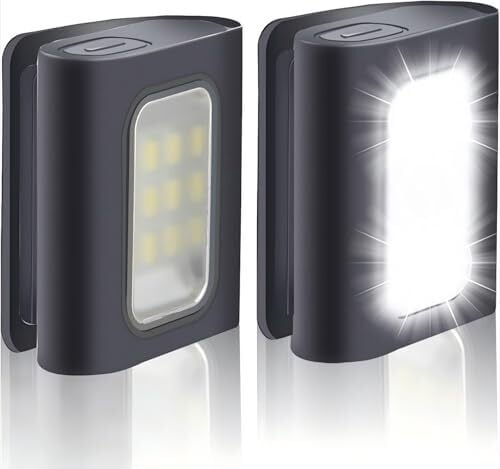
If you’re an evening runner, be warned that this is the season for darkness sneaking up on you. Check the sunset time before you head out, and bring a light source just in case you make a wrong turn or stop a little longer at a water break. I have these USB-chargeable lights, and I keep one in the same belt that holds my water bottle.

You can’t totally trust the sunset time to be the time you’ll start losing light. When I’m running trails, I’ve noticed the light starts fading well in advance of the official sunlight time, thanks to all those hills and trees. There may not be cars to worry about in the wilderness, but without sunlight it’s a lot easier to stub your toe on rocks and roots in the path.

Even if you’re just walking in your neighborhood, it’s good to be seen. I’ve been in pitch-dark parks where I didn’t realize another jogger was there until they were right in front of me. Carrying some kind of light can help you see people, but it can also help you be seen, and avoid terrifying everyone else.

Bike riders need lights too

Light is also important if you’re cycling. You especially want to make sure cars can see you, so put on your front and back lights even if it’s not fully dark yet. The convention (which is also the legal requirement in many areas) is to put a bright white light at the front of your bike, and a red light for visibility at the back. That back light could be mounted to your bike or to another convenient spot, like clipped onto your jacket or helmet.

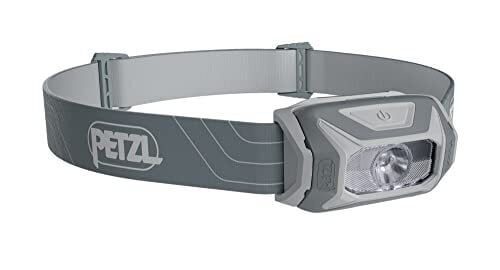
If you’re a runner, a hand-held flashlight is great, but a headlamp is often more useful. Whatever you use, know the battery life and make sure your light is fully charged before you go. I like my Petzl Tikkina, which can run on either AAA batteries or a rechargeable that’s sold separately.

Wear reflective clothing

Light colors are more visible than dark ones, and neon-colored high-visibility fabrics can help you appear brighter as the sun is going down. But neither one is a replacement for reflective gear, which shines straight back at a light source like the headlights of a car. If you’re cycling, your wheels and pedals may already have reflectors on them; if not, you can buy some at a bike store. Running shoes and jackets often have reflective accents on them, but they’re often small. Shine a flashlight on your gear to find out just how reflective it is.

If you need to add something quickly and cheaply, a basic reflective vest does the job. For a fancier version, the Noxgear Tracer is a vaguely vest-shaped strap that lights up enough that everybody will see you. You can get it with or without a chest light to illuminate the road in front of you.

Prepare for the cold

Nights are colder than days, so don’t expect your pre-dawn runs to be as warm as your midday ones. Check the hourly weather forecast with one of our favorite weather apps (I use Carrot). Then take my advice on dressing to stay warm while you run.

If you’re cycling, you have to deal with the wind as well. Glasses or goggles can keep wind out of your eyes, and don’t forget to layer up on gloves, too. Consider glove liners or windproof gloves.

Stay safe

When you head out, pay extra attention to your surroundings. That flashlight will help, and it’s best to run without headphones, or to keep the volume very low.

Bring a buddy if you can. A running group is a great option if you don’t have friends who can meet you at your preferred times. If you have a dog, you can probably train them to run with you, but remember that they may need to improve their fitness over time to keep up.

Run on the correct side of the road (the left, facing traffic) and stay alert to your surroundings. Plan out your route before you leave to make sure you’re not going anywhere you’re not comfortable with. A nighttime run is not the best time to find yourself lost in an unfamiliar neighborhood or unsure of whether there’s a safe crossing over a busy road.

Sports piracy site Streameast returns after US government let domain expire

Popular piracy website Streameast is back to illegally streaming sporting events, just 13 months after Homeland Security Investigations (HSI) seized the domain.

In August 2024, HSI seized several domains belonging to the Streameast piracy network, including some backup domains. After the seizure, trying to access those sites resulted in a pop-up from HSI stating, ‘THIS DOMAIN HAS BEEN SEIZED.”

Seized Streameast websites show this notice.

At the time, Streameast was one of the most well-known sites in the US for watching sporting events, including from the NBA, NFL, and MLB, illegally and even claimed LeBron James as a user.

Read full article

Comments

Open Source Android Repository F-Droid Says Google’s New Rules Will Shut It Down

F-Droid has warned that Google’s upcoming developer verification program will kill the free and open source app repository. Google announced plans several weeks ago to force all Android app developers to register their apps and identity with the company. Apps not validated by Google will not be installable on certified Android devices.

F-Droid says it cannot require developers to register with Google or take over app identifiers to register for them. The site operators say doing so would effectively take over distribution rights from app authors. Google plans to begin testing the verification scheme in the coming weeks and may charge registration fees. Unverified apps will start being blocked next year in Brazil, Indonesia, Singapore, and Thailand before expanding globally in 2027. F-Droid is calling on US and EU regulators to intervene.


Read more of this story at Slashdot.

This New Apple Maps Feature ‘Tracks’ You, but You Can Turn It Off

Did you know you can customize Google to filter out garbage? Take these steps for better search results, including adding my work at Lifehacker as a preferred source.


If I told you Apple rolled out a new feature with iOS 26 that allows Maps to track your movements, and save that information for later, what would you think? On the surface, it does sound pretty invasive, especially from a company that typically promotes user privacy. While this really is a new feature, here’s the thing: It isn’t as bad as it sounds. And, if you really don’t like it, you can turn it off.

The feature, “Visited Places,” is actually intended to be a private way to keep tabs on the places you’ve been to, and to easily recall your favorites in the future. When the feature is enabled, Maps will take note of places you visit, even if you don’t use Maps to get there. It’s like a passive, automatic journal, taking note of restaurants, malls, parks, or simply general locations you venture to day-to-day. According to Apple, all of this information is stored on your synced devices only, and is end-to-end encrypted, which means Apple has no way to access this data.

If you have the feature enabled, you’ll find your Visited Places appropriately tucked away in the “Places” menu when you launch Maps. I’ve only had the feature turned on for a day or so, so I only have three locations currently saved, but all three were destinations I visited without using Maps to guide me there.

Personally, I have no issue with keeping this setting turned on: Nobody has access to the data except for me, and I can imagine it reminding me of the places I’ve enjoyed visiting during a future scroll.

Apple says you will be asked to turn on the feature when you open Maps after updating to iOS 26, and, in my experience, that was the case. However, for CNET writer Zachary McAuliffe, the feature was already enabled without his input. As such, it might be smart to double-check that the feature is set to whichever setting you prefer, lest you allow Maps to track your movements without your knowledge.

How to manage ‘Visited Places’ in Apple Maps

To check whether the feature is turned on or off, head to Settings > Apps > Maps > Location. Alternatively, you can go to Settings > Privacy & Security > Location Services > Maps. Either way, check the toggle next to “Visited Places.”

You can also delete any Visited Places without needing to turn the feature off altogether. Open Maps, tap “Places,” then “Visited Places.” Here, you can swipe left on any place to delete it, or choose “Clear History” to delete them all. Plus, you can choose how long you want Maps to store your Visited Places: The default is “Forever,” but you can also select “3 Months” or “1 Year,” if you wish.

How to follow Amazon’s big hardware event tomorrow

Tomorrow, Amazon will host an event in New York City to unveil some new hardware. The showcase kicks off on September 30 at 10AM ET. Based on what we can see in the invitation and the most common cadence of product news, we are expecting to hear about developments to the Echo line of smart speakers, at least one new addition to the Kindle collection and an update for the Fire TV. 

Normally this is where we’d have an embed of a YouTube link so you could watch along on Tuesday, but this event is a little unusual in that Amazon doesn’t provide a stream for those of us at home. However, Engadget will have reporters at the event, and they will be liveblogging all the details as Amazon announces them. The liveblog will be up and running around 8AM ET. 

In past years, this fall showcase has also been when Amazon shares news from the Ring, Blink and Eero companies, so we might have more than just its own-brand products being discussed tomorrow. And with AI the buzzword of the day, there’s also a good chance that Amazon execs will spend some time discussing the Alexa+ voice assistant.

This article originally appeared on Engadget at https://www.engadget.com/how-to-follow-amazons-big-hardware-event-tomorrow-211105336.html?src=rss