
Beyond shutting down the Clear Linux project, various Linux driver maintainers let go that have even led to some Intel drivers being “orphaned” in the Linux kernel, there is another open-source project that has ended at Intel with the developers departing the company. Though at least this project has found a new open-source home under the NumPy umbrella…
Monthly Archives: September 2025
Meta Unveils Ray-Ban Smart Glasses with Display, Launching for $800 This Month

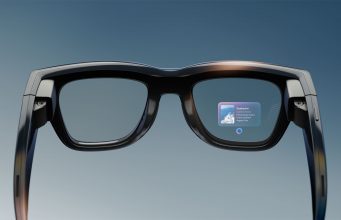
At the Connect developer conference today, Meta officially unveiled its next generation of smart glasses built with Essilor Luxottica, essentially confirming yesterday’s big leak, which includes the long-rumored pair with a single heads-up display.
Meta CEO Mark Zuckerberg showed off three new base models during the Connect keynote, which includes a curious switcheroo on the naming scheme for its most expensive yet, the ‘Meta Ray-Ban Display Glasses’.
That name change isn’t coming to the rest of the lineup, as the company additionally announced the sport-focused Oakley Meta Vanguard and new Ray-Ban Meta Gen 2 glasses, which were hyped alongside the previously released Oakley Meta HSTN released back in July.
Here’s everything we know about the new Meta Ray-Ban Display Glasses announced today:
Meta Ray-Ban Display Glasses – $799
Priced at $799, Meta Ray-Ban Display glasses include all of the usuals: voice control, photo/video capture, capture LED, five microphones, dual off-ear speakers, and 12MP camera. It’s also running the same chipset as Ray-Ban Meta and the rest of the new lineup, the Qualcomm Snapdragon AR1 Gen 1.
For the first time though, Meta’s smart glasses are adding in a full-color monocular display in the right eye that leverages onboard AI in new and interesting ways beyond the audio chats of previous generations.
Meta says the 600 × 600 pixel display serves up a 20-degree field of view (FOV) at 42 pixels per degree (PPD). The display is clocked at 90Hz refresh, with content refreshing at 30Hz. Brightness is said to range from 30 – 5,000 nits, and includes UV detection to automatically know when to turn up the display.
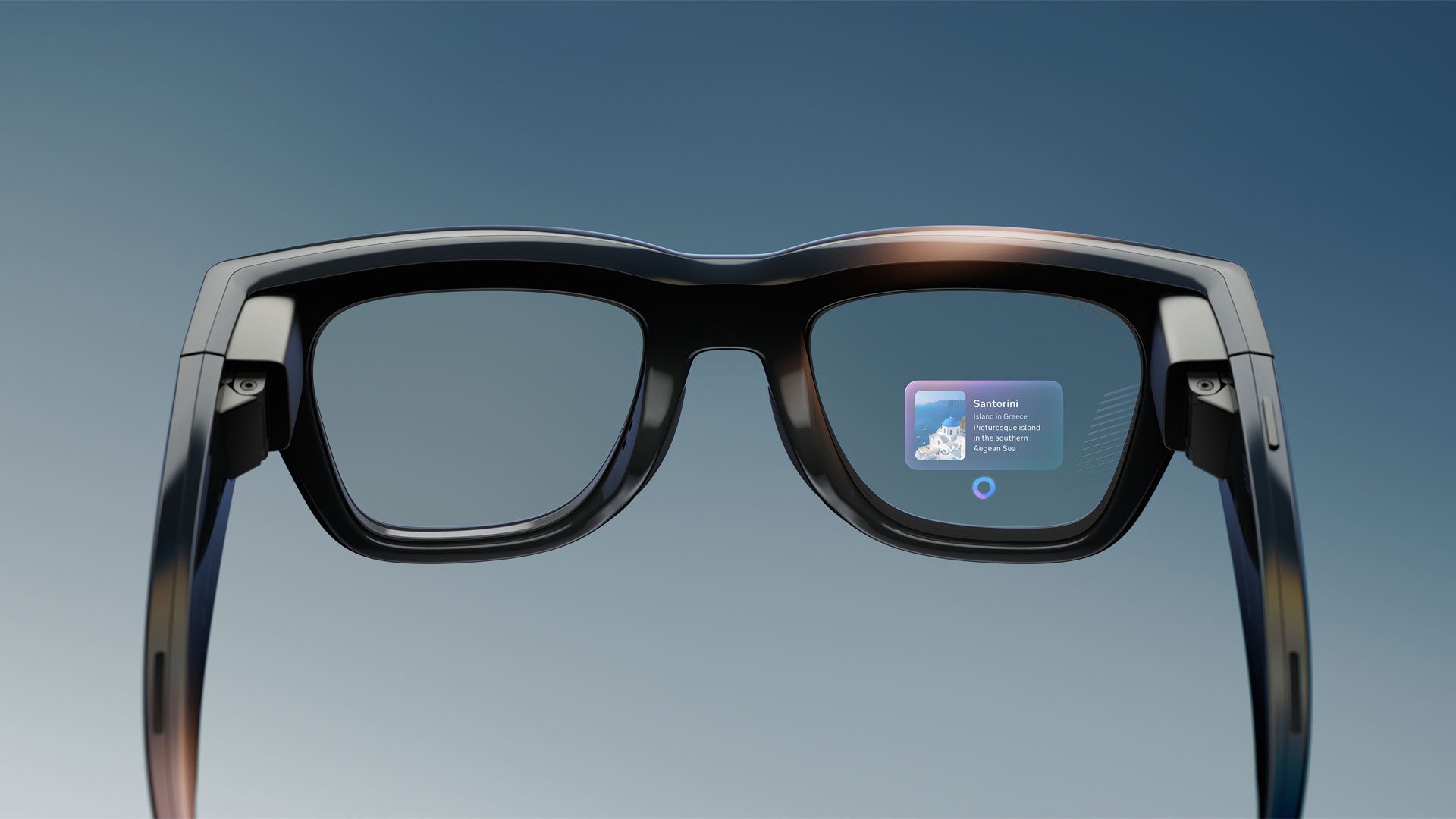
The display is also private, allowing for less than 2% light leakage, Meta says, meaning people probably won’t be able to see what you’re looking at.
And with the included surface electromyography (sEMG)-based ‘Meta Neural Band’, they probably won’t know what app you’re using either. The Meta Neural band is supposed to provide all-day wear, with up to 18 hours of battery life and an IPX7 water rating, and do things that optical sensor-based had tracking simply can’t—haptic feedback included.
Using sEMG, the Neural Band can detect the faint electrical signals from the muscles in your forearm as you move your fingers and hands, letting you do things like swipe left and right with your thumb to navigate music, or pinch your fingers and rotate your wrist to turn the volume. Meta says it’s also currently working on an update to allow for EMG-based handwriting.
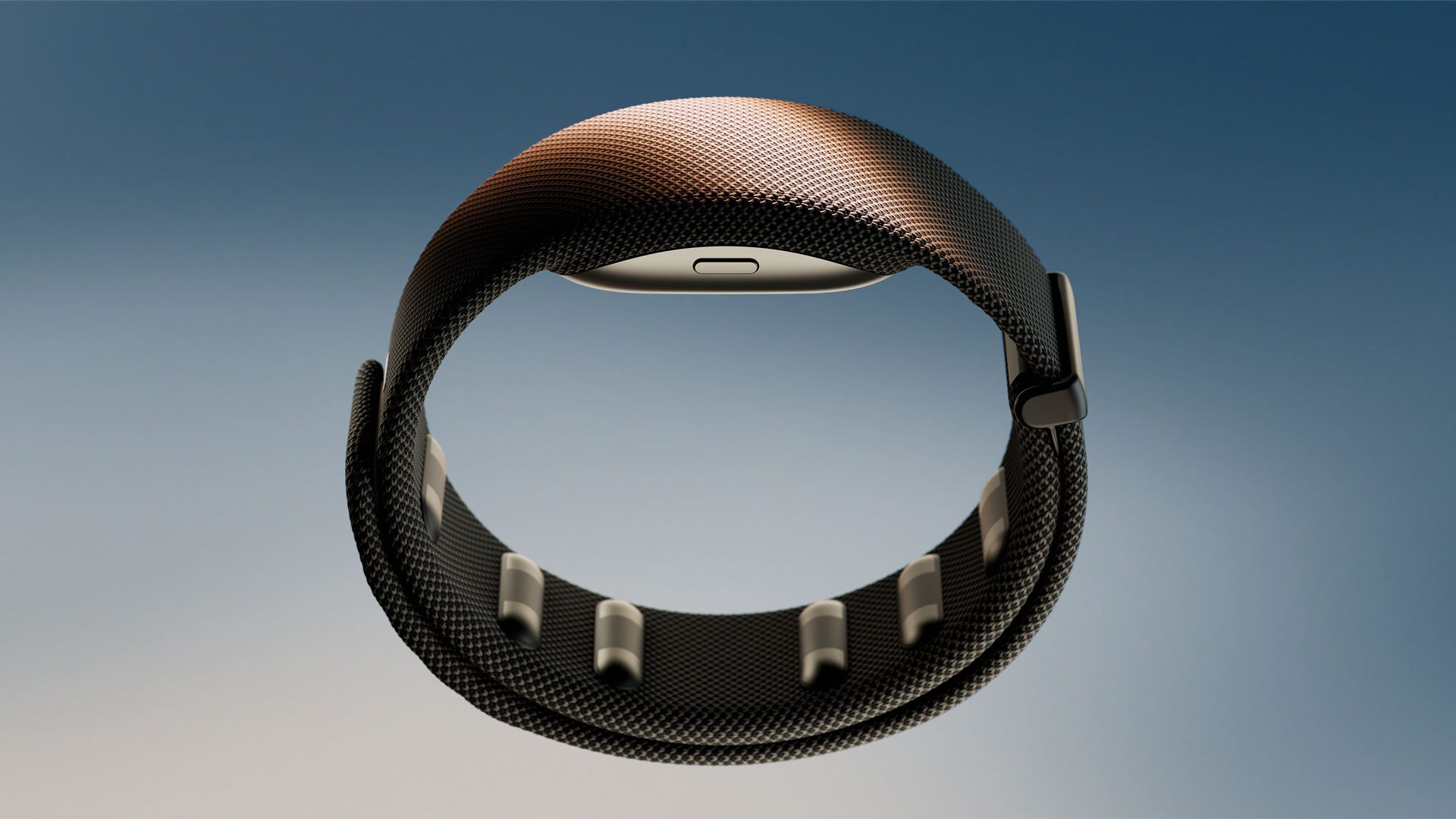
Combining visual an hand input unlocks a host of new abilities, Meta says, like being able to privately view and reply to messages from Whatsapp, Messenger, and Instagram, as well as native messaging on iOS and Android. That includes live video calls too, so you can see the other person while they catch a stream of your POV.
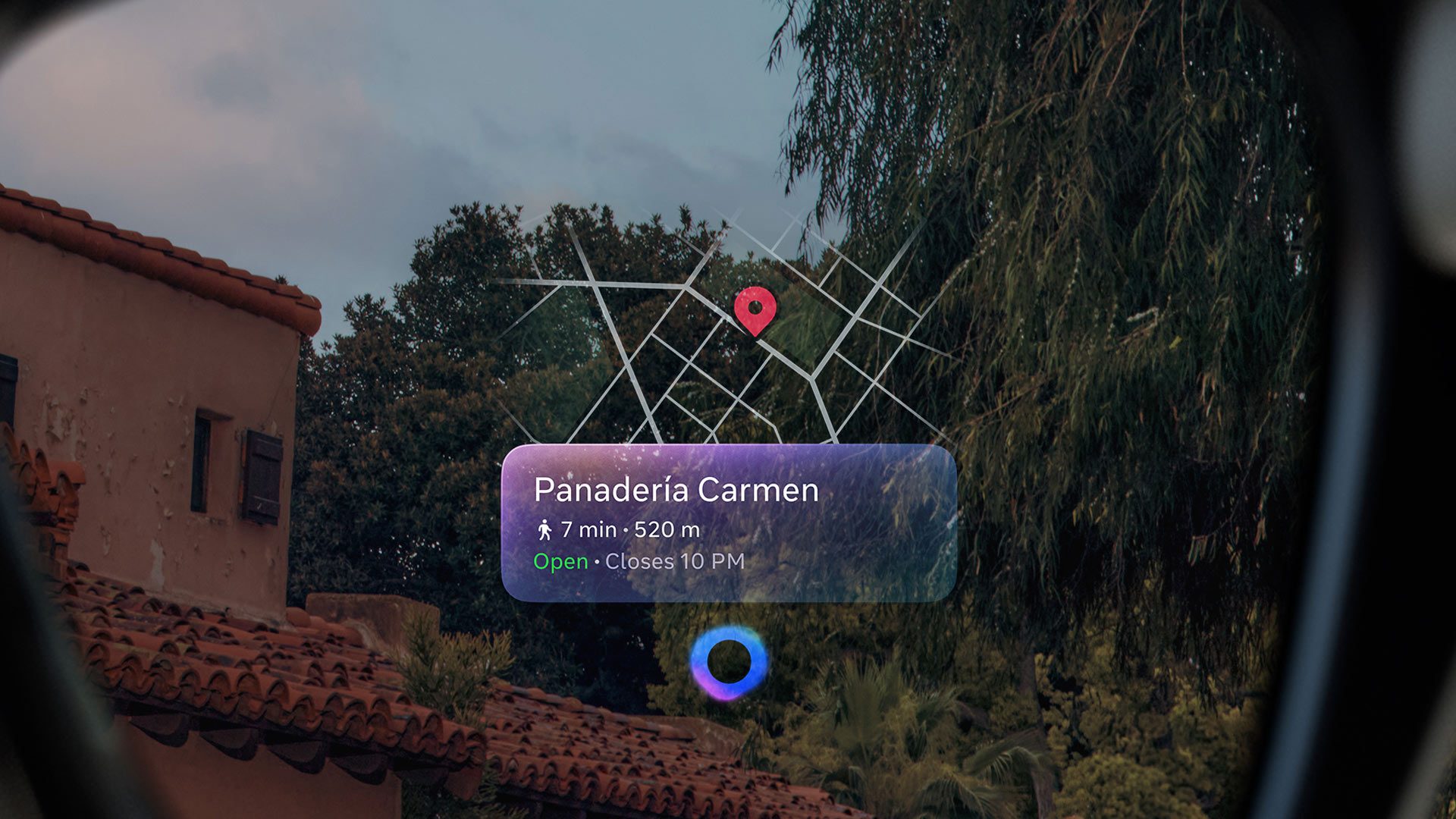
It also unlocks turn-by-turn walking directions with a visual map of the area shown on the in-lens display, which Meta says will be available in beta across select cities, with more added over time.
What’s more, the display also works as a viewfinder for the glasses’ 12MP camera with 3× digital zoom, letting you preview shots before you take them, capture images and videos and review and share right from the glasses. The device’s photo capture default is 3,024 × 4,032 pixels, while videos capture is 1080p at 30fps (1,440 × 1,920 pixels).
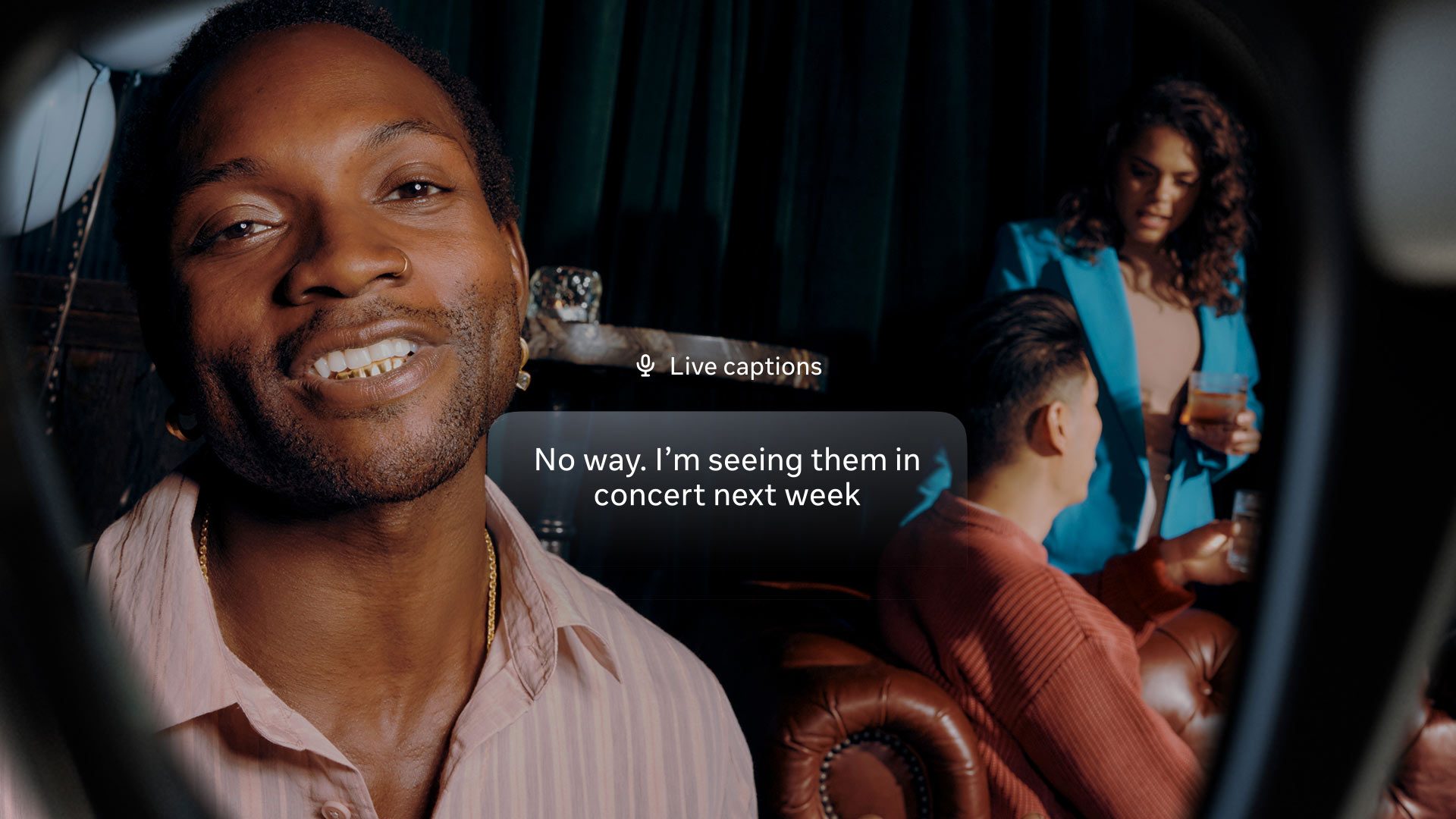
Meta Ray-Ban Display Glasses also boast the ability to display real-time captions and foreign language translation, essentially providing subtitles to any conversation.
The glasses are set to include transitions lenses by default, and are said to last up to six hours of mixed-use battery life, and up to 30 hours of battery life total thanks to the portable charging case, which is also collapsible. Meta says users can charge the glasses to 50% in just 20 minutes while in the case.
It also supports prescriptions ranging from -4.00 to +4.00, although the company hasn’t detailed precisely how at this point. We’re still learning about Meta Ray-Ban Display Glasses, and we’ll fill you in as soon as we know.
Meta is pitching its display glasses and the included Neural Band in two colorways: Shiny Black and Shiny Sand. Two frame sizes will also be available, standard and large, with the Neural Band arriving in three sizes.

Since users will need to be fitted for both the glasses and wristband, they’re initially only set to be available for purchase in-person at limited brick-and-mortar retailers in the US, starting September 30th.
Those physical retailers include Best Buy, Lenscrafters, Sunglass Hut, and Ray-Ban stores. Select Verizon stores in the US will follow soon after, Meta says.
Global expansion is however set for Canada, France, Italy, and the UK for early 2026, although Meta says they’ll expand more buying options over time.
We’re currently at Meta Connect this week, and are reporting on all things XR, so make sure to check back soon.
The post Meta Unveils Ray-Ban Smart Glasses with Display, Launching for $800 This Month appeared first on Road to VR.
Meta Reveals Next-Gen Ray-Ban & New Oakley Vanguard Smart Glasses

Undoubtedly the smart glasses headliner of Meta Connect this year was the new $800 Meta Ray-Ban Display Glasses, which pack in a single display into a familiar Wafarer-style package. Alongside it though, Meta showed off two new smart glasses: the Oakley Meta Vanguard and next generation of Ray-Ban Meta.
Oakley Meta Vanguard – $499 (available Oct 21)
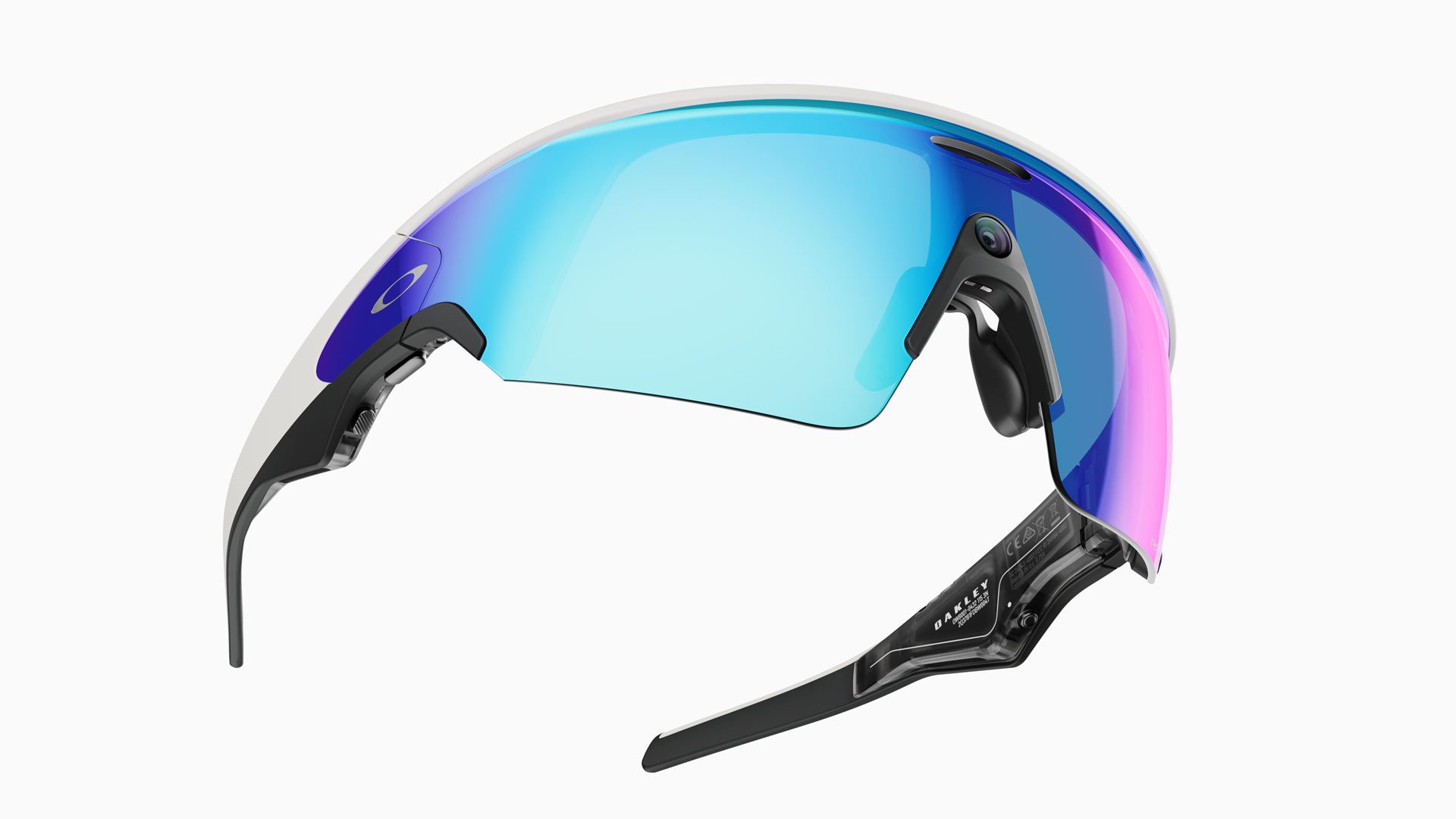
Before Meta and Essilor Luxottica released Oakley Meta HSTN in July, we were definitely envisioning something more like the new Oakley Meta Vanguard. But it’s better late than never, as Meta has just unveiled its sleek, blade-like frames they say are “built for high-intensity sports.”
Rated at IP67 dust and water resistance, Meta Oakley Vanguard is supposedly durable enough for sweaty workouts or rainy rides, with it targeting sports like cycling, snowboarding, and running.
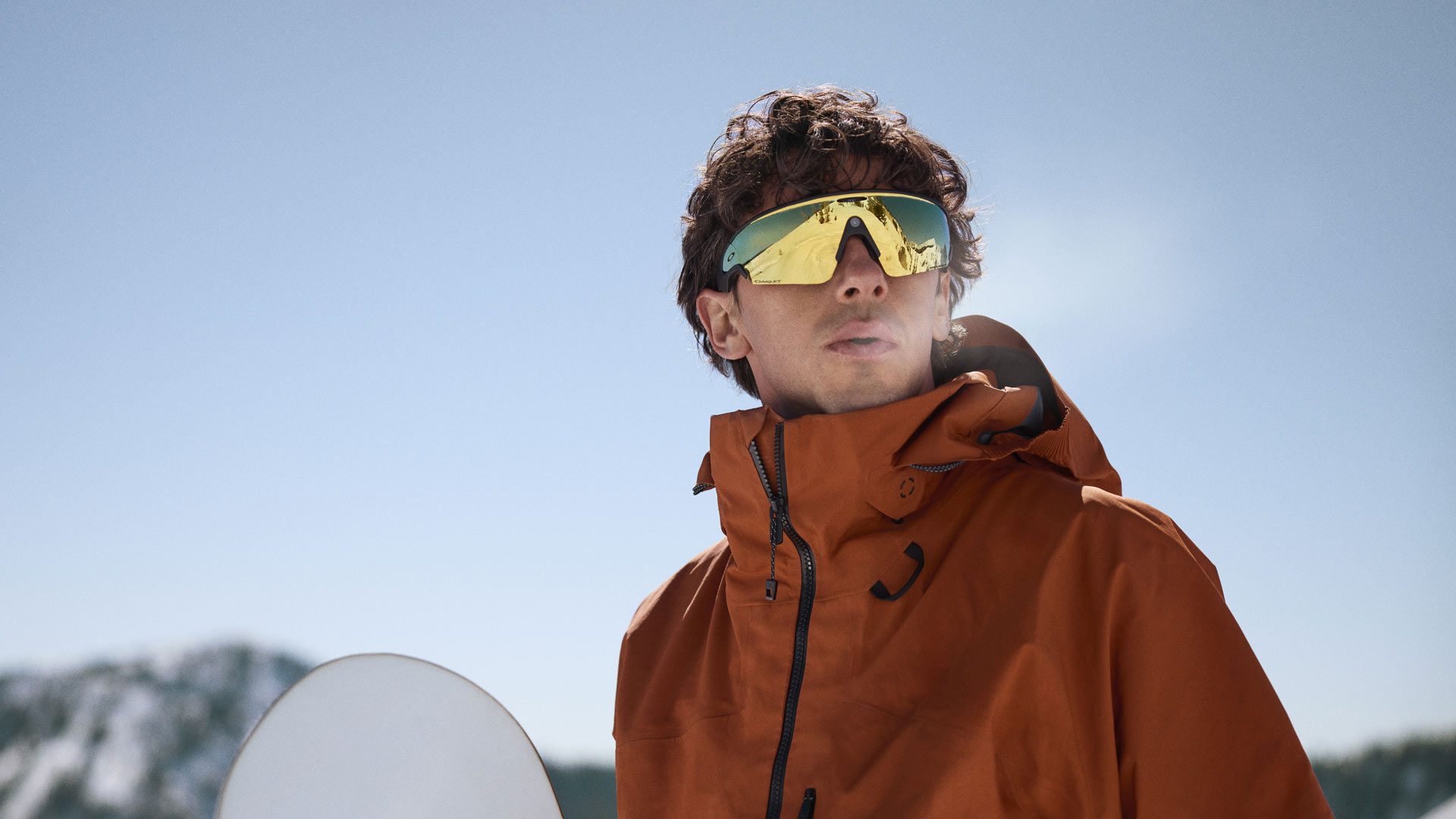
Notably, like many of its traditional specs, the new smart glasses use Oakley’s Three-Point Fit system, which includes three interchangeable nose pads for a more secure fit, with Meta noting the frames are optimized for use with cycling helmets and hats.
They also include an onboard 12MP, 122° wide-angle camera sensor for capturing video up to 3K resolution, with modes including Slow Motion, Hyperlapse, and adjustable image stabilization.
And just like Ray-Ban Meta, it features open-ear speakers, notably rated at six decibels louder than previous Meta Oakley HSTN models, including a wind-optimized five-mic array to provide clear audio for taking calls, using voice commands, or listening to music while training.
The newest Oakley’s also integrate with Garmin, Strava, Apple Health, and Android Health Connect, delivering post-workout summaries and real-time stats through Meta AI. Athletes can check heart rate, progress, or other data hands-free with voice prompts.
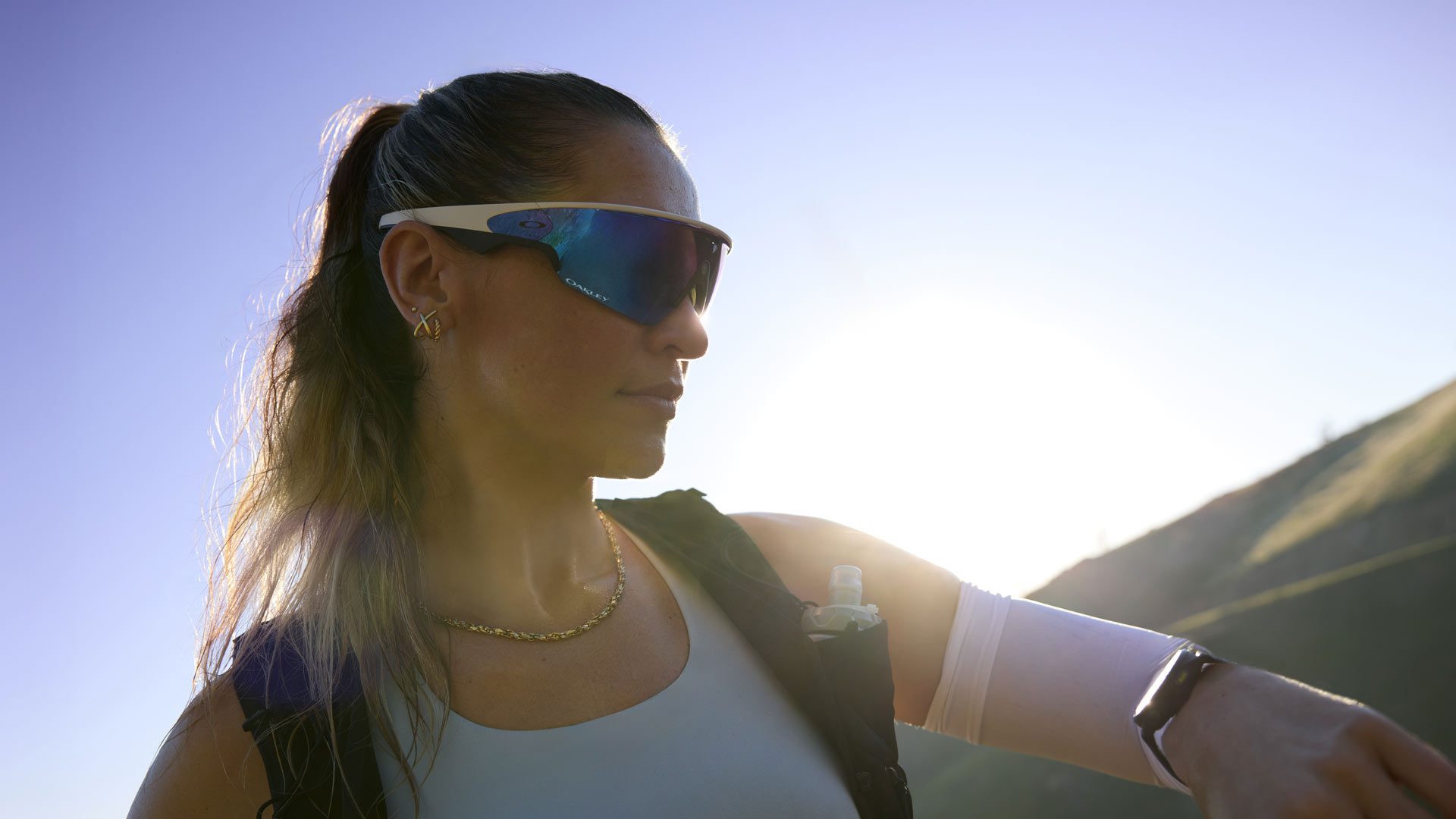
Available in four frame/lens color combinations, the glasses weigh 66g and offer up to nine hours of mixed use (or six hours of music) on a single charge, with an additional 36 hours via the charging case. Quick charging is said to bring the glasses to 50% in just 20 minutes, Meta says.
Like all of the other Meta smart glasses on offer, they include 32GB of storage for over 1,000 photos or 100 short videos, the company says.
Since it’s built for high-intensity sports, it also means the company is introducing replaceable lenses, starting at $85. Here are all four models available for pre-order, including the lenses you’ll be able to mix and match later.
- Oakley Meta Vanguard Black with PRIZMTM 24K
- Oakley Meta Vanguard White with PRIZMTM Black
- Oakley Meta Vanguard Black with PRIZMTM Road
- Oakley Meta Vanguard White with PRIZMTM Sapphire
Oakley Meta Vanguard is now available for pre-order through Meta or Oakley, priced at for $499 and launching October 21st.
They’ll be available in the US, Canada, UK, Ireland, France, Italy, Spain, Austria, Belgium, Australia, Germany, Sweden, Norway, Finland, Denmark, Switzerland, and the Netherlands. Meta says they should also eventually launch in Mexico, India, Brazil, and the United Arab Emirates later this year.
Ray-Ban Meta (Gen 2) – Starting at $379 (Now Available)
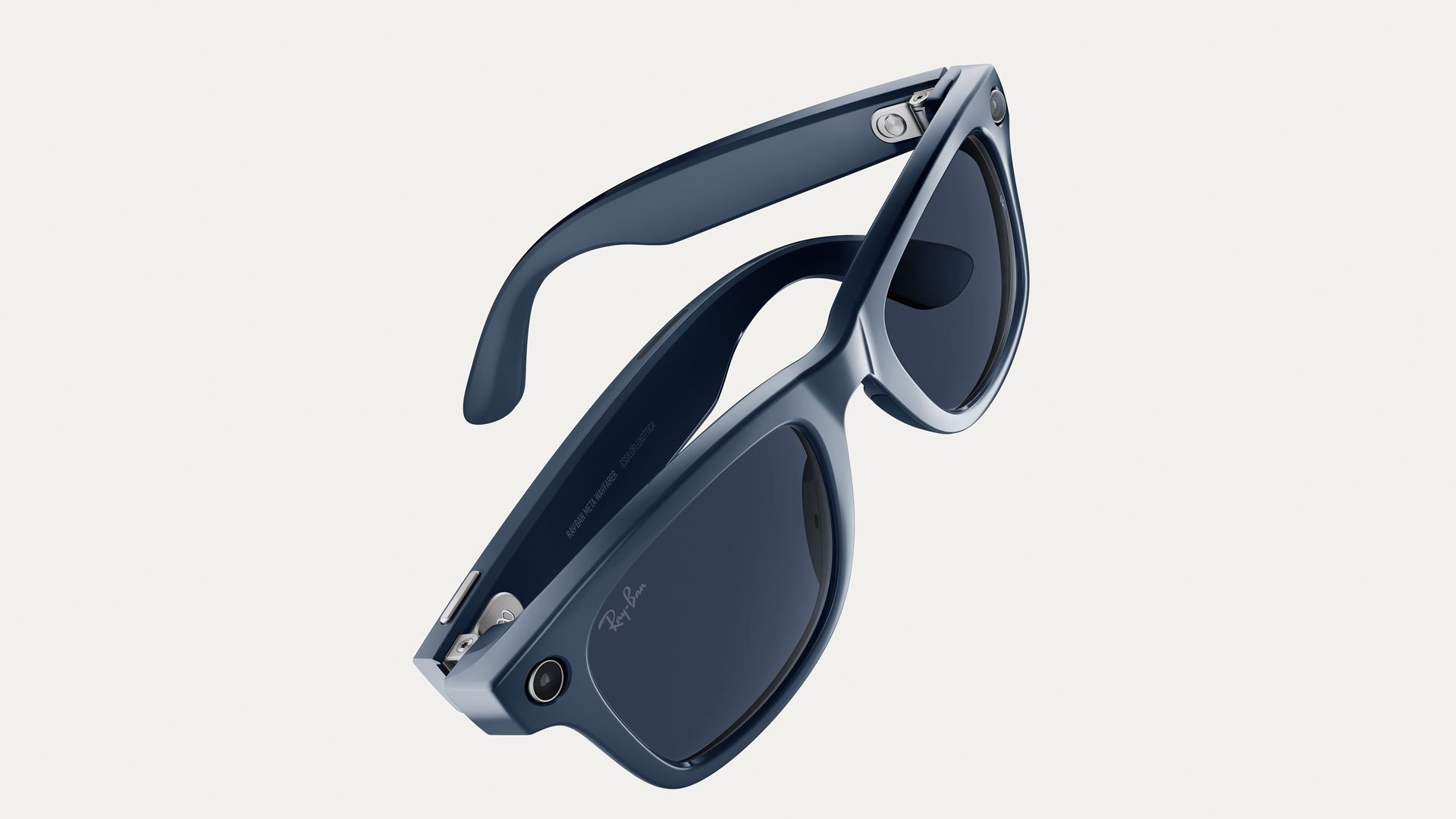
While the company considers its next Ray-Ban Meta Glasses “Gen 2”, they’re technically the third generation following the release of Ray-Ban Facebook Stories in 2021 and Ray-Ban Meta in 2023.
Naming scheme aside, the latest Ray-Ban Meta smart glasses are delivering the same improvements seen in Oakley Meta HSTN, and essentially the same base functionality. While can play music, do real-time translation, and hands-free calls, but also offers better photo and video capture than its predecessor.
Its ultrawide 12MP camera sensor is rated for photo capture up to 3,024 × 4032 pixels and video from 1200p at 60 FPS 1440p at 30 FPS, and 3K at 30 FPS—all of which are up to three minutes in length.

Like Oakley Meta HSTN, Ray-Ban Meta (Gen2) boasts up to eight hours of continuous use and an additional 48 hours from the charging case, plus quick charge to 50% in 20 minutes in the charging case.
And it probably goes without saying, but all of Meta’s smart glasses make heavy use of its own Meta AI, which includes things like voice search queries (“Hey Meta!”), reading QR codes, suggesting recipes, saving notes, etc.

Additionally, the device includes Bluetooth 5.3, Wi-Fi 6, 32GB of storage, and an IPX4 water-resistance rating for light rain or splashes.
And like the 2023 model, the new Ray-Ban Meta smart glasses offer gads of frame and lens combinations: 27 in total across its Wayfarer and Skyler models, which include options for large or low nose bridges.
It is also getting a price bump over the first-gen, which were launched in 2023 for $299. Ray-Ban Meta (Gen 2) starts at $379 for standard lens options, and will be available with polarized lenses ($409), transitions lenses ($459), and prescription lenses (pricing varies).
You can find all of those models and lens combinations starting today over at Meta and Ray-Ban.com.
We’re currently on the ground at Meta Connect this year, so check back soon for all things XR.
The post Meta Reveals Next-Gen Ray-Ban & New Oakley Vanguard Smart Glasses appeared first on Road to VR.
Chimps Drinking a Lager a Day in Ripe Fruit, Study Finds
Wild chimpanzees have been found to consume the equivalent of a bottle of lager’s alcohol a day from eating ripened fruit, scientists say. BBC: They say this is evidence humans may have got our taste for alcohol from common primate ancestors who relied on fermented fruit — a source of sugar and alcohol — for food. “Human attraction to alcohol probably arose from this dietary heritage of our common ancestor with chimpanzees,” said study researcher Aleksey Maro of the University of California, Berkeley.
Chimps, like many other animals, have been spotted feeding on ripe fruit lying on the forest floor, but this is the first study to make clear how much alcohol they might be consuming.
The research team measured the amount of ethanol, or pure alcohol, in fruits such as figs and plums eaten in large quantities by wild chimps in Cote d’Ivoire and Uganda. Based on the amount of fruit they normally eat, the chimps were ingesting around 14 grams of ethanol — equivalent to nearly two UK units, or roughly one 330ml bottle of lager. The fruits most commonly eaten were those highest in alcohol content.


Read more of this story at Slashdot.
systemd 258 Released With systemd-factory-reset & Other New Tools
Systemd 258 is out today as stable as the latest major feature release to this Linux init system and service manager…
Tesla exec says the company will redesign door handles that reportedly pose safety risks
Yesterday, the US National Highway Traffic Safety Administration opened an investigation into Tesla following a report by Bloomberg that its electric door handles could stop working when a vehicle’s low-voltage battery fails. That created a safety hazard that the publication found could trap passengers when a Tesla car was in an emergency situation, such as a crash. Now, Bloomberg is back with the news that Tesla plans to redesign those problematic handles.
Tesla design head Franz von Holzhausen appeared on Bloomberg‘s Hot Pursuit! podcast and said the company is considering a new approach that combines the electric and manual release mechanisms. “The idea of combining the electronic one and the manual one together into one button, I think, makes a lot of sense,” he said. “That’s something that we’re working on.” He didn’t specify why Tesla was working on a redesign, but it’s hard to imagine the timing of the federal probe isn’t relevant.
The company has already been in the NHTSA’s sights this year. Last month, the regulator opened an investigation into how Tesla was reporting crashes with its Autopilot and Full Self-Driving systems. Although Tesla claimed the inconsistencies in reports were due to a system error that it has fixed, the NHTSA said it would continue the probe.
This article originally appeared on Engadget at https://www.engadget.com/tesla-exec-says-the-company-will-redesign-door-handles-that-reportedly-pose-safety-risks-225500245.html?src=rss
Ambrosia Sky is an essay on death masquerading as a sci-fi cleaning sim
Dalia is a death cleaner.
Death cleaning, as we know it, is the process of sanitizing and tidying the spaces where people take their final breaths, sometimes long after their bodies have begun to decompose. It’s a job here on Earth in the year 2025, but Dalia’s version of death cleaning takes place on the rings of Saturn in a distant future filled with space travel, interplanetary colonization and devastating disease outbreaks. In this scenario, death cleaning involves spraying chemicals over bulging piles of otherworldly contamination and avoiding their defense mechanisms, which can cause fires, explosions and electrical interference. Dalia learns from the alien material as she cleans, harvesting fruit from fungal mounds to create new options for her sprayer. She also listens to the last words of the dead.
Ambrosia Sky is the first game from independent studio Soft Rains and its story trailer landed on Wednesday. In Ambrosia Sky, Dalia is cleaning the Cluster, an agricultural outpost on Saturn’s rings that collapsed when a mysterious biological force subsumed the colony and its people. It’s also Dalia’s former home.
As a Scarab with The Ambrosia Project, her job is to clear out the alien fungus, research its origins and perform Death Rites on the corpses she encounters. Scarabs operate in the shadowy spaces between science and mysticism, and The Ambrosia Project’s goal is to discover a cure for mortality among the stars. Death Rites involve hearing the deceased person’s Last Will and cremating their body with specialized spores, adding their DNA to The Ambrosia Project for further research. It’s a ritualistic acknowledgement of a person’s life as much as their death, and these small ceremonies are just as critical in Ambrosia Sky as the game’s first-person cleaning mechanics.
“I really let myself and our team explore more mythological or fantastical elements, or even folkloric elements, because I think there’s only so much we can know about outer space,” Soft Rains narrative director Kaitlin Tremblay told Engadget. “[Also] there are things that we know concretely about death, but there’s so much about it we don’t know. I think it’s the same kind of interesting liminal space. What don’t we know, and how do we tell stories and try to comfort ourselves and contend with that? That actually makes my brand of sci-fi and my approach on death really similar.”
Ambrosia Sky is an investigation of the universe and mortality alike, in the form of a first-person, speculative-fiction cleaning sim on Saturn’s rings. It features zero-gravity scenes, crafting, equipment upgrades and classic FPS play, underpinned by a slowly unfurling story of lethal disaster.
Soft Rains has been quietly working on Ambrosia Sky since late 2022 and formally announced the game in March 2025. The studio was founded by Tremblay — who was narrative designer on Watch Dogs Legion and Grindstone, and lead writer of A Mortician’s Tale and Seasonala Cemetery — and other industry veterans from Bethesda, Ubisoft and indie teams.
Ambrosia Sky’s story trailer features a staticky, disembodied voice saying, “Hey, Dalia. It’s me. When I die, I want a Scarab called in. And I want it to be you.” It’s surprisingly heart-wrenching, for a two-minute teaser of a sci-fi clean-em-up.
Soft Rains
“It’s just honest, right?” Tremblay said. “We have a lot of emotions about death, and our own death and everything around it. Some of those emotions contain brightness and some of them contain darkness, and both are equally valid. Both can exist at the same time.”
Death is a regular visitor in Tremblay’s writing. In particular, A Mortician’s Tale is an acclaimed presentation of the business of mortality, and Seasonala Cemetery is a meditative experience about spending time in a graveyard. In a devlog entry on June 10, Tremblay compared the mortality angle in Ambrosia Sky to that of A Mortician’s Tale, writing, “With Ambrosia Sky, we wanted to have the opportunity to explore how we feel about our own death, rather than the death of our loved ones.”
I was struck by this distinction when I first read it, and because I’m also consumed by thoughts of my own inescapable expiration, I asked Tremblay for more. They said the following:
“That is particularly the approach I’m taking for the Death Rituals. The Death Rituals are when you find those individuals in the world and you sample their DNA for the project, but you’re also listening to their recorded Last Wills. I really wanted those to be a moment to let the characters talk authentically about what their death actually means to them. Because I feel like in my work and in so many other games, it’s often about how we feel about death, or our grief or our mourning process.
“I think this is probably a symptom of post-pandemic brain and getting older, but I’m thinking a lot more about what does my death actually mean to me, and trying to sit with it in a way that doesn’t keep me up until 4AM. So I think this is really that kind of approach. We all probably think about our own death and people have a lot of feelings on their own potential death, and so I wanted to give voice to that, and have this space to talk through and work through some of those emotions.”
And clean up giant tendrils of neon fungus, of course.
Ambrosia Sky is being developed and published by Soft Rains, and it’s due to come out “soon.” A demo is available now on Steam.
This article originally appeared on Engadget at https://www.engadget.com/gaming/pc/ambrosia-sky-is-an-essay-on-death-masquerading-as-a-sci-fi-cleaning-sim-223022816.html?src=rss
Sony Quietly Downgrades PS5 Digital Edition Storage To 825GB at Same Price
Sony has quietly introduced a revised PlayStation 5 Digital Edition that reduces internal storage from 1TB to 825GB while maintaining the same 499 Euro ($590) price point. The CFI-2116 revision has appeared on Amazon listings across Italy, Germany, Spain and France without official announcement from Sony.
The storage downgrade returns the console to its original 825GB capacity last seen in the launch PlayStation 5 before the Slim models increased storage to 1TB. Users lose approximately 175 of usable space in the new revision. Amazon Germany lists October 23 as the delivery date for units already available for purchase. The change affects only the Digital Edition while the disc version remains unchanged at 1TB. The revision follows Sony’s September price increase of $50 across PlayStation 5 models citing economic conditions.


Read more of this story at Slashdot.
You can hold on to your butts thanks to DNA that evolved in fish
Evolution has adapted the digits of mammals for an enormous range of uses, from our opposable thumbs to the spindly digits that support bat wings to the robust bones that support the hoofs of horses. But how we got digits in the first place hasn’t been entirely clear. The fish that limbed vertebrates evolved from don’t have obvious digit equivalents, and the most common types of fish just have a large collection of rays supporting their fins.
Despite this uncertainty, we have identified some genes that seem to be essential for both digit formation and the development of rays in the fins of fish, suggesting that there are parallels between the two. But a new study suggests that these parallels are a bit of an accident, and digits come by re-deploying a genetic network that controls a completely different process: the formation of the cloaca, a single organ that handles all of the fish’s excretion.
Hox genes and digits
One of the key regulators of limb development is a set of genes called homeobox proteins, which attach to DNA and regulate the activity of nearby genes. In animals, many of these homeobox, or hox genes, are formed into clusters. Mammals have four clusters of hox genes, each of which encodes roughly 10 individual homeobox proteins. The cluster helps to organize where the hox genes are active, with the genes at one end of the cluster being active at the front of an embryo, and those at the other end active at the tail.
White House officials reportedly frustrated by Anthropic’s law enforcement AI limits
Anthropic’s AI models could potentially help spies analyze classified documents, but the company draws the line at domestic surveillance. That restriction is reportedly making the Trump administration angry.
On Tuesday, Semafor reported that Anthropic faces growing hostility from the Trump administration over the AI company’s restrictions on law enforcement uses of its Claude models. Two senior White House officials told the outlet that federal contractors working with agencies like the FBI and Secret Service have run into roadblocks when attempting to use Claude for surveillance tasks.
The friction stems from Anthropic’s usage policies that prohibit domestic surveillance applications. The officials, who spoke to Semafor anonymously, said they worry that Anthropic enforces its policies selectively based on politics and uses vague terminology that allows for a broad interpretation of its rules.
Garmin’s Venu 4 Has a New Fitness Coach and a Flashlight
We may earn a commission from links on this page.
Did you know you can customize Google to filter out garbage? Take these steps for better search results, including adding my work at Lifehacker as a preferred source.
Garmin’s newest watch is an update to its Venu line. The Venu 3 was one of the brand’s best lifestyle watches, and the Venu X1, launched earlier this year, was a premium version. Now, there is a Venu 4, available on September 22—and it has a flashlight.
Pricing and essential features
The Venu 4 comes in two sizes (41 and 45 millimeters), the same as the sizes of the Venu 3 and 3S respectively. It costs $100 more than the older version, with the Venu 4 coming in at $549.99 compared to the Venu 3 at $449.99.
Like its predecessor, the Venu 4 has an AMOLED touchscreen, stainless steel bezel, Gorilla Glass 3 face, and a speaker and microphone that allow it to take voice calls if your phone is within range.
It adds training status, training readiness, and Garmin Coach for four different activities: running, cycling, strength, and a new fitness coach. Here’s a rundown of some of the notable new features:
Flashlight
It’s a simple thing, but a big one for a lot of people. Garmin used to reserve LED flashlights for its more outdoorsy adventure watches—the Instinct on the low end and the Fenix on the high end—but the Forerunner 970 has one, and it seems to have gone over well. Even Amazfit added a flashlight to its T-Rex 3 Pro. The Venu 3 didn’t have a flashlight, but the premium Venu X1 does, and now the Venu 4 does, too.
Health status
A new health status metric combines your nighttime vitals (heart rate, HRV, skin temperature, and pulse oxygen) and tells you whether these are consistent with what’s normal for you, or whether they’re trending away from your usual baseline.
Lifestyle logging
Garmin has historically just collected your data and displayed it, without the kind of lifestyle analysis provided by others like Whoop and Bevel. But the Venu 4 comes with a lifestyle logging feature, where you can take note of habits and behaviors and see whether they affect your metrics. (One example Garmin gives is logging when you have caffeine late in the day, so you can see how much it affects your sleep metrics.)
Fitness coach
Garmin’s daily suggested workouts aren’t just for runners and cyclists anymore. There is a relatively new strength coach (I’ve had it on my Forerunner watches for a while now) and the Venu 4 adds a fitness coach that can recommend workouts for you from any of 25 of activities. A given day’s workout might recommend that you go for a walk, do a HIIT session, or hop on the rowing machine.
Accessibility features
The Venu was already one of Garmin’s more disability-friendly watches, featuring a wheelchair mode in addition to walking and running workouts. The Venu 4 adds a spoken watch face option, that will read you the time using the speaker, and an option to filter the colors on the display.
Congress Asks Valve, Discord, and Twitch To Testify On ‘Radicalization’
An anonymous reader quotes a report from Polygon: The CEOs of Discord, Steam, Twitch, and Reddit have been called to Congress to testify about the “radicalization of online forum users” on those platforms, the House Oversight and Government Reform Committee announced Wednesday. “Congress has a duty to oversee the online platforms that radicals have used to advance political violence,” said chairman of the House Oversight Committee James Comer, a Republican from Kentucky, in a statement. “To prevent future radicalization and violence, the CEOs of Discord, Steam, Twitch, and Reddit must appear before the Oversight Committee and explain what actions they will take to ensure their platforms are not exploited for nefarious purposes.”
Letters from the House Oversight Committee have been sent to Humam Sakhnini, CEO of Discord; Gabe Newell, president of Steam maker Valve; Dan Clancy, CEO of Twitch; and Steve Huffman, CEO of Reddit, requesting their testimony on Oct. 8. “The hearing will examine radicalization of online forum users, including incidents of open incitement to commit violent politically motivated acts,” Comer said in a letter to each CEO. […] Discord, Steam, Twitch, and Reddit execs will have the chance to deliver five-minute opening statements prior to answering questions posed by members of the committee during October’s testimony.


Read more of this story at Slashdot.
Democrats are investigating Trump crypto advisor David Sacks over a possible SGE violation
Senator Elizabeth Warren (D-MA) and Representative Melanie Stansbury (D-N.M.) are leading a group of congressional Democrats in investigating White House Special Advisor David Sacks for possibly serving in his position for longer than he’s allowed. Sacks, a former PayPal executive and venture capitalist at Craft Ventures, was originally picked by President Donald Trump to be the “White House A.I. & Crypto Czar” in 2024.
“Any effort to stay beyond the time limits imposed on you as a Special Government Employee (SGE) would raise additional ethics concerns for you and the Trump Administration,” the group writes in a letter to Sacks,”particularly as it moves to implement recently enacted cryptocurrency legislation and put in place new rules for the crypto industry.”
Besides being friendly with the Trump campaign and allies like Elon Musk, Sacks was given his position because of his knowledge of the crypto and AI industries as an investor. That poses an obvious conflict of interest, something that’s only waived during the 130-day limit that SGEs are supposed to serve. As Warren and the other Democrats backing the investigation note, though, it’s possible Sacks has been working in his role for longer than that.
“If you have worked every calendar day since the presidential inauguration, your 130th day of work in this role was May 29, 2025,” the group writes. “If you have worked every business day, your 130th day was July 25, 2025. As of the date of this letter, it is the 167th business day of this Administration.”
As part of the investigation, Sacks is expected to offer a more detailed account of when and how he works in his advisory role, including if he answers government emails while working in Silicon Valley. Congressional Democrats are trying to verify if norms have been violated to make sure that they won’t be violated in the future, but there are larger ethical concerns to contend with, too.
The second Trump administration has been friendly to the crypto industry, likely thanks in part to the influence of Sacks. Trump signed an executive order calling for the creation of a federal Bitcoin stockpile and signed the GENIUS Act into law in July, establishing a regulatory framework for stablecoins, a type of cryptocurrency typically tied to the value of the US dollar. Continuing to serve in his role without leaving his position at Craft Ventures or disclosing his investments would only raise more questions about how Sacks stands to benefit from advising on regulation.
This article originally appeared on Engadget at https://www.engadget.com/general/democrats-are-investigating-trump-crypto-advisor-david-sacks-over-a-possible-sge-violation-215758087.html?src=rss
RFK Jr’s anti-vaccine delusions—not science—steer CDC now, ex-director testifies
Health secretary and anti-vaccine activist Robert F. Kennedy Jr. plans to roll back access to lifesaving vaccines for children, and has refused to even speak with staff scientists and subject-matter experts at the Centers for Disease Control and Prevention about evidence-based recommendations. That’s according to former CDC officials who testified before the Senate on Wednesday.
The Senate Committee on Health, Education, Labor, and Pensions (HELP) called ex-CDC director Susan Monarez to review the chaos that has engulfed the public health agency under Kennedy. Monarez, a microbiologist and long-serving federal employee, led the CDC as the first Senate-confirmed director for just 29 days before her dramatic ouster last month. She appeared before the HELP committee alongside Debra Houry, the former chief medical officer for the CDC. Houry had worked at the agency for a decade—spanning four administrations and six directors— before resigning in protest against Kennedy’s leadership soon after Monarez’s ouster.
Monarez’s ouster
Much of their testimony today was alarming, but not surprising. Upon her exit, Monarez claimed that she was fired because she refused Kennedy’s demand that she agree in advance to approve changes to the CDC’s childhood vaccine recommendations regardless of whether any scientific evidence supported the changes. She also claimed that Kennedy demanded that she fire CDC scientific leadership without cause, which she also refused to do. Similarly, when Houry resigned, she said Kennedy was censoring science, steamrolling CDC experts, and spreading misinformation. In the hearing today, the two stood by their previous comments and provided more details.
How to Watch Meta Connect for All Things XR, Kicking Off Today @5PM PT
Meta Connect 2025 is nearly here, with company CEO Mark Zuckerberg only a few hours away from telling us what’s next for the most influential company currently working in XR.
The keynote is starting unusually late this year, coming today at 5PM PT / 8PM ET (local time here), where Zuckerberg will take the stage to share Meta’s latest developments in mixed reality, AI, the metaverse and wearables.
Note: that last one may be a big focus this year, as the company seemingly leaked its lineup of next-gen smart glasses built with Essilor Luxottica yesterday, including a model that includes a single monocular display.
We’re currently at Meta Connect, so we’ll be reporting on all of latest in XR news to come from the event. You can follow along live via YouTube at 5PM PT to catch the big keynote:
Still, there’s no telling what else the company has in store, with many questions still lingering from last Connect, which was only a few months after Meta announced it was not only open its Horizon OS to third parties for the first time, but also allowing a fleet of Quest-like headsets from Asus and Lenovo to come to market.
Like most years, we’re expecting to hear more about Quest games, experiences, and the company’s social VR platform, Horizon Worlds. Whatever the case, we’re always ready for a Connect curveball, so check back for our continued coverage of breaking news, previews, and more.
The post How to Watch Meta Connect for All Things XR, Kicking Off Today @5PM PT appeared first on Road to VR.
Apple Watch Bands Are 70% Off Right Now
We may earn a commission from links on this page. Deal pricing and availability subject to change after time of publication.
Did you know you can customize Google to filter out garbage? Take these steps for better search results, including adding my work at Lifehacker as a preferred source.
Apple makes good devices and accessories, but then do tend to be more expensive than the competition, even for something as basic as a charging cable. It’s certainly true of Apple Watch bands—I’m not sure why a braided strip of polyester and silicone costs $99, but that’s what the company charges. But right now, Woot is selling a whole rainbow of Apple Watch bands for up to 70% off. It’s a great (and rare) opportunity to stock up on a few different styles or colors to outfit your smartwatch.
You can choose from the Solo Loop or the Braided Solo Loop designs, which normally go for $49.99 and $99.99, respectively. Solo Loops are on sale for $14.99, and Braided Solo Loops are $29.99. You can find them in virtually every color— even the rainbow Pride edition of the Braided Solo Loop.
Here are your options as of this writing:
-
Braided: Black, White Hues
-
Braided: Red, Orange, Yellow Hues
-
Braided: Blue Hues
-
Braided: Purple Hues
-
Braided: Green Hues
-
Braided: Pride Edition
All of these bands are compatible with Apple Watch SE, Apple Watch Series 4 or later, and Apple Watch Ultra or later. They aren’t adjustable, so you’ll need to select the right size, with the most popular sizes likely to run out first, so maybe set an alarm to remind you to place an order before they do.
Our Best Editor-Vetted Tech Deals Right Now
Samsung Galaxy S25 Edge 256GB Unlocked AI Phone (Titanium JetBlack)
—
$699.99
(List Price $1,099.99)
Samsung Galaxy S25 Edge 256GB Unlocked AI Phone (Titanium JetBlack)
—
$699.99
(List Price $1,099.99)
Deals are selected by our commerce team
AMD “GFX1251” Target Added To LLVM As Latest RDNA 4.5 APU
The past few months we have been intrigued by an AMD GFX1250 target added to the LLVM codebase for the AMDGPU shader compiler back-end. GFX12 is RDNA4 and GFX1250 is presumably some “RDNA 4.5” / “RDNA Refresh” part akin to GFX1150 having been for the RDNA 3.5 parts with Strix Halo / Strix Point. The prior LLVM code confirmed GFX1250 is in APU form factor but product details beyond that have been scarce. Today a new AMD GFX1251 target was merged to LLVM…
Microsoft Favors Anthropic Over OpenAI For Visual Studio Code
Microsoft is now prioritizing Anthropic’s Claude 4 over OpenAI’s GPT-5 in Visual Studio Code’s auto model feature, signaling a quiet but clear shift in preference. The Verge reports: “Based on internal benchmarks, Claude Sonnet 4 is our recommended model for GitHub Copilot,” said Julia Liuson, head of Microsoft’s developer division, in an internal email in June. While that guidance was issued ahead of the GPT-5 release, I understand Microsoft’s model guidance hasn’t changed.
Microsoft is also making “significant investments” in training its own AI models. “We’re also going to be making significant investments in our own cluster. So today, MAI-1-preview was only trained on 15,000 H100s, a tiny cluster in the grand scheme of things,” said Microsoft AI chief Mustafa Suleyman, in an employee-only town hall last week.
Microsoft is also reportedly planning to use Anthropic’s AI models for some features in its Microsoft 365 apps soon. The Information reports that the Microsoft 365 Copilot will be “partly powered by Anthropic models,” after Microsoft found that some of these models outperformed OpenAI in Excel and PowerPoint.


Read more of this story at Slashdot.
Bloodlines 2 Won’t Lock Clans Behind Paywall After Everyone Yelled At Them Enough

Vampire: The Masquerade – Bloodlines 2 won’t lock two of its clans behind DLC and will instead offer new story packs
The post <i>Bloodlines 2</i> Won’t Lock Clans Behind Paywall After Everyone Yelled At Them Enough appeared first on Kotaku.
Why, as a responsible adult, SimCity 2000 hits differently
When I was a child, SimCity 2000 felt like a fun, animated set of urban-themed Lego blocks to tinker with. Revisiting the game roughly three decades later, though, I’ve found the weight of my adult responsibilities tempering my role as god-mayor of a tiny metropolis.
The tough economics of establishing a thriving city barely concerned me as a child. Rather than building up a durable tax base from a slowly growing city of happy citizens, I’d usually type in an infinite money cheat or load up the handy Urban Renewal Kit expansion to build whatever I wanted, wherever I wanted, as quickly as possible.
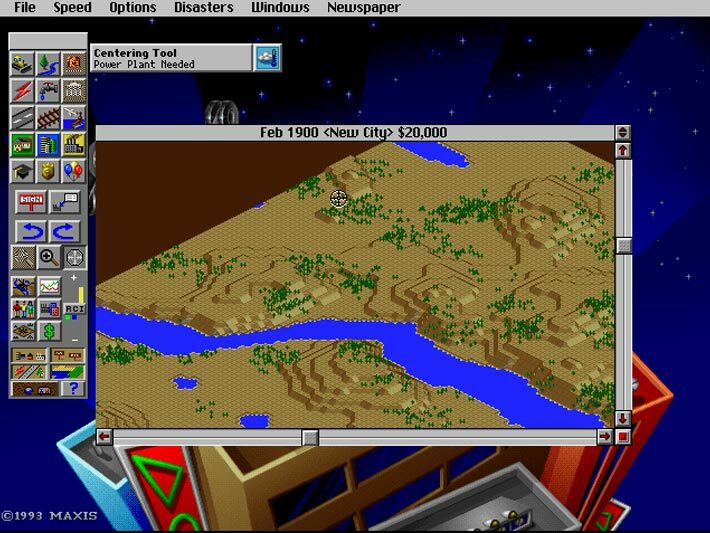
A blank canvas, ready for me to destroy.
Credit:
Maxis
Thus unleashed, my childhood self would go mad with unchecked power, petulantly turning dials just to see what happened to the citizens in my virtual ant farm. Sometimes I’d try to arrange a repeating grid of fancy arcologies and police stations, trying to create a regimented utopia out of the game’s most expensive (and therefore “best”) building type. More often, I’d play with the far edges of the simulation, crowding residential areas next to polluting heavy industry or letting entire neighborhoods go without fire protection and waiting to see how long it took for things to fall apart.