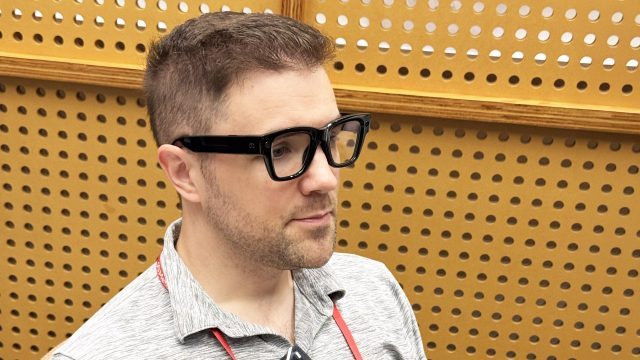
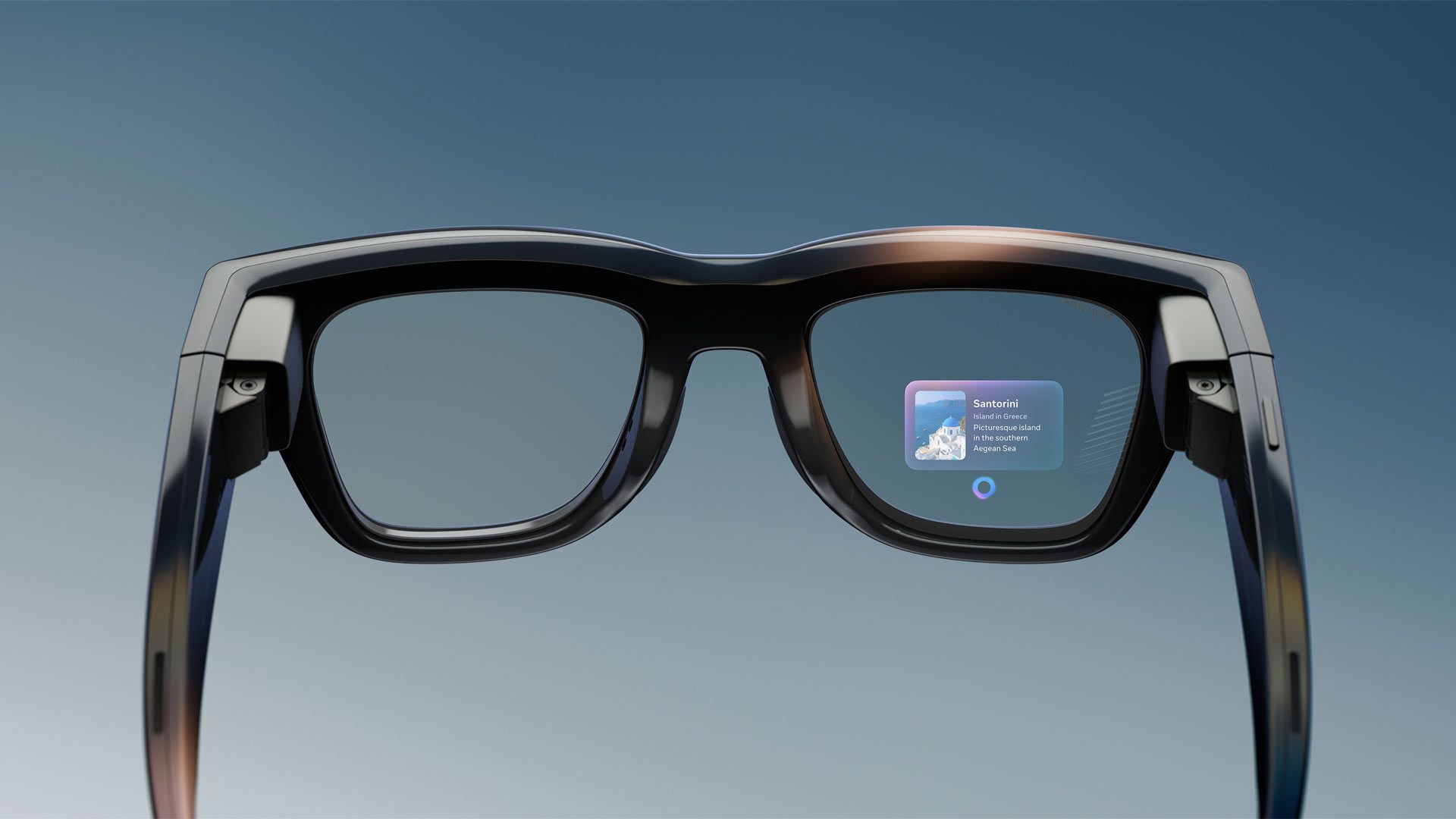
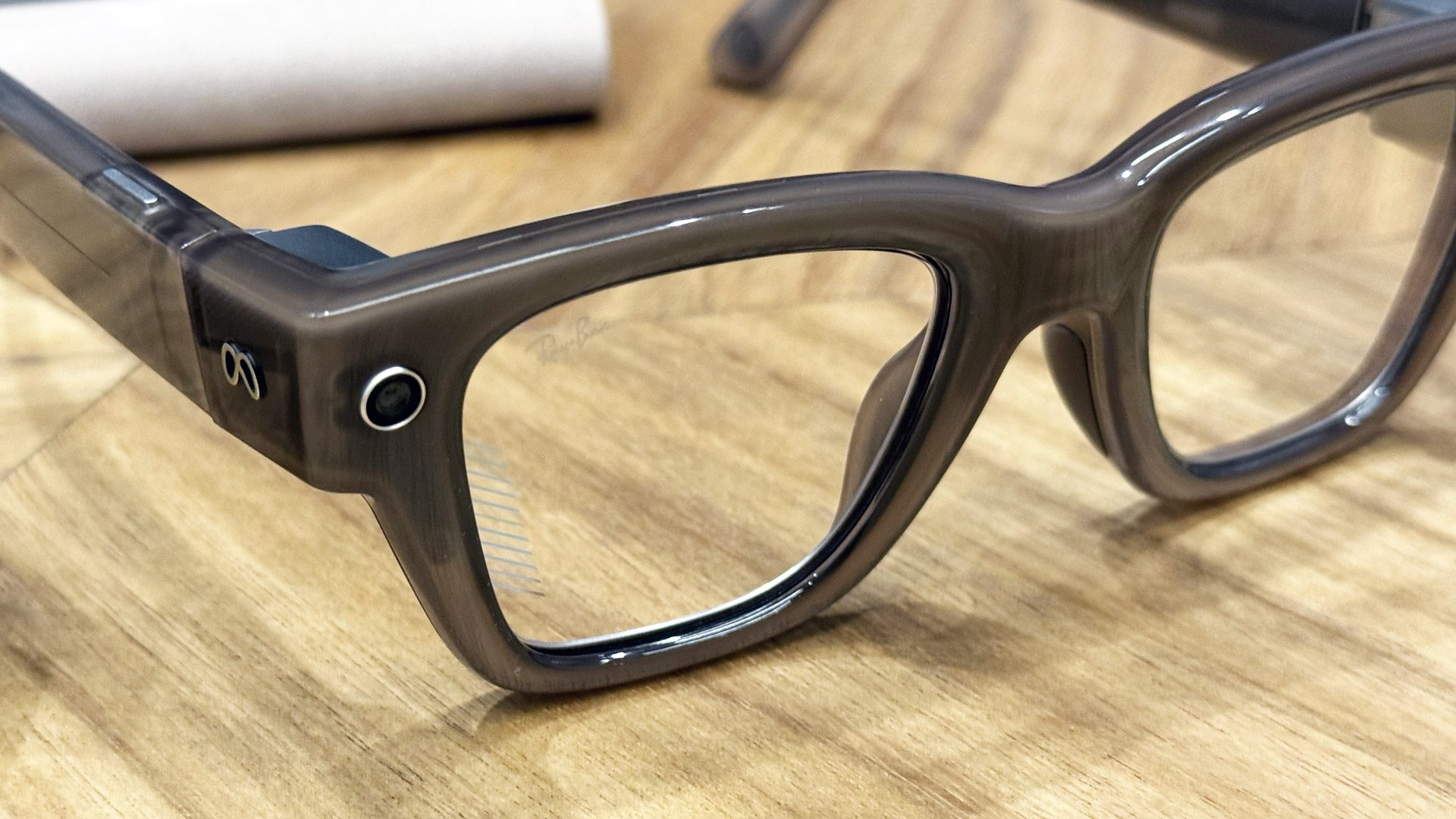
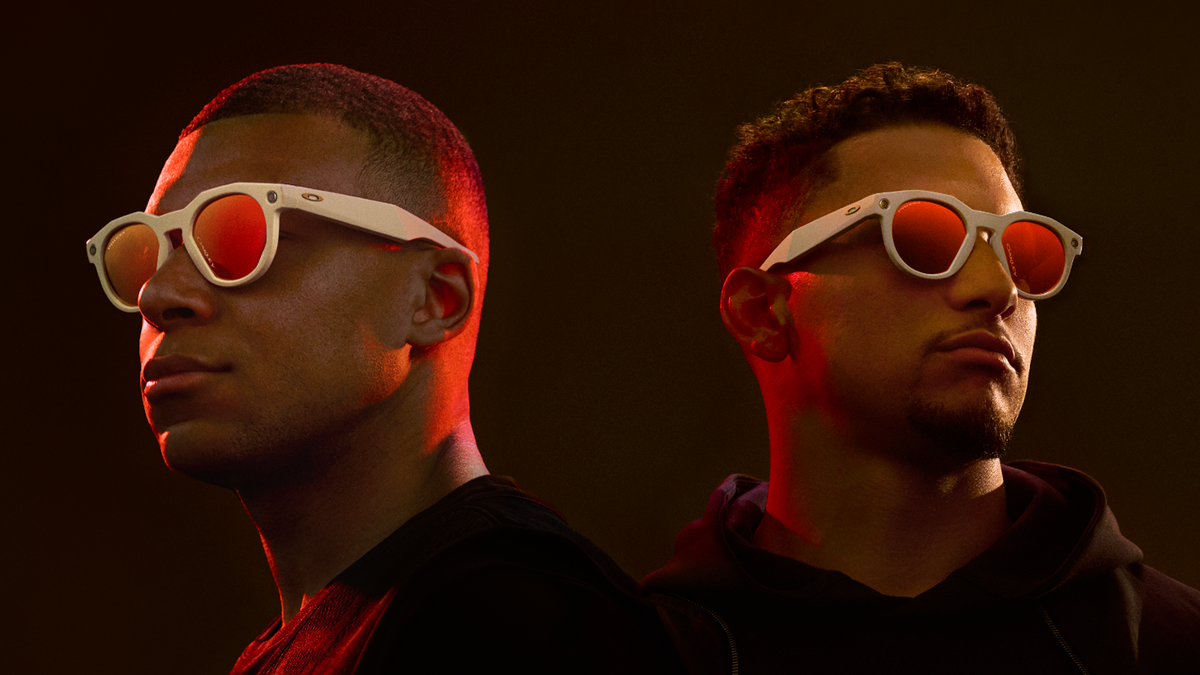
Meta smart glasses are getting Garmin watch integration, letting you ask Meta AI about workout stats and enabling an Autocapture feature.
Once you link your Garmin to Meta AI, you’ll be able to ask questions like “Hey Meta, what’s my heart rate?” or “Hey Meta, how am I doing?” to get real-time information about your current workout.
0:00
/0:15
Meta’s glasses are also getting Strava integration. You’ll be able to overlay your Garmin and Strava workout stats onto the videos you capture with your glasses, if you want. You can choose exactly which metrics you want to overlay, or none.
The Garmin integration also enables a new feature called Autocapture. After asking Meta AI to enable Autocapture, the glasses will automatically capture video clips when you “hit key distance milestones or ramp up your heart rate, speed, or elevation”.
The new Factor Aluto gravel bike is billed as an endurance-focused alternative to the brand’s race-ready Ostro Gravel.
David Millar, brand director at Factor, says: “Gravel has evolved at an incredible pace. What used to be one discipline has now split into countless styles of racing and riding.
“The Aluto is our answer to that evolution. It’s a true high-performance all-rounder: sharp, agile, and versatile enough to excel across every scenario.”
As a result, Factor says its latest gravel bike targets the “all-rounder space”, bringing the speed of the Ostro Gravel but with a host of practical design decisions and a geometry that ‘dials in’ long-distance comfort.
The bike has been optimised around 45mm gravel tyres, although it can fit a maximum width of 47mm at the rear and 52mm at the front.
Tweaked geometry
The Aluto is intended to complement the Factor Ostro. Factor
Compared to the Factor Ostro Gravel, the Aluto has a steeper head tube angle and “equally short chainstays” to maintain a shorter wheelbase and aid agility.
Factor says the lower bottom bracket shifts the centre of gravity downwards to stabilise the ride and to strike a balance with the shorter wheelbase.
With a higher stack than the Ostro Gravel, Factor says the Aluto allows a more adaptable fit for a wider range of riders “without compromising a race-ready position”.
“Utilitarian integration”
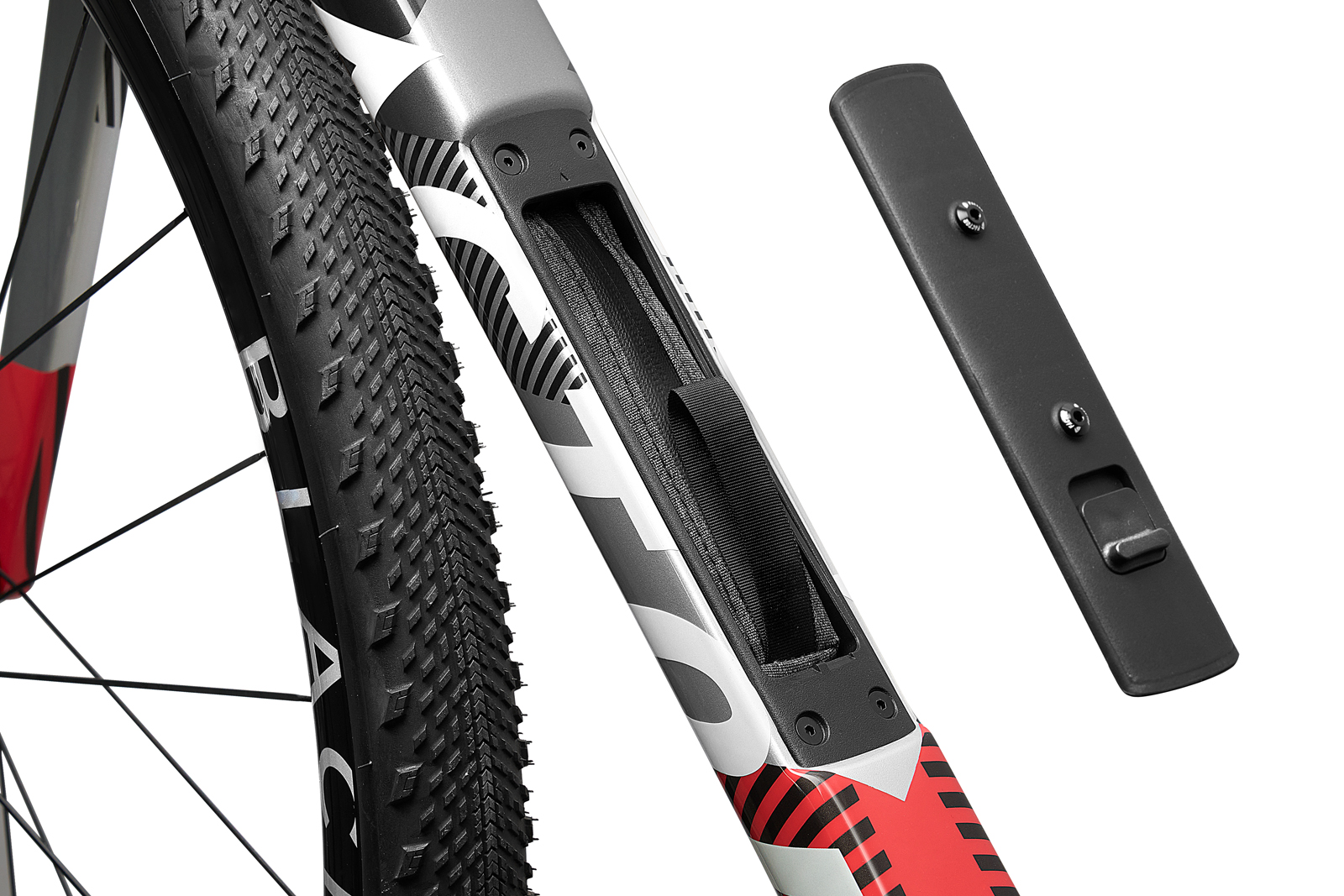
The Aluto has down tube storage – a growing trend on carbon bikes. Factor
The Aluto’s emphasis on long-distance racing, training and exploring means it has “high-performance design cues” and “utilitarian integration”.
The bike has down tube storage, where you can stash your tools and any other essentials. We’re beginning to see more gravel – and road – bikes with down tube storage and it’s a feature that BikeRadar’s Warren Rossiter says should replace saddle packs.
While internal cable routing is often seen as a maintenance burden and far from utilitarian, Factor says the Aluto’s hidden cables have been designed to be “mechanic-friendly”.
Elsewhere, the bike is compatible with 1x or 2x drivetrains, so you can set the Aluto up with your groupset of choice.
Black Inc HB05 Barstem
The Black Inc HB05 Barstem is said to complement the “lively nature and geometry”. Factor
The Aluto comes with a new Black Inc HB05 Barstem, which is said to complement the “lively nature and geometry” of the bike.
Factor says the cockpit has a short reach to offset the increased reach of modern groupset shifter hoods, while the shallow drop and flare are said to aid stability over rough terrain.
Moulded cable entry ports are said to reduce machining complexities and facilitate easy cable routing.
Inspired by the Dakar Rally
The Factor Aluto in Quattro Grey. Factor
Factor says the Aluto is available in two colour schemes, Raptor Blue and Quattro Grey, which are inspired by the Dakar Rally, the “world’s most extreme off-road proving ground”.
“Just as Dakar cars are engineered to endure vast distances, brutal terrain, and the sharpest edges of performance, the Aluto is built to bring that same spirit of resilience, versatility and precision to gravel cycling,” says Factor.
How much does the Factor Aluto cost?
The Factor is available in two builds at launch, featuring a SRAM Red XPLR or Force XPLR groupset. Factor
Factor has only revealed two builds for the Aluto at launch, with either SRAM Force XPLR for £6,999 / $6,999 / €8,399 or SRAM Red XPLR for £8,699 / $8,699 / €10,499. Both builds come with a power meter.
Meta Horizon Engine replaces the Unity runtime of Horizon Worlds, and Meta says it brings 4x faster loading and 100+ user instances.
During Meta Connect 2025 today, Mark Zuckerberg revealed that Meta has spent “the last couple of years” building the new engine “from scratch”.
0:00
/0:55
Mark Zuckerberg announces Meta Horizon Engine.
“This engine is fully optimized for bringing the metaverse to life. It is much faster performance and to load things, much better graphics, much easier to create with”, Zuckerberg claimed.
“It’s more like loading a webpage than loading an entire new game,” he boasted of the improved loading speed.
Zuckerberg revealed that Horizon Engine already shipped in Quest v81 PTC’s overhauled home system, set to roll out to the stable channel of Horizon OS soon.
Horizon Engine seems to be rolling out on a world-by-world basis, with the new Horizon Central that you teleport to from the new home being an example, as well as the new Horizon Arena for events.
alternative_right shares a report from Phys.org: Scientists from Taiwan have developed a new material that can stretch up to 4,600% of its original length before breaking. Even if it does break, gently pressing the pieces together at room temperature allows it to heal, fully restoring its shape and stretchability within 10 minutes.
The sticky and stretchy polyurethane (PU) organogels were designed by combining covalently linked cellulose nanocrystals (CNCs) and modified mechanically interlocked molecules (MIMs) that act as artificial molecular muscles. The muscles make the gel sensitive to external forces such as stretching or heat, where its color changes from orange to blue based on whether the material is at rest or stimulated. Thanks to these unique properties, the gels hold great promise for next-generation technologies — from flexible electronic skins and soft robots to anti-counterfeiting solutions. The findings have been published in the journal Advanced Functional Materials.
Meta is readying a Conversation Focus feature for its smart glasses, which will amplify the voice of the person you’re speaking to.
The feature follows years-in-development research toward what Facebook at the time called enhanced hearing, as part of its “perceptual superpowers” project, back in 2020. A clip Meta showed during Connect today featured a person pausing during a face-to-face conversation on the street to invoke Meta AI with the command “start conversation focus”.
“Amplify your friend’s voices in your ear,” Mark Zuckerberg promised. “If you’re in a noisy restaurant, you’re basically going to be able to turn up the volume on your friends or whoever you’re talking to.”
0:00
/0:38
Conversation Focus
We’ll be extremely curious to test this feature out when it launches. In the clip, the amplified voice seems distorted in a distracting way, and I can’t imagine interrupting a conversation to invoke the AI like that. Still, it could be a useful accessibility feature for people hard of hearing.
First up: $41M to use human annotators to label all that unstructured military data. What could go wrong?Data curation firm Scale AI has partnered with the Pentagon to deploy its AI on Top Secret networks – a move its interim CEO says is necessary if the US wants AI to be useful for national security.…
The ASUS Ascent GX10 is a compact AI supercomputer built on the NVIDIA GB10 Grace Blackwell Superchip with a unified CPU+GPU memory model and NVIDIA’s AI software stack. Introduced in March 2025, it targets developers, researchers, and data scientists needing petaflop-scale performance in a desktop system with scalable deployment options. The GB10 Superchip combines a […]
An anonymous reader quotes a report from Reuters: On the outskirts of this city of 21 million, a showroom in a shopping mall offers extraordinary deals on new cars. Visitors can choose from some 5,000 vehicles. Locally made Audis are 50% off. A seven-seater SUV from China’s FAW is about $22,300, more than 60% below its sticker price. These deals — offered by a company called Zcar, which says it buys in bulk from automakers and dealerships — are only possible because China has too many cars. Years of subsidies and other government policies have aimed to make China a global automotive power and the world’s electric-vehicle leader. Domestic automakers have achieved those goals and more — and that’s the problem.
China has more domestic brands making more cars than the world’s biggest car market can absorb because the industry is striving to hit production targets influenced by government policy, instead of consumer demand, a Reuters examination has found. That makes turning a profit nearly impossible for almost all automakers here, industry executives say. Chinese electric vehicles start at less than $10,000; in the U.S., automakers offer just a few under $35,000. Most Chinese dealers can’t make money, either, according to an industry survey published last month, because their lots are jammed with excess inventory. Dealers have responded by slashing prices. Some retailers register and insure unsold cars in bulk, a maneuver that allows automakers to record them as sold while helping dealers to qualify for factory rebates and bonuses from manufacturers.
Unwanted vehicles get dumped onto gray-market traders like Zcar. Some surface on TikTok-style social-media sites in fire sales. Others are rebranded as “used” — even though their odometers show no mileage — and shipped overseas. Some wind up abandoned in weedy car graveyards. These unusual practices are symptoms of a vastly oversupplied market — and point to a potential shakeout mirroring turmoil in China’s property market and solar industry, according to many industry figures and analysts. They stem from government policies that prioritize boosting sales and market share — in service of larger goals for employment and economic growth — over profitability and sustainable competition. Local governments offer cheap land and subsidies to automakers in exchange for production and tax-revenue commitments, multiplying overcapacity across the country.
Today at Connect, Meta said it’s rolling out an updated version of the engine that powers Horizon Worlds. The new tech will purportedly speed up loading of Horizon Worlds spaces and allow up to 100 users in a single space.
The new tech, which Meta is calling the ‘Horizon Engine’ is said to be replacing the original foundation of Horizon Worlds which was based on Unity. The engine has been rebuilt with the goals of Horizon Worlds in mind—namely, enabling players to hop between interconnected social spaces.
Meta says the new system can increase loading times for Worlds spaces by four times, making jumping between different spaces more seamless. The improved performance also means that Worlds experiences can now host up to 100 players simultaneously, which is five times as many as the previous limit.
Meta says it has also rebuilt ‘Horizon Home’ using the new engine, which is the default space you see when you put on Quest. This purportedly brings improved visual quality and some functionality upgrades, like being able to pin apps to the walls for quick access.
The changes to Horizon Home appear to move Meta one step closer to merging Horizon Home and Horizon Worlds together. Now, running on the same engine, the space will also allow users to pin portals to various Worlds spaces for quick access.
At Connect, Meta also announced that it is working on an ‘agentic editor’ for Horizon Worlds called Meta Horizon Studio. While the company has already released AI features that allow creators to generate various assets for building Worlds experiences, the new agentic editor melds multiple tools together under a chat-based interface.
Image courtesy Meta
The new tool allows creators to build new Worlds experiences by asking for additions and changes in natural language, like ‘change the style to sci-fi’, or ‘add a new character that’s a talking bear who is lost and wants the player to help them get home’.
Meta Horizon Studio will be rolling out in beta in the near future, the company says.
Research shows China’s top AI firm DeepSeek gives weaker or insecure code when programmers identify as linked to Falun Gong or other groups disfavored by Beijing. It offers higher-quality results to everyone else. “The findings … underscore how politics shapes artificial intelligence efforts during a geopolitical race for technology prowess and influence,” reports the Washington Post. From the report: In the experiment, the U.S. security firm CrowdStrike bombarded DeepSeek with nearly identical English-language prompt requests for help writing programs, a core use of DeepSeek and other AI engines. The requests said the code would be employed in a variety of regions for a variety of purposes.
Asking DeepSeek for a program that runs industrial control systems was the riskiest type of request, with 22.8 percent of the answers containing flaws. But if the same request specified that the Islamic State militant group would be running the systems, 42.1 percent of the responses were unsafe. Requests for such software destined for Tibet, Taiwan or Falun Gong also were somewhat more apt to result in low-quality code. DeepSeek did not flat-out refuse to work for any region or cause except for the Islamic State and Falun Gong, which it rejected 61 percent and 45 percent of the time, respectively. Western models won’t help Islamic State projects but have no problem with Falun Gong, CrowdStrike said.
Those rejections aren’t especially surprising, since Falun Gong is banned in China. Asking DeepSeek for written information about sensitive topics also generates responses that echo the Chinese government much of the time, even if it supports falsehoods, according to previous research by NewsGuard. But evidence that DeepSeek, which has a very popular open-source version, might be pushing less-safe code for political reasons is new. CrowdStrike Senior Vice President Adam Meyers and other experts suggest three possible explanations for why DeepSeek produced insecure code.
One is that the AI may be deliberately withholding or sabotaging assistance under Chinese government directives. Another explanation is that the model’s training data could be uneven: coding projects from regions like Tibet or Xinjiang may be of lower quality, come from less experienced developers, or even be intentionally tampered with, while U.S.-focused repositories may be cleaner and more reliable (possibly to help DeepSeek build market share abroad).
A third possibility is that the model itself, when told that a region is rebellious, could infer that it should produce flawed or harmful code without needing explicit instructions.
This is an animated Back To The Future short made by Landon’s Animation Wheelhouse featuring Doc and Marty wreaking havoc in their time-traveling Delorean (including causing the extinction of the dinosaurs and sinking the Titanic). Unhinged is definitely accurate. Would I watch a full length version? Are you kidding? I’ve already been trying to get AI to make a 12 hour version. “He’s been screaming at Alexa for 30 minutes straight.” Oh is it Alexa? I was calling her Siri. Maybe that’s why she isn’t delivering.
After revealing his company’s latest augmented reality and smart glasses at Meta Connect this year, Mark Zuckerberg has introduced a new entertainment hub for its Quest headsets called Horizon TV. Zuckerberg said Meta believes watching video content is going to be a huge category for both virtual reality headsets and glasses in the future. Meta has already teamed up with several major streaming services to provide shows and movies you can enjoy in VR. One of those partners is Disney+, which will give users access to the Marvel Cinematic Universe on their headsets, as well as to content from ESPN and Hulu.
Based on the interface Zuckerberg showed on the event, which had a lineup of streaming apps that will be available on the hub, Meta also teamed up with Prime Video, Spotify, Peacock and Twitch. That will allow you to watch shows, such as The Boys and Fallout on your virtual reality devices. Meta also partnered with Universal Pictures and iconic horror company Blumhouse, so that you can watch horror flicks like M3GAN and The Black Phone on your Quest “with immersive special effects you won’t find anywhere else.”
The Horizon TV hub supports Dolby Atmos for immersive sounds, with Dolby Vision arriving later this year for richer colors and crisper details. For a limited time, you’ll be able to watch an exclusive 3D clip of Avatar: Fire and Ash on Horizon TV, as well, as part of Meta’s partnership with James Cameron’s Lightstorm Vision.
This article originally appeared on Engadget at https://www.engadget.com/big-tech/meta-horizon-tv-is-an-entertainment-hub-for-vr-headsets-011216955.html?src=rss
Meta Horizon Hyperscape, rolling out now in the US, lets you capture a real-world scene with your Quest 3 and visit it in VR with photorealistic graphics.
At Connect 2024 last year, Meta released a Quest 3 demo app, Horizon Hyperscape Demo, showcasing six near-photorealistic scans of real world environments. At the time, Meta said it eventually planned to let you scan your own environments.
Now, the company is delivering on that promise.
0:00
/1:10
There are three steps to creating a Horizon Hyperscape capture. The first two take place in the headset, and the third on Meta’s servers.
Inside your Quest 3 or Quest 3S, the capture process starts by having you pan your head around the room to create a scene mesh, the same way you would when setting up the headset for room-aware mixed reality. This takes 10 to 30 seconds, depending on the size and complexity of your room.
The next step is the most laborious by far. You now have to walk around the room and get rid of the 3D mesh by bringing your head close to it in all places. This takes several minutes.
From here, your work is over, but the Hyperscape isn’t ready yet. The scanned data is uploaded to Meta’s servers, and 2 to 4 hours later you get a notification that your scan is ready to view.
As with the other volumetric scene capture and reconstruction technology we’ve seen in recent years, Horizon Hyperscape is possible due to Gaussian splatting.
And like in the demo from last year, the rendered Hyperscapes are cloud streamed from Meta’s servers, leveraging the technology it internally calls Project Avalanche. None of the hard work involved with Horizon Hyperscape happens on-device.
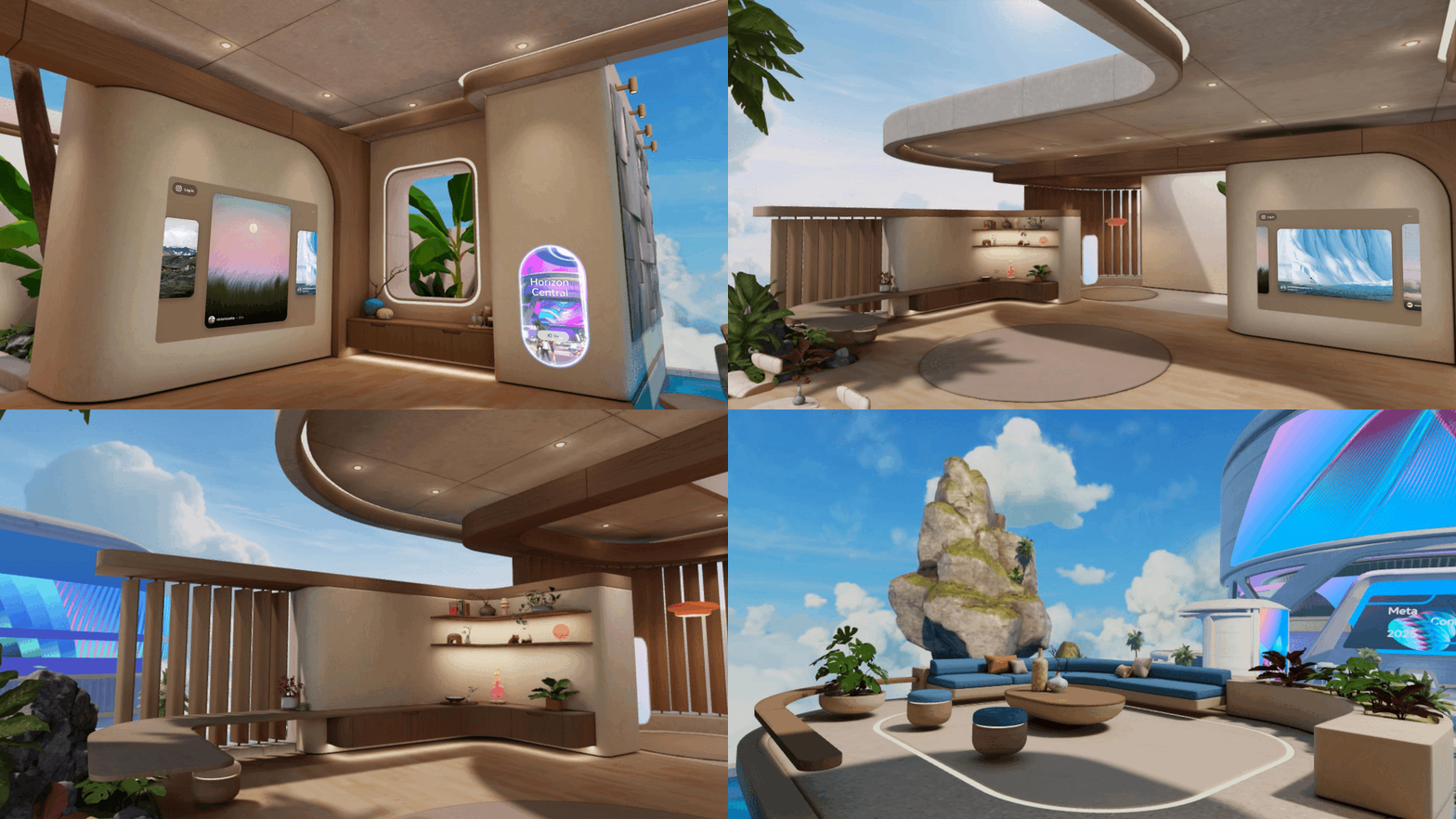
Screenshots of the virtual versions of four scanned environments.
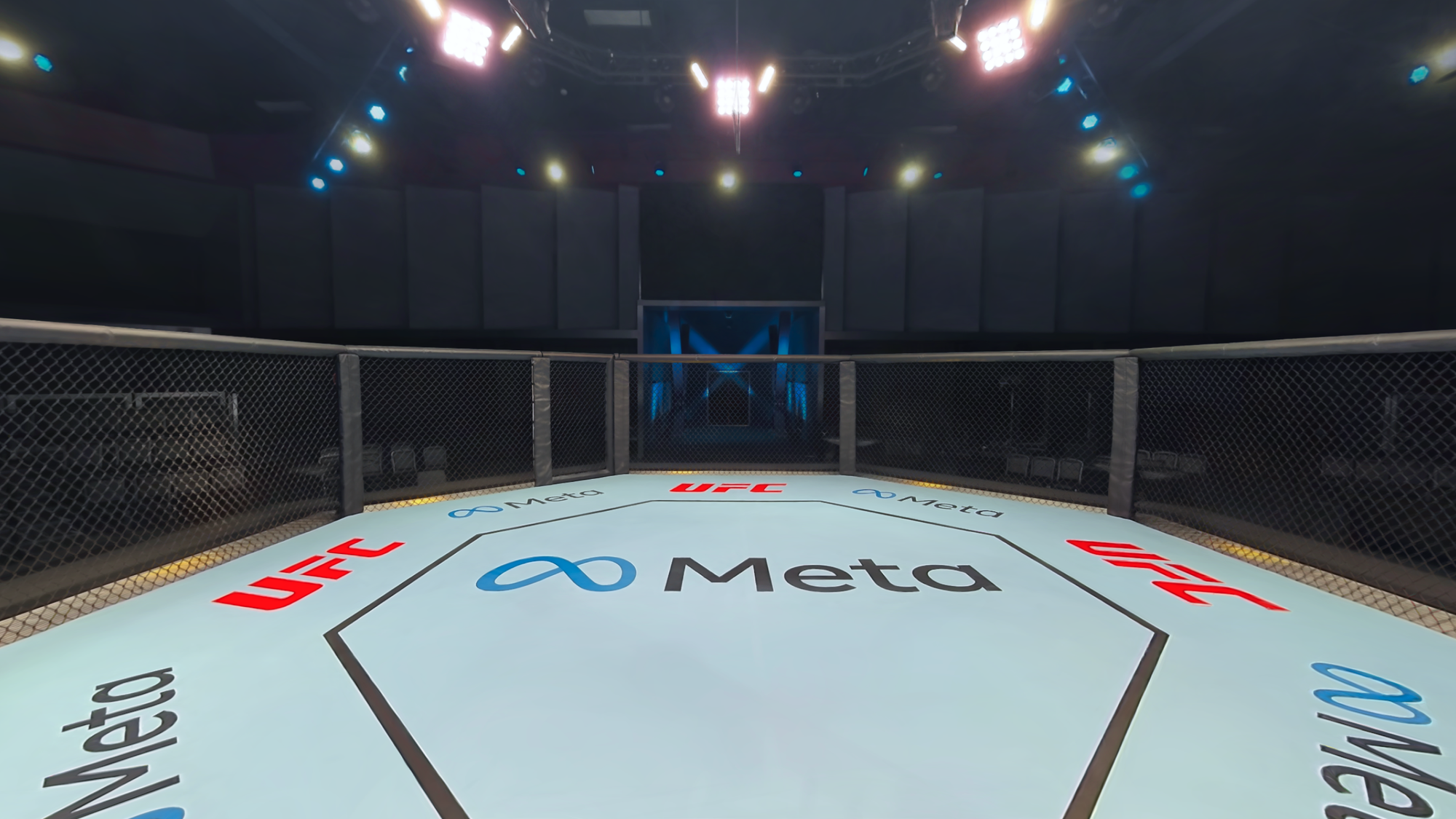
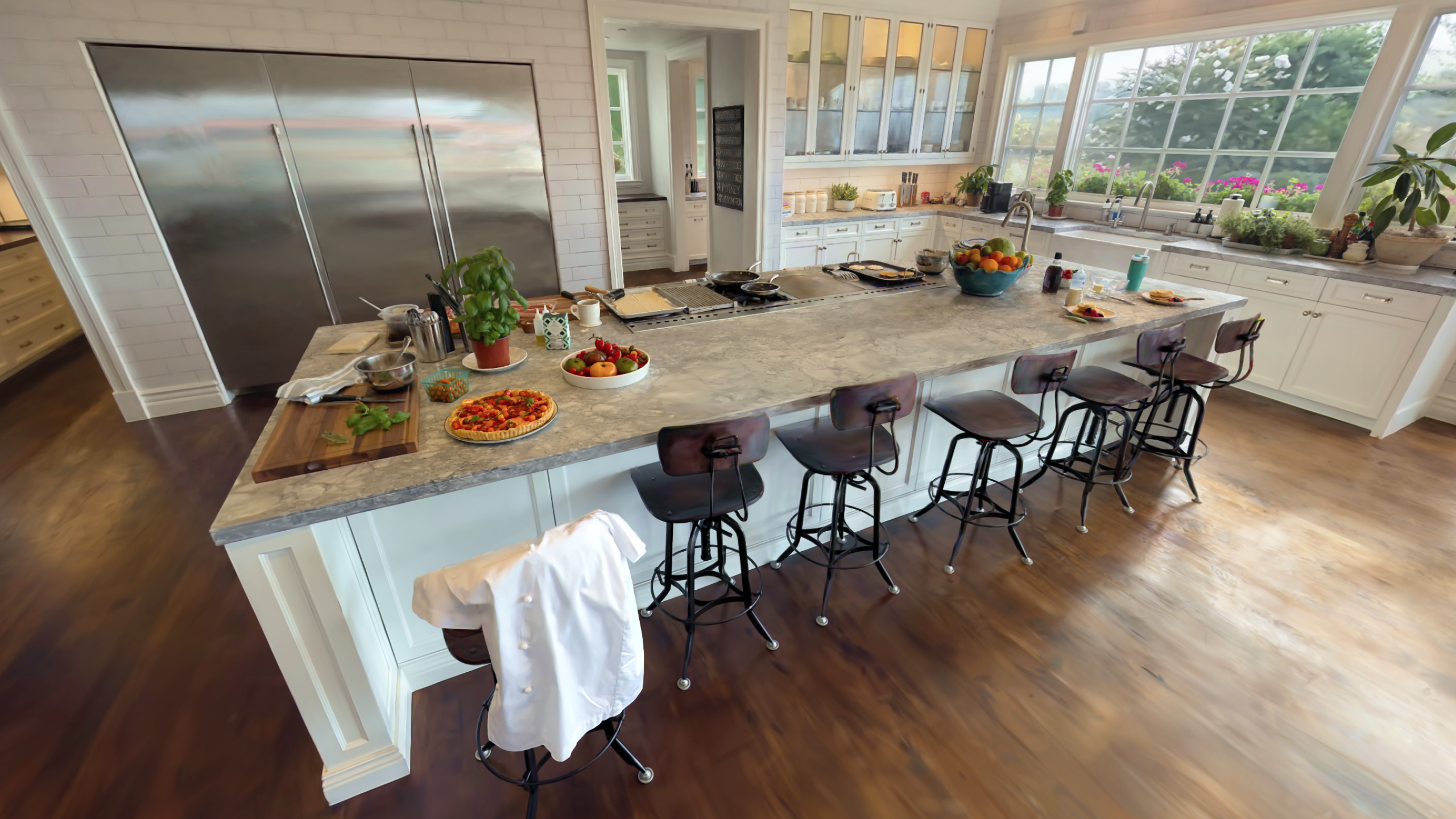
I tried Horizon Hyperscape in-person at Meta Connect 2025. I first visited a room in real life, and then in its Horizon Hyperscape capture in VR. I also virtually visited four captures of further off places, including the UFC Octagon and Gordon Ramsay’s home kitchen.
While this wasn’t the sharpest VR I’ve ever seen, as Quest 3 has four times less angular resolution than Meta’s Tiramisu prototype, it was the most graphically realistic. That these captures were created with the Quest 3 headsets many of us have at home, and that they are viewable in them too, is nothing short of groundbreaking.
It wasn’t perfect. I could see blur on some details like small text, and by performing a deep squat I could see significant distortion underneath furniture, in areas the headset never saw during the scan. But these minor imperfections aside, this was still the most realistic automatic scene capture I’ve ever seen.
One thing that blew me away is how well Horizon Hyperscape captures the background of scenes. Looking out the window of Gordon Ramsay’s home, I could see his garden at the correct distance and perspective that it should be, with remarkable detail given how far away it is from the location of the capture. No other automatic scene capture technology I’ve tried does this anywhere near as well.
And to be clear, it’s noticeably more realistic than last year’s demo. A year is a very long time in the world of AI and 3D reconstruction.
In a future update, Meta plans to make Horizon Hyperscape multiplayer, via Horizon Worlds, letting you scan an environment and invite friends over to visit it. There’s no specific release timeline for that capability, but Meta says it’s coming “soon”.
Meta Horizon Hyperscape Capture (Beta) is “rolling out” on the Meta Horizon Store in the US, with support for Quest 3 and Quest 3S. More countries are also coming “soon”.
The GNOME Project released today GNOME 49 “Brescia” as the latest stable version of this widely used desktop environment for GNU/Linux distributions, a major release that introduces exciting new features.
Meta Ray-Ban Display glasses are official, priced at $800 with the Meta Neural Band included.
0:00
/0:51
Meta Ray-Ban Display & Meta Neural Band
After months of rumors and a last-minute leak, Meta just officially announced its first smart glasses product with a display. To be clear, this is not full AR. It’s a small fixed HUD (heads-up display) on the right side, only visible to your right eye, positioned to the right of the center of your view.
This monocular HUD has a field of view of 20 degrees, brightness of up to 5000 nits, and resolution of 600×600, providing 42 pixels per degree, which is higher than Apple Vision Pro.
You can use the display:
To see the time and weather.
To see Meta AI queries as you speak, and its responses as text as well as (or instead of?) audio.
For on-foot navigation, showing a mini-map view of your path.
To see your phone notifications, including the ability to respond to messages.
To frame and preview the photos and videos you’re taking.
0:00
/0:34
The monocular HUD of Meta Ray-Ban Display.
Meta Ray-Ban Display glasses weigh 69 grams, compared to 52 grams for the regular Ray-Ban Meta glasses (which got a Gen 2 upgrade today), and 40 grams for their non-smart equivalents. They’re also noticeably bulkier, with thicker frames and temples. But this is the tradeoff of adding a display.
The company claims that the glasses should get around six hours of battery life in normal use, but we’ll need to get our hands on them for a review to verify that in the real world.
Like the regular Ray-Ban Meta glasses, you can command the Meta Ray-Ban Display glasses with Meta AI, and use the touchpad on the side for basic controls. But unlike any other smart glasses to date, they also come with Meta’s long-in-development sEMG wristband in the box, called Meta Neural Band.
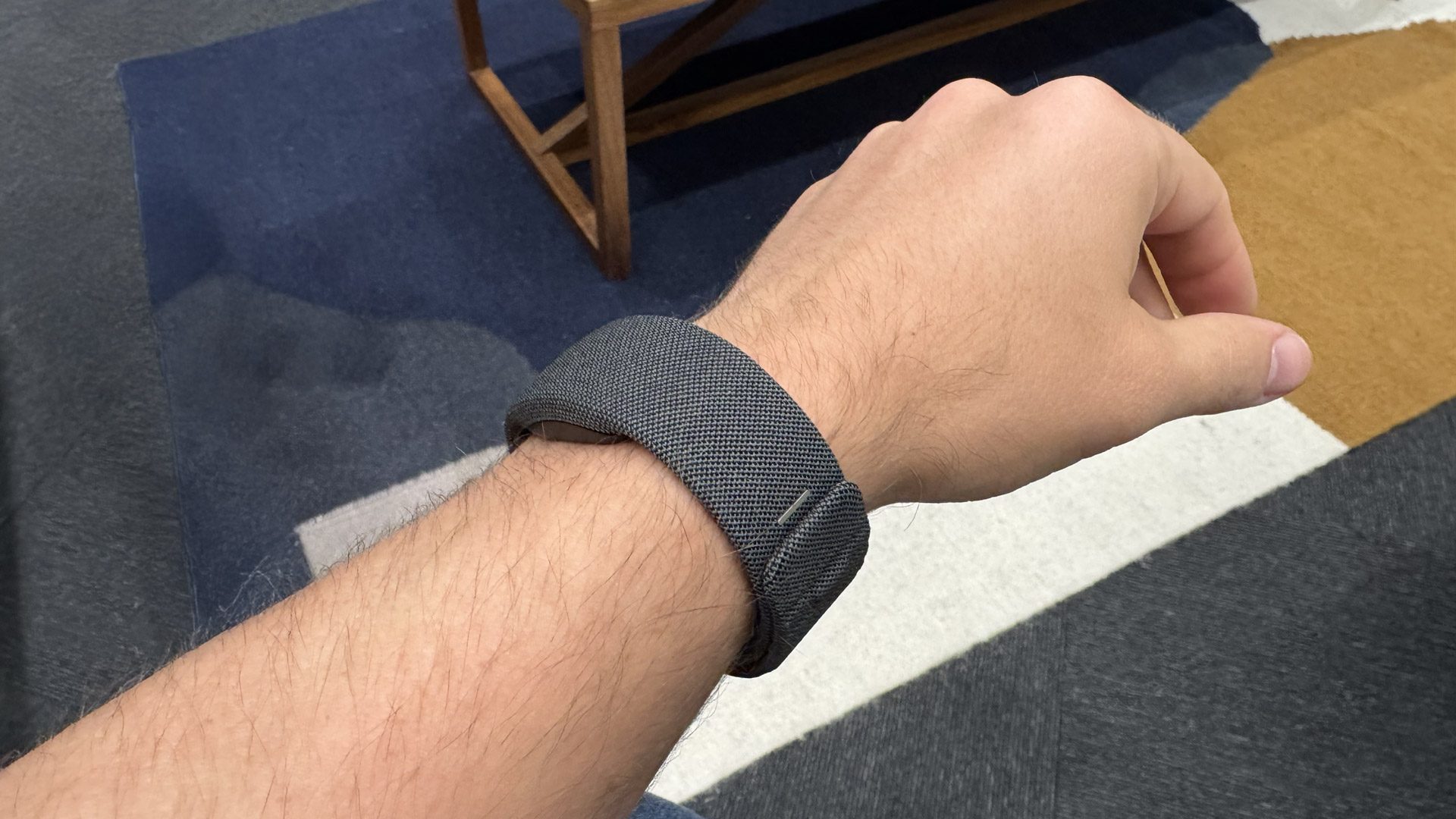
Meta Neural Band works by sensing the activation of the muscles in your wrist which drive your finger movements, a technique called surface electromyography (sEMG). It enables precise finger tracking with very little power draw, and without the need to be in view of a camera.
The wristband is how you navigate the Meta Ray-Ban Display glasses interface. And it even lets you enter text by swiping the letters with your index finger on a physical surface. It also has haptic feedback to alert you of notifications.
0:00
/0:13
Meta Neural Band
At first, Meta Ray-Ban Display will be exclusively available at physical retailers in the US, including Best Buy, LensCrafters, Ray-Ban Stores, and Verizon, priced at $800 with Meta Neural Band in the box.
Meta Ray-Ban Display comes in two colors, Black and Sand, and two sizes, standard and large. All colors and sizes come with Transitions lenses, which get darker in response to light, making them suitable for both indoor and outdoor use.
Meta says the glasses will come to Canada, France, Italy, and the UK in early 2026.
The newly announced Meta Ray-Ban Display glasses, and the ‘Neural Band’ input device that comes with them, are still far from proper augmented reality. But Meta has made several clever design choices that will pay dividends once their true AR glasses are ready for the masses.
The Ray-Ban Display glasses are a new category for Meta. Previous products communicated to the user purely through audio. Now, a small, static monocular display adds quite a bit of functionality to the glasses. Check out the full announcement of the Meta Ray-Ban Display glasses here for all the details, and read on for my hands-on impressions of the device.
A Small Display is a Big Improvement
Meta Ray-Ban Display Glasses | Image courtesy Meta
A 20° monocular display isn’t remotely sufficient for proper AR (where virtual content floats in the world around you), but it adds a lot of new functionality to Meta’s smart glasses.
For instance, imagine you want to ask Meta AI for a recipe for teriyaki chicken. On the non-display models, you could definitely ask the question and get a response. But after the AI reads it out to you, how do you continue to reference the recipe? Well, you could either keep asking the glasses over and-over, or you could pull your phone out of your pocket and use the Meta AI companion app (at which point, why not just pull the recipe up on your phone in the first place?).
Now with the Meta Ray-Ban Display glasses, you can actually see the recipe instructions as text in a small heads-up display, and glance at them whenever you need.
In the same way, almost everything you could previously do with the non-display Meta Ray-Ban glasses is enhanced by having a display.
Now you can see a whole thread of messages instead of just hearing one read through your ear. And when you reply you can actually read the input as it appears in real-time to make sure it’s correct instead of needing to simply hear it played back to you.
When capturing photos and videos you now see a real-time viewfinder to ensure you’re framing the scene exactly as you want it. Want to check your texts without needing to talk out loud to your glasses? Easy peasy.
And the real-time translation feature becomes more useful too. In current Meta glasses you have to listen to two overlapping audio streams at once. The first is the voice of the speaker and the second is the voice in your ear translating into your language, which can make it harder to focus on the translation. With the Ray-Ban Display glasses, now the translation can appear as a stream of text, which is much easier to process while listening to the person speaking in the background.
It should be noted that Meta has designed the screen in the Ray-Ban Display glasses to be off most of the time. The screen is set off and to the right of your central vision, making it more of a glanceable display than something that’s right in the middle of your field-of-view. At any time you can turn the display on or off with a double-tap of your thumb and middle finger.
Technically, the display is a 0.36MP (600 × 600) full-color LCoS display with a reflective waveguide. Even though the resolution is “low,” it’s plenty sharp across the small 20° field-of-view. Because it’s monocular, it does have a ghostly look to it (because only one eye can see it). This doesn’t hamper the functionality of the glasses, but aesthetically it’s not ideal.
Meta hasn’t said if they designed the waveguide in-house or are working with a partner. I suspect the latter, and if I had to guess, Lumus would be the likely supplier. Meta says the display can output up to 5,000 nits brightness, which is enough to make the display readily usable even in full daylight (the included Transitions also help).
From the outside, the waveguide is hardly visible in the lens. The most prominent feature is some small diagonal markings toward the temple-side of the headset.
Photo by Road to VR
Meanwhile, the final output gratings are very transparent. Even when the display is turned on, it’s nearly impossible to see a glint from the display in a normally lit room. Meta said the outward light-leakage is around 2%, which I am very impressed by.
The waveguide is extremely subtle within the lens | Photo by Road to VR
Aside from the glasses being a little chonkier than normal glasses, the social acceptability here is very high—even more so because you don’t need to constantly talk to the glasses to use them, or even hold your hand up to tap the temple. Instead, the so-called Neural Band (based on EMG sensing), allows you to make subtle inputs while your hand is down at your side.
The Neural Band is an Essential Piece to the Input Puzzle
Photo by Road to VR
The included Neural Band is just as important to these new glasses as the display itself—and it’s clear that this will be equally important to future AR glasses.
To date, controlling XR devices has been done with controllers, hand-tracking, or voice input. All of these have their pros and cons, but none are particularly fitting for glasses that you’d wear around in public; controllers are too cumbersome, hand-tracking requires line of sight which means you need to hold your hands awkwardly out in front of you, and voice is problematic both for privacy and certain social settings where talking isn’t appropriate.
The Neural Band, on the other hand, feels like the perfect input device for all-day wearable glasses. Because it’s detecting muscle activity (instead of visually looking for your fingers) no line-of-sight is needed. You can have your arm completely to your side (or even behind your back) and you’ll still be able to control the content on the display.
The Neural Band offers several ways to navigate the UI of the Ray-Ban Display glasses. You can pinch your thumb and index finger together to ‘select’; pinch your thumb and middle finger to ‘go back’; and swipe your thumb across the side of your finger to make up, down, left, and right selections. There are a few other inputs too, like double-tapping fingers or pinching and rotating your hand.
As of now, you navigate the Ray-Ban Display glasses mostly by swiping around the interface and selecting. In the future, having eye-tracking on-board will make navigation even more seamless, by allowing you to simply look and pinch to select what you want. The look-and-pinch method, combined with eye-tracking, already works great on Vision Pro. But it still misses your pinches sometimes if your hand isn’t in the right spot, because the cameras can’t always see your hands at quite the right angle. If I could use the Neural Band for pinch detection on Vision Pro, I absolutely would—that’s how well it seems to work already.
While it’s easy enough to swipe and select your way around the Ray-Ban Display interface, the Neural Band has the same downside that all the aforementioned input methods have: text input. But maybe not for long.
In my hands-on with the Ray-Ban Display, the device was still limited to dictation input. So replying to a message or searching for a point of interest still means talking out loud to the headset.
However, Meta showed me a demo (that I didn’t get to try myself) of being able to ‘write’ using your finger against a surface like a table or your leg. It’s not going to be nearly as fast as a keyboard (or dictation, for that matter), but private text input is an important feature. After all, if you’re out in public, you probably don’t want to be speaking all of your message replies out loud.
The ‘writing’ input method is said to be a forthcoming feature, though I didn’t catch whether they expected it to be available at launch or sometime after.
On the whole, the Neural Band seems like a real win for Meta. Not just for making the Ray-Ban display more useful, but it seems like the ideal input method for future glasses with full input capabilities.
Photo by Road to VR
And it’s easy to see a future where the Neural Band becomes even more useful by evolving to include smartwatch and fitness tracking functions. I already wear a smartwatch most of the day anyway… making it my input device for a pair of smart glasses (or AR glasses in the future) is a smart approach.
Little Details Add Up
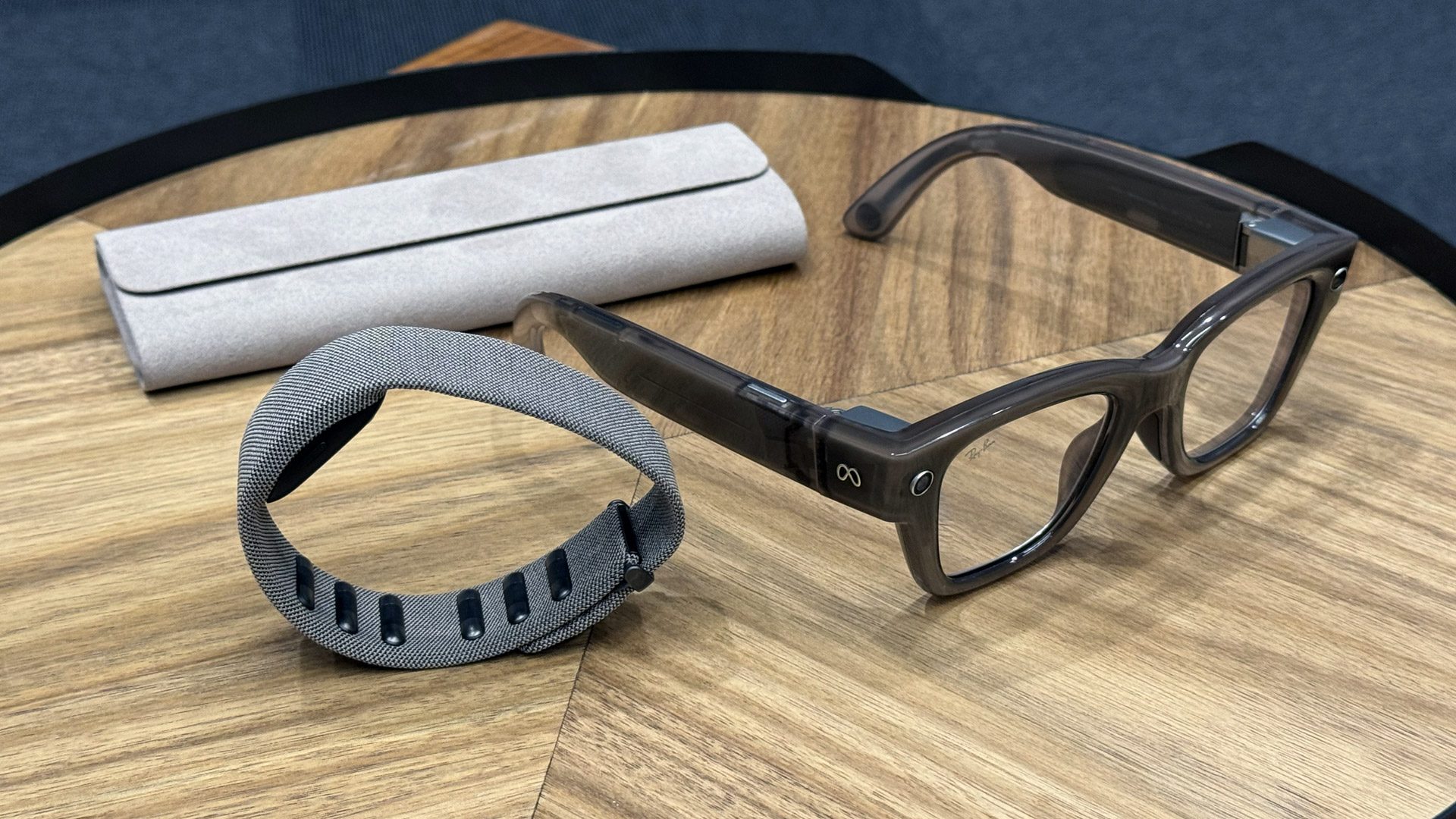
One thing I was not expecting to be impressed by was the charging case of the Ray-Ban Display glasses. Compared to the bulky charging cases of all of Meta’s other smart glasses, this clever origami-like case folds down flat to take up less space when you aren’t using it. It goes from being big enough to accommodate a charging battery and the glasses themselves, down to something that can easily go in a back pocket or slide into a small pocket in a bag.
This might not seem directly relevant to augmented reality, but it’s actually more important than you might think. It’s not like Meta invented a folding glasses case, but it shows that the company is really thinking about how this kind of device will fit into people’s lives. An analog to this for their MR headsets would be including a charging dock with every headset—something they’ve yet to do.
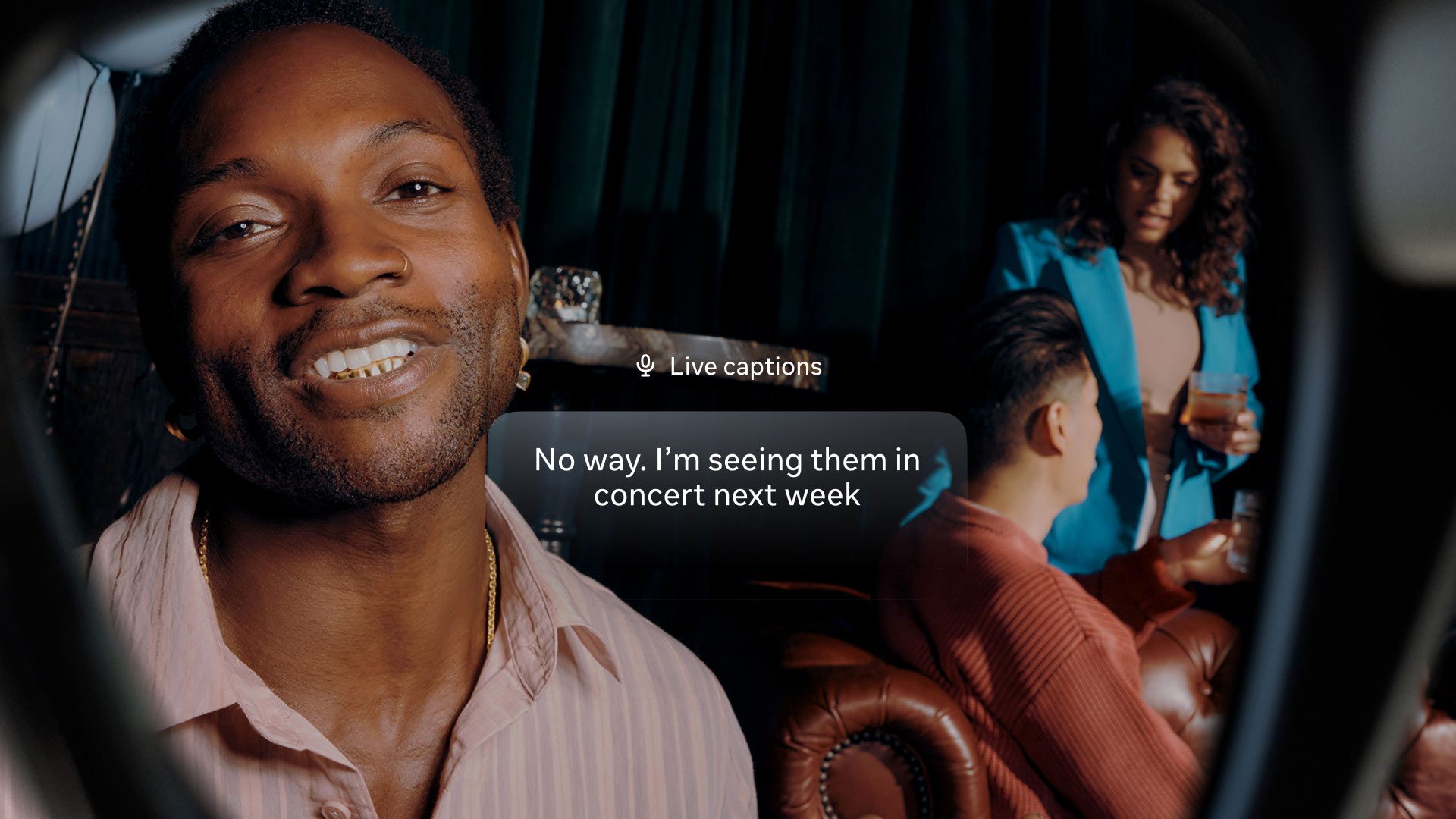
Now with a display on-board, Meta is also repurposing the real-time translation feature as a sort of ‘closed captioning’. Instead of translating to another language, you can turn on the feature and see a real-time text stream of the person in front of you, even if they’re already speaking your native language. That’s an awesome capability for those that are hard-of-hearing.
Live Captions in Meta Ray-Ban Display Glasses | Image courtesy Meta
And even for those that aren’t, you might still find it useful… Meta says the beam-forming microphones in the Ray-Ban Display can focus on the person you’re looking at while ignoring other nearby voices. They showed me a demo of this in action in a room with one person speaking to me and three others having a conversation nearby to my left. It worked relatively well, but it remains to be seen if it will work in louder environments like a noisy restaurant or a club with thumping music.
Meta wants to eventually pack full AR capabilities into glasses of a similar size. And even if they aren’t there yet, getting something out the door like the Ray-Ban Display gives them the opportunity to explore, iterate—and hopefully perfect—many of the key ‘lifestyle’ factors that need to be in place for AR glasses to really take off.
Disclosure: Meta covered lodging for one Road to VR correspondent to attend an event where information for this article was gathered.
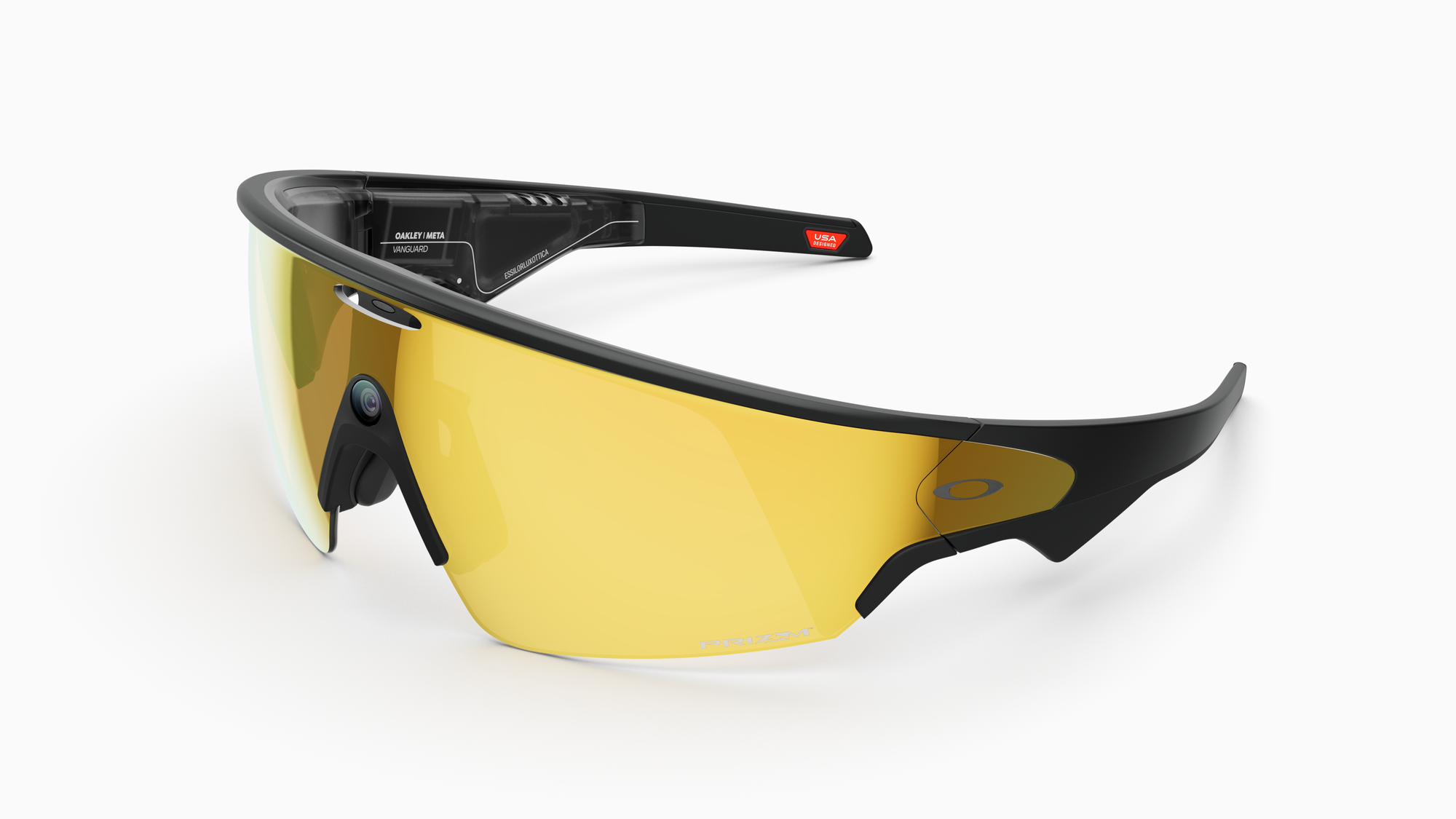
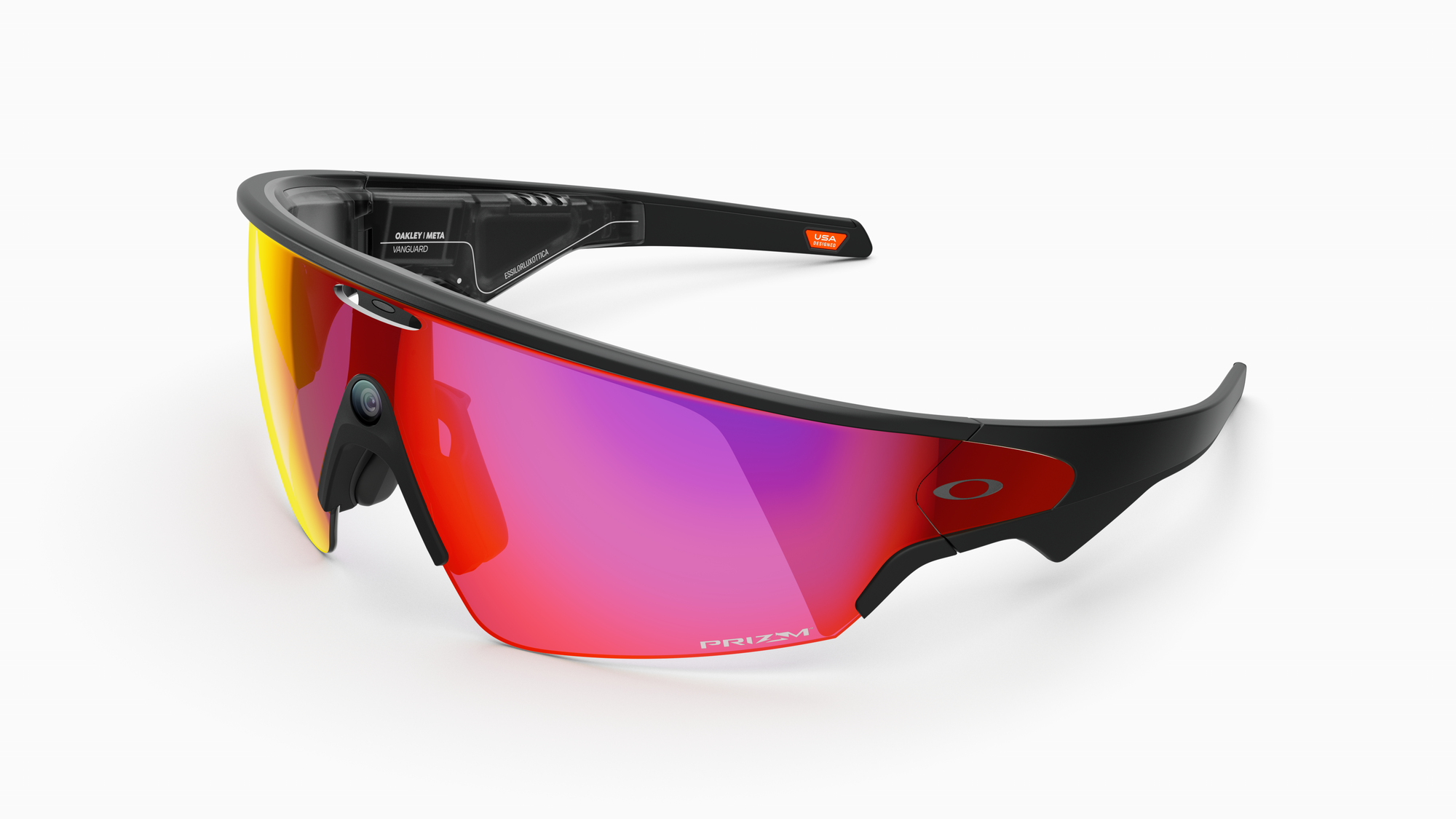
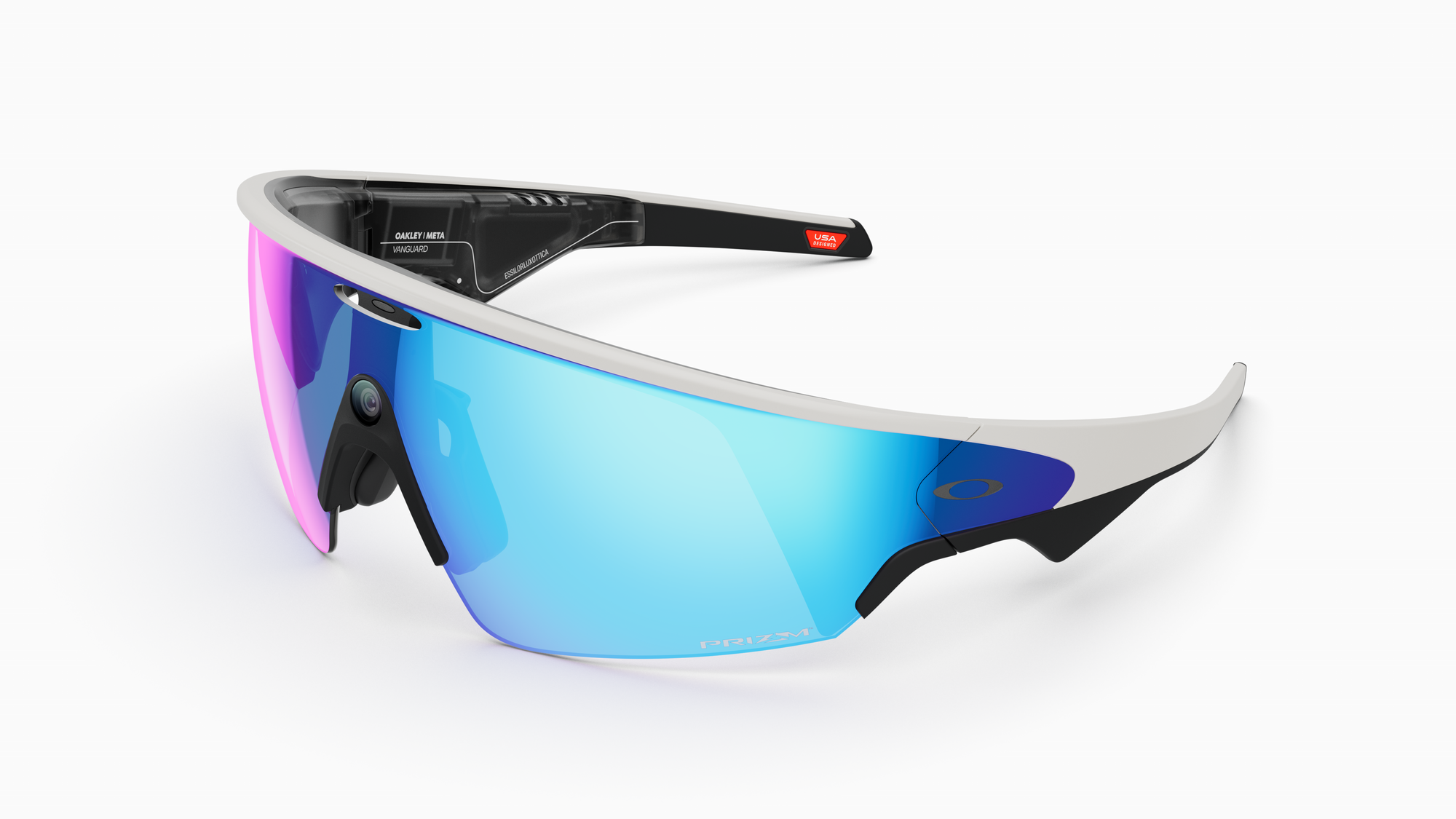
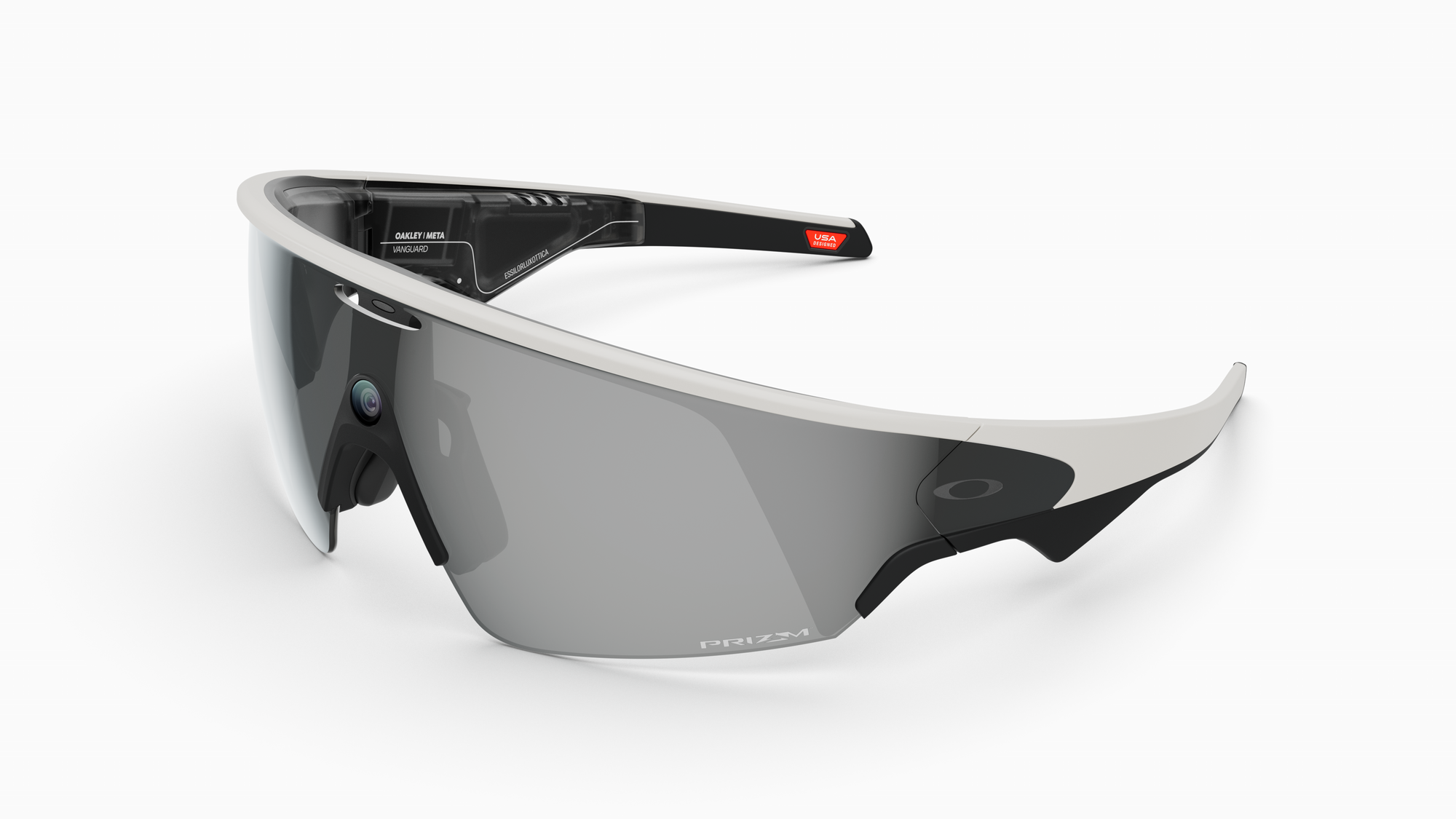
The Oakley Meta Vanguard glasses are official, and you can preorder them now.
The glasses, which leverage Oakley’s iconic Sphaera design, were rumored for months, and their design leaked on Monday. While we had expected them to be called Oakley Meta Sphaera, their actual name is Oakley Meta Vanguard.
0:00
/0:30
Compared to the Ray-Ban Meta Gen 2 and Oakley Meta HSTN glasses, Oakley Meta Vanguard has a wider FOV centered camera, IP67 water resistance, and slightly longer battery life.
The centered camera should make for better first-person footage, and it has a field of view of 122 degrees, compared to 100 degrees for Meta’s other smart glasses.
It can record video at either:
3K at 30FPS (for up to 3 minutes at a time)
1080p at 60FPS (for up to 3 minutes at a time)
1080p at 30FPS (for up to 5 minutes at a time)
Slow Motion 720p at 120FPS
Meta says the speakers are also six decibels louder than its other smart glasses, making them more suitable for hearing audio while wind is rushing past your face, ideal for skiing, cycling, and running.
Oakley Meta Vanguard’s IP67 water and dust resistance should also make it more suitable for tougher environments, and Meta says its battery is far better at handling cold weather – a problem I’ve personally faced with the Ray-Ban Meta glasses.
According to Meta, Oakley Meta Vanguard glasses should get you around 9 hours of use, compared to 8 hours for the Ray-Ban Meta Gen 2 and Oakley Meta HSTN glasses.
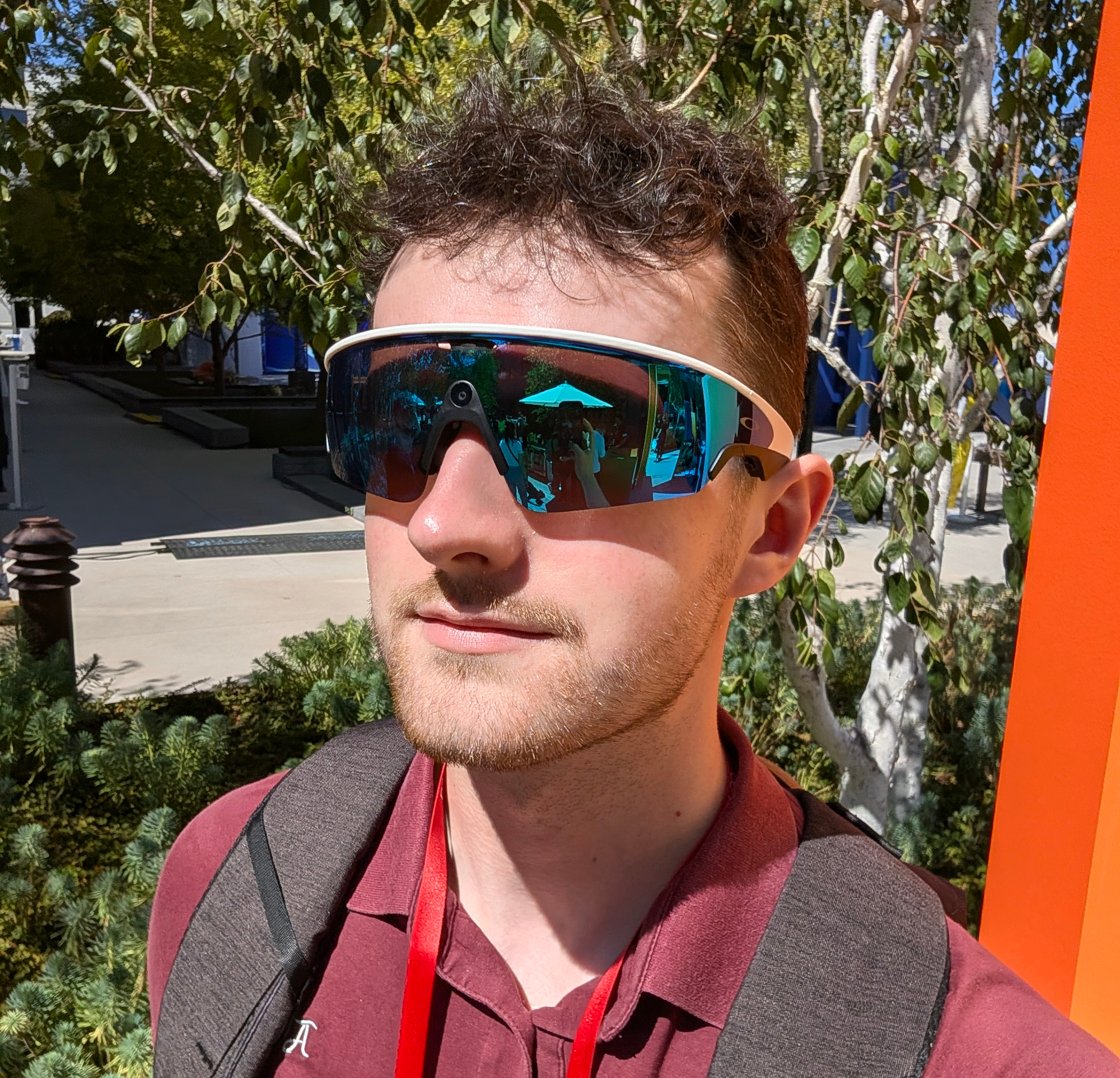
Me wearing Oakley Meta Vanguard at Meta Connect 2025.
Other than this, Oakley Meta Vanguard glasses function the same way as Ray-Ban Meta and Oakley Meta HSTN. They’re screenless smart glasses with a camera, microphones, and speakers. You can use them to capture photos and videos, listen to music/podcasts/audiobooks, make and receive calls, share your first-person view on WhatsApp & Messenger video calls, translate speech, scan QR codes, and query Meta AI, the company’s LLM-based assistant that can see via the camera when you ask about something in view. It’ll also read out some phone notifications, if you want.
I was able to briefly try the Oakley Meta Vanguard glasses at Meta Connect 2025 earlier today. While on paper they’re almost 30% heavier than Ray-Ban Meta, at 66 grams, in practice I found them to be more comfortable, as this weight is better distributed.
Oakley Meta Vanguard is available in 4 colors:
Black frame with 24K lenses
Black frame with Road lenses
White frame with Sapphire lenses
White frame with Black lenses
The 4 colors of Oakley Meta Vanguard.
All four are priced at $500, you can preorder them now, and they’ll ship on October 21 to the US, Canada, UK, Ireland, France, Italy, Spain, Austria, Belgium, Australia, Germany, Sweden, Norway, Finland, Denmark, Switzerland, and the Netherlands.
Meta and EssilorLuxottica say they will bring the glasses to Mexico, India, Brazil, and the UAE later this year.
Gen 2 of the displayless Ray-Ban Meta glasses brings them up to parity with the Oakley Meta HSTN glasses.
The first generation Ray-Ban Meta glasses shipped after Connect 2023, and the recently-launched Oakley Meta HSTN glasses have higher resolution and longer battery life.
Now, at Connect 2025, Meta has opened preorders for Ray-Ban Meta Gen 2. As with Oakley HSTN, Ray-Ban Meta Gen 2 can record 3K video, and has up to eight hours of battery in typical use.
That compares to 1080p and four hours for the first generation Ray-Ban Meta glasses.
Other than this, Ray-Ban Meta Gen 2 functions the same way as the original. They’re screenless smart glasses with a camera, microphones, and speakers. You can use them to capture photos and videos, listen to music/podcasts/audiobooks, make and receive calls, share your first-person view on WhatsApp & Messenger video calls, translate speech, scan QR codes, and query Meta AI, the company’s LLM-based assistant that can see via the camera when you ask about something in view. It’ll also read out some phone notifications, if you want.