Meta is launching a national super political action committee (PAC), according to a report by Axios. This super PAC will be committed to fighting “onerous” AI regulation across the country. It’s called the American Technology Excellence Project and Meta spokesperson Rachel Holland said the company is investing “tens of millions” into the effort.
The goal of the PAC is to elect pro AI state candidates from both parties. It’s being run by longtime Republican operative Brian Baker with an assist from Democratic consulting firm Hilltop Public Solutions.
The tech-friendly federal government has no plans to regulate AI but fell short on banning states from doing so. There have been over 1,000 state-level policy proposals introduced this year, which Meta thinks could hurt America in the AI race with China.
“State lawmakers are uniquely positioned to ensure that America remains a global technology leader,” Meta VP of public policy Brian Rice said in a statement. “This is why Meta is launching an effort to support the election of state candidates across the country who embrace AI development, champion the U.S. technology industry and defend American tech leadership at home and abroad.”
The company has not released any information as to which forthcoming state elections would be disrupted by the aforementioned tens of millions of dollars. We also don’t know how many people the PAC will employ.
Meta is preparing to pump tens of millions of dollars into a new California super PAC that will fund candidates opposed to tech regulation, especially the regulation of AI, per Politico.
While the Trump administration loves itself some AI, there are limits. The president recently signed an executive order banning “woke AI” from being used in the federal government. I haven’t come across any woke AI in the wild, but I have seen whatever this is.
This article originally appeared on Engadget at https://www.engadget.com/big-tech/meta-to-launch-national-super-pac-against-ai-regulation-154537574.html?src=rss
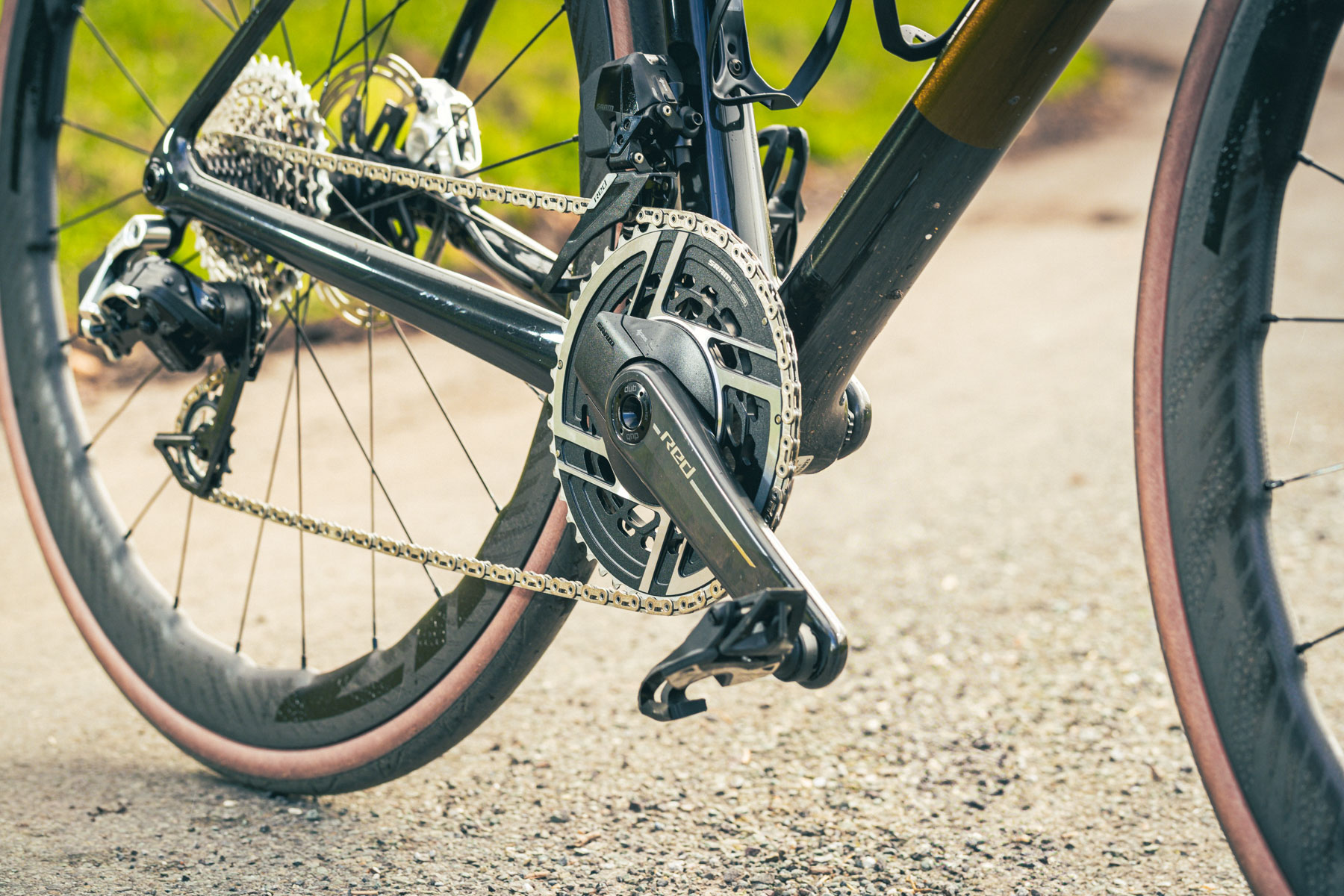
SRAM has just revealed a firmware update that will make shifting faster on its Eagle AXS mountain bike groupset.
The update is available via the SRAM AXS app on your phone, and should only take a few minutes.
SRAM says: “Firmware 2.53.8 reduces the time between successive derailleur shifts of three or more and aligns better with common cassette rotational speeds. This means that on successive shifts of three or more, the derailleur will move quicker between gear positions.”
The update contains a timing update to the Cassette Multishift intervals, and will bring the shifting in line with the shifting of the limited-edition SRAM Eagle Transmission 1987 groupset, which was released earlier this month.
The timing of the original Cassette Mapping was optimised through field and lab tests. “The goal was to have the best shift quality possible and to focus on long-term wear of the system,” SRAM says.
Now, after more testing and ride data, SRAM says: “[W]e are confident that we can reduce the time between successive shifts while maintaining our industry-leading shifting under load and the long-term durability of Eagle Transmission cassettes and chains.”
To experience the new shifting, you’ll have to have SRAM’s Multishift feature enabled.
The Supreme Court yesterday allowed President Trump to fire a Democratic member of the Federal Trade Commission and will decide whether to overturn a 90-year-old precedent that says the president cannot fire an FTC commissioner without cause.
Trump fired Commissioner Rebecca Kelly Slaughter in March with a notice that said her “continued service on the FTC is inconsistent with my administration’s priorities.” Trump did so despite the 1935 ruling in Humphrey’s Executor v. United States, in which the Supreme Court unanimously held that the president can only remove FTC commissioners for inefficiency, neglect of duty, or malfeasance in office.
An appeals court reinstated Slaughter three weeks ago, with judges finding that “the government has no likelihood of success on appeal given controlling and directly on point Supreme Court precedent.” But on September 8, Supreme Court Chief Justice John Roberts granted a stay that temporarily blocked the lower-court ruling against Trump.
Meta put the smartglasses industry on alert when it announced the Meta Ray-Ban Displays last week. And while those might feature one of the most advanced optical engines on a device its size, after testing out one of its competitors — the Rokid Glasses — I’m convinced there’s still plenty of room for competition.
At $549, the Rokid Glasses are more affordable than the Meta Ray-Ban Displays, which are set to launch at $800. However, it should be noted that this difference won’t last forever, as following Rokid’s Kickstarter campaign, its suggested retail price will increase significantly to around $740. Also, while Kickstarter campaigns aren’t always the strongest indicator of reliability, Rokid has actually been around for some time with devices dating back to before 2018.
Rokid’s heads-up UI looks much sharper in person. Taking pictures of smartglass displays is hard.
Sam Rutherford for Engadget
But more importantly, Rokid’s eyewear has some notable design differences. Instead of a single full-color display for just your right eye, it features dual microLED waveguides that provide a true binocular view, which helps reduce eyestrain. The downside is that the Rokid glasses only support a single color — green — though that’s kind of fun if you’re into the classic hacker aesthetic. Text and icons are more than sharp enough to make reading the glasses’ minimalist UI a cinch. And with up to 1,500 nits of brightness, its display is easy to see even outside in bright light. In the future, though, Rokid will need to upgrade to full-color components to better compete with rivals like the Meta Ray-Ban Displays.
Rokid’s glasses score well when it comes to overall style and wearability. The Meta Ray-Ban Displays look like someone stole the frames off Garth’s head from Wayne’s World and then made them thrice as thick, whereas Rokid’s glasses actually look more like Wayfarers than Ray-Ban’s own creation. Touch panels are hidden in each arm, and you even get real nose pads for extra comfort. Plus, weighing in at just 49 grams, Rokid claims its creation is the lightest “full-function AI and AR glasses.”
In everyday use, others may not notice the smartglasses’ UI being projected onto its lenses. But at just the right angle, it does become visible.
Sam Rutherford for Engadget
The only major indicators that these aren’t a typical set of eyewear are the small camera near your left temple and a faint outline of where the waveguides project a heads-up display onto its lenses. There are also tiny built-in speakers that play the sound from videos, music or answers from Rokid’s AI helper and they are about as good as you can expect from a gadget this compact. But it probably won’t come as a surprise when I say they could be a touch louder or provide better bass.
Meanwhile, when it comes to recharging, there’s a simple magnetic pin connector at the end of the right arm that can connect to any USB-C cable using an included adapter. Unfortunately, if you want a charging case like you get with many of its rivals, you’ll have to shell out another $100. Battery life has been surprisingly solid in my experience as well. You can get up to six hours of continuous music playback over Bluetooth, though if you use more advanced features (especially ones that rely on AI), you will need to juice up sooner.
Sam Rutherford for Engadget
As for functionality, the company’s standalone approach to content generation is both its biggest strength and weakness. That’s because while Meta’s smartglasses come with tie-ins to Facebook and Instagram which makes livestreaming what you see a breeze, Rokid doesn’t offer that option. Instead, you’ll have to use the onboard 12MP camera and five mics to take photos and videos before manually downloading them to your phone and then sharing them to your favorite platform. This results in a few extra steps between capture and publication (and no option for livestreaming), but at least you do get the freedom of choice.
Image quality is also acceptable. You won’t be dazzled by its contrast and dynamic range and darker environments can be a bit of a challenge. But as a vehicle for recording the world around you, these glasses are a decent way to take in your surroundings. Thankfully, the process of capturing content couldn’t be simpler, just press once on the physical button on the right arm for a picture or press and hold for video. Or if you prefer, you can use voice commands like “Hi Rokid, record a video.”
Sam Rutherford for Engadget
Aside from taking photos and videos, Rokid’s glasses can also pair with your phone to serve up notifications, record voice memos and even offer turn-by-turn directions using AI, though I couldn’t get that last feature working. There’s also a teleprompter mode that allows you to upload scripts to the glasses and have text scroll down automatically as you speak.
However, the biggest draw (or deterrence, depending on your opinion of machine learning) is the AI integration, which uses the device’s Qualcomm AR1 chip and an onboard ChatGPT model to provide real-time translation and audio transcriptions. Just like what you get when using large LLMs on a phone or laptop, even when AI can understand most of what’s coming in, there are still times when it doesn’t fluently convert certain lines or phrases.
Sam Rutherford for Engadget
There’s also the option to ask the glasses to create a text description of what its cameras see, though again, AI sometimes struggles with accuracy. When I held my phone up in front of the lens, it correctly identified what type of device it was, but then it got confused by a barcode on a box in the background and thought I was trying to insert a SIM card.
Even considering the foibles of current AI models, the Rokid glasses are a welcome surprise in a growing sea of smartglasses. They’re lighter and sleeker than anything I’ve tried to date while covering all the most important functions: playing music, surfacing notifications and capturing decent first-person photos and videos. Other features like live translation and live captions are a bonus. When they work, which is most of the time, it really feels like an engaging glimpse of what is poised to be the next big era for wearable computing.
Sam Rutherford for Engadget
It’s way too early to pick a winner or even recommend these as a must-have for bleeding-edge enthusiasts. But to see smaller names like Rokid come up with compelling alternatives to Meta’s latest makes these smartglasses worth paying attention to.
The Rokid Glasses are available for pre-order now via the company’s Kickstarter campaign with estimated deliveries slated for sometime in November.
This article originally appeared on Engadget at https://www.engadget.com/wearables/rokids-smartglasses-are-surprisingly-capable-153027590.html?src=rss
TCL makes good non-OLED TVs (arguably some of the best when compared to the cost), as is the case with last year’s QM7 that I got my hands on, which is still a bargain in 2025. There are plenty of differences between QLEDs and OLEDs, but unless you’re planning on dropping thousands of dollars, a QLED will do just fine.
TCL 75-Inch Class QM6K Series
$749.99 at Amazon
$999.99 Save $250.00
$749.99 at Amazon
$999.99 Save $250.00
Consider TCL’s new QM6K QLED, going for $749.99 (originally $999.99) for the 75-inch model. This is the lowest price this TV has been, according to price-tracking tools. I’ve had mine for a couple of months and have been surprised by its value for the price. If you’re looking for different sizes, the 55-inch is $497.99 (originally $599.99), and the 85-inch is currently $999.99 (originally $1,499.99)
TCL’s QM lineup offers a good value regardless of which size you pick. The QM6K is much better than last year’s rendition, now with local dimming zones (500 of them, according to CNET’s review) and a mini LED panel, improving contrast dramatically. The color accuracy is also surprisingly accurate out of the box for HDR content, which is great for people who don’t like to mess with settings.
With the QM6K you get 144Hz native refresh rate, HDR formats like HDR ULTRA with Dolby Vision IQ, HDR10+, HDR10, & HLG, Dolby Atmos Audio, an anti-glare screen, 4 HDMI Inputs (one of which is an eARC), and the Google TV Smart OS (my favorite OS) with Chromecast built in, meaning you can cast your phone to it. You also get Apple AirPlay 2 and Alexa built in, according to ZDNet’s review.
If you’re a gamer, there’s a lot to like in the QM6K, according to IGN’s review. The Game Bar feature lets you adjust settings on the fly. There’s also a VRR accelerator that doubles the refresh rate to a perceived 288Hz. It also has AMD FreeSync Premium Pro, so you can experience smooth gameplay on a PC or console. Truly a lot to offer for a budget QLED TV.
Zwift version 1.98 begins its phased rollout today. This is a minor update that brings emoji support to in-game chat and rider names, along with a few other tweaks. Read on for details…
In-Game Emoji Support
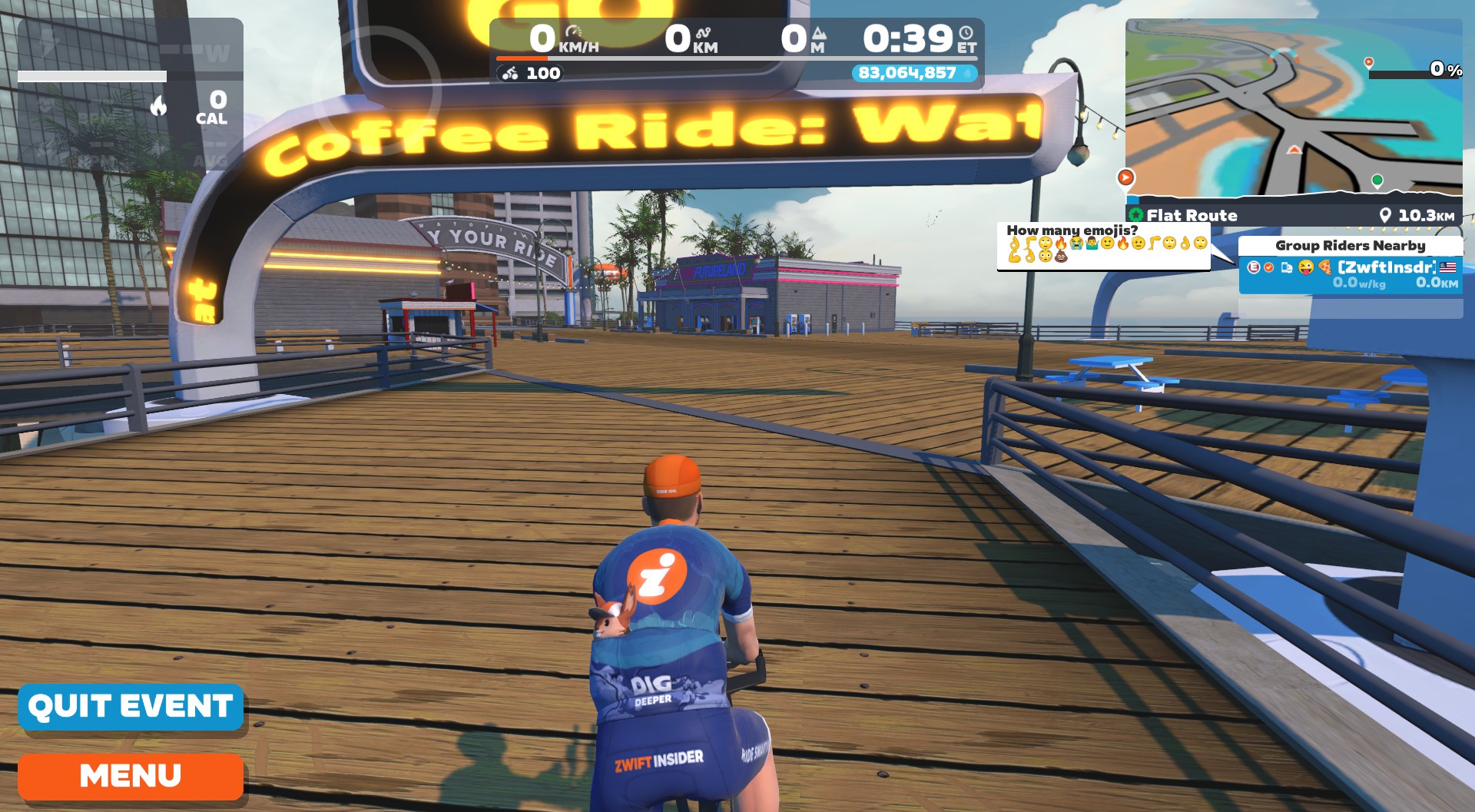
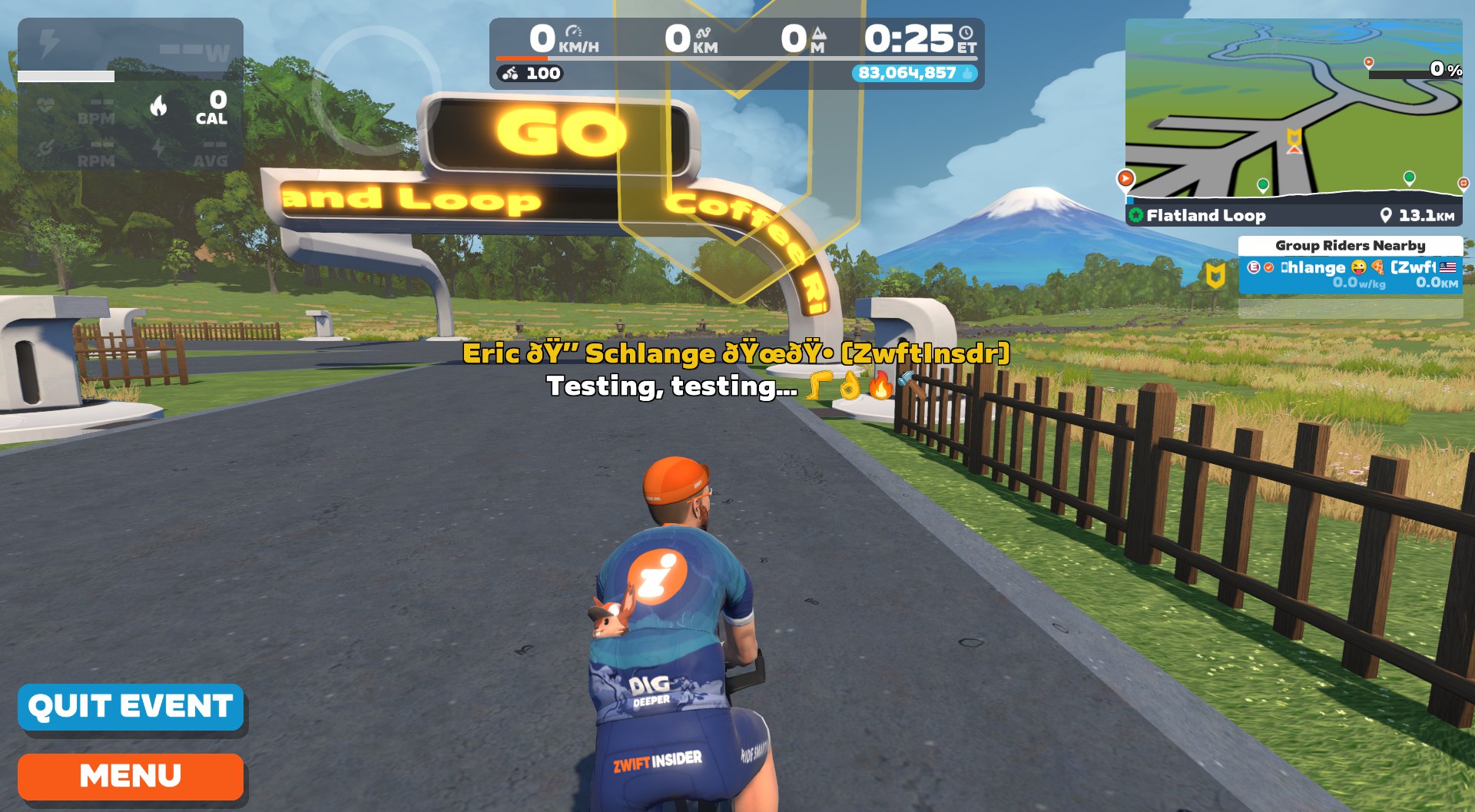
Emojis have always worked when reading messages in the Companion app, but they didn’t show up in game. That changes with this week’s update, which will show emojis in messages and Zwifter’s names. How many emojis can you put in a message? A lot.
But only up to two emojis will be displayed in your surname (the first two you use).
Ride leader’s names are displaying emojis correctly yet, but we assume this will get fixed soon:
Leaderboard
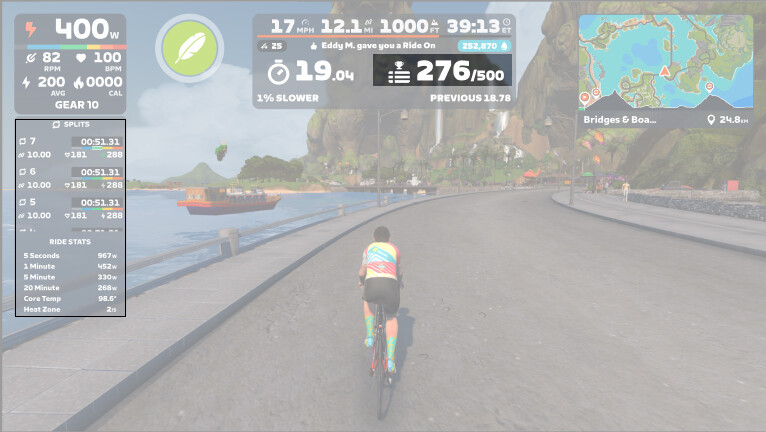
After completing a timed segment, your leaderboard ranking is now shown in the center HUD.
This is particularly helpful if you have swapped out the leaderboard on the side HUD for the ride stats panel that was added in July.
Release Notes
Zwift provided notes on additional tweaks and bug fixes in this update:
Fixed an issue where Zwift Companion and Zwift Game could potentially show different streak week numbers.
Fixed an issue that could cause workout arch lighting to appear on the roadway without a corresponding workout arch.
Fixed an issue where TT bikes could potentially automatically steer toward draft in free rides (where drafting provides no benefit); TT bikes now only seek draft in TTT events.
Discuss this update in Zwift’s forum > (link coming soon)
Questions or Comments?
If you spotted any other changes or bugs in the update, please comment below!
The Open Source Security Foundation
(OpenSSF) has put together a joint statement from many of the public
package repositories for various languages about the need for assistance in
maintaining these commons. Services such as PyPI for Python, crates.io for Rust, and many others are
working together to try to find ways to sustain these services in the face
of challenges from “automated CI systems, large-scale dependency
scanners, and ephemeral container builds” all downloading enormous
amounts of package data, coupled with the rise of generative and agentic AI
“driving a further explosion of machine-driven, often wasteful automated
usage, compounding the existing challenges“. It is not a crisis, yet,
they say, but it is headed in that direction.
Despite serving billions (perhaps even trillions) of downloads each month (largely driven by commercial-scale consumption), many of these services are funded by a small group of benefactors. Sometimes they are supported by commercial vendors, such as Sonatype (Maven Central), GitHub (npm) or Microsoft (NuGet). At other times, they are supported by nonprofit foundations that rely on grants, donations, and sponsorships to cover their maintenance, operation, and staffing.
Regardless of the operating model, the pattern remains the same: a small number of organizations absorb the majority of infrastructure costs, while the overwhelming majority of large-scale users, including commercial entities that generate demand and extract economic value, consume these services without contributing to their sustainability.
The era of Google’s Play’s unrivaled dominance may be coming to an end in the wake of the company’s antitrust loss, but Google’s app store isn’t going anywhere. In fact, the Play Store experience is getting a massive update with more personalization, content, and yes, AI. This is Google, after all.
The revamped Google Play Games is a key part of this update. Gamer profiles will now have a public face, allowing you to interact with other players if you choose. Play Games will track your activity for daily streaks, which will be shown on your profile and unlock new Play Points rewards. Your profile will also display your in-game achievements.
Your gaming exploits can also span multiple platforms. Google Play Games for PC is officially leaving beta. Google says there are now 200,000 games that work across mobile and PC, and even more PC-friendly titles, like Deep Rock Galactic Survivor, are on the way. Your stats and streaks will apply across both mobile and PC as long as the title comes from the Play Store.
If you continue to doubt China’s prominence in EV tech, look no further than the Yangwang U9 Xtreme, which has claimed the title of the world’s fastest production car by knocking out a verified top speed of 308.4 mph (496.22 kmh).
In the hands of driver Marc Basseng, the record-breaking run was conducted at the Automotive Testing Papenburg
mrspoonsi writes: The US Secret Service says it has dismantled a network of more than 300 SIM servers and 100,000 SIM cards in the New York area that were capable of crippling telecom systems.
The devices were “concentrated within 35 miles of the global meeting of the UN General Assembly now under way in New York City” and an investigation has been launched, it adds in a press statement.
The Secret Service says the dangers posed included “disabling cell phone towers, enabling denial of services attacks, and facilitating anonymous, encrypted communication between potential threat actors and criminal enterprises.”
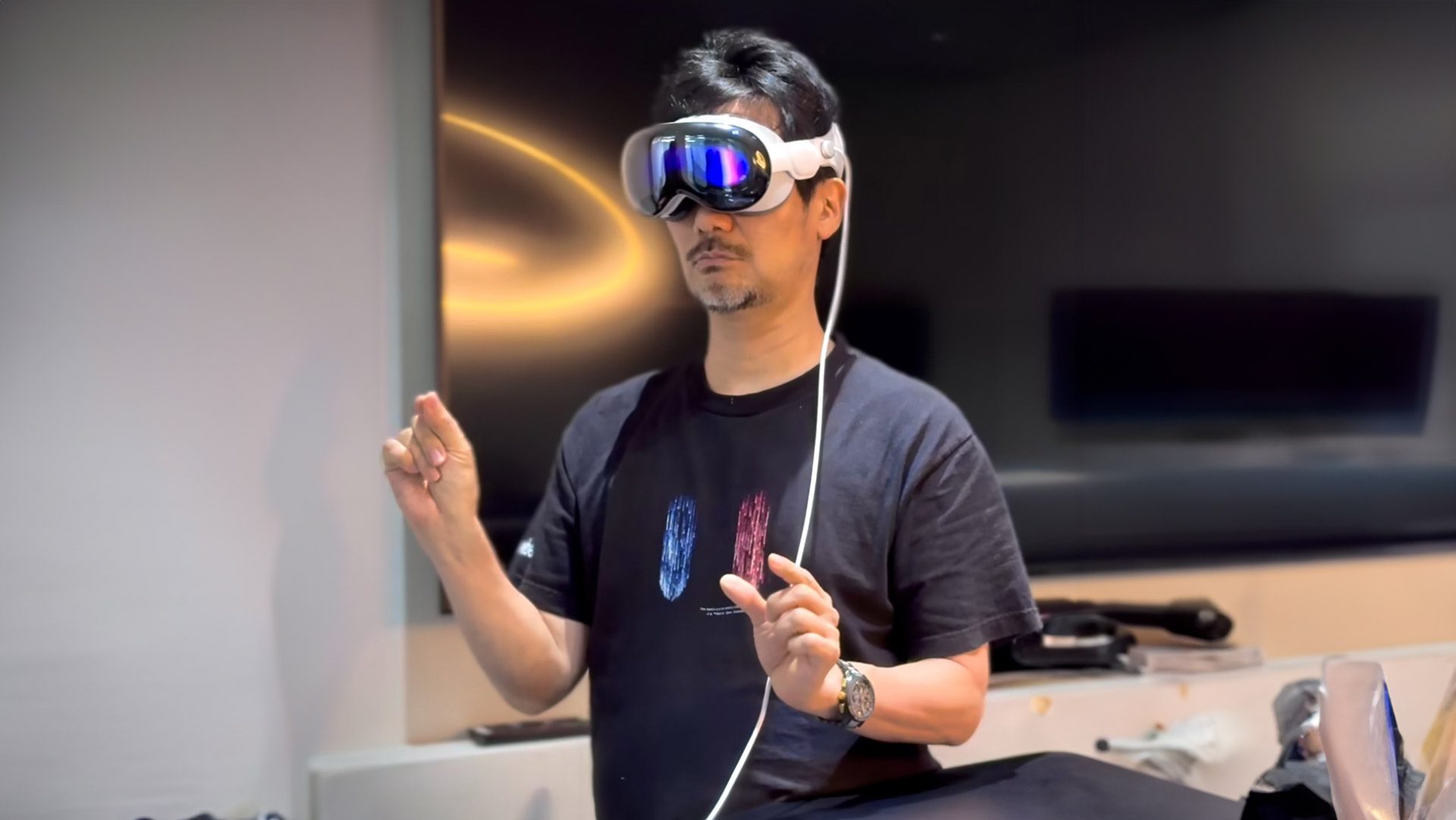
Hideo Kojima’s production company and Niantic Spatial released a new teaser showing off a concept for an AR game that the studios see as a “significant moment for both companies.”
The teaser, seen below, follows a player wearing a futuristic pair of augmented reality glasses, and traversing a very Death Stranding-inspired landscape.
“A new dawn. In the near future. Move beyond the screen,” a tagline reads. “The future starts today,” the teaser continues, revealing what could be ally, or fellow competitor on the horizon.
Speaking to IGN, Kojima isn’t revealing much at this point, although it’s clearly a geolocated, multiplayer AR game he’s after.
“I can’t really speak about details yet but, if you’re climbing a mountain… there’s still entertainment there,” Kojima tells IGN. “It’s like the real Death Stranding in the real world, and you can connect with people, or you can connect with the actual environment there in your city. Previously it was like virtual reality, but this time I’m thinking about connecting with the real environment.”
Niantic Spatial CEO John Hanke, a principal creator behind the company’s smash hit mobile game Pokémon Go, sees the project as a way of getting people to play together socially.
“I hope that it creates [an environment] that brings people together to play,” Hanke says. “If there’s one thing need we have in our society right now, it’s something that unifies us and doesn’t pull us apart. And I think that storytelling… has always been humanity’s way of coming together. And technology can support that. It can divide it too, but with an inspiring creator it can be an important force in the world.”
Niantic Spatial further says the partnership is a “significant moment for both companies and a shared vision to push the boundaries of what’s possible in interactive storytelling.”
There’s no release date yet—or target platform for that matter, simply because no such consumer AR device exists at this point. Devices like Meta’s Orion prototype (or something based on it) and Snap’s next-gen Spectacles aren’t out yet, making the trailer more of a concept showcase at this point.
Hideo Kojima wearing Apple Vision Pro | generative extend based on an image courtesy Hideo Kojima
Still, Niantic Spatial has been working specifically in AR since the parent company sold its gaming division responsible for Pokémon Go to Scopely for $3.85 billion in March.
A few months later, the company released XR pet sim Hello, Dot for Quest 3, a mixed reality offshoot of Peridot Beyond for Snap Spectacles, Pause with Peridot and Snap-a-Dot for Web AR.
What’s more, the company says it also aims to build “spatial intelligence that helps people better understand, navigate, and engage with the physical world,” noting it hopes to leverage its geospatial AI and AR tech in enterprise applications.
A bug in a recent release of systemd’s network manager caused
headaches for people managing systems that have a virtual LAN (VLAN)
interface on a bridge; something one might want to do, for example,
when configuring network interfaces for virtual machines. The bug
affected several Debian users when upgrading the systemd package
from v257.7-1 to v257.8-1. The updated package is part of the Debian 13.1
release, and the bug has snared enough users to cause a minor
stir—due in no small part to the maintainer’s response as much
as the bug itself.
WhatsApp is now rolling out message translations on its iOS and Android apps. Starting today, Android users will be able to translate messages between six languages: English, Spanish, Hindi, Portuguese, Russian and Arabic. On iPhone, there’s support for translation between the following languages (i.e. all of the ones supported by Apple’s Translate app):
Arabic
Dutch
English
French
German
Hindi
Indonesian
Italian
Japanese
Korean
Mandarin Chinese
Polish
Portuguese (Brazil)
Russian
Spanish
Thai
Turkish
Ukrainian
Vietnamese
To convert a message into a different language, long press on it, select Translate, then the language you’d like to translate the message to or from. Android users will get an extra-handy bonus feature with the ability to switch on automatic translation for an entire chat.
Translations are handled on your device to help protect your privacy — WhatsApp still won’t be able to see your encrypted chats. Your device will download relevant language packs for future translations. WhatsApp says translation works in one-on-one chats, groups and Channel updates. The platform will also add support for more languages down the line.
There’s no word as yet on if or when WhatsApp will support message translations on the web or in its Windows app. “Translating messages on WhatsApp is only available on certain devices and may not be available to you yet,” a note on a support page reads. “In the meantime, we recommend keeping WhatsApp updated on your device so you can get the feature as soon as it’s available.”
This article originally appeared on Engadget at https://www.engadget.com/apps/whatsapp-starts-rolling-out-message-translations-on-ios-and-android-150132823.html?src=rss
Climate change could leave 74% of the world’s drought-prone regions at high risk of severe and prolonged droughts by the end of the century, new research suggests.
Last Friday, SRAM announced it is taking legal action against the UCI, in a dispute over the cycling governing body’s proposed maximum gearing protocol.
The protocol’s objective is to limit speeds achieved by riders and hence improve rider safety, following a number of high-profile fatalities when descending at speed in races, most notably those of Gino Mäder and Muriel Furrer, both last year.
The UCI refers to the new protocol as a “test” at a single race, the Tour of Guangxi, taking place in China in mid-October, although it says additional events may follow.
The UCI will test gearing restrictions at the 2025 Tour Of Guangxi. Dario Belingheri / Getty Images
The number for the maximum gearing is 10.46 metres of forward motion per pedal revolution. It’s a figure that’s dependent on the bike’s gearing, but also the tyre width (and hence its circumference).
In real terms, this means the maximum gear a cyclist could use in a race would be a 54×11-tooth, when paired with a 28mm-wide tyre.
And therein lies the problem. SRAM (and Campagnolo with the launch of its Super Record 13 groupset) produces cassettes that start at 10 teeth, and SRAM’s pro riders often opt for a crankset with a 54-tooth outer chainring. Under the new rules, this combination would be banned.
The UCI’s solution? Make pro teams block off the 10-tooth sprocket, so they can’t use it, reducing their 12-speed groupsets to 11-speed.
So why is SRAM taking legal action against the UCI?
SRAM says the regulations “hinder innovation, limit rider choice, and unfairly disadvantage SRAM riders and SRAM”. Russell Burton / Our Media
SRAM has filed a complaint with the Belgian Competition Authority (BCA), which has in turn launched anti-trust proceedings against the UCI.
The basis of SRAM’s complaint is that it is the only major manufacturer whose current pro team gearing will be blocked by the new regulation. Shimano cassettes still have an 11-tooth smallest sprocket and are paired with a 54/40t crankset. Campagnolo currently only supplies Team Cofidis and its Super Record 13 groupset offers cassettes with 11-tooth smallest sprockets as well as 10-tooth ones.
So, according to SRAM, the regulations “hinder innovation, limit rider choice, and unfairly disadvantage SRAM riders and SRAM”. It reckons it would take years to engineer a drivetrain that conformed to the UCI’s regulation.
“Lack of transparency and collaboration”
SRAM says the UCI leadership has refused to engage with it, over multiple attempts, and that “the lack of transparency and collaboration left legal action as the only remaining path forward”.
It claims that its gearing “has been publicly labeled as non-compliant, creating reputational damage, market confusion, team and athlete anxiety, and potential legal exposure”.
It further claims that the new ruling was made without any consultation, transparency, supporting evidence or safety justification and distorts competition.
An open letter from SRAM’s CEO
SRAM’s CEO, Ken Lousberg, published an open letter explaining why the company filed a formal complaint with the BCA.
In the letter, Lousberg wrote: “The UCI’s new Maximum Gearing Protocol is set to restrict the equipment many of you rely on to ride and race at your best. It limits choice, stifles innovation, and unfairly targets SRAM riders – and SRAM itself.”
“We’ve tried to engage the UCI, cycling’s governing body, in good faith, but our concerns went unheard. That’s why we’ve taken legal action – not just to protect SRAM, but to protect the right to compete on equal footing.”
“We’re not asking for much. We simply want our racers to compete on a level playing field, and for the industry to be recognized and included as a core stakeholder – working together to make our sport safer for athletes and more inspiring for fans,” the letter went on.
Focus on course design
Better course design will do more to improve rider safety, according to SRAM. Marco Bertorello / Getty Images
SRAM says it crunched the numbers for the 2025 Tour de France and found that crashes on descents were rare, and that there was no correlation between higher gearing and crash risk.
SRAM claims better course design will do more to improve rider safety – and it’s not alone in this belief.
Dan Bigham, head of engineering at Red Bull – Bora – Hansgrohe, presented his research into gearing restrictions at the Science and Cycling Conference in Lille earlier this year.
Bigham said the restrictions would have no impact on the speed of the peloton, so they would not improve safety.
Instead, Bigham proposed four pillars to focus on: course design, bike design, rider protection and medical response.
“We have the power to make changes. But restricting gear ratios simply distracts from making meaningful changes to rider safety,” said Bigham.
The UCI responds twice
On Saturday 20 September, a day after SRAM’s announcement, the UCI expressed concern over the BCA’s announcement that it had opened an investigation.
The UCI said in an official press release that it was “puzzled by the issuance of the Belgian Competition Authority’s press release before the UCI has even been served with the complaint and by the obvious inaccuracies contained in this statement”.
The UCI also issued a second statement in response to SRAM’s press release, where it defended its test at the Tour of Guangxi.
“The UCI reiterates that all its technical regulations, including the protocol for testing maximum gear ratios, are developed in the best interests of cycling, athlete safety, and fair sport. These rules are the result of a consultation process involving stakeholders in the sector, including teams, riders, and organisers,” the UCI said.
“[T]he UCI questions SRAM’s objectives in opposing a test designed to assess the relevance of a safety enhancement measure, thereby undermining the necessary unity among cycling stakeholders, which is essential for progress toward a safer sport,” the statement concluded.
The European Union has asked Apple, Google and Microsoft to explain how they police online financial scams, stepping up enforcement of the Digital Services Act (DSA), as first reported by the Financial Times. Formal information requests were also sent to Booking Holdings, the owner of Booking.com, regarding how the company handles fake accommodation listings. Likewise, regulators will be probing fake banking apps in Apple’s App Store and Google Play. Additionally, they will be taking a close look at fake search results in Google search and Microsoft’s Bing.
Speaking with the Financial Times,EU tech chief Henna Virkkunen said criminal activity is increasingly moving online and platforms must do more to detect and prevent illegal content. Virkkunen said that financial losses from online fraud exceed €4 billion a year (around $4.7 billion) across the EU, and that the rise of AI has made detecting these scams more difficult.
The four companies will be given the chance to respond to these information requests, but under the DSA companies can face penalties up to 6 percent of their global annual revenue for failing to adequately combat illegal content and disinformation.
Earlier this year Apple and Meta were fined around $570 million and $228 million, respectively, after the European Commission found them in violation of the Digital Markets Act (DMA), though both companies are appealing the fines. The DMA is a set of rules governing online platforms that was adopted alongside the DSA in 2022.
European fines on American companies, particularly a recent $3.5 billion fine levied on Google for antitrust violations, have drawn the attention and ire of President Donald Trump. The president has threatened a trade probe over what he views as “discriminatory actions” against American tech companies.
This article originally appeared on Engadget at https://www.engadget.com/big-tech/the-eu-wants-apple-google-and-microsoft-to-clamp-down-on-online-scams-145333226.html?src=rss
40% of U.S. employees have received “workslop” — AI-generated content that appears polished but lacks substance — in the past month, according to research from BetterUp Labs and Stanford Social Media Lab. The survey of 1,150 full-time workers found recipients spend an average of one hour and 56 minutes addressing each incident of workslop, costing organizations an estimated $186 per employee monthly. For a 10,000-person company, lost productivity totals over $9 million annually.
Professional services and technology sectors are disproportionately affected. Workers report that 15.4% of received content qualifies as workslop. The phenomenon occurs primarily between peers at 40%, though 18% flows from direct reports to managers and 16% moves down the hierarchy. Beyond financial costs, workslop damages workplace relationships — half of recipients view senders as less creative, capable, and reliable, while 42% see them as less trustworthy.