Dubbed “Huffman” and coming more than ten months after FFmpeg 7.1, the FFmpeg 8.0 release is here to enable TLS peer certificate verification by default, add an AV1 Vulkan encoder, introduce VP9 Vulkan and ProRes RAW Vulkan hardware-acceleration, and implement APV encoding support through a libopenapv wrapper.
Arch Linux acknowledges a persistent denial-of-service attack affecting its services. Stay informed on the latest updates and security measures being implemented.
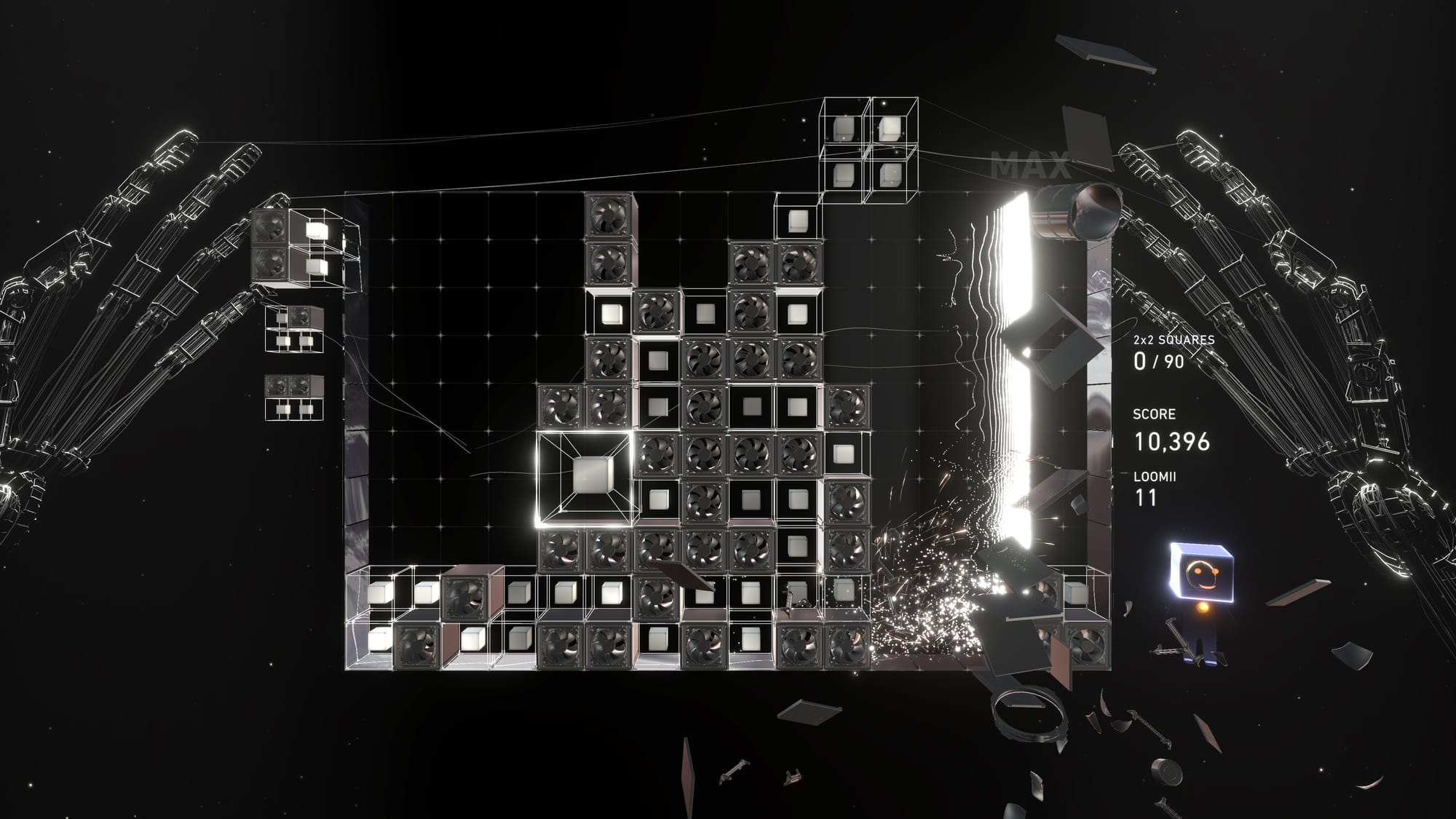
From his early days at SEGA, through Q Entertainment, to his current role as founder and CEO of Enhance Games, Tetsuya Mizuguchi has long pursued the convergence of emotion, games, and technology. With the upcoming Lumines Arise, he and his team are bringing their stunning musical puzzler to VR for the first time.
“When I first saw a video game, it was in black and white,” Tetsuya Mizuguchi tells me with a reminiscent smile. “It was Pong. Atari. I was nine or ten years old, and my friend’s house was a toy shop. That was a good friend to have.”
I’m on a video call with Mizuguchi to discuss the development of Lumines, but the conversation quickly blooms. From the experiences that inspired him to become a game developer and his earliest days in the industry, to his current projects and his feelings about virtual reality and the future, Mizuguchi (or Miz, as he’s graciously said I may call him) walks me along the through-line of his career with characteristic thoughtfulness. He continues listing games that made a major impact.
“I played Xenon 2, an Amiga game by the Bitmap Brothers,” he says. “That was a shooter, and the music was amazing. I understood this was not made by a typical game developer. It was people who loved music, and who loved technology, new expressions, new media.”
“In school, I had studied media aesthetics, meaning the [mixing] of art, technology, and the media of the future,” he says. “I wanted to direct music videos. But when I graduated university, many great music videos already existed. So, I thought, ‘What’s Next?’”
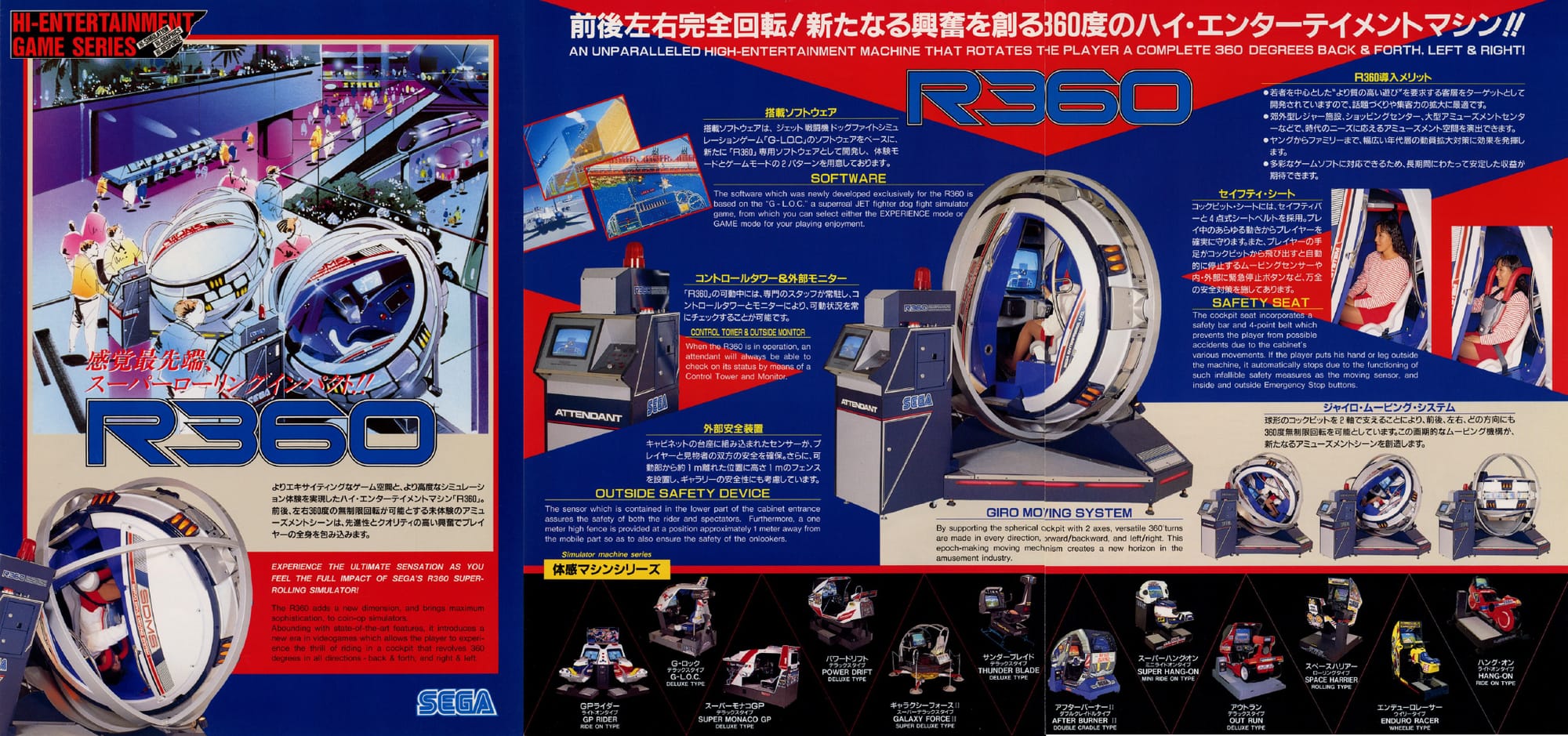
Japanese game centers offered a glimpse of the answer. SEGA AM2’s R360, a massive ball-shaped cockpit arcade cabinet released in 1990, could spin 360 degrees in any direction, allowing the player inside to freely move in response to the in-game action. It featured a four-point safety harness and was designed to rotate completely upside down, bringing incredible immersion to SEGA’s flight-sim games. Mizuguchi was impressed.
Promotional flyer for SEGA’s R360 arcade cabinet, which so inspired Mizuguchi.
“This was a totally new experience. I was a gamer, and all the coolest cabinets had the SEGA logo, so I wanted to work for SEGA. And already, I could see a future in which virtual reality would be a massive thing.”
As he speaks, a theme emerges: it’s all been about technology and emotion. He was drawn to games that stretched the constraints of the medium, arcade cabinets that pushed the boundaries of sensory stimuli, companies, and people who were at the forefront of experimental gaming experiences. It’s all connected.
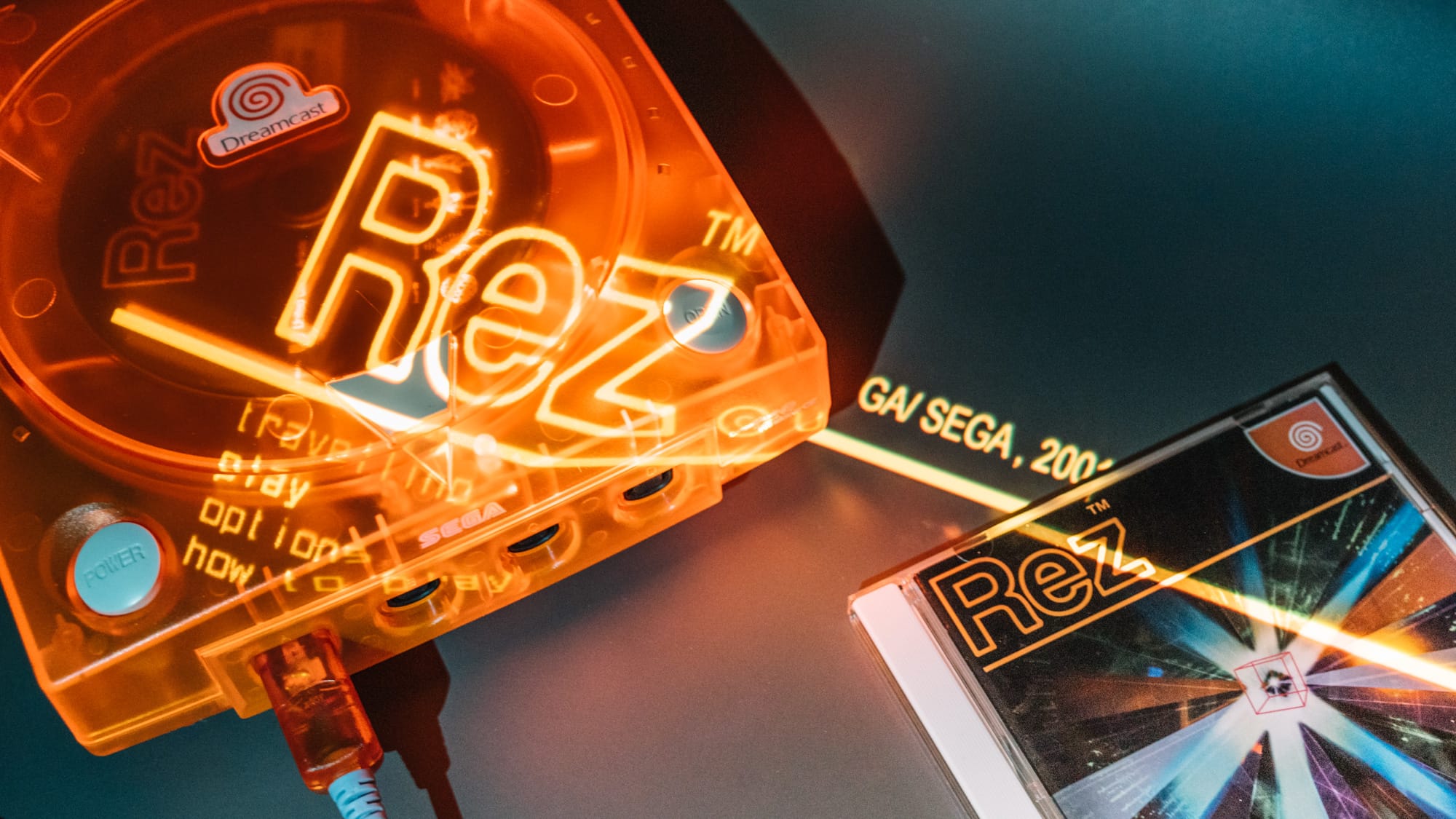
In 2001, Mizuguchi and his colleagues at SEGA produced Rez, a synesthetic musical rail-shooter which Miz describes as “the type of experience that I’m here to make.”
Rez’s ambitious melding of sound, visuals, and gameplay in an abstract way, as well as its unusually presented theme and story, in which a hacker plunges into a digital world to liberate a trapped AI, made for a hard sell at the turn of the millennium. Though it has gone on to become a beloved classic, Rez was underappreciated at launch, no doubt hamstrung by its late release on its unfortunately ill-fated native console, the SEGA Dreamcast.
0:00
/1:48
Gameplay clips of Rez, played on SEGA Dreamcast and captured by UploadVR
“I remember people saying Rez was ahead of its time,” Mizuguchi says. “It’s true that Rez was not a commercially successful game. It asked for deep immersion from the player, and it was abstract not just visually, but emotionally. Not many games were made that way back then. But as a creator, you want as many people as possible to experience your creations. So I spent time thinking, ‘How can I get something like this to a larger audience?’”
Mizuguchi’s answer was Lumines, a game that he hoped would take the synesthetic sensibilities he’d cultivated with Rez, and introduce them in a more approachable format.
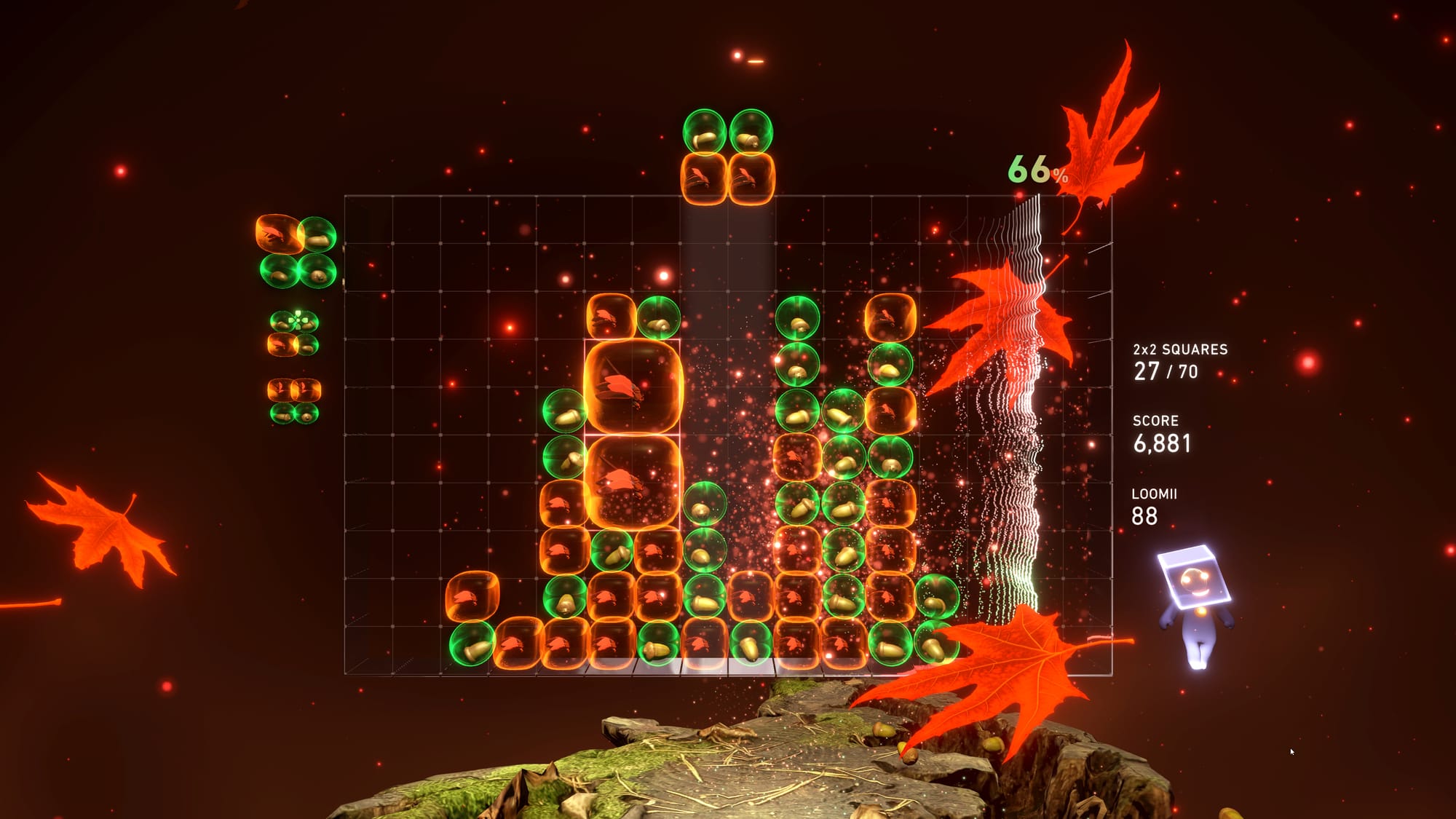
In Lumines, 2×2 blocks made of different patterns and colors fall from above while a sweeping sequencer line erases matched colors. The sweep comes in musical time, and as you place blocks, the inputs create musical notes and beats, so that your actions move in time with (and help create) the music you’re listening to.
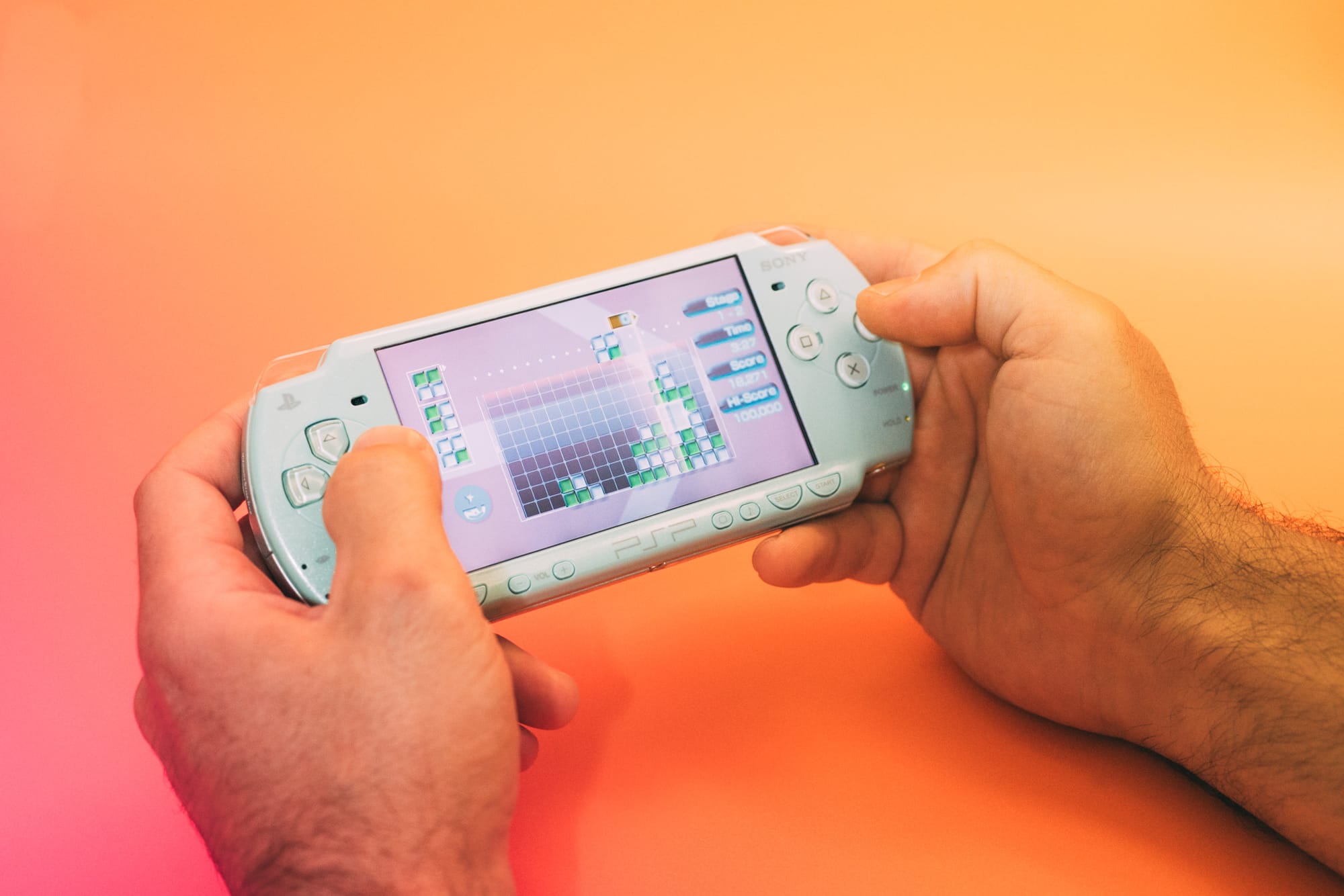
Released in 2004, Lumines arrived alongside Sony’s PSP handheld console and became the first of Mizuguchi’s style of distinctly synesthetic games to sell over a million copies. Now more than two decades later, Lumines Arise returns not to replicate the original experience or capitalize on nostalgia (though it’s doing that on its own, if social media is any indicator), but to use new technology to expand on the original idea in meaningful ways.
Coming to PS5 and PC, and for the first time in the series to VR headsets, Arise intends to amplify the emotional impact of the original. As with Mizuguchi’s previous reimaginings of Rez and Tetris (he produced 2018’s massively successful musical puzzler Tetris Effect), Lumines Arise may be the closest we get to his original vision.
Lumines debuted on the PSP in 2004. Now, Lumines Arise aims to update the classic formula for modern platforms and VR.
0:00
/1:00
“It was the same with Rez,” he says. “We wanted to revisit Rez and bring it to a whole new level. How can we bring a new experience for you to feel and live through? For us, experience is king, and synesthesia is queen. But above all of that is a word we use in Japanese called Kando. It means emotions, or how you share emotionally moving experiences. And that lives at the top of what we do.”
“It’s a portal,” he says. “Our hope is that when you play or experience our games, you discover your own emotions and experiences. Whether it’s through rhythms or vibrations, or you have this euphoric sort of moment, our hope is that it’s not just about how much fun you have, but that there’s so much more meaning to it.”
Lumines Arise is heading to PlayStation VR2 and PC VR on November 11. As for releasing Arise on additional platforms, Enhance isn’t ruling anything out. “Our hope is that we can, as you’ve seen with the rest of our games!”
One of the planned changes for Fedora 43 was setting an expectation that RPM package builds are reproducible. Much of Fedora’s “reproducible builds” effort is already complete but this change has now been deferred to the Fedora 44 release next year…
A patch series for the Linux kernel scheduler code is queued up for expected introduction in Linux 6.18 to defer throttle when tasks exit to user-space. These changes to switch the scheduler to a task-based throttle model and task-based throttle time accounting can provide a latency win and also address a possible deadlock situation for real-time “RT” kernels…
Sometimes, you really do just need to run a Windows app on Linux and perhaps WinBoat might make this easier with its promise of “seamless integration”.
It’s not too often hearing PCMCIA these days as that defunct PC card standard for laptops from the 90’s and early 00’s. Back in 2023 Linux began dropping old PCMCIA drivers from the kernel while coming as a surprise today are some clean-ups for the Personal Computer Memory Card International Association (PCMCIA) subsystem code persisting within the Linux kernel…
Merged overnight to Mesa 25.3 is an improvement for the Intel driver’s Vulkan Video encode/decode handling that has been in the works the past few months…
Acer just unveiled the new Swift 16 Air laptop at IFA 2025. The biggest selling point here is likely the weight. The 16-inch laptop clocks in at just over two pounds, which is lighter than a 13-inch MacBook Air.
The Swift 16 Air is available with two display options. There’s a standard IPS panel and an AMOLED. The AMOLED does tick the weight up a bit to 2.4 pounds, which is worth considering.
Acer
The overall specs here are solid. These computers are powered by AMD Ryzen AI 300 Series processors, with options up to the AI 7 350. They also come with AMD Radeon GPUs. The battery life is pretty decent, allowing for up to 13 hours of use per charge.
There’s a webcam with a privacy shutter and plenty of connectivity options. These include a pair of USB-C ports, two USB-A ports and an HDMI port. Finally, each laptop ships with two speakers and two microphones.
The Acer Swift 16 Air will be available this November in Europe, the Middle East and Africa. We don’t have pricing or availability information for the US yet, but the starting cost in Europe translates to around $1,160.
Acer
The company also used IFA to introduce the TravelMate X4 AI. This is a lightweight Copilot+ PC with Intel Core Ultra Processors. It weighs less than three pounds and meets MIL-STD810H durability standards. It ships later this month, with a starting price of $1,400.
This article originally appeared on Engadget at https://www.engadget.com/computing/laptops/acers-swift-16-air-laptop-weighs-less-than-22-pounds-090029625.html?src=rss
JBL just announced the PartyBox 720, which is an extremely chonky party speaker. As a matter of fact, it’s the company’s largest-ever battery-powered party speaker. The thing is bigger than many human children.
It boasts 800W of power with up to 15 hours of playtime via a replaceable battery. There are two 9-inch woofers and a pair of 30mm dome tweeters, which should provide for robust audio. The company has included its proprietary AI Sound Boost technology, which increases audio without distortion.
JBL
The PartyBox offers multi-speaker connectivity via Auracast and USB-C connectivity for streaming audio directly from a device. The speaker also creates a “futuristic lightshow” that syncs to the music, which is always fun.
This being a device intended for soirees, it also boasts a pair of XLR ports for connecting microphones, guitars or DJ consoles. The company says the speaker will “bring karaoke sessions to life.”
However, modern party speakers are expensive. This one costs $1,099. That’s cheaper than Marshall’s recently-announced $1,300 model, but still pricey. Pre-orders are open right now, with shipments going out on September 21.
JBL
JBL also announced the Boombox 4, which is an iterative update of the Boombox 3. We liked the previous model and it almost made our list of the best portable Bluetooth speakers. This one features the same AI Sound Boost tech as the PartyBox, for louder audio without distortion.
It’s nearly two pounds lighter than the predecessor, so it should be easy to carry out to the front lawn like that one scene in Say Anything. It’s IP68 water and dustproof and integrates with Auracast for linking to other speakers. It includes a replaceable battery that can go up to 28 hours before requiring a trip to the outlet.
Pre-orders for the Boombox 4 are open right now. It costs $550 and is available in three colorways. The speaker ships on September 28.
This article originally appeared on Engadget at https://www.engadget.com/audio/speakers/jbl-just-announced-its-largest-ever-battery-powered-party-speaker-090024747.html?src=rss
In the last few years, I’ve felt like Chromebooks have hit a plateau. ChromeOS is a quirky but mature platform at this point, and Google has continued to add smart and useful features on a regular basis. But the hardware has felt pretty stagnant, with a few exceptions. Most Chromebooks at this point are utilitarian devices that get the job done but inspire little excitement, and I’ve found most Intel-based Chromebooks don’t get me through a day of work before the battery dies.
But earlier this summer, Lenovo released a new Chromebook with the ARM-based MediaTek’s Kompanio Ultra 910 chip, rather than the usual Intel fare. And now Acer is doing the same with the latest Chromebook Plus Spin 514, a laptop that Acer says should get up to 17 hours of battery life — a figure that only this model and the aforementioned Lenovo can hit. Previously, the MediaTek-powered Chromebooks available ran on weaker mobile chips that didn’t have nearly enough power, but the Kompanio Ultra 910 is a completely different beast. The combo of performance and efficiency the Spin 514 offers makes it one of the best Chromebooks I’ve used in a while.
Hardware design
The Chromebook Spin 514 feels like many Acer laptops I’ve tried over the years (CP514-5HN is the identifier for this particular model, but we’re just going to call it the Spin 514 from here on out). It’s solid and well-built while still also feeling fairly utilitarian. It doesn’t quite hit “premium” laptop standards, but it’s on the nicer end of the Chromebook spectrum. I’m a fan of the silver color scheme as opposed to the rather dull grey most Chromebooks come in, and the laptop’s lid has a nicely chamfered and polished edge, giving it some visual flair.
It’s also a relatively slim (0.61 inches) and light (3 pounds) laptop. It’s not pushing the envelope, but it’s also more svelte and portable than a lot of cheaper Chromebooks. “Almost premium” isn’t a bad place to be. The same goes for the keyboard and trackpad — they’re both spacious and comfortable, and the keys have plenty of clicky travel. It’s not the best keyboard I’ve ever used, but one that I’m happy to tap away on for hours at a time. The 1,920 x 1,200 touchscreen is bright, sharp and colorful, quite pleasant to look at for long sessions. However, it also has pretty large bezels above and below the display. Again, almost premium.
Nathan Ingraham for Engadget
The Spin 514 has solid connectivity options, as well. On one side you’ll find two USB-C 3.2 ports and a headphone jack, while the other side goes old-school with two USB-A 3.2 ports. I wish that there was one of each on each side so that you could plug in a charger on the left or the right, but alas. My only real quibble is that if you’re using a monitor with the laptop plugged into power, both USB-C jacks are taken up. An HDMI connection would have been helpful for that common scenario.
As the name implies, the Spin 514 has a 360-degree hinge that lets you use it in a tablet mode, with the touchscreen as the main input. I’ve long believed these convertible laptops aren’t really offering any useful solution for the vast majority of people, and I still feel the same way. But the hinge feels great; Acer has a ton of experience in this department. And the USI 2.0 stylus I had on hand worked without any need for pairing or setup, which was convenient. If you’re the kind of person who would take advantage of that, the Spin 514 does the trick.
Overall, the Spin 514 lands just about where I’d expect for a $700 laptop in terms of hardware quality. It’s utilitarian in a good way — there were no major letdowns in my testing aside from the speakers, which have very little bass and sound rather harsh when listening to music.
Nathan Ingraham for Engadget
Configurations and performance
Before diving into how the Spin 514 worked for me, a quick word about configurations. The version I tested retails for $700 and will be sold through Best Buy. This setup has the aforementioned MediaTek Kompanio Ultra 910 alongside 12GB of RAM and 256GB of storage space. Acer itself will sell a $750 model with a 2,880 x 1,800 display and 16GB of RAM, but it should be otherwise identical to the model I’m testing.
ChromeOS runs well enough on the various Intel chips that are commonly used. One of my longstanding favorite Chromebooks, the Lenovo Ideapad 5i, still uses a Core i3 from early 2023, and it gets the job done. But the move to MediaTek’s ARM-based Kompanio Ultra 910 has raised the performance bar, as the Spin 514 is probably the most responsive Chromebook I’ve tried. There’s nary a hint of slowdown or hiccups that still happen on Intel-based models if you have too many windows or apps open. Tabs rarely need to be reloaded and pop back up quickly on the rare occasion that they do. Music or video playback never skipped regardless of what else I was doing, and Android apps like Lightroom worked swiftly and smoothly as well.
Nathan Ingraham for Engadget
Perhaps more importantly than how it performs today is the fact that the Kompanio Ultra 910 should keep the Flip 514 feeling snappy and powerful for years to come. There’s just more room for this chip to handle increasing performance demands over the years. Benchmarks from the Android version of Geekbench 6 help illustrate this: the Spin 514 scored 2,526 on the single-core CPU test, 7,687 on multi-core and 18,020 on the GPU test. For comparison, Acer’s recently-released Chromebook Plus 514 with an Intel Core 3 chip scored 1,150, 4,407 and 5,932 respectively. I don’t think that benchmarks like Geekbench are a be-all end-all of anything, but it’s at least one metric to illustrate the benefits of moving away from Intel.
I’ve long groused about the relatively mediocre battery life on Intel-powered Chromebooks, and this is another place where the MediaTek chip helps out tremendously. The Spin 514 looped video playback in my test for just over 14 hours before running out of battery. My daily workflow of tons of Chrome tabs, various chat apps, YouTube Music, Todoist and a handful of Android apps definitely used more resources, but I could still get through a full work day with battery to spare. That’s not something I’ve said about many Chromebooks recently. The only caveat is that battery life will almost surely take a hit if you opt for the model with the higher-resolution display.
Nathan Ingraham for Engadget
ChromeOS and Gemini
I wrote a lot about the ChromeOS and Gemini experience last year when I reviewed Samsung’s Galaxy Chromebook Plus, and basically everything I said then applies here. But to recap: ChromeOS is quite mature and stable at this point, and Google has built in a lot of smart features over the years to make it more than “just a web browser” as it was referred to previously. Of course, ChromeOS is still a primarily web-based system, with Android applications giving you access to things you might not find in the browser. There are also plenty of web apps that are well optimized for ChromeOS, and Google Docs has a comprehensive offline mode at this point. ChromeOS also pairs nicely with Android phones and adds features like shared notifications and streaming of some apps directly to your laptop.
Of course, Gemini is also a big part of the equation — but if you’re not a big fan of AI tools, it’s also quite easy to ignore. There are little prompts around the OS, but nothing that really drags your attention away from what you’re working on. And if you do want to dive into what Gemini is all about, a Chromebook like the Spin 514 is a good option because you get 12 months of Google’s AI Pro plan for free. That usually costs $20/month and provides 2TB of Drive storage along with Gemini 2.5 Pro in search and the Gemini app, Gemini in Gmail and Google Docs, access to the Veo image- and video-generation tool and more. Given that 2TB of Google Drive storage costs $10/month on its own, this is a solid perk. But it’s also worth remembering that once that year ends, you’re on the hook to pay for that plan yourself.
Nathan Ingraham for Engadget
Pricing and final thoughts
My only real quibble with the Spin 514 is its price. At $700, we’re pushing the top of what anyone should spend on a Chromebook. While the more powerful chip and long battery life will be worth it for some people, Acer itself is providing some strong competition with its standard Chromebook Plus 514 which came out this summer. It has an Intel chip, so battery life and performance aren’t at the same level as the Spin 514, but it’s also literally half the price at $350. If you’re only going to be away from a charger for a few hours at a time, it’s hard not to recommend that device instead. I’ll be publishing more details about that laptop in our guide to the best Chromebooks very soon if you want to know more.
So while this might not be the Chromebook I’d recommend to everyone, it is a strong contender for the best premium Chromebook you can buy. If you’re looking to use this laptop all day, every day, it may be worth shelling out the extra cash for the improved performance, battery life and longevity you’ll get from the Spin 514.
This article originally appeared on Engadget at https://www.engadget.com/computing/laptops/acer-chromebook-plus-spin-514-review-the-new-chromeos-sweet-spot-090014823.html?src=rss
Acer maintains two different gaming product lines and it’s updating both of them at IFA 2025. Among the new gear is a gigantic new 18-inch Predator laptop, an ultra high-refresh rate monitor and multiple entry-level Nitro laptops and monitors.
The updated Predator Helios 18P AI is an even more powerful version of the Predator Helio 18 the company showed off at CES 2024, offering “desktop-level AI” in what’s still technically a portable body. Inside, you can get up to an Intel Core Ultra 9 processor, a NVIDIA GeForce RTX 5090 laptop GPU and 6TB of SSD storage. For the display of the panel, you’ll get a Mini LED 4K panel, which should work well for creative workflows and gaming. Acer also says the new Helios uses its “proprietary thermal solution” to keep cool, which is a combination of thin metal fans, “liquid metal thermal grease” and vector heat pipes.
Acer has new gaming desktop PCs, the Predator Orion 7000 and Orion 5000, which can use GeForce RTX 5090 or 5080 GPUs, respectively. The more exciting announcement, though, is the new Predator monitor. The Predator X27U F8 Monitor is a 26.5-inch OLED, with a 2,560 x 1,440 resolution and a ridiculous 720Hz refresh rate. Acer says the monitor can move between resolutions and refresh rates to maximize performance. The X27U F8 monitor also supports AMD FreeSync Premium Pro to eliminate screen tearing and stuttering.
Acer
On the Nitro side of the house, Acer has two new gaming laptops on offer. The Acer Nitro V 16 can be built with up to an Intel Core 9 processor and a NVIDIA GeForce RTX 5070 laptop GPU. With NVIDIA inside, the laptop supports NVIDIA DLSS 4 for improved graphics performance. The laptop also comes with a 2,560 x 1,600 display that has up to an 180Hz refresh rate for fluid motion during fast-paced games. The Acer Nitro V 16S, while similar, is more focused on portability. The laptop has up to an Intel Core 9 processor, but only a NVIDIA GeForce RTX 5070 laptop GPU, the same 180Hz display, in a metal body that’s 19.9mm thin. That’s not quite MacBook Air dimensions, but it’s better than nothing.
Acer is pairing those new laptops with a collection of new Nitro monitors. The largest option is the 39.7-inch curved Nitro XZ403CKR monitor, which uses a 5K panel, has built-in 5W speakers and supports AMD FreeSync Premium for fluid gameplay. If you like 5K but don’t want a curved screen, there’s the 27-inch Nitro XV270X, which includes two built-in 2W speakers. You can get similar speakers on the 27-inch Nitro XV273U W1 monitor, which has a 27-inch 1440p display that reaches 500 nits of peak brightness. Finally, there’s also the Nitro XV275K V6, which features a 27-inch 4K display, AMD FreeSync Premium and dual HDMI 2.1 ports.
Acer hasn’t announced a final price or release for the Predator Helios 18P AI laptop, but did confirm it will be available in North America at launch. The Predator X27U F8 monitor, meanwhile, will go on sale in Q1 2026 for $1,300.
For the Nitro laptops, Acer says the Nitro V 16 will be available in the US in October starting at $1,000, with the Acer Nitro V 16S arriving a month later in November for $1,100. For the Nitro monitors, all three will be available in Q1 2026. The Acer Nitro XV25K V6 starts at $700, the Acer Nitro XV273U W1 starts at $300, the Acer Nitro XV270X starts at $900 and the Acer Nitro XZ403CKR starts at $1,000.
This article originally appeared on Engadget at https://www.engadget.com/computing/laptops/acers-new-gaming-lineup-includes-an-18-inch-ai-laptop-and-a-720hz-monitor-090009032.html?src=rss
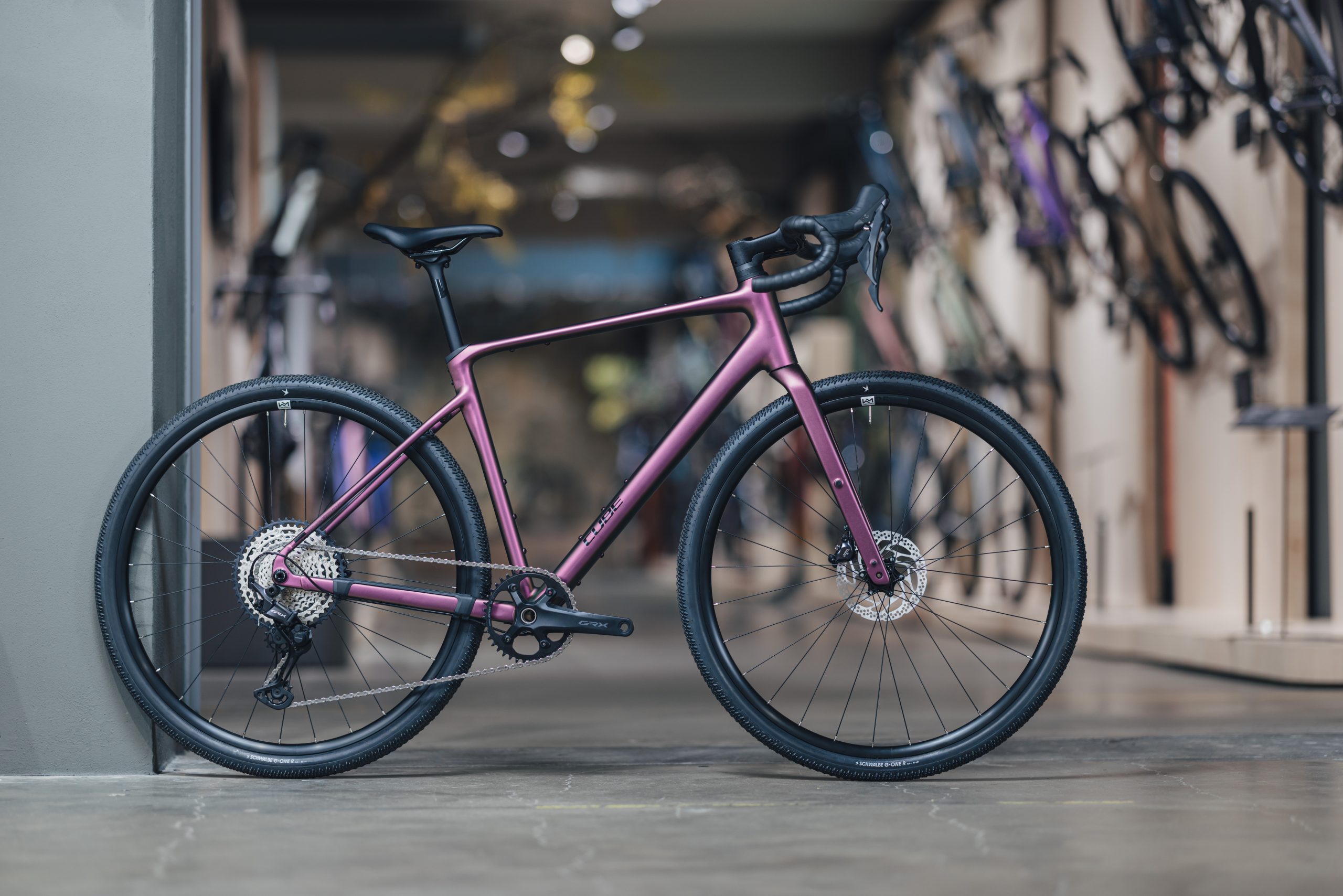
Hidden among Cube’s sprawling 2026 line-up is the Nuroad C:62 SLT – a race-focused carbon gravel bike with a spec sheet list that looks outrageous for the money.
For £5,299 (international pricing TBC), you get a full SRAM Red XPLR groupset with power meter, Newmen Advanced SL X.R.36 Vonoa carbon wheels, and a suite of Cube’s own carbon finishing kit.
The difference is that Cube follows a more traditional dealer-to-shop model, meaning you can buy the Nuroad C:62 SLT at your local bike shop, with all of the benefits that brings.
You could have two Nuroad’s for the price of one Crux. Russell Burton / Our Media
Comparing the build to other rivals, and the value is even more stunning.
Specialized is hardly a brand known for wild value for money, but an S-Works level Crux would set you back £11,500 – leaving you change to buy a whole other Nuroad C:62 SLT, and some.
Trek’s a bit closer at £8,950 for a Red-equipped Checkmate SLR 9 AXS, which features house brand Bontrager wheels, but that’s still significantly more than the Cube.
At least here in the UK, Giant doesn’t appear to offer a Red-equipped version of the Revolt. Regardless, a Force-equipped bike is still more expensive than the Cube, at £5,599 for a build with Giant’s in-house carbon wheels.
Even the usual value leaders like Canyon can’t quite match this spec sheet at the price. The brand’s lowest-priced Red-equipped Grail CFR XPLR is £7,899, although that comes with branded Zipp wheels.
Those aren’t exact like-for-like comparisons – the frameset specs are all very different – but based on build alone, Nuroad C:62 SLT is one of the most remarkably priced high-performance gravel bikes we’ve seen.
The alloy Nuroad SLX looks pretty tasty, too. Cube
Alongside the SLT, the brand is also offering aluminium Nuroad models, which look very handsome for the modest asking price.
Pictured is the Nuroad SLX. Priced at just £1,799, it features a GRX-equipped build and Newmen alloy wheels.
The bike includes mounts for racks and clearance for 50mm tyres, and could make a great all-rounder likely to satisfy most gravel riders.
OpenSSL 3.6 is now in public testing with a first alpha release, promising new features and improvements for this open-source, cross-platform, and free software library that provides secure communications over computer networks for applications and websites.
President Donald Trump announced Tuesday that US Space Command will be relocated from Colorado to Alabama, returning to the Pentagon’s plans for the command’s headquarters from the final days of Trump’s first term in the White House.
The headquarters will move to the Army’s Redstone Arsenal in Huntsville, Alabama. Trump made the announcement in the Oval Office, flanked by Republican members of the Alabama congressional delegation.
The move will “help America defend and dominate the high frontier,” Trump said. It also marks another twist on a contentious issue that has pitted Colorado and Alabama against one another in a fight for the right to be home to the permanent headquarters of Space Command (SPACECOM), a unified combatant command responsible for carrying out military operations in space.