An influx of players excited for this morning’s launch of Hollow Knight: Silksong are encountering widespread errors purchasing and downloading the game from Steam this morning. Ars Technica writers have encountered errors getting store pages to load, adding the game to an online shopping cart, and checking out once the game is part of the cart.
Ars also encountered some significant delays and/or outright errors when downloading other games and updates and syncing cloud saves on Steam during this morning’s server problems. The Humble Store page for Silksong currently warns North American purchasers that “We have run out of Steam keys for Hollow Knight: Silksong in your region, but more are on their way! As soon as we receive more Steam keys, we will add them to your download page. Sorry about the delay!”
Eufy just introduced its latest outdoor security camera at IFA in Germany. The EufyCam S4 monitors your home using a fixed 4K wide-angle camera and a pair of 2K sensors that activate when a possible intruder is spotted and track them. Capable of auto-framing its subject, the main camera can pan, tilt and zoom in on a person as far as 164 feet away. It can also intelligently zoom out to ensure groups are kept in view.
The EufyCam S4’s stationary bullet camera has a 130-degree field of view, while the pan, tilt and zoom camera provides 360-degree tracking. With the three lenses working in unison, it’s going to be pretty difficult for anyone to evade their gaze. The camera also has a dual motion detection system, combining radar and passive infrared (PIR) tech to distinguish between moving humans and vehicles. This way you should get fewer false alarms from the Eufy app.
If the camera detects an intruder, red and blue warning lights are activated and a siren will trigger to warn them off. The camera can also be paired with Eufy’s HomeBase S380 (sold separately), a smart security hub that uses the company’s BionicMind AI tech for what it says is 99.9 percent accurate facial recognition. It also increases local storage to a sizable 16TB.
The EufyCam S4 ships with a built-in 5.5 watt panel that can fully charge the camera with an hour of direct sunlight. The panel is detachable, so can easily be moved to an area where it’ll drink up more rays, and you also get a rechargeable battery included so you’re not exclusively relying on the sun.
On its own, the EufyCamS4 costs $300 and will be available later this year. Bundles of multiple cameras and a HomeBase S380 will also be available.
This article originally appeared on Engadget at https://www.engadget.com/home/smart-home/eufys-latest-security-camera-has-three-lenses-and-a-detachable-solar-panel-150014067.html?src=rss
The Quick Settings panel on Android is an underrated powerhouse, often forgotten by most Android users. While a lot is said about the iPhone’s Control Center, if you’re willing to put in some work, Android’s version is a lot more customizable and powerful.
You can use third-party apps to put virtually anything you want in the Quick Settings Panel. These can include simple shortcuts to apps and actions, or you could opt for quick access to things like your calendar appointments and weather updates.
How to customize the Quick Settings panel
If you’re new to Android, or if you just haven’t customized your phone much, your Quick Settings panel might still be in its default state. Let’s check it out.
Quick Settings is the panel you see on top of your notifications when you pull down the Notifications panel. It usually shows you tiles for controlling settings like Wi-Fi and Bluetooth right away, but you can swipe once more to expand and reveal even more settings and toggles.
Credit: Khamosh Pathak
I say “usually” because the panel looks different with each manufacturer or skin. So the Quick Settings panel will, by default, appear slightly different on Samsung phones than it does on Pixels, though as Android matures, manufacturers seem to be trying to play down differences.
Credit: Khamosh Pathak
The entire Quick Settings panel is customizable, and out of the box, you can move, edit, add, and expand the panel’s tiles by tapping the Edit button in the bottom right corner. You’ll see the Android defaults first, but if you scroll enough, you’ll even see options for third-party apps. This is where most of the panel’s extra power comes in. It’s fairly straightforward, but for more on how to actually adjust your Quick Settings panel, check out my guide on customizing the Quick Settings panel in Android 16.
Now that we know how to use and add Quick Settings tiles, let’s talk about some of my favorite tiles for it.
Shortcuts to apps
Credit: Khamosh Pathak
Some of the most convenient things to add to the Quick Settings panel are apps and app shortcuts. You can use the Tile Shortcuts app to essentially put in anything you want in there, including websites and system level options. The app is free to use, but a $0.99 upgrade unlocks more features, like app shortcuts.
Open the app and tap the Plus button to create a new tile. Then choose if you want to add an app, shortcut, or website. Shortcuts are sourced from apps, so you can create a shortcut to open a Drive folder, open a contact, or to go to a saved location. Choose the action you want, select an icon, and you’re done.
One you create a tile, open the Quick Settings customization page to add it to your Quick Settings panel. But note one quirk. Before you add your tiles, they’ll have generic names like “Tile 1” or “Tile 2” (also reflected in the app). Don’t worry—this will change once they’re actually in your Quick Settings panel.
Calendar appointments
Credit: CalenTile
CalenTile is a nifty utility that adds your next calendar appointment as a Quick Settings tile. To make use of this, you’ll have to expand the tile to a larger size. This app costs $0.99, but I think it’s worth the expense if you use your Calendar to manage your entire schedule. The tile will show your next appointment’s time and name, and you can tap it to get more information.
Keep your screen active
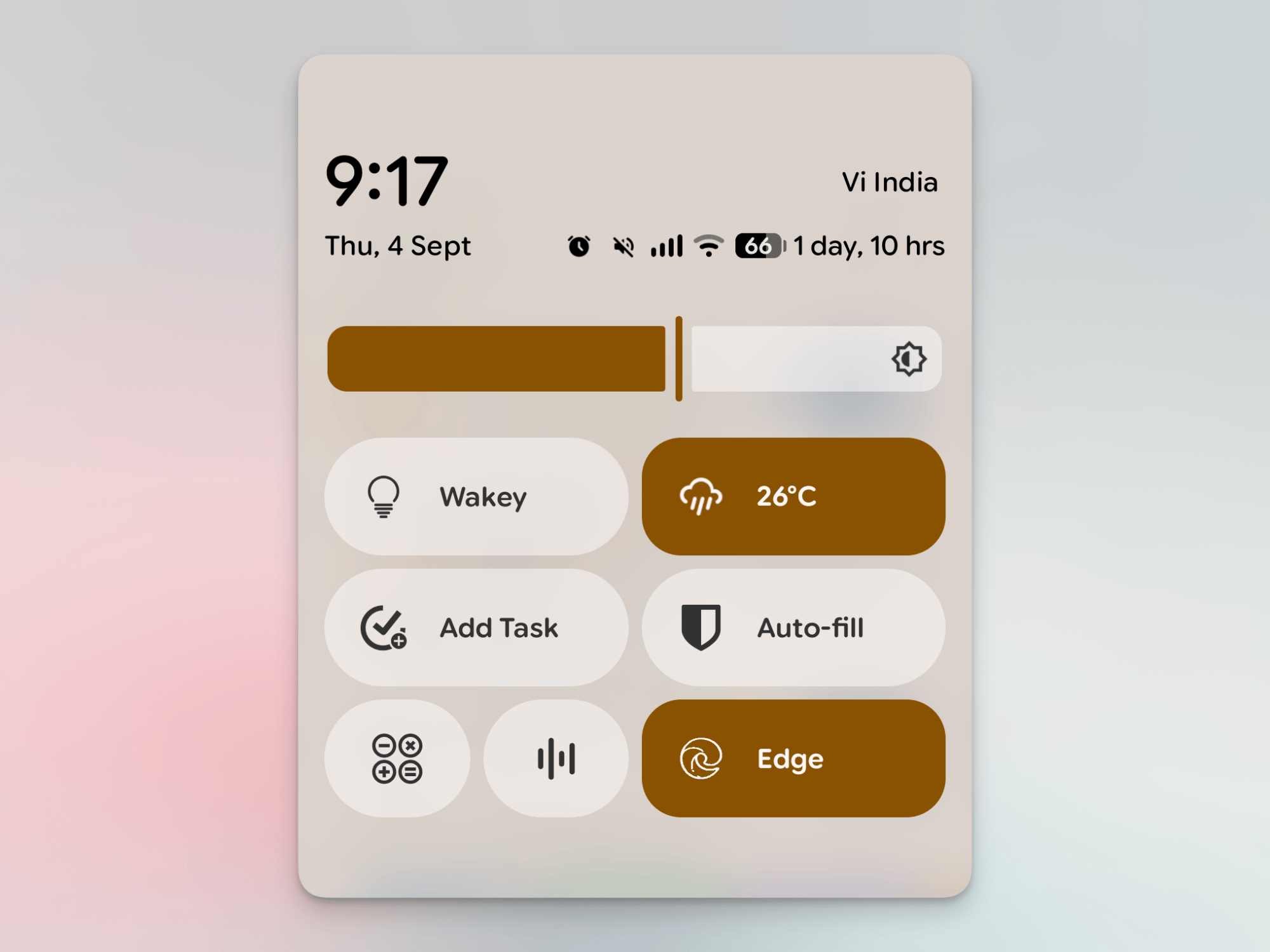
Showing third-party Quick Settings tiles like Wakey, Chronus, TickTick, Bitwarden, and more. Credit: Khamosh Pathak
Your device’s screen will time out automatically if you’re not looking at it, but there are times when you might want it to stay on, like if you’re referring to documents, or if you’re using an Android tablet in the background at work. This is where an app like Wakey can help. It’s a simple free app, which has an optional $2.5 upgrade for removing ads. Open the app and give it notification access. A new “Enable Wakey” tile will show up in the Quick Settings toggle. When enabled, the screen will now stay on no matter what you do, or rather, don’t do, on your device.
See the weather at a glance
The Chronus app offers an array of customizable weather widgets for your Home Screen. But there’s also an option to add a Quick Settings tile that shows just the temperature and weather conditions at a glance. To set this up, first open the Chronus app, tap the Menu button, and choose Quick Settings. Here, give the app permission to access your location, or add a location manually. Now, add the tile to Quick Settings and you’re done.
A shortcut for adding reminder
One of the best use cases I can think of for Quick Settings is a shortcut to quickly create a reminder. The faster you can note down something you want to do, the higher the chance you won’t just forget about it later.
Many popular productivity apps, like TickTick, Todoist, and Microsoft To Do, offer a Quick Settings tile that does just that. Check to see if your favorite productivity app does.
Easy access to system apps features
Credit: Khamosh Pathak
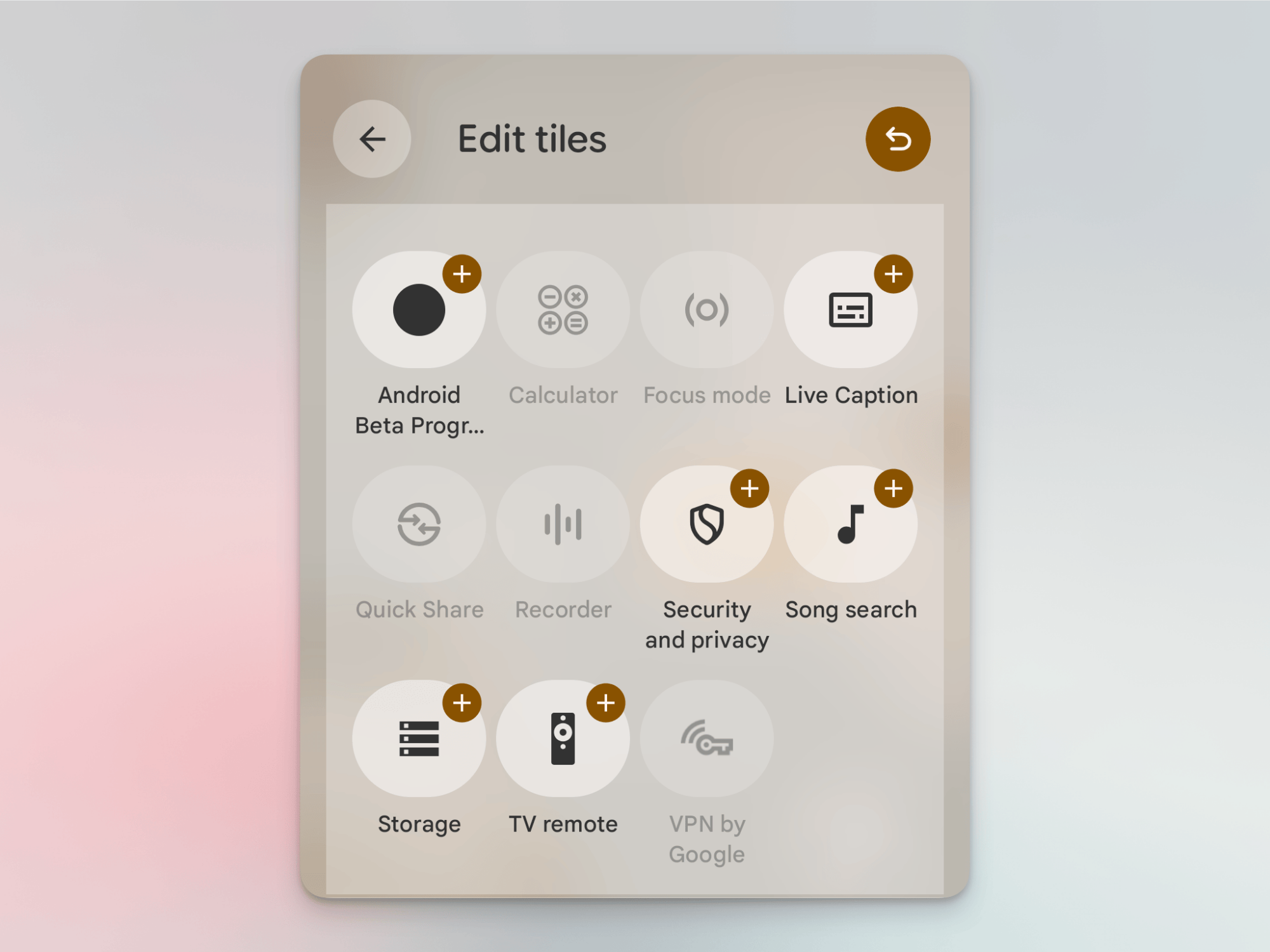
If you’re using a Pixel, you can add some system apps to the Quick Settings panel as well. You’ll find a From system apps section in the Quick Settings edit menu, where you can quickly add shortcuts for the Calculator, Recorder, Quick Share, and Live Caption features.
Trigger the OS-wide Reading mode
Credit: Khamosh Pathak
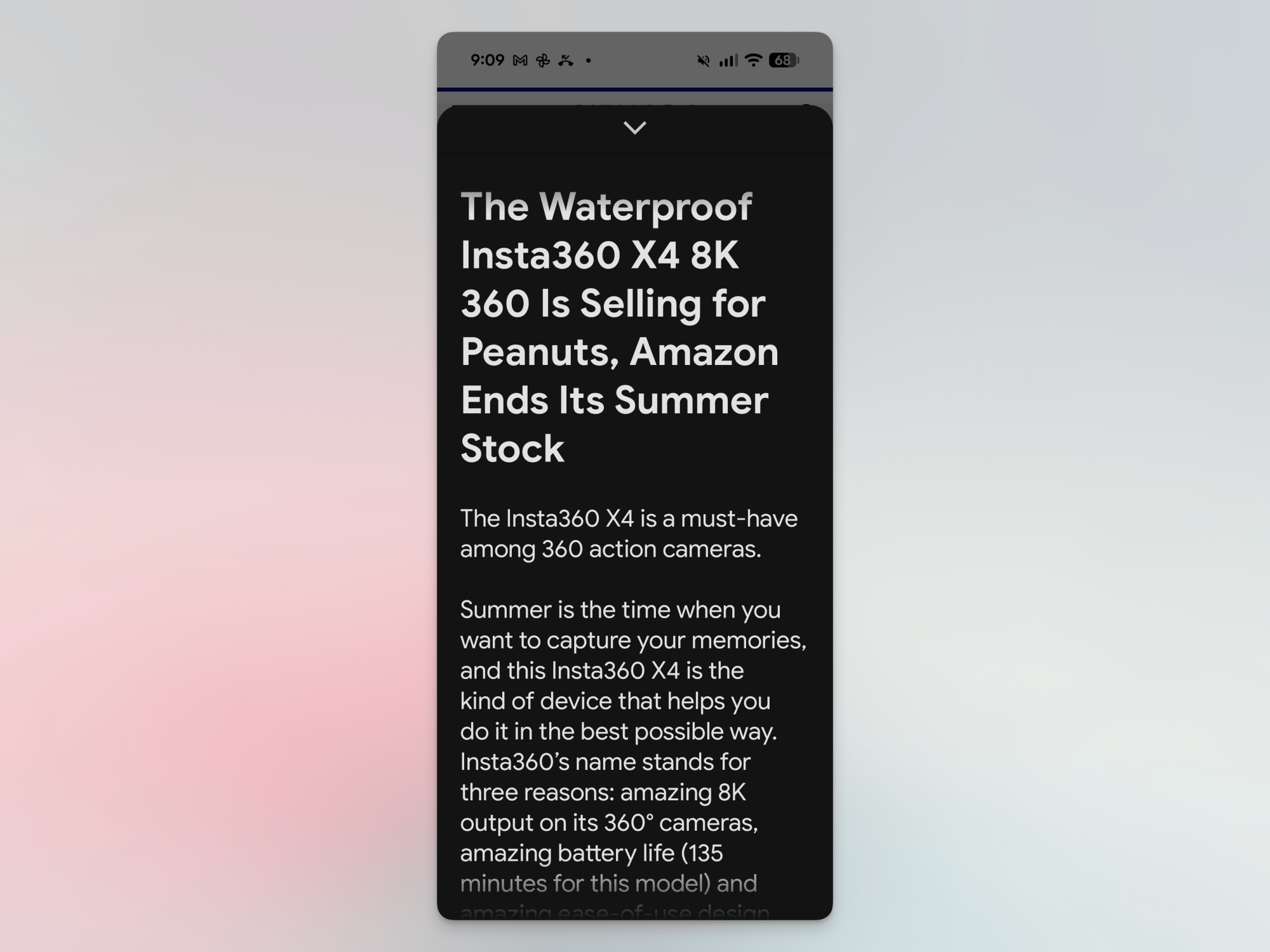
Google has a hidden Reading mode feature that can be triggered anywhere in Android, not just Chrome. It takes what’s on the screen and turns it into a minimalistic reading environment with customizable fonts. It removes all formatting, and even supports text to speech. As this is an accessibility feature, you have to select the page or text you want, and then share it to the Reading mode app to get started. But a faster way to do this is to use the Reading mode tile in Quick Settings. You’ll find the tile in the Third-party apps section, as long as you’ve installed the app linked above.
Last year, Zwift held their first-ever Zwift Camp: Baseline – an assessment-oriented training program consisting of six stages. And it was a hit, besting even Zwift Academy as Zwift’s most popular workout series of all time!
Following last year’s proof-of-concept, this year Zwift is leaning heavily into the Zwift Camp concept, launching a three-camp series that kicks off with Zwift Camp: Baseline on September 15.
Below, we’ll share what we know about Zwift Camp: Baseline, and a bit of info on the two camps that follow: Zwift Camp: Build and Zwift Camp: Breakthrough. Let’s dive in!
On a related note: Zwift has announced that Zwift Academy will not take place this year, but that it “will return in 2026 and work is already underway to make sure the 10th edition is the best yet.” This season’s Zwift Camps are clearly positioned to replace Zwift Academy for riders not pursuing pro contracts.
Baseline Basics
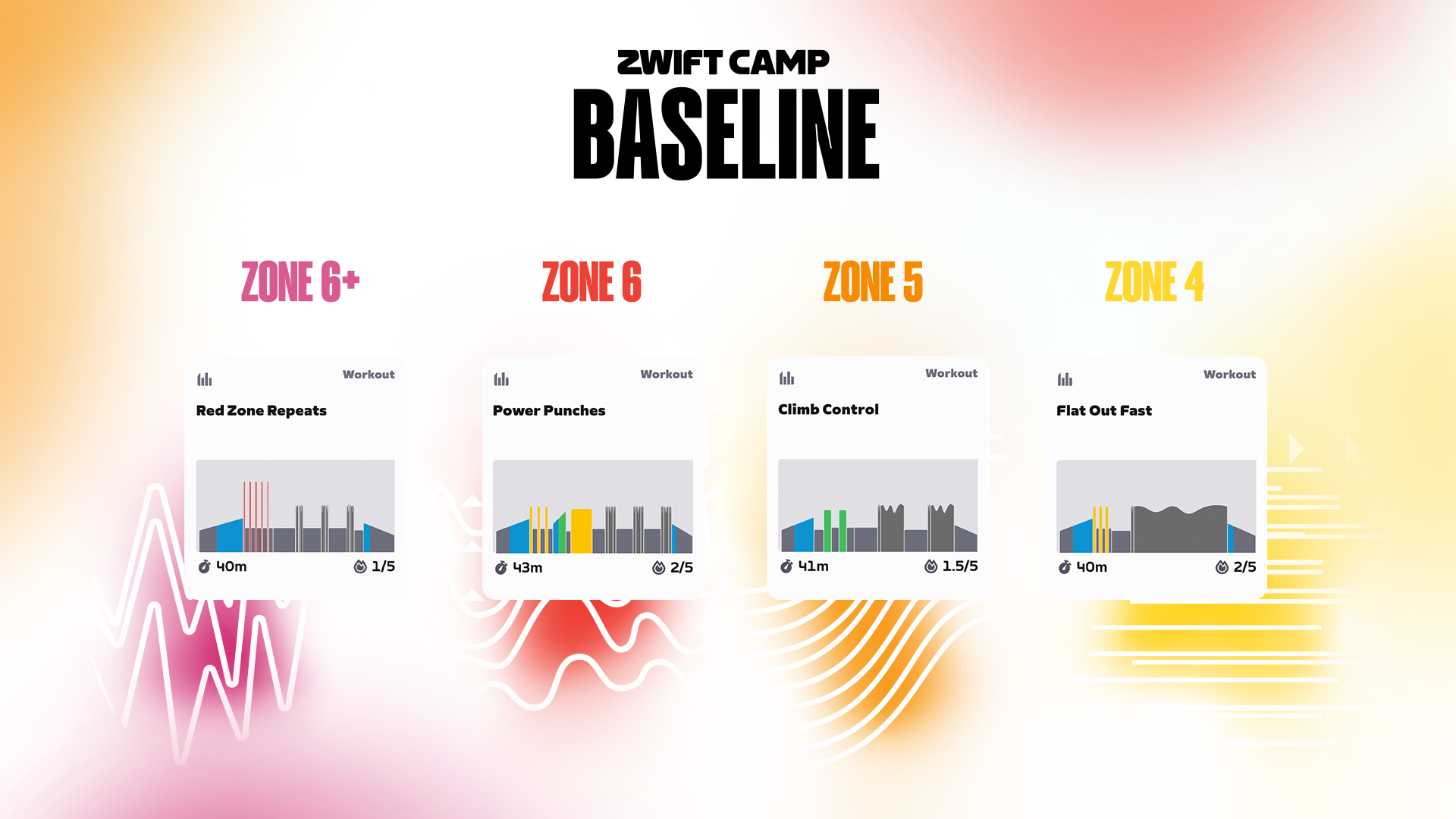
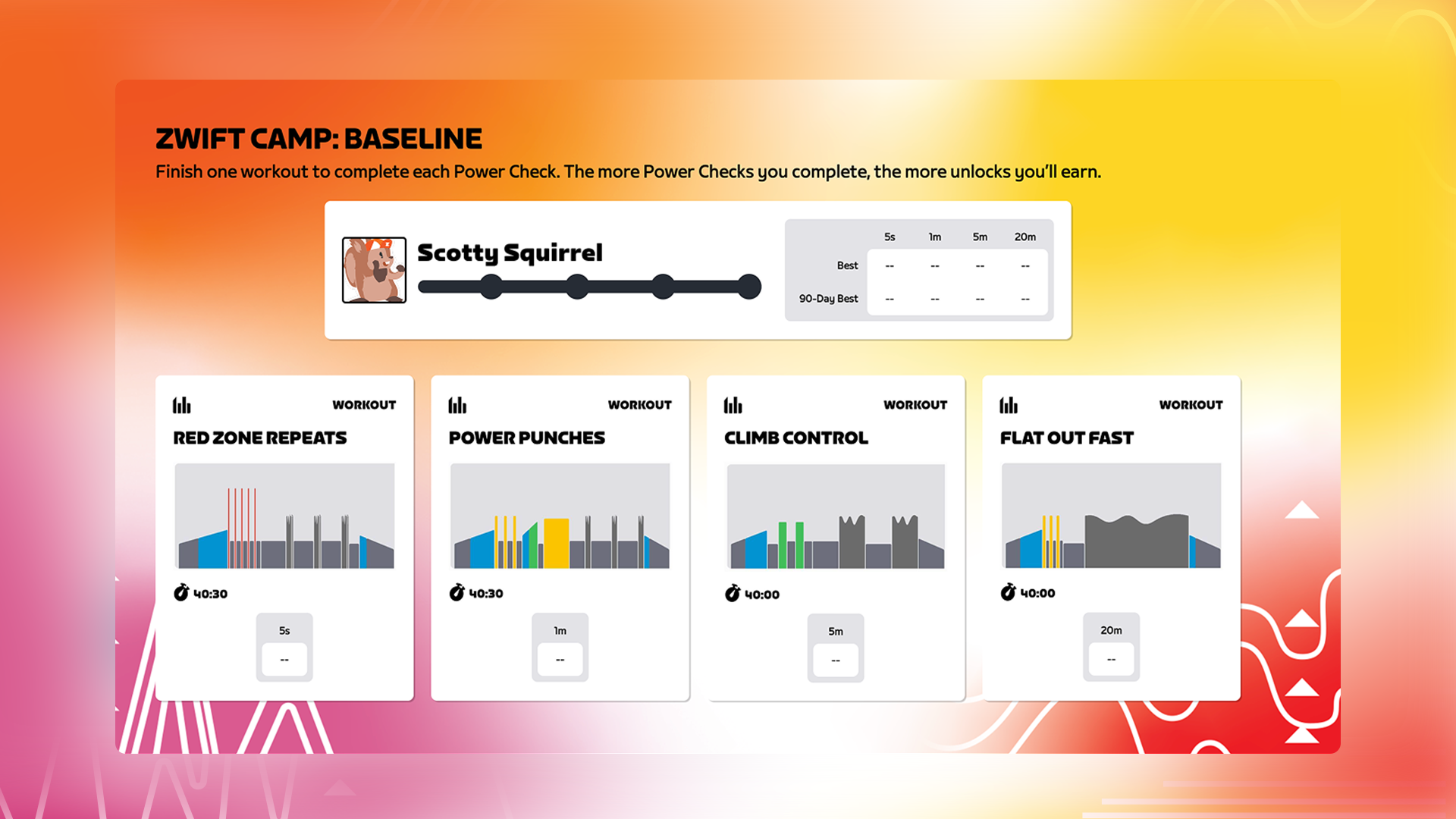
The first Camp of the season is best seen as a launchpad for the Camps to follow. It’s all about completing four separate “Power Check” workouts, which will update your power curve with max efforts across standard time intervals:
5-second power (Zone 6+)
1-minute power (Zone 6)
5-minute power (Zone 5)
20-minute power (Zone 4)
Workout Details
To complete those Power Checks, Zwift has created four different workouts. Complete the workouts and you’ve completed Zwift Camp: Baseline:
Each of the four power checks consists of an ERG workout combined with a new route. The workouts each run you through a warmup section, followed by some “leg opener” efforts, then a bit of recovery before hitting one or more free ride sections where you are expected to put out maximal power for a specific duration.
Each workout will be held on a new route of the same name, created just for Zwift Camp: Baseline:
Tip: If the workout finishes before the route, keep riding to earn the achievement badge and bonus XP at the route’s finish line!
Events + On Demand
Ride the four Zwift Camp: Baseline workouts in scheduled events with others, or on demand by selecting the workouts and completing them on your own. Group events will run on the following schedule:
Workout 1 (September 15-22): 5-Second Power Check, “Red Zone Repeats”
Workout 2 (September 22-29): 1-Minute Power Check, “Power Punches”
Workout 3 (September 29-October 6): 5-Minute Power Check, “Climb Control”
Workout 4 (October 6-13): 20-Minute Power Check, “Flat Out Fast”
Each workout “stage” is a week long, with events beginning at 9am PST on Monday and scheduled hourly on the hour until 8am PST the following Monday.
Progressive Unlocks
Three unlocks are available as you work your way through Zwift Camp: Baseline:
Complete 1 Workout: Zwift Camp: Baseline Helmet
Complete 3 Workouts: Zwift Camp: Baseline Shoes
Complete all 4 Workouts: Zwift Camp: Baseline Kit
Personal Dashboard
Zwift has launched a personalized Zwift Camp: Baseline dashboard for all participants, which includes a progress meter and your power bests across each of the four intervals.
Three Zwift Camps are planned for this year’s 2025/26 peak Zwift season:
Zwift Camp: Baseline (September 15-October 20): Pure power analysis
Zwift Camp: Build (November 10 – December 21): Power application through in-game segments/routes
Zwift Camp: Breakthrough (February 2026): Pure power competition and analysis through Power Segments*
* Power Segments are an upcoming feature mentioned in This Season on Zwift released today. They’re the perfect way to test your power across various intervals, and should make a great addition to Zwift Camps. Inside sources also tell us Zwift Camp: Breakthrough may feature some population rankings, so you can see how your power numbers stack up against others…
Questions or Comments?
What do you think of the Zwift Camp proposition? Going to participate? Got questions? Share your thoughts below!
The Browser Company — the maker of the Arc and AI-centric Dia browsers — is set to have a new owner. Atlassian is buying it for around $610 million in an all-cash deal, which it expects to close in the second quarter of its fiscal year 2026 (i.e. by the end of the 2025 calendar year).
According to The Browser Company, it will continue to operate independently as it builds Dia. A private beta for the browser started in June. Arc (a well-regarded browser on which the company has ended active development) and Arc Search will stick around, and a long-term plan for those will be revealed in the near future.
Co-founders Josh Miller and Hursh Agrawal are staying on as CEO and CTO, respectively. Miller wrote in a blog post that they are looking to accelerate their ambitions by teaming up with Atlassian. “We chose Atlassian because their strengths complement our gaps,” Miller wrote. “And most importantly, like us, they believe the browser is becoming the new operating system.” The Browser Company plans to bring Dia to “to every platform faster than we could have previously imagined” in the coming months.
Miller said the company had three conditions for any acquisition: to ensure it remained independent, that all of its team members still had a job and that its “vision for Dia remains at the center.” He added that “a large part of why we chose Atlassian is values. Now more than ever. Not the kind you hang on a wall, but the ones you see in the work itself.”
Atlassian is the owner of productivity and enterprise services such as project management apps Jira and Trello (which has been buggy for me for over a year, for what it’s worth). Last month, it reportedly laid off around 150 workers, many of whom were said to be in the customer service department, and was said to be planning to use AI to take over some of those former employees’ tasks.
“Our vision is to make Dia the AI browser for work,” Atlassian CEO Mike Cannon-Brookes said in a video announcing the acquisition. The team is designing Dia so it’s “optimized for the SaaS [software as a service] apps where you spend your day; packed with AI skills and your personal work memory to unleash your potential; and built with trust and security in mind, so you can bring it to the office. An AI browser for your system of work.”
This article originally appeared on Engadget at https://www.engadget.com/big-tech/atlassian-is-buying-arc-maker-the-browser-company-for-610-million-145236236.html?src=rss
Atlassian said it has agreed to acquire The Browser Co., a startup that offers a web browser with AI features, for $610 million in cash. CNBC: The companies aim to close the deal in Atlassian’s fiscal second quarter, which ends in December. Established in 2019, The Browser Co. has gone up against some of the world’s largest companies, including Google, with Chrome, and Apple, which includes Safari on its computers running MacOS. The startup debuted Arc, a customizable browser with a built-in whiteboard and the ability to share groups of tabs, in 2022.
The Dia browser, a simpler option that allows people to chat with an AI assistant about multiple browser tabs at once, became available in beta in June. Atlassian co-founder and CEO Mike Cannon-Brookes said he sees shortcomings in the most popular browsers for those who do much of their work on computers.
An anonymous reader quotes a report from The Hill: Russian President Vladimir Putin and Chinese President Xi Jinping were caught on a hot mic discussing organ transplants and immortality at the military parade in Beijing on Wednesday. The two leaders were captured on the stream as they walked with North Korean leader Kim Jong Un at Tiananmen Square, with the Russian translator saying: “Biotechnology is continuously developing,” according to Reuters. “Human organs can be continuously transplanted. The longer you live, the younger you become, and (you can) even achieve immortality,” the translator added.
Xi responded by saying that some predict that humans could live up to “150 years old.” The Kremlin head later confirmed that the two leaders discussed immortality. “Modern means of healing, and medical means, all kinds of surgical means related to organ replacement, they allow humanity to hope that active life will continue not as it does today. The average age in different countries is different, but nevertheless, life expectancy will increase significantly,” Putin told reporters, according to CNN.
While tech giants like Samsung and Apple continue to dabble in book-style foldable phones, Huawei has continued its solo charge into trifold territory. In fact, the company has just unveiled the second-generation Huawei Mate XTs, complete with improvements in the processor, added stylus support, and a new ultrawide camera, among other things.
Deadlocks are a constant threat in concurrent settings with shared
data; it is thus not surprising that the kernel project has long since
developed tools to detect potential deadlocks so they can be fixed before
they affect production users. Byungchul Park thinks that he has developed
a better tool that can detect more deadlock-prone situations. At the 2025 Open
Source Summit Europe, he presented an introduction to his dependency
tracker (or “DEPT”) tool and the kinds of problems it can detect.
Alien Perspective explores the legacy of Italian special effects artist Carlo Rambaldi, turning one of his paintings into an immersive world.
Described as an exploration into never-before-seen work from Carlo Rambaldi, the three-time Academy Award winner for his work on King Kong (1976), Alien, and E.T., Alien Perspective is co-directed by his granddaughter Cristina Rambaldi and Jung Ah Suh. This focuses on the painting Città Spaziale 2 through a fully immersive world, turning this artwork into a living environment.
We jumped into this 15-minute experience during Venice Immersive 2025, finding a touching tribute to Rambaldi following his death in 2012. The exhibit begins by sitting you in front of Città Spaziale 2 like you’re viewing a painting in an art gallery, and the world slowly comes alive around you inside the headset using PC VR through a Quest 3.
There’s very little interactivity in this on-rails experience; you’re more of an observer watching this unfold with some light inputs using one controller. This lets you interact with orange spheres, providing additional information about this world. Though the visuals sometimes remind me of an Unreal Engine 5 tech demo, Alien Perspective shows character in its execution.
It’s unknown if Alien Perspective will get a home release, though we’ll update this article if we learn more.
Right now, the Hisense 98″ Class QD5 Series TVis 35% off on Amazon, down from $2,298 to $1,497.99—its lowest price ever, according to price trackers. Beyond an absolutely massive screen, this AI-enhanced TV offers premium visuals and high-end performance at a budget-friendly price point for anyone looking to upgrade their screen size for more cinematic experiences and better game nights.
Speaking of game night, the AI Sports Mode on this QLED TV sharpens details while enhancing the arena vibe, so you feel like you’re right in the middle of the action. Meanwhile, the AI 4K upscaler upgrades low-res content to 4K (perfect for fans of classic films), and the native 144Hz panel with AMD FreeSync Premium is ideal for gamers and sports-lovers who don’t want to miss a single detail or deal with screen-tearing.
MEMC motion processing smooths out motion, reducing screen blurring and improving clarity. For movie lovers, Dolby Vision and Dolby Atmos will make you feel like you’re right there in the theater with more dynamic visuals and sound. This TV also features built-in Google TV and can be connected via HDMI, USB, Bluetooth, or wifi.
If you’re looking a blend of performance and price (and have the space to set up this home theater and premium gaming centerpiece), this TV delivers. The Hisense 98″ Class QD5 Series TV combines an immersive experience for gamers and movie or sports lovers, all while staying under a $1,500 budget.
In case you missed it, we recently highlighted a bunch of big TV deals to prepare for the new NFL season that begins tonight, among them being an absolutely monstrous 98-inch QLED for under $1,500. And before that, we brought to attention a bunch of Labor Day deals on OLED models. Now we’re turning our attention to affordable bargains that
Hollow Knight: Silksongis officially available for purchase, after six long years of waiting. The anticipation is at a fever pitch. Fans have swarmed to Steam to purchase the game and, well, it looks like they overloaded the system and shut it down.
Multiple social media users and data from services like DownDetector are noting that the service is down for many people, with a massive spike in reports pretty much the moment Silksong became available. This could be a coincidence but it’s probably not. Silksong is one of the hottest releases in recent memory.
In any event, we’ve reached out to Steam and will update this post when we hear back or when the platform has returned. Congrats to those who already got their hands on the game.
This is a developing story.
This article originally appeared on Engadget at https://www.engadget.com/gaming/hollow-knight-silksong-fans-have-brought-down-steam-142116085.html?src=rss
If you’re planning your next DIY project, or looking into new tools for your set, it can be overwhelming to weigh all the options available for cordless tools. As batteries get smaller and lighter, there are many more types of cordless power tools available. Here are a few of my favorite cordless tools based on design, durability, usefulness, and battery life.
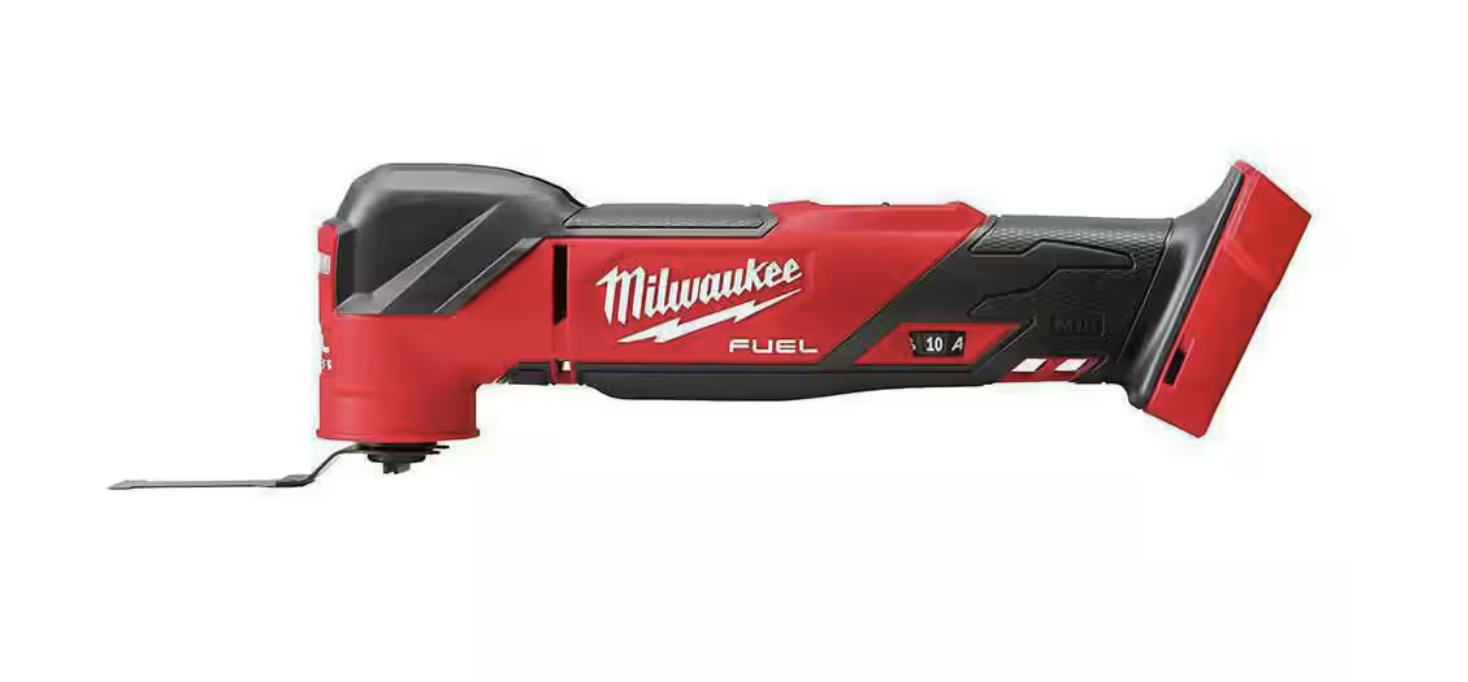
My favorite tool to use right now is the Milwaukee 18-volt oscillating multitool. This tool is light, weighing just 2.7 pounds without the battery, and easy to use. It can be used for cutting wood, tile, drywall, metal, PVC, and combination materials—as such, it’s a game-changer for a home DIY tool set. It can also be used for sanding, buffing, and removing grout. Because of the impressive range of projects this tool can be used for and the excellent battery life—with a 4-amp-hour battery that, in my experience, outlasts the blade—this is my favorite cordless tool of 2025.
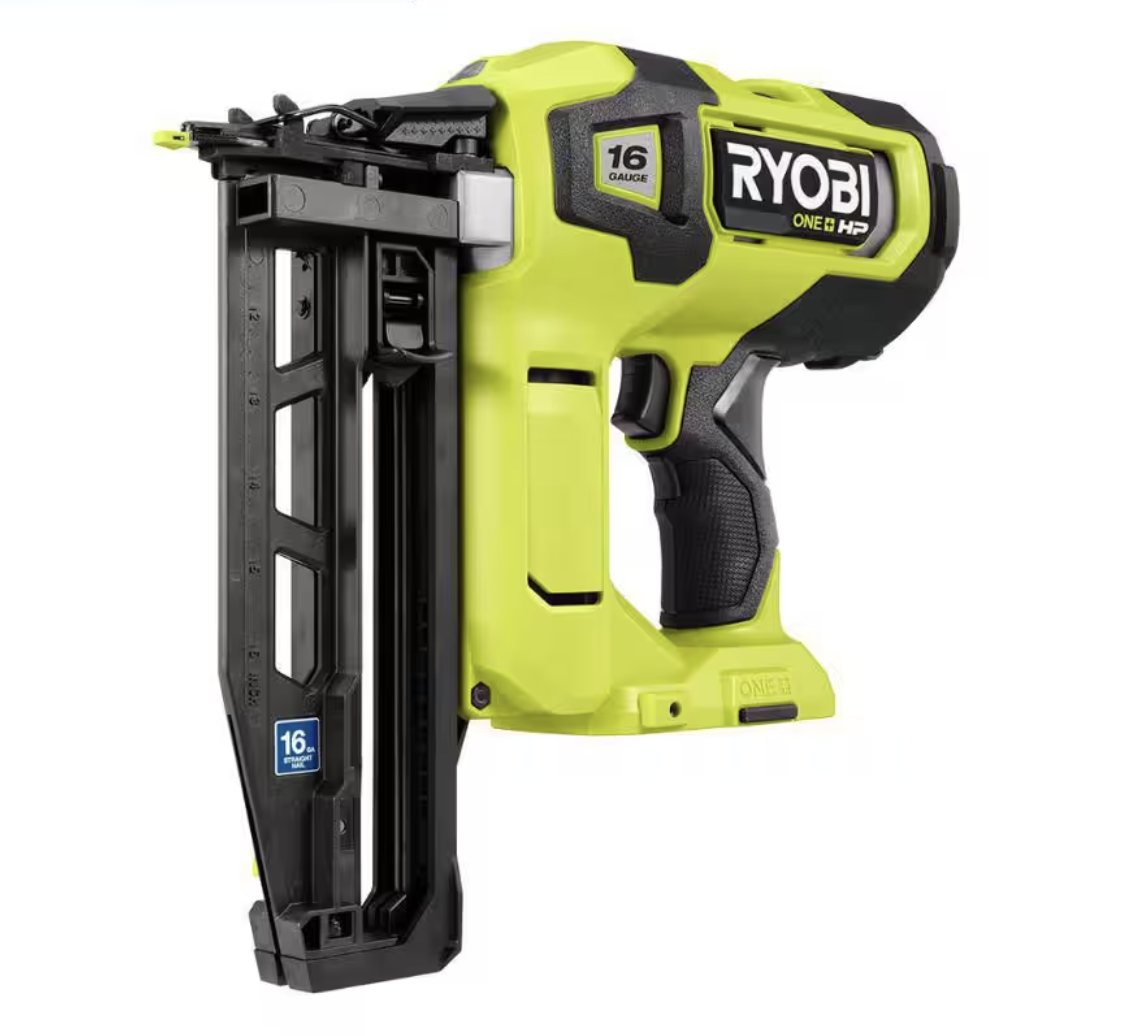
The best new cordless tool this year is Ryobi’s 16-gauge finish nailer. Ryobi’s 18-volt battery set has expanded to include over 300 cordless tools that are compatible with their system, and the 16-gauge finish nailer is one the newest. This nailer is powerful enough for most woodworking applications, and it allows the user to drive more nails in less time than older models. It can drive 1,800 nails per charge and accepts 16-gauge finish nails up to 2 ½ inches long. This is the perfect tool for any DIY enthusiast who wants to try out woodworking projects like installing trim or stair treads.
Best cordless drill and driver
The DeWalt 20-volt drill and driver set has an impressive battery life, allowing you to run a tool for several hours before needing to recharge, and they stand up to abuse. These tools are compatible with most standard drill bits, with the impact driver accepting ¼-inch hex bits and the drill accepting up to ½-inch drill bits. They are light and well-balanced, making them easier on your wrists and forearms over time. These are a good choice for projects like installing drywall or hanging shelving.
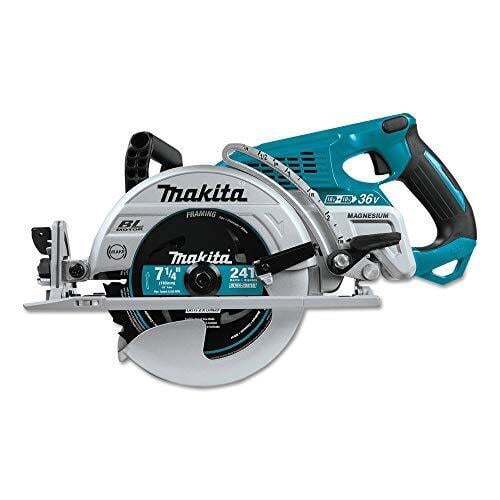
The best cordless saw of 2025 is the Makita rear handle 7 ¼-inch circular saw. Cutting a starting line with the rear-handled saw is easier because it allows you to push the saw from a more advantageous angle and keep the weight of the tool balanced. In addition, a 7 ¼-inch blade has a wider cutting surface for more precise longer cuts. Makita 18-volt batteries have a good battery life, allowing you to make over 550 cross cuts with a 5-amp-hour battery on a single charge. A cordless circular saw is good for DIY projects using plywood, like making work tables, or for cross-cutting dimensional lumber for framing.
Best under $50
My favorite new cordless tool under $50 is the Ryobi glue gun, which comes with a 2-amp-hour battery and charger. This glue gun can accommodate a ½-inch glue stick, and can heat up in three minutes. Rapid charging and heating means you can ditch the cord and use your glue gun without dragging an extension cord around with you. Although this glue gun’s small, there’s enough room to let you use two fingers on the trigger, cutting down on fatigue from squeezing over time. A glue gun is an essential tool to have around for DIY projects that might have upholstery or other cosmetic components.
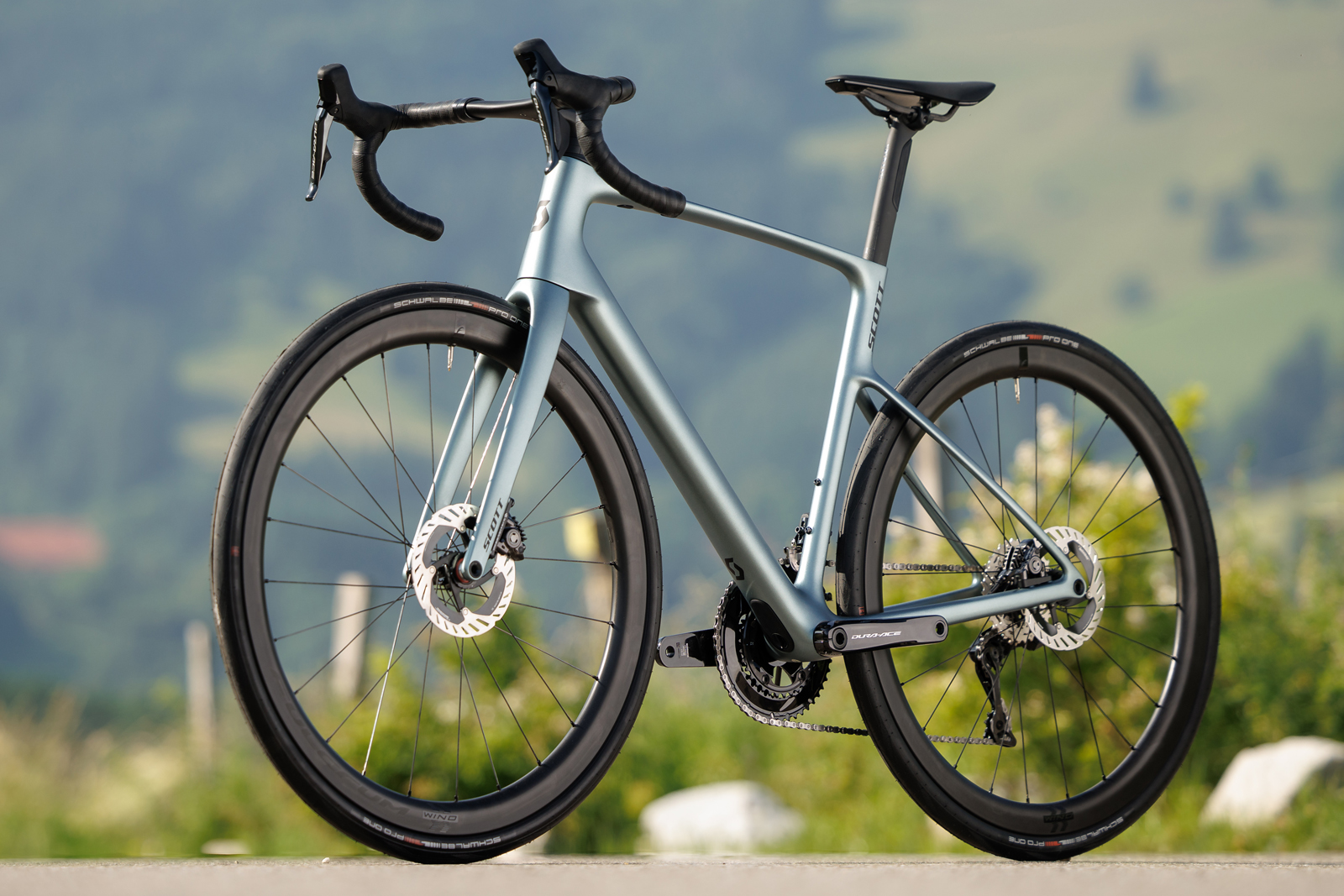
Scott has revealed its new Addict endurance bike, which is intended unashamedly for recreational use and designed to be “long ride ready”.
The endurance bike follows the Addict RC 20 race bike, which was released last November. “This year, we wanted to bring the advancements learned on the RC to a larger range of customers on our most sold road bike, the Addict,” says Jean-François Boivin, the Addict’s lead engineer.
Boivin says it hasn’t always been easy for Scott to define what an endurance bike should be. “In the past, the Addict had been designed as the RC’s little brother,” he says.
But, despite learning from the RC, the new Addict is its own bike, with Scott focusing on four main areas: extra comfort, relaxed geometry, confident handling and practical features.
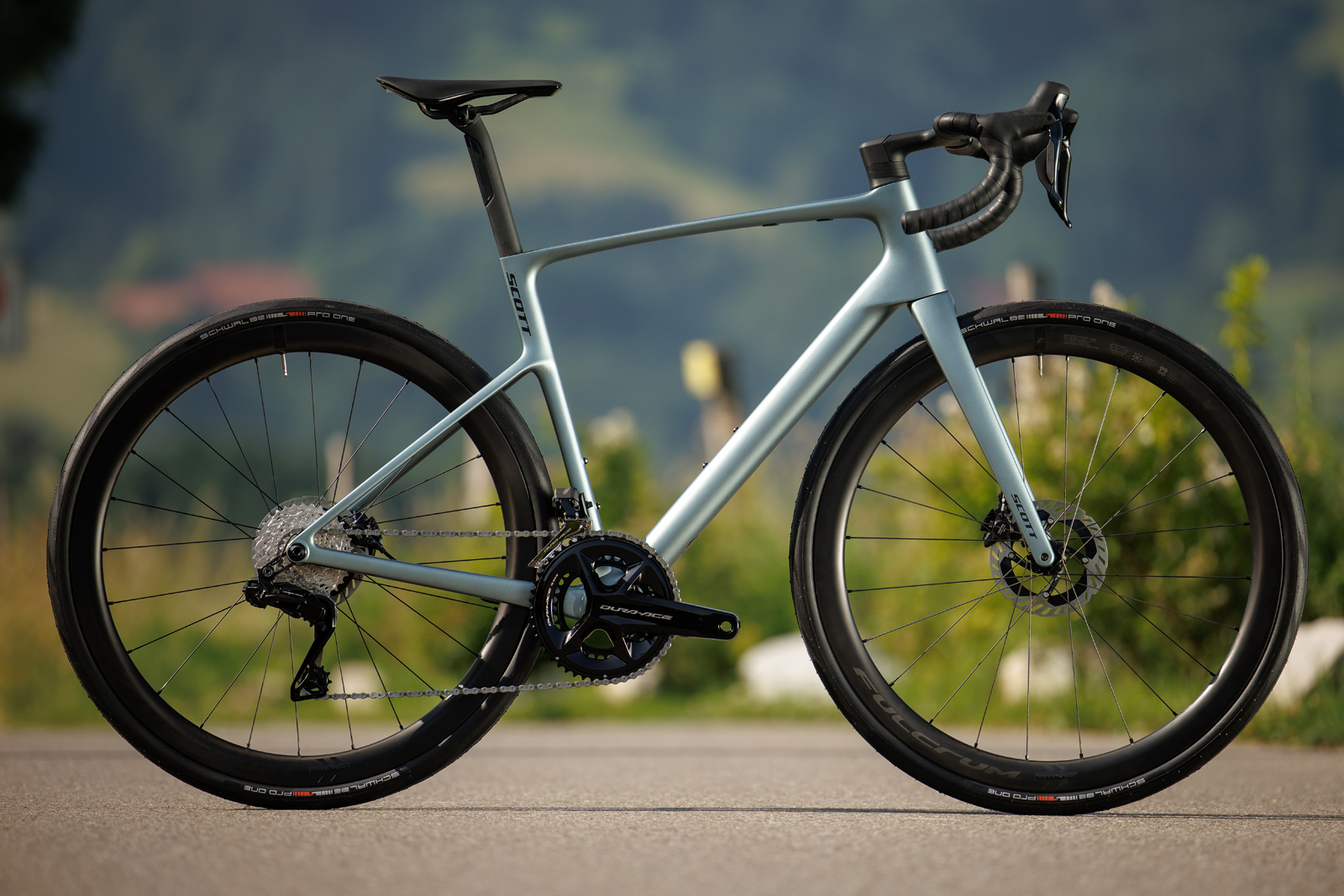
The Scott Addict Premium is the top model in the new line-up, with a Shimano Dura-Ace groupset and Fulcrum Wind 42 DB wheels. Scott
Boivin explains that when designing the new Addict, Scott worked carefully on frame compliance. The result is the new Addict has 25 per cent more compliance than the Addict RC, and it has 50 per cent more frame compliance over the outgoing Addict, which launched back in 2020.
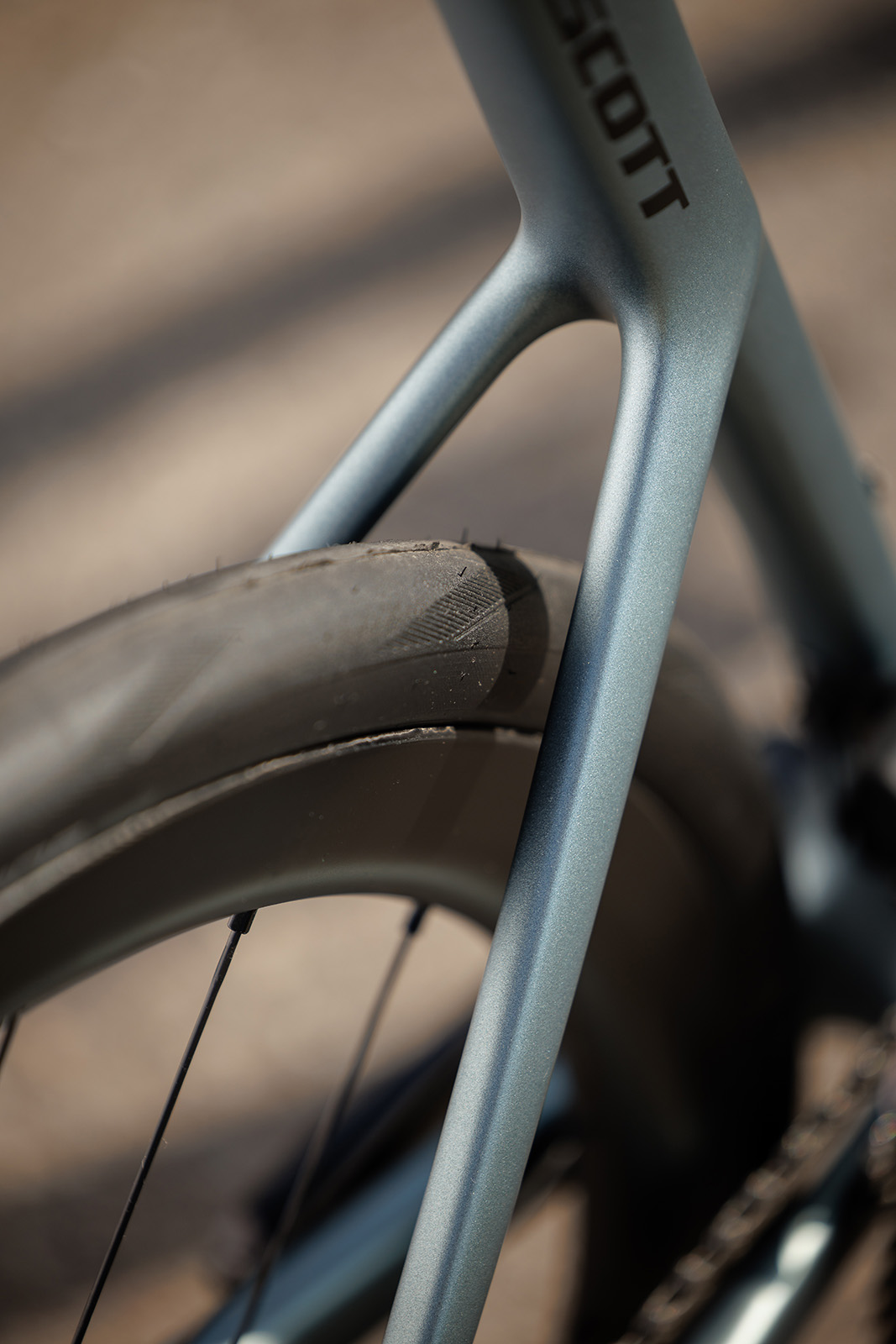
“We achieved this by reducing the seat tube section underneath the seat stay junction to allow for additional flex,” says Boivin. “This way, the seat tube can flex forward a bit more. The top tube is also slimmer to enable upward deflection, and the drop seat stay will flex outward to contribute even more comfort.”
Julien Chauveau, marketing manager for road, gravel and triathlon at Scott, says the lessons for how to adapt the Addict’s tubes came from developing the RC race bike, where the team saw how the bike flexed in a fatigue machine at the company’s factory in China.
“At that moment, we really understood how we could improve the tube shapes and the design of the bike to actually increase the frame compliance,” says Chauveau.
Scott says it wanted to bring the advancements it learned from making the Addict RC (pictured) to the Addict endurance bike. Scott Windsor / Our Media
However, the new Addict is really a balancing act between where compliance aids comfort and stiffness helps performance: the bike has the same stiffness as the Addict RC in the bottom bracket area and head tube.
As soon as the moulds for the Addict were ready, Scott asked for frames with different layups and levels of stiffness, going from very soft up to the stiffness levels of the Addict RC.
After blind testing, Chauveau says everybody loved the stiffer bikes: “The main reason was the head tube stiffness. They all felt the handling was more precise and gave them more confidence. With a bike like this we want the rider to feel at ease, even when you go fast. The stiffer bikes were much better for that.”
“Bottom bracket stiffness was less easy to feel, but still the riders preferred the stiffer version for sprints and climbs,” he adds.
38mm tyres and geometry tweaks
The bike can now fit 38mm tyres, but all models ship with 34mm tyres. Scott
The balancing act between comfort and performance continues with the Addict’s ample tyre clearance and geometry tweaks.
The bike can now fit 38mm tyres, which is 4mm wider than the tyre clearance of the Addict RC and 3mm more than the previous Addict.
“Not only will you benefit from the added vibration damping of lower pressure tyres, but you will also get added confidence in grip,” says Boivin.
Yet Scott seems aware that although tyre widths and clearances are increasing, running 38mm tyres on an endurance bike might still be a niche desire; the Addict’s geometry is optimised for 34mm tyres and models in the new range are specced with this width.
Scott also wants the bike to be accessible to the average rider, and for that reason the bike’s stack is now 5mm higher and the reach is 5mm shorter. Although the bottom bracket drop and fork rake were adjusted to accommodate the wider tyres, Scott shortened the chainstays by 2mm to make the bike feel more playful.
This geometry is also a big reason why the Addict fits into Scott’s new ‘ride’ bike category, whereas the RC fits into its new ‘race’ category, alongside the Foil aero bike.
“It’s not uncommon to see riders take the RC and add many spacers to fit their [body] or riding style,” says Boivin. “But in fact, if you were to use 35mm of spacers on the RC, you would actually get to the same position as on the Addict without spacers.”
“If you use more than 30mm of spacers on the RC, you would probably be better suited with the new Addict,” he adds.
Scott Addict geometry
47cm
49cm
52cm
54cm
56cm
58cm
61cm
Seat tube length (mm)
425
445
465
485
505
525
555
Top tube length (mm)
511
521
536
551
566
582
597
Head tube length (mm)
104
115
139
161
182
201
201
Head tube angle (degrees)
71.3
71.8
72
72.2
72.5
73
73
Seat tube angle (degrees)
75
75
74.5
74
73.5
73.1
73
Chainstay length (mm)
418
418
418
418
418
418
418
Wheelbase (mm)
984
991
1,000
1,009
1,016
1,022
1,036
Stack (mm)
522
534
557
578
599
619
638
Reach (mm)
372
378
382
386
389
394
402
Storage and hidden extras
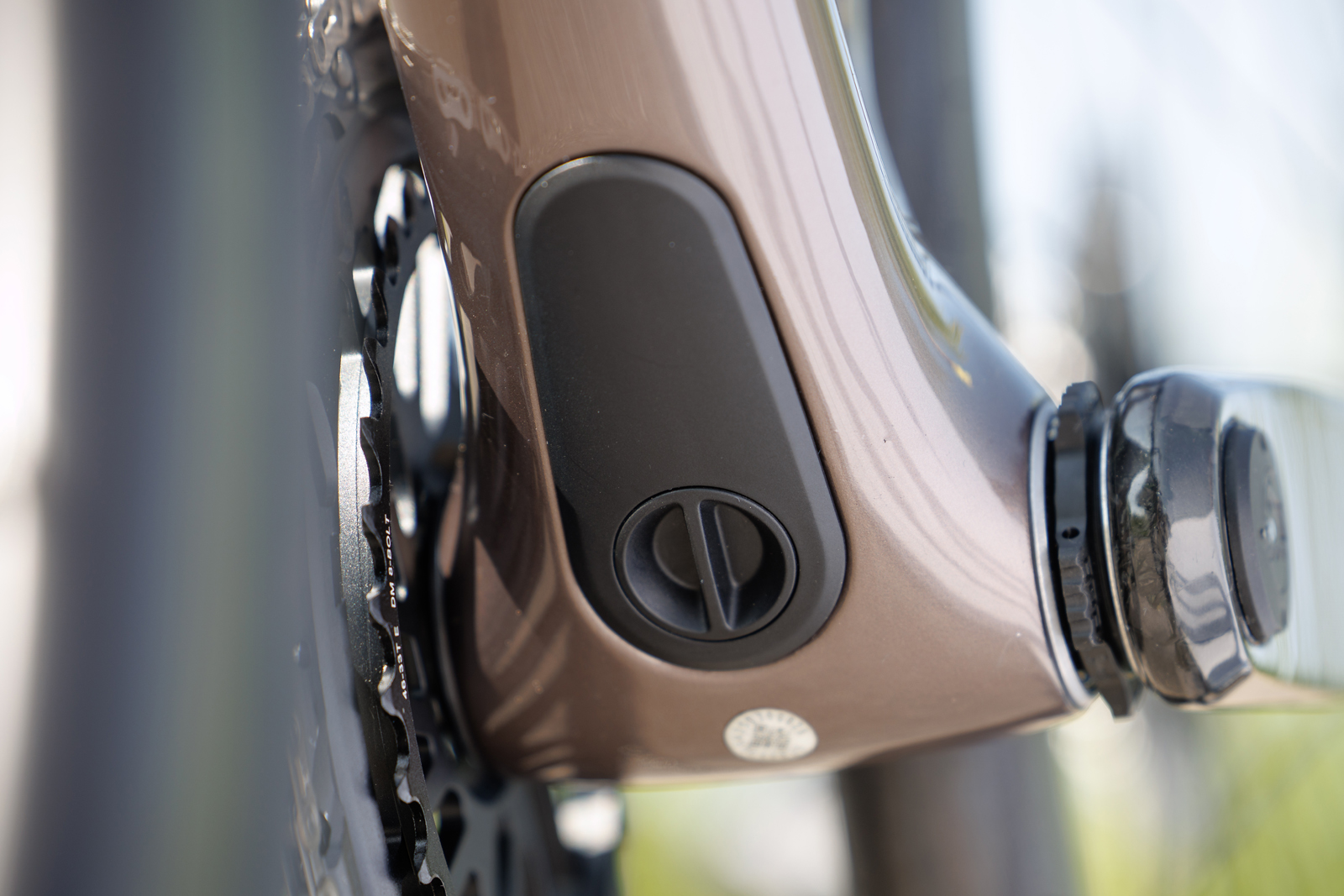
The Scott Addict down tube storage hatch is hidden by the bottom bracket. Scott
To help make the Addict ‘long ride ready’, Scott has equipped the bike with extra storage and accessories.
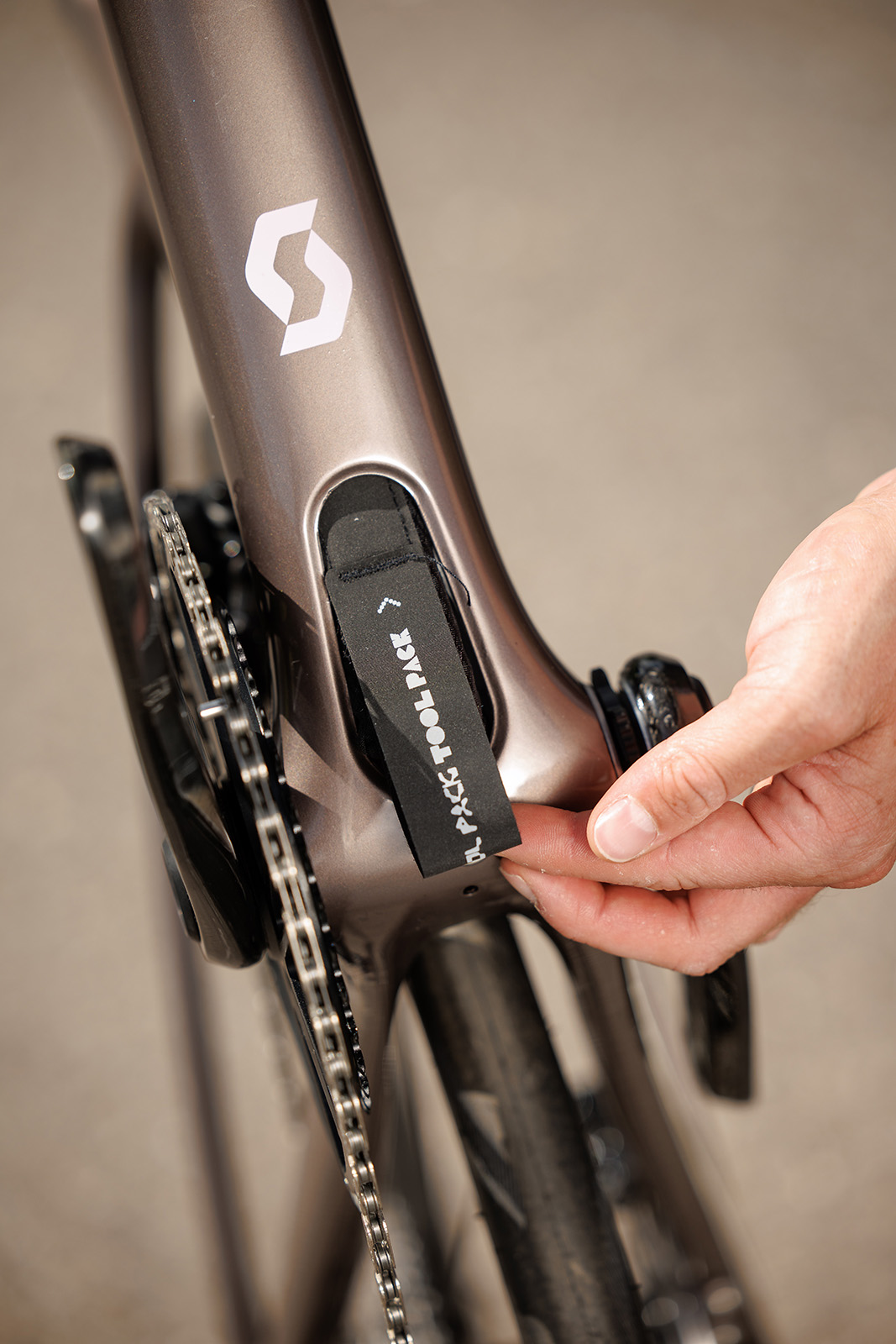
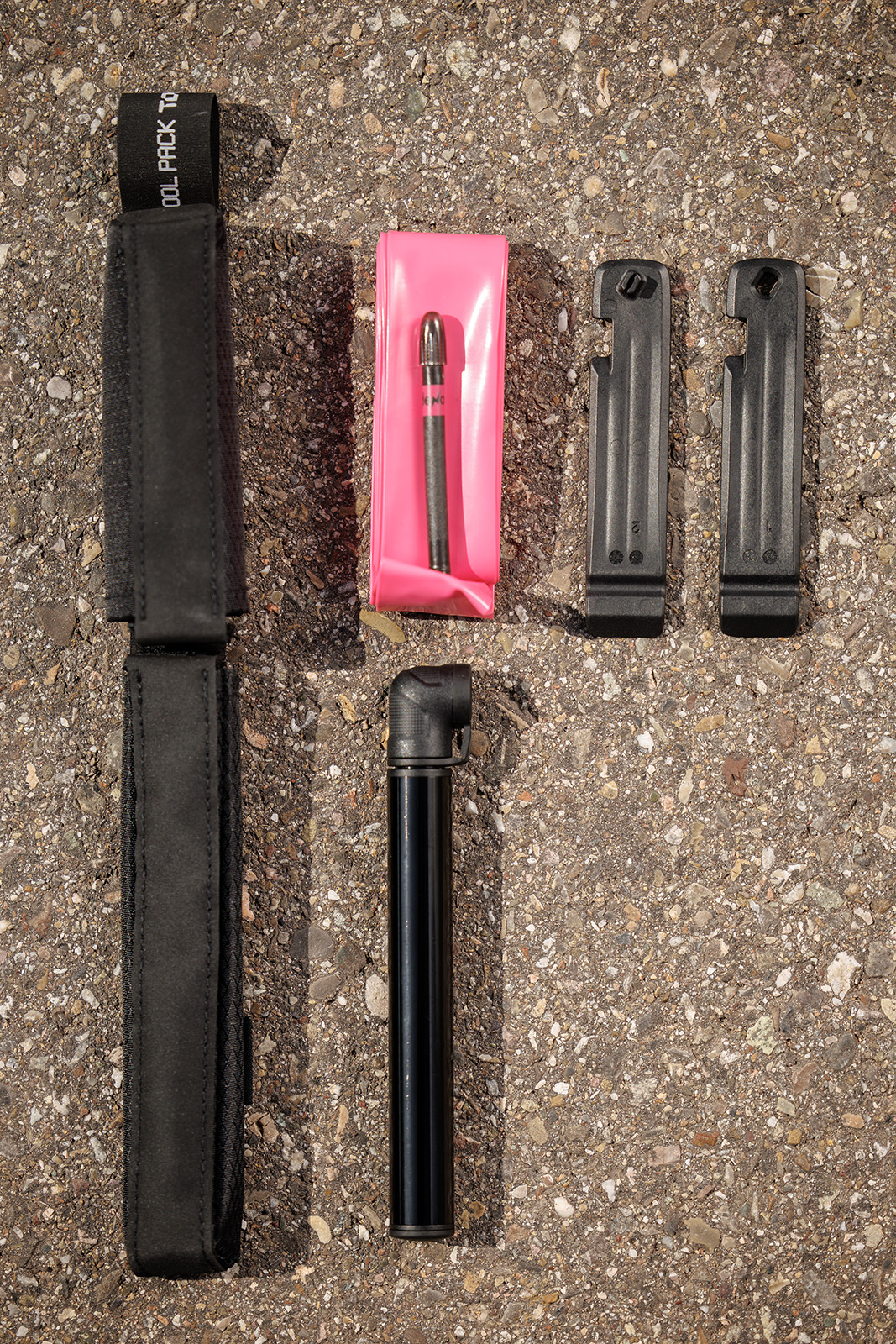
The bike has storage integrated into the down tube, which is accessible via a hatch near the bottom bracket. This is fitted with a flat tyre ‘Save the Day’ repair kit, which consists of a mini pump, tyre levers and a TPU inner tube, held in a fabric sleeve. The kit is included on the top two Addict models, and is an optional upgrade for others.
The ‘Save the Day’ repair kit fits in the down tube storage. Scott
The kit contains a mini pump, tyre levers and a TPU inner tube. Scott
The location of the storage is supposed to be unnoticeable (because nobody likes to think about getting a flat tyre), but the position makes sense from an engineering standpoint, too.
Chauveau says the total weight penalty for the storage is only 40g, with the door weighing just under 10g and only an extra 25g of carbon required to reinforce the frame. The door only has to support its own weight, but if it was under water bottles, as on other bikes, it would have to be far more substantial, and therefore heavier.
The mechanism to lock the door is the same design Scott uses for its mountain bikes. “We know it’s going to work and last a long time,” says Chauveau.
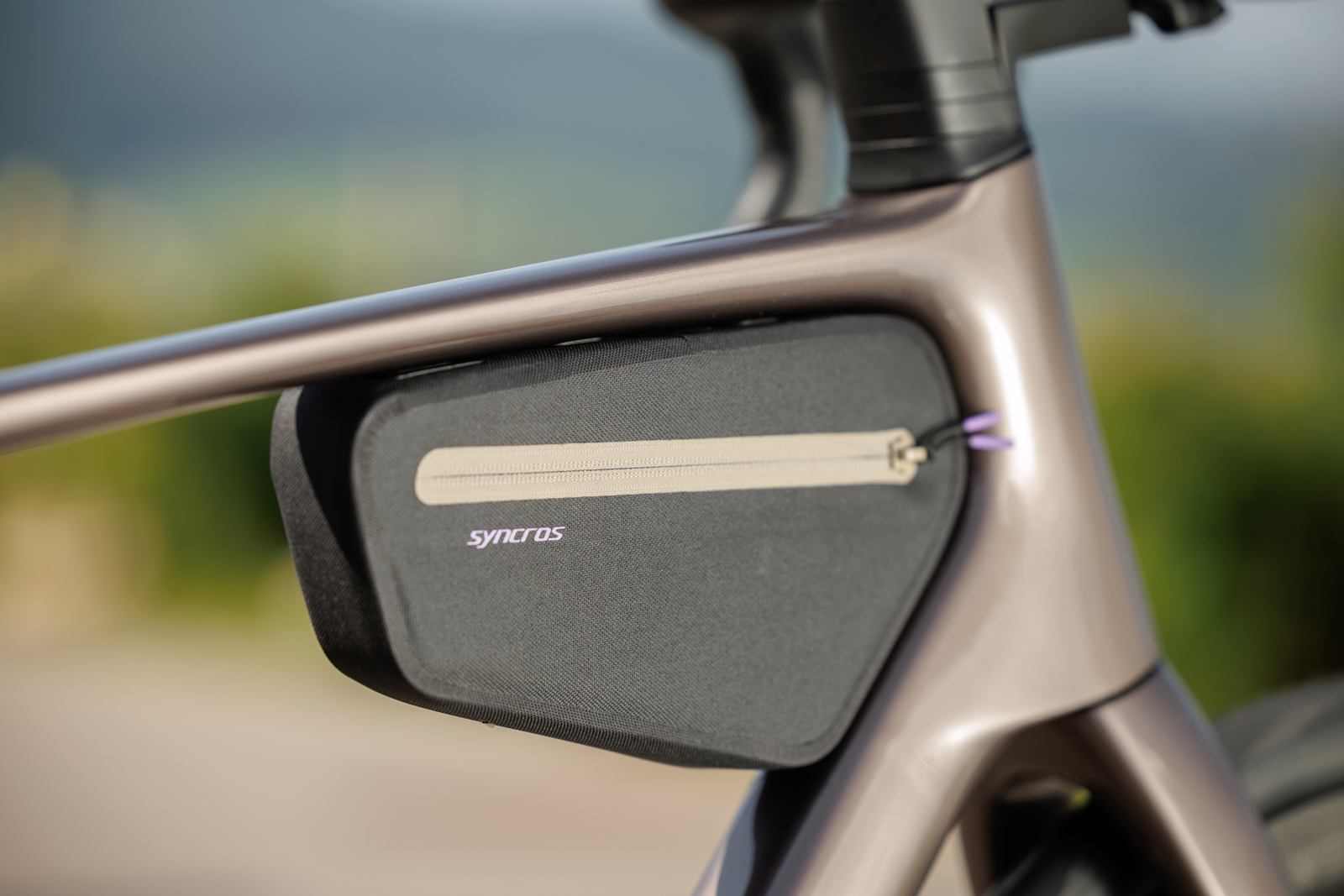
The bike comes with a frame bag. Scott A multi-tool fits into the handlebar drop. Scott
The bike also comes with a frame bag, which attaches to mounting points that are recessed in the top tube. This is so they don’t disrupt the clean lines of the bike if you’re riding without the bag.
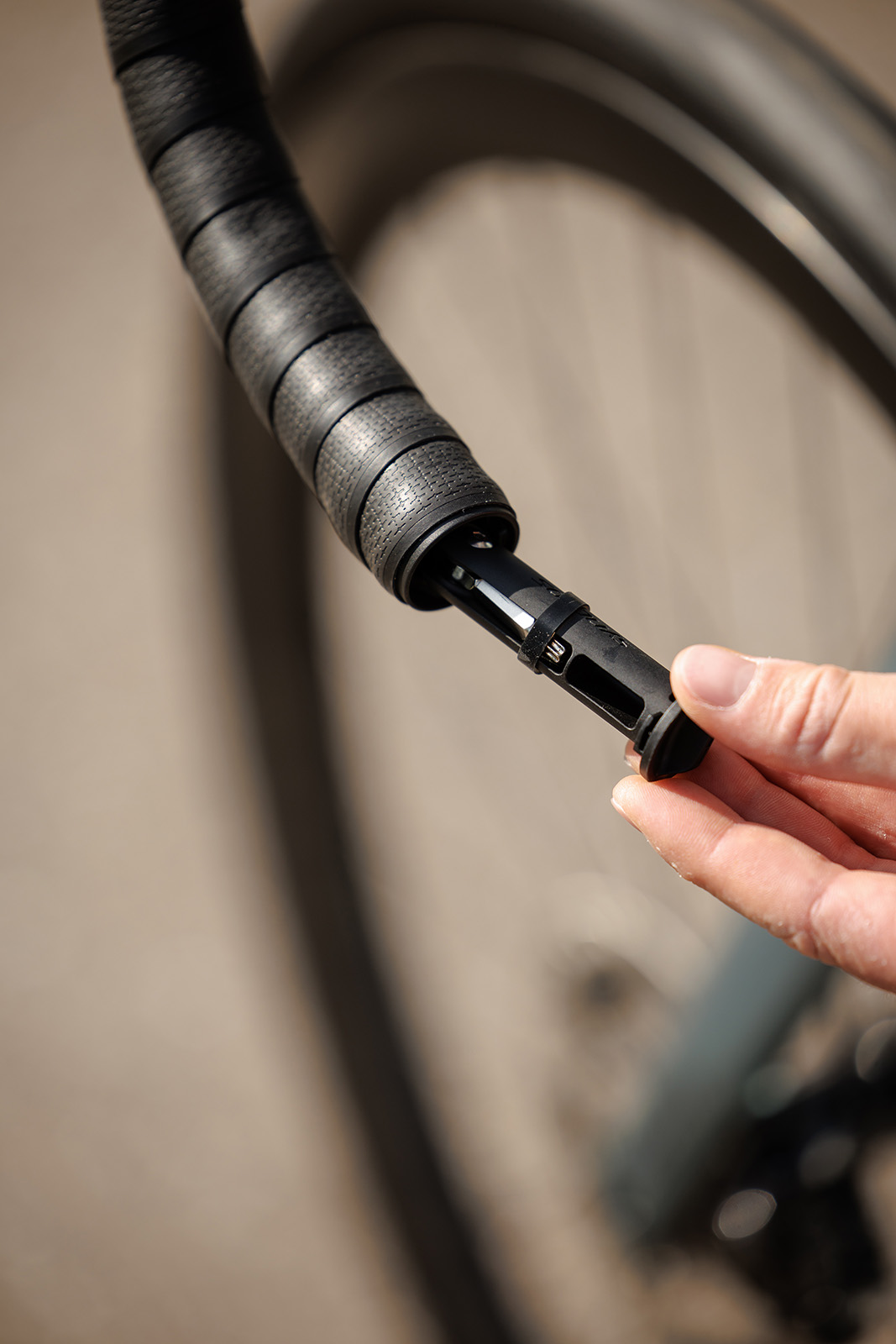
Like the Addict RC, Scott’s new endurance bike has a small multi-tool hidden in the handlebar, which can be used to adjust any of the bolts on the bike or remove the wheels.
The Syncros seatpost also has an in-built bike light, which can provide illumination for up to 20 hours, depending on the mode.
Syncros compatibility
The Addict is compatible with a wide range of Syncros components, so you can get the right fit. Scott
Boivin says bike fit is “paramount” for long rides, and so Scott has ensured there is a large range of fit components from its in-house brand Syncros that will fit on the Addict.
“Most of the Addict’s small parts are compatible with the RC. This means that you get access to a range of parts that are interchangeable between the two bikes,” says Boivin.
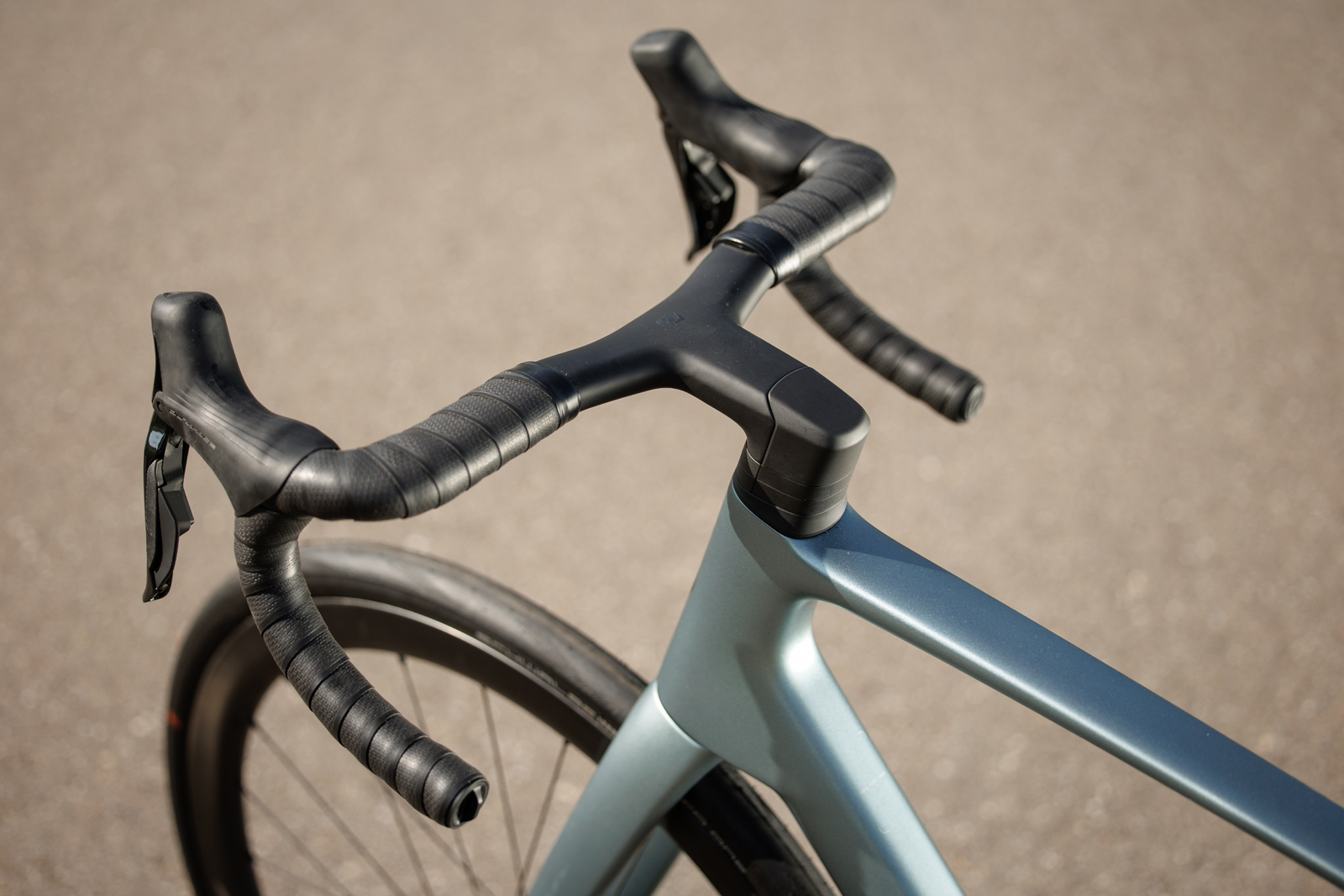
While the Addict comes with a -6˚ stem, this means you could also fit the RC’s -11˚ stem or its one-piece Syncros cockpit.
“You’ll notice that we don’t have any road in the round handlebars anymore on the Addict lineup. All you will find are smooth surface handlebars for best in class ergonomics,” he adds.
Keeping the weight down
The Addict’s lead engineer, Jean-François Boivin, says the Addict HMX is one of the lightest endurance frames on the market. Scott
While the focus of the new Addict is comfort and long-distance performance, Boivin says “a lot of effort” was made to keep the weight of the bike as low as possible.
The new bike’s frame is available in two carbon fibre options – Scott’s premium HMX or more affordable HMF carbon.
At 780g, Boivin says the Addict HMX is one of the lightest endurance frames on the market.
He says the HMX frame is only 50g heavier than the previous-generation Addict RC, while the Addict HMF frame is 70g lighter than the previous Addict.
The top-spec Addict Premium, with a Shimano Dura-Ace groupset and Fulcrum Wind 42 DB wheels, weighs a claimed 7.4kg. The rest of the range weighs between 7.8kg and 9kg.
“Attractive and accessible”
The Scott Addict 30 has Shimano 105 Di2 and costs £3,299 / $3,999 / €3,799.
As well as plenty of fit options, Scott has provided a wide range of complete builds.
“We want the Addict to be attractive and accessible to the largest possible span of people,” says Boivin. “So this is why the bike builds go from the very affordable mechanical shifting to the high-end electronic group sets.”
In keeping with the ‘long ride’ philosophy and the focus on recreational use, Scott has specced the Addict with smaller chainrings and larger cassettes than you would find on racier bikes.
The bottom gear on the new Addicts will be a one-to-one ratio with Shimano groupsets and 0.92-to-one with SRAM groupsets.
The bike is also compatible with SRAM’s Universal Derailleur Hanger, so it’s futureproof and compatible with as many drivetrains as possible.
“The rest of the components go from affordable alloy parts to light carbon components and wheelsets. We think everybody will be able to find what they are looking for,” says Boivin.
Investment research firm Bernstein warned Thursday that India faces a “strategic tech crisis” as US technology giants deploy predatory pricing strategies to lock up the Indian AI market. Perplexity Pro launched free for one year to Airtel’s 350 million subscribers while OpenAI introduced a $5 monthly India subscription compared to $20 in the United States.
Bernstein analysts described regulatory “double standards” where foreign tech companies receive favorable treatment while domestic companies face what the firm called “crushing rules and government-led ‘tech stacks’ that make private business unviable.” Private AI investment in India totaled $11.29 billion between 2013 and 2024 compared to $471 billion in the United States and $119 billion in China. From the report: When OpenAI, which is reportedly looking to set up a data center in India, announced the plans to launch a new office, it was met with another round of excitement — “as if Open AI will hire all Indians at hefty salaries,” the firm wrote in a note to clients Thursday. Bernstein analysts pour cold water on this excitement, dismissing it as a “repeat of the 90s” and arguing that the hype misses the fundamental power imbalance.
“Anyone, we repeat anyone, can build a data center… This is the start of the dominance of US tech in Indian AI environment ensuring Indian entrepreneurs do not get a fighting chance to stay relevant. They will run on the sidelines – piggybacking on the US foundation models or maybe even the Chinese,” they wrote.