RPCS3 Developer Claims AVX-512 Is Power-Efficient, Blames Skylake-X For Its Poor Reputation

RPCS3 Developer Claims AVX-512 Is Power-Efficient, Blames Skylake-X For Its Poor Reputation
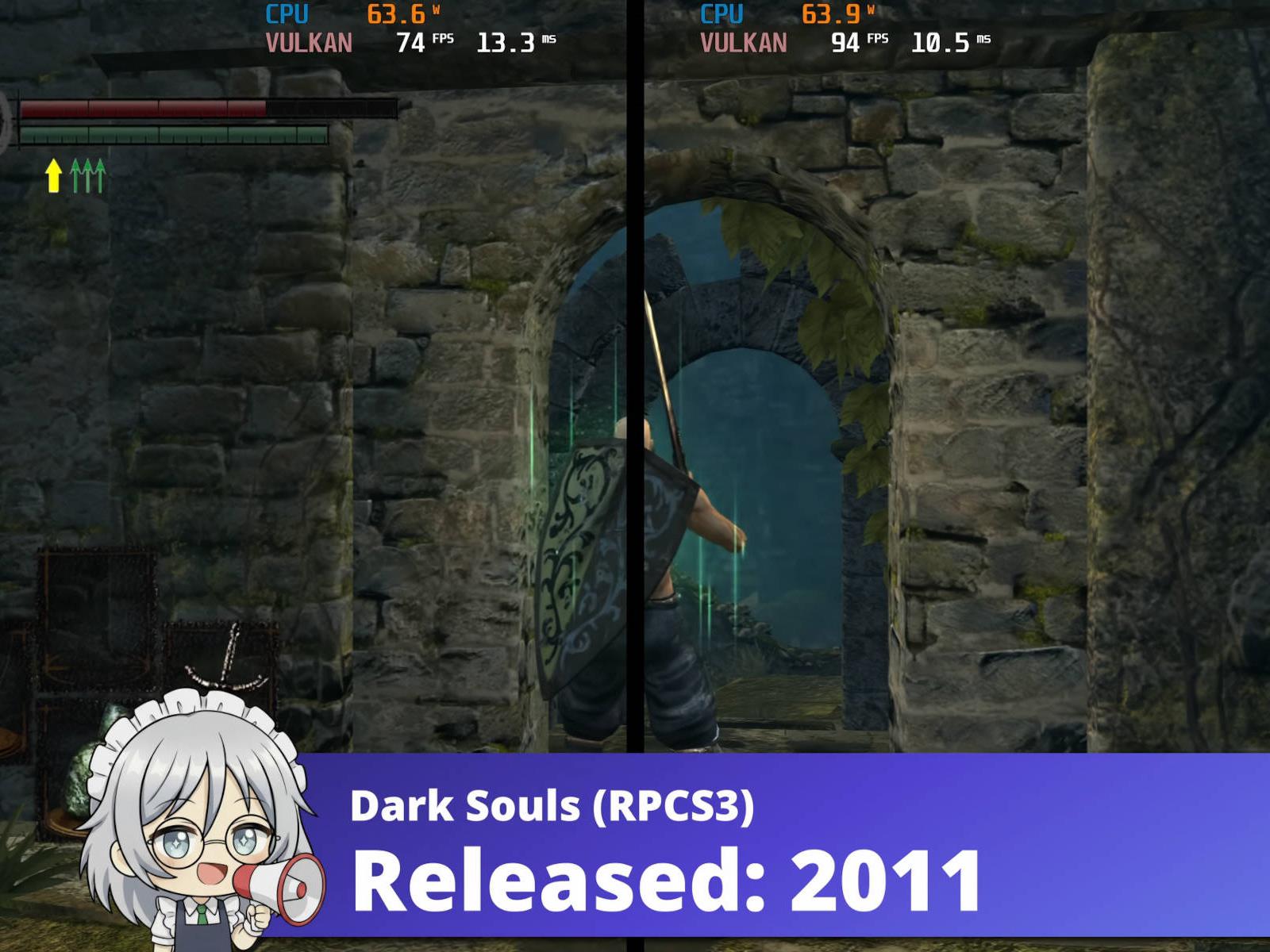
Yesterday, developer of PS3 emulator RPCS3 Whatcookie posted a 20-minute YouTube video to their YouTube channel in defense of AVX-512, a maligned CPU instruction set that debuted with Intel’s Skylake-X architecture in 2015 and didn’t see adoption by AMD CPUs until 2022’s Zen 4. Specifically, Whatcookie debunks claims that modern implementations

Lenovo Responds To Backlash Over Legion Go 2’s Premium Price

Lenovo Responds To Backlash Over Legion Go 2's Premium Price
Lenovo was quite the busy body at IFA 2025 last week, having announced a barrage of gaming related PC products, as well as a bunch of ThinkPads and ThinkBooks, including a nifty ThinkBook VertiFlex concept. Among the mix was a new generation handheld, the Legion Go 2, and early listings at Best Buy reveal that it’s coming with a comparatively

Pakistan Spying On Millions Through Phone-Tapping And Firewall, Amnesty Says

Pakistan has built surveillance systems that it is actively using to spy on millions of its citizens and to block millions of internet sessions, according to Amnesty International. The Asian nation’s Lawful Intercept Management System enables intelligence agencies to tap calls and texts across all four major mobile operators.

A Chinese-built firewall, WMS 2.0, currently blocks approximately 650,000 web links and restricts platforms including YouTube, Facebook, and X. The surveillance infrastructure combines technology from Chinese company Geedge Networks, U.S.-based Niagara Networks, France’s Thales DIS, Germany’s Utimaco, and UAE-based Datafusion. Balochistan province has experienced years-long internet blackouts under the system.


Read more of this story at Slashdot.

There Are Right and Wrong Ways to Share Your Passwords

While multiple services are cracking down on password sharing, there will still be plenty of times when you need to loan your login credentials for an app or service to someone you know: Maybe you need shared access to a movie library, for instance, or there’s a file system at work that a colleague needs to get to.

First, you should only do this when it’s absolutely necessary and when it’s with other people you trust—the more people with access to a particular account, the less secure it is. All of the ways your details can be vulnerable, from data breaches to phishing scams, apply to them as well as to you.

Second, make sure you only share usernames and passwords in a safe and secure way. You definitely don’t want your login details being known more widely than you intended, so be careful when it comes to passing this information along.

The wrong ways to share passwords

Sharing passwords
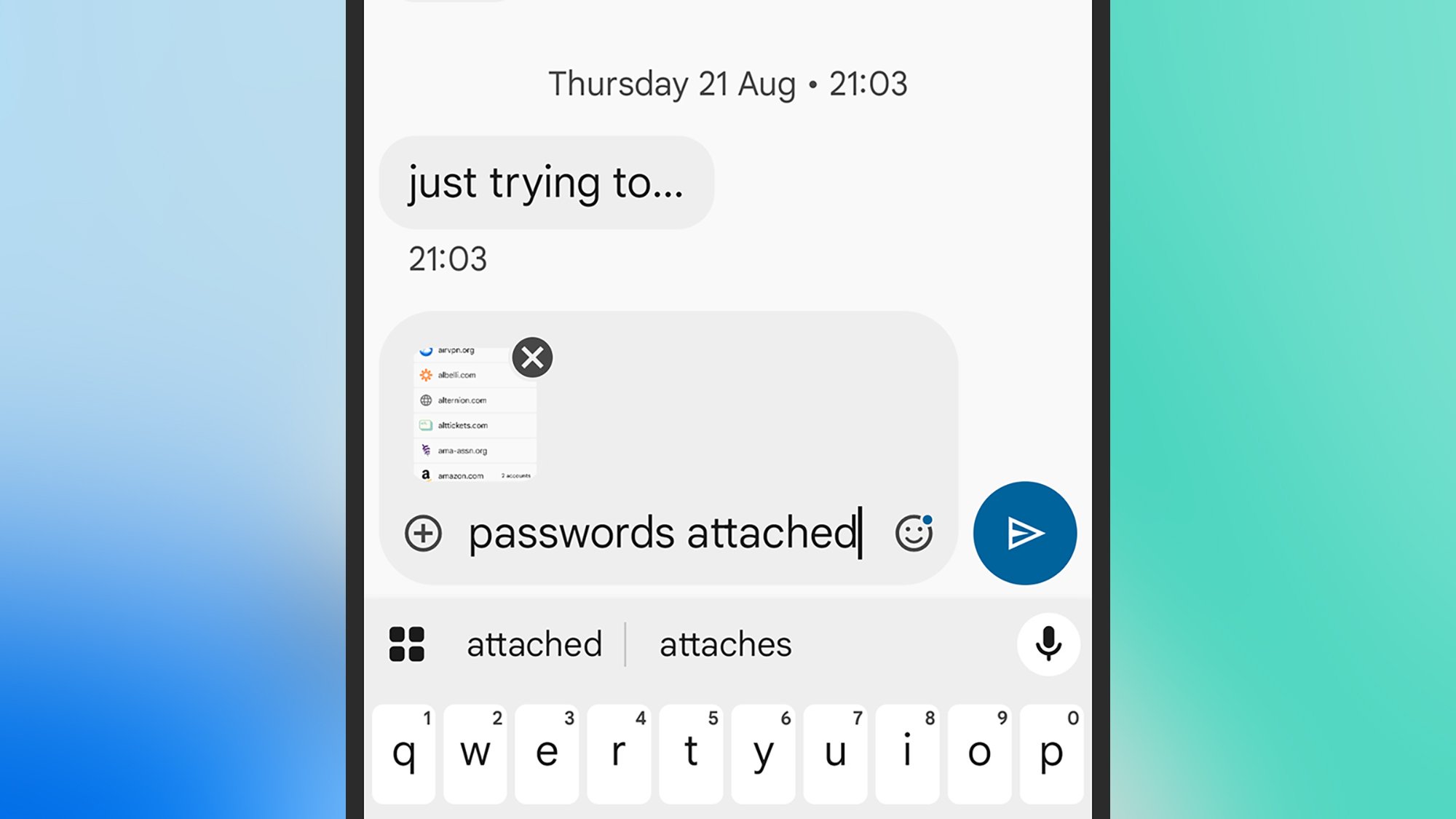
Screenshots are best avoided for sharing passwords.
Credit: Lifehacker

Avoid sharing passwords in ways that other people are going to be able to easily spy on. Writing it down on a physical piece of paper or post-it note is definitely not advised, unless it’s kept very secret and destroyed as soon as it’s not needed any more. Pieces of paper can be easily read over someone’s shoulder, put in a drawer and forgotten about, or pinched from a desk.

Screenshots of login credentials aren’t a great idea, either. They can be easily forwarded to other people; they might get backed up to photo services automatically (maybe in accounts that are shared by others); and like paper notes, they can be easily read by someone passing by or sharing a device.

When it comes to using messenger apps, the best approach is to use ones that offer end-to-end encryption, which makes it much more difficult for anyone else to see what you’re talking about. Plain text emails and SMS are best avoided, as are public (or semi-public) Slack channels, and apps such as Facebook Messenger and Instagram (which do offer some encryption, but not by default).

Giving someone your details face-to-face or over the phone might seem like a secure way of passing on this information, but there are caveats: Don’t do it in places where your conversations might be easily overheard or recorded, even if you don’t think anyone else within earshot will be interested in your accounts.

Bear in mind that a compromised account can quickly expose others. It’s a reminder of why using the same password on multiple services is such a bad idea: It might start with someone being able to post as you on your favorite hobbyist forum, but if you’re using the same password for convenience in other places, that unauthorized visitor might be able to move on to social media, email, and more.

The right ways to share passwords

Sharing passwords
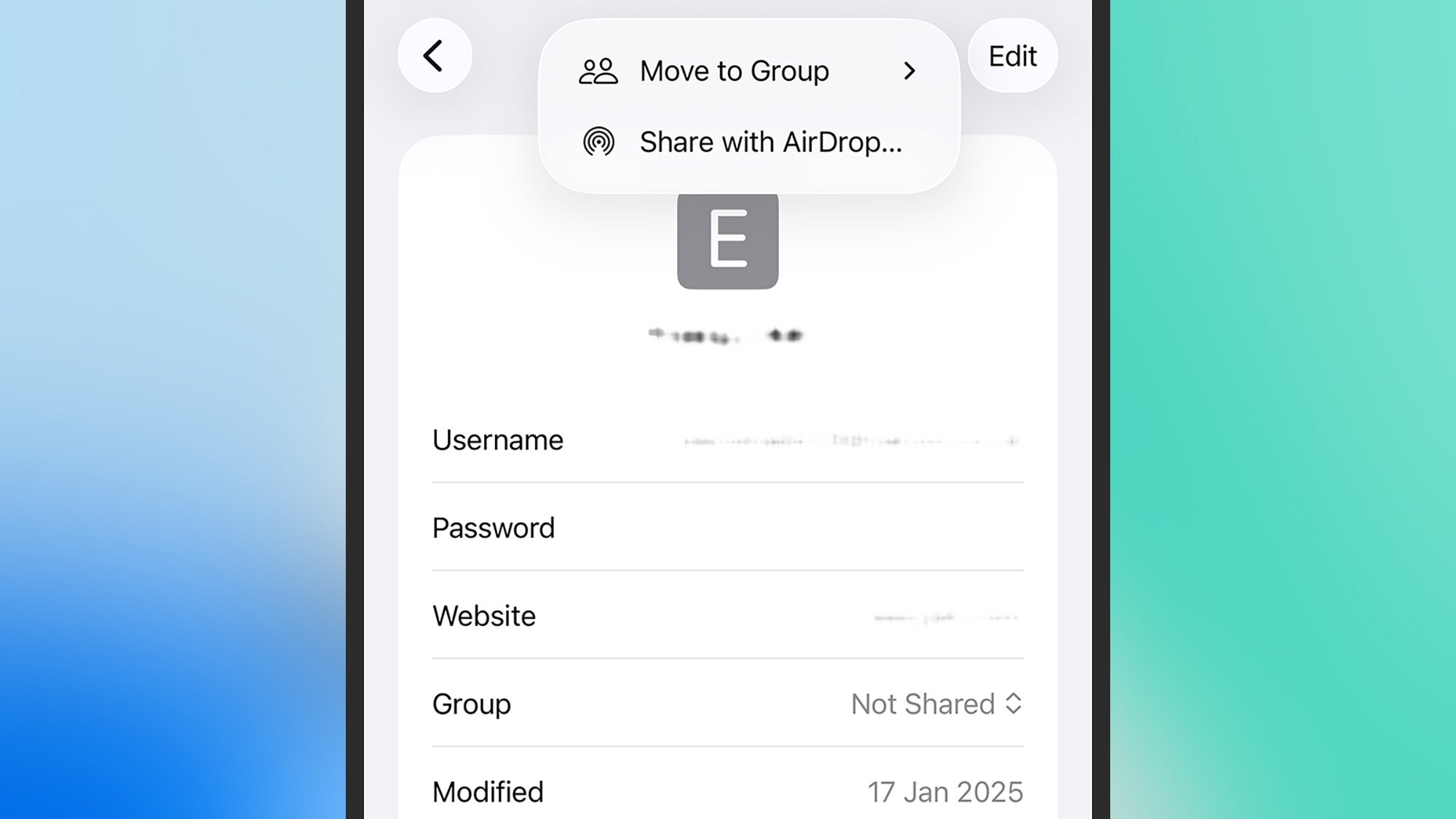
Apple Passwords lets you share credentials in secure groups.
Credit: Lifehacker

When it comes to the right ways of sharing credentials, start with your password manager, if you use one (and you should). Many of these apps, including the Apple Password app, come with built-in features for sharing usernames and passwords, so take advantage of this option if you have it.

Fully encrypted messaging apps like WhatsApp and Signal can be trusted, but be aware of the ability for someone else to forward or screenshot messages. Ideally, send over your credentials via a message that will be wiped from the record after a certain amount of time: Both WhatsApp and Signal have disappearing message features, as does Snapchat, the original ephemeral platform.

If you’ve got both a username and a password to pass on, you might consider using two different methods to share them—maybe saying one in a (private) phone call and sending the other over a secure, encrypted messaging app.

Another option is for you to log into the account yourself, on the other person’s device. You’ll need to be in the same physical space at some point to do this, but it means the other party never actually knows what your login details are, and you can revoke access at any time (most apps and sites have a feature that let you do this, or you can just change the password to something new).

You should also consider whether or not you need to pass on your login details at all. For example, cloud storage services will often let you share files and folders via a link you can give to someone else, while many streaming services come with family plans that let everyone in your household have their own separate space.

SRAM pays homage to its beginnings with limited-edition ‘1987’ Eagle Transmission groupset

SRAM is celebrating its 38th anniversary with a limited-edition run of 1,987 individually numbered polished Eagle T-Type AXS groupsets. 

Dubbed the 1987 Collection, the limited-edition groupset features a unique combination of T-Type ecosystem components, all in an exclusive polished silver finish.

Aside from the rear derailleur, which is custom for the 1987 collection, it doesn’t appear to function any differently from the regular Eagle Transmission groupset – but it certainly is eye-catching.

The limited-edition groupset will set you back £3,399 / $3,499 / €3,799, if you can get your hands on one.

The 1987 Collection

SRAM is pitching the groupset at riders looking to upgrade their current groupset, or those assembling a once-in-a-lifetime custom-built bike. SRAM

The main selling point of the groupset (aside from its exclusivity) is a polished aluminium colourway, which runs through all the components. 

Eschewing the usual stealthy SRAM greys and matt blacks, this groupset will make your bike stand out at the bike park, but all this bling doesn’t come cheap.

The whole groupset retails for just under $3,500, and although it includes some tasty goodies and spares, such as a SRAM four-battery AXS charger, two chainrings and a spare AXS battery, it’s still a serious amount of money. 

It’s expensive enough to buy two whole Calibre Bossnut mountain bikes, in fact. But that’s not the point. 

SRAM is keen to stress that it is a strictly limited production run: “When they’re gone, they’re gone”.

But what’s different from the standard SRAM Eagle Transmission components you can already buy?

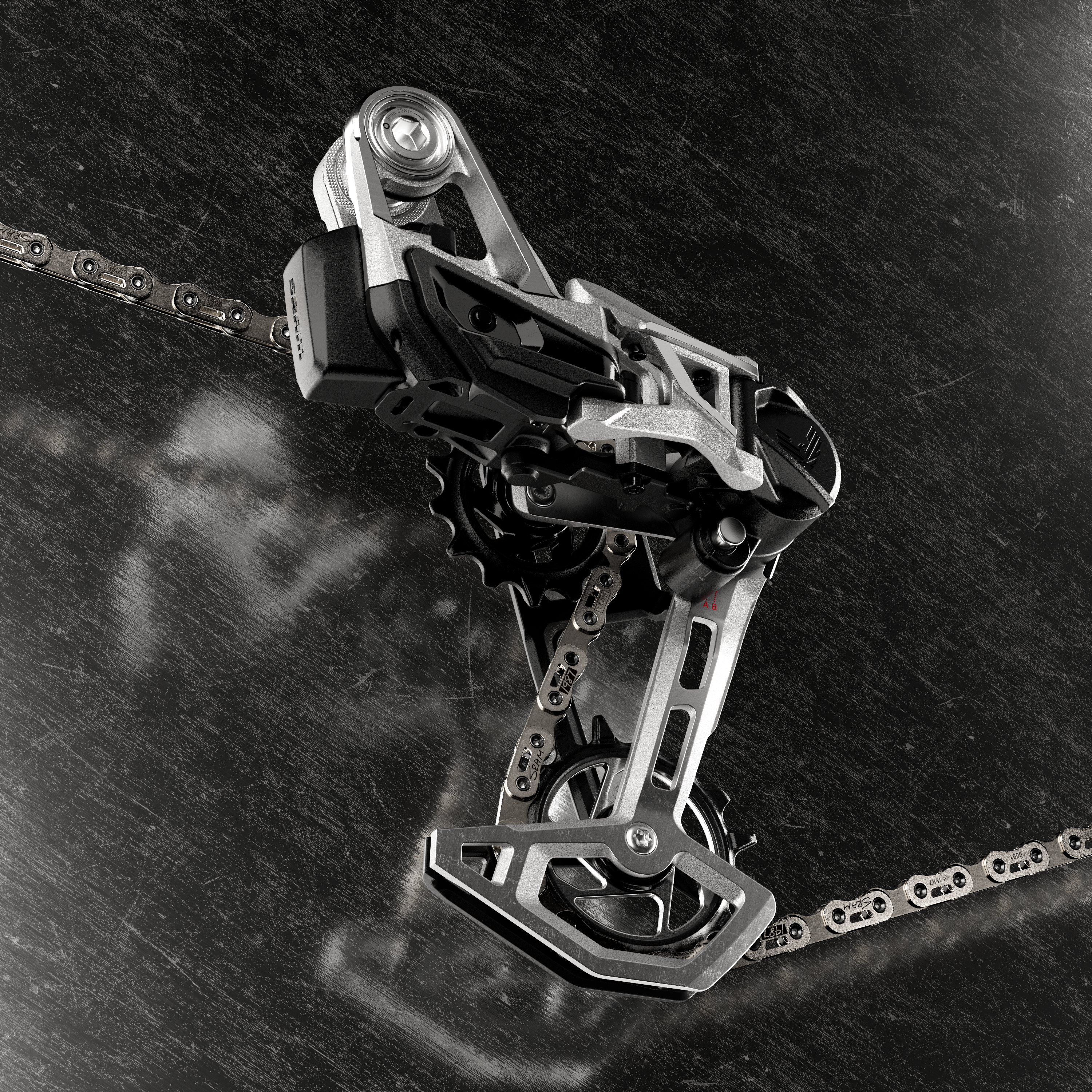
SRAM 1987 Eagle Transmission derailleur

The limited-edition derailleur combines the body of the XX SL with the cage from the XX. SRAM

The 1987 derailleur combines the cage from the SRAM XX derailleur with the lighter-weight body from the XX SL derailleur.

The limited-edition silver colourway makes it stand out and shows other bike nerds that you’re shifting with something special.

SRAM 1987 Eagle Transmission Flattop chain

The 1987 groupset includes a custom Eagle Transmission Flattop 12-speed chain. SRAM

The 1987 Collection T-Type chain is based on the XX Eagle Transmission Flattop chain, featuring hollow links, hollow pins and a Hard Chrome coating. It looks classy and under the cut-outs in the plates (like the XX SL chain).

There is room for subtle detailing carrying the handwriting of SRAM founder, Stan Day, and a unique groupset serial number.

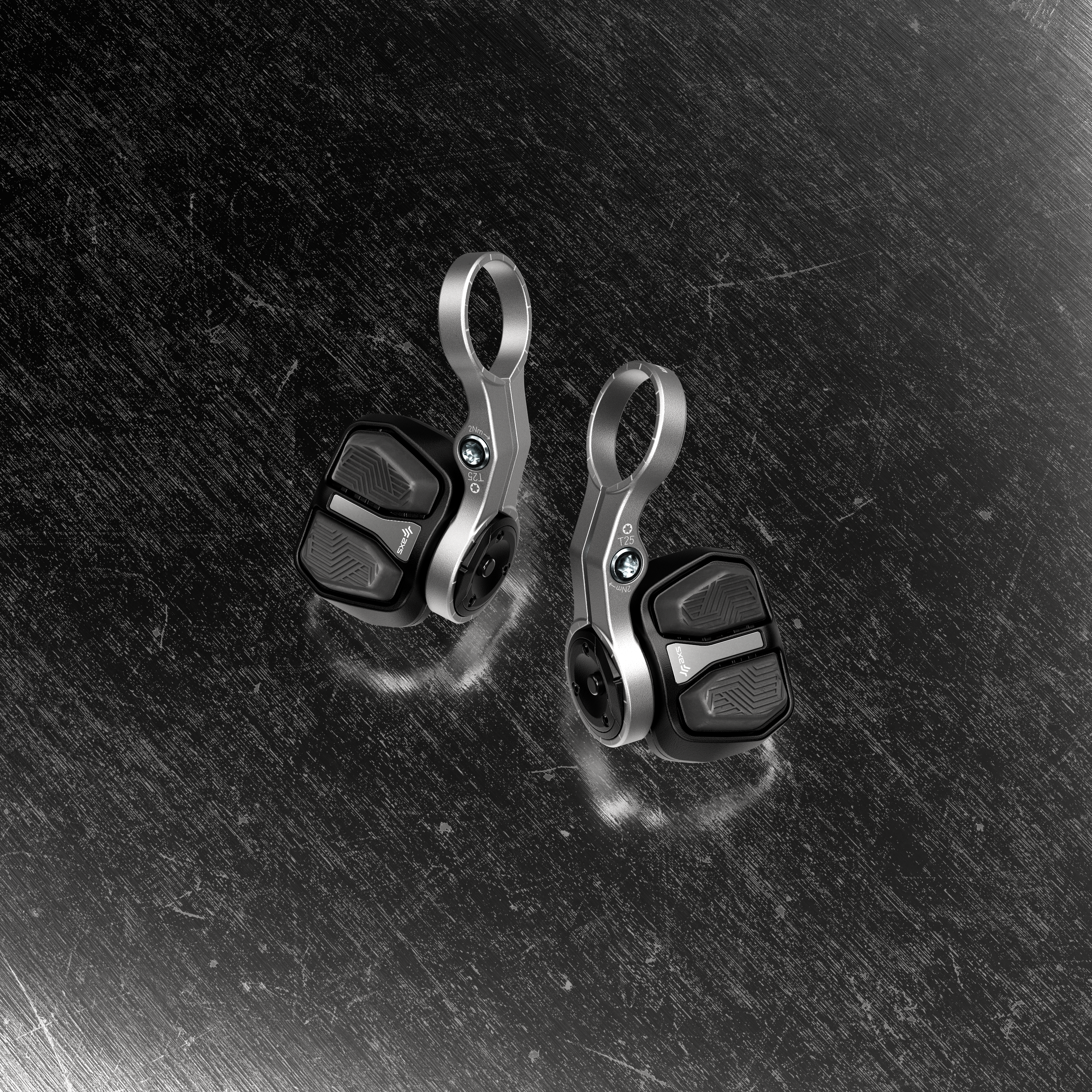
SRAM 1987 AXS Pod Ultimate Controllers

The SRAM AXS Pod Controllers have silver infinity clamps for the 1987 groupset. SRAM

SRAM’s 1987 AXS Pod Ultimate Controllers are functionally the same as the standard ones, with interchangeable touch points and programmability, but they include silver infinity clamps to match the rest of the 1987 groupset.

Spares

The 1987 groupset includes two SRAM threads on chainrings in a silver colourway, plus a tool to fit them to their power meter crank. SRAM

SRAM includes 32t and 34t thread-on chainrings, as well as its Threaded Chainring Removal Tool with the 1987 groupset.

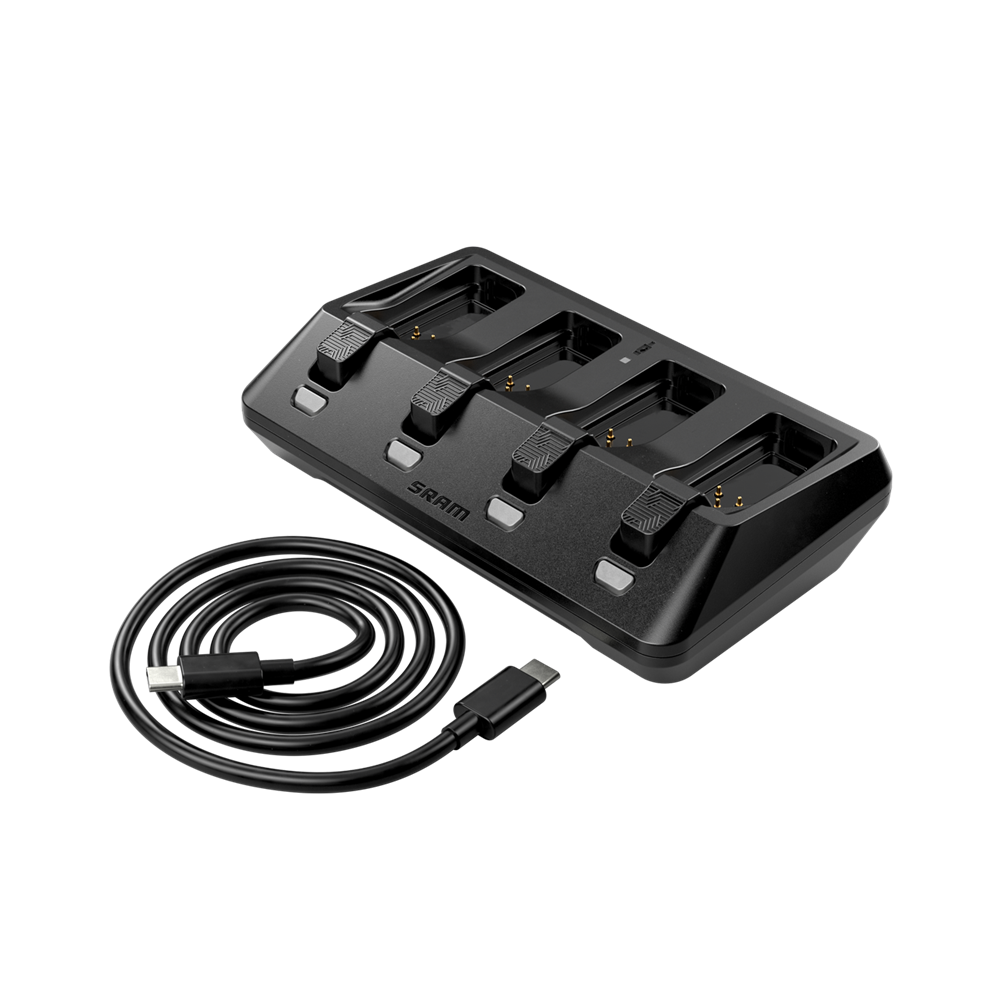
SRAM’s four-battery AXS charger is included with the 1987 groupset. SRAM

There’s also a four-battery USB-C charger included. This can charge up to four AXS batteries in the same time as it would take using four individual AXS chargers.

The four-battery charger operates quicker when charging two or fewer batteries. SRAM also includes two AXS batteries so you can keep a spare charged up, just in case.

[$] Introducing Space Grade Linux

A new project, targeting Linux for the proverbial final frontier—outer
space—was the subject of a talk (YouTube video) at
the Embedded Linux Conference, which was held as part of Open
Source Summit Europe
in Amsterdam in late August. Ramón Roche
introduced Space Grade
Linux
(SGL), which is currently incubating as a special interest group
(SIG) of the Embedding Linux in Safety
Applications
(ELISA) project. The idea is to create a distribution
with a base layer that can be used for off-planet missions of various
sorts, along with other layers that can be used to customize it for
different space-based use cases.

Hollow Knight: Silksong’s first patch should give you a chance against its early bosses

Video game difficulty is a real balancing act. You want to be challenged and earn each new level, but when it’s too hard there’s more frustration than fun. Apparently, a number of players have found the new Hollow Knight: Silksong game a bit too hard, struggling to defeat some of the bosses. 

Now, Team Cherry, the indie studio behind the Hollow Knight series, is making things a bit easier. Team Cherry has announced Hollow Knight: Silksong‘s first patch, which includes a “slight difficulty reduction in early game bosses.” This update includes the bosses Moorwing and Sister Splinter.

Otherwise, the patch mostly includes bug fixes, such as gamers remaining cloakless or getting stuck floating. It also brings an increase in rosary rewards from relics and psalm cylinders, as well as for courier deliveries. These retroactive updates should come by mid next week, but eager players can join the public-beta to get the fix. Team Cherry notes that its already working on more fixes in a second patch. 

The long awaited sequel to Hollow Knight finally launched on September 4, with eager fans crashing Steam, the Nintendo eshop and the Xbox Store. It’s available now for $20. 

This article originally appeared on Engadget at https://www.engadget.com/gaming/hollow-knight-silksongs-first-patch-should-give-you-a-chance-against-its-early-bosses-134125593.html?src=rss

Qualcomm Snapdragon X Elite Linux Performance Improving But Short Of AMD Ryzen & Intel Core Ultra

Back in May we provided an initial look at the Qualcomm Snapdragon X Elite laptop performance on Ubuntu Linux with the upstream support for the Qualcomm Snapdragon X1E maturing, more laptops becoming supported, and the Ubuntu X1E “Concept” ISOs enhancing the end-user experience. The performance was okay but short of expectations. Months later we are revisiting the Qualcomm Snapdragon X Elite Linux performance on the newest Ubuntu Concept ISOs and newer firmware that is providing a much better experience albeit still not as competitive as the newest AMD Ryzen AI 300 series and Intel Core Ultra laptops under Linux.

Anker magnetic power banks are up to 42 percent off right now

One of our favorite magnetic power banks is on sale for 42 percent off right now. The Anker 622 Magnetic Battery is down 42 percent to $28, which is almost as low as we’ve ever seen it. This steep discount is also available at Anker’s online store with a coupon code that the company provides. This 5,000mAh MagSafe-compatible charger with a foldable stand is a slim and portable battery that can keep your devices going on long days away from a charger.

Anker says the 622 Magnetic Battery can recharge a dead iPhone 16 or 16 Pro to just over 80 percent, and an iPhone 16 Pro Max to just over 60 percent. In our hands-on review of the portable charger, we liked the magnetic stand that folds out into a 30-degree angle. Users can rotate their phone to either portrait mode or landscape mode while charging.

The Anker 622 is an older charger, so it outputs a maximum of 7.5W when charging wirelessly. If you need to refill your battery faster than that, you might want to pick up one of the newer Qi2 power banks. Though a Qi2 power bank will, of course, cost more, some of our favorites are having great sales right now.

The Anker Ultra-Slim 10,000mAh battery pack can charge an iPhone 16 Pro to 50 percent in just 26 minutes, thanks to its Qi2-certified 15W of wireless charging. Right now it’s 25 percent off, priced at $60 down from $80. It’s got a bare-bones design, opting for a slim profile instead of a stand.

If you prefer one with a stand and you like the idea of a display that tells you how much charge your power bank has left, then check out the Anker 10,000mAh battery pack with smart display and foldable stand. In our rundown of the best power banks, this was our top pick for iPhones. Not only does this battery pack offer Qi2 wireless charging at 15W, it also offers 27W when using USB-C for fast charging.

Follow @EngadgetDeals on X for the latest tech deals and buying advice.

This article originally appeared on Engadget at https://www.engadget.com/deals/anker-magnetic-power-banks-are-up-to-42-percent-off-right-now-133451206.html?src=rss

Xbox and LG are bringing cloud gaming to cars

LG’s in-vehicle entertainment platform will soon come integrated with an Xbox app for select internet-connected vehicles. Yes, people will be able to play full games on their infotainment systems, as long as they have an Xbox Game Pass Ultimate subscription so that they can stream titles available on the service, as well as games they already own. They’ll, of course, need to switch on internet access on their cars and to use a compatible Bluetooth controller to be able to play games, including Don’t Starve, Mafia: The Old Country and Forza Horizon 5. 

The companies didn’t say how they’re ensuring that drivers themselves don’t play games while on the road, such as during traffic stops. A 2020 study revealed that drivers are increasingly playing games behind the wheel, while an earlier study showed that advanced infotainment systems can take a driver’s attention off the road. Both LG and Xbox, however, specifically mentioned that the feature is for passengers. “Whether you’re waiting at an EV charging station or trying to entertain your passengers on an extended road trip, pass the time by playing games keeping everyone entertained and making the journey feel more fun,” Xbox wrote in its announcement. 

Back in 2021, reports came out that Tesla allowed drivers to play a selection of games on their cars’ infotainment system even while they’re in motion. The National Highway Traffic Safety Administration investigated the so-called “Passenger Play” function, which previously only allowed games to run while the vehicle is parked until an update changed it. Tesla responded by quickly disabling the feature if a car is on the move. 

This article originally appeared on Engadget at https://www.engadget.com/gaming/xbox/xbox-and-lg-are-bringing-cloud-gaming-to-cars-133016305.html?src=rss

Everything We Know About the Apple Watch Series 11

Did you know you can customize Google to filter out garbage? Take these steps for better search results, including adding my work at Lifehacker as a preferred source.


If you’re in the market for a new Apple Watch, don’t buy one yet. Apple is set to announce a slate of new products at today’s “Awe Dropping” event, including new Apple Watches. Rumors suggest the company will introduce the third-generations of the Apple Watch Ultra and Apple Watch SE, and, for those of us that stick with the company’s flagship smartwatch, Apple will likely unveil the Series 11 as well.

Based on the available rumors, the upgrades to the Series 11 seems remarkably similar to the Ultra 3—only, the Series 11 is getting fewer. Apple might have decided its flagship smartwatch doesn’t quite need all of the new features its “Ultra” model gets. It also seems possible the company sees the Series 10 as a good enough foundation to work from. Why fix what isn’t broken?

My guess is, based on what we know now, the Series 11 is assuredly not for Series 10 owners. It might not even be for Series 9 owners. This might simply be a minor update to an already excellent smartwatch, aimed at those who are looking to upgrade in general. For those customers, here’s what you can expect to find on the Series 11 that you wouldn’t get on the Series 10.

New processor

As with the Ultra 3, rumors suggest the Series 11 will get a new processor: the S11. That isn’t all that surprising. New Apple Watches tend to ship with new processors. In fact, according to rumors, all of Apple’s newest smartwatches will come with the S11.

You might think that would make the Series 11 (and the Ultra 3 and SE, for that matter) the fastest Apple Watches yet, and it might. But MacRumors thinks the chips are roughly the same as the S10 introduced with the Series 10. That’s not a bad thing, as the S10 can handily power the Series 10. However, if true, you shouldn’t expect a Series 11 watch to outperform the previous generation. We won’t know until Apple discusses the S11’s performance, however.

5G connectivity

The cellular Series 11, like the Ultra 3, is rumored to come with a 5G modem for the first time in an Apple Watch. Current cellular watches are only capable of connecting to 4G LTE, so this would be a considerable upgrade. Your Series 11 could theoretically take advantage of 5G speeds when available, which would improve the performance of downloads, calls, and other internet-based tasks.

If that’s the case, Bloomberg’s Mark Gurman says MediaTek will be the one supplying the modems. He also suggests the watches will support 5G Redcap a slower 5G service for lower-performing devices.

Blood pressure monitor

Gurman also suggests in the same report that Apple might add a blood pressure monitor to both the Apple Watch Series 11 and the Ultra 3. This is something Apple has been working on for a while, and would offer users alerts whenever the sensor believes they were experiencing hypertension.

It seems like a useful health feature, but it’s one I wouldn’t bet money on seeing today. While it’s certainly possible, Gurman says the company has been running into issues with the engineering, as well as regulatory concerns. If Apple doesn’t announce a blood pressure monitor for the Series 11 and Ultra 3, it might save the feature for the Series 12—or scrap it entirely.

What about the Apple Watch SE?

The third-generation Apple Watch SE will also likely debut today. Gurman predicts that, like the Ultra 3 and the Series 11, the SE 3 will also come with an S11 chip. Gurman also believes that Apple is ready to increase the display size of the SE. Right now, the SE 2 has the design from older Apple Watches, as offers 40mm or 44mm sizing options. If Apple chooses to take inspiration from, say, the Series 7 instead, the SE 3 could increase the sizes to 41mm and 45mm.

Geoengineering will not save humankind from climate change

A team of the world’s best ice and climate researchers studied a handful of recently publicized engineering concepts for protecting Earth’s polar ice caps and found that none of them are likely to work.

Their peer-reviewed research, published Tuesday, shows some of the untested ideas, such as dispersing particles in the atmosphere to dim sunlight or trying to refreeze ice sheets with pumped water, could have unintended and dangerous consequences.

The various speculative notions that have been floated, mainly via public relations efforts, include things such as spreading reflective particles over newly formed sea ice to promote its persistence and growth; building giant ocean-bottom sea walls or curtains to deflect warmer streams of water away from ice shelves; pumping water from the base of glaciers to the surface to refreeze it, and even intentionally polluting the upper atmosphere with sulfur-based or other reflective particles to dim sunlight.

Read full article

Comments

Canon’s tiny C50 cinema camera can shoot widescreen and vertical video simultaneously

Canon has announced the EOS C50, its smallest cinema camera yet with features designed to appeal to social media creators and filmmakers alike. It has an RF mirrorless mount and all-new full-frame sensor that supports up to 7K 60p internal RAW recording and 32MP photo capture, making it a do-it-all camera for working pros.

Despite the small size and light 1.5 pound weight, the EOS C50 is feature-rich. The full-frame CMOS sensor has a dual ISO system that operates in Canon Log 2 (C-Log 2) at ISO 800 and 6400 for better low-light performance. It also allows up to 12-bit Cinema RAW Light recording at up to 7K 60p and RAW HQ at 7K 30p, plus high-bitrate XF-AVC S and XF -HEV C modes. The C50 is also the company’s first cinema camera with 3:2 open gate recording that allows for lossless conversion to other formats — finally matching a feature found in Panasonic’s mirrorless cameras. 

Canon's tiny C50 cinema camera can shoot 4K and vertical video simultaneously
Canon

Canon stretched that capability with something it calls simultaneous crop recording. When shooting 4K, you can output 2K social media video at the same time in 9:17, 9:16 or 1:1 formats. That will be handy for YouTube creators who also use Instagram or TikTok to promote videos. 

Since it’s part of Canon’s Cinema lineup, the C50 offers pro features like two full-size XLR audio inputs (via an optional top handle), a zoom rocker, waveform/peaking displays, C-Log3 support and a dedicated start-stop button. It also comes with Canon’s excellent Dual Pixel autofocus system and AI subject tracking that detects the eyes, face, head and body of people or animals. Other key features include SD-UHS II and CFexpress slots and a time code terminal. However, the C50 lacks in-body stabilization, relying instead on optical lens and electronic stabilization.

Canon PowerShot ELPH 360HS A
Canon

The C50 may be Canon’s best hybrid cinema camera yet as well, with 32MB photos and burst shooting at up to 40 fps. Canon also introduced the new RF 85mm F/1.4 L VCM Hybrid Lens designed for portrait shooting for video and photos. Finally, for compact camera enthusiasts, Canon has released an updated version of its 2016 Elpha 360 HS, the Elpha 360 HS A, with a microSD slot in place of the original SD slot. 

The Canon EOS C50 camera will ship toward the end of Q4 2025 for $3,899 and the new RF85mm F/1.4 L VCM lens will arrive this month for $1,649. The PowerShot Elph 360 HS A hits stores in October 2025 for $380. 

This article originally appeared on Engadget at https://www.engadget.com/cameras/canons-tiny-c50-cinema-camera-can-shoot-widescreen-and-vertical-video-simultaneously-130001859.html?src=rss

What People Are Getting Wrong This Week: Is Masturbation Bad for You?

Did you know you can customize Google to filter out garbage? Take these steps for better search results, including adding my work at Lifehacker as a preferred source.


The below post from X user @hood_grimes has been shared almost ten million times since it appeared on August 25 (I saw it on Snopes):


This Tweet is currently unavailable. It might be loading or has been removed.

That AI-generated kid in a baseball jersey is laying out some pretty serious medical consequences of “frequent masturbation,” including brain damage, acne, and “P*nis shrinkage.” On the other hand, my own (admittedly anecdotal) study that includes “everyone I have ever met” suggests many healthy people enjoy masturbation with no negative physical side effects. So who’s wrong this week? Let’s look at the evidence.

Masturbation: friend or foe?

The specific claims made on the X post are false. There is no scientific research to support the idea that masturbation causes back pain, lowers testosterone, or has any of the negative effects listed in the meme (beyond number 11, which is subjective). Instead, research indicates masturbation is (marginally) good for you. In men, high ejaculation frequency (whether from masturbation or sex) correlates to decreased risk of total prostate cancer. For women, research suggests potential benefits of masturbation for dealing with “psychological distress and for enhancing general well-being.” And masturbation seems to help everyone sleep better.

To be fair to the “masturbation is harmful” people, excessive masturbation can have (limited) negative physical effects. It could cause skin chafing and irritation, though this is more a “common sense” thing than “supported by research.” Masturbation can play a role in anorgasmia (inability to achieve orgasm despite adequate sexual stimulation) but it doesn’t seem to from how often you masturbate, but how you masturbate. Research supports a link between habitual, highly specific masturbation styles and anorgasmia—in layman’s terms, if you do something unusual to get off by yourself, and you do it a lot, you may have trouble finishing in conventional ways with someone else.

Weighing the evidence (while giving all possible benefit of the doubt to the “masturbation can hurt you crowd”) makes it very clear that masturbation is way more likely to be physically beneficial than physically harmful.

What is “frequent” masturbation, anyway?

Masturbation is awesome, case closed, right? Not totally. Masturbation isn’t going to shrink your body parts, but, like anything, it can become mentally unhealthy if it starts to take up too much of your time, gets in the way of relationships, or becomes a compulsive coping mechanism. Same rules apply to video games and working out, by the way.

If you feel masturbation is negatively affecting your life, it’s worth paying attention to, but the definition of “harmful” is subjective, and it’s possible that what feels like “harm” is actually inherited guilt from what your great-great-great-grandparents thought about sex.

Victoriana re-born!

As I was researching the medical claims on this meme, it became clear that all of baseball-boy’s talking points have their roots in earlier ages. Like Faulkner said, “The past is never dead. It’s not even past” and nowhere is this more true than masturbation hysteria (and racism, I guess). Strip away the modern AI imagery, and this meme reads like it was lifted straight from a 19th-century medical pamphlet warning against the dangers of “self-abuse.” Like this early entry in the genre: “Onania: or, the heinous sin of self-pollution and all its frightful consequences (in both sexes) considered with spiritual and physical advice to those who have already injured themselves by this abominable practice” from around 1716, or this one from 1838, “A Treatise on the Diseases produced by Onanism, Masturbation, Self-pollution.”

You could take find a similar passage in Victorian anti-masturbation literature for almost all of the meme’s 11 points. “I have violent pains in my stomach, arms, and legs; and sometimes in the kidneys,” reports a chronic masturbator in Treatise. “I feel great pains from my kidneys downwards, and particularly in the small of my back,” agrees another onanist from the earlier work. A doctor describes a self-polluter thusly: “The individual becomes feeble, is unable to labor with accustomed vigor, or to apply his mind to study; his step is tardy and weak, he is dull, irresolute, engages in his sports with less energy than usual, and avoids social intercourse; when at rest he instinctively assumes a lolling or recumbent posture.”

All that’s missing from the earlier works is the bit about masturbation shrinking the penis. Even the Victorians weren’t that dumb.

Not all Victorians, however

There’s no point without a counterpoint. Even in the Victorian age, people like pioneer sexologist Havelock Ellis took a scientific look at sex and devoted an entire volume of his Studies in the Psychology of Sex to masturbation, concluding it was normal and healthy. So did Richard von Krafft-Ebing, whose 1886 book Psychopathia Sexualis still defines how we think about sex. Even occultist Aleister Crowley made self-pleasure part of his magical practice. So the next time someone shares a viral meme, remember that you’re picking sides in a 300-year-old culture war, and all the cool Victorians were pro-masturbation. Be team Ellis, not team Onanism: the evidence and history are on your side.

Sam Altman Says Bots Are Making Social Media Feel ‘Fake’

An anonymous reader quotes a report from TechCrunch: X enthusiast and Reddit shareholder Sam Altman had an epiphany on Monday: Bots have made it impossible to determine whether social media posts are really written by humans, he posted. The realization came while reading (and sharing) some posts from the r/Claudecode subreddit, which were praising OpenAI Codex. OpenAI launched the software programming service that takes on Anthropic’s Claude Code in May. Lately, that subreddit has been so filled with posts from self-proclaimed Code users announcing that they moved to Codex that one Reddit user even joked: “Is it possible to switch to codex without posting a topic on Reddit?”

This left Altman wondering how many of those posts were from real humans. “I have had the strangest experience reading this: I assume it’s all fake/bots, even though in this case I know codex growth is really strong and the trend here is real,” he confessed on X. He then live-analyzed his reasoning. “I think there are a bunch of things going on: real people have picked up quirks of LLM-speak, the Extremely Online crowd drifts together in very correlated ways, the hype cycle has a very ‘it’s so over/we’re so back’ extremism, optimization pressure from social platforms on juicing engagement and the related way that creator monetization works, other companies have astroturfed us so i’m extra sensitive to it, and a bunch more (including probably some bots).”

[…] Altman also throws a dig at the incentives when social media sites and creators rely on engagement to make money. Fair enough. But then Altman confesses that one of the reasons he thinks the pro-OpenAI posts in this subreddit might be bots is because OpenAI has also been “astroturfed.” That typically involves posts by people or bots paid for by the competitor, or paid by some third-degree contractor, giving the competitor plausible deniability. […] Altman surmises, “The net effect is somehow AI twitter/AI Reddit feels very fake in a way it really didn’t a year or two ago.” If that’s true, who’s fault is it? GPT has led models to become so good at writing, that LLMs have become a plague not just to social media sites (which have always had a bot problem) but to schools, journalism, and the courts.


Read more of this story at Slashdot.