“A new study released Friday found that young children diagnosed with attention-deficit/hyperactivity disorder, or ADHD, are often prescribed medication too quickly,” reports CBS News:
The study, led by Stanford Medicine and published in JAMA Network Open, examined the health records of nearly 10,000 preschool-aged children ages 3 to 5 between 2016 and 2023 who were diagnosed with ADHD… The Stanford study found that about 68% of those children who were diagnosed with ADHD were prescribed medications before age 7, most often stimulants such as Ritalin, which can help children focus their attention and regulate their emotions. The turn to medication often came quickly, according to the study. About 42% of the children who were diagnosed with ADHD were prescribed drugs within 30 days of diagnosis, the study found.
“We don’t have concerns about the toxicity of the medications for 4- and 5-year-olds, but we do know that there is a high likelihood of treatment failure, because many families decide the side effects outweigh the benefits,” Dr. Yair Bannett, assistant professor of pediatrics at Stanford Medicine and the lead author of the study, said in a statement. Those side effects can include irritability, aggressiveness and emotional problems, according to Bannett. “The high rate of medication prescriptions among preschool-age children with ADHD and the lack of delay between initial diagnosis and prescription require further investigation to assess the appropriateness of early medication treatment,” the researchers concluded.
The study also found that the vast majority of the young children diagnosed with ADHD, about 76%, were boys.
CBS News interviewed Jamie Howard, senior clinical psychologist from the Child Mind Institute (who was not involved in the study). Howard said when treating ADHD in young children, clinical guidelines call for starting with “behavioral intervention….”
“I think that people have an association with ADHD and stimulant medication… But there is actually a lot more than that. And we want to give kids the opportunity to use these other strategies first, and then if they need medication, it can be incredibly helpful for a lot of kids.”
The Washington Post covers “a string of false reports of active shooters at a dozen U.S. universities this month as students returned to campus.”
The FBI is investigating the incidents, according to a spokesperson who declined to specify the nature of the probe. While universities have proved a popular swatting target, the agency “is seeing an increase in swatting events across the country,” the FBI spokesperson said… Local officials are frustrated by the anonymous calls tying up first responders, straining public safety budgets and needlessly traumatizing college students who grew up in an era in which gun violence has in some way shaped their school experience…
The recent string of swattings began Thursday with a false report to the University of Tennessee at Chattanooga, quickly followed by one about Villanova University later that day. Hoaxes at 10 more schools followed… Villanova also received a second threat. As the calls about shootings came in, officials on many of the campuses pushed out emergency notifications directing students and employees to shelter in place, while police investigated what turned out to be false reports. (Iowa State was able to verify the lack of a threat before a campuswide alert was sent, its police chief said. [They had a live video feed from the location the caller claimed to be from.]) In at least three cases, 911 calls reporting a shooting purported to come from campus libraries, where the sound of gunshots could be heard over the phone, officials told The Washington Post…
Although false bomb reports, shooter threats and swatting incidents are not new, bad actors used to be more easily traceable through landline phones. But the era of internet-based services, virtual private networks, and anonymous text and chat tools has made unmasking hoax callers far more challenging… In 2023, a Post investigation found that more than 500 schools across the United States were subject to a coordinated swatting effort that may have had origins abroad…
[In Chattanooga, Tennessee last week] a dispatcher heard gunfire during a call reporting an on-campus shooting. “We grabbed everybody that wasn’t already out on the street and got to that location,” said University of Tennessee at Chattanooga Police spokesman Brett Fuchs. About 150 officers from several agencies responded. There was no shooter.
The New York Times reports that an online group called “Purgatory” is “suspected of being connected to several of the episodes, including reports of shootings, according to cybersecurity experts, law enforcement agencies and the group members’ own posts in a social media chat.” (Though the Times, couldn’t verify the group’s claims.)
Federal authorities previously connected the same network to a series of bomb scares and bogus shooting reports in early 2024, for which three men pleaded guilty this year… Bragging about its recent activities, Purgatory said that it could arrange more swatting episodes for a fee.
USA Today tries to quantify the reach of swatting:
Estimated swatting incidents jumped from 400 in 2011 to more than 1,000 in 2019, according to the Anti-Defamation League, which cited a former FBI agent whose expertise is in swatting. From January 2023 to June 2024 alone, more than 800 instances of swatting were recorded at U.S. elementary, middle and high schools, according to the K-12 School Shootings Database, created by a University of Central Florida doctoral student in response to the Parkland High School shooting in 2018.tise is in swatting… David Riedman, a data scientist and creator of the K-12 School Shooting Database, estimates that in 2023, it cost $82,300,000 for police to respond to false threats.
Thanks to long-time Slashdot reader schwit1 for sharing the news.
In 2017 Rick Beato streamed “Rick’s Rant Episode 2” — and just received a copyright claim this month. And days after jazz pianist Chick Corea died in 2021, Beato livestreamed a half-hour video which was mostly commentary, but with several excerpts from Corea’s albums (at least one more than three minutes long). He also received a copyright claim for that one this August — just minutes after the claim on his 2017 video.
These videos “are all fair use,” Beato argues in a new video, noting it’s also affected other popular YouTube channels like The Professor of Rock:
Rick Beato: Universal Music Group [UMG] has continued to send emails about copyright content ID claims — and now copyright strikes — on my channel. As a matter of fact, I have three shorts — these are under a minute long — that if they go through in the next four days, I’ll have three strikes on my channel! Now if you don’t fight these things, those three strikes would actually remove my channel from YouTube.
Five months ago Rick Beato had posted a clip from his interview with singer-songwriter Adam Duritz (founder of The Counting Crows) on YouTube. After 250,000 views, he’d earned a whopping $36.52 — and then Universal Music Group also claimed that video violated their copyright. (In the background the video played Duritz’s song as he described how he wrote it.) “So they’re gonna take my channel down over less than a hundred bucks — for using a small segment from an interview with him, on a song he sang on,” Beato complained on YouTube. “That video is 55 seconds long!”
“You need to play people’s music to talk about it,” Beato argues. “That is the definition of fair use. These are interviews with the people about their careers.” (And the interviews actually help promote the artists for the record labels…)
Rick Beato: The next one has me in it — it’s an Olivia Rodrigo song — that I played maybe 10 seconds of the song on, and the short is 42 seconds long. Who did it? UMG. The third copyright strike is from a Hans Zimmer short. It’s also UMG — it’s from the Crimson Tide soundtrack.
Now, what do these things say…? “Your video is scheduled to be removed in four days and your channel will get a copyright strike due to a removal request from a claimant. If you delete your video before then, your channel won’t get a copyright strike.” [And there’s also emails like “After reviewing your dispute, UMG has decided that their copyright claim is still valid…”] I’ve had probably 4,000 claims, over the last 9 years — from things that are fair use. [When he interviewed producer Rick Rubin, that video got 13 separate copyright claims.]
That’s when I hired a lawyer to fight these. [Full-time, Beato says later.] And what he’s done is he fought every single claim… We have successfully fought thousands of these now. But it literally costs me so much money to do this. Since we’ve been fighting these things — and never lost one — they still keep coming in… They’re all Universal Music Group. So they obviously have hired some third party company, that are dredging up things, they’re looking for things that haven’t been claimed in the past — they’re taking videos from seven or eight years ago!
Slashdot reader MrBrklyn (Slashdot reader #4,775) writes on the “New York’s Linux Scene” site that video bloggers like Beato “have been hounded by copyright pirates like UMG,” arguing that new videos of support are a “rebellion gaining traction”. (Beato’s video drew 1,369,859 views — and attracted 24,605 Comments — along with videos of support from professional musicians like drummer Anthony Edwards, guitarist Justin Hawkins, and bassist Scot Lade, as well as two different professional music attorneys.)
“Since there’s rarely humans making any of these decisions and it’s automated by bots, they don’t understand these claims are against Universal Music’s best interests,” argues the long-running blog Saving Country Music (first appearing on MySpace in 2008).
On YouTube videos, creators can freely filch copyrighted photos and other people’s videos virtually free of ramifications. You can take an entire 2 1/2 hour film, impose it over a background, and upload it to YouTube, and usually avoid any problems. But feature a barely audible 8 1/2-second clip of music underneath audio dialogue, and you could have your entire podcast career evaporate overnight… People continue to ask, “Why doesn’t Saving Country Music has a podcast?” Because what’s the point of having a music podcast when you can’t feature music? In fact, after over a decade of refusing to start one, I finally did, music free. What happened? About a dozen episodes in, someone took out a claim, and not only were all the episodes deleted, so was the entire account, even though no music even appeared on any of the episodes. I was given absolutely no recourse to fight whatever false claim had been made…
The music industry continues to so colossal fail the artists and catalogs they represent, and the fans they’re supposed to serve with this current system of how podcasts are handled. If everything changes today thanks to the Rick Beato rant, it would still be 15 years too late. But at least it would happen.
Instead, they write, “Music labels have been leaving major opportunities to promote their catalogs and performers on the table with their punitive copyright claims that make it impossible to feature music on music podcasts and other platforms…
“You aren’t screwing podcasters. You’re screwing artists who could be using podcasts to help promote their music. “
“For months, tens of thousands of people around the world have been complaining Meta has been banning their Instagram and Facebook accounts in error…” the BBC reported this month…
More than 500 of them have contacted the BBC to say they have lost cherished photos and seen businesses upended — but some also speak of the profound personal toll it has taken on them, including concerns that the police could become involved.
Meta acknowledged a problem with the erroneous banning of Facebook Groups in June, but has denied there is wider issue on Facebook or Instagram at all. It has repeatedly refused to comment on the problems its users are facing — though it has frequently overturned bans when the BBC has raised individual cases with it.
One examples is a woman lost the Instagram profile for her boutique dress shop. (“Over 5,000 followers, gone in an instant.”) “After the BBC sent questions about her case to Meta’s press office, her Instagram accounts were reinstated… Five minutes later, her personal Instagram was suspended again — but the account for the dress shop remained.”
Another user spent a month appealing. (“In June, the BBC understands a human moderator double checked,” but concluded he’d breached a policy.) And then “his account was abruptly restored at the end of July. ‘We’re sorry we’ve got this wrong,’ Instagram said in an email to him, adding that he had done nothing wrong.”
Hours after the BBC contacted Meta’s press office to ask questions about his experience, he was banned again on Instagram and, for the first time, Facebook… His Facebook account was back two days later — but he was still blocked from Instagram.
None of the banned users in the BBC’s examples were ever told what post breached the platform’s rules.
Over 36,000 people have signed a petition accusing Meta of falsely banning accounts; thousands more are in Reddit forums or on social media posting about it. Their central accusation — Meta’s AI is unfairly banning people, with the tech also being used to deal with the appeals. The only way to speak to a human is to pay for Meta Verified, and even then many are frustrated.
Meta has not commented on these claims. Instagram states AI is central to its “content review process” and Meta has outlined how technology and humans enforce its policies.
The Guardian reports there’s been “talk of a class action against Meta over the bans.”
Users report Meta has typically been unresponsive to their pleas for assistance, often with standardised responses to requests for review, almost all of which have been rejected… But the company claims there has not been an increase in incorrect account suspension, and the volume of users complaining was not indicative of new targeting or over-enforcement. “We take action on accounts that violate our policies, and people can appeal if they think we’ve made a mistake,” a spokesperson for Meta said.
“It happened to me this morning,” writes long-time Slashdot reader Daemon Duck,” asking if any other Slashdot readers had their personal (or business) account unreasonably banned. (And wondering what to do next…)
At the moment, the Spotify exodus of 2025 is a trickle rather than a flood, writes the Guardian, citing the departure of five notable bands “liked in indie circles,” but not “the sorts to rack up billions of listens.”
“Still, it feels significant if only because, well, this sort of thing wasn’t really supposed to happen any more.”
Plenty of bands and artists refused to play ball with Spotify in its early years, when the streamer still had work to do before achieving total ubiquity. But at some point there seemed to a collective recognition that resistance was futile, that Spotify had won and those bands would have to bend to its less-than-appealing model… This artist acquiescence happened in tandem — surely not coincidentally — with a closer relationship between Spotify and the record labels that once viewed it as their destroyer. Some of the bigger labels have found a way to make a lot of money from streaming: Spotify paid out $10bn in royalties last year — though many artists would point out that only a small fraction of that reaches them after their label takes its share…
So why have those five bands departed in quick succession? The trigger was the announcement that Spotify founder Daniel Ek had led a €6oom fundraising push into a German defence company specialising in AI weapons technology. That was enough to prompt Deerhoof, the veteran San Francisco oddball noise pop band, to jump. “We don’t want our music killing people,” was how they bluntly explained their move on Instagram. That seems to have also been the animating factor for the rest of the departed, though GY!BE, who aren’t on any social media platforms, removed their music from Spotify — and indeed all other platforms aside from Bandcamp — without issuing a statement, while Hotline TNT’s statement seemed to frame it as one big element in a broader ideological schism. “The company that bills itself as the steward of all recorded music has proven beyond the shadow of a doubt that it does not align with the band’s values in any way,” the statement read.
That speaks to a wider artist discontent in a company that has, even by its own standards, had a controversial couple of years. There was of course the publication of Liz Pelly’s marmalade-dropper of a book Mood Machine, with its blow-by-blow explanation of why Spotify’s model is so deleterious to musicians, including allegations that the streamer is filling its playlists with “ghost artists” to further push down the number of streams, and thus royalty payments, to real artists (Spotify denies this). The streamer continues to amend its model in ways that have caused frustration — demonetising artists with fewer than 1,000 streams, or by introducing a new bundling strategy resulting in lower royalty fees. Meanwhile, the company — along with other streamers — has struggled to police a steady flow of AI-generated tracks and artists on to the platform…
[R]emoving yourself from such an important platform is highly risky. But if they can pull it off, the sacrifice might just be worth it. “A cooler world is possible,” as Hotline TNT put it in their statement.
The Guardian’s culture editor adds that “I’ve been using Bandcamp more, even — gasp — buying albums…”
“Maybe weaning ourselves off not just Spotify, but the way that Spotify has convinced us to consume music is the only answer. Then a cooler world might be possible.”
Intel amended its deal with the U.S. Department of Commerce “to remove earlier project milestones,” reports Reuters, “and received about $5.7 billion in cash sooner than planned.”
“The move will give Intel more flexibility over the funds.”
The amended agreement, which revises a November 2024 funding deal, retains some guardrails that prevent the chipmaker from using the funds for dividends and buybacks, doing certain control-changing deals and from expanding in certain countries.
The move makes the Wall Street Journal wonder what, beyond equity, the U.S. now gets in return, calling government’s position “a stake without a strategy.”
The U.S. has historically shied away from putting money into private business. It can’t really outguess the market on where the most promising returns lie. Yet there are exceptions. Sometimes a company or industry risks failing without public support, and that failure would hurt the whole country, not just its shareholders and employees. Intel meets both conditions. It isn’t failing, but it is losing money, its core business is in decline, and it lacks the capital and customers needed to make the most advanced semiconductors. If Intel were to fail, it would take a sizable chunk of the semiconductor industrial base with it. At a time of existential competition with China, that is a national emergency…
[U.S. Commerce Secretary Howard Lutnick] said as a shareholder, the U.S. would help Intel “to create the most advanced chips in the world.” And yet the deal doesn’t provide Intel with new resources to accomplish that. Rather, to get the remaining $9 billion, Intel had to give the U.S. equity. This is more like a tax than an investment: Shareholders gave up a 10th of their ownership in return for money the company was supposed to get anyway… Some of the administration’s forays into private business do reflect strategic thinking, such as the Pentagon’s 15% stake in MP Materials in exchange for investment and contracts that help make the company a viable alternative to China as a supplier of rare-earth magnets for products such as automobiles, wind turbines, jet fighters and missile systems. But more often, companies recoil from government ownership…
Though the U.S. stake dilutes Intel’s existing shareholders, its stock has held up. There could be several reasons. It eliminates uncertainty over whether the remaining $9 billion in federal funds will be forthcoming… [B]ecause Washington has a vested interest in Intel’s share price, investors believe it may prod companies such as Nvidia and Apple to buy more of its chips.
But that only goes so far, the article seems to conclude, offering this quote from an analyst Bernstein investment research. “If Intel can prove they can make these leading-edge products in high volume that meets specifications at a good cost structure, they’ll have customers lined up around the block. If they can’t prove they can do it, what customer will put meaningful volume to them regardless of what pressure the U.S. government brings to bear?”
CBS News also notes the U.S. government stake “is being criticized by conservatives and some economic policy experts alike, who worry such extensive government intervention undermines free enterprise.”
Thanks to Slashdot reader joshuark for sharing the news.
With fall only a few weeks away, expect the release calendar to start picking up in time for the holidays as we’ve often seen. We’ll continue refreshing this list as more games get announced or delayed, and our upcoming VR games list remains regularly updated for a more comprehensive look at what’s coming out.
With that said, here are this September’s highlights for new VR games on Quest, PC VR, PlayStation VR2, and Pico.
DrakkenRidge – September 4 (Quest 3)
A retro-themed, semi-open world VR adventure by Garage Collective, DrakkenRidge sees you play as a Novice of the Mage Order, an ancient organization tasked with policing the use of magic. Working with a private militia maintaining law and order, this fantasy journey takes place across five different islands.
Neolithic Dawn is a VR survival game that previously launched on Quest, where you play as a Neolithic hunter-gatherer. Should you die, you’ll return as your son or daughter to a changed world. The SteamVR release has content parity with Quest, while promised visual upgrades include enhanced textures, draw distance, weather effects, and more.
Developed by Curious Games, Slap Fighter VR mixes elemental combat with dark humor. Inspired by ’90s action movies, you play as John “The Invincible” Krasinsky, who’s tasked with beating the Slap Syndicate that rules a dystopian city. Guided by a new master, John must learn how to use elemental slaps focused on fire, water, earth, lightning, and wind. Steam and PS VR2 versions are also planned for a later date.
Created by Tom Reason and published by Shada Games, CYBRID is an on-rails sci-fi action game reminiscent of Pistol Whip. Using swords and pistols, you’re tasked with clearing through enemy cyborgs across this neon-lit city as you run, jump, dodge, and deflect incoming fire to the rhythm. Previously launched in early access on Steam, it’s now heading to Quest.
Developed by Into The Radius studio CM Games, UnLoop is reminiscent of We Are One in how it records your actions and stacks them together to solve immersive puzzles. Set on a well-guarded space station called the Temporal Research Hub, your job is to infiltrate and retrieve critical data related to the constant time-looping that occurs on the station. A PC VR release window is unconfirmed.
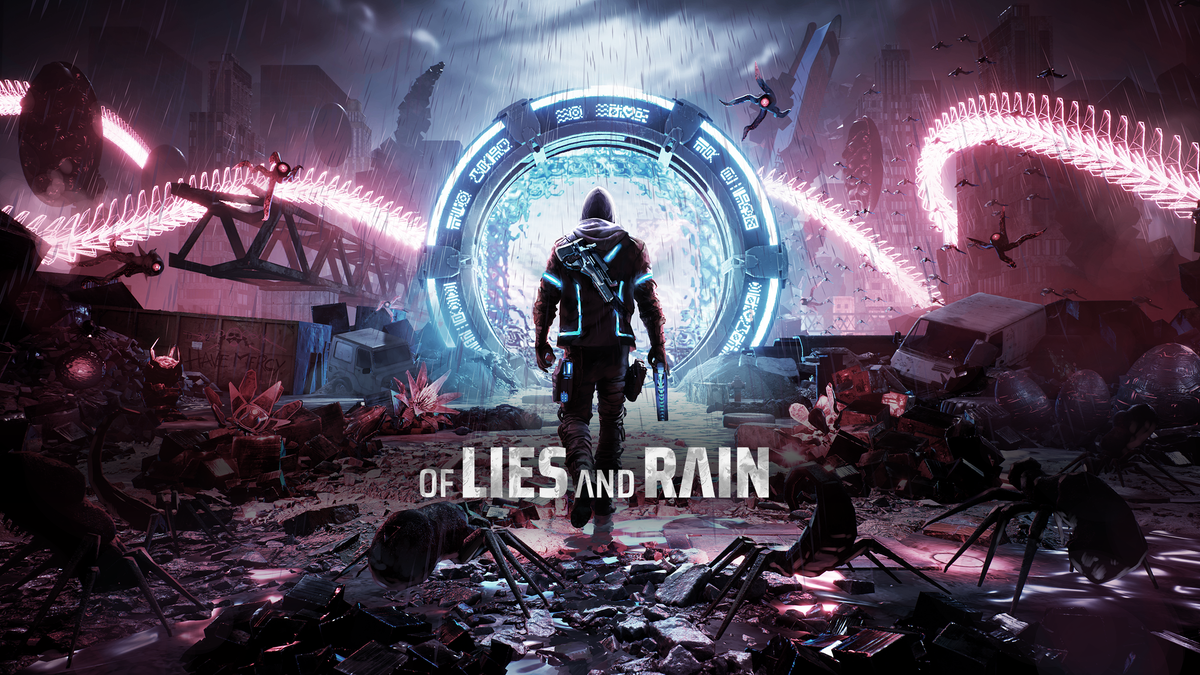
Developed by Castello Inc., Of Lies and Rain is a near-future narrative-driven FPS where you fight to save humanity from near extinction, using the ability to cross between the real and digital realms. The early access launch will feature the entire campaign, though further refinements are promised for the full release. A PS VR2 version is also coming, and demos are out on all three platforms.
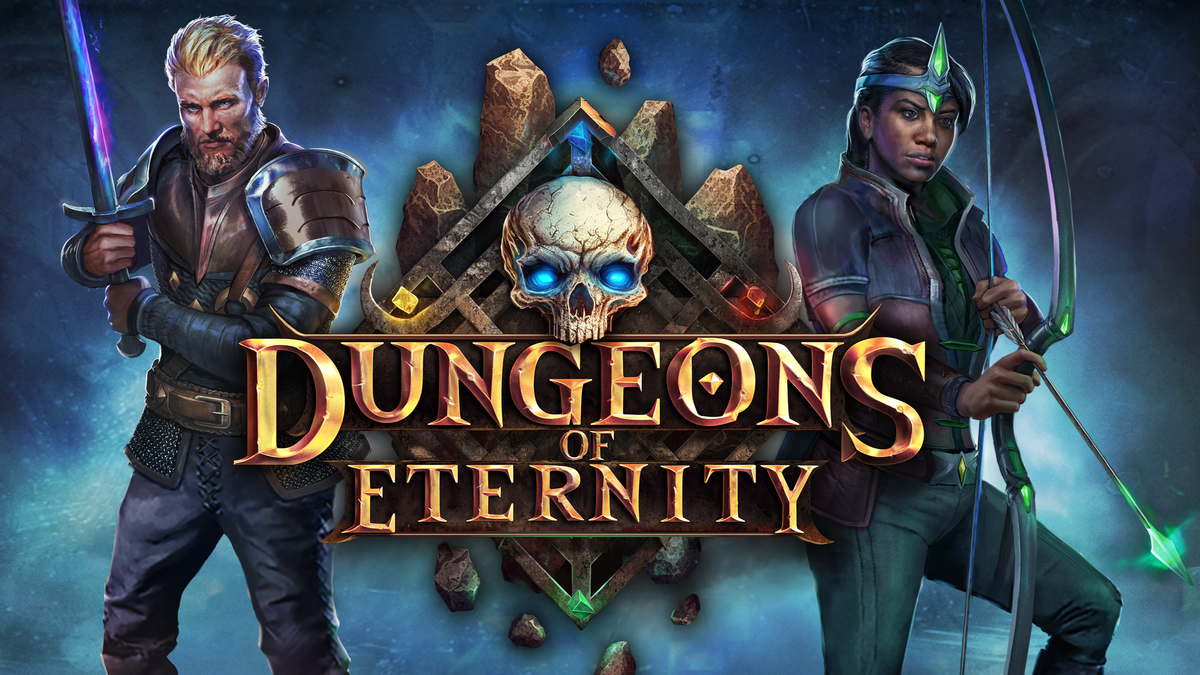
Initially launched in 2023 on Quest, we previously named Dungeons of Eternity as our best multiplayer VR game for that year. A fantasy action RPG playable alone or with up to three other people, it’s now arriving on Steam with cross-platform multiplayer support and visual enhancements, plus new content across both platforms.
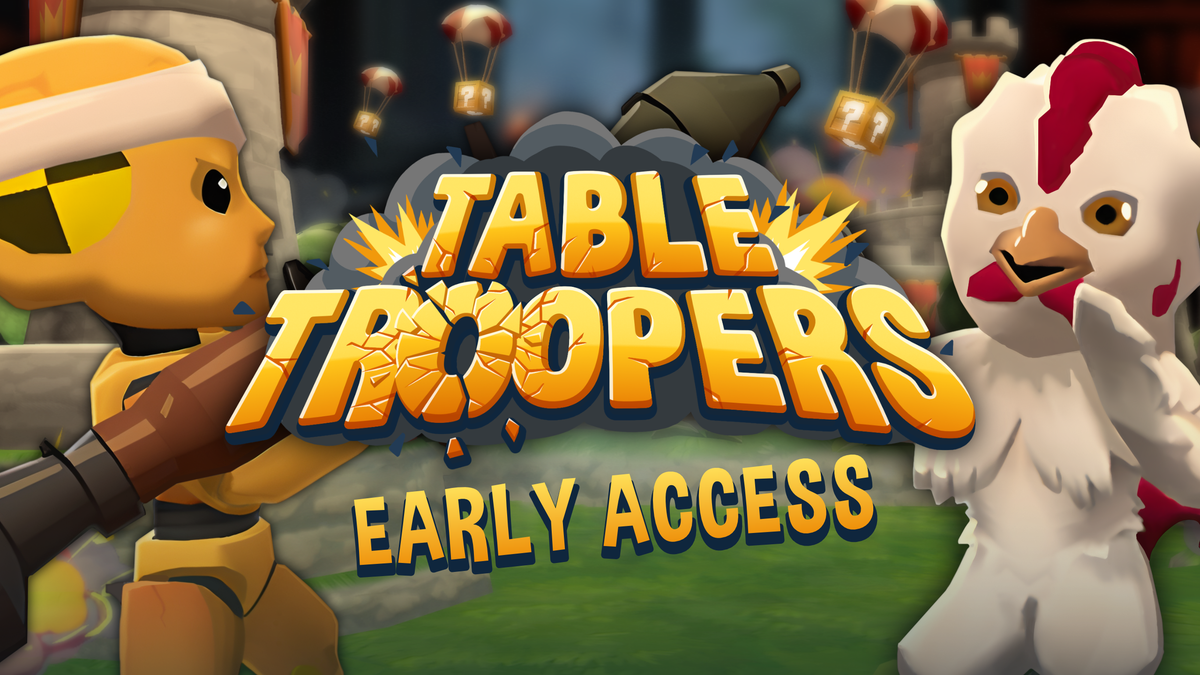
Developed by Cosmorama Technologies, Table Troopers uses a rotatable tabletop approach to deliver a new strategy game in mixed reality as you control different units on the battlefield. Following July’s early access launch, the developer informed UploadVR that the full release will have more multiplayer maps, a new campaign chapter, new trooper teams, and a four-player multiplayer mode.
Created by Hidden IO, ZIX is a co-op roguelike where you and up to two friends play as Acolytes, beings that feed on instability as you invade three broken worlds to feed the titular destructive force. Each realm is procedurally assembled, and you’ll need to harvest ingredients for creating new abilities through a cauldron back at your hub. That’s arriving in early access.
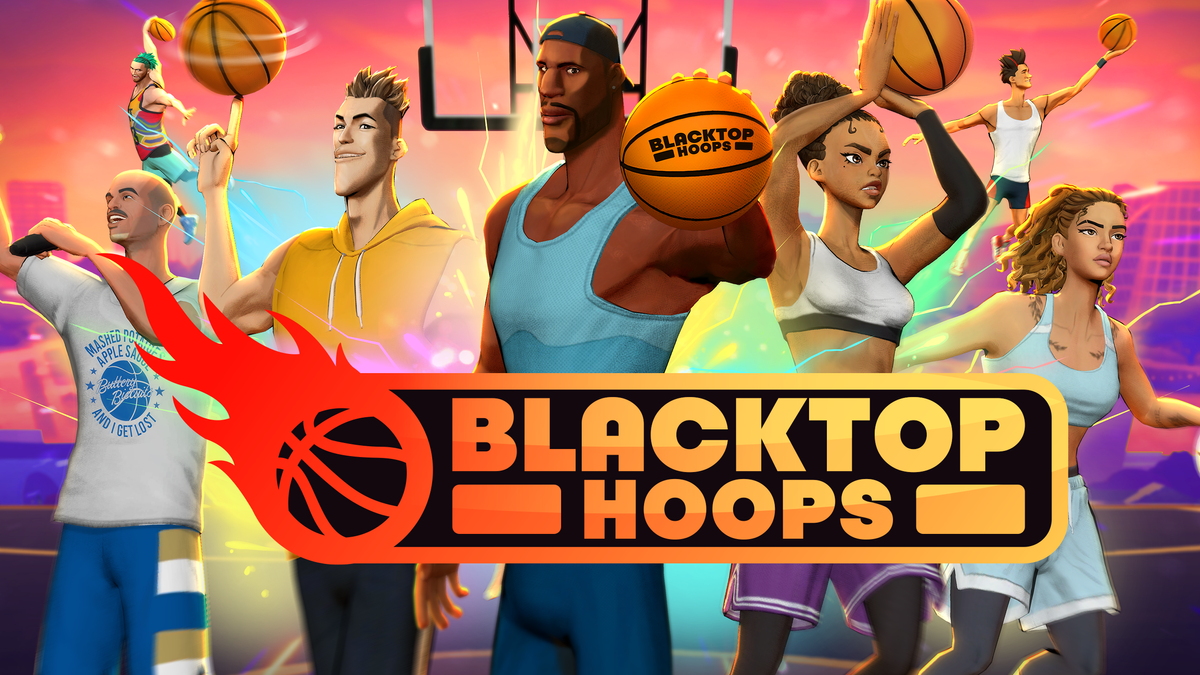
Blacktop Hoops is an arcade streetball-inspired VR basketball game by Vinci Games. Previously launched on most major platforms, this comes with a campaign that sees you rise from the local ranks to fight bosses and take on the big leagues. Online multiplayer is also supported with multiple modes.
Developed by Brazilian studio Ludact (Unbinary), My Monsters uses a hand-painted art style for a surreal journey across Onirium with environmental puzzle solving. Joined by a “small, frightened” monster called Moti, you confront creatures designed to represent common psychological struggles that include loneliness, fear, and anxiety.
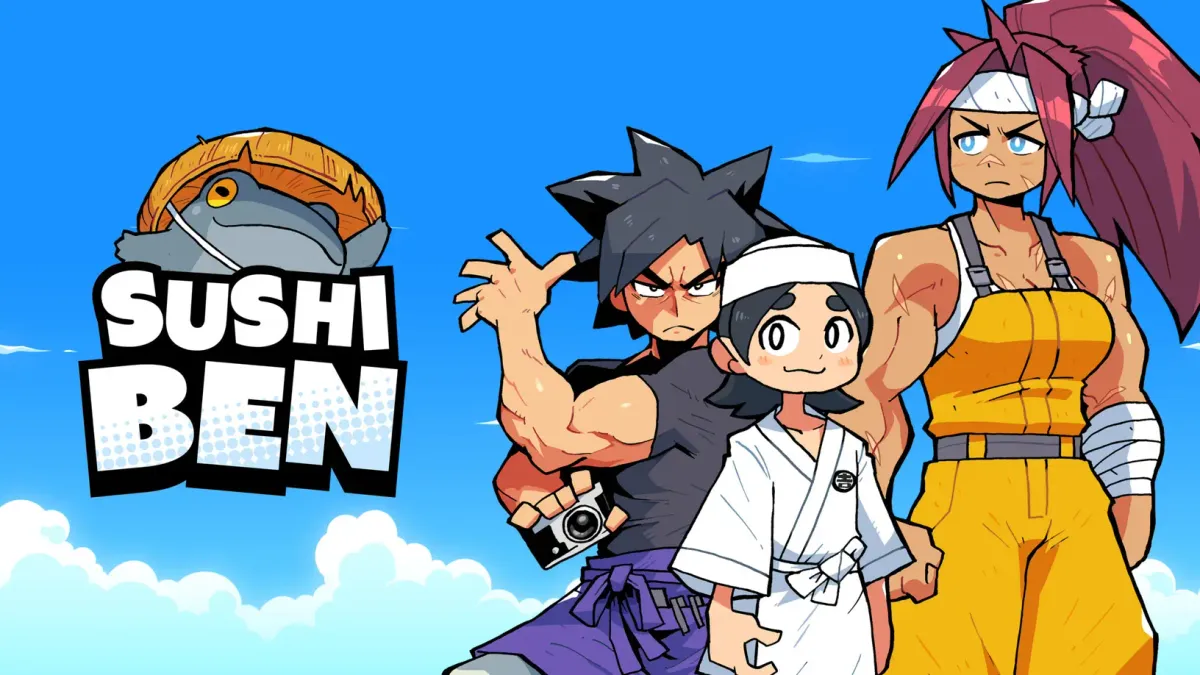
Created by Big Brane Studios, Sushi Ben is written by Hatoful Boyfriend’s creator, Hato Moa. A narrative adventure game inspired by real-life experiences and anime, this slice-of-life sim sees you saving a sushi bar from being shut down by land developers. That’s now heading to PC with an optional flatscreen mode.
If you’re releasing a new VR game we should know about for this article or future monthly roundups, you can use our contact page or email tips@uploadvr.com with details.
Interested in learning about more upcoming VR games? Take a look at our complete list below, which covers upcoming Quest, PC VR, PlayStation VR2, Pico, Apple Vision Pro, and Android XR games:
For the first time in an UploadVR article, if you’re reading this in a VR headset, you can watch some of the embedded videos in 3D.
Over the past few years I’ve been learning about tennis as my niece Alanis Hamilton has been training in the sport.
Last year, she competed in the U.S. Open as a junior and I joined my family here in New York as we watched her play. During one of her matches, I pulled an Apple Vision Pro headset out of my bag for a total of about 2 minutes. I pressed the camera button on the top and recorded a spatial video of her scoring a point.
Embedded below is 26 seconds from that video shot in 2024.
If you’re reading this article in an Apple Vision Pro, Meta Quest, Pico, or Vive standalone headset, open the video fullscreen and you should be able to view it in 3D.
(UploadVR’s David Heaney has added a feature to our site that should serve you the correct format for your headset. If you’re having trouble, let us know in the comments.)
0:00
/0:26
After opening this video in fullscreen, you’ll see a ‘View Spatial’ option at the top.
0:00
/0:26
After opening this video in fullscreen, tell your web browser to display it in SBS 3D mode.
On Thursday, I missed the first hour of our weekly VR Download broadcast because I was returning on a train from Queens where I had just watched Alanis Hamilton win her first match in the U.S. Open Women’s Doubles at the USTA Billie Jean King National Tennis Center.
Below is my view from the stands in 2025 using an iPhone 16 Pro to shoot spatial video instead of the Apple Vision Pro.
Again, for this video, if you’re reading this article in an Apple Vision Pro, Meta Quest, Pico, or Vive standalone headset, open the video fullscreen and you should be able to view it in 3D.
0:00
/0:09
After opening this video in fullscreen, you’ll see a ‘View Spatial’ option at the top.
0:00
/0:09
After opening this video in fullscreen, tell your web browser to display it in SBS 3D mode.
Since I’m sure some folks out there will be curious about comparisons to other shooting formats, here’s a video captured by me from the same spot but choosing 4K and 120 FPS options from the camera app on iPhone 16 Pro.
0:00
/0:08
This is a 2D video, shot at 4K 120FPS.
Here’s an ultra wide angle shot captured on iPhone 16 Pro at 1080P 30 FPS, labeled as 13 mm at f/2.2, of my brother wearing his Ray-Bans while watching his kid score a point in the U.S. Open.
0:00
/0:09
This is a 2D video, shot at 1080p 30FPS with the ultra-wide lens.
Lastly, here’s a telephoto video at 1080p 60 FPS, said to be 120 mm f2.8:
0:00
/0:03
This is a 2D video, shot at 1080p 60FPS with the telephoto lens.
Did I just use UploadVR.com as an opportunity to cheer on family, or is there value to our audience in seeing what videos of a sporting event look like when filmed from the stands? Yes. Part of the reason I’m publishing this on UploadVR.com is so I, too, can go in a headset myself and see what value 3D brings when capturing action from these vantage points.
Alanis Hamilton plays her next match in the U.S. Open later today.