POOLS VR Review: A Darker Take On The Original

Backrooms-inspired experience POOLS recently received a new VR mode, bringing an immersive new dimension to the liminal world. Read on for the full review.

When I’m not enjoying VR games, I often play different titles on my Legion Go handheld console. It’s there where I unlocked all the levels of POOLS before Tensori ever added headset access. I love walking around these halls to find things I missed on previous runs. The retro tape filter and heart-pounding moments of weirdness always provide a thrill.

The Facts

What is it?: A swimming pool focused walking simulator inspired by the backrooms.
Platforms: Steam, PlayStation VR2 (reviewed on PC using Quest 3)
Release Date: Out now (Steam), 2025 (PS VR2)
Developer: Tensori
Price: $9.79

With POOLS VR, that walking simulator becomes a lot darker. The tape filter on the 2D version is gone and is replaced with a harsher reality: you aren’t just an observer from afar, you’re a visitor in a liminal world who is looking for a way to escape.
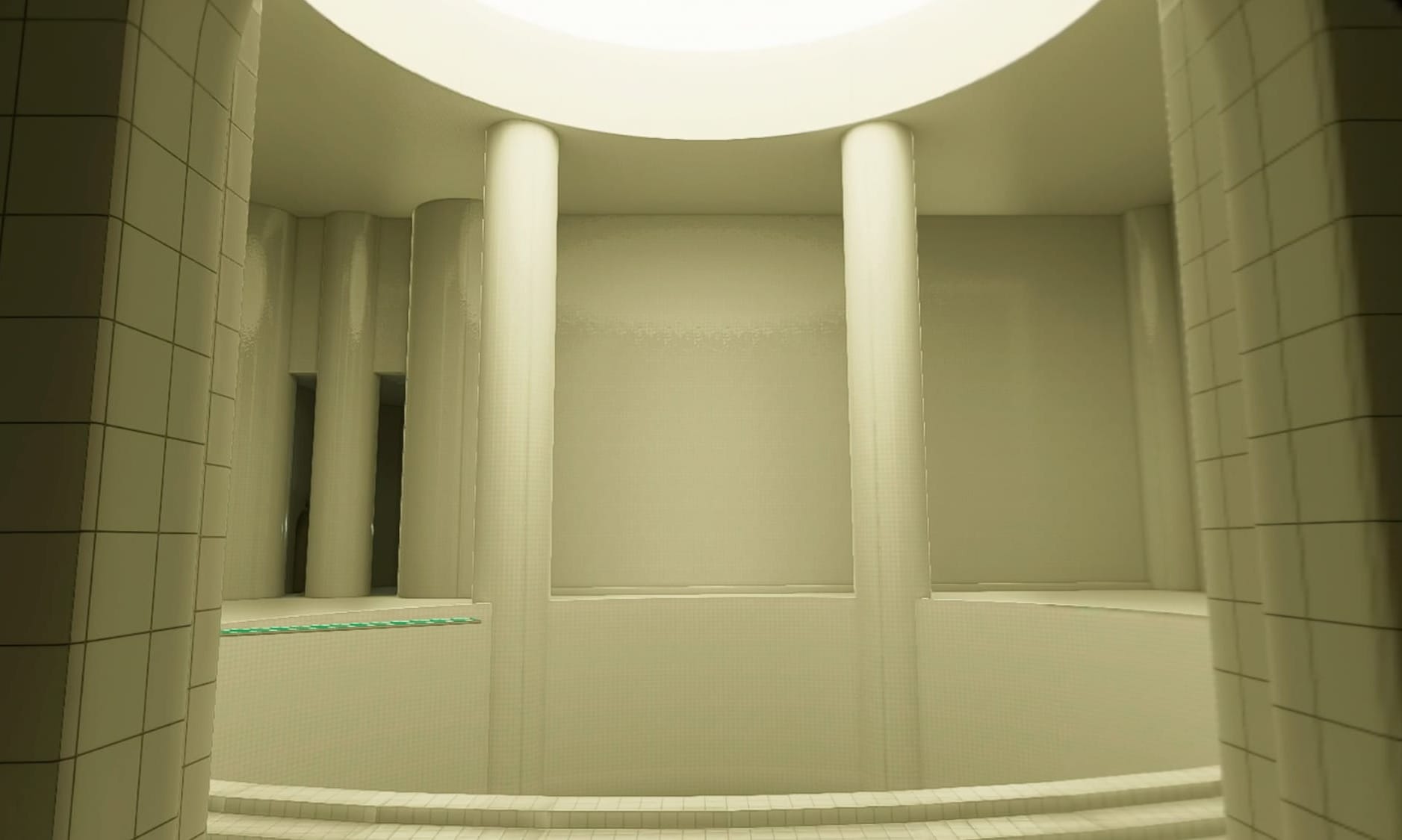
A liminal room that's all-white and clean looking, with one diving board in the middle
PC VR screenshot captured through Quest 3

Your goal is to navigate the halls of twisted structures, ominous bodies of water, and strangely placed slides to find the door that grants freedom. The game states there are no jump scares, which I can verify is true, but the sounds you hear throughout the experience will make you wonder if you’ve been lied to.

The early chapters of POOLS VR are quiet except for the occasional distant growl of a monster or the white noise of an HVAC system running steadily in the background. Your heavy footsteps will echo in hallways as the reverb plays against your imagination. Turning to look behind you will become something you quickly dread. By the time I was ready to explore a bonus level, I found myself swimming around while the world shook from the roars of an angry sea monster.
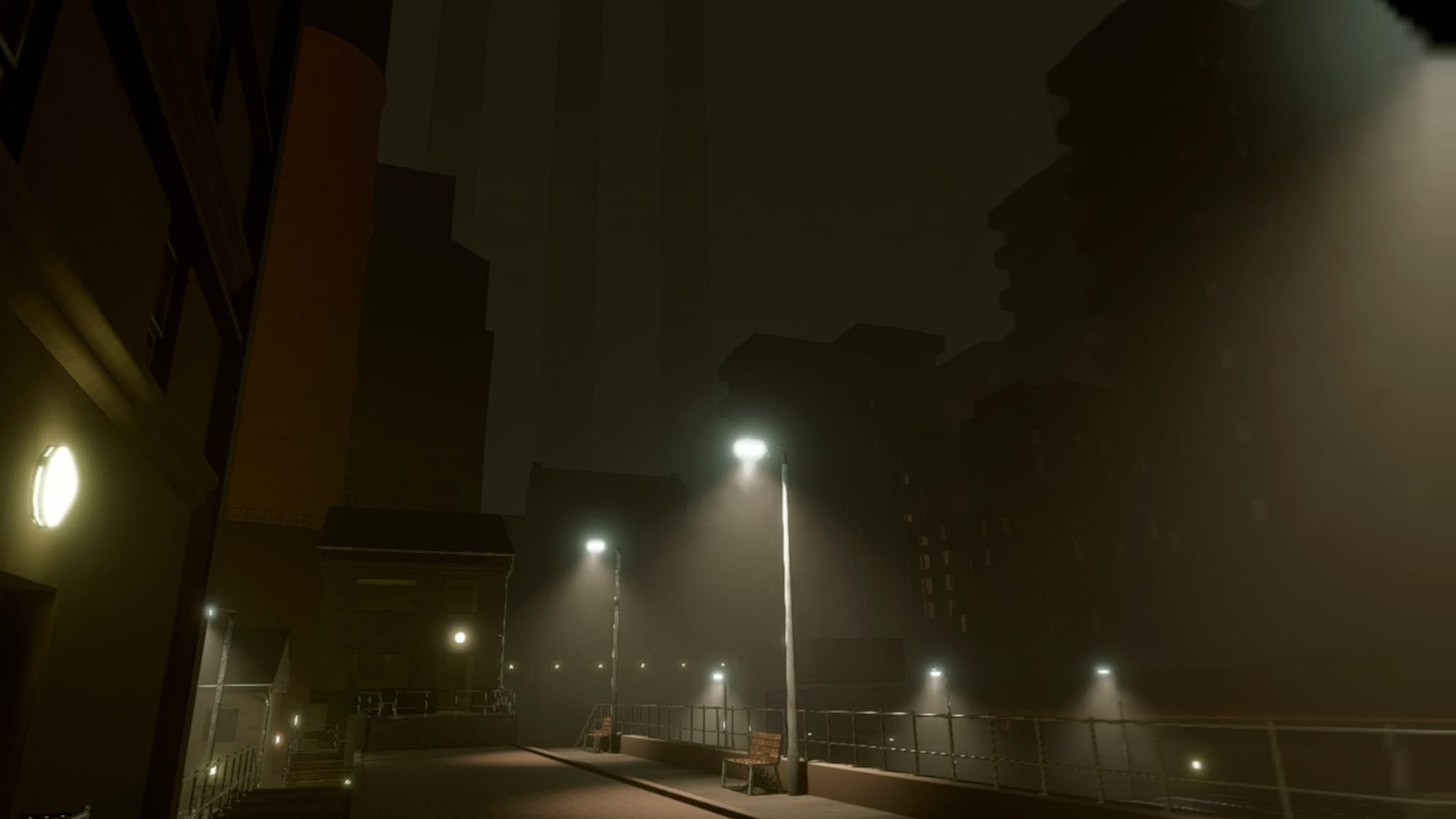
A dark cityscape in a video game
PC VR screenshot captured through Quest 3

POOLS VR places you waist-deep in an actual pool and presents a menu to start your game. Pressing the trigger on my Quest 3 controllers made my character break into a run, while pushing down on my right joystick caused me to crouch. There is no jumping mechanic, but there is also no death screen. If you choose to walk into an abyss at any point on the map, the game fades to black and places you next to where you fell.

Comfort

POOLS VR comes with several comfort options. You can add a tunneling vignette and a slider to change the vignette size. You can also skip water slide sequences, receive assistance for climbing teleportation, or optionally fade to black for any midair mechanics (like jumping to your doom). There is also a fade to black for optional snap turning.

Other features include adjusting the height for standing, sitting, and crouching. You can also change your free movement hand, movement direction mode, turn method type, as well as the position offset for your controllers. Lastly, you can affect how fast you walk, run, and swim in the game – or if you simply want to teleport around.

Users concerned with movement sickness should note there is an M.C. Escher-like level which will tilt the world around you and alter your perspective quickly. Please be aware of these existing elements as you navigate the game.
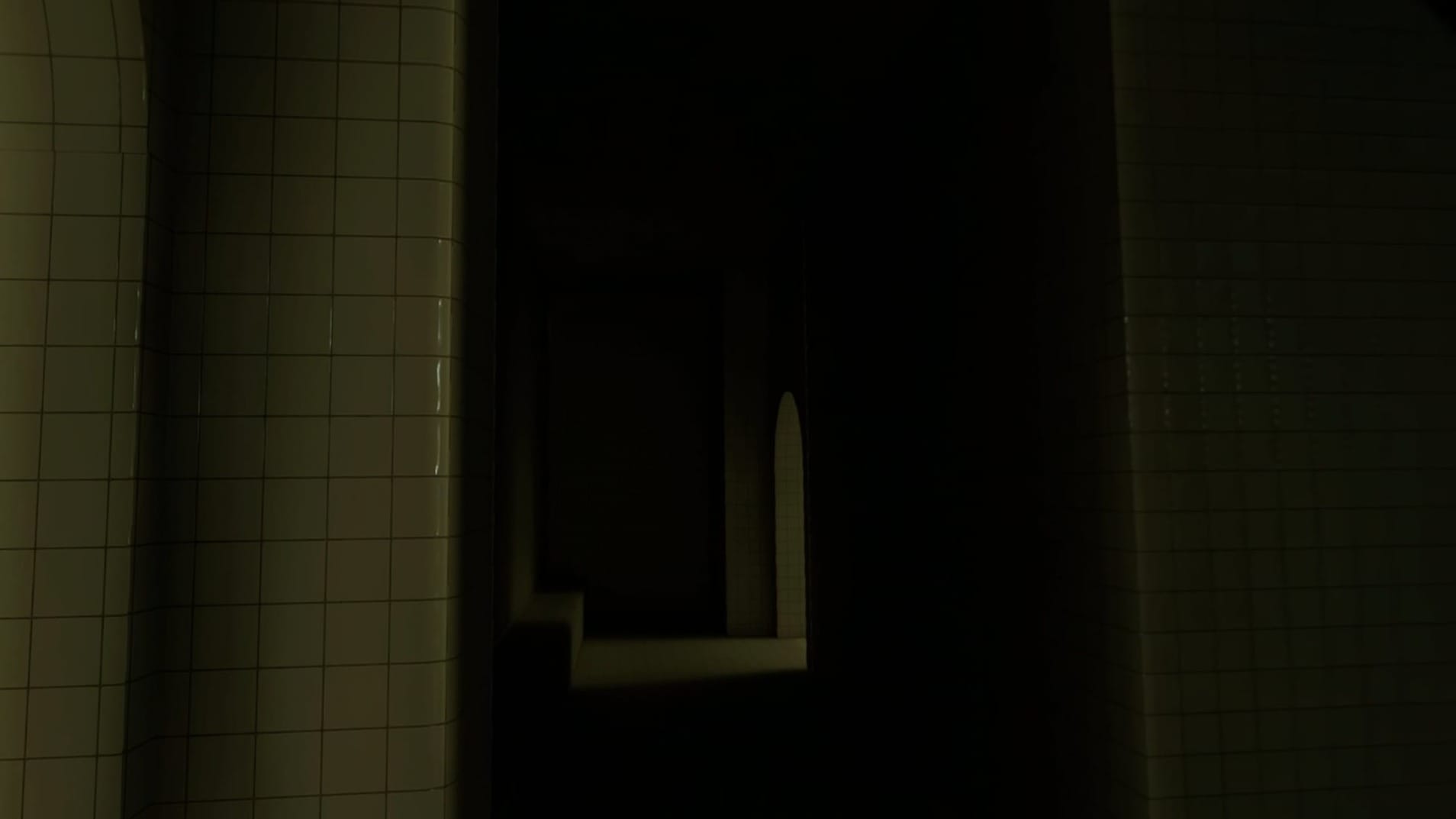
A dark liminal hallway with a bit of light shining through a doorway
PC VR screenshot captured through Quest 3

Starting a POOLS VR chapter will place you on the map without the initial cutscene the flatscreen version enjoys. The lack of cutscenes in VR doesn’t impede too much, as it really only constitutes a brief look around the first room you find yourself in.

Pick a path and move forward. If you can find your way around, you’ll transition from one cluster of scenery to the next. Your surroundings can become surreal, tilted, precarious, and terrifying. You will face giant sculptures towering above you, as well as dark hallways with oversized rubber duckies floating within the shadows. The hallways lean to one side or another and sometimes narrow until you feel you’re barely slipping by them, but other times are expansive and filled with a beautiful light. Other corridors become flooded with water as you walk at a 45-degree angle to slosh through an abandoned hotel.

Typically, you will get lost. I thought I knew a level well until I put on my headset and experienced it in VR. All my prior knowledge suddenly disappears, and I’m spending a lot more time walking in circles than I anticipated. If you’ve got time to think about things or like exploring while playing some music you enjoy, POOLS VR will accommodate that.
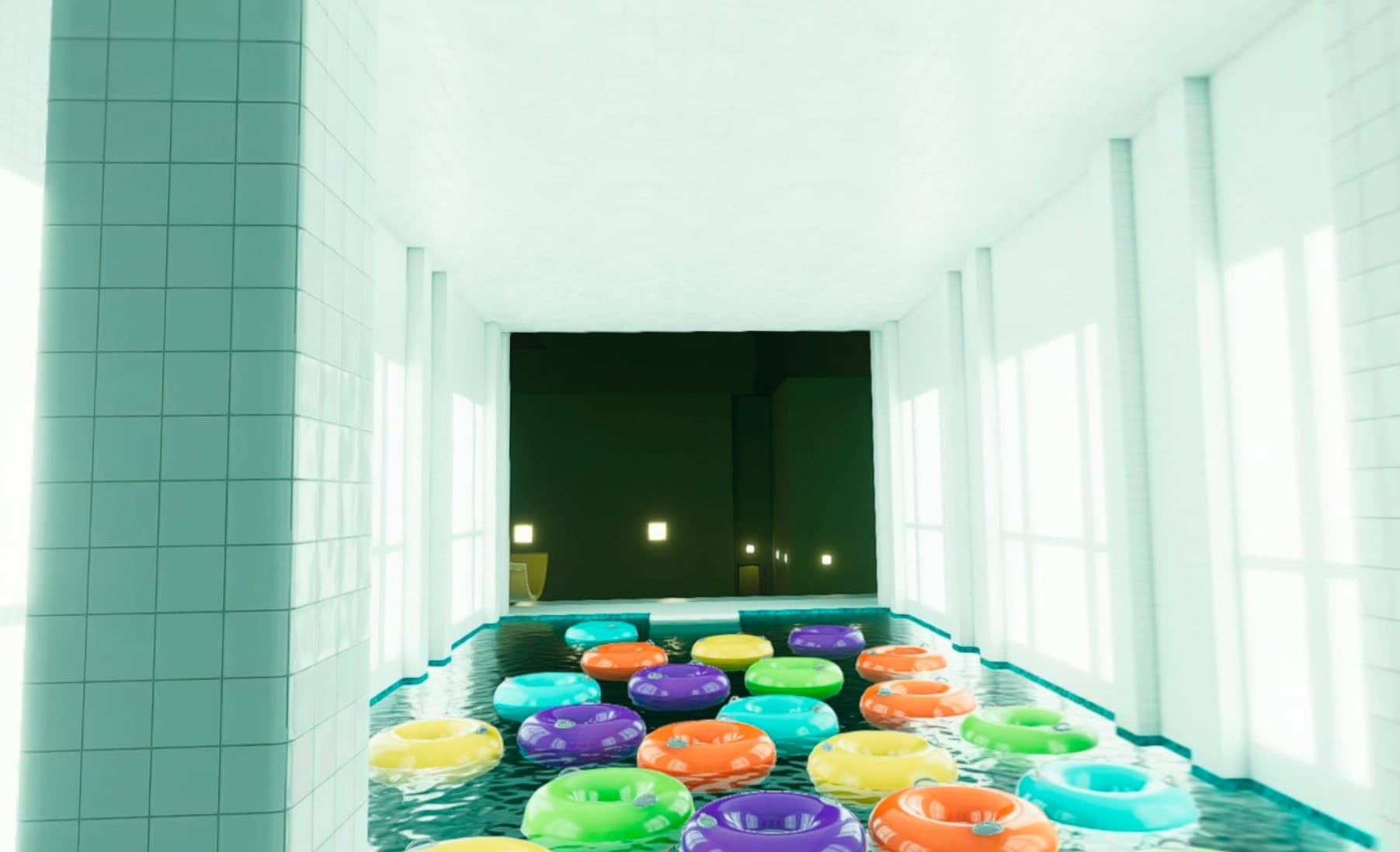
A bright liminal pool room with lots of colorful tubes in the pool
PC VR screenshot captured through Quest 3

Fear effectively creeps in as you keep playing. There were moments of running around in POOLS VR where I felt so uncomfortable that I wanted to chicken out and exit. In one chapter I ran down a flight of stairs where several windows gave me the view of different apartment rooms. One room was completely dark except for a giant rubber duck which sat cross-legged in a chair and stared in my direction.

I stopped to stare back at the duck for a moment, then continued moving. But as soon as I got halfway down the next flight, I thought, that duck would actually make for a funny picture. The duck was gone by the time I came back up the stairs. I suddenly became very nervous about where it might have gotten off to.

PC Specs And Headset Used

My desktop computer uses an Intel Core i7 processor, an RTX 4060 graphics card, and 32GB RAM. I evaluated this game using a Quest 3 headset connected to my PC via Virtual Desktop.

You can find POOLS’ recommended settings for PC on Steam.

When things start appearing in POOLS where they previously weren’t, that’s when bad things happen. In one level towards the end of the chapter, mannequins appeared in the hallway behind me whenever I looked over my shoulder and rubber duckies materialized on shelves while staring at me. Still no jump scares, but there are plenty of moments that will make your heart pound as you run. People who question if POOLS is a horror game should give its VR mode a try before delivering a final opinion.
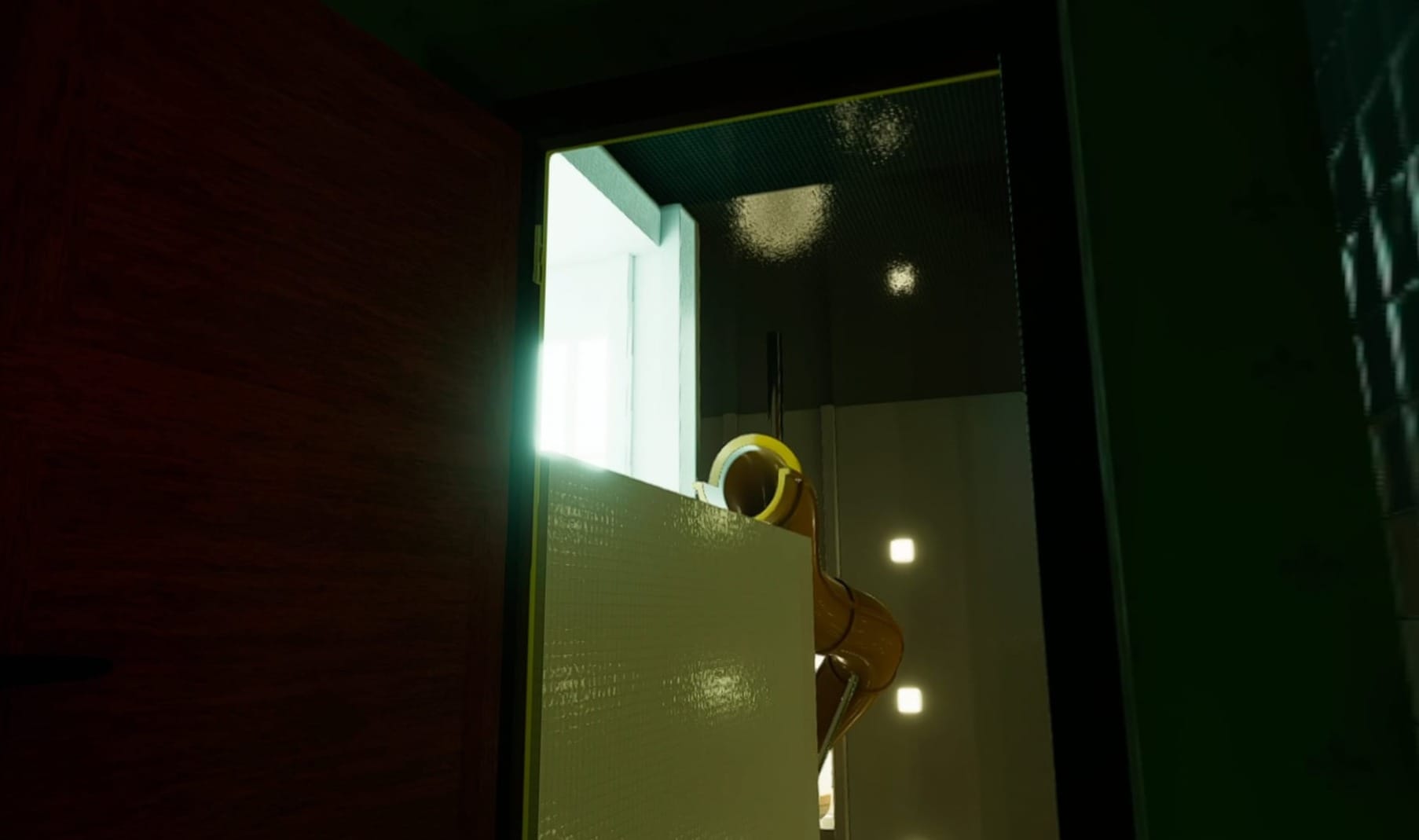
A dark room with a wooden door ajar, showing a weird room with a slide leading pass a tall cliff
PC VR screenshot captured through Quest 3

I didn’t experience many issues with POOLS VR, though there’s currently a strange visual problem with the water. If reflections are left on for the pool, those reflections will only appear in your left eye, which leads to a flickering effect in your headset. Turning those off in the settings is my temporary solution.

During level transitions, the blank screen which is supposed to obscure my view doesn’t widen enough to cover my headset’s perspective. Furthermore, occlusion culling is too restrictive, which makes me notice disappearing textures on the walls out of the corner of my eyes as soon as I turn my head. I’m hoping Tensori can resolve these issues in a future update.

POOLS VR – Final Verdict

Tensori has done an impressive job of adapting POOLS to the immersive gaming space, creating a considerably scarier experience than the original by adding VR support. There are plenty of comfort options for all styles of play, and only a few small graphics issues are holding the game back. This is a game I’ll keep enjoying for a long while yet, even if it creeps me out. It’s a great wandering simulator that you shouldn’t pass up.


UploadVR uses a 5-Star rating system for our game reviews – you can read a breakdown of each star rating in our review guidelines.
Top 15 VsFTP Server Interview Questions with Detailed Answers

FTP stands for File Transfer Protocol and is one of the most widely used and standard protocols over the Internet, which works on a client-server model and is used to transfer files between a client and a server.

Originally, FTP clients were command-line based, but now most platforms come with FTP clients and servers built-in, and many third-party FTP client/server programs are available.

Here we present 15 Interview Questions based on VsFTP (Very Secure File Transfer Protocol) running on Linux servers, explained in a simple and beginner-friendly way.

The post Top 15 VsFTP Server Interview Questions with Detailed Answers appeared first on Linux Today.

Understanding the $SHELL Environment Variable in Unix and Linux

In Unix and Linux systems, the $SHELL environment variable indicates the parent shell that initiated your current session. This can be useful for understanding the runtime environment, particularly when troubleshooting or scripting. It’s important to know that this value doesn’t always reflect your default login shell—it shows the shell that started your current session.

For example, if you start a new shell within your login shell, $SHELL still shows the original one. For more system-related insights, see our guide on how to install Kernel 6.15 on Ubuntu, learn useful grep tricks for ps, or explore the Linux yes command for automating responses.

The post Understanding the $SHELL Environment Variable in Unix and Linux appeared first on Linux Today.

Beware of the Browser-in-the-Middle Attack: What It Is and How to Protect Yourself

A new security threat called the browser-in-the-middle (BITM) attack has recently been uncovered, exposing users—especially those using Apple’s Safari browser—to potential exploits that could compromise their privacy and security.

Reports from BleepingComputer and GBHackers highlight how attackers can take advantage of browser fullscreen features to trick users into revealing sensitive information.

For users interested in broader Linux security concerns, check out our coverage of a critical Linux kernel zero-day vulnerability in the SMB module and how hackers are now testing Clickjacking Fix (ClickFix) attacks on Linux systems.

The post Beware of the Browser-in-the-Middle Attack: What It Is and How to Protect Yourself appeared first on Linux Today.

Favero’s new SPD-SL power meter pedals undercut the competition on weight and price

Favero has revealed its latest-generation power meter pedals, the Assioma PRO RS.

As expected, the new road pedals are built around the same watt-measuring technology as the excellent Assioma PRO MX off-road pedals (launched last year), which sees all of the electronics integrated within the spindle.

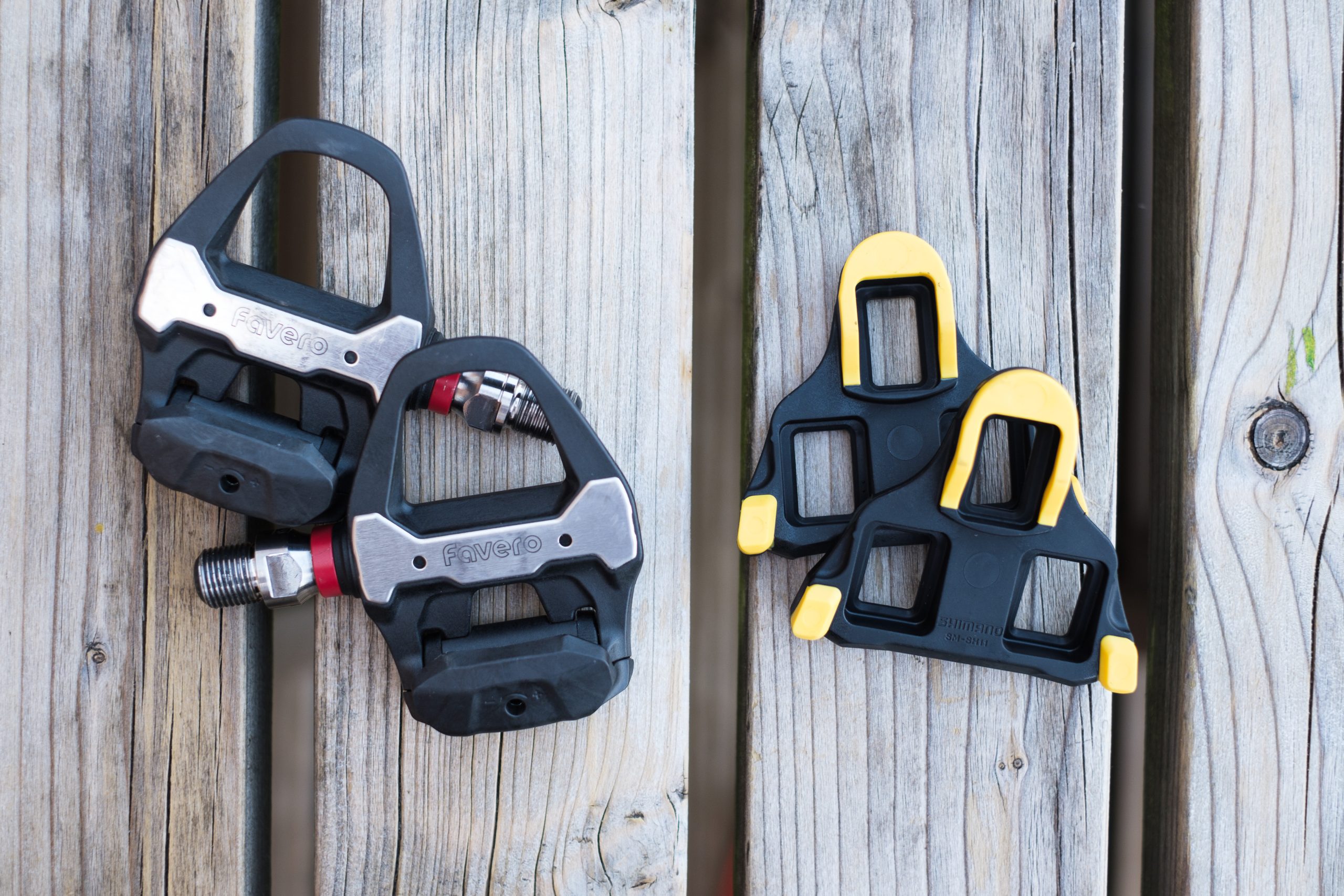
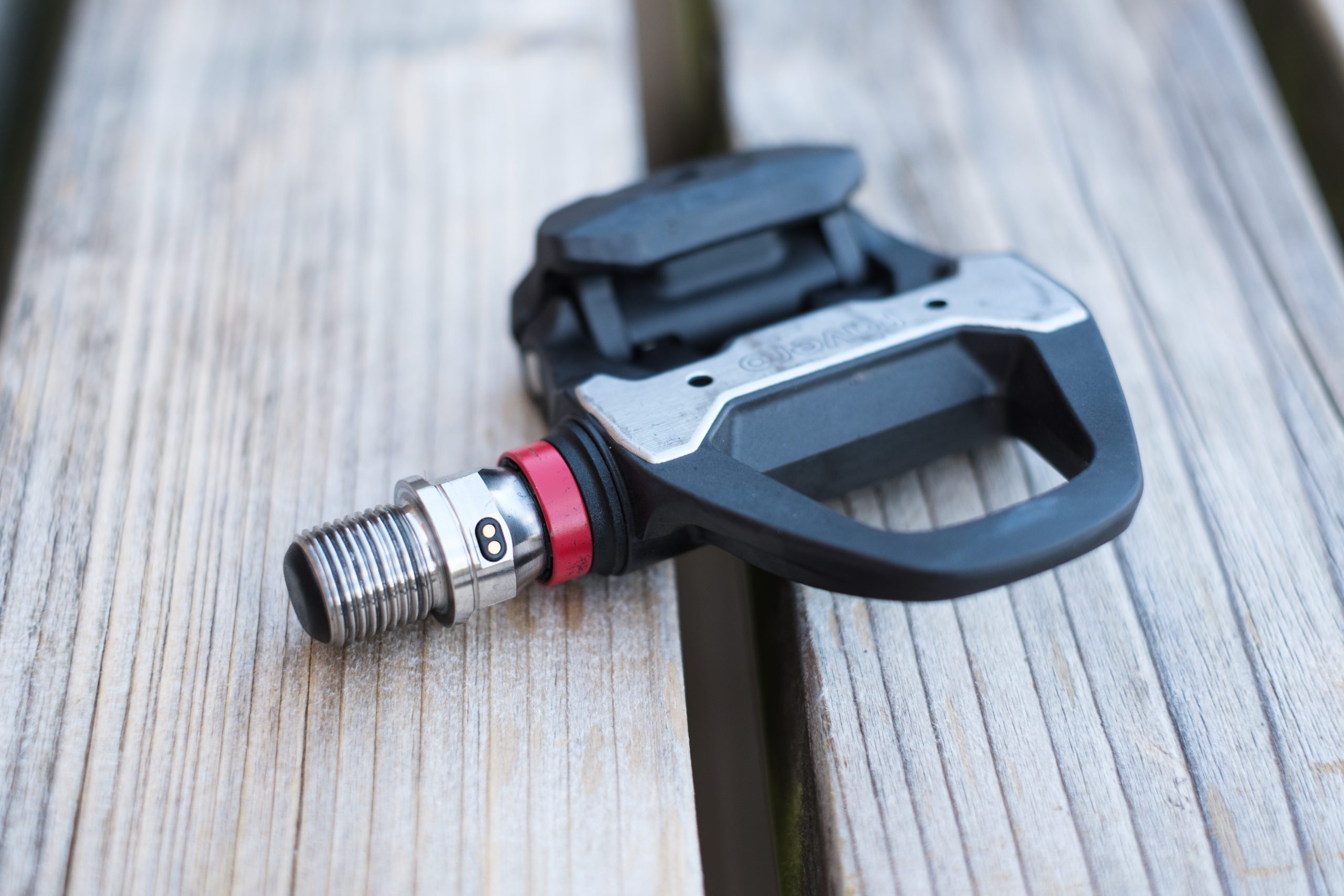
This means the new Assioma PRO RS pedals ditch the unsightly spindle pods featured on Favero’s existing Assioma Duo pedals and offer a Shimano SPD-SL-compatible power meter pedal with a ‘normal’ Q-Factor of 53mm.

We’re lucky enough to have a set in to test, so let’s run through what’s changed and my first impressions of the new Favero Assioma PRO RS pedals.

No more pods

Favero Assioma PRO RS power meter pedal
Favero’s new road power meter pedals use its latest pod-less spindles. Simon von Bromley / Our Media

While the Assioma Duo’s pods didn’t affect performance, it’s fair to say many felt they looked somewhat ugly.

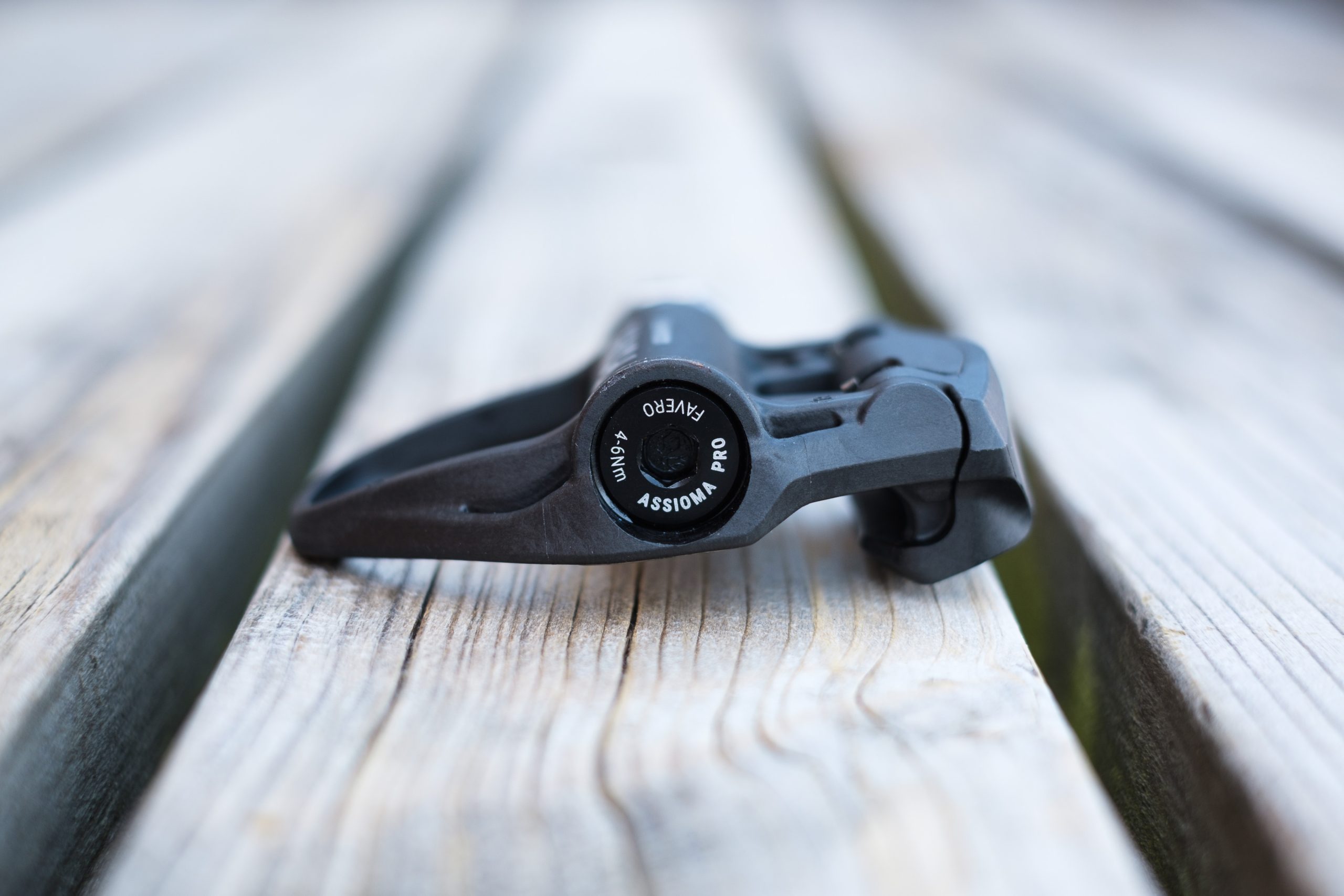
Now, though, all of the electronics are housed within a fully sealed spindle.

As with the PRO MX pedals, Favero says this offers greater durability, better protection from water ingress and easier servicing.

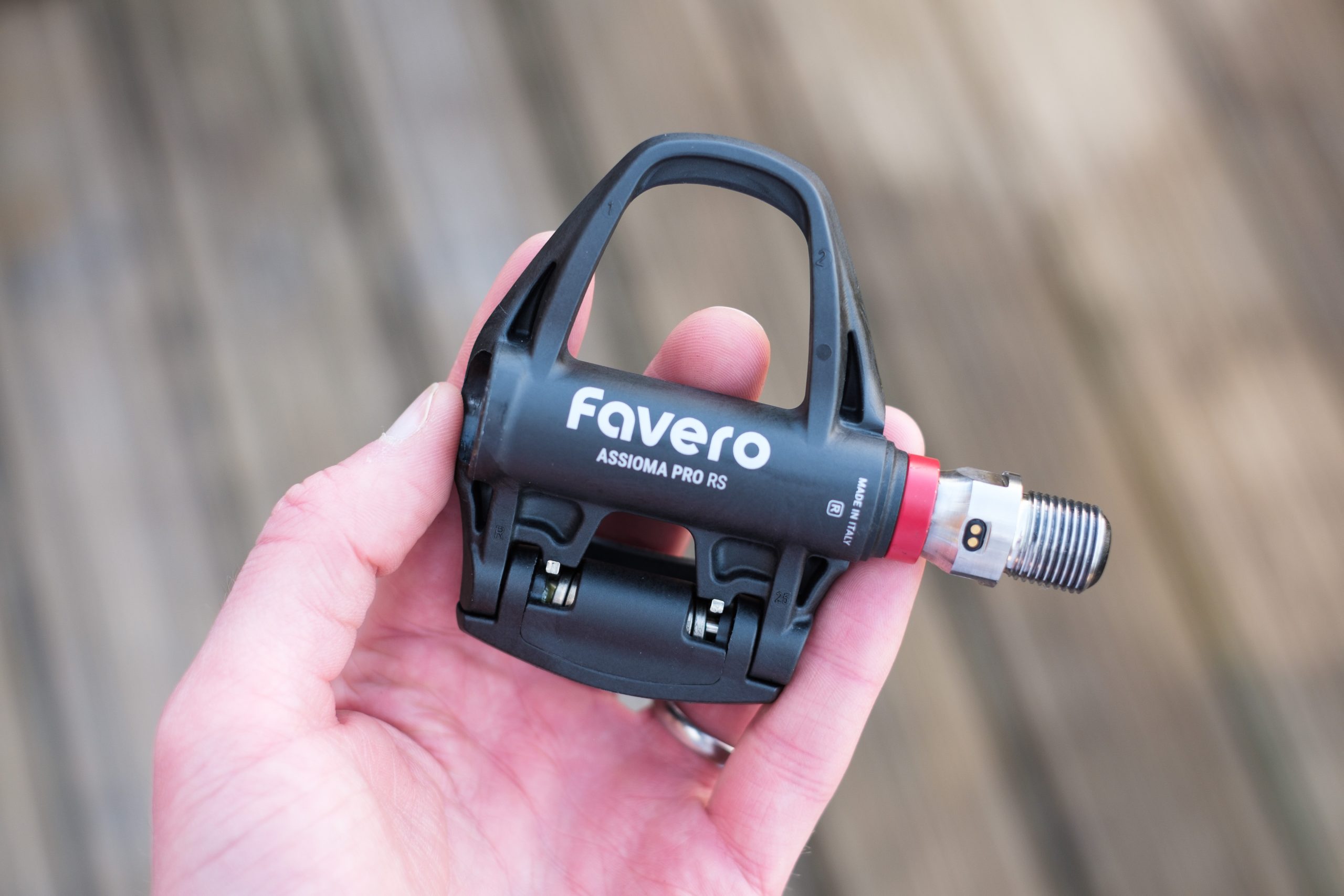
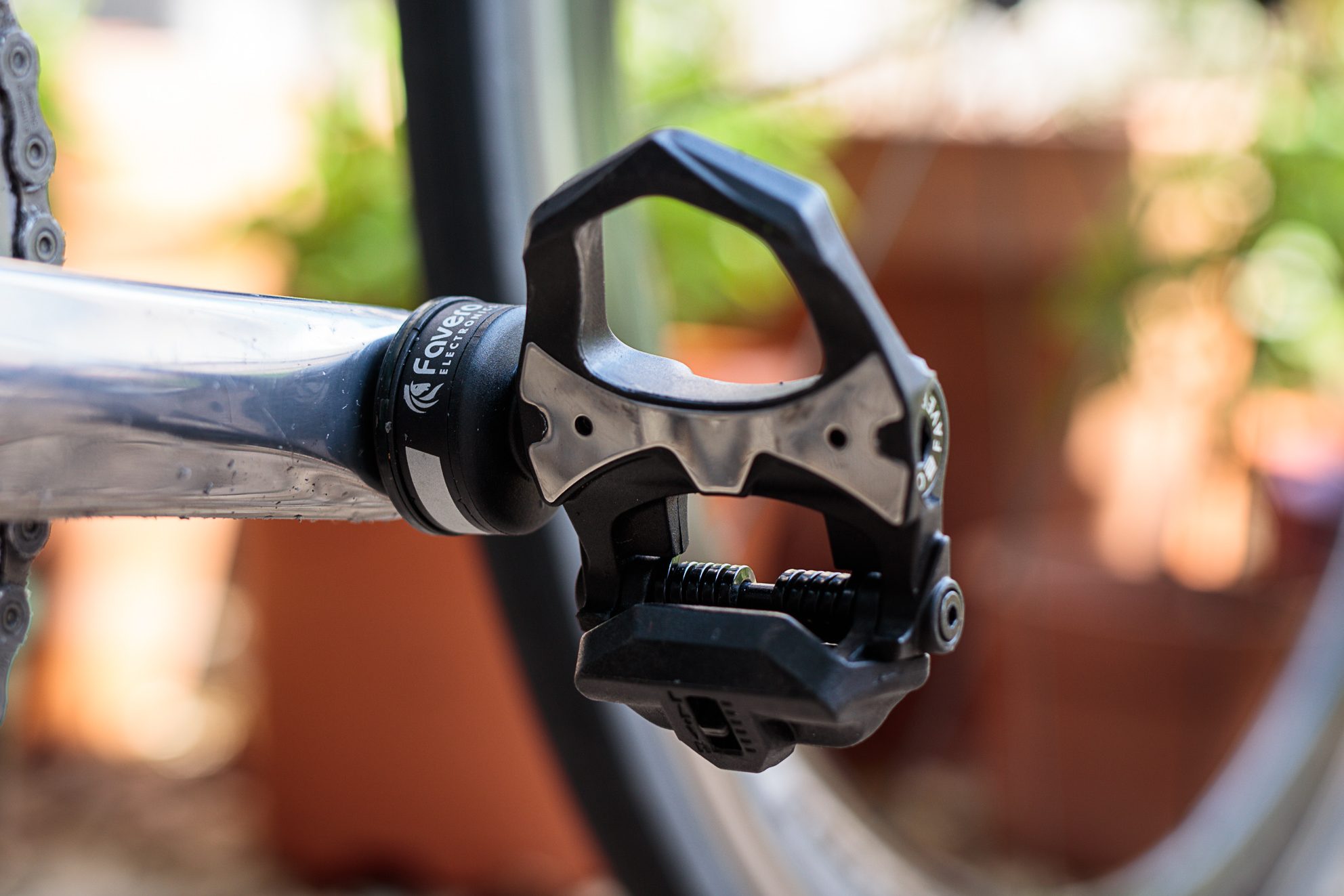
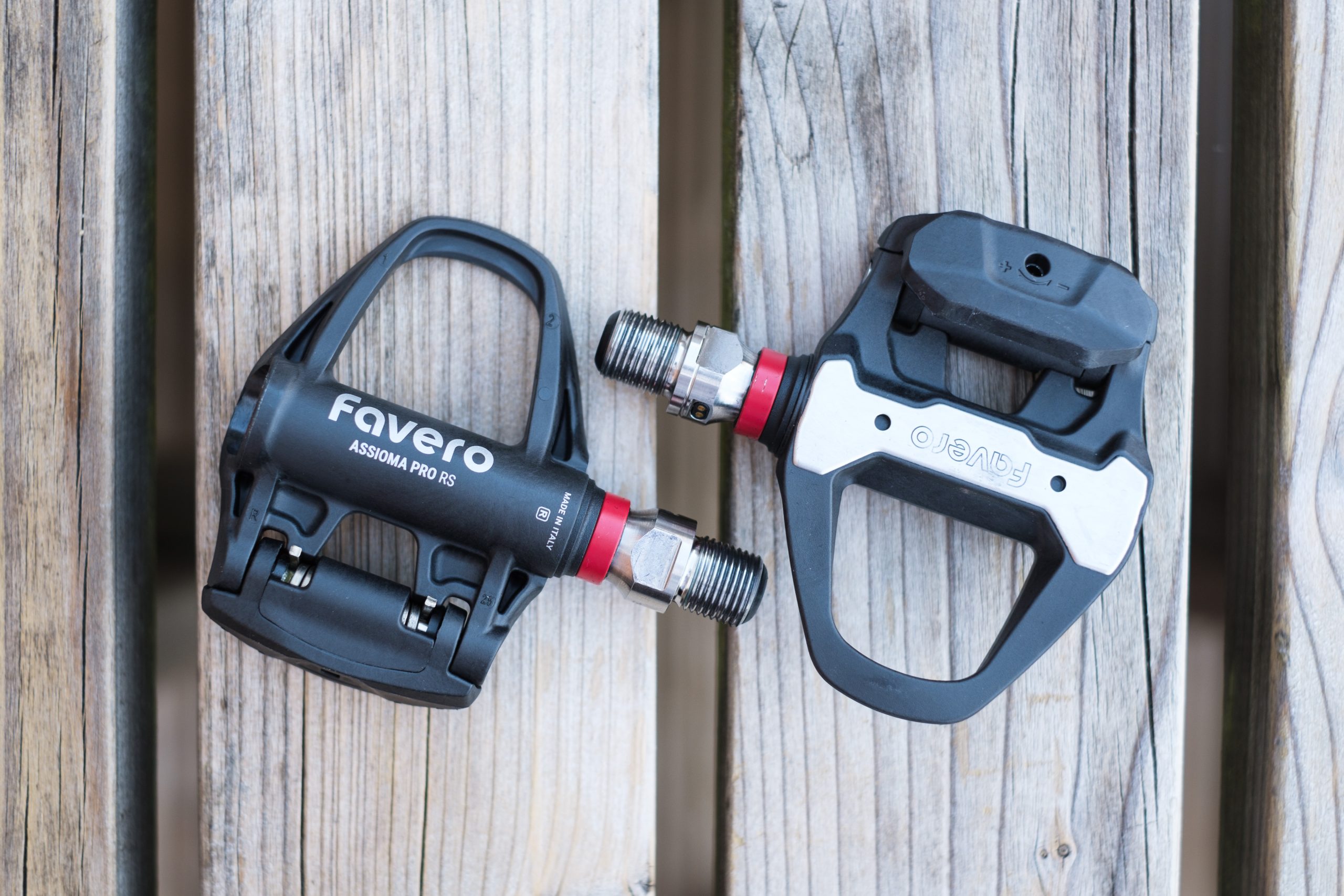
At a glance, then, the Assioma PRO RS pedals now look practically identical to a standard road bike pedal system, with only a close inspection revealing any electronics. This brings them in line with offerings from Favero’s closest competitors – Garmin’s highly rated Rally RS200 pedals and Look’s Keo Blade Power pedals (which didn’t score so highly).

Favero Assioma PRO RS power meter pedal
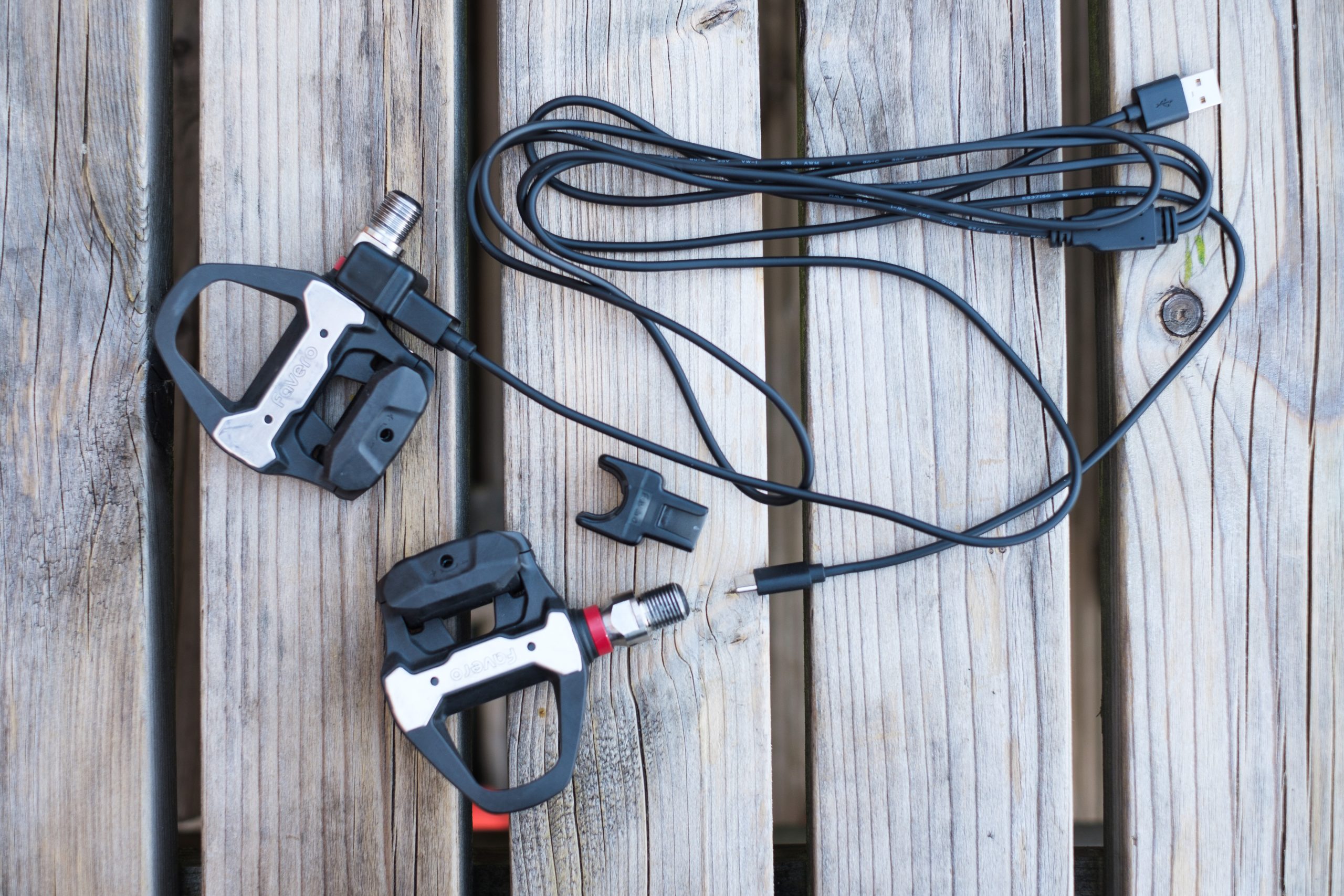
The pedals are charged over USB via magnetic connectors. Simon von Bromley / Our Media

As with the Assioma PRO MX pedals, this means a 15mm pedal spanner is required to install the Assioma PRO RS pedals, rather than an 8mm Allen key.

The pedals are charged using the same proprietary magnetic adaptors as the PRO MX pedals, although Favero has made the heads USB-C compatible (they were previously micro-USB).

As we’d hoped, Favero has confirmed riders will be able to swap the pedal bodies between road and off-road (available separately, for €98 per set) with only basic tools.

Light weight and low stack

Favero Assioma PRO RS power meter pedal
Aside from offering dual-sided power measurement, Favero says the new SPD-SL pedal body is competitive with the best. Simon von Bromley / Our Media

Aside from aesthetics, though, Favero claims the Assioma PRO RS pedals are class-leading in a number of key areas.

Favero claims they weigh 123.5g per pedal, making them the lightest pedal-based power meter for road bikes, for example.

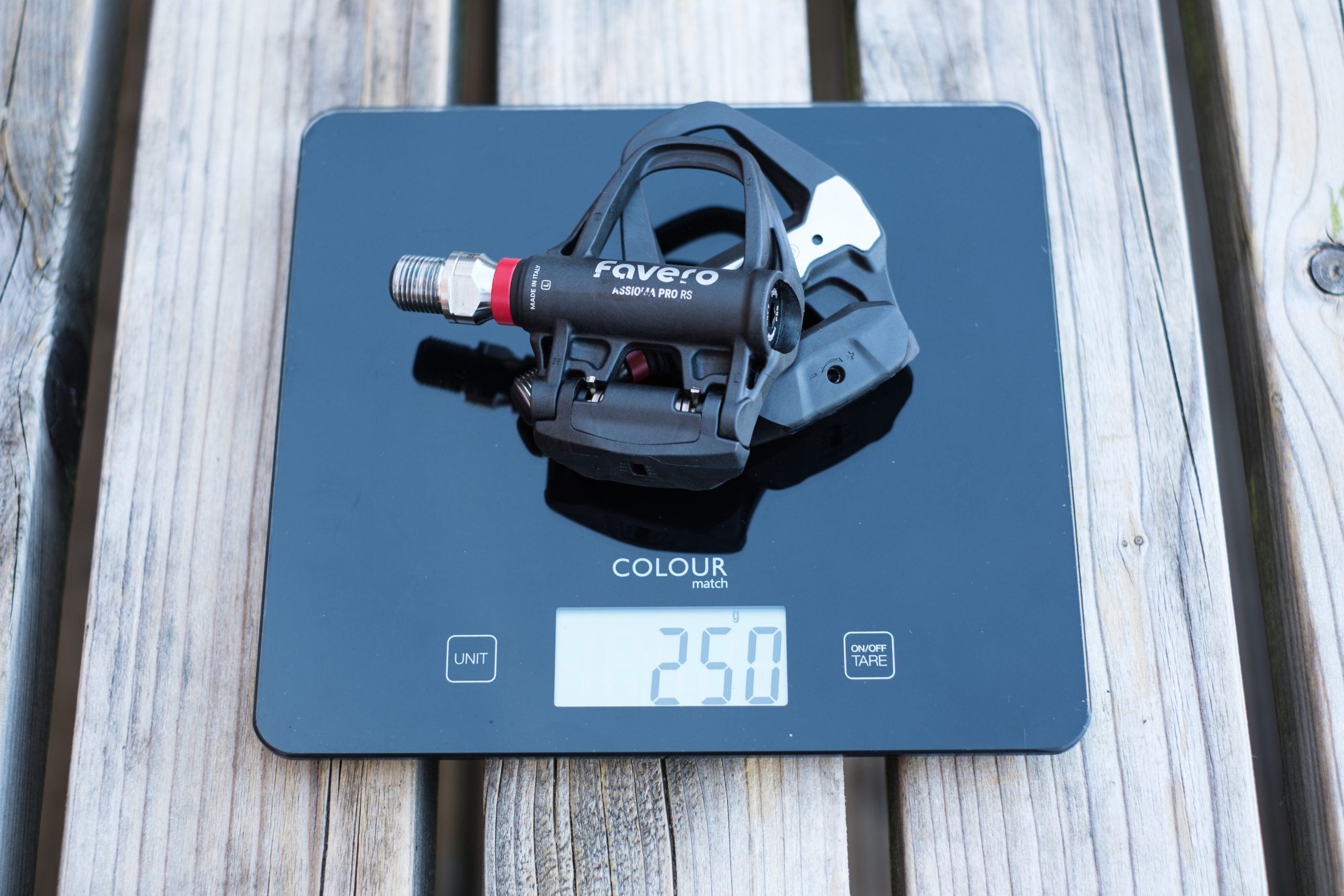
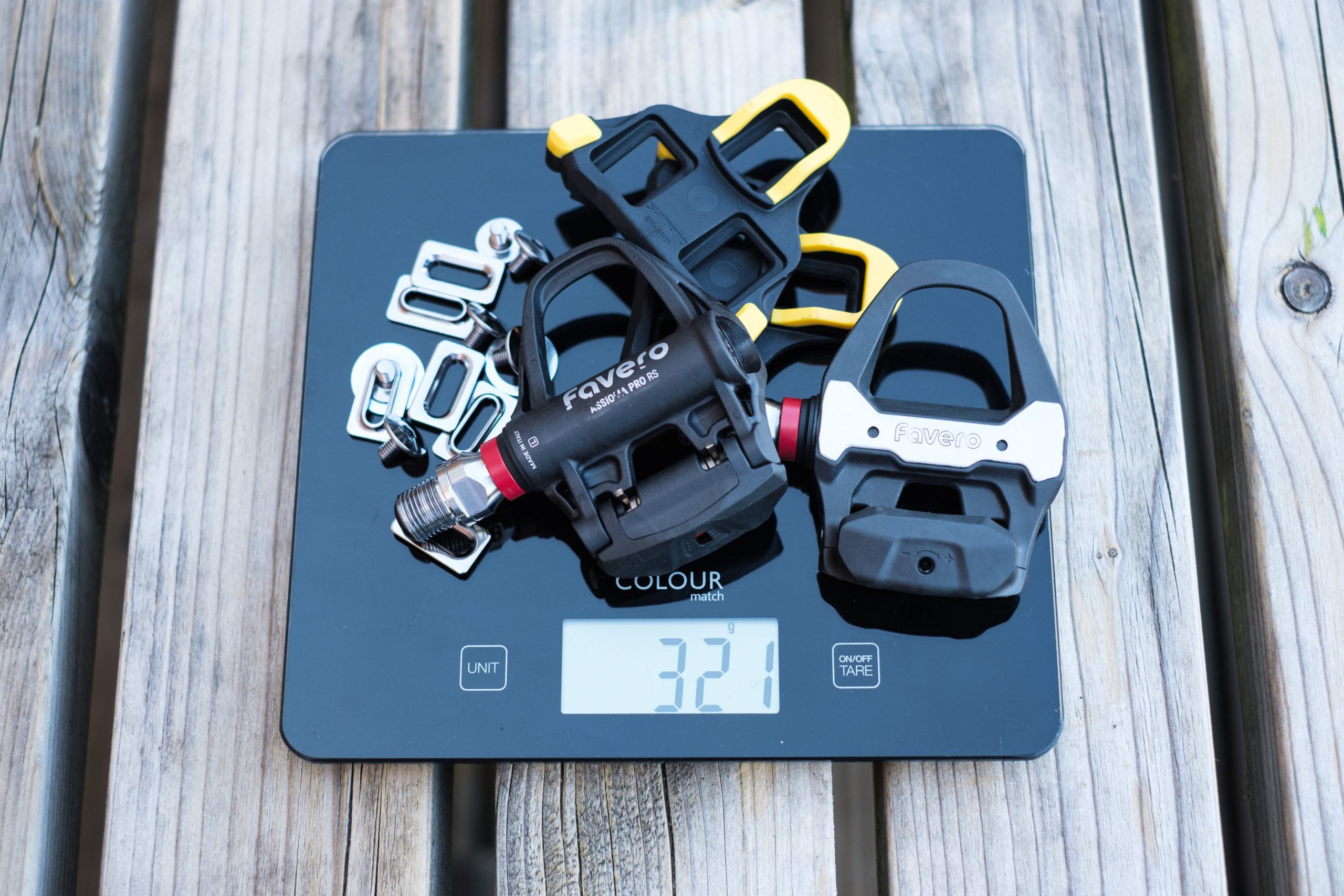
On our scales, a dual-sided set weighed 250g – 55g lighter than the Assioma Duo pedals – and undercuts both Garmin’s and Look’s efforts (which weigh 320 and 260g, respectively) comfortably. Including cleats and hardware, that figure rises to 321g.

The Assioma PRO MX pedals also have a low stack height of only 10.5mm, offering a close connection to the pedal.

That is, again, marginally better than both Garmin and Look’s pedals (which have stack heights of 12.2mm and 10.8mm each), although SRM’s X-Power Road pedals beat the lot at 9.75mm.

For context, a standard (non-power meter) Shimano Dura-Ace PD-R9100 pedal has a stack height of 14.6mm.

Favero Assioma PRO RS power meter pedals
A set of Favero Assioma PRO RS pedals weighs 250g, according to our scales, making them the lightest power meter pedals available. Simon von Bromley / Our Media

As with the weight, these minor differences aren’t ones you’ll be able to feel while riding. But in a world of marginal gains, low weight and low stack are certainly nice to have.

One area where there is a tangible difference is with the Q-Factor, which is a measure of how far the centre line of each pedal is from the crank arm.

Favero’s previous Shimano SPD-SL-compatible power meter offering – the Assioma Duo Shi – had a Q-Factor of 65mm, 11mm wider than its Look Keo-compatible Assioma Duo pedals. The Assioma PRO RS pedals, however, feature a ‘standard’ 53mm Q-Factor, which is only 1mm wider than Shimano’s Dura-Ace pedals.

It’s fair to say there’s no agreed ‘best’ Q-Factor, although road bikes tend to be narrower in order to increase cornering clearance and prevent pedal strikes.

Favero Assioma PRO RS first impressions

Favero Assioma PRO RS power meter pedal
Favero’s new Assioma PRO RS pedals don’t reinvent the formula, but that’s no bad thing. Simon von Bromley / Our Media

When Favero revealed its pod-less Assioma PRO MX pedals last year, my thoughts turned instantly to what it could mean for a new-generation road power meter pedal system.

A little more than a year later, we finally have just that, and although the Assioma PRO RS pedals offer few surprises, that’s a good thing in my book.

As BikeRadar’s primary power meter tester, I’ve long been impressed by the performance, reliability and value offered by Favero’s pedals.

The set of Assioma Duo pedals I’ve been using since September 2020 has remained faultlessly reliable, both from mechanical and electronic points of view. They’ve been transferred between countless bikes and have become a benchmark against which I measure all other power meters and smart trainers.

Favero Assioma power pedals
Favero’s Assioma Duo power pedals have been – and continue to be – reliable performers.

Nevertheless, the refined form factor is a welcome upgrade and one that essentially solves the only ‘fault’ I could find with the Assioma Duo pedals.

In the hand, the composite pedal bodies feel pleasingly similar to Shimano’s own high-end SPD-SL pedals, and it’s great to see genuine Shimano cleats included rather than third-party versions.

Having made the switch from Shimano to Look Keo cleats back in 2020 in order to test the Keo-only Assioma Duo pedals, it’s a somewhat ironic turn of events that the new PRO RS pedals are only compatible with SPD-SL cleats.

Favero Assioma PRO RS power meter pedals
SPD-SL compatibility is great, although it would have been nice to see a Look Keo option as well. Simon von Bromley / Our Media

Ideally, it’d be preferable if riders could just have a choice between the two – as you can with Garmin’s Rally system (which is available with Look Keo-, Shimano SPD-SL- or Shimano SPD-compatible pedal bodies).

That said, there’s little doubt – in my mind, at least – that Shimano SPD-SL is the superior system. The wider platform aside, SPD-SL cleats simply offer a larger positional adjustment range and, in my experience, are far less slippery to walk on than Look’s offering.

Favero Assioma PRO RS power meter pedal
Favero promises the pedals are easy to service. Simon von Bromley / Our Media

I’m also keen to find out just how quick and easy it is to swap the pedal bodies between road and off-road.

While Garmin’s Rally system offers this capability, it’s a fiddly task involving tiny screws and the exposing of electronics. With prices for replacement pedal bodies starting at £219.99, it’s also a relatively expensive proposition.

If the process here is as easy as Favero claims, and they measure up to Favero’s high bar of accuracy and reliability, these could be the go-to power meter pedals for multi-discipline riders.

Favero Assioma PRO RS pricing and specifications

Favero Assioma PRO RS power meter pedal
Favero’s new Assioma PRO RS pedals look set to continue the brand’s reputation for excellent value. Simon von Bromley / Our Media

The Assioma PRO RS pedals cost £649 / $789 / €699 for a dual-sided set or £399 / $499 / €439 for a single-sided set.

The dual-sided sets (Assioma PRO RS-2) measure the power produced by each leg independently, whereas single-sided sets (Assioma PRO RS-1) measure power on the left side only, and double it to estimate your total power output.

Upgrade kits (Assioma PRO RS-UP) are available for £389 / $489 / €429 to convert single-sided pedal sets to dual-sided.

  • Pedal body options: Shimano SPD-SL
  • Weight: 246g (excluding Shimano SPD-SL cleats)
  • Claimed accuracy: +/- 1 per cent
  • Claimed battery life: 60 hours
  • Connectivity: ANT+ / BLE
  • Q-Factor: 53mm
  • Stack height: 10.5mm
  • Rider weight limit: 120kg

The Fragmentation Dilemma: Is Linux Its Own Worst Enemy?

Linux’s openness has led to a rich variety of distributions (“distros”) – different variants of the operating system tailored to diverse preferences. This fragmentation of desktop Linux is often seen as a double-edged sword. On one hand, it provides users and developers with choice and fosters innovation; on the other, it can pose challenges for software compatibility, user adoption, and developer effort. In this report, we delve into the current state of Linux fragmentation with recent statistics, developer insights, commentary from Linux leaders, and a look at efforts to standardize the ecosystem.

Exercise improves colon cancer survival, high-quality trial finds

Exercise is generally good for you, but a new high-quality clinical trial finds that it’s so good, it can even knock back colon cancer—and, in fact, rival some chemotherapy treatments.

The finding comes from a phase 3, randomized clinical trial led by researchers in Canada, who studied nearly 900 people who had undergone surgery and chemotherapy for colon cancer. After those treatments, patients were evenly split into groups that either bulked up their regular exercise routines in a three-year program that included coaching and supervision or were simply given health education. The researchers found that the exercise group had a 28 percent lower risk of their colon cancer recurring, new cancers developing, or dying over eight years compared with the health education group.

The benefits of exercise, published in the New England Journal of Medicine, became visible after just one year and increased over time, the researchers found. The rate of people who survived for five years and remained cancer-free was 80.3 percent among the exercise group. That’s a 6.4 percentage-point survival boost over the education group, which had a 73.9 percent cancer-free survival rate. The overall survival rate (with or without cancer) during the study’s eight-year follow-up was 90.3 percent in the exercise group compared with 83.2 percent in the education group—a 7.1 percentage point difference. Exercise reduced the relative risk of death by 37 percent (41 people died in the exercise group compared with 66 in the education group).

Read full article

Comments

People Can Fly cancels two games and lays off developers

People Can Fly, the developer of Outriders and Gears of War: Judgement, announced Monday that its ending development on two of its upcoming games due to issues with its publisher and an inability to secure funding to continue development. As part of this decision, People Can Fly will be forced “significantly regroup” and “scale down [its] teams,” the studio’s CEO Sebastian Wojciechowksi shared in a statement on LinkedIn.

The statement doesn’t elaborate on how many staff will be impacted by the cuts, but does call out Project Gemini and Project Bifrost as the two games being cancelled. People Can Fly made the decision to shut down Gemini because the game’s publisher failed to provide a publishing agreement and didn’t communicate “its willingness to continue or terminate the Gemini project.” Without that publishing deal or the funds to continue working on Bifrost — a self-published VR game — the studio was forced to cancel it, too.

This isn’t the first time People Can Fly has shut down a project or made cuts to its teams. In December 2024, the studio announced that it was ending development on a game called Project Victoria and also reducing the number of people working on Bifrost. In that same announcement, People Can Fly also revealed that Square Enix was publishing Gemini.

People Can Fly last worked with Square Enix to publish Outriders, somewhat of a minor cult hit now, but not a commercial success at launch. Even with the cuts and cancelled games, the studio still has multiple upcoming projects in the works, including Project Delta, which People Can Fly is creating for Sony and Gears of War: E-Day, which the studio is co-developing with Xbox studio The Coalition.

This article originally appeared on Engadget at https://www.engadget.com/gaming/people-can-fly-cancels-two-games-and-lays-off-developers-220310524.html?src=rss

Microsoft integrates OpenAI’s Sora video creator into Bing

Microsoft introduced an AI-powered video generator to its Bing search engine. Bing Video Creator is powered by OpenAI‘s Sora, which creates short clips based on text prompts. The free feature is rolling out to the Bing mobile app starting today and is slated to arrive later on desktop and to Copilot Search.

Microsoft has invested multiple billions of dollars into OpenAI in support of its artificial intelligence endeavors over the years. The tech giant integrated the DALL-E image generation capability from OpenAI into the Bing search engine in 2023, so it’s not surprising that it has followed a similar path with the company’s Sora video tool.

However, Sora had a rocky launch with a rebuke from YouTube’s CEO not to train on its videos and protests from several of its early testing participants. The model became broadly available at the end of last year. It’s also facing more competition from other video AI models offering more complex features, such as Google’s Veo 3.

This article originally appeared on Engadget at https://www.engadget.com/ai/microsoft-integrates-openais-sora-video-creator-into-bing-215421408.html?src=rss

Broadcom ends business with VMware’s lowest-tier channel partners

Broadcom has cut the lowest tier in its VMware partner program. The move allows the enterprise technology firm to continue its focus on customers with larger VMware deployments, but it also risks more migrations from VMware users and partners.

Broadcom ousts low-tier VMware partners

In a blog post on Sunday, Broadcom executive Brian Moats announced that the Broadcom Advantage Partner Program for VMware Resellers, which became the VMware partner program after Broadcom eliminated the original one in January 2024, would now offer three tiers instead of four. Broadcom is killing the Registered tier, leaving the Pinnacle, Premier, and Select tiers.

The reduction is a result of Broadcom’s “strategic direction” and a “comprehensive partner review” and affects VMware’s Americas, Asia-Pacific, and Japan geographies, Moats wrote. Affected partners are receiving 60 days’ notice, Laura Falko, Broadcom’s head of global partner programs, marketing, and experience, told The Register.

Read full article

Comments

Video Games Weekly: I still don’t miss E3

Welcome to Video Games Weekly on Engadget. Expect a new story every Monday, broken into two parts. The first is a space for short essays and ramblings about video game trends and related topics from me, a reporter who’s covered the industry for more than 13 years. The second contains the video game stories from the past week that you need to know about, including some headlines from outside of Engadget.

Please enjoy — and I’ll see you next week.


It’s the week of Summer Game Fest, so I’m mentally wrapped up in a complex web of embargoes, meetings, schedules and cryptic invites, and I can already smell the plasticky, sanitized air that accompanies video game conventions of all sizes. Mmm, smells like pixels.

This will be my third SGF and I’m looking forward to it, as usual. I appreciate the event’s focus on independent projects, diverse creators and smaller-scale publishers, particularly with shows like Day of the Devs, Wholesome Direct, Women-Led Games, and the Latin American and Southeast Asian games showcases. I deeply believe that innovation in the industry stems from these untethered, experimental spaces, and SGF has consistently provided room for these types of experiences to shine.

I appreciate SGF even more after spending seven years wandering the cavernous halls of the Los Angeles Convention Center, covering the Electronic Entertainment Expo. E3 was exciting in its own right and I feel privileged to have attended it so many times, but it was also a soulless kind of show. E3 was unwelcoming to independent creators and packed with corporate swag, and by the time Sony decided to stop attending in 2019, it felt like an expensive, out-of-touch misrepresentation of the video game industry as a whole. The best parts of E3 in its final years were the unaffiliated events hosted by Devolver Digital, which took place in a nearby parking lot packed with Airstream trailers, food trucks and fabulous, up-and-coming indie games. It felt a lot like SGF, in fact.

I wrote about this phenomenon in 2018, in a story that questioned whether the video game industry needed E3 at all. Perhaps because I’m a witch but mostly due to the pandemic, E3 shut down in 2020 and it never re-emerged as an in-person show. The Entertainment Software Association hosted one virtual session in 2021, but nothing afterward, and E3 was officially declared dead in December 2023. Meanwhile, the video game market has continued to grow, driven by a maturing indie segment, mobile play and harsh crunch-layoff cycles at the AAA level.

Now, the ESA is back with a new video game showcase called iicon, the Interactive Innovation Conference, heading to Las Vegas in April 2026. The industry’s biggest names are involved, including Microsoft, Sony, Nintendo, Epic Games, Electronic Arts, Disney, Amazon and Take-Two Interactive, and the show is poised to be “a space for visionaries across industries to come together,” according to ESA president Stanley Pierre-Louis. E3 2.0 has arrived, and it seems to be as AAA-focused as ever. For what it’s worth, Summer Game Fest has its own version of a AAA thought-leader summit this year with The Game Business Live.

Meanwhile, the ESA has remained silent — even when directly asked — as some of the industry’s most influential companies roll back their diversity, equity and inclusion initiatives, at a time when women, POC and LGBT+ employees are enduring active existential threats. And during Pride Month, no less.

All of this is to say, I’m stoked for Summer Game Fest this year. It all kicks off with a live show on Friday, June 6, and we have a rundown of the full schedule right here. We’ll be publishing hands-on previews, developer interviews and news directly from SGF over the weekend and beyond, so stay tuned to Engadget’s Gaming hub.

The news

Playtonic layoffs

Playtonic, the studio behind Yooka-Laylee, has laid off an undisclosed number of employees across multiple departments, including production, art, game design, narrative design and UI/UX. In a message shared on X, the studio’s leaders said, “This isn’t simply a difficult moment, it’s a period of profound change in how games are created and financed. The landscape is shifting, and with it, so must we.” Playtonic’s latest game, Yooka-Replaylee, is due to come out this year. Though Playtonic is a small, privately owned company (with a minority investment from Tencent), the timing of the layoffs fits the established playbook of many AAA studios, which operate with periods of crunch and bulk layoffs baked into their business plans.

EA cans Black Panther

Electronic Arts revealed its plans to make a single-player, third-person Black Panther game back in 2023 as part of a broader Marvel push at the studio, but apparently, things have changed. EA canceled its Black Panther project and closed the studio that was building it, Cliffhanger Games. EA Motive, the team behind the stellar Dead Space remake, is still working on an Iron Man game, as far as we know.

Roll7 returns to Steam

Any time I can gas up Rollerdrome or OlliOlli World, I’m going to do it. After being delisted from Steam more than a year ago, Rollerdrome and OlliOlli World have returned to the storefront to fulfill all of your flow-state needs. Both games come from Roll7, a London-based studio that Take-Two purchased in November 2021 and shut down in May 2024, removing Rollerdrome and Olli Olli World from Steam in the process.

Playdate Season 2 is live and it’s good

Have we convinced you to get a Playdate yet? Whatever your answer, Playdate Season 2 is live right now, adding two new games to the crank-powered system each week until July 3. Engadget’s resident Playdate expert Cheyenne Macdonald has a review of the initial batch, which includes Fulcrum Defender from Subset Games, Dig! Dig! Dino! from Dom2D and Fáyer, and Blippo+, a fever dream masquerading as a video game. And while you’re in this headspace, check out Igor Bonifacic’s enlightening interview with Subset Games co-founder Jay Ma.

Ex-Ubisoft bosses face sexual harassment trial in France

Three former Ubisoft executives appeared in French court on June 2, accused by multiple employees at the studio of sexual harassment, bullying and, in one defendant’s case, attempted sexual assault. The lawsuit alleges Serge Hascoët, Tommy François and Guillaume Patrux regularly engaged in misconduct and fostered a toxic culture at Ubisoft, and it follows a public reckoning at the studio in 2020, plus arrests in 2023.

The Switch 2 is coming

Nintendo’s Switch 2 officially comes out this week, on June 5. We’ll have a review of the new console as soon as we can, but in the meantime you can find all of the information you need regarding pre-orders in our handy guide.

This article originally appeared on Engadget at https://www.engadget.com/gaming/video-games-weekly-i-still-dont-miss-e3-214108810.html?src=rss

Python CI on Fedora with GitHub Actions

As a Python developer you work hard to ensure code works correctly across different Python versions. You have to test against Python 3.11, 3.12, 3.13 and beyond, it can be tedious. But what if your continuous integration (CI) pipeline could handle it automatically? This is where GitHub Actions and tox come in – a powerful […]

Microsoft wants a version of USB-C that “just works” consistently across all PCs

We’ve been covering the small, reversible USB Type-C connector since the days when it was just a USB Implementers Forum tech demo, and in the decade-plus since then, the port has gradually taken over the world. It gradually migrated from laptops to game consoles, to PC accessories, to Android phones, to e-readers, and to iPhones. Despite some hiccups and shortcomings, we’re considerably closer to a single connector that does everything than we were a decade ago.

But some of that confusion persists. A weakness built into the USB-C from the very beginning was that the specification for the physical connector was always separate from the specifications for the USB protocol itself (that is, the data transfer speed a given port is capable of), the USB Power Delivery specification for charging, and the USB-C Alt Mode specification for carrying non-USB signals like DisplayPort or HDMI.

All of these specifications were frequently grouped together so that individual USB-C ports could handle charging, display output, and data transfers (or some combination of all three at once), but they weren’t required to go together, so occasionally users will still run into physical USB-C ports that fall short of the port’s do-everything promise.

Read full article

Comments

These Sony Noise-Canceling Headphones Are at Their Lowest Price Ever

We may earn a commission from links on this page. Deal pricing and availability subject to change after time of publication.

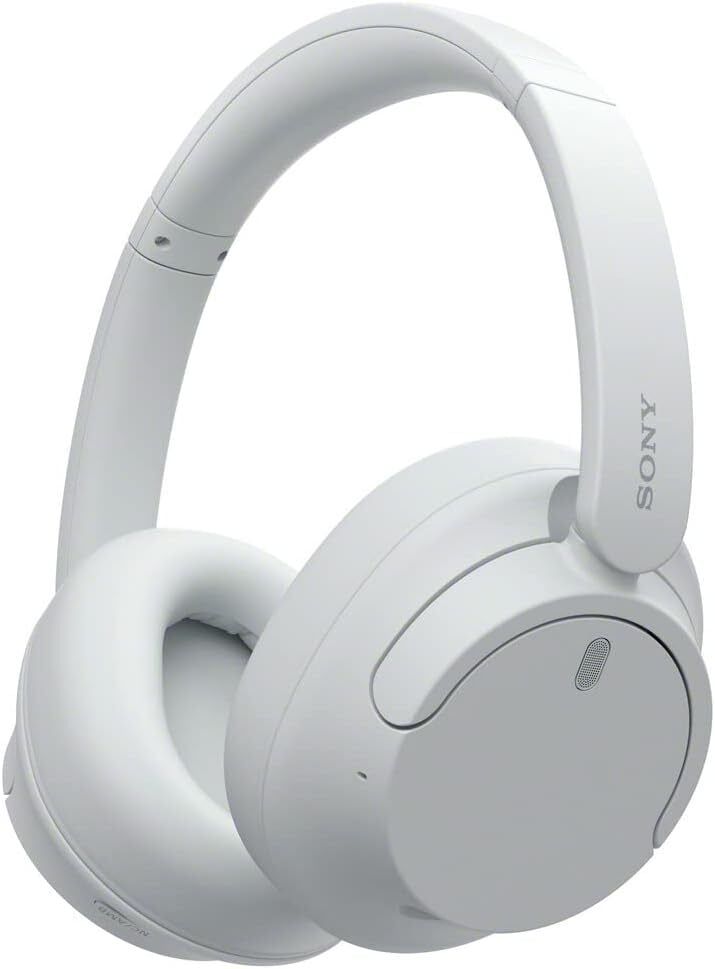
If you’ve been searching for a pair of wireless over-ear headphones that combine sound quality with comfort, these Sony noise-cancelling headphones are currently on sale for under $100. According to price trackers, they’re at their lowest price yet, and are a worthy alternative to those who find in-ear and clip-on headphones uncomfortable. 

With plush ear cups and wireless capabilities, Sony’s lightest over-ear headphones (weighing just 192 grams, or a little over six ounces) offer comfort as well as more immersive sound. They’re suitable for long listening sessions or blocking out distractions at home, but are also a potential fit for commuters or remote workers who need to focus in public areas.

The battery lasts up to 35 hours on a charge, according to Sony, who also cites 4.5 hours of playback for a 10-minute charge. The headphones come with features like Adjustable Ambient Sound mode, which lets you enjoy sound quality while staying aware of your surroundings—similar to open earbuds—as well as the ability to adjust sound based on your location.

Compared to more expensive headphones from premium brands, the plastic exterior may not be as durable or sleek as models made from premium materials like aluminum, stainless steel, or carbon fiber. They also adjust with clicks unlike higher-end models, which typically feature non-clicking adjustment. Finally, they’re not water-resistant, so this pair isn’t ideal for ultra-sweaty workouts. That said, if you dislike the feeling of earbuds and are looking for noise cancellation at an affordable price, the Sony noise-canceling headphones can provide an entry point alternative to pricier noise-canceling headphones from brands like Bose or Apple.