
As some extra benchmarks to put out today for the Phoronix.com 21st birthday, there is some additional data points to share on AMD Strix Halo when using Linux 6.15 stable and the early development state of Linux 6.16 Git ahead of its v6.16-rc1 tagging this weekend. The Linux kernel performance is moving in the right direction at least with this round of testing using the HP ZBook Ultra G1a with Ryzen AI Max+ PRO SoC…
Monthly Archives: June 2025
Alien: Earth Trailer Prepares Us For 2025’s Scariest Show

It’s rare to see a tagline so perfectly summarize the heart of a show like, “We were safer in space.” FX’s sci-fi horror series Alien: Earthhas put out its first full trailer, and those two-and-a-half minutes set this up as a contender for the scariest show of 2025.
X tests… centrism
Whatever your opinion of X, you probably don’t think of it as a platform known for fostering agreement. The company is apparently trying to change that, though, and is in the early stages of an experiment that aims to boost posts that are widely agreeable to the site’s users.
With a new test, described by X as an “experimental pilot,” the app will begin asking a small subset of users what they think of a particular post in their timeline. A screenshot shared by X shows that people can respond with a range of positive or negative opinions, like “it makes a meaningful point,” “it’s funny” or “it doesn’t interest me.” X will then use those responses to help it “develop an open source algorithm that could effectively identify posts liked by people from different perspectives.”
The concept is somewhat similar to Community Notes, which already attempts to take differing perspectives into account when ranking fact checks. The new program, though, isn’t about surfacing fact-checked content but boosting posts that are likely to be, well, liked.
X’s post about the test suggests it has lofty goals. “This experimental new feature seeks to uncover ideas, insights, and opinions that bridge perspectives,” the company wrote. “It can bring awareness to what resonates broadly. It could motivate people to share those ideas in the first place.”
Whether an open source algorithm based on data about users’ likes can actually accomplish that, though, is unclear. A report published today by Pew Research shows that there is still a significant partisan divide in terms of how X is perceived and experienced by users. Overcoming that could be more difficult than boosting a few extra posts.
This article originally appeared on Engadget at https://www.engadget.com/social-media/x-tests-centrism-170939276.html?src=rss
KDE Gear 25.04.2 Apps Collection Rolls Out, Here’s What’s New
KDE Gear 25.04.2 apps collection delivers updated translations and fixes across apps like Kdenlive, Kate, Akonadi, Konsole, and more.
Nintendo warns Switch 2 GameChat users: “Your chat is recorded”
Last month, ahead of the launch of the Switch 2 and its GameChat communication features, Nintendo updated its privacy policy to note that the company “may also monitor and record your video and audio interactions with other users.” Now that the Switch 2 has officially launched, we have a clearer understanding of how the console handles audio and video recorded during GameChat sessions, as well as when that footage may be sent to Nintendo or shared with partners, including law enforcement.
Before using GameChat on Switch 2 for the first time, you must consent to a set of GameChat Terms displayed on the system itself. These terms warn that chat content is “recorded and stored temporarily” both on your system and the system of those you chat with. But those stored recordings are only shared with Nintendo if a user reports a violation of Nintendo’s Community Guidelines, the company writes.
That reporting feature lets a user “review a recording of the last three minutes of the latest three GameChat sessions” to highlight a particular section for review, suggesting that chat sessions are not being captured and stored in full. The terms also lay out that “these recordings are available only if the report is submitted within 24 hours,” suggesting that recordings are deleted from local storage after a full day.
A Bunch Of Switch 2 Consoles Are Showing Up With Free Pringles And Coke

Happy Nintendo Switch 2 launch day! Did you get one? Are you still waiting on a delivery? Hopefully it all works out for you, like it did for some folks who pre-ordered a Switch 2 via Walmart. Not only did their consoles arrive early in the morning, but they showed up with snacks and other goodies, too. Well, for some…
The Phoenix Gene Review: A Flight That Goes Down In Flames
The Phoenix Gene is a third person on-rails shooter that launches today on the Quest platform. Read on for our full review.
To be entirely frank, I think that growing up, or rather being a grown up…sucks.
Once upon a time, my life was full of piloting action figures through imaginary landscapes and doing battle with the worst bad guys that my imagination could create (or that my birthday money could provide). But as happens to most of us, age and responsibility got the better of me. Eventually I downed my toys in favor of pseudo-maturity, though I never stopped yearning for that same sense of wonder.
The Facts
What is it?: An on-rails third-person narrative shooter.
Platforms: Meta Quest (reviewed on Quest 3)
Release Date: Out Now
Developer: HEROmation
Price: $24.99
Why am I telling you this? Because when I saw the first trailer for The Phoenix Gene, all of those feelings came rushing back. The gameplay looked exactly like the reality my formative imagination placed upon the real world as I played, and it seemed that at the ripe old age of [insert unnervingly high number] my timelines would finally collide; adulting would finally bring me back to playing with toys. Well, sort of.
The only question left now is who did it better; developers HEROmation, or eight-year-old me? Let us play…

Troping The Light Fantastic
The Phoenix Gene sees the player take on the role of Jackie, a young janitor working at one of the largest corporate entities in the world. Amid a stupendous lack of narrative preamble, a fiery, dragon-like creature called Firestorm appears and informs you that you are a carrier of the Phoenix Gene. Jackie’s life is subsequently turned upside down, and now she must embark on a hectic journey to uncover the secrets of the multiverse (kind of) and, of course, save the world.
It’s a story built on a set of well-worn sci-fi tropes; you are the chosen one, some AI has gone rogue, a dead parent had a secret – all that served with a supersize bag of ‘beware the dangers of corporate greed’. Though none of it digs particularly deep, the story is woven into the game enough that it provides context to the action and prevents the experience from feeling like an aimless floating shooting gallery.
Slipstreamy When Wet
As Jackie begins to unlock the potential of the Phoenix Gene, she gains access to a metaphysical realm called the slipstream, a multidimensional vortex of alternate timelines. This slipstream serves as much of the game’s physical setting as well as a vehicle for some core gameplay mechanics.
With a total of eight levels on offer, each taking around 15 to 20 minutes to complete, The Phoenix Gene could be finished in a few hours under ideal conditions. Due to the clumsy controls and the occasionally infuriating difficulty spike, players are likely to spend significantly longer navigating the slipstream, and not necessarily in a way that will feel rewarding.
Throwing My Toys Out The Pram
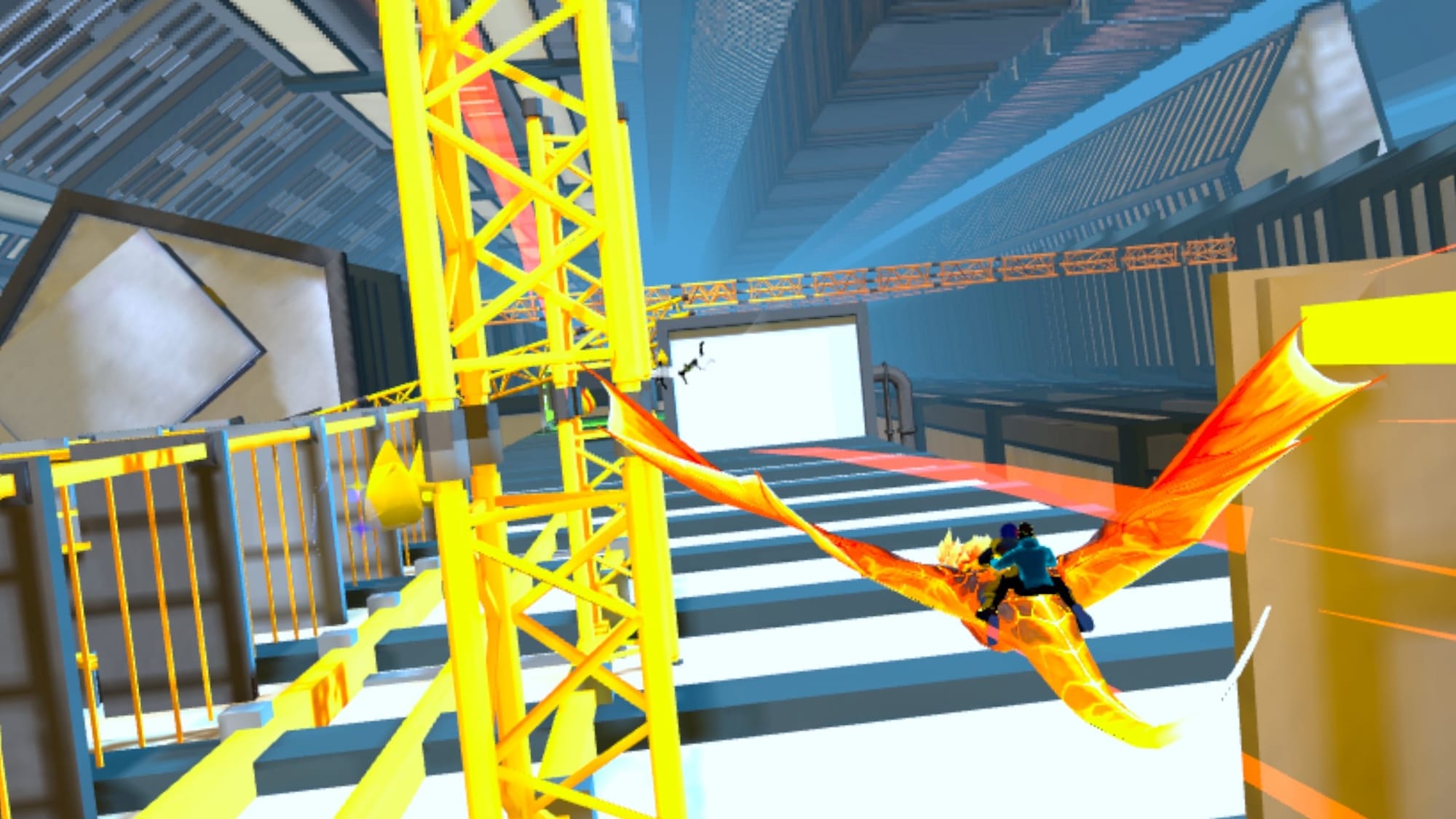
Similar to games like the admirable Yuki, the gameplay in The Phoenix Gene sees players controlling their character very much as one might play with a toy. Your Phoenix, Firestorm, hovers in front of you and can be grabbed and passed from one invisible hand to the other, allowing you to guide the character through the game world with your physical movements.
Firestorm also doubles as your weapon, flinging fireballs and other attacks at your enemies as you aim by tilting and rotating your hands. At first, this feels quite cool and very early on there appears to be some potential for the gameplay to be really fun. Sadly, the execution quickly undermines this potential and the game devolves into a frustrating battle against awkward design decisions and unintuitive controls.
In addition to flying and shooting, Jackie and Firestorm also possess a reality toggling ability reminiscent of Ikaruga. Players can switch between the probabilities, alternate realities within the timeline that essentially just switch Firestorm between red and blue, making Firestorm impervious to enemy attacks of that color. Switching probabilities will also alter the physical environment, moving objects in and out of the current reality.
While theoretically interesting, this element of the game is sorely underdeveloped from a level design perspective and often serves more as a distraction than a compelling mechanic.

Frustration By Design
Levels in The Phoenix Gene are an entirely on-rails affair, with the gameplay weaving through the pseudo-psychedelic landscape of the slipstream. Whereas most games of this ilk would see you progressing straight forwards so that players can have a clear line of sight on impending challenges, The Phoenix Gene takes a different approach, weaving the invisible rails through the physical environment. Again, this reads like it should be great; however, the reality is far from fantastic.
As the game draws the player along these invisible rails, there is no indication which path your phoenix will take. This means that in the heart of the action, where you need to dodge enemy fire coming from all around you while avoiding physical obstacles, your character might veer off unexpectedly, running straight into a certain death situation.
This lack of directional guidance is exacerbated by the fact that when switching hands, your phoenix often resets to a central position that can appear behind you if you have been moving in your IRL space, something which is guaranteed to happen. It effectively disappears from view. All this means that in the heat of battle, knowing where your character is and where it’s going is completely unreliable.
Also, in an entirely unintuitive piece of design logic, Firestorm cannot turn around AT ALL, despite the fact he can shoot in full 360 orientation. This is no doubt so that the player can remain oriented to the onward direction of travel. However, when trying to avoid obstacles and dispatch baddies approaching from all sides, it is discombobulating to see fireballs shoot out of its back or wings.
For a game that demands tight reflexes and spatial awareness, this limited, disorienting and downright awkward control scheme feels actively at odds with the gameplay.
Comfort
The Phoenix Gene is an on rails game whereby movement within the game world is completely automated, so there are no comfort options for teleport style movement. There are however options for vignettes, as well as smooth and snap turning, which is just as well seeing as the forced movement can be relatively disorienting at times.

Stepping Back In Time
Visually, The Phoenix Gene feels like something that would be at home on the original Quest. While bright and vibrant, everything just feels a bit low-res and visually noisy. Environments (particularly the slipstream) feel generic, animations are stiff, and character models feel basic. All in all, the art direction brings back memories of the bygone era of standalone VR gaming.
There are some interesting levels that introduce some dynamic visual components, though. The level that sees you flying down the side of a building rescuing a group of base jumpers was both one of the best looking, and most fun to play segments of the game. Firestorm’s character design is pretty great, and moving your phoenix around like you’re playing with a super cool dragon toy was initially an enjoyable experience.
Unfortunately, the audio doesn’t fare much better. Voice acting is flat and stilted, although in fairness the scripts haven’t given the actors a huge amount to work with. The music is a nondescript mélange of video-gamey sounds that, while functional, do little to elevate the atmosphere or distinguish moments of tension or triumph.
The Phoenix Gene – Final Verdict
Sadly, The Phoenix Gene reads better as a concept than it plays as a game. While the idea of controlling a dragon-like creature through a chaotic multidimensional rail shooter sounds fun, the reality is that the game’s let down by confusing controls, outdated visuals and poor design choices that leave it feeling clumsy and sluggish.
Unlike Yuki, which delivers similar mechanics in a fast, responsive manner that celebrates the nostalgia of play, The Phoenix Gene somehow makes a chore out of using a toy-like avatar to blast robots into smithereens.

UploadVR uses a 5-Star rating system for our game reviews – you can read a breakdown of each star rating in our review guidelines.
Reddit sues Anthropic over AI scraping that retained users’ deleted posts
On the heels of an OpenAI controversy over deleted posts, Reddit sued Anthropic on Wednesday, accusing the AI company of “intentionally” training AI models on the “personal data of Reddit users”—including their deleted posts—”without ever requesting their consent.”
Calling Anthropic two-faced for depicting itself as a “white knight of the AI industry” while allegedly lying about AI scraping, Reddit painted Anthropic as the worst among major AI players. While Anthropic rivals like OpenAI and Google paid Reddit to license data—and, crucially, agreed to “Reddit’s licensing terms that protect Reddit and its users’ interests and privacy” and require AI companies to respect Redditors’ deletions—Anthropic wouldn’t participate in licensing talks, Reddit alleged.
“Unlike its competitors, Anthropic has refused to agree to respect Reddit users’ basic privacy rights, including removing deleted posts from its systems,” Reddit’s complaint said.
OpenAI Says Significant Number of Recent ChatGPT Misuses Likely Came From China
OpenAI said it disrupted several attempts [non-paywalled source] from users in China to leverage its AI models for cyber threats and covert influence operations, underscoring the security challenges AI poses as the technology becomes more powerful. From a report: The Microsoft-backed company on Thursday published its latest report on disrupting malicious uses of AI, saying its investigative teams continued to uncover and prevent such activities in the three months since Feb. 21.
While misuse occurred in several countries, OpenAI said it believes a “significant number” of violations came from China, noting that four of 10 sample cases included in its latest report likely had a Chinese origin. In one such case, the company said it banned ChatGPT accounts it claimed were using OpenAI’s models to generate social media posts for a covert influence operation. The company said a user stated in a prompt that they worked for China’s propaganda department, though it cautioned it didn’t have independent proof to verify its claim.


Read more of this story at Slashdot.
Snapchat finally has a watchOS app after a decade
There’s finally a Snapchat app for watchOS, bringing the social media platform to Apple‘s line of wearables. This has been a long time coming, given that the first Apple Watch graced our wrists over a decade ago.
The app lets users preview incoming messages and reply by using the keyboard, scribbling with a finger, voice dictation or sending out an emoji. Apple Watch wearers could already preview a Snapchat message by enabling them on an iPhone, but there wasn’t a way to respond until now.
Snapchat says the app will be useful when doing things like alerting friends when arriving at a restaurant or when sending out a quick reply during a run. A company representative told us that it’s good for people who want to “keep active conversations going while they’re on the go.”
They also indicated that previewing a message on an Apple Watch will not mark it as “read” on the mobile or web app, as it only shows the first 100 characters. The app cannot be used to view images or videos, but the company plans to “evolve the experience over time.”
Despite coming ten years after the Apple Watch first launched, Snapchat has still outpaced many of its rivals. There isn’t a dedicated Facebook app for the wearable, or a WhatsApp release. Facebook Messenger did have an app once upon a time, but it was pulled.
Snapchat’s watchOS app comes just ahead of this year’s WWDC event. Rumors indicate that Apple is planning on some major announcements throughout the event, including a complete redesign of its various operating systems and new Apple Intelligence features that I’m sure everyone will just love.
This article originally appeared on Engadget at https://www.engadget.com/wearables/snapchat-finally-has-a-watchos-app-after-a-decade-163733916.html?src=rss
An Ode To Those Of Us Whose Switch 2s Are Arriving Late

As I write this, I’m in an Uber on my way to the airport to fly to Los Angeles for Summer Game Fest. Odds are, there wasn’t really going to be a good window for me to use my Switch 2 if it had showed up on time, but this doesn’t change my disappointment that it still has not arrived at my home in New York City. I…
My Favorite Adjustable Dumbbell Workout Only Takes 15 Minutes
We may earn a commission from links on this page.
When I’m marathon training, my schedule revolves around logging miles. Between work, relationships, and hitting the pavement for my training runs, finding time for strength training feels impossible. However, avoiding my dumbbells is a costly mistake: Without complementary strength work, runners often develop muscle imbalances that can lead to injury. So, what I needed was an efficient (read: quick) routine that specifically targets the major muscle groups important for running performance. And that’s exactly what I’m sharing with you today.
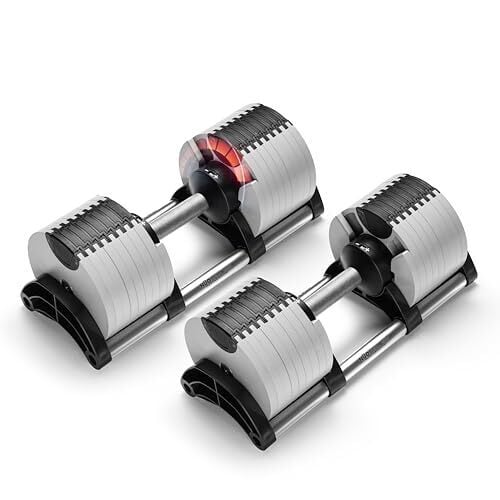
Before we dive in, allow me to (yet again) preach the beauty and utility of adjustable dumbbells: no gym membership required, no waiting for equipment, and no excuses about not having enough space. I can knock out this workout in my living room before my morning run, or squeeze it in during lunch breaks, and adjustable dumbbells mean I can switch up the amount of weight I’m lifting within a few seconds. As you’ll see in the photos below, for this workout I’ve been sticking to my extremely lightweight Merach adjustable dumbbells, but when I need to go beyond 10 pounds, I prefer my Nüobells. Let’s get started.
Merach Adjustable Dumbbells, 2.2–8.8 lbs
$50.99
at Amazon


$50.99
at Amazon
Nüobell Adjustable Dumbbells, 5–80 lbs
$785.00
at Amazon
$785.00
at Amazon
Why runners can’t skip strength training
You don’t have to be a runner to get the most out of this 15-minute dumbbell routine, but I did aim to incorporate movements specifically for my needs during marathon training. Running is essentially a series of single-leg jumps, requiring sustained strength, stability, and coordination. After all, each stride places a force of close to three times your body weight through your legs, making strength training not just beneficial but essential for long-term running success.
It tracks that common weaknesses in runners include underdeveloped glutes, tight hip flexors, weak posterior chains, and poor core stability. This routine specifically addresses these issues while building the power and stability that should hopefully translate to faster, more efficient running.
My 15-minute full-body strength training routine
This circuit-style workout alternates between upper and lower body exercises, keeping your heart rate elevated while allowing different muscle groups to recover. Perform each exercise for 45 seconds, followed by 15 seconds of rest to transition to the next movement. I do three rounds, five minutes each. Easy as pie. Here are the movements you need to know.
Goblet squats

Stay tall with your chest upright, weight held close to your ribs, and chin tucked into your chest.
Credit: Meredith Dietz
Credit: Meredith Dietz
Hold one dumbbell vertically at chest level, elbows pointing down. Squat down by pushing your hips back and bending your knees, keeping your chest up and core engaged.
This exercise is gold for runners because it strengthens the glutes, quads, and core simultaneously while improving ankle mobility. Strong glutes are crucial for preventing knee injuries and maintaining proper hip alignment during long runs. The goblet position also forces you to maintain an upright torso, mimicking the posture you want while running.
Push-press

Pay special attention to the explosive overhead movement.
Credit: Meredith Dietz
Credit: Meredith Dietz
Start with dumbbells at shoulder height, palms facing forward or in. Use a slight knee bend to generate momentum, then explosively press the weights overhead.
This exercise develops power in your shoulders and core while teaching you to transfer force from your lower body through your torso—exactly what happens when you drive your arms during sprint intervals or hill climbs. The explosive nature mirrors the quick, powerful arm swing that propels you (assuming you’re practicing proper running form).
Romanian deadlifts

Go as far down as you can comfortably go while pushing the hips back.
Credit: Meredith Dietz
Credit: Meredith Dietz
Hold dumbbells in front of your thighs, feet hip-width apart. Hinge at your hips by pushing them back, lowering the weights while keeping your back straight and chest up.
This movement is essential for runners because it strengthens the entire posterior chain—glutes, hamstrings, and lower back. These muscles provide the power for each stride and help prevent the forward lean that can develop from too much running without adequate strength work. Strong hamstrings also help decelerate your leg at the end of each stride, reducing impact stress.
Bent-over rows

Hinge forward at your hips, keeping your back straight.
Credit: Meredith Dietz
Credit: Meredith Dietz

Keep your back straight and elbows close to your body.
Credit: Meredith Dietz
Credit: Meredith Dietz
Hinge forward at your hips, keeping your back straight. Pull the dumbbells to your ribs, squeezing your shoulder blades together. Runners often develop rounded shoulders from desk work and the forward posture of running.
This exercise counteracts that tendency by strengthening the rhomboids, middle traps, and rear delts. Better posture means more efficient breathing and less energy wasted fighting against poor alignment during long runs.
Reverse lunges

Let your back knee kiss the floor under you.
Credit: Meredith Dietz
Credit: Meredith Dietz
A true classic for runners. Step back with one leg, lowering your back knee toward the ground while keeping your front shin vertical. Push through your front heel to return to standing, then alternate legs.
This move targets the glutes and quads in a way that closely mimics the landing and push-off phases of your running stride. The reverse motion is easier on the knees than forward lunges, making it perfect for runners who already put significant stress on these joints. To avoid stressing your knees, make sure you’re really pushing through your heel, and keep your hips in line with your shoulders.
Make your at-home dumbbell workout work for you
If you’re new to strength training, start light—somewhere between 5-10 pounds is perfect. Focus on getting your form right first. Once that feels solid, you can slowly increase the weight to keep challenging yourself.
The timing of this workout matters, with the understanding that the best workout for you is the one you actually will do consistently. I’ve found three approaches that work well with running schedules. On easy run days, I’ll do the strength circuit first as a dynamic warm-up, using lighter weights and focusing on movement quality. After hard running workouts, I’ll wait at least four hours before lifting to avoid compromising recovery. On rest days from running, this becomes my primary workout, allowing me to use heavier weights and really focus on strength gains.
Again, I think my adjustable dumbbells are key to this flexibility. I can quickly dial in the right weight for each exercise and my current energy level. My goblet squats call for 35 pounds, while my push-press works better with about 15 pounds per hand.
Whatever moves you choose, finding a quick circuit workout for you can truly pay dividends in running performance and injury prevention. Fifteen minutes, three times per week is a small price for becoming a stronger, more resilient runner.
NASA Spots Black Holes Eating Stars To Create Biggest Boom Since Big Bang

Scientists have identified a new class of cosmic explosions, dubbed “extreme nuclear transients” (ENTs), that represent the most energetic events observed in the universe, perhaps since the Big Bang itself. These massive energy outbursts are the result of supermassive black holes feasting on colossal stars, creating a spectacle of light and
Flat Robots Work In Tandem To Lift And Park Cars
This is a video from Hyundai Motor Group demonstrating a pair of robots that can scoot under cars to lift them and move them around at will (and, eventually, hacked to steal supercars). I like how the robots showboat for a while after parking the first car before moving on to the second. Just to be clear though, they will be docked pay and electrical nourishment for the unscheduled break.
Foreign propagandists continue using ChatGPT in influence campaigns
Chinese propaganda and social engineering operations have been using ChatGPT to create posts, comments and drive engagement at home and abroad. OpenAI said it has recently disrupted four Chinese covert influence operations that were using its tool to generate social media posts and replies on platforms including TikTok, Facebook, Reddit and X.
The comments generated revolved around several topics from US politics to a Taiwanese video game where players fight the Chinese Communist Party. ChatGPT was used to create social media posts that both supported and decried different hot button issues to stir up misleading political discourse.
Ben Nimmo, principal investigator at OpenAI told NPR, “what we’re seeing from China is a growing range of covert operations using a growing range of tactics.” While OpenAI claimed it also disrupted a handful of operations it believes originated in Russia, Iran and North Korea, Nimmo elaborated on the Chinese operations saying they “targeted many different countries and topics […] some of them combined elements of influence operations, social engineering, surveillance.”
This is far from the first time this has occurred. In 2023, researchers from cybersecurity firm Mandiant found that AI-generated content has been used in politically motivated online influence campaigns in numerous instances since 2019.
In 2024, OpenAI published a blog post outlining its efforts to disrupt five state-affiliated operations across China, Iran and North Korea that were using OpenAI models for malicious intent. These applications included debugging code, generating scripts and creating content for use in phishing campaigns.
That same year, OpenAI said it disrupted an Iranian operation that was using ChatGPT to create longform political articles about US elections that were then posted on fake news sites posing as both conservative and progressive outlets. The operation was also creating comments to post on X and Instagram through fake accounts, again espousing opposing points of view.
“We didn’t generally see these operations getting more engagement because of their use of AI,” Nimmo told NPR. “For these operations, better tools don’t necessarily mean better outcomes.”
This offers little comfort. As generative AI gets cheaper and smarter, it stands to reason that its ability to generate content en masse will make influence campaigns like these easier and more affordable to build, even if their efficacy remains unchanged.
This article originally appeared on Engadget at https://www.engadget.com/ai/foreign-propagandists-continue-using-chatgpt-in-influence-campaigns-161509862.html?src=rss
Full-suspension Trek gravel bike spotted, and it’s unlike anything else on the market
We’ve spotted a new full-suspension Trek gravel bike being ridden by ultra-racer Justinas Leveika at this year’s Trans Balkans Race.
The unreleased bike uses a gravel suspension fork and a linkage-driven rear shock, and looks to have larger tyre clearances, in keeping with the emerging gravel trend.
Leveika, the Triple Crown record holder, annihilated the competition at this year’s race, crushing the gruelling 1,350km route in 4 days, 8 hours and 39 minutes.
A new model?

Trek currently has two gravel bikes in its range – the Checkmate and the Checkpoint.
The Checkmate is Trek’s first dedicated gravel race bike, taking many cues from the brand’s Madone, with clearance for 45mm tyres – relatively narrow compared to the competition.
The Checkpoint SL is a more versatile gravel bike for adventure riding, with integrated down tube storage and a more generous 50mm tyre clearance.

This new bike appears to be designed for even rowdier terrain, where it may still be advantageous to run a gravel bike rather than a mountain bike.
Since the Checkmate and latest Checkpoint were only announced in August 2024, we suspect this to be a new model rather than a revamped Checkpoint.
We contacted Trek for comment: “Trek is always in development with new products, and our professional riders are a huge part of our development process. When we have details to share with riders globally, we will be happy to share.”
Chunky tyres for rough terrain

The bike is built with a RockShox Rudy Ultimate XPLR fork. This is available in 30 or 40mm travel options.
The gravel suspension fork looks to be a current production model. If this is the case, the fork can accept up to a 700c x 50mm gravel bike tyre.
Leveika is running a Continental RaceKing tyre, which is available in 29×2.0 (50mm) or 29×2.2in (56mm) options.
We’re unsure which width he’s running from the image but, given he’s running them on Zipp 303 Firecrest wheels with a 25mm internal rim width, we suspect that even if he’s running the narrower 50mm tyre, it will likely inflate a little wider than measured.
We therefore suspect the rear triangle must have beefed-up clearance, and we wouldn’t be surprised if the bike has a tyre clearance of 57mm upwards, to match recent releases such as the 3T Extrema Italia, Allied Able and Argon 18 Dark Matter.

The short-stroke linkage-driven RockShox SIDLuxe shock is tucked under the top tube, near the seat tube junction. This is driven by a linkage connected to a one-piece flex-stay rear end.
Flex stays – which rely on the flex of the chain or seat stays to allow the suspension to move throughout its travel – are a common feature on the current crop of lightweight full-suspension cross-country bikes.
A mainstream gamble?

While we wouldn’t go as far as to use the word ‘troubled’, it’s fair to say full-suspension gravel bikes have never really taken off.
Niner’s MCR 9 RDO (Magic Carpet Ride) is perhaps the most notable example, and while it was in the brand’s catalogue for a number of the years, Niner has since reverted back to its rigid gravel models.

More recently, Lee Cougan launched its Innova Super Gravel with a whopping 100mm fork and clearances for 2.4in mountain bike tyres, although it’s shockless at the rear, relying on a soft-tail design.
The fact that Trek has gone for a pretty traditional shock layout is fascinating, and is certainly a bold move from the brand.
Even Specialized – as mainstream a manufacturer as Trek – has its Diverge STR, which also utilises front and rear suspension without a shock unit.
Either way, once we have more details from Trek when the bike is ready for production, we’ll be sure to share them.
Andrew Ng Says Vibe Coding is a Bad Name For a Very Real and Exhausting Job
An anonymous reader shares a report: Vibe coding might sound chill, but Andrew Ng thinks the name is unfortunate. The Stanford professor and former Google Brain scientist said the term misleads people into imagining engineers just “go with the vibes” when using AI tools to write code. “It’s unfortunate that that’s called vibe coding,” Ng said at a firechat chat in May at conference LangChain Interrupt. “It’s misleading a lot of people into thinking, just go with the vibes, you know — accept this, reject that.”
In reality, coding with AI is “a deeply intellectual exercise,” he said. “When I’m coding for a day with AI coding assistance, I’m frankly exhausted by the end of the day.” Despite his gripe with the name, Ng is bullish on AI-assisted coding. He said it’s “fantastic” that developers can now write software faster with these tools, sometimes while “barely looking at the code.”


Read more of this story at Slashdot.
Peloton Is Launching Its Own Resale Platform, and It’ll Be Much Better Than Facebook Marketplace
This week has brought some exciting news that is thrilling to me not only as a diehard Peloton user, but someone with a well-documented obsession with buying and selling things on resale platforms: Peloton is rolling out its own marketplace for pre-owned fitness equipment. Called Repowered, it currently allows users to list their Bikes, Treads, and other equipment and soon will allow shoppers to buy them.
How Peloton: Repowered works
When you navigate to the Repowered site, you’re greeted with a welcome message, plus the information that the site is “currently only open for listing items, with the ability to purchase items coming soon.” You’re prompted to enter your email address if you want to be the “first to know” when the marketplace actually goes live.
Listing your equipment
You can start the process of listing your Peloton equipment now—after all, the site needs inventory before anyone can buy anything. You can list a Bike, Tread, or Row, but only if you’re in the Boston, New York City, or Washington, DC, metro areas. You can also list smaller accessories no matter where you live.
You’ll be prompted to enter your device’s serial number if you’re selling one of the larger pieces of equipment. For smaller pieces, like weights, you can use the search function to input your item. You’ll be able to set your own price, but the site will suggest a price for you based on information you provide, like age, condition, etc.
Actually selling your stuff
Once you have listed an item and the marketplace formally opens to buyers, it’s going to be your responsibility to arrange a pickup with the buyer or schedule delivery. Accessories and smaller items can be shipped separately, similar to how it works when you sell something on, say, Poshmark or Depop. From there, you’ll get paid.
Additionally, when you sell on Repowered, you get up to $600 off a future Peloton purchase. Essentially, if you’ve been considering, say, upgrading from a Bike to a Bike+, you can sell your Bike and receive a discount on a newer model. Here’s what you get off from each product if you make a Repowered sale:
-
Bike+: $400 off
-
Tread: $200 off
-
Tread+: $600 off
-
Row: $200 off
Because the platform is so new (and not fully operational), it’s not clear exactly how you’ll get paid or how much people are listing their goods for. You’ll get 70% of your earnings, though, which is a decent split. When I sell on Poshmark, I keep 80% of my sale price. When I sell on Depop, I keep 90%. There, though, I’m selling clothes and small electronics—items that don’t have a big sticker price. For something like a high-tech, at-home workout bike, 70% seems to be, in my professional opinion, a pretty decent split, not to mention that the discount toward a new Peloton purchase.
Why this is a great option
There are two main reasons this has the potential to be better than buying or selling on another platform, like Facebook Marketplace.
First, you never have to worry about scams because Peloton itself is coordinating the sale and every part of the transaction takes place on the app. Second, as long as you’re in one of those main markets, Peloton handles delivery, just as they do with their new and refurbished products. You can schedule pickups directly with buyers and sellers, but the platform will only provide a general radius of the product’s location. If you’re selling, this means no one will ever get your address and you have the freedom to meet in a public place within that radius.
Repowered is in its early stages, but it could fill a gap in the market by providing a trustworthy source of at-home fitness equipment for those who might otherwise find the cost prohibitive. Peloton has announced that the activation fee for used equipment is down from $95 to $45, too. The All Access Membership, required to take classes and use the devices to their maximum capabilities, is still $44 per month.
Overclocker Cranks An Arc iGPU To 4250MHz Setting A GPU Frequency Record
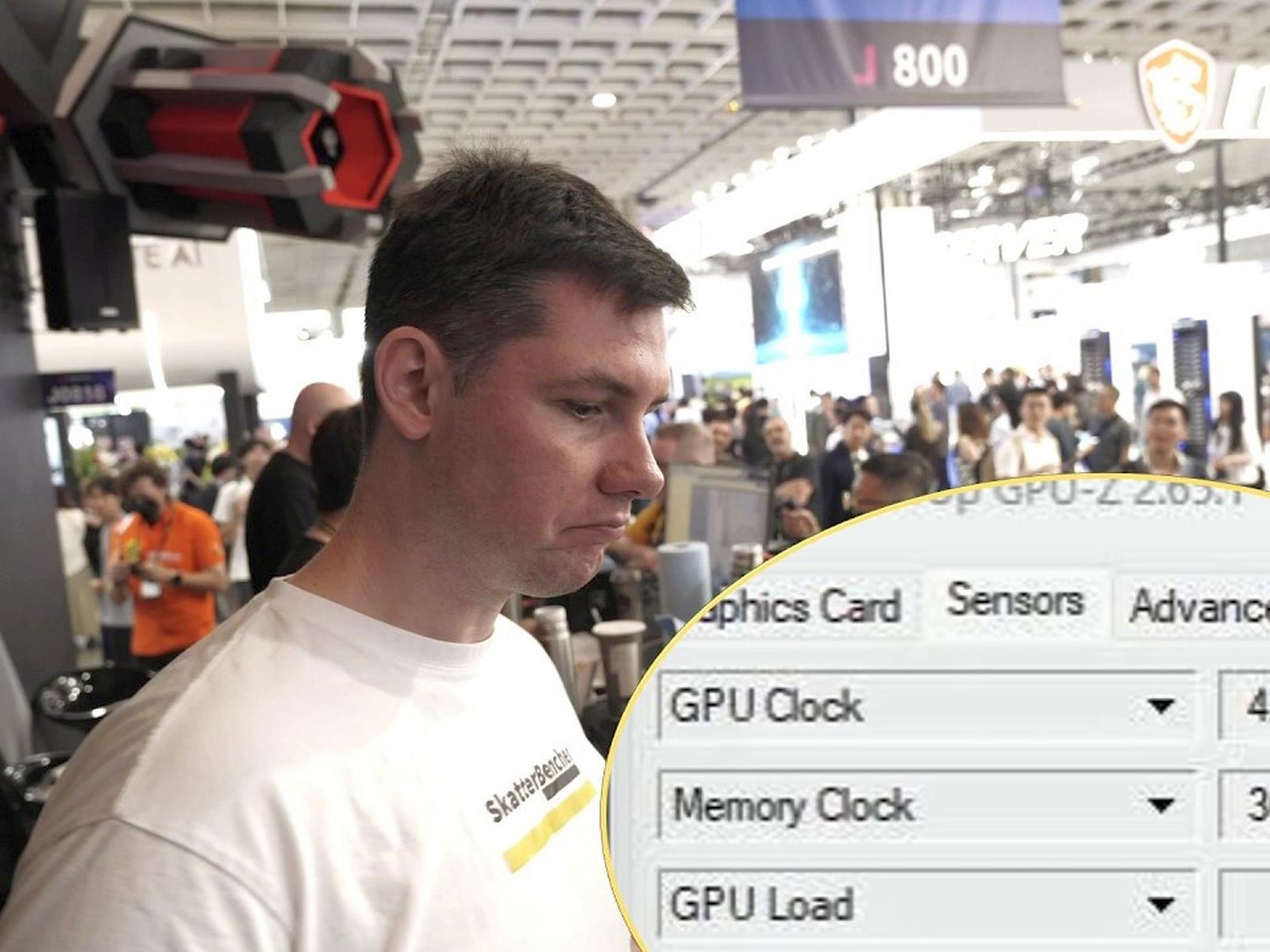
At Computex 2025, veteran overclocker Pieter-Jan “Skatterbencher” Plaisier set a new world record for graphics processor frequency by pushing Intel’s upcoming Core Ultra 9 285K to its absolute limit—specifically, the simply-named “Intel Graphics” integrated GPU, which hit an eye-watering 4250 MHz. While there’s no single authoritative source
Proposed Persistent Cache For Block Devices “PCACHE” Ported To DM Framework
An initial patch series sent back out in April proposed PCACHE as a persistent memory cache for block devices. PCACHE was born out of the CXL block device driver and brings some benefits over the likes of BCache and dm-writecache…