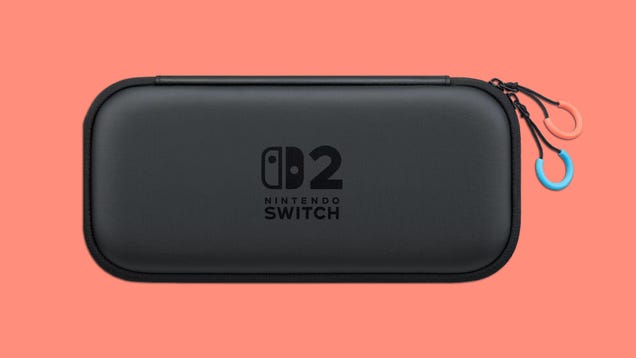
Mii Fighters are breaking Super Smash Bros. Ultimate matches on the Switch 2

It’s a big day for everyone who has successfully acquired their Nintendo Switch 2, but few hardware launches go off without a single hitch. In addition to some surprising hidden costs to finishing the Nintendo Switch 2 Welcome Tour, players have also discovered a compatibility problem in Super Smash Bros. Ultimate.

The conditions for this issue to occur, luckily, appear to be pretty narrow. It’s happening in online matches of the fighting game where one person is on a Switch 1 and the other is on a Switch 2. If one of the players choses the Mii Fighters as their character, the match may immediately end. Also, thumbnails aren’t always saving correctly for the Mii Fighters, which are customizable for each person.

Nintendo is aware of the problem, according to a translation posted on X by user OatmealDome. The game company said that an update for this Smash compatibility issue will be released “soon,” although no more specific date has been provided. Basically, if you’re going to spend launch day with your Switch 2 playing Super Smash Bros. Ultimate, just don’t pick Mii Fighters.

This article originally appeared on Engadget at https://www.engadget.com/gaming/nintendo/mii-fighters-are-breaking-super-smash-bros-ultimate-matches-on-the-switch-2-212304774.html?src=rss

Discord CTO says he’s “constantly bringing up enshittification” during meetings

Discord members are biting their nails. As reports swirl that the social media company is planning an initial public offering this year and increasingly leans on advertising revenue, there’s fear that Discord will become engulfed in the enshittification that has already scarred so many online communities. Co-founder and CTO Stanislav Vishnevskiy claims he’s worried about that, too.

In an interview with Engadget published today, Vishnevskiy claimed that Discord employees regularly discuss concerns about Discord going astray and angering users.

“I understand the anxiety and concern,” Vishnevskiy said. “I think the things that people are afraid of are what separate a great, long-term focused company from just any other company.”

Read full article

Comments

Insect Populations Collapse in Protected Nature Reserves

Insect populations are crashing in supposedly protected nature reserves worldwide with climate change emerging as the primary driver of biodiversity loss for the first time in human history. Ecologist Daniel Janzen, who has monitored Costa Rica’s Guanacaste conservation area since the 1970s, documented the collapse through light trap photographs that showed 3,000 moth species in 1978 versus virtually none today using identical methods.

Similar declines are occurring globally with flying insects dropping 75% across 63 German reserves in under 30 years, US beetle numbers falling 83% over 45 years, and Puerto Rico experiencing up to 60-fold biomass losses since the 1970s. Recent research published in BioScience found climate change now drives decline in 91% of imperiled US species, narrowly surpassing habitat destruction.


Read more of this story at Slashdot.

What would happen if Trump retaliated against Musk’s companies?

A remarkable schoolyard brawl erupted online Thursday between President Donald Trump and his former “First Buddy” Elon Musk during which the pair traded insults and barbs. The war of words reached a crescendo during the afternoon when Trump threatened Musk’s federal contracts.

“The easiest way to save money in our Budget, Billions and Billions of Dollars, is to terminate Elon’s Governmental Subsidies and Contracts. I was always surprised that Biden didn’t do it!” Trump wrote on his social media network, Truth Social, at 2:37 pm ET.

Anyone with a reasonable grasp of reality understood that the “bromance” between the president of the United States and the most wealthy person in the world was going to blow up at some point, but even so, the online brouhaha that has played out Thursday is spectacular—at one point Musk suggested that Trump was in the Epstein files, for goodness’ sake.

Read full article

Comments

Walmart expands drone deliveries to five new cities, including Atlanta

Walmart just announced a major expansion of its drone delivery service to five new cities. These areas include Atlanta, Tampa, Orlando, Charlotte and Houston. This makes it the first retailer to offer drone-based deliveries across five states, as the service has already been operating in Arkansas.

This isn’t a small beta test, like some of Amazon’s pilot programs. Walmart says the service is launching at 100 stores. This is thanks to a partnership with Wing, which operates its drones within FAA guidelines.

“This is real drone delivery at scale,” said Adam Woodworth, CEO of Wing. “People all around the Dallas-Fort Worth metroplex have made drone delivery part of their normal shopping habits over the past year. Now we’re excited to share this ultra-fast delivery experience with millions more people across many more US cities.”

A drone map.
Walmart

These drones can deliver up to six miles from the retail location. Walmart says it’s building out the service right now, but it could take up to a year to reach every store. Customers are encouraged to sign up for notifications as to when drone deliveries open up in their area. The company notes that it has made over 150,000 drone deliveries so far, with an average fulfillment time of 19 minutes. There is a weight limit, however, and Wing drones will only deliver certain items. 

Rival Amazon recently experienced a hiccup with its in-house drone delivery program. There were two crashes, which forced the company to put the project on hold for a bit. It’s back now, and can now deliver new items like smartphones and video doorbells.

This article originally appeared on Engadget at https://www.engadget.com/transportation/walmart-expands-drone-deliveries-to-five-new-cities-including-atlanta-200030301.html?src=rss

Marvel Teases Fantastic Four 20″ Galactus Head Popcorn Bucket

Because who wouldn’t want to watch a movie with a head in their lap (hey now), Marvel has teased a massive Galactus head popcorn bucket to be released in theaters with the new Fantastic Four movie. The bucket measures 20-inches wide, 17.5-inches tall, and appears to have light-up eyes. Lights — just what popcorn buckets have been missing. That way I can see what I’m doing while I’m unpacking all the other food I smuggled in. “Is that a chocolate fountain?” Hell yeah, I go hard at the theater. I made s’mores during the last Avengers movie.

The Oversight Board says Meta isn’t doing enough to fight celeb deepfake scams

Scams using AI deepfakes of celebrities have become an increasingly prominent issue for Meta over the last couple of years. Now, the Oversight Board has weighed in and has seemingly confirmed what other critics have said: Meta isn’t doing enough to enforce its own rules, and makes it far too easy for scammers to get away with these schemes.

“Meta is likely allowing significant amounts of scam content on its platforms to avoid potentially overenforcing a small subset of genuine celebrity endorsements,” the board wrote in its latest decision. “At-scale reviewers are not empowered to enforce this prohibition on content that establishes a fake persona or pretends to be a famous person in order to scam or defraud.”

That conclusion came as the result of a case involving an ad for an online casino-style game called Plinko that used an AI-manipulated video of Ronaldo Nazário, a retired Brazilian soccer player. The ad, which according to the board showed obvious signs of being fake, was not removed by Meta even after it was reported as a scam more than 50 times. Meta later removed the ad, but not the underlying Facebook post behind it until the Oversight Board agreed to review the case. It was viewed more than 600,000 times.

The board says that the case highlights fundamental flaws in how Meta approaches content moderation for reported scams involving celebrities and public figures. The board says that Meta told its members that “it enforces the policy only on escalation to ensure the person depicted in the content did not actually endorse the product” and that individual reviewers’ “interpretation of what constitutes a ‘fake persona’ could vary across regions and introduce inconsistencies in enforcement.” The result, according to the Oversight Board, is that a “significant” amount of scam content is likely slipping through the cracks.

In its sole recommendation to Meta, the board urged the company should update its internal guidelines, empower content reviewers to identify such scams and train them on “indicators” of AI-manipulated content. In a statement, a spokesperson for Meta said that “many of the Board’s claims are simply inaccurate” and pointed to a test it began last year that uses facial recognition technology to fight “celeb-bait” scams.

“Scams have grown in scale and complexity in recent years, driven by ruthless cross-border criminal networks,” the spokesperson said. “As this activity has become more persistent and sophisticated, so have our efforts to combat it. We’re testing the use of facial recognition technology, enforcing aggressively against scams, and empowering people to protect themselves through many different on platform safety tools and warnings. While we appreciate the Oversight Board’s views in this case, many of the Board’s claims are simply inaccurate and we will respond to the full recommendation in 60 days in accordance with the bylaws.”

Scams using AI deepfakes of celebrities has become a major problem for Meta as AI tech gets cheaper and more easily accessible. Earlier this year, I reported that dozens of pages were running ads featuring deepfakes of Elon Musk and Fox News personalities promoting supplements that claimed to cure diabetes. Some of these pages repeatedly ran hundreds of versions of these ads with seemingly few repercussions. Meta disabled some of the pages after my reporting, but similar scam ads persist on Facebook to this day. Actress Jamie Lee Curtis also recently publicly slammed Mark Zuckerberg for not removing a deepfaked Facebook ad that featured her (Meta removed the ad after her public posts).

The Oversight Board similarly highlighted the scale of the problem in this case, noting that it found thousands of video ads promoting the Plinko app in Meta’s Ad Library. It said that several of these featured AI deepfakes, including ads featuring another Brazilian soccer star, Cristiano Ronaldo, and Meta’s own CEO Mark Zuckerberg.

The Oversight Board isn’t the only group that’s raised the alarm about scams on Meta’s platforms. The Wall Street Journal recently reported that Meta “accounted for nearly half of all reported scams on Zelle for JPMorgan Chase between the summers of 2023 and 2024” and that “British and Australian regulators have found similar levels of fraud originating on Meta’s platforms.” The paper noted that Meta is “reluctant” to add friction to its ad-buying process and that the company “balks” at banning advertisers, even those with a history of conducting scams.

This article originally appeared on Engadget at https://www.engadget.com/social-media/the-oversight-board-says-meta-isnt-doing-enough-to-fight-celeb-deepfake-scams-194636203.html?src=rss

China Will Drop the Great Firewall For Some Users To Boost Free-Trade Port Ambitions

China’s southernmost province of Hainan is piloting a programme to grant select corporate users broad access to the global internet, a rare move in a country known for having some of the world’s most restrictive online censorship, as the island seeks to transform itself into a global free-trade port. From a report: Employees of companies registered and operating in Hainan can apply for the “Global Connect” mobile service through the Hainan International Data Comprehensive Service Centre (HIDCSC), according to the agency, which is overseen by the state-run Hainan Big Data Development Centre.

The programme allows eligible users to bypass the so-called Great Firewall, which blocks access to many of the world’s most-visited websites, such as Google and Wikipedia. Applicants must be on a 5G plan with one of the country’s three major state-backed carriers — China Mobile, China Unicom or China Telecom — and submit their employer’s information, including the company’s Unified Social Credit Code, for approval. The process can take up to five months, HIDCSC staff said.


Read more of this story at Slashdot.

Why an Apple TV Box Is More Private Than Your Smart TV (but Not Perfect)

We may earn a commission from links on this page.

Let’s be clear: smart TVs are a privacy nightmare. Almost all of them keep track of everything you watch, even when you’re using an HDMI cable, and send it off to analytics firms, advertisers, and who knows who else. In capitalist America, TV watches you.

A common piece of privacy advice, given this, is to disconnect your smart TV from the internet and use an Apple TV to do your streaming instead. And there is merit to this advice: Apple’s streaming box collects far less private information than a standard smart TV while still providing a straightforward, remote-based user interface with support for all the major streaming services.

Having said that, it’s not as though Apple collects no data. And using an Apple TV means buying a $130+ streaming box, on top of the price of your TV, which adds up quickly if there are multiple TVs in your home. With this in mind, let’s break down the privacy pros of an Apple TV over using the operating system in your smart TV.

No automatic content recognition

You know that common myth about smartphones listening to your conversations and showing you ads? It’s not true, at least not of your phone. But it’s not far off from how TVs work.

Almost every smart TV on the market uses technology called automatic content recognition (ACR) to create a record of everything you do on TV. You can think of this technology as similar to the music recognition service Shazam, but for TV shows, movies, and video games instead of music. Software like this is constantly running in the background of your TV, creating an ongoing list of everything you watch. That data is then sold to and shared with various third parties. Notably, this data collection happens even while you’re using an HDMI port, meaning marketers out there know exactly how much time you put into Elden Ring over the past few years.

Companies like Inscape and Samba actively brag about the data they collect using this technology on their websites. Their software, or software like it, is installed on basically every TV on the market right now. The Apple TV, notably, does not employ this technology, and doesn’t keep a record of what you watch inside applications. This is the clearest privacy benefit of using an Apple TV over your smart TV’s interface.

Apple does gather some data (and might grab more)

Having said that, Apple TV devices do record some data—just a lot less than similar devices. Over at Ars Technica, Scharon Harding wrote a breakdown of the privacy pros and cons of an Apple TV, which you can read if you really want to get into the finer points of this issue (along with speculation about how things might change). She concluded that the Apple TV is the most private streaming gadget, which I agree with.

For the most part, Apple devices offer you a lot of control over your data. When you set up a new Apple TV, the device asks you whether you want to share analytics data with Apple—you can easily opt out before using the device. You are also asked whether you want to enable location services and Siri. If you enable Siri your voice recordings are sent to Apple servers for processing. Following a class action lawsuit, Apple doesn’t store this information anymore, unless you explicitly agree to it.

Apple TVs also give you a lot of control over what information the apps you install have. Apps can access information including your location, your photos, other Apple-stored media, and your HomeKit data, but only if you allow them to (there will be a pop-up asking you whether you want to grant permission). You can also decide which, if any, applications you want to grant access to tracking features. It’s a level of control that’s not common in smart TVs, to say the least.

The Apple TV app is the centerpiece of an Apple TV and even offers a hub to watch content from other streaming services. This app records what you watch in order to make recommendations and to serve ads inside the app. You can turn this tracking off in the settings. The TV app also shares “non-personal” data, including viewing activity and demographic information, with “strategic partners.” All of this is standard practice for a streaming service, but worth keeping in mind.

Overall, though, the Apple TV itself—as opposed to applications running on the device—don’t collect much information about you or your viewing habits.

Is there anything better?

Maybe you’re uncomfortable with Apple having any information about you. What’s the best app to get then? There’s not really a great answer. You could set up a computer, or a Raspberry Pi, and install a privacy-centric Linux operating system on it. Then you could set up a privacy-focused browser to watch your shows. This will give you a slight privacy edge over the Apple TV with a few obvious downsides.

The first being that you’ll likely need to control everything with a mouse and keyboard. (Once upon a time you could work around this using Kodi, but plugins for most streaming services stopped working ages ago.) Put simply: if you want a single device you can buy, plug into your TV, and watch common streaming apps using a remote control, Apple TV is the most privacy-centric device you can buy and use that way.


Truly completing Nintendo Switch 2 Welcome Tour will cost you

Nintendo Switch 2 Welcome Tour is a $10 museum-like experience dedicated to playfully explaining features of the Nintendo Switch 2, and technically, it costs a lot more than $10 to truly finish. As Eurogamer writes and multiple Nintendo webpages note, you can’t actually finish the game without using all of the Switch 2’s many accessories.

All 12 of the different areas in Welcome Tour are accessible whether you’re plugging in a camera or not, but to play and beat every minigame, “additional accessories [are] required,” according to Nintendo. Those accessories include a USB camera, a controller with GL and GR buttons (the kind in the Switch 2 Pro Controller’s grips) and a 4K-compatible TV. If you wanted to go the official route and use Nintendo accessories, that means paying $55 for the Nintendo Switch 2 Camera and $85 for the Nintendo Switch 2 Pro Controller, assuming you already own a 4K TV.

No one needs to 100-percent complete Nintendo Switch 2 Welcome Tour, of course, but it is funny that price was one of the biggest complaints about the Switch 2’s answer to Wii Sports, and now to totally complete it you might have to pay even more.

The patient among us (who didn’t pre-order) can wait and see if the hidden secrets of Welcome Tour are truly worth spending the extra cash on accessories. For the rest, you might be better off spending your time unlocking characters in Mario Kart World.

This article originally appeared on Engadget at https://www.engadget.com/gaming/nintendo/truly-completing-nintendo-switch-2-welcome-tour-will-cost-you-192255868.html?src=rss

Stop Using These Recalled Bowflex Adjustable Dumbbells Now

If you use Bowflex adjustable dumbbells, be careful: Your workout gear may be impacted by a safety recall.

BowFlex parent company Johnson Health Tech Trading has issued a recall for BowFlex adjustable dumbbells due to a serious impact hazard that could result in injury to users—the company says there have been over 300 reports of plates dislodging during use, including 111 resulting in injuries such as concussions, abrasions, broken toes, or contusions.

This voluntary recall recall affects some 3.7 million previously sold BowFlex products (some sold under the company’s former name, Nautilus, Inc.) Here’s what to do if your BowFlex dumbbells are affected by this recall.

Which BowFlex products are affected?

The recall is for two popular BowFlex adjustable dumbbell models: the Model 552 (52.5-pound adjustable dumbbells) and Model 1090 (90-pound adjustable dumbbells).

The dumbbells were sold in pairs and single units in the black and include handles, weight plates, and a molded plastic tray. Both products were designed where users adjust the weight by turning manual knobs while the dumbbells remain in their base tray.

How to check if your BowFlex dumbbells are recalled

To determine if your BowFlex dumbbells are part of this recall, check the model and serial number printed on a sticker located on the bottom of the molded plastic tray.

For the 552, check for the following serial number ranges:

  • 00182M243902233 – 00182M243902592

  • 00182MAG220200463C – 00182MAG221204535C

  • 00182SFE213414844C – 00182SFE234002231C

  • 100182M242800001 – 100182M250201440

  • 100182MAG20431227C – 100182MAG233500372

  • 100182P244100067 – 100182P244602976

  • 100182SFE213709609 – 100182SFE235206276

  • 100748M243200001 – 100748M244300252

  • 100748MAG222400734 – 100748MAG23500660

  • 100748P242900001 – 100748P245205632

  • 100748SFE220908785 – 100748SFE233513811

  • X00748MAG233003670 – X00748MAG233003672

  • X00748SFE233202493 – X00748SFE233203161

  • Z00748MAG233003670

For the 1090, check for the following serial number ranges:

  • 4551MAG21452813 – 4551MAG23350381

  • 4551SFE23320001 – 4551SFE23501949

If you own either the Model 552 or Model 1090 adjustable dumbbells, it’s safe to say your equipment is included in this recall.

What to do if you own these BowFlex dumbbells

Needless to say, stop using the recalled dumbbells immediately. Even though Johnson Health Tech Trading is proactively reaching out to all known purchasers directly to inform them of the recall, you should not wait to hear from the company. The impact hazard poses a serious safety risk that could result in injury during use. Simply do not attempt to continue exercising with these dumbbells, even if they appear to be functioning normally.

Johnson Health Tech Trading is offering different remedy options, depending on where consumers originally purchased their dumbbells.

For units sold by Johnson Health Tech Trading:

  • Full refund of purchase price in the form of a voucher

  • Replacement dumbbells (where available)

For units originally sold by BowFlex Inc. (formerly Nautilus Inc.):

  • Prorated voucher refund based on purchase date

  • Complimentary one-year JRNY digital fitness membership

If you have a set of either dumbbell model and would like them to send a replacement set (of safe versions of the same models), prepare the following information:

  • Name, mailing address (mailing address will be used to send out a pre-paid box/label to return the handle(s) and base(s) of your dumbbells)

  • Model name (do you have 552s or 1090s)

  • Serial number for each dumbbell (either provide the number or take a picture and send via email)

For the most current information about this recall, including contact details and specific instructions for your situation, visit the manufacturer’s official recall webpage or contact customer service directly. You can call Johnson Health Tech Trading toll-free at 800-209-3539 from 8 a.m. to 7 p.m. CT Monday through Friday, email at recall@bowflex.com, or at www.bowflex.com/recalls or online at www.bowflex.com and click “Recalls” at the bottom of the page.

Google Chrome Smashes Speedometer 3 Record With Massive Performance Gains

BrianFagioli writes: Google is flexing its engineering muscles today by announcing a record-breaking score on the Speedometer 3 benchmark with its Chrome browser. If you’ve felt like the web got snappier lately, this could be why.

According to the search giant, Chrome’s latest performance improvements translate to real-world time savings. Believe it or not, that could potentially add up to 58 million hours saved annually for users. That’s the equivalent of about 83 human lifetimes not wasted waiting for web pages to load!


Read more of this story at Slashdot.

Lady Gaga’s Abracadabra Launches In Beat Saber

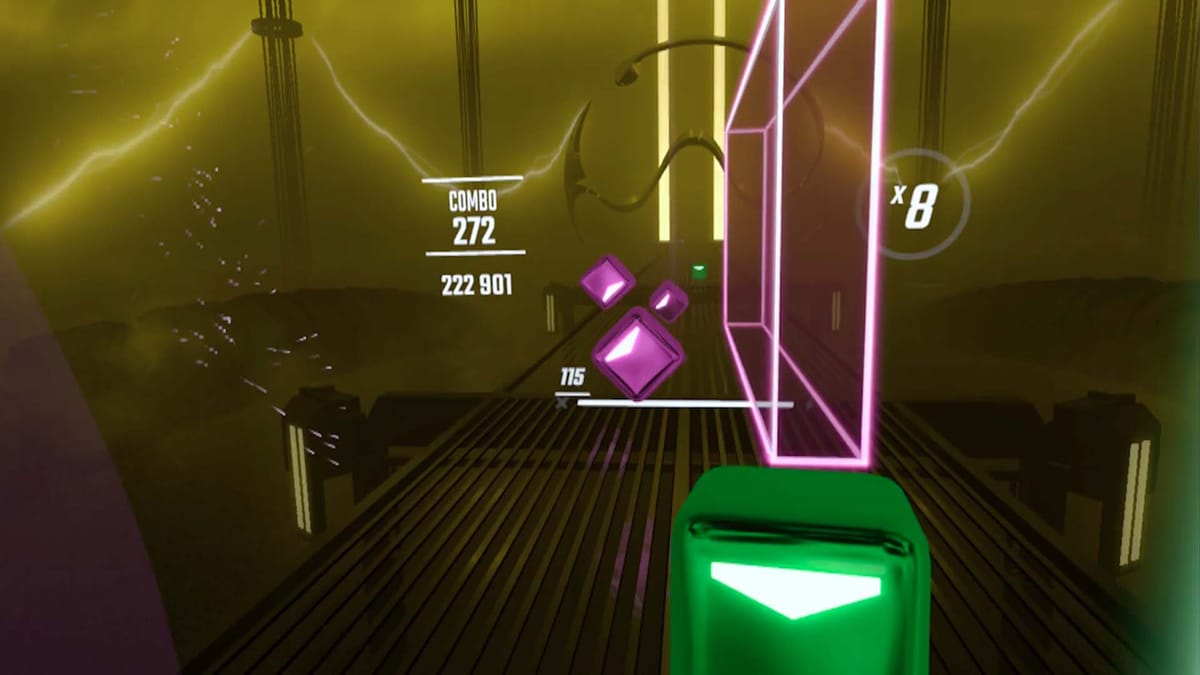
Lady Gaga’s latest hit song “Abracadabra” is now playable in Beat Saber.

The song can be purchased for $1.99. Meta released the song into the game today following previous “shock drop” releases for new or recent hits, including Eminem’s “Houdini” and Kendrick Lamar’s “Not Like Us”.

0:00

/0:37

Lady Gaga released a whole music pack for the game in 2021 and Meta is teasing “a busy season of upcoming releases from more iconic artists” in the months ahead. Meta also says that “Abracadabra” includes the newer arc and chain notes.

We’ll look to jump in and check it out, but if you’ve already played the new song please share in the comments your thoughts on the new one. Meta continues to build out quite the extensive library for the leading VR rhythm game, so we’ll be curious to see what’s in store next.

Beat Saber Lady Gaga Music Pack DLC: Hands-On & Impressions
The Lady Gaga music pack is now available for Beat Saber, but is this release on the Edge of Glory or is it more of a Bad Romance? Here are our impressions. When the Interscope Mixtape DLC was announced for Beat Saber, we hoped that it maybe signaled the beginning
UploadVRHarry Baker