Chinese Student Enrollment in US Universities Continues Multi-Year Decline

Chinese student enrollment at American universities has dropped to 277,000 in the 2023-24 academic year, down from a peak of 372,000 in 2019-20, according to data in a new report examining shifting global education patterns. The decline accelerated following the State Department’s May 28th announcement of an “aggressive” campaign to revoke visas for Chinese students in “critical fields” of science and engineering, as well as those with unspecified Communist Party “connections.”

The trend reflects broader economic and geopolitical pressures beyond visa restrictions. Chinese families increasingly view American education as too expensive amid China’s economic downturn and property market decline, while domestic employers have grown suspicious of foreign-educated graduates. Meanwhile, Chinese students are choosing alternatives including Britain, which hosted nearly 150,000 Chinese students in 2023-24, and regional destinations like Japan, where Chinese enrollment increased to 115,000 in 2023 from under 100,000 in 2019.


Read more of this story at Slashdot.

‘Saved Info’ Is Gemini’s Hidden Superpower

In Gemini’s settings, you’ll find an option called “Saved Info.” Google describes this as a place where you can store information “about your life and preferences” to get better results from its chatbot. I’m here to tell you that might be the least useful way to use this feature. It’s much more powerful as a way to build your own shortcuts right into Gemini.

You can find this feature by selecting Settings in your Gemini app or on the web. Click “Saved info” and you’ll find an empty page and an Add button. Click this and you’ll be given an empty box, where you can write a sort of pre-prompt instruction. Each block seems to have a limit of around 1,500 characters, though there doesn’t seem to be a limit on how many of these blocks you can store.

Google shows examples that include simple instructions, like “I prefer short, concise responses” or only recommending vegetarian recipes. But this space is a lot more powerful than that.

How Gemini uses the “Saved Info” prompts

I first noticed this when I was trying out Gemini’s Canvas for drafting documents. Typing (or saying) “Convert all the subheadings in this document to H2s” is often more cumbersome than just doing it myself. But with Saved Info, I can write a variation of that instruction that tells Gemini to carry out that action if I simply type “H2s”. 

This works because every chat you start with Gemini will reference anything stored here as a set of universal context blocks. Before processing whatever prompt you give, Gemini will read your Saved Info first and treat it as instructions that come before anything in the conversation itself.

Using “Saved Info” to tweak document templates

This trick also works for more complex instructions. For example, let’s imagine you need to write a lot of cover letters and want to tailor them to each job you’re applying to. You could add this block to Saved Info:

“If a prompt begins with ‘cover letter’, create a draft of a cover letter in the Canvas. A cover letter should be no more than 3 paragraphs. If the prompt includes a person’s name, address the letter to that person. If the prompt includes ‘skills:’ then incorporate the skills mentioned after that into the context of the letter. Sign all cover letters as [YOUR NAME].”

With these instructions, you could invoke Gemini to create a draft of a cover letter for you with just a few words. You could even expand this further by providing an entire cover letter template (as long as it’s under the character limit) and instruct Gemini to only make simple changes based on the criteria you provide.

One of the biggest problems with using generative AI to write for you is that it can be a bit dicey for anything other than first drafts. And if you have to babysit it every step of the way, you might as well write the whole thing yourself. This approach, however, gives you more leeway to write for yourself, while still automating the more tedious aspects of tweaking a document for every person you’re sending it to.

Customize your smart home instructions

Another handy example, if you have smart home gadgets connected through Google Home, is that you can turn simple commands into more complex ones. For example, when I sit down to watch a movie, I usually want to turn off the overhead lights, but turn on the LED backlight strip behind my TV. It’s not a huge pain to say “Turn off overhead living room lights and turn on TV backlight” but it’s a bit of a mouthful.

Since Gemini is the default smart assistant on my phone, though, I can add the following prompt to “Saved Info”:

If a prompt consists solely of ‘movie time,’ then turn off overhead lights in the living room, and turn on TV backlight.

Now, I pull up Gemini on my phone, say “movie time” and it translates the instructions and passes it to Google Home. Note: This requires enabling and connecting the Google Home Gemini app (which is, confusingly, not the Google Home mobile app, but an extension inside Gemini itself).

Automate commands in plain English, no code required

We’re pretty big fans of automating tasks, especially with services like IFTTT, but the downside is that sometimes they can get a bit tech-y or complicated. What’s so appealing about this particular trick with Gemini is that you can write instructions in plain, human-readable language.

One of the most interesting use cases I tried was the following prompt:

If a prompt consists of ‘grammar check,’ then read the document at the included link. Check it for grammatical errors. Then, in the Gemini Canvas, create a draft of an email with a brief summary of any issues found. Keep the summary brief.

While this doesn’t work 100% of the time on all links (mainly due to how Gemini filters external text for security concerns), I didn’t need to do any additional coding or messing with settings to make this command work. I wrote two words, “grammar check,” and pasted a link to one of my recent articles. The result was a report that said there were no grammatical issues. (Thanks, Lifehacker editors.)

Be careful with how much you leave in Gemini’s hands

It should go without saying, but I’ll say it anyway: Gemini successfully parsing instructions is not the same as successfully carrying out instructions. In the grammar check example above, I was impressed that Gemini understood how to reference longer instructions from shorthand, but that doesn’t necessarily mean it would successfully catch every grammatical issue.

The Saved Info trick is incredibly handy for automating repetitive prompts, but if there’s a task you wouldn’t trust Gemini with before, this won’t make it more trustworthy now. Maybe you don’t trust Gemini to catch grammatical errors to your standards, but think it’s fine for summarizing the contents of a link. With a couple simple tweaks, you can adjust the above command to that task, no coding required.

Millions of low-cost Android devices turn home networks into crime platforms

Millions of low-cost devices for media streaming, in-vehicle entertainment, and video projection are infected with malware that turns consumer networks into platforms for distributing malware, concealing nefarious communications, and performing other illicit activities, the FBI has warned.

The malware infecting these devices, known as BadBox, is based on Triada, a malware strain discovered in 2016 by Kaspersky Lab, which called it “one of the most advanced mobile Trojans” the security firm’s analysts had ever encountered. It employed an impressive kit of tools, including rooting exploits that bypassed security protections built into Android and functions for modifying the Android OS’s all-powerful Zygote process. Google eventually updated Android to block the methods Triada used to infect devices.

The threat remains

A year later, Triada returned, only this time, devices came pre-infected before they reached consumers’ hands. In 2019, Google confirmed that the supply-chain attack affected thousands of devices and that the company had once again taken measures to thwart it.

Read full article

Comments

Mario Kart World: Every Power-Up, Explained

Part of what makes a Mario Kart game so special is its vast collection of power-ups that you earn throughout the track. Mario Kart World is overflowing with them. Using these items can turn the tide of a race in mere moments, giving you exactly what you need to take the lead. Of course, other users can also use them,…

Read more…

AWE 2025 Preview: 4 Companies Building XR’s Future

AWE USA 2025, one of the XR industry’s largest annual conferences, kicks off next week. We got a preview of what four interesting companies attending the event will be showing.

As far as industry events go, AWE USA has become our must-attend XR event of the year. It kicks off next week on June 10–12 in Long Beach, CA. As the Premier Media Partner of this year’s event, our exclusive exclusive 20% discount on tickets is still available.

We’ll be on site at the event, reporting on the most important developments. Ahead of AWE though we asked four interesting companies for a preview of what they’re bringing to the show.

CREAL

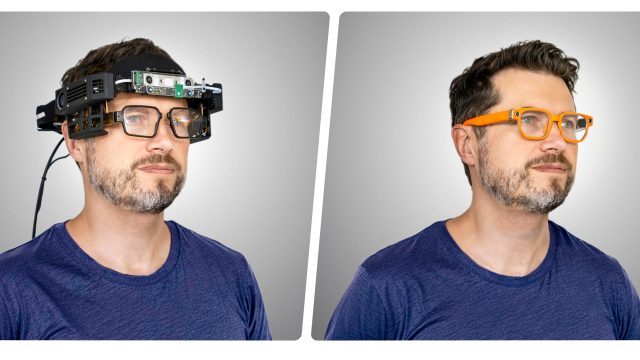
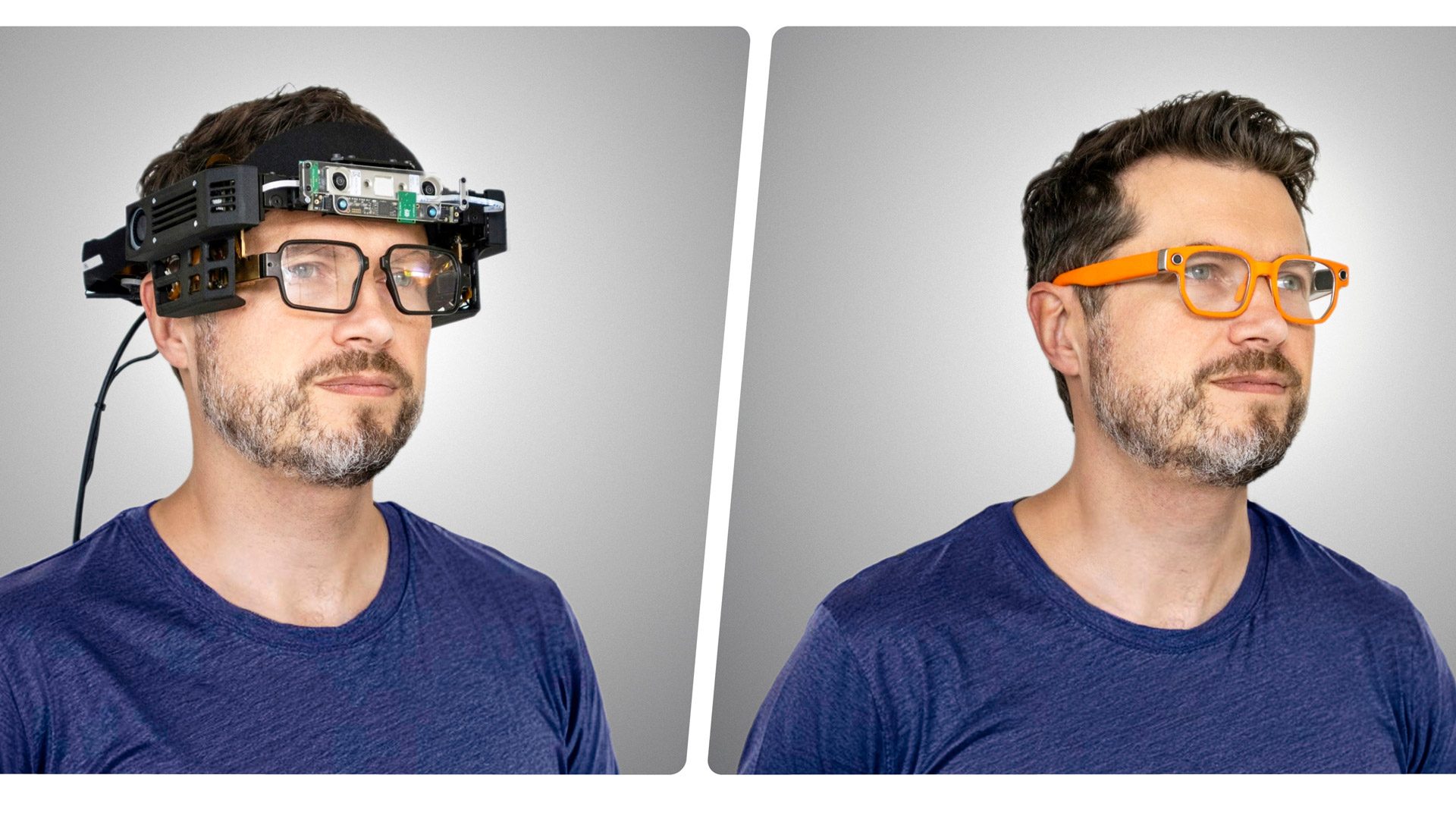
At AWE 2025, CREAL will showcase its Clarity light-field display. Released at the beginning of the year, CREAL has, since then, continuously improved the image quality by innovating on the spatial light modulator. Visitors will be able to experience the new display technology through a headset as well as a tabletop pair of glasses

Both prototypes feature CREAL’s Clarity display, which includes the light field optical engine and holographic lenses. Beyond the display, the headset prototype integrates off-the-shelf components to enable full-scale demonstrations of our technology, while the glasses prototype is designed with custom components to showcase our ultimate form factor. | Image courtesy CREAL

XREAL

At AWE, XREAL will be demoing the ultra-popular XREAL One Series AR glasses with spatial computing capabilities. Also available for demo will be the XREAL EYE, a modular camera attachment for the One Series. XREAL will also be unveiling an exciting new accessory and showing it off in person for the very first time.

Image courtesy XREAL

ForgeFX

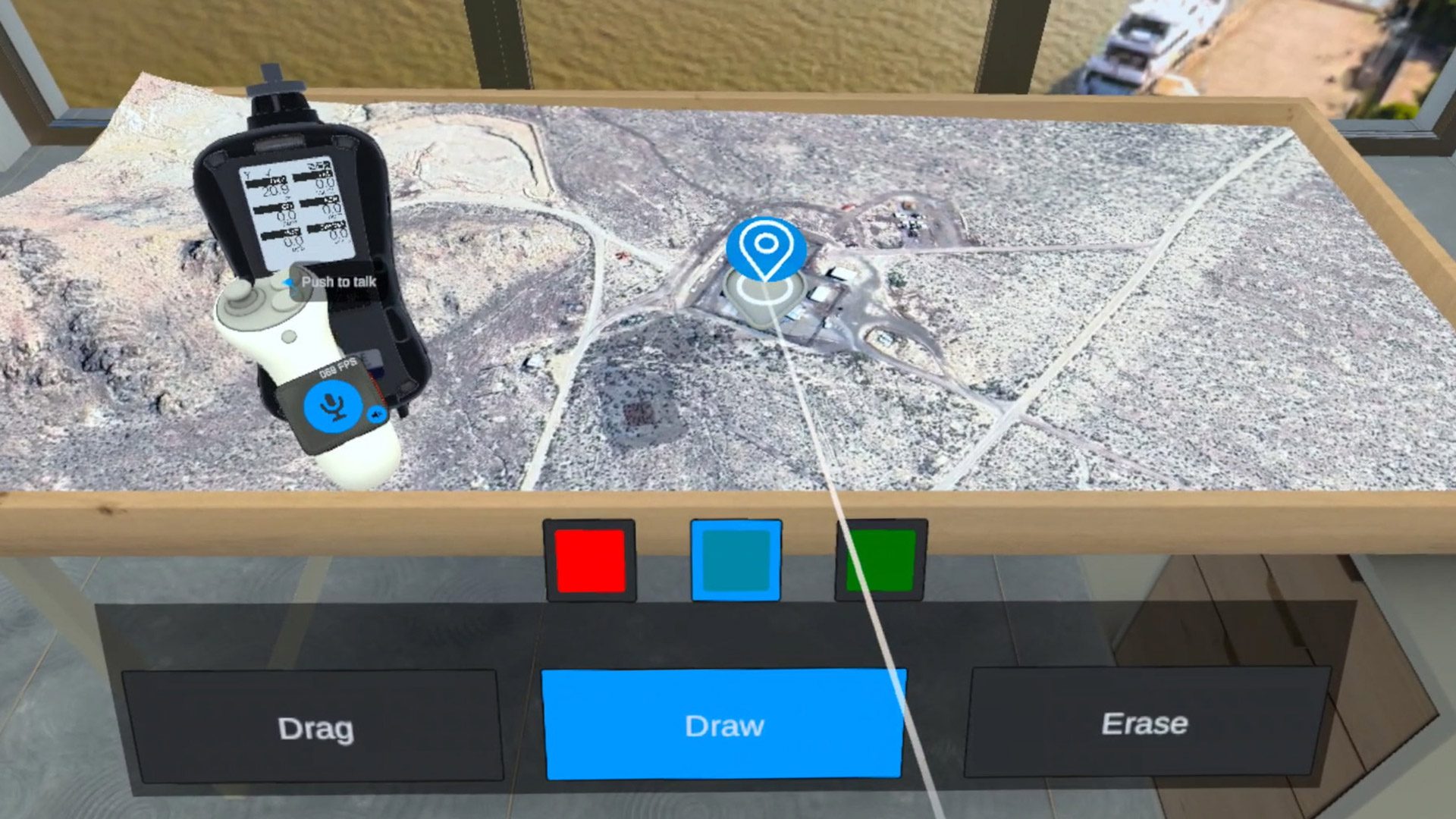
At AWE 2025, ForgeFX Simulations will unveil VORTEX, a next-generation XR training platform engineered for high-risk, high-consequence environments where traditional training methods fall short. Built on the proprietary ForgeSIM framework, VORTEX delivers immersive, AI-enhanced, scenario-based mission rehearsal through photorealistic LiDAR environments, GIS-enabled sand tables, voice-activated SMEs, and real-time performance analytics—already piloted by JPEO-CBRND for CBRN response. ForgeFX is also debuting an enhanced Horizontal Directional Drill (HDD) Simulator for the Meta Quest 3 PCVR, co-developed with Vermeer Corporation, featuring authentic drill controls and a new Auto Rod Exchange module that trains on a previously unsimulated, safety-critical task. At Booth #346, attendees can experience six interactive demos, including the JLG Access Ready XR trainer, Somero S-22EZ Laser Screed simulator, CBRND HoloTrainer, Trumpf Laser Cutting simulator, ForgeFX Excavator trainer, and Ocuweld welding VR simulator, each showcasing ForgeFX’s leadership in immersive, equipment-integrated training solutions.

Image courtesy ForgeFX

PICO

At AWE USA 2025, PICO will showcase the PICO 4 Ultra Enterprise, its latest all-in-one mixed reality headset designed for enterprise applications. Equipped with advanced MR capabilities and the PICOMotion Tracker for full-body and object tracking, the headset empowers industries to deliver highly immersive, practical solutions. PICO has successfully expanded into education, training and location-based entertainment (LBE), and visitors to the booth will have the opportunity to experience a selection of these real-world use cases firsthand. A private meeting space will also be available for deeper conversations about how PICO’s solutions can accelerate business strategies. PICO will also host two featured speaking sessions: ‘Unlocking the Potential of LBE: Scaling with PICO’s XR Solutions’ and ‘Superpowers for Spatial Developers: WebSpatial and SpatialML.’

Image courtesy PICO

What are you hoping to see from AWE 2025? Let us know in the comments below.

The post AWE 2025 Preview: 4 Companies Building XR’s Future appeared first on Road to VR.

Sinister BADBOX Malware Infected Over 1M Android Devices, Is Yours One?

Sinister BADBOX Malware Infected Over 1M Android Devices, Is Yours One?
A new variant of the BADBOX malware campaign has taken root in over a million Android-based devices worldwide, and if you’ve picked up a cheap smart TV box or projector off Amazon or AliExpress lately, you might be part of the problem. BADBOX 2.0 is a sprawling botnet targeting Android Open Source Project (AOSP) devices—not certified Android

Doom: The Dark Ages Gets Its First Major Patch, Here’s What To Expect

Doom: The Dark Ages Gets Its First Major Patch, Here’s What To Expect
Doom The Dark Ages quickly became one of the most played entries in franchise history, as gamers were intrigued by several of the changes and enhancements the new sequel brings to the Doom formula. Now, a little over two weeks after its initial release, Bethesda is pushing out the game’s first big update. Players can look forward to tweaks

Our first impressions after 48 hours with the Switch 2

As consumers around the world have gotten their hands on the Switch 2 in the last day or so, we’re still working hard to fully test the system here at the Ars Orbiting HQ. As we do, we thought we’d share some initial impressions after having Nintendo’s new console in hand for 48 hours or so. Consider these first thoughts an extended version of our notes from a review in progress and a starting point for discussion of the first completely new Nintendo platform in over eight years.

The Switch 2 Joy-Cons feel great

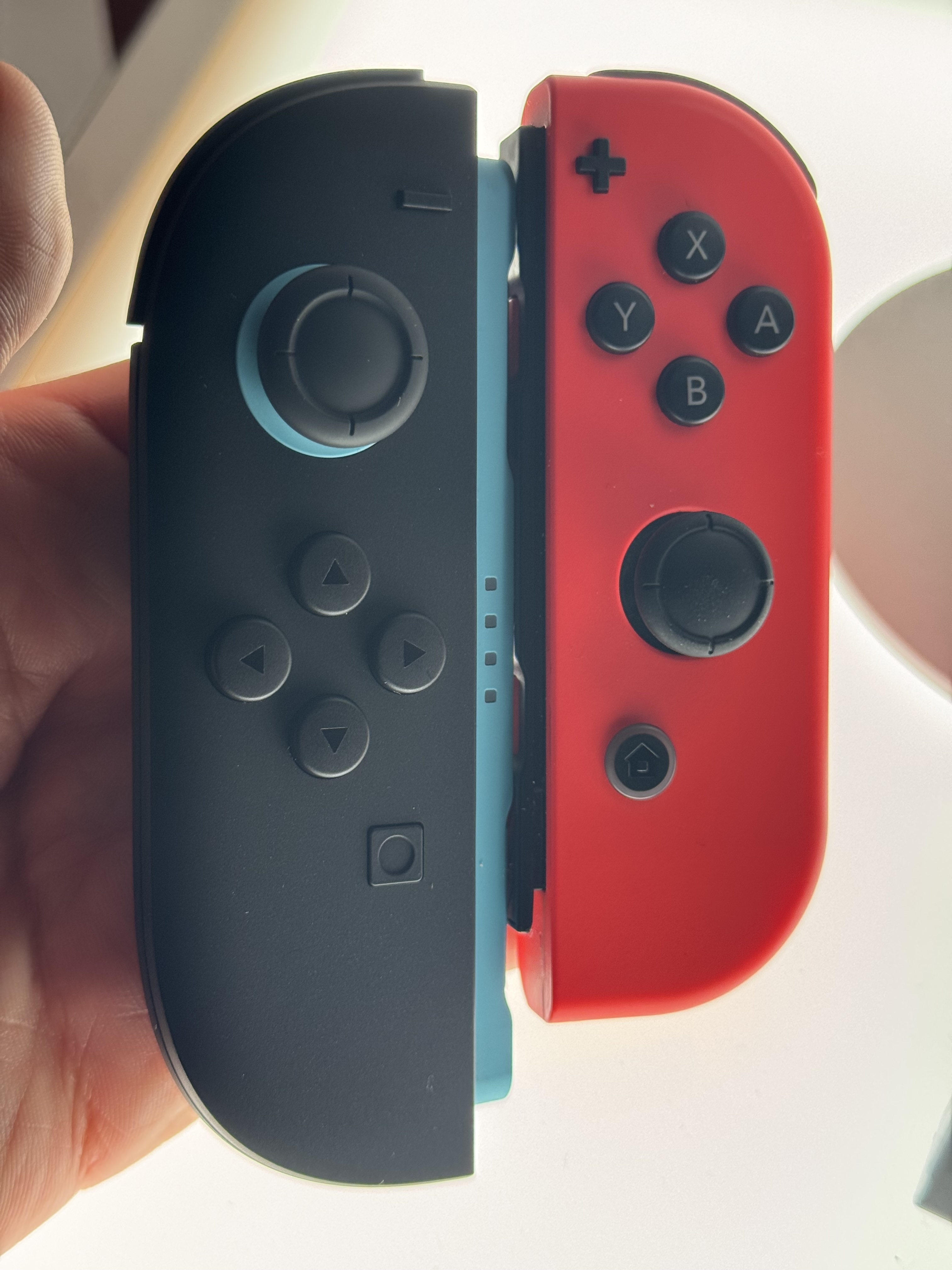
There’s something incredibly satisfying about the magnetic “snap” when you plug the new Joy-Cons into the Switch 2 horizontally, and the handy release lever makes it much easier to disconnect the controllers from the tablet with one hand. Even without a physical rail holding the Joy-Cons to the system (as on the Switch), the magnetic connection feels remarkably sturdy in portable mode.


The Switch 2 Joy-Con (left) and a right-side original Switch Joy-Con.

Though the Switch 2’s expanded Joy-Cons generally feel more comfortable for adult hands, I have noticed that the analog stick encroaches a little more on the space for the face buttons on the right Joy-Con. I’ve found myself accidentally nudging that analog stick with the bottom of my thumb when pressing the lower “B” button on the Joy-Con, a problem I never recall encountering on the original Switch.

Read full article

Comments

You probably won’t be fixing your own Nintendo Switch 2

The techs over at iFixit have completed their teardown of the Nintendo Switch 2, which launched this week. After completing a thorough analysis of the newest Nintendo console, it appears this generation of Switch is even harder to repair than its predecessor. iFixit has assigned the Switch 2 a repairability score of three out of 10. This represents an even lower score than the retroactive four out of 10 they awarded to the original model.

A substantial consideration in iFixit’s scoring system is the availability of repair parts from the manufacturer for the device in question. While there was some hope that Nintendo would have to comply with Right to Repair laws, sufficiently stringent versions of these regulations have yet to materialize, and OEM parts are almost impossible to come by.

Further complicating the repairability is that the charge ports, main storage and a game card reader that are all soldered to the board. The USB-C charge ports are a particular pain point here, as disconnecting and reconnecting the charging cable wears on the charge port over time. A bad yank on the charging cable or a fall while it’s connected could damage the charge port, which would require re-soldering a new one.

iFixit found that the battery was also frustratingly difficult to remove — another major detractor to repairability, as batteries by their nature degrade over time. Beyond being difficult to access without the proper tools, it’s held down with strong adhesive that requires a lot of effort (and isopropyl alcohol) to remove.

So if you happen to get your hands on a Switch 2, buy a case and baby that battery, because if it needs any repairs you’ll likely be shipping it to Nintendo and paying a pretty penny.

This article originally appeared on Engadget at https://www.engadget.com/gaming/nintendo/you-probably-wont-be-fixing-your-own-nintendo-switch-2-180833765.html?src=rss

Strava Is Publicly Sharing Data From Your Garmin Workouts Without Telling You

In the past week, users across Reddit have been raising alarms about a significant shift in how Strava is pulling workout data from your Garmin, Runna, or TrainingPeaks entries. What once appeared as generic activity titles like “Morning Run” are now showing detailed workout descriptions, pacing notes, and even personal coach comments that users never intended to share publicly. And if you’ve been on Strava for a minute, you know it can be a pretty competitive place. It’s social media, after all.

If you wanted your Garmin and Strava titles to be in sync, that’s great. However, for those of us who would prefer to keep our easy days or workout flubs private, here’s what to know about your data being shared for all your Strava friends to see.

The perfect storm of acquisitions and integration

Strava has made two major acquisitions in recent months—first purchasing running training app Runna in April, followed by cycling app The Breakaway in May. And the integration of these apps appears to be happening rapidly and without clear user notification. Runna recently began pushing through workout images and detailed training data to Strava, while Garmin users are seeing their custom workout titles and descriptions automatically imported into their Strava activities.

“Definitely feels like a violation of privacy and also intellectual property as a coach,” wrote one TrainingPeaks user on Reddit. “Pulling through the descriptions of the workouts, where sometimes I write personal notes for athletes, and now it’s showing on Strava for the world to see. I’m going to have to change how I set workouts up in TrainingPeaks.”

Sadly, this sort of privacy concern is nothing new for Strava users. The company has been at the center of several data privacy controversies, including the famous heatmap incident that exposed the location of numerous secret military facilities. The network’s global heatmap showed the locations of sensitive military bases because personnel at those facilities did not switch on privacy settings.

Beyond the military base controversy, users have always called out the app’s “creepy” privacy settings, which can automatically add other runners’ data onto your phone unless changed. As a longtime fan of Strava, I’ve personally watched the company face ongoing criticism about how users can track each other and the default visibility of personal fitness data.

And now, the Runna integration reveals how these acquisitions are creating unexpected data flows. Runna users can now access routes saved in Strava—even all those little nonsense routes created for planning purposes that were never intended for actual use or sharing.

What’s being shared (and what wasn’t before)

If you use a Garmin device, you may find that workouts with specific pacing instructions, training notes from coaches, and personalized workout descriptions are now appearing in your public Strava feeds. This includes:

  • Custom workout titles from Garmin devices

  • Detailed training descriptions from TrainingPeaks

  • Coach notes and pacing guidance

  • Personal performance targets and training phases

The change appears to affect data that was technically always present in activity files but was previously filtered out by Strava’s display logic. Now, that data is being surfaced automatically, catching users off guard.

The frustrating aspect of this situation is that enhanced workout data integration could be genuinely valuable. Seeing detailed training information, coach notes, and structured workout data in Strava could help athletes better track their progress and share meaningful training details with their community.

“This is a very cool feature that I think we would all love if it weren’t implemented by surprise,” captures the sentiment of many users. The technology exists to make fitness data more useful and connected—but only when users understand and consent to what’s being shared.

Plus, for coaches and trainers, this represents a professional concern. Training plans and workout descriptions often contain proprietary methodologies and personalized guidance that coaches consider intellectual property. When these details suddenly become public without warning, it affects how they can do their work.

The bottom line

As a loyal Strava user, the core issue isn’t just about privacy settings or data visibility—it’s about trust and communication. When platforms make significant changes to data-sharing without clear notification, they erode the trust that users need to feel comfortable sharing their fitness activities.

Stay tuned for how exactly to opt out of this data sharing, or whether Strava plans to make a formal announcement. When you log a support ticket with the Strava help desk, you get redirected to this thread as the place where they are currently “collecting feedback.”

Until then, it looks like us athletes are left checking privacy settings more frequently and wondering what other personal details might appear in our public feeds tomorrow.

Woman Racer Spotlight: Alexandra Kay

Name: Alexandra Kay 

Hometown: Novato, CA 

How did you get into cycling? I come from the running world – mid-distance and long-distance. I sustained an overuse injury early last year, and physical therapy encouraged me to seek out other means of exercise while I recovered. I joined Zwift in October ‘24 and was instantly hooked! 

How many years have you been racing on Zwift? 6 months

Are you part of a Virtual team? Yes, Coalition 

What do you love most about racing? Being surrounded by highly talented, strong women is really inspiring. 

What is your favourite style of race (e.g. points, scratch, iTT, TTT, Chase, duathlon)? Duathlon 

What is your favourite Zwift women’s race series? Warrior Games 

What is your most memorable racing experience, inside or outside or BOTH? It was a co-ed Zwift race where I took the lead on a hill climb and held it, meters ahead of the peloton. I finished 15 seconds ahead of 2nd place.

What is your favourite food to eat post race? Avocado toast 

What advice would you give to a woman entering her first Zwift race? You can do hard things. 

Any upcoming race you are looking forward to? Iceni 

Where can people follow your racing adventures? @runnowrestlater on Instagram.

Simulations find ghostly whirls of dark matter trailing galaxy arms

Galaxies are far more than the sum of their stars. Long before stars even formed, dark matter clumped up and drew regular matter together with its gravity, providing the invisible scaffolding upon which stars and galaxies eventually grew.

Today, nearly all galaxies are still embedded in giant “halos” of dark matter that extend far beyond their visible borders and hold them together, anchoring stars that move so quickly they would otherwise break out of their galaxy’s gravitational grip and spend their lives adrift in intergalactic space.

The way dark matter and stars interact influences how galaxies change over time. But until recently, scientists had mainly only examined one side of that relationship, exploring the way dark matter pulls on normal matter.

Read full article

Comments

Reddit Slams AI Firm Anthropic In Privacy Lawsuit Alleging Mass Data Scraping

Reddit Slams AI Firm Anthropic In Privacy Lawsuit Alleging Mass Data Scraping
The number of lawsuits filed against AI companies training their models on data posted to the internet continues to grow. The ongoing legal battle between Meta and a group of authors over copyright infringement is perhaps the most prominent, but Reddit has also filed a lawsuit against Anthropic (an AI firm), accusing it of training its Claude