In late April Meta introduced its Meta AI app, which included something called a Discover feed. (“You can see the best prompts people are sharing, or remix them to make them your own.”)
But while Meta insisted “you’re in control: nothing is shared to your feed unless you choose to post it” — just two days later Business Insider noticed that “clearly, some people don’t realize they’re sharing personal stuff.”
To be clear, your AI chats are not public by default — you have to choose to share them individually by tapping a share button. Even so, I get the sense that some people don’t really understand what they’re sharing, or what’s going on.
Like the woman with the sick pet turtle. Or another person who was asking for advice about what legal measures he could take against his former employer after getting laid off. Or a woman asking about the effects of folic acid for a woman in her 60s who has already gone through menopause. Or someone asking for help with their Blue Cross health insurance bill… Perhaps these people knew they were sharing on a public feed and wanted to do so. Perhaps not. This leaves us with an obvious question: What’s the point of this, anyway? Even if you put aside the potential accidental oversharing, what’s the point of seeing a feed of people’s AI prompts at all?
Now Mozilla has issued their own warning. “Meta is quietly turning private AI chats into public content,” warns a new post this week from the Mozilla Foundation, “and too many people don’t realize it’s happening.”
That’s why the Mozilla community is demanding that Meta:
– Shut down the Discover feed until real privacy protections are in place.
– Make all AI interactions private by default with no public sharing option unless explicitly enabled through informed consent.
– Provide full transparency about how many users have unknowingly shared private information.
– Create a universal, easy-to-use opt-out system for all Meta platforms that prevents user data from being used for AI training.
– Notify all users whose conversations may have been made public, and allow them to delete their content permanently.
Meta is blurring the line between private and public — and it’s happening at the cost of our privacy. People have the right to know when they’re speaking in public, especially when they believe they’re speaking in private.
If you agree, add your name to demand Meta shut down its invasive AI feed — and guarantee that no private conversations are made public without clear, explicit, and informed opt-in consent.
Originally announced as “Project Bloom,” Game Freak’s upcoming action-adventure game made a formal appearance at the Xbox Games Showcase as Beast of Reincarnation. The studio describes the game as a “one-person, one-dog” RPG and it’s supposed to be coming out in 2026.
Based on the trailer, the game is set in a post-apocalyptic Japan that’s returned to nature due to some kind of beast-born blight. As the main character “Emma the Sealer,” you’ll travel through the wilderness, engaging in “demanding, technical combat” alongside your dog Koo, all in the hopes of “saving humanity” from the sickness that’s plaguing the land.
Game Freak is best known for its work on the Pokémon games, but the developer has made an eclectic collection of other projects between mainline entries, including Pocket Card Jockey: Ride On! and more recently, Pandoland. “Project Bloom” was originally supposed to be published by Take-Two’s Private Division label, but when the label was sold in 2024, Game Freak’s game was taken up by a new publisher called Fictions.
Beast of Reincarnation is coming to PS5, Xbox Series X/S and PC in 2026. It’ll also be available through Xbox Game Pass at launch.
This article originally appeared on Engadget at https://www.engadget.com/gaming/beast-of-reincarnation-is-a-one-person-one-dog-rpg-launching-in-2026-192305237.html?src=rss
A renowned Apple engineer who was instrumental in developing modern-day computing has died. Bill Atkinson, who was part of Apple’s original Macintosh development team, died of pancreatic cancer at 74, according to a Facebook post made by his family on June 5.
His contributions to Apple and the Macintosh personal computer are still widely used today, including fundamental UI elements like the menu bar, double-clicking and the selection lasso. However, Atkinson’s work goes much deeper than that, since he’s partly responsible for the foundational design language that influenced Apple’s early days. His legacy includes creating MacPaint, an application that showed the world what a graphics-based system looks like at a time when text-based systems were the norm, and developing QuickDraw, a graphics toolbox that the Macintosh and Lisa computers use. To make computers more user-friendly, Atkinson also designed HyperCard, an Apple application that introduced hypertext to everyday users and not just programmers. Tim Cook paid tribute to Atkinson, posting on X, that he was a “true visionary whose creativity, heart, and groundbreaking work on the Mac will forever inspire us.”
Beyond Apple, Atkinson was one of three co-founders for General Magic, a software and electronics company that supplied products to Motorola and Sony in the 90s. Later, he worked with Numenta in 2007, which was a startup focused on artificial intelligence. Atkinson was also a seasoned nature photographer, publishing a book called Within the Stone that highlights polished and cut rocks with close-up shots. Atkinson is survived by his wife, two daughters, stepson, stepdaughter, two brothers, four sisters, and dog, Poppy.
This article originally appeared on Engadget at https://www.engadget.com/computing/influential-apple-engineer-bill-atkinson-dies-at-74-191024913.html?src=rss
Xbox fans don’t need to wait any longer to play Final Fantasy XVIon their Series X/S. Two years after the action RPG debuted on PS5, it got a surprise release on Xbox’s consoles on Sunday. Its sudden arrival was announced during the Xbox Games Showcase as part of Summer Game Fest.
The game’s now available via the Xbox PC app as well. Granted, Final Fantasy XVI has been on Steam and the Epic Games store since last September, but some folks might have been waiting for its arrival on Xbox. Buying Final Fantasy XVI once on any Xbox platform means you’ll be able to play it across console, PC and cloud with synced progression.
A complete edition that includes both Final Fantasy XVI expansions is available for Xbox. There’s a standard edition that includes the base game as well.
The arrival of Final Fantasy XVI on Xbox means that you can now play all the mainline, single-player Final Fantasy games on Microsoft‘s consoles, save for the Final Fantasy VII remakes. However, Final Fantasy VII Remake Intergrade is coming toXbox this winter — just in time for those new Xbox gaming handhelds.
This article originally appeared on Engadget at https://www.engadget.com/gaming/xbox/final-fantasy-16-suddenly-arrives-on-xbox-series-xs-185542283.html?src=rss
If you’ve updated to iOS 18.5 and Apple Mail app is broken, you are not alone. Many iPhone users have taken to social media to report problems after the update. Common complaints include the app opening a blank page, which remains until it is minimized or closed. Others observed that the app only works briefly before crashing.
What might have been the biggest news of the Xbox summer showcase didn’t come in the form of a surprise trailer but rather straight from the mouth of Microsoft Gaming CEO Phil Spencer. While there was no footage to debut, the executive quietly let slip that a new Forza is coming next year as well as the “return of a…
Surely I wasn’t the only one caught off guard that this trailer featuring Milo Ventimiglia, a cybernetic butterfly and a tentacly upside-down hell world turned out to be the announcement of Call of Duty: Black Ops 7, right? Nevertheless, that just happened at the conclusion of the Xbox Games Showcase, and Call of Duty: Black Ops 7 is officially on the way. Today’s teaser comes ahead of an official reveal that’s slated for this summer.
The game is set in the year 2035, when “the world is on the brink of chaos, ravaged by conflict and psychological warfare following the narrative events of Black Ops 2 and Black Ops 6.” According to Activision, it’s “the first-ever consecutive release within the series, set more than 40 years after the events of Black Ops 6.” It’s all kinds of futuristic, and will see David Mason and crew facing “a manipulative enemy who weaponizes fear above all else.”
Call of Duty: Black Ops 7 will be available on Xbox Series X/S, Xbox One, Xbox PC, Xbox Cloud, Xbox Play Anywhere, Battle.net, Steam, PlayStation 5 and PlayStation 4. Xbox Game Pass subscribers will also get it on launch day.
This article originally appeared on Engadget at https://www.engadget.com/gaming/xbox/heres-our-first-look-at-call-of-duty-black-ops-7-184709483.html?src=rss
Based on the brief description from the game’s trailer, Resonance follows a young Sophia as she “seeks her independence as a fierce plunderer in the unforgiving world of the 14th century.” The trailer shows Sophia on the run, escaping conflict, exploring mysterious ruins, and generally being pursued by danger, alongside more ominous vignettes showcasing Asobo’s typically lush visuals.
If surviving a plague made the first two games seem grim, escaping a flaming ship or battling in a gladiatorial arena doesn’t make Sophia’s past adventures seem all that more for fun. Still, there’s very little to go on, and quite a bit more to learn before Resonance: A Plague Tale Legacy comes out in 2026.
Resonance: A Plague Tale Legacy is currently set to be released on Xbox Series X / S, PS5, PC and Xbox Cloud Streaming. It’ll also be available from day one through Xbox Game Pass.
This article originally appeared on Engadget at https://www.engadget.com/gaming/xbox/asobo-studios-next-plague-tale-game-is-a-prequel-arriving-in-2026-183305421.html?src=rss
AMD in cooperation with ASUS and Microsoft used the Xbox Games Showcase for announcing their new Ryzen AI Z2 series processors for gaming handhelds. The new Ryzen AI Z2 series is launching with the new ASUS ROG Xbox Ally / ROG Xbox Ally X handhelds running Microsoft Windows…
The Persona 4 remake is real and its going to be called Persona 4 Revival. Atlus shared a trailer for the game during the Xbox Games Showcase, confirming its upgraded, likely Unreal Engine 5-powered visuals, and that it’s coming to Xbox platforms.
The trailer is remarkably short, all you really get are shots of Persona 4’s small-town countryside setting, snippets of the game’s score, some spooky TVs and the gray-haired player character running around. But if you’ve played the beloved RPG, you don’t need much more to get the gist.
Persona 3 Reload was released in 2024, featuring the Tokyo-set third game in the franchise, but with new graphics powered by Unreal. This next remake seems like its going to continue the trend with the fourth game in the franchise. Notably, without the voice talent of Yuri Lowenthal or Erin Fitzgerald, who both confirmed the existence of the remake and that they wouldn’t be in it at the end of May.
Persona 4 Revival is coming to Xbox Series X / S, PC, Xbox Cloud Streaming and PS5. It’ll also be available on Xbox Game Pass at launch.
This article originally appeared on Engadget at https://www.engadget.com/gaming/xbox/persona-4-revival-is-real-and-coming-to-ps5-pc-and-xbox-182120544.html?src=rss
The next main entry in the blockbuster Call of Duty series has been announced. Players can look forward to Black Ops 7, which is described as a direct sequel to Black Ops 6. The upcoming FPS doesn’t have a release date yet, but if history is any indicator, it will be out around October.
Last month, Duolingo CEO Luis von Ahn “shared on LinkedIn an email he had sent to all staff announcing Duolingo was going ‘AI-first’,” remembers the Financial Times.
“I did not expect the amount of blowback,” he admits….
He attributes this anger to a general “anxiety” about technology replacing jobs. “I should have been more clear to the external world,” he reflects on a video call from his office in Pittsburgh. “Every tech company is doing similar things [but] we were open about it….”
Since the furore, von Ahn has reassured customers that AI is not going to replace the company’s workforce. There will be a “very small number of hourly contractors who are doing repetitive tasks that we no longer need”, he says. “Many of these people are probably going to be offered contractor jobs for other stuff.” Duolingo is still recruiting if it is satisfied the role cannot be automated. Graduates who make up half the people it hires every year “come with a different mindset” because they are using AI at university.
The thrust of the AI-first strategy, the 46-year-old says, is overhauling work processes… He wants staff to explore whether their tasks “can be entirely done by AI or with the help of AI. It’s just a mind shift that people first try AI. It may be that AI doesn’t actually solve the problem you’re trying to solve…..that’s fine.” The aim is to automate repetitive tasks to free up time for more creative or strategic work.
Examples where it is making a difference include technology and illustration. Engineers will spend less time writing code. “Some of it they’ll need to but we want it to be mediated by AI,” von Ahn says… Similarly, designers will have more of a supervisory role, with AI helping to create artwork that fits Duolingo’s “very specific style”. “You no longer do the details and are more of a creative director. For the vast majority of jobs, this is what’s going to happen….” [S]ocietal implications for AI, such as the ethics of stealing creators’ copyright, are “a real concern”. “A lot of times you don’t even know how [the large language model] was trained. We should be careful.” When it comes to artwork, he says Duolingo is “ensuring that the entirety of the model is trained just with our own illustrations”.
During today’s Xbox Summer Game Fest event, the long-rumored remake of Persona 4 was finally announced… but that’s about all we got from the ridiculously short teaser revealing the upcoming remake.
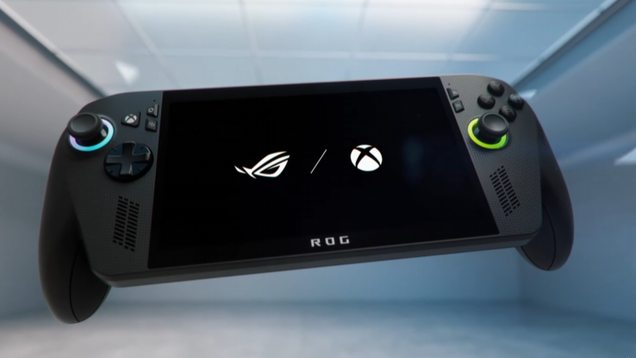
We’ve been hearing rumors for what feels like an eternity about Microsoft working with ASUS’ ROG division on a gaming handheld device and we got confirmation during the Xbox Games Showcase at Summer Game Fest. There are two variants of the handheld: the ROG Xbox Ally and ROG Xbox Ally X.
Microsoft didn’t reveal pricing, but the handhelds are coming this holiday. Details on how much the systems cost, pre-orders, accessories and more are coming soon, the company said. The Xbox Ally will initially be available in Australia, Belgium, Canada, Denmark, Finland, France, Germany, Ireland, Italy, Japan, Korea, Mexico, the Netherlands, New Zealand, Norway, Poland, Portugal, Saudi Arabia, Singapore, Spain, Sweden, Switzerland, Thailand, Turkey, the United Arab Emirates, the United Kingdom and, shockingly enough, the US.
Xbox head Sarah Bond says that every game included in the showcase will be playable on the Xbox Ally, but didn’t make clear whether all of those would run natively on the devices. The reveal trailer also included a notable focus on Hollow Knight: Silksong, for what it’s worth.
Critically, Microsoft and ROG aren’t locking the devices to only playing Xbox games (though you can do that natively, via the cloud or by accessing an Xbox console remotely). You’ll be able to play games from Battle.net and “other leading PC storefronts” too.
Microsoft has designed a full-screen Xbox user interface for the handhelds. Naturally, the systems run on Windows 11. Microsoft says it has optimized the operating systems for the devices, with easy access to game and app options through Game Bar, as well as devices and input controls via ASUS’ Armoury Crate. The company added that “the lock screen and task switcher have also been adjusted for easy navigation with a controller.” Your games will be modable as well.
The Xbox Ally is powered by the AMD Ryzen Z2 A Processor, and has 16GB of RAM and 512GB of SSD storage. The Xbox Ally X is the more powerful model. It has a AMD Ryzen AI Z2 Extreme processor, 24GB of RAM and 1TB of storage. They each have a microSD card reader, so you won’t need to worry about shelling out for proprietary storage options to have extra space for your games.
The two models seem to have the same screen, a seven-inch 1080p, 16:9 display with a 120Hz refresh rate and 500 nits of brightness. The anti-reflection displays will feature Corning Gorilla Glass Victus and support FreeSync Premium.
Both systems boast “HD haptics” and have a dedicated Xbox button. The Xbox Ally has hall effect analog triggers, while the Xbox Ally X has “impulse triggers for enhanced control.” It sounds a little like Microsoft and ASUS are taking a page out of the PlayStation DualSense playbook there. Anyway, both of the Xbox Ally systems have two assignable back buttons and 6-axis IMU — a fancy way of saying that they’ll probably have gyro controls. Blessedly, both of the handhelds have a 3.5mm combo audio jack, along with Wi-Fi 6E and Bluetooth 5.4.
The Xbox Ally and Xbox Ally X are exactly the same size at 290.8 x 121.5 x 50.7mm . They each weigh more than the Nintendo Switch 2 (534 g or 1.18lbs with Joy-Con 2 attached) and PlayStation Portal (520 g or 1.15 lbs). The Xbox Ally is marginally heavier than the Steam Deck (669g or 1.47lbs) at 670g. The Xbox Ally X is even beefier at 715g (1.58lbs).
So, they’re both chonksters, but at least those grips look more ergonomic than those on the Nintendo Switch 2 (which is already cramping my hands) or even the Steam Deck. For the record, the ROG Ally is 608g (1.34 lbs) and the Ally X is 678 grams (1.5 lbs).
Both systems should be capable of outputting video to a TV or monitor, as they have two USB-C ports with support for DisplayPort 2.1 and Power Delivery 3.0. One of the Xbox Ally X’s USB-C ports is compatible with ThunderBolt 4. It also has a larger battery, with a capacity of 80Wh compared with the Xbox Ally’s 60Wh battery. Both models come with a charging stand.
This story is developing, refresh for updates…
This article originally appeared on Engadget at https://www.engadget.com/gaming/xbox/rog-xbox-ally-handheld-gaming-devices-are-real-and-coming-this-holiday-171550555.html?src=rss
Xbox kicked off its Summer Game Fest showcase by revealing the release date to The Outer Worlds 2, the sci-fi first-person RPG from Obsidian Entertainment, via a new trailer. The sequel is coming out on October 29, 2025 and Xbox plans to follow-up its stream with an in-depth look at the game.
Like the original The Outer Worlds, the sequel continues its satire of end-times capitalism, focusing in the trailer on the player character’s Earth Directorate agent working against various companies vying for destructive, dangerous technology. What that looks like in practice is freezing and exploding enemies with a variety of out-of-this-world weapons — shrink rays included. Knowing Obsidian’s output, there’s bound to be plenty of non-lethal ways to get what you want, too.
The Outer Worlds 2 is coming out on October 29, 2025 for Xbox Series X / S, PS5, PC and streaming through Xbox Cloud Streaming.
This article originally appeared on Engadget at https://www.engadget.com/gaming/xbox/the-outer-worlds-2-arrives-on-october-29-172540150.html?src=rss
Apple is widely expected to reveal the next major version of visionOS at WWDC25 tomorrow.
Since launching Vision Pro and visionOS in February of last year, Apple has regularly updated the operating system to add new features and improvements. The first feature update arrived in visionOS 1.1 in April, the Spatial Personas that deliver groundbreaking telepresence. Then, in September, Apple released visionOS 2, the first major update with dozens of changes and improvements. visionOS 2.2 in December then brought Wide and Ultrawide modes for Mac Virtual Display, while visionOS 2.4 in March brought Apple Intelligence, a Spatial Gallery app, an iPhone app for remote installs, and a new iPhone/iPad-driven guest flow.
While Apple’s traditional versioning scheme would suggest that the next major version will be called visionOS 3, Bloomberg’s Mark Gurman has reported that Apple plans to change to a year indicator instead, claiming that it will thus be called visionOS 26.
Regardless of what Apple ends up calling it, we have high expectations for what comes next for visionOS, as Apple continues to set the foundations of the platform that will power both today’s Vision Pro and cheaper and lighter Vision headsets of the future.
What’s Official
Before we get into what we hope the next visionOS brings, let’s be clear about what Apple has officially said.
Around a month before WWDC in recent years, Apple has revealed accessibility features coming to its operating systems. Last year for example, Apple announced Live Captions for Vision Pro, a feature that then was revealed to be part of visionOS 2.
This year, the company revealed that Apple Vision Pro is getting the ability to magnify passthrough, as well as to describe, find, or read anything in your view using on-device AI. We expect these features, or at least some of them, to be part of the next major version of visionOS.
The company also announced that visionOS will get support for brain-computer interface (BCI) input devices later this year.
Now that we’ve covered what Apple has officially revealed, here’s what we want to see. Note that this is purely what we want to see in visionOS, and Apple has not confirmed any of this.
1: Tracked Controllers
Apple Vision Pro’s gaze-and-pinch input system is a breakthrough in XR interaction and ideal for many use cases. Its hand tracking is also suitable for casual gaming.
But many VR and mixed reality games and interactive experiences on other platforms are designed around physical tracked controllers, and depend on the buttons, thumbsticks, and triggers they offer. Further, with hand tracking alone you simply don’t get the feeling of truly grabbing, holding, and using virtual objects, whereas the tactility of index and grip triggers can at least partially mimic this, with haptic feedback enhancing the feeling further.
There are strong indications that visionOS will in fact be getting tracked controller support.
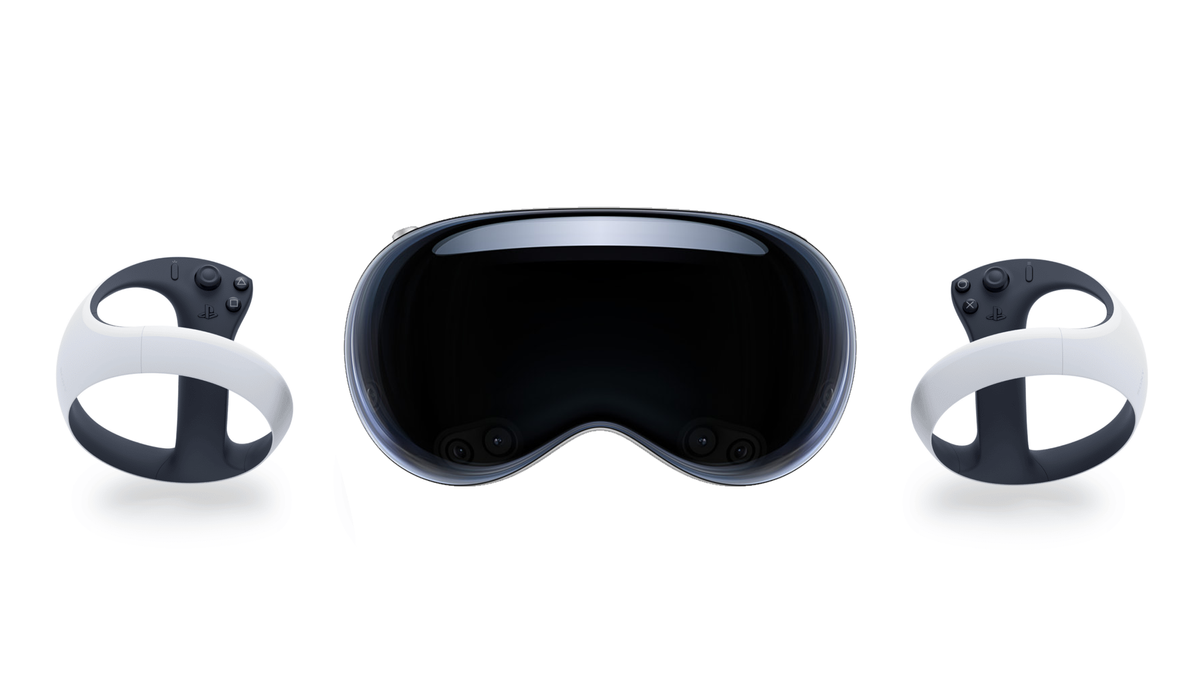
Back in December, Bloomberg’s Mark Gurman reported that Apple and Sony are working to bring support for PlayStation VR2’s controllers to Vision Pro. In February he said this project was still on, and yesterday he reiterated his reporting and described it as “so-called magic wand support”.
Earlier this week, 9to5Mac claimed that Apple will brand tracked controllers “spatial controllers”, and will allow App Store apps to require them, warning the buyer upon purchasing the app.
2: Windows In Immersive Apps
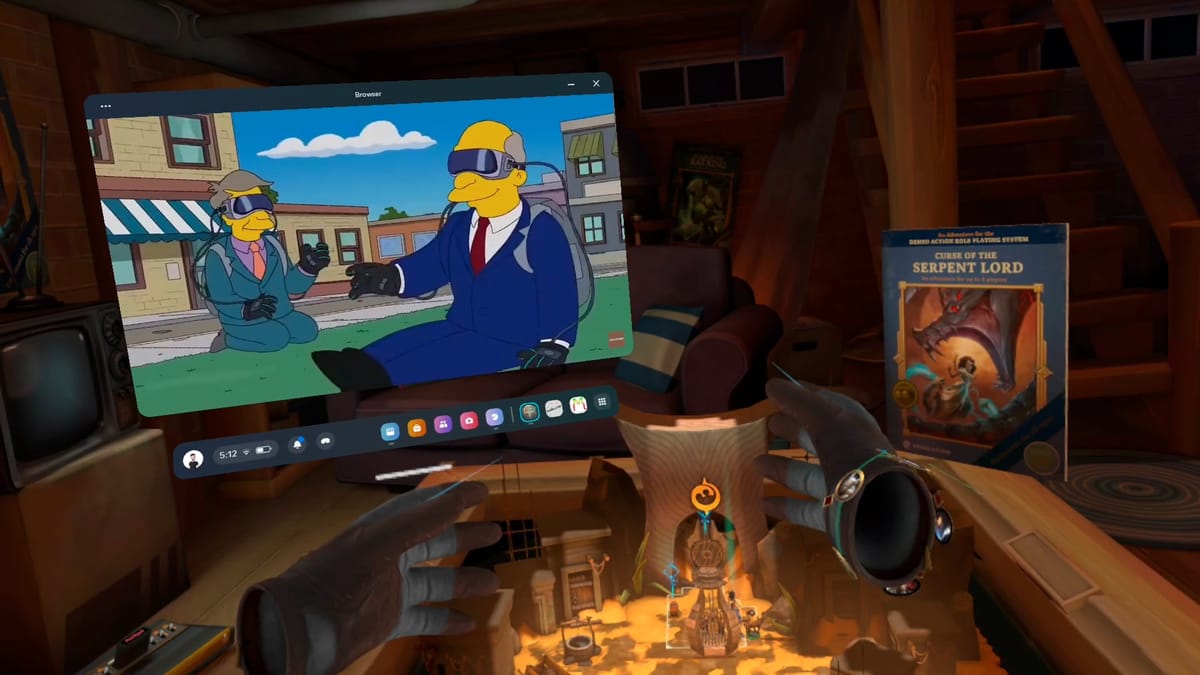
Nine months ago, Meta rolled out Seamless Multitasking to the Horizon OS of its Quest headsets. It means Quest owners can keep 2D windows like the web browser and other panel apps open while using an immersive app, such as a VR game.
This means you can, for example, watch Netflix or YouTube while playing a VR game, or get work done in Remote Desktop while in a VRChat world.
Ironically, despite the many multitasking advantages of visionOS when it comes to using volumetric visionOS apps that run in the Shared Space, Apple’s platform does not let you do this inside immersive apps – with one exception. Registered developers can keep Mac Virtual Display open, but not other windows, and regular users can’t at all.
While there are tradeoffs to allowing windows inside immersive apps on a system level, such as depth conflicts and reduced performance, we at UploadVR think it offers such immense value that it should be a part of every VR system going forward.
3: The Ability To Run macOS
When first announced, Apple pitched Vision Pro as a “spatial computer”. But as we explained in our review, visionOS is based on iPadOS, and thus the same debate spawned by the iPad Pro around what a “computer” really is extends to Vision Pro too.
Like with iPad Pro, you won’t find XCode, Visual Studio, or Unity on Vision Pro, so you can’t use it to make apps. Nor will you find Adobe Premiere, After Effects, Photoshop, or Illustrator. What really distinguishes a “computer” from other devices in practice is the ability to professionally create, not just consume. And from a computing perspective, Vision Pro is just like having an iPad Pro with a bunch of external monitors.
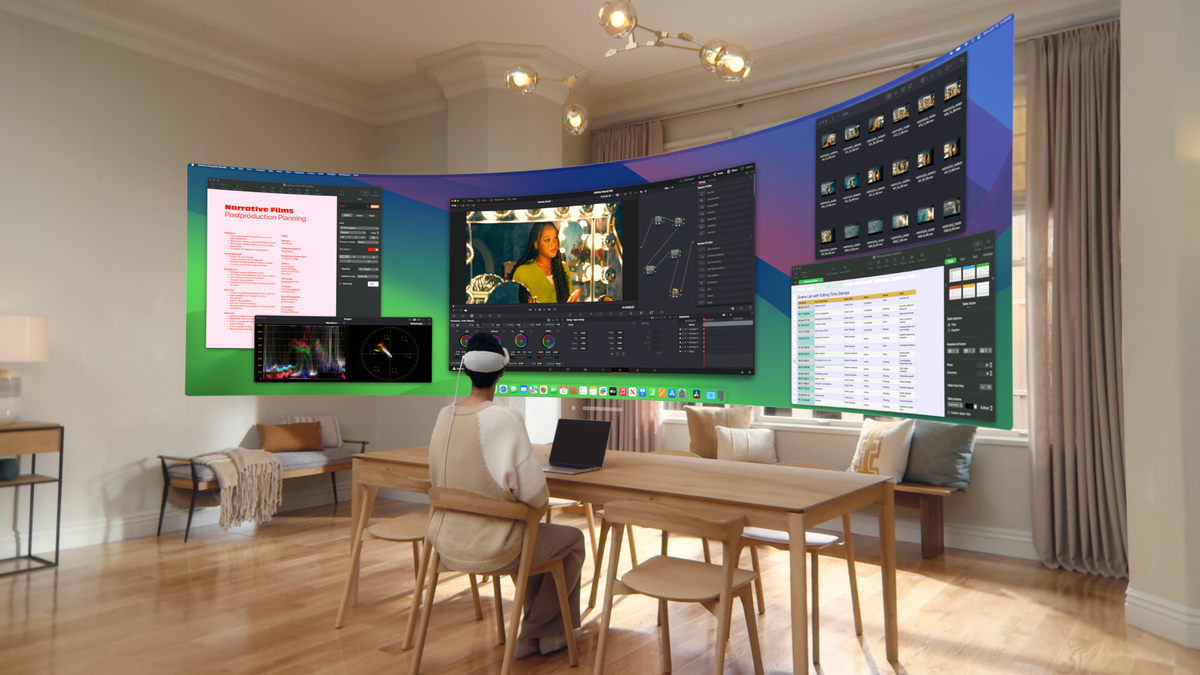
Thankfully, the Mac Virtual Display feature of visionOS is excellent, letting you replace your Mac’s physical screen with an enormous virtual display. The feature got even better with the Wide and Ultrawide modes added in visionOS 2.2, giving you as much horizontal screen real estate as you could possibly need.
With Mac Virtual Display you can do serious computing, but it still requires owning and carrying around a physical Mac. Yet the dream of XR for productivity is the idea of completely replacing your computer, not just extending it. Apple Vision Pro has the same M2 chipset that powers Macs, so why can’t we simply run macOS or its apps in visionOS?
Essentially, we’re asking for a Virtual Mac Virtual Display. A virtual machine of macOS running in a visionOS window. The same user experience as today’s Mac Virtual Display, but without the Mac.
4: Immersive Apple Maps
Google Earth VR, which the company launched on PC almost a decade ago, is one of the greatest virtual reality experiences of all time. Exploring our beautiful planet from a god’s eye view in VR is simply incredible.
Google is bringing this experience to its upcoming Android XR platform as part of Google Maps, and we were extremely impressed by it in our time with Samsung’s headset. There are also several Quest and visionOS apps that mimic Google Earth VR on Quest and Vision Pro standalone, such as Fly, and a great visionOS volumetric floating map app called Spatial Earth. But these third-party options aren’t free, and don’t integrate at the system level, for example when you tap an address.
While Apple Maps was extremely poorly received when it launched in 2012, over the past decade the company has invested significantly in the platform, including adding 3D dimensional representation of much of the world via satellite imagery, LiDAR data, and machine learning, just like Google Earth does.
While you can access the iPad version of Apple Maps on Vision Pro today, there’s currently no dedicated visionOS app. To us, this strongly hints that Apple plans an equivalent of Google Earth VR, and we can’t wait to see it.
WWDC25 Tomorrow
Apple’s WWDC25 main keynote will be streamed live at 10am PT on Monday.
UploadVR will be on-site at Apple Park to bring you any major announcements from Apple around visionOS, Vision Pro, or new XR hardware.
Microsoft officially revealed its newest hardware, an Xbox-branded version of Asus’ next ROG Ally PC gaming handhelds. The new devices has Xbox controller-like fins on the sides and blue and green rings around the analog sticks. There’s an Xbox home button and Microsoft is promising players the most seamless “Xbox…
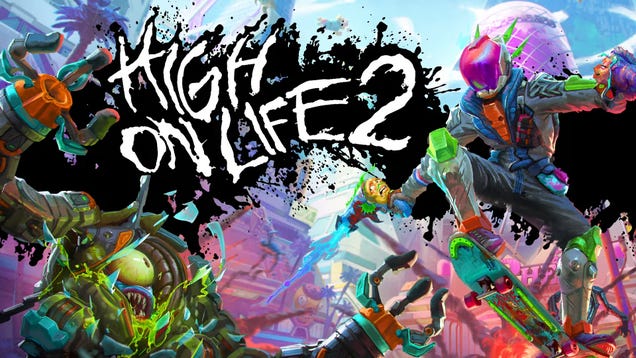
During today’s Xbox Summer Game Fest showcase, Xbox and Squanch Games announced High On Life 2, which appears to be a bigger sequel to its hit comedy-FPS, High On Life.