A new study “adds a whole extra level of detail to our understanding of caffeine’s impact on the brain during sleep,” reports ScienceAlert:
Caffeine was shown to increase brain signal complexity, and shift the brain closer to a state of ‘criticality’, in tests run by researchers from the University of Montreal in Canada. This criticality refers to the brain being balanced between structure and flexibility, thought to be the most efficient state for processing information, learning, and making decisions. However, this state might prevent restful sleep, the researchers suggest. The caffeine isn’t just keeping us alert, but actually changing how the brain is operating. What’s more, they found younger adults aged 20 to 27 were more greatly affected in this way…
When it comes to the different reactions across different ages, the researchers suggest that changes in the brain as we age might be responsible. Adenosine molecules gradually build up in the brain during the day, leading to a greater feeling of fatigue as bedtime approaches. Caffeine works by blocking the receptors that adenosine interacts with, giving us a temporary jolt of energy. Adenosine receptors are more abundant in younger brains, which may explain why younger people seem to be more sensitive to caffeine’s powers. That includes both the positive energizing effects, and the negative effects of keeping the brain too active overnight.
The U.K. electricity grid “was built to deliver power generated by coal and gas plants near the country’s major cities and towns,” reports the BBC, “and doesn’t always have sufficient capacity in the wires that carry electricity around the country to get the new renewable electricity generated way out in the wild seas and rural areas.
“And this has major consequences.”
The way the system currently works means a company like Ocean Winds gets what are effectively compensation payments if the system can’t take the power its wind turbines are generating and it has to turn down its output. It means Ocean winds was paid £72,000 [nearly $100,000 USD] not to generate power from its wind farms in the Moray Firth during a half-hour period on 3 June because the system was overloaded — one of a number of occasions output was restricted that day. At the same time, 44 miles (70km) east of London, the Grain gas-fired power station on the Thames Estuary was paid £43,000 to provide more electricity.
Payments like that happen virtually every day. Seagreen, Scotland’s largest wind farm, was paid £65 million last year to restrict its output 71% of the time, according to analysis by Octopus Energy. Balancing the grid in this way has already cost the country more than £500 million this year alone, the company’s analysis shows. The total could reach almost £8bn a year by 2030, warns the National Electricity System Operator (NESO), the body in charge of the electricity network. It’s pushing up all our energy bills and calling into question the government’s promise that net zero would end up delivering cheaper electricity… the potential for renewables to deliver lower costs just isn’t coming through to consumers.
Renewables now generate more than half the country’s electricity, but because of the limits to how much electricity can be moved around the system, even on windy days some gas generation is almost always needed to top the system up. And because gas tends to be more expensive, it sets the wholesale price.
The UK government is now considering smaller regional markets, so wind companies “would have to sell that spare power to local people instead of into a national market. The theory is prices would fall dramatically — on some days Scottish customers might even get their electricity for free…
“Supporters argue that it would attract energy-intensive businesses such as data centres, chemical companies and other manufacturing industries.”
After a symphony, online multiplayer and a remaster, the well-regarded (and often handheld) puzzler Lumines is getting Enhance’s full synesthetic, Tetris-flowing, treatment. Lumines Arise is almost here.
If you haven’t played the game before, Lumines’ premise centers on rotating and dropping four-square blocks made of one or two colors, building up larger squares of a single color. The game’s timeline sweeps across the playfield – to the beat of the soundtrack – erasing completed squares in its path, while also giving you the brief opportunity to quickly drop more squares, add multiplier combos and score even more points.
Lumines Arise adds a new mechanic to the addictive yet simple puzzle. ‘Burst’ is a refillable bar that you can trigger with L2/R2, which locks a square on the playing field, allowing you to pile on subsequent blocks. You can initiate Burst once the counter has rolled above 50, although it maxes out at 100. As you might expect for a synesthesia-tickling game like Arise, Burst mode has its own low-key musical accompaniment.
Lumines has never looked better. But that’s not just due to 2025 hardware power, but also design choices for Lumines’ skins – the unhinged wallpaper design and block themes that bubble up as you advance through puzzle stages. They’re delightfully mad and, at times, distracting. (As you play, the view of your Lumines blocks will occasionally ‘zoom’ closer – this is intentional. Game Director Takashi Ishihara said this was to both add some dynamism to what are typically static blocks, but also to pull the players’ attention back to the game at hand. Lumines Arise wants you to focus on the now, not the score, your Burst meter, or your customizable avatar.)
My favorite part of the demo was the final stage, which featured two chameleons simply raving along to the dance music. The soundtrack is, naturally, a banger, too. Lumines Arise features new music from Hydelic, also responsible for the award-winning soundtrack of Tetris Effect: Connected. (The band has already launched one track, “Only Human,” on Bandcamp – it’s coming to other streaming services, too.)
On another stage, two skeletal hands, seemingly strung up like puppets, twitch and wriggle as you shift and rotate your blocks. If anything, I think Enhance missed a trick not mapping the finger movements to a DualSense controller. I said that in front of Ishihara because I have zero sense of decorum — apparently, he’d had the same idea. I now consider myself a game designer.
I got to briefly see Lumines Arise running on a Steam Deck, too. The time of the handheld console and PC is now, so it’s nice to see a typically made-for-consoles game ready for this new gaming PC form factor.
Ishihara teased that there’s more to reveal ahead of Arise’s launch. The game will launch on both PS5 and Steam, and it will also feature VR compatibility on both platforms. While Enhance wasn’t yet willing to reveal the details, there will also be some form of multiplayer, but it seems like it’ll be in a different form compared to the more adversarial nature of Tetris Effect’s multiplayer modes.
Additionally, Ishihara wanted to highlight that the avatars, which dance and emote in sync with your in-game actions, now feature legs. That is important, apparently. Enhance is promising more answers in due time. Lumines Arise is set to launch in fall 2025.
This article originally appeared on Engadget at https://www.engadget.com/gaming/lumines-arise-hands-on-interview-takashi-ishihara-000038767.html?src=rss
Sword of the Sea is a game about letting go. Its main mechanic involves surfing across vast desert dunes on a thin blade, slicing through glittering sands and scaling ancient towers on a quest to unearth the secrets of civilizations past. It plays best when you forget about the controls entirely, and just surrender to the slick physics and let your little character flow. With enough exploration, you’ll naturally discover glowing orbs and shining gold gems, and the sands will transform into deep, crystal clear seas with fish swimming through the air, carving wet paths through the dirt. Your character, dressed in flowing robes and a gold mask, rides the orange hills and the blue waves with the same easy athleticism, reacting instantly to every input on the controller.
Charge up a jump and then complete sick tricks with a few quick inputs, or unleash a bubble of sonic energy to smash nearby vases, uncovering bits of currency in the shattered pieces. The protagonist moves in whatever direction you push, stopping immediately when you let go of the analog stick. There are giant chains to grind, a hover ability in some areas, and half pipes generously positioned around the environments. Control prompts pop up when you’re first introduced to an ability, but the text fades quickly and you’re left alone in the desert. There are no waypoints in Sword of the Sea, but the environment tells a clear story, inviting you to solve puzzles in the mysterious temples dotting the landscape. Find glowing orbs on the rooftops and hidden down secret passageways to unlock the buildings’ secrets, opening up new areas.
I played about 20 minutes of Sword of the Sea at Summer Game Fest, but I wanted to surf its dunes for a lot longer. It’s the kind of game that makes the real world fade away, no matter how chaotic or intrusive your immediate surroundings are. It’s built on rhythm and vibes, and it encourages a meditative flow state from its first frames. Learn the controls and then forget them; play with pure intuition and it’ll most likely be the right move.
“The game is about surfing, and it’s really about the process of learning to surf and getting comfortable with surfing, and then trying things that are a little bit beyond your abilities, failing, and then figuring it out and actually accomplishing them,” Sword of the Sea creator Matt Nava told Engadget on the SGF show floor. “And in the process, you kind of realize that surfing is all about harnessing the power of something greater than yourself. You’re not paddling — the waves carry you. The zoomed out camera, the little character; in a lot of games, they’re right on the character, because the character is the focus. But in this game, it’s about how the character is a part of the environment, that is the focus. And I think that’s a constant in a lot of the games that we’ve made.”
Nava is the creative director and co-founder of Giant Squid, the studio behind Abzû and The Pathless. Even with these two successful games under his belt, Nava is still best known as the art director of Journey, thatgamecompany’s pivotal multiplayer experience that hit PlayStation 3 in 2012. Nava has spent the past decade attempting to build explicitly non-Journey-like games with Giant Squid, and while Abzû and The Pathless both have his distinctive visual stamp, they’re the opposite of Journey in many ways. Where Journey was set in a dry, desert landscape, Nava’s follow-up, Abzû, took place in an underwater world. After that, The Pathless was mostly green, rather than dusty orange.
Giant Squid
With Sword of the Sea, Nava let go. He dropped all preconceptions of what he should be making and mentally said fuck it. He finally allowed himself to manifest the game that came naturally to him.
“In this game, it’s very much taking on, accepting and proclaiming that this is me,” Nava said. “I did Journey. I’m doing orange again. And I’m going back to the desert because I have way more ideas that we couldn’t do in that game … It’s like I’ve been living in my own shadow for a long time in a weird way. It’s like, why am I doing that? I should just be who I am and continue to explore the art that is my art.”
Sword of the Sea is a specific and special game, and even though it’s set in an orange desert, it doesn’t feel like Journey. The game also includes music by Austin Wintory, the Grammy-nominated composer behind Journey, Abzû and The Pathless. Together, Nava and Wintory form a formidable foundation.
“A lot of video game scores, they just make a music track for the area,” Nava said. “If you’re in the town, you hear town music, and then it just repeats. But that’s not how it works here. The music advances as your story advances, it reflects where you are on your surfing adventure, what you’re learning how, how far your character has gone on this character arc. And so that’s where the music of a video game like ours should be.”
As Nava and I chatted, someone sat down to play Sword of the Sea on a nearby screen, and when I glanced up, I saw that they were gliding through an area I didn’t find in my runthrough. A giant animal skeleton was half-buried in the sand, bright white vertebrae dotted with gold gems for the player to collect. There are a lot of secrets in Sword of the Sea, Nava assured me. The best way to find them is to just let go and play.
This article originally appeared on Engadget at https://www.engadget.com/gaming/sword-of-the-sea-is-what-happens-when-matt-nava-strides-back-into-journeys-shadow-233148894.html?src=rss
Today, Linus Torvalds announced the general availability of the first Release Candidate development milestone of the upcoming Linux 6.16 kernel series for public testing.
We’ve been getting a real kick out of the offbeat cable TV parody that is Blippo+, which arrived with Playdate’s Season Two, and now it’s looking like non-Playdate owners will be able to experience the strangeness too later this year. Panic, along with Telefantasy Studios, Noble Robot and the artists Yacht, announced at the PC Gaming Show that Blippo+ is coming to PC and Nintendo Switch in fall 2025. And unlike the 1-bit black and white programs we’ve been tuning into on the Playdate, it’ll all be in color.
Blippo+ features a roster of live-action programs that may or may not be alien transmissions, plus a forum called Femtofax that brings you even deeper into the unusual goings-on of the Blippians. Panic revealed with the second week of Season Two games that Blippo+ wouldn’t just be a one-off release, but would instead get weekly content updates every week for the next eleven weeks. When it lands on the other platforms, Blippo+ will have “a time-hopping mechanic so viewers can travel back and forth through weeks of TV programming without losing the magic of ‘non-demand’ linear viewing.”
Panic
It’s absurd, it’s nostalgic — Blippo+ was made with vintage analog broadcast equipment, according to the creators — and it’s totally unpredictable. You really never know what madness it’s going to serve up next, and it’s great. In color, things are only going to get weirder.
This article originally appeared on Engadget at https://www.engadget.com/gaming/playdate-season-2s-blippo-tv-simulator-is-coming-to-nintendo-switch-and-pc-in-color-this-fall-230149046.html?src=rss
Young people are leading the UK’s charge in electric bike popularity, according to new research by the E-Bike Positive campaign.
Released to coincide with the UK’s Bike Week (9-15 June), the research suggests a shift in Gen Z and Millennials’ approach to travel.
E-Bike Positive says more young adults aged 25-34 are planning to travel by ebike over cars or public transport, with nearly half saying they’re more likely to buy an ebike than they were a year ago.
Jonathan Harrison, director of the Association of Cycle Traders, says: “This surge in ebike enthusiasm among young adults shows the future of transport is already here – and it’s healthier, more sustainable, and more accessible than ever.”
There has also been a shift in the broader UK population, with 20.47 per cent more likely to buy an ebike, compared to the 49.34 per cent of young people.
Half of young people are more likely to buy an ebike than they were a year ago, according to E-Bike Positive’s survey. E-Bike Positive
E-Bike Positive, which launched last August, and includes Cycling UK, Bosch and The Bicycle Association, says more than half of the 2,000 people surveyed say they would likely buy non-manufacturer approved ebike components.
This includes items such as ebike batteries, chargers and conversion kits from online marketplaces.
There have been repeated warnings that these items can pose safety risks, particularly fires.
The research also suggests that among 25-34-year-olds, only 63 per cent would be able to determine if an ebike was road-legal.
Duncan Dollimore, head of campaigns at Cycling UK, said ebikes have made a difference to people’s lives, helping them save money and stay healthy.
“That’s why we need to do all that we can to explain clearly the difference between safe, road-legal ebikes and potentially unsafe aftermarket alternatives. With 1 in 4 people unable to make the distinction between what’s safe and what isn’t when it comes to ebikes, we need to do more to increase awareness so people can make informed decisions when it comes to travel choices,” added Dollimore.
Nintendo’s new Switch 2 console sold a record 3 million units after its launch Thursday. But then today Microsoft announced their own upcoming handheld gaming device that’s Xbox-branded (and Windows-powered).
Working with ASUS’ ROG division, they build a device that weighs more than the Nintendo Switch 2, and “is marginally heavier than the Steam Deck,” reports Engadget. But “at least those grips look more ergonomic than those on the Nintendo Switch 2 (which is already cramping my hands) or even the Steam Deck.”
There are two variants of the handheld: the ROG Xbox Ally and ROG Xbox Ally X. Microsoft didn’t reveal pricing, but the handhelds are coming this holiday… Critically, Microsoft and ROG aren’t locking the devices to only playing Xbox games (though you can do that natively, via the cloud or by accessing an Xbox console remotely). You’ll be able to play games from Battle.net and “other leading PC storefronts” too. Obviously, there’s Game Pass integration here, as well as support for the Xbox Play Anywhere initiative, which enables you to play games with synced progress across a swathe of devices after buying them once…
There’s a dedicated physical Xbox button that can bring up a Game Bar overlay, which seemingly makes it easy to switch between apps and games, tweak settings, start chatting with friends and more… You’ll be able to mod games on either system as well.
The Xbox Ally is powered by the AMD Ryzen Z2 A Processor, and has 16GB of RAM and 512GB of SSD storage. The Xbox Ally X is the more powerful model. It has a AMD Ryzen AI Z2 Extreme processor, 24GB of RAM and 1TB of storage. They each have a microSD card reader, so you won’t need to worry about shelling out for proprietary storage options to have extra space for your games… Both systems boast “HD haptics…” Both systems should be capable of outputting video to a TV or monitor, as they have two USB-C ports with support for DisplayPort 2.1 and Power Delivery 3.0.
“Microsoft has needed to respond to SteamOS ever since the Steam Deck launched three years ago,” argues The Verge, “and it has steadily been tweaking its Xbox app and the Xbox Game Bar on Windows to make both more handheld-friendly…”
But there was always a bigger overhaul of Windows required, and we’re starting to see parts of that today. “The reality is that we’ve made tremendous progress on this over the last couple of years, and this is really the device that galvanized those teams and got everybody marching and working towards a moment that we’re just really excited to put into the hands of players,” says Roanne Sones, corporate vice president of gaming Devices and ecosystem at Xbox, in a briefing with The Verge…
I’ll need to try this new interface fully to really get a feel for the Windows changes here, but Microsoft is promising that this isn’t just lipstick on top of Windows. “This isn’t surface-level changes, we’ve made significant improvements,” says Potvin. “Some of our early testing with the components we’ve turned off in Windows, we get about 2GB of memory going back to the games while running in the full-screen experience.”
Hyprland and related packages won’t be part of Debian 13 “Trixie” after coordinated bug reports prompted their scheduled removal before the final release.
If you aren’t thrilled with what EA has done with The Sims, another alternative is coming soon. The indie passion project Paralives launches in Steam Early Access on December 8.
Paralives has all the hallmarks of the life simulation genre. You can build your character, including physical and personality traits. It lets you make friends, move up in your career, fall in love and start a family (or not!). Design is central, too. You can craft your dream home, move walls and resize that stubby love seat into a full-on couch.
The game uses “innovative build tools that are easy to use but powerful for advanced builders.” When designing your living space, you aren’t limited to a grid. You can build on curves and customize any object’s colors and textures. There’s even an in-game measuring tape for those who want to get ultra-precise.
Paralives Studio
The game is the lovechild of Canadian developer Alex Massé, who began the project in 2019. Paralives Studio has now grown to a team of 13 with the sole focus of building “an innovative and fresh life simulation game.” It’s raised funds exclusively through Patreon. The team’s development process is out in the open. You can browse its history and roadmap online, showing the full array of planned features.
Crucially, the young studio says Paralives will never have paid DLC — only free expansions. That’s one way to take a shot at The Sims without even mentioning its name. And unlike the glitzy AI-fest inZoi, Paralives emphasizes depth and flexibility over presentation. Its simple and charming art style is a foundation for feeling and connection.
You can see for yourself in the release date trailer below. Grab Paralives on Steam Early Access (PC and Mac) on December 8.
This article originally appeared on Engadget at https://www.engadget.com/gaming/the-sims-like-paralives-hits-early-access-in-december-220014257.html?src=rss
“NASA engineers have spent the past decade developing a rugged, partially autonomous lander designed to explore Europa, one of Jupiter’s most intriguing moons,” reports Gizmodo.
But though NASA “got cold feet over the project,” the engineers behind the project are now suggesting the probe could instead explore Enceladus, the sixth-largest moon of Saturn:
Europa has long been a prime target in the search for extraterrestrial biology because scientists suspect it harbors a subsurface ocean beneath its icy crust, potentially teeming with microbial life. But the robot — packed with radiation shielding, cutting-edge software, and ice-drilling appendages — won’t be going anywhere anytime soon.
In a recent paper in Science Robotics, engineers at NASA’s Jet Propulsion Laboratory (JPL) outlined the design and testing of what was once the Europa Lander prototype, a four-legged robotic explorer built to survive the brutal surface conditions of the Jovian moon. The robot was designed to walk — as opposed to roll — analyze terrain, collect samples, and drill into Europa’s icy crust — all with minimal guidance from Earth, due to the major communication lag between our planet and the moon 568 million miles (914 million kilometers) away. Designed to operate autonomously for hours at a time, the bot came equipped with stereoscopic cameras, a robotic arm, LED lights, and a suite of specialized materials tough enough to endure harsh radiation and bone-chilling cold….
According to the team, the challenges of getting to Europa — its radiation exposure, immense distance, and short observation windows — proved too daunting for NASA’s higher-ups. And that’s before you take into consideration the devastating budget cuts planned by the Trump administration, which would see the agency’s funding fall from $7.3 billion to $3.9 billion. The lander, once the centerpiece of a bold astrobiology initiative, is now essentially mothballed.
But the engineers aren’t giving up. They’re now lobbying for the robot to get a second shot — on Enceladus, Saturn’s ice-covered moon, which also boasts a subsurface ocean and has proven more favorable for robotic exploration. Enceladus is still frigid, but `has lower radiation and better access windows than Europa.
Call Of Duty: Black Ops 7 is the next entry in Activision’s long-running military shooter franchise and it’s once again coming to last-gen consoles. But what about the Switch 2? More than two-years after Microsoft and Nintendo entered into an agreement to bring Call of Duty to Switch, nothing has materialized.…
Linux 6.16-rc1 was just released by Linus Torvalds. This first release candidate of Linux 6.16 marks the close of the two-week merge window where many new features and other changes were introduced…
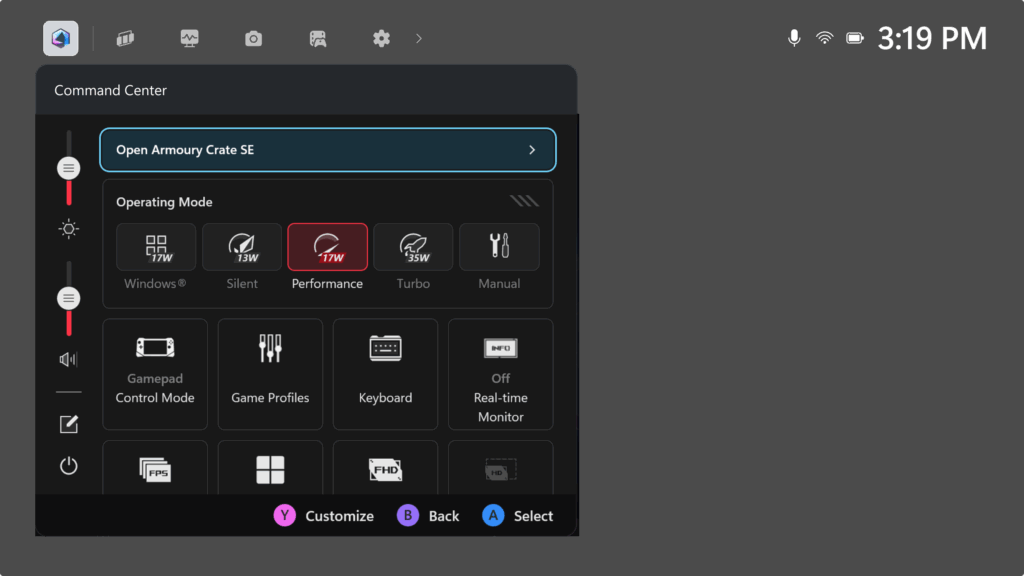
The Windows-11 powered Xbox Ally devices promise access to “all of the games available on Windows,” including “games from Xbox, Game Pass, Battle.net, and other leading PC storefronts [read: Steam, Epic Games Store, Ubisoft Connect, etc].” But instead of having to install and boot up those games through the stock Windows interface, as you often do on handhelds like the original ROG Ally line, all these games will be available through what Microsoft is calling an “aggregated gaming library.”
Microsoft promises an “integrated library” can be used to access Windows games across a variety of launchers.
Credit:
Microsoft
A tap of the Xbox button brings up the Game Bar for quick access to many functions and settings.
Credit:
Microsoft
Asus and Microsoft are stressing how that integrated experience can be used with games across multiple different Windows-based launchers, promising “access to games to can’t get elsewhere.” That could be seen as a subtle dig at SteamOS-powered devices like the Steam Deck which can have significant trouble with certain titles that don’t play well with Steam and/or Linux for one reason or another. Microsoft also highlights how support apps like Discord, Twitch, and downloadable game mods will also be directly available via the Xbox Ally’s Windows backbone.
Coming off its smash indie hit Spiritfarer, Thunder Lotus Games is taking a more action-heavy approach with its next title. The developer debuted At Fate’s End with an announcement trailer during the Xbox Games Showcase at Summer Game Fest 2025, giving us a taste of its captivating visuals and unique combat system.
While Spiritfarer offered a more slow-paced experience filled with charming characters looking for a final peace, At Fate’s End has a contrasting action-packed style where you follow the story of Shan, a heiress to a clan that’s looking to resolve familial disputes by either fighting or talking it out. The gameplay looks equal parts narrative fantasy and intriguing combat style, since you can use tactical dialogue mid-fight or psychological insight about your family to turn the tide of battle. As you progress through the story, you’ll face more of your estranged family members, and you advance your skill tree in different ways depending on whether you defeat or reconcile with them.
Thunder Lotus Games hasn’t set a hard release date yet, but At Fate’s End is expected to release sometime in 2026. The upcoming title will be available on Xbox, PlayStation, Steam and Epic Games.
This article originally appeared on Engadget at https://www.engadget.com/gaming/at-fates-end-already-looks-like-the-must-play-indie-game-of-2026-204315182.html?src=rss
Two years after it was first announced, we just got an extended trailer for inXile entertainment’s Clockwork Revolution at the Xbox Games Showcase, and it looks kind of incredible — and completely over the top. (A man dubbed “The Knob” pisses his pants a minute and 56 seconds in, and someone else later gets cursed out by an automaton doll).
Clockwork Revolution is a first-person steampunk RPG set in 1895 in a place called Avalon, which is ruled by the time-manipulating Lady Ironwood. As the customizable player-character Morgan Vanette, you’ll have to use her own tactics against her to turn back time and undo the damage she’s caused. As with all things time travel, the butterfly effect will be at play. The new trailer, which is over 5 minutes long, shows us this will be one with a lot of action and bloodshed (plus some brain-shed), and a good share of ridiculousness too.
We still don’t have a release date, though, just the assurance that it’s “coming in due time.” When it does eventually arrive, Clockwork Revolution will be available on Xbox Series X/S, Xbox PC, Steam and Xbox Cloud. It’ll also support Xbox Play Anywhere, and will be available through Xbox Game Pass.
This article originally appeared on Engadget at https://www.engadget.com/gaming/xbox/the-new-trailer-for-clockwork-revolution-is-a-wild-extremely-steampunk-ride-203854022.html?src=rss
Many WordPress plugin developers take a tricky approach: they release a limited core version for free under the GPL but lock key features behind a paywall or make them proprietary—turning the plugin into a commercial product.In this post, I’m sharing the five best free and open source WordPress plugins I personally use on this website.
Microsoft just concluded this year’s not-E3 festivities with a surprisingly great showcase that made up for all of the grim vibes and unfortunate shortcomings of Friday’s Summer Game Fest Live presentation. While the Xbox event wasn’t full of big first-party reveals, we saw plenty of neat-looking games that showed the…
Star Trek: Strange New Worlds returns for a third season next month.
Apart from a short teaser in April, we haven’t seen much of the Star Trek: Strange New Worlds‘ upcoming third season, debuting next month. But Paramount+ has finally released the official trailer.
(Spoilers for S2 below.)
As previously reported, the S2 finale found the Enterprise under vicious attack by the Gorn, who were in the midst of invading one of the Federation’s colony worlds. Several crew members were kidnapped, along with other survivors of the attack. Captain Pike (Anson Mount) faced a momentous decision: follow orders to retreat, or disobey them to rescue his crew. Footage shown last October at New York City Comic-Con picked up where the finale left off, giving us the kind of harrowing high-stakes pitched space battle against a ferocious enemy that has long been a hallmark of the franchise. (Of course Pike opted to rescue his crew.)
It’s not Psychonauts 3, but Keeper already looks to be a visually stunning and highly original gaming experience. Double Fine Productions and the company’s art director Lee Petty showed off the official announcement trailer for its latest title during the Xbox Games Showcase at Summer Game Fest 2025. It’s not as hype as the news of Persona 4 Revival or The Outer Worlds 2, but this quirky third-person adventure game looks like a fun departure from your typical AAA title.
As seen in the trailer, Keeper puts you in control of a magically reassembled lighthouse that’s since grown legs and has a strange desire to venture towards the central mountain peak of the island. There’s no dialogue for this game, but you won’t be alone since an equally adventurous seabird joins you on your mysterious mission. There’s little revealed about the storyline, but the trailer shows that the lighthouse’s beam of light can interact with the island’s wildlife, while your trusty winged companion can take care of anything out of your reach.
For diehard fans of the Psychonauts franchise, Keeper‘s vibrant and striking visuals might be the only thing to scratch that itch for a while. Double Fine Productions previously confirmed in June 2023 that it’s not working on Psychonauts 3, following hints at a potential reveal that summer. Double Fine’s Keeper will be available on Xbox Series X / S, Xbox PC, Xbox Cloud, Xbox Game Pass and Steam on October 17.
This article originally appeared on Engadget at https://www.engadget.com/gaming/xbox/psychonauts-developers-trippy-island-adventure-keeper-comes-out-on-october-17-193405665.html?src=rss