JBL refreshes its 2025 soundbars with a serious power up

JBL is reintroducing its immersive soundbar lineup with even more power, but thankfully, the convenient detachable side speakers aren’t going anywhere. JBL refreshed the entire Bar lineup, with the Bar 1000 MK2 leading the charge. The soundbar still features a 10-inch wireless subwoofer along with removable speakers on each end that let you continue playing your music or movies even if you wander away from the TV.

For the 2025 refresh, JBL kept the Bar 1000 MK2 on a 7.1.4 channel setup, but pumped up the max power output to 960W for an even louder and more immersive listening experience. The detachable speakers still have a max battery life of up to 10 hours, where you can reattach them to the soundbar to recharge. Like its predecessor, the Bar 1000 MK2 features true Dolby Atmos, thanks to four upfiring drivers, along with DTS:X 3D surround sound and MultiBeam 3.0. You won’t have to constantly adjust the volume when bouncing between dialogue scenes and loud action since the updated soundbar has PureVoice 2.0 that automatically optimizes the dialogue volume based on the scene’s ambient sound.

The Bar 1000 MK2 can still use Bluetooth or Wi-Fi to connect to a device, but is also compatible with AirPlay 2 and Spotify Connect. Besides the Bar 1000 MK2, JBL will debut the refreshed Bar 700 MK2 that comes with detachable speakers too, but can only virtualize Dolby Atmos. The updated Bar 500 MK2 and Bar 300 MK2 also don’t offer true Dolby Atmos, nor JBL’s Night Listening mode that automatically reduces loud noises. If you’re in need of a soundbar with a subwoofer, it’s worth noting that the new Bar 300 MK2 still doesn’t have one.

The Bar 1000 MK2 is due to hit the shelves first at $1,199 later this month. The release of the $899 Bar 700 MK2, the $649 Bar 500 MK2 and the $449 Bar 300 MK2 will follow shortly after. The most expensive of JBL’s Bar lineup, an 11.1.4-channel follow-up to the Bar 1300X, will release in the fall and start at $1,699. While it’s much more expensive, it will come with detachable speakers that have standalone Bluetooth capabilities.

This article originally appeared on Engadget at https://www.engadget.com/audio/speakers/jbl-refreshes-its-2025-soundbars-with-a-serious-power-up-120014177.html?src=rss

Digging Into Zwift Bike Upgrades: Performance Improvements and Power Savings at Each Stage

Zwift launched bike upgrade functionality in March, and Zwifters have been busy putting in the work to upgrade various frames ever since.

While some people are content with just riding their bike and purchasing upgrades as they become available, others (like myself) are asking questions like, “Just how much faster will this upgrade make me?”

That’s what this post seeks to answer. But before I go there, let me link to two posts that fully explain the bike upgrades feature, in case you don’t yet understand it:

All About Zwift’s New “Bike Upgrades” Functionality
What is required to fully upgrade a particular bike in Zwift?

Below, you’ll find charts that answer two questions: how much faster does each upgrade stage make a particular bike, and how much power does that upgrade save?

Every bike frame in Zwift is assigned a particular upgrade scheme that defines what riders must do to achieve each upgrade stage, and what those upgrades are. I’ve created charts below for each of the 9 upgrade schemes, since each scheme is unique.

Performance improvements vary from scheme to scheme but are essentially the same for bikes within a scheme. That is, two different Distance-Based, Entry-Level bike frames will see the same time improvements at each upgrade stage. But a Distance-Based, Entry-Level bike will not see the same time improvements from stage to stage as, say, a Duration-Based Entry-Level bike. (For more on the upgrade schemes, and a table listing which scheme each frame uses, see this post.)

About the Charts

The Time Savings charts illustrate how much time is saved across 1 hour of riding for each upgrade stage. These numbers are based on our tests at 300W (4 W/kg) and may vary slightly if you are riding at higher or lower power levels, but within typical race pace levels (150-375W) the data should remain quite accurate.

The Power Savings charts show how, since your bike is now faster after upgrading, you can put out a little less power but still maintain the same speed as before the upgrade. You may be surprised to see that you’re saving less power on the climbs than on the flats, even though your time savings at that same upgrade stage is greater on the climbs than the flats. But that’s just physics! Power changes have a larger impact on speed when climbing than on flats.

There are a few caveats to mention before we dig into the data:

  • The time savings data below is representative of each type of bike. Speeds will vary a bit from bike to bike, but for most bikes, the data below is accurate within 1-2 seconds.
  • The power savings data below is an estimate based on our test rider holding 300W (4 W/kg). If that’s close to the power you race at, then these power savings numbers will be good estimates. But if you are riding, at, say, half that power (150W), the power savings drops (approximately) half as well.

Alright, let’s dive in!

Distance-Based Upgrades

Riders must put in a certain number of kilometers/miles before upgrading a distance-based bike (for details, see this post). Almost all road and gravel frames in Zwift fall into this category, so it’s the largest by far.

Distance-Based, Entry-Level Frames

Time Savings
Power Savings

You can clearly see above that entry-level frames get all of their performance upgrades in the first 3 stages. (Stage 4 gets you a 5% Drops earning bonus, and stage 5 is a 5% XP bonus.)

You can also see how each type of upgrade affects the overall performance: stage 1 is an aero upgrade, so speed on the flats is boosted the most. Stage 2 is a weight upgrade, so climb speed improves massively. And stage 3 is a drivetrain upgrade, so performance on both flats and climbs is boosted.

Distance-Based, Mid-Range Frames

Time Savings
Power Savings

Mid-Range frames get 4 stages of performance upgrades (stage 5 is a 5% Drops bonus), and you can see that the overall performance improvements (time savings at stages 4 and 5) end up matching the improvements to Entry-Level bikes at stages 3/4/5.

Distance-Based, High-End and Halo Frames

Time Savings
Power Savings

Distance-based High-End and Halo bikes have their performance upgrades spread across all 5 stages, but you can see the final time improvement (stage 5) matches the final time improvements for Entry-Level and Mid-Range frames.

(When I say it “matches” I mean the time savings is within ~1 second, since the data plotted above is from actual tests of actual frames, so the numbers won’t match perfectly.)

Again, you can clearly see what is being upgraded in each stage: stage 1 is an aero upgrade, stage 2 is a weight reduction, stage 3 is a drivetrain upgrade, stage 4 is a small aero upgrade, and stage 5 is a weight reduction.

Duration-Based Upgrades

Riders must put in a certain number of hours before upgrading a duration-based bike (for details, see this post). This category is exclusively for time trial frames.

Duration-Based, Entry-Level Frames

Time Savings
Power Savings

Whew, that stage 1 aero upgrade makes a huge difference! And again, we see that only the first three stages offer performance upgrades for Duration-Based Entry-Level Frames.

Duration-Based, Mid-Range Frames

Time Savings
Power Savings

The major upgrade for Mid-Range frames comes at stage 4, when aero performance greatly increases.

Duration-Based, High-End and Halo Frames

Time Savings
Power Savings

Again, High-End and Halo frames have their performance upgrades spread across all 5 stages. And the big stage is the final one with its major aero upgrade, which should save you around 6W on flat races. That’s no joke in a time trial.

Elevation-Based Upgrades

Riders must climb a certain amount before upgrading an elevation-based bike (for details, see this post). This category is made up of mountain bikes and a handful of climbing-specific road bikes.

Elevation-Based, Entry-Level Frames

Time Savings
Power Savings

The big upgrade here happens in stage 2, when the bikes get significantly lighter. Notice also how the upgrades are very climb-focused, with most of the improvement coming on the climb side of things.

Elevation-Based, Mid-Range Frames

Time Savings
Power Savings

The total time savings charted above differs a bit more than usual compared to the Entry-Level and Low-End Elevation-based frames because our sample frame used for the Mid-Range chart is a mountain bike frame (our only option), while the others are road bikes.

Elevation-Based, High-End Frames

Time Savings
Power Savings

Questions or Comments?

Share below!

The Medical Revolutions That Prevented Millions of Cancer Deaths

Vox publishes a story about “the quiet revolutions that have prevented millions of cancer deaths….

“The age-adjusted death rate in the US for cancer has declined by about a third since 1991, meaning people of a given age have about a third lower risk of dying from cancer than people of the same age more than three decades ago… ”

The dramatic bend in the curve of cancer deaths didn’t happen by accident — it’s the compound interest of three revolutions. While anti-smoking policy has been the single biggest lifesaver, other interventions have helped reduce people’s cancer risk. One of the biggest successes is the HPV vaccine. A study last year found that death rates of cervical cancer — which can be caused by HPV infections — in US women ages 20-39 had dropped 62 percent from 2012 to 2021, thanks largely to the spread of the vaccine. Other cancers have been linked to infections, and there is strong research indicating that vaccination can have positive effects on reducing cancer incidence.
The next revolution is better and earlier screening. It’s generally true that the earlier cancer is caught, the better the chances of survival… According to one study, incidences of late-stage colorectal cancer in Americans over 50 declined by a third between 2000 and 2010 in large part because rates of colonoscopies almost tripled in that same time period. And newer screening methods, often employing AI or using blood-based tests, could make preliminary screening simpler, less invasive and therefore more readily available. If 20th-century screening was about finding physical evidence of something wrong — the lump in the breast — 21st-century screening aims to find cancer before symptoms even arise.

Most exciting of all are frontier developments in treating cancer… From drugs like lenalidomide and bortezomib in the 2000s, which helped double median myeloma survival, to the spread of monoclonal antibodies, real breakthroughs in treatments have meaningfully extended people’s lives — not just by months, but years. Perhaps the most promising development is CAR-T therapy, a form of immunotherapy. Rather than attempting to kill the cancer directly, immunotherapies turn a patient’s own T-cells into guided missiles. In a recent study of 97 patients with multiple myeloma, many of whom were facing hospice care, a third of those who received CAR-T therapy had no detectable cancer five years later. It was the kind of result that doctors rarely see.
The article begins with some recent quotes from Jon Gluck, who was told after a cancer diagnosis that he had as little as 18 months left to live — 22 years ago…


Read more of this story at Slashdot.

Take part in our user survey for the chance to win a £50 gift voucher

Complete our short survey today about how you use BikeRadar and get a free one-month digital magazine of your choice from Our Media Limited. No payment details needed – just pick your title and enjoy great content on your mobile device.

Even better? UK residents will also have the chance to win one of five £50 Love2shop eGiftcards in our exclusive prize draw.

But hurry – the survey closes on Sunday 15th June 2025 at 11:59pm. Terms and conditions apply.

Ex-FCC Chair Ajit Pai is now a wireless lobbyist—and enemy of cable companies

Ajit Pai is back on the telecom policy scene as chief lobbyist for the mobile industry, and he has quickly managed to anger a coalition that includes both cable companies and consumer advocates.

Pai was the Federal Communications Commission chairman during President Trump’s first term and then spent several years at private equity firm Searchlight Capital. He changed jobs in April, becoming the president and CEO of wireless industry lobby group CTIA. Shortly after, he visited the White House to discuss wireless industry priorities and had a meeting with Brendan Carr, the current FCC chairman who was part of Pai’s Republican majority at the FCC from 2017 to 2021.

Pai’s new job isn’t surprising. He was once a lawyer for Verizon, and it’s not uncommon for FCC chairs and commissioners to be lobbyists before or after terms in government.

Read full article

Comments

Attack On Titan VR: Unbreakable Swings Onto Pico 4

Attack on Titan VR: Unbreakable is now available on Pico 4 with motion tracker support.

Released on Quest last year, developer UNIVRS confirmed its action-adventure adaptation of the hit manga series is now available on ByteDance’s headset. While the Quest version released in two parts due to its initial early access launch, Attack on Titan VR: Unbreakable on Pico 4 arrives as the complete edition with full feature parity.

As confirmed in a press release, UNIVRS states the Pico 4 edition also adds new subtitle options in seven additional languages and support for the Pico motion trackers. Speaking to UploadVR, the studio confirmed stepping in place now allows you to move forward on the ground, and on-foot movement was limited to artificial stick-based locomotion. Aerial movement remains unchanged.

Playable solo and in online co-op, Attack on Titan VR: Unbreakable sees you fighting Titans as a new Scout Regiment recruit, using the Omni-Directional Mobility (ODM) Gear to target their necks with your dual blades. While we believed it offers “decent combat,” our review considered it a disappointing adaptation that “ultimately falls flat.”

Attack on Titan VR: Unbreakable is now available on Pico and the Meta Quest platform.

Attack On Titan VR: Unbreakable Review – Decent Combat Can’t Save This
The full release for Attack on Titan VR: Unbreakable is now available, but decent combat can’t save a disappointing adaptation.
UploadVRHenry Stockdale

Update Notice

Shortly after publication, UNIVRS informed UploadVR about how Attack on Titan VR: Unbreakable uses the Pico motion trackers for on-foot movement in the game. We’ve updated the article accordingly.

Wahoo raises prices on all US products – are Trump’s tariffs to blame? 

Wahoo has raised prices on all its products for US consumers, with increases ranging from $10 to $2,000.

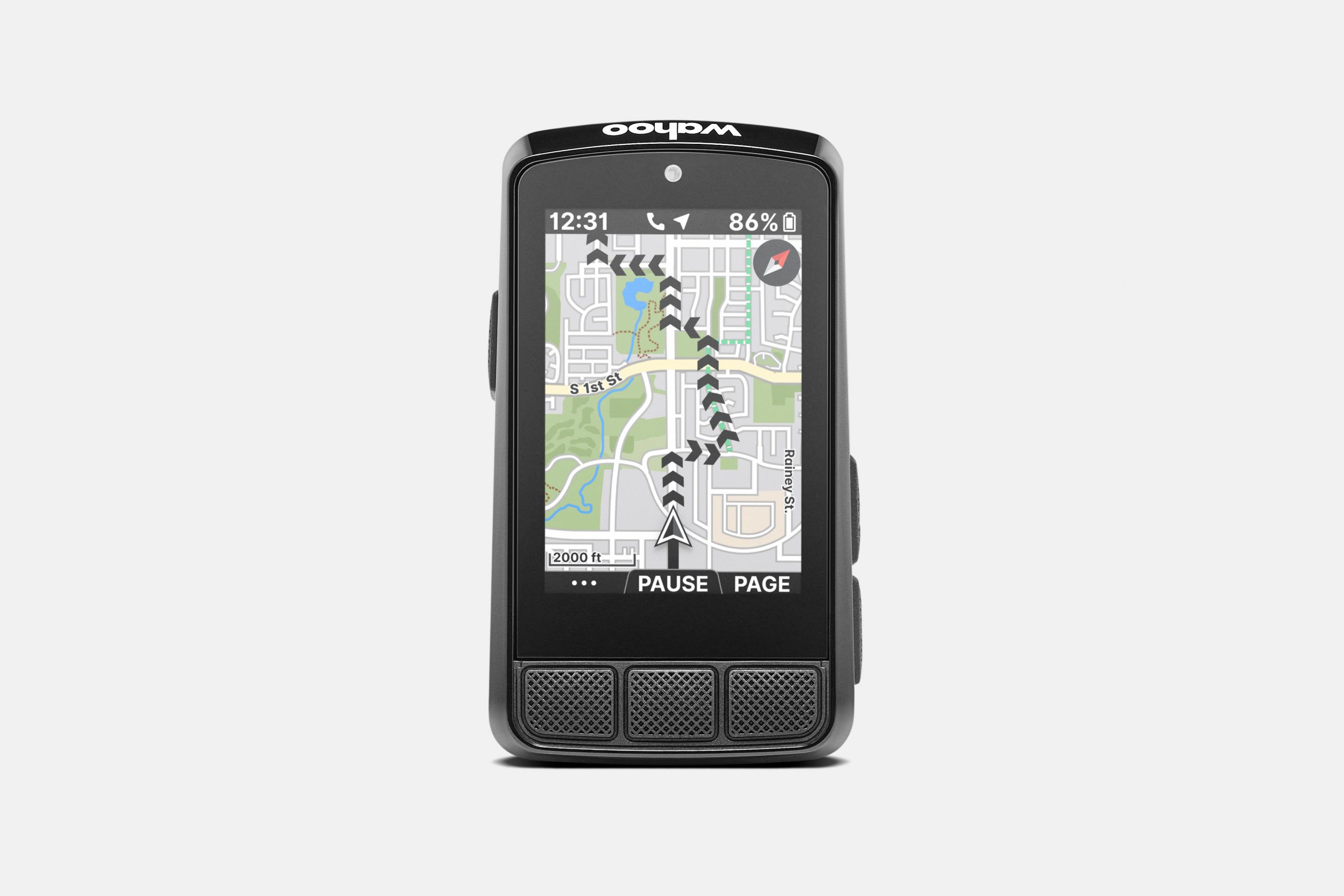
The brand’s Wahoo Elemnt Ace bike computer has increased from $599 to $649, while a Kickr Core with a Zwift Cog is up $40 to $534.

The biggest price hike is the Wahoo Kickr Run, which has risen from $4,999 to $6,999. 

According to DC Rainmaker, Wahoo’s US site appeared “to be updating itself, because if you hover over products, you’ll see the old price. But once you open up the product page, you’ll see the new price”.

Wahoo’s US price increases at a glance

  • Wahoo Elemnt Ace: $599 to $624
  • Wahoo Elemnt Bolt 3: $329 to $349
  • Wahoo Elemnt Roam 3: $449 to $464
  • Wahoo Kickr V6: $999 to $1,049
  • Wahoo Kickr Core (with Zwift Cog): $499 to $534
  • Wahoo Kickr Bike V2: $3,799 to $3,899
  • Wahoo Kickr Climb: $699 to $749
  • Wahoo Headwind: $299 to $319
  • Wahoo Trackr Radar: $199 to £249
  • Wahoo Trackr HR: $89 to $99

Are Trump’s tariffs causing the price hikes?

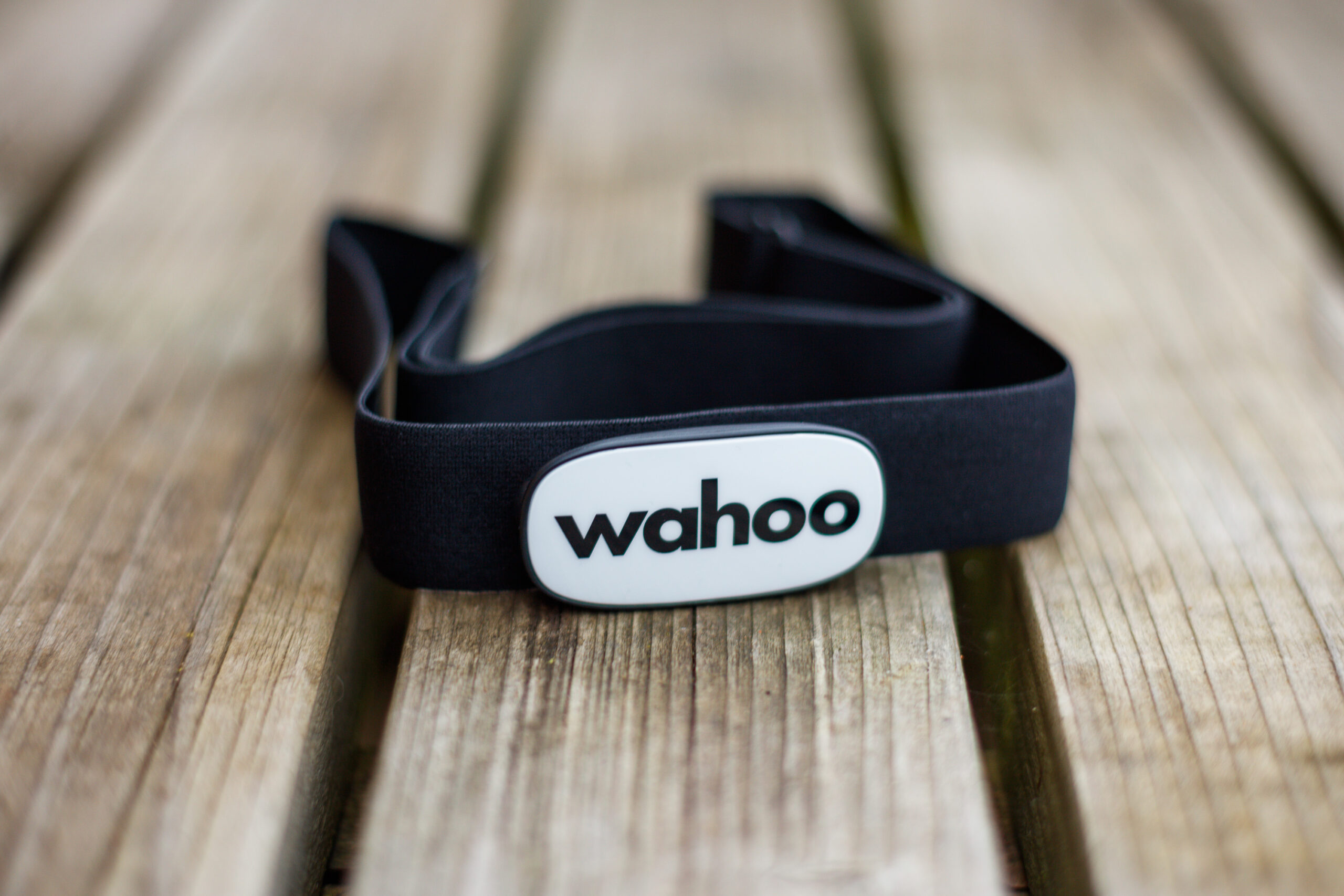
Wahoo Trackr heart reate monitor
Wahoo looks to be the latest brand to have increased its prices due to Trump’s tariffs. Simon von Bromley / Our Media

Wahoo’s European and UK pricing appears to have remained the same, which suggests these price increases are due to Trump’s tariffs.

The cycling industry has seen many brands adjust their pricing or distribution in light of the tariffs.

In April, Silca revealed that selling its new Elettrico electric bike pumps in the US was not viable due to the impact of tariffs. However, last week it was revealed that a reduction in trade war facilities opened an import window for the electric bike pumps. 

At the end of April, Garmin revealed its January–March 2025 earnings, showing a 12 per cent year-on-year uptick. 

Garmin’s president and CEO, Cliff Pemble, said the results were outstanding, but added that US trade policy was affecting every business, especially those with global supply chains.

Pemble said this would likely result in price increases: “So we’re evaluating pricing not broadly, but specifically in context of each market and product line… there are cases where definitely, there’s room to have different pricing, and there’s other cases because… it’s more competitive and difficult to increase prices.”

Specialized and Trek have also adjusted their pricing in light of the tariffs, with the former adding a surcharge to products and the latter introducing a price increase. 

The US bicycle industry’s trade association, PeopleForBikes, has said Trump’s tariffs will have “devastating impacts” on the industry. 

Why are there varying price increases? 

Wahoo Elemnt Bolt 3
The Elemnt Bolt 3 had a lower shipping price than the Trackr Radar. Wahoo

The variation in price increases is likely due to where Wahoo’s products are made. 

In May, Wahoo added a surcharge to its Wahoo Trackr Radar via increased shipping fees.

US consumers were faced with a $50 fee for the radar bike light, whereas the cheapest shipping fee for an Elemnt Bolt 3 was $15.

The difference between these products is the Trackr Radar is made in China, and therefore subject to higher tariffs, while the Elemnt Bolt 3 is made in Taiwan. 

What does Wahoo say about the price increase? 

Wahoo hasn’t yet said anything about the price increases on products in the US.

BikeRadar has contacted Wahoo for comment.

Join our free data science education workshop for teachers

Are you a teacher who is interested in data science education for key stage 5 (age 16 to 18)? Then we invite you to join our free, in-person workshop exploring the topic, taking place in Cambridge, UK on 10 July 2025.

Teachers at a workshop.

You will be among the very first educators to see some of our first test activities for teacher training to build data science concepts, and your contributions will feed into our future work. Sign up by 20 June to take part.

Data science: What do we need to teach school-age learners?

Current artificial intelligence (AI) methods, especially machine learning (ML), rely heavily on data. While young people learn mathematics, and some statistics, at school, data science concepts are not commonly taught.

Teachers at a workshop.

To complement our work on AI literacy, we have been investigating what data science teaching resources and education research are currently available.

Our goals for this work are:

  1. To work out what data science concepts may need to be taught in schools, initially with a focus on key stage 5
  2. To develop related teacher professional development and classroom resources

Join us to discuss data science education

If you are interested in data science education for young people, and maybe even have experience of teaching it to learners aged 16 to 18 in your school (in any subject, including computer science, social sciences, mathematics, statistics, and ethics), please join our free workshop on Thursday 10 July in our office in Cambridge. We are able to reimburse some travel expenses.

At the workshop:

  • We would love to hear about your experience of teaching any elements of data science
  • We will share some exploratory concept building activities with you and discuss them together

You’ll be the first group of working teachers we will share these activities with — your feedback will be invaluable, and you’ll have the chance to shape our work going forward.

If you are interested, please fill in this form by Friday 20 June:

You will then receive more information from us by 27 June. Spaces in the workshop are limited, so please do not book any travel until we confirm your space.

We’re looking forward to shaping the future of data science education with you.


PS In our current seminar series, researchers from around the world are presenting their latest work on teaching about AI and data science. You can catch up on past sessions and sign up for upcoming ones on our website.

The post Join our free data science education workshop for teachers appeared first on Raspberry Pi Foundation.

Unofficial SteamVR Driver Will Reportedly Enable Support for WMR Headsets on Latest Windows Versions

Microsoft pulled the plug on support for its entire WMR platform on Windows 11 last year, putting an official end to the company’s foray into PC VR headsets. Now, an unofficial SteamVR driver hopes to bring it back.

Microsoft deprecated the Mixed Reality Portal app, Windows Mixed Reality for SteamVR, and Steam VR Beta when Windows 11 24H2 update rolled out last October, making a fleet of PC VR headsets from Acer, Asus, Dell, Lenovo, HP, and Samsung essentially expensive paperweights.

Granted, if you haven’t updated to Windows 11 24H2, or are still on Windows 10, Microsoft says you’ll be able to play SteamVR content through November 2026 before the plug is pulled for good. Still, that’s a bitter pill to swallow for users of WMR’s most modern headset, HP Reverb G2, which released less than five years ago.

Now, Reddit user ‘mbucchia’ claims an unofficial SteamVR driver is in the works, which aims to bring all WMR headsets back into the fold sometime this Fall. Below you can see the first HP Reverb (2019) in action:

Dubbed the ‘Oasis’ driver, mbucchia says the SteamVR driver “does not need the Mixed Reality Portal,” which was deprecated in Windows 11 24H2 last year alongside SteamVR beta support.

“This means it can work on Windows 11 24H2 and newer. It supports full 6DoF tracking along with motion controllers,” mbucchia says.

“As mentioned on another post, I don’t have all WMR headsets to test with. Though I can tell you that it [also] works on the original Acer AH100. It should in theory work on any brand/model,” mbucchia says.

The first wave of WMR headsets launched in 2017 | Image courtesy Microsoft

Work on the driver is remaining behind closed doors, mbucchia says, noting that Oasis will be restricted to Nvidia GPUs due to the way SteamVR interfaces with the GPU drivers.

Most interesting of all, though, is Oasis isn’t being undertaken by just anyone. Mbucchia claims they are currently an employee at Microsoft who has previously worked in the company’s Mixed Reality division.

“I am bound by NDAs and other obligations. I want to be clear that I have taken much care to NOT BREACH any of these agreements while working on this project. In particular, I am leveraging SteamVR for a lot of heavy lifting and I am not borrowing any Microsoft intellectual property,” mbucchia says.

For these reasons, Oasis won’t feature a beta, or similar early access, before its release in Fall 2025. It also won’t be open source.

“Much of the code is the result of deep reverse-engineer. Reverse-engineering that if shared, could be construed as exposing internals of programs like SteamVR or the Nvidia GPU drivers,” mbucchia explains. “Not[e] that here again, I am NOT BREACHING any proprietary/intellectual property. Having respect for both Valve and Nvidia, I will not divulge any of the code that they do not consider public.”

Mbucchia says they’ll reveal more about the project in the Windows Mixed Reality subreddit leading up to its Fall 2025 release.

The post Unofficial SteamVR Driver Will Reportedly Enable Support for WMR Headsets on Latest Windows Versions appeared first on Road to VR.

CH32H417 Dual-Core RISC-V MCU Offers USB, Ethernet, and SerDes Support

WCH’s new CH32H417 microcontroller introduces a dual-core RISC-V architecture designed for embedded applications requiring high-speed connectivity and peripheral integration. It is built on the Qingke V5F core running at 400 MHz and the V3F core at 144 MHz. The microcontroller supports USB 3.2 Gen 1 with a 5Gbps PHY and dual-role host/device functionality, along with […]

Hidden Memories Of The Gardens Between Is A Chilled Hands-Off Puzzler

The Gardens Between is one of those indie darlings that absolutely enraptured just about everyone who played it, and was apparently released nearly seven years ago in 2018. Ignoring the panic attack that timeline has caused for anyone who played the flat version, I never expected to see this gem pop up in virtual reality. There’s a bit of a trend there, really, but that’s a conversation for another day. Today is for Hidden Memories of The Gardens Between, a VR reimagining of it.

The Steam Next Fest demo is almost upsettingly short, but it offers a solid feel for what to expect. This is a game about Arina and Frendt, but not one in which you control them, not really. Instead, you mostly control time. You can make time go forward, and you can make it go backwards. Generally speaking, you’ll always kick off with forwards, and you then have to watch as the two childhood friends make their way around the cute dioramas they find themselves on.

0:00

/1:00

Announcement trailer

Your actual job is then to figure out what boils down to being one puzzle, but one that becomes increasingly complex as you go on. Your aim is to get a pink orb inside a lantern, and then have the pair carry it to a portal at the top of each island. This starts off incredibly simple, of course, but every level adds a new layer or wrinkle. One of the first of these is that while some flowers will have the orb you need, others will take it from you as the characters go past.

Thankfully, there are special chimes you can get the characters to interact with that can close or open these flowers, so strategic timing and planning can make sure you don’t lose the orb you require. That is, as long as you don’t mind scrubbing backwards and forwards through time, and that’s initially simple. By the end of the demo, you’re manipulating time to send a box that can carry the lantern into a video game, then rewinding time for just the video game to open a box within that video game. You then rewind again for everyone to get the box back out, pick up the lantern, and go on your merry way.

Shows a character about to jump on a saw.

Items are also strewn throughout the levels that you can add to Arina’s diary, which lets you not only watch as her creative talents bloom, but also find big moments in her life that help you better understand her. There are also some for you to just play about with because you’re in VR, and if you don’t decide to pick those up and muck around a bit, you’ll actually feel like you’re not doing much.

While the trailer shows additional motion control gestures like sawing wood, the demo’s VR interactivity feels very stripped down and basic. To move time forwards or backwards, you just hold the analog stick right or left accordingly, and then to move the viewpoint. To get a character to interact with something, you just push the A button. If you’re someone who sometimes struggles with VR controls, this won’t be one of those moments.

Hidden Memories of The Gardens Between is an immensely charming game, one that has me quite excited to see it through fully when the time comes. While it’s a lot more hands-off than many VR games, it could be a fantastic one to play with kids watching you cast it, a way to chill out before bed, or get your brain going in the morning. The vibes are truly immaculate, and as long as the puzzles can keep things fresh throughout the story itself, then this could be one of the next big VR puzzle games.

‘AI Is Not Intelligent’: The Atlantic Criticizes ‘Scam’ Underlying the AI Industry

The Atlantic makes that case that “the foundation of the AI industry is a scam” and that AI “is not what its developers are selling it as: a new class of thinking — and, soon, feeling — machines.”

[OpenAI CEO Sam] Altman brags about ChatGPT-4.5’s improved “emotional intelligence,” which he says makes users feel like they’re “talking to a thoughtful person.” Dario Amodei, the CEO of the AI company Anthropic, argued last year that the next generation of artificial intelligence will be “smarter than a Nobel Prize winner.” Demis Hassabis, the CEO of Google’s DeepMind, said the goal is to create “models that are able to understand the world around us.” These statements betray a conceptual error: Large language models do not, cannot, and will not “understand” anything at all. They are not emotionally intelligent or smart in any meaningful or recognizably human sense of the word. LLMs are impressive probability gadgets that have been fed nearly the entire internet, and produce writing not by thinking but by making statistically informed guesses about which lexical item is likely to follow another.

A sociologist and linguist even teamed up for a new book called The AI Con: How to Fight Big Tech’s Hype and Create the Future We Want, the article points out:
The authors observe that large language models take advantage of the brain’s tendency to associate language with thinking: “We encounter text that looks just like something a person might have said and reflexively interpret it, through our usual process of imagining a mind behind the text. But there is no mind there, and we need to be conscientious to let go of that imaginary mind we have constructed.”

Several other AI-related social problems, also springing from human misunderstanding of the technology, are looming. The uses of AI that Silicon Valley seems most eager to promote center on replacing human relationships with digital proxies. Consider the ever-expanding universe of AI therapists and AI-therapy adherents, who declare that “ChatGPT is my therapist — it’s more qualified than any human could be.” Witness, too, how seamlessly Mark Zuckerberg went from selling the idea that Facebook would lead to a flourishing of human friendship to, now, selling the notion that Meta will provide you with AI friends to replace the human pals you have lost in our alienated social-media age….
The good news is that nothing about this is inevitable: According to a study released in April by the Pew Research Center, although 56 percent of “AI experts” think artificial intelligence will make the United States better, only 17 percent of American adults think so. If many Americans don’t quite understand how artificial “intelligence” works, they also certainly don’t trust it. This suspicion, no doubt provoked by recent examples of Silicon Valley con artistry, is something to build on…. If people understand what large language models are and are not; what they can and cannot do; what work, interactions, and parts of life they should — and should not — replace, they may be spared its worst consequences.


Read more of this story at Slashdot.

EdgeLogix-1145 Brings Industrial Control and Edge Computing with Raspberry Pi CM5

The EdgeLogix-1145 is a rugged industrial controller that integrates edge computing, PLC functionality, and IIoT gateway capabilities. Designed around the Raspberry Pi CM5, it offers a compact, fanless platform designed for automation tasks in harsh environments such as factories, energy systems, and smart infrastructure. The system is built on the Broadcom BCM2712 SoC, a quad-core […]

Scientists Show Reforestation Helps Cool the Planet Even More Than Thought

“Replanting forests can help cool the planet even more than some scientists once believed, especially in the tropics,” according to a recent announcement from the University of California, Riverside.

In a new modeling study published in Communications Earth & Environment, researchers at the University of California, Riverside, showed that restoring forests to their preindustrial extent could lower global average temperatures by 0.34 degrees Celsius. That is roughly one-quarter of the warming the Earth has already experienced. The study is based on an increase in tree area of about 12 million square kilometers, which is 135% of the area of the United States, and similar to estimates of the global tree restoration potential of 1 trillion trees. It is believed the planet has lost nearly half of its trees (about 3 trillion) since the onset of industrialized society.

The Washington Post noted that the researchers factored in how tree emissions interacted with molecules in the atmosphere, “encouraging cloud production, reflecting sunlight and cooling Earth’s surface.”

In a news release, the researchers acknowledge that full reforestation is not feasible… “Reforestation is not a silver bullet,” Bob Allen, a professor of climatology at the University of California at Riverside and the paper’s lead author, said in a news release. “It’s a powerful strategy, but it has to be paired with serious emissions reductions.”


Read more of this story at Slashdot.