
Learn how to test microphones on Debian and Ubuntu-based distributions, then learn how to troubleshoot the issue with a few practical examples.
Monthly Archives: June 2025
ROC-RK3506J-CC Board Integrates RK3506J and Dual LAN Support
The ROC-RK3506J-CC is a compact single-board computer based on Rockchip’s RK3506J processor. Designed for embedded systems with real-time demands, it supports a wide range of I/O and OS options and is available in both industrial and commercial variants. The RK3506J processor includes a tri-core ARM Cortex-A7 cluster alongside a single Cortex-M0 core, fabricated using a […]
Adobe Is Making A visionOS App For Editing Spatial Video
Adobe is making a visionOS app “powered by Premiere” for natively editing Spatial Video on Apple Vision Pro.
Announced during WWDC25 by Apple, no further details were given, but the company shared a short clip of the upcoming app in action, showing it being used to add text in front of a horse.
0:00
/0:10
Spatial Video is Apple’s term for stereoscopic 3D video using the Apple HEVC Stereo Video Profile format of MV-HEVC. Spatial videos can be captured by all iPhone 16 models, the iPhone 15 Pro models, Apple Vision Pro, and Canon’s EOS R7 camera with its upcoming spatial lens attachment.
Spatial videos can be viewed on Apple Vision Pro, Pico 4 Ultra, Meta Quest headsets via Meta’s phone app, or any VR headset if you convert the file to SBS 3D.
There are already visionOS apps on the App Store for editing spatial videos, such as SpatialCut, so we’ll be curious to see how Adobe’s compares, and whether it integrates with Adobe’s Creative Cloud.
Final Cut Pro for Mac Now Supports Editing Spatial Videos
Apple’s Final Cut Pro for Mac now supports editing spatial videos captured by iPhone, Vision Pro, and Canon EOS R7.
 UploadVRDavid Heaney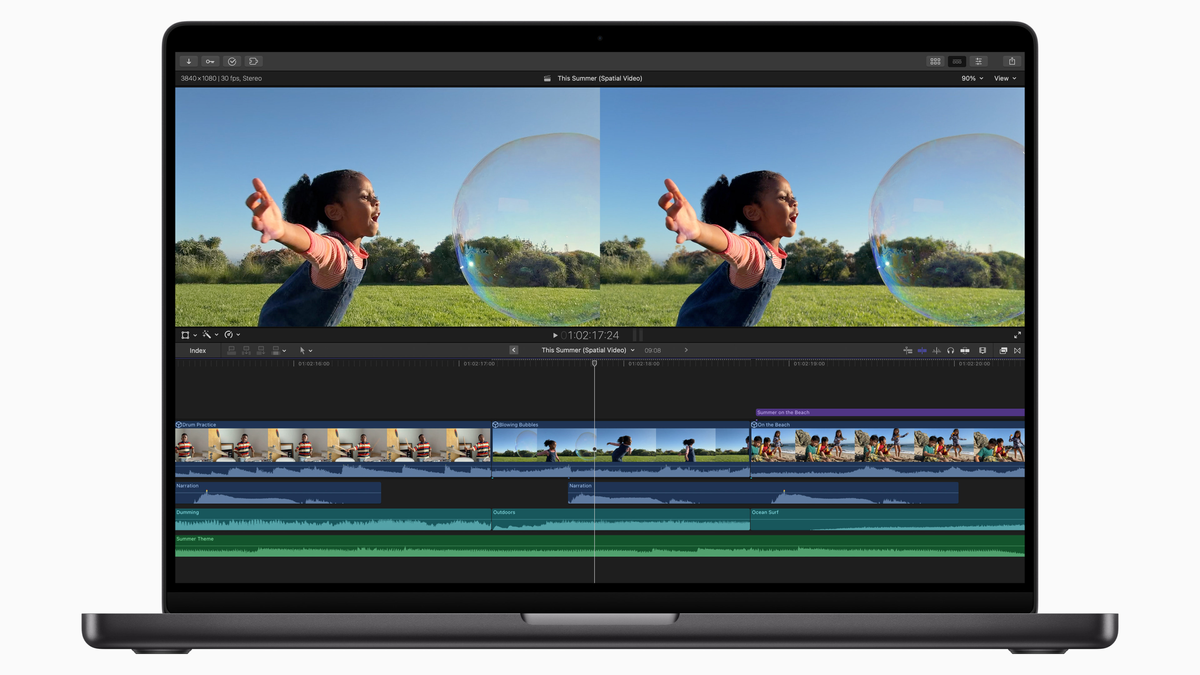
You can also edit spatial videos on a Mac, using Apple’s Final Cut Pro.
At WWDC25 Apple also announced visionOS 26, set to be the biggest Vision Pro software update yet, and you can read all about it in our article:
visionOS 26 Brings PS VR2 Controllers, Photorealistic Personas, Spatial Scenes & More
visionOS 26 will bring PS VR2 controllers & Logitech Muse stylus support, much more realistic Personas, spatial Widgets, volumetric Spatial Scenes, local SharePlay, and much more.
 UploadVRDavid Heaney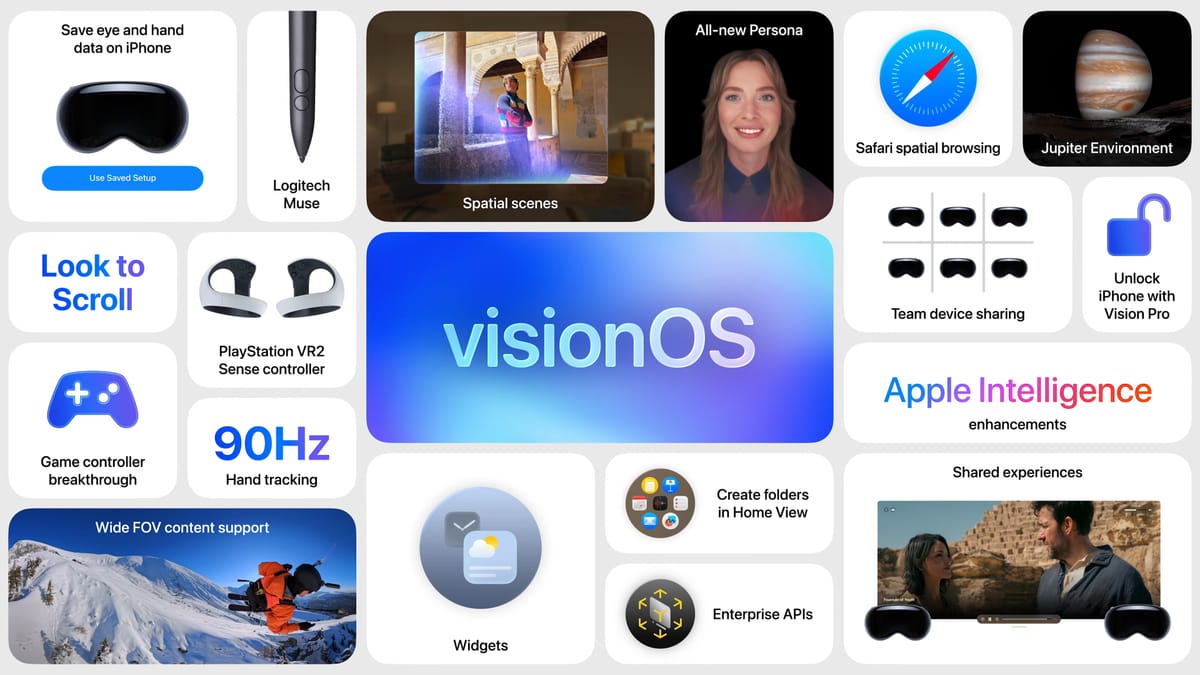
RADV Radeon Vulkan Driver Merges Support For VP9 Video Decoding
Following the release of Vulkan 1.4.317 back on Friday that brought the long-awaited VK_KHR_video_decode_vp9 extension for VP9 codec support for Vulkan Video, the Mesa RADV driver is now the first prominent open-source Vulkan driver merging support for VP9 decode…
Apple Vision Pro Will Get “High-End iPad Games” Later This Year
Will games like Assassin’s Creed Mirage & Resident Evil Village come to Vision Pro later this year?

Apple Vision Pro can theoretically run almost all iPad apps by default, unless developers opt out.
So far, developers of AAA games available on iPad have chosen to opt out, and this may be down to performance limitations. While Vision Pro uses the same M2 chip as iPads that can run these games, the added overhead of visionOS and all its features mean developers have reported that the headset is unable to handle demanding titles.
One issue developers have run into is the lower available memory of visionOS. But in visionOS 26 Apple is increasing the platform’s memory limit, and the company claims this enables “high-end iPad games” on Vision Pro.
0:00
/0:05
One of the only currently available AAA titles is the NBA 2K series.
However, Apple did not announce any specific “high-end iPad games” newly coming to the platform. We’ll keep an eye out for any arriving later this year, when visionOS 26 actually arrives as a stable release.
For more about visionOS 26, read our article covering the many changes set to arrive in Apple’s biggest Vision Pro software update yet:
visionOS 26 Brings PS VR2 Controllers, Photorealistic Personas, Spatial Scenes & More
visionOS 26 will bring PS VR2 controllers & Logitech Muse stylus support, much more realistic Personas, spatial Widgets, volumetric Spatial Scenes, local SharePlay, and much more.
 UploadVRDavid Heaney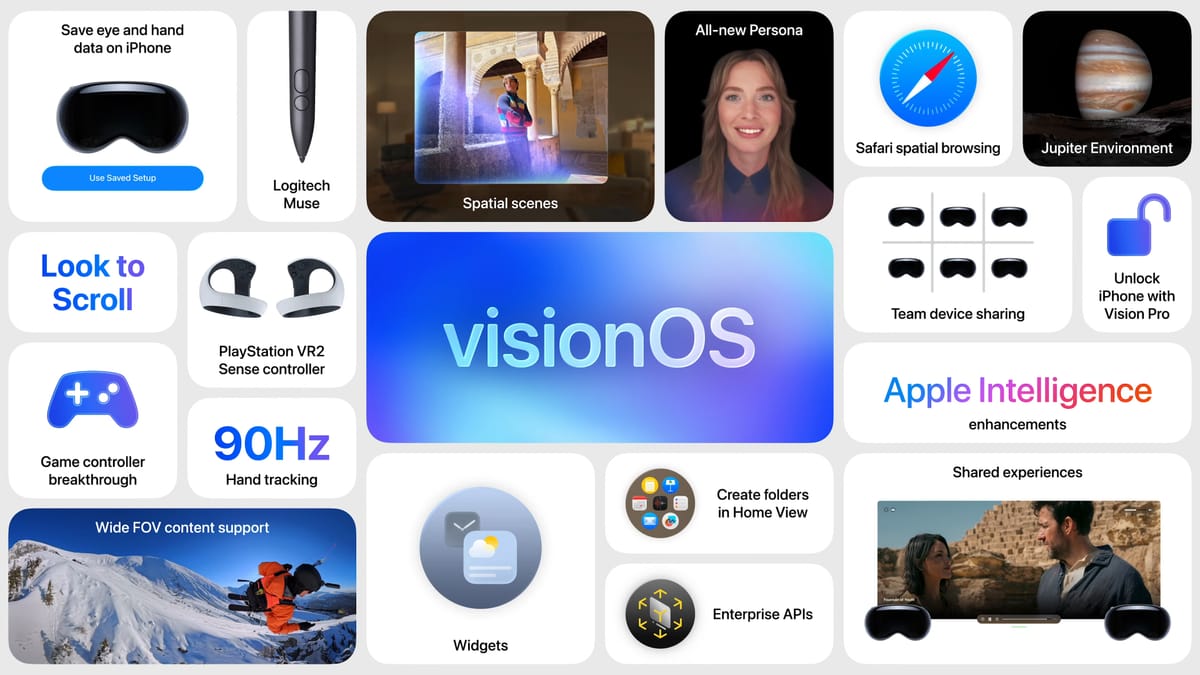
FAA To Eliminate Floppy Disks Used In Air Traffic Control Systems
An anonymous reader quotes a report from Tom’s Hardware: The head of the Federal Aviation Administration just outlined an ambitious goal to upgrade the U.S.’s air traffic control (ATC) system and bring it into the 21st century. According to NPR, most ATC towers and other facilities today feel like they’re stuck in the 20th century, with controllers using paper strips and floppy disks to transfer data, while their computers run Windows 95. While this likely saved them from the disastrous CrowdStrike outage that had a massive global impact, their age is a major risk to the nation’s critical infrastructure, with the FAA itself saying that the current state of its hardware is unsustainable.
“The whole idea is to replace the system. No more floppy disks or paper strips,” acting FAA administrator Chris Rocheleau told the House Appropriations Committee last Wednesday. Transportation Secretary Sean Duffy also said earlier this week,” This is the most important infrastructure project that we’ve had in this country for decades. Everyone agrees — this is non-partisan. Everyone knows we have to do it.” The aviation industry put up a coalition pushing for ATC modernization called Modern Skies, and it even ran an ad telling us that ATC is still using floppy disks and several older technologies to keep our skies safe. […]
Currently, the White House hasn’t said what this update will cost. The FAA has already put out a Request For Information to gather data from companies willing to take on the challenge of upgrading the entire system. It also announced several ‘Industry Days’ so companies can pitch their tech and ideas to the Transportation Department. Duffy said that the Transportation Department aims to complete the project within four years. However, industry experts say this timeline is unrealistic. No matter how long it takes, it’s high time that the FAA upgrades the U.S.’s ATC system today after decades of neglect.


Read more of this story at Slashdot.
Vision Pro Will Allow ‘Optional’ and ‘Required’ Designations for Apps Using Motion Controllers
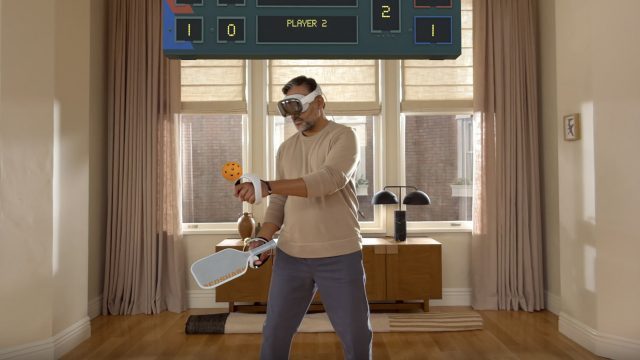

One of the biggest pieces of Vision Pro news from today’s WWDC is that the headset will be getting support for PSVR 2 motion controllers and a Logitech motion stylus with the release of visionOS 26. Now we’re learning more of the details, including the fact that developers will be able to publish Vision Pro apps that ‘require’ motion controllers, and those which make them ‘optional’. The change is a surprising shift compared to the hand-tracking only approach that Apple launched the headset with.
In a recorded developer session released at WWDC 2025, Apple went into more detail about upcoming support for motion controllers on VisionOS 26.
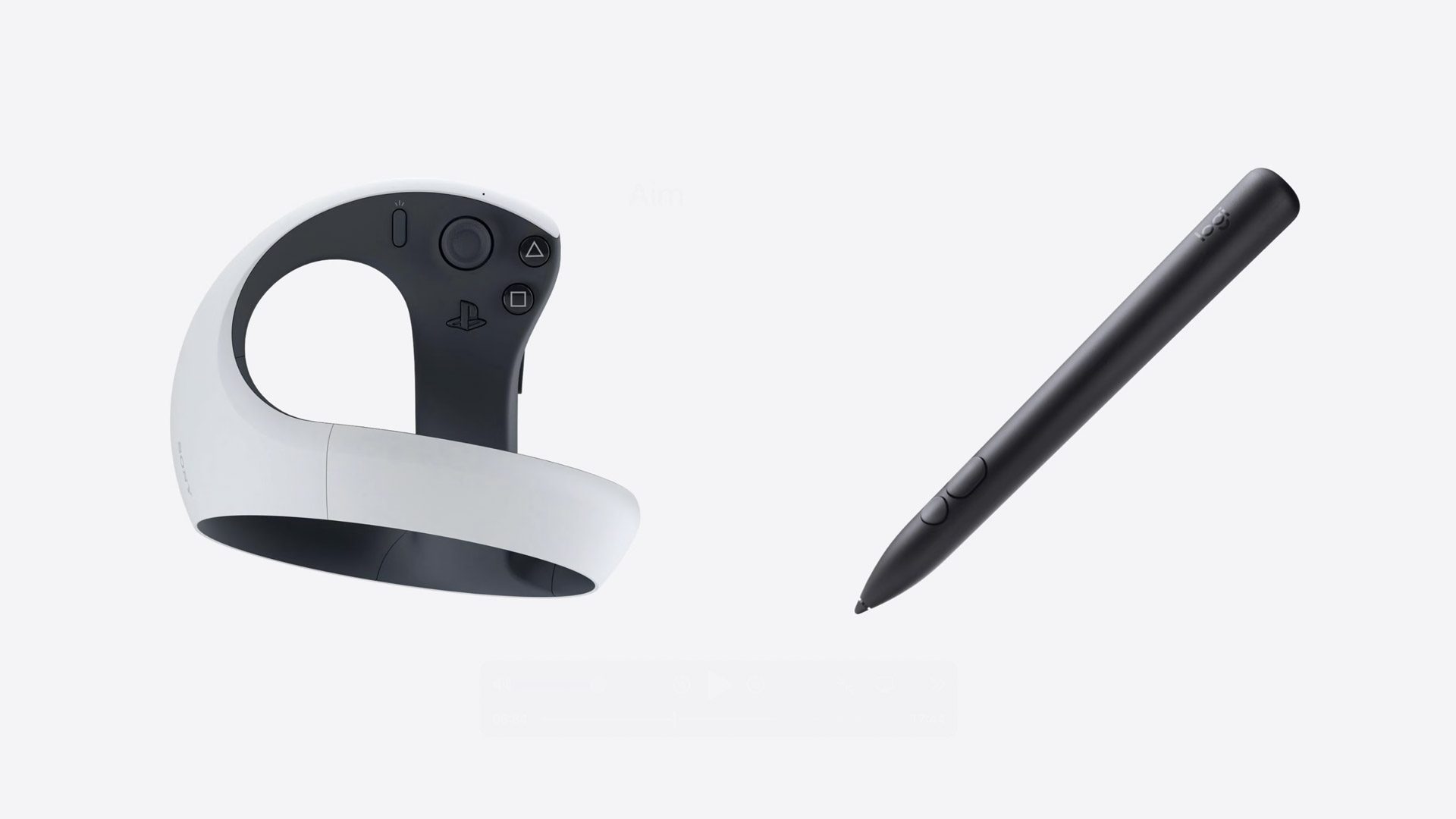
One of the interesting things we learned is that developers will be able to publish Vision Pro apps with an ‘optional’ or ‘required’ motion controller designation. Developers will make this choice, and it will show up in the App Store so users know what to expect.
This of course opens the door to Vision Pro content which works exclusively with motion controllers. While it would be nice if hand-tracking was supported in every single app, the reality is that most existing VR games (ie: on platforms like Quest and PC VR) are built specifically for motion controllers, and would need to be significantly redesigned to support hand-tracking.
In VisionOS 26, Apple will allow developers to publish Vision Pro apps which ‘require’ motion controllers, meaning developers will be able to publish their existing VR content on Vision Pro with significantly less effort than if hand-tracking was required.
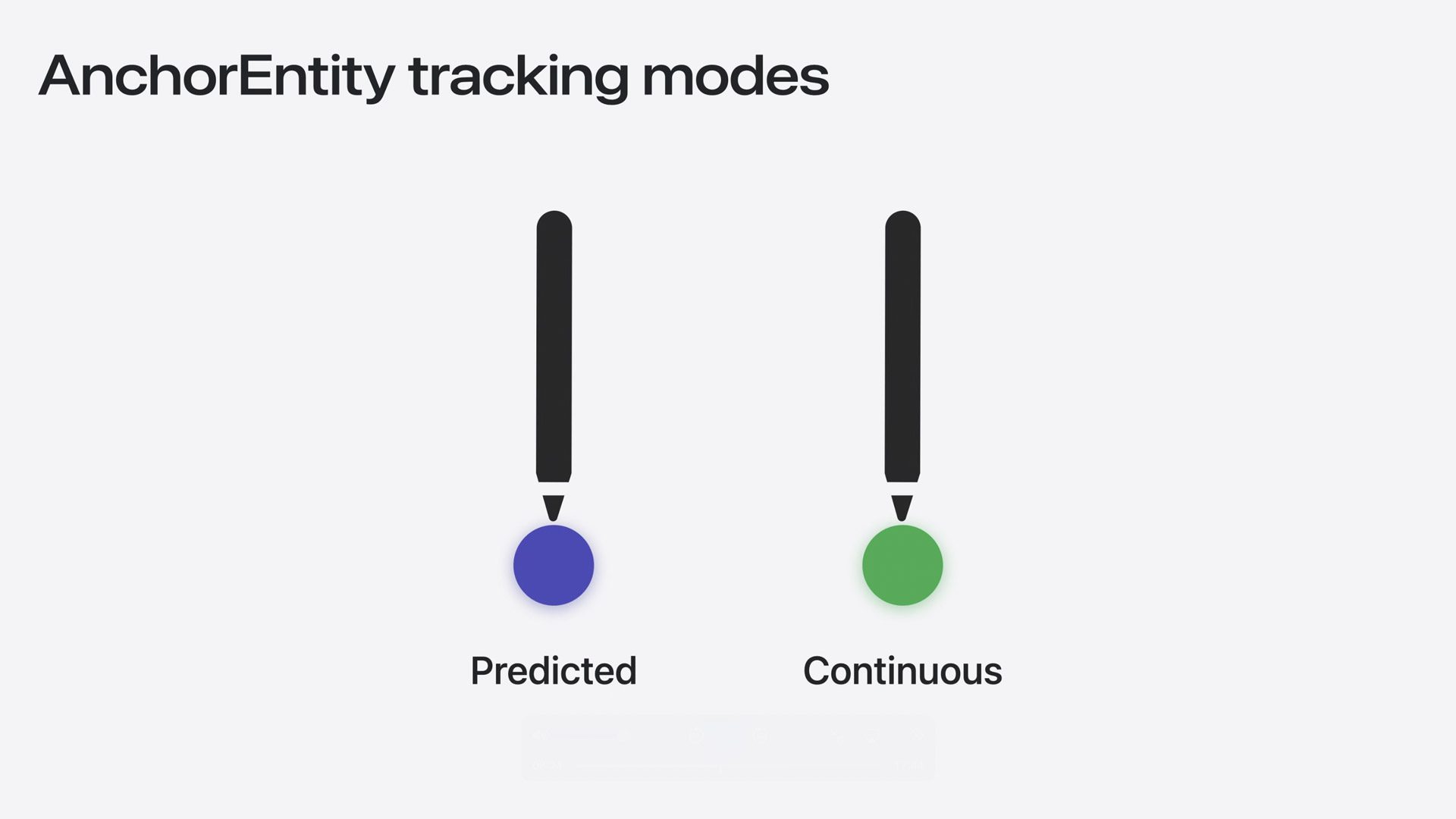
When building apps for motion controllers on Vision Pro, developers will be able to choose between two different tracking modes: Predicted and Continuous.
The Predicted mode will offer the lowest apparent latency by estimating where the controller will end up in future frames based on its present movement. This mode will likely be best for games with lots of player motion.
The Continuous mode will offer the highest precision by not estimating future position. This will prevent ‘overshoot’ when a user suddenly changes the direction of the motion controller. However, this will come at the cost of higher apparent latency. This mode will likely be best for apps that want optimal precision, like art and productivity.
Despite talking about these two tracking modes, as far as we know, Apple has yet to share any specific info on how much latency developers can expect when using motion controllers on Vision Pro.
For more on VisionOS 26, check out our overview of major changes here.
The post Vision Pro Will Allow ‘Optional’ and ‘Required’ Designations for Apps Using Motion Controllers appeared first on Road to VR.
Engadget Podcast: Breaking down the highlights of WWDC 2025
In this special episode, recorded live in Cupertino, Cherlynn and Deputy Editor Nathan Ingraham are joined by the Washington Post’s Chris Velazco and Wired’s Julian Chokkattu to discuss Apple’s announcements at WWDC 2025. Though the announcements were all over the place and felt difficult to judge until they roll out to devices, our guests and hosts agree that they felt more meaningful than past WWDCs.
Subscribe!
Credits
Hosts: Cherlynn Low and Nathan Ingraham
Guests: Chris Velazco and Julian Chokkattu
Music: Dale North
This article originally appeared on Engadget at https://www.engadget.com/mobile/smartphones/engadget-podcast-breaking-down-the-highlights-of-wwdc-2025-023505128.html?src=rss
Sway 1.11 Tiling Wayland Compositor Adds Support for Explicit Synchronization
Sway 1.11 has been released as the latest stable version of this popular i3-compatible and wlroots-based Wayland compositor and tiling window manager available in the repositories of many GNU/Linux distributions.
If India Chokes Less, It Will Fry More
South Asia has warmed far more slowly than the rest of the world over the past four decades with temperatures rising just 0.09C per decade compared to 0.30C elsewhere on land, according to new climate research. Scientists believe this “warming hole” results from two factors that have masked the true impact of global warming: heavy aerosol pollution that reflects sunlight back to space and expanded irrigation that cools air through evaporation.
The protective effect is temporary and comes at a deadly cost. Air pollution currently kills between 2 million and 3 million people annually in South Asia, while extreme heat causes 100,000 to 600,000 deaths. As governments reduce pollution and groundwater depletion limits irrigation expansion, atmospheric scientists predict India will warm at twice the rate of the past 20 years. By 2047, the average Indian could experience a four-fold increase in dangerous heat stress days, threatening a region where only 10% of households have air conditioning.


Read more of this story at Slashdot.
Pickle Pro Is The First Announced Apple Vision Pro Game To Use PS VR2 Controllers
Pickle Pro, from Resolution Games, is the first announced Apple Vision Pro game to use the PS VR2 Sense controllers.
If you missed the news, earlier today Apple announced and released the first developer beta of visionOS 26, which includes support for the PlayStation VR2 Sense controllers.
visionOS 26 Brings PS VR2 Controllers, Photorealistic Personas, Spatial Scenes & More
visionOS 26 will bring PS VR2 controllers & Logitech Muse stylus support, much more realistic Personas, spatial Widgets, volumetric Spatial Scenes, local SharePlay, and much more.
 UploadVRDavid Heaney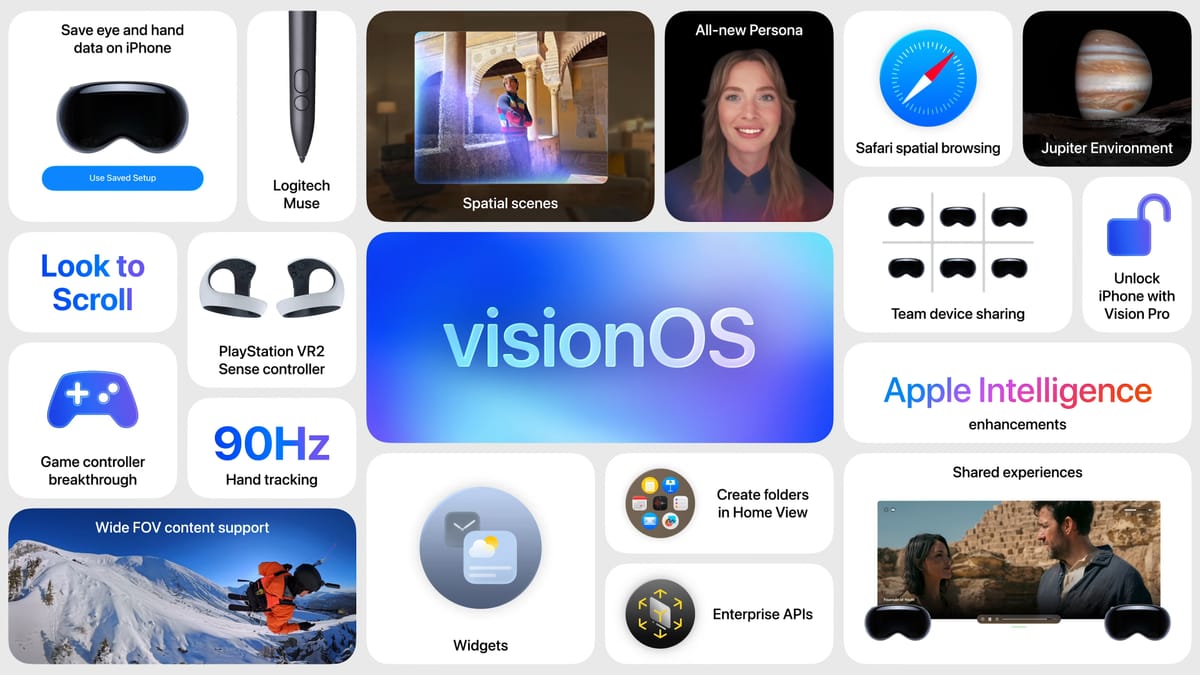
Resolution Games is a veteran XR studio behind dozens of top titles across all major headsets. Apple contracted the studio to build Game Room for Vision Pro’s launch and the Gears & Goo tower defense game that released earlier this year, both on its Apple Arcade subscription service. Resolution has also ported its flagship cross-platform title Demeo to visionOS.
The studio’s next Vision Pro game is called Pickle Pro, and it’s the first visionOS title to announce support for PS VR2 Sense controllers.
Resolution says Pickle Pro is “the ultimate pickleball training and competition app”, with “hyper-real physics”.
0:00
/0:05
The announcement comes just over three months after Resolution added pickleball to its cross-platform VR/MR game Racket Club, and the studio says Pickle Pro will use the same physics engine.
Further, it says Pickle Pro’s bots are trained on thousands of hours of gameplay data from Racket Club, using machine learning to make them “smarter, more realistic, and more challenging with every match”.
VR Sports Sim Racket Club Adds Pickleball, Table Tennis & More
VR sports game Racket Club introduces table tennis, pickleball and more in today’s major update.
 UploadVRSarah Thwaites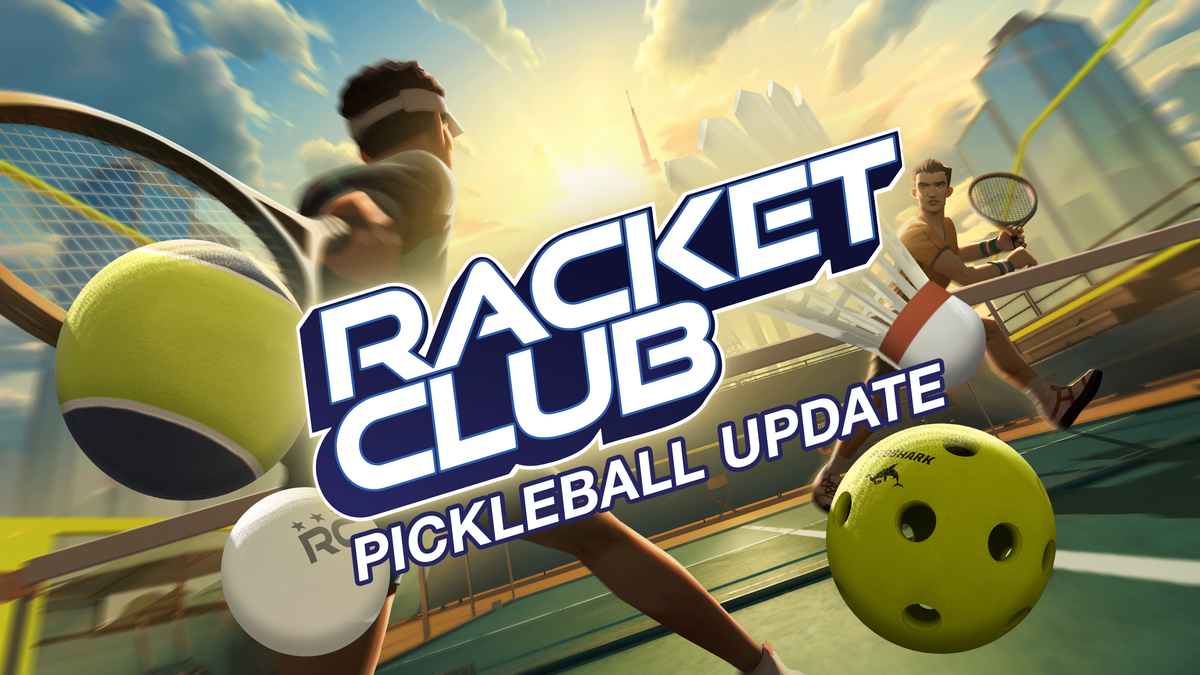
There’s no release date yet for Pickle Pro, but visionOS 26 is set to arrive later this year.
ICANN Waves Hands in Protest at AFRINIC Election Arrangement
The Internet Corporation for Assigned Names and Numbers (ICANN) has called for changes to the roster of officials appointed to oversee the forthcoming election at the African Network Information Centre (AFRINIC), the latest twist in a conflict that stretches back years and has left the African regional internet registry in limbo. From a report: AFRINIC is one of the world’s five regional internet registries, the governance bodies that delegate and manage IP addresses and autonomous systems numbers in co-ordination with ICANN. The African organization has essentially been dead in the water, operating without a board or CEO since 2022. The problems started in 2020 when AFRINIC alleged that one of its members — a company called Cloud Innovation — had breached its agreement with the registry in ways that could lead AFRINIC to reclaim the company’s IP address holdings.
Cloud Innovation countered that AFRINIC acted improperly and launched multiple lawsuits in Mauritius, the Indian Ocean nation the registry calls home. Other parties also sued AFRINIC for similar reasons. The lawsuits left AFRINIC’s bank accounts frozen and meant it was unable to convene a board or run elections. In February 2025, the Supreme Court of Mauritius appointed a receiver to secure AFRINIC’s assets and reconstitute its board.


Read more of this story at Slashdot.
Sony’s PlayStation VR2 Controllers Change The Game For Apple Vision Pro
Soon, Apple Vision Pro owners will be playing games using officially supported tracked controllers in their hands from Sony.
The controllers, of course, will be sold separately, as Apple was sure to note in its WWDC 2025 press announcement. The feature is coming to visionOS 26, set to arrive roughly one and a half years after the headset launched.
Though still gated for now behind a $3500 entry fee for the headset itself, as well as getting your hands on the additional hardware, direct support for PlayStation VR2’s controllers opens up a relatively straightforward path for porting the work of numerous VR developers from the default input system on Quest, PC VR, and both generations of PlayStation VR system. At least, it’s likely going to be a more direct path than building for a gaze and pinch hand tracking only interface.
Until now, most VR game developers have considered building for Apple’s platform a non-starter. That’s because of the combination of few players and the absence of both the haptics and low latency tracking provided by controllers like these. PlayStation VR2’s controllers feature resistive triggers and advanced haptics developers could use with Sony’s controllers for the first time in standalone VR, though we haven’t identified yet whether those features are supported yet. Still, many developers will be put off by the limited player base on Apple headsets, of course. Some, though, will see this as a major indication Apple is looking to create a real market here for future games in VR and mixed reality. Overall, direct integration of Sony’s tracked controllers starts to change the game for Apple and prospective creators.
0:00
/0:05
I recently tested Ping Ping Club on Apple Vision Pro and found a game that works as well as it can with hand tracking. Unfortunately, the title falls apart the moment you try to get competitive, and that happens because current generation hand tracking is still pretty limited. Third party manufacturers have rolled their own version of the open source ALVR software for PC VR streaming, thus enabling players to use the Surreal Touch controllers for PC VR games. This essentially offers a route to play a top-tier competitive game like ElevenVR streaming from a nearby PC.
A small number of highly skilled development groups like Resolution Games, Schell Games and Triband have been able to secure development agreements on Apple devices for exclusive titles featuring the company’s breakthrough gaze-and-pinch interface. In fact, Resolution just announced it would be making Pickle Pro for “training and competition” in pickleball on Apple Vision Pro with compatibility for the PlayStation VR2 controllers.
“Thanks to our shared physics engine and the deep data pool from our award-winning game Racket Club, Pickle Pro is shaping up to be the most authentic pickleball simulator and training app out there,” Resolution Games’ Tommy Palm said in a prepared statement. “All our bots are trained on real gameplay data—from beginners to pros—making them smarter, more realistic, and more challenging with every match. Without the thousands of hours players have put into Racket Club, the machine learning bots in Pickle Pro simply wouldn’t be possible. We’re very excited about the potential here.”
A Resolution representative declined to say whether other controller-dependent games in their library would be making the jump to Vision Pro.
Vision Pro owners, meanwhile, have used the brute force of open source to connect their PC VR games to Vision Pro. On the outside looking in, many developers with limited time to focus on different platforms, as well as cash-strapped potential buyers, await Valve’s entry to the standalone VR market, even as Meta forges ahead making big budget home-grown titles for Quest headsets like Batman: Arkham Shadow and Deadpool VR. None of these trends change because Apple suddenly supports an official tracked controller solution, but it does start to change what could be on the horizon.
I reached out to one of the developers of ElevenVR to ask them about the new Apple feature and whether it changes how they approach multi-platform development.
“We’d love to be on every device possible but there is a huge consideration to effort and time and people it can reach – which is why we aren’t on every headset possible, ” the developer explained over direct message. “If there is a hardware combo that can support the game we’d love to be on it if we have enough time to prioritize it and it makes sense to do so…as each additional platform takes away from others.”
The developer pointed out players have already requested a version of the game installable on phones so they can be used as a spectating camera. The dev says there’s no timeline for release of a spectator camera for iPhone, and was 100 percent clear that there’s no guarantee they’ll be bringing their work to iPhone or Apple Vision Pro. As the developer points out, it’s believed Sony sold more PlayStation VR2 headsets, which come bundled with the controllers, than Apple has shipped Vision Pro devices, none of which have controllers included in the box.
We’re reaching out to developers to see whether Apple’s latest feature changes any of their plans and we’d love to see some discussion in the comments below digging into the considerations at hand.
Overall, what does the VR market look like in about a year to a year and a half? Come Christmas 2026, what options do people have to buy headsets and what games will be available for them? And what will be the dominant input method on those devices?
It’ll take time to have an effect, but a lot of developers are about to realize the VR landscape has changed in a pretty dramatic way.
FreeBSD 14.3 Released With Network Driver Updates, OpenZFS Updated
As a nice stepping stone until FreeBSD 15 is ready to ship later in the calendar year, FreeBSD 14.3 stable is out today as the newest point release for this leading BSD operating system…
FreeBSD Quest Continues For Better Laptop Support With Better WiFi, GPU Drivers & PM
Going on since last year has been an effort to improve FreeBSD laptop support with backing by Dell, AMD, Framework Computer, Netflix, and others. This has focused on better WiFi driver support, enhancing power management, and other improvements for modern laptops. That work has been continuing on all fronts for improving the FreeBSD laptop user experience…
Apple Reveals Major Vision Pro Updates Coming in VisionOS 26, Developer Beta Available Starting Today
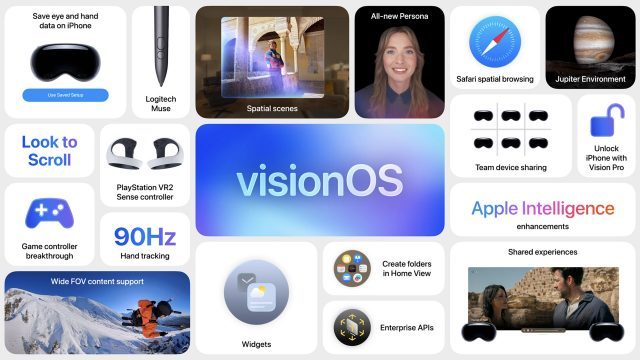
VisionOS 26 is Apple’s next major update to Vision Pro. Expected to be released to the public later this year, Apple says developers will be able to start testing the new version starting today. The update adds some major changes, including support for PSVR 2 motion controllers and a spatial stylus from Logitech.
Apple previewed visionOS 26 today during WWDC 2025. The new version technically follows VisionOS 2, but adopts the company’s new version naming scheme which appends the upcoming year to the software name, rather than a version number—hence VisionOS 26 (which will be publicly released in time for 2026).
The new software update for Vision Pro brings some major changes and enhancements.
Motion Controllers & Gamepad ‘Breakthrough’
Since the day Vision Pro was announced (and Apple confirmed it would not ship with motion controllers), developers of existing XR content have been asking for motion controllers for more precise and immersive control of virtual content.
Now that wish is finally coming true. Rather than making its own motion controllers though, Apple is partnering with Sony to add support for PSVR 2 Sense controllers on Vision Pro in VisionOS 26.
Interestingly, Vision Pro is also getting official support for a new Logitech Muse motion stylus, which looks similar to the existing Logitech MX Ink (which is compatible with Quest).
Since day one, Vision Pro has supported gamepads like Xbox and PlayStation controllers for playing flatscreen content. Now VisionOS 26 is adding ‘breakthrough’ for gamepads, which means users will be able to see the controller in their hands even when their view is otherwise occluded by a fully virtual scene. This is similar to the way the headset allows both people and keyboards to ‘breakthrough’ the virtual view so users can talk to people in the room with them and type more easily.
Anchored Widgets
VisionOS 26 adds support for widgets. Similar to widgets on other Apple devices, they are small applets that provide glanceable information. On Vision Pro, however, users will be able to anchor them around their home and they will purportedly always stay in place any time you put on the headset. This includes being able to mount them to walls.
Users could previously place app windows or spatial content around their home, which would stay in place. However, those windows would be rearranged any time the user recentered their headset. Widgets, on the other hand, should always stay where they’re placed.
From what we understand, widgets on VisionOS 26 will support both custom-made widgets for the platform (including panoramas and spatial photos), as well as existing widgets built for iOS and iPadOS.
Persona Visual Upgrades
Apple’s ‘Persona’ avatars are based on a scan of the user’s head which is taken from the headset itself. They are already the most lifelike real-time avatars available in a headset, but Apple is giving them an impressive visual upgrade in VisionOS 26.
The new Persona update will improve the appearance of skin, hair, and eyelashes, according to Apple, greatly reducing the ‘ghostly’ appearance of the current version of avatars.
Co-located Social Experiences
In VisionOS 26, Apple is making it easy for developers to build co-located experiences. That means two Vision Pro users in the same physical space can share a synchronized experience where virtual content appears in the same physical location for both users.
With SharePlay and FaceTime, remote users can also join these experiences, allowing a combination of physically co-located and remote participants.
Spatial Photos Go Volumetric
Spatial photos are getting… more spatial in VisionOS 26. While the prior version allows users to turn their 2D photos into 3D photos (or what Apple calls ‘spatial photos’), this adds stereoscopic depth, but not parallax. That means if you lean left or right, the image just moves with you, instead of making it appear like you can look around objects in the scene.
In VisionOS 26, the spatial conversion will now attempt to add real volume to the photo, offering both stereo depth and parallax. Apple is calling this a ‘spatial scene’, to indicate the addition of parallax.
Given that the photo was originally captured in 2D, the conversion will have to make guesses about what the scene should look like from different angles. While there will certainly be limitations to those guesses, we’ve been really impressed with Apple’s first attempt at automatic conversion of 2D photos to spatial photos, so we’ll be interested to see how well the process works for spatial scenes.
Spatial Browsing Mode in Safari
Apple says that a new ‘Spatial Browsing’ mode is coming to Safari in VisionOS 26. This will purportedly work on any webpage that can normally work with Safari’s existing ‘Reader’ view.
In addition to converting the page’s text for easier reading, the Spatial Browsing view will turn images on the page into ‘spatial scenes’ (volumetric photos) as covered above. Apple hopes this will make web browsing feel more immersive.
Web developers will also be able to define an immersive background for their website, so Vision Pro users can have a relevant immersive scene that appears around them when browsing a specific webpage.
Native Playback of More Immersive Video Formats
While Vision Pro has long supported spatial (3D) video playback, and Apple Immersive Video (Apple’s own wide field-of-view immersive video format), VisionOS 26 will support other common immersive video formats.
That includes 180°, 360°, and, as we understand it, arbitrary wide field-of-view video content, either monoscopic or stereoscopic.
Apple says this will mean wide field-of-view footage from popular action cams like GoPro and Insta360 will play seamlessly on Vision Pro.
PHOTO of formats
Developers will also be able to play all supported formats in their apps, or stream them from the web.
Improved Hand-tracking
Apple says that hand-tracking on VisionOS 26 will be able to run up to 90Hz which should result in a noticeable reduction in latency, compared to the 60Hz tracking of the current VisionOS 2.
There’s lots of smaller tweaks and improvements coming to VisionOS 26, but these are the biggest of the bunch.
VisionOS 26 is available starting today as a developer beta. Apple has not yet said it the public beta and full release will come alongside the public betas and release for its other platforms like iOS and macOS.
The post Apple Reveals Major Vision Pro Updates Coming in VisionOS 26, Developer Beta Available Starting Today appeared first on Road to VR.
Private Equity CEO Predicts AI Will Leave 60% of Finance Conference Attendees Jobless
Robert F. Smith, CEO of Vista Equity Partners, told attendees at the SuperReturn International 2025 conference in Berlin last week that 60% of the 5,500 finance professionals present will be “looking for work” next year due to AI disruption.
Smith predicted that while 40% of attendees will adopt AI agents — programs that autonomously perform complex, multi-step tasks — the remaining majority will need to find new employment as AI transforms the sector. “All of the jobs currently carried out by one billion knowledge workers today would change due to AI,” Smith said, clarifying that while jobs won’t disappear entirely, they will fundamentally transform.


Read more of this story at Slashdot.
macOS Tahoe is the end of the line for Intel Macs
Apple announced a lot of new features in today’s WWDC stream, but news from one follow-up meeting heralds the end of an era. MacOS 26, also known as macOS Tahoe, will be the last version of the operating system to work on Macs powered by Intel Processors. Tahoe-supporting Intel Macs will get full access to all the new features, and they’ll still get security updates for the next three years. By 2028, though they’ll be out of the Apple ecosystem.
The first Apple Silicon processor launched in 2020. Since then, Apple has run all its hardware on its own Apple Silicon microchips, which are significantly more powerful than the Intel chips it had been using for most of the millennium. Apple Silicon’s ARM-based architecture can perform more operations and use less battery power than the x86-based Intel processors. Many Intel-powered Macs have already aged out of updates, but today’s update puts an expiration date on the last survivors.
The announcement, which came during a Platform State of the Union (SOTU) following the main WWDC event, was aimed primarily at app developers. Apple is encouraging developers to plan for the post-Intel era and ensure the migration is as smooth as possible for themselves and their users. Both macOS 26 and the planned next version, macOS 27, will include the Rosetta translation process, which helps apps built for x86 run on ARM. After 27, Rosetta will remain in place to support legacy video games.
Intel-powered Macs that will support Tahoe include the 2019 16-inch MacBook Pro, the 2020 13-inch MacBook Pro, the 2020 27-inch iMac and the 2019 Mac Pro.
This article originally appeared on Engadget at https://www.engadget.com/computing/macos-tahoe-is-the-end-of-the-line-for-intel-macs-113036626.html?src=rss
Apple Will End Support For Intel Macs Next Year
Apple announced that macOS 26 “Tahoe” will be the final version to support Intel-based Macs, with future macOS releases running exclusively on Apple Silicon devices (that is, 2020 M1 models and newer). They will, however, continue to receive security updates for a few more years. 9to5Mac reports: In some ways, Apple has already stopped supporting some non-Apple Silicon models of its lineup. macOS Tahoe does not work with any Intel MacBook Air or Mac mini for instance. But Tahoe does still support some Intel Macs. That includes compatibility with the 2019 16-inch MacBook Pro, the 2020 Intel 13-inch MacBook Pro, 2020 iMac, and the 2019 Mac Pro.
Based on Apple’s warning, you can expect that macOS 27 will drop support for all of these legacy machines, and therefore macOS 26 will be the last compatible version. These devices will continue to receive security updates for another three years, however. Going forward, the minimum support hardware generations will be from 2020 onwards, as that is when Apple began the Apple Silicon transition with the M1. M1 Pro and M1 Max MacBook Pros followed in 2021.


Read more of this story at Slashdot.
Apple Unveils MetalFX Frame Interpolation, Hops On AI Game Rendering Bandwagon
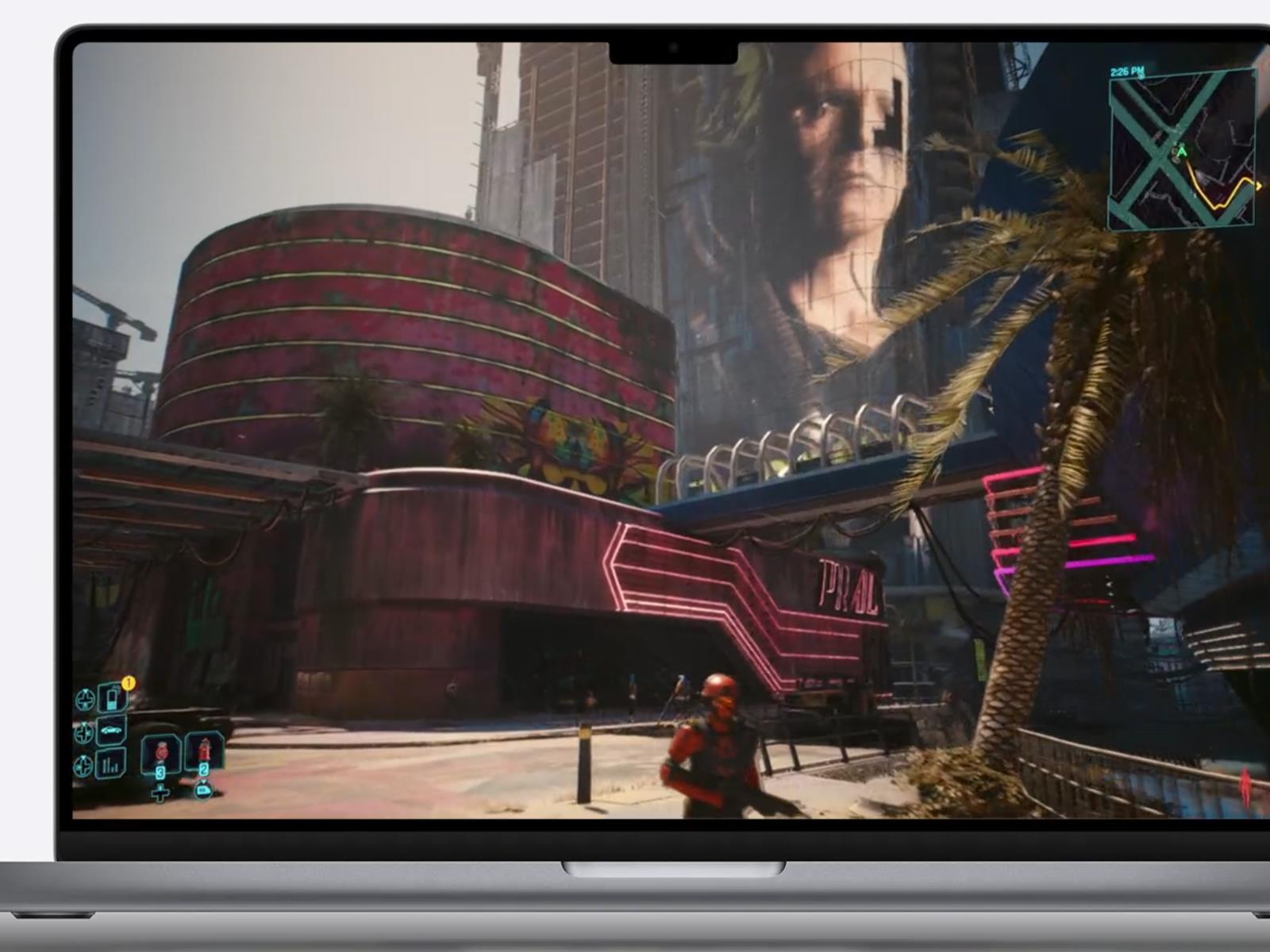
We have to say we are quite the fans of metal around here. Apparently some folks at Apple are too, as the company has released version 4 of the Metal API for game developers to take advantage of. There are lots of improvements, but the most relevant is probably is Apple’s introduction of DLSS- and FSR-like upscaling — complete with frame