The Federal Aviation Administration (FAA) is finally pulling the plug on its outdated air traffic control systems. How outdated, you ask? Well, are systems that run on Windows 95 and floppy disks old enough for you? It won’t be easy upgrading these highly interconnected, always-on computers either. The ambitious modernization effort, hailed
Specialized has issued a voluntary recall of its Globe Haul ST and LT electric bikes due to a potential fall hazard.
The recall, issued together with the U.S. Consumer Product Safety Commission, relates to the 13in telescopic seatpost that came with the two e-cargo bikes.
When the lower portion of the seatpost is fully extended, it can break, posing a fall hazard.
Specialized has received 13 reports of incidents to date, including two minor injuries.
The Globe Haul LT. Specialized
Consumers are advised to stop using the Haul ST and Haul LT ebikes immediately, and contact an authorised Specialized retailer to schedule a free repair. The repair will consist of a new post made from a different material.
The statement from Specialized says: “At Specialized, our riders always come first. We have identified a potential issue with certain lower seatposts on our Globe Haul ST and LT bicycles. If extended, affected seatposts could break under heavy loads.
“If your bike is equipped with an affected post, we ask that you stop riding your bicycle immediately.
“We apologize for the inconvenience and want to thank you for riding Specialized.”
Specialized launched the two bikes in 2023 as part of Globe’s new line of urban electric bikes, with the Haul LT designed to replace your car.
The world turns to WWDC (Worldwide Developers Conference) each year to see the latest innovations from the world of Apple (yes, the name is much like the MLB, one country’s baseball league, holding a “World Series”), and boy oh boy, did they come out swinging this year! Apple is introducing a new gaming platform app,…
Rumors of a big OS revamp were true, and Apple spilled it everywhere yesterday at WWDC 2025. The company dumped its new Vision Pro-styled UX design, dubbed Liquid Glass, all over its iPhones, iPads, Macs, Apple Watches, and Apple TVs. Honestly, it’s a little surprising that its entire product line didn’t intentionally and aggressively pursue
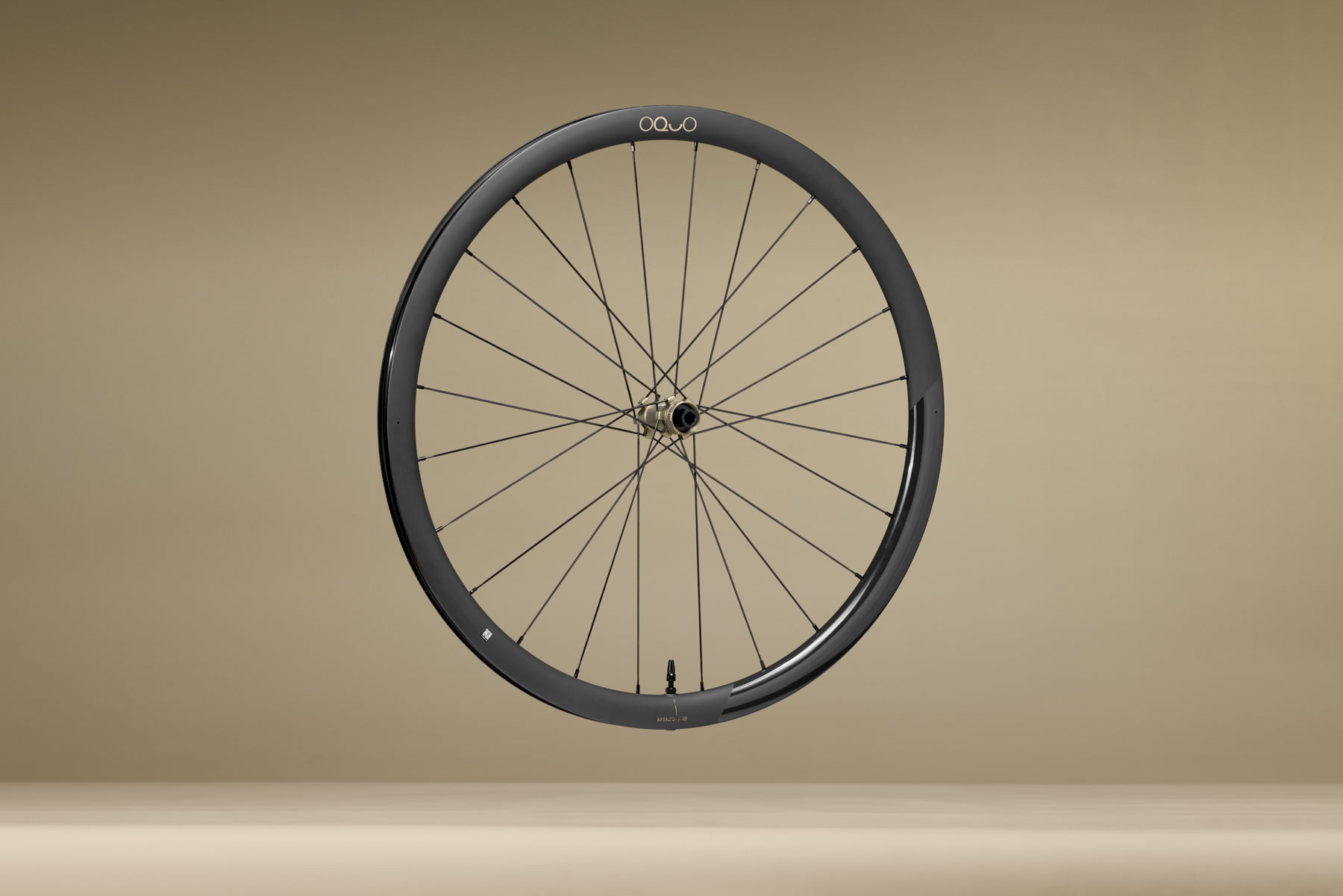
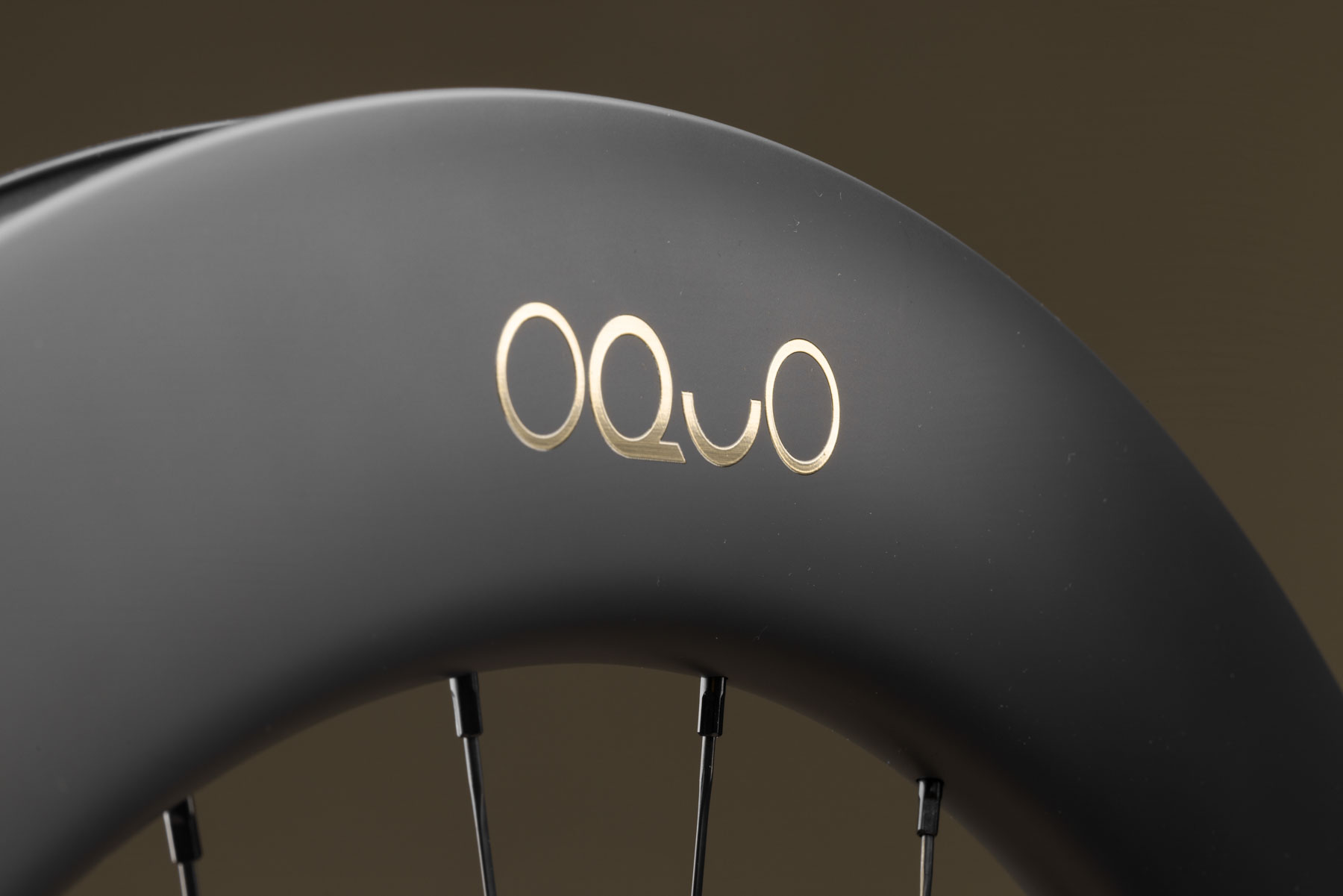
Basque brand Oquo has given its new generation of wheels a complete redesign, introducing lightweight proprietary hubs and new carbon rim profiles.
The second-generation wheelsets come in three specification levels. The LTD wheels are built with the new Q10 hubsets and Sapim CX-Ray spokes. The Team and Pro-level wheelsets continue with Zipp’s ZR1 hubsets.
The wheels were produced at Oquo’s new state-of-the-art R&D and manufacturing facility in Bizkaia (Biscay) in Spain’s Basque region.
Oquo has had success since launching in 2022, claiming podiums at the Tour de France and in the Mountain Bike World Cup downhill.
The brand was initially an exclusive partner to fellow Spanish manufacturer Orbea and part of the same Basque-based co-operative. It has since shifted to become an independent brand.
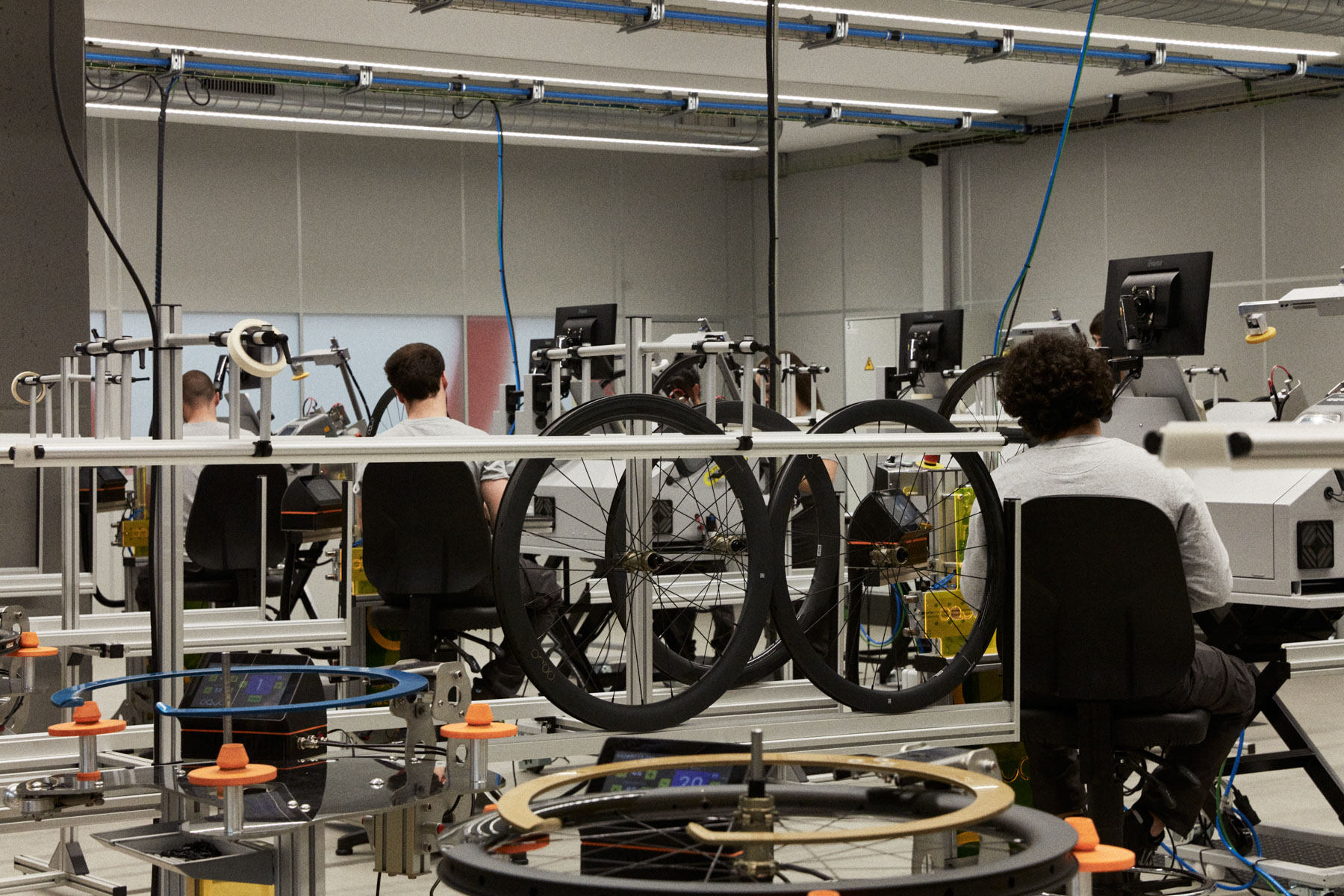
The new Oquo manufacturing facility can build up to 1,500 wheelsets per day. Oquo
Oquo says the new R&D and manufacturing facility gives it the capability of assembling up to 1,500 wheelsets per day and has provided skilled jobs for more than 100 staff.
For the new generation of wheels, Oquo has redesigned the rim profiles, created a new lightweight hubset and expanded the range to include an all-new aerodynamic, race-oriented all-road/gravel option. We first spotted the new wheelset at this year’s Unbound.
Not a clincher, not hookless
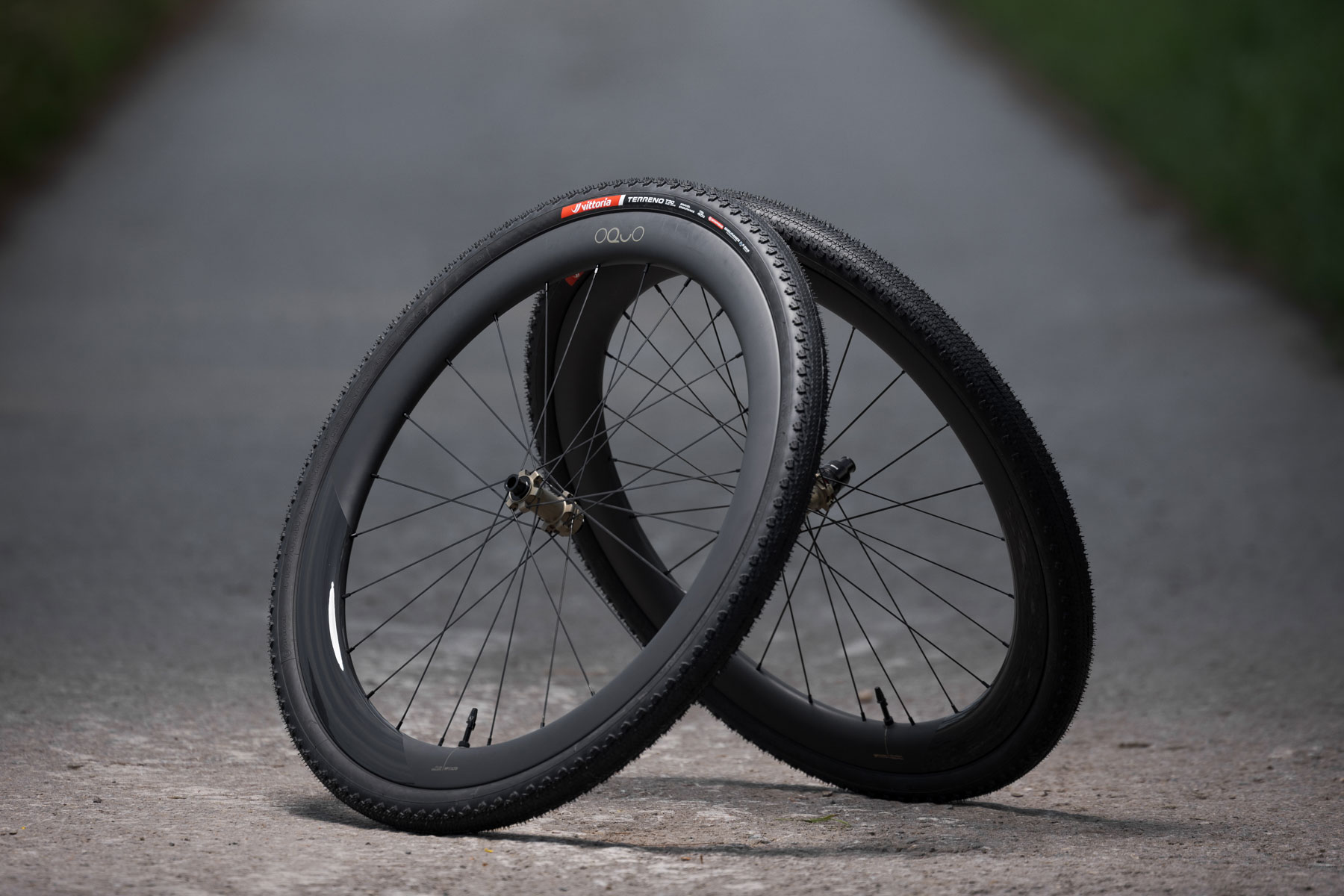
The new Oquo wheels have already been raced at Unbound. Oquo
Oquo has continued to use the same rim and mini-hook designs it pioneered on the original wheel range.
The mini hook, unlike hookless rims, preserves compatibility with clincher tyres, while still enabling you to use tubeless tyres.
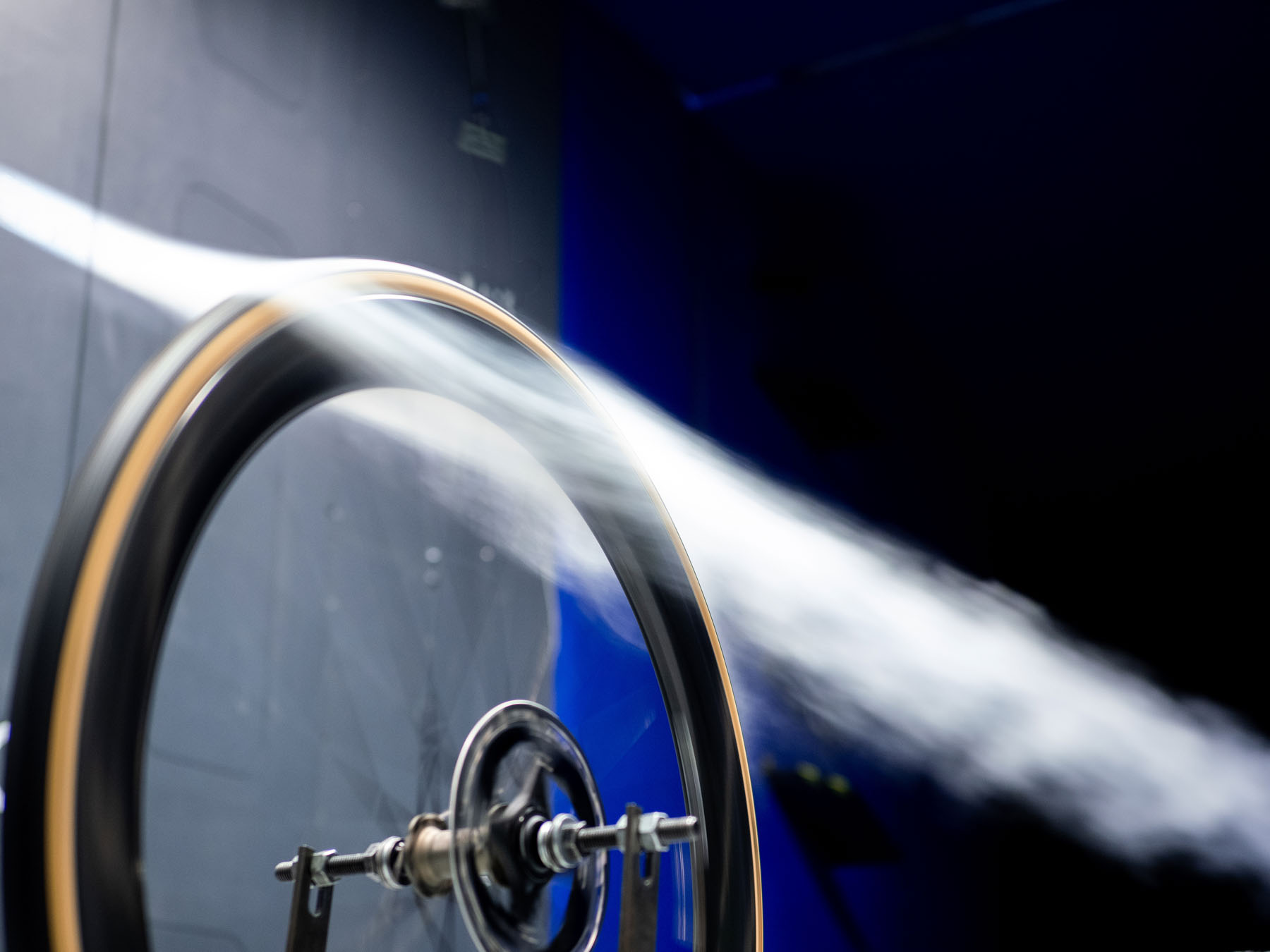
The second-generation Oquo wheels were tested and proven in the wind tunnel. Oquo
The mini-hook design is rated to 6.5-7 BAR / 95psi for the road, higher than hookless rims, which come with a 5 BAR / 72.5psi maximum.
The tyre interface may have been carried over, but the rim shapes and profiles are new. Development of the new rim shape has been ongoing over the last three years, involving riders from the Orbea and Oquo-sponsored Lotto team.
Testing on the road, alongside wind-tunnel proving, has been key to the new models, according to Oquo.
New lighter and simpler hubs
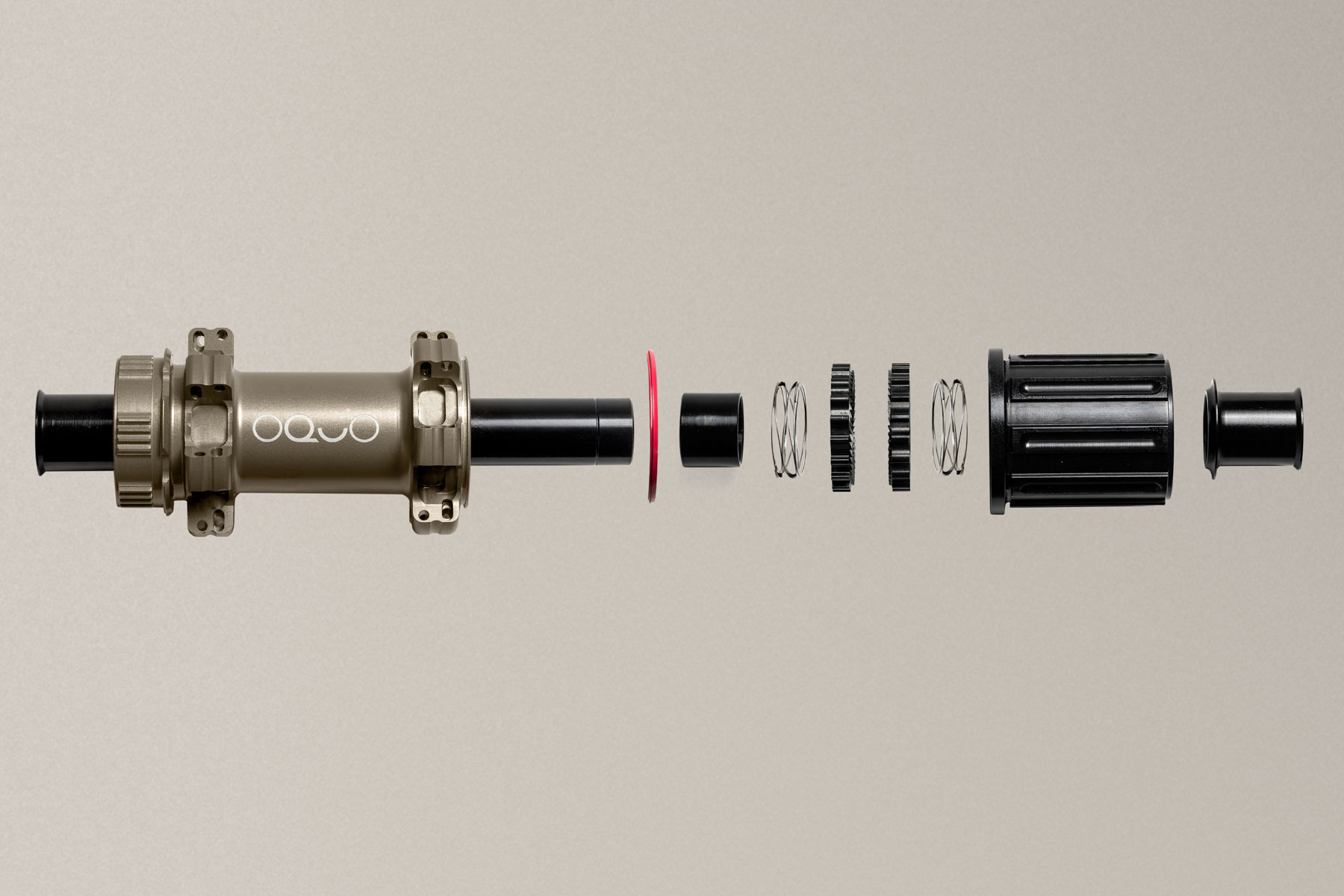
The Q10 rear hub can be disassembled for maintenance without tools. Oquo
Oquo originally partnered with Zipp, using Zipp’s ZR1 hubsets throughout its wheel range. For the range-topping second-generation LTD models, it has designed a new hub, the Q10.
The new hub has a shell CNC machined from 7075 T6 aluminium billets. It’s a material Oquo claims has superior durability to steel, while being lighter and stiffer too.
The new ratchet freehub, called Shark Ratchet, combines 45-tooth engagement with a full ceramic coating treatment to keep friction low and provide a fast 8-degree engagement angle.
The hubs use custom stainless-steel bearings, and races with low-friction seals and a proprietary water-resistant grease. Oquo claims they will perform even at temperatures as low as -50°C.
The hubs have a claimed weight of only 175g for the rear and 104g for the front. In comparison, DT Swiss’ lightest road option, the DT Swiss 180, comes in at 192g for the rear and 93g for the front. That makes Oquo’s Q10 one of the lightest Center Lock road disc hubsets available.
Tool-less maintenance
The new hubs’ assembly is a threadless interface, which means disassembly, inspection and maintenance require no special tools.
As a result of this design, Oquo has paid particular attention to making the seals as robust as possible. It claims the sealing is both ultra-efficient and tough, stopping the ingress of water and dust, which can cause premature wear.
Even switching freehubs between Shimano and SRAM is toolless and requires only the changing of a single part.
The range
The RP35 LTD is Oquo’s climbing wheelset. Oquo
The LTD range consists of four models: the lightweight climbing, 35mm-deep RP35LTD; the 50mm-deep, gravel-optimised RA50LTD; the 57mm-deep RA57LTD; and the time-trial specific RA80LTD, which, as the name suggests, is 80mm deep.
The RP35LTD has a 35mm-deep carbon rim with a 21mm internal width, optimised for 28-30mm tyres, with a claimed weight of 1,244g.
The RA50LTD has a 50mm-deep carbon mini-hook rim with a 23mm internal width and a claimed weight of 1,460g. Oquo says this rim profile was developed with input from riders at Orbea-sponsored Lotto. The aim was to design a rim for the roughest road surfaces, including gravel racing.
The new RP50 LTD is a rough surface/gravel racing wheelset. Oquo
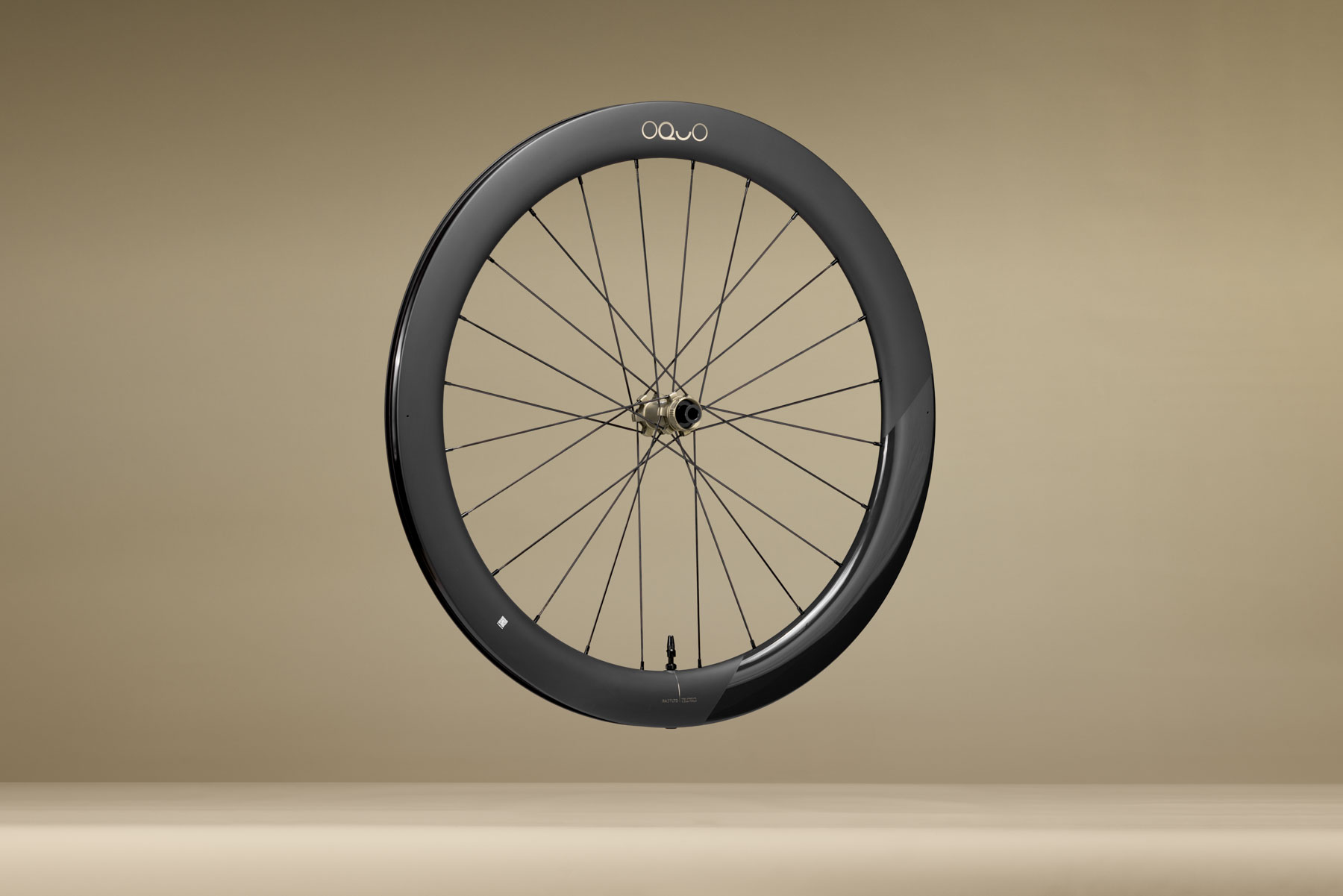
The RA57LTD is Oquo’s most aerodynamic road racing wheelset, a direct competitor to Zipp’s 404 and the ENVE SES 4.5. With 57mm-deep, 23mm-wide internal dimensions, the new RA57TDs have a claimed 1,460g weight.
Oquo says the rim shape offers the best compromise between lightweight, aerodynamic stability and speed. This is designed to make it the ideal wheelset for mixed courses.
The RA57 LTD is Oquo’s answer to Zipp’s 404 and ENVE’s 4.5 SES. Oquo
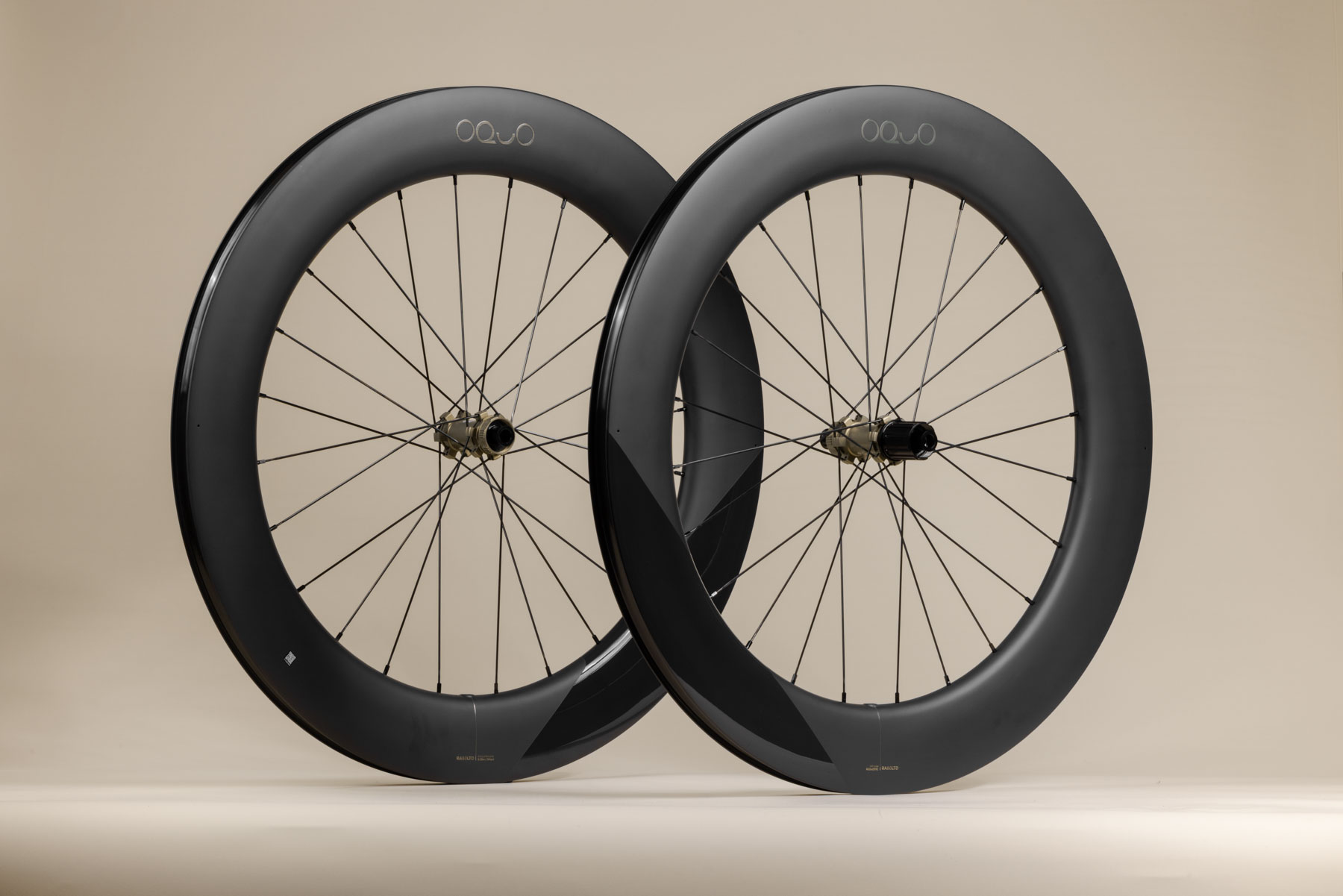
The RA80LTD is Oquo’s time trial and triathlon option. It’s 80mm deep and the 23mm internal-width rims are paired with the Q10 hubset. This results in a 1,626g complete weight, a respectable figure for a wheel of this depth.
Oquo’s RA80 LTD wheels are designed for time trial and triathlon bikes. Oquo
All the Oquo LTD wheelsets will retail for £2,110 / $2,499 / €2,399 and ship with tubeless valves, tapes, sealant and wheel bags. The wheels are available with Shimano HG, Microspline, SRAM XDR and Campagnolo freehubs.
The four new LTD wheelsets are set to see a further upgrade soon, with Oquo confirming it has been busy working on a carbon spoke upgrade. The new spoke design is set to debut at this year’s Tour de France, with wheelsets with the suffix CS (Carbon spoke) becoming available later in the year.
Custom looks
Oquo offers multiple custom graphic finishes on the new wheelsets. Oquo
Oquo has taken cues from Orbea’s MyO programme to bring customisation to the new wheels. It tells us it could only achieve this by bringing assembly and manufacturing completely in-house. That also means a choice of graphic decal styles and colours across all models.
OpenAI plans to add Alphabet’s Google cloud service to meet its growing needs for computing capacity, Reuters reported Tuesday, marking a surprising collaboration between two prominent competitors in the AI race. From the report: The deal, which has been under discussion for a few months, was finalized in May, one of the sources added. It underscores how massive computing demands to train and deploy AI models are reshaping the competitive dynamics in AI, and marks OpenAI’s latest move to diversify its compute sources beyond its major supporter Microsoft, including its high-profile Stargate data center project.
It is a win for Google’s cloud unit, which will supply additional computing capacity to OpenAI’s existing infrastructure for training and running its AI models, sources said, who requested anonymity to discuss private matters. The move also comes as OpenAI’s ChatGPT poses the biggest threat to Google’s dominant search business in years, with Google executives recently saying that the AI race may not be winner-take-all.
Disinformation has a tendency to metastasize. Lies mutate with each retelling until the final product looks nothing like the original source. This phenomenon is particularly striking in the world of UFOs, where decades of institutional secrecy have created fertile ground for speculation to flourish.
Late last week, The Wall Street Journal published a report revealing how various governmental and military agencies have been spreading disinformation about UFOs since at least the 1950s. Based on research conducted by the congressionally mandated All-Domain Anomaly Resolution Office (AARO) that was never made public, the WSJ report sheds light on (or explains away) UFO events as varied as Area 51, the Malmstrom nuclear missile incident, and the Air Force’s “Yankee Blue” program—three events that have shaped public opinion on UFOs for decades, and, according to the report, were themselves shaped by official disinformation. If this report is accurate, much of what people believe about UFOs is wrong because of deliberate lies fed to us by our government.
The mystery of Area 51 solved?
Any UFO buff will tell you that Area 51, part of the Air Force’s Nevada Test and Training Range in Nevada, is where the alien bodies and UFO wreckage are stored. It’s the nexus of countless extraterrestrial conspiracy theories, and, according to the new information, it’s partly due to an ad-hoc Air Force disinformation campaign.
According to the AARO, back in the 1980s, an Air Force colonel visited a bar close to the military testing ground and started spinning a tale of UFOs. He had pictures too, which he dropped off to the bartender, who promptly posted them above the bar. But the pictures were fakes. According to the testimony of the retired Air Force colonel, the idea was to create confusion about sightings of the F-117 Nighthawk. Any reported sighting of a strange craft in the air over Nevada could be lumped in with thousands of other UFO reports instead of taken seriously by the Soviets. Even after the end of the Cold War, countless bar patrons were probably shown the UFO pictures and went home and told their friends, and so the game of UFO telephone continues.
The weird story of “Yankee Blue”
Now we’re moving on from Cold War strategic disinformation to internal military trolling. For decades, it was common for Air Force officers to be briefed on a supposed top-secret project called “Yankee Blue.” They were handed photos of UFO, told about the Air Force’s effort to reverse engineer crashed alien spacecraft, and sworn to secrecy. But there was no “Yankee Blue.” According to the AARO’s research, Yankee Blue was a kind of hazing—a prank, bro. The DOD ordered that people stop pulling this joke in 2023.
I’m sure UFO true believers would say, “Of course they’d say it was a prank. What better way to keep it covered up if anyone talks?” and there’s some logic to that, but on the other hand, making up UFO stories to see if they new guy will believe them seems so relatable, I think Occam’s razor suggests it’s true. It would be funny to see who believed it and who didn’t. Still, there’s no way of knowing how many military official bought it, how many spilled the beans to their buddies after some drinks, and how these stories affected the larger culture’s views about UFOs.
The Malmstrom UFO incident debunked?
It’s not as well-known as Area 51, but the Malmstrom UFO incident has been often repeated in UFO circles. According to UFO lore, a flying saucer showed up and shut down a battery of intercontinental ballistic nuclear missiles. According to the AARO’s report, that didn’t happen.
On March 24, 1967, 26-year-old Air Force Lieutenant Robert Salas was deep underground at the Malmstrom Air Force Base in Montana, overseeing 10 Minuteman missiles. The phone rang, and a non-commissioned officer frantically reported seeing an oval-shaped UFO, glowing red and hovering over the front gate of the installation. Then, according to Salas, the missiles’ guidance systems were shut down, preventing them from being launched. The missiles were not damaged and were back online in a day, but Salas was visited by Air Force officials who swore him to secrecy.
But according to the AARO’s report, the missile systems’ malfunction was the result of a secret electromagnetic pulse test to see if the silos could withstand the results of a nuclear attack and remain operational. Judging by the result, the missiles failed the test. Possibly in the interest of limiting how many people would know the silo couldn’t respond to a first strike, the Powers the Be apparently decided to not reveal the test to Salas or anyone else affected.
Salas did keep quiet until the mid 1990s, but then he started recounting the incident publicly. Among other high profile appearances, Salas has testified before congress, written a book about the incident, and testified before the AARO itself, always telling the same story of how the UFOs shut down the missile because, in his view, they don’t approve of nuclear weapons—a story that is (at least according to this report) entirely untrue.
What’s the harm in a little disinformation?
The incidents documented by the Wall Street Journal are only a few of the many instances of UFO disinformation spread by the U.S. government. The CIA and the Air Force routinely lied about UFO sightings throughout the Cold War. The Air Force supposedly had a full-time disinformation guy whose job was to mislead thought leaders in the UFO community. But, like, why? They have to be covering something up, right? Maybe. But maybe they’re just hiding themselves.
Many in the UFO community regard governmental disinformation as an attempt to draw attention away from the real story of the aliens—say, the treaties we’ve signed with the gray aliens. When some researcher stumbles on proof of the grand alien-hiding scheme it’s much more effective for the government to bury it in lies, to make UFO people look like kooks, than to try to suppress it.
But as these three examples indicate, a more likely explanation is that the government is covering up its own dull secrets and embarrassing failures, even from itself: Experimental spy planes need to be hidden from the public and failed nuclear test need to be hidden from others in the military, so they just make shit up and feed it to the right people.
It’s bad enough that a respected military officer like Robert Salas spent his whole life describing a UFO attack that never happened and that Air Force officers kept a deep secret that was actually a joke, but there are broader consequences. People’s lives are wasted researching bogus claims made by cynical officials. Trust in government and institutions becomes laughable. And if there’s any actual truth about UFOs out there, it becomes harder to find. In trying to keep their secrets, the government didn’t just distort our understanding of aliens—they rewrote a corner of our cultural reality, one lie at a time.
Once again, Samsung is teasing an upcoming foldable with yet another animated silhouette image, providing a second glimpse of a new Galaxy device that is “thin, light, and built to last.” More than that, Samsung claims its next foldable—presumed to be called the Galaxy Z Fold Ultra—has been “meticulously crafted” be its “thinnest, lightest,
A critical measure of the ocean’s health suggests that the world’s marine systems are in greater peril than scientists had previously realized and that parts of the ocean have already reached dangerous tipping points.
A study, published Monday in the journal Global Change Biology, found that ocean acidification—the process in which the world’s oceans absorb excess carbon dioxide from the atmosphere, becoming more acidic—crossed a “planetary boundary” five years ago.
“A lot of people think it’s not so bad,” said Nina Bednaršek, one of the study’s authors and a senior researcher at Oregon State University. “But what we’re showing is that all of the changes that were projected, and even more so, are already happening—in all corners of the world, from the most pristine to the little corner you care about. We have not changed just one bay, we have changed the whole ocean on a global level.”
Managing user environments is an essential part of Linux system administration. One powerful way to personalize or restrict user sessions is by changing the default login shell. In this article, we’ll walk through two ways to do that using the usermod and chsh commands. If you’re unfamiliar with directory management, check out our guide on creating and removing directories before diving into more advanced user management.
Working with directories is a fundamental part of navigating and organizing your Linux system. Whether you’re setting up project structures or managing application files, knowing how to create and remove directories efficiently is an essential skill. In this guide, we’ll explore the different ways you can create, manage, and remove directories from the command line.
If you’re just getting started with ViM and want to level up your workflow, you might also enjoy our guide on splitting the screen in ViM. Combined with efficient file and directory manipulation, this can dramatically improve your productivity.
Opening files or directories directly from the terminal can significantly improve your workflow and efficiency. While command-line operations are typically associated with advanced tasks, there are tools that allow you to seamlessly integrate GUI actions, like opening a file or directory, right from your terminal window. One of the simplest yet most effective tools for this purpose is xdg-open. For users who enjoy automating confirmations or dealing with output streams, the Linux yes command is another great utility worth exploring. If you’re looking to enhance your system with a new kernel version, check out our guide on installing kernel 6.15 on Ubuntu.
If you’re building a more flexible terminal experience, learning how to use these tools together, and making them easier to invoke with aliases, is a powerful trick. Also, make sure to understand how your shell works by reading more about your Linux shell environment. Using tools like grep efficiently in process monitoring can also boost productivity—explore our grep trick for ps command for more insight.
Meta chief Mark Zuckerberg has been recruiting experts to join a team he’s assembling to achieve AI superintelligence, according to Bloomberg and The New York Times. Zuckerberg has reportedly been discussing potential recruits with other senior leaders from the company in a WhatsApp group chat dubbed “Recruiting Party.” He reportedly has a personal list of recruits, which include AI researchers, infrastructure engineers and other entrepreneurs. Zuckerberg has invited them to lunch and dinner at his homes in California to get them to join his team over the past month.
At the moment, the immediate goal of AI companies is to achieve true artificial general intelligence (AGI), wherein a machine has human-level intelligence and can achieve any task a human can do. Superintelligence is a step beyond that. An AI system with superintelligence is supposed to have intellectual powers far beyond any human’s.
The Times says Zuckerberg has already tapped Alexandr Wang, the founder of AI startup Scale AI, to join the new team. Meta is planning to invest billions of dollars into Wang’s company, which provides other AI companies with data to train their models. The deal will also bring Scale’s other employees onboard Meta, though it’s unclear if any of them are joining the new team, as well.
Meta has also offered dozens of AI experts from other companies, including Google and Open AI, compensation packages worth seven to nine figures to join the team. Some, according to The Times, have already agreed. In his pitch to potential recruits, Zuckerberg apparently said that his company’s advertising business can finance its own AI development even if it costs tens of billions of dollars, unlike rivals who have to raise funds first.
Zuckerberg, Bloomberg said, decided to oversee recruitment himself due to frustration over the quality of and the public’s response to Meta’s Llama 4 large language model. Llama 4 wasn’t well-received, and critics argued that Meta overpromised but underdelivered. The company also had to delay the release of its “Behemoth” Llama 4 model, which the company vowed will outperform “GPT-4.5, Claude Sonnet 3.7, and Gemini 2.0 Pro on several STEM benchmarks.”
This article originally appeared on Engadget at https://www.engadget.com/ai/meta-is-reportedly-forming-an-ai-superintelligence-team-133030015.html?src=rss
We may earn a commission from links on this page. Deal pricing and availability subject to change after time of publication.
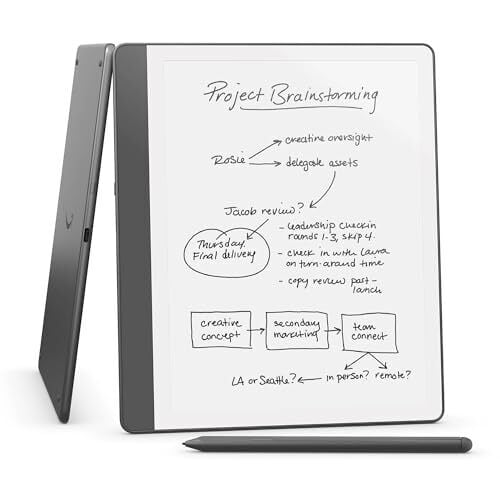
The 64GB version of the Amazon Kindle Scribe is currently $349.99, down from its usual $449.99, hitting its lowest price yet according to price trackers.
PCMag gave it a “Good” rating, particularly appreciating the bright display and improved handwriting experience. Physically, the Scribe looks a little fresher this year, with a white-framed 10.2-inch E Ink screen and a sturdy aluminum body. It feels premium, but the slippery back makes a case almost necessary. Amazon now includes the Premium Pen by default, which comes with a handy shortcut button and eraser ready to work out of the box.
When it comes to performance, the Scribe manages books and menus smoothly, but page turns and browsing reportedly feel a bit slower compared to the more affordable Kindle Paperwhite. Also, while the screen remains black and white with a sharp 300 ppi resolution, it’s starting to feel a bit behind competitors that offer color E Ink. Still, it holds its own for reading, with an adjustable warm/cool front light and enough screen real estate to annotate documents or scribble notes comfortably. For battery life, Amazon claims up to 12 weeks with light reading and around three weeks if you’re a frequent writer. It charges via USB-C, though you’ll need to bring your own charging brick.
On the note-taking front, things get more complicated. Amazon has improved its system by letting you write directly on ebook pages through something called Active Canvas, but the experience can still feel a little clunky. Notes don’t anchor exactly where you’d expect, and drawing arrows or circling text isn’t an option. Amazon’s AI tools for cleaning up handwriting and summarizing notes seem promising on paper, but in practice, they fall short—processing takes a while, and the results end up isolated on separate pages, notes this PCMag review. On the plus side, there are 18 notebook templates to pick from, and the writing experience itself is excellent, thanks to the textured glass that mimics writing on paper. For more options, check out this roundup of the best E Ink tablets of 2025 for reading and note-taking by CNET.
Splatoon was completely absent from the Switch 2 launch. Now we know why. Nintendo decided to hold the Switch 2 upgrade for Splatoon 3 until the week after the new console arrived, announcing it Tuesday morning alongside an entirely new spin-off called Splatoon Raiders.
Robotaxis are coming to the UK next year thanks to a partnership between Uber and Wayve, a British company focused on AI for autonomous vehicles. A pilot program is set to take place in Spring 2026 and follows last year’s passage of the Automated Vehicles Act, which set the stage for self-driving cars to be deployed across the country.
“This is a defining moment for UK autonomy,” said Alex Kendall, CEO and co-founder of Wayve, in a statement. “Our Embodied AI learns to drive anywhere, in any vehicle, and this trial brings us closer to bringing safe and intelligent driving to everyday rides across the UK and beyond.”
According to Heidi Alexander, the UK’s secretary of state for transport, the agreement will add £42 billion ($56.7 billion) for the economy and create 38,000 jobs. Alexander doesn’t state how exactly the latter will occur as a result of driverless taxis.
This article originally appeared on Engadget at https://www.engadget.com/transportation/the-uk-will-get-its-first-robotaxis-next-year-131731015.html?src=rss
Okay, here’s the situation, your parents went away on a week’s vacation and…wait, my brain went elsewhere for a moment and it’s not even throwback Thursday! The actual situation (which as nothing to do with DJ Jazzy Jeff and the Fresh Prince) is that you managed to snag a Switch 2 console (contributing to it setting a launch day sales record),
It’s been two years since Roku first introduced its in-house TVs to the market and the streaming-device-turned-TV-maker isn’t slowing down. For 2025, Roku refreshed its entire TV lineup and added more features to its midrange Roku Plus models that were previously reserved for its higher-end TVs.
The latest Roku Plus Series TV gets Smart Picture Max, a feature that automatically adjusts your TV’s picture settings on a scene-by-scene basis and was exclusive to the company’s Pro Series TVs. To make the Plus Series an even better deal, Roku added mini-LED backlighting for better picture quality, a remote finder button on the back of the TV and an integrated cable management system, which are all features also pulled from Roku’s Pro models. To round out the Plus Series, Roku added a built-in subwoofer and a new processor for faster navigation throughout the interface.
To ensure the Pro Series TVs still feel pro, Roku upgraded them with the next generation of its Smart Picture Max. The latest software improves motion clarity, corrects compression artifacts, and automatically selects the best picture mode based on what you’re watching. Roku is also claiming a 75 percent increase in dynamic contrast thanks to its re-engineered mini-LED backlighting for its most expensive models. Roku is introducing hands-free voice controls without a remote with the Pro Series TVs, but they also come with the updated and rechargeable Roku Voice Remote Pro that has backlit buttons and customizable shortcuts. The most affordable models, Roku’s Select Series, are mostly getting software upgrades that are available across the lineup, but now have size options going up to 85 inches. However, all of Roku’s refreshed TVs can support its Bluetooth Headphone Mode and Dolby Audio.
Roku’s expanded Select Series offerings are available in sizes ranging between 24 and 85 inches, starting at $130, while the Plus and Pro Series still only have the 55-, 65- and 75-inch options. The upgraded Roku TVs are out now at retail partners including Best Buy, Walmart, Target and Amazon.
This article originally appeared on Engadget at https://www.engadget.com/home/roku-adds-more-premium-features-to-its-own-line-of-midrange-tvs-130013368.html?src=rss
Sandbox VR is launching another playable Netflix collaboration later this year with the hit sci-fi series Stranger Things.
For the unfamiliar, location-based VR experience company Sandbox VR currently operates 55 locations globally and offers immersive experiences for popular IPs like Star Trek. Announced today, the company is introducing a new exclusive game in Stranger Things: Catalyst. Here, players can team up and tackle monsters from the Upside Down and explore iconic locations from the show.
Stranger Things: Catalyst marks the third Netflix collaboration for Sandbox VR, with previous projects including Squid Game Virtuals and Rebel Moon: The Descent. “The success of our previous Netflix collaborations has shown us the incredible potential of bringing beloved content into virtual reality,” said Sandbox VR founder and CEO, Steve Zhao, in a prepared statement.
“Our technology will allow fans to physically step into the story they’ve watched unfold over the past seasons, creating thrilling memories with friends as they face the horrors of the Upside Down together.”
This isn’t the first VR adaptation of Stranger Things we’ve seen thanks to Tender Claws’ Stranger Things VR game, which launched last year for Quest and has since gone multiplatform. In our 3-star review, we found that while it can become repetitive, Stranger Things VR offers a fun romp through the Upside Down.
Stranger Things: Catalyst will be available to play at Sandbox VR locations in late 2025.