How to Uninstall the iOS 26 Beta If You Have Regrets

So, you went and installed the iOS 26 developer beta on your iPhone. I get it: There are a lot of cool features and changes this year, from the new “Liquid Glass” design overhaul, to new call screening tools that are suspiciously similar to the ones on Android.

But as great as new features are, they don’t make up for bugs and instability. If you’re finding the iOS 26 beta too temperamental to handle right now, you can downgrade back to iOS 18—but the process might not be painless.

Why you shouldn’t install betas

At the risk of lecturing, I want to take a moment to talk about why I don’t think most of us should be running betas on our iPhones—especially this latest beta. The point of a beta is to test a piece of software before it launches to the general public. Testers note the bugs and glitches they run into, and software developers fix those problems. Once the developers think they’ve run through enough testing, then they release the software to the public.

That means with each update, the beta gets more and more stable. There are no guarantees when it comes to betas, but if you’re going to jump on one, I recommend joining as late as possible to bypass the worst of the bugs. (Apple plans a public beta release for July.) As of this writing, iOS 26 is on it’s first beta, and a developer beta, no less. It’s a version Apple releases for software developers to test their apps with, and not the general pool of users who are interested in trying features out early. iOS 26 will likely never be this buggy and unstable again, and while anyone with the know-how can get their compatible iPhone running the beta, it’s risky.

(Apple used to require users to have a paid developer account to access the developer beta, which cut down on the number of general users accessing them. But in recent years, it has been possible to sign into Apple Developer with your Apple Account to gain free to access developer betas. I don’t think that’s a great idea, but seeing as people used to download IPSW files from shady sites to access developer betas early, Apple probably made a decision in the name of security—if determined users are going to do it anyway, might as well allow them to officially download the dev beta.)

Where the real trouble starts is when you decide you want to uninstall the beta from your iPhone. It’s possible, but it’s a pain: The only way to uninstall the iOS 26 beta and downgrade to iOS 18 is to restore your iPhone to factory settings. A simple reset won’t do: You need to perform a full restore to wipe everything from your device, then reinstall the latest version of iOS 18. There’s no guarantee this will work, either, as you could run into any number of errors—though Apple has steps on what to do should you encounter them.

Don’t uninstall the beta if you don’t have a proper backup

If you have a proper backup, you’ll be able to retrieve your data. The keyword here is “proper.” Your backup cannot be from a newer version of iOS than your iPhone is running, which means you can’t downgrade to iOS 18 if you only have backups made on iOS 26. If you rely on iCloud for backups, this gets tricky: The service backs up your iPhone automatically, and overwrites the previous backup each time. If your iPhone made an iCloud backup while running the iOS 26 beta, you no longer have an iCloud backup from iOS 18, and thus cannot restore from iCloud once you uninstall the beta.

That’s why Apple recommends you back up your iPhone to a computer before installing a beta: These backups are made manually, and are not overwritten by future backups. As such, it’s the much safer option for restoring when downgrading.

My advice? Check if your iPhone made an iCloud backup since you installed the beta from Settings > [Your Name] > iCloud > iCloud Backup. If the last backup was made prior to the installation, disable iCloud backups to ensure no backup is made while running iOS 26. If it did backup since running iOS 26, and you don’t have another backup option, do not proceed unless you’re okay with losing all of the local data not tied to your Apple Account or other accounts you have logged into your iPhone. (It’s really not worth installing betas, you guys.) Unless your iPhone cannot function on iOS 26, you’re better off living with the beta until things get more stable, rather than risk losing data to go back to iOS 18.

Downgrading your iPhone from iOS 26 to iOS 18

To start, you’ll need a Mac running the latest released version of macOS (not macOS Tahoe, mind you), or a Windows PC running the latest version of Apple Devices. You cannot uninstall iOS 26 without a computer. If you wipe your iPhone from the on-device Settings app, your iPhone will boot into iOS 26 with all of its data erased.

Next, plug your iPhone into your computer, then put it into recovery mode. You can do so with the following steps:

  1. Press and release the volume up button.

  2. Press and release the volume down button.

  3. Press and hold the side button, and only let go once you see the recovery mode screen (your screen will go dark and you’ll see the Apple logo first—keep holding it).

Wait for the Restore option to appear on your computer, then click it. Your computer will then erase your iPhone, and automatically install the latest non-beta version of iOS. (At this time, that would be iOS 18.5.) Apple warns that this process can fail, in which case your device will exit recovery mode. If so, let the download finish, then put your iPhone back into recovery mode and try again. If you run into a specific error code when attempting to restore, locate it on Apple’s support page and try to troubleshoot the issue.

If the restore completes as expected, you might need to sign into your Apple Account. This disables Activation Lock, which will let you proceed.

Restoring your iPhone’s data after uninstalling iOS 26

At this point, assuming everything went according to plan, you have a blank iPhone running the latest version of iOS 18. If you have that proper backup described above, you can restore it during the setup process.

To do so, go through the setup steps until you reach the “Transfer Your Apps & Data” page. Here, you can restore your iPhone from an iCloud backup, or a backup from your Mac or PC. Again, this backup needs to be compatible with the latest version of iOS 18 you’re running. If it is, Apple will walk you through the steps to restore it. (Just make sure if you choose to restore from a Mac or PC that you connect your iPhone to the computer that contains your backup before proceeding.)

Review: The John Wick franchise is alive and kicking with Ballerina

Ana de Armas shone in the original Knives Out (2019) and as one of the best Bond girls in recent memory in No Time to Die (2021). She proves herself a fierce and lethal adversary against a cultish syndicate in the new film Ballerina—excuse me, From the World of John Wick: Ballerina. (Why, Lionsgate? Just… why?) I love them all, but this is probably my favorite John Wick film since the original in 2014 (which may never be surpassed).

(Mostly mild spoilers, and a couple of significant reveals below the gallery. We’ll give you a heads-up when we get there.)

Chronologically, Ballerina takes place during the events of John Wick Chapter 3: Parabellum. As previously reported, Parabellum found Wick declared excommunicado from the High Table for killing crime lord Santino D’Antonio on the grounds of the Continental. On the run with a bounty on his head, he made his way to the headquarters of the Ruska Roma crime syndicate, led by the Director (Anjelica Huston), where he was trained as an assassin. The Director also trains girls to be ballerina-assassins, one of whom is Eve Macarro (Ana de Armas). We see snippets of these events from Eve’s perspective in Ballerina, just to establish the continuity.

Read full article

Comments

Qualcomm Reveals Snapdragon AR1+ Chip For High-End Smart Glasses

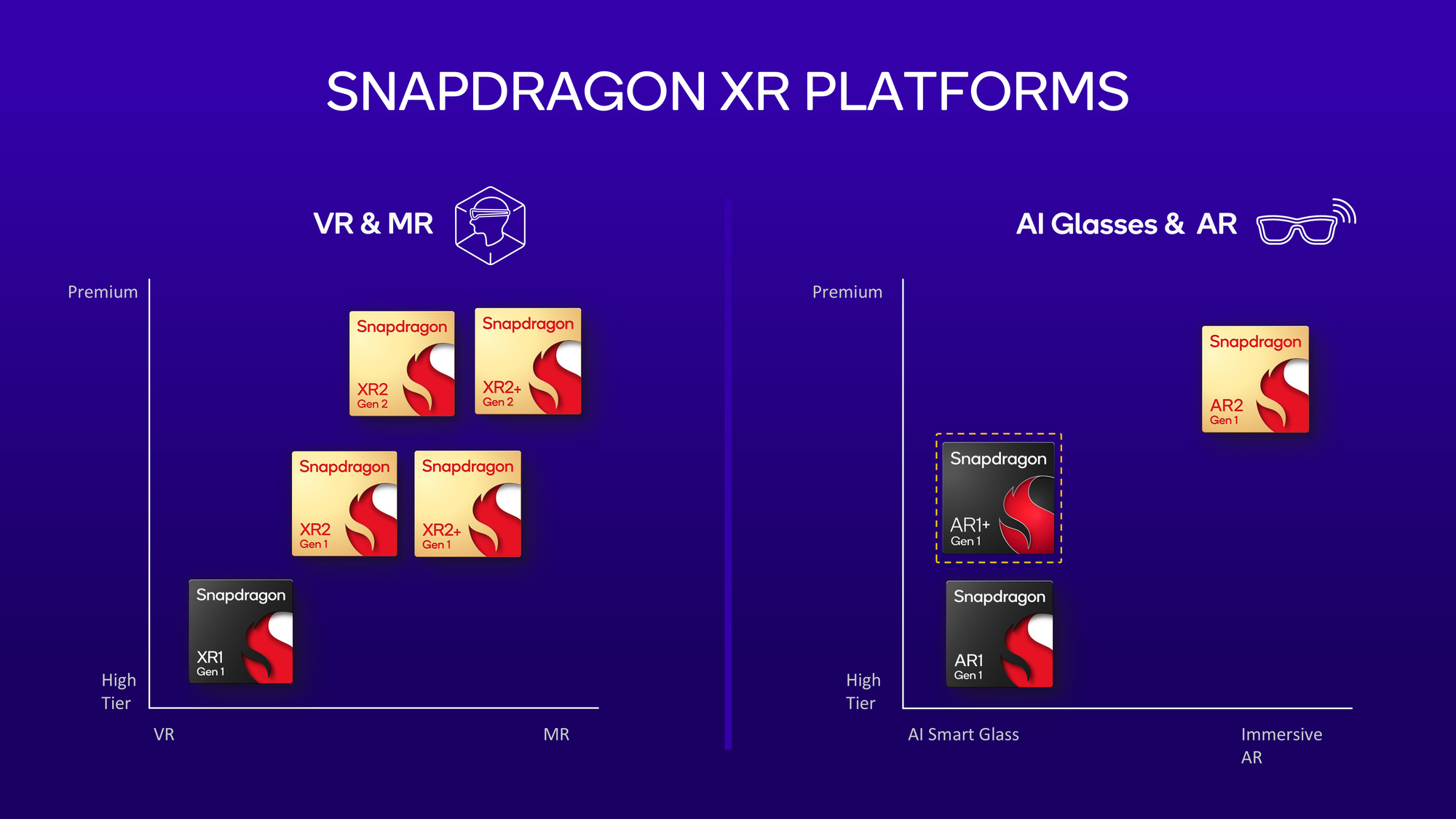
Qualcomm’s Snapdragon AR1+ Gen 1 is a new chipset for high-end smart glasses.

The base Snapdragon AR1 Gen 1 is used in the Ray-Ban Meta glasses, launched in late 2023.

Qualcomm, says the new higher-end AR1+ Gen 1 is 26% smaller, enabling slimmer glasses arms, and uses 7% less power to enable longer battery life.

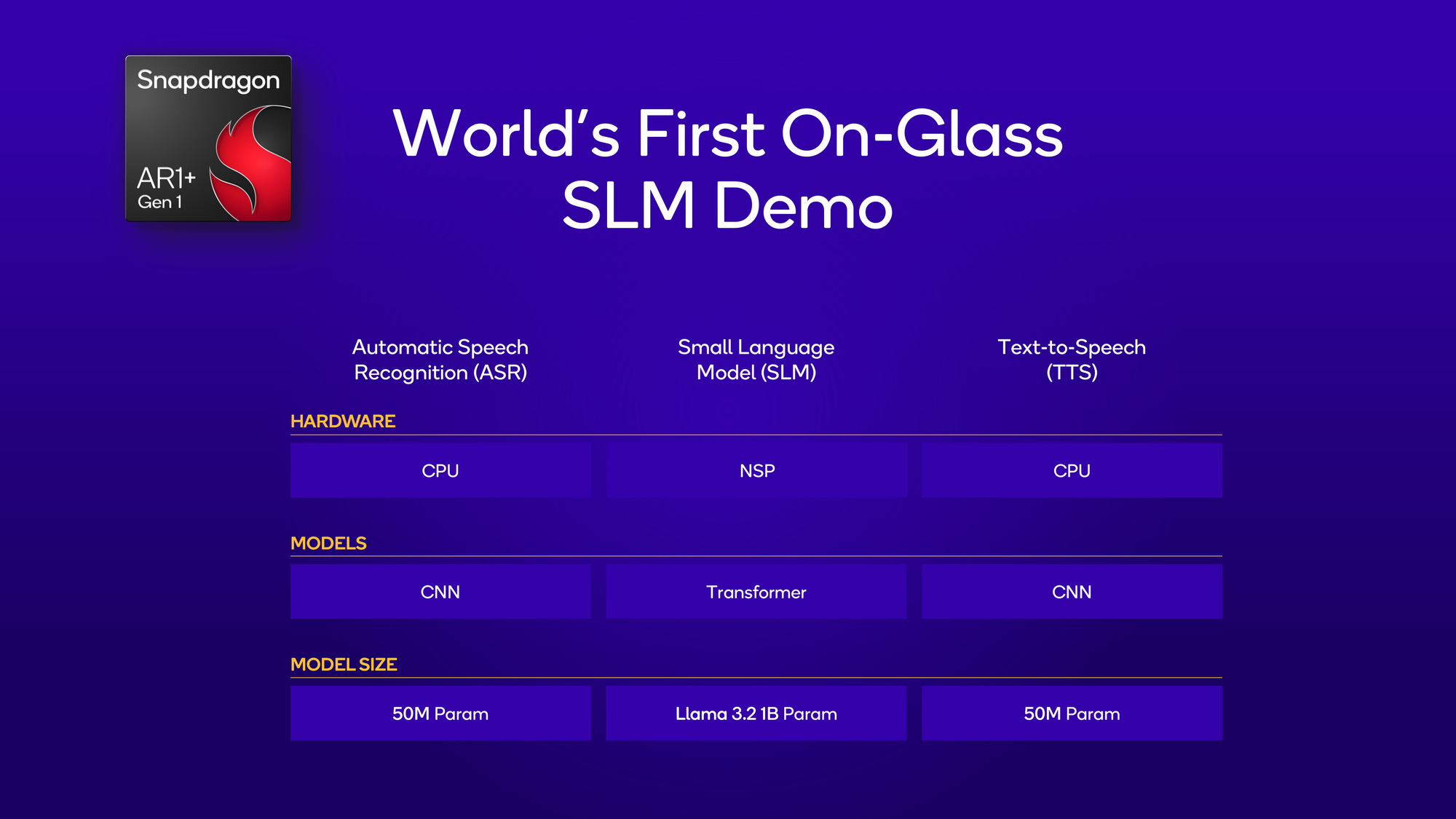
AR1+ Gen 1 also has an improved ISP, for higher quality image and video capture, and its NPU can run small language models on-device.

At Augmented World Expo 2025 today, while announcing AR1+ Gen 1, Qualcomm demonstrated prototype glasses with the chip running Meta’s Llama-3.2-1B fully on-device.

At 1 billion parameters, Llama-3.2-1B is a much smaller model than the large language models (LLMs) you may have used in ChatGPT, Gemini, or Meta AI, so won’t produce the same quality responses. But the advantage of running on-device is that it doesn’t require an internet connection or external device to function.

As with the base AR1, the new chip supports outputting imagery to heads-up displays (HUDs), both monocular and binocular.

AR1+ Gen 1 joins Qualcomm’s wide range of chipsets for VR, MR, AR, and smart glasses, slotting above AR1 Gen 1 but below the AR2 Gen 1. Its XR2 Gen 2 chipset powers Quest 3, Quest 3S, and Pico 4 Ultra, and the XR2+ Gen 2 is set to power Samsung’s Android XR headset as well as Sony’s enterprise headset.

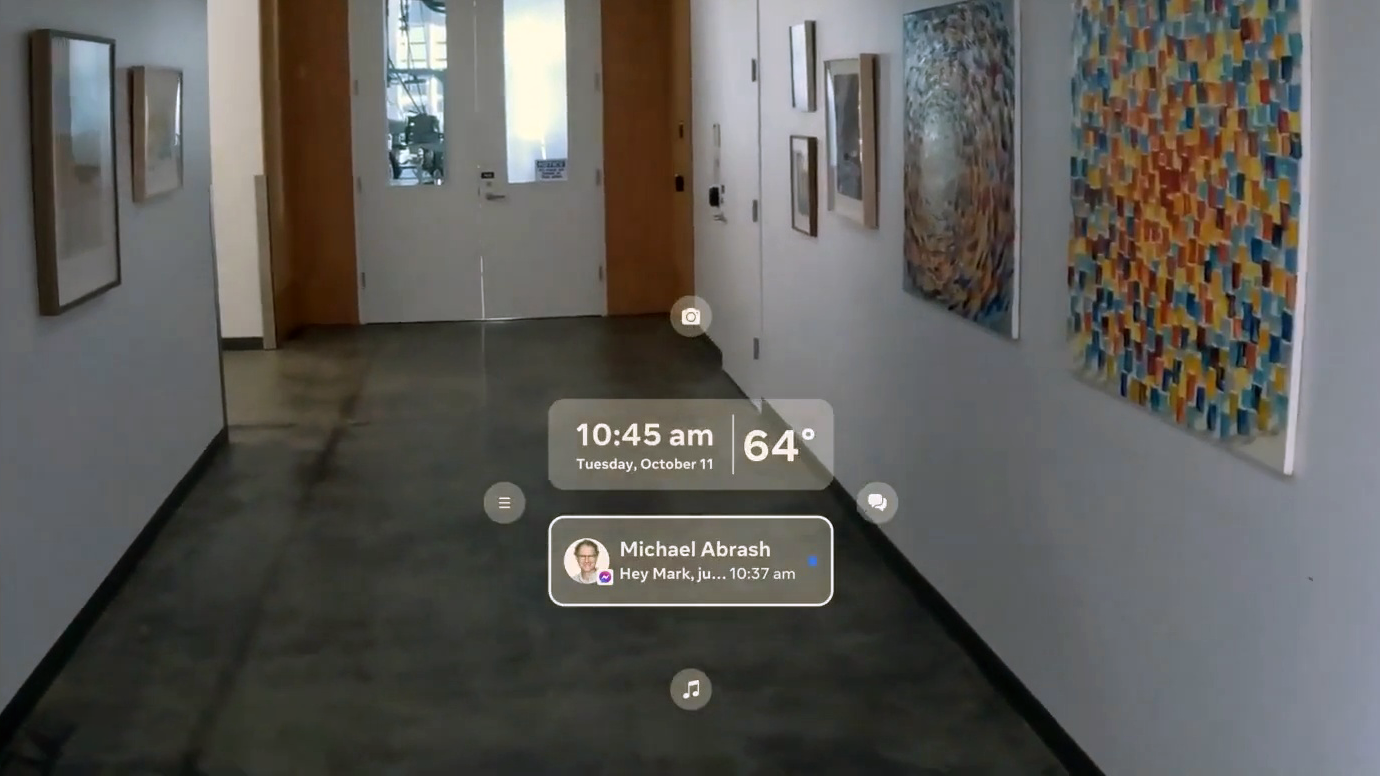
Qualcomm didn’t announce any specific companies that will use AR1+ Gen 1, but The Verge, The Information, The Financial Times, and Bloomberg’s Mark Gurman have all previously reported that Meta intends to release high-end smart glasses with a small monocular HUD in late 2025, codenamed Hypernova, so it’s possible it will be the first device to use the chip.

Meta HUD Glasses Price, Features & Input Device Reportedly Revealed
A new Bloomberg report details the price and features of Meta’s upcoming HUD glasses, and claims that Meta’s neural wristband will be in the box.
UploadVRDavid Heaney

Apple’s Upgraded AI Models Underwhelm On Performance

Apple’s latest AI models continue to lag behind competitors, according to the company’s own benchmark testing it disclosed this week. The tech giant’s newest “Apple On-Device” model, which runs locally on iPhones and other devices, performed only “comparably” to similarly-sized models from Google and Alibaba in human evaluations of text generation quality — not better, despite being Apple’s most recent release.

The performance gap widens with Apple’s more powerful “Apple Server” model, designed for data center deployment. Human testers rated it behind OpenAI’s year-old GPT-4o in text generation tasks. In image analysis tests, evaluators preferred Meta’s Llama 4 Scout model over Apple Server, a particularly notable result given that Llama 4 Scout itself underperforms leading models from Google, Anthropic, and OpenAI on various benchmarks.


Read more of this story at Slashdot.

After AI setbacks, Meta bets billions on undefined “superintelligence”

Meta has developed plans to create a new artificial intelligence research lab dedicated to pursuing “superintelligence,” according to reporting from The New York Times. The social media giant chose 28-year-old Alexandr Wang, founder and CEO of Scale AI, to join the new lab as part of a broader reorganization of Meta’s AI efforts under CEO Mark Zuckerberg.

Superintelligence refers to a hypothetical AI system that would exceed human cognitive abilities—a step beyond artificial general intelligence (AGI), which aims to match an intelligent human’s capability for learning new tasks without intensive specialized training.

However, much like AGI, superintelligence remains a nebulous term in the field. Since scientists still poorly understand the mechanics of human intelligence, and because human intelligence resists simple quantification with no single definition, identifying superintelligence when it arrives will present significant challenges.

Read full article

Comments

Sonos Ace headphones get long-awaited TrueCinema sound and more in big update

Sonos has announced a major software update for its flagship Sonos Ace headphones that brings some new features to the premium wireless cans. Chief among them is the long-awaited TrueCinema feature, which was first promised as upcoming when the headphones launched in 2024. TrueCinema uses a compatible Sonos soundbar to measure the acoustic dynamics of the room you’re sitting in. It then uses that data to increase the accuracy of the spatial sound in your headphones, in the same fashion as Trueplay on Sonos speakers. The idea is for the audio the user hears to mimic that of a well-balanced surround sound system thats sits right in the room you’re listening in.

TV Audio Swap is also getting an update and will now support two sets of Sonos Ace headphones synced to the same compatible soundbar, where it previously supported just one set. This feature allows users to seamlessly transfer the audio from their soundbar to their headphones.

The update also improves the headphones Active Noise Cancellation by leveraging on-board sensors to adapt to a user’s hair, glasses or hats in real time. Using the sensors, the Sonos Ace will then compensate for sound leaks.

Some improvements to call quality are also coming to Sonos Ace with the addition of SideTone, a feature that plays a user’s voice back to them at low volume while on a call. The audio fidelity on phone calls has also received a bump through this update, though details on what bitrate or exactly how it was improved are not available.

Jason White, head of software at Sonos, said the company’s goal has been to share meaningful software updates that deliver new enhancements to existing products. “Our goal has always been to create products that earn their place in people’s lives for years, and this Sonos Ace update is a great example of that. It proves that your best tech investment doesn’t need to be your newest, it just has to be built right,” White said.

This update launches globally today and is available through the Sonos app.

This article originally appeared on Engadget at https://www.engadget.com/audio/headphones/sonos-ace-headphones-get-long-awaited-truecinema-sound-and-more-in-big-update-163012056.html?src=rss

Qualcomm says its new AR1+ Gen 1 chip can handle AI directly on smart glasses

Qualcomm’s has launched its latest processor for smart glasses, and though it’s a modest upgrade over the previous chip, it has a new trick. The Snapdragon AR1+ Gen 1 can run AI directly on devices with no need for a smartphone or cloud connection, allowing users to go out or do chores with only their smart glasses, the company claims. The chip could appear in next-gen AR glasses from the likes of Meta and XReal. 

Smart glasses often require large temple arms to accommodate chips and other components, but the AR1+ Gen 1 is 28 percent smaller than the the AR1 Gen 1, so it allows for a 20 percent temple height reduction. At the same time, it requires less power across key use cases including computer vision, wake with voice, Bluetooth playback and video streaming. Qualcomm also promises “premium” image quality via technologies like binocular display support, image stabilization and a massive multi-frame engine.

Qualcomm says its new AR1+ Gen 1 chip can handle AI directly on smart glasses
Qualcomm

The key feature, though, is the on-glass AI powered by Qualcomm’s 3rd-gen Hexagon NPU, with 1 billion small language model (SLM) parameters on-glass. That allows it to run AI assistants that use SLMs like Llama 1B, with users speaking commands and seeing the results displayed on the glasses as text. 

“While on stage, I was at the ‘supermarket’ and asked my glasses for help with fettuccine alfredo I needed to make for my daughter’s birthday party,” wrote Qualcomm SVP of XR Ziad Asghar. “This demonstration was a world’s first: an Autoregressive Generative AI model running completely on a pair of smart glasses.”

Qualcomm shouted out Meta’s Ray-Ban glasses as well as its chunky Orion AR glasses prototype as examples of where smart glass technology is heading. It then added that tech like its Snapdragon AR1+ Gen 1 chip will enable “sleeker form factors that don’t compromise on the ability to run AI models.” Reading between the lines, you can expect the chip to appear in ever-slimmer standalone AI-powered smart glasses in the near future. 

This article originally appeared on Engadget at https://www.engadget.com/wearables/qualcomm-says-its-new-ar1-gen-1-chip-can-handle-ai-directly-on-smart-glasses-163002410.html?src=rss

OpenAI will reportedly start using Google’s cloud servers

OpenAI has inked a deal with Google to begin using the latter’s cloud service to meet its growing needs for increased computing capacity, according to a report by Reuters. This is something of a surprise, given that Google and OpenAI are rivals in the AI space.

The terms of the deal remain unknown, but reporting indicates it has been in the negotiation phase for the past several months. This marks OpenAI’s latest move to diversify its compute sources away from Microsoft Azure.

Microsoft had been OpenAI’s exclusive data center provider until January, after OpenAI CEO Sam Altman blamed the lack of compute capacity for the delay of several products. The company made a deal in March with CoreWeave to provide increased cloud compute capacity. That deal was worth nearly $12 billion.

Microsoft Azure may no longer be the exclusive cloud provider for OpenAI, but it’s not as if the two companies have parted ways. OpenAI still relies heavily on Azure and the corporations are currently in negotiations to revise the terms of their partnership, which will likely revise the equity stake Microsoft holds in OpenAI.

However, this is certainly a win for Google Cloud. ChatGPT poses the biggest threat to Google’s search business in years, and this deal could indicate a softening between the two companies. In any event, it’ll certainly bring a whole lot of money into Google Cloud’s coffers. The platform made $43 billion last year and accounted for 12 percent of parent company Alphabet’s overall revenue. The addition of OpenAI to its customer portfolio will likely extend those numbers dramatically.

$GOOG CEO ADMITS GOOGLE CLOUD IS RUNNING INTO REAL CONSTRAINTS

Not just from permitting delays, but from infrastructure bottlenecks. And when AI buildouts stall, there’s usually one common denominator: not enough $NVDA-powered systems �pic.twitter.com/0COPjZY5Mx

— Shay Boloor (@StockSavvyShay) May 20, 2025

There is an elephant in the room. Google has famously struggled to meet customer demand for its cloud services, and this was before bringing on OpenAI. Simply put, it needs more data centers. Will OpenAI get priority access over pre-existing customers? Engadget has reached out to Google and will update this story if we hear back.

To that end, OpenAI is certainly thriving. The company recently announced that the current adoption rate of its software will lead to $10 billion in annual revenue as of June. It told investors that it has a target revenue goal of around $12 billion for the year, which it should easily meet with new subscribers.

This article originally appeared on Engadget at https://www.engadget.com/ai/openai-will-reportedly-start-using-googles-cloud-servers-162311068.html?src=rss

Radxa UFS/eMMC Module Reader and Storage Solution Enables Fast Flashing and Scalable Embedded Storage

Radxa’s UFS/eMMC Module Reader is a compact USB 3.0 adapter for flashing OS images, accessing firmware, and transferring large files. It supports both eMMC v5.0 and UFS 2.1 modules with speeds up to 5?Gbps The adapter is compatible with eMMC and UFS modules from Radxa, and also works with modules from platforms like PINE64 and […]

NASA Orbiter Captures Amazing Shot Of 12-Mile High Martian Volcano Above Cloud Tops

NASA Orbiter Captures Amazing Shot Of 12-Mile High Martian Volcano Above Cloud Tops
NASA’s venerable 2001 Mars Odyssey orbiter has delivered a stunning new panorama of the Red Planet, revealing the colossal Arsia Mons volcano majestically peeking above a canopy of morning clouds. This unprecedented view, captured on May 2, 2025, marks the first time one of Mars’ towering volcanoes has been imaged so dramatically on the planet’s

Ars Live recap: Where does NASA go from here?

Our discussion with Reuters’ Joey Roulette and WaPo’s Christian Davenport. Click here for transcript.

Recently, during the first Ars Live event of this year, two noted space journalists joined Ars space editor Eric Berger for a discussion of NASA’s future in the age of the second Trump administration.

During the hour-long discussion, Christian Davenport of The Washington Post and Joey Roulette of Reuters covered a range of issues, from uncertainty at the space agency to the likelihood of NASA sponsoring a humans-to-Mars mission any time soon.

This is an especially frenetic time in space policy. In the days since this video was recorded, President Trump canceled the longstanding nomination of private astronaut Jared Isaacman to become NASA administrator—at the time we recorded the video, Senate approval was assured, and a vote was imminent. Then Trump and SpaceX founder Elon Musk had a serious falling out, with the two trading nasty words on social media and culminating in Musk threatening to end Dragon spacecraft missions before pulling back.

Read full article

Comments

Cisco Updates Networking Products in Bid To Tap AI-Fueled Demand

Cisco is updating its networking and security products to make AI networks speedier and more secure, part of a broader push to capitalize on the AI spending boom. From a report: A new generation of switches — networking equipment that links computer systems — will offer a 10-fold improvement in performance, the company said on Tuesday. That will help prevent AI applications from suffering bottlenecks when transferring data, Cisco said. Networking speed has become a bigger issue as data center operators try to manage a flood of AI information — both in the cloud and within the companies’ own facilities. Slowdowns can hinder AI models, Cisco President and Chief Product Officer Jeetu Patel said in an interview. That applies to the development phase — known as training — and the operation of the models, a stage called inference. A massive build-out of data centers has made Cisco more relevant, he said. “AI is going to be network-bound, both on training and inference,” Patel said. Having computer processors sit idle during training because of slow networks is “just throwing away money.”


Read more of this story at Slashdot.

Palmer Luckey’s ModRetro Chromatic portable console is now a thing you can actually buy

There’s a new (ish) retro console on the block. The ModRetro Chromatic had a soft launch last year but is now “permanently in stock” for consumers. This is another machine that runs Game Boy and Game Boy Color cartridges, like the beloved Analogue Pocket and others.

The Chromatic features a magnesium alloy build, so it should take a licking. It also features a backlit screen — something the original Game Boy lacked. As a matter of fact, Nintendo didn’t fully embrace backlighting technology until midway through the life of the Game Boy Advance.

The ModRetro Chromatic is the best way to play Game Boy® and Game Boy Color® games, my ultimate tribute to the most important handheld console of all time. @ModRetroHub @GameStop @Tetris_Official @KossHeadphones pic.twitter.com/E6BWx5I490

— Palmer Luckey (@PalmerLuckey) June 3, 2024

The console was designed by Palmer Luckey and was originally sold in a limited run last year. Today’s release includes a new colorway and the choice of a sapphire glass display for increased durability. There are also a bunch of new accessories, like a rechargeable power bank, and some nifty software features. It can now natively stream to Discord, Mac or PC, without any additional hardware and there’s a new firmware tool to update games.

The Chromatic runs proprietary cartridges, in addition to Game Boy and Game Boy Color titles. There are a handful of new games arriving with this release, including a metroidvania called Dark Plague. Each console ships with Tetris, just like the original Game Boy.

The standard release costs $200, but the model with the sapphire glass display costs $300. New games price out at $40 and old-school Game Boy carts are available on eBay, at garage sales and maybe buried in ancient couch cushions.

There are a couple of caveats here. First of all, this doesn’t emulate games, as cartridges are required. It only handles Game Boy and Game Boy Color titles. The Analogue Pocket, for instance, can also play Game Boy Advance titles and a separate adapter brings other consoles into the mix.

“Displayed next to me is their 125lb Roadrunner drone.

Woah, that’s a nasty looking thing.” https://t.co/RTVpSUgNui pic.twitter.com/qHO5h6WRqW

— Palmer Luckey (@PalmerLuckey) May 1, 2025

There’s also the creator himself. Palmer Luckey is a controversial figure. He founded Oculus and helped bring VR to the masses, sure, but recent years has found him running a military defense contracting firm called Anduril Industries. This company has been involved with designing a “virtual” border wall complete with hundreds of surveillance towers, building AI tools for military use and, most recently, making wearables that allow soldiers to interact with AI-powered weapon systems.

He’s become a big player in the defense space, securing $6 billion in global government contracts. You’ll have to decide if you want to indirectly contribute to that cause by giving him $200 or $300 to pick up a portable console.

This article originally appeared on Engadget at https://www.engadget.com/gaming/palmer-luckeys-modretro-chromatic-portable-console-is-now-a-thing-you-can-actually-buy-160014434.html?src=rss

Threads is finally getting its own DM inbox

Nearly two years after launching Threads, Meta is finally giving in to users on one of the most requested features for the service: direct messaging. The company is beginning to test a dedicated inbox for Threads, beginning with Hong Kong, Argentina and Thailand, Mark Zuckerberg revealed in a post on Threads.

Threads has had some messaging capabilities since last year, but the feature only allows users to send Threads posts to friends via their Instagram DMs. This is more than a little clunky as it requires switching back and forth between apps. It’s also been the source of some confusion — at least among my friends — because it allows you to send Threads posts to contacts on Instagram even when they don’t have a corresponding Threads account. For me, this means I sometimes send a post to a friend on Instagram only for them to tell me they can’t view it properly because they don’t use the app.

Needless to say, all this has been far from ideal. And, unsurprisingly, DMs have been a highly requested feature from Threads users. But Meta executives — and Instagram head Adam Mosseri in particular — have been inexplicably skeptical of the feature. Mosseri said last year that he wanted to “make the Instagram inbox work” for Threads rather than build out a separate messaging feature for the app.

That’s finally changing, though. Meta is beginning its initial tests of a Threads-specific inbox this week. The feature will only support 1:1 chats — at least for now — so it will still be much more limited than what’s available on Instagram or even X. It will also only be available in a couple of countries to start, though Meta says it plans to expand to more regions “soon.”

This article originally appeared on Engadget at https://www.engadget.com/social-media/threads-is-finally-getting-its-own-dm-inbox-160001216.html?src=rss

The Best Father’s Day Gifts for Dads Who Could Use a Little Self-Care

We may earn a commission from links on this page.

Whether they’re chasing kids around the yard, tackling weekend projects, hitting the gym, putting in long hours at work, or simply getting older, the fathers in our lives could use a little rest and relaxation. Father’s Day is this Sunday, June 15. Show him you care about his comfort and well-being with gifts designed to help him recover, recharge, and tackle whatever comes next.

Massage and muscle recovery

My dad is actually the one who gifted me my percussive massage gun—because he already owned two. These portable powerhouses have become essential tools for active recovery. Perfect for the dad who works out, plays sports, or simply carries tension from daily stress. Look for models with multiple speed settings and interchangeable heads for targeting different muscle groups.

For an affordable, travel-sized option, the Bob and Brad Q2 Mini packs a lot of punch for just $74.99. I’m personally a huge fan of its heating and cooling features. That temperature therapy makes it a worthwhile gift, even if your dad already owns a full-sized massage gun.

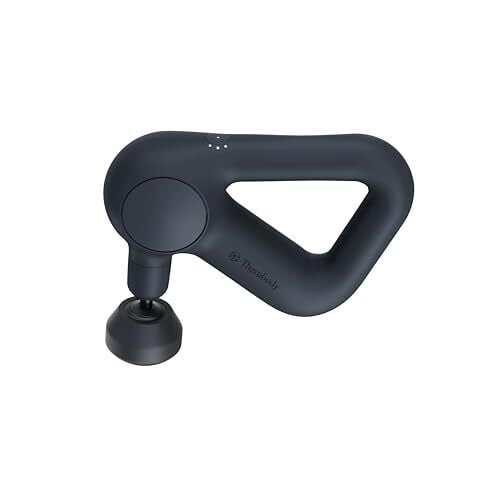
Now, if he doesn’t already own a full-sized massage gun, you can secure your position as his favorite child by gifting the mighty TheraGun Therabody Prime ($319.99) or more affordable TheraGun Therabody Relief (139.99).

Other options for his muscles include massage chairs, textured rollers, and massage balls.

The Hypersphere Go ($109) is a solid choice for a massage ball that fits into the palm of your hand. This is great for dads who spend long hours sitting or need to unwind after physical activity.

Sleep and recovery

Heating pads and wraps are a must-have, if your dad doesn’t own some already. Look for targeted relief with features like auto-shutoff, multiple heat settings, and ergonomic designs for neck, back, or joint comfort—like this one, for $27.99. You could also supplement his arsenal with cordless options, like this belt/brace option for $44.99.

Weighted blankets provide gentle pressure that can improve sleep quality and reduce stress—perfect for the dad who has trouble winding down. One will run you around $45. Similarly, ergonomic pillows with memory foam, cervical support, or cooling gel pillows are another way to tell your dad he deserves some rest. This ergonomic pillow is currently 33% off at $39.98.

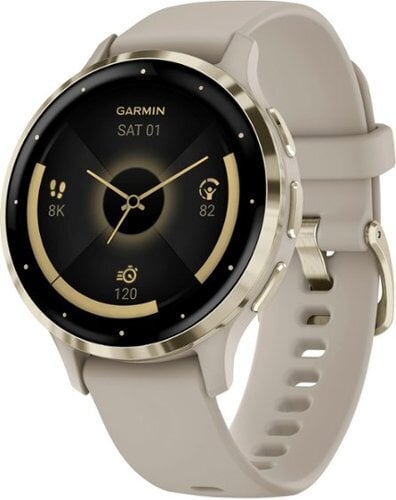
If you want to go a more tech-y route, consider a sleep-tracking device, which can monitor sleep patterns and provide insights for better rest and recovery. My colleague Beth Skwarecki has a guide to buying sleep trackers (versus smartwatches that can track sleep). If you’d like to buy a smartwatch just for sleep tracking, I’d suggest the Garmin Venu 3. The Venu 3 has the Body Battery feature, as well as a Sleep Coach that will tell you how long you slept compared to how much you needed, and it will recommend how much you should try to sleep tonight.

Experience gifts

If you can’t find the perfect item (or can’t order anything in time for Father’s Day), consider buying your dad an experience. If sleep (or peace) is elusive, consider a subscription to meditation and relaxation apps, like Headspace or Calm.

Some other classic experiences you could gift for your dad:

  • Massage therapy sessions. Professional massage appointments, whether at a spa, wellness center, or through mobile massage services

  • Wellness classes. Yoga, tai chi, or stretching classes that promote flexibility, strength, and mindfulness

  • Spa days. Relaxation experiences that combine multiple wellness treatments

Choosing the right gift for your dad

Consider his specific needs and lifestyle. Is he active and athletic? Focus on recovery tools and sports-related comfort items. Does he work long hours at a desk? Prioritize ergonomic support and stress-relief products. Is he dealing with specific areas of discomfort? Target those needs with specialized tools and therapies.

Activision Issues Switch 2 Status Update For Call Of Duty: Black Ops 7

Activision Issues Switch 2 Status Update For Call Of Duty: Black Ops 7
Despite some stumbles during the preorder phase, Nintendo’s Switch 2 console has been a big hit, with the gaming giant shifting a blistering number of units in the first 24 hours of availability. It’s a good sign for the gaming industry as it will be a new platform for developers to sell their wares. However, first person shooter fans who

DJI Unveils Matrice 400 Drone With Staggering 59-Min Flight Time For Critical Missions

DJI Unveils Matrice 400 Drone With Staggering 59-Min Flight Time For Critical Missions
DJI has once again pushed the boundaries of aerial innovation with the launch of its new enterprise flagship drone platform, the Matrice 400. Engineered for performance and versatility across critical industries such as emergency response, mapping, and large-scale infrastructure inspection, the Matrice 400 boasts improved obstacle avoidance,