DXVK 2.6.2 Vulkan-based implementation of D3D9, D3D10, and D3D11 for Linux / Wine is now available for download with improvements for several games and various bug fixes.
Monthly Archives: June 2025
Astro Pi 2024/25: Another stellar year of space education concludes
We’re thrilled to celebrate yet another incredible year of young people reaching for the stars, as the European Astro Pi Challenge 2024/25 draws to a close. Teams from across Europe and ESA Member States are now receiving their well-deserved certificates and data from the International Space Station (ISS). It’s been a truly inspiring year, showcasing the phenomenal talent and dedication of young coders and scientists.

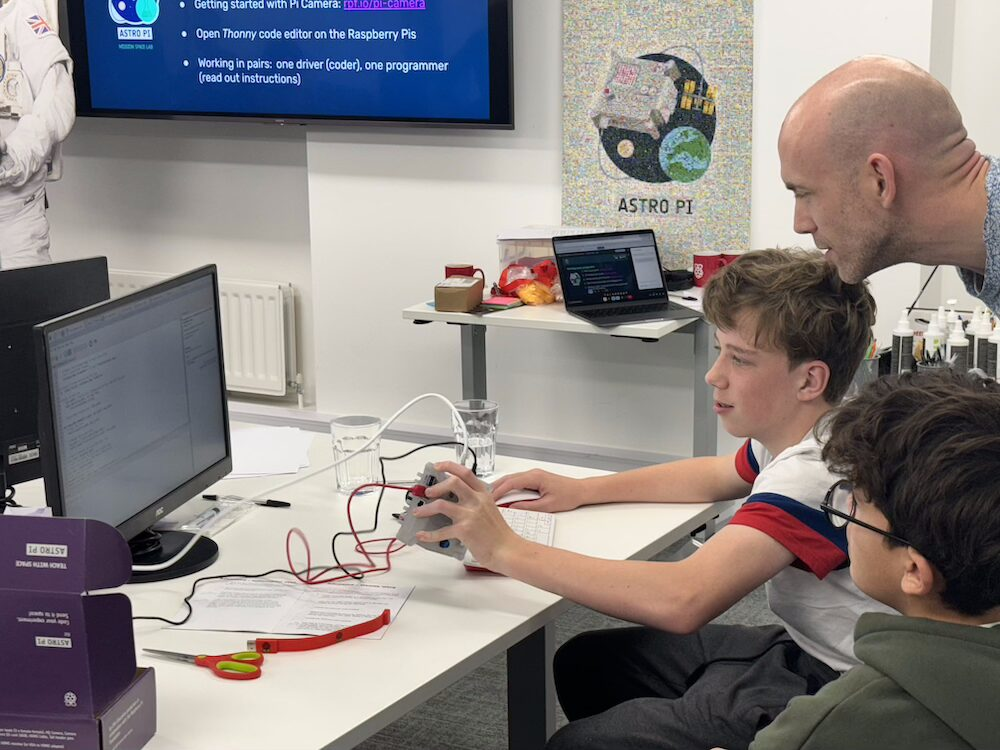
The European Astro Pi Challenge is an ESA Education project run in collaboration with us here at the Raspberry Pi Foundation. It offers young people the amazing opportunity to conduct scientific investigations in space by writing computer programs that run on Raspberry Pi computers on board the ISS, called Astro Pis.
There‘s a lot to celebrate from this year’s Astro Pi, so let’s take a look at some of the highlights for each of our inspiring Missions: Mission Zero and Mission Space Lab.

Mission Zero: Inspiring coding, creativity, and inclusion
Mission Zero reached more young people than ever before in 2024/25, with 25,405 young people participating in 17,285 teams. After passing the rigorous testing and moderation processes, an amazing 17,109 teams (25,210 young people) were successful in getting their programs to run on the ISS.
One of the great things about Mission Zero is that we see a good gender balance in participation. This year, 44% of participants identified as “female” and 4% as “prefer to self-describe”, “prefer not to say”, or “other”. This means that Mission Zero has achieved a more balanced gender representation than is typically seen in computing subjects, where the ratio is around 20:80 girls to boys.
Mission Space Lab: More teams have their programs run in space
Mission Space Lab gives young people the opportunity to calculate the speed of the ISS in orbit using sensor and camera data collected from the Astro Pis on board the ISS. This year, 1859 young people in 552 teams participated in Mission Space Lab. Notably, 309 Mission Space Lab teams, or 95% of submissions, ran their programs on the ISS and are now analysing the data they collected. That’s 73 more teams achieving flight status than in 2023/24, and a total of 1084 young people receiving unique data sets from space and certificates.
Running a program in space is very different from testing it on the ground. It’s always interesting to see how well your program has performed and how accurate the final output is. Below, you can see a scatter graph of the team estimates produced by their programs. The actual speed of the ISS is no secret: it’s travelling about 7.67 kilometres per second. How have teams performed with the ISS speed task?

Inspiring and impactful
Another highlight from this year has been seeing how impactful participation can be for young people and mentors facilitating the activity. We receive lots of valuable feedback from the Astro Pi community each year, and it’s always heartwarming to hear what your experience has been and how we can improve the challenge. Here are a couple of quotes from the community who took part this year:
Mission Zero mentor: “Having their programs run in space really motivated them to take part because it was an exciting reward and something they wanted to talk about with their friends.”
Parent of a Mission Zero participant: “I was completely inexperienced in Python, but easily managed to help my 7-year-old.”
More Code Clubs participating in 2024/25
It has been great to see lots of Code Clubs taking part in Astro Pi this year, both for Mission Zero and Mission Space Lab. This year, 986 young people from 700 teams did Mission Zero at their Code Club: that’s double the number from 2023/24. Plus, 43 Mission Space Lab teams from Code Clubs took part. That’s 143 young people, or almost double the number compared to the year before.
We ran two code-alongs for the Code Club community this year, and it is encouraging to see increases for both missions. We will continue to support young people from all settings who want to take part in Astro Pi next year, whether it’s at school, Code Club, or other venues.
Conclusion
In summary, it’s been a great year for Astro Pi. We’ve reached lots of young people through the challenge, met many inspiring mentors, and seen some really positive trends. Plus, all the operations on the space station that make Astro Pi possible went smoothly: when you are running programs in space, that isn’t always the case!
None of it would have been possible without the tireless efforts of the teachers, mentors, and educators who help run Astro Pi in your communities. From everyone here at Mission Control, thank you.
If you’d like to tell us how we can provide more support to help you run Astro Pi, please email contact@astro-pi.org.
We’ll be back for more stellar space adventures in coding in September 2025.
The post Astro Pi 2024/25: Another stellar year of space education concludes appeared first on Raspberry Pi Foundation.
FDA To Use AI In Drug Approvals To ‘Radically Increase Efficiency’
The FDA plans to use AI to “radically increase efficiency” in deciding whether to approve new drugs and devices, drawing on lessons from Operation Warp Speed to reduce review times to weeks. The plan was laid out in an article published Tuesday in JAMA. The New York Times reports: Another initiative involves a review of chemicals and other “concerning ingredients” that appear in U.S. food but not in the food of other developed nations. And officials want to speed up the final stages of making a drug or medical device approval decision to mere weeks, citing the success of Operation Warp Speed during the Covid pandemic when workers raced to curb a spiraling death count. […]
Last week, the agency introduced Elsa, an artificial intelligence large-language model similar to ChatGPT. The FDA said it could be used to prioritize which food or drug facilities to inspect, to describe side effects in drug safety summaries and to perform other basic product-review tasks. The FDA officials wrote that A.I. held the promise to “radically increase efficiency” in examining as many as 500,000 pages submitted for approval decisions.
Current and former health officials said the A.I. tool was helpful but far from transformative. For one, the model limits the number of characters that can be reviewed, meaning it is unable to do some rote data analysis tasks. Its results must be checked carefully, so far saving little time. Staff members said that the model was hallucinating, or producing false information. Employees can ask the Elsa model to summarize text or act as an expert in a particular field of medicine.


Read more of this story at Slashdot.
Shimano Q’Auto brings battery-free automatic shifting to your bike
Last week, Shimano introduced Q’Auto, a self-powered automatic shifting system that integrates with Shimano Cues and eliminates the need for a seperate battery. Here’s what you need to know, in brief:
- The Q’Auto system utilises the FH-U6060 rear freehub, which has a dynamo to generate power that it can store for over a year.
- The system employs “over 6,500” pre-set algorithms to automatically adjust gears. It learns from manual gear selections made by the rider to personalise shifting.
- Shimano said: “Q’Auto brings together the joy and simplicity of riding non-ebikes with the automatic shifting technologies that were limited to ebikes.”
- Initially designed for urban, trekking and gravel bikes, the Q’Auto system is compatible with all of Shimano’s Di2 shifters. So we could see it appear on Shimano’s road, gravel and mountain bike groupsets.
- The Q’Auto system launched at the same time as the long-awaited Shimano XTR MTB groupset, which lacks wow factor.
- Ashley Quinlan said Q’Auto is the daring product XTR should have been: “Technological innovations, such as Q’Auto, are part of the formula for cycling’s wider uptake. While not a silver bullet, its refinement (and application across non-assisted and electric bikes alike) could help make cycling more appealing.”

Want to know more? Read how Shimano kills Di2 batteries with self-powered Q’Auto hub.
What is Strip Command and How to Use it?
In this article, you will learn how to use the strip command to remove unnecessary information from your compiled object file with examples.
Taking AMD Ryzen AI Max Performance To The Max With Clear Linux & CachyOS
With the HP ZBook Ultra G1a Strix Halo laptop sporting the AMD Ryzen AI Max+ PRO 395 with Radeon 8060S Graphics it offers incredible performance potential as shown in my many benchmarks over the past month on Ubuntu Linux. But if wanting to push the Ryzen AI Max even further, with performance-optimized Linux distributions like CachyOS and Intel’s Clear Linux it’s possible to tap some additional performance out of this 16-core Zen 5 laptop.
Intel Iris Linux Driver Lands Shared Virtual Memory Support
In late May the Rust-written “Rusticl” OpenCL driver within Mesa landed support for Shared Virtual Memory (SVM). Following that, the Intel Iris Gallium3D driver has now seen its support merged for SVM…
Linux Kernel 6.14 Reaches End of Life, It’s Time to Upgrade to Linux Kernel 6.15
This is your friendly reminder that the Linux 6.14 kernel series has reached the end of its supported life and that you should consider upgrading to Linux kernel 6.15 as soon as possible.
Ubuntu Server Weighing Tmus vs. Screen, Wget vs. Curl
With less than one year to go until the Ubuntu 26.04 LTS release and trying to get any major changes into Ubuntu 25.10 for extra baking, Ubuntu engineers have been evaluating some Ubuntu Server seed changes…
A Mathematician Calculated The Size of a Giant Meatball Made of Every Human
A mathematician on Reddit calculated that if all 8.2 billion humans were blended into a uniform goo, the resulting meatball would form a sphere just under 1 kilometer wide — small enough to fit inside Central Park. ScienceAlert reports: “If you blended all 7.88 billion people on Earth into a fine goo (density of a human = 985 kg/m3, average human body mass = 62 kg), you would end up with a sphere of human goo just under 1 km wide,” Reddit contributor kiki2703 wrote in a post … Reasoning the density of a minced human to be 985 kilograms per cubic meter (62 pounds per cubic foot) is a fair estimate, given past efforts have judged our jiggling sack of grade-A giblets to average out in the ballpark of 1 gram per cubic centimeter, or roughly the same as water. And in mid-2021, the global population was just around 7.9 billion, give or take.


Read more of this story at Slashdot.
End of Windows 10: Don’t Worry Be Happy
As Windows 10 nears end-of-life, should you upgrade or switch? Here’s a practical look at life after support—and how Linux compares.
CineGo APK Download Latest Version Official For Android 2025
CineGo APK is a popular entertainment application designed for Android users who want seamless access to a wide range of movies, TV shows, and web series from around the world. With its user-friendly interface and rich content library, CineGo offers a premium streaming experience without the need for costly subscriptions. Whether you’re a fan of Hollywood blockbusters, Bollywood hits, or international cinema, CineGo provides an all-in-one platform to enjoy your favorite content on demand.
One of the standout features of CineGo APK is its high-quality video playback. Users can stream content in resolutions ranging from standard definition (SD) to full high definition (HD), depending on their preferences and internet speed. The app also supports subtitles in multiple languages, making it accessible to a global audience. Frequent updates ensure that the latest releases are available quickly, keeping users engaged with fresh content.

CineGo APK is designed with performance in mind. Its lightweight nature ensures fast loading times and smooth navigation, even on older Android devices. The intuitive layout categorizes content by genre, language, and popularity, making it easy for users to find what they’re looking for. You can also download movies and shows to watch offline, a convenient feature for travelers or users with limited internet access.
Security and privacy are also a priority. CineGo APK does not require unnecessary permissions, and it’s regularly updated to improve stability and protect user data. While it isn’t available on the Google Play Store, CineGo can be safely downloaded from trusted third-party sources.
In summary, CineGo APK is a reliable and feature-rich app that brings the cinema experience to your fingertips. With its vast collection, high-quality streaming, and intuitive design, CineGo is a top choice for movie lovers seeking flexible, on-the-go entertainment.
Features OF CineGo APK
Related APP
NekoPoi
DooFlix
Vast Library of Movies and Shows
CineGo APK offers an extensive collection of movies, TV shows, and web series from across the globe. Whether you’re into Hollywood action films, Bollywood dramas, South Indian thrillers, or international indie cinema, CineGo has content to suit all tastes and genres. The app is regularly updated, so users can enjoy the latest releases as soon as they become available.
High-Quality Streaming
One of CineGo’s standout features is its support for high-resolution streaming. You can enjoy content in SD, HD, or even Full HD quality depending on your internet speed and preference. The clear visuals and smooth playback ensure an immersive viewing experience comparable to premium streaming platforms.
Multi-Language Support
CineGo APK caters to a global audience by offering content in various languages and providing subtitles in English and several other languages. This inclusivity makes it easier for non-native speakers to enjoy foreign films without language barriers.
Offline Download Option
For users who travel or have limited access to internet, CineGo provides the ability to download movies and shows directly to your device. This allows you to watch your favorite content offline, anytime and anywhere, without needing a live internet connection.
User-Friendly Interface
The app features a clean, intuitive interface designed for ease of use. Content is neatly categorized by genre, release year, and popularity. The search function is fast and accurate, helping users find specific titles quickly.
No Subscription Required
Unlike major streaming platforms that require monthly payments, CineGo APK is completely free. Users can access its entire library without signing up or purchasing a subscription, making it a budget-friendly alternative for movie lovers.
Regular Content Updates
CineGo’s development team frequently updates the app to add new content and improve performance. This ensures that users always have access to the latest movies and episodes without having to wait long after official releases.
Lightweight and Fast
Despite its rich feature set, CineGo APK is a lightweight application that doesn’t consume much storage space. It loads quickly, performs smoothly, and works well even on older Android devices, ensuring a hassle-free experience for all users.
Chromecast Support
CineGo supports casting to smart TVs and Chromecast-enabled devices, allowing you to watch your favorite shows and movies on a larger screen for a full cinematic experience at home.
Safe and Secure
While CineGo isn’t available on the Google Play Store, it is frequently scanned for viruses and malware. It requires minimal permissions, reducing privacy concerns. When downloaded from a trusted source, it offers a secure way to stream content.
Ad-Lite Experience
Though the app is free, CineGo offers a relatively ad-lite experience compared to many free streaming apps. This makes viewing more enjoyable and less interrupted by constant ads or popups.
Bookmark and Favorites Feature
Users can bookmark or save their favorite shows and movies for quick access. This feature is useful for building a watchlist or keeping track of series you want to continue later.
How To Download
- Go to your phone’s Settings > Security and enable “Install from unknown sources.”
- Visit a trusted third-party website and download the latest CineGo APK.
- Open your File Manager and find the APK in the “Downloads” folder.
- Click on the APK file to begin the installation process.
- Tap “Install” when prompted to confirm your action.
- Allow a few moments for the app to install on your device.
- Once installed, tap “Open” to launch CineGo.
- Grant any necessary permissions requested by the app.
- Start exploring movies, shows, and more right from the home screen.
- Select your favorite content and enjoy high-quality streaming instantly.
How to use
- Tap the CineGo icon to launch the app.
- Scroll through trending movies, shows, and categories.
- Type in a title or keyword to find specific content.
- Choose from genres like Action, Drama, Comedy, or Regional.
- Click any movie or show to open its detail page.
- Review synopsis, release year, and language info.
- Select your preferred streaming resolution (SD, HD, etc.).
- Turn on subtitles in your chosen language if needed.
- Tap “Play” to stream or “Download” to save for offline viewing.
- Use the bookmark icon to save content for later.
Conclusion
CineGo APK is a feature-rich, user-friendly streaming app that brings movies, TV shows, and web series from around the world directly to your Android device — completely free. With high-quality streaming, offline downloads, multi-language support, and a clean interface, it’s an excellent alternative to paid platforms. Whether you’re a casual viewer or a binge-watcher, CineGo makes entertainment accessible, convenient, and enjoyable. Just download, install, and start exploring a world of unlimited content at your fingertips.
FAQs
Is CineGo APK free to use?
Yes, CineGo APK is completely free and does not require any subscription or payment to access its content.
Is CineGo available on the Google Play Store?
No, CineGo APK is not available on the Play Store; it must be downloaded from a trusted third-party website.
Is CineGo APK safe to install?
Yes, if downloaded from a reputable source, CineGo is safe. Always scan the APK file before installing and avoid shady websites.
Can I watch movies offline with CineGo?
Yes, CineGo allows you to download movies and TV shows for offline viewing anytime.
Tech Giants’ Indirect Emissions Rose 150% In Three Years
An anonymous reader quotes a report from Reuters: Indirect carbon emissions from the operations of four of the leading AI-focused tech companies rose on average by 150% from 2020-2023, due to the demands of power-hungry data centers, a United Nations report (PDF) said on Thursday. The use of artificial intelligence by Amazon, Microsoft, Alphabet and Meta drove up their global indirect emissions because of the vast amounts of energy required to power data centers, the report by the International Telecommunication Union (ITU), the U.N. agency for digital technologies, said.
Indirect emissions include those generated by purchased electricity, steam, heating and cooling consumed by a company.
Amazon’s operational carbon emissions grew the most at 182% in 2023 compared to three years before, followed by Microsoft at 155%, Meta at 145% and Alphabet at 138%, according to the report. The ITU tracked the greenhouse gas emissions of 200 leading digital companies between 2020 and 2023. […] As investment in AI increases, carbon emissions from the top-emitting AI systems are predicted to reach up to 102.6 million tons of carbon dioxide equivalent per year, the report stated.
The data centres that are needed for AI development could also put pressure on existing energy infrastructure. “The rapid growth of artificial intelligence is driving a sharp rise in global electricity demand, with electricity use by data centers increasing four times faster than the overall rise in electricity consumption,” the report found. It also highlighted that although a growing number of digital companies had set emissions targets, those ambitions had not yet fully translated into actual reductions of emissions.


Read more of this story at Slashdot.
Ubuntu 25.10 “Questing Quokka” to Remove the GNOME on Xorg (X11) Session
Canonical announced today that they plan to remove the GNOME on Xorg (X11) session from the upcoming Ubuntu 25.10 “Questing Quokka” release, defaulting only to Wayland.
Easy Ways To Insert The Last Argument Of The Previous Command In Bash, Fish and Zsh
Learn how to insert the last command argument in Bash, Fish, and Zsh shells. Save time and avoid typing mistakes using these tips.
FreeBSD 14.3 Released
Michael Larabel of Phoronix highlights the key updates in today’s stable release of FreeBSD 14.3: FreeBSD 14.3 has back-ported a number of improvements from FreeBSD 15 back to the FreeBSD 14 series. Plus a number of routine package updates and other fixes. Some of the FreeBSD 14.3-RELEASE highlights include:
– Updating the ZFS support against OpenZFS 2.2.7.
– Merging of the Realtek RTW88 and RTW89 WiFi drivers based on the Linux 6.14 kernel code.
– The LinuxKPI code has been improved to support crypto offload as well as the 802.11n and 802.11ac standards.
– The Intel IX Ethernet driver has added support for the x550 1000BAS-BX SFP modules.
– Thor2 PCI IDs added to the Broadcom NetXtreme “BNXT” driver along with support for 400G speed modules.
– XZ 5.8.1, OpenSSH 9.9p2, OpenSSL 3.0.16, and many other package updates.
– Syscons as the legacy system console driver is now considered deprecated. Syscons is not compatible with UEFI, lacks UTF-8 support, and is Giant-locked. You can download and learn more about FreeBSD 14.3 via FreeBSD.org.


Read more of this story at Slashdot.
‘Bitcoin Baby’ Soon To Be a Teenager
“Twelve years ago, a baby was born after someone used bitcoin to pay for a frozen egg IVF,” writes longtime Slashdot reader bobdevine. “I, for one, welcome…”
Blockworks tells the story of how it all came to be: In February 2012 — almost two years after Laszlo’s pizzas — a fertility doctor named C. Terence Lee set about a personal and professional quest to onboard his patients to Bitcoin by accepting BTC for his services. He started with a “Bitcoin accepted here” sign in his window, and then a Reddit post.
“Jumping in to do my part to support the BTC economy. This may be a historic first?” Lee wrote in a post on the BitMarket subreddit, titled: “[WTS][USA] Male Fertility Evaluation.” Lee was offering a 15-minute consultation to discuss fertility questions and a sperm analysis in exchange for 15 BTC, valued at $70 or so at the time. “Actual value over $100,” he wrote. Within three months, he’d found a Bitcoin customer.
“The patient turned out not… so much having a burning desire to know about his fertility, but he was a Bitcoin enthusiast, and he liked the idea of participating in history, in this ritual ceremony of what could be perhaps the world’s first Bitcoin medical transaction,” Lee explained at a 2013 conference in San Jose. “So we chatted about Bitcoin. He taught me a lot about mining. That’s how he acquired bitcoin. And we did a sperm test, and it turned out he had really good sperm … after it was done he sent me 15 bitcoins… ”
Lee changed up his strategy to only quiz his most trusted patients. There was one couple, who, on their fourth attempt at IVF, agreed to pay in bitcoin for a 50% discount, with Lee walking them through exchanging U.S. dollars for bitcoin via CryptoXChange, a now-defunct exchange operating out of Australia. The sperm stuck, leading CNN to reveal, on this day in 2013, “the world’s first Bitcoin baby” — a baby bought entirely with bitcoin. Thirty bitcoin to be exact, an amount then worth $500, or $3 million today.


Read more of this story at Slashdot.
News Sites Are Getting Crushed by Google’s New AI Tools
“It is true, Google AI is stomping on the entire internet,” writes Slashdot reader TheWho79, sharing a report from the Wall Street Journal. “From HuffPost to the Atlantic, publishers prepare to pivot or shut the doors. … Even highly regarded old school bullet-proof publications like Washington Post are getting hit hard.” From the report: Traffic from organic search to HuffPost’s desktop and mobile websites fell by just over half in the past three years, and by nearly that much at the Washington Post, according to digital market data firm Similarweb. Business Insider cut about 21% of its staff last month, a move CEO Barbara Peng said was aimed at helping the publication “endure extreme traffic drops outside of our control.” Organic search traffic to its websites declined by 55% between April 2022 and April 2025, according to data from Similarweb.
At a companywide meeting earlier this year, Nicholas Thompson, chief executive of the Atlantic, said the publication should assume traffic from Google would drop toward zero and the company needed to evolve its business model. […] “Google is shifting from being a search engine to an answer engine,” Thompson said in an interview with The Wall Street Journal. “We have to develop new strategies.”
The rapid development of click-free answers in search “is a serious threat to journalism that should not be underestimated,” said William Lewis, the Washington Post’s publisher and chief executive. Lewis is former CEO of the Journal’s publisher, Dow Jones. The Washington Post is “moving with urgency” to connect with previously overlooked audiences and pursue new revenue sources and prepare for a “post-search era,” he said.
At the New York Times, the share of traffic coming from organic search to the paper’s desktop and mobile websites slid to 36.5% in April 2025 from almost 44% three years earlier, according to Similarweb. The Wall Street Journal’s traffic from organic search was up in April compared with three years prior, Similarweb data show, though as a share of overall traffic it declined to 24% from 29%. Further reading: Google’s AI Mode Is ‘the Definition of Theft,’ Publishers Say


Read more of this story at Slashdot.
Audacity 3.7.4 Improves Effect Preview, Studio Fade Out, and Waveform Rendering
Audacity 3.7.4 has been released today as the latest stable version of this open-source digital audio editor and recording software to improve the stability and reliability of the software.
Rhythm Game BEATABLE Will Introduce A Level Editor and New Tracks Next Month
BEATABLE, the mixed reality rhythm game, is introducing six new tracks as well as a custom song and map editor as part of a planned update next month.
Developed by XR Games (Hitman 3 VR Reloaded, Starship Troopers: Continuum), BEATABLE is a mixed reality rhythm game where players swap controller inputs for hand tracking as they tap and click to the beat. After choosing a song and difficulty, icons appear over four lanes, with players tasked with smacking the table in front of them to earn points – the more accurate the timing, the higher the score.
As part of a planned update for BEATABLE next month, XR Games is introducing a custom map and song editor, enabling players to create levels with music from their libraries. Revealed during the VR Game Spotlight at AWE USA, six new tracks will be added to the setlist, including a new song called Invincible, which features Japanese idol Kudo Haruka, as well as improved visuals and VFX.
“We didn’t want to just make another rhythm game,” said XR Games CEO Bobby Thandi in a prepared statement. “We wanted to push boundaries—to build something that feels natural, physical, and fun in a whole new way. BEATABLE is the result of our Creative Director’s (Chuan Liu) vision, and we couldn’t be more excited to share it with the world.”
BEATABLE is available on Quest now in early access, and you can read our early access impressions below to learn more.
BEATABLE Hands-On: Let’s Tap Meets Mixed Reality Rhythm Gaming
BEATABLE presents an intriguing mixed reality rhythm game in early access, and today’s launch is off to a promising start on Quest.
 UploadVRHenry Stockdale