Nintendo has sold 3.5 million Switch 2s in four days, setting a company record for a new console launch. That puts Nintendo on track toward its goal to sell 15 million units by March 2026 if it can keep up on the production side. By comparison, it took the original Switch nearly a full month to hit 2.7 million units sold, even though it launched at a considerably lower price ($300 compared to $450 for the Switch 2).
To get a hold of one, fans entered lotteries to buy consoles directly from Nintendo, ordered online or simply lined up outside retailers like Game Stop when the Switch 2 went on sale last week. However, demand appeared to exceed the company’s expectations, so President Shuntaro Furukawa apologized to customers that failed to pick one up, Bloomberg reported. The company also asked suppliers to boost production.
With a successful launch under its belt, Nintendo’s goal is to maintain momentum. The company no doubt learned some lessons last time around as it had supply issues during the first few months after the original’s Switch’s launch that constrained sales. US tariffs could also bite. During an investor call last month, Furakawa explained that additional tariffs could necessitate a price increase in the US, causing demand to fall.
This article originally appeared on Engadget at https://www.engadget.com/gaming/nintendo/nintendo-sets-record-with-35-million-switch-2-units-sold-in-four-days-130050215.html?src=rss
Zombie Army VR has the foundations for something more, though it’s held back by a repetitive campaign. Read on for our full review.
You probably can’t name a more frequent combination than zombie shooters and VR. From the earliest hits like Arizona Sunshine to more recent games such as Resident Evil 4 Remake, countless attempts have come and gone across the years. Following its work on Sniper Elite VR and Winter Warrior, Rebellion’s now brought its undead spin-off into the mix for another crack at this combo with the help of Xtended Realities, delivering mixed results.
The Facts
What is it?: A VR entry in Rebellion’s Sniper Elite zombie spin-off series that you can play solo or in two-player co-op. Platforms: Quest, PS VR2, PC VR (Reviewed on PS VR2 with a PS5 Pro) Release Date: June 12, 2025 Developer: Rebellion, Xtended Realities Price: $29.99
The story splits into a seven mission campaign with a varying number of chapters, threaded together with a serviceable narrative set before Zombie Army 4. This means you can’t kill Zombie Hitler, something we’ve admittedly known since last year, but it’s a minor disappointment regardless. Still, all you need to know is that you’re a Deadhunter fighting the undead across the ruins of Nuremberg.
Screenshot captured by UploadVR on PS VR2
For the initial stages, my thoughts are largely in line with my preview last year. A comfortable opening encourages you to check the expansive comfort settings before leaving the tutorial. Upon starting a mission or within your explorable hub that’s effectively your start menu, you’re given a choice of which weapons to take and what aspects you’d like to upgrade.
There’s a nice selection of gradually unlockable weapons, and you always carry three. Rifles occupy one slot over your shoulder, SMGs or shotguns take another, while pistols are grabbed from the waist. Upgrades like extra ammo or even health and stamina regeneration are good but limited, since you can only do it once for each aspect per weapon. It would be great if you could enhance your weapons even further.
Weapons reloading has three different options including an automatic choice, and Rebellion’s pleasingly added a more realistic ‘Authentic’ setting alongside a less involved but still welcome ‘Manual’ option. Grab the ammo from your holstered pouch, load up your weapon and get ready to fire. Similar to Sniper Elite VR, Zombie Army also provides an appreciated aim smoothing setting, which is useful for those with less steady hands by reducing your in-game hand motion speed.
You’ve also got a satchel for holding three items at once like syringes or grenades, though this appears as a floating flat menu which kills the immersion somewhat. Unusually, I also encountered an issue on PlayStation VR2 where trying to add items using my right hand didn’t work, they’d drop to the floor instead. However, using my left hand was fine, and I’ve not been able to duplicate this issue yet on Quest 3.
Screenshot captured by UploadVR on PS VR2
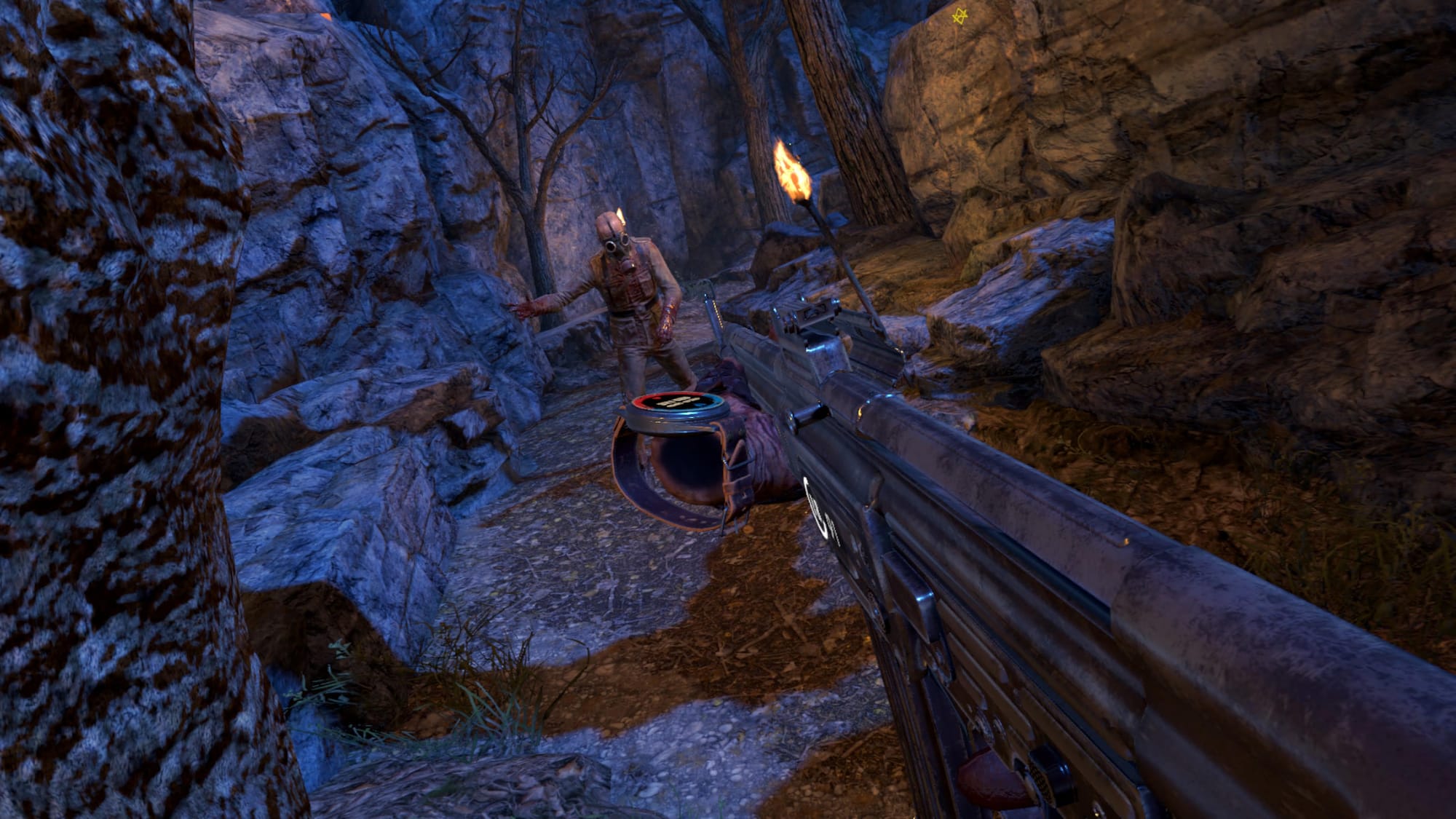
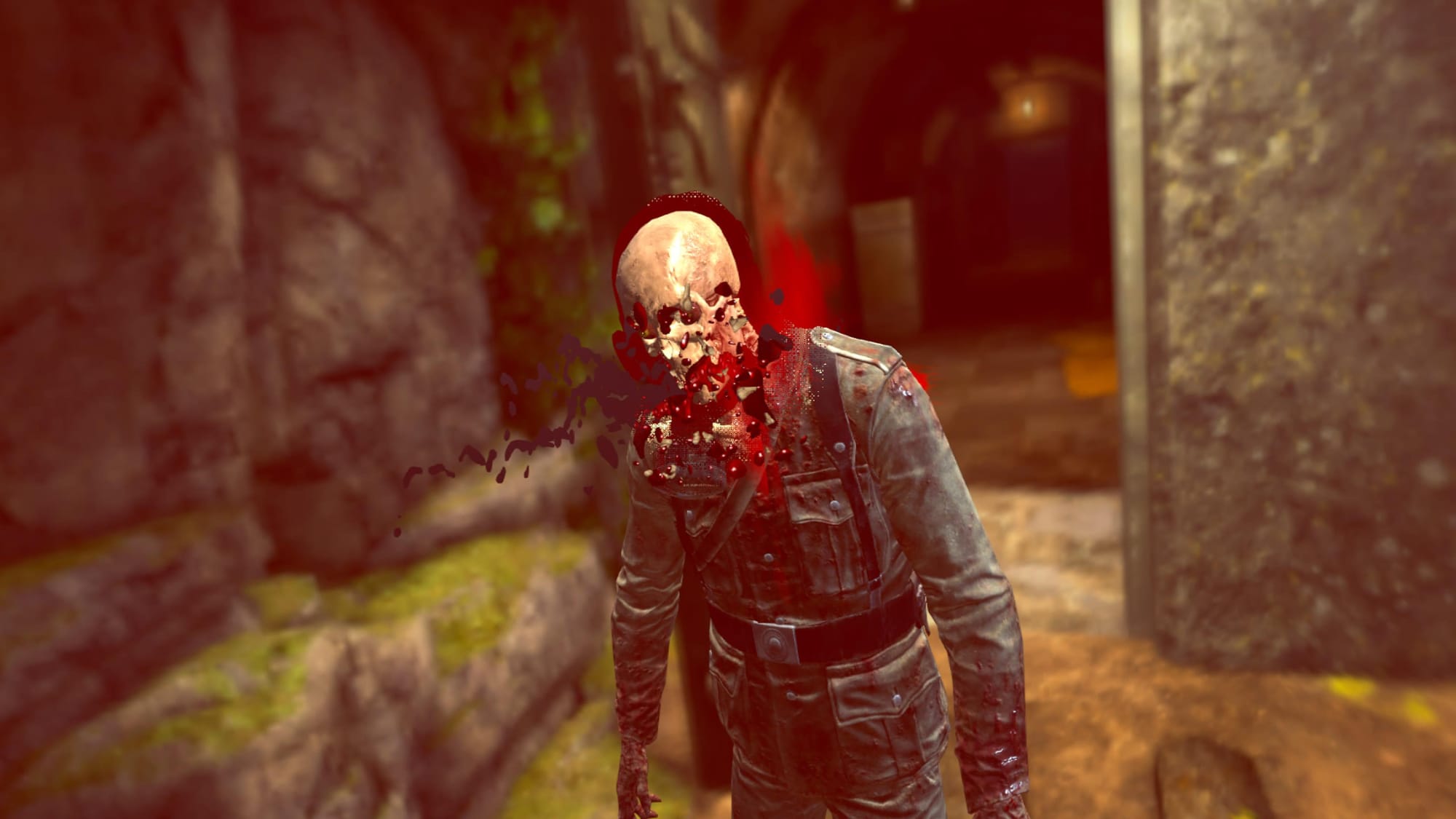
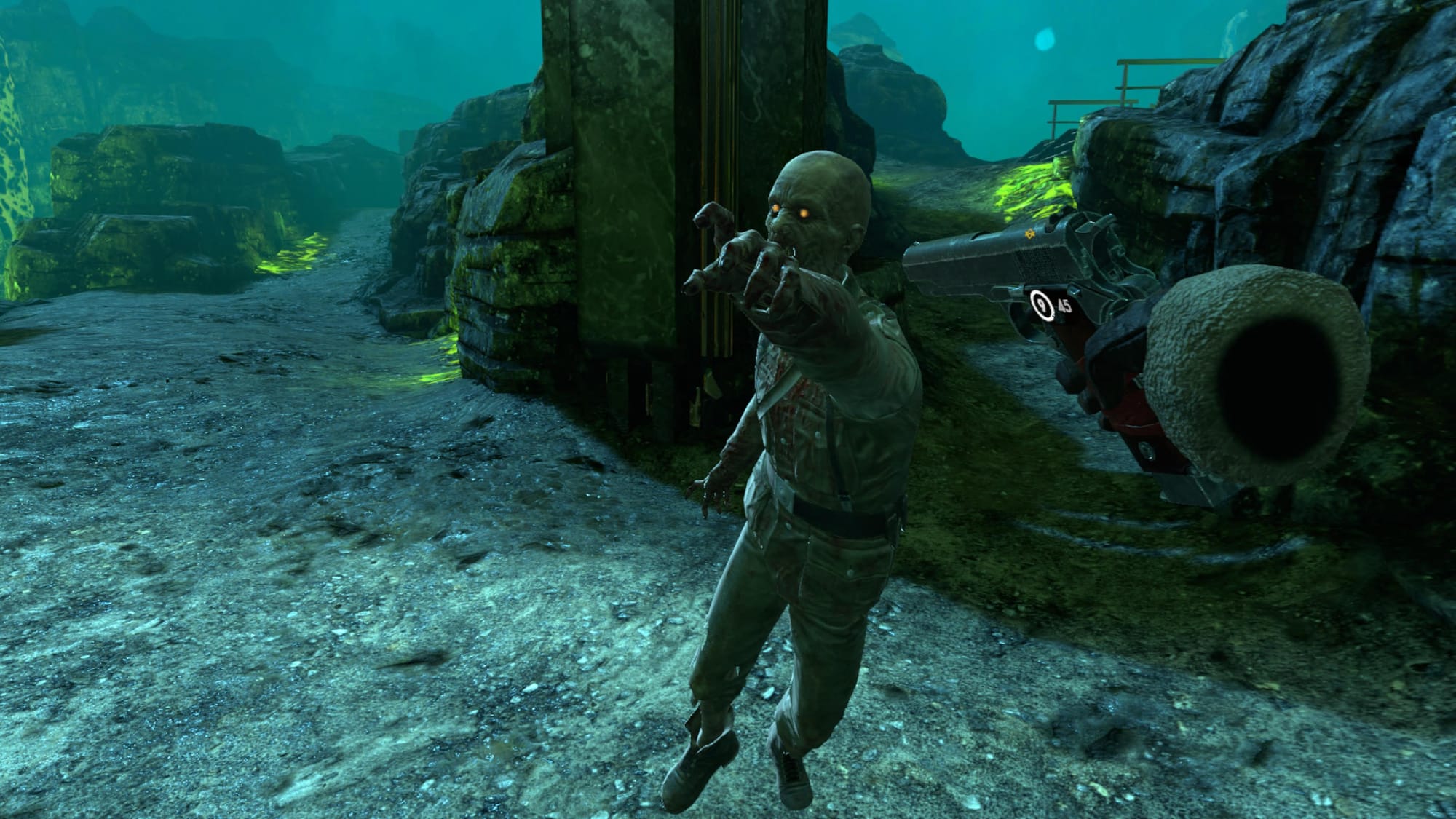
Mechanically, Zombie Army VR works well and while I wouldn’t call it one of PlayStation VR2’s visual standouts, the presentation generally looks good. Hearing the foul screeches of an incoming zombie horde leaves me tense without this ever veering into horror, it’s more of an action game, and the performance ran smoothly throughout. Those signature x-ray kill cams are back too.
How does it play on Quest 3?
This review is based on the PlayStation VR2 version and though we didn’t receive access to the Steam version before launch, we’ve also spent an hour playing the Quest 3 version for comparison.
So far, Zombie Army VR on Quest 3 holds up pretty well with the expected trade-offs. I only noticed the framerate drop on two brief occasions during combat sequences, and the visual presentation looks great on standalone hardware. I can’t speak for Quest 2/Pro performance but for Meta’s latest family of headsets, it’s a good port so far.
However, and this is a big one, where Zombie Army VR goes wrong is in the missions themselves, which normally need around 20 minutes to complete. Every chapter ends up turning into little more than a shooting gallery, which quickly gets tedious and frustrates the pacing as fights can take a while to clear. A good variety of enemies – who range from your standard violent corpses, armored units, snipers, suicide runners, and more – do little to help this feeling.
Some stages require killing zombies within a set perimeter to extract their blood, one involves transporting objects that draw enemies to you, while other levels include areas sealed by a blood gate. No matter what happens, it’s ultimately the same deal almost every time. This ends up becoming incredibly repetitive in longer stints; playing with a friend in co-op only goes so far in masking that. Rebellion informed me there are currently no plans for cross-platform multiplayer, either.
Comfort
Zombie Army VR begins by selecting your dominant hand and whether you’re playing seated or standing, asking you to take off the headset when changing position. Smooth camera turning is supported alongside snap turning at 15, 30, and 45 degrees. Movement uses either artificial stick-based locomotion or teleportation.
Various HUD elements like subtitles, score indicator and the crouch indicator can be switched off. Screen vignettes can be applied, while you can adjust your belt’s offset, height, angle, and size. Cinematic cameras, camera shake and x-ray kills can also be disabled. Moving forward can be tracked by your head or hands, while tracking smoothing can steady your aim in exchange for less responsive hand movement.
Four characters are available at the start (two more will be added later), and three difficulty settings are available. Audio can be individually adjusted with sliders for the master volume, sound, voice, and voice chat. A colorblind mode is also supported. Brightness and contrast can also be altered, and haptic feedback can be switched off.
The only real changes are with a handful of bosses who you can only get to by… well, killing more enemies. Or destroying the floating skulls around them so they drop the protective barriers, all while attacking standard zombies so they don’t kill you first at the same time. It all feels rather unimaginative, and that’s especially disappointing as I hoped for more from these boss fights.
Screenshot captured by UploadVR on PS VR2
Completing this campaign took me roughly 7 hours, maybe slightly more, and Rebellion’s attempted to encourage replayability with the usual incentives. Collectible dolls and weapon skins are hidden across each mission, while scoring uses a medal system from Bronze to Gold. My previous concerns mean I don’t feel particularly compelled to replay low scoring missions, though earning enough XP to level up rewards you with more upgrade points for guns. That alone had me consider reattempting my less successful endeavors.
Zombie Army VR Review – Final Verdict
Zombie Army VR has a decent foundation with a tense atmosphere and enjoyable gunplay, but that’s let down by the main campaign offering little more than a repetitive shooting gallery. Playing with a friend can only do so much to hide core issues, which is unfortunate when the game mechanically feels good. What’s here is fine, Zombie Army VR has its moments, and it’ll serve if you’re after a new co-op campaign. Just don’t expect much else.
UploadVR uses a 5-Star rating system for our game reviews – you can read a breakdown of each star rating in our review guidelines.
ASPEN, Colo.—There’s a lot riding on Audi’s next Q5. The model has been Audi’s bread and butter here since the model went on sale in the US in 2009, as tastes changed and sedans fell out of favor. The third-generation Q5 is built on an all-new platform and is one of a new generation of software-defined vehicles that’s meant to ditch a lot of legacy crud for a clean sheet approach. You would have known all of that from our look at the new Q5 in a studio last year, when Audi briefed us on its new platform. What you wouldn’t have known from that piece is how it drives, particularly on US roads. The answer is: surprisingly well.
PPC
Just a few years ago, the world’s big car brands were telling us that soon everyone would be driving electric cars, and that it would be wonderful. Things haven’t quite panned out the way people thought they might when prognosticating in 2018, though. Electric powertrains have yet to reach price parity, in many places infrastructure still lags, and so automakers are developing new combustion-powered vehicles, particularly for markets like the US, where adoption remains far behind Europe or China.
For Audi and the other premium brands within the Volkswagen Group empire, that’s a new platform called PPC, or Premium Platform Combustion. PPC will provide the bones for new vehicles in a range of sizes and shapes, the same way the MLB (and MLB Evo) platforms have done until now. In a week, you can read about the A5, for example, but as the sales figures show, SUVs are what people want, so the Q5 comes first.
DragonFlyBSD has updated its Direct Rendering Manager (DRM) kernel graphics/display driver code that it ports over from what’s available in the upstream Linux kernel. The latest revision to the DragonFlyBSD kernel graphics driver code enables support for some new hardware platforms but remains woefully behind the latest generation dGPUs/iGPUs and what is found in the upstream Linux kernel…
Microsoft just released its Patch Tuesday update for June, which addresses 66 security vulnerabilities across Windows and Microsoft systems. Two of the flaws are zero-days—one actively exploited, one publicly disclosed—along with 10 bugs that are rated as critical.
As Bleeping Computer outlines, this month’s patch fixes 13 elevation-of-privilege flaws, three security-feature-bypass flaws, 25 remote-code-execution flaws, 17 information-disclosure flaws, six denial-of-service flaws, and two spoofing flaws. Eight of the remote-code-execution vulnerabilities are labeled “critical” along with two elevation-of-privilege flaws.
Zero-day flaws patched in June 2025
June’s Patch Tuesday fixes two zero-days, which are security vulnerabilities that are either actively exploited in the wild or publicly disclosed before an official fix is released to users.
The active exploit (CVE-2025-33053) is a remote-code-execution flaw in Microsoft Windows Web Distributed Authoring and Versioning, which would allow threat actors to execute arbitrary code on the affected system in the event that a user clicks on a “specially crafted” WebDav URL. This vulnerability was discovered by Check Point Research and exploited by a group called “Stealth Falcon.”
The publicly disclosed zero-day (CVE-2025-33073) is a Windows SMB elevation-of-privilege flaw that would allow an attacker to gain SYSTEM privileges by executing a malicious script. Microsoft has not provided additional details, though it attributes the discovery to a handful of researchers representing different cybersecurity teams.
Five of the critical vulnerabilities patched this month are in Microsoft Office, including Excel and SharePoint. The remaining issues were spread across Power Automate, Windows Cryptographic Services, Windows KDC Proxy Service, Windows Netlogon, and Windows Remote Desktop Services.
What Microsoft users need to do now
In most cases, security updates for Microsoft and Windows will be downloaded and installed automatically on your device, but you can ensure you’ve received the latest one by going to Start > Settings > Windows Update and selecting Check for Windows updates.
Microsoft typically releases Patch Tuesday fixes on the second Tuesday of the month. Timely updates are essential to minimizing the risk that your device or system will be vulnerable to exploits.
An anonymous reader quotes a report from TorrentFreak: Fresh data released by piracy tracking outfit MUSO shows that pirate sites remain popular. In a report released today, MUSO reveals that there were 216 billion pirate site visits globally in 2024, a slight decrease compared to the 229 billion visits recorded a year earlier. TV piracy remains by far the most popular category, representing over 44.6% of all website visits. This is followed by the publishing category with 30.7%, with film, software and music all at a respectable distance. Pirate site visitors originate from all over the world, but one country stands tall above all the rest: America. The United States remains the top driver of pirate site traffic accounting for more than 12% of all traffic globally, good for 26.7 billion visits in 2024. India has been steadily climbing the ranks for years and currently sits in second place with 17.6 billion annual visits, with Russia, Indonesia, and Vietnam completing the top five. As a country with one of the largest populations worldwide, it’s not a complete surprise that the U.S. tops the list. If we counted visits per internet user, Canada and Ukraine would top the list.
While pirate site visits dipped by more than 5% in 2024, one category saw substantial growth. Visits to publishing-related pirate sites increased 4.3% from 63.6 to 66.4 billion. The increase is largely driven by the popularity of manga, which accounts for more than 70% of all publishing piracy. Traditional book piracy, meanwhile, is stuck at 5%. The publishing piracy boom is relatively new. Over the past five years, the category grew by more than 100% while the overall number of global pirate site visits remained relatively flat. Looking at the global demand, we see that the U.S. also leads the charge here, followed by Indonesia and Russia. Notably, Japan, the home of manga, ranks fifth in the publishing category. This stands out because Japan is not listed in the global top 15 in terms of total pirate site visits.
In the other content categories, MUSO’s data shows a dip in pirate site visits. The changes are relatively modest for TV (-6.8%) and software (-2.1%) but the same isn’t true for the music and film categories. In 2024, there were 18% fewer visits for pirated movies compared to a year earlier. MUSO notes that this is due to a “lighter blockbuster calendar” which reduced piracy peaks. “The drop in demand is as much about what wasn’t released as it is about access,” the report explains. The music category saw a 19% decline in piracy visits year over year, with a more uplifting explanation for rightsholders. According to MUSO, the drop can be partly attributed to “secure app ecosystems” and the “wide adoption of licensed platforms like Spotify and Apple Music.”
During the initial months of Pokémon TCG Pocket, ex monsters dominated the competitive landscape. These monsters are (usually) stronger than their non-ex counterparts, and they can come with game-changing abilities that determine how your entire deck plays. In the past, players could create frustratingly fearsome…
Hong Kong authorities have warned their residents against downloading a Taiwan-made game called Reversed Front: Bonfire, which they’re accusing of advocating for armed revolution and promoting “secessionist agendas, such as ‘Taiwan independence’ and ‘Hong Kong independence.'” As Bloomberg notes, this is the first time the special administrative region of China has invoked national security laws to ban a video game. The legislation, a national law from Beijing and a local security law passed in 2024, are supposed to address perceived threats and require internet service providers to comply with government mandate. Chinese authorities had previously ordered Google to block access to the protest song Glory to Hong Kong in the region.
Reversed Front: Bonfire was developed by a group known as ESC Taiwan, who are outspoken critics of the China’s Communist Party. The game disappeared from the Apple App Store in Hong Kong less than 24 hours after authorities issued the warning. Google already removed the game from the Play Store back in May, because players were using hate speech as part of their usernames. ESC Taiwan told The New York Times that that the game’s removal shows that apps like theirs are subject to censorship in mainland China. The group also thanked authorities for the free publicity on Facebook, as the game experienced a surge in Google searches.
The game uses anime-style illustrations and allows players to fight against China’s Communist Party by taking on the role of “propagandists, patrons, spies or guerrillas” from Hong Kong, Taiwan, Tibet, Mongolia and Xinjiang, which is home to ethnic minorities like the Uyghur. That said, they can also choose to play as government soldiers.
In its warning, Hong Kong Police said that anybody who shares or recommends the game on the internet may be committing several offenses, including “incitement to secession, “incitement to subversion” and “offenses in connection with seditious intention.” Anybody who has downloaded the game will be considered in “possession of a publication that has a seditious intention,” and anybody who provides financial assistance to it will be violating national security laws, as well. “Those who have downloaded the application should uninstall it immediately and must not attempt to defy the law,” the authorities wrote.
This article originally appeared on Engadget at https://www.engadget.com/gaming/hong-kong-bans-video-game-using-national-security-laws-124549944.html?src=rss
We already knew the Nintendo Switch 2 was going to sell well. Demand has been feisty, and pre-orders sold out extraordinarily quickly. Nintendo now reports that it was even more popular than bad been expected, selling 3.5 million consoles in the first four days. For context, the original Switch took a month to sell…
One of the upcoming changes to Apple Wallet is bound to become one of its most useful features if you frequently shop online and get deliveries. When you get iOS 26 on your iPhone, your Wallet app will start using Apple Intelligence’s capabilities to automatically scan your emails and identify order tracking details sent by merchants or couriers. The app will then summarize and display those deliveries as cards. As MacRumors has noted, Wallet can already do that for purchases made using Apple Pay. With the update, you’ll be able to keep track of all your deliveries from one place and get progress notifications.
At the moment, access to the feature is still limited to developers who’ve installed the beta version of iOS 26. The feature itself is still in beta, and you will have to enable it by going to the Wallet and Apple Pay section in Settings, heading into Apple Pay Defaults and switching on Orders Found in Mail under Order Tracking.
Apple announced its upcoming mobile platform at WWDC 2025, revealing an interface that has gone through a massive redesign. It features a “Liquid Glass” UI that’s defined by icons, toolbars and tab bars with a see-through appearance. In addition to being able to track orders, the iOS 26 version of Wallet will allow you to create a Digital ID with a US passport and will also come with more detailed boarding passes. iOS 26 isn’t coming out until this fall, but Apple plans to start rolling out public betas in July.
This article originally appeared on Engadget at https://www.engadget.com/apps/apple-wallets-ios-26-update-scans-your-emails-for-package-delivery-tracking-123054484.html?src=rss
We may earn a commission from links on this page. Deal pricing and availability subject to change after time of publication.
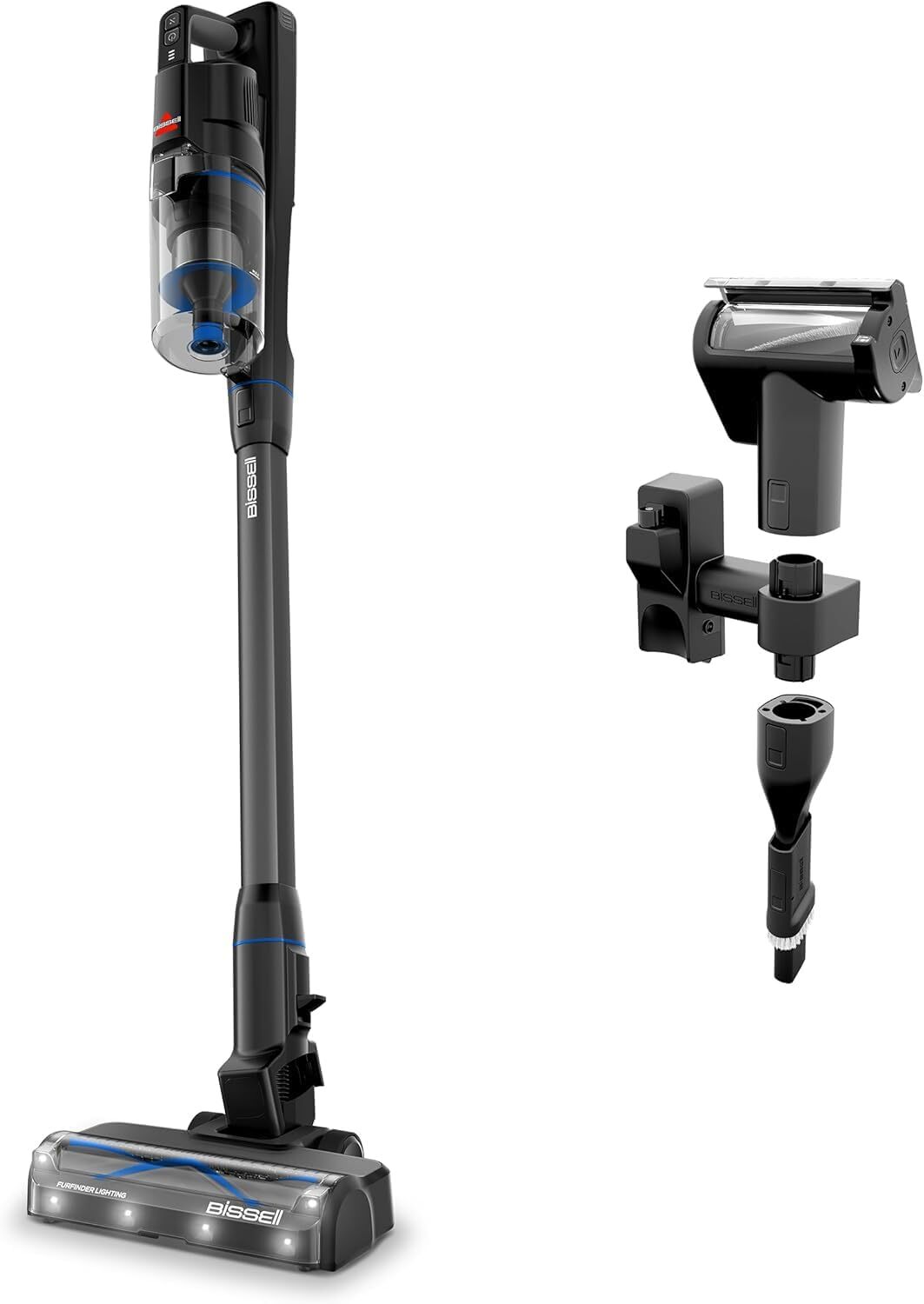
If you thought Dyson was the only name in high-powered pet vacuums, the Bissell PowerClean FurGuard cordless vacuum offers a solid alternative — and it’s currently available for under $200. This cordless stick vacuum, which is at its lowest price ever according to price trackers, works on a variety of surfaces, including carpets and hard flooring. It includes an upholstery tool for fur-covered furniture and a two-in-one crevice tool for harder-to-reach areas like stairs and car interiors.
A 280W motor delivers strong suction that handles everything from fur to dried-on dirt clumps that your pet tracks in from outside. One user says it’s surprisingly quiet, a perk for people with pets who are disturbed by large vacuums. It can run on three settings: an eco-friendly model that saves battery life and a turbo setting to take things up a notch. The head features LED FurFinder headlights, illuminating pet hair and other debris that might be hard to target otherwise. Amazon reviewers appreciate the HEPA sealed system that ensures dust and allergens stay in the vacuum and the self-cleaning brush roll, which prevents hair from tangling and collecting.
The self-standing design is convenient both during cleaning breaks and for storage, especially in small spaces. That said, reviewers mention that the vacuum’s upright build includes a larger hinge at the base, which can make it challenging to reach under furniture with low clearance (under five inches).
The removable battery on this vacuum has a 50-minute run time on a single charge (run time will depend on the power mode used), and at 7.3 lbs, it’s relatively lightweight compared to past versions of this vacuum and other similar mid-range models on the market. It may not be ideal if you have tons of low-profile furniture. However, the self-standing feature and the built-in lights, which can be found on much pricier Dysons, could make this deal on this Bissell cordless vacuum worth it, even for non-pet owners.
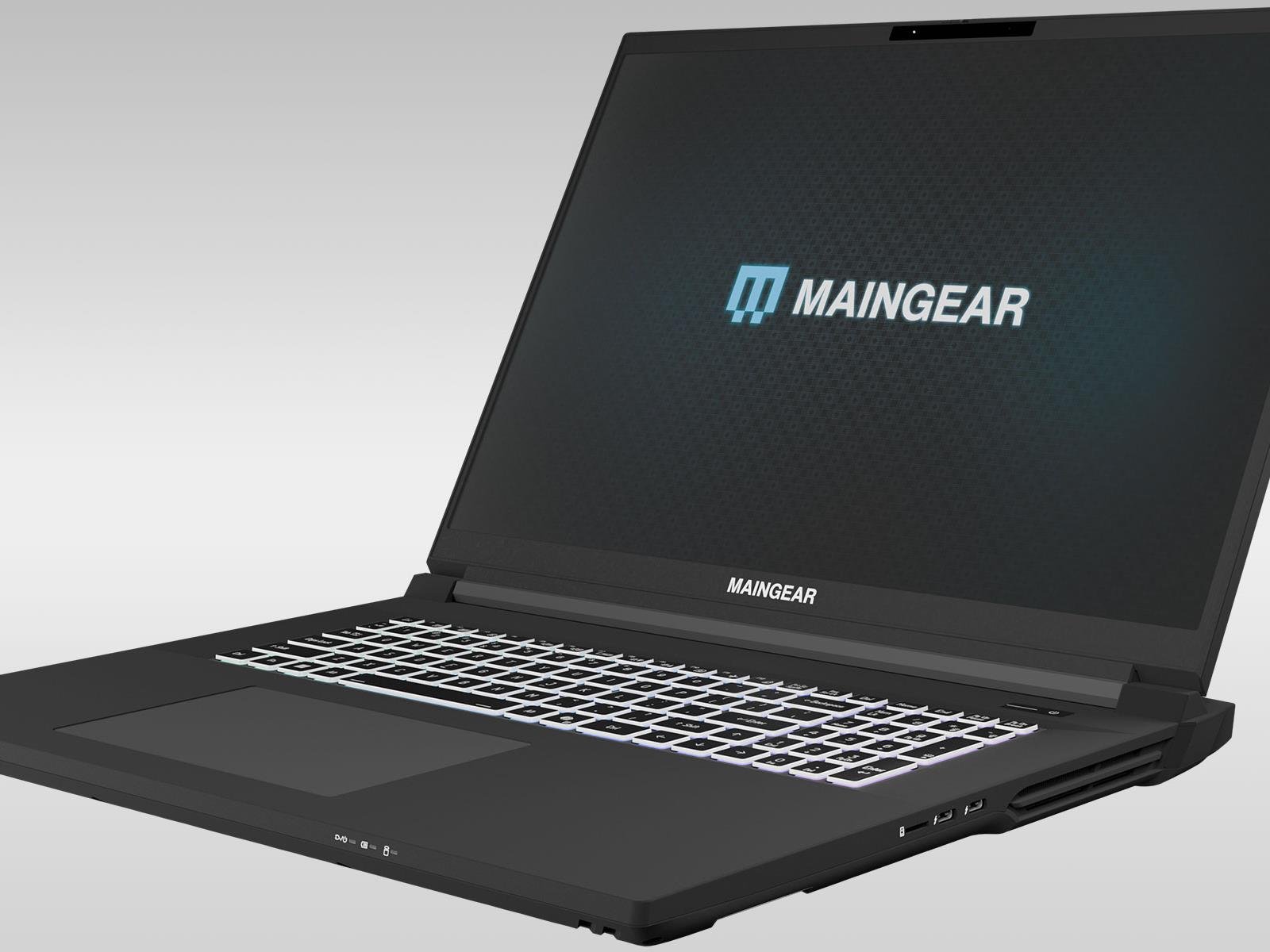
Maingear might be best known for its elite lineup of custom desktop configurations like the Apex Force we reviewed a couple of months ago, but don’t sleep on the boutique builder’s laptop lineup. That’s especially true of its newest model, the fully-loaded Ultima 18. No, Lord British isn’t coming out of retirement, but if he was considering
Back in 2017, it felt like handhelds were dying. The PlayStation Vita was suffering from a lack of support and the 3DS was already on its way out. But then the Nintendo Switch arrived and became the hybrid console that launched 1,000 portable rivals. It proved you could make a device that was powerful enough to play games on your TV but also small enough to take with you anywhere. And by the time everything is all said and done, there’s a good chance it will be the highest-selling console of all time.
But making a proper follow-up can be difficult. So for the Switch 2, instead of changing everything up again, Nintendo took the best features from the original, upgraded them and gave us more of what we love. And even though this is just the start, it feels like I’ve been enchanted all over again.
Design
The Switch 2’s design is the most obvious example of Nintendo not straying too far from the original’s template. That said, nearly every component has been tweaked or upgraded in some way. The console’s slightly larger dimensions (10.7 x 4.5 x 0.55 inches and 1.2-pound chassis with Joy-Con) help make way for a bigger 7.9-inch display. In fact, almost everything has been embiggened, including the face buttons, analog sticks and rear kickstand, the latter of which opens even wider than before.
However, the Switch 2’s biggest upgrade is its new Joy-Con. There’s a familiar matte finish with more subtle red and blue accents, but instead of sliding them on and off like before, Nintendo gave them a new magnetic attachment system that comes with a very satisfying thunk. Meanwhile, detaching them is dead simple thanks to a handy button next to each trigger. So not only do the Joy-Con feel more secure, they are a pleasure to clip on and off as the need arises.
Sam Rutherford for Engadget
Nintendo didn’t stop there though, because hidden in the edge of each Joy-Con is a sensor that allows them to function as mice. I will admit that I thought this feature was a gimmick at first. But in games like Civilization 7 that are traditionally best enjoyed with a mouse, they serve as a very welcome alternative to classic gamepad controls. They also work surprisingly well on the arm of a sofa or even your leg. This is handy because if you’re playing games on your TV, you might not have a table or some other flat surface within reach.
Display
The Switch 2’s 7.9-inch LCD is a significant upgrade over the panel on its predecessor. Not only is it larger (up from 6.2 inches), it’s also higher res (1080p vs. 720p) while boasting a 120Hz refresh rate and support for HDR. With its auto-brightness setting turned off, the screen tops out at around 400 nits, though in titles with HDR, I’ve found that number can hit 450 nits or more. The downside is that the Switch 2’s LCD screen’s black levels aren’t quite as good compared to an OLED Switch. This can make dark backgrounds look closer to gray, especially when viewed in a low-light environment.
Sam Rutherford for Engadget
When docked, the Switch 2’s visual prowess expands to 4K at 60 fps or 1440p at 120 fps, though it’s important to remember that those settings may not be available for every game. Sadly, the console supports VRR (variable refresh rates), but that only applies to its onboard display. On the bright side, the Switch 2 does seem to have support for auto low latency mode (ALLM), which is good for anyone who plays fast-twitch games like shooters.
Performance
Judging the performance of a brand-new console is difficult because it often takes developers months or years to figure out how to truly optimize their games for a new platform. The Switch 2 features a chip from NVIDIA with a custom GPU that the company claims offers ten times more graphics power than what we got from the previous model, alongside support for features including DLSS and ray tracing. The console also comes with 12GB of RAM and 256GB of onboard storage, which can be expanded further using microSD Express cards.
Sam Rutherford for Engadget
First-party titles like Mario Kart World run beautifully, though we’ve sort of come to expect that from major tentpole releases from Nintendo. The only hint of stuttering I’ve seen is when I played four-player local co-op with Game Chat turned on and multiple video streams going at the same time. And even then, it’s hard to tell unless you’re really looking for evidence of slowdown.
What might be the biggest indicator of the Switch 2’s improved performance is the sheer number of AAA third-party ports available at launch. Cyberpunk 2077 looks excellent and without a direct side-by-side comparison with something like the PC version, it’s difficult to spot where any graphical corners have been cut. And while Street Fighter 6 isn’t quite as impressive since some of the flashier effects don’t pop as much as they do on other consoles, it’s still a very enjoyable experience. As someone who often criticized the performance of the original Switch as one of its weak points, I’m thoroughly encouraged by the increased power I’ve seen from the Switch 2 thus far.
Backwards compatibility
Sam Rutherford for Engadget
One of the best things about the Switch 2 is that it supports wide backward compatibility with original Switch titles. The vast majority of games work as you’d expect, though there are some outliers, including titles like Ring Fit Adventure, as the Switch 2’s larger Joy-Con don’t fit inside the existing controller straps. Many of the NS1’s accessories are also backwards compatible, so you can still play games like Ring Fit by pairing one of the original Switch’s Joy-Con. The other current high-profile bug is an issue in Super Smash Bros. Ultimate that can cause the game to crash when someone chooses a Mii Fighter. Thankfully, Nintendo is aware and working on a fix.
The real treat is that many older games look and run better on the Switch 2 than they did before. Super Mario Odyssey plays even smoother, while games like Legend of Zelda: Breath of the Wild are more beautiful than you remember thanks to an $10 upgrade pack (or free with Nintendo Switch Online Expansion Pack) that adds support for HDR, better graphics and more. However, the games that may have gotten the biggest boost are Pokémon Scarlet and Violet. Due to a free upgrade on the NS2, the game features a higher framerate, higher monster density, a longer draw distance and more. In some ways, it feels like a brand new game, and if it had launched like this back in 2022, Nintendo could have completely avoided one of the biggest knocks against it.
Game Chat
Another major addition to the Switch 2 is the arrival of a built-in chat feature, including a new dedicated button on the console’s controller. Setup requires a handful of identity checks, but once you’ve sorted that out, it’s incredibly easy to use. You can invite people from your friends list to impromptu lobbies or create/join more permanent hangouts. Once you’re in a chat, adjusting your settings is as easy as hitting the C button. From there, you can choose from a handful of screen layouts and background options, along with the ability to share your video, do voice-only or activate speech-to-text (or text-to-speech). And if you have a camera attached, you can put your face in chat too.
Sam Rutherford for Engadget
Nintendo has generally done a great job of making it easy to jump in and out of chats. With support for up to four video feeds and a total of 12 people per lobby, there’s plenty of room for everyone in your family, no matter if they’re in the next room or on the other side of the planet. The small demerits to Game Chat are that its frame rate and video resolution are relatively low (same goes for camera footage if you have one attached). The option to delete your background (aka green screen) often looks rather pixelated and if you watch closely, you may see video windows stutter unless you pin a specific view to your main feed.
That said, because Game Chat is more about enjoying the company of others instead of producing clips for social media, I’m not that bothered. You don’t even need to be playing the same game (or any game at all, for that matter) to be in a lobby with others. It’s easy to use and the vibes are good, which is what’s really important. However, you will need to pay for Nintendo Switch Online, which costs $20 a year.
The Dock
Sam Rutherford for Engadget
Like the console itself, Nintendo didn’t stray too far from the design of the original Switch’s dock for its successor. You still get a plastic shell with more rounded corners and a slot that the Switch 2 can fit inside. There area handful of ports in the back (covered by a removable plate) for power (via the included USB-C cable and adapter), HDMI and wired internet. The big upgrade is that now there’s a fan inside to help keep the console cool and provide better sustained performance. Thankfully, it’s relatively quiet, so you won’t have to deal with an annoying hum distracting you from your games.
The awkward thing about the Switch 2’s dock is that it has one less USB port than before. Aside from the single USB-C connection in back for power, there are only two USB-A jacks on the side. This means if you want to connect accessories like the camera, which only comes with an included USB-C cable, you’ll either have to get an adapter or plug it directly into the Switch 2 via its exposed port on top. Unfortunately, that will force you to disconnect the camera every time you undock the console, which is just kind of clunky. I wish Nintendo had made every USB port a Type-C connection, or at the very least included more than one.
Battery Life
The Switch 2 features a 5,220 mAh battery, which according to Nintendo should provide between 2 and 6.5 hours of runtime on a single charge. However, the console’s longevity also greatly depends on the game you’re playing along with other factors such as screen brightness and background downloads.
Sam Rutherford for Engadget
To help provide a slightly better picture of the Switch 2’s power efficiency, I played a handful of titles starting at 100 percent battery and kept going until the console was dead with the screen set to max brightness (around 400 nits) and auto-brightness disabled. These settings are meant to provide a consistent but also conservative look at the console’s runtime, as it’s very possible to increase longevity by doing things like lowering brightness.
In Mario Kart World, the Switch 2 lasted two hours and 23 minutes, which is on the lower end of Nintendo’s official estimate. Meanwhile, in the NS2 edition of Legend of Zelda: Breath of the Wild, the console fared a bit better with a time of 2:56. That said, the game with the best battery life I’ve tested so far is Puyo Puyo Tetris 2S at four hours and 15 minutes, which shouldn’t be a big surprise as it’s a port of a decade-old 2D title.
Sam Rutherford for Engadget
For some folks, these numbers might be disappointing. I certainly would love an extra 30 to 60 minutes of battery life, but these stats are generally in line or slightly better than what we get from rivals like the Steam Deck and ROG Ally X. And remember, when compared to practically all of its PC-based competition, the Switch 2 remains a much sleeker device.
Another helpful battery-related improvement is the addition of a charging limit, which allows the Switch 2 to automatically stop at a certain percentage to help maintain the power pack’s longevity. But my favorite little detail is now the Switch 2 will display a small battery icon when you drop it in the dock because the screen peeks out a bit, so you always know for sure when it’s charging.
Cost considerations
At $450 for the console alone or $500 for the bundle with Mario Kart World, the Switch 2 is priced significantly higher than the original, which cost $300 at launch (though that increase is closer to $50 when adjusted for inflation). However, when you include the price of accessories and games, the total adoption cost for a Switch 2 can be substantially higher. I purchased a standalone console along with physical versions of Mario Kart World and Legend of Zelda: Breath of the Wild (NS2 Edition) and one Pro Controller for $745.75. But after you tack on another $50 for one year of Nintendo Switch Online + Expansion, my grand total was just shy of $800.
Sam Rutherford for Engadget
Everyone has different opinions on what they consider disposable income, but that’s still a lot of money to spend on a new console and two games. Here’s hoping this breakdown helps people think about how the Switch 2 will impact their budget.
Important notes
The Switch 2 requires a day one patch in order to go online or even play some games. You’ll normally get this automatically by following the setup guide when you first turn on the system. However, if you skip the section where it asks you to connect to Wi-Fi, you may need to manually download the patch later by hitting the check for updates button in system settings the next time you connect to the internet.
The Switch 2 only supports microSD Express cards, which are not interchangeable with standard microSD or microSD XC cards. When buying a microSD Express card, you’ll want to make sure it has an EX or EXPRESS label printed on the card itself.
In addition to Joy-Con, a Joy-Con Grip, two Joy-Con straps and the console itself, the Switch 2 comes with an HDMI cable and a 60-watt power adapter with a detachable USB-C cord.
Nintendo says the Switch 2’s Joy-Con use an all-new module for its analog sticks. As they aren’t Hall effect modules, it’s too early to tell how well they will resist drifting.
Only the Switch 2’s bottom USB-C port supports video out.
Wrap-up
Sam Rutherford for Engadget
The old adage goes ‘if it ain’t broke, don’t fix it.’ But for the Switch 2, Nintendo did something even smarter. It maintained the console’s hybrid design and just made everything better. Its screen is bigger and brighter. Buttons are larger and the magnetic Joy-Con are so much easier to snap on and off. Even features such as the kickstand and expandable storage feel like they’ve gotten substantial upgrades thanks to a wider range of motion and support for faster microSD Express cards. I also really appreciate the addition of a second USB-C port.
The Switch 2 has everything that made the original so great, but now there’s more of it to enjoy. Granted, Nintendo’s latest console commands a higher price, but as the successor to the iconic system that revived handheld gaming, this thing is worth it.
This article originally appeared on Engadget at https://www.engadget.com/gaming/nintendo/nintendo-switch-2-review-more-of-what-you-love-120048430.html?src=rss
Google’s impressive Beam video conferencing technology has finally been integrated into an actual product that will be available for purchase. That’s the good news. The bad news? The HP Dimension system is going to cost a whopping $25,000. This is an enterprise product through and through.
However, the device certainly looks spiffy. The HP Dimension with Google Beam combines six cameras, a spatial audio system and adaptive lighting to allow for highly immersive virtual meetings. AI wizardry brings eye contact into the mix. All of this helps deliver “a deeply immersive experience that replicates the feeling of being in-person, with no headsets, glasses or wearables required.”
HP
We actually tried this tech, back when it was called Project Starline, and came away impressed. It makes calls “appear fully 3D from any perspective.” Algorithms combine live footage from the six cameras to render a pseudo-holographic version of the caller. It tracks head movements to ensure it delivers all of this visual data to eyes at the correct angle, all at 60FPS.
We found that the simple act of the person on the other end of the call holding out an apple for us to touch “was so realistic” that it felt like we could reach out and grab the fruit. This is a telepresence dream.
In addition to the Dimension system, HP is releasing a microphone that integrates with the new teleconferencing tech. The Poly Studio A2 Table Microphone works to extend “crystal-clear audio” further away from the Beam system, which should be a boon for medium or large-sized conference spaces. Users can daisy chain up to eight microphones together, though everything requires a standalone bridge device to operate. The microphone costs $329 and the bridge costs $549. This tech can also be used with more traditional setups.
All of this stuff will be available later in the year. There’s one caveat: Not only does the system cost $25,000, plus any of the aforementioned audio accessories, but users have to plunk down for access to the Beam service itself. Google has yet to release a pricing model for this.
This article originally appeared on Engadget at https://www.engadget.com/ar-vr/the-first-google-beam-device-is-the-25000-hp-dimension-120016865.html?src=rss
Clichés suggest that when it comes to food, dads are only good for manning the barbecue. But plenty of dads are great home cooks, fancy coffee connoisseurs, or just guys who know how to appreciate a novel snack.
Father’s Day is June 15, so you’ve got just enough time to get the right gift for your own foodie father. Here are nine gift ideas any dad will devour, metaphorically or otherwise.
Gifts ideas mentioned in this post:
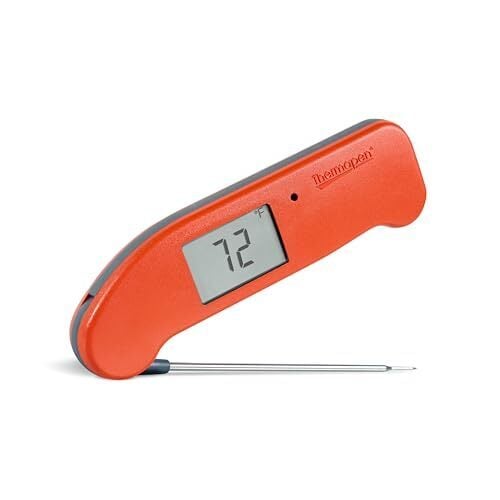
ThermoWorks Thermapen ONE – Cayenne Pepper Red
$119.00 at Amazon
$119.00 at Amazon
An off-white apron with green straps on a white background.
Hedley & Bennett Crossback Apron
$85.00
$85.00
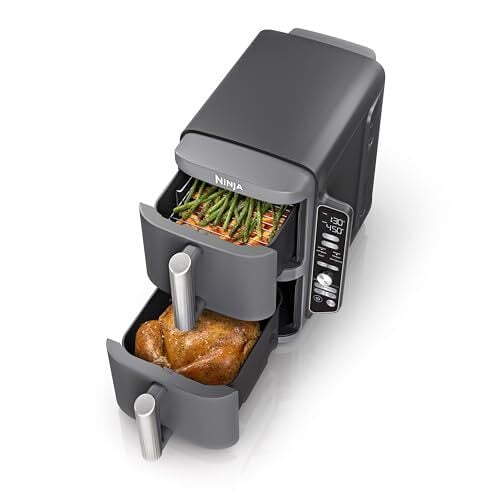
Ninja DoubleStack XL 2-Basket Air Fryer
$219.95 at Amazon
$249.99 Save $30.04
$219.95 at Amazon
$249.99 Save $30.04
Saucy: 50 Recipes for Drizzly, Dunk-able, Go-To Sauces to Elevate Everyday Meals
$9.99 at Amazon
$9.99 at Amazon
A great gift for you caffeine-lovin’ dad.
Bodum Pour Over Coffee Carafe with Reusable Filter
$22.44 at Walmart
$15.99 Save 0.00
$22.44 at Walmart
$15.99 Save 0.00
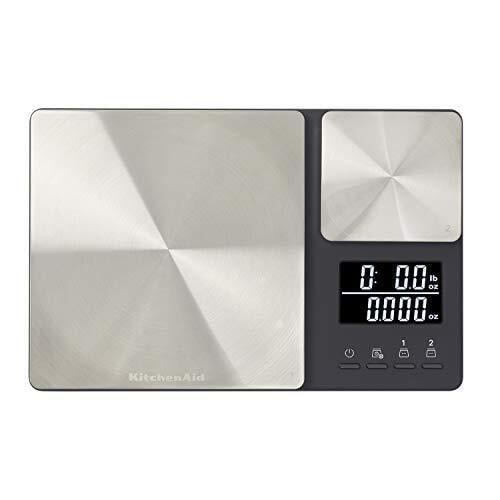
This scale can seamlessly switch units on the light-up display.
KitchenAid Dual Platform Digital Kitchen Scale, 11lb. capacity
$33.78 at Amazon
$36.49 Save $2.71
$33.78 at Amazon
$36.49 Save $2.71
Trü Frü Nature’s Bananas Hyper-Dried Fresh in Dark Chococlate
$10.40 at Amazon
$10.40 at Amazon
One of my favorite sauces that can be for slathering or for dipping.
Bachan’s Original Japanese Barbecue Sauce, 17 oz Bottle
$7.98 at Walmart
$8.49 Save $0.51
$7.98 at Walmart
$8.49 Save $0.51
From wine tasting to searing steak, you can find an exciting class as a gift.
The Institute of Culinary Education Recreational Classes
A speedy meat thermometer
After a couple years struggling with a cheap probe meat thermometer that would take nearly a minute to give me a semi-accurate internal temperature reading, I switched to the Thermapen One from ThermoWorks. I now shiver just thinking back to at all that lost time, because I get an accurate temperature reading of my steaks, chicken thighs, and roasts in one single second. Your father deserves this accurate, time-saving tool too. Check out the ThermoWorks website for their exclusive Father’s Day sale, with plenty of fancy colors to choose from.
A good apron
Before culinary school, before cooking professionally, the first apron I ever bought myself was beautiful. It was from Anthropologie and it had a floral design—but it was more good looking than good for cooking. If you’ve got a dad who loves to spend time cooking, get him a good quality, practical apron. There are several styles out there, so consider what he enjoys cooking as much as his body type. For example, I prefer the bib variety. Beyond that, choose an apron that’s made of a sturdy canvas, with several easy to reach pockets.
A ‘Saucy’ cookbook
Credit: Allie Chanthorn Reinmann
Maybe dad can sear a fantastic steak or make the most beautiful kale salad you’ve ever seen, but there’s still something missing. Odds are good that a swipe, drizzle, or dollop of sauce is what he needs to take his cooking to the next level. Saucy is a cookbook with about 50 approachable sauce recipes that range from thick, spreadable aiolis to pourable vinaigrettes. The best part is that there’s a sauce for everything dad is cooking up, and the front of the book even gives you pairing suggestions. Read my full review of Saucy here.
A coffee pour-over kit
The jury is still out on whether or not coffee is a food group, so I’ll treat it as such until the decision is made. If your dad has recently emerged from his shell of Maxwell House and discovered the burgeoning world of boutique coffees, it might be a good time to present him with a pour-over coffee kit. All the better if your dad is a sometimes (or all the time) scientist because pour over is a measured dance of time and temperature.
A new generation air fryer
Air fryers aren’t new to kitchen gift roundups, but every year they’re getting more powerful, more intuitive, and cleverer in design. If your dad got a wee basket air fryer five years ago, it’s time for an upgrade. Try one with dual cooking zones, a window on front of the basket—or, if he’s fed up with the basket style, try the oven variety this time (or the other way around). Read about my favorite air fryers here to see which one is the best match for your dad.
A kitchen scale
Your scientific pops will need a kitchen scale to measure water and coffee grounds, but really, every cook should have a kitchen scale at their disposal. This is the definitive example of buying someone a gift they’ll use often but will never buy for themselves. Look for one with a large weighing platform and a large (or light-up) display.
Not your grandfather’s chocolate-covered fruit
If yours is a dad who likes to snack, then your decision is easy: Get some snacks already! A mostly silky chocolate with the allure of a nutritious morsel of fruit tucked inside, Trü Frü is sure to win over your father’s heart and tummy. They make two varieties of chocolate covered fruit: frozen or hyper-dried. The frozen ones are simply raw fruit pieces covered in milk, dark, or white chocolate. The banana one has the addition of peanut butter (this one is my favorite). The hyper-dried fruit are also covered in the chocolate coating of your choice, but the center fruit piece is extremely crispy and light due to that hyper-drying process. These don’t need to be kept frozen so they make a great snack for dads who are always on the move.
Barbecue sauce
Father’s Day might be the holiday second-most associated with grilling and barbecue (after July 4, obviously), because by the time June rolls around, all we want to eat are burgers and grilled chicken thighs. Barbecue sauce might not seem glamorous, but you better believe it’s going to be used, and dad is going to appreciate the gift of the good stuff. This thorough list of barbecue sauces work well on pizza (grilled pizza counts), but you can use the tasting points to settle on the right sauce for what your dad likes to grill most. For a sweet, garlicky barbecue sauce with plenty of umami, I suggest Bachan’s. The consistency is a bit thinner than your average BBQ sauce, so be open to a subsequent application.
A cooking class
Great for a novice, but even if your pater is the most seasoned chef, he’ll enjoy a one-off cooking class. They’re perfect for a small dose of socializing and you get to enjoy an incredible meal at the end of the session. Not to mention, usually adult cooking classes have wine at the end. I suggest checking out culinary schools (like my alma mater, ICE) for their extra curricular courses; they’ll have industry professional instructors and normally provide high-quality ingredients.
This year’s Summer Game Fest was a weird one. On a show-wide scale, Geoff Keighley’s Not-E3 was lacking the the big, juggernaut announcements we usually expect from a June video game showcase. That understated showing extended to the actual “Play Days” show floor in Los Angeles, where developers gave press and content…
Your chosen bike frame and wheelset both affect speed in Zwift, so it makes sense for racers to do a little research and choose the best tool for the job. This is especially important in a time trial (TT) race, since there is no drafting and all your speed is entirely dependent on you and your bike!
While Zwift’s 4-star rating system for weight and aero is simple and easy to understand, performance varies even among frames with the same star ratings, because the stars are just an approximation. On top of that, Zwift’s addition of bike upgrades means racers need to take into account how a frame will perform when fully upgraded, not only when it’s first purchased.
Therefore, we’ve created several charts ranking all the TT bike frames based on their performance on flat roads and climbs, in un-upgraded and fully-upgraded states.
If you’re just looking for recommendations on what to buy, here are some helpful posts:
We begin with a simple chart showing how much time a particular frame will save you across 1 hour of riding at 300W (4 W/kg) compared to the most basic TT frame in game (the Zwift TT). These are “stage 0” frames, meaning no performance upgrades have been applied.
The chart is sorted from the best-performing frames to the worst, and you can sort based on flat performance or climb performance.
Sort Chart By:
Flat Performance
Climb Performance
Takeaways
When sorted by flat performance, you can easily see that the bottom ~10 frames have similar CdA (aero) settings in Zwift.
If you sort by climb performance, the speed falloff from one bike to the next is more even across the board. (This applies to road bike frames as well.) While Cadex Tri is far and away the winner on flat ground, it drops down in the list when it comes to climbs, meaning a pure climb TT needs a different weapon than a mixed or flat race on Zwift.
Time Savings Over 1 Hour (Stage 5 Frames)
This chart is just like the one above, except these are “stage 5” frames, meaning all possible performance upgrades have been applied.
Use the toggle to sort based on flat performance or climb performance.
Sort Chart By:
Flat Performance
Climb Performance
Takeaways
We shouldn’t see any major rankings changes here in terms of flat or climb performance, since all frames receive the same upgrades between stages 0 and 5.
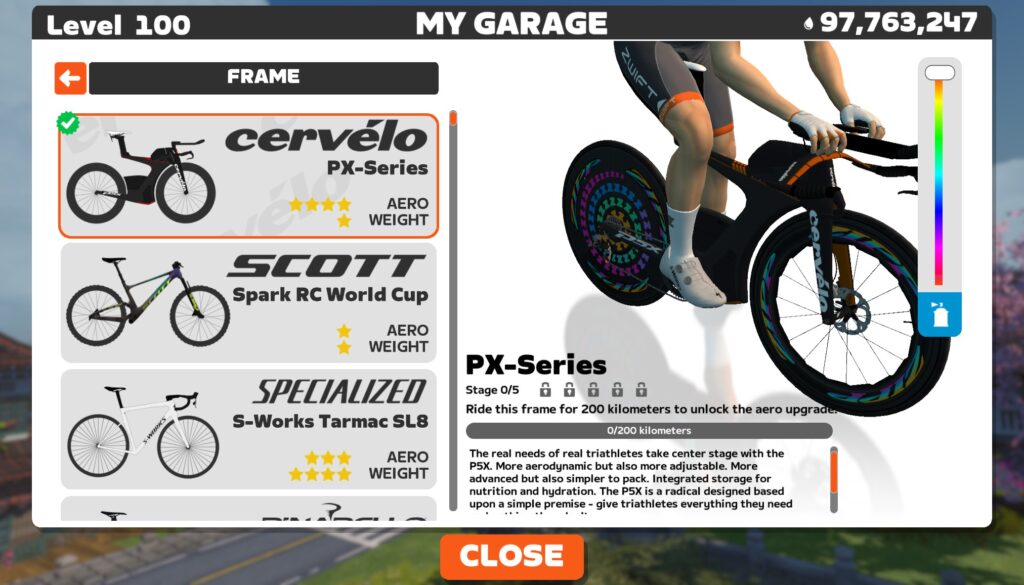
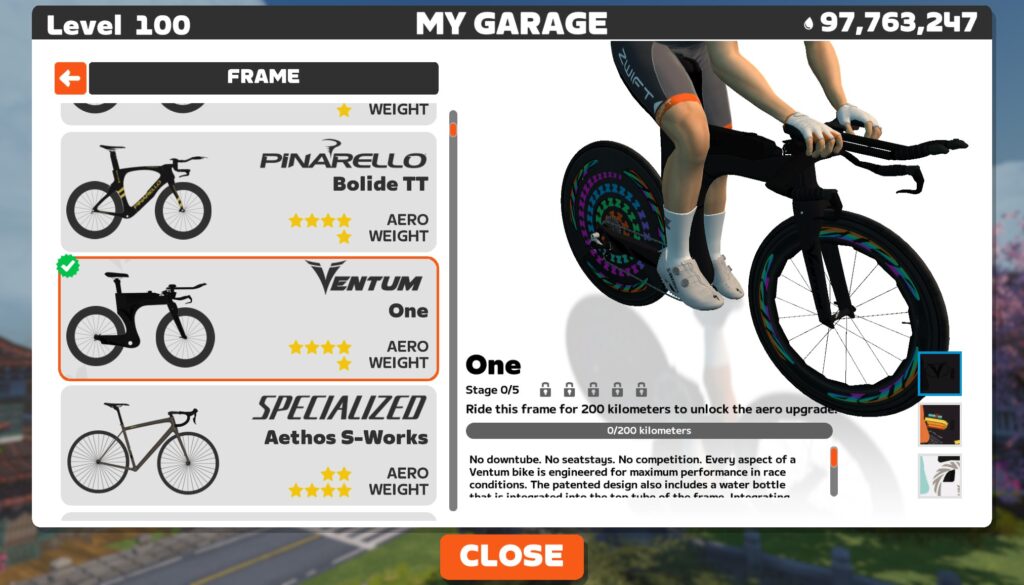
Except there’s a bug (see “Misconfigured Frames” below), which means the Cervelo PX-Series and Ventum One both drop several slots between stage 0 and 5 in terms of flat performance, while improving more than the other frames in climb performance.
Apart from the misconfigured frames, all other frames gain roughly the same performance improvements between stage 0 and 5. (This test data has a margin of error of approximately 1 second, so you’ll see the frames reshuffled a bit due to this.)
Time Savings, Stacked (Stage 0 vs Stage 5 Frames)
Next, we have one of our favorite charts, ranking frames based on total time savings across our flat and climbing tests. This chart lets you easily see the best all-around performers, and whether their performance leans to the aero or climbing side.
Use the toggle to see data for stage 0 frames, or fully-upgraded stage 5 frames.
Show Chart For:
Stage 0
Stage 5
Takeaways
There are clearly four top TT frames in terms of all-around performance: the Cadex Tri, Scott Plasma RC Ultimate, Felt IA 2.0, and Canyon Speedmax CF SLX Disc.
Time Savings for Climbing (2 W/kg vs 4 W/kg)
Some readers have asked us to compute time gaps at lower power numbers, which is a perfectly reasonable request. Making this change has the interesting effect on climb times of making lightweight bikes move up the rankings while the more aero-focused bikes drop.
This is because, as you reduce your climbing speed, having an aero bike delivers less benefit.
Below we’ve charted climb time gaps for both 2 W/kg and 4 W/kg, and you can toggle between those two power levels to see how the rankings change. (The 2 W/kg time gap is compared to the Zwift TT frame at 2 W/kg, while the 4 W/kg time gap is compared to the Zwift Carbon frame at 4 W/kg). Times given are for stage 0 (un-upgraded) frames.
Show Chart For:
2 W/kg
4 W/kg
Takeaways
The top 5 climbers remain the top 5 climbers whether you’re riding at 2 W/kg or 4 W/kg… but they get reshuffled a bit.
Misconfigured Frames
All of the TT frames on Zwift are supposed to be using the duration-based upgrade scheme. But for whatever reason (we assume it’s a misconfiguration), Zwift has configured the Cervelo PX-Series and Ventum One as distance-based upgrades, like standard road bikes.
This means that the upgrades applied to these frames as you progress from stage 0 to 5 are different than the upgrades applied to other TT frames. The end result? As mentioned above, the Cervelo PX-Series and Ventum One improve a bit more than their peers in flat performance between stage 0 and 5, while losing a bit in climb performance.
What About the Espada?
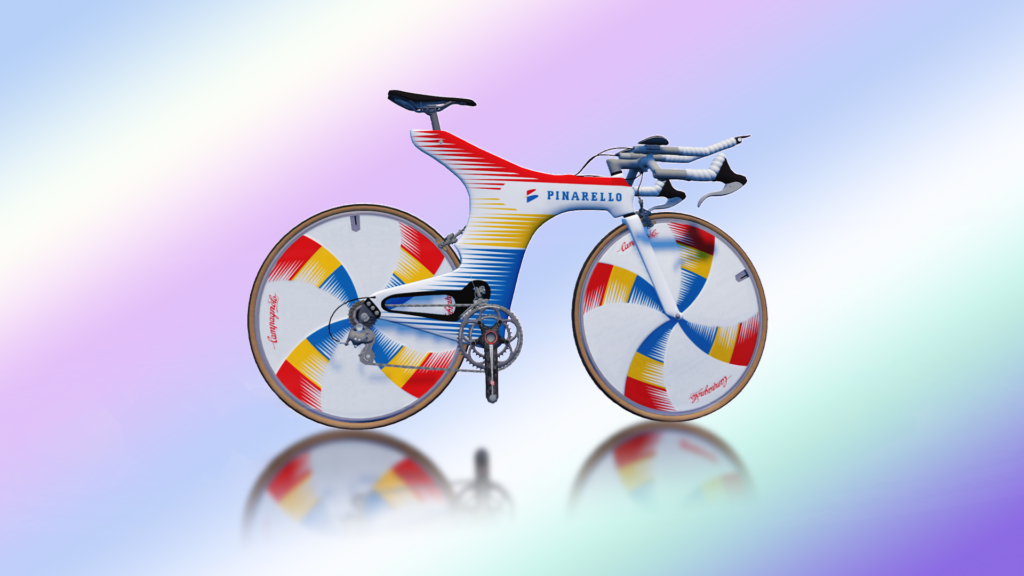
Pinarello Espada
The Pinarello Espada is the only TT Halo Bike currently in Zwift. It is not listed above because it’s impossible to test the Espada frame without also testing the Espada wheels, since they are inseparable.
The Espada, it could be said, performs like a top-quality TT frame from the 1990’s. It loses ~20 seconds to the fastest TT frame in game (the Cadex Tri paired with Zipp 858/Super9 wheels) across an hour of flat riding, while losing around 15 seconds on an hour-long climb to the Cadex (which isn’t even close to the fastest climbing frame in game).
Testing Methodology
The data above was generated using our standard bot testing procedure. Our bot rides alone on Zwift, set to 75kg weight, 183cm height, using the Zwift 32mm Carbon wheels. The aero (flat) test route is Tempus Fugit, the flattest course on Zwift, while the weight (climbing) test is done on Alpe du Zwift since it’s a long, steep, and fairly steady climb.
Robots like Atlas, Spot, and Stretch have amazed people with natural, life-like agility and body balance. What they were lacking, though, was a way to quickly connect this natural movement to perception—the robotic equivalent of the reflexes that let you catch a ball or duck in an instant to avoid getting hit.
So, a team of scientists at ETH Zurich got busy fixing this problem. “I wanted to fuse perception and body movement,” said Yuntao Ma, a roboticist who led a team developing an AI-powered, badminton-playing robot.
If signed into law as written, the White House’s proposal to slash nearly 25 percent from NASA’s budget would have some dire consequences.
It would cut the agency’s budget from $24.8 billion to $18.8 billion. Adjusted for inflation, this would be the smallest NASA budget since 1961, when the first American launched into space.
The proposed funding plan would halve NASA’s funding for robotic science missions and technology development next year, scale back research on the International Space Station, turn off spacecraft already exploring the Solar System, and cancel NASA’s Space Launch System rocket and Orion spacecraft after two more missions in favor of procuring lower-cost commercial transportation to the Moon and Mars.
Bridgit Mendler was not in Hollywood anymore. Instead, she found herself in rural North Dakota, where the stars sparkled overhead rather than on the silver screen. And she was freezing.
When her team tumbled out of their rental cars after midnight, temperatures had already plummeted into the 40s. Howling winds carried their breath away before it could fog the air. So it was with no small sense of urgency that the group scrambled to assemble a jury-rigged antenna to talk to a spacecraft that would soon come whizzing over the horizon. A few hours later, the rosy light of dawn shone on the faces of a typically scrappy space startup: mostly male, mostly disheveled.
Then there was Mendler, the former Disney star and pop music sensation—and she was running the whole show.