An Experimental New Dating Site Matches Singles Based on Their Browser Histories

A dating site launched last week by Belgian artist Dries Depoorter matches potential partners based on their internet browsing histories rather than curated profiles or photos. Browser Dating requires users to download a Chrome or Firefox extension that exports and uploads their recent search data, creating matches based on shared online behaviors and interests rather than traditional dating app metrics.

Less than 1,000 users have signed up since the platform’s launch, paying a one-time fee of $10.3 for unlimited matches or using a free tier limited to five connections. Depoorter, known for digital art projects exploring surveillance and technology, says the concept emerged from a 2016 workshop where participants shared a year of search history data. The platform processes browsing data locally using Google’s Firebase tools.


Read more of this story at Slashdot.

Ubuntu 25.04 “Plucky Puffin�: A Bold Leap Forward with GNOME 48 and HDR Brilliance

Ubuntu has long stood as a bastion of accessibility, polish, and power in the Linux ecosystem. With the arrival of Ubuntu 25.04, codenamed “Plucky Puffin”, Canonical has once again demonstrated its commitment to delivering a modern, forward-thinking operating system. This release isn’t just a routine update — it’s a confident stride into a future where Linux desktops are visually stunning, developer-friendly, and brimming with potential.

Talen Energy and Amazon Sign Nuclear Power Deal To Fuel Data Centers

Amazon Web Services has signed a long-term deal with Talen Energy to receive up to 1,920 megawatts of carbon-free electricity from the Susquehanna nuclear plant through 2042 to support AWS’s AI and cloud operations. The partnership also includes plans to explore new Small Modular Reactors and expand nuclear capacity amid rising U.S. energy demand. Utility Drive reports: Under the PPA, Talen’s existing 300-MW co-location arrangement with AWS will shift to a “front of the meter” framework that doesn’t require Federal Energy Regulatory Commission approval, according to Houston-based Talen. The company expects the transition will occur next spring after transmission upgrades are finished. FERC in November rejected an amended interconnection service agreement that would have facilitated expanded power sales to a co-located AWS data center at the Susquehanna plant. The agency is considering potential rules for co-located loads in PJM.

Talen expects to earn about $18 billion in revenue over the life of the contract at its full quantity, according to an investor presentation. The contract, which runs through 2042, calls for delivering 840 MW to 1,200 MW in 2029 and 1,680 MW to 1,920 MW in 2032. Talen will act as the retail power supplier to AWS, and PPL Electric Utilities will be responsible for transmission and delivery, the company said.
Amazon on Monday said it plans to spend about $20 billion building data centers in Pennsylvania.

“We are making the largest private sector investment in state history — $20 billion– to bring 1,250 high-skilled jobs and economic benefits to the state, while also collaborating with Talen Energy to help power our infrastructure with carbon-free energy,” Kevin Miller, AWS vice president of global data centers, said.


Read more of this story at Slashdot.

Apple Quietly Launches Container On GitHub To Bring Linux Development To macOS

BrianFagioli shares a report from NERDS.xyz: Apple has released a new developer tool on GitHub called Container, offering a fresh approach to running Linux containers directly on macOS. Unlike Docker or Podman, this tool is designed to feel at home in the Apple ecosystem and hooks into frameworks already built into the operating system. Container runs standard OCI images, but it doesn’t use a single shared Linux VM. Instead, it creates a small Linux virtual machine for every container you spin up. That sounds heavy at first, but the VMs are lightweight and boot quickly. Each one is isolated, which Apple claims improves both security and privacy. Developers can run containerized workloads locally with native macOS support and without needing to install third-party container platforms.


Read more of this story at Slashdot.

Google will reduce battery life for some Pixel 6a phones to prevent overheating

Google’s Pixel 6a has been a winner in many respects, but a new issue with the smartphone’s battery may pose a safety concern. After Android Authority reported on a pair of instances where a Pixel 6a battery overheated to the point where the device caught fire, the publication spotted some details in the latest Android 16 beta indicating that as a precaution, the Pixel 6a battery capacity and charging speed will be reduced. In addition, Android Authority received this statement from Google:

A subset of Pixel 6a phones will require a mandatory software update to reduce the risk of potential battery overheating. The update will enable battery management features that will reduce capacity and charging performance after the battery reaches 400 charge cycles. We’ll contact impacted customers next month, with all the information they need to address the issue.

The Pixel 6a is due to receive software support until July 2027, but it’s just the latest entry in this device line to have battery problems this year. In January, Google rolled out an update that reduced battery life of the Pixel 4a to increase stability for the 2020 phone model. Then in April, the company launched a program of repairs and payments after some instances of batteries “swelling” in the Pixel 7a.

This article originally appeared on Engadget at https://www.engadget.com/mobile/smartphones/google-will-reduce-battery-life-for-some-pixel-6a-phones-to-prevent-overheating-225355736.html?src=rss

RFK Jr. announces 8 appointees to CDC vaccine panel—they’re not good

Anti-vaccine advocate and current health secretary Robert F. Kennedy Jr. took to social media Wednesday to announce the names of eight people he is appointing to a critical federal vaccine advisory committee—which is currently empty after Kennedy abruptly fired all 17 previous members Monday.

In the past, the vetting process for appointing new members to the Centers for Disease Control and Prevention’s Advisory Committee on Immunization Practices (ACIP) could take years. But Kennedy has taken just two days.

The panel, typically stocked with vaccine, infectious disease, and public health experts, carefully and publicly reviews, analyzes, and debates vaccine data and offers recommendations to the CDC via votes. The CDC typically adopts the recommendations, which set clinical practices nationwide and determine insurance coverage for vaccinations.

Read full article

Comments

23andMe Says 15% of Customers Asked To Delete Their Genetic Data Since Bankruptcy

Since filing for bankruptcy in March, 23andMe has received data deletion requests from 1.9 million users — around 15% of its customer base. That number was revealed by 23andMe’s interim chief executive Joseph Selsavage during a House Oversight Committee hearing, during which lawmakers scrutinized the company’s sale following an earlier bankruptcy auction. “The bankruptcy sparked concerns that the data of millions of Americans who used 23andMe could end up in the hands of an unscrupulous buyer, prompting customers to ask the company to delete their data,” adds TechCrunch. From the report: Pharmaceutical giant Regeneron won the court-approved auction in May, offering $256 million for 23andMe and its banks of customers’ DNA and genetic data. Regeneron said it would use the 23andMe data to aid the discovery of new drugs, and committed to maintain 23andMe’s privacy practices. Truly deleting your personal genetic information from the DNA testing company is easier said than done. But if you were a 23andMe customer and are interested, MIT Technology Review outlines that steps you can take.


Read more of this story at Slashdot.

Apple’s Craig Federighi on the long road to the iPad’s Mac-like multitasking

CUPERTINO, Calif.—When Apple Senior Vice President of Software Engineering Craig Federighi introduced the new multitasking UI in iPadOS 26 at the company’s Worldwide Developers Conference this week, he did it the same way he introduced the Calculator app for the iPad last year, or timers in the iPad’s Clock app the year before—with a hint of sarcasm.

“Wow,” Federighi enthuses in a lightly exaggerated tone about an hour and 19 minutes into a 90-minute presentation. “More windows, a pointier pointer, and a menu bar? Who would’ve thought? We’ve truly pulled off a mind-blowing release!”

This elicits a sensible chuckle from the gathered audience of developers, media, and Apple employees watching the keynote on the Apple Park campus, where I have grabbed myself a good-not-great seat to watch the largely pre-recorded keynote on a gigantic outdoor screen.

Read full article

Comments

Your Switch 2 Might Have More Battery Life Than It Says It Does

It’s quite convenient being able to play Mario Kart or Zelda on the go, but once your Switch 2’s battery life indicator says it’s about to die, you’re back to worrying about where the nearest outlet is.

If you’ve been playing your Switch 2 in handheld mode this week, you might have noticed that the console warns that it’s running out of battery quicker than you’d expect. Maybe you chalked that up to the device’s more powerful hardware putting more strain on the battery than the original Switch, and resigned yourself to a life of charging more frequently.

The thing is, you might also notice that even though the battery says it’s low, you can keep playing for quite a bit longer than it suggests—perhaps even hours longer. That’s because the battery indicator isn’t actually telling you the truth: your Switch 2 likely has a lot more power left than it’s telling you.

This isn’t a theory: As IGN reports, Nintendo itself confirmed that this is happening. While it isn’t totally clear why some Switch 2 consoles are showing incorrect battery stats, Nintendo does have two official troubleshooting steps you can try if you encounter the problem.

Recovery Mode

If your Switch 2 appears to be giving you the wrong battery stats, try booting the console into Recovery Mode. To do so, shut your Switch 2 all the way off. Then, press and release the power button to boot up the Switch 2, and, as it does, hold down the volume up and volume down buttons.

By just rebooting into Recovery Mode, you might solve your problem. If not, there’s another step to try.

Recalibrate your battery

Battery calibration generally involves letting a battery run from 100% down to zero, then charging back up to 100% again, to “reset” the battery indicators’ range. This was common advice for older types of batteries, but since the rise of the lithium ion battery, you don’t see as many people pushing calibration.

That said, Nintendo recommends it for improving the Switch 2’s battery indicators. In fact, it recommends running through battery calibration a few times. Here’s what the company says to do:

  1. Update the Switch 2 to the latest software version.

  2. Head to System Settings > Sleep Mode, then set all three “Auto-Sleep” modes to Never.

  3. Plug the Switch 2 into power.

  4. Charge the console to 100%, or charge it for at least three hours.

  5. Let the console charge an additional hour.

  6. Unplug the Switch 2 from power, and let the console sit on the Home Menu for three to four hours.

  7. Once the battery is almost out, shut down the console completely for at least 30 minutes.

  8. Repeat several times.

If you don’t notice an improvement after running through these calibration steps multiple times, you may need to send the console to Nintendo for servicing. It isn’t clear what Nintendo plans to do to fix affected units. (I hope the solution isn’t just giving you a new one.)

Nintendo Switch 2 Is Fastest-Selling Game Console of All Time

An anonymous reader quotes a report from Polygon: Nintendo Switch 2 is off to a roaring start. Early on Wednesday, Nintendo announced that it had sold 3.5 million units of its new console in just four days, making it Nintendo’s fastest-selling console ever. In fact, this is likely the biggest console launch of all time — by quite some margin. For comparison, PlayStation 5 shipped 4.5 million units in its first seven weeks, PlayStation 4 sold 2.1 million in a little over two weeks, and Nintendo Switch sold 2.74 million in its first month. […]

Nintendo has predicted it will sell 15 million Switch 2s during its current financial year. It’s well on the way to that figure already, although Nintendo still faces the challenges of maintaining stock availability and extending this expensive console’s reach past the first wave of early adopters. If Switch 2 hits its first-year target, it will join Nintendo’s other fasters sellers over the first year on sale: Game Boy Advance, Nintendo 3DS, and the original Switch. Over the weekend, the Switch 2 beat the record for the “most-sold console within 24 hours and is on track to shatter the two-month record,” according to TweakTown.


Read more of this story at Slashdot.

New Apple study challenges whether AI models truly “reason” through problems

In early June, Apple researchers released a study suggesting that simulated reasoning (SR) models, such as OpenAI’s o1 and o3, DeepSeek-R1, and Claude 3.7 Sonnet Thinking, produce outputs consistent with pattern-matching from training data when faced with novel problems requiring systematic thinking. The researchers found similar results to a recent study by the United States of America Mathematical Olympiad (USAMO) in April, showing that these same models achieved low scores on novel mathematical proofs.

The new study, titled “The Illusion of Thinking: Understanding the Strengths and Limitations of Reasoning Models via the Lens of Problem Complexity,” comes from a team at Apple led by Parshin Shojaee and Iman Mirzadeh, and it includes contributions from Keivan Alizadeh, Maxwell Horton, Samy Bengio, and Mehrdad Farajtabar.

The researchers examined what they call “large reasoning models” (LRMs), which attempt to simulate a logical reasoning process by producing a deliberative text output sometimes called “chain-of-thought reasoning” that ostensibly assists with solving problems in a step-by-step fashion.

Read full article

Comments

Amazon Is About To Be Flooded With AI-Generated Video Ads

Amazon has launched its AI-powered Video Generator tool in the U.S., allowing sellers to quickly create photorealistic, motion-enhanced video ads often with a single click. “We’ll likely see Amazon retailers utilizing AI-generated video ads in the wild now that the tool is generally available in the U.S. and costs nothing to use — unless the ads are so convincing that we don’t notice anything at all,” says The Verge. From the report: New capabilities include motion improvements to show items in action, which Amazon says is best for showcasing products like toys, tools, and worn accessories. For example, Video Generator can now create clips that show someone wearing a watch on their wrist and checking the time, instead of simply displaying the watch on a table. The tool generates six different videos to choose from, and allows brands to add their logos to the finished results.

The Video Generator can now also make ads with multiple connected scenes that include humans, pets, text overlays, and background music. The editing timeline shown in Amazon’s announcement video suggests the ads max out at 21 seconds.. The resulting ads edge closer to the traditional commercials we’re used to seeing while watching TV or online content, compared to raw clips generated by video AI tools like OpenAI’s Sora or Adobe Firefly.

A new video summarization feature can create condensed video ads from existing footage, such as demos, tutorials, and social media content. Amazon says Video Generator will automatically identify and extract key clips to generate new videos formatted for ad campaigns. A one-click image-to-video feature is also available that creates shorter GIF-style clips to show products in action.


Read more of this story at Slashdot.

FBC: Firebreak headlines June’s PS Plus additions

Remedy’s multiplayer spin on Control is coming to the PlayStation Game Catalog. Sony’s June PS Plus additions start with the day-one arrival of FBC: Firebreak. Other entries this month include the latest Battlefield entry and sticky-ball Katamari fun.

FBC: Firebreak lets you and up to two others team up to kick some Hiss ass. Play as a government employee who volunteered to take out extra-dimensional monsters. But the wicked delights really kick in when you enhance your plain ol’ guns with supernatural gear.

In our preview, Engadget’s Jessica Conditt saw a promising and “incredibly fun” shooter that only needed a bit of fine-tuning before launch. “Firebreak is poised to be a thoughtful and focused entry in the co-op shooter genre, and it’s already an inviting extension of Remedy’s darkest and silliest sensibilities,” she wrote.

FBC: Firebreak will be available in the Game Catalog on its launch day, June 17. You’ll need a PS Plus Extra or Premium membership to claim it.

Screen from Battlefield 2042. Battle on a battlefield.
EA

Also coming on that date is Battlefield 2042. This could be a good time to catch up on the franchise before its next installment. (It’s expected by April 2026.) Also arriving this month is We Love Katamari Reroll + Royal Reverie. Who doesn’t love rolling a satisfyingly growing blob of random shit?

Both of those titles require a PS Plus Extra or Premium membership. Ditto for other June entries like Five Nights at Freddy’s: Help Wanted 2 and theHunter: Call of the Wild. Meanwhile, the 2000 classic Deus Ex: The Conspiracy will only be available for Premium subscribers. You can check out the PlayStation blog for the complete list.

This article originally appeared on Engadget at https://www.engadget.com/fbc-firebreak-headlines-junes-ps-plus-additions-211440207.html?src=rss

Prime Video reportedly shows almost twice as many ads as it used to

If it feels like you spend a lot more time watching ads in Prime Video than you used to, that may not be a mistake. Amazon has increased the number of ads or “ad load” in Prime Video to four-to-six minutes of ads per hour, Adweek reports. Amazon’s plan to increase the amount of advertising in its streaming service was previously reported in October 2024.

Shifting to a max of six minutes of ads per hour is nearly double the up to three-and-a-half minutes of ads that could play when Amazon first converted its basic Prime Video subscription to an ad-supported tier. The company used to offer all of Prime Video’s features and an ad-free experience for the cost of Amazon Prime ($159 per year / $15 per month) or $9 per month, but announced at the end of 2023 that avoiding ads would cost an extra $3 every month. Besides inserting ads, Amazon’s basic plan also doesn’t support for features like Dolby Atmos and Dolby Vision.

Engadget has reached out to Amazon to confirm the ad load changes and will update this article if we hear back.

Regardless of your tolerance for ads, cheaper ad-supported subscriptions have quickly become expected from most streaming services. Netflix, Max, Peacock and Paramount+ all offer subscriptions with ads. Even Apple, who could theoretically afford to lose money on subscriptions, reportedly started building a team to sell ads for a possible ad-supported tier of Apple TV+ in 2023.

While adding more interruptions to the Prime Video experience isn’t what anyone wants, Adweek does note that streaming services still insert far fewer ad breaks than broadcast TV. The ad load on traditional television “typically ranges from 13 to 16 minutes per hour.”

This article originally appeared on Engadget at https://www.engadget.com/entertainment/streaming/prime-video-reportedly-shows-almost-twice-as-many-ads-as-it-used-to-210650918.html?src=rss

All the Settings I Changed on My Adventure 3 E-Bike to Improve the Ride

Aventon’s new Adventure 3 is an excellent e-bike, as you can see in my Adventure 3 review, and it’s loaded with customization options. While it’s great with the factory settings, I like to get in there and change my tech around, to turn an e-bike into my e-bike. Here’s how I changed my top speed, tuned my assistance, and set-up the bike’s security systems.

Changing the Aventon Adventure 3’s top speed

Aventon App power Changing

Credit: Stephen Johnson

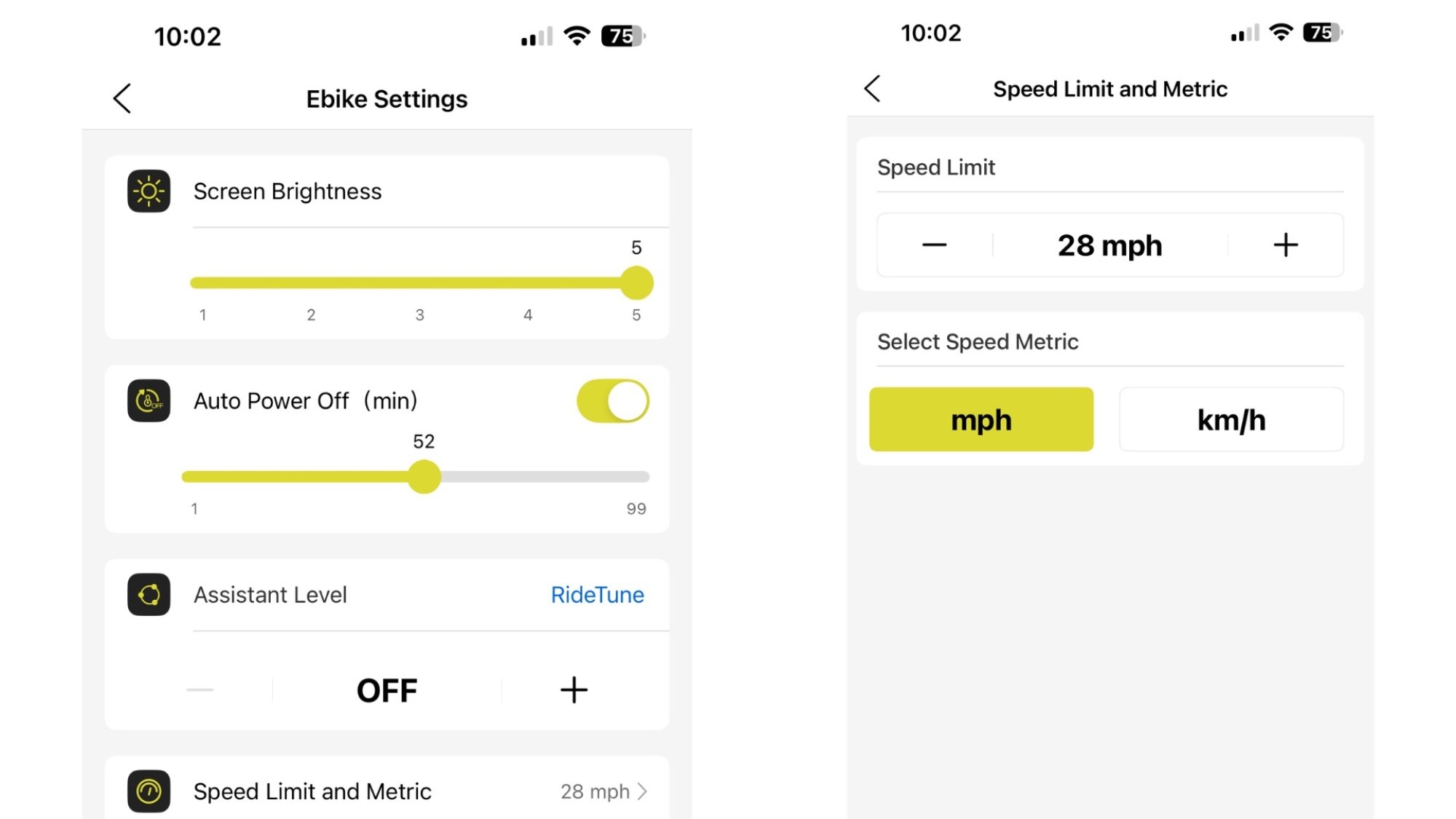
“Can I make this go faster?” is my first question with any e-bike (and really everything in my life). With the Adventure 3, the answer is, “Yes; to an extent.” The bike’s default assistance speed limit is 20 miles per hour, so if you don’t change the settings, the motor will stop kicking in at that speed, whether you pedal or use the throttle. In this configuration, the Adventure 3 is a class 2 e-bike.

But I’d rather have a faster, class 3 e-bike, so I changed the bike’s assistance limit to 28 mph. In this configuration, the throttle and/or the pedals will provide assistance up to 20mph. From there, you can pedal with motor assistance up to 28.

You might be asking, “Can it go faster than that, though?” Yes and no. I’m sure the motor is capable of higher speeds, but it is hard-limited to 28 mph with pedal-assist. This is the legal assisted speed limit for vehicles to be considered “e-bikes” in the U.S. If you must go faster, you could always ride it down a hill or pedal really hard.

Changing the top speed is achieved through the Adventure 3’s app, so let’s start from the beginning.

Syncing your Adventure 3 with the Aventon app

Unlike some e-bike makers, Aventon bikes practically require you to use their app. Luckily, it works really well. Here’s how to sync the app and your phone:

  • Download the Aventon MyRide app on your smartphone.

  • Power on your e-bike.

  • Hold down the “i” button on the handlebar to enter the menu.

  • Use “+” and “-” to select “Connect to App”, then press “i.”

  • A QR code will appear on your bike’s screen.

  • Open the Aventon app, sign in, and select “Scan Pair.”

  • Scan the QR code, name your bike, and confirm.

Navigating the Aventon App

Once the app is installed and open, check out the tabs at the bottom of the screen. Here’s what each one does:

  • Ebike: Your control center for everything from locking your bike to adjusting performance settings.

  • Record: This stores your past rides, and the speed, distance, calories burned, and riding time of each.

  • Go: Records your ride and displays your route on a live map.

  • Discover: Aventon’s built-in social platform. Share photos, rides, and follow other riders.

  • Me: Manage your profile, unlock riding achievement medals, and sync with third-party apps.

Here’s how to set the top assisted speed:

  • Tap on the “Ebike” tab and then select “More Settings” to access advanced customization options.

  • Select “Speed Limit and Metric.”

  • Adjust your max speed between 12 mph and 28 mph.

Tuning your pedal assist levels

RideTune screenshot

Credit: Stephen Johnson

Speed is one thing. How you get your speed is another. The Adventure 3 offers three levels of pedal assist, but each is tweakable, allowing you to fine tune your ride to your heart’s content. I found the bike’s “Eco” setting to be a little underpowered and its “Sport” setting to be a little overpowered, so here’s how I changed them.

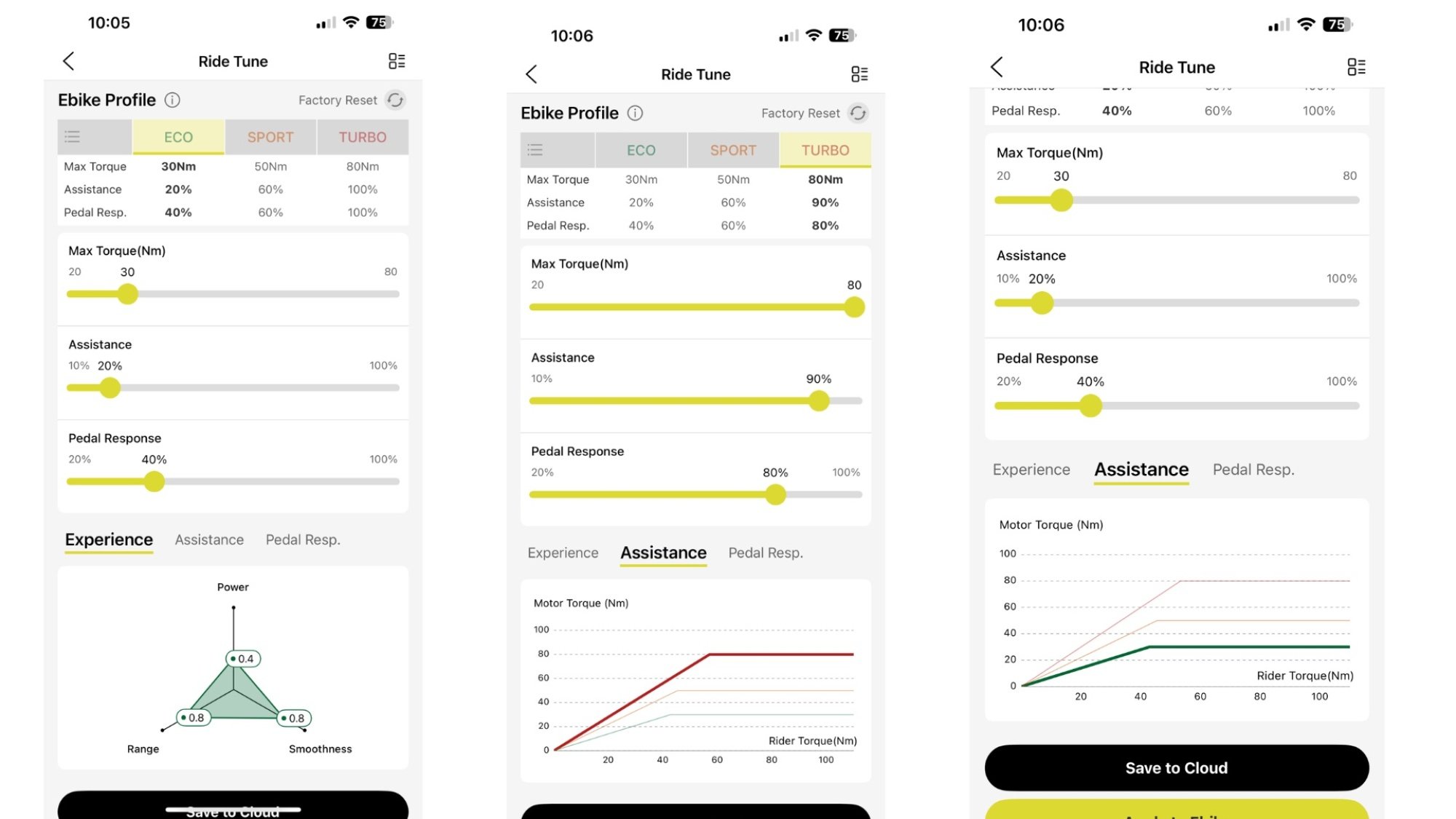
From the “more settings” menu on the “ebike” tab, click “RideTune.” As you can see, each of the three levels of assistance (Eco, Sport, and Turbo) can be controlled via three sliders. Here’s what each does:

  • Max Torque: More torque = faster acceleration and better hill-climbing, but reduced range.

  • Assistance: Controls how much motor support you get while pedaling. Higher = more help, but more battery drain.

  • Pedal Response: Determines how quickly the motor kicks in. Higher = faster response; lower = smoother ride.

Settings will appear on a triangle chart showing how your choices balance Power, Range, and Smoothness. So I bumped up the torque on and assistance on my “Eco” setting and boosted them a bit in “sport.”

There’s no perfect setting here. It’s all vibes, so play around and find what feels right for your style. If you hit on a combination you like, you can save the profile to the cloud. This lets you create custom power-level profiles—like “trail riding” or “commuting”—and swap them out when you want to.

How to sync Aventon’s app with Strava and/or Apple Health

Everyone knows that exercise doesn’t count unless it’s tracked and made public, so I synced my Aventon with exercise-boasting app Strava and Apple Health. That seems to be the extent of what Aventon’s app can pair with at present, but it happens to be exactly what I wanted, so it’s all good. For me at least. You can do this by clicking “me” on the home screen, then clicking “connected apps” under the “Service” heading. Once Strava is paired up, you can hit the “record” button on the Aventon app and it will send your rides over to be posted on Strava automatically.

Security features to know about

I’ve seen Pee Wee’s Big Adventure enough times to take bike security seriously, so I don’t leave my bike around without a big lock, but I still set up these security features on the Adventure 3, just in case.

Auto locking: I set my bike so the back wheel locks whenever the bike is powered off. It won’t prevent anyone from throwing your bike in the back of a truck and driving away, but it will prevent “crime of opportunity” bike thefts where someone hops on and pedals away.

Motion Alarm: The “Unusual Activity Detected” setting lets you tweak how sensitive your bike is to movement. When triggered, it will sound an “alarm” (really a fairly quiet beeping) and send a notification to your phone. I set mine to be as sensitive as possible, because it’s funny when my wife brushes against my bike while gardening, and I send her a text that says “ARE YOU TOUCHING MY BIKE??” The bike just rats her out! Hilarious!

Lost Mode: I haven’t had to use “lost mode” on my e-bike, and hopefully I never will, but knowing what your bike will do if stolen is important, so here’s what happens instantly if you trigger lost mode:

  • The motor is disabled.

  • The rear wheel locks.

  • The gently beeping alarm sounds.

  • GPS tracking begins.

I spoke to an LA-area police detective about whether the cops would care if you have a GPS tracker on your stolen e-bike, and he said it depends on the department. If the cops aren’t busy with other crimes, they might stop by an address to investigate your stolen e-bike, but GPS data alone isn’t accurate enough to get a search warrant anyway. So I’d still get a nice lock.

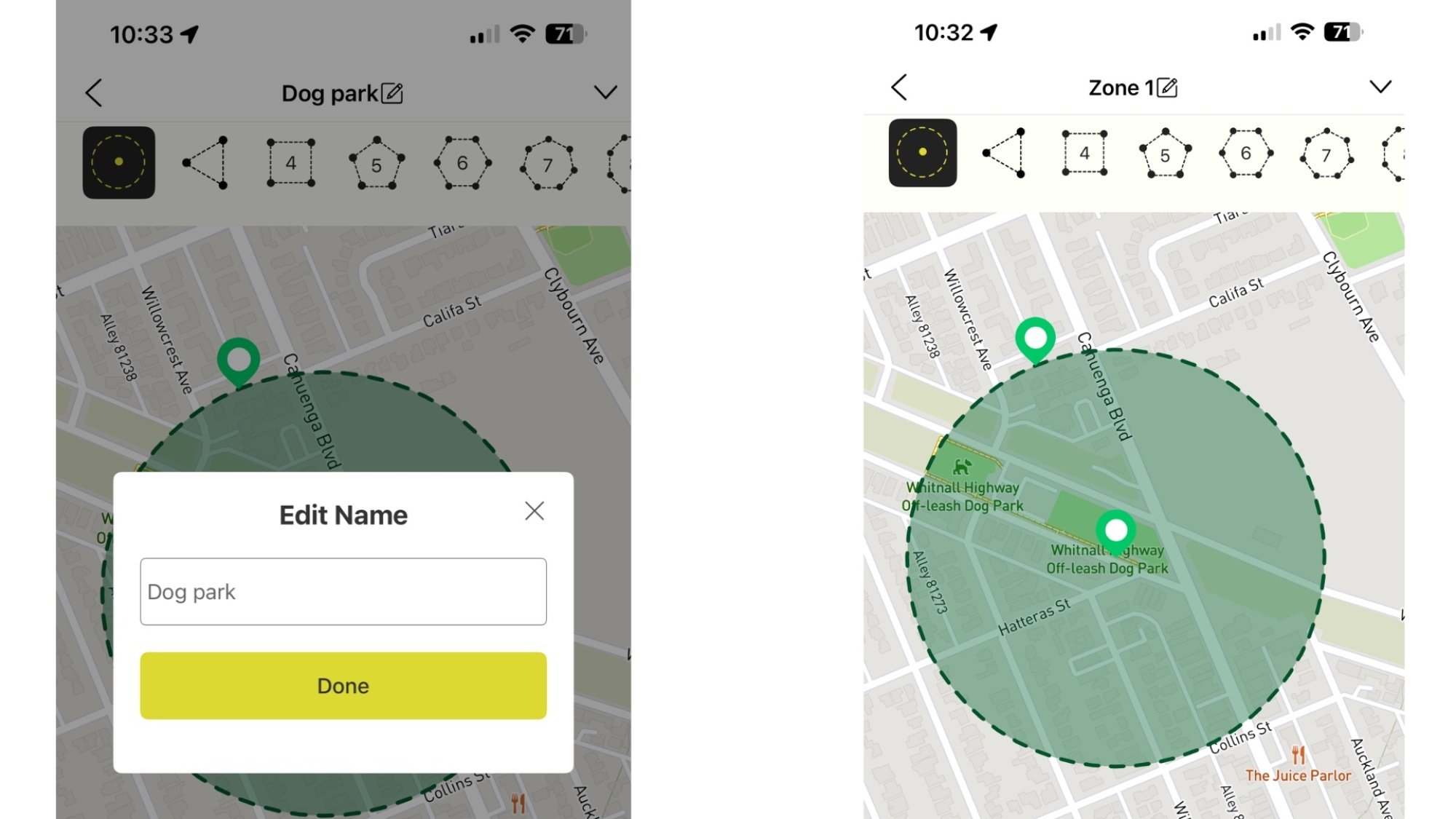
Geofencing: This is a cool feature that I don’t have any use for, but if you’d like to make sure your bike can only be ridden in the geographic area of your choice, you can either restrict your ride to a specific area, or only allow it to function in an area you choose. You can designate up to four “go” and four “no-go” zones. For instance, I wanted to make sure my bike couldn’t be used around a local dog park, I could set it like this:

Geofencing in Aventon's app

Credit: Stephen Johnson

Aventon’s “discover” platform

I absolutely love Aventon’s goofy “discover” social media platform. I’m not even sure why I like seeing strangers’ rides and pictures of their bikes, but I do. So make sure you check it out, set up a profile, and post some pictures for me to look at.

Aventon’s onboard display

Aventon display setting screen

Credit: Stephen Johnson

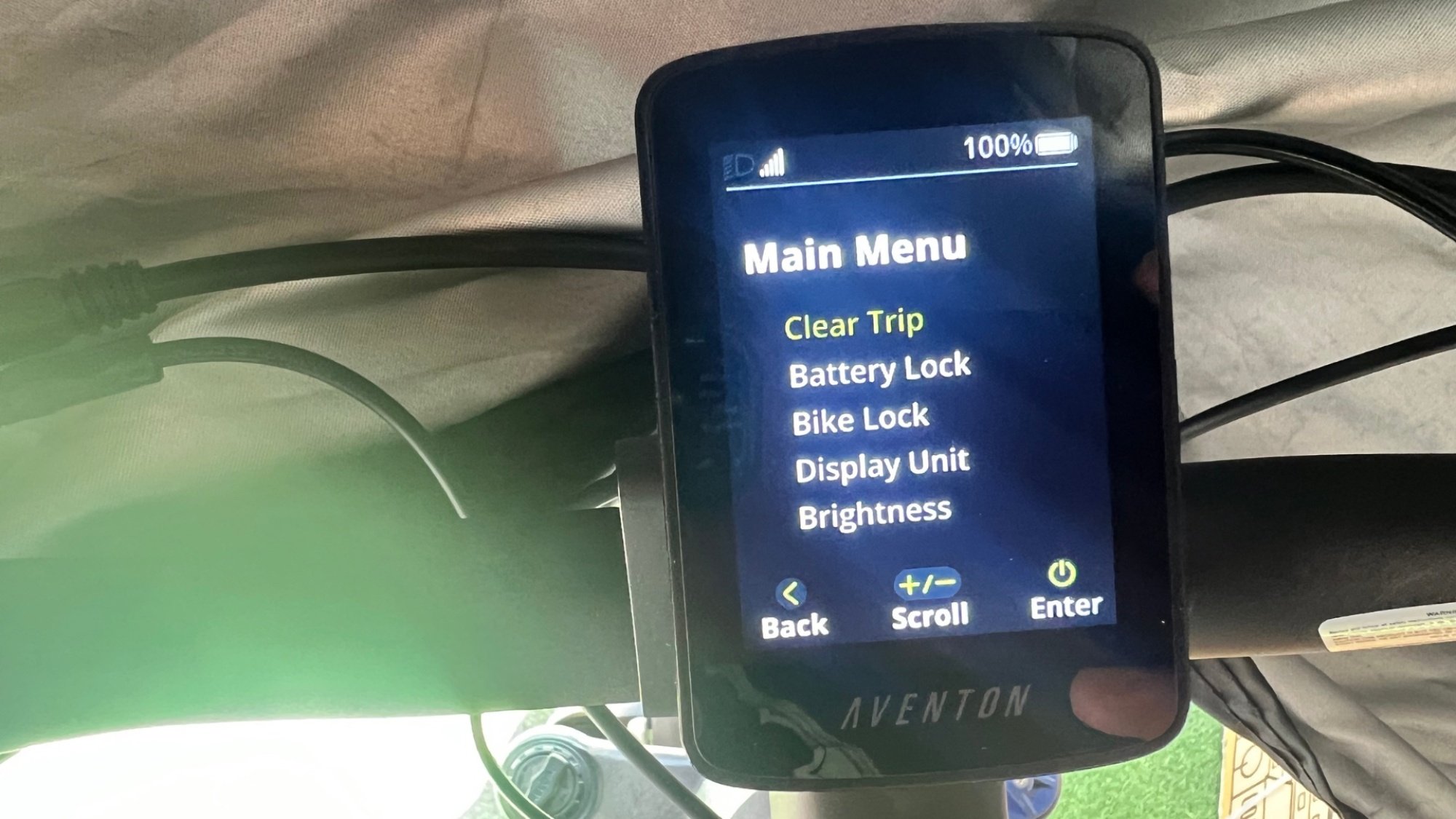
The app is the main way to control your Aventon bike, but there are some things you can do without your phone, directly from the onboard display screen. You could probably figure this all out from context clues, but just in case: The display shows basic e-bike info—current speed, assist level, odometer, and battery power, but holding down the “+” and “-” buttons on the handlebar control brings up a settings menu with the following options:

  • Clear Trip: Reset your trip distance.

  • Battery Lock: Lock or unlock battery access (no physical key required).

  • Bike Lock: Lock the rear wheel to prevent riding.

  • Display Unit: Switch between miles and kilometers.

  • Brightness: Adjust the screen’s brightness from “1” (dimmest) to “5” brightest.

SAG-AFTRA has suspended its gaming industry strike over AI protections

SAG-AFTRA has suspended its strike against ten game studios. The organization’s national board will meet tomorrow to consider a tentative agreement with the developers; more details of the arrangement will be disclosed if and when the board agrees to the terms.

Variety obtained a statement from a spokesperson for the gaming companies that offered some hints about the contents of the potential deal: “This agreement builds on three decades of successful partnership between the interactive entertainment industry and the union. It delivers historic wage increases of over 24 percent for performers, enhanced health and safety protections, and industry-leading AI provisions requiring transparency, consent and compensation for the use of digital replicas in games.”

It’s been almost a year since the performers’ union called a strike against the companies participating in the Interactive Media Agreement. The move was part of an effort to secure protections for its members regarding AI-generated likenesses of their voices and bodies in the gaming industry. The studios signatory to the IMA are:

  • Activision Productions Inc.

  • Blindlight LLC

  • Disney Character Voices Inc.

  • Electronic Arts Productions Inc.

  • Formosa Interactive LLC

  • Insomniac Games Inc.

  • Llama Productions LLC

  • Take 2 Productions Inc.

  • VoiceWorks Productions Inc.

  • WB Games Inc.

In addition to the negotiations with the IMA businesses, SAG-AFTRA recently took action against Epic Games for its use of an AI-generated voice for Darth Vader in Fortnite.

This article originally appeared on Engadget at https://www.engadget.com/gaming/sag-aftra-has-suspended-its-gaming-industry-strike-over-ai-protections-204240996.html?src=rss

How Long Of A Ride Is Mario Kart World?

The Mario Kart franchise has been entertaining us all for decades—even with sibling fights and fits of rage over losing a race from a blue shell at the last second—but Mario Kart World is the first game to go open world. There hasn’t been a truly new entry in the series since 2014’s Mario Kart 8, so being stoked to…

Read more…

Fair or fixed? Why Le Mans is all about “balance of performance” now.

This coming weekend will see the annual 24 Hours of Le Mans take place in France. In total, 62 cars will compete, split into three different classes. At the front of the field are the very fastest hypercars—wickedly fast prototypes that are also all hybrids, with the exception of the V12 Aston Martin Valkyries. In the middle are the pro-am LMP2s, followed by 24 GT3 cars—modified versions of performance cars that include everything from Ford Mustangs to McLaren 720s. It is racing nirvana. But with so many different makes and models of cars in the Hypercar class, some two-wheel drive, others with all-wheel drive, how do they ensure it’s a fair race?

Get ready for some acronyms

Sports car racing can be (needlessly) complicated at times. Take the Hypercar class at Le Mans. The 21 cars that will contest it are actually built to two separate rulebooks.

One, called LMH (for Le Mans Hypercar), was written by the organizers of Le Mans and the World Endurance Championship. These prototypes can be hybrids, with the electric motor on the front axle: Ferrari, Peugeot, and Toyota have all taken this route. But they don’t have to be; the Aston Martin Valkyrie already had to lose a lot of power to meet the rules, so it just relies on its big V12 to do all the work. Most of the cars are purpose-built for the race, but Aston Martin went the other route and converted a road car for racing.

Read full article

Comments