Denmark Is Dumping Microsoft Office and Windows For LibreOffice and Linux

An anonymous reader quotes a report from ZDNet: Denmark’s Minister of Digitalization, Caroline Stage, has announced that the Danish government will start moving away from Microsoft Office to LibreOffice. Why? It’s not because open-source is better, although I would argue that it is, but because Denmark wants to claim “digital sovereignty.” In the States, you probably haven’t heard that phrase, but in the European Union, digital sovereignty is a big deal and getting bigger.

A combination of security, economic, political, and societal imperatives is driving the EU’s digital sovereignty moves. EU leaders are seeking to reduce Europe’s dependence on foreign technology providers, primarily those from the United States, and to assert greater control over its digital infrastructure, data, and technological future. Why? Because they’re concerned about who controls European data, who sets the rules, and who can potentially cut off access to essential services in times of geopolitical tension. “Money issues have also played a decisive role,” writes ZDNet’s Steven Vaughan-Nichols. “Copenhagen’s Microsoft software bill has soared from 313 million kroner in 2018 to 538 million kroner — about $53 million in 2023, a 72% increase in just five years.

David Heinemeier Hansson (DHH), a Dane, inventor of Ruby on Rails, and co-owner of the software developer company 37Signals, has said: “Denmark is one of the most highly digitalized countries in the world. It’s also one of the most Microsoft-dependent. In fact, Microsoft is by far and away the single biggest dependency, so it makes perfect sense to start the quest for digital sovereignty there.”


Read more of this story at Slashdot.

Bringing data science to life for K–12 students with the ‘API Can Code’ curriculum

As data and data-driven technologies become a bigger part of everyday life, it’s more important than ever to make sure that young people are given the chance to learn data science concepts and skills.

David Weintrop
David Weintrop
Rotem Israel-Fishelson
Peter F Moon
Peter F Moon

In our April research seminar, David Weintrop, Rotem Israel-Fishelson, and Peter Moon from the University of Maryland introduced API Can Code, a data science curriculum designed with high school students for high school students. Their talk explored how their innovative work uses real-world data and students’ own experiences and interests to create meaningful, authentic learning experiences in data science.

Quick note for educators: Are you interested in joining our free, exploratory data science education workshop for teachers on 10 July 2025 in Cambridge, UK? Then find out the details here.

David started by explaining the motivation behind the API Can Code project. The team’s goal was not to turn students into future data scientists, but to offer students the data literacy they need to explore and critically engage with a data-driven world. 

The work was also guided by a shared view among leading teachers’ organisations that data science should be taught across all subjects in the K–12 curriculum. It also draws on strong research showing that when educational experiences connect with students’ own lives and interests, it leads to deeper engagement and better learning outcomes.

Reviewing the landscape

To prepare for the design of the curriculum, David, Rotem, and Peter wanted to understand what data science education options already exist for K–12 students. Rotem described how they compared four major K–12 data science curricula and examined different aspects, such as the topics they covered and the datasets they used. Their findings showed that many datasets were quite small in size, and that the datasets used were not always about topics that students were interested in.

A classroom of young learners and a teacher at laptops

The team also looked at 30 data science tools used across different K–12 platforms and analysed what each could do. They found that tools varied in how effective they were and that many lacked accessibility features to support students with diverse learning needs. 

This analysis helped to refine the team’s objective: to create a data science curriculum that students find interesting and that is informed by their values and voices.

Participatory design

To work towards this goal, the team used a methodology called participatory design. This is an approach that actively involves the end users — in this case, high school students — in the design process. During several in-person sessions with 28 students aged 15 to 18 years old, the researchers facilitated low-tech, hands-on activities exploring the students’ identities and interests and how they think about data.

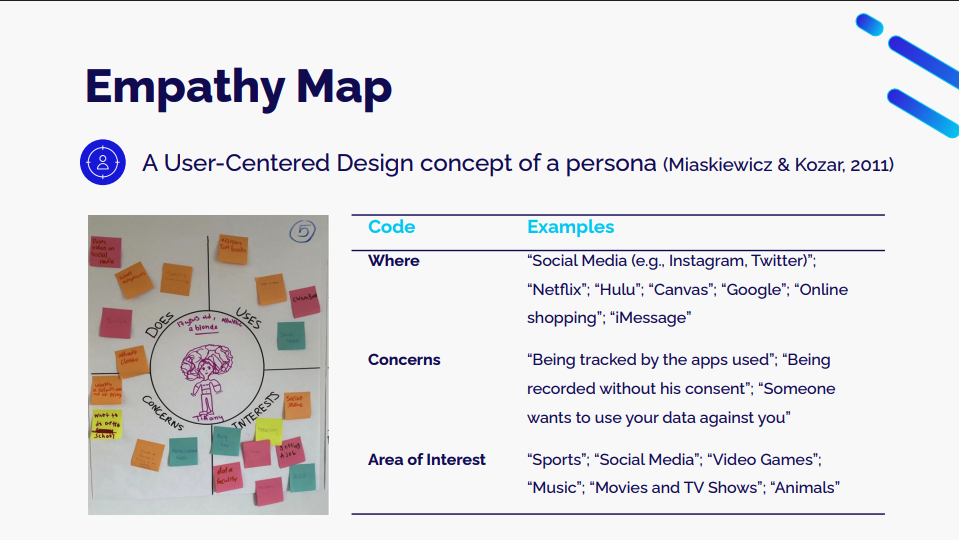
One activity, Empathy Map, involved students working together to create a persona representing a student in their school. They were asked to describe the persona’s daily life, interests, and concerns about technology and data:

The students’ involvement in the design process gave the team a better understanding of young people’s views and interests, which helped create the design of the API Can Code curriculum.

API Can Code: three units, three key tools

Peter provided an overview of the API Can Code curriculum. It follows a three-unit flow covering different concepts and tools in each unit:

  1. Unit 1 introduces students to different types of data and data science terminology. The unit explores the role of data in the students’ daily lives, how use and misuse of data can affect them, different ways of collecting and presenting data, and how to evaluate databases for aspects such as size, recency, and trustworthiness. It also introduces them to RapidAPI, a hub that connects to a wide range of APIs from different providers, allowing students to access real-world data such as Zillow housing prices or Spotify music data.
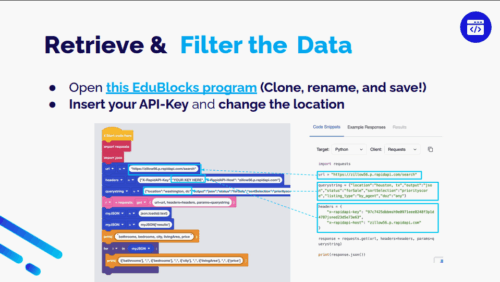
  2. Unit 2 covers the computing skills used in data science, including the use of programming tools to run efficient data science techniques. Students learn to use EduBlocks, a block-based programming environment where students can draw in JSON files from RapidAPI datasets, and process and filter data without needing a lot of text-based programming skills. The students also compare this approach with manual data processing, which they discover is very slow.
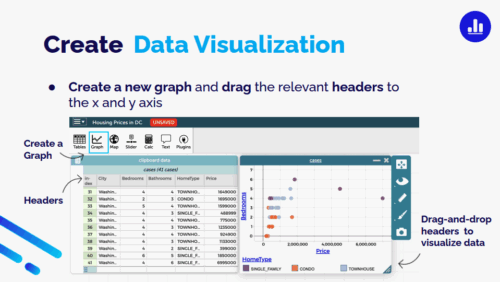
  3. Unit 3 focuses on data analysis, visualisation, and interpretation. Students use CODAP, a web-based interactive data science tool, to calculate summary statistics, create graphs, and perform analyses. CODAP is a user-friendly but powerful platform, making it perfect for students to analyse and visualise their data sets. Students also practise interpreting pre-made graphs and the graphs and statistics that they are creating.

Peter described an example activity carried out by the students, showing how these three units flow together and build both technical skills and an understanding of the real-world uses of data science. Students were tasked with analysing a dataset from Zillow, a property website, to explore the question “How much does a house in my neighbourhood cost?” The images below show the process the students followed, which uses the data science skills and tools from all three units of the curriculum.

Slide from an API Can Code lesson.
Click on an image to enlarge it.

Interest-driven learning in action

A central tenet of API Can Code is that students should explore data that matters to them. A diverse range of student interests was identified during the design work, and the curriculum uses these areas of interest, such as music, movies, sports, and animals, throughout the lessons.

The curriculum also features an open-ended final project, where students can choose a research question that is important to them and their lives, and answer it using data science skills.

The team shared two examples of memorable final projects. In one, a student set out to answer the question “Is Jhené Aiko a star?” The student found a publicly available dataset through an API provided by Deezer, a music streaming platform. She wrote a program that retrieved data on the artist’s longevity and collaborations, analysed the data, and concluded that Aiko is indeed a star. What stood out about this project wasn’t just the fact that the student independently defined stardom and answered their research question using real data, but that this was a truly personal, interest-driven project. David noted that the researchers could never have come up with this activity, since they had never previously heard of Jhené Aiko!

Jhené Aiko, an R&B singer-songwriter
Jhené Aiko, an R&B singer-songwriter 
(Photo by Charito Yap, licensed under CC BY-ND 2.0)

Another student’s project analysed data about housing in Washington DC to answer the question “Which ward in DC has the most affordable houses?” Rotem explained that this student was motivated by her family thinking about moving away from the city. She wanted to use her project to persuade her parents to stay by identifying the most affordable ward in DC that they could move to. She was excited by the outcome of her project, and she presented her findings to other students and her parents.

These projects underscore the power of personally important data science projects driven by students’ interests. When students care about the questions they are exploring, they’re more invested in the process and more likely to keep using the skills and concepts they learn.

Resources

API Can Code is available online and completely free to use. Teachers can access lesson plans, tutorial videos, assessment rubrics, and more from the curriculum’s website https://apicancode.umd.edu/. The site also provides resources to support students, including example programs and glossaries.

Join our next seminar

In our current seminar series, we’re exploring teaching about AI and data science. Join us at our next seminar on Tuesday, 17 June from 17:00 to 18:30 BST to hear Netta Iivari (University of Oulu) introduce transformative agency and its importance for children’s computing education in the age of AI.

To sign up and take part in our research seminars, click below:

You can also view the schedule of our upcoming seminars, and catch up on past seminars on our previous seminars and recordings page.

The post Bringing data science to life for K–12 students with the ‘API Can Code’ curriculum appeared first on Raspberry Pi Foundation.

Amazon Prime Video subscribers sit through up to 6 minutes of ads per hour

Amazon forced all Prime Video subscribers onto a new ad-based subscription tier in January 2024 unless users paid more for their subscription type. Now, the tech giant is reportedly showing twice as many ads to subscribers as it did when it started selling ad-based streaming subscriptions.

Currently, anyone who signs up for Amazon Prime (which is $15 per month or $139 per year) gets Prime Video with ads. If they don’t want to see commercials, they have to pay an extra $3 per month. One can also subscribe to Prime Video alone for $9 per month with ads or $12 per month without ads.

When Amazon originally announced the ad tier, it said it would deliver “meaningfully fewer ads than linear TV and other streaming TV providers.” Based on “six ad buyers and documents” ad trade publication AdWeek reported viewing, Amazon has determined the average is four to six minutes of advertisements per hour.

Read full article

Comments

Experimental retina implants give mice infrared vision

Human vision relies on photoreceptor cells in the retina that react to visible light and trigger neurons in the optic nerve to send signals to the brain. Degradation of these photoreceptors is the leading cause of vision impairments, including blindness.

However, a team of scientists at China’s Fudan University has recently built prototype retinal implants that can replace the failing photoreceptors and potentially provide infrared vision as a bonus. Sadly, they’ve only been tested in animals, so we’re still rather far away from making them work like Cyberpunk 2077-style eye augments.

Vision on chip

Earlier work on retinal implants that restored at least some degree of vision to the blind involved using electrode arrays that electrically stimulated neurons in the back of the retina, taking the place of the damaged photoreceptor cells. A patient had to wear a camera mounted on a pair of glasses that sent signals to the implant to activate this signaling. These implants required a power source to work, were unreliable, difficult to use, and had limited resolution, and the surgical procedure necessary to put them in the eye was extremely complicated.

Read full article

Comments

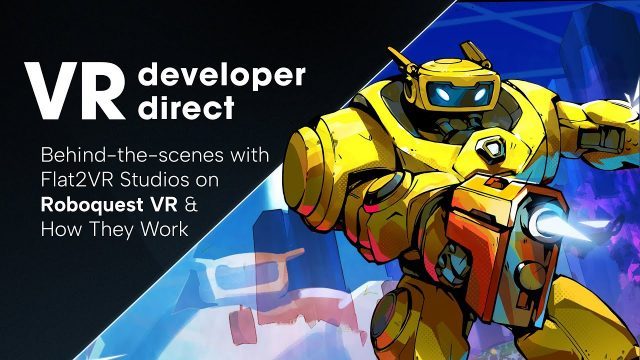
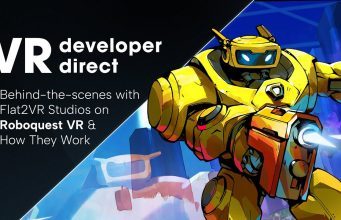
Flat2VR Goes Behind the Scenes on ‘Roboquest VR’, Its Next Big VR Port

Beloved roguelite shooter Roboquest (2023) isn’t a VR game, but it will be soon thanks to VR porting team Flat2VR Studios. In a VR Developer Direct interview, Flat2VR talks about just what’s behind the studio’s next big port.

“Roboquest started as a passion on the flatscreen game, because I love the game so much,” says Flat2VR COO Eric Masher. “I love playing it. We saw the dynamic movement, double jump—there’s rail grinding in it—every time I was in there, I was just like, ‘Man, this would make the perfect virtual reality game. Why isn’t this in VR?‘”

Masher details how he flew to Sweden to “cold call” the game’s publisher, Starbreeze Entertainment, to ask whether an official VR port would be possible, which turned out to be a surprisingly quick green light.

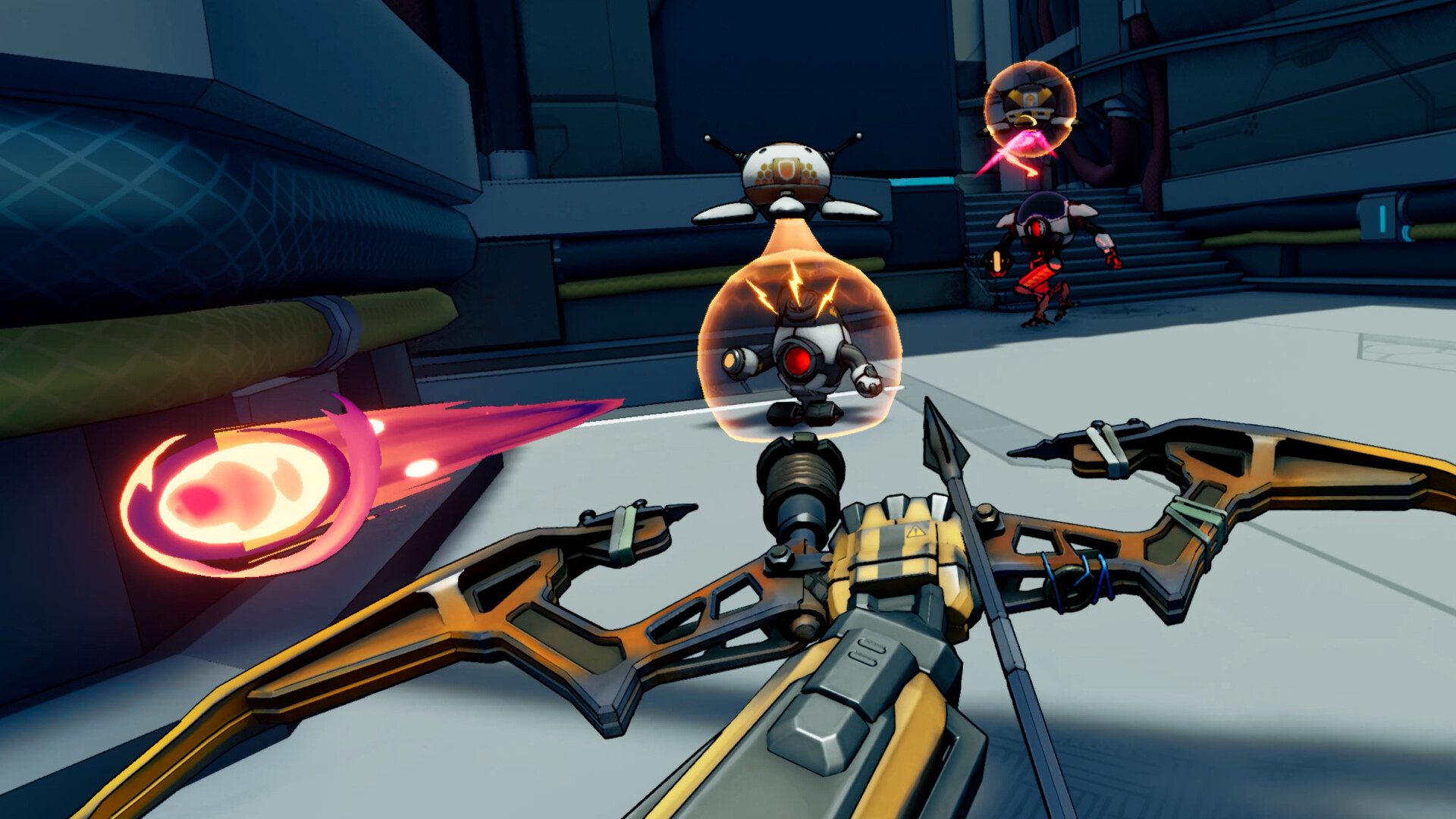
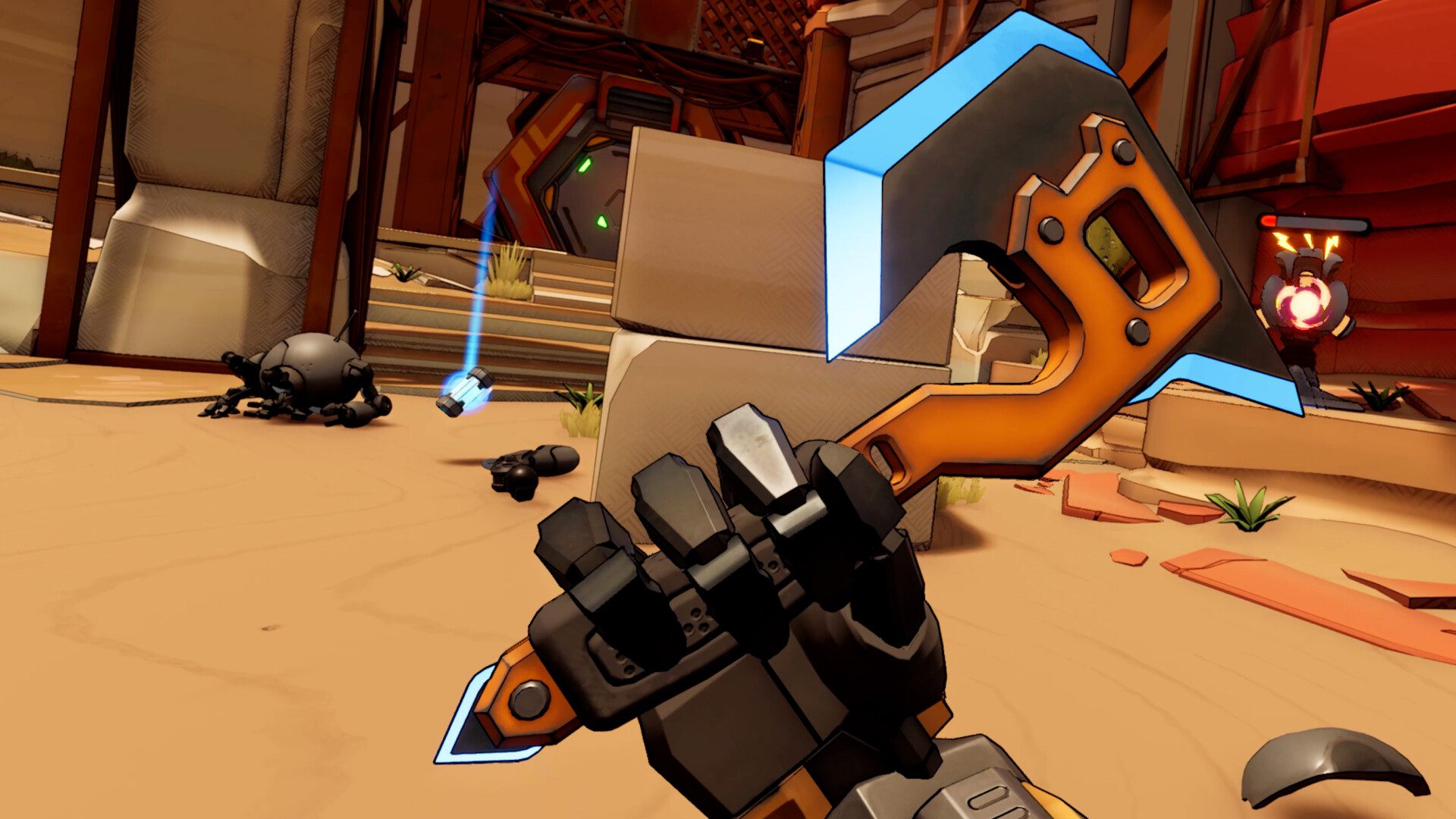
“We are really VR-ifiying every single mechanic that we can think of,” says Flat2VR CEO Jasmine Uniza, who reveals the game’s massive assortment of guns have been physically modeled for manually reloading—no small feat.

Image courtesy Flat2VR Studios, RyseUp Studios

“Do you even understand how much work it is to just do one weapon. To figure out how to make one weapon feel good in VR and make it the VR version of it? But in a game like Roboquest, it’s so fast-paced, that all of a sudden doing this process of reloading really breaks the game balance. We had to do that for not one, not two, not ten, but something like 80 weapons.”

Masher talks about how the studio moved the game’s UI to the user’s wrist, putting ammo counters on guns, and making the game’s minimap not so oppressively ‘in your face’ was a big concern. Those immersive touches are what “makes the difference between a port, and a conversion,” Masher says.

Image courtesy Flat2VR Studios, RyseUp Studios

Flat2VR’s says it’s currently working to bring its slate of projects to “as many VR platforms as possible, which includes Surviving Mars Pioneer, Out of Sight VR, Wrath: Aeon of Ruin, Postal 2 VR, and Flatout VR.

Meanwhile, the studio says it still has more to announce, although we should expect them at next VR Games Showcase, which is slated to take place in August 2025.

In the meantime, Roboquest VR is slated to arrive on all major VR headsets in Fall 2025, which you can wishlist over on the Horizon Store for Quest 2 and above, Steam for PC VR headsets, and the PlayStation Store for PSVR 2.

The post Flat2VR Goes Behind the Scenes on ‘Roboquest VR’, Its Next Big VR Port appeared first on Road to VR.

Meta is cracking down on AI ‘nudify’ apps

Meta is finally cracking down on “nudify” apps that use AI to generate nonconsensual nude and explicit images of celebrities, influencers and others. The company is suing one app maker that’s frequently advertised such apps on Facebook and Instagram, and taking new steps to prevent ads for similar services.

The crackdown comes months after several researchers and journalists have raised the alarm about such apps. A recent report from CBS News identified at least “hundreds” of ads on Meta’s platform promoting apps that allow users to “remove clothing” from images of celebrities and others. One app in particular, called Crush AI, has apparently been a prolific advertiser on Facebook and Instagram. Researcher Alexios Mantzarlis, Director of Cornell Tech’s Security, Trust and Safety Initiative, reported back in January that Crush AI had run more than 8,000 ads on Facebook and Instagram since last fall.

Now, Meta says it has filed a lawsuit against Joy Timeline HK Limited, the Hong Kong-based company behind Crush AI and other nudify apps. “This follows multiple attempts by Joy Timeline HK Limited to circumvent Meta’s ad review process and continue placing these ads, after they were repeatedly removed for breaking our rules,” the company wrote in a blog post. Joy Timeline HK Limited didn’t immediately respond to a request for comment.

Meta also says it’s taking new steps to prevent apps like these from advertising on its platform. “We’ve developed new technology specifically designed to identify these types of ads — even when the ads themselves don’t include nudity — and use matching technology to help us find and remove copycat ads more quickly,” Meta wrote. “We’ve worked with external experts and our own specialist teams to expand the list of safety-related terms, phrases and emojis that our systems are trained to detect within these ads.” The social network says it also plans to work with other tech platforms, including app store owners, to share relevant details about entities that abuse its platform.

Nudify apps aren’t the only entities that have exploited Meta’s advertising platform to run ads featuring celebrity deepfakes. Meta has also struggled to contain shady advertisers that use AI-manipulated video of public figures to promote scams. The company’s independent Oversight Board, which weighs in on content moderation issues affecting Facebook and Instagram, recently criticized Meta for under-enforcing its rules prohibiting such ads.

This article originally appeared on Engadget at https://www.engadget.com/social-media/meta-is-cracking-down-on-ai-nudify-apps-100034964.html?src=rss

Watch Konami’s Press Start Metal Gear and Silent Hill stream at 9AM ET

In case all the content from Summer Game Fest wasn’t enough, Konami has you covered. Today at 9AM ET the developer will stream Konami Press Start, a new showcase featuring updates (and hopefully new gameplay) for Metal Gear Solid Delta: Snake Eater and Silent Hill f, among other titles. 

It will stream on Konami’s YouTube channel and is expected to run 37 minutes. On top of news about the aforementioned two games, Konami has promised more — perhaps news around the Gradius Origins collection coming in August, possible new DLC for the Silent Hill 2 remake from Bloober Team or an update on Metal Gear Solid: Master Collection vol. 2. 

As a reminder, Metal Gear Solid Delta: Snake Eater is set to arrive on PS5, PC and Xbox Series X on August 28th, while Silent Hill f will come to those same platforms on September 25th. The company has also been working on Silent Hill Townfall and other titles. 

This article originally appeared on Engadget at https://www.engadget.com/gaming/watch-konamis-press-start-metal-gear-and-silent-hill-stream-at-9am-et-100011285.html?src=rss

Humanity Takes Its First Look At the Sun’s Poles

The European Space Agency’s Solar Orbiter has captured the first-ever images of the sun’s poles by tilting its orbit out of the ecliptic plane. Space.com reports: The captured images of the solar south pole were taken between March 16 and 17, 2025, with the Solar Orbiter’s Polarimetric and Helioseismic Imager (PHI), Extreme Ultraviolet Imager (EUI), and Spectral Imaging of the Coronal Environment (SPICE) instruments. They constitute humanity’s first ever look at the sun’s poles. This was the Solar Orbiter mission’s first high-angle observation campaign of the sun, conducted at an angle of 15 degrees below the solar equator. Just a few days after snapping these images, the ESA spacecraft reached a maximum viewing angle of 17 degrees, which it sits in currently as it performs its first “pole-to-pole” orbit of our star. […]

One of the first discoveries made by the Solar Orbiter is the fact that the magnetic fields around the sun’s southern poles appear to be, for lack of a better phrase, a complete mess. While standard magnetic fields have well-defined north and south poles, these new observations reveal that north and south polarities are both found at the sun’s southern pole. This seems to happen at solar maximum when the poles of the sun are about to flip. Following this exchange of poles, the fields at the north and south poles will maintain an orderly single polarity during solar minimum until solar maximum during the next 11-year cycle.

The Solar Orbiter observations also revealed that while the equator of the sun, where the most sunspots appear, possesses the strongest magnetic fields, those at the poles of our star have a complex and ever-changing structure. The Solar Orbiter’s SPICE instrument provided another first for the ESA spacecraft, allowing scientists to track elements via their unique emissions as they move through the sun. Tracing the specific spectral lines of elements like hydrogen, carbon, oxygen, neon, and magnesium, a process called “Doppler measurement,” revealed how materials flow through different layers of the sun. The Solar Orbiter also allowed scientists to measure the speed of carbon atoms as they are ejected from the sun in plumes and jets. “This is just the first step of Solar Orbiter’s ‘stairway to heaven.’ In the coming years, the spacecraft will climb further out of the ecliptic plane for ever better views of the sun’s polar regions,” ESA’s Solar Orbiter project scientist Daniel Muller said. “These data will transform our understanding of the sun’s magnetic field, the solar wind, and solar activity.”


Read more of this story at Slashdot.

Good news: cycling in midlife is linked to lower dementia risk

Cycling regularly during middle age can reduce the risk of dementia and maintain brain health, a new study suggests. 

With the global number of dementia cases projected to rise from 55 million in 2019 to 139 million in 2050, the study aimed to investigate the relationship between how people travel, and dementia risk and brain structure.

It found that, compared with non-active travel such as driving or public transport, active travel such as cycling and walking was associated with a lower adjusted risk of dementia.

A lower risk of dementia

The study found that cycling and mixed cycling reduced the risk of three forms of dementia. Halfpoint Images / Getty Images

The study, conducted by researchers in China and Australia, assessed data from 479,723 participants collected over 13 years. The data was from UK Biobank, a large-scale biomedical database that contains de-identified genetic, lifestyle and health data. 

The participants in the study had an average baseline age of 56.5 years. More than half were women and over 85 per cent were of European ancestry. They were free of dementia and able to walk at the beginning of the study. 

Participants were asked which forms of transport they had used most to get about in the last four weeks, excluding commuting to and from work. The answers were categorised into four groups: non-active, walking, mixed-walking, and cycling and mixed-cycling. 

Nearly half of the participants were non-active, while 6.8 per cent walked, 37 per cent were in the mixed-walking group and 7 per cent were in cycling and mixed-cycling.

Over a follow-up of 13 years, 8,845 cases of dementia and 3,956 cases of Alzheimer’s disease were recorded. 

The study found that cycling and mixed cycling reduced the risk for three forms of dementia: Alzheimer’s diseases, young-onset dementia and late-onset dementia. 

Cycling could help maintain brain health

Cycling or mixed cycling was significantly associated with a higher hippocampal volume, with the researchers suggesting that cycling is “a promising approach for maintaining brain health”.

“Our findings suggest that active travel modes, particularly cycling and mixed-cycling, are associated with higher hippocampal volumes. The hippocampus is critical for memory and cognitive function, and greater volume is generally considered a sign of better brain health,” co-author Liangkai Chen, of Huazhong University of Science and Technology in Wuhan, China, told MedPage Today. 

“Cycling, especially as a regular form of transport, may help increase blood flow to the brain, reduce inflammation, and stimulate neurogenesis, and requires higher cognitive engagement during travel, which could all contribute to the observed preservation of hippocampal volume,” Chen added. 

Participants without the APOE4 gene, which can double or triple the risk of dementia, appeared to derive greater benefits from active travel in terms of dementia risk. But the research suggests APOE4 carriers can still benefit from cycling. 

Walking results were more mixed. “Our results suggest that mixed-walking models, which combine walking with other forms of travel that require higher cognitive engagement (eg, driving), may be more beneficial in reducing dementia risk than walking alone,” said Chen.

The study follows research published in the British Medical Journal that found that “weekend warriors” – those who exercise only once or twice a week – were 25 per cent less likely to develop dementia than those who didn’t exercise at all.

India To Send First Astronaut On Mission To ISS

Shubhanshu Shukla will become the first Indian astronaut to visit the International Space Station as part of a four-person mission by Axiom Space launching from the U.S.. The mission will include 14 days aboard the ISS and over 60 scientific studies. The Guardian reports: He will be the third astronaut of Indian origin to reach orbit, following Rakesh Sharma, who was part of a 1984 flight onboard a Soviet Soyuz spacecraft, and Kalpana Chawla, who was born in India but became a US citizen and flew on two space shuttle missions, including the 2003 Columbia flight that ended in disaster when the spacecraft disintegrated, killing all seven astronauts onboard. “I truly believe that even though, as an individual, I am traveling to space, this is the journey of 1.4 billion people,” Shukla was quoted as saying by the Hindu newspaper this year. Shukla said he hoped to “ignite the curiosity of an entire generation in my country.”

India’s department of space has called the trip a “defining chapter” in its ambitious space exploration program. The International Space Station mission (ISS) “stands as a symbol of a confident, forward-looking nation ready to reclaim its place in the global space race,” the agency said before the launch. “His journey is more than just a flight — it’s a signal that India is stepping boldly into a new era of space exploration.” New Delhi has paid more than $60m for the mission, according to Indian media reports. […]

Shukla trained at the Yuri Gagarin Cosmonaut Training Center in Russia in 2020, before undertaking further training at the ISRO’s centre in Bengaluru. He has said the journey aboard the Axiom Mission 4, and the expected 14 days on the ISS, will provide “invaluable” lessons to bring back home. Shukla will be led by the mission commander, Peggy Whitson, a former Nasa astronaut and an Axiom employee, and joined by the European Space Agency astronaut Slawosz Uznanski-Wisniewski, of Poland, and Tibor Kapu, of Hungary. They will conduct 60 scientific studies, including microgravity research, earth observation, and life, biological and material sciences experiments.


Read more of this story at Slashdot.

Meta Shipped Quest v77 Update Knowing It Had Major Bugs, Despite Quality Control Pledge

Meta shipped the Quest v77 update knowing it had major bugs, the company’s CTO has acknowledged, despite his pledge to improve quality control.

Last month, Meta CTO Andrew Bosworth said the company was “taking seriously” developer complaints of OS performance regressions, undocumented misguided changes, and bugs. He said Meta was “spending time on” addressing it, and “doing the work” to solve it.

“We appreciate the feedback as always, from developers, [and we] take it seriously. It’s our responsibility, these are our mistakes, and we’re gonna fix them”, Bosworth said at the time.

Meta CTO Responds To Quest Performance Regression Issues
Meta CTO Andrew Bosworth has responded to developer concerns over Quest’s Horizon OS performance regression and the puzzling Battery Saver change.
UploadVRDavid Heaney

But around three weeks ago Meta started rolling out v77, and developers have encountered even more bugs in this new release. To be clear, we’re not referring to bugs in the new Navigator system interface. These bugs are at the core of the OS experience.

In a thread on X, Virtual Desktop’s developer Guy Godin publicly decried the decision to roll out v77. He described how issues he had reported in the Public Test Channel (PTC) build like audio crackling, audio cutting out when switching to passthrough, VP8 video decoding no longer working, and MediaCodec were still present in the “stable” build.

“Good job ignoring all the reports during PTC and pushing your update anyway”, Godin complained. Multiple other developers tell UploadVR they’re experiencing similar issues.

0:00

/1:00

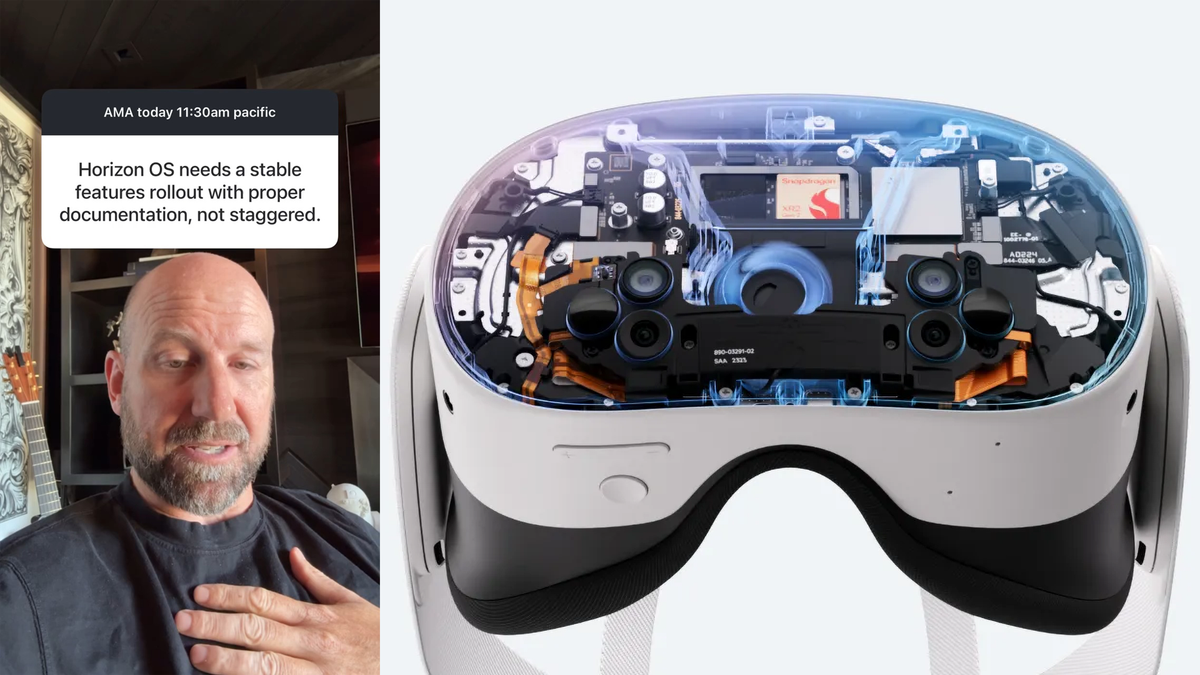
In an ask-me-anything (AMA) session on his Instagram page, Bosworth was asked why people on “the bird app”, referring to Twitter (now X), were “mad at” him.

Bosworth responded that it was “for good reason, I’m sad to say”.

“Our quality control hasn’t been where we need it to be”, he acknowledged, as he alluded to unspecified reasons for having to push an update with bugs to millions of headsets:

We actually saw these issues in PTC. For reasons I can’t get into, we had to roll anyways.

People say “how could you do it!?” Well, these bugs don’t affect a huge number of people. They do affect devs, who I care about a lot, and they do affect a specific set of people, who I care about a lot.

We’re working on the fixes. Some of them require firmware updates from Qualcomm, and so there’s a process that we’re going through there.

We’re working with urgency on this. We’re not happy about it. There’s a bunch of reasons we had to proceed anyways, and it’s a measured call with some benefits and some costs. But we shouldn’t even be in a position to make that call, because we should have much better quality control sooner.

It’s a process. We’re working on it. My commitment to that hasn’t faded at all.

Enhancing Personal Safety: Close Protection Officers Are What High Net Worth Individuals Need

Close protection officers play a big part in maintaining the safety of high-profile individuals. These professionals operate quietly, working behind the scenes to create and maintain a secure environment around clients who face unique, high-stakes risks.

Security Risks Unique to High-Net-Worth Individuals

Public visibility brings exposure to targeted threats. High net worth individuals are vulnerable to stalkers, opportunistic criminals, and information leaks. Some threats stem from corporate rivalries or political motives. 

In this environment, those who need close protection rely on experts trained to predict and prevent danger before it escalates. These professionals do more than react. They act before anything unfolds, identifying blind spots and reshaping movements to reduce exposure without restricting the individual’s freedom.

Close Protection Officers: Risk Assessment and Adaptive Protection Strategies

Each detail matters when shaping a safety plan. Close protection bodyguards begin their assignments by examining risk (think current threats, past incidents, lifestyle habits, and exposure points). Plans are then designed to minimize vulnerabilities. 

Unlike static security methods, this protection evolves with the client’s schedule and public presence. These officers possess skills in surveillance detection, defensive driving, and protective intelligence. Their training gives them the tools, but their sharp instincts make the difference.

From Public Events to Private Retreats

Clients move between luxury residences, business centers, international airports, and high-profile gatherings. Every setting introduces fresh risk. Close protection officers don’t follow; they lead. They assess new environments, prepare secure paths, and evaluate every point of contact. 

At events, they coordinate with venue staff and law enforcement. During travel, they prepare vehicles, inspect accommodations, and check itineraries. The process is detailed, structured, and precise.

Discreet by Design

The job depends on staying low-profile. Unlike an armed security officer at a checkpoint, close protection is fluid and adaptable. Clients often prefer discretion. Visibility can increase tension or attract attention. 

These officers stay close without drawing the spotlight. Their quiet presence offers assurance, not intrusion. Their ability to blend in, move fluidly, and remain alert at all times makes them an asset in public and private settings alike.

Operational Control Without Interruption

Protection involves managing time, space, and people. These officers screen every interaction as in who enters the client’s space, how staff interact, which meetings require secure oversight. 

They oversee transportation logistics and communicate with service providers while monitoring surroundings for potential threats. The goal is control without interruption. The officer acts as a filter, allowing only trusted individuals and pre-cleared information through.

The Complexity of Travel Protection

Travel expands both opportunity and risk. International assignments can introduce unstable regions, language barriers, or new legal frameworks. Close protection professionals handle customs protocols, coordinate with foreign contacts, and maintain secure travel paths. 

They plan for delays, alternative routes, and shifting political climates. By preparing for the worst, they make ordinary movement possible, even under extraordinary conditions.

A Rising Need in a Changing World

As wealth becomes more visible, so does the risk that comes with it. Public records, online exposure, and news coverage make it easy for malicious actors to identify targets. 

More individuals now realize they need close protection, especially during high-profile transactions, corporate transitions, or family disputes. The rise in personal security demand reflects the increasing pressure public figures face in both digital and physical spaces.

Team-Based Protection Models

In many cases, safety requires a team approach. When protecting a family, a business leader, or someone managing multiple properties, one officer cannot cover all needs. A team might include a driver, advance agent, residential specialist, and logistical coordinator. 

Each person handles a separate aspect. This model creates full coverage. The lead officer monitors overall risk, while others handle minute-to-minute logistics or crowd control.

Private Residences and Domestic Risk Management

Risks don’t disappear behind a gate. Residences, though familiar, introduce their own safety challenges. 

Households include vendors, staff, guests, and service teams. All present potential risks. A close protection bodyguard helps manage these variables. Entry logs, verified backgrounds, and secure perimeters are part of the strategy. The officer monitors arrivals, evaluates movements, and maintains order quietly in the background.

Digital Overlap and Modern Threat Vectors

Many threats now begin online. Surveillance doesn’t just happen in person; it happens through data leaks and location tracking. Protection professionals now work in tandem with cybersecurity teams. 

The officer guards the client physically, while digital experts monitor for mentions, threats, or leaked schedules. This fusion blocks risks before they converge. Knowing the ins and outs of close protection includes awareness of how real-world and online threats connect and how to disrupt them.

Customized Services for Different Lifestyles

A political leader, celebrity, and business mogul face different risks. Some need escorting through crowds. Others require confidential protection during negotiations. 

No two clients need the same service. The work adapts to each lifestyle. Some prefer visible presence, others complete privacy. Some need 24/7 protection, while others need specialized coverage for events or travel. Officers adjust their method to match the individual, not the other way around.

Long-Term Assignments and Trust Development

Protection relationships often grow over time. With continued assignments, trust deepens. Officers witness family dynamics, financial decisions, and vulnerable moments. Discretion becomes just as important as tactical readiness. 

In long-term work, professionalism builds the foundation for trust. Clients often come to depend on these officers for more than just security. They depend on them for discretion, loyalty, and insight.

Close Protection vs. General Security

There’s a distinct difference between general security and close protection officers. Security guards protect property. They manage gates, monitor feeds, and deter theft. 

Close protection, by contrast, focuses on people. These professionals operate in motion, adapting to threats that shift minute by minute. Their value lies not in equipment, but in thinking: strategic awareness, interpersonal awareness, and staying calm under pressure.

Executive Protection in the Corporate World

Today’s executives are symbols of corporate identity. With public announcements, earnings releases, and deal signings come increased visibility. Protection in this space includes boardrooms, airports, hotel suites, and conference venues. 

The officer may sit outside a meeting room one hour and ride along in a motorcade the next. Their assignment straddles the public and private, requiring both polish and vigilance. This hybrid approach serves those whose influence stretches across continents and sectors.

Private Aviation and Controlled Transit

Private aviation removes some public risk but introduces new variables. Smaller airports often have reduced oversight. Crews, passengers, and service staff must all be vetted. 

The armed security officer may manage the entry point, but it is the close protection specialist who coordinates transitions. They check flight crews, verify cargo, and make sure transportation meets the client immediately upon landing. There’s no margin for error when every moment outside controlled space carries potential risk.

Precision, Not Presence

The work of close protection officers lies in preparation, strategy, and calm control. It isn’t showy or loud. It’s quiet, calculated, and unshakable. 

For high-net-worth individuals, this kind of focused personal security is not about limiting movement. It’s about enabling freedom, grounded in confidence. In a world of fast-moving threats and unpredictable exposure, those who need protection don’t wait. They hire the professionals who know how to act before a threat arrives.

Written by Lara Harper

Canva Now Requires Use of LLMs During Coding Interviews

An anonymous reader quotes a report from The Register: Australian SaaS-y graphic design service Canva now requires candidates for developer jobs to use AI coding assistants during the interview process. […] Canva’s hiring process previously included an interview focused on computer science fundamentals, during which it required candidates to write code using only their actual human brains. The company now expects candidates for frontend, backend, and machine learning engineering roles to demonstrate skill with tools like Copilot, Cursor, and Claude during technical interviews, Canva head of platforms Simon Newton wrote in a Tuesday blog post.

His rationale for the change is that nearly half of Canva’s frontend and backend engineers use AI coding assistants daily, that it’s now expected behavior, and that the tools are “essential for staying productive and competitive in modern software development.” Yet Canva’s old interview process “asked candidates to solve coding problems without the very tools they’d use on the job,” Newton admitted. “This dismissal of AI tools during the interview process meant we weren’t truly evaluating how candidates would perform in their actual role,” he added. Candidates were already starting to use AI assistants during interview tasks — and sometimes used subterfuge to hide it. “Rather than fighting this reality and trying to police AI usage, we made the decision to embrace transparency and work with this new reality,” Newton wrote. “This approach gives us a clearer signal about how they’ll actually perform when they join our team.” The initial reaction among engineers “was worry that we were simply replacing rigorous computer science fundamentals with what one engineer called ‘vibe-coding sessions,'” Newton said.

The company addressed these concerns with a recruitment process that sees candidates expected to use their preferred AI tools, to solve what Newton described as “the kind of challenges that require genuine engineering judgment even with AI assistance.” Newton added: “These problems can’t be solved with a single prompt; they require iterative thinking, requirement clarification, and good decision-making.”


Read more of this story at Slashdot.

AR In VR: 15 Years Of Augmented World Expo With Ori Inbar

I sat down with the co-founder of Augmented World Expo Ori Inbar during his annual conference in Long Beach.

“XR Is Going Mainstream” is the rallying cry of this year’s event, which opened this week with Inbar presenting a keynote featuring the current developer generation of Snapchat’s Spectacles glasses. While Snap plans to sell consumer Specs next year, the current model helped him sink a pool shot using AR as a guide overlaying the geometry needed to sink the shot. Yes, much like that episode of Quantum Leap some readers might remember, and similar in concept to an older project Inbar cited in his presentation. Now the idea runs in standalone glasses from a major technology company.

With about 10 minutes for our interview I dug into the shape of the market with Inbar. Full transcript below edited lightly for repeated phrasing and clarity.

Ian Hamilton
Who are you and what’s your role here?

Ori Inbar
Hey, my name is Ori Inbar. I’m the co-founder and CEO of Augmented World Expo.

Ian Hamilton
How many years have you been doing this and how has the market changed over that time?

Ori Inbar
I started it in 2010, initially focused on AR when it was just starting out. We had 300 people in the room, 20 exhibitors, and since then it grew to what it is today which is 250 exhibitors and almost 5,000 attendees. And actually in 2015, we partnered with UploadVR, and that’s when we combined AR and VR into one conference because we thought, they’re so complementary, it’s really part of the same spectrum. And that was a great move. But how did the industry evolve from an event that was basically talking about ideas in the future to, as our shirts proudly say, “XR Is Going Mainstream?”

Ian Hamilton
Yeah. I heard a rallying cry up there on stage during the keynote yesterday, I imagine you do that almost every year in a different way in different words. Interesting to think about the 10 year path of partnering with UploadVR, I didn’t remember that piece of history. That’s the year I started at this company covering full-time VR as a technology. And the year is 2025 and I feel like augmented reality is only accessible in my VR headset.

Ori Inbar
That’s how you mostly use it?

Ian Hamilton
I think it’s the best in my VR headset.

Ori Inbar
It’s probably the best experience, I agree, but you can’t ignore the fact that 1/3 of the U.S. population is using mobile AR, maybe not on a daily basis, but pretty frequently for things like socializing and shopping and, like I said in the keynote, Gen Z is a huge adopter of it. I think they are, just now, waiting for the next form factor to allow them experience it in a much better way. The Spectacle glasses, which we have here hundreds of, I think are showing off where this could go.

Ian Hamilton
Let’s talk architecture, though. Field of view, 100 degrees. 100 degrees of canvas on which augmentation can appear. Zoom is about to appear on the visionOS platform, visual zoom, so I will have greater than 20/20 vision through mixed reality on a VR headset. How do augmented reality glasses, see-through Spectacles, how does the field of view gap between these two device categories play out over the next decade?

Ori Inbar
I vowed not to talk about the future this week, but I think all these different approaches will converge into a single device that can do it all. I think today I personally use different devices for different purposes. The Vision Pro is amazing for things like spatial video, “spadios”, right? And all of the mixed reality experiences are just incredible. But when I’m on the street walking around, I use my Ray-Ban glasses because they are awesome taking videos on the go and getting information as I need it without having something big on my face. And you know, the specs are great for some casual AR gaming that I do mostly at home, I don’t go out with these glasses yet. So I think each one is great for a different purpose right now. We wear for a purpose, and that’s probably going to continue for a few more years until, again, that ultimate future where you have probably one device that can do it all? So AR glasses with very wide field of view but can also obstruct the world if you need to.

Ian Hamilton
One device that can do it all. One device that can do it all. I feel like that’s going to be a VR headset with augmentation built onto it. Do you disagree with that?

Ori Inbar
The question is how do you define a VR headset in 10 years? It’s going to be indistinguishable from an AR headset.

Ian Hamilton
Yeah, what optical system do you think it will use?

Ori Inbar
My guess, and I’ve been guessing it for 10 years now, it’s going to be direct retinal projectors. It was invented in the early ’90s but we’ve seen the North glasses that tried to introduce it, it didn’t work so well yet. This technology allows you to have a very light form factor, regular looking glasses, with the ability to completely paint information on your retina. So you can even do VR with these glasses because it can block everything, including the sun. That’s my bet, but it’s been 30 or 40 years now since it was invented and still hard to crack.

Ian Hamilton
Really interesting to think about that and I appreciate you not wanting to talk about the future, so I’ll stop there. What do you think about the pace of this industry? Is there anything holding it back? Is there anything needed to accelerate?

Ori Inbar
In my opening, I basically said let’s not talk about what’s missing and where we need to go, because what we have today is good enough for almost any use case. But since you asked…every year there’s new things happening, new devices being released, new technologies. We get kind of used to the space, and we never kind of stop for a second and think, ‘let’s see what we have today.’ It’s pretty amazing, so we always want more, which is great on one hand, but it’s also distorting reality in some ways.

The things that are clearly still preventing us from having our dreams come true is….for me, for someone that really came from the belief that AR is what we will use most of the day. VR will definitely have its place at home, entertainment, things like that, but most of the day you want to be in the world. So you want to have an AR device, and for that you really need a wide field of view. And you want to have the ability to project information that merges really nicely with the real world. In that sense, a lot of it is the language of XR, or AR specifically. How do you give information that is useful, that is engaging, that is entertaining, without distracting me from the real world? So it’s more of a kind of design issue, more of a content issue, and I have to say that since Vision Pro, and since the Quest 3 offered great mixed reality experiences, I’m seeing that already starting to happen, because the device is supporting that field of view and that excellent vision, so I’m very optimistic about where we’re going to be.

Ian Hamilton
I’m optimistic about where we’re going as well except I think the last 10 years have indicated the field of view that you get out of a VR headset is a winning architecture for augmentation, at least in the near term.

Ori Inbar
Absolutely. You know, when the Vision Pro was launched, Tim Cook did not talk about the VR headset. He said, this is an AR headset.

Ian Hamilton
Apple doesn’t use [“VR”] at all.

Ori Inbar
And they even invested so much unnecessarily in the Eyesight display just to make it look like an AR device, and now we know it’s completely unnecessary.

Ian Hamilton
I appreciate that, and I feel that cuts through a lot of the confusion out there. You said it was an issue of language and it really is.

Ori Inbar
I call it AR on VR, basically. A device that does AR on a VR headset.

Ian Hamilton
Yeah, I think of it as AR passing through VR.

Ori Inbar
That’s even more accurate.

Ian Hamilton
Thank you for the time.

VR Bungee Jumping Simulation Tips You Over In Real Life At AWE

The show floor of Augmented World Expo in Long Beach this year features a simulation of bungee jumping with the completely unnerving sensation of actually falling.

The demo for Anywhere Bungee is extremely short, but impactful enough that I thought about the experience for the rest of the day. It began with being handed a Quest 3 and getting strapped into a contraption resembling a large padded massage table wedged between two motorized arms. After getting my feet strapped in tight to a set of inversion cuffs, I was given a very quick explanation of what I was about to experience and then put right into the action.

In headset the simulation begins with the sensation of being moved into position for my impending jump. Anxiety began to wash over me as I felt suspended high in the air, dangling over the edge of a large skyscraper in Tokyo, Japan. The Logilicity team behind the experience began to chant in unison.

One… Two… Three. BUNGEE!

0:00

/1:10

From a downward facing position strapped to the table and tilted forward a little bit to start, I dropped suddenly to a fully vertical position with my arms outstretched in front of me. This was a sensation that I have never experienced before in virtual reality and for the first time in a long while, I actually felt frightened in a VR headset.

The sensation of being flipped vertically as I plunged toward the ground below me, and again on the initial bounce, left my hands visibly trembling from the degree of fear and exhilaration at what I had just encountered. I’ve been using VR headsets for more than a quarter century and I don’t often feel sensations like that anymore, even in the most intense virtual horror experiences at home. Experiencing the sudden pull of gravity seemed to transition my brain into believing I was actually falling, wind blowing in my face as I rapidly descended.

When the demo was over I spoke with Tetsuya Nonomura, who told me he prefers the title Chief Bungee Jumper to CEO. He told me his passion for bungee jumping led him to want to develop the Anywhere Bungee system so enthusiasts and the general public could do these activities in a controlled and easily accessible way.

Currently deployed in rooftop settings like Tokyo Tower and Abeno Harukas in Japan, Logilicity says they are looking to expand their virtual bungee experience to partners and anyone who might be curious about the thrill bungee can provide without having to fling themselves off of a real structure.

Now my mind is racing over other potential extreme sports that could be simulated using motion platforms and virtual reality. As someone who has never experienced real bungee jumping, I can’t speak to how 1:1 this experience feels, but it was intense enough that I’m now chasing that feeling and searching for other intense VR simulations like this one. We would love to hear about similar experiences in the comments below, or you can contact us privately.

Abandoned Subdomains from Major Institutions Hijacked for AI-Generated Spam

A coordinated spam operation has infiltrated abandoned subdomains belonging to major institutions including Nvidia, Stanford University, NPR, and the U.S. government’s vaccines.gov site, flooding them with AI-generated content that subsequently appears in search results and Google’s AI Overview feature.

The scheme, reports 404 Media, posted over 62,000 articles on Nvidia’s events.nsv.nvidia.com subdomain before the company took it offline within two hours of being contacted by reporters. The spam articles, which included explicit gaming content and local business recommendations, used identical layouts and a fake byline called “Ashley” across all compromised sites. Each targeted domain operates under different names — “AceNet Hub” on Stanford’s site, “Form Generation Hub” on NPR, and “Seymore Insights” on vaccines.gov — but all redirect traffic to a marketing spam page. The operation exploits search engines’ trust in institutional domains, with Google’s AI Overview already serving the fabricated content as factual information to users searching for local businesses.


Read more of this story at Slashdot.

Large Language Models, Small Labor Market Effects

The abstract of a study featured on NBER: We examine the labor market effects of AI chatbots using two large-scale adoption surveys (late 2023 and 2024) covering 11 exposed occupations (25,000 workers, 7,000 workplaces), linked to matched employer-employee data in Denmark.

AI chatbots are now widespread — most employers encourage their use, many deploy in-house models, and training initiatives are common. These firm-led investments boost adoption, narrow demographic gaps in take-up, enhance workplace utility, and create new job tasks. Yet, despite substantial investments, economic impacts remain minimal. Using difference-in-differences and employer policies as quasi-experimental variation, we estimate precise zeros: AI chatbots have had no significant impact on earnings or recorded hours in any occupation, with confidence intervals ruling out effects larger than 1%. Modest productivity gains (average time savings of 3%), combined with weak wage pass-through, help explain these limited labor market effects. Our findings challenge narratives of imminent labor market transformation due to Generative AI.


Read more of this story at Slashdot.

[$] LWN.net Weekly Edition for June 12, 2025

Inside this week’s LWN.net Weekly Edition:

  • Front: Nyxt; Cyber Resilience Act; Unwanted file descriptors; Core-dump API; 6.16 Merge window; Uniprocessor configurations; Smatch; FUSE zero-copy; iov_iter; Fedora documentation.
  • Briefs: Android tracking; /e/OS 3.0; FreeBSD laptops; Ubuntu X11 support; Netdev 0x19; OIN anniversary; Quotes; …
  • Announcements: Newsletters, conferences, security updates, patches, and more.