
Gitea 1.24 self-hosted Git service released with performance boosts, enforced 2FA, improved markdown rendering, and more.
Monthly Archives: June 2025
The UCI has just announced huge changes to its tech regulations – and some industry insiders are furious
The UCI has announced sweeping revisions to its technical regulations, aimed at combating technological fraud and enhancing rider safety through stricter equipment standards – and not everyone in the industry is on board.
Set to come into force from 2026, the changes cover everything from rim depths and handlebar widths to helmet standards and frame dimensions. These changes mark one of the most comprehensive overhauls of technical regulations in recent years.
The changes, which were published in a statement on the UCI’s website, stem from work by the UCI’s Equipment and New Technologies Commission and consultations with SafeR, the rider safety body. Despite claims of industry input, some insiders say their concerns were ignored.
“We’ve been in meetings about all these rules for ages now with WFSGI [World Federation of the Sporting Goods Industry] and the UCI,” said an industry source who’s worked with several WorldTour teams and is close to the matter. “They ignored everything the industry said – literally everything.”
Read more:
- Simon says: The UCI must stop banning things just because they look weird
- The UCI needs to scrap this one rule – unobtainable bikes make racing worth watching
Handlebar and rim size limits

From 1 January 2026, mass start road race bikes will be limited to a maximum rim depth of 65mm.
In a more controversial decision, the UCI will also enforce a minimum handlebar width of 400 mm (outside-to-outside) in road and cyclocross events, with a minimum width, as measured from hood-to-hood, of 320 mm. Track mass start events will see a narrower minimum of 350 mm from 1 January 2027.
“These new rules are hugely discriminatory against women and smaller men,” said our source. “It will shift the demographic of winning riders to taller riders.”
“In the last meeting we had, Cervélo said that 14 of the 18 women on Visma–Lease a Bike would need to change their handlebars.”
According to our source, this will cause problems for riders seeking ergonomic setups: “I tried to tell them that you can’t make an ergonomic bar with 400 drops and 320 inner hoods, as it would have a 2 degree flare and hurt your wrists.”
Fork width and frame design
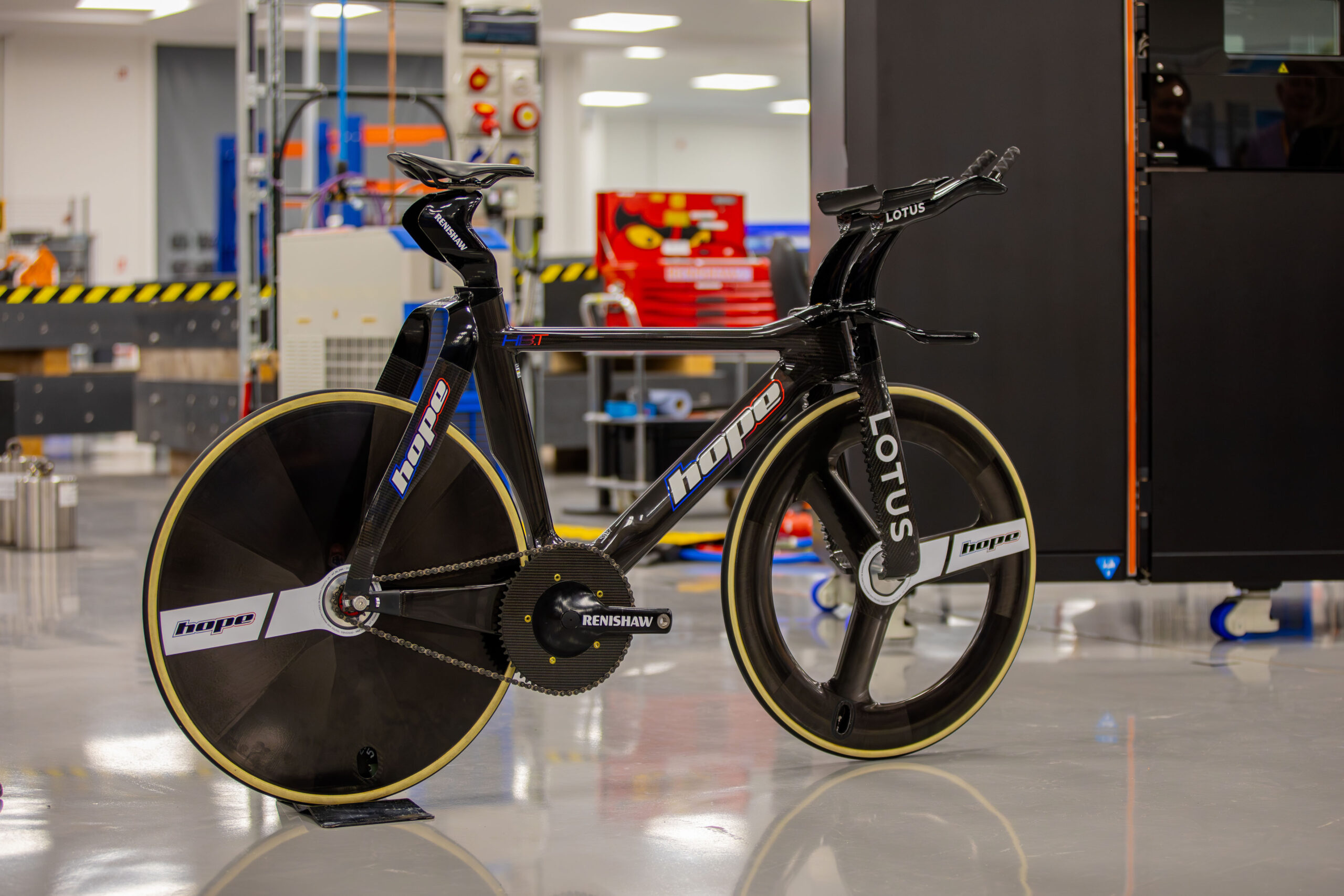
Further standardisation comes with new limits on internal fork width. Road bikes will be capped at 115 mm at the front and 145 mm at the rear from 2026, with the same limits extending to track bikes from 2027.
This could have implications for current equipment, with our source warning that “Hope’s track bikes [are] potentially gone too, as they’re wider than 145mm at the rear stays.”
New helmet categories and future approval protocols

Another major change is the introduction of distinct helmet regulations for road races versus time trials, taking effect in 2026. The UCI says this will allow for “clarified specifications” to suit the demands of different race formats.
A more formal helmet approval protocol – akin to standards like CE or CPSC – is expected by 1 January 2027 at the earliest. The UCI Equipment Unit is continuing work on this with manufacturers.
Behind closed doors, our source claims the UCI was pushing for rules stating helmets must have “3 to 4 vents minimum, and nothing that is marketed as a time trial helmet could be used.”
Crackdown on technological fraud
In response to growing concern around hidden motors and other concealed performance aids, the UCI is expanding its anti-fraud regulations. As of next year, the rules will no longer apply only to equipment used during competitions, but also to any attempt to deceive or obstruct anti-fraud testing – regardless of where it occurs.
To support enforcement, the UCI Disciplinary Commission has been granted expanded investigatory powers. “Technological fraud cannot be conducted in the same manner as other disciplinary matters due to their fraudulent nature,” the UCI said in the statement published on its website.
More to follow…
After a series of tumors, woman’s odd-looking tongue explains everything
Breast cancer. Colon cancer. An enlarged thyroid gland. A family history of tumors and cancers as well. It wasn’t until the woman developed an annoying case of dry mouth that doctors put it all together. By then, she was in her 60s.
According to a new case study in JAMA Dermatology, the woman presented to a dermatology clinic in Spain after three months of oral unpleasantness. They noted the cancers in her medical history. When she opened wide, doctors immediately saw the problem: Her tongue was covered in little wart-like bumps that resembled a slippery, flesh-colored cobblestone path. (Image here.)
Such a cobblestone tongue is a telltale sign of a rare genetic condition called Cowden syndrome. It’s caused by inherited mutations that break a protein, called PTEN, leading to tumors and cancers.
PCI Express 7.0 Specs Released
The PCI-SIG, which oversees the development of the PCIe specification, has officially released the final spec for PCI Express 7.0. “The PCIe 7.0 specification increases the per-lane data transfer rate to 128 GT/s in each direction, which is twice as fast as PCIe 6.0 supports and four times faster than PCIe 5.0,” reports Tom’s Hardware. “Such a significant performance increase enables devices with 16 PCIe 7.0 lanes to transfer up to 256 GB/s in each direction, not accounting for protocol overhead. The new version of the interface continues to use PAM4 signaling while maintaining the 1b/1b FLIT encoding method first introduced in PCIe 6.0.” From the report: To achieve PCIe 7.0’s 128 GT/s record data transfer rate, developers of PCIe 7.0 had to increase the physical signaling rate to 32 GHz or beyond. Keep in mind that both PCIe 5.0 and 6.0 use a physical signaling rate of 16 GHz to enable 32 GT/s using NRZ signaling and 64 GT/s using PAM4 signaling (which allows transfers of two bits per symbol). With PCIe 7.0, developers had to boost the physical frequency for the first time since 2017, which required tremendous work at various levels, as maintaining signal integrity at 32 GHz over long distances using copper wires is extremely challenging.
Beyond raw throughput, the update also offers improved power efficiency and stronger support for longer or more complex electrical channels, particularly when using a cabling solution, to cater to the needs of next-generation data center-grade bandwidth-hungry applications, such as 800G Ethernet, Ultra Ethernet, and quantum computing, among others. […] With the PCIe 7.0 standard officially released, members of the PCI-SIG, including AMD, Intel, and Nvidia, can begin finalizing the development of their platforms that support the PCIe specifications. PCI-SIG plans to start preliminary compliance tests in 2027, with official interoperability tests scheduled for 2028. Therefore, expect actual PCIe 7.0 devices and platforms on the market sometime in 2028 – 2029, if everything goes as planned. PCI-SIG also announced that pathfinding for PCIe 8.0 is underway, and members of the organization are actively exploring possibilities and defining capabilities of a standard that they are going to use in 2030 and beyond.
“Interestingly, when asked whether PCIe 8.0 would double data transfer rate to 256 GT/s in each direction (and therefore enable bandwidth of 1 TB/s in both directions using 16 lanes), Al Yanes, president of PCI-SIG, said that while this is an intention, he would not like to make any definitive claims,” reports Tom’s Hardware. “Additionally, he stated that PCI-SIG is looking forward to enabling PCIe 8.0, which will offer higher performance over copper wires in addition to optical interconnects.”


Read more of this story at Slashdot.
Meta is helping to fund geothermal energy projects in New Mexico
Meta has entered into an agreement with XGS Energy to develop “next-generation geothermal energy” projects in New Mexico. The plan is for these projects to connect directly into the electrical grid that Meta’s data centers draw from, feeding the growing energy needs of the company’s AI development.
Both companies claim the new deal will add 150-megawatts of carbon-free energy to the grid “with zero operating water use.” New Mexico is apparently uniquely suited for geothermal energy production because the state has “some of the best hot rock resources in the country,” according to the deal announcement. XGS Energy’s approach will allow “these hot, but typically dry, rock resources” to be used to produce electricity without having to worry about water accessibility.
The agreement is split into two phases, an initial smaller one and a second larger one, both of which are “projected to be operational by 2030.” Meta has previously explored geothermal energy through a partnership with Sage Geosystems, and like its past deals — including Meta’s recent 20-year agreement to use a nuclear power plant in Illinois — the company is focused on finding more sources of energy for its AI data centers.
“Advances in AI require continued energy to support infrastructure development,” Urvi Parekh, Meta’s Global Head of Energy, shared in the deal announcement. “With next-generation geothermal technologies like XGS ready for scale, geothermal can be a major player in supporting the advancement of technologies like AI as well as domestic data center development.”
This article originally appeared on Engadget at https://www.engadget.com/big-tech/meta-is-helping-to-fund-geothermal-energy-projects-in-new-mexico-212222815.html?src=rss
Isaacman’s bold plan for NASA: Nuclear ships, seven-crew Dragons, accelerated Artemis
Nearly two weeks have passed since Jared Isaacman received a fateful, brief phone call from two officials in President Trump’s Office of Personnel Management. In those few seconds, the trajectory of his life over the next three and a half years changed dramatically.
The president, the callers said, wanted to go in a different direction for NASA’s administrator. At the time, Isaacman was within days of a final vote on the floor of the US Senate and assured of bipartisan support. He had run the gauntlet of six months of vetting, interviews, and a committee hearing. He expected to be sworn in within a week. And then, it was all gone.
“I was very disappointed, especially because it was so close to confirmation and I think we had a good plan to implement,” Isaacman told Ars on Wednesday.
Microsoft Rolls Out Urgent Patch To Stop Anti-Cheat From Crashing Gaming PCs

This month’s Patch Tuesday introduced an issue that caused PCs to crash when opening certain games that make use of anti-cheat software. Gaming is big business, and so this prompted Microsoft to quickly roll out an emergency update to replace the patch. A patch for the patch, if you will.
When the previous update was released, some users
Microsoft Just Teased Its Next-Gen Xbox Console, and Nobody Noticed
Microsoft quietly teased its next-generation Xbox by showcasing its collaboration with Asus “to bring two Xbox Ally handhelds to the market later this year,” writes The Verge’s Tom Warren. From the report: The Xbox Ally handhelds run Windows, but the Xbox team has worked with Windows engineers to boot these PC handhelds into a full-screen Xbox UI. The Windows desktop doesn’t even fully load, and you use the Xbox app UI as a launcher to get to all your games (even Steam titles) and apps like Discord. While the combination of Windows and Xbox here is intriguing, it’s the way that Microsoft is positioning these devices that really caught my attention.
“This is an Xbox,” said Microsoft during the reveal, clearly expanding its marketing push beyond a single console to every screen and device. It all felt like a true Xbox handheld reveal. There was even an 11-minute-long behind-the-scenes video on the Xbox Ally handhelds, filmed in a similar style to Microsoft’s “Project Scorpio” Xbox One X reveal from nearly nine years ago. “This is a breakthrough moment for Xbox,” Carl Ledbetter, a 30-year Microsoft design veteran, says in the video. Ledbetter helped design the original IntelliMouse, the Xbox 360 Slim, the Xbox One X, and plenty of other Microsoft devices. When Ledbetter is involved, you know it’s more than just a simple partner project with Asus.
“For the first time, a player is going to be able to hold the power of the Xbox experience in their hand, and take it with them anywhere they want to go,” says Xbox president Sarah Bond, in the same video. Microsoft thinks of the Xbox Ally handhelds as Xbox consoles with the freedom of Windows, and I think the next-gen Xbox is going to look very similar as a result.
Related


Read more of this story at Slashdot.
Apple Is Giving the iPhone Its Own ‘Emoji Kitchen’
Emojis are a fun evolution from the emoticons of old—but there are only so many to choose from. While a handful of new ones are added each year, for the most part, what you see is what you get, which is why Android’s “Emoji Kitchen” is so great.
The feature lets you combine two emojis to create a brand new one, right on your device. If you want to send a winky face, but with the robot emoji, you can. You can make the skull emoji cry with laughter, or turn a piece of pizza into a rocket ship. The feature multiplies a limited yet sizable pool of emoji choices into a staggering number of varieties.
While Emoji Kitchen is now automaticly included on Pixel devices, it doesn’t even exist on iPhone, at least as of the latest official software version, iOS 18.5. With iOS 26, currently in beta testing, however, Apple has built an Emoji Kitchen-like feature that uses Apple Intelligence to mix multiple emoji or Genmoji together to make a new icon.
The feature didn’t get as much attention as some others during the WWDC keynote introducing iOS 26, but it seems like a fun use of Apple’s AI.
How to mix emoji and Genmoji on iOS 26
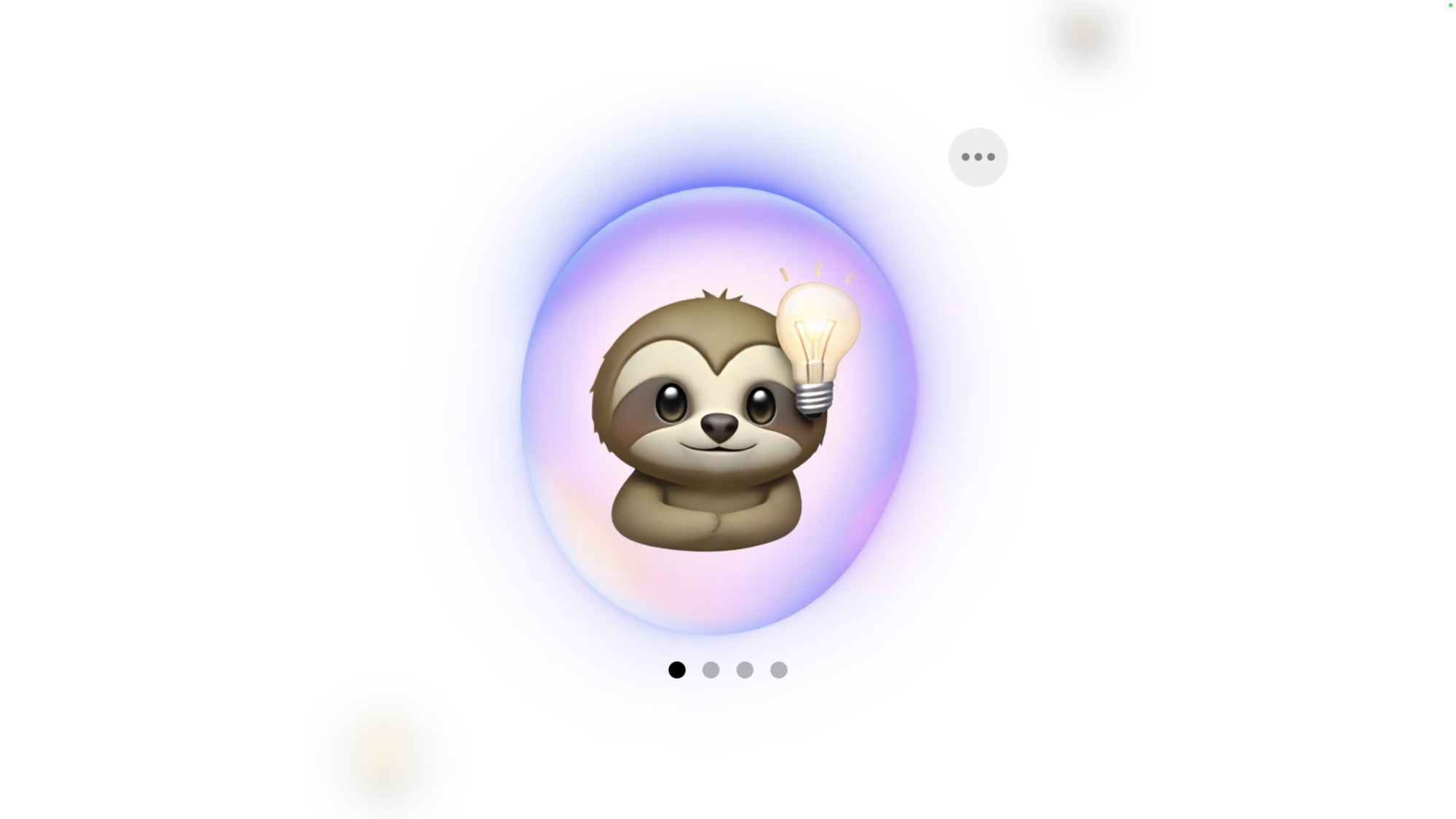
Credit: Apple/YouTube
In order to try this out, you’ll need to be running iOS 26 on an iPhone compatible with Apple Intelligence (i.e. an iPhone 15 Pro or newer), though as the beta is still in its earliest stages, I don’t recommend you try it out at this time.
Once you’re running iOS 26, open the emoji keyboard, then tap “Genmoji.” Here, you’ll now see a new “Suggestions” section, which offers a row of emojis you can choose from. If you don’t like these suggestions, you can choose “Show More” to see different categories of emojis, including “Themes,” “Expressions,” “Costumes,” “Accessories,” and “Places.” As Emojipedia highlights, these categories feature icons that aren’t standard emojis, like a race car helmet and flower crown.
If you’re looking to mix specific emojis together, however, just tap the gray “smiley +” icon. This button will open the emoji keyboard, so you can choose whatever options you like, in addition to any text-based prompts you’d like to add. You can add up to six “concepts” (emojis and prompts) per generation, so you can really mix things up—though you might find that using fewer prompts returns results closer to your intended design.
From here, Genmoji will start generating new emojis from your selection, and you can scroll through the different options it presents. While the app hides the emojis and prompts here, you can tap the image to see which concepts it was generated from. If you like a generation, tap the checkmark, and Genmoji will automatically enter it into the text field for you to share.
AMD Radeon RX 9060 XT Linux GPU Compute Performance
Following last week’s AMD Radeon RX 9060 XT Linux graphics/gaming review for launch day, today’s article is providing an initial look at the GPU compute performance for this new RDNA4-powered ~$349 graphics card on Linux with ROCm 6.4.1.
Coming to Apple OSes: A seamless, secure way to import and export passkeys
Apple this week provided a glimpse into a feature that solves one of the biggest drawbacks of passkeys, the industry-wide standard for website and app authentication that isn’t susceptible to credential phishing and other attacks targeting passwords.
The import/export feature, which Apple demonstrated at this week’s Worldwide Developers Conference, will be available in the next major releases of iOS, macOS, iPadOS, and visionOS. It aims to solve one of the biggest shortcomings of passkeys as they have existed to date. Passkeys created on one operating system or credential manager are largely bound to those environments. A passkey created on a Mac, for instance, can sync easily enough with other Apple devices connected to the same iCloud account. Transferring them to a Windows device or even a dedicated credential manager installed on the same Apple device has been impossible.
Growing pains
That limitation has led to criticisms that passkeys are a power play by large companies to lock users into specific product ecosystems. Users have also rightly worried that the lack of transferability increases the risk of getting locked out of important accounts if a device storing passkeys is lost, stolen, or destroyed.
Crimson Desert Made Me Crash Out

I’m trying to put all my thoughts about the time I spent with the medieval fantasy RPG Crimson Desert at Summer Game Fest into words. Kotaku Managing Editor Carolyn Petit likes to tell us that we should feel bold enough in our criticism of video games to say something is “bad” without couching it in wishy-washy “this…
Oblivion Remastered’s Best Side Quest Is A World Within A World

It’s been a long time since I kept a spreadsheet for a video game, or even notes beyond what I need for work. I had one for the original Oblivion run back in my school days. Back then, I knew where to find every side quest in the game. There were over 250. Still are, but now they’re enhanced, beautified for the modern…
Google services are experiencing a partial outage
Google reported disruptions to several of its services today. According to the company’s app status page, Gmail, Google Calendar, Google Chat, Google Cloud Search, Google Docs, Google Drive, Google Meet, Google Tasks and Google Voice are all being impacted by the problem, which began around 11AM PT/2 PM ET. “Our engineers are currently investigating the issue,” the update states.
The tech giant isn’t the only platform reporting issues. Spotify, Discord, Amazon Web Services and Snapchat are currently topping the charts on DownDetector. Even the Pokemon Trading Card Game is having problems.
This story is developing.
This article originally appeared on Engadget at https://www.engadget.com/big-tech/google-services-are-experiencing-a-partial-outage-193156690.html?src=rss
Clair Obscur: Expedition 33: How To Solve The Esoteric Ruins Maze

In Clair Obscur: Expedition 33, there are friendly Nevrons that’ll hand out quests to you. By completing these quests, you’ll earn some helpful rewards. One of these quests is located in an optional area called the Esoteric Ruins, and this one can be more of a pain compared to others. But don’t worry, we’re here to…
While Everything Gets Worse, It’s Nice That The Switch 2 Just Works

Every app, website, and device I use seems to be getting worse and worse. You’ve likely noticed this, too. Shitty AI is being shoved into more products. Features people don’t want are being added to apps that have become monstrosities, chasing trends in order to squeeze out more profits. Searching for stuff online is…
Defeating Monster Hunter Wilds’ Demi Elder Dragon Might Be The Game’s Hardest Challenge So Far

Although Zoh Shia is the thematic boss of Monster Hunter Wilds, other beasts can put up a tougher fight. Gore Magala (and especially its Tempered version) are easily in contention for being the most deadly enemies in the game. Not much is more threatening than their high mobility, powerful attacks, and unique Frenzy…
Apple will at long last let you customize snooze times on alarms in iOS 26
We’ve been covering all the news Apple announced at WWDC 2025, but possibly the most exciting element coming to iOS 26 wasn’t discussed on stage. The next update to the operating system will let people set custom snooze times. MacRumors reported that iOS 26 will offer anywhere from one to 15 minute snoozes that users can select when setting the alarm.
For years, Apple has kept the snooze timing locked at nine minutes. If you wanted to doze at a different interval, you’d need to set separate alarms or use a different app than the iPhone’s built-in Clock. It was an odd choice for Apple to not allow personal preferences on this aspect of its smartphones, so anyone who’s been frustrated by the nine-minute restriction will have a little extra treat to look forward to in the mornings when iOS 26 becomes publicly available this fall. And since there’s been some recent research showing that snoozing may not be a terrible thing, we can take full advantage with zero guilt.
This article originally appeared on Engadget at https://www.engadget.com/mobile/smartphones/apple-will-at-long-last-let-you-customize-snooze-times-on-alarms-in-ios-26-190001600.html?src=rss
Google, AWS, Cloudflare Among Popular Services Hit By Widespread Outage
Multiple popular services — including Google, Google Cloud, AWS, Spotify, Discord, Cloudflare, Google Nest, Azure, Box and Shopify — are experiencing at least a partial outage globally that began around 2:25pm ET Friday, according to user complaints with reports flooding in across social media and outage tracking sites. Cloudflare has confirmed ongoing issues that started within the past hour. It remains unclear what prompted the outage.
More details to follow.


Read more of this story at Slashdot.
Garmin Just Announced Its Answer to the Apple Watch Ultra
We may earn a commission from links on this page.
Garmin dropped a new watch today, a square-bodied Venu X1 that retails for $799.99 and will be available to order starting June 18. Garmin told me by email that it is “not a successor to Venu 3/3S,” which to me hints that there may still be a Venu 4 coming soon.
The Venu line, if you’re not familiar, contains Garmin’s most smartwatch-y watches. The Venu 3 and its smaller version (the 3S) can do voice calls and use a phone assistant like Siri, and it can take ECG readings. Unlike the cheaper Vivoactive 6, it has a built-in altimeter to measure how many flights of steps you climb in a day. It also boasts the most advanced version of Garmin’s heart rate sensor, making it potentially more accurate than lower-end models. The Venu 3 and 3S originally went for $449.99 each, although they’re currently both on sale for $349.99.
What’s new in the Venu X1?
The square shape is new—although an older Venu, the 2 Sq, also had that square shape. But the Venu 2 Sq was a lower-end watch, and the X1 is clearly on the higher end, with its price and shape positioning it as a competitor to the Apple Watch Ultra 2. (The Ultra 2 starts at $799.99.)
The Venu X1 has some sweet new features for that price, including:
-
An LED flashlight, just like the new Forerunner 970 (and the Fenix 8, and some Instinct models). People love their LED flashlights, saying that once you have one, you can’t go back.
-
A 41 x 46 millimeter screen, which Garmin emphasizes is its biggest screen.
-
Sapphire instead of Gorilla glass, for extra scratch resistance.
-
Maps, full vector style, including trail maps and cycling maps, and thousands of pre-loaded golf courses.
-
Battery life is estimated at eight days—less than the Venu 3 (or most other Garmin watches) but significantly more than any Apple Watch.
-
Training readiness and training status, previously only on running-focused watches like Forerunner and Fenix models.
-
Garmin coach training plans for running, cycling, and strength.
Unlike the Apple Watch, there’s no version of the Venu X1 that has cellular connectivity, so you need your phone with you if you want to make calls or talk to Siri. And it’s much lighter than the Apple Watch Ultra 2—just 34 grams for the X1 versus around 60 for the Ultra 2.
No ECG, though
There’s one major thing the Venu X1 is missing that the Venu 3 and 3S have: an ECG app, to take electrocardiogram readings (that’s the thing that tells you whether your heartbeats are in “Afib” versus “normal sinus rhythm”). You can see a full breakdown of the differences between the Venu 3 and the Venu X1 here.