
Archinstall 3.0.8, a guided installer for Arch Linux, introduces breaking changes, updates log handlers, and removes internal function arguments.
Monthly Archives: June 2025
Little Thief Review: Boring, Lifeless & A Befuddling Number Of Bathrooms
Stealing is bad, but the impish glee at pretending to steal can be very addictive.
Whether it’s in Skyrim with a bow and arrow, or the aptly named THIEF series, we love to skulk through the shadows, finding hidden trinkets. Little Thief promises to take a whimsical, robotic spin on the formula, with players stealing everything in sight as an adorable robot! With multiple gadgets and hundreds of unique items to find, it sounds like a whimsical stealthy immersive sim where you can approach from any angle.
So basically, Deus Ex by way of Ratchet & Clank? That would so be my jam. If only the game I experienced matched these lofty goals, this review would’ve been a joy to produce. Instead, it’s simultaneously so boring and befuddling that I’m not even upset. I’m just disappointed.
The Facts
What is it?: A single player first person stealth VR game about stealing items as a tiny robot.
Platforms: Quest (reviewed on Quest 3)
Release Date: Out now
Developer: Bazooka Studio
Price: $6.99
The first sign that things weren’t quite right was how starting the game immediately plopped me down in front of a house. Now, a tutorial is good, but the only real tutorial here is a piece of paper you can pick up. I guessed that this small level was for me to get to grips with everything. Then I’d move on to bigger and more exciting things!
Then my head glitched through a tree, temporarily making the most of when reality stops rendering until I pulled it back out. Knowing Bazooka Studio is a label for Japanese publisher MyDearest, the English translation is also rough at points. I never thought I’d play a game where a child proudly declares in text “It’s time to get off!” but here we are. Nevertheless, I pressed on.
Then things… things got weirder.

I discovered that moving too close to cabinets, desks, the floor, and drawers made reality move in the opposite direction, forcing me back. This is deeply unpleasant, and will induce temporary motion sickness in pretty much anyone. As I played, the owner of the house realized I was there and immediately called the local law enforcement, so I latched onto my escape drone pal and fled. With my ill-gotten goods, I was dropped off at a hideout, and able to buy a grabber tool.
The hideout lets you see all your ill-gotten goods, read up on flavor text about each object, and has a none too subtle “book” shelf advertising the publisher’s other games. Grabbing a book and pressing the trigger instantly takes you to the Quest store page for these games. But I digress.
The grabber tool is so necessary to being able to play without disorientation that I don’t understand why it’s an optional tool. Making one of the player’s arms be the grabber would simplify so many interactions. There’s only four other gadgets and four slots on your utility belt, so it’s all the more peculiar. The music-playing artificial flower gadget leads you right to wherever the bonus objective item is, making it also a necessity.
Then there’s the taser, which you also will always need. This means there’s really only one slot that’s optional, which will either hold a shark-shaped water gun that can knock items out of trees or a toy mallet for smashing glass and weak walls. At least they all function well – whatever I might say about the rest of the game, the gadgets themselves are well implemented.
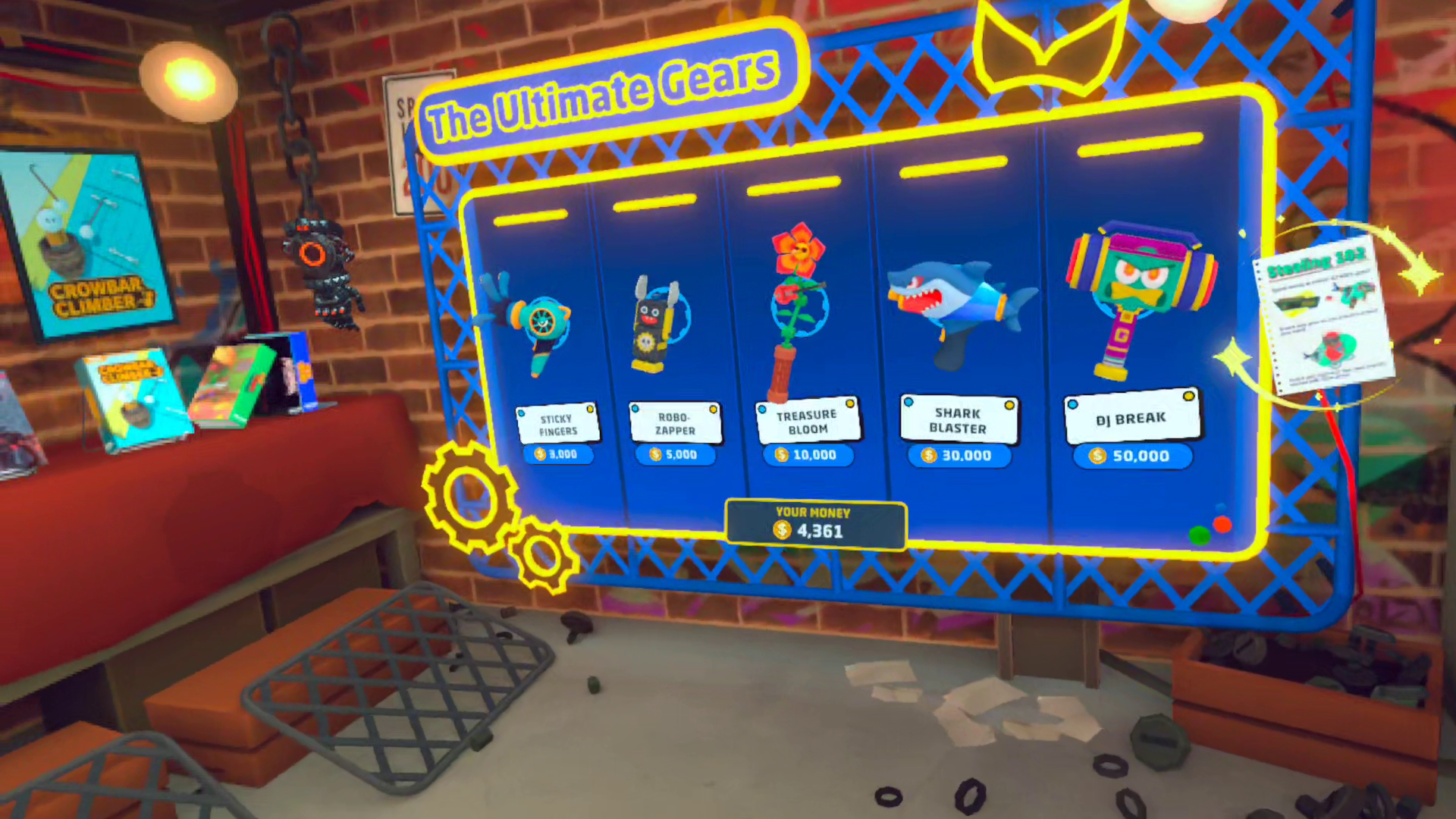
Determined to see whatever came next, I proceeded over to the “start mission” door. Then I loaded right back to the first house, surprisingly. Perhaps I’d missed something. So I put together the mystery coin that you can find in two halves in the office. Nothing. Then I considered that every time I’d load in, I received a pop-up notice about a special bonus item, so I assumed maybe a bonus item is what’s necessary to progress. Or perhaps a certain threshold of earnings. Or perhaps some elusive, secret item to be found.
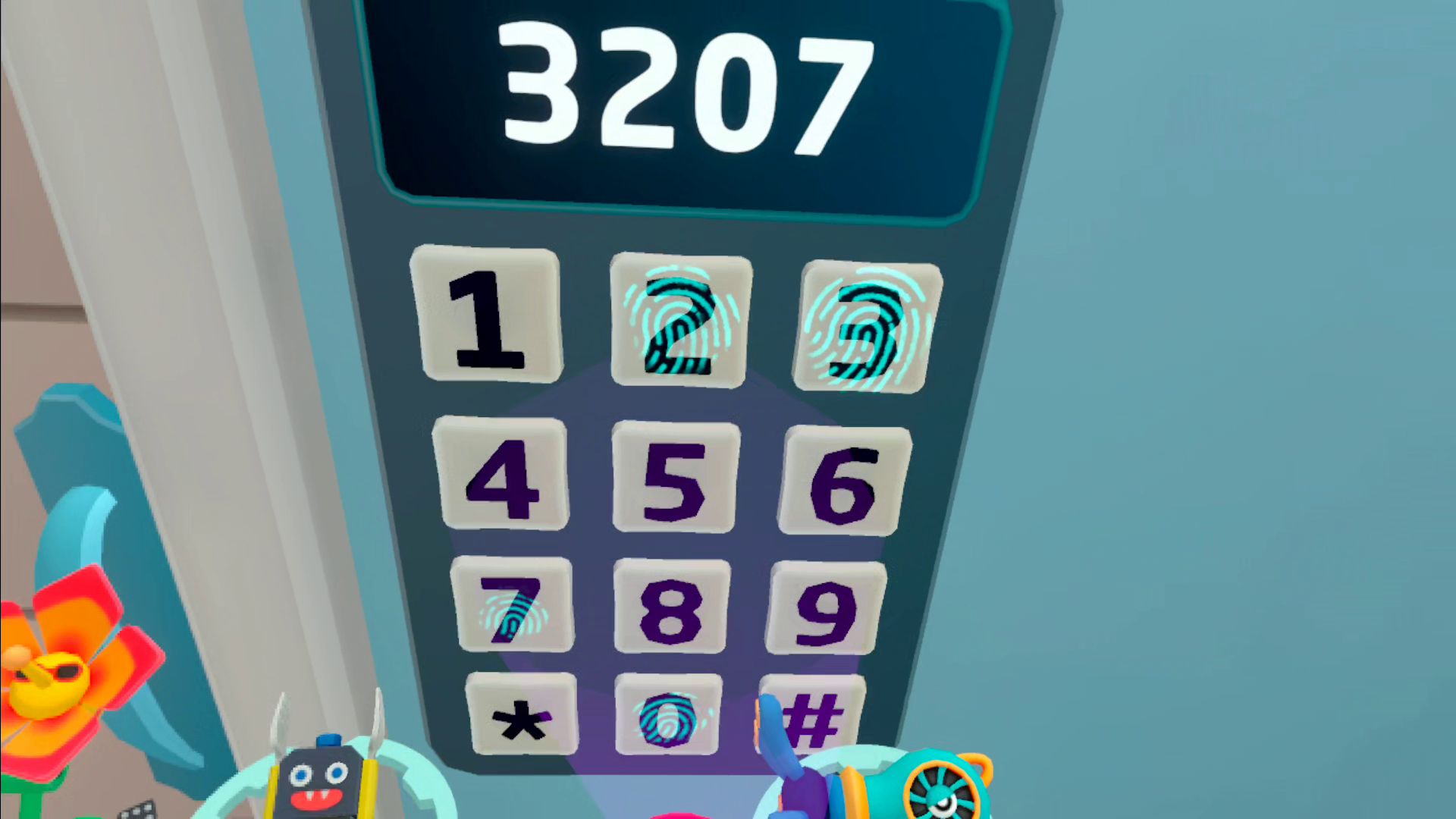
Well, I’ve gotten several bonus items. I solved the blacklight puzzle for the garage keypad. I learned how to not only steal the homeowner’s phone to keep him from dialing the cops, but how to steal his ring and tooth. Yes, that’s not a typo. I explored his house fully – which has a weird amount of bathrooms. I put in the grind to get the necessary payout to buy every gadget. I broke open the crack in the one wall, only to be greeted by a birthday cake and a creepily drawn smiley face.
I never could find the final puzzle piece to unlock the daughter’s treasure chest (like every puzzle, it randomizes each run) or locate anything worthy of the four jewel pillows in the player’s hideout, but otherwise, I did everything I could think of. I have collected almost half of the total possible items littering the house. That’s counting a wide array of useless ones, though some useless ones seem to have larger collision volumes, so removing them from your backpack can require rather intense thrusting.

I felt like I was slowly losing my mind because the advertising on Little Thief’s store page is specifically phrased like there are multiple houses. Except, far as I can tell, there aren’t? There solely seems to be the one. Modest scope isn’t a bad thing – but Little Thief’s humble abode doesn’t evolve as you play. Your knowledge of it will not make it more interesting to play around with. Rarely does the NPC homeowner even sit in a different chair.
Why not have him be in different rooms? Or randomize where items can be found? Something to add variety. A game like this either needs depth of quality or wealth of quantity. Little Thief offers neither. You just stun your pursuer, turning the experience into little more than the tedium of grocery shopping. Except when buying groceries, you get to eat things at the end. After you’ve unlocked the first five gadgets… there is no functional reason to keep playing except to build out your virtual hoard more. No upgrades, no new difficulty variables, no new modes – nothing.
Comfort
Little Thief is baseline acceptable to play either sitting or standing. Moving around roomscale is possible, but it doesn’t feel built for it. If you have the option, play Little Thief standing. Unfortunately, while doing so, you will quickly realize the absence of a crouch function in a game about sneaking around as a thief. However, reaching certain cabinets, drawers, and doors proves difficult from a seated position.
It is possible to move around room scale, but sometimes the environment will move away from you when reaching towards the floor, cabinets, drawers, or doors. This can be really disorienting.
You can freely use either hand for any given task or gadget. There are three different buttons for accessing the settings menu at any given time. Accessibility options include fixed angle and smooth turning, as well as tunnel vision toggle. Opening the settings menu does not pause the game.
Character movement is slow. While there is a jump function, the jump is so minimal you are unlikely to use it regularly. You will have to hold down both triggers when using gadgets, though, and have to reach behind your back to grab your backpack if you need to toss out any stolen items to make space for something more valuable.
There are sound and music slider options, and all dialogue is purely subtitled text. There is no ability to adjust the subtitles, brightness, or anything else.
It would at least help if the experience of stealing was thrilling or layered. However, the easily unlocked taser knocks out both the homeowner and cop so easily that there’s functionally no risk. Yes, there are other ways to temporarily slow your opponents, but the taser beats all options. Even the cop’s gun, but it only mildly irritates them – yes, really.
This isn’t the full extent of the strange design decisions made, but you get my point. Little Thief is boring and lifeless. Usually a bad game has some kind of core to identify – something that at least congeals together enough that you understand what the goal was.
Little Thief Review – Final Verdict
Little Thief is neither a kid-friendly immersive sim nor an enjoyably replayable arcade experience. It’s just being chased by a lethargic pursuer who is easily defeated with a taser as you repeat the same motions over and over. There is no tension, no pacing, no energy. It says something that I’d get excited when I find a puzzle, because that means there is a task besides swallowing up random junk.
They also never establish why exactly you’re robbing this modestly sized suburban house? You’re just taking the word of some kid (who you never meet directly) who supposedly built you. You aren’t a clever Robin Hood type, you’re a jerk trolling one guy who is functionally impotent against your pint-sized mayhem.
All you’d need is some gore, darker lighting, a little harrowing music, and this could be a reverse horror game. In fact, a lot of these design decisions would make more sense if it was. Instead, it’s a repetitious, contradictory, confused letdown. Little Thief’s premise should make for a great game, but it fumbles its execution, much like its virtual cop fumbles at keeping his trousers on.

UploadVR uses a 5-Star rating system for our game reviews – you can read a breakdown of each star rating in our review guidelines.
Mel Brooks is Making ‘Spaceballs 2’ After 38 Years
“Spaceballs 2” is officially in development nearly 40 years after the original parody hit theaters. The sequel, produced by Amazon MGM Studios and set for a 2027 release, will see Rick Moranis returning as Dark Helmet, Mel Brooks reprising his role as Yogurt, and Bill Pullman returning as Lone Starr. You can watch the teaser trailer on YouTube. IGN reports: A trailer for the sequel to the classic ’80s sci-fi Star Wars parody arrived today. Although it mostly comes with a special message from Brooks himself and a familiar text crawl that pokes fun at the long, long list of sequels that have come to theaters in the last 38 years, this is the most official look at Spaceballs 2 we’ve seen yet.
“After 40 years, we asked, ‘What do the fans want?’ Brooks says in the Spaceballs 2 trailer. “But instead, we’re making this movie.” He added one final send-off: “May the Schwartz be with you.”


Read more of this story at Slashdot.
Reddit adds analytics and drafts for comments
Reddit is making it easier to gauge the impact your comments are having. The company is introducing detailed analytics for comments that measure views and other engagement metrics. Reddit shared the change as part of a larger batch of updates around how it handles comments on its platform.
Comment insights will provide details around upvotes (including the ratio of upvotes to downvotes), replies, views, shares and awards. Additionally, Redditors will now be able to share comments as a standalone post on Reddit.
Reddit
The platform is also adding a drafts feature for comments that will allow people to save up to 20 drafts for 14 days. Drafts will automatically save, according to Reddit, so that you can revisit your thoughts if you navigate away from the page or leave the app mid-comment. In an update to moderators, Reddit said that drafts is “still in its early iteration” and that it may tweak how the feature works in future versions.
The changes are the latest way Reddit has added more flexibility around comments in recent weeks. Earlier this month, the company said it would allow users to hide their commenting history from their profiles.
This article originally appeared on Engadget at https://www.engadget.com/social-media/reddit-adds-analytics-and-drafts-for-comments-060550128.html?src=rss
Could Samsung’s Android XR Headset Launch Next Month – In South Korea?
Could Samsung’s first standalone XR headset launch next month, but only in South Korea?
PandaFlash, a Samsung-focused leaker, seemed to strongly hint so in posts on X. The posts suggest the launch would occur during a July Samsung Unpacked event, and that the headset would “slowly slowly” expand globally.
First South Korea, than Slowly Slowly Globally.
— PandaFlash � (@PandaFlashPro) June 11, 2025
However, other rumors suggest that the July Samsung Unpacked event will take place in New York City, and it would seem rather strange to launch a product for Korea in a US city.
Specific Details Remain Sparse
Samsung’s headset was first announced well over two years ago, with the company saying from the start that Google would handle the software and Qualcomm would provide the chipset.
That chipset was revealed at the start of last year to be the Snapdragon XR2+ Gen 2, a higher-end variant of the chip in Quest 3 and Quest 3S, which has already shipped in Play For Dream MR.
The actual design of Samsung’s headset was finally revealed in December, alongside Google formally naming Android XR, and Samsung said it would ship it as a product in 2025 as it gave UploadVR’s Ian Hamilton a hands-on demo.
Hands-On With Samsung’s Android XR Headset, Shipping In 2025
Samsung’s first standalone headset is coming in 2025, running Google’s new Android XR operating system and powered by Qualcomm’s Snapdragon XR2+ Gen 2 chipset.
 UploadVRIan Hamilton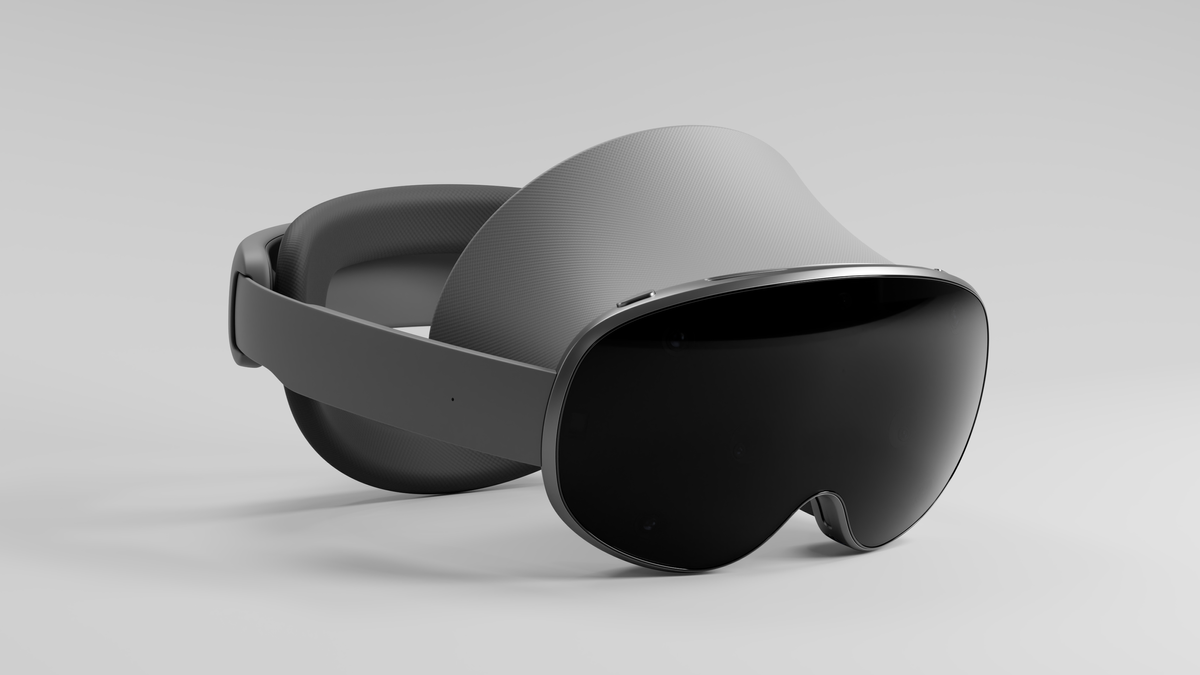
While Samsung hasn’t confirmed any further details since then, in March we saw multiple South Korean reports with claims about the headset’s displays, production scale, and launch window.
The Elec reported that Samsung’s headset will use Sony’s new 1.35-inch 3552×3840 micro-OLED display, with higher resolution and wider color gamut than the one in Apple Vision Pro.
Meanwhile, Business Post claimed that Samsung will launch the headset in Q3 (July, August, or September), but also that it plans to produce just 100,000 headsets per year, suggesting a very high price.
Xreal Project Aura Supports Android XR Via Tethered Puck
Xreal’s Project Aura will support Google’s Android XR via a tethered compute puck with a Qualcomm Snapdragon chip.
 UploadVRDavid Heaney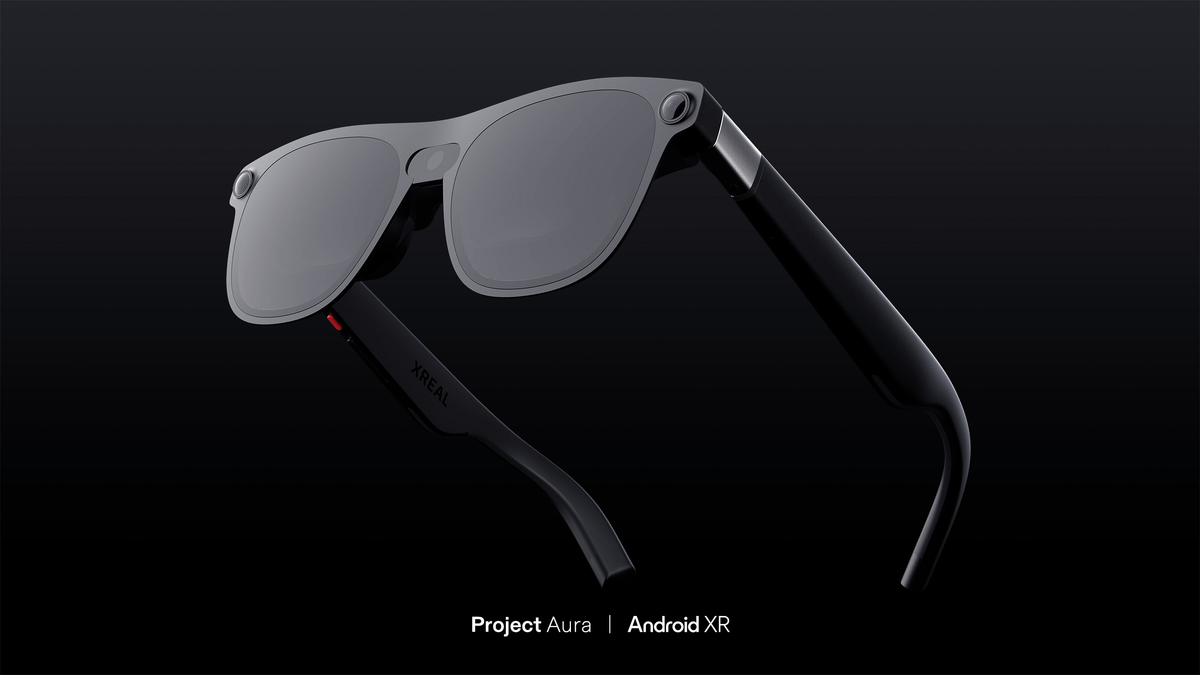
We had expected either Google or Samsung to share more about the headset at I/O in May, but the focus there was far more on smart glasses, as well as the announcement of the second officially confirmed Android XR headset, Xreal’s Project Aura.
The Meta AI App Is a Privacy Disaster
Meta’s standalone AI app is broadcasting users’ supposedly private conversations with the chatbot to the public, creating what could amount to a widespread privacy breach. Users appear largely unaware that hitting the app’s share button publishes their text exchanges, audio recordings, and images for anyone to see.
The exposed conversations reveal sensitive information: people asking for help with tax evasion, whether family members might face arrest for proximity to white-collar crimes, and requests to write character reference letters that include real names of individuals facing legal troubles. Meta provides no clear indication of privacy settings during posting, and if users log in through Instagram accounts set to public, their AI searches become equally visible.


Read more of this story at Slashdot.
ST Nucleo Board Implements STM32N6 Series with Neural-ART Acceleration Support
The Nucleo N657X0-Q is a development board from STMicroelectronics built around the STM32N657 microcontroller. Part of the Nucleo-144 family, it offers a compact form factor and a variety of expansion options for prototyping and evaluation across different power and performance needs. This board features the STM32N657X0 microcontroller, based on the Arm Cortex-M55 core operating at […]
ALVR TestFlight For Apple Vision Pro Brings Its PS VR2 Controller Support To SteamVR
ALVR now supports the PlayStation VR2 Sense controllers in its TestFlight builds for visionOS 26.
If you’re unfamiliar, ALVR is a SteamVR streaming tool that functions similarly to Quest Link, Steam Link, and Virtual Desktop, but has actually been around for longer and is open source. Shortly after Apple Vision Pro’s launch ALVR was ported to visionOS by software developer Zhuowei Zhang. Though this initial port was rough with many issues, another programmer, Max Thomas, significantly improved it and launched it on the App Store, where he has continued to update it.
Currently, ALVR on Vision Pro forwards the headset’s hand tracking through to SteamVR Skeletal Input. This means you can play SteamVR games with intentional hand tracking support like Maestro without issues. But most SteamVR content is designed for controllers with a thumbstick or trackpad and buttons. ALVR for Vision Pro allows you to emulate these controls via a series of gestures, but this is obviously incredibly clunky for most games – simply not practical.
visionOS 26 Brings PS VR2 Controllers, Photorealistic Personas, Spatial Scenes & More
visionOS 26 will bring PS VR2 controllers & Logitech Muse stylus support, much more realistic Personas, spatial Widgets, volumetric Spatial Scenes, local SharePlay, and much more.
 UploadVRDavid Heaney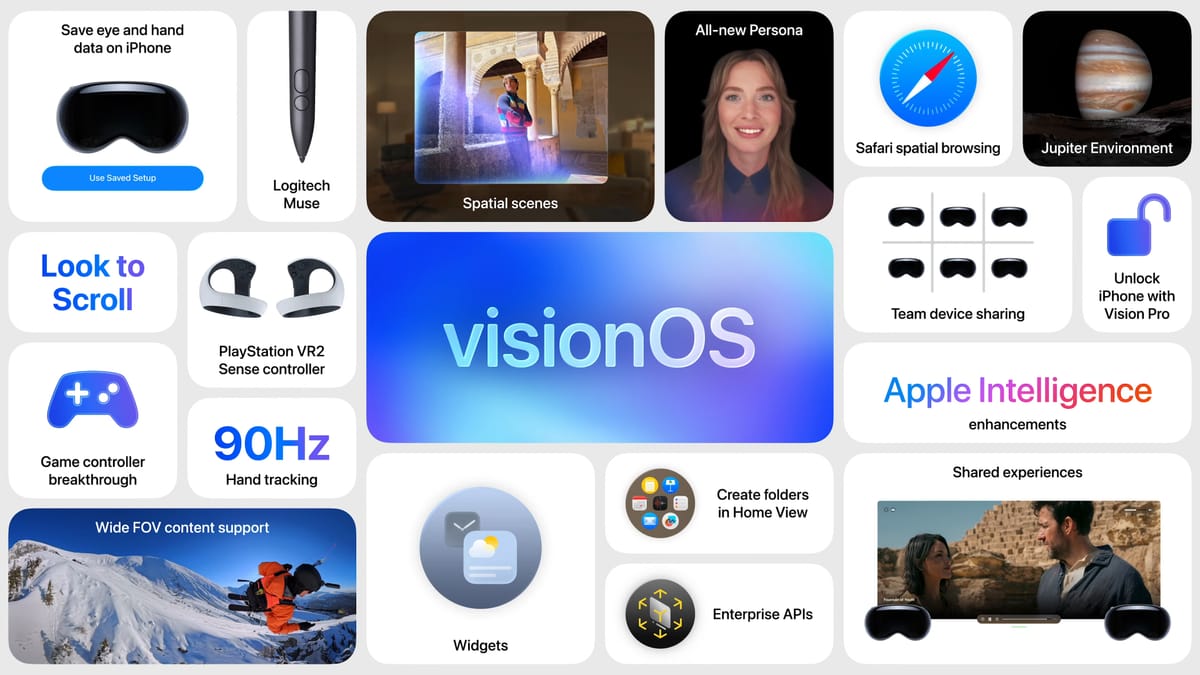
On Monday, as months of rumors had suggested, Apple announced that visionOS 26 will support the PlayStation VR2 Sense controllers, which Sony will sell separately from the headset. visionOS 26 will arrive in fall, and the first beta is already available for developers.
The first major standalone visionOS game announced to support the controllers was Pickle Pro, which doesn’t yet have a release date. But developers who own PS VR2 controllers and a gaming PC can now access the vast library of VR content on Steam designed for tracked controllers, if they install the visionOS 26 Beta and enroll in ALVR’s TestFlight.
(if you’re not an Apple user, TestFlight is essentially a public beta system, somewhat equivalent to Quest’s old App Lab system)
Thomas says this capability is only for the TestFlight builds for now because Apple doesn’t typically allow beta features in public App Store releases.
0:00
/0:15
Max Thomas demonstrating PS VR2 controllers working in SteamVR on visionOS 26.
Right now ALVR shows Index controller models in SteamVR, but Thomas plans to “probably borrow” Sony’s models from the official PlayStation VR2 SteamVR driver. Otherwise though, it’s “pretty usable”.
You can use PS VR2 controllers on SteamVR in Apple Vision Pro via the ALVR TestFlight.
Researchers Confirm Two Journalists Were Hacked With Paragon Spyware
An anonymous reader quotes a report from TechCrunch: Two European journalists were hacked using government spyware made by Israeli surveillance tech provider Paragon, new research has confirmed. On Thursday, digital rights group The Citizen Lab published a new report detailing the results of a new forensic investigation into the iPhones of Italian journalist Ciro Pellegrino and an unnamed “prominent” European journalist. The researchers said both journalists were hacked by the same Paragon customer, based on evidence found on the two journalists’ devices.
Until now, there was no evidence that Pellegrino, who works for online news website Fanpage, had been either targeted or hacked with Paragon spyware. When he was alerted by Apple at the end of April, the notification referred to a mercenary spyware attack, but did not specifically mention Paragon, nor whether his phone had been infected with the spyware. The confirmation of the first-ever known Paragon infections further deepens an ongoing spyware scandal that, for now, appears to be mostly focused on the use of spyware by the Italian government, but could expand to include other countries in Europe.
These new revelations come months after WhatsApp first notified around 90 of its users in over two dozen countries in Europe and beyond, including journalists, that they had been targeted with Paragon spyware, known as Graphite. Among those targeted were several Italians, including Pellegrino’s colleague and Fanpage director Francesco Cancellato, as well as nonprofit workers who help rescue migrants at sea. Last week, Italy’s parliamentary committee known as COPASIR, which oversees the country’s intelligence agencies’ activities, published a report (PDF) that said it found no evidence that Cancellato was spied on. The report, which confirmed that Italy’s internal and external intelligence agencies AISI and AISE were Paragon customers, made no mention of Pellegrino. The Citizen Lab’s new report puts into question COPASIR’s conclusions.


Read more of this story at Slashdot.
Meta Invests $14.3 Billion in Scale AI
Meta has invested $14.3 billion in Scale AI while recruiting the startup’s CEO to join its AI team, marking an aggressive move by the social media giant to accelerate its AI development efforts. The unusual deal gives Meta a 49% non-voting stake in Scale, valuing the company at more than $29 billion. Scale co-founder Alexandr Wang will join Meta’s “superintelligence” unit, which focuses on building AI systems that perform as well as humans — a theoretical milestone known as artificial general intelligence.
Wang will remain on Scale’s board while Jason Droege takes over as interim CEO. The investment represents Meta’s intensified push to compete in AI development after CEO Mark Zuckerberg grew frustrated with the lukewarm reception of the company’s Llama 4 language model, which launched in April. Since then, Zuckerberg has taken a hands-on approach to recruiting AI talent, hosting job candidates at his personal homes and reorganizing Meta’s offices to position the superintelligence team closer to his workspace.


Read more of this story at Slashdot.
Japan Urged To Use Gloomier Population Forecasts After Plunge in Births
Japan must stop being overly optimistic about how quickly its population is going to shrink, economists have warned, as births plunge at a pace far ahead of core estimates. From a report: Japan this month said there were a total of 686,000 Japanese births in 2024, falling below 700,000 for the first time since records began in the 19th century and defying years of policy efforts to halt population decline. The total represented the ninth straight year of decline and pushed the country’s total fertility rate — the average number of children born per woman over her lifetime — to a record low of 1.15.
But public and parliamentary dismay over the latest evidence of Japan’s decline was intensified by the extent to which the figures undershot population estimates calculated by government demographers just two years ago. The median forecast produced by the National Institute of Population and Social Security Research (IPSS) in 2023 did not foresee the number of annual births — which does not include children born to non-Japanese people — dropping into the 680,000 range until 2039.


Read more of this story at Slashdot.
Apple Previews New Import/Export Feature To Make Passkeys More Interoperable
During this week’s Worldwide Developers Conference, Apple unveiled a secure import/export feature for passkeys that addresses one of their biggest limitations: lack of interoperability across platforms and credential managers. The feature, built in collaboration with the FIDO Alliance, enables encrypted, user-initiated passkey transfers between apps and systems. Ars Technica’s Dan Goodin says it “provides the strongest indication yet that passkey developers are making meaningful progress in improving usability.” From the report: “People own their credentials and should have the flexibility to manage them where they choose,” the narrator of the Apple video says. “This gives people more control over their data and the choice of which credential manager they use.” The transfer feature, which will also work with passwords and verification codes, provides an industry-standard means for apps and OSes to more securely sync these credentials.
As the video explains: “This new process is fundamentally different and more secure than traditional credential export methods, which often involve exporting an unencrypted CSV or JSON file, then manually importing it into another app. The transfer process is user initiated, occurs directly between participating credential manager apps and is secured by local authentication like Face ID. This transfer uses a data schema that was built in collaboration with the members of the FIDO Alliance. It standardizes the data format for passkeys, passwords, verification codes, and more data types. The system provides a secure mechanism to move the data between apps. No insecure files are created on disk, eliminating the risk of credential leaks from exported files. It’s a modern, secure way to move credentials.”


Read more of this story at Slashdot.
How Red Hat just quietly, radically transformed enterprise server Linux
RHEL 10 becomes the first major enterprise Linux distro to discard traditional packaging and embrace immutable. See how we got here.
The post How Red Hat just quietly, radically transformed enterprise server Linux appeared first on Linux Today.
Shopify Partners With Coinbase and Stripe In Landmark Stablecoin Deal
Shopify is launching stablecoin payments for its merchants later this year, starting with USDC in collaboration with Coinbase and Stripe. Fortune reports: The publicly traded tech company lets merchants — including vintage clothes sellers, cosmetics businesses, and electronics companies — set up their own online marketplaces. By late June, Shopify will let a select group of users accept payments in USDC, a stablecoin issued by the crypto company Circle, which recently had one of the year’s hottest IPOs. “In our own philosophical framework, we are extremely aligned with everything that crypto stands for,” Tobias Lutke, the CEO of Shopify and a Coinbase board member, said onstage at a Coinbase conference on Thursday.
Shopify will then gradually expand access to merchants across its network in the U.S. and Europe before opening up stablecoin payments to every merchant who uses its platform. The e-commerce company worked with Coinbase to develop a payments protocol to handle chargebacks, refunds, and other intricacies of retail payments on Coinbase’s blockchain, Base. It also collaborated with fintech giant Stripe, one of Shopify’s payments processors, to integrate stablecoins into the e-commerce company’s existing software stack. “I think other payment processors will look at what Shopify is building and be like, ‘Holy crap,'” Jesse Pollak, a Coinbase executive who oversees the crypto exchange’s wallet and blockchain divisions, told Fortune.


Read more of this story at Slashdot.
HP ZBook Ultra G1a: An Incredible, Powerful Mobile Workstation Powered By AMD’s Ryzen AI Max
Over the past month I have been testing out the HP ZBook Ultra G1a powered by AMD Ryzen AI Max+ PRO Strix Halo. Simply put: WOW! I don’t remember the last time I have been so fascinated by a laptop SoC from its incredible performance generationally and even compared to existing AMD SoCs within the Ryzen AI 300 series and outright dominating against the Intel Lunar Lake for its Xe2 integrated graphics. The HP ZBook Ultra G1a thanks to AMD Strix Halo offers an incredibly potent integrated GPU and allowing up to 16 cores / 32 threads offers immense CPU performance too. HP packages Strix Halo up into a very well built, mobile workstation oriented laptop design to create an amazing laptop. It’s a reliable laptop with captivating performance but does carry a high price tag but with good Linux support too except for one caveat.
Amazon Doubles Prime Video Ads to 6 Minutes Per Hour
Amazon has quietly doubled the ad load on Prime Video to 4-6 minutes per hour, up from the 2-3.5 minutes initially discussed when ads launched in 2024. AdWeek reports: According to six ad buyers and documents reviewed by ADWEEK, the current ad load on Prime Video now ranges from four to six minutes per hour. And while that could bring down CPMs, buyers will be watching whether this impacts user experience. “Prime Video ad load has gradually increased to four to six minutes per hour,” an Amazon representative wrote to an ad buyer in an email obtained by ADWEEK. The exchange occurred earlier this month.
The increase, which Amazon had telegraphed to investors but has not publicly acknowledged to consumers, gives the company significantly more inventory to sell across its rapidly expanding streaming business. “They told us the ad load would be increasing,” said Kendra Tang, programmatic supervisor at Rain the Growth Agency. “That’s been confirmed recently when we noticed more avails in the system.”


Read more of this story at Slashdot.
Google completely remade its Snapseed iOS photo editor
After several years, Google has released a major update to the iOS version of its Snapseed photo editor. Version 3.0 is the program offers a complete redesign of both the iPhone and iPad apps. All of the images that have been edited with the tool are displayed in a grid. Navigation has been rearranged into three tabs, with a new Faves section for the photo tools that you want to quickly use on the regular. It boasts more than 25 different tools and filters for altering photos, including some newly added film filters. Snapseed also has a refreshed its logo with a more streamlined look.
Google acquired Snapseed all the way back in 2012. The new take on the app is a surprise, since Snapseed hadn’t received any major updates on iOS since 2021. One thing has not changed: the app is still free and has no advertisements. For now, the listing for Snapseed in Google Play is still a version from last year; it’s unclear if or when 3.0 will arrive on Android.
This article originally appeared on Engadget at https://www.engadget.com/apps/google-completely-remade-its-snapseed-ios-photo-editor-222003395.html?src=rss
Apple’s AI-infused Siri may not show up until spring 2026
The new version of Siri that was demoed alongside Apple Intelligence might not be released until Spring 2026, Bloomberg reports. Apple officially delayed Siri’s release to some time “in the coming year” back in March.
The new Siri could be included in a planned iOS 26.4 update next year, which Bloomberg writes will likely arrive in March. Apple announced the smarter and more personal version of Siri at WWDC 2024 over a year ago now, and nearly two years before this hypothetical Spring 2026 release date. The company could demo the updated AI assistant again at its iPhone event in the fall or even release the new Siri early, but timing reportedly remains up in the air.
Apple’s proposed update to Siri is supposed to give the company’s aging voice assistant the authority to take action inside of apps and understand the content and context of your screen. The company’s demos showed off Siri referencing emails for flight information and embedding photos in documents, all on its own, as evidence of how much more capable the assistant could be.
In a recent interview with The Wall Street Journal, Apple executives attribute the delay of the new Siri to it simply not being up to the company’s standards. Internally, Bloomberg writes that there’s also disagreement between Apple’s marketing and engineering teams as to who is really at fault. The company shouldn’t have hyped up the new Siri at WWDC 2024 or built an ad campaign around features that might not ship (Apple’s pulled its Siri ads in March). But the engineering team may have been misleading as to how ready the assistant really was.
As testament to how careful Apple is being now, its focus on AI at WWDC 2025 was far more muted. The closest the company got to touching on some of the magic of the new Siri was the updated version of Spotlight that’s coming in macOS 26, which can leverage the same App Intents framework Siri is supposed to use to perform select actions in apps, like sending a text in Messages without having to open the app.
This article originally appeared on Engadget at https://www.engadget.com/ai/apples-ai-infused-siri-may-not-show-up-until-spring-2026-221212681.html?src=rss
CISA Loses Another Senior Exec
An anonymous reader quotes a report from The Register: The US Cybersecurity and Infrastructure Security Agency has lost another senior leader: executive director Bridget Bean departed on Wednesday. Bean, who served as the de facto agency boss for five months between former CISA director Jen Easterly’s departure in January and Madhu Gottumukkala’s appointment to the deputy director post last month, said she was “officially retiring from Federal service once again” in a LinkedIn post. “My time at CISA has been truly remarkable,” she wrote. “Having had the privilege to serve as the Senior Official Performing the Duties of Director of CISA for 5 months has been a profound honor.”
CISA’s executive leadership page now lists Gottumukkala as its acting director, and the agency remains without a Senate-confirmed leader. President Trump nominated Sean Plankey to serve as the agency’s director, and his nomination is scheduled for consideration (PDF) by the Senate’s Homeland Security and Governmental Affairs Committee today. However, his appointment still requires a full Senate vote. Senator Ron Wyden (D-OR) has said he will continue to block Plankey’s confirmation until CISA releases an unclassified report on American telecommunications networks’ weak security.
At the time of her departure, Bean had spent three and a half years with CISA and more than three decades with the federal government, including a job as the Federal Emergency Management Agency’s third-ranking official. Before accepting the executive director post, she was CISA’s first chief integration officer. In this position, she “led the integration of the agency’s operations and ensured CISA’s frontline of regional staff seamlessly supported the critical infrastructure that Americans rely on every hour of every day,” according to her bio on the agency’s website. […] Bean’s retirement comes during a talent exodus from CISA — and other federal government agencies — with some folks getting fired and others taking the Trump administration’s buyout offer to resign from public service. As of May 30, the heads of five of CISA’s six operational divisions and six of its 10 regional offices had left the agency, and around 1,000 people, nearly one-third of its total staff, have reportedly left CISA since Trump took office.


Read more of this story at Slashdot.
WizOS: A New Enterprise Linux Built on Alpine’s Secure Foundation
Wiz rolls out its own brand of secure container Linux images.
The post WizOS: A New Enterprise Linux Built on Alpine’s Secure Foundation appeared first on Linux Today.