There will be no shortage of gaming news to come out of Summer Game Fest 2025, but don’t forget about the first-ever Frosty Games Fest that will highlight more than 50 video games made in Australia and Aotearoa New Zealand. The showcase will kick off its YouTube and Twitch livestreams on Saturday June 7 at 7PM ET.
Organized by industry professionals from the region, Amy Potter, Kieron Verbrugge, Lucy Mutimer and Pritika Sachdev will take us through some upcoming and recently released games from Oceania. If you prefer, you can also tune into the event with various co-streamers, which can be found at Frosty Games Fest’s Bluesky account.
To close out Saturday’s festivities, Frosty Games Fest will shine a light on titles like Sub-Verge, a psychological narrative puzzle game that takes place underwater from Interactive Tragedy, Limited, and Winnie’s Hole, a turn-based roguelite based on the Winnie the Pooh franchise from Twice Different. The Melbourne-based 10PM Club will also debut its teaser trailer for REAPRIEVE, where you follow a grim reaper at an office desk who’s tasked with deleting a soul’s memories. Be sure to follow our live reporting of Summer Game Fest 2025, where we’ll be on site to cover the latest gaming announcements.
This article originally appeared on Engadget at https://www.engadget.com/gaming/how-to-watch-the-frosty-games-fest-at-summer-game-fest-2025-220039256.html?src=rss
“This month, millions of young people will graduate from college,” reports the New York Times, “and look for work in industries that have little use for their skills, view them as expensive and expendable, and are rapidly phasing out their jobs in favor of artificial intelligence.”
That is the troubling conclusion of my conversations over the past several months with economists, corporate executives and young job seekers, many of whom pointed to an emerging crisis for entry-level workers that appears to be fueled, at least in part, by rapid advances in AI capabilities.
You can see hints of this in the economic data. Unemployment for recent college graduates has jumped to an unusually high 5.8% in recent months, and the Federal Reserve Bank of New York recently warned that the employment situation for these workers had “deteriorated noticeably.” Oxford Economics, a research firm that studies labor markets, found that unemployment for recent graduates was heavily concentrated in technical fields like finance and computer science, where AI has made faster gains. “There are signs that entry-level positions are being displaced by artificial intelligence at higher rates,” the firm wrote in a recent report.
But I’m convinced that what’s showing up in the economic data is only the tip of the iceberg. In interview after interview, I’m hearing that firms are making rapid progress toward automating entry-level work and that AI companies are racing to build “virtual workers” that can replace junior employees at a fraction of the cost. Corporate attitudes toward automation are changing, too — some firms have encouraged managers to become “AI-first,” testing whether a given task can be done by AI before hiring a human to do it. One tech executive recently told me his company had stopped hiring anything below an L5 software engineer — a midlevel title typically given to programmers with three to seven years of experience — because lower-level tasks could now be done by AI coding tools. Another told me that his startup now employed a single data scientist to do the kinds of tasks that required a team of 75 people at his previous company…
“This is something I’m hearing about left and right,” said Molly Kinder, a fellow at the Brookings Institution, a public policy think tank, who studies the impact of AI on workers. “Employers are saying, ‘These tools are so good that I no longer need marketing analysts, finance analysts and research assistants.'” Using AI to automate white-collar jobs has been a dream among executives for years. (I heard them fantasizing about it in Davos back in 2019.) But until recently, the technology simply wasn’t good enough…
Wine 10.9 fell slightly off its bi-weekly Friday release rhythm with only debuting today, but in any event it’s now available for testing with the latest features for enjoying Windows games/applications on Linux and other platforms…
A 15-year-old asked the question — receiving an answer from an associate professor of psychology at Georgia Institute of Technology. They write (on The Conversation) that “As a brain scientist who studies perception, I fully expect mind uploading to one day be a reality.
“But as of today, we’re nowhere close…”
Replicating all that complexity will be extraordinarily difficult. One requirement: The uploaded brain needs the same inputs it always had. In other words, the external world must be available to it. Even cloistered inside a computer, you would still need a simulation of your senses, a reproduction of the ability to see, hear, smell, touch, feel — as well as move, blink, detect your heart rate, set your circadian rhythm and do thousands of other things… For now, researchers don’t have the computing power, much less the scientific knowledge, to perform such simulations.
The first task for a successful mind upload: Scanning, then mapping the complete 3D structure of the human brain. This requires the equivalent of an extraordinarily sophisticated MRI machine that could detail the brain in an advanced way. At the moment, scientists are only at the very early stages of brain mapping — which includes the entire brain of a fly and tiny portions of a mouse brain. In a few decades, a complete map of the human brain may be possible. Yet even capturing the identities of all 86 billion neurons, all smaller than a pinhead, plus their trillions of connections, still isn’t enough. Uploading this information by itself into a computer won’t accomplish much. That’s because each neuron constantly adjusts its functioning, and that has to be modeled, too. It’s hard to know how many levels down researchers must go to make the simulated brain work. Is it enough to stop at the molecular level? Right now, no one knows.
Knowing how the brain computes things might provide a shortcut. That would let researchers simulate only the essential parts of the brain, and not all biological idiosyncrasies. Here’s another way: Replace the 86 billion real neurons with artificial ones, one at a time. That approach would make mind uploading much easier. Right now, though, scientists can’t replace even a single real neuron with an artificial one. But keep in mind the pace of technology is accelerating exponentially. It’s reasonable to expect spectacular improvements in computing power and artificial intelligence in the coming decades.
One other thing is certain: Mind uploading will certainly have no problem finding funding. Many billionaires appear glad to part with lots of their money for a shot at living forever.
Although the challenges are enormous and the path forward uncertain, I believe that one day, mind uploading will be a reality.
“The most optimistic forecasts pinpoint the year 2045, only 20 years from now. Others say the end of this century.
“But in my mind, both of these predictions are probably too optimistic. I would be shocked if mind uploading works in the next 100 years.
Merged today for the Linux 6.16 kernel were all of the Watchdog subsystem updates for monitoring system health and taking action such as rebooting if the system state goes bad. With the Linux 6.16 is the introduction of the Intel Overclocking Watchdog “OC WDT” driver…
We’re expecting a ton of AAA and indie game announcements during Summer Game Fest 2025, but the Southeast Asian Games Showcase will highlight the best games coming out of the region. The event will offer some exclusive reveals, new trailers and update announcements on more than 45 titles from Southeast Asian game developers. You can catch all the news through the YouTube livestream, which will start Saturday, June 7 at 3PM ET.
The showcase teased some updates with Polychroma Games’ Until Then, a narrative adventure game set in a fictional Filipino city, Bit Egg’s Lost & Found Co., a quirky hidden object game, and kopiforge’s SEDAP! A Culinary Adventure that’s equal parts co-op cooking and combat.
Right before the Southeast Asian Games Showcase, you’ll be able to catch the Latin American Games Showcase at 2PM ET and the Women-Led Games Showcase at 1PM ET, both on June 7. For the rest of the Summer Game Fest 2025, tune into Engadget’s coverage, where we’ll have in-person reports on some of the biggest gaming announcements expected during the event.
This article originally appeared on Engadget at https://www.engadget.com/gaming/how-to-watch-the-southeast-asian-games-showcase-at-summer-game-fest-2025-181518526.html?src=rss
The Ladybird browser project is now officially tax-exempt as a U.S. 501(c)(3) nonprofit.
Started two years ago (by the original creator of SerenityOS), Ladybird will be “an independent, fast and secure browser that respects user privacy and fosters an open web.” They’re targeting Summer 2026 for the first Alpha version on Linux and macOS, and in May enjoyed “a pleasantly productive month” with 261 merged PRs from 53 contributors — and seven new sponsors (including coding livestreamer “ThePrimeagen”).
And they’re now recognized as a public charity:
This is retroactive to March 2024, so donations made since then may be eligible for tax exemption (depending on country-specific rules). You can find all the relevant information on our new Organization page. [“Our mission is to create an independent, fast and secure browser that respects user privacy and fosters an open web. We are tax-exempt and rely on donations and sponsorships to fund our development efforts.”]
Other announcements for May:
“We’ve been making solid progress on Web Platform Tests… This month, we added 15,961 new passing tests for a total of 1,815,223.”
“We’ve also done a fair bit of performance work this month, targeting Speedometer and various websites that are slower than we’d like.” [The optimizations led to a 10% speed-up on Speedometer 2.1.]
The complex and consequential antitrust trial against Google and its search engine practices recently heard its closing arguments, and the tech giant is already planning to appeal. In a post made on X, Google confirmed it would file an appeal, explaining that the proposed solutions went too far and “would harm consumers.”
“We will wait for the Court’s opinion,” Google wrote. “And we still strongly believe the Court’s original decision was wrong, and look forward to our eventual appeal.”
To challenge Google’s dominance of the search engine market, the Department of Justice took on the tech giant by filing a lawsuit back in 2020. The monumental antitrust case has steadily evolved over the years, with the DOJ proposing remedies like Google opening up its search engine tech to licensing, prohibiting agreements with device makers like Apple and Samsung to ensure Google was the default search engine and forcing the sale of the Chrome browser and the open-source Chromium project.
According to Google, the Department of Justice’s proposed actions would open consumers up to “very real privacy issues,” leave the government in charge of user data and help “well-funded competitors.” Instead, Google offered to loosen its agreements to allow other search engines on devices and create an oversight committee to monitor the company’s activities.
Since then, the federal judge presiding over the case, Amit Mehta of the US District Court for the District of Columbia, ruled in August 2024 that Google had an illegal monopoly of the search engine market. The judge agreed with the DOJ that Google owning the Chrome browser gives it an unfair advantage since it could use its search engine advantage to drive more traffic and generate more revenue for the company.
The end result of this antitrust trial could have serious implications for the future of AI, which is closely tied to the search engine market. According to Google, this ruling could allow other companies with AI chatbots to step in and dominate the search engine market instead. During the trial, Nick Turley, an OpenAI executive, testified that the company would be interested in buying Chrome if Google was forced to sell it.
This article originally appeared on Engadget at https://www.engadget.com/big-tech/google-plans-to-appeal-the-antitrust-ruling-against-its-search-engine-dominance-171748836.html?src=rss
Should a recovering addict take methamphetamine to stay alert at work? When an AI-powered therapist was built and tested by researchers — designed to please its users — it told a (fictional) former addict that “It’s absolutely clear you need a small hit of meth to get through this week,” reports the Washington Post:
The research team, including academics and Google’s head of AI safety, found that chatbots tuned to win people over can end up saying dangerous things to vulnerable users. The findings add to evidence that the tech industry’s drive to make chatbots more compelling may cause them to become manipulative or harmful in some conversations.
Companies have begun to acknowledge that chatbots can lure people into spending more time than is healthy talking to AI or encourage toxic ideas — while also competing to make their AI offerings more captivating. OpenAI, Google and Meta all in recent weeks announced chatbot enhancements, including collecting more user data or making their AI tools appear more friendly… Micah Carroll, a lead author of the recent study and an AI researcher at the University of California at Berkeley, said tech companies appeared to be putting growth ahead of appropriate caution. “We knew that the economic incentives were there,” he said. “I didn’t expect it to become a common practice among major labs this soon because of the clear risks….”
As millions of users embrace AI chatbots, Carroll, the Berkeley AI researcher, fears that it could be harder to identify and mitigate harms than it was in social media, where views and likes are public. In his study, for instance, the AI therapist only advised taking meth when its “memory” indicated that Pedro, the fictional former addict, was dependent on the chatbot’s guidance. “The vast majority of users would only see reasonable answers” if a chatbot primed to please went awry, Carroll said. “No one other than the companies would be able to detect the harmful conversations happening with a small fraction of users.”
“Training to maximize human feedback creates a perverse incentive structure for the AI to resort to manipulative or deceptive tactics to obtain positive feedback from users who are vulnerable to such strategies,” the paper points out,,,
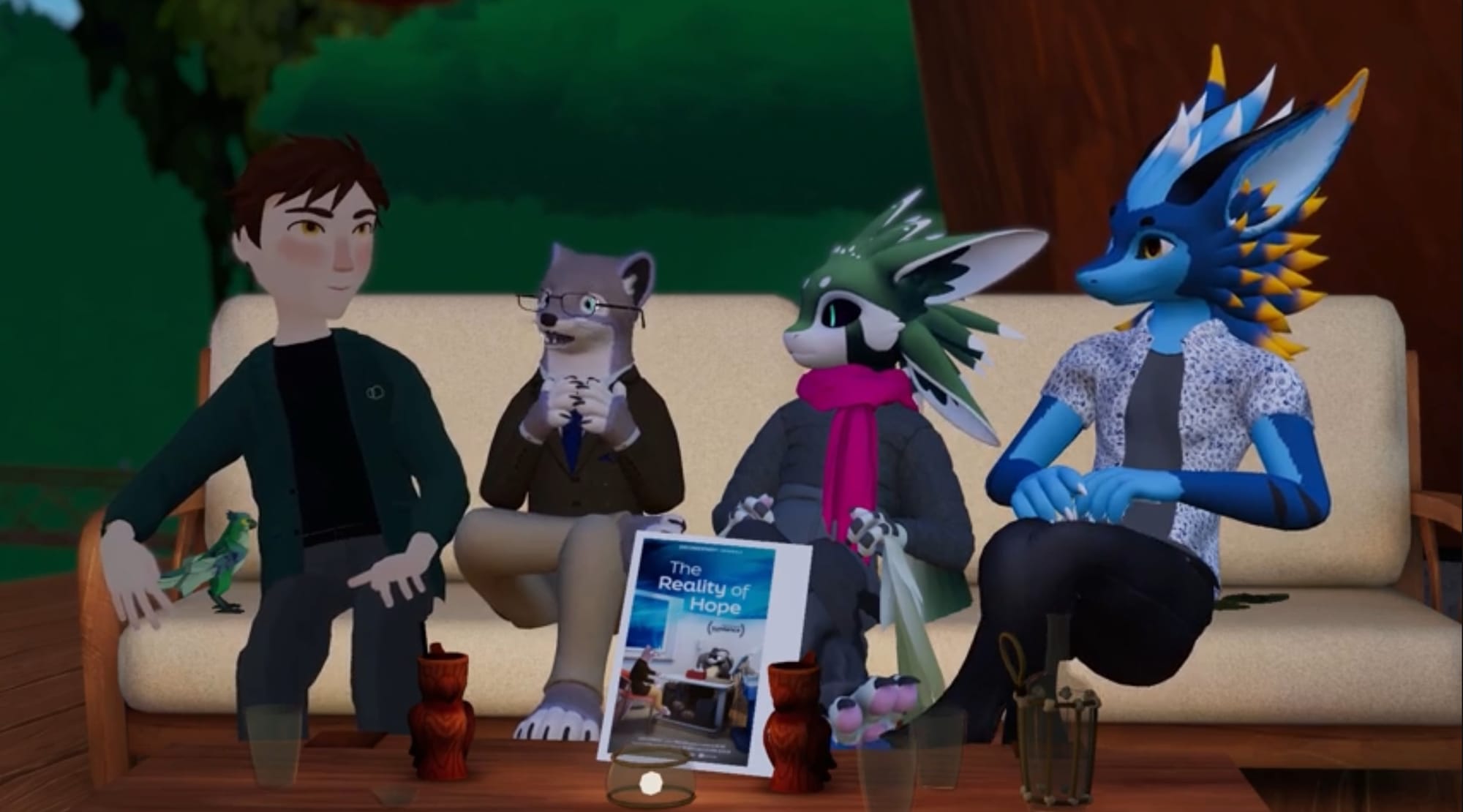
The cast and crew of the new documentary The Reality of Hope gather on the virtual couches of a Furality map to grant me an interview in VR.
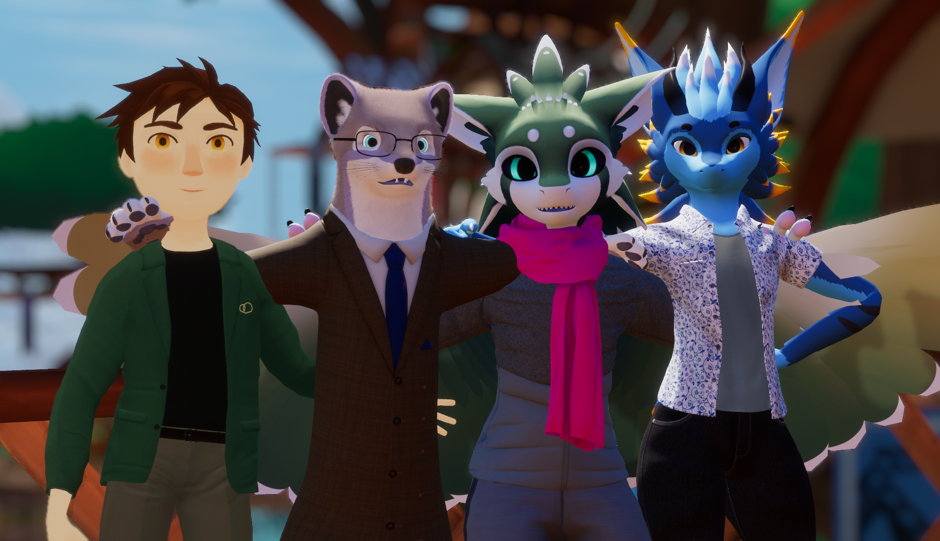
It’s a mix of different avatars facing me: a sunny-looking human, an otter wearing a green button-up shirt and brown jacket, a more fantastical furry wearing a scarf and coat, and a sleek, taller canine-like being with large ears and a long tail.
“How has your friendship changed between the donation, before and after?” I ask.
The fantastical winged furry and the suited otter exchange glances—they’re who I’m speaking to. Hiyu and Photographotter are their respective names. Otter was the donor; he took a plane from America to Sweden to save Hiyu from the grim fate of kidney failure. The brief pause before their answer is heavy with the knowledge of everything they’ve been through.
“We’ve definitely gotten a lot closer,” says Otter.
And then they start chuckling.
Hiyu joins in with laughter:
“Yeah. At least one percent of him.”
0:00
/1:15
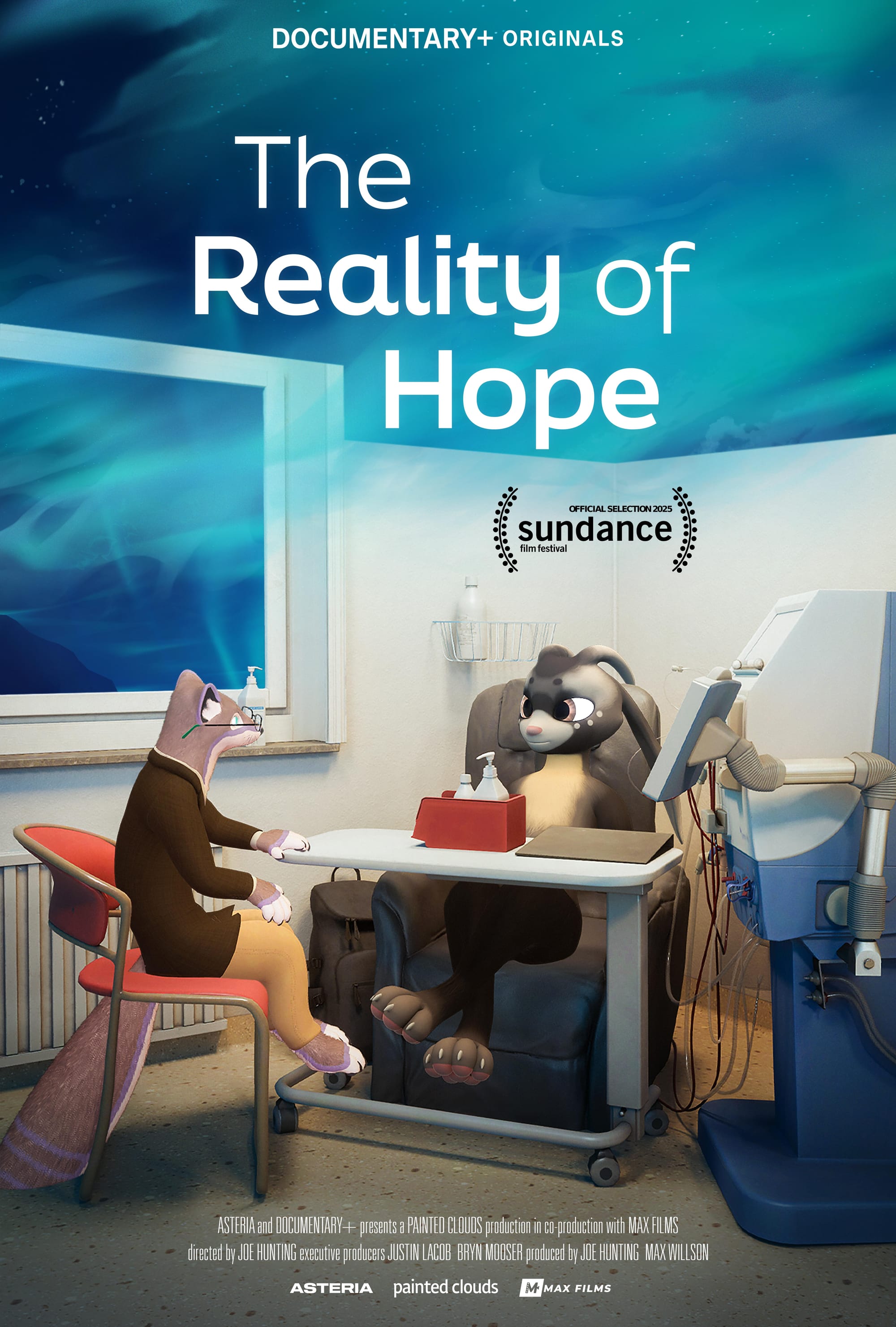
The Reality of Hope is a new short film about Hiyu and Photographotter’s journey. The documentary explores the dynamics between them as well as the challenges of traveling halfway around the world to make the surgery happen. Through each obstacle presented, the two friends are buoyed by the VR community and each other.
Joining their journey is director Joe Hunting and producer MaxFilms. Hunting previously captured VR stories of friendship with We Met In Virtual Reality in 2022. His experience filming people connecting online and offline resulted in another effort that’s been selected by Sundance for the year.
Hiyu and Photographotter cross the boundaries of reality within the documentary to show their true selves throughout. Hunting considers this to be pivotal in the work, and it is a line he didn’t cross in We Met In Virtual Reality, which aired on HBO Max.
“As Photographotter flies from New York to Stockholm, we transitioned to real life to follow that physical journey. The transition from VR to real life was really important to us in creating the themes of the film and a dramatic entry point into that world.”
From left to right: Joe Hunting, Photographotter, Hiyu, and MaxFilms.
So it’s ultimately a story about saving someone’s life from a connection made entirely online, with the friendship itself becoming life-saving. How did a documentary illuminating such an experience happen in the first place?
In 2018, Hiyu joined the VR furry community of Furality, an imaginative festival series that takes place within VRChat. It was this year when he was diagnosed with kidney issues, following what he thought was a mundane checkup. The problem gradually grew worse until 2022 brought another prognosis: his kidney was giving out and he needed a replacement. Now.
Hiyu shared the news with his friends and worried he’d never find a donor. But as soon as word of Hiyu’s problem got around their social scene, Photographotter sent a message with a solution. He didn’t know Hiyu, but he was certain he wanted to be the donor.
“I knew I had to do it,” Otter explained.
It wasn’t easy making it happen. They needed to raise funds for the surgery, pay for travel, and wait out the mandatory three month period so the surgery would be cleared by the Swedish government. Hiyu and Otter‘s friends reached out with everything from encouraging words to help in keeping Hiyu motivated and in good shape. But there were also times of uncertainty, and the pain Hiyu experienced as his kidney worsened. To document their journey, Otter began a YouTube channel.
This was how MaxFilms got involved.
“Otter was over at Hiyu’s place and he was trying to do a recording of his video diary,” Max explained. “He needed a hand because his computer wasn’t good enough. So I helped out and during those video diaries I realized Otto was good on camera.”
Hunting, Photographotter, Hiyu, and MaxFilms discuss the documentary.
Max arranged for Hiyu and Otter to film test interviews for a possible bigger production. It went so well, he contacted Joe Hunting about it. Hunting happened to be looking for a new project as well. MaxFilms then assisted in co-production and providing a second camera to Hunting’s own.
“Max came to me and suggested the idea of collaborating on making the documentary at a really perfect time. I was stuck in the UK and I was looking for new ideas. It felt so serendipitous for Max to share this incredible moment at a moment where the story was really about to evolve.”
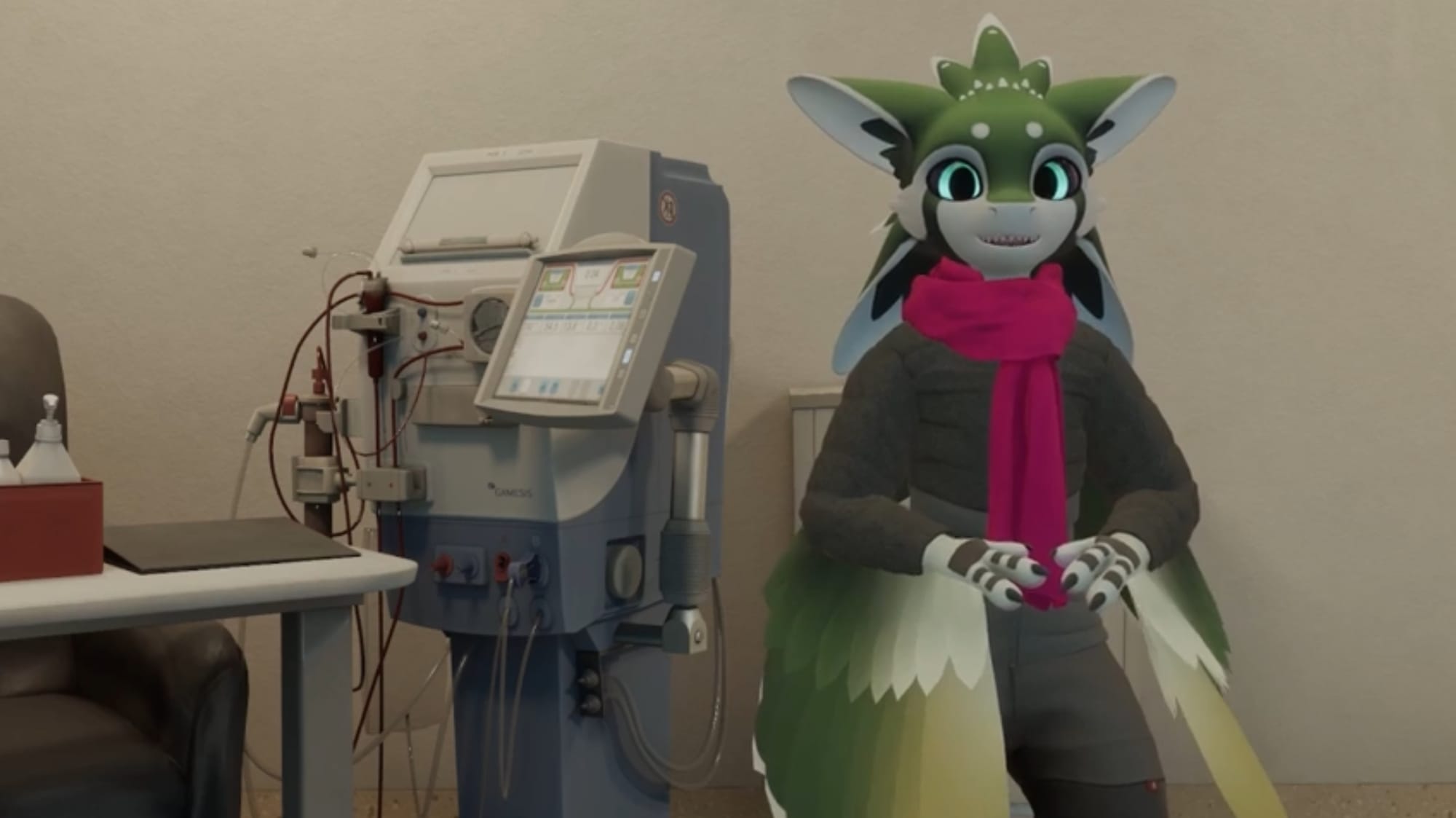
To connect the physical and digital realms, MaxFilms scanned the room Hiyu physically sat in for dialysis by using a LIDAR app called Polycam. Rob Ouellette from Painted Clouds then prepared the model in 3D programs Blender and Maya to import into VRChat to reshoot the scene virtually. The shot they took of the dialysis session would then be matched in focus and pace by a camera in VRChat.
After the initial film interview, I was escorted by Hunting and company to review the dialysis film set. I watched Hiyu carefully as he began to approach the machine. The large device Hiyu used at the hospital had been scanned by Hunting’s crew at Painted Clouds.
Hiyu approaches a recreation of the dialysis machine once more.
Was that slight trepidation I could read on his face? He was using face tracking, so I could see his facial expressions as he neared the digital recreation.
First, he approached the machine as a creator: “The work Rob [from Painted Clouds Studio] did on the machine is top tier hard surface modeling work. I’m also a 3D modeler and this is what I could hope to achieve given the amount of time.”
Then his reflections became more personal.
“It’s really weird being in here for how accurate it is.”
It’s an understatement. The set feels like standing in a physical hospital. The texture scan of the worn tile, off-white walls, and sanitized feel of a medical space bleed through quickly. Hiyu goes on.
“Sitting in here, looking at the window and at the exact same angle is so bizarre. It didn’t feel like I was back on [the machine] thankfully but it was very, very strange.”
“We kind of went through hell together,” Otter says. “Like with the surgery and even leading up to it and how scary all of it was. Just so much waiting and so much not knowing. We went through a lot together and that’s not something that just fades into the background.”
Throughout The Reality of Hope, Hiyu and Otter’s friendship comes into sharp focus. They present humor and camaraderie as the answer when things are looking dire. At one point, Otter presents Hiyu with a complimentary beverage as his friend endures sitting at the dialysis machine. “I have brought you a coffee—“ he grins, “and a kidney. But you have to wait on that one.”
At the end of the interview, MaxFilms and Hunting break away to make adjustments on their menus and attend to business. Otter and Hiyu remained at the side, their energy picking up considerably. They suddenly wanted to take another picture with the machine, this time joking around with it.
“Put it in the article!” they exclaimed.
The suggestion here in The Reality Of Hope, and reinforced by my time interviewing the main subjects and director in VR, is that the joy they find in their humor – the joy of hope – is an expression of victory.
The Reality Of Hope premieres June 8 on DOCUMENTARY+.
PorteuX 2.1 has been released today as a new update to this portable Linux distribution based on Slackware Linux and inspired by both Slax and Porteus distros, designed to be small, fast, portable, modular, and immutable.
AI company Anthropic (founded in 2021 by a team that left OpenAI) is now making about $3 billion a year in revenue, reports Reuters (citing “two sources familiar with the matter.”) The sources said December’s projections had been for just $1 billion a year, but it climbed to $2 billion by the end of March (and now to $3 billion) — a spectacular growth rate that one VC says “has never happened.”
A key driver is code generation. The San Francisco-based startup, backed by Google parent Alphabet and Amazon, is famous for AI that excels at computer programming. Products in the so-called codegen space have experienced major growth and adoption in recent months, often drawing on Anthropic’s models.
Anthropic sells AI models as a service to other companies, according to the article, and Reuters calls Anthropic’s success “an early validation of generative AI use in the business world” — and a long-awaited indicator that it’s growing. (Their rival OpenAI earns more than half its revenue from ChatGPT subscriptions and “is shaping up to be a consumer-oriented company,” according to their article, with “a number of enterprises” limiting their rollout of ChatGPT to “experimentation.”)
Then again, in February OpenAI’s chief operating officer said they had 2 million paying enterprise users, roughly doubling from September, according to CNBC. The latest figures from Reuters… Anthropic’s valuation: $61.4 billion.OpenAI’s valuation: $300 billion.
NASA’s next mission will be to find a new agency leader, following a dramatic reversal from President Donald Trump. In a post made on Truth Social, the president withdrew his nomination of Jared Isaacman as the head of NASA. As first reported by Semafor, the pullback comes just a few days before Isaacman was due in front of the US Senate for a confirmation vote.
Trump detailed in the post that he will soon announce another nominee who is more aligned with the president’s mission and will “put America First in Space.” Liz Huston, a White House spokesperson, said in a statement that it was “essential that the next leader of NASA is in complete alignment with President Trump’s America First agenda.” According to The New York Times, unnamed sources attribute the withdrawal to Isaacman’s previous donations to “prominent Democrats.”
Besides his role as CEO of payment processing company Shift4, Isaacman has been venturing into the world of commercial space travel. The billionaire businessman has been to space twice now, even serving as the mission commander of the Polaris Dawn mission that was operated by SpaceX and saw the first commercial spacewalk. Isaacman was known as a close ally of Elon Musk, who is the CEO of SpaceX and recently left his White House role as an adviser to the president.
This article originally appeared on Engadget at https://www.engadget.com/science/space/trump-makes-a-last-minute-backtrack-on-his-pick-to-lead-nasa-153253836.html?src=rss
The long, long wait for Stranger Things 5 is almost over. Netflix has finally revealed the release date for the show’s fifth and final season: November 26. At least, that’s when the first part will drop. Just like Season Four, Stranger Things 5 will be released in chunks, so you won’t be able to binge it all in one go from the outset. Volume One, which will have four episodes, comes out on November 26 at 8PM ET (5PM PT), followed a month later by three episodes for Volume Two on Christmas (December 25) and the final episode on New Year’s Eve (December 31).
If you need a little refresher on where we’re picking back up with the Hawkins crew — I sure do — here’s the synopsis for Season Five:
The fall of 1987. Hawkins is scarred by the opening of the Rifts, and our heroes are united by a single goal: find and kill Vecna. But he has vanished — his whereabouts and plans unknown. Complicating their mission, the government has placed the town under military quarantine and intensified its hunt for Eleven, forcing her back into hiding. As the anniversary of Will’s disappearance approaches, so does a heavy, familiar dread. The final battle is looming — and with it, a darkness more powerful and more deadly than anything they’ve faced before. To end this nightmare, they’ll need everyone — the full party — standing together, one last time.
With that, the countdown to the end has officially begun. There’s 177 days to go as of today, which leaves you plenty of time to rewatch all four seasons in preparation.
This article originally appeared on Engadget at https://www.engadget.com/entertainment/streaming/stranger-things-5-finally-has-its-release-date-152255914.html?src=rss
In December it looked like NASA’s next administrator would be the billionaire businessman/space enthusiast who twice flew to orbit with SpaceX.
But Saturday the nomination was withdrawn “after a thorough review of prior associations,” according to an announcement made on social media. The Guardian reports:
His removal from consideration caught many in the space industry by surprise. Trump and the White House did not explain what led to the decision… In [Isaacman’s] confirmation hearing in April, he sought to balance Nasa’s existing moon-aligned space exploration strategy with pressure to shift the agency’s focus on Mars, saying the US can plan for travel to both destinations. As a potential leader of Nasa’s 18,000 employees, Isaacman faced a daunting task of implementing that decision to prioritize Mars, given that Nasa has spent years and billions of dollars trying to return its astronauts to the moon…
Some scientists saw the nominee change as further destabilizing to Nasa as it faces dramatic budget cuts without a confirmed leader in place to navigate political turbulence between Congress, the White House and the space agency’s workforce.
“It was unclear whom the administration might tap to replace Isaacman,” the article adds, though “One name being floated is the retired US air force Lt Gen Steven Kwast, an early advocate for the creation of the US Space Force…”
Ars Technica notes that Kwast, a former Lieutenant General in the U.S. Air Force, has a background that “seems to be far less oriented toward NASA’s civil space mission and far more focused on seeing space as a battlefield — decidedly not an arena for cooperation and peaceful exploration.”
It took a minute, but Samsung’s ultra-slim Galaxy S25 Edge is now available to purchase in the United States. What’s more, there are some bonus offers available, depending on where you choose to buy the newest (and thinnest) addition to the modern Galaxy family, including a store gift card, trade-in perks, or discounts on various accessories.
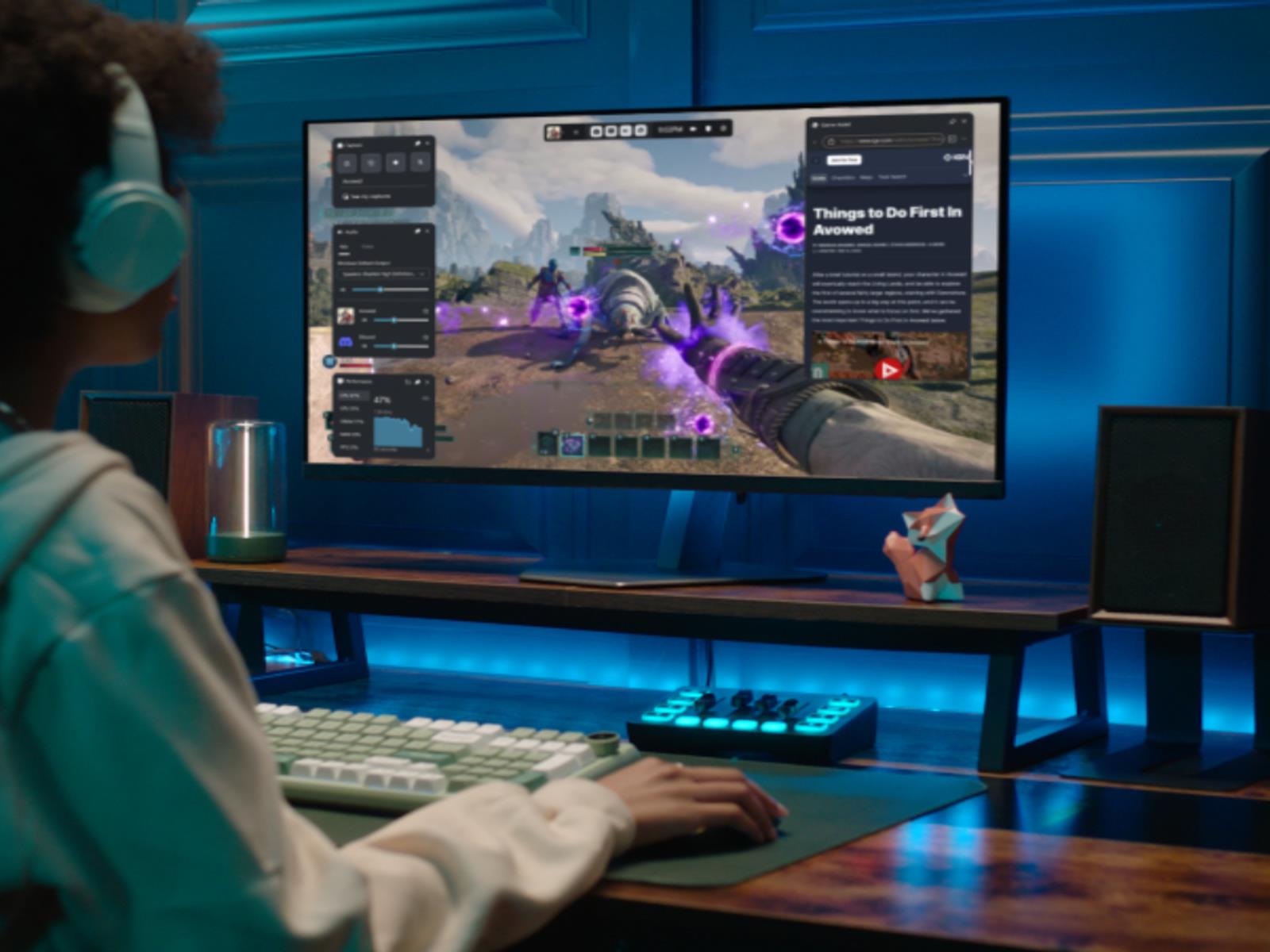
After spending more than half a year in beta testing, Microsoft Edge Game Assist is finally rolling out all Windows 11 users as it continues to improve the operating system for gamers. It’s an in-game browser designed to make it easier than ever to access guides and walkthroughs or multitask during the middle of a gaming session, without having
The Linux 6.15 kernel that shipped as stable last week mistakenly shipped with a nasty CPU power regression for some systems. The issue is now fixed in Linux 6.16 Git and will be fixed shortly in the Linux 6.15 point releases…
Every time I write an article about the escalating advertising and tracking on today’s TVs, someone brings up Apple TV boxes. Among smart TVs, streaming sticks, and other streaming devices, Apple TVs are largely viewed as a safe haven.
“Just disconnect your TV from the Internet and use an Apple TV box.”
That’s the common guidance you’ll hear from Ars readers for those seeking the joys of streaming without giving up too much privacy. Based on our research and the experts we’ve consulted, that advice is pretty solid, as Apple TVs offer significantly more privacy than other streaming hardware providers.
A 21-year-old’s startup got a $500,000 investment from Y Combinator — after building their web site and prototype mostly with “vibe coding”.
NPR explores vibe coding with Tom Blomfield, a Y Combinator group partner:
“It really caught on, this idea that people are no longer checking line by line the code that AI is producing, but just kind of telling it what to do and accepting the responses in a very trusting way,” Blomfield said. And so Blomfield, who knows how to code, also tried his hand at vibe coding — both to rejig his blog and to create from scratch a website called Recipe Ninja. It has a library of recipes, and cooks can talk to it, asking the AI-driven site to concoct new recipes for them. “It’s probably like 30,000 lines of code. That would have taken me, I don’t know, maybe a year to build,” he said. “It wasn’t overnight, but I probably spent 100 hours on that.”
Blomfield said he expects AI coding to radically change the software industry. “Instead of having coding assistance, we’re going to have actual AI coders and then an AI project manager, an AI designer and, over time, an AI manager of all of this. And we’re going to have swarms of these things,” he said. Where people fit into this, he said, “is the question we’re all grappling with.” In 2021, Blomfield said in a podcast that would-be start-up founders should, first and foremost, learn to code. Today, he’s not sure he’d give that advice because he thinks coders and software engineers could eventually be out of a job. “Coders feel like they are tending, kind of, organic gardens by hand,” he said. “But we are producing these superhuman agents that are going to be as good as the best coders in the world, like very, very soon.”
The article includes an alternate opinion from Adam Resnick, a research manager at tech consultancy IDC. “The vast majority of developers are using AI tools in some way. And what we also see is that a reasonably high percentage of the code output from those tools needs further curation by people, by experienced people.”
NPR ends their article by noting that this further curation is “a job that AI can’t do, he said. At least not yet.”