With the abrupt withdrawal of the US, the World Health Organization is grappling with a brutal funding shortfall, leaving the United Nations health agency to slash top leadership and run global programs on a budget similar to that of a local hospital system.
In remarks at a budget committee meeting Wednesday, WHO Director-General Tedros Adhanom Ghebreyesus laid out the daunting budget numbers and announced a slimmed structure, cutting senior management from 14 to seven and the number of departments from 76 to 34.
“The loss of US funding, combined with reductions in official development assistance by some other countries, mean we are facing a salary gap for the next biennium of more than US$ 500 million,” Tedros said.
Ministers in the UK House of Commons have blocked an amendment to a data bill that would require AI companies to disclose their use of copyrighted materials, according to The Guardian. This transparency amendment was stripped out of the text by invoking something called financial privilege, an arcane parliamentary procedure that suggests that any new regulations would require a new budget.
The official site of the UK parliament says this procedure “may be used by the Commons as grounds for overruling any House of Lords proposal that has cost implications.” It looks like that’s exactly what happened here, with those in favor of removing the amendment bringing up the cost of a potential regulatory body. There were 297 MPs who voted in favor of removing the amendment, with 168 opposing.
Chris Bryant, data protection minister, said that he recognized that this could feel like an “apocalyptic moment” for the creative industries, but that he thinks the transparency amendment requires changes “in the round and not just piecemeal.”
The amendment was passed in the House of Lords earlier this week. Baroness Beeban Kidron of the Lords responded to today’s move by saying that “the government failed to answer its own backbenchers who repeatedly asked ‘if not now then when?’” She also said it was “astonishing that a Labour government would abandon the labor force of an entire section,” referring to the plight of creative workers whose jobs have been or at risk of being replaced by AI. Lady Kidron went on to accuse the government of allowing “theft at scale” and cozying up “to those who are thieving.”
“Across the creative and business community, across parliament, people are gobsmacked that the government is playing parliamentary chess with their livelihoods,” she concluded.
As expected, Kidron will introduce a rephrased amendment before the bill’s return to the Lords next week. This sets up yet another showdown when the bill returns to the Commons for another pass.
Owen Meredith, the chief executive of the News Media Association, told The Guardian that it’s “extremely disappointing that the government has failed to listen to the deep concerns of the creative industries, including news publishers who are so fundamental to uploading our democratic values.” He accused the government of using parliamentary procedure to “dismiss industry concerns, rather than taking this timely opportunity to introduce the transparency that will drive a dynamic licensing market for the UK’s immensely valuable creative content.”
The government’s preferred plan includes the reliance on an opt-out clause. This would give AI companies free rein over any and all content, except in the cases when a creator has explicitly opted out.
Yesterday, the Lords asked the government to think again on the #DataBill, voting through changes on processing personal data, AI models, and the collection of sex data.
Last week, hundreds of artists and organizations banded together to urge the government not to “give our work away at the behest of a handful of powerful overseas tech companies.” The artists involved in this campaign included Paul McCartney, Elton John and Dua Lipa, among others.
America is set to host its own version of the “give everything to AI companies” game show. Republicans have snuck in a provision to the budget bill that would ban regulation on the AI industry for ten years. That’ll end well.
This article originally appeared on Engadget at https://www.engadget.com/big-tech/uk-parliament-opts-not-to-hold-ai-companies-accountable-over-copyright-material-180234550.html?src=rss
We may earn a commission from links on this page. Deal pricing and availability subject to change after time of publication.
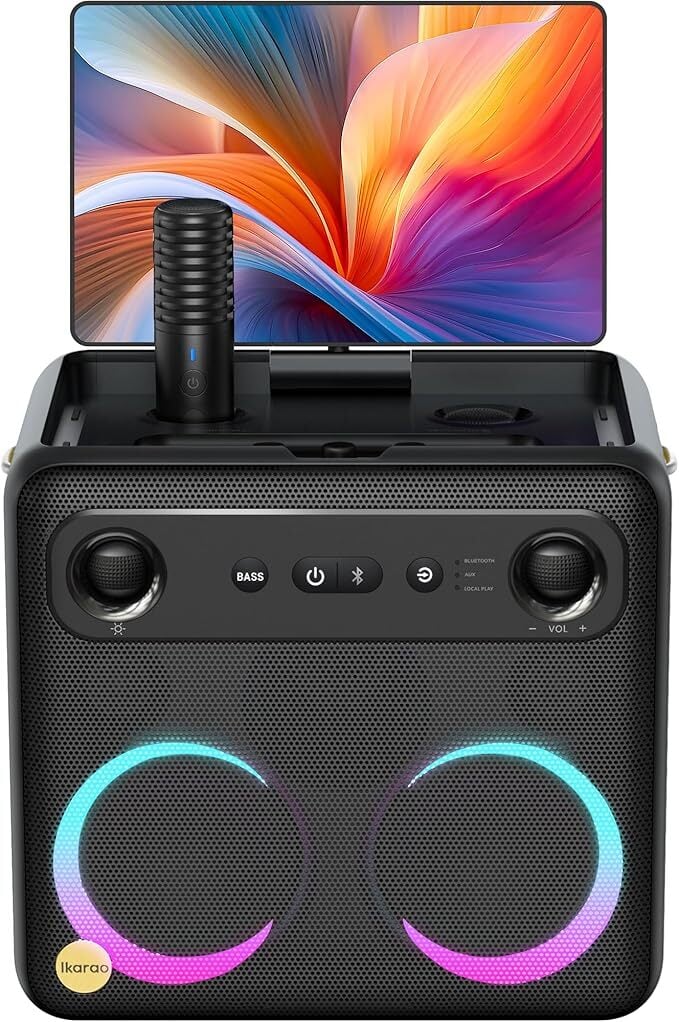
We’re living in the best time in history for bringing karaoke to your home. I’ve had the pleasure of using the new Soundcore Rave 3S karaoke speaker, which turns any song into a karaoke track with the push of a button, and Ikarao’s ultra-portable Shell S1 karaoke speaker to host many house parties. But if you’re looking for a great deal on a more powerful speaker that is still compact and portable, consider the Break X2, also from Ikarao, currently $349.98 (originally $469.99), the lowest price it has been, according to price-tracking tools. You can read about it in more detail in Lifehacker staff writer Stephen Johnson’s review.
The Break X2 is the most powerful out of the three karaoke speakers I’ve mentioned in terms of watts, which means it’ll sound the best at max volumes with the least distortion. It’s perfect for those looking to have a stand-alone karaoke machine in their living room. It comes with two wireless Bluetooth microphones that store inside and automatically charge. The microphones are of good quality and sound much better than Soundcore’s Rave 3S’s.
The screen is a 10-inch Android touchscreen display that has some apps pre-installed, although you’d likely mainly use the YouTube widget. (You can find virtually any song in karaoke for free on YouTube.) But if you’re looking for a more premium experience, the speaker comes with six months of Karafun, a karaoke app that is incredibly fun (read more about it in my Shell S1 review).
The battery will give you about eight hours of juice, but you can always plug it in. You can also hook up an HDMI cable so you can see the lyrics on your TV to really make it a party.
Coinbase has been betrayed from within. The cryptocurrency exchange said that cyber criminals bribed some of its support agents to share personal information about Coinbase customers. Attackers acquired data such as names, addresses, emails, phone numbers, images of government IDs, masked bank account numbers and masked sections of social security numbers. The perpetrators tricked some Coinbase users into sending them money and also demanded $20 million from the company to not publicly disclose the ill-gotten information.
Coinbase has not paid the ransom and is cooperating with law enforcement to press charges. In the blog post, the company said it would offer a $20 million reward for information that could lead to arresting and convicting the remaining attackers. It also said that users’ login credentials, two-factor authentication codes and private keys are still secure. It will reimburse customers who sent funds to the extortionists and will place additional safeguards on vulnerable accounts. According to an SEC filing, the incident is projected to cost Coinbase $180 million to $400 million.
This article originally appeared on Engadget at https://www.engadget.com/cybersecurity/extortionists-bribed-coinbase-employees-to-give-them-customer-data-174713732.html?src=rss
Rust 1.87 is now available as the newest version of this popular programming language. With the Rust 1.87 release it also marks ten years already of this system programming language focused on memory safety and modern features…
The Epic Games Store is having a big sale. One might even call it “Mega.” In fact, that’s exactly what Epic is calling it. Yup, it’s another Epic Store Mega Sale, featuring a ton of deals on both old and new games across every genre.
Scientists have successfully treated a 9.5-month-old boy with an ultra-rare genetic disorder using the world’s first personalized gene-editing therapy. The patient, identified as KJ, has CPS1 deficiency — a condition affecting just one in 1.3 million babies that prevents proper ammonia processing and is often fatal.
The breakthrough treatment, detailed in the New England Journal of Medicine, uses base editing technology to correct KJ’s specific DNA mutation. The therapy delivers CRISPR components wrapped in fatty lipid molecules that protect them in the bloodstream until they reach liver cells, where they make the precise edit needed.
After three infusions, KJ now eats normal amounts of protein and has maintained stable ammonia levels even through viral illnesses that would typically cause dangerous spikes. His weight has increased from the 7th to 40th percentile. Dr. Peter Marks, former FDA official, called the approach “one of the most potentially transformational technologies” because it could be rapidly adapted for thousands of other rare genetic diseases without lengthy development cycles.
Americans are living through interesting times, economically. The tariffs imposed, delayed, and frequently adjusted by the government have thrown household budgets into confusion. One thing that’s pretty certain is that the baseline tariffs applied to just about every country are likely to raise prices at the grocery store no matter what happens from here (prices could go up by about 3% overall).
For families that are already struggling to make their grocery budgets work, this is unwelcome news, but there is one thing you can do right now—while prices are still largely unaffected by tariff chaos—to help mitigate the impact and protect you from future grocery inflation: start putting together a “tariff pantry.” This involves laying in a supply of nonperishable groceries to lock in today’s prices, and focusing on recipes and meals that will keep your grocery costs down in the coming months. Here’s what to consider.
How to plan out your tariff pantry
Setting up a “tariff pantry” requires a little planning. “Take inventory first,” advises food blogger and bestselling cookbook author Kyndra Holley. “Know what you already have and make a list of essentials—stick to long-lasting pantry staples you actually use. Stock up gradually. Monitor prices and buy when it makes sense, not out of fear. Then set a budget and stick to it: Decide how much you can spend and avoid impulse buys or panic stockpiling. Buy what you already use when it’s discounted—don’t get lured by deals on items you wouldn’t otherwise use or need.”
Holley also warns against relying too much on bulk-buying. “Bulk can save money—but only if you’ll use it,” she says. “Always check unit prices and shelf life, and don’t buy more than you can store safely. Use airtight containers and freeze what you can’t use quickly.”
Changing your whole diet and meal-planning approach can help deal with tariff cost increases. “Go more plant-based,” Holley suggests. “Reduce meat and opt for beans, lentils, eggs, and grains. They’re cheaper, filling, and shelf-stable. One-pot, sheet-pan, and slow cooker meals use fewer ingredients and repurpose leftovers easily. And simplify recipes—use fewer, local ingredients. Stick to basic seasonings like garlic, onions, vinegar, and herbs.”
Careful meal prepping can also reduce waste and make the most of items bought in bulk. “When you cook in bulk, you maximize every ingredient, stretching your dollars further,” says Laurie Hise, founder of the budgeting blog Passionate Penny Pincher. “Think buying meat in family packs, prepping meals in batches, and locking in today’s prices before more inflation sneaks in!”
Hise also suggests broadening your grocery store choices. “Don’t put loyalty above savings! Make sure Aldi is in your store rotation, and scan weekly ads to get your must-haves for the cheapest. Eggs are almost always the cheapest there, they have a great Keto and Gluten Free selection, and you can buy meat for cheap on Wednesdays.”
What to stock in a tariff pantry
Although the blanket tariffs imposed will likely raise prices in general, the grocery items most likely to be affected by tariffs include fresh fruits and vegetables (the bulk of which are imported), coffee, cheese, olive oil, seafood, nuts, and candy.
Aside from dodging future price hikes, you want to focus on items in those categories that have lengthy shelf lives and flexible uses. “Stock up on items that are both cost-effective, long-lasting, and versatile,” Holley advises, including:
Grains and legumes, like rice, pasta, lentils, dried beans, and oats.
Canned and frozen goods. “A variety of canned tomatoes (whole, diced, crushed) are perfect for sauces, soups, and stews,” Holley notes. “Canned vegetables and fruits can be stored for long periods, and frozen vegetables are often cheaper than fresh, and retain nutrients. And canned tuna or salmon are protein-rich and shelf-stable.”
Baking ingredients like flour, sugar, yeast, baking soda, baking powder, and cornstarch. “Basic ingredients for a wide range of uses,” notes Holley.
Shelf-stable dairy and dairy alternatives like powdered or evaporated milk can be rehydrated and used for baking, cooking, or even drinking, protecting you from price spikes on the fresh stuff.
Oils and vinegars are likely to go up in price and are useful in cooking, dressing, and preserving food.
Seasonings and spices—the U.S. imports a lot of spices from countries like India, China, and Peru, so they’re vulnerable to tariff price spikes. Laying in a supply of herbs and spices like salt and pepper, garlic and onion powder, paprika, chili powder, ginger, basil, parsley oregano, thyme, as well as soy sauce, hot sauce, mustard, and bouillon cubes will help ride out any disruptions or price hikes in the seasonings aisle.
Nuts and seeds—Holley recommends adding a supply of peanut butter or almond butter. “They’re high in protein, and last a long time.”
Coffee and tea. “Tea is a low-cost way to diversify your drink options,” notes Holley.
Canned meats and proteins. “Canned chicken or Spam can be used in a variety of meals, especially in emergencies,” Holley notes. “And canned ham or sausage can add protein and are good for quick meals.”
Building up a tariff pantry will pay off even if the impact of those tariffs is overestimated—as we all know too well, prices never go down.
Marvel Rivals is still the new hero-shooter hotness, but like most free-to-play live-service games, over its six months NetEase’s Overwatch-like has run into a fair bit of controversy. An entire subset of the playerbase went on strike, the team has added new microtransactions, and now it’s added an item that the…
There’s a new Persona game coming very soon, but sadly it isn’t time for the next mainline entry just yet. Rather, Persona 5: The Phantom X is a spinoff in a similar vein to Persona 5 Strikers. Like that game, The Phantom X is set in the same universe as Atlus’ incredibly successful RPG, Persona 5, but unlike Strikers, this one features a new cast of characters, including a talking owl named Lufel that presumably takes the place of Morgana.
First announced in 2023, Persona 5: The Phantom X is a free-to-play live service game from Chinese publisher Perfect World, which released the game in open beta in its native country in April last year. It introduces a fresh team of Phantom Thieves and seems to be aiming for the classic Persona blend of high school drama, social interaction and dungeon crawling with impossibly stylish turn-based battles. There’s a new “Synergy” system that develops as you form bonds with NPCs, new mini-games and a PvE mode called The Velvet Trials.
Underpinning the whole experience will be a free-to-play model, the exact nature of which is not yet clear. Time will tell if gacha tactics will get in the way of a good time, and how well the familiar Persona gameplay loop translates to your phone, but the game’s official website says it’s intended for both Persona 5 fans and newcomers.
Atlus will be hoping that P5X tides fans over until it has any news on Persona 6. Its most recent release was last year’s Metaphor: ReFantazio, and the studio is currently saying nothing about the follow-up to Persona 5, which launched in its original pre-Royal state way back in 2016. Persona 5: The Phantom X launches June 26 on PC, iOS and Android.
This article originally appeared on Engadget at https://www.engadget.com/gaming/persona-5-the-phantom-x-is-coming-to-pc-and-mobile-next-month-170837106.html?src=rss
The much-anticipated successor to Garmin’s Forerunner 965 was announced today, and it’s a $749.99 watch called the Forerunner 970 with voice calling, triathlon coaching, and an LED flashlight. Alongside it, instead of a simple upgrade to its little sister the 265, we get a watch at an entirely new place in the Forerunner lineup: the Forerunner 570 ($549.99). Read on for the most important new features, and my first impressions on whether it’s worth splurging on either one compared to the older models. Both will be available to order on May 21, 2025.
A primer on Garmin’s confusing model names
Just to help you keep your bearings here: The first digit in a Forerunner’s number tells you where it sits in the product line, and the latter two numbers tell you how new it is. Until today, the newest models were the 165, 265, and 965, with the 165 being the budget model and 965 the top of the Forerunner line.
So the 970 is a newer version of the 965, the same basic watch with a few updates. But the 570 occupies a new spot in the lineup, priced higher than the 265, and Garmin probably hopes that some 265 users will want to spring for a fancier watch to get the new features.
How does the 570 compare to the 265?
The new Forerunner 570 is a watch that has everything the Forerunner 265 had, plus some new extra features. (It’s also more expensive and has slightly worse battery life, but we’ll get to that). Here are the biggest things the 570 has that the 265 doesn’t:
Voice calls and texts, and voice commands
The new evening report, which tells you how much sleep you should get and what weather and workouts to expect in the morning
Triathlon coaching, instead of making you choose between run coaching and bike coaching
Auto lap for races with timing gates (the watch will adjust your mileage as you pass the gate)
Finish line trimming for races (if you’ve uploaded a course, you won’t have to stop your watch when you cross the finish line—the watch will keep recording and then ask later if you’d like to trim your activity to end at the finish line)
The 570 is available in both a 47-millimeter size and a 42-millimeter size, similar to the 265 and 265S (46 and 42 millimeters, respectively). Mercifully for me, a person who has to write about both watches, they have dropped the “S” naming system, so instead of calling the smaller watch the “570S,” as if it were a totally different watch, there is just a 570 that comes in two sizes.
Here are the less exciting but still new features of the 570 that the 265 doesn’t have:
A sharper screen—454×454 resolution instead of 416×416, and Garmin says it’s their brightest AMOLED screen yet (sorry to those who were hoping for an old-school MIP display)
A skin temperature sensor
More triathlon workout types, including bricks and pool triathlon
Heat and altitude acclimation scores
The speaker and microphone mean you can play music from your wrist
Golfing features
There are two major downsides to the new watch, though. One is battery life: The 265 and 265S got 13-15 days of battery life in smartwatch mode, while the new 570 gets 10-11 days. Actual use, including activities, shaves off a few days, so expect about a week.
The other is cost. The new Forerunner 570 is priced at $549.99, whereas the Forerunner 265 originally cost $449.99 and, as I write this, is on sale for $349.99. Bumping up the first digit in the model name is supposed to make us feel like we’re getting a nicer watch, but is it really worth paying an extra $200? I’m not convinced.
How does the 970 compare to the 965?
The Forerunner 970 is an improved version of the Forerunner 965, although it, too, has a shorter battery life and a higher price tag. But maybe it’s worth it for you, given these upgrades:
An LED flashlight on the front of the watch—yes, an actual light, not just the ability to turn the screen white.
Sapphire crystal instead of glass on the watch face
ECG readings
Running tolerance score, judging how much more mileage your body can handle, so you know when you’re doing “too much”
Running economy score, judging how efficiently you run
Step speed loss, a running dynamic that describes how much you slow down when your foot hits the ground—but this requires the new HRM 600 heart rate monitor.
The 970 also has all the same major features as the 965 (including maps), and only comes in one size, as did the 965. The new 970 also has everything I described in the 570 above, including voice calls and texts, evening reports, triathlon coaching, and the race day lap and trimming features. The 970 is an AMOLED watch, not MIP as some had speculated.
Battery life takes a pretty big hit, down to 15 days in smartwatch mode, compared to 23 days for the previous model, the 965. (Again, real-life use with activities will be a bit shorter, so subtract a few days.) The price has also jumped significantly: The 970 is $749.99, where the 965 had been $599.99 at the start, and the 965 is on sale now for $499.99. Personally, I’m not sure if the upgrades are worth that much of a price increase, but it’s certainly a nicer watch.
I staved off creepy monsters, crawled through tight tunnels, climbed rocky walls, all while constantly looking over my shoulder during a tight hands-on demo with Tunnels, an upcoming horror game from Nomad Monkey at PAX East. It’s certainly not for everyone, especially claustrophobic people, but it’s always a treat to see games push the limits of VR the way it looks like Tunnels will.
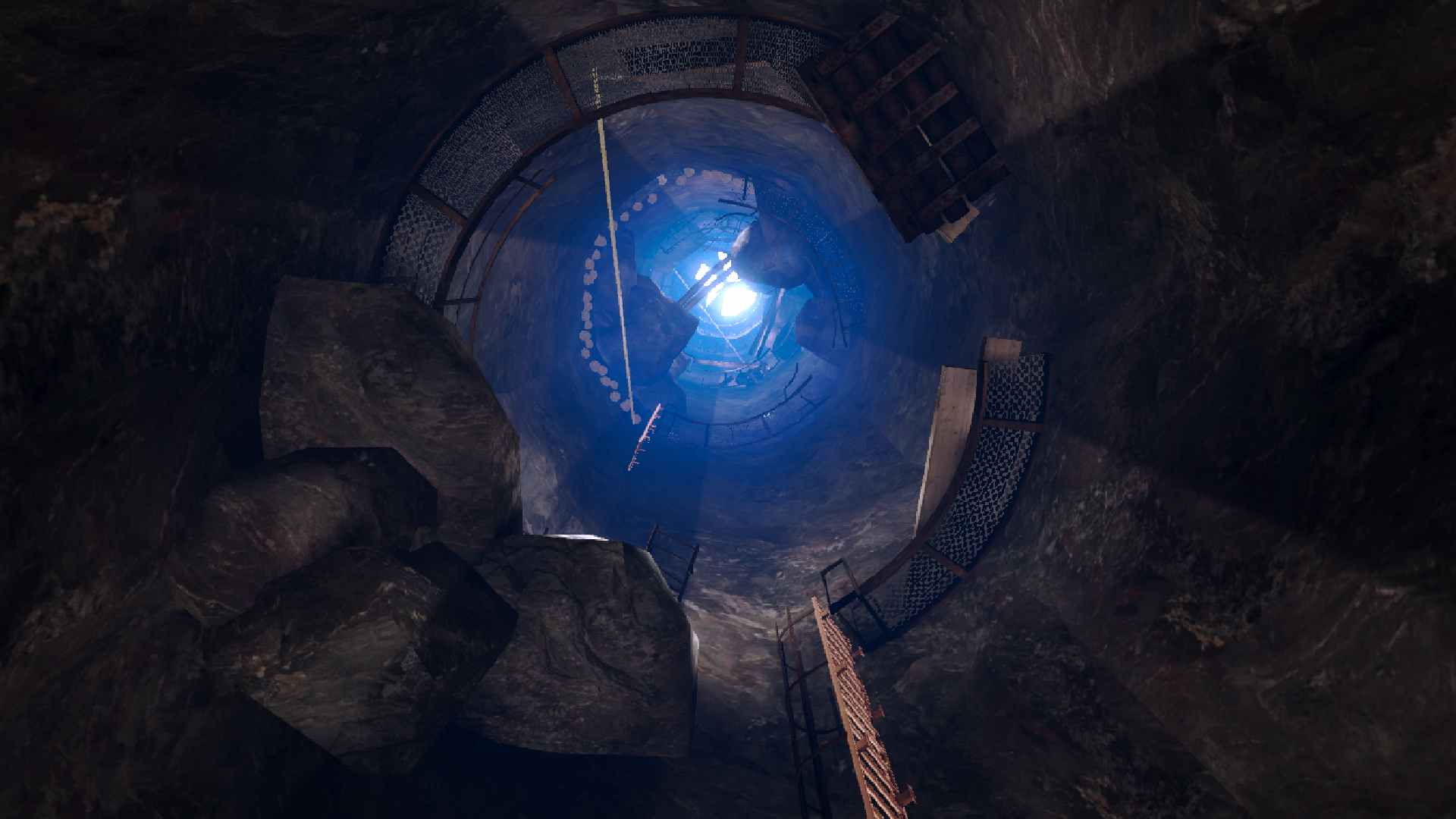
Tunnels is all about putting you in tight, winding corridors and dialing up the tension. Best played standing while still being playable seated, you start out by getting the lay of the land, moving around via control stick as you lower yourself into a cave by climbing down a rock wall à la Horizon Call of the Mountain or The Climb.
0:00
/0:30
That’s when you hit the meat and potatoes: the namesake tunnels. Here, you’ll crouch with the A button and start pulling yourself along the ground by reaching in front of yourself with the grip buttons, grabbing the ground and pulling yourself forward. You can also use the left analog stick to move, but crawling is preferable both for comfort and immersion. Nomad Monkey also teased underwater sections with its own movement system, though that wasn’t in the demo.
Once you enter the tunnel’s gaping maw, things start to get dark and weird. Thankfully, you have a flashlight. Snapped to your right shoulder, it’s easy to grab and shine down a dark tunnel when needing some extra visibility in case you take a wrong turn in the labyrinthine stone corridors.
Crawling along in the tight stone crawlspace is oddly tense on its own. Even just simple environmental noise is enough to get you on edge. But suddenly, a dark shape darts across your path. Covered in goose bumps as you continue on, strange sounds echo behind you or down a path. The abject, understated horror of being trapped in a deep, winding cave suddenly intensifies: you are not alone. The scurrying gets closer; the tension’s reached a fever pitch. You have to turn around.
The milkshake-thick tension gets the better of you, briefly revealing Tunnels’ unsettling monster; a grotesque, four-legged creature with a face covered in finger-like tendrils. You need to shine your flashlight in its face to save yourself from its clutches.
Tunnels keeps you from relying on that flashlight too much by limiting its battery. It’s a pretty short charge, though the demo charitably peppers 9-Volt-shaped pickups for some extra juice. This cleverly underpowered option keeps you afraid and on-edge, forcing you to conserve battery power, even when you might need a little light to help find the right path. Thankfully, sparsely placed glowing green crystals will light your way from time to time, so you can save the flashlight for when you’re face-to-fingers with Tunnels’ creature.
Whether it’s squirm-inducingly gory, dreadfully cerebral, or chillingly jumpy, I’m usually a total baby with horror. I’m also a sucker for a cool monster design, even more so with restrained use therein. Think the Xenomorph in Alien, for example; you mostly see it in flashes and low glows until the third act of the film, when the filmmakers slap all their cards down on the table. You only see Tunnels’ monster in quick flashes, as your flashlight starts flashing when you catch the creepy crawler nipping at your heels. This points to signs of a similar slow payoff, leveraging this cool monster design.
From what I gathered from brief dialogue segments narrated by your character, you’re a spelunker of some kind sent down into these caves to detonate them, probably burying the monsters within. Maybe I’m reading too much into things, but that feels like it’s teasing an escape sequence – maybe another little flash of Alien inspiration.
The protagonist keeps quiet during the most tense moments, which allows the scary stuff to breathe a little, and I really appreciate this. Still, I wish I had more time to grasp the premise of this story, which sprinkled just enough exposition to hook me in with a sense of Eldritch intrigue. I have a feeling there’s more to these guys than just looking nasty.
That sense of claustrophobic dread is Tunnels’ greatest strength. I’m sure that will become its Waterloo for some, too, as that chilling feeling that the only way out is forward isn’t for everyone. I’ve not tried the free-to-play multiplayer mode yet, which Nomad Monkey states has been overhauled for the full release, but what I’ve seen nails that spooky sensibility in stride.
If you’re looking forward to getting lost (and maybe jump scared) in Tunnels’ winding caves, the single player campaign reaches the Meta Quest platform today for $14.99.
Meta AI on Ray-Ban Meta glasses can now be much more descriptive about what it sees, via a new accessibility setting for blind and low-vision people.
As well as more complex queries about what’s in view of the camera, Meta AI can be used by those with low vision to audibly describe what’s in front of them. But Meta AI on smart glasses is fine-tuned to provide brief responses, so that your hearing isn’t interrupted for too long by a verbose response.
If you’re blind or low vision and do want verbosity when asking what’s in view, Meta has added a new Detailed Responses accessibility option, which you can toggle on in the Meta AI app. The company says it’s rolling out in the US & Canada this month, and will expand to other countries “in the future”.
Note that the large language model (LLM) technology that makes chatbots like Meta AI possible is prone to error and Meta’s terms warn to not rely on it, a clause blind users should keep in mind for any safety-critical tasks.
0:00
/1:02
Meta is also expanding its partnership with Be My Eyes, which lets blind and low-vision Ray-Ban Meta glasses wearers start a view-sharing video call with one of the service’s 8 million volunteers who help them navigate a situation.
The Be My Eyes partnership launched in the US, Canada, UK, Ireland, and Australia back in November, and now it’s coming to all 18 countries where Meta AI is supported.
Meta’s launch of the Detailed Responses option for Meta AI comes one day after Apple announced that visionOS will get the ability to magnify passthrough, as well as to describe, find, or read anything in your view using on-device AI later this year. Apple also announced that accessibility apps like Be My Eyes will get access to the passthrough camera view on visionOS.
Apple also reportedly plans its own smart glasses with a focus on visual AI for 2027, and they too will likely offer similar features for blind and low-vision people.
Apple has implemented conspicuous warning labels featuring red exclamation marks on EU App Store listings that use external payment systems. The company’s new tactic targets apps like Instacar, a popular Hungarian vehicle valuation tool with thousands of positive reviews, displaying ominous warnings that the app “does not support the App Store’s private and secure payment system.”
The associated support page cautions users that external payments require providing personal information directly to developers and third parties “based on their privacy and security controls.” The move also follows the Epic vs Apple ruling that prohibits Apple from interfering with developers linking to alternative payment systems.
Three years ago, at WWDC 2022, Apple showed off its vision for the next generation of CarPlay. The sneak peak showed off a car with huge, wrap-around displays, featuring customizable widgets, a futuristic UI, and car controls built-into CarPlay. Frankly, it just looked cool.
But in the years since, CarPlay has remained largely the same, other than more vehicles offering wireless CarPlay than before. I’ve mostly forgotten about the promised updates, especially considering that my own car doesn’t have an infotainment display in the first place.
But Apple surprised us this morning with its latest press release: This radical change to CarPlay, now called CarPlay Ultra, is finally rolling out, today—but only for a very limited audience.
Aston Martin or bust
CarPlay Ultra is coming to new Aston Martin vehicles today, and will roll out in the coming weeks to existing models that feature the company’s “next-generation infotainment system” through a software update.
That’s a major bummer for any of us who don’t happen to own the right Aston Martin. But there’s a silver lining: Apple says that Hyundai, Kia, and Genesis have all opted into CarPlay Ultra, and will bring the feature to their cars as well. There’s no timeline for when that will happen, but hey—better than nothing.
CarPlay Ultra vs. CarPlay
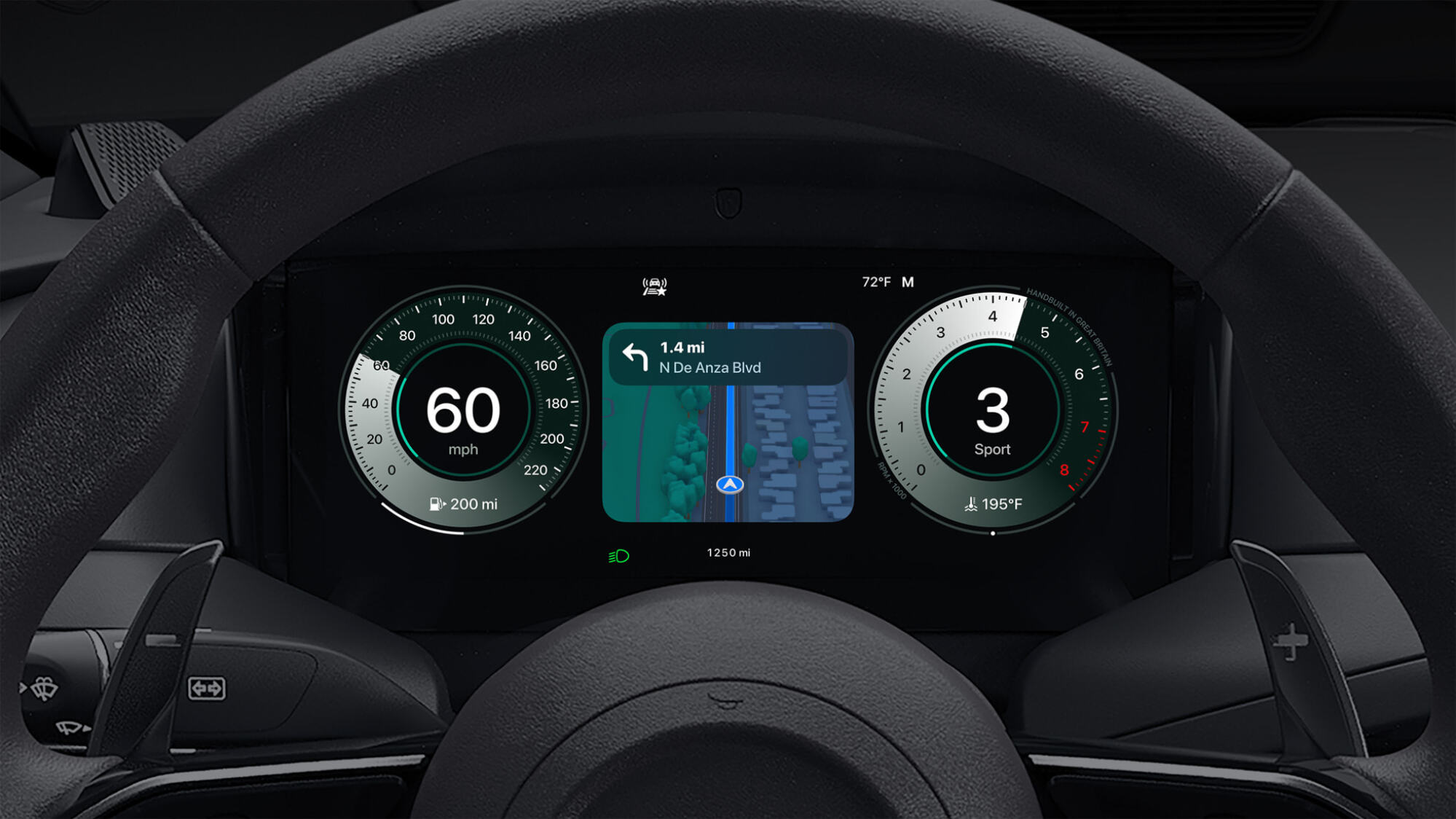
The key feature that sets CarPlay Ultra apart from CarPlay is its integration with all the screens in your car. Many cars these days have multiple displays, including one behind the steering wheel. Typically, only a designated display—or a portion of that designated display—is allocated for CarPlay. But with CarPlay Ultra, all the screens are fair game.
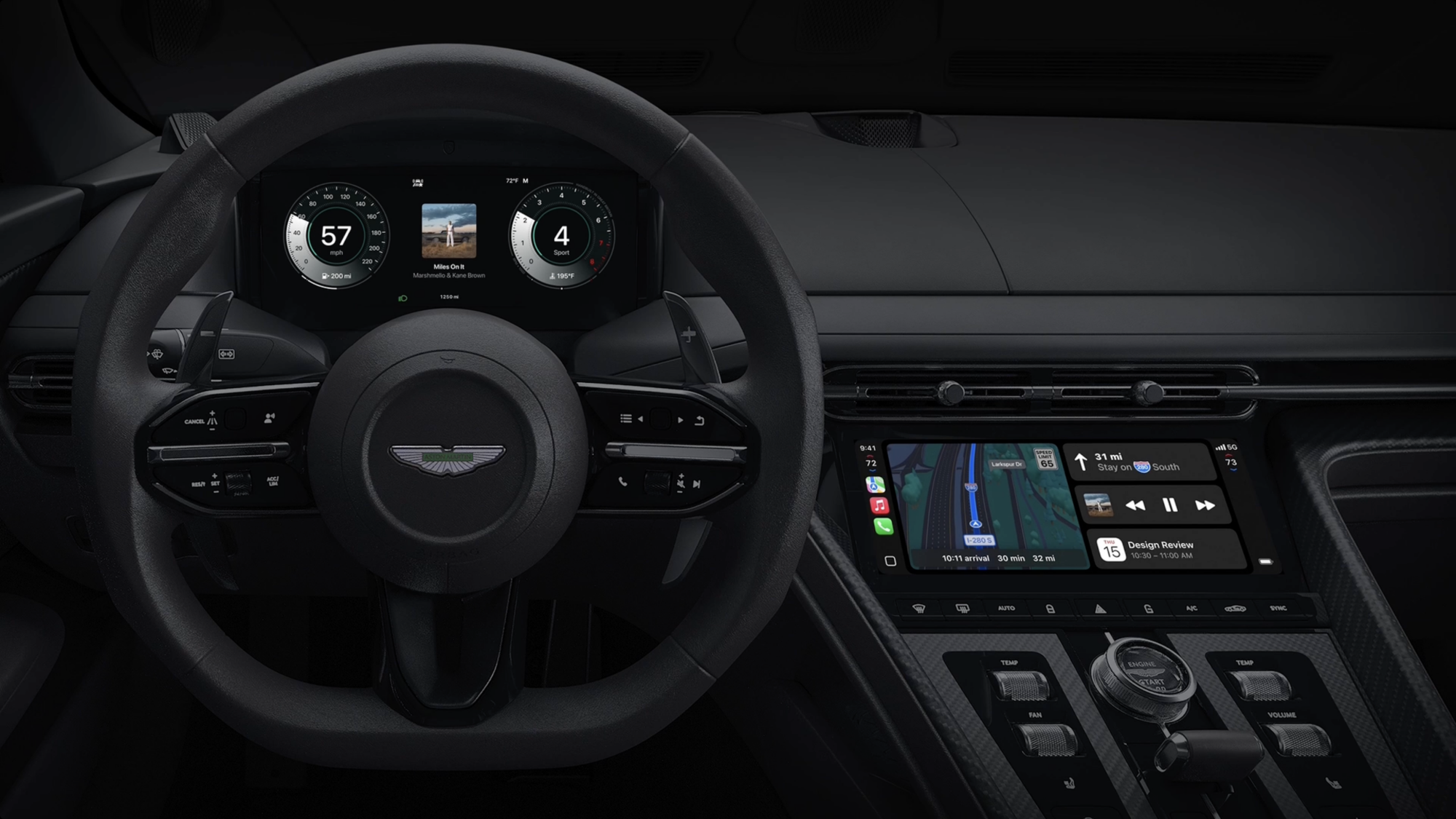
So, you can have CarPlay Ultra elements take up the display behind your steering wheel. That might manifest as your speedometer, tachometer, and a tool of your choosing, including the driving assist window, Apple Music, Maps, or tire pressure. I’d personally find it quite useful to have my directions featured front and center behind my wheel, so any time I check my speed, I get a heads-up about my next turn.
Credit: Apple
Once CarPlay Ultra rolls out in full, it won’t necessarily look the same from car to car. That’s due to two key reasons: First, Apple is letting carmakers customize the experience to “express their distinct design philosophy with the look and feel their customers expect.” On the other hand, you, the driver, are also able to customize the look of CarPlay Ultra, between adjusting the colors, wallpaper, and “instrument cluster” themes.
We’re sure to see more about this feature from Apple as it begins rolling out in full. But if you want a small glimpse of what to expect, check out that initial press release. There’s a short simulation of the interior of an Aston Martin; it shows the driver’s screen with an active speedometer, tachometer, and Apple Music widget, while the main display has an active Apple Maps view. To its right, you can see a smaller Apple Maps widget displaying the next turn, a small Apple Music widget featuring playback controls, and a small Calendar widget showing the driver’s next meeting.