Sigma BF hands-on: Minimal to a fault

In February, Sigma announced the Sigma BF. It’s a full-frame, interchangeable lens camera with just a shutter release, a dial and three buttons. That minimalism speaks to me, and I felt the BF was potentially transformative. Photography is one of my favorite hobbies, and I’ve always felt modern cameras are too complicated. When I received a unit of the Sigma BF to test, I wanted to love it. Unfortunately, it might be too simple.

It all starts with the design. The Sigma BF is one of the industry’s few unibody cameras. It’s carved from a single slab of aluminum, a process Sigma says takes seven hours to complete. The result is a camera unlike any I’ve used before, with build quality that surpasses either of my current Fujifilm models, the X-E3 and X-S20. Now, I know what you’re thinking: The BF looks like an ergonomic nightmare. Surprisingly, it’s not too bad, thanks to the inclusion of two beveled edges where your hands meet the bottom of the camera body.

I tested the Sigma BF with a 50mm F/2 lens from Sigma.
Igor Bonifacic for Engadget

Still, it’s missing a few features that would have made it more comfortable to use, likely due to the limitations of its unibody design. For one, a proper grip would have been nice, especially when you’re using a heavy 50mm lens like the one Sigma sent me for testing. The BF is also missing a hot shoe mount, so third-party thumb grips are off the table. Most annoying of all, it only has a single strap eyelet, so if you don’t want to use a neck strap, you’ll need one that attaches to the camera’s tripod mount. I don’t own one of those, so I had to carry around the $2,000 BF in my hand the entire time I was using it. You can imagine how that felt.

The BF offers a very different shooting experience from your typical digital camera. As I mentioned, it has only a shutter release, a single dial and three buttons (one for powering the camera on and off, one for reviewing your photos and footage and one for accessing the overflow menu). There’s also a touchscreen, but you wouldn’t know it at first, because other than when selecting a focus point and toggling some options, you won’t be using it much while shooting.

The BF’s one dial is the primary way to interact with the camera. To adjust your exposure, you first press left or right on the dial to cycle to a specific setting, and then spin it to tweak the levels as desired. A second smaller screen above the dial allows you to adjust those parameters without interacting with the main display.

A closeup of the Sigma BF's single control dial.
Igor Bonifacic for Engadget

Alternatively, you can press down on the center of the dial to open the BF’s “dual layer” menu system. As the name suggests, Sigma has organized most of what you might need across two levels of menus. For example, say you want to switch the camera from matrix to spot metering. That involves pressing down on the dial, scrolling over to one of the exposure settings, tapping the center of the dial again, and then using your thumb to press the touchscreen and enable spot metering. Accessing most of the settings you’ll need won’t be as tedious, but this worst case scenario demonstrates where the experience of shooting with the Sigma BF falls short.

The BF isn’t great for capturing fleeting moments. In ditching most of the physical controls modern cameras are known for, the Sigma BF makes it difficult to change multiple settings simultaneously. I was most annoyed by the BF whenever I wanted to shoot a fast-moving scene.

On one of my photo walks with the Sigma BF, I saw a father riding a bike with his son in the seat behind him. With my X-E3 or nearly any other camera, capturing that moment would have been simple. I could have changed the drive mode, focus system and shutter speed independently of one another. On the BF, I had to adjust each setting consecutively. By the time I was done, the father and son were long gone.

Some of the BF’s shortcomings could be addressed if Sigma at least allowed you to edit the quick settings screen to show fewer options. I don’t need easy access to change things like the aspect ratio, for example. In 2025, every new camera ships with an overly bloated menu system, and in that regard the Sigma BF is a breath of fresh air. However, allowing the user to make their own tweaks would have made for a much better experience.

And that’s the thing: With the BF, Sigma breaks camera interface conventions that are conventions for good reason. Let me give you one of the more frustrating examples: The camera inexplicably doesn’t offer an easy way to measure the exposure of a scene. There was no meter to indicate whether I was about to under- or overexpose a shot, and I couldn’t add one to the main screen.

The Sigma BF does not have a hot shoe mount or viewfinder.
Igor Bonifacic for Engadget

The only way I could see a histogram, my preferred method for nailing exposure, was to access the second layer of the interface from one of the capture settings. This is an especially confounding decision because you can half press the shutter to make quick exposure compensation adjustments with the control dial, but as soon as you do, the BF jumps out of whatever menu you were looking at. If digging through menus isn’t your thing, there are two live view overlays you can enable to see if you’ve clipped your shadows or highlights. The first is your usual zebra pattern. The second, which Sigma calls False Color, turns most of the screen grayscale and uses warning colors. Neither felt as precise as a proper exposure meter or histogram.

On paper, the BF is a decent camera for video, with support for 6K recording, HEVC encoding and L-Log. Unfortunately, the BF’s minimalism is a weakness here too. To start, framing a shot is a challenge since the camera has a fixed screen. Getting usable footage is also tricky. The BF doesn’t offer in-body image stabilization, and while there are a few L-mount lenses with built-in stabilization, most wouldn’t be practical to use with the BF due to their size and weight.

The Sigma BF features 210GB of built-in memory.
Igor Bonifacic for Engadget

If you’ve gotten this far, you’re probably wondering if I have something positive to say about the BF. Well, the best thing about the camera is that it takes genuinely great photos, which is what makes all its shortcomings all the more frustrating. The 24-megapixel, backside illuminated sensor and Sigma’s lenses capture and render detail beautifully without being clinical. The BF also has great subject detection autofocus that makes shooting portraits of people and pets easy.

The Sigma BF has some interesting ideas about what a camera can look like in 2025, but those ideas are often marred by poor execution. As a first stab at a minimalist camera, the BF has enough going for it, and with refinement, I could see future versions evolving into something special. For example, I’d love to see Sigma find a way to include a flip-out screen in the BF’s unibody frame. Until then, $2,000 is a lot to ask for a camera that could be so much more.

This article originally appeared on Engadget at https://www.engadget.com/cameras/sigma-bf-hands-on-minimal-to-a-fault-144024445.html?src=rss

Montana Becomes First State To Close the Law Enforcement Data Broker Loophole

Montana has enacted SB 282, becoming the first state to prohibit law enforcement from purchasing personal data they would otherwise need a warrant to obtain. The landmark legislation closes what privacy advocates call the “data broker loophole,” which previously allowed police to buy geolocation data, electronic communications, and other sensitive information from third-party vendors without judicial oversight.

The new law specifically restricts government access to precise geolocation data, communications content, electronic funds transfers, and “sensitive data” including health status, religious affiliation, and biometric information. Police can still access this information through traditional means: warrants, investigative subpoenas, or device owner consent.


Read more of this story at Slashdot.

The Coinbase Hack Compromised One Million Customers’ Information

Data breaches are most often the work of external bad actors, but sometimes the call comes from inside the house. Cryptocurrency exchange Coinbase has disclosed that hackers paid off support agents—both employees and contractors located outside the U.S.—who had access to company systems to provide customer data and then demanded a $20 million ransom not to leak the information.

Coinbase was notified of the ransom demand on May 11, just a few days before reporting the incident to the Securities and Exchange Commission (SEC). The company has said the staff involved were fired and reported to law enforcement when their unauthorized access was detected, but they were still able to provide information to attackers.

What happened with Coinbase?

The threat actors, with the help of insiders with access to Coinbase systems, were able to collect personally identifiable information on roughly one million individuals (just 1% of Coinbase customers). According to a Coinbase blog post detailing the incident, the compromised data included the following:

  • Names, addresses, phone numbers, and emails

  • Last four digits of Social Security numbers

  • Masked bank account numbers and identifiers

  • Government ID images, such as driver’s licenses and passports

  • Account data, such as balance snapshots and transaction history

  • Corporate data available to support agents

The breach did not include login credentials, two-factor authentication (2FA) codes, or private keys, and hackers do not have access to customer funds, Coinbase Prime accounts, or customer hot or cold wallets.

Coinbase has said they are not paying the $20 million ransom and instead are offering those funds as a reward for information about the attack. The company is also expanding its U.S.-based support to monitor and manage the impact on customer accounts.

What Coinbase customers need to do

Coinbase sent email notifications from the address no-reply@info.coinbase.com to all affected customers—these messages went out at 7:20 a.m. on May 15. Flagged accounts will have to go through several ID checks to make large withdrawals, so you may experience delays with transactions.

If you were impacted by the breach, be on the lookout for impersonation scams. The aim of the attack, according to Coinbase, was to acquire customer information, reach out pretending to be from Coinbase, and use social engineering tactics to trick targets into transferring their money. Know that Coinbase will never ask for your credentials (including passwords and 2FA codes) or request that you transfer assets to another “safe” account, vault, or wallet, and they will never call or text you to give you a seed phrase or wallet address. They also will not ask you to contact an unknown number for customer support.

You can also take steps to secure your account, like enabling 2FA using a hardware key and turning on withdrawal allow-listing, which limits transfers to accounts in your address book that you know and trust. If you believe your account has been compromised, lock it down and contact security@coinbase.com.

Finally, Coinbase says they intend to reimburse customers who were tricked into sending funds to the attackers. You’ll find more information in the notification email.

AMD Surges On Hot EPYC And Ryzen X3D Demand To Chip Away At Intel Share

AMD Surges On Hot EPYC And Ryzen X3D Demand To Chip Away At Intel Share
Folks, we’re living in some strange and wild times. Don’t worry, we’re not diving into politics or anything like that—we know how to say in our lane, which is technology. And as it relates to tech, the latest market share results by Mercury Research highlight some interesting and unexpected trends, most of which are to the benefit of AMD and

Cable giants Cox and Charter agree to $34 billion merger

Two of the largest cable companies in the US are intent on merging. Charter Communications’ proposed acquisition of Cox Communications — the largest division of Cox Enterprises — will value the former at over $34 billion inclusive of debt.

In Cox Communications, the Cox family, which acquired its first cable business in 1962, already operates the largest private broadband company in America, supplying homes in more than 30 states, and it will be the majority shareholder in the acquisition with a stake of around 23 percent. In a press release, Charter said it will inherit Cox Communications’ commercial fiber and managed IT and cloud businesses, while Cox Communications’ residential cable business will move to Charter’s Charter Holdings subsidiary.

“Cox and Charter have been innovators in connectivity and entertainment services – with decades of work and hundreds of billions of dollars invested to build, upgrade, and expand our complementary regional networks to provide high-quality internet, video, voice and mobile services,” said Chris Winfrey, President and CEO of Charter. “This combination will augment our ability to innovate and provide high-quality, competitively priced products, delivered with outstanding customer service, to millions of homes and businesses.”

The new combined company will continue to operate its cable, broadband and mobile consumer businesses under Charter’s Spectrum brand, and said it will offer existing customers the choice to stick with their current plans or pay less for new bundled services it intends to offer.

Of course, such mega-mergers are rarely cut and dried. Rivals, like Comcast, might attempt to scuttle the deal, while government antitrust enforcers may also not allow the transaction to go through.

This article originally appeared on Engadget at https://www.engadget.com/big-tech/cable-giants-cox-and-charter-agree-to-34-billion-merger-140652859.html?src=rss

SoundCloud Just Updated Their Terms of Service After AI Policy Backlash

You might be having a bad week, but AI is having a worse one. First there was the “racism glitch” that beset Grok, and now music platform SoundCloud is facing some serious criticism for a clause buried in its terms of service.

The imbroglio began in February 2024, when SoundCloud quietly changed its TOS to include:

In the absence of a separate agreement that states otherwise, You explicitly agree that your Content may be used to inform, train, develop or serve as input to artificial intelligence or machine intelligence technologies or services as part of and for providing the services.

That quietly sat there in the TOS for more than a year, but this week, Ed Newton noticed the change and posted about it on his X account. The response was immediate and fiery, with many musicians and SoundCloud users decrying the use of their music to train AI.

But some of that user ire seems misplaced; it’s a more nuanced situation than it seems at first.

What Soundcloud was planning to do with AI

It’s easy to see why musicians wouldn’t want their art used to train machines designed to replace them, but, according to SoundCloud, the TOS change was never about that.

The company’s president, Eliah Seton, issued an open letter on Wednesday explaining that they were using AI for “powering smarter recommendations, search, playlisting, content tagging, and tools that help prevent fraud” but the company has never “used artist content to train AI models. Not for music creation. Not for large language models. Not for anything that tries to mimic or replace your work.”

According Seton, it’s basically been a misunderstanding. “The language in the Terms of Use was too broad and wasn’t clear enough. It created confusion, and that’s on us,” Seton wrote.

Opt-in or opt-out: The eternal question

SoundCloud may have cleared up how it has used AI in the past, but company reps waffled on what it plans to do with your music in the future. The initial response to the controversy, delivered in a statement to Verge from Marni Greenberg, SVP and head of communications at SoundCloud, explained, “Should we ever consider using user content to train generative AI models, we would introduce clear opt-out mechanisms in advance.”

The community responded with, “shouldn’t that read ‘opt-in?'”

“Yeah, opt-in. Sounds great,” SoundCloud responded, eventually.

How SoundCloud is planning to change its terms of service

In his open letter, SoundCloud CEO Seton got specific about planned changes to the service’s terms of service. The offensive AI section will be replaced with:

We will not use Your Content to train generative AI models that aim to replicate or synthesize your voice, music, or likeness without your explicit consent, which must be affirmatively provided through an opt-in mechanism.

So AI won’t be used for replication or synthesis of users’ music unless they opt in. Presumably, SoundCloud’s will continue to use AI for recommendations, tagging, and play-listing, a much more benign, and generally accepted used of the technology.

A couple of lessons from this flare-up: One, dealing with AI requires companies to be crystal clear with their users about how AI will be employed. Two, we should all read the TOS.

Clean Energy Just Put China’s CO2 Emissions Into Reverse For First Time

For the first time, the growth in China’s clean power generation has caused the nation’s carbon dioxide emissions to fall despite rapid power demand growth. From a report:The new analysis for Carbon Brief shows that China’s emissions were down 1.6% year-on-year in the first quarter of 2025 and by 1% in the latest 12 months. Electricity supply from new wind, solar and nuclear capacity was enough to cut coal-power output even as demand surged, whereas previous falls were due to weak growth.

The analysis, based on official figures and commercial data, shows that China’s CO2 emissions have now been stable, or falling, for more than a year. However, they remain only 1% below the latest peak, implying that any short-term jump could cause China’s CO2 emissions to rise to a new record.


Read more of this story at Slashdot.

Sony Unveils WH-1000XM6 Headphones With A Big ANC Upgrade And Scene-Based Profiles

Sony Unveils WH-1000XM6 Headphones With A Big ANC Upgrade And Scene-Based Profiles
It’s been three years of wondering and waiting, but we guess Sony was taking its time honing and refining its all-new WH-1000XM6 headphones. Building on the previous WH-1000XM5 as well as listening to its core fans, Sony promises that the WH-1000XM6 brings worthwhile and significant advancements in noise cancellation, sound quality, and user

World’s Tallest Dog Meets World’s Shortest Dog

In precious moments news, this is a video of the world’s tallest dog — Reginald, a 3’3″ (to the top of the shoulder blades) great dane that no kitchen countertop is safe from, meeting the world’s shortest dog, Pearl, a 3.59″ chihuahua that every kitchen countertop (and pretty much anything above the baseboards) is safe from. I only wish I could have been there for the meet and greet, because that looks like a good time. This weekend? I’m really hoping to have a good time, but realistically I’ll look back Sunday night and realize it wasn’t that great, and tomorrow is Monday. The hope though — that’s what keeps me going.

Epic CEO Tim Sweeney Calls Out Tim Cook After Apple Blocks Fortnite On iOS

Epic CEO Tim Sweeney Calls Out Tim Cook After Apple Blocks Fortnite On iOS
The long running feud between Epic Games and Apple marches on, as Epic Games is claiming that Apple is blocking its latest app submission for Fortnite. This comes after the latest ruling in the legal case between the two companies, in which a U.S. Federal District Court in California smacked down Apple for violating a court order regarding

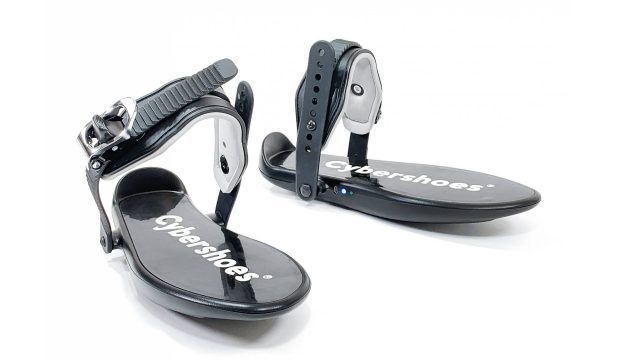
VR’s Quirkiest Locomotion Device ‘Cybershoes’ Shuts Its Doors for Good

The company behind the innovative VR locomotion device Cybershoes has officially shut down, ostensibly closing the final chapter on VR’s weirdest locomotion peripheral.

The news was first reported by Antony ‘Skarred Ghost’ Vitillo, who further notes production of Cybershoes stopped two years ago. Then, in 2024, one of its branches closed, Vitillo reports, leading to the Austria-based business folding completely sometime in April 2025.

Also noted by MIXED, Cybershoes co-founder Igor Mitric Lavovski confirmed in a LinkedIn post that “Cybershoes GmbH was officially shut down a month ago.”

As an Austrian limited liability company, specific details about formal bankruptcy filings or insolvency proceedings are not currently available to the public, so there’s still no clear idea on how the company can or will proceed.

Notably, Austrian companies are legally required to file for insolvency within 60 days of becoming insolvent or over-indebted, according to Vienna-based insolvency law specialist Andreas Howadt, LL.M, which could shed more light on the situation in the coming weeks.

Unlike conventional VR treadmills, which typically use a parabolic base and low-friction shoes to let users move in VR, Cybershoes are designed for seated VR gameplay. The device is essentially a pair of shoe-mounted rollers which include inertial measurement unit (IMU) to register foot orientation, letting you simulate walking or running in game, albeit from the comfort and safety of chair.


Founded in 2018, Cybershoes has done fairly well for itself despite never garnering public investment from traditional venture capital.

In 2018, the company attracted over €200,000 through its first Kickstarter campaign aimed at PC VR users, helping to bring the product from neat 3D printed prototype to the professional fit and finish of a proper consumer device.

In 2019, the company launched an IndieGogo funding campaign, managing to attract an additional €140,000 from over 500 backers. At the time, the company considered its IndieGogo campaign a way to “continue to build awareness among consumers and potential investors.”

Then, in November 2020, Cybershoes launched its second Kickstarter for a Quest-compatible version of the device, which only performed only half as well as the original PC VR-focused device, garnering around $98,000 from 470 backers.

At the time of this writing, neither the official store nor Amazon have units in stock. While it’s uncertain when Cybershoes ran out of stock through its official website, according to Amazon price tracker CamelCamelCamel, the latest Quest-compatible version ran out of stock sometime in late 2024.

For more info on Cybershoes, check out Vitillo’s review of the Quest-compatible version below:

The post VR’s Quirkiest Locomotion Device ‘Cybershoes’ Shuts Its Doors for Good appeared first on Road to VR.

How Murderbot’s Chris and Paul Weitz adapted All Systems Red for TV

For Paul and Chris Weirtz, Murderbot — the upcoming TV adaptation of Martha Wells’ sci-fi novella All Systems Red — was an experiment: Can you have a hero who tries to do nothing?

The 10-episode sci-fi series, which debuts May 16 on Apple TV+, follows an anxious security robot (Alexander Skarsgård) assigned to protect a survey group on a planetary mission. As the mission progresses and deadly surprises emerge, Murderbot grapples with concealing its capacity for free will — an ability enabled when it hacked its governor module — and its insecurities around humans, all while navigating existential questions about its purpose in the universe. Above all, though, Murderbot wishes it could spend its days simply viewing the 7,532 hours of video content it secretly squirreled away in its system for entertainment — a true media junkie, like most of the show’s viewers.

Full cast of Murderbot
Apple

Bringing All Systems Red to TV took years, delayed by the COVID-19 pandemic and the Writers Guild of America strike in 2023. But with support from Apple TV+’s head of worldwide video Jamie Erlicht, a fan of Wells’ work, Paul and Chris chipped away at the show’s scripts, sending every version to Wells for feedback. (Wells, as a consulting producer, ultimately weighed in on other aspects of the project, including design and casting.)

The series stays faithful to All Systems Red — the first of several books and short stories comprising The Murderbot Diaries — in most of the ways that count. The plot largely follows that of the novella, but also makes substantial additions. Members of the PresAux survey group which Murderbot protects, including Dr. Mensah (Noma Dumezweni), Gurathin (David Dastmalchian), Pin-lee (Sabrina Wu), Ratthi (Akshay Khanna), Arada (Tattiawna Jones) and Bharadwaj (Tamara Pdoemski), now have more nuance and deeper backstories. 

The Preservation Alliance, an independent group of planets which the PresAux survey group hails from, is now eccentric, even downright bohemian. During Murderbot’s season premiere, PresAux holds hands in a meditative circle, eyes closed, deliberating over whether to rent the refurbished Murderbot for their mission. Soon after landing on the planet, they dance in the desert, their bodies heaving, arms waving to the music’s beat — little touches inspired by aspects of Chris’s two decades of experience with Burning Man. (Several members of the mission also find themselves navigating the particular dramas of polyamory.)

“We also wanted a sense of these people being out of their element and out of their social setting,” Chris told Engadget. “They’re in the corporation rim, which is a really brutal, extractive capitalist world, but these people are egalitarians from outside of that system. They are [seen as] freaks not just to Murderbot, but to the corporation flunkies who are upselling them.”

While Murderbot’s favorite TV series, The Rise & Fall of Sanctuary Moon, is referenced in Wells’ novel, in Murderbot, the futuristic soap opera is its own fleshed out universe – a bonafide show-within-a-show. Intended as a parody of classic sci-fi, most obviously the original Star Trek series, Sanctuary Moon’s scenes are rife with heavily saturated sets and gaudy costumes. John Cho, as the captain of a starship, falls madly in love with a navigation systems robot (DeWanda Wise); Jack McBrayer portrays a navigation officer out of his depth. Their performances are comically over-the-top, but that’s the point.

“I have a theory that people think of good acting as being very restrained, and that is the case often, but my theory is that humans are emoting maniacs all the time. They’re hamming it up in front of the mirror, in their bathroom,” Paul said. “There was something great about being able to enter a David Lynch-like telenovela world and do the sci-fi version of those things.”

Casting the droll but irreverent character of Murderbot took time. Part-human, it experiences a full range of emotions but struggles with deep-seated social anxiety, and detests showing its face to humans — which may help explain why the character has become popular with members of the neurodivergent community. Skarsgård, whose diverse acting resume includes a Viking prince in The Northman, a ruthless tech CEO in Succession, the titular character in The Legend of Tarzan and a physically abusive husband on Big Little Lies, had traits and experiences Paul and Chris felt were essential for effectively playing the show’s central character.

As one might expect for a security robot, Paul Weisz noted Skarsgård is “physically imposing.” “You get the sense maybe he could kill somebody,” said Paul. But much like the titular character Paul felt this sometimes terrifying exterior belied something much more nuanced. “Alexander also has a really quirky sense of humor. His mind is very different from his body. He’s really unique.”

Bringing in Cho and McBrayer for their roles in the Sanctuary Moon scenes wasn’t nearly as intensive a search; Cho and the Weitz brothers had worked on several projects together over the years.

“It’s like a Faustian bargain when you work with us once, that we’re probably going to get your home cellphone,” Paul mused. “Jack McBrayer is best friends with Alexander, so that was the route to [him]. In terms of John, we worked with him first on American Pie, and I think we’ve done 12 things in different ways with him over the years. So it’s a little like The Godfather where it’s like, someday, I’m going to ask you for a favor.”

John Cho in the story-within-a-story
Apple

Filmed in Ontario, production started in 2024, lasting six months. Shooting the show’s planetary scenes meant scouring for locations like mining quarries, slag heaps and abandoned factories. Interior shots for scenes at Port Freecommerce, a vast star base, in the season premiere were filmed on soundstages in Toronto.

All along, Paul and Chris set out to present a far-flung universe seen less often on screen in recent years. Shirking the dark, grim aesthetic heavily favored in many more recent sci-fi TV and film projects, they worked with production designer Sue Chan to create a universe dominated by bright lighting, white and gray sets, light-colored fabrics and colorful patterns.

“We drew on the wellspring of science fiction we read when we were kids and on science fiction paperback covers of the 1980s, which always seemed to have such great concept design and a bright, interesting world in which to lose yourself,” Paul recalled. “Specifically, it seemed like since this was a world that was dominated by corporations, there’d be a lot of logos everywhere. There’d be a cheapness to a lot of what was manufactured. Also, if you look around, there are a lot of things that seem to have been extruded by giant 3-D printers. Even the food is extruded by 3-D printers.”

Designing Murderbot’s armor was a collaborative process with the costume department, led by costume designer Carrie Grace and specialty costume designer Laura Jean Shannon. To start, they looked at helmets from virtually every well-known robot depicted in military and sci-fi movies from the last 50 years. Initial designs resembled Star Wars stormtroopers, but Skarsgård “really pushed” for the robot’s look to be “something unique,” according to Paul. Drawing inspiration from The Little Rascals’ Petey, who had a large black circle around one of his eyes, the team built a large, distinctive black eye piece into Murderbot’s helmet visor.

The aforementioned Petey eye
Apple

Murderbot spends much of its time clad in armor, but it also has downtime when the armor comes off, revealing an impossibly smooth humanoid form resembling Mattel’s Ken dolls. To achieve that look, Skarsgård regularly waxed his entire body during filming.

“Alexander actually volunteered to have his body waxed, because he thought it was what would be best for the character,” Chris recalled. “I remember discussing it with him, and I said, ‘Listen, man, I don’t know if people are even going to notice, but it might make just a tiny bit of difference in terms of the believability of the character.’”

“[Alexander’s] like, ‘Yeah, I should wax myself,’” Chris continued. “Then for the next five, six months, he had to do that every week until he realized eventually that his next role was to play a hairy biker [in the romance drama Pillion].”

In Murderbot, Paul and Chris saw more than a quirky sci-fi novella — they saw a deeply human story wrapped in armor and deadpan humor. Their TV adaptation doesn’t just bring Wells’ world to screen with panache, it leans into the quiet radicalism of a character who resists heroism, craves isolation and struggles to navigate the messiness of human connection.

That emotional core — unexpected, thoughtful, and entirely sincere — is what makes Murderbot more than just another sci-fi romp. It’s a mirror for our most vulnerable selves, disguised as a robot who’d really rather be watching TV.

This article originally appeared on Engadget at https://www.engadget.com/entertainment/tv-movies/how-murderbots-chris-and-paul-weitz-adapted-all-systems-red-for-tv-130034113.html?src=rss

What’s New on Hulu in June 2025

FX’s highly acclaimed hit series The Bear returns to Hulu in June for its fourth season, picking up right after the events of season three, when Carmy received the Chicago Tribune’s review of his fine-dining restaurant. The main cast—Jeremy Allen White, Ebon Moss-Bachrach, and Ayo Edebiri, to name a few—are reprising their roles in pushing The Bear forward. All 10 episodes will drop on June 25.

Call Her Alex (June 10) is a Hulu original docuseries following “Call Her Daddy” podcast host Alex Cooper in preparation for her first tour with a behind-the-scenes look at the events that shaped her journey. Similarly, Barbara Walters Tell Me Everything (June 23) uses archival footage to explore Walters’ life and career as a journalist and host in a male-dominated industry.

On the film side, The Actor (June 30) is a crime mystery based on Donald E. Westlake’s novel “Memory,” starring Andre Holland as an actor with memory loss and Gemma Chan as a costume designer in the small town he ends up in. Predator: Killer of Killers (June 6) is an animated action/adventure and Hulu original set in the Predator universe.

Here’s everything else coming to (and leaving) Hulu in June.

What’s coming to Hulu in June 2025

Arriving June 1

  • Adam (2019)

  • Alien (1979)

  • Alien 3 (1992)

  • Alien Resurrection (1997)

  • Alien vs. Predator (2004)

  • Alien: Covenant (2017)

  • Aliens (1986)

  • Aliens vs. Predator: Requiem (2007)

  • Beasts Of The Southern Wild (2012)

  • Before Midnight (2013)

  • Betsy’s Wedding (1990)

  • Beverly Hills Ninja (1997)

  • Big Eden (2000)

  • Big Fish (2003)

  • The Big Hit (1998)

  • Big Mommas: Like Father, Like Son (2011)

  • Blue Jasmine (2013)

  • Boy Meets Girl (2014)

  • Breakin’ All the Rules (2004)

  • The Bronze (2016)

  • Bubble Boy (2001)

  • Bugsy (1991)

  • Cedar Rapids (2011)

  • The Chronicles Of Narnia: The Voyage Of The Dawn Treader (2010)

  • Cold Pursuit (2019)

  • Cyrus (2010)

  • Daddy Day Care (2003)

  • Death on the Nile (2022)

  • Deja Vu (2006)

  • Delivery Man (2013)

  • Dude, Where’s My Car? (2000)

  • Edge of Tomorrow (2014)

  • Elena Undone (2010)

  • Freddy Got Fingered (2001)

  • The Girl Next Door (2004)

  • Grown Ups (2010)

  • Grown Ups 2 (2013)

  • Happy Gilmore (1996)

  • The Heat (2013)

  • Hitchcock (2012)

  • Hurricane Bianca (2016)

  • Idiocracy (2006)

  • Independence Day (1996)

  • The Joy Luck Club (1993)

  • Just Go With It (2011)

  • Kung Fu Panda 3 (2016)

  • Let’s Be Cops (2014)

  • Loving Annabelle (2006)

  • Mamma Mia: Here We Go Again! (2018)

  • Mamma Mia! (2008)

  • The Mask (1994)

  • Me And Earl And The Dying Girl (2015)

  • Mirrors (2008)

  • The Namesake (2007)

  • A Perfect Ending (2012)

  • Pineapple Express (2008)

  • Predator (1987)

  • The Predator (2018)

  • Predator 2 (1990)

  • Predators (2010)

  • Pride + Prejudice + Zombies (2016)

  • Prometheus (2012)

  • Reno 911! Miami: The Movie (2007)

  • Sordid Lives (2000)

  • 28 Weeks Later (2007)

  • The War of the Roses (1989)

  • We’re The Millers (2013)

  • Working Girl (1988)

  • You Don’t Mess With The Zohan (2008)

Arriving June 3

  • I’ve Somehow Gotten Stronger When I Improved My Farm-Related Skills: Complete Season 1 (Dubbed & Subbed)

  • Miss Kobayashi’s Dragon Maid: Complete Season 1 (Dubbed & Subbed)

  • The Quiz With Balls: Season 2 Premiere

  • So I’m a Spider, So What?: Complete Season 1 (Dubbed & Subbed)

  • Wise Man’s Grandchild: Complete Season 1 (Dubbed & Subbed)

  • Yuri on Ice: Complete Season 1 (Dubbed & Subbed)

  • Presence (2025)

Arriving June 4

  • The Great House Revival: Complete Season 5

Arriving June 5

  • National Anthem (2023)

Arriving June 6

  • Not Her First Rodeo: Complete Season 1

  • Predator: Killer of Killers: Film Premiere

  • Borat: Cultural Learnings Of America For Make Benefit Glorious Nation … (2006)

  • Deuce Bigalow: Male Gigolo (1999)

  • Hot Shots! (1991)

  • Hot Shots! Part Deux (1993)

  • Shallow Hal (2001)

  • The Ringer (2005)

Arriving June 7

  • Gypsy’s Revenge: Complete Season 1

  • I (Almost) Got Away With It: Complete Season 3

  • Kids Baking Championship: Complete Season 12

  • Murder in the Heartland: Complete Season 1

  • Naked and Afraid: Last One Standing: Complete Season 1

  • Sister Wives: Complete Season 12

Arriving June 8

  • Scream (2022)

Arriving June 9

  • Beyblade X: Season 1B

Arriving June 10

  • Call Her Alex: Complete Docuseries

  • And Then We Danced (2019)

  • Clifford the Big Red Dog (2021)

Arriving June 11

  • The Snake: Series Premiere

  • Gran Turismo (2023)

Arriving June 12

  • The 1% Club: Season 2 Premiere

Arriving June 13

  • Atsuko Okatsuka: Father: Special Premiere

  • Absolution (2024)

Arriving June 14

  • 90 Day Fiance: Complete Season 5

  • 90 Day Fiance UK: Complete Season 2

  • Guy’s Grocery Games: Complete Seasons 32 & 33

  • I’d Kill For You: Complete Season 3

  • Joel McHale: Live from Pyongyang (2019)

Arriving June 16

  • My Happy Ending: Complete Season 1 (Sub)

  • Black Christmas (2019)

Arriving June 17

  • SALLY (2025)

  • Skincare (2024)

Arriving June 19

  • The Quiet Ones (2024)

Arriving June 20

  • The Bravest Knight: Season 2B

  • Out Come the Wolves (2024)

Arriving June 23

  • Barbara Walters Tell Me Everything: Documentary Premiere

  • Helck: Complete Season 1 (Dubbed & Subbed)

  • My Instant Death Ability is Overpowered: Complete Season 1 (Dubbed & Subbed)

  • My Isekai Life : Complete Season 1 (Dubbed & Subbed)

Arriving June 24

  • Survive (2024)

Arriving June 25

  • FX’s The Bear: Complete Season 4

Arriving June 27

  • F*ck Marry Kill (2024)

Arriving June 29

  • The Bachelor: Complete Seasons 27 & 28

Arriving June 30

  • Boonie Bears: Time Twist (2024)

  • Texas True Crime: Complete Season 5

  • The Actor (2025)

What’s leaving Hulu in June 2025

Leaving June 1

  • Christmas with the Campbells (2022)

Leaving June 2

  • The Amazing Maurice (2022)

Leaving June 4

  • Intrigo: Dear Agnes (2019)

Leaving June 8

  • Indemnity (2021)

Leaving June 10

  • Here Before (2021)

  • Warhunt (2022)

Leaving June 11

  • Intrigo: Samaria (2019)

Leaving June 13

  • The Worst Person in the World (2021)

Leaving June 17

  • Ted K (2021)

  • The Ledge (2022)

Leaving June 22

  • The Burning Sea (2021)

Leaving June 24

  • Big Gold Brick (2022)

  • Gasoline Alley (2022)

Leaving June 25

  • The Desperate Hour (2022)

Leaving June 30

  • Transfusion (2023)

‘Fortnite’ is offline on iOS around the world

After winning a court case pretty decisively against Apple, developer Epic submitted Fortnite to the US App Store and suggested it would soon be back on iOS. However, according to the Fortnite team, Apple has blocked the game on both the US App Store and the EU’s iOS version of its own Epic Games Store.

Fortnite had been available on iPhones in Europe since August last year due to EU rules that allow third-party iOS stores.

Epic CEO Tim Sweeney suggested that Apple didn’t have any particular reason to refuse the application. “Apple’s App Review team should be free to review all submitted apps promptly and accept or reject according to the plain language of their guidelines,” he tweeted. “App Review shouldn’t be weaponized by senior management as a tool to delay or obstruct competition, due process, or free speech.” Apple has yet to comment on the matter. 

To recap: this entire kerfuffle between Apple and Epic has been over, essentially, rent-seeking, and who gets to profit from it. Apple thinks it should keep getting a cut of sales through its App Store; Epic, naturally, would like to keep lining its own pockets. This fight initially opened up the option for developers to use third-party app stores for iOS apps, though a portion of their sales were still flowing back to Apple’s coffers. The most recent court ruling attempted to close that apparent loophole.

The latest Fortnite version submitted by Epic included payment systems for Apple along with external payment via Epic’s own store. Fortnite was originally banned from the App Store in 2020 after it submitted a version that included an external payment system that violated Apple’s rules at the time — a decision subsequently backed by a court decision in 2021. To that end, Apple may not be legally obligated to reinstate Epic, despite the fact that the rule originally broken by the developer no longer existed.

This fight is, of course, ongoing. Apple appealed the most recent ruling and asked the court to halt App Store changes until a final decision is made.

This article originally appeared on Engadget at https://www.engadget.com/gaming/fortnite-is-offline-on-ios-around-the-world-131535163.html?src=rss