Samsung Back To Working On Upstreaming Tesla FSD SoC Support In The Linux Kernel

In early 2022 Samsung engineers began working on upstreaming support for the Tesla Full Self-Driving “FSD” SoC to the mainline Linux kernel. Those early patches were mainlined in Linux 5.18 and later in 2022 turned to working on the PCIe support for the Tesla FSD SoC with the mainline kernel, but then work seemingly ceased on this upstreaming effort. More than two years later, the work was restarted today with Samsung posting the latest patches for enabling PCI Express support for the Tesla FSD SoC in the Linux kernel…

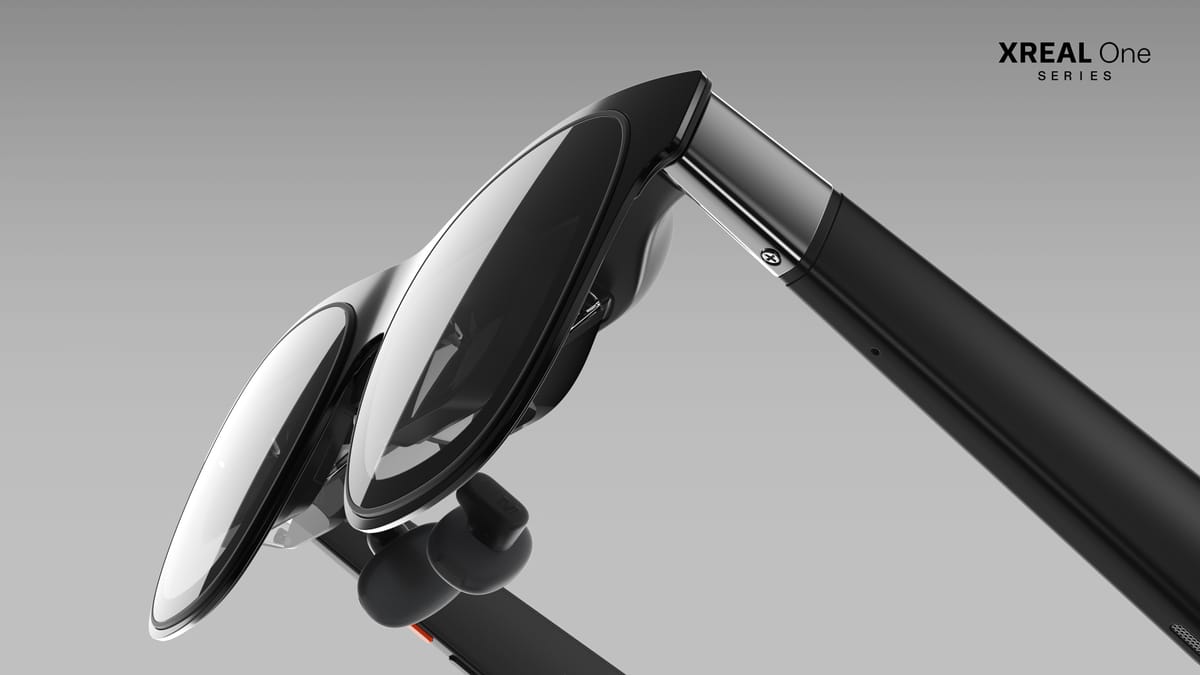
Xreal One Glasses Become 6DoF With Xreal Eye & Xreal Beam Pro

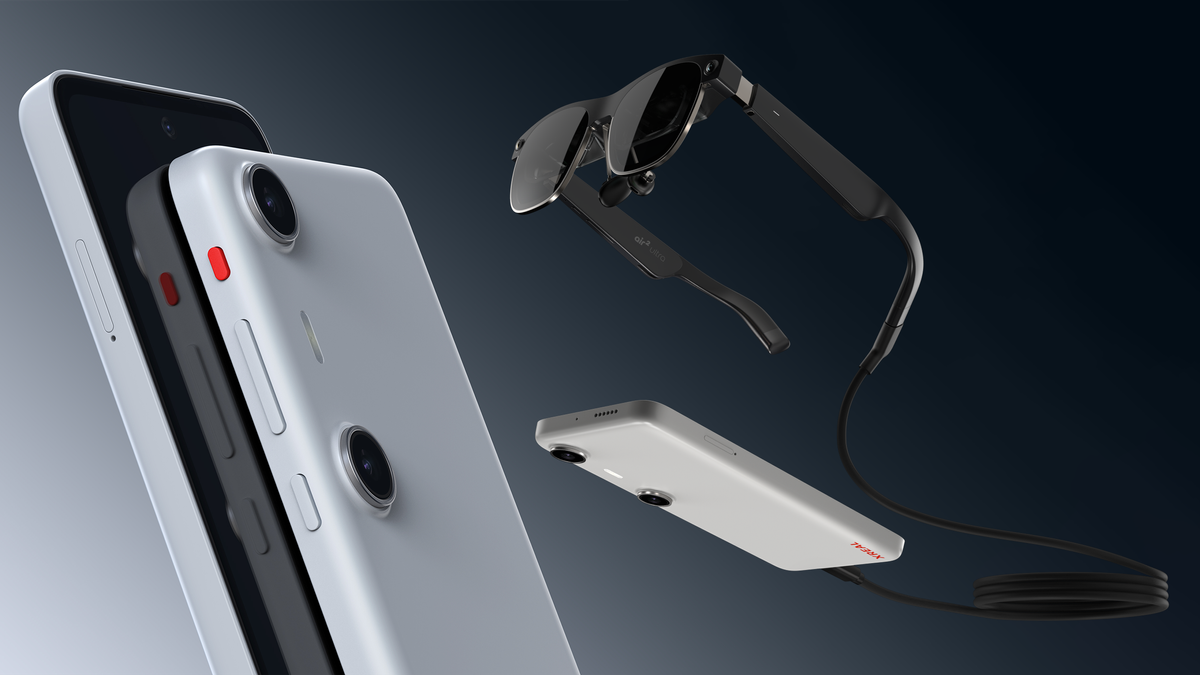
When used with Xreal Beam Pro, the new Xreal Eye camera addon adds 6DOF positional tracking to Xreal One display glasses.

If you’re unfamiliar, Xreal devices are display glasses that act like monitors, taking in power and HDMI or DisplayPort over USB-C from your existing devices and displaying this input on a virtual screen in front of you.

The current Xreal One series have built-in 3DoF tracking, meaning the screen stays in place when you rotate your head. However, when you move your head, such as when leaning, the display will seem as if it’s attached to your head, not fixed in space.

Xreal One Has Built-In 3DoF Tracking & A Wider Field Of View
The new Xreal One series bring built-in 3DoF tracking and a wider field of view to virtual display glasses.
UploadVRDavid Heaney

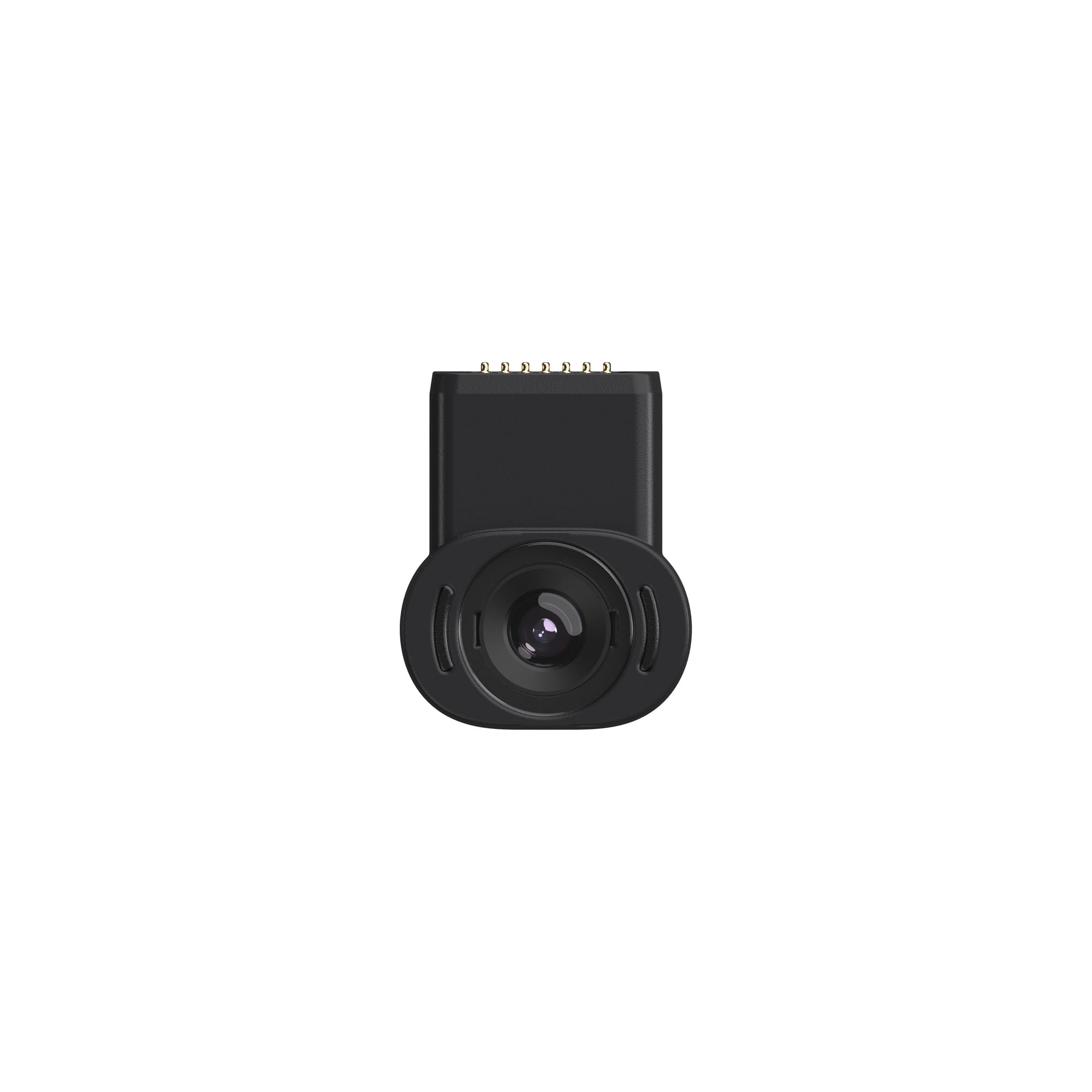
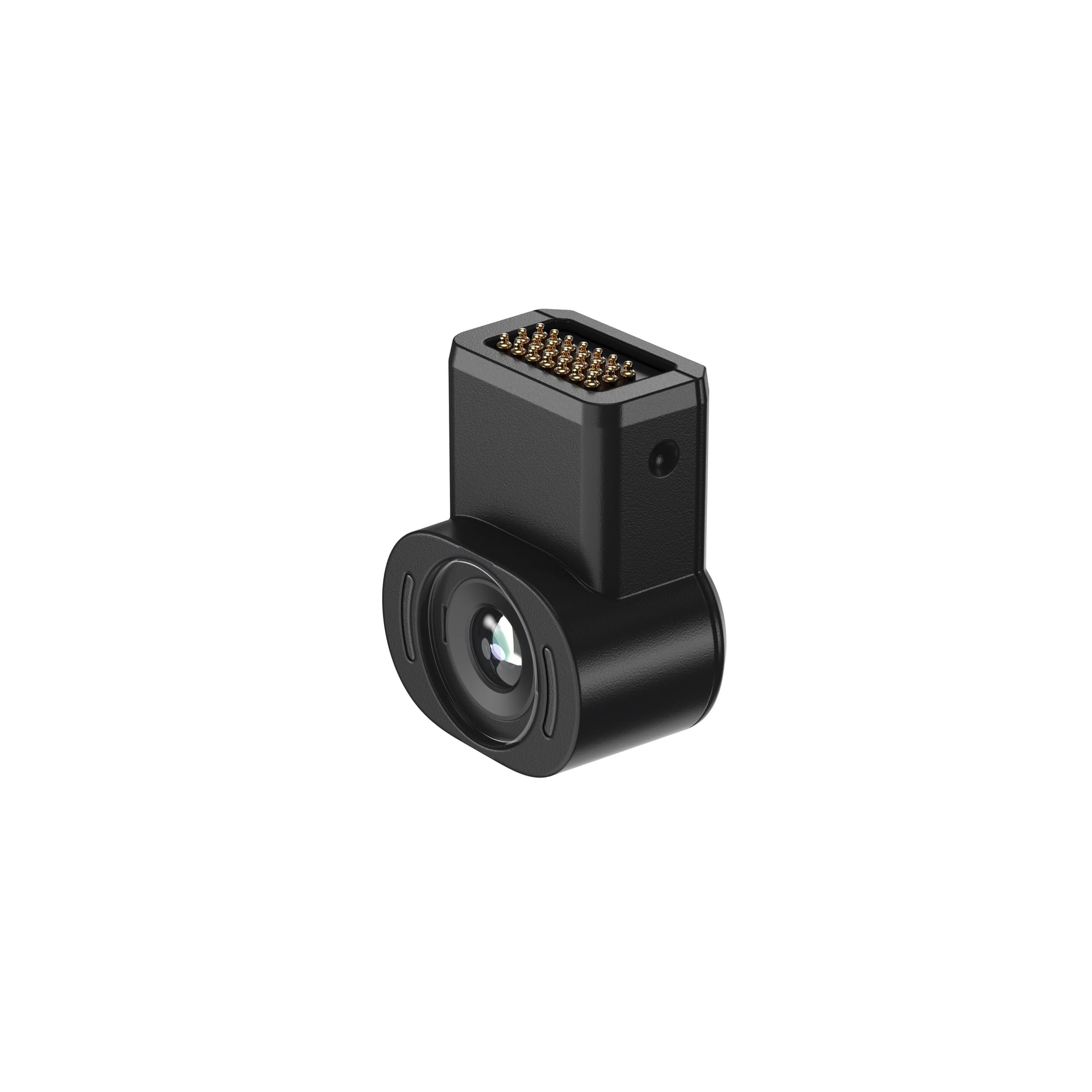
Now, Xreal has started to launch an accessory called Xreal Eye, a camera that attaches between the lenses.

For most buyers, the purpose of Xreal Eye is to enable first-person capture of photos and videos, similar to the Ray-Ban Meta smart glasses. But for those who use the Xreal Beam Pro device, Xreal Eye upgrades Xreal One glasses to 6DoF positional tracking, meaning the virtual screen will remain fixed in space even as you move around.

Xreal Eye

Xreal Beam Pro, if you’re unaware, is a $200 phone-like device that acts as a dedicated computing device for your Xreal glasses. It was primarily designed for the Xreal Air 2 Ultra glasses which have two built-in cameras, and on Air 2 Ultra the Beam Pro also enables 6DoF.

It’s rare to see an XR device achieve 6DoF positional tracking with only one camera, called monocular SLAM, and it likely doesn’t offer the same tracking quality you’d get on headsets and glasses with multiple cameras. Xreal also cautions that it won’t work well in low lighting, outdoors, or in any other environment where objects are far away.

Xreal Beam Pro: A Phone-Like Device To Power Xreal Glasses
Xreal Beam Pro is essentially a custom Android phone specifically designed to power Xreal Glasses, including 6DoF AR on Xreal Air 2 Ultra.
UploadVRDavid Heaney

Xreal Eye preorders have opened in some regions like Japan, and the company plans to launch it in the other countries where Xreal One is sold in late June.

The total entry price for Xreal One glasses with Xreal Eye and Xreal Beam Pro is $800, and you can opt for the higher-end Xreal One Pro or higher RAM and storage model of Xreal Beam Pro.

Why We’re Not Getting That AI-Powered Siri Anytime Soon

If you were under the assumption that Siri was soon going to be supercharged with AI, you wouldn’t be alone. In fact, Apple has advertised as much since last WWDC, showing off its ChatGPT-like assistant in commercials and promotional materials.

It’s been nearly a year since WWDC 2024, and that new Siri is still not here. The thing is, it likely won’t be for a long time. How long is anyone’s guess (I’ve been tracking the delays here), but one thing seems for certain: Apple is not showing off AI Siri at next month’s WWDC 2025.

Apple’s AI program is a mess

In Mark Gurman’s latest piece for Bloomberg, he describes a chaotic situation regrading Apple’s AI department. The piece is a fascinating and in-depth look at Apple’s AI woes, and I won’t give a detailed summary of the entire article. However, I will briefly discuss what’s going on, and how it related to AI Siri:

Executive leadership at Apple, including senior vice president of Software Engineering Craig Federighi, didn’t believe AI was worth the investment, and didn’t want to allocate resources away from Apple’s core software components in order to develop the technology. But once Federighi used ChatGPT following its late 2022 launch, he did a 180. He and other Apple executives began meeting with the big AI companies to learn everything they could, and pushed for iOS 18 to have “as many AI-powered features as possible.”

While Apple’s AI department already existed before this scramble (the company had poached Google’s artificial intelligence chief John Giannandrea), the engineers simply couldn’t match the quality or accuracy of the tools provided by other companies like OpenAI, Anthropic, or Google, who had a huge head start on generative AI. That lag manifested in two ways: First, many of the AI features that Apple did bring to market were half-baked. Apple Intelligence’s notification summaries feature, for example, infamously made some major mistakes, such as “summarizing” a BBC news alert to say that United Healthcare shooting suspect Luigi Mangione had shot himself. (Apple later disabled the feature for news alerts.)

Second, because Apple couldn’t rely on its own tech to carry Apple Intelligence, they outsourced some tech to another AI company. While there was much debate about which company they should work with (Giannandrea wanted to work with Google and bring Gemini to iOS), Apple eventually settled for ChatGPT—which is why OpenAI’s bot is built into your iPhone today.

Apple’s lack of AI focus meant they missed the rush to acquire GPUs—the main processing unit used for training and running AI models. They also have strict privacy policies when it comes to user data, which severely limits what data they can use to train their models. (Some might say that’s actually a good thing, and take a pause to think about the companies that do have a plethora of data to train with.)

Siri

While Apple was able to get some AI features working “well” enough to ship, Siri was never among them. In order to bring AI to Siri, the company had to split Siri’s “brain” in two—one featuring the existing code, used for traditional Siri tasks like setting timers and making calls, and the other for AI. While the AI-side in a vacuum can work, integrating it with the other half of Siri’s brain is problematic, and is the cause of much of the delay.

But rather than wait until Apple figured out how to get AI Siri working to actually show off its new features, the company went ahead and marketed them heavily. During WWDC 2024, we saw prerecorded demos of Siri taking complex requests, and generating helpful answers by accessing both a knowledge base about the user in question, as well as an awareness of what was happening on-screen. A prime example was an Apple employee asking Siri about their mom’s travel itinerary: Siri dove through the employee’s messages with their mom to draw up the plans.

Apple even hired Bella Ramsey of The Last of Us to promote AI Siri features: In the commercial, Ramsey sees someone at a party they recognize but don’t remember the name of. Ramsey then asks Siri “What’s the name of the guy I had a meeting with a couple of months ago at Cafe Granel?” Siri immediately responds with the acquaintance’s name, pulling from a calendar entry. Ramsey doesn’t need to say the exact date or where to pull the information from, since AI Siri is presumably contextually aware, and can understand vague responses. (Apple has since deleted the ad from its YouTube account

Since then, AI features have trickled in on various iOS 18 updates, but not AI Siri. We’ve been following reports (mostly from Gurman) that Apple’s engineers were having trouble getting it to work, and each delay pushed AI Siri’s release to the next major iOS 18 update. At one point, we thought it could come with iOS 18.4: As Gurman reports in this latest piece, that was the plan, but Federighi himself was surprised to see that the AI Siri features didn’t work on a beta for 18.4.

Siri’s big AI upgrade was delayed again, and now “indefinitely.” There are no plans to announce Siri’s new features alongside iOS 19 next month. While the goal is to get AI Siri out for iOS 19 at some point, the situation is dire—Siri’s features reportedly don’t work a third of the time, and every time you fix one of Siri’s major bugs, “three more crop up.”

Gurman’s sources say Apple has an AI department in Zurich working on a new LLM-based Siri that scraps the two-sided brain of the current assistant. Siri also has a new leader, Mike Rockwell, who replaced Giannandrea this spring. Some sources even say that Apple’s internal chatbot is now rivaling ChatGPT, which could prove useful if integrated with Siri.

There are reasons to be mildly optimistic about Siri’s long-term future, but there’s no denying the last year has been a disaster. If you’re excited for Siri’s next big development, lower your expectations for the short-term.


Knights of Neon Enters Full Release On Quest Today

Created by solo-developer Reality Shift, Knights of Neon is an action RPG available on Quest now.

Knights of Neon is a high-octane VR hack ‘n’ slash game set in a blazing futuristic world called Cyberspace. Here, you become cybernetic knights, wielding melee weapons like axes, hammers, and swords as you complete missions and take out opposing cult members that seek to take control of this vaporwave land. You can check out gameplay from today’s SideQuest Indie Spotlight below:

0:00

/1:31

As you progress through the campaign, you’ll have the opportunity to upgrade your combat skills and refine your weaponry, as well as befriend other warriors in Cyberspace to bolster your offensive. It’s not all combat either, as Knights of Neon also features platforming challenges, and a driving simulator that allows you to drift across neon-soaked environments while a synthwave score plays.

Knights of Neon also features an Endless Arena Mode for anyone looking to test their fighting skills beyond the main single-player campaign. In this mode, you take on waves of enemies on repeat until you meet your demise or need a time-out.

This isn’t the first time we’ve seen the game on Quest, and Knights of Neon previously appeared under the name ‘Recursion VR.’ An early access release later followed in March 2024 under the new name, and Reality Shift informed UploadVR that today’s relaunch delivers a major update to the official version.

Knights of Neon is available on Quest today for $19.99, and the official website mentions a Steam edition is coming soon.

Razer’s new Blade 14 laptops are outfitted with RTX 5000 series cards

Razer is back with a refresh of the Blade 14 laptop and it’s the thinnest 14-inch model in the company’s history. It measures just 15.7mm at its slimmest point and weighs just over three pounds. This makes it an ideal computer for on-the-go gaming.

To that end, these laptops feature the new NVIDIA GeForce RTX 5000 series GPUs. Buyers can spec the Blade 14 out with up to the RTX 5070. This pairs with NVIDIA DLSS 4 tech to provide “the highest quality gaming experience possible in a 14-inch” laptop.

They are also outfitted with the AMD Ryzen AI 9 365 processor that can achieve up to 50 TOPS. It comes with a bunch of AI applications that take advantage of that processor, like Copilot+, Recall, Live Captions and Cocreate.

The Blade 14 goes up to 64GB of RAM and includes a 72 WHr battery that should last around 11 hours before requiring a charge. That’s a pretty decent metric for a laptop this powerful. The 3K OLED display offers a 120Hz refresh rate and a 0.2ms response time.

A laptop on a desk.
Razer

There’s a MicroSD slot, two USB-C ports and a traditional HDMI 2.1 port. The Razer 14 integrates with wireless standards like Bluetooth 5.4 and Wi-Fi 7. The laptop even includes a newly designed ventilation system for better performance. The exterior is made from T6-grade aluminum and features a sand-blasted texture and an anodized matte finish.

It’s available for purchase right now and comes in black and gray colorways. Pricing starts at $2,300, but that one comes with just 16GB of RAM and the RTX 5060 GPU.

A strange laptop in a strange land.
Razer

The Blade 16 laptop is now available in a new configuration that features the RTX 5060 GPU. The company also recently revealed the biggest sibling of the bunch, the Blade 18. That one goes all the way up to the RTX 5090.

This article originally appeared on Engadget at https://www.engadget.com/computing/laptops/razers-new-blade-14-laptops-are-outfitted-with-rtx-5000-series-cards-185517669.html?src=rss

Microsoft’s Edit on Windows is a New Command-Line Text Editor

Microsoft unveiled “Edit on Windows,” a new command-line text editor, at its Build conference today. The open-source tool allows developers to edit files directly in the command line without switching to another app, similar to vim but designed to be more user-friendly.

Accessible by typing “edit” in a command prompt, the lightweight editor (less than 250KB) includes features like multiple file support via ctrl + P shortcuts, find and replace functionality, and regular expression support. “What motivated us to build Edit was the need for a default CLI text editor in 64-bit versions of Windows,” said Christopher Nguyen, product manager of Windows Terminal, noting that 32-bit Windows versions already ship with MS-DOS Edit.

Microsoft also wanted to avoid the notorious “how do I exit vim?” problem by creating a modeless editor, The Verge writes. The tool will be available to Windows Insiders in the coming months.


Read more of this story at Slashdot.

Trump will sign the Take It Down Act criminalizing AI deepfakes today

President Donald Trump is set to sign the Take It Down Act today, according to CNN. The act is a piece of bipartisan legislation that criminalizes the publication of “nonconsensual intimate visual depictions,” including AI deepfakes. The law made it through the US House of Representatives in April 2025, prompting concern from free speech advocates that believe parts of the law could be easily abused to curtail speech.

The Take It Down Act was created to address the spread of nonconsensual, sexually exploitative images online. Laws exist addressing the issue at the state level, and some online platforms already have methods for requesting a nonconsensual image or video be taken down. This new law would set a federal standard, though, making taking down posts mandatory and directing companies to create a system for requesting images or videos be removed, under the supervision of the Federal Trade Commission.

The issue with the law as written, according to the Electronic Frontier Foundation, is that its takedown provision “applies to a much broader category of content…than the narrower NCII [nonconsensual intimate image] definitions found elsewhere in the bill.” The EFF also suggests that the short time-frame of 48 hours that the Take It Down Act requires means that smaller online platforms will probably just remove posts when they receive a complaint rather than verify that the post actually violates the law.

Trump has expressed interest in taking advantage of the new law, as well. “I’m going to use that bill for myself, too, if you don’t mind. There’s nobody gets treated worse than I do online. Nobody,” Trump said during a joint session of Congress in March. Given the lopsided composition of the current FTC and the Trump administration’s already loose interpretation of existing laws, it’s not hard to imagine how the original intentions of the Take It Down Act could be twisted.

This article originally appeared on Engadget at https://www.engadget.com/big-tech/trump-will-sign-the-take-it-down-act-criminalizing-ai-deepfakes-today-184358916.html?src=rss

Trump to sign law forcing platforms to remove revenge porn in 48 hours

After dragging its feet for years, America is finally taking its first big step toward shielding victims of non-consensual intimate imagery (NCII)—also known as revenge porn—from constantly being retraumatized online.

On Monday afternoon, Donald Trump is scheduled to sign the Take It Down Act into law. That means that within one year, every online platform will be required to remove both actual NCII and fake nudes generated by artificial intelligence within 48 hours of victims’ reports or face steep penalties.

Supporters have touted the 48-hour timeline as remarkably fast, empowering victims to promptly stop revenge porn from spreading widely online. The law’s passing comes at a time when AI-generated revenge porn is increasingly harming a wider pool of victims—including some who may have never shared a compromising photo, like dozens of kids in middle and high schools nationwide. Acknowledging the substantial harm to kids already, the law includes steeper penalties for NCII targeting minor victims, a threat lawmakers hope will help minors get harmful images removed “as soon as possible.”

Read full article

Comments

Avaota Previews C1 SBC in Raspberry Pi A Form Factor with Allwinner H618

Avaota has recently shared details about the C1, a compact single-board computer in the Raspberry Pi A form factor. Based on the Allwinner H618 processor, the board is a variant of the Yuzuki Chameleon and expands the Avaota SBC lineup with a small-footprint, feature-rich design aimed at embedded development and multimedia applications. Based on the watermark […]

Wild Study Claims Gravity Is Proof The Universe Is A Big Computer Simulation

Wild Study Claims Gravity Is Proof The Universe Is A Big Computer Simulation
File this one under “fun to think about, probably not changing your day job”: a new study just dropped that suggests gravity itself might be the smoking gun that our entire universe is one big computational simulation. Yep, we’re talking simulation theory again — the idea that reality is just a very elaborate piece of code running on some

Seven Ways to Turn Your Entryway Into a More Functional Space

If you’re like most folks, you use your home’s entryway to hang a few coats, store an unruly pile of shoes, and give you a place to drop your keys and the mail when you walk in. If you have the space, you might use it as a full-fledged mud room—a space to shed your wet coats, boots, and umbrellas before stepping into the house proper.

But your entryway could be a lot more than that—especially if you live in a small space and need to make use of every inch of square footage. Just because it’s a space you and your guests pass through on the way to somewhere else doesn’t mean you can’t use it for other purposes. And you can enhance the space for the guest experience as well, turning a transitional room no one remembers into a multi-functional space. Here are seven options for getting more out of your entryway.

Use it as an office space

If you ever work from home or just need a space to do household paperwork or to noddle away at your hobbies, your entryway can easily be transformed into a tiny office. A fold-down desk that compresses into an unobtrusive wall unit when not in use, combined with an adjustable stool or other mobile seating that can be used for putting on and taking off shoes when you’re not working, is all you need. If you have the wall space, throw in extra shelving or a narrow filing cabinet (or combination piece like this filing cabinet/printer stand/shelving unit) for maximum office storage in a minimal footprint. When you’re not working, you can fold everything up and instantly have a clear entryway again.

Turn it into a library

Need a place to store your books and set up a cozy reading nook? The entryway could be that spot. A row of shelves (or other book storage) along one wall, a small but comfy chair (with a slim console table for cups of tea or literary cocktails), and a floor lamp that’s great for reading, and you’re all set. When not in use, this area can also set a warm, comfortable vibe for visitors.

Assemble a gallery display

If you have lots of art pieces, collectibles, or mementos to display, your entryway is an ideal place to put them all. Hanging pictures or installing floating shelves to display your items not only beautifies the space, giving it a cohesive and personal style, it also makes it a lot more inviting for guests. Instead of moving through a chaotic or antiseptic place that pushes them to kick off their shoes and get into the main part of the house as quickly as possible, your entryway could be a place people want to linger.

Build a conversation nook

If your home lacks a space to sit and chat without distractions, your entryway might be the ideal spot. If you have room for a shallow sofa like this one, or a pair of small accent chairs like these, you can set up a spot where you can visit with guests. Having a space like this in your entryway also makes it ideal for those casual encounters with neighbors—instead of standing awkwardly in the doorway for fifteen minutes, invite them in to sit.

Add storage

If you’re hurting for storage space, consider all that underused wall and floor space in your entryway. You can store anything there, after all—it doesn’t have to be entryway-related, and no one will ever know what’s in those drawers and cabinets unless you tell them. Even a small foyer can be made into a storage paradise with some shelving, a shallow wardrobe or armoire, or a dual-purpose storage bench.

Use it as a bar

You want to host sophisticated gatherings fueled by social lubricants, but your bar is currently also your kitchen counter? Look to your entryway. A narrow bar cart against one wall could be the answer. If you want to make it a space people will linger in after securing their cocktails, add some floating shelves at counter heights (typically 36-48 inches high) to set down glasses. To really commit, a slim beverage refrigerator for beer, wine, and mixers next to the bar cart is a great addition.

Turn it into your family information center

Your entryway can be the place where everyone in the house knows to look for daily information. A cork board or chalkboard (or a combination) mounted in the entryway makes it easy for everyone coming and going to check the day’s schedule, look for reminders, or pick up and drop off items for later retrieval. This can be a better option than the kitchen because it will be the last and first place people see when leaving or entering the house, increasing the chances that you’ll actually remember the things you’re reminding one another about. (When you have guests staying over, it’s also a perfect spot to mark down things like the WiFi password or important phone numbers.)

Star Citizen Dev Responds To Angry Backlash Over Pay-To-Win Ship Upgrades

Star Citizen Dev Responds To Angry Backlash Over Pay-To-Win Ship Upgrades
Star Citizen has defied the odds, remaining in an alpha release state for over a decade without losing support from its community, while managing to raise several hundreds of millions of dollars in that time. While the game is no stranger to controversial moments, the latest decision from developer Cloud Imperium Games has started a backlash

LinkedIn Executive Warns AI Threatens Entry-Level Jobs as Graduate Unemployment Rises

AI is eroding entry-level positions across multiple industries, threatening the traditional career ladder for young professionals, LinkedIn’s chief economic opportunity officer warned Monday. College graduate unemployment has risen 30% since September 2022, compared to 18% for workers overall, according to LinkedIn data. The company’s research shows Generation Z workers expressing greater pessimism about their futures than any other age group.

“Breaking first is the bottom rung of the career ladder,” wrote Aneesh Raman in a New York Times column, citing examples across technology, law, and retail where AI is replacing tasks traditionally assigned to junior workers. A LinkedIn survey of 3,000 executives found 63% believe AI will eventually handle mundane entry-level tasks, with professionals holding advanced degrees likely facing greater disruption than those without.

Some firms are adapting by redesigning roles. KPMG now assigns recent graduates tax work previously reserved for more experienced employees, while Macfarlanes has early-career lawyers interpreting complex contracts once handled by senior colleagues. Though economic uncertainty also impacts hiring, Raman warned that delayed career entry can cost young workers approximately $22,000 in earnings over a decade.


Read more of this story at Slashdot.

Crime Scene VR Cleaning Sim Wiped Clean Arrives Next Month On Steam

Wiped Clean is a story-driven cleaning simulator coming to PC VR next month.

Developed by Luminary Creations, Wiped Clean is a crime scene cleaning simulator that asks you to uncover mysteries, one pool of blood or dead body at a time. The twist here is that you aren’t just regular cleaners and are instead undercover agents, attempting to infiltrate a sketchy organization called the Syndicate as you investigate a dangerous conspiracy.

0:00

/1:04

The organization is led by an infamous hitman called Victor Kane, and players need to find out the truth behind the killings before they get found out themselves. Progressing through levels unlocks new equipment and skills that speed up the process. However, Wiped Clean VR is all about honing in on the details.

Throughout the levels, alongside the gore, there are clues hidden that help to explain the events surrounding the victim’s demise, as well as unravel their connection to the Syndicate. Items like voice recordings, strange symbols and newspaper clippings allude to the dark secrets being kept by the organization – it’s up to the player to link it all together. You aren’t alone in each scene, either, and certain levels hide shadowy figures that seek to derail your clean-up job.

Wiped Clean VR will debut on June 1 for Steam.

Microsoft closes 9-year-old feature request, open-sources Windows Subsystem for Linux

Microsoft’s Windows Subsystem for Linux has become an important tool for developers and power users since it was introduced in the Windows 10 Anniversary Update back in 2016, giving them access to a built-in Linux command line and Linux applications from within Windows.

The company has steadily improved WSL since then, improving performance, making it easier to install and use, and adding features like GPU and audio support. But today as part of its Build developer conference, Microsoft announced that it would be making almost all of WSL open source, closing the very first issue that the then-new WSL project attracted on Github in 2016.

“WSL could never have been what it is today without its community,” writes Microsoft Senior Software Engineer Pierre Boulay in the company’s blog post. “We’ve seen how much the community has contributed to WSL without access to the source code, and we can’t wait to see how WSL will evolve now that the community can make direct code contributions to the project.”

Read full article

Comments

Go cryptography security audit (The Go Blog)

Roland Shoemaker has published a blog post about a
recent security audit of the cryptography packages shipped as part of
the Go standard library. The audit, performed by the Trail of Bits security firm,
uncovered one low-severity vulnerability in the legacy Go+BoringCrypto
integration, as well as a handful of informational findings.

During the review, there were a number of questions about our
cgo-based Go+BoringCrypto integration, which provides a FIPS 140-2
compliant cryptography mode for internal usage at Google. The
Go+BoringCrypto code is not supported by the Go team for external use,
but has been critical for Google’s internal usage of Go.

The Trail of Bits team found one vulnerability and one non-security relevant bug,
both of which were results of the manual memory management required to
interact with a C library. Since the Go team does not support usage of
this code outside of Google, we have chosen not to issue a CVE or Go
vulnerability database entry for this issue, but we fixed it in the Go 1.25 development
tree
.

The entire report is available
as a PDF for those who enjoy a little light security reading.