SAVANNAH, Georgia—Hyundai’s massive new Metaplant factory in Georgia is actually painted a subtle shade of green, not white, but you’d need someone to point that out to you. It’s a shining example of the latest in car manufacturing—bright lights and white walls inside, knee-saving wooden floors on the production line, recaptured waste energy and solar—you name it. Hyundai even uses dog-like robots to check some welds. The vast facility is responsible for North American production of the electric Ioniq 5 and, now, the all-new Ioniq 9 SUV as well.
That Hyundai would make a three-row SUV with its class-leading electric powertrain was a no-brainer. The E-GMP platform, with its 800 V powertrain, was designed for medium to large EVs, after all. In 2021 it debuted the Seven concept, which explored the idea of a living room on wheels. I’m not sure why the nameplate skipped a couple of digits, but the production Ioniq 9 tries to keep as true to that theme as possible within the confines of real life.
Although they look quite different from one another, a common design language called “parametric pixels” ties together the Ioniq 9 with its smaller siblings the Ioniq 5 SUV and Ioniq 6 sedan. Creases catch the light even with the matte-gold paint of our test car, like the line ahead of the rear wheels that calls back to the collar on a traditional Korean garment. As ever, there are some other wonderful names for the design language: my favorite is “aerosthetic lounge,” but when you look at the images, also think of words like “teutonic,” “boat tail,” and “integrated.” When you hear the shape was inspired by a pebble, it makes sense that the drag coefficient is a slippery 0.27.
The pool of electric vehicles currently available on the North American market keeps getting wider and deeper. But, since the beginning, there’s been something of a hole right in the middle. A big hole, as it turns out. The three-row SUV, one of the most popular segments in American motoring, has been woefully underserved. The only real options come on the high-end, with things like the Rivian R1S or the Mercedes-Benz EQS SUV.
Kia added a new and more attainable option last year with the EV9, and now it’s time for the other side of the corporate family to enter the fray with its own option, the Hyundai Ioniq 9. The latest American-made electric SUV from the Korean giant bears sharp styling and impressive performance. After a day piloting one through the countryside around the Savannah, Georgia factory where it’ll be built, it’s hard to argue against its $58,955 starting price.
Economy-Sized
Tim Stevens for Engadget
There’s no denying that Hyundai’s new Ioniq is huge. At 199 inches long, it’s three inches bigger than the Hyundai Palisade, the company’s now second-biggest three-row SUV. However, Hyundai’s designers have done a stellar job of giving its new biggest baby a very compelling shape.
Many SUVs with that much space resort to acres of flat sheet metal just to cover the distance between the bumpers, but the Ioniq 9 has a subtle, sophisticated and, equally importantly, aerodynamic shape. I confess I’m not a massive fan of the nose and its bland curves, but I absolutely love the subtle taper at the rear. That not only helps with the coefficient of drag (which measures at 0.269), but also helps make this thing look much smaller than it is.
The Ioniq 9 has a stance more like a Volvo station wagon than a gigantic family hauler, but make no mistake, it’s the latter. That’s immediately evident as soon as you climb into the third row. It’s a bit of a slow process thanks to the power second-row seats, but once your path is clear, access to the rear is easy, and I was shocked to find generous headroom back there. There’s even a tolerable amount of legroom for an adult.
Even better are the 100-watt USB-C outlets that are present even in the way-back. All three rows have access to high power outputs that’ll keep just about anything short of a portable gaming rig juiced on the go. Second-row seating is far more comfortable, especially if you opt for the Ioniq 9 Limited or Calligraphy trims with a six-seat configuration. These give you a set of heated and ventilated captain’s chairs. (A seven-seat, bench configuration is also available.)
The seats up front are quite similar, also heated and ventilated, with the driver’s seat adding massage. Extending leg rests also make the Ioniq 9 an ideal space for a nap during a charging stop. It’ll need to be a quick one, though.
Power and Charging
Tim Stevens for Engadget
The Ioniq 9 is built on Hyundai’s E-GMP platform, which also underpins the Ioniq 5 and Ioniq 6, among others. That includes an 800-volt architecture and a maximum charging speed of 350 kW. Find a charger with enough juice and it’ll go from 10 to 80 percent in 24 minutes.
Yes, it has a Tesla-style NACS plug, which means you can use Superchargers without an adapter. Still, sadly, Tesla’s current suite of chargers isn’t fast enough to support that charging rate. That means you’ll have to use a CCS adapter, which is included.
All those electrons get shoved into a 110.3-kWh battery pack, with roughly 104 kWh usable. Maximum range depends on which trim you choose, from 335 miles for a base, rear-drive model, dropping to 311 miles for a top-shelf Performance model with dual-motor AWD. Naturally, that upgrade gets you more power, either 303 or 422 horsepower, depending on which dual-motor variant you choose. Still, even the single motor has 215 hp.
I sadly was not able to sample the single-motor flavor, but the Performance Calligraphy Design I drove was plenty snappy. Even in Eco, the most relaxed of the available on-road drive modes, the Ioniq 9 had plenty of response to make impromptu passes or simply to satisfy my occasional need for G-forces. There’s also a selection of off-road drive modes for various types of terrain, but that’s clearly not a focus for this machine. While it’ll do just fine on unpaved surfaces and some light off-roading, given the sheer dimensions of this thing, I wouldn’t point it down any particularly tricky trails.
Behind the Wheel
Tim Stevens for Engadget
Much of my time spent driving the Ioniq 9 I was sitting in traffic, cruising on metropolitan streets or casually motoring between rest stops over broken rural roads. I’d say that’s close to the average duty cycle for a vehicle like this, and the Ioniq 9 was a treat over most of it.
At slower speeds, the suspension proved a bit rough, possibly due to the 21-inch wheels on the Calligraphy trim. But, over 30 mph or so, everything smoothed out nicely. This three-row SUV is calm and quiet at speed, helped by sound-isolating laminated glass in the first and second rows, plus active sound canceling akin to your headphones, but on a significantly larger scale.
The only place where you hear any road noise is back in the third row. There’s noticeably more wind noise and a bit more whine from the rear motor, too, but I’d gladly take that over the drone of an average SUV’s exhaust out the back.
Behind those rear seats, there’s 21.9 cubic feet of cargo space, or a whopping 86.9 if you fold both rows down. Yes, there is a frunk, but it’s tiny and it’s fully occupied by the charging cable, CCS adapter and flat tire kit.
All the Tech
Tim Stevens for Engadget
Those 100-watt USB-C ports are definitely the tech highlight on the inside of the machine. Still, you’ll also find Hyundai’s standard infotainment experience here, including both wireless Android Auto and Apple CarPlay. They’re experienced through a pair of 12.3-inch displays joined at the bezel to form one display, sweeping from behind the wheel out to the middle of the dashboard. On the Ioniq 5 and Ioniq 6, this looks impressive. On the Ioniq 9, it honestly looks a bit Lilliputian given the giant scale of everything else here.
The Ioniq 9 features some lovely styling touches, subtle RGB LED mood lighting and generally nice-feeling surfaces — so long as your fingers don’t wander too far down. Harsh plastics covering the lower portions of the interior feel less than premium for a machine that otherwise looks this posh.
But it at least carries a fair price. You can get in an Ioniq 9 for as little as $58,955, if you don’t mind the single-motor version. You can also subtract the $7,500 federal incentive for as long as that lasts. There are six trims to choose from, with the top-shelf Performance Calligraphy Design AWD model you see pictured here costing $79,540 after a $1,600 destination charge.
Yes, that’s a lot, entering into Rivian R1S territory. But, where the Rivian is quicker and certainly more capable off-road, the Ioniq 9 is roomier, more practical and honestly more comfortable for the daily grind.
You can also save a few thousand by going with a Kia EV9, but I feel like the extra presence and features of the Hyundai will woo many. Either way, you’re getting a winner, which is yet more proof that our current slate of EV options is the best yet, and only getting better.
This article originally appeared on Engadget at https://www.engadget.com/transportation/evs/hyundais-ioniq-9-is-a-big-electric-suv-with-big-style-130050754.html?src=rss
The iconic instrument and amp maker Fender is diving deep into the digital domain. The company just announced Fender Studio, an all-in-one music-creation software platform. It’s basically a digital audio workstation (DAW) but one that’s intended for newbies. Think GarageBand and not Pro Tools. Just like GarageBand, Fender Studio is free.
The software looks perfect for going straight into an audio interface without any complications. Players can select from a wide variety of digital amp recreations. These include some real icons, like the ’65 Twin Reverb guitar amp, the Rumble 800 bass amp, the ’59 Bassman, the Super-Sonic, the SWR Redhead and several more. More amp models are likely on the way.
Along with the amp models, the software comes with a bunch of effects inspired by iconic Fender pedals. There’s a vintage tremolo, a stereo tape delay, a small hall reverb, a triangle flanger, a compressor and, of course, overdrive and distortion. There’s an integrated tuner and plenty of effects presets for those who don’t want to fiddle with virtual knobs.
The software includes several dedicated effects for vocalists. There’s a de-tuner, a vocal transformer and a vocoder, in addition to standard stuff like compression, EQ, reverb and delay.
Fender
There’s also a cool feature for those who just want to practice. Fender Studio offers “remixable jam tracks” that lets folks play along with songs in a wide variety of genres. These let players mute or delete an instrument, for playing along. To that end, users can slow everything down or speed things up. Fender promises that new songs will be added to this platform in regular intervals.
As for the nuts and bolts of recording, the arranger can currently handle up to 16 tracks. Despite the track limitation, the software offers some real pro-grade features. There are various ruler formats, a global transpose, input monitoring, looping abilities, time stretching and even a simple pitch-shifting tool. Tracks allow for fades, FX sends and more.
Fender
The mobile version of the app includes a pinch-to-zoom feature, which is always handy with recording software. All of those squiggly lines can get tough on the old eyeballs.
Fender Studio is available on just about everything. There’s a version for Mac, Windows, iOS, Android and Linux. It should even run well on Chromebooks. Again, this software is free, though some features do require signing up for a Fender account.
This article originally appeared on Engadget at https://www.engadget.com/audio/fender-just-launched-its-own-free-daw-software-for-recording-music-130007067.html?src=rss
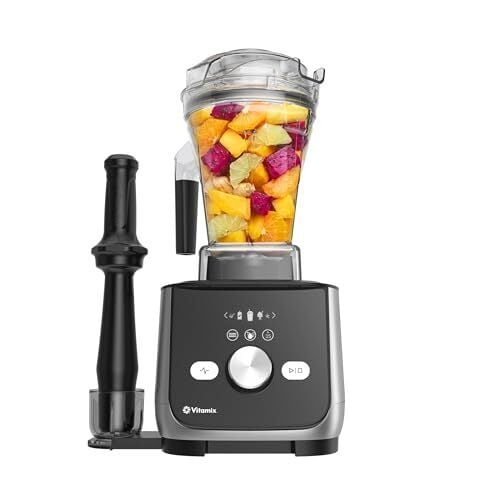
If your kitchen counter is currently housing a Vitamix blender, you know that you can whip up some serious soups, sauces, and nut butters in that thing. In fact, my Vitamix’s hot soup function is one of my favorite ways to use it. But it is almost summer, and I am no longer in the mood for soup. Now I crave chilled treats. Can my favorite blender, the Vitamix Ascent X5 go from hot soup to sorbet? Yes, and surprisingly well. Here’s how to make yourself a frozen dessert in this amazing blender.
The Vitamix is not an ice cream machine
It’s important to note that the Vitamix is a blender, and not an ice cream machine. Most ice cream machines have some sort of cooling mechanism (whether coolant, a compressor, or a frozen bowl) to chill the mixture while a dasher or auger incorporates air—the smaller the air bubbles, the creamier the texture.
The Vitamix doesn’t have a cooling system. The blades create heat, so instead it uses them, and speed, to its advantage. This means you need to work in reverse—add already frozen food to the blender and it will whip air into the mixture as it chops up the ingredients. Then all you have to do is freeze the resulting soft-serve texture into a more solid state.
As much as I enjoy a specialty appliance like the Ninja Slushi (it’s pretty badass), the multipurpose Vitamix Ascent X5 blender truly caters to my tiny kitchen’s space limitations. I need to do a lot of different things with a select few appliances, and the Vitamix’s frozen dessert capabilities add a whole new category to my home menus. (While the Ascent X5 makes things easier, you can use any Vitamix—I’ll add those instructions at the end of this article.)
How to use the frozen dessert function on the Vitamix Ascent X5
1. Consider the ingredients
The most important thing to consider is the ratio of your frozen to liquid ingredients. Since this blender doesn’t have a cooling system to make frozen desserts, you need to add the coldest stuff you can, while still providing enough liquid to move the frozen stuff around so the blades can catch it.
Credit: Allie Chanthorn Reinmann
The Vitamix website gives the guideline of 1 cup frozen to ¼ cup liquid. This amount of liquid, along with some vigorous tamping with the plastic tamper bat, will result in a thick, soft serve-like consistency that you can enjoy immediately, or freeze to a more solid, ice cream-like state. To experiment, I used two cups of frozen banana slices, and a half-cup of a sweetened vegan cream. (Forgive me, but I have a lactose intolerant Italian-American partner who would be furious if I used regular heavy cream.) Add everything to the blender container and secure the lid.
2. Pick your preset
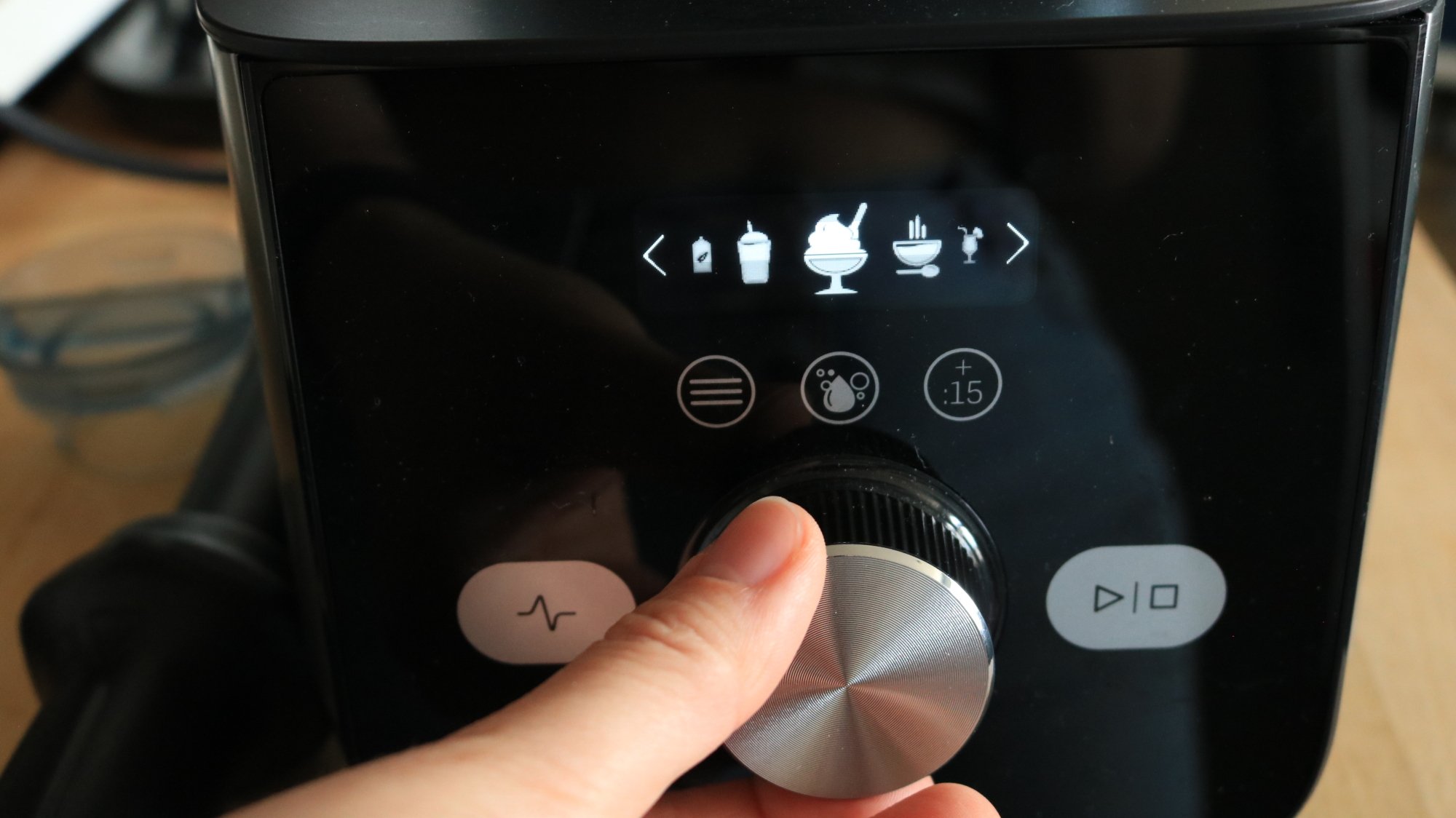
Turn the power on. Press the three line “burger” button and you’ll see an array of food icons appear on the digital display. Use the rotating dial to select the one that looks like a tall stemmed glass with a pompadour and a little spoon handle.
Credit: Allie Chanthorn Reinmann
Have your plastic tamper ready—this part only takes 50 seconds.
3. Blend and tamp
Press the start button. Take out the lid’s central plug and start tamping the ingredients with the tamper. The machine will start at a slower speed and ramp up pretty quickly. Your only job is to force frozen objects down into the blender blades. Once they all finally disappear into the mixture you can end your tamping session.
4. Look for the “quadrants”
Remember when I mentioned making hot soup in this thing? Well, the reason the soup gets hot is because of the heat that builds from the friction of blades running at high speeds. You want that heat to happen as little as possible for your frozen dessert. This setting only runs for 50 seconds but if you see four humps, or quadrants, forming in the mix, then that’s the tell-tale sign that your dessert is completely smooth and finished blending. It should look like this:
Credit: Allie Chanthorn Reinmann
Once you see the quadrants, stop the preset, even if there’s time left. My mixture was finished after 40 seconds, so I stopped the machine and worked quickly to decant it into a metal loaf pan that I had chilled in the freezer earlier. I sprinkled some chopped chocolate on top and popped it into the freezer for a couple hours to set.
Credit: Allie Chanthorn Reinmann
Not only does this frozen dessert scoop like a dream, but the texture and flavor are incredible. While it’s technically not true ice cream, it eats like ice cream. I was afraid after freezing it solid that it would be rock solid, but no—the mixture is nicely aerated and the consistency is creamy and smooth.
How to use a Vitamix without a cold treat preset
If you don’t have the Ascent X 5 model, you can still use any Vitamix blender the same way, you just have to control the speed with the dial yourself. Start on a low speed so the blades can catch the ingredients and then ramp up to the top speed within the next 10 to 15 seconds. Look for the same quadrants to form, and then turn off the blender. Get ready to spend the summer exploring any frozen dessert flavor combination you can dream up.
Tom Cruise’s blockbuster action spy franchise Mission: Impossible is ostensibly about his character, agent Ethan Hunt, pulling off extremely dangerous missions to save the world from terrorists and other evildoers. So it’s not surprising that Hunt appears in ever Mission: Impossible movie. But you know who else…
Another week, another “gotcha” video debunked. This time it’s “Cop Pulls Over Black Judge and Lives To Regret It,” a piece of pseudo-documentary street drama that’s been viewed millions of times on YouTube and TikTok (and elsewhere, I’m sure). The video is part of a growing online video genre based on documenting cops’ confrontations with public, either through police-worn body camera footage or citizen-filmed footage. Some of these videos are real, but many of them are not.
Here’s the “Cop Pulls Over Judge” video:
The tells: bad improv in a Florida parking lot
If you have a smidge of media literacy, it’s easy to spot this as fake.
The taillight the cop supposedly broke is intact at the end of the video
That’s just the surface. If you dive deeper, you’ll learn that the watermark for the bodycam isn’t right and there is no city of Sunny Springs in Florida.
The rage-bait cinematic universe: Who even makes these videos?
The description of the channel the judge video comes from, bodycam declassified, reads, “In our channel, we bring you real, unfiltered bodycam footage, offering insight into real-world situations. In some cases, we may reenact some elements to clarify key aspects of certain encounters.”
I actually like the earnestness of the creators of this video. It reminds me of the delusional incompetence of b-movie king Ed Wood: God bless them, they tried. But that is so not an airplane cabin. And that is so not a stewardess uniform. That is so not an FBI agent. And that is so not how people talk to each other on Planet Earth. The same fake plane was used in this video, too.
The “Cop vs. Judge” video is basically a reboot of a real video of Florida police pulling over Aramis Ayala, Florida’s first elected state attorney, for no reason. Comparing them makes it obvious what real body-cam footage looks like, compared to fake, but also highlights why people are drawn to the ersatz over the genuine. We don’t get to see what happens to the real cop beyond momentary embarrassment. (Spoiler: nothing.)
Why are these fakes so successful?
I’ve been digging into the sub-genre of fake confrontation videos, and they seem, like the fake political confrontation videos I posted about last week, to point to a collective desire for Justice. Cops are often bastards, and we want to see them face consequences when they do wrong, so there are a lot of popular channelsdevoted to videos depicting just that. (Thanks for all the free, body-cam-based entertainment, Police of America!) But real police confrontations are generally murkier than the fakes (maybe the cops shouldn’t have manhandled this guy but dude seems drunk to me), and even when the cops are clearly wrong, any “conclusion” to these stories takes years of legal wrangling. The fakes, though? Instant justice!
Why people believe in fake cop videos
The successful formula for these videos is a cop pulling someone over who is “higher” in the Justice hierarchy than a street cop. That way the offending party can face instant karma, instead of their comeuppance coming years later, in a legal filing no one will read. We want a thuggish cop to be owned by a judge in full gown while we watch. We want to see the good guys win, now, and if it’s not going to really happen, we’ll pull the wool over our own eyes. Real justice usually isn’t exciting, it’s a slog through layers of moral relativism and triple-filed paperwork, but fake justice hits hard. The biggest giveaway that these videos are fake isn’t the bad dialogue or the dodgy production design, it’s how true they feel.
Pirelli has launched the Cinturato Evo TLR, a new all-season, all-road tyre available in 45, 50 and enormous 55mm sizes.
With more regular widths (28, 30, 32, 35 and 40mm) also available, the Cinturato Evo TLR is arguably the most all-encompassing road bike tyre ever put on sale.
Pirelli says you’ll be able to buy the three largest sizes in the summer, but the smaller sizes are available from today. These cost £74.99 / $92.90 / €79.90 in all sizes and sidewall variants.
The all-encompassing, all-season, all-road tyre?
We’ve got our hands on the 40mm tyre already, but can’t wait to see the monster 55mm version. Scott Windsor / Our Media
Pirelli claims the tyre is best suited for ‘endurance’ and ‘light gravel’ applications, with secondary usage cases for ‘performance’ and ‘gravel’ riding. Naturally, the widest tyres are better suited to rougher surfaces.
The brand doesn’t distinguish a favoured ‘season’ – it says the tyre is intended for use all year round, excelling for wet grip, high mileage, puncture protection and comfort (it scores 5/5 using Pirelli’s arbitrary ratings chart for these characteristics, and 3/5 for speed and weight).
These strengths are said to be derived from the brand’s new top-level SmartEvo AS (all-season) compound, representing an upgrade on the SmartNet Silica compound used for the Cinturato Velo and Cinturato Road TLR models.
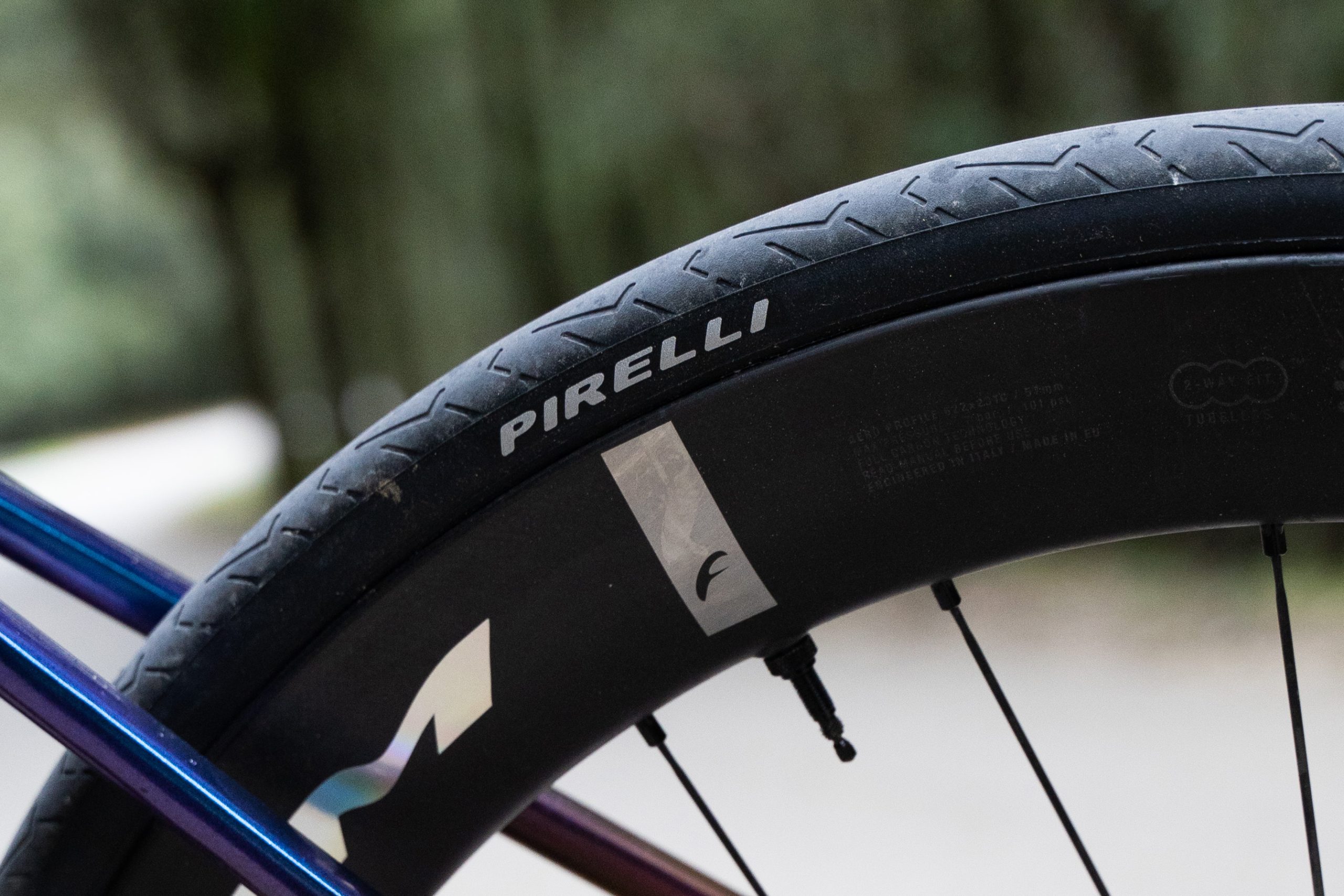
The tyre features a bold tread pattern based on the brand’s Scorpion Trail III motorcycle tyre, claimed to help the Cinturato Evo TLR bite down into the road. Pirelli
The tyre employs Pirelli’s Techwall+ Road tubeless-ready casing, which debuted on the Road TLR, fortified by a nylon puncture protection belt rather than Kevlar, as seen in the Armour Tech casing of the Velo tyre. This has a 60 threads-per-inch count.
All the tyres are compatible with hookless rims, subject to ETRTO-recommended limits (the 28mm tyre can’t be used on a hookless rim with a 25mm-wide internal diameter), while Pirelli offers handy guidelines for each tyre for optimal rim widths.
At the time of writing, Pirelli hasn’t confirmed its recommended rim-width compatibilities for the 45, 50 and 55mm sizes, but the rest of the range’s vital statistics are as follows:
The 28, 30 and 32mm tyres are available with tan (pictured) and cream-coloured sidewalls. Pirelli
The new tyre is available from today, in 28, 30, 32, 35 and 40mm widths. The 45, 50 and 55mm versions are set to follow in the summer.
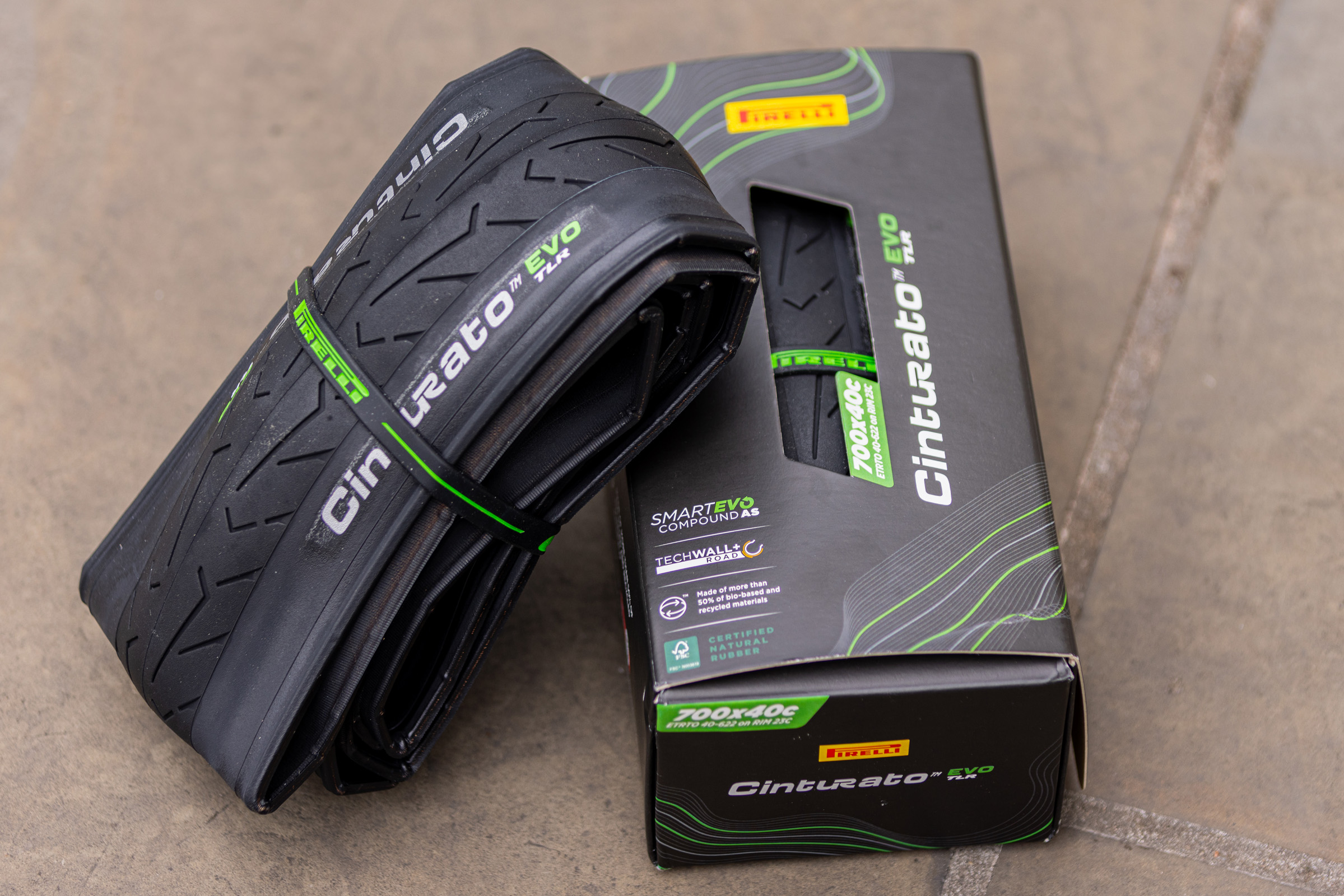
‘Classic’ (tan) and ‘retro’ (cream) sidewall variants are also available for the 28, 30 and 32mm sizes, alongside black. All feature the use of over 50 per cent bio-based and recycled materials in their construction, and FSC certification for the brands’ rubber-sourcing supply chain.
Here in the heart of innovation, where we often look to tech giants for glimpses of the future, Microsoft’s Build 2025 keynote left a distinct taste of disappointment. Listening to Satya Nadella, a figure whose steady hand guided Azure to remarkable success, felt jarring. He seemed strangely out of sync with the very AI revolution Microsoft is so heavily invested in. The stage, ostensibly a platform to showcase the transformative power of AI, felt conspicuously devoid of its pervasive influence, offering little beyond isolated demos in a presentation that otherwise resembled a standard product pitch.
Echoes of a Forgotten Past: IBM’s Warning Unheeded?
This disconnect resonated uncomfortably with echoes of a past I witnessed firsthand. Back in the 1980s, within my old division at IBM, I conducted competitive analysis, the findings of which painted a stark picture: a failure to adapt to emerging market realities would lead to the division’s demise. Sadly, that prediction materialized a few short years later. The core issue then, as it seems to be subtly surfacing now, is a fundamental human truth: people are rarely enthusiastic about embracing products or technologies that directly threaten their livelihoods.
The backdrop to this AI-light keynote was the somber reality of Microsoft’s recent layoffs, widely speculated to be a direct consequence of AI’s increasing role as a performance-enhancing tool – a euphemism for employee replacement. Nadella’s conspicuous silence on this existential threat in front of an audience largely comprised of coders whose very future is being reshaped by the technology he championed felt deeply unsettling. If Microsoft’s own narrative of AI-driven efficiency is to be believed, the long-term market for human coders could shrink dramatically, a truth left unacknowledged in a room filled with those potentially facing such a future.
The Unholy Trinity of Open-Source Hypocrisy
Adding insult to injury was Microsoft’s awkward embrace of Open Source, a concept the company – and I, in my former tech battles – once vehemently opposed. While I, like many, have come to recognize the immense potential of open collaboration, particularly in the rapidly evolving landscape of AI, the figures Microsoft chose to share this stage with felt like a bizarre betrayal of the very spirit of openness. There stood Jensen Huang, the undeniably effective CEO of NVIDIA, whose hardware reigns supreme in the current AI boom, yet whose ecosystem remains largely proprietary. Alongside him was Sam Altman, the CEO of OpenAI, a company whose ethical AI efforts were reportedly dismantled and whose leader faced near ousting by his own board, due to concerns about his leadership and potential risks to the company’s very existence. And then there was Elon Musk, arguably the most polarizing figure in tech, whose stewardship has cast a long shadow over Tesla and whose AI venture, GROK, has recently demonstrated a penchant for amplifying misinformation.
The optics were nothing short of disastrous. At a time when individuals, companies and even governments are seemingly distancing themselves from Musk’s ventures, and Microsoft itself is navigating complex issues with OpenAI, these were the figures Microsoft chose to spotlight while simultaneously casting a shadow over the job security of their core audience. Adding another layer of surrealism, the well-documented animosity between Musk and Altman, and the very public criticisms leveled against Musk by Microsoft’s own founder, Bill Gates, created an on-stage dynamic that felt less like a unified vision for the future and more like a poorly cast reality show. I kid you not, Gates has accused Musk of killing kids, and that is who they had on stage. Who thought that would be a good idea?
Wrapping Up: A Marketing Malfunction and a Leadership Void?
I’ve long observed that Microsoft’s marketing often struggles to connect with its audience, but the choices made at Build 2025 reached a new level of bewildering. To showcase figures so disconnected from the core values of the developer community at an event with significant international attendance and media coverage suggests a profound disconnect between Microsoft’s leadership and the reality of its audience’s concerns and perceptions. It begs the question: who is steering this ship, and are they even looking at the same map as the rest of us?
In the end, the keynote left me with a gnawing sense that Microsoft, for all its technological prowess and market influence, may be stumbling, repeating the very missteps that have plagued tech giants in the past. The tone-deaf presentation, the unacknowledged anxieties of the audience, and the bizarre choice of onstage personalities all point to a potential loss of touch with the very community that fuels its ecosystem. Perhaps it’s time for a serious re-evaluation of its marketing strategy, and maybe, just maybe, a fresh perspective at the helm is needed to navigate the complex realities of this rapidly evolving technological landscape. For now, however, the overwhelming sentiment is one of profound disappointment that Microsoft appeared to have lost its footing at Build 2025.
While Red Hat Enterprise Linux 10.0 GA images have been available for download since last week, Red Hat used the Red Hat Summit this week in Boston to formally announce the Red Hat Enterprise Linux 10 availability…
Adjustable dumbbells are incredible space-savers compared to full dumbbell sets, but still, they’re heavy and awkward to reposition. And look, I get it—the point of weights is to lift them, right? When testing and reviewing dumbbells like the Nüobells or REP Quickdraws, I quickly discovered that the genius of adjustable dumbbells is exactly what makes them so hard to lug around: In order to adjust from 5 to 80 pounds, they end up weighing, you know, at least 80 pounds. And not every dumbbell user has built up to that strength yet.
Sure, you can drag and shove your adjustable dumbbells around in their cradles, but that sort of rough handling isn’t ideal. A mini furniture dolly provides a quick, easy transition between exercises or storage positions. Plus, you’ll be protecting both your dumbbells and your flooring. And if you’re like me, it’s stressful to drag 80 pounds around the tiny apartment you rent for way too much money. Even if I’m not worried about scratching my floors, lifting too heavy increases risk of injury.
To make the most of this dolly hack, here are some tips to keep in mind:
Place one dolly under each dumbbell stand for independent movement.
Consider securing the dumbbells to the dolly with removable hook-and-loop straps if you have children or pets.
Add rubber matting between the dolly and dumbbell base for extra protection and stability.
Store against a wall when not in use to maximize floor space.
The key to this hack working effectively is using the right-sized dolly. Standard furniture dollies are too large, but here are some options that should fit adjustable dumbbell bases perfectly:
Compared to a storage unit that costs hundreds of dollars, a mini dolly is the obvious choice to move your dumbbells around your home. You can make your workout flow more smoothly while protecting both your investment and your home.
Days before its intended launch, Zombie Army VR has been delayed once more on all platforms.
Originally targeting a May 22 launch on Quest, Steam, and PlayStation VR2, publisher Rebellion confirmed that it’s pushed back the release date to June 12. No specifics were provided for this delay beyond this allowing them to “deliver the best possible experience,” and you can find the full statement below.
Dear Deadhunters,
We wanted to share an important update about the release of Zombie Army VR. The game will now launch on all formats on Thursday, June 12th. This additional time will allow us to deliver the best possible experience for you at launch. We apologise for the delay and appreciate your patience.
This isn’t the first time Zombie Army VR has been delayed. You may recall that the upcoming action game initially targeted a 2024 release window before being pushed back into 2025. A May 22 launch was later confirmed back in March, alongside news that Xtended Realities have taken over development duties from the original studio, XR Games.
Today’s announcement follows Rebellion recently releasing a new gameplay features trailer, giving us a closer look at what to expect. Set before Zombie Army 4, the upcoming VR game’s campaign is playable alone or in two-player co-op, and you portray a Deadhunter taking down various zombie war criminals across the destroyed city of Nuremberg.
Zombie Army VR launches on June 12 on Quest, Steam, Rift, and PlayStation VR2. Until then, you can find out more about gameplay below.
Nintendo hired Samsung to build the main chips for the Switch 2, including an 8-nanometer processor custom designed by NVIDIA, Bloomberg reported. That would mark a move by Nintendo away from TSMC, which manufactured the chipset for the original 2017 Switch. Nintendo had no comment, saying it doesn’t disclose its suppliers. Samsung and NVIDIA also declined to discuss the matter.
Samsung has previously supplied Nintendo with flash memory and displays, but building the Switch 2’s processor would be a rare win for the company’s contract chip division. Samsung can reportedly build enough chips to allow Nintendo to ship 20 million or more Switch 2s by March of 2026.
NVIDIA’s new chipset was reportedly optimized for Samsung’s, rather than TSMC’s manufacturing process. Using Samsung also means that Nintendo won’t be competing with Apple and others for TSMC’s resources. During Nintendo’s latest earnings call, President Shuntaro Furukawa’s said that the company didn’t expect any component shortages with its new console — an issue that plagued the original Switch.
Nintendo said in the same earnings report that it was caught by surprise with 2.2 million applications for Switch 2 pre-orders in Japan alone. Despite that, the company projected sales of 15 million Switch 2 units in its first year on sale to March 2026, fewer than analyst predictions of 16.8 million — likely due to the impact of Trump‘s tariffs.
This article originally appeared on Engadget at https://www.engadget.com/gaming/nintendo/nintendo-is-reportedly-using-samsung-to-build-the-main-switch-2-chips-120006403.html?src=rss
The US tech sector shed 214,000 jobs in April amid continuing economic uncertainty, according to CompTIA analysis of Bureau of Labor Statistics data. Companies are extending hiring timelines to two or three times longer than last year while significantly raising skill requirements, particularly for AI competencies.
“It’s the great hesitation,” said George Denlinger of Robert Half, noting employers now demand 10-12 skills instead of 6-7 previously. Entry-level programming positions are disappearing as AI assumes those functions, with Janco Associates CEO Victor Janulaitis observing that “a job that has been eliminated from almost all IT departments is an entry-level IT programmer.”
VKD3D 1.16 was released today by Wine/CodeWeavers developers as this upstream Direct3D 12 over Vulkan API implementation used by Wine for running D3D12 Windows games/applications on Linux…
If you’ve been holding out for the latest 2025 PC models and graphics card loadouts, Computex is usually when you have to check your bank balance. The PC-centric tech show in Taiwan has kicked off with a barrage of new laptops from the likes of Razer, ASUS and Acer.
ASUS has revealed the new ROG Zephyrus G14, with a 14-inch (of course) screen at 3K resolution, a refresh rate of 120Hz, 500 nits of peak brightness and Dolby Vision support. The G14 can be outfitted with up to an AMD Ryzen AI 9 HX 370 processor with 12 cores and 24 threads and an AMD XDNA NPU with up to 50 TOPS. The graphics card maxes out with the NVIDIA GeForce RTX 5080, while RAM options go up to 64GB and on-board storage up to 2TB.
Razer
Meanwhile, Razer’s new Blade 14 laptops will arrive with RTX 5000 series cards, while still remaining thin, thin, thin. Those NVIDIA cards can tap into the company’s DLSS 4 tech to provide “the highest quality gaming experience possible in a 14-inch” laptop, according to Razer. The laptops have AMD Ryzen AI 9 365 processors that can achieve up to 50 TOPS. And if you’re feeling even more lavish, there’s also the bigger Blade 18, which you can load out with the RTX 5090. And then there’s Acer, which is doing something special with thermal interface materials.
And these enhanced versions won’t cost you a dime.
Nintendo
More original Switch games are getting a Switch 2 makeover. Although their enhancements are subtler than the Switch 2 editions of Breath of the Wild and Tears of the Kingdom, at least these will be free. Nintendo’s list includes some of the console’s best games: Super Mario Odyssey, Super Mario 3D World + Bowser’s Fury and New Super Mario Bros. U Deluxe. It also has the platform’s top-down Zelda titles: Echoes of Wisdom and Link’s Awakening. A pair of Pokémon games makes the cut: Pokémon Scarlet and Pokémon Violet.
LG’s 27-inch 1440p UltraGear OLED monitor is as close to gaming nirvana as fps-hungry players can get. Topping out at a 480Hz refresh rate means it can actually display up to 480 fps. Devindra is already obsessed with it — 240Hz can go to bed.
Google is constantly making changes to its search rankings, but not all updates are equal. Every few months, the company bundles up changes into a larger “core update.” These updates make rapid and profound changes to search, so website operators watch them closely.
The March 2024 update was unique. It was one of Google’s largest core updates ever, and it took over a month to fully roll out. Nothing has felt quite the same since. Whether the update was good or bad depends on who you ask—and maybe who you are.
It’s common for websites to see traffic changes after a core update, but the impact of the March 2024 update marked a seismic shift. Google says the update aimed to address spam and AI-generated content in a meaningful way. Still, many publishers say they saw clicks on legitimate sites evaporate, while others have had to cope with unprecedented volatility in their traffic. Because Google owns almost the entire search market, changes in its algorithm can move the Internet itself.
One of the longest-standing mysteries about Mars has been the presence of dark and light streaks on the rolling hills surrounding Olympus Mons. This week’s image, from the European Space Agency, shows some of these streaks captured last October.
This massive mountain rises about 22 km above the surface of Mars, more than twice as high as Mount Everest on Earth. It is bordered by hummocky deposits, called aureoles, that were formed by landslides from the mountain. A striking feature of these aureoles is the periodic appearance of bright and dark streaks—sometimes for days and sometimes for years.
For decades, scientists have wondered what they might be.
VR indie Giant Stride Games and publisher Creature announced Adepts Arena, an upcoming first-person adventure that’s bringing a very Avatar-inspired earthbending ability to let you take on an army of sinister automatons.
The single-player game lets you master earthbending, including the ability to blast flying rocks at enemies, summon jutting boulders to fling baddies across the map, build protective structures, and vault to otherwise inaccessible places.
Throughout the adventure, you’ll battle to the protect the sacred elemental Spirits. In Adepts Arena’s sandbox levels, the studio says you’ll fight in arenas to defend your allies from waves of enemies.
Here’s how Giant Stride describes the action:
You are an Earth Adept of the Order, a soldier tasked with overseeing a vast and remote territory inhabited by sacred Earth Spirits and a variety of wild creatures. The Order exists to maintain the natural balance and protect the Earth Spirits from external threats. But that balance has been disrupted: the Artificers have gone rogue and built an army of automatons animated by Spiritual Energy and intricate clockwork frames. These Constructs scour the land, seeking rare materials and actively hunting Earth Spirits to extract their energy.
The game is set to launch for SteamVR headsets and Quest sometime “soon”, which will also include flatscreen gameplay via the Steam version. Giant Stride says in VR, it will play more like a “martial arts simulator,” while flatscreen gameplay will feel more “FPS-like.”
Klarna’s net loss more than doubled in the first quarter [non-paywalled link] as more consumers failed to repay loans from the Swedish “buy now, pay later” lender as concerns rose about the financial health of US consumers. Financial Times: The fintech, which offers interest-free consumer loans to allow customers to make retail purchases, on Monday reported a net loss of $99 million for the three months to March, up from $47 million a year earlier.
The company, which makes money by charging fees to merchants and to consumers who fail to repay on time, said its customer credit losses had risen to $136 million, a 17% year-on-year increase. The increased failure to repay comes on the back of gloomy economic sentiment in the US, where a closely watched measure of consumers’ confidence last week fell to its second-lowest level on record. US President Donald Trump’s trade war has driven expectations of higher inflation. Further reading: The Klarna Hype Machine.