Android XR Glasses Get I/O 2025 Demo

At I/O 2025, Google revealed new details about Android XR glasses, which will integrate with your phone to deliver context-aware support via Gemini AI. 9to5Google reports: Following the December announcement, Google today shared how all Android XR glasses will have a camera, microphones, and speakers, while an “in-lens display” that “privately provides helpful information right when you need it” is described as being “optional.” The glasses will “work in tandem with your phone, giving you access to your apps without ever having to reach in your pocket.” Gemini can “see and hear what you do” to “understand your context, remember what’s important to you and provide information right when you need it.” We see it accessing Google Calendar, Maps, Messages, Photos, Tasks, and Translate.

Google is “working with brands and partners to bring this technology to life,” specifically Warby Parker and Gentle Monster. “Stylish glasses” are the goal for Android XR since they “can only truly be helpful if you want to wear them all day.” Meanwhile, Google is officially “advancing” the Samsung partnership from headsets to Android XR glasses. They are making a software and reference hardware platform “that will enable the ecosystem to make great glasses.” Notably, “developers will be able to start building for this platform later this year.” On the privacy front, Google is now “gathering feedback on our prototypes with trusted testers.” Further reading: Google’s Brin: ‘I Made a Lot of Mistakes With Google Glass’


Read more of this story at Slashdot.

“Microsoft has simply given us no other option,” Signal says as it blocks Windows Recall

Signal Messenger is warning the users of its Windows Desktop version that the privacy of their messages is under threat by Recall, the AI tool rolling out in Windows 11 that will screenshot, index, and store almost everything a user does every three seconds.

Effective immediately, Signal for Windows will by default block the ability of Windows to screenshot the app. Signal users who want to disable the block—for instance to preserve a conversation for their records or make use of accessibility features for sight-impaired users—will have to change settings inside their desktop version to enable screenshots.

My kingdom for an API

“Although Microsoft made several adjustments over the past twelve months in response to critical feedback, the revamped version of Recall still places any content that’s displayed within privacy-preserving apps like Signal at risk,” Signal officials wrote Wednesday. “As a result, we are enabling an extra layer of protection by default on Windows 11 in order to help maintain the security of Signal Desktop on that platform even though it introduces some usability trade-offs. Microsoft has simply given us no other option.”

Read full article

Comments

Ray-Ban Meta Glasses Are Now Available In India & Mexico

The Ray-Ban Meta glasses are now available in India, Mexico, and the UAE, Meta’s widest hardware expansion yet.

This includes support for Meta AI, which Meta has now rolled out to all the countries where it sells smart glasses.

What Are Ray-Ban Meta Glasses?

Ray-Ban Meta glasses are smart glasses with a camera, microphones, and speakers. They do not have a display.

You can use them to take photos and videos, listen to music/podcasts/audiobooks, make and receive calls, share your first-person view on WhatsApp and Messenger video calls, and query Meta AI, the company’s LLM-based assistant that can see via the camera when you ask about something in view. It’ll also read out your phone notifications, if you want.

Ray-Ban Meta glasses come in three styles: Wayfarer, Headliner, and Skyler. These styles are offered with four types of lenses: Clear, Sun, Polarized, and Transitions, and come in a variety of colors, for both the frame and the lenses.

Whenever the camera is in use, be it for capture or for Meta AI, a white LED on the front of the glasses will pulse to make others nearby aware.

This brings the total number of countries where the Ray-Ban Meta glasses are sold to 18:

  • Australia
  • Austria
  • Belgium
  • Canada
  • Denmark
  • Finland
  • France
  • Germany
  • India
  • Ireland
  • Italy
  • Mexico
  • Norway
  • Spain
  • Sweden
  • United Arab Emirates
  • United Kingdom
  • United States of America

That’s actually fewer countries than Meta officially sells its Quest headsets in. Quest is also available in Iceland, Japan, the Netherlands, New Zealand, Poland, South Korea, Switzerland, and Taiwan. However, Quest headsets are not sold in India, Mexico, or the UAE.

On paper, the expansion of Meta and EssilorLuxottica’s smart glasses business into India, Mexico, and the UAE almost triples the market reach, mainly given the enormous population of India.

But India remains one of the poorest countries in the world on a per capita basis, and the Ray-Ban Meta glasses are priced at around 30,000 rupees, close to the average Indian salary. As such, the vast majority of Indians are unlikely to purchase smart glasses any time soon, though the country does have a growing middle class that Meta and EssilorLuxottica are likely hoping to target.

Mexico is a much wealthier nation per capita, though with less than a tenth of the population of India, and the UAE even moreso, but with less than 1%. As the largest eyewear company in the world, EssilorLuxottica has a presence in all three, with stores that it can leverage to let interested potential buyers try on the smart glasses.

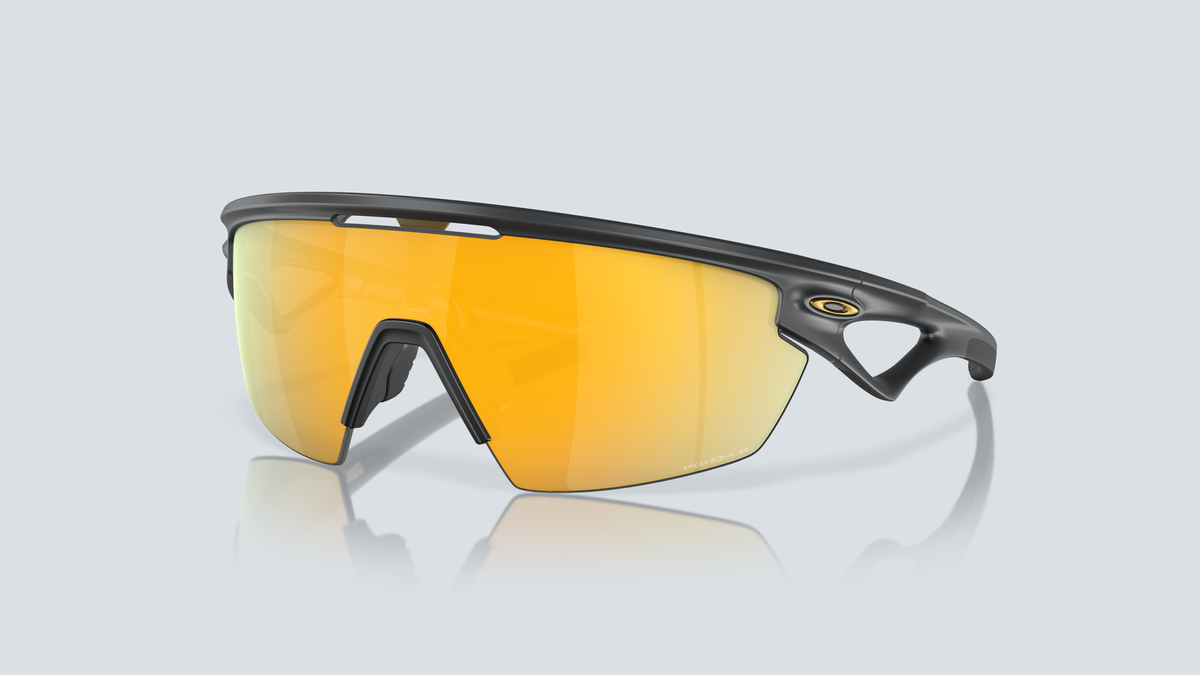
Oakley Meta Glasses Are Reportedly Coming This Year Too
Oakley Meta glasses are coming later this year, Bloomberg’s Mark Gurman reports.
UploadVRDavid Heaney

Later this year, Meta and EssilorLuxottica reportedly plan to launch Oakley Meta glasses too, and we’ll keep an eye on how widely those are sold worldwide.

All the New Google I/O Features You Can Try Right Now

Google I/O 2025 was chock full of announcements. The problem is, Google isn’t always clear about which features are new, which have already been released, and which are coming out in the future.

While there are plenty of features to look out for on the horizon, and a number still that you’ve been able to use for some time, there are brand new features Google rolled out immediately after announcing them. Here are all the Google I/O features you can check out right now—though some do require you to pay.

Imagen 4

imagen 4 generated comic strip of the google chrome error dinosaur

Credit: Google

Google’s latest AI image generation model, Imagen 4, is available today. Google was sparse on too many specific upgrades with this new model, but says that Imagen is faster, and now capable of images up to 2K resolution with additional aspect ratios.

The change the company focused most on is typography: Google says Imagen 4 can generate text without any of the usual AI errors you associate with AI image generators. On top of that, the model can incorporate different art styles and design choices, depending on the context of the prompt. You can see that in the image above, which uses a pixelated design for the text to match the 8-bit comic strip look.

You can try the latest Imagen model in the Gemini app, Whisk, Vertex AI, and through Workspace apps like Slides, Vids, and Docs.

AI Mode

google homepage with ai mode on the search bar

Credit: Lifehacker

AI Mode essentially turns Search into a Gemini chat: It allows you to ask more complicated and multi-step questions. Google then uses a “query fan-out” technique to scan the web for relevant links and generate a complete answer from those results. I haven’t dived too deep into this feature, but it does largely work as advertised—I’m just not sure if that’s all that much more useful than searching through links myself.

Google has been testing AI Mode since March, but now it’s available to everyone in the U.S. If you want to use it, you should see the new AI Mode option on the right side of the search bar on Google’s homepage.

“Try it on”

try it on screenshot

Credit: Google

Shopping online is so much more convenient than going in-person, in all ways but one: You can’t try on any of the clothes ahead of time. Once they arrive, you try them on, and if they don’t fit, or you don’t like the look, back to the store they go.

Google wants to eliminate (or, at least, greatly cut down on) this from happening. Its new “try it on” feature scans an image you provide of yourself to get an understanding of your body. Then, when you’re browsing for new clothes online, you can choose to “try it on,” and Google’s AI will generate an image of you wearing the article of clothing.

It’s an interesting concept, but also a bit creepy. I personally do not want Google analyzing images of myself so that it can more accurately map different types of clothes on me. Personally, I’d rather run the risk of making a return. But if you want to give it a go, you can try the experimental feature in Google Labs today.

Jules

Jules is Google’s “asynchronous, agentic coding assistant.” According to Google, the assistant clones your codebase into a secure Google Cloud virtual machine, so that it can execute tasks like writing tests, building features, generating audio changelogs, fixing bugs, and bumping dependency versions.

The assistant works in the background and doesn’t use your code for training, which is a bit refreshing from a company like Google. I’m not a coder, so I can’t say for sure whether Jules seems useful. But if you are a coder, you can test it for yourself. As of today, Jules is available as a free public beta for anyone who wants to try it out—though Google says usage limits apply, and that they will charge for different Jules plans once the “platform matures.”

Speech translation in Google Meet

a google meet call between two people. google meet is translating the call from spanish

Credit: Google

If you’re a Google Workspace subscriber, this next feature is pretty great. As shown off during the I/O keynote, Google Meet now has live speech translation. Here’s how it works: Let’s say you’re talking to someone on a Google Meet call who speaks Spanish, but you only speak English. You’ll hear the other caller speak in Spanish for a moment or two, before an AI voice dubs over them with the translation in English. They’ll receive the opposite on their end after you start speaking.

Google is working on adding more languages in the coming weeks.

Google AI Ultra subscription

google ai ultra logo

Credit: Google

There’s a new subscription in town, though it’s not for the faint of heart. Google announced a new “AI Ultra” subscription at I/O yesterday, that costs a whopping $250 per month.

That extraordinary price tag comes with some major AI features: You get access to the highest limits for all of Google’s AI models, including Gemini 2.5 Deep Think, Veo 3, and Project Mariner. It also comes with 30TB of cloud storage, and, amusingly, a YouTube Premium subscription.

You really have to be a big believer in AI to drop upwards of $3,000 a year on this subscription. If you have a budding curiosity for AI, perhaps Google’s “AI Pro” plan is more your speed—this is the new name for Google’s AI Premium subscription, and comes with the same perks, plus now access to Flow (which I’ll cover below).

Veo

Veo 3 is Google’s latest AI video model. Unlike Imagen 4, however, it’s only available to AI Ultra subscribers. If you’re not comfortable with spending $250 a month on Google’s services, you’ll have to stick with Veo 2.

Google says Veo 3 is better at real-world physics than Veo 2 and can handle realistic lip-syncing. You can see that in the clip above, which shows an “old sailor” reciting a poem. His lips do indeed match the speech, and the video is crisp with elements of realism. I personally don’t think it looks “real,” and it still has plenty of tells that it’s an AI video, but there’s no doubt we are entering some dangerous waters with AI video.

AI Pro subscribers with access to Veo 2 have some new video model capabilities, as well, however. You now have camera controls to dictate how you want shots to look; options for adjusting the aspect ratio of the clip; tools to add or remove objects from a scene; and controls to “outpaint,” or to add on to the scene of a clip.

Flow

Google didn’t just upgrade its AI video model: It also released an AI video editor, called Flow.

Flow lets you generate videos using Veo 2 and Veo 3, but it also lets you cut together those clips on a timeline and control the camera movements of your clips. You can use Imagen to generate an element you want to add to a scene, then ask Veo to generate a clip with that element in it.

I’m sure AI film enthusiasts are going to love this, but I remain skeptical. I could see this being a useful tool for story boarding ideas, but for creating real content? I know I don’t want to watch full shows or movies generated by AI. Maybe the odd Instagram video gets a chuckle out of me, but I don’t think Reels are Google’s end goal here.

Flow is available for both AI Pro and AI Ultra subscribers. If you have AI Pro, you can access Veo 2, but AI Ultra subscribers can choose between Veo 2 and Veo 3.

Gemini in Chrome

gemini in chrome

Credit: Google

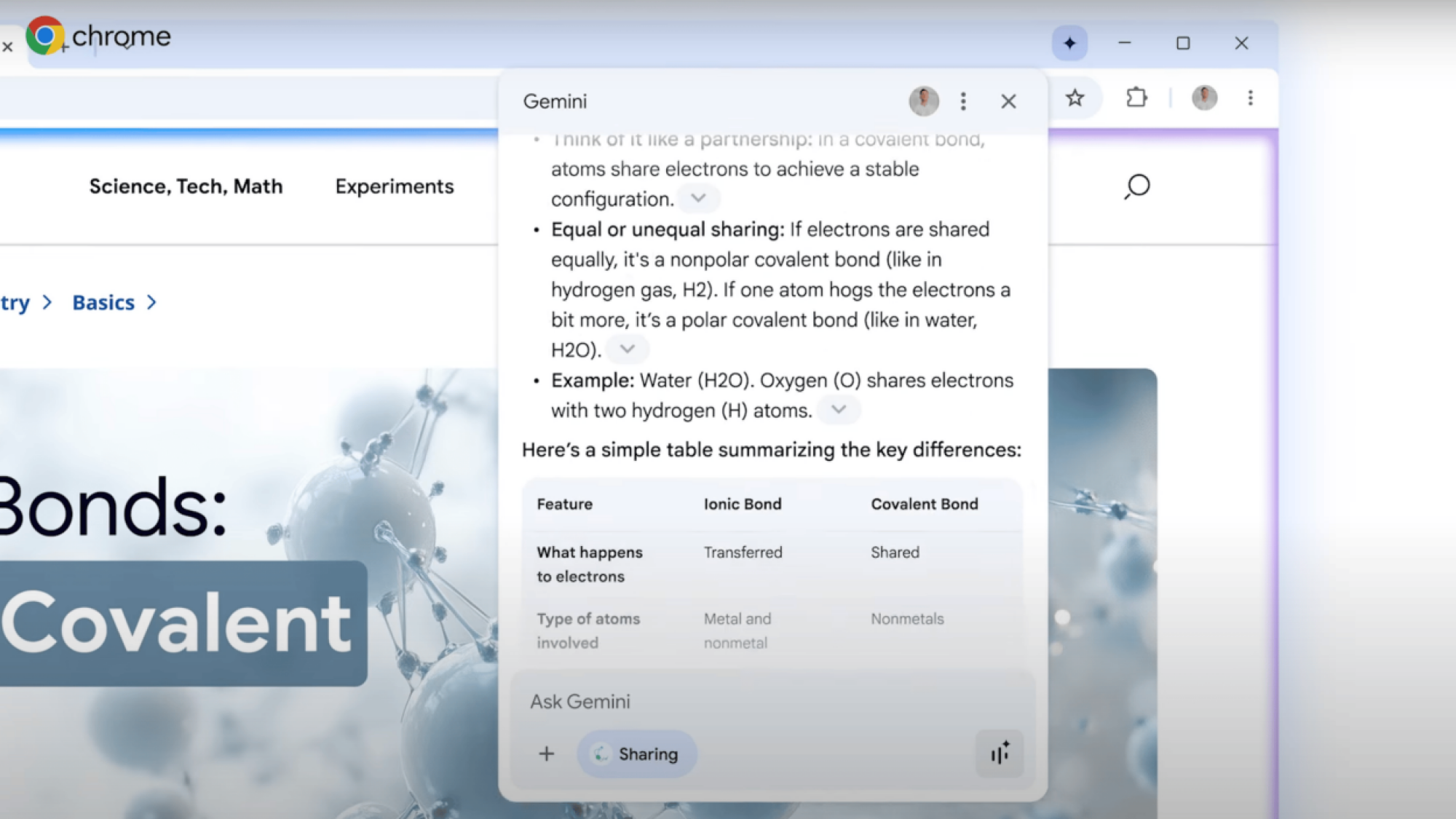
AI Pro and AI Ultra subscribers now have access to Gemini in Google Chrome, which appears in the toolbar of your browser window. You can ask the assistant to summarize a web page, as well as inquire about elements of that web page. There are plans for agentic features in the future, so Gemini could check out websites for you, but, for now, you’re really limited to two functions.

Scientists figure out how the brain forms emotional connections

Whenever something bad happens to us, brain systems responsible for mediating emotions kick in to prevent it from happening again. When we get stung by a wasp, the association between pain and wasps is encoded in the region of the brain called the amygdala, which connects simple stimuli with basic emotions.

But the brain does more than simple associations; it also encodes lots of other stimuli that are less directly connected with the harmful event—things like the place where we got stung or the wasps’ nest in a nearby tree. These are combined into complex emotional models of potentially threatening circumstances.

Till now, we didn’t know exactly how these models are built. But we’re beginning to understand how it’s done.

Read full article

Comments

Try ‘Japanese Walking’ If You Hate Running

We may earn a commission from links on this page.

If you find running intimidating, know that there is another way to get some fresh air while doing a reasonably intense workout. It’s called interval walking training (IWT), or sometimes  “Japanese walking” or “3×3 walking.” It’s a form of HIIT, but it won’t end in you collapsing on the floor, hating your life. Here’s how to do it. 

How to do the 3×3 “Japanese walking” workout

The original protocol for this exercise, as published here in 2007 by Hiroshi Nose’s team at Shinshu University in Japan, used a lab test to help people determine how fast they should walk during the workout. Since that’s not practical for most of us, a common substitute is to use perceived effort. During the high intensity portions, you walk a strong, fast pace—about as fast as you can without jogging, and without getting too tired. For the low intensity portions, you walk normally. 

So here’s the protocol. It’s simple, and it doesn’t require a warmup, so you can just jump right in: 

  1. Walk for three minutes at a normal speed. 

  2. Walk for three minutes at high intensity (as fast as you reasonably can).

  3. Repeat those two steps for 30 minutes or more.

To time those intervals, you can program any smartwatch to beep at three-minute intervals, or just use your phone. I like the free Intervals Pro app on my iPhone; try Interval Timer on Android. 

In the 2007 study, older adults who did this workout four or more times per week, for five months, ended the study with better aerobic fitness and leg strength than when they started. If you’ve ever wondered whether walking counts as exercise, this certainly does. 

Why interval walking is the new HIIT

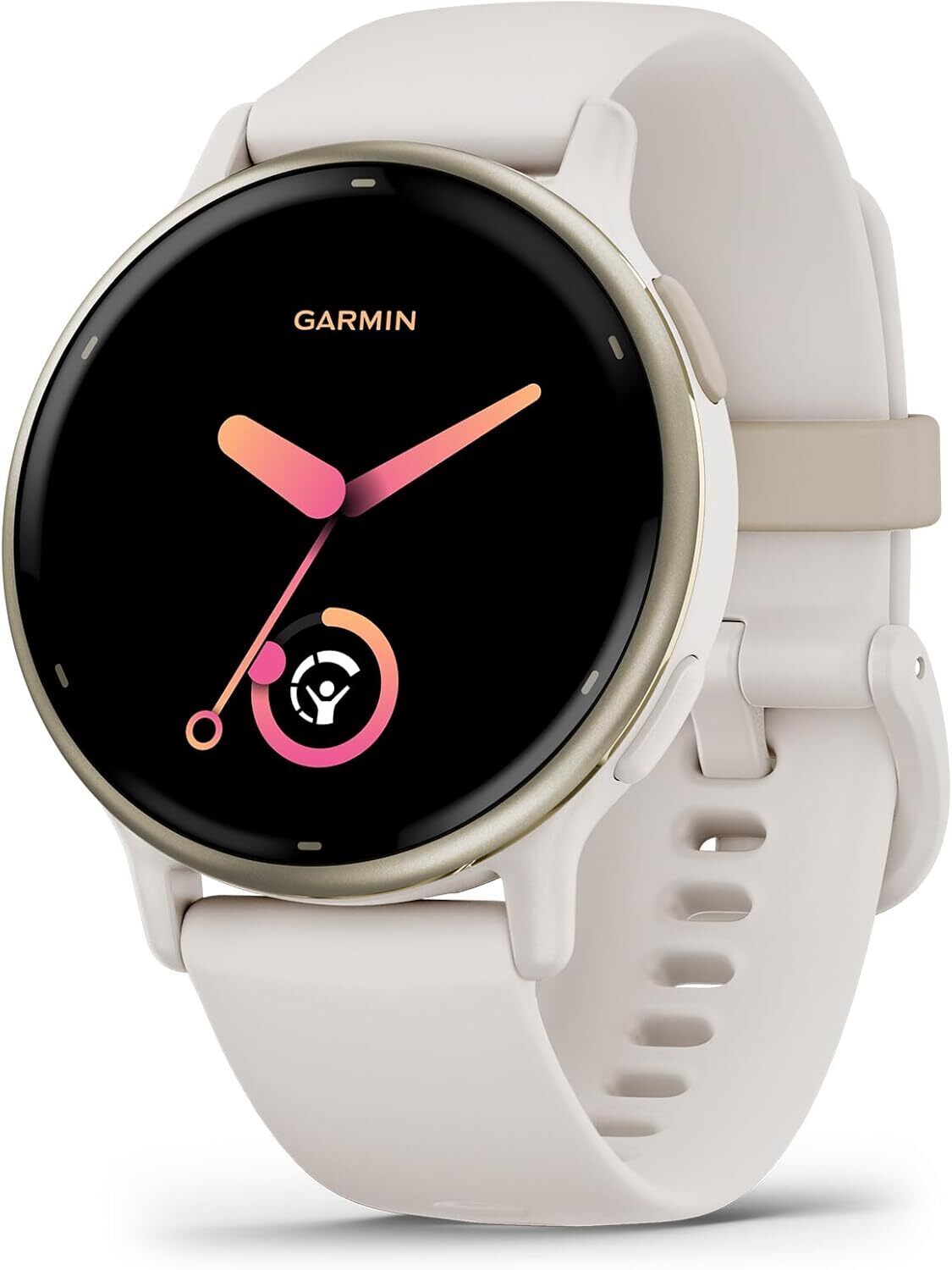
Interval walking is starting to become more popular. Garmin’s latest lifestyle watch, the Vivoactive 6, comes with walking workouts, which include intervals similar to the ones in the 3×3 workout. You can see examples of Garmin’s walking workouts in my review of the watch here.

Why the love for walking? I see a few forces at work here. First, there’s a lot of over-the-top, go-get-em attitudes in the fitness world, especially on social media. If you’ve been through a few rounds of HIIT hype, you may be sick of trying to push yourself harder and harder (or you were so intimidated by the idea that you never tried.) 

The backlash to high intensity fitness can go a bit too far the other way, telling people (often women who have been told to worry about their cortisol) that they don’t need to lift weights or work hard in the gym; they can just go for walks and do some gentle yoga or Pilates. Take that advice seriously enough, and you won’t end up getting much exercise at all. 

Interval walking occupies a place in the middle—harder than a hot girl walk or cozy cardio, but easier (and more fun!) than a 12-3-30 treadmill trudge. Interval walking is especially accessible to people who don’t have a gym membership or fitnessy clothes: All you need is a pair of shoes that are comfortable to walk in. 

And here’s where I think the real magic of walking comes in: It stops you from overthinking your fitness routine, and lets you just get started. You won’t be tempted to overthink about running shoes or fitness watches—you just get out there and walk. 

Some of My Favorite Fitness Trackers and Smartwatches Are on Sale for Memorial Day

We may earn a commission from links on this page. Deal pricing and availability subject to change after time of publication.

Amazon’s Memorial Day Sale is already happening, and plenty of fitness trackers and smartwatches are on sale. This event intersects with some recent Garmin price drops, too, making it a really good time to shop for a new watch. Here are the best deals I’m seeing. 

Pixel 

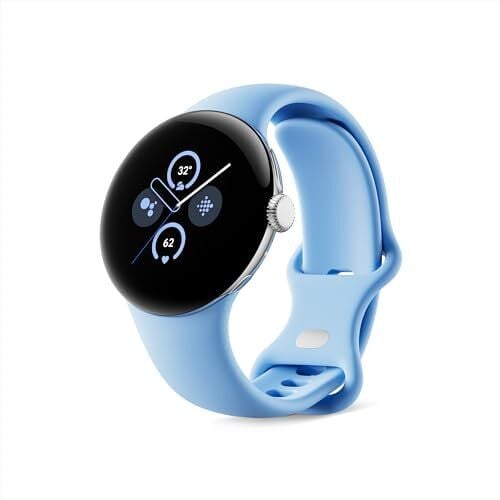
Google’s Pixel Watch 2 is on sale for just $149.99, down from an original price of $249.99. This is the slightly older version, launched in 2023 and replaced two years later by the Pixel Watch 3 (which I reviewed here). The Pixel Watch 2 has most of the same features as the newer model, but only comes in one size (41 mm) and doesn’t have as big or bright a display. 

Suunto

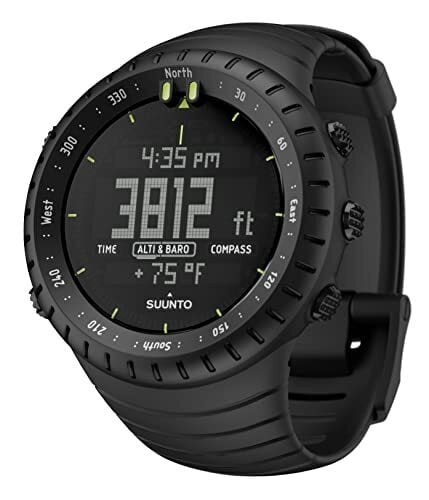
The Suunto Core watch is on sale for $159.99, normally $219.99. It’s built for outdoor adventuring, with an altimeter, barometer, and compass built in, and can alert you when a storm is a-comin’.

Garmin

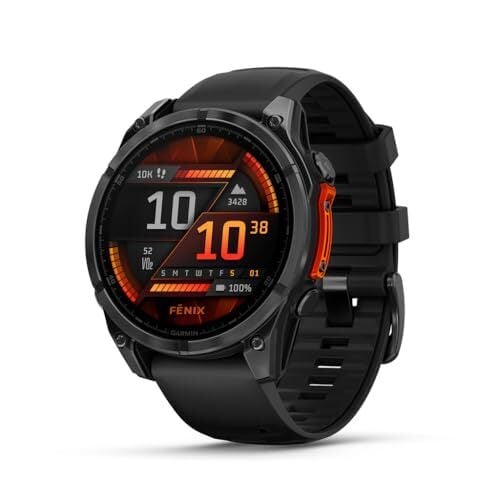
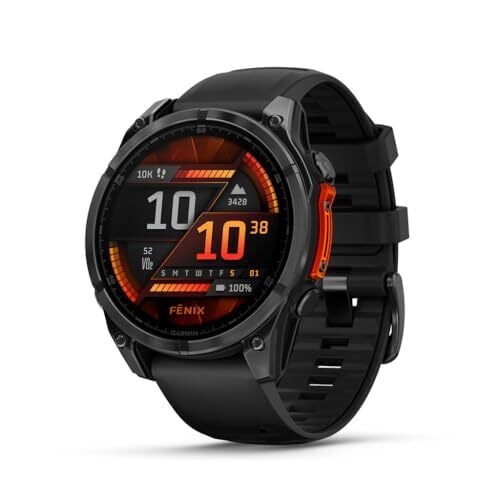
The Fenix 8, 47mm size, is on sale for $799.99, normally $999.99. The Fenix is one of Garmin’s most rugged and feature-packed watches, with maps, a flashlight, a titanium bezel, and leakproof buttons. 

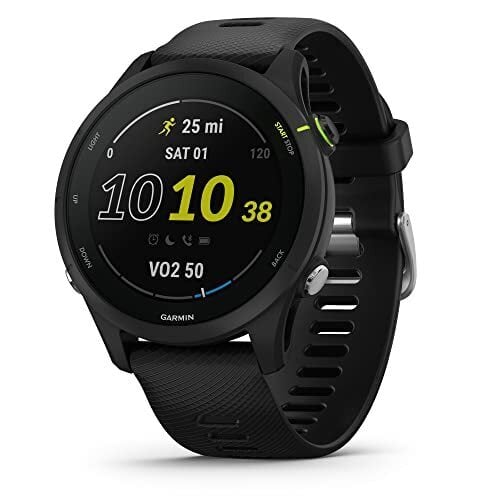
On the other end of the price spectrum, the Forerunner 165 is on sale for $199.99, normally $249.99. This watch is a budget version of the 265, and a good entry-level option for runners who don’t need a lot of extras. Note that the regular 165 doesn’t come with music storage. If you want to listen to tunes without bringing your phone along, you’ll want to spring for the Forerunner 165 Music, now on sale for $249.99, normally $299.99.

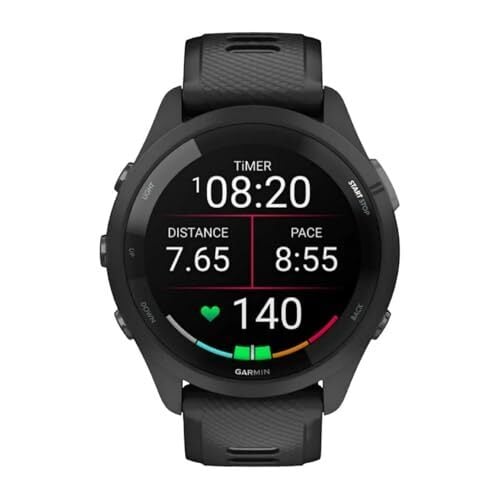
The trusty Forerunner 265 is on sale for $349.99, $100 off its original price of $449.99, although that’s probably less about the Memorial Day sale and more about it being replaced with a new Forerunner 570. That said, the 265 is a truly excellent watch, still my personal favorite in the Forerunner line—although I haven’t reviewed the 570 yet, so that may change (I’m wearing a 265S as I write this).

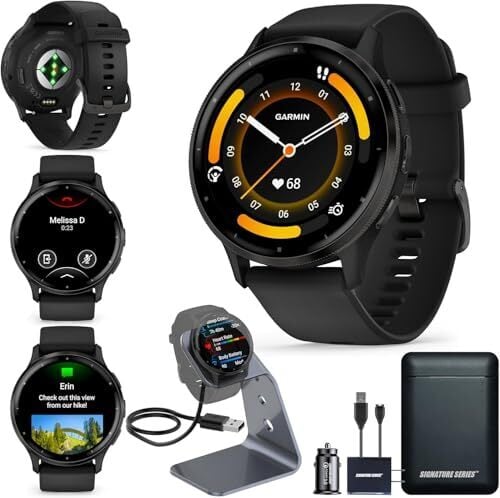
The Venu 3 and 3S are on sale for $349.99, down from $449.99.  (S means smaller size; they’re the same watch otherwise.) This is Garmin’s most smartwatch-y watch, with voice calling and an ECG app. It’s aimed at people who want a lifestyle watch with fitness features, rather than a sports-focused watch. You can think of it as the fancier version of the Vivoactive 6, which isn’t on sale today (regular price is $299.99) but happens to be one of my favorite fitness watches.

The Instinct 3 Solar is on sale for $349.99 in both 45 mm and 50 mm sizes, down from $399.99 when it launched earlier this year. It has a rugged build, outdoor-focused features including an LED flashlight, and solar charging. It also comes in an AMOLED version that’s on sale for $399.99 and a lower-cost Instinct E that is going for $249.99 right now—all $50 off their original prices.

Microsoft Says 394,000 Windows Computers Infected By Lumma Malware Globally

An anonymous reader quotes a report from CNBC: Microsoft said Wednesday that it broke down the Lumma Stealer malware project with the help of law enforcement officials across the globe. The tech giant said in a blog post that its digital crimes unit discovered more than 394,000 Windows computers were infected by the Lumma malware worldwide between March 16 through May 16. The Lumma malware was a favorite hacking tool used by bad actors, Microsoft said in the post. Hackers used the malware to steal passwords, credit cards, bank accounts and cryptocurrency wallets.

Microsoft said its digital crimes unit was able to dismantle the web domains underpinning Lumma’s infrastructure with the help of a court order from the U.S. District Court for the Northern District of Georgia. The U.S. Department of Justice then took control of Lumma’s “central command structure” and squashed the online marketplaces where bad actors purchased the malware. The cybercrime control center of Japan “facilitated the suspension of locally based Lumma infrastructure,” the blog post said. “Working with law enforcement and industry partners, we have severed communications between the malicious tool and victims,” Microsoft said in the post. “Moreover, more than 1,300 domains seized by or transferred to Microsoft, including 300 domains actioned by law enforcement with the support of Europol, will be redirected to Microsoft sinkholes.” Cloudflare, Bitsight and Lumen also helped break down the Lumma malware ecosystem.


Read more of this story at Slashdot.

The physics of frilly Swiss cheese “flowers”

Cheese connoisseurs are no doubt familiar with a particular kind of semi-hard Swiss cheese called “Tête de Moine.” Rather than spreading or slicing the cheese, Tête de Moine is usually served by scraping the top of the cheese wheel in a circular motion using a specialized tool called a Girolle. This produces elegant thin shavings known as rosettes, since they resemble a frilly flower.

The method is both aesthetically pleasing and serves to enhance the aromas and mouth feel of the cheese, according to the authors of a new paper published in the journal Physical Review Letters (PRL). This group of physicists based in Paris noted a marked similarity between the frilly edges of those cheese flowers and certain leaves, fungi, corals, and even torn plastic sheets—all formed by different mechanisms. So naturally the physicists decided to conduct their own research to determine the underlying mechanism(s) for the delicate frills of Tête de Moine shavings.

Tête de Moine translates as “monk’s head,” and the name dates back to the 1790s, although the actual cheese originates back to a 12th-century Bellelay monastery in Switzerland. It’s made from raw unpasteurized cow’s milk and is matured for a minimum of 75 days on spruce boards and boasts a firm reddish-brown crust. The Girolle (named after the French word for chanterelles, which have a similar rosette shape) is a more recent innovation, invented in 1982 specifically for Tête de Moine by a man named Nicolas Crevoisier. It’s just a round wooden plate with a pin stuck vertically in the middle—the better to skewer one’s cheese wheel—and a crank handle to control the slicing blade.

Read full article

Comments

Google pretends to be in on the joke, but its focus on AI Mode search is serious

MOUNTAIN VIEW, Calif.—Google used to be all about the 10 blue links, but that was then, and this is now. You have to scroll farther than ever to get to the links in Google search results, and now this trend is being taken to its ultimate conclusion. At I/O, the company has announced a major expansion of AI Mode search, which heralds a new era for its signature product. There are big changes coming, some of which will start rewriting the web sooner than you think.

The past several years at Google have been marked by an all-consuming obsession with generative AI. It has invaded your search results as AI Overviews, but Google has made it clear at I/O 2025 that AI Overviews was just practice. AI Mode is the game. Everyone at Google is acutely aware of this shift—at the end of the I/O keynote, CEO Sundar Pichai showed a cheeky AI counter graphic that tracked how many times speakers had mentioned “AI” and “Gemini.” But Google is serious about AI in general and AI search in particular.

To that end, the AI Mode search that debuted a few months ago as a Labs experiment is graduating to the main Google search page for everyone, and it’s available to everyone. It’s not the default way of searching the web, but it seems like only a matter of time before that happens. According to Pichai, people search more and enter longer, more complex queries in AI Mode, which is exactly the kind of search AI is good at handling.

Read full article

Comments

All These Garmin Watches Are on Sale for Memorial Day

We may earn a commission from links on this page. Deal pricing and availability subject to change after time of publication.

Even as Memorial Day sales are running hot, Garmin has quietly slashed its prices ahead of the holiday weekend. Its spring sale includes significant price cuts on Garmin’s most popular models, from the rugged Fenix 8 series to the newly released Forerunner lineup.

The sale arrives just days after Garmin unveiled its next-generation Forerunner 570 and Forerunner 970 models. As is typical when new models launch, previous versions (like the highly regarded Forerunner 265 and 965) are seeing major discounts, creating an excellent opportunity for runners who don’t need the latest features.

Using the best price-checking tools, I’ve rounded up my favorite Garmin watches that you can snag at a serious discount right now.

Fenix 8 series

Garmin’s flagship outdoor adventure watch rarely sees significant discounts, making this sale particularly noteworthy. The Fenix 8 series, known for its rugged construction, extensive battery life (especially in the solar variants), and comprehensive tracking features, is seeing a 20% markdown, to $799.99 from its list price of $999.99. With advanced mapping, training metrics, and multi-sport capabilities, these watches are ideal for serious athletes and adventurers.

Venu 3/3S

The Venu 3 and its smaller 3S stand out as Garmin’s most competitive answer to traditional smartwatches. These models offer vibrant AMOLED displays, voice calling capabilities, and Garmin’s ECG app—features typically associated with Apple Watch and Samsung Galaxy watches. The Venu series balances comprehensive fitness tracking with everyday smart features, making it perfect for users who want health metrics without sacrificing smartwatch functionality. You can get it now for $354.99, down from $454.99.

Forerunner series

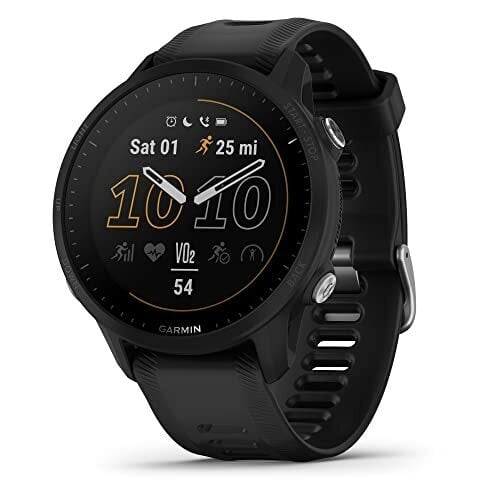
Fellow runners, this is the series for us. And as my colleague Beth Skwarecki notes, the recent drops of the Forerunner 570 and 970 is excellent news—not because you should pick up those models necessarily, but because the older generations of Forerunner, which remain excellent watches, are now going for ludicrously low prices. Older models like the highly regarded 265, 255, and 955 are seeing significant price drops. And if you’re hesitant to buy an older watch, keep in mind that Garmin’s Forerunners have serious longevity: The Forerunner 265, with its bright AMOLED display and comprehensive running metrics, remains one of the best dedicated running watches on the market years after its release.

Vivoactive 5

The Vivoactive series is Garmin’s (and possibly the world’s) most underrated fitness watch. While the Vivoactive 6 is the latest version, the 5 is still one of the best mid-tier options for anyone seeking a balance of features and affordability. The Vivoactive 5 still has a range of fitness tracking capabilities, but in a sleeker, more casual design than the sport-focused models. It’s currently $199.99 (down $50 from the retail price of 249.99).

Edge cycling computers

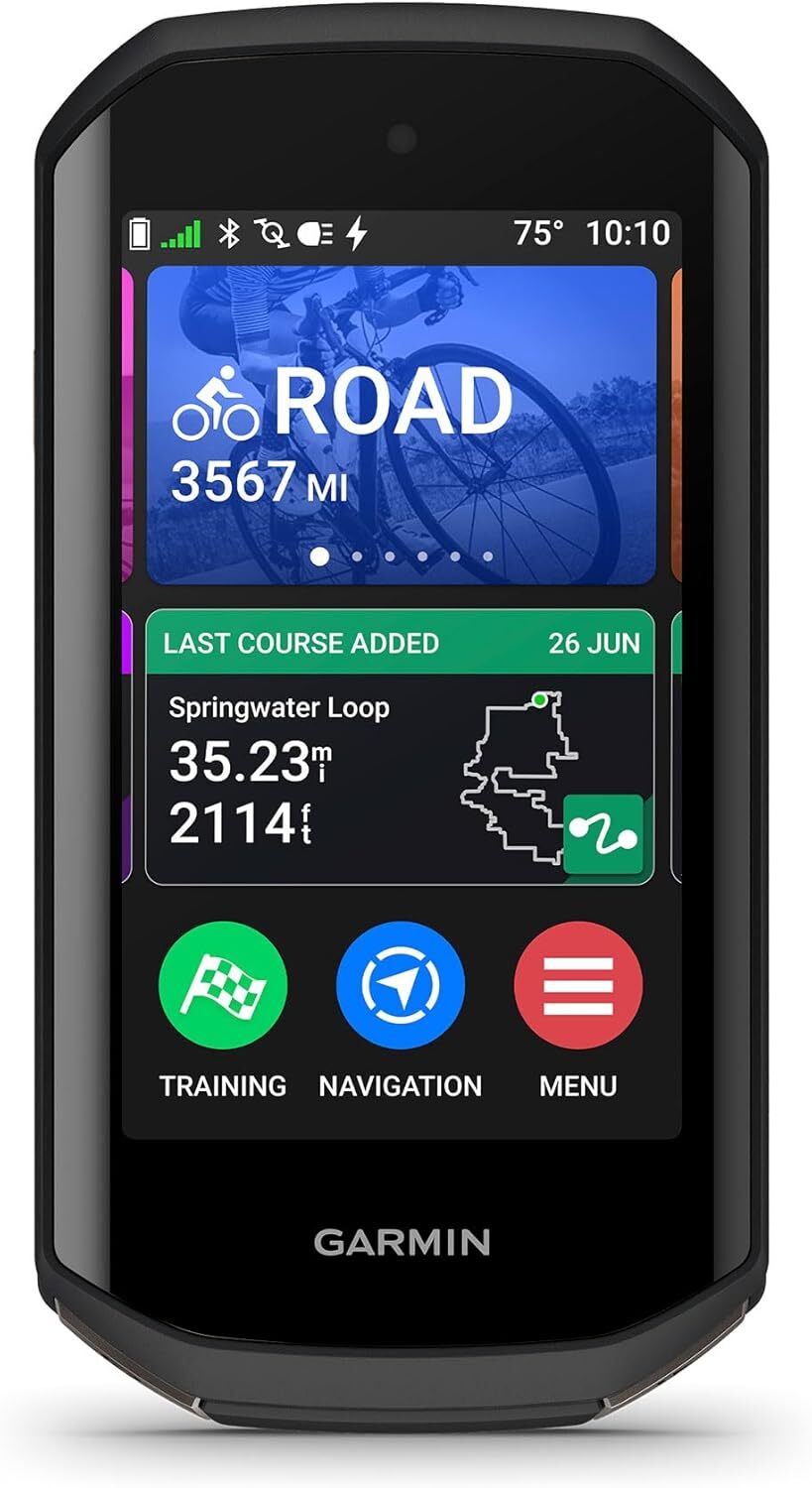
Beyond watches, Amazon’s sale also includes Garmin’s Edge 1050 cycling computer, normally $699.99, now at $589.99. When used with the Garmin Connect app, this cycling computer lets you stay connected on group rides with in-ride messaging, live locations, and incident detection alerts.

Apple legend Jony Ive takes control of OpenAI’s design future

On Wednesday, OpenAI announced that former Apple design chief Jony Ive and his design firm LoveFrom will take over creative and design control at OpenAI. The deal makes Ive responsible for shaping the future look and feel of AI products at the chatbot creator, extending across all of the company’s ventures, including ChatGPT.

Ive was Apple’s chief design officer for nearly three decades, where he led the design of iconic products including the iPhone, iPad, MacBook, and Apple Watch, earning numerous industry awards and helping transform Apple into the world’s most valuable company through his minimalist design philosophy.

“Thrilled to be partnering with jony, imo the greatest designer in the world,” tweeted OpenAI CEO Sam Altman while sharing a 9-minute promotional video touting the personal and professional relationship between Ive and Altman.

Read full article

Comments

You Can Get a Second TV for Free During Sony’s Memorial Day Sale

We may earn a commission from links on this page. Deal pricing and availability subject to change after time of publication.

Memorial Day sales are in full swing, you can find deals on smart beds, tools, Beats headphones, budget headphones, fitness equipment, and much more. Sony has joined the holiday madness and is offering a buy one, get one free (BOGO) deal when you buy a Bravia 8 II OLED Google TV. Purchase one of these top of the line sets, which start at $3,499.99, and you’ll get a X77L LED Google TV, valued at $589.99, free. The deal runs through June 8.

To qualify for the free TV, you can choose between the 55-inch and the 65-inch Bravia 8 II classes. Both will get you the X77L LED Google TV, but buying the 55-inch OLED will get you the 50-inch X77L, while choosing a 65-inch OLED will get you the 55-inch X77L. The Bravia 8 II is a new OLED from this year, and it’s the same price on Amazon and Best Buy without the free LED TV. Sony also offers free shipping with your BOGO purchase, so that won’t cut into the deal either.

The Bravia 8 II is the successor to the Bravia 8, and has some impressive specs: eight million self-lit pixels, a Quantum Dot panel, XR Triluminos Max to enhance colors and brightness, and an AI-powered XR Processor that enhances images in real time. Both TVs have Google TV built-in—my personal favorite TV operating system, as it allows you to cast your smartphone to the TV.

The Bravia 8 II is an OLED set, which is among the best technology you can get right now in terms of picture quality. (An OLED is different from a QLED, so make sure you understand the differences before you buy.) The Sony X77L you’ll get free is more of an entry-level model, but should still serve you well if you just need a set for a second bedroom.

Sonos portable speakers are 25 percent off for Memorial Day

Sonos’ speakers are known for their premium price tags, but if you’re looking for a more affordable entry-point to the ecosystem, you can get up to 25 percent off some of the company’s portable speakers and speaker bundles for Memorial Day. That includes $113 off the Sonos Move 2, which brings the speaker’s price down from $449 to $336.

The Sonos Move 2 was introduced in 2023 as the more expensive follow-up to the original Move, Sonos’ first “portable” speaker. You can argue over it’s portability — the Move 2 makes more sense as something your carry to your backyard than take on a hike — but the speaker packs a punch and lets you play music over both Bluetooth and Wi-Fi. We liked the Sonos Move 2 when we originally reviewed it, but took issue with how expensive it was, so this sale helps make splurging on it more palatable.

If you’re looking for something even more portable and affordable, the Sonos Roam 2 is also on sale for $45 off. Like the Move 2, the speaker has the ability to connect to a smartphone over Bluetooth outside while still being able to hook into your larger Sonos sound system over Wi-Fi at home. The Sonos Roam 2 offers some key improvements to the original Roam’s design, too, like new colors and easier to understand buttons, while still providing the company’s signature sound profile and 10 hours of battery life.

On top of the two speakers, you could also buy a bundle of a speaker and an accessory, like the Sonos Roam 2 and an OtterBox case, or a bundle of multiple speakers. You can get two Roam 2’s for $268 or a Sonos Roam 2 and Sonos Move 2 for $479, for example.

Sonos has faced issues in the last year ironing out software problems — the bugs and missing features were so bad the company’s CEO stepped down — but the fundamentals of how the company’s speakers sound have remained great. With the ship mostly righted on the software side of things, a sale is a great time to see what all of the fuss is about.

Follow @EngadgetDeals on X for the latest tech deals and buying advice.

This article originally appeared on Engadget at https://www.engadget.com/audio/speakers/sonos-portable-speakers-are-25-percent-off-for-memorial-day-185627228.html?src=rss